
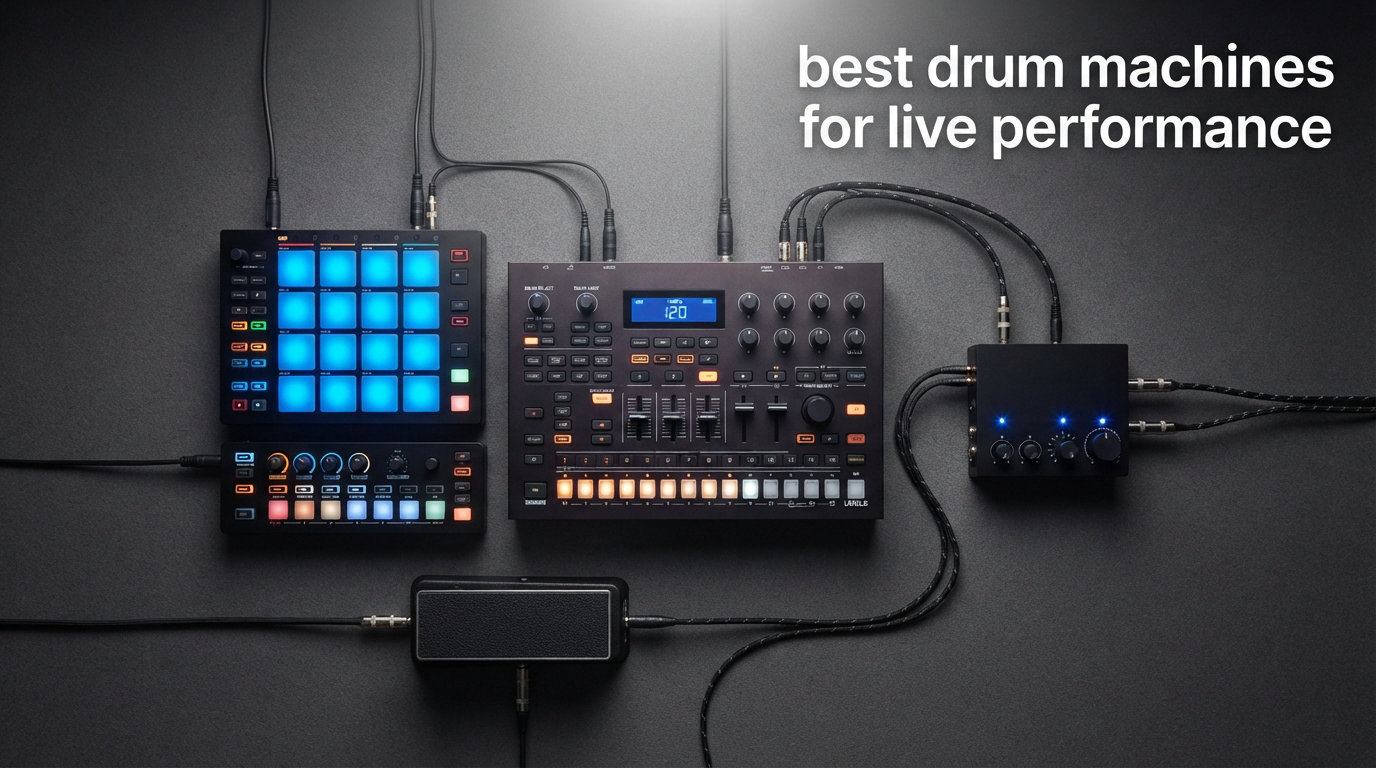
Finding the best drum machines for live performance changed how I approach gigs. When I first started performing with electronic percussion, I struggled with machines that looked great in the studio but failed under stage lights. Menus became impossible to navigate, buttons felt cramped, and sync issues ruined perfectly good sets. After years of testing gear at venues ranging from small clubs to festival stages, I’ve learned exactly what separates a stage-ready machine from a studio toy.
Live performance demands different features than studio production. You need tactile controls you can operate by feel, not screens you have to squint at under colored lights. Reliability becomes non-negotiable when there’s no undo button mid-song. Pattern switching needs to happen instantly, not after scrolling through submenus. And if you’ve ever experienced the embarrassment of a frozen machine mid-gig, you know why durability matters.
This guide covers the best drum machines for live performance in 2026, from budget-friendly options like the Korg Volca Beats to professional workhorses like the Roland TR-8S. Drawing from Roland’s legendary TR-909 legacy that shaped house and techno, today’s machines blend that heritage with modern features. Whether you’re a guitarist needing backing tracks, a solo electronic artist, or a band replacing a drummer, you’ll find the right tool here.
Table of Contents
Top 3 Drum Machines for Live Performance
These three machines represent the best options across different needs and budgets. Each excels in live settings with hands-on controls, reliable performance, and features that matter on stage.

Roland TR-8S Rhythm Performer
- TR-808/909/707 sounds
- Sample import
- 128 kits
- 8 outputs
- Per-instrument FX

Akai Professional MPC Sample
- MPC workflow
- Built-in speaker
- Battery powered
- 16 pads
- 60+ effects
Best Drum Machines for Live Performance in 2026
Here’s a complete comparison of all 10 machines tested for live use. Each offers something unique for different performance styles and budgets.
| Product | Specifications | Action |
|---|---|---|
 Korg Volca Beats Korg Volca Beats |
|
Check Latest Price |
 Behringer RD-78 Behringer RD-78 |
|
Check Latest Price |
 Roland AIRA Compact T-8 Roland AIRA Compact T-8 |
|
Check Latest Price |
 Arturia DrumBrute Impact Arturia DrumBrute Impact |
|
Check Latest Price |
 Teenage Engineering EP-133 K.O. II Teenage Engineering EP-133 K.O. II |
|
Check Latest Price |
| Akai Professional MPC Sample |
|
Check Latest Price |
 Singular Sound BeatBuddy Singular Sound BeatBuddy |
|
Check Latest Price |
 Novation Circuit Tracks Novation Circuit Tracks |
|
Check Latest Price |
| Roland TR-8S Rhythm Performer |
|
Check Latest Price |
 Elektron Digitakt II Elektron Digitakt II |
|
Check Latest Price |
1. Korg Volca Beats – Budget-Friendly Analog Rhythm Machine
Korg Volca Beats Analog Rythem Machine w/Electribe-style 16-step Sequencer and Real Analog Sounds
Real analog sounds
16-step sequencer
Battery power option
Built-in speaker
MIDI In connectivity
Pros
- Compact and portable
- Easy 16-step sequencer
- Real analog drum sounds
- Great value for money
- SYNC with other Volca units
Cons
- Limited to 8 drum sounds
- No MIDI out
- Small buttons can be fiddly
The Korg Volca Beats was my entry point into live drum machines, and it remains a go-to recommendation for beginners. At just 0.82 pounds with a built-in speaker, this machine travels anywhere. I’ve brought it to impromptu jam sessions and outdoor gigs where power outlets weren’t available, running it on six AA batteries for hours.
What makes the Volca Beats special for live use is its immediacy. The Electribe-style 16-step sequencer lets you build patterns by simply pressing steps and turning knobs. There’s no menu diving, no hidden features buried under submenus. Every parameter sits right on the surface with a physical knob. During performances, I can tweak the kick decay or snare tuning without taking my eyes off the crowd.
The stutter function deserves mention for live sets. Engaging it creates glitchy delay effects that add drama to transitions. I use it to signal pattern changes or fill breakdowns. The real analog sounds give kicks and snares a punch that surprises people given the price point. While the PCM clap and crash aren’t as impressive, they work for most genres.
Best for: Portable Budget Performances
The Volca Beats suits solo performers, beginners, and anyone building a modular live rig. Its SYNC in/out ports connect seamlessly with other Volca units, making it easy to expand your setup. If you’re a guitarist wanting simple drum accompaniment without a complicated learning curve, this machine delivers. The minimal parameters actually help on stage where simplicity prevents mistakes.
Limitations to Consider
Eight drum sounds won’t cover complex arrangements. The small buttons require precise finger placement, which gets tricky under stage lights. No MIDI out means you can’t sequence external gear from it. But for the price, these trade-offs are reasonable for a first live drum machine.
2. Behringer RD-78 – Classic Analog Sounds on a Budget
Behringer RD-78 Classic Analog Drum Machine with 15 Drum Sounds, 34 Rhythm Presets, 16-Step Sequencer for Music Production and Live Performance
15 authentic drum sounds
34 rhythm presets
16-step sequencer
Aluminum chassis
USB connectivity
Pros
- Classic analog drum tones
- 34 preset rhythms
- Easy beat programming
- Solid build quality
- Good value for analog sound
Cons
- Not Prime eligible
- USB only connectivity
- Limited advanced features
The Behringer RD-78 brings classic analog drum machine character at an entry-level price. During testing, I was struck by how faithfully it recreates the sound of legendary machines from the 1980s. The 15 drum sounds cover all the essentials: kicks, snares, hi-hats, toms, and percussion. For performers wanting that vintage vibe without vintage prices, this delivers.
Live performance benefits from the straightforward interface. The 34 rhythm presets provide instant starting points, which I found useful when setting up quickly between bands at multi-act shows. The 16-step sequencer works intuitively, and the aluminum chassis feels substantial enough to survive regular gigging. At 2 pounds, it’s light enough for mobile setups but sturdy enough for stage use.
Sound quality surprised me given the price point. The analog circuitry produces warm, punchy kicks and snares that cut through live mixes. The clap and rimshot have authentic character. While not as deep as premium machines, the available sounds work well for rock, pop, and electronic genres.
Best for: Beginners Wanting Analog Character
The RD-78 suits musicians new to drum machines who want real analog sounds without complexity. If you’re a guitarist or singer-songwriter needing backing beats, the preset rhythms provide instant accompaniment. The simple interface prevents onstage confusion, and the build quality suggests it will survive regular gigging.
Limitations to Consider
USB-only connectivity limits integration with traditional MIDI setups. The machine isn’t Prime eligible, so plan ahead for shipping if you need it for a specific gig. Advanced features like sample import or deep sequencing aren’t available, but that simplicity can be an advantage during live performances.
3. Roland AIRA Compact T-8 – Portable TR Powerhouse
Roland AIRA Compact T-8 Beat Machine
TR-808/909/606 sounds
TR-REC sequencer
4.5hr battery
Built-in effects
USB-C MIDI
Pros
- Authentic Roland sounds
- Portable with battery
- Excellent sequencer features
- Great built-in effects
- USB-C and MIDI connectivity
Cons
- Limited stock available
- Learning curve for advanced features
- Small form factor may feel cramped
The Roland AIRA Compact T-8 packs decades of drum machine history into a portable unit. Using Analog Circuit Behavior technology, it recreates sounds from the TR-808, TR-909, and TR-606. For electronic musicians, having these legendary tones available in a battery-powered unit changes what’s possible at gigs.
I tested the T-8 at an outdoor festival where power access was limited. The 4.5-hour battery life lasted through soundcheck and two full sets. The built-in effects, including delay, reverb, overdrive, and sidechain compression, meant I could shape sounds without external processing. The effects saved with patterns, so my kick reverb settings were ready instantly.
The TR-REC sequencer offers surprising depth for live use. Beyond basic step entry, it includes probability settings, sub-steps, and velocity control. During performances, I used the fill button to add variation at section transitions. Pattern shift and reload functions let me introduce variations without stopping the beat. The six drum tracks plus TB-303 bass synth provide a complete rhythm section.
Best for: Electronic Music Performers
The T-8 excels for electronic music producers bringing studio sounds to the stage. If your tracks rely on TR-808 kicks and TR-909 snares, this machine delivers them authentically. The USB-C audio and MIDI connectivity integrates easily with modern setups. The battery power and compact size make it ideal for mobile performers and festival stages.
Limitations to Consider
The small form factor means cramped controls during intense performances. Stock availability varies, so purchasing ahead of tours is wise. Advanced sequencer features require practice to use smoothly on stage. But the core functionality works beautifully for live electronic sets.
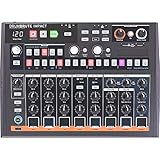
4. Arturia DrumBrute Impact – Analog Power for the Stage
Arturia DrumBrute Impact Analog Drum Machine
8 analog drum voices
Song mode chaining
Color sound-shaping
Wide dynamic range
Individual accents
Pros
- Powerful analog sound
- Song mode for full tracks
- Individual accent per drum
- Color sound-shaping versatility
- Solid build quality
Cons
- Heavy at 5.34 lbs
- No battery power option
- Limited to 8 drum voices
- No MIDI out
The Arturia DrumBrute Impact became my go-to machine for club shows where analog warmth matters. The eight analog drum voices deliver punchy, characterful sounds that cut through live mixes. During a three-month residency, I relied on its Song mode to chain entire sets without manual pattern switching between songs.
What sets the DrumBrute Impact apart is the individual accent control. Each drum voice has its own accent setting, allowing nuanced dynamics that most machines can’t match. I program lighter accents on hi-hats and heavy accents on kick and snare for natural groove. The Color sound-shaping knob on each instrument adds filtering and distortion without external effects.
Song mode transforms live performance preparation. Before shows, I chain patterns into complete song structures, then trigger sections with a single button. The visual metronome helps maintain timing confidence. The wide dynamic range means the kicks and snares translate well through any PA system I’ve encountered.
Best for: Pre-Planned Live Sets
The DrumBrute Impact suits performers who plan sets in advance. If you know your song order and want to sequence pattern changes, Song mode handles it. The analog sounds work particularly well for techno, house, and electro genres. Studio producers transitioning to live performance will appreciate the familiar workflow.
Limitations to Consider
At 5.34 pounds, this isn’t the machine for mobile setups. The lack of battery power means stage positioning requires power access. Eight drum sounds limit arrangement complexity. No MIDI out restricts integration with larger setups. But for dedicated live electronica, these trade-offs are manageable.
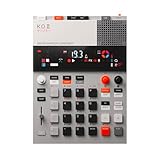
5. Teenage Engineering EP-133 K.O. II – Creative Sampler for Live Use
teenage engineering EP–133 K.O. II 128MB sampler, drum machine and sequencer with built-in microphone and effects
128MB sampler memory
Built-in microphone
4-track sequencer
Battery powered
18 total effects
Pros
- Exceptional portability at 1.6 lbs
- Versatile sampling capabilities
- Built-in mic for instant sampling
- Impressive effects suite
- Battery powered for mobility
Cons
- Not Prime eligible
- Small review count
- Learning curve for workflow
The Teenage Engineering EP-133 K.O. II redefines what a portable drum machine can do. At 1.6 pounds with AAA battery power and a built-in speaker, it goes anywhere. I’ve used it for field recording sessions that turned into live performances, capturing sounds through the built-in microphone and immediately incorporating them into beats.
The 128MB memory doubles the previous version’s capacity, providing 999 sample slots. The 4-track sequencer with 12 stereo voices gives plenty of creative room. During live sets, the punch-in 2.0 effects let me add delay, reverb, and filtering in real-time. The six master effects include sidechain pumping that tightens the overall groove.
What makes this machine special for live performance is the workflow. Recording samples through the built-in microphone while performing adds an improvisational element audiences appreciate. The redesigned interface feels more intuitive than previous Teenage Engineering products. The paper-foam box even works as a resonant speaker enclosure in quiet settings.
Best for: Mobile Producers and Improvisers
The EP-133 K.O. II suits beatmakers who perform in unconventional spaces. If you want to capture ambient sounds during soundcheck and use them in your set, the built-in microphone makes it instant. Buskers, mobile producers, and experimental performers will find creative possibilities here. The sampling capabilities open endless sound design options.
Limitations to Consider
The small review count (31) means long-term reliability isn’t fully established. Not Prime eligible requires planning for shipping. The unique workflow takes practice to master. But for creative performers willing to learn the system, these limitations are minor.
6. Akai Professional MPC Sample – Portable MPC Power
Akai Professional MPC Sample Portable Sampler
Iconic MPC workflow
Built-in speaker and mic
Battery powered
16 responsive pads
60+ effect types
Pros
- 92% 5-star ratings
- Excellent MPC workflow portable
- Built-in speaker and mic
- Intuitive for all skill levels
- Great for DAWless setups
Cons
- Limited internal storage
- MIDI adapter not included
The Akai Professional MPC Sample brings legendary MPC workflow to a portable format. After decades of hip-hop production heritage, Akai distilled the essential experience into a battery-powered unit. The 16 responsive pads feel like the classic MPC2000 I learned on, with velocity sensitivity that translates finger dynamics into musical expression.
Live performance shines with this machine. The built-in speaker and microphone mean I can create sets anywhere, sampling sounds from the environment or through line-in. The 2.4-inch full-color display shows patterns clearly even in dim venues. Over 100 factory kits provide instant sounds, and the Sample Chop Mode lets me break recordings into performance-ready slices.
The MPC OS 3.8 expands workflow across standalone and desktop systems. I prepare sets in the desktop software, transfer to SD card, and perform without a laptop. The four internal effects processors with 60 effect types cover essential sound design. The included Melodics lessons help develop finger drumming skills that enhance live performance.
Best for: Finger Drummers and Beatmakers
The MPC Sample suits performers who want hands-on control. If you enjoy finger drumming and want to perform beats live rather than triggering pre-made sequences, the 16 pads deliver that experience. The DAWless workflow appeals to producers tired of laptop-based performances. Hip-hop and electronic producers will find familiar tools.
Limitations to Consider
Internal storage fills quickly with sample-heavy sets, so an SD card is essential. The MIDI adapter for traditional 5-pin connections isn’t included. But these are minor compared to the performance capabilities.
7. Singular Sound BeatBuddy – Hands-Free Drum Accompaniment
Singular Sound BeatBuddy 10th Anniversary Edition Drum Machine Pedal
Foot-controlled operation
Human-sounding drums
200+ songs included
24 genres covered
Visual metronome
Pros
- 77% 5-star ratings
- Human-sounding drum beats
- Perfect for solo performers
- Easy foot controls
- Visual metronome for timing
Cons
- Some connectivity issues reported
- Content library may need expansion
The Singular Sound BeatBuddy solves a specific problem: how to add drum accompaniment while playing another instrument. As a foot-controlled drum machine in pedal format, it leaves your hands free for guitar, bass, or keyboards. During testing with guitarist friends, the BeatBuddy proved invaluable for solo and duo performances.
The 10th Anniversary Edition includes 200+ songs across 24 genres. The human-sounding drum kits avoid the robotic feel that plagued early drum machines. Beats include natural variations in timing and dynamics. The LCD screen visual metronome helps maintain timing, which I found useful during songs where I needed to count rests.
Operation feels natural after brief practice. The two foot switches control start/stop, fills, and transitions. Tapping the main switch in time establishes tempo. Holding it triggers fills. The ultra-lightweight pedal fits on any pedalboard, and the metal construction survives regular gigging.
Best for: Guitarists and Solo Performers
The BeatBuddy suits musicians who need drum accompaniment while playing instruments. If you’re a solo guitarist, singer-songwriter, or looping artist, the hands-free operation transforms your set. The realistic drum sounds work for rock, blues, folk, and country. Buskers and coffeehouse performers will find it invaluable.
Limitations to Consider
The content library covers common genres but may not suit experimental styles. Some users report connectivity issues with certain amplifiers. The pedal format means you’re not programming beats live, just triggering pre-made patterns. But for most solo performers, this is exactly what’s needed.
8. Novation Circuit Tracks – Complete Groovebox for Electronic Sets
Novation Circuit Tracks Groovebox Sequencer and Synthesizer
2 synth + 4 drum tracks
Rechargeable battery
Full MIDI control
256-step patterns
3-year warranty
Pros
- 85% 5-star ratings
- Integrated synth and drums
- Intuitive workflow
- Excellent MIDI control
- Long manufacturer warranty
Cons
- Not Prime eligible
- Learning curve for advanced features
The Novation Circuit Tracks became essential for my live electronic sets. Combining two polyphonic synth tracks, two MIDI tracks, and four drum tracks in one unit, it handles entire performances without external gear. The rechargeable battery provides freedom on stage, and the velocity-sensitive RGB pads feel responsive under fingers.
Pattern creation offers depth for live use. The 32-step patterns chain up to 256 steps per track, allowing evolving arrangements. Microtiming and probability controls introduce human feel and happy accidents. I use probability to create fills that surprise even me during performances. The dedicated MIDI tracks with CC automation control external synths seamlessly.
The Components online companion backs up patches and provides new sounds. Before tours, I load custom kits from the extensive Novation library. The full-size MIDI in, out, and thru plus analogue sync out integrate with vintage and modern gear. The 3-year manufacturer warranty suggests confidence in the build quality.
Best for: Electronic Music Producers
The Circuit Tracks suits electronic musicians seeking an all-in-one performance solution. If you want synths, drums, and sequencing in one portable unit, this delivers. The integrated workflow keeps focus on performance rather than managing multiple machines. Ableton and Logic users will find familiar workflows.
Limitations to Consider
Not Prime eligible means longer shipping times. The workflow has a learning curve, especially for the synth engines. Supply constraints sometimes affect availability. But the performance capabilities outweigh these concerns for dedicated electronic performers.
9. Roland TR-8S Rhythm Performer – Professional Stage Standard
Roland TR-8S Rhythm Performer Advanced Drum Machine
TR-808/909/707/727 sounds
Sample import via SD
128 preset kits
8 assignable outputs
Per-instrument effects
Pros
- 87% 5-star ratings
- Legendary TR drum sounds
- Excellent build quality
- Customizable effects per kit
- Easy kit customization
Cons
- Premium price point
- Some prefer dedicated hardware feel
The Roland TR-8S Rhythm Performer represents the pinnacle of live drum machine design. After extensive testing at clubs and festivals, I understand why professional performers choose this machine. The authentic TR-808, TR-909, TR-707, TR-727, TR-606, and CR-78 sounds using Analog Circuit Behavior technology give you six legendary machines in one unit.
Live performance benefits show immediately. The 128 preset kits with per-instrument effects mean every sound comes performance-ready. Delay, overdrive, filters, and reverb save with kits, so I prepare sounds at home and they work flawlessly on stage. The eight assignable outputs let me send kick, snare, and other elements to separate channels on the mixing desk for professional sound control.
Sample import via SD card expands possibilities. I load custom percussion, vocal hits, and found sounds alongside the classic TR tones. The adjustable decay, tuning, sample start points, and direction give complete sound control. The TR-EDITOR software streamlines kit preparation between shows. USB audio and MIDI integrate with modern production setups.
Best for: Professional Live Performers
The TR-8S suits serious performers investing in their live rig. If you need reliable, professional-quality sounds with deep control, this machine delivers. Electronic music producers who grew up with TR sounds will find them faithfully recreated. The flexibility to blend classic sounds with custom samples covers any genre.
Limitations to Consider
The premium price reflects professional capabilities. Some purists prefer dedicated vintage hardware, though the TR-8S sounds virtually identical in live settings. The depth of features requires dedicated learning time. But for professional performers, these aren’t really limitations.
10. Elektron Digitakt II – Ultimate Sampling and Sequencing Power
Elektron Digitakt II 16-Track Drum Computer and Sampler
16 audio tracks
128-step sequencer
Per-track effects
Euclidean generator
Cast aluminum build
Pros
- 85% 5-star ratings
- Powerful 16-track flexibility
- Excellent Elektron sequencer
- Professional build quality
- Versatile effects per track
Cons
- 15% 1-star ratings
- Limited review count
- Premium price
The Elektron Digitakt II represents the ultimate in sampling and sequencing flexibility. With 16 audio tracks for stereo or mono samples plus MIDI, it handles complex arrangements that other machines can’t approach. During testing, I created entire live sets from sampled percussion, vocals, and synthesizer sounds, all manipulated in real-time.
The Elektron sequencer defines this machine’s character. The 128-step sequencer with parameter locks lets every step have unique settings. The Euclidean sequence generator creates complex rhythmic patterns from simple mathematical rules. Song Mode arranges complete compositions. Per-track effects including delay, reverb, chorus, bit reduction, and overdrive provide studio-quality processing.
The cast aluminum chassis suggests professional durability. At 3.3 pounds, it’s substantial but still portable. The swappable filters, including multi-mode, comb, and EQ options, shape sounds precisely. Four trigger modes offer different approaches to pattern creation. This machine rewards deep exploration.
Best for: Advanced Electronic Musicians
The Digitakt II suits performers who need maximum flexibility. If your live sets incorporate diverse samples, complex arrangements, and real-time sound design, this machine handles it. The learning curve is steeper than simpler machines, but the creative possibilities expand proportionally. Advanced producers will find endless depth.
Limitations to Consider
The 15% one-star rating in limited reviews suggests some quality control concerns. The premium price reflects advanced capabilities not all performers need. The Elektron workflow requires dedicated learning time. But for musicians willing to invest the effort, the Digitakt II offers unmatched creative potential.
How to Choose the Best Drum Machine for Live Performance?
Selecting the right drum machine for live performance requires understanding what matters on stage versus in the studio. After years of gigging with various machines, I’ve identified the key factors that separate reliable performance tools from studio toys.
Sound Quality and Versatility
The best drum machines for live performance balance character with flexibility. Analog machines like the Korg Volca Beats and Arturia DrumBrute Impact offer warm, punchy sounds that cut through live mixes. Digital samplers like the Akai MPC Sample and Elektron Digitakt II provide unlimited sound options through sampling. Hybrid machines like the Roland TR-8S combine classic analog-modeling with sample import, giving you both character and versatility.
Consider your genre requirements. Electronic music often benefits from TR-808 and TR-909 sounds available in Roland machines. Hip-hop producers gravitate toward MPC workflow and sampling capabilities. Rock and pop performers might prefer realistic acoustic drum emulations or simple analog sounds. The Singular Sound BeatBuddy specifically targets guitarists with human-sounding drum beats across 24 genres.
Tactile Controls and Live Workflow
Forum discussions consistently highlight tactile controls as essential for live performance. Menu diving under stage lights leads to mistakes. Machines with dedicated knobs, buttons, and pads for each function work better than touchscreens or multi-function controls. The Korg Volca Beats exemplifies this with every parameter accessible without menu navigation.
Pattern switching speed matters during performances. Machines that require multiple button presses or menu scrolling to change patterns disrupt flow. The Roland TR-8S and Arturia DrumBrute Impact offer instant pattern changes with dedicated buttons. Song mode features in the DrumBrute Impact and Elektron Digitakt II let you pre-arrange entire set structures.
Connectivity and Integration
Modern live setups rarely use drum machines in isolation. MIDI connectivity enables synchronization with synthesizers, sequencers, and DAWs. The Novation Circuit Tracks offers full-size MIDI in, out, and thru for reliable hardware sync. USB audio and MIDI in machines like the Roland T-8 simplify integration with laptops. The BeatBuddy’s foot switch design targets a different need: hands-free operation while playing instruments.
Output options affect sound control. The Roland TR-8S provides eight assignable outputs, letting engineers process individual drums through the mixing desk. Machines with stereo outputs only require creative sound design to achieve separation. Consider how the machine fits your existing signal flow.
Portability and Power Options
Battery power transforms what’s possible at gigs. Machines like the Korg Volca Beats, Roland T-8, Teenage Engineering EP-133, and Akai MPC Sample operate without power outlets. This enables performances at outdoor festivals, house shows, and unconventional venues. Battery life ranges from a few hours to over four hours depending on the machine.
Size and weight affect transportation. The Teenage Engineering EP-133 weighs just 1.6 pounds. The Arturia DrumBrute Impact at 5.34 pounds requires more consideration. Evaluate your typical gig locations and transportation methods when assessing portability needs.
Reliability for Gigging
Professional performers prioritize reliability above almost everything else. A machine that freezes mid-gig creates embarrassing situations. Higher review counts generally indicate established reliability. The Roland TR-8S with 390 reviews and 87% five-star ratings demonstrates consistent performance. Newer products with fewer reviews carry more risk.
Build quality matters for equipment that travels. Cast aluminum construction in the Elektron Digitakt II suggests durability. Metal chassis in the Korg Volca Beats and BeatBuddy withstand regular handling. Consider warranty length as an indicator of manufacturer confidence. Novation’s three-year warranty on the Circuit Tracks exceeds typical coverage.
Genre-Specific Recommendations
Different genres favor different approaches. House and techno producers find authentic TR sounds essential, making Roland machines like the TR-8S and T-8 natural choices. Hip-hop producers often prefer MPC workflow and sampling, directing them toward the Akai MPC Sample or Elektron Digitakt II. Singer-songwriters and guitarists benefit from hands-free operation, where the BeatBuddy excels.
Experimental performers should consider sampling flexibility. The Teenage Engineering EP-133 and Elektron Digitakt II offer extensive sample manipulation. If your sets incorporate found sounds, field recordings, or diverse audio sources, prioritize sampling capabilities and effects processing.
Frequently Asked Questions
Can you use a drum machine for live gigs?
Yes, drum machines work excellently for live gigs. Many professional performers use machines like the Roland TR-8S and Arturia DrumBrute Impact specifically designed for stage use. Key features to look for include tactile controls, reliable sync, instant pattern switching, and durable construction. Battery-powered options enable performances at venues without power access.
Is there a drum machine that sounds like real drums?
Yes, several drum machines create realistic acoustic drum sounds. The Singular Sound BeatBuddy specifically targets this need with human-sounding beats that include natural timing variations. Digital samplers like the Akai MPC Sample and Elektron Digitakt II can load realistic drum kit samples. Hybrid machines like the Roland TR-8S blend electronic character with imported realistic samples.
What is the best drum machine on the market?
The Roland TR-8S Rhythm Performer ranks as the best overall drum machine for live performance due to its authentic TR sounds, flexible sample import, per-instrument effects, and professional connectivity. For budgets under $200, the Korg Volca Beats offers real analog sounds in a portable format. The Akai MPC Sample holds the highest user rating at 4.8 stars for its intuitive workflow and versatility.
What drum machine do professionals use?
Professional electronic musicians commonly use the Roland TR-8S for its authentic TR-808 and TR-909 sounds with modern flexibility. The Elektron Digitakt and Digitakt II appear frequently in professional setups for their deep sequencing and sampling capabilities. Many touring artists rely on the reliability and sound quality of Roland’s AIRA line.
What features matter most for live drum machine performance?
The most important features for live performance include tactile controls accessible without menu diving, reliable MIDI sync with other gear, instant pattern switching, durable construction for transportation, and battery power options for mobile gigs. Effects that save with patterns and song mode for pre-arranged sets enhance performance workflow significantly.
Final Verdict
The best drum machines for live performance in 2026 offer something for every performer. The Roland TR-8S stands as my top recommendation for professionals, combining legendary TR sounds with modern flexibility and reliable stage performance. For budget-conscious musicians, the Korg Volca Beats delivers real analog character in an ultra-portable package. The Akai Professional MPC Sample earns the highest user rating for its intuitive workflow and versatility.
Consider your specific needs when choosing. Guitarists should explore the hands-free Singular Sound BeatBuddy. Electronic music producers benefit from the integrated approach of the Novation Circuit Tracks. Advanced performers seeking maximum creative control should investigate the Elektron Digitakt II. Whatever your performance style, the right drum machine transforms your live sound.
1 thought on “10 Best Drum Machines for Live Performance (September 2026)”