
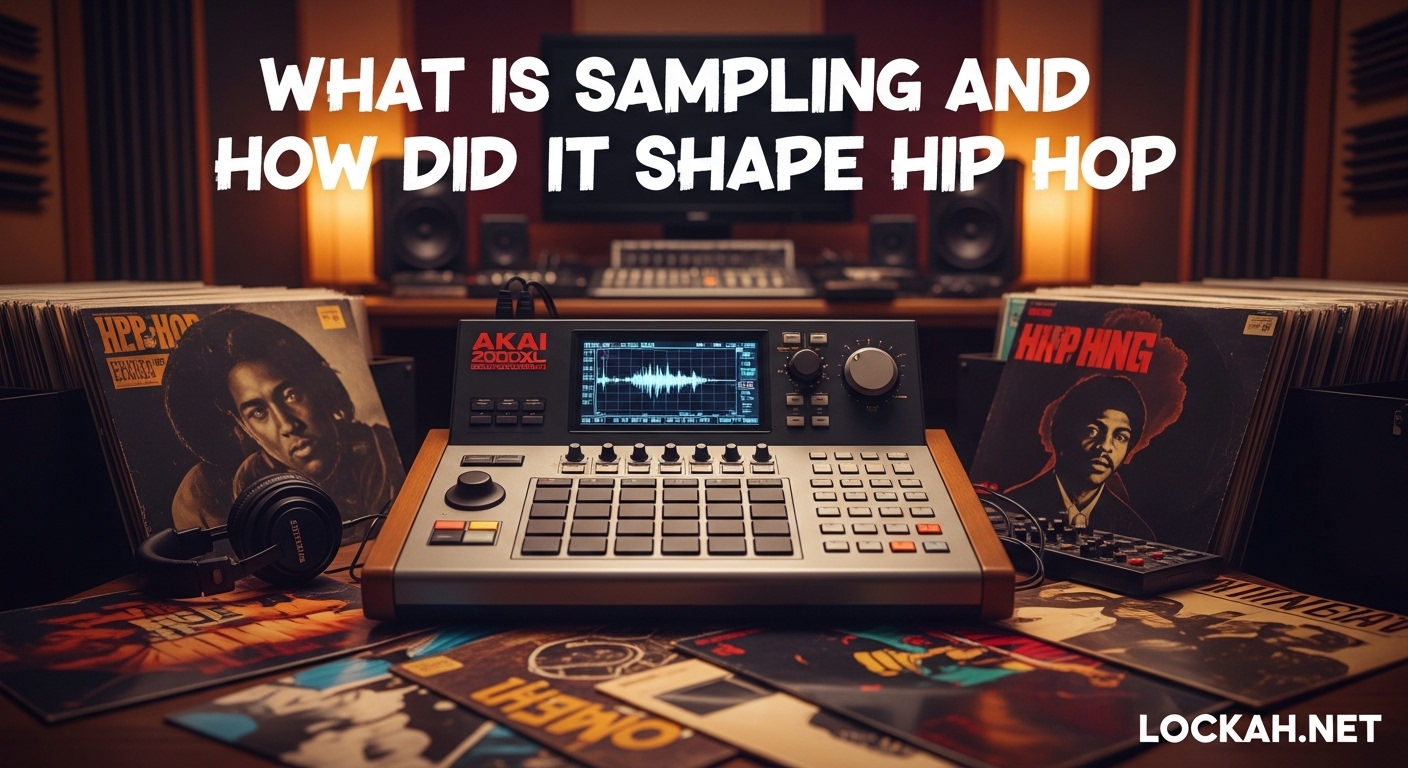
Sampling is the technique of taking a portion of an existing recording and reusing it in a new composition, a practice that became foundational to hip-hop’s sound and identity. When you listen to a hip-hop track and recognize a familiar drum pattern, a snippet of an old soul song, or a vocal phrase from a classic record, you are hearing sampling in action. This revolutionary approach to music creation transformed how artists produce songs and forever changed the landscape of popular music.
In this guide, you will learn exactly what sampling means in the context of hip-hop, how it influenced the genre from its earliest days, and why it remains one of the most important innovations in modern music history. Our team has spent years studying hip-hop production techniques, analyzing landmark albums, and speaking with producers who lived through the golden era of sampling. We have distilled everything into this comprehensive resource.
Whether you are an aspiring producer curious about beat-making techniques, a music fan wanting to understand the history behind your favorite tracks, or someone exploring hip-hop culture for the first time, this article will give you a complete picture of how sampling shaped hip-hop.
Table of Contents
What Is Sampling in Hip-Hop Music?
Sampling in hip-hop music is the process of isolating a segment from an existing audio recording and incorporating that segment into a new musical work. Producers typically extract drum breaks, melodic loops, basslines, or vocal snippets from vinyl records, then manipulate these elements through chopping, looping, pitch-shifting, or time-stretching to create entirely new compositions. The technique allows artists to build upon the musical heritage that came before them while adding their own creative vision.
The types of samples used in hip-hop vary widely depending on the producer’s style and the era. Drum breaks are among the most commonly sampled elements, with producers seeking out sections of songs where the drums play solo without other instruments. Melodic samples might include guitar riffs from funk records, horn sections from jazz albums, or keyboard passages from soul ballads. Vocal samples can range from spoken word excerpts to sung phrases that are chopped and rearranged into new rhythmic patterns.
What makes sampling an art form is the creative decision-making involved in selecting, manipulating, and contextualizing these audio fragments. A skilled producer does not simply copy and paste a loop. They transform the source material into something that serves the new composition while paying homage to the original recording. This act of musical recontextualization lies at the heart of hip-hop’s innovative spirit.
The technical process of sampling has evolved dramatically since the technique first emerged. Early producers relied on turntables and tape loops to create extended versions of drum breaks. As digital technology advanced, dedicated hardware samplers like the Fairlight CMI, EMU SP-1200, and Akai MPC series gave producers unprecedented control over how they could manipulate sound. Today’s producers use software samplers within digital audio workstations, offering nearly infinite possibilities for creative sampling.
Understanding what constitutes a sample helps clarify why hip-hop sounds the way it does. The crackle of vinyl, the warmth of analog recordings, and the familiar textures of classic songs all contribute to hip-hop’s sonic palette. These elements connect modern productions to decades of musical history, creating a living dialogue between past and present.
How Did Sampling Influence Hip-Hop?
Sampling fundamentally democratized music production, allowing young artists without formal training, expensive instruments, or studio access to create professional-sounding tracks. Before sampling technology became accessible, making music required significant financial investment in instruments, recording equipment, and studio time. Sampling changed that equation by giving anyone with a turntable and a records collection the tools to become a producer.
The influence of sampling extends far beyond the technical aspects of beat-making. It created a cross-generational conversation between artists who might never have interacted otherwise. When a hip-hop producer in 2026 samples a soul record from 1972, they are not just borrowing a sound. They are introducing that music to new audiences who may have never discovered the original recording. This musical time travel has kept countless older artists relevant while giving contemporary musicians a rich vocabulary of sounds to work with.
Sampling also shaped hip-hop’s relationship with other elements of the culture. The practice of digging for records became inseparable from graffiti art, breakdancing, and MCing as core hip-hop activities. Record stores, flea markets, and yard sales became hunting grounds for producers seeking obscure drum breaks and forgotten melodies. This culture of crate digging fostered deep musical knowledge among hip-hop practitioners and created communities centered around the shared pursuit of rare vinyl.
The economic implications of sampling were equally significant. By repurposing existing recordings, producers could create complex musical arrangements without hiring session musicians or booking expensive studios. This efficiency allowed hip-hop to flourish in economically disadvantaged communities where resources were scarce. The genre’s rise from the Bronx to global dominance would have been impossible without the cost-effective creativity that sampling enabled.
Culturally, sampling embodies the hip-hop ethos of taking what exists and transforming it into something new and meaningful. This philosophy mirrors how graffiti artists repurpose public spaces, how breakdancers adapt athletic movements into dance, and how MCs turn spoken language into rhythmic poetry. Sampling is not merely a production technique. It is a cultural statement about resourcefulness, creativity, and the power of reinterpretation.
The Birth of Sampling: DJ Kool Herc and the Merry-Go-Round (2026)
The story of sampling in hip-hop begins in the summer of 1973 at 1520 Sedgwick Avenue in the Bronx, New York. DJ Kool Herc, a Jamaican immigrant who brought sound system culture from Kingston, threw a back-to-school party for his sister that would change music history forever. Herc had noticed that dancers at his parties responded most enthusiastically to specific sections of records, particularly the instrumental breaks where drums and percussion dominated.
Herc developed a technique he called the Merry-Go-Round to extend these break sections indefinitely. Using two turntables and a mixer, he would play the break from one record, then switch to the same break on a second copy of the record while cueing the first turntable back to the beginning. By alternating between the two turntables, Herc could loop the drum break for as long as he wanted, creating an extended groove that dancers could rock to.
This innovation laid the groundwork for everything that would follow in hip-hop production. The breakbeats Herc isolated and extended became the rhythmic foundation for early hip-hop tracks. Records like “Apache” by Incredible Bongo Band, “The Funky Drummer” by James Brown, and “Amen Brother” by The Winstons achieved legendary status simply because they contained breaks that DJs wanted to extend. These drum patterns were sampled so extensively in subsequent decades that they became part of hip-hop’s DNA.
Herc’s influence spread quickly throughout the Bronx as other DJs adopted and refined his techniques. Grandmaster Flash advanced turntablism by developing precise cutting and scratching methods that added new dimensions to the manipulation of breakbeats. Afrika Bambaataa expanded the musical vocabulary by drawing from diverse genres including rock, electronic, and world music. Together, these pioneers established the creative framework that would define hip-hop production for generations.
The connection between breakbeats and breakdancing is no coincidence. The term “breakdancing” literally derives from dancers performing during the musical breaks at these early parties. When Herc and other DJs extended the break sections, they created space for dancers to showcase their moves. This symbiotic relationship between the music and the dance remains one of hip-hop culture’s defining characteristics.
While Herc’s Merry-Go-Round technique used turntables rather than digital samplers, the conceptual foundation was identical to modern sampling. He was isolating, looping, and recontextualizing existing recordings to create something new. The technology has evolved, but the creative impulse remains unchanged. Every producer who loads a sample into an MPC or software sampler is continuing the tradition that began at those Bronx parties in 1973.
The Golden Era of Hip-Hop Sampling
The golden era of hip-hop sampling spans roughly from the mid-1980s to the mid-1990s, a period when the technique reached its creative peak before legal and economic constraints began limiting its application. During these years, sampling technology became affordable enough for bedroom producers to acquire, while legal precedent had not yet made the practice prohibitively expensive. This window of creative freedom produced some of the most innovative and influential music in hip-hop history.
Why was sampling so important in 90s hip-hop culture? The answer lies in the unique creative possibilities it offered during this specific technological moment. Hardware samplers like the Akai MPC60 and EMU SP-1200 provided just enough memory and processing power to capture meaningful musical phrases, while their technical limitations forced producers to make creative decisions that shaped the sound. The 12-bit resolution of the SP-1200, for instance, gave samples a gritty, crunchy character that became synonymous with East Coast hip-hop production.
J Dilla stands as perhaps the most influential sample-based producer of the golden era and beyond. His work with Slum Village, Common, Erykah Badu, and countless others demonstrated that sampling could be as expressive as any instrumental performance. Dilla’s signature technique involved programming drums without quantizing them to a rigid grid, creating a loose, human feel that distinguished his beats from the mechanical precision of other producers. His approach to chopping samples and rearranging them into new compositions remains a touchstone for beat-makers in 2026.
DJ Premier’s work with Gang Starr defined the sound of East Coast hip-hop through masterful sample selection and precise chopping. Premier had an uncanny ability to find obscure records and extract the perfect loop, often combining multiple samples into cohesive arrangements that felt like original compositions. His technique of isolating tiny snippets and rearranging them into entirely new patterns demonstrated the sophisticated possibilities of sampling as an art form.
RZA’s production for Wu-Tang Clan introduced a grittier, more cinematic approach to sampling. Drawing from martial arts film soundtracks, soul records, and psychedelic rock, RZA created soundscapes that felt like movies for the mind. His willingness to push samples into distortion and embrace lo-fi textures expanded the aesthetic range of hip-hop production. The Wu-Tang sound became instantly recognizable and highly influential throughout the 1990s and beyond.
The sampling styles of East Coast and West Coast producers diverged during this era in ways that reflected broader regional differences. East Coast production tended toward dense, layered samples with jazz and soul influences, creating a gritty, urban atmosphere. West Coast producers like Dr. Dre often used funk samples with cleaner production, emphasizing G-funk’s melodic synthesizers and Parliament-Funkadelic influences. These regional styles gave listeners distinct sonic identities to associate with each coast’s hip-hop scene.
The golden era also saw the emergence of beat digger culture in full force. Producers competed to find the most obscure records with the freshest breaks. Knowledge of source material became a badge of honor within the hip-hop community. This crate-digging mentality preserved interest in vinyl records and older music during an era when digital formats were beginning to dominate. It also ensured that countless forgotten musicians received posthumous recognition through their sampled work.
Evolution of Sampling Technology
The technology behind sampling has undergone dramatic evolution since the technique first emerged in hip-hop. Understanding this timeline helps explain why certain sounds became associated with specific eras and how producers’ creative options expanded over time. Each technological leap brought new possibilities while often making older methods obsolete or prohibitively expensive.
The Fairlight CMI, introduced in 1979, stands as the first commercially available digital sampling instrument. Though priced far beyond what individual hip-hop producers could afford, the Fairlight proved that digital sampling was possible. Its eight-bit resolution and limited sample time made it impractical for the extended loops hip-hop would later require, but it established the conceptual foundation for all samplers that followed. Artists like Kate Bush and Peter Gabriel used the Fairlight in the early 1980s, bringing sampling to mainstream attention.
The EMU SP-1200, released in 1987, became the defining sampler of late-80s hip-hop. Its 12-bit resolution and ten seconds of sample time might seem impossibly limited by today’s standards, but those constraints shaped the sound of classic hip-hop records. The SP-1200’s gritty character came from its low bit depth, which added harmonic distortion that many producers found musically appealing. The machine’s simple interface encouraged quick, intuitive workflow that suited hip-hop’s spontaneous creative energy.
The Akai MPC series, beginning with the MPC60 in 1988, revolutionized hip-hop production by combining sampling with sequencing in a single integrated device. Roger Linn, who had previously designed the influential LinnDrum drum machine, brought his expertise to the MPC’s pad-based interface. The ability to trigger samples by tapping rubber pads made programming drums feel more like playing an instrument. Subsequent MPC models increased memory, improved sound quality, and added features that kept the line relevant through the 1990s and 2000s.
Software samplers emerged in the late 1990s and early 2000s, bringing sampling capabilities to personal computers. Programs like Native Instruments’ Kontakt and Propellerhead’s ReCycle offered features impossible in hardware, including virtually unlimited polyphony, advanced time-stretching algorithms, and integration with digital audio workstations. The shift to software made high-quality sampling accessible to anyone with a computer, further democratizing music production.
Modern sampling in 2026 occurs primarily within software environments like Ableton Live, FL Studio, and Logic Pro. These programs offer sophisticated sampling engines alongside synthesis, recording, and mixing capabilities. The line between sampling and synthesis has blurred as software allows producers to manipulate audio with previously unimaginable flexibility. Time-stretching can slow samples to extreme tempos without changing pitch. Granular synthesis can break samples into microscopic fragments for radical sound design.
Despite these technological advances, many producers continue to use vintage hardware samplers for their distinctive sonic character. The limitations that once frustrated producers have become desirable aesthetic qualities. The SP-1200’s gritty 12-bit sound and the MPC60’s warm filters represent sonic palettes that software emulation still struggles to replicate perfectly. This nostalgia for vintage sampling technology reflects hip-hop’s deep connection to its history and the enduring value of constraints in creative work.
Legal Challenges and Landmark Cases
The legal landscape surrounding sampling has transformed dramatically since the technique first emerged. What began as an unregulated creative practice has evolved into a complex web of copyright law, licensing requirements, and economic considerations that profoundly impact how hip-hop is produced today. Understanding this history is essential for any producer working with samples in 2026.
Sample clearance is the process of obtaining legal permission to use a portion of someone else’s recording in your own work. This typically requires negotiating with the copyright holder of the sound recording and the publisher who controls the underlying composition. Clearance can involve upfront fees, royalty percentages, or both. The complexity and cost of this process have increased substantially since the early days of hip-hop when sampling operated in a legal gray area.
The case of Grand Upright Music v. Warner Bros. Records in 1991 fundamentally changed how sampling was treated under United States law. The court ruled against rapper Biz Markie, who had sampled Gilbert O’Sullivan’s “Alone Again (Naturally)” without permission. Judge Kevin Thomas Duffy’s decision established that sampling without clearance constitutes copyright infringement, rejecting arguments that the brief nature of samples or transformative use might qualify as fair use. This ruling sent shockwaves through the hip-hop community and forced the industry to develop formal clearance procedures.
Bridgeport Music v. Dimension Films in 2005 created another significant precedent when the Sixth Circuit Court of Appeals ruled that any sampling of a sound recording, regardless of length or recognizability, requires licensing. The case involved N.W.A.’s “100 Miles and Runnin'” sampling a two-second guitar chord from Funkadelic’s “Get Off Your Ass and Jam.” The court rejected the argument that de minimis copying, too small to matter, might excuse unlicensed sampling. This decision further tightened the legal constraints on sampling in hip-hop.
The practical impact of these legal developments has been substantial. Major label releases now require exhaustive sample clearance processes that can delay albums for months and add significant costs. Some classic albums from the golden era could never be made today because the licensing fees would exceed any potential profit. This reality has pushed many producers toward sample-free production, interpolation, or the use of pre-cleared sample libraries that offer legal certainty at the cost of creative flexibility.
The modern “sampling crisis” that hip-hop forums frequently discuss stems from the increasing difficulty of finding affordable, clearable samples. As the genre has matured, the most obvious sample sources have been repeatedly used or have become prohibitively expensive to clear. Producers must now dig deeper for obscure records, pay substantial fees for recognizable samples, or develop techniques that transform samples beyond recognition to avoid legal issues. This situation has fundamentally changed how hip-hop sounds in the 2026 era compared to the golden age of unlimited creative sampling.
Some artists have responded to these challenges by pursuing interpolation rather than direct sampling. Interpolation involves re-recording a sample with studio musicians rather than using the original recording, which requires only a mechanical license for the composition rather than a master use license for the recording. This approach sacrifices some of the sonic character that makes sampling distinctive but offers legal and financial advantages. Many contemporary hip-hop hits use this technique to evoke classic sounds without the clearance headaches.
Services like Tracklib have emerged to address the clearance problem by offering pre-cleared samples from specific catalogs at fixed, predictable prices. While these services limit creative options to their available libraries, they provide legal certainty that appeals to professional producers working on commercial releases. The existence of such services testifies to both the continued importance of sampling in hip-hop and the legal complications that have reshaped the practice over three decades.
Frequently Asked Questions
How did sampling influence hip-hop?
Sampling influenced hip-hop by democratizing music production, allowing artists without formal training or expensive instruments to create professional tracks. It created cross-generational musical conversations by introducing older recordings to new audiences. The technique also shaped hip-hop culture through crate digging, influenced related art forms like breakdancing, and established a philosophy of creative transformation that defines the genre’s approach to making art from existing materials.
What is sampling in hip-hop music?
Sampling in hip-hop music is the practice of taking a portion of an existing recording and reusing it in a new composition. Producers isolate segments like drum breaks, melodies, or vocals from source recordings, then manipulate these elements through chopping, looping, or pitch-shifting to create original beats. The technique serves as both a production method and a cultural statement about resourcefulness and creative reinterpretation.
What is a sample and how is it used in hip-hop?
A sample is a segment of audio extracted from an existing recording and incorporated into a new musical work. In hip-hop, samples are used to create drum patterns, melodic foundations, harmonic beds, or textural elements. Producers load these audio segments into samplers or software, then manipulate them through various techniques like time-stretching, filtering, or layering to fit the new composition’s needs.
Why was sampling so important in 90s hip-hop culture?
Sampling was crucial in 90s hip-hop because hardware samplers became affordable enough for bedroom producers while legal restrictions had not yet made the practice prohibitively expensive. This window of creative freedom allowed producers to develop distinctive regional sounds, explore crate-digging culture, and create innovative beats that defined the golden era. Technical limitations of equipment like the SP-1200 actually contributed to the gritty, characterful sound that became synonymous with classic hip-hop.
Is sampling in music legal?
Sampling is legal only when properly cleared with copyright holders. The Grand Upright v. Warner Bros case in 1991 established that unauthorized sampling constitutes copyright infringement. Today, producers must obtain licenses from both the sound recording owner and the composition publisher. Failing to clear samples can result in lawsuits, injunctions, and financial penalties. However, some sampling may qualify as fair use in specific circumstances, though this defense is uncertain and expensive to litigate.
Who started sampling in hip-hop?
DJ Kool Herc pioneered the conceptual foundation of sampling in 1973 with his Merry-Go-Round technique at parties in the Bronx. By using two turntables to extend drum breaks, he created the first looped samples. While Herc used analog turntables rather than digital samplers, his approach of isolating and repeating sections of existing recordings established the creative framework that would define hip-hop production. Grandmaster Flash and Afrika Bambaataa soon advanced these techniques further.
What equipment did early hip hop producers use?
Early hip-hop producers used turntables and mixers to manually loop breaks before digital samplers existed. As technology advanced, they adopted equipment like the Fairlight CMI, EMU SP-1200, and Akai MPC series. The SP-1200 became particularly influential in the late 1980s for its gritty 12-bit sound. The MPC60 and subsequent models combined sampling with sequencing. Modern producers primarily use software samplers within digital audio workstations like Ableton Live, FL Studio, and Logic Pro.
How did sampling democratize music production?
Sampling democratized music production by removing the financial barriers that previously limited who could create professional-sounding music. Instead of requiring expensive instruments, studio time, and session musicians, sampling allowed artists to build productions using existing recordings and affordable equipment. This accessibility enabled hip-hop to flourish in economically disadvantaged communities and gave voice to artists who lacked traditional music industry connections or training.
Conclusion
Sampling transformed from a technical party trick invented by DJ Kool Herc in 1973 into one of the most influential creative techniques in modern music history. What is sampling and how did it shape hip hop? The answer spans five decades of innovation, from the Merry-Go-Round technique at Bronx block parties to the sophisticated software samplers used by producers in 2026. This practice democratized music production, created cross-generational artistic conversations, and established a philosophy of creative transformation that remains central to hip-hop culture.
The golden era of hip-hop sampling in the 1980s and 1990s produced timeless music that continues to influence contemporary artists. Producers like J Dilla, DJ Premier, and RZA elevated sampling from a technical process to an art form, finding profound beauty in the recontextualization of existing sounds. Their work proved that creativity does not require starting from scratch, that transformation can be as meaningful as original creation.
Today’s producers face different challenges than their predecessors. Legal constraints, economic realities, and the finite nature of clearable sample sources have reshaped how hip-hop is produced. Yet the fundamental impulse to build upon the musical past remains strong. Whether through obscure vinyl discoveries, pre-cleared sample libraries, or interpolation techniques, hip-hop producers continue finding ways to honor the tradition that DJ Kool Herc started on Sedgwick Avenue over fifty years ago.
If you are inspired to explore sampling yourself, start by listening closely to the hip-hop records you love. Try to identify the sources, understand how they were manipulated, and appreciate the creative decisions that shaped the final track. Then experiment with your own productions, whether using vintage hardware, modern software, or just two turntables and a mixer. The tools have evolved, but the creative spirit of sampling remains as vital as ever.