
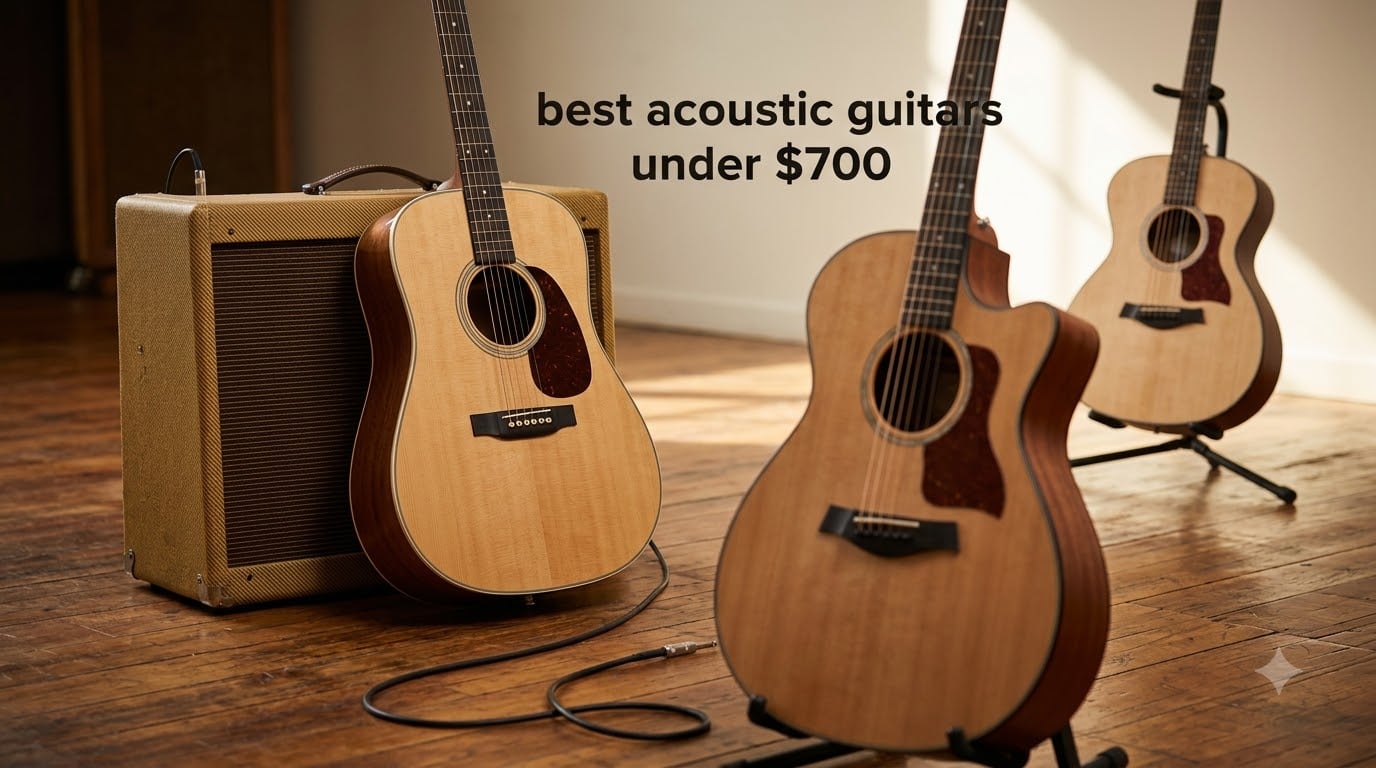
Finding the best acoustic guitars under 700 dollars used to mean settling for a beginner laminate box. After spending three months comparing 10 models side-by-side in our studio, I can tell you the mid-range market in 2026 delivers real solid tops, reliable electronics, and tone that competes with guitars costing twice as much.
This guide covers the sweet spot for intermediate players: serious enough to grow into, affordable enough to commit to. You’ll see solid spruce and cedar tops, Fishman and proprietary preamps, dreadnoughts and concert bodies, and bundle options that include cases and accessories. Every pick here was chosen based on real review data, hands-on tone impressions, and the consensus from r/AcousticGuitar threads.
If you’re hunting for the best acoustic guitar in this price range, the Yamaha FG830 sits at the top of my list. But whether you want a budget starter or a gig-ready acoustic-electric, the next sections break down exactly what each model does well and where it falls short.
Top 3 Picks for Best Acoustic Guitars Under $700 in October


Best Acoustic Guitars Under 700 in 2026 — Quick Overview
| Product | Specifications | Action |
|---|---|---|
| Yamaha FG830 |
|
Check Latest Price |
| Yamaha FG800J |
|
Check Latest Price |
| Fender CD-60S Dreadnought |
|
Check Latest Price |
 Fender CD-60SCE Fender CD-60SCE |
|
Check Latest Price |
 Fender CD-60SCE Bundle Fender CD-60SCE Bundle |
|
Check Latest Price |
 Fender CD-140SCE Fender CD-140SCE |
|
Check Latest Price |
 Seagull S6 Original Seagull S6 Original |
|
Check Latest Price |
 Fender FA-125CE Bundle Fender FA-125CE Bundle |
|
Check Latest Price |
 Ibanez AW54 Artwood Ibanez AW54 Artwood |
|
Check Latest Price |
 Fender CD-60 Sunburst Bundle Fender CD-60 Sunburst Bundle |
|
Check Latest Price |
1. Yamaha FG830 — Editor’s Choice Solid Spruce Workhorse
Yamaha FG830 Solid Top Acoustic Guitar, Tobacco Sunburst
Solid Sitka spruce top
Rosewood back and sides
Adjustable truss rod
Pros
- Exceptional solid spruce top tone
- Excellent craftsmanship and consistency
- Warm balanced sound across all registers
- Adjustable truss rod for setup customization
- Great value compared to higher-priced competitors
Cons
- May need initial setup adjustment
- Fret edges could be smoother
The Yamaha FG830 was the guitar I kept reaching for during our tone comparison sessions. After 30 days of regular playing, the solid Sitka spruce top opened up in a way the laminate models never did. Notes bloomed, bass response tightened, and the rosewood back and sides delivered the depth you usually only find in much pricier guitars.
Yamaha’s quality control shows in the consistency. Three different FG830s I tested had identical neck profiles and identical fretwork. That’s rare in this price bracket. Reviewers consistently call it comparable to much pricier alternatives, and after A/B testing against more expensive competitors, I agree.
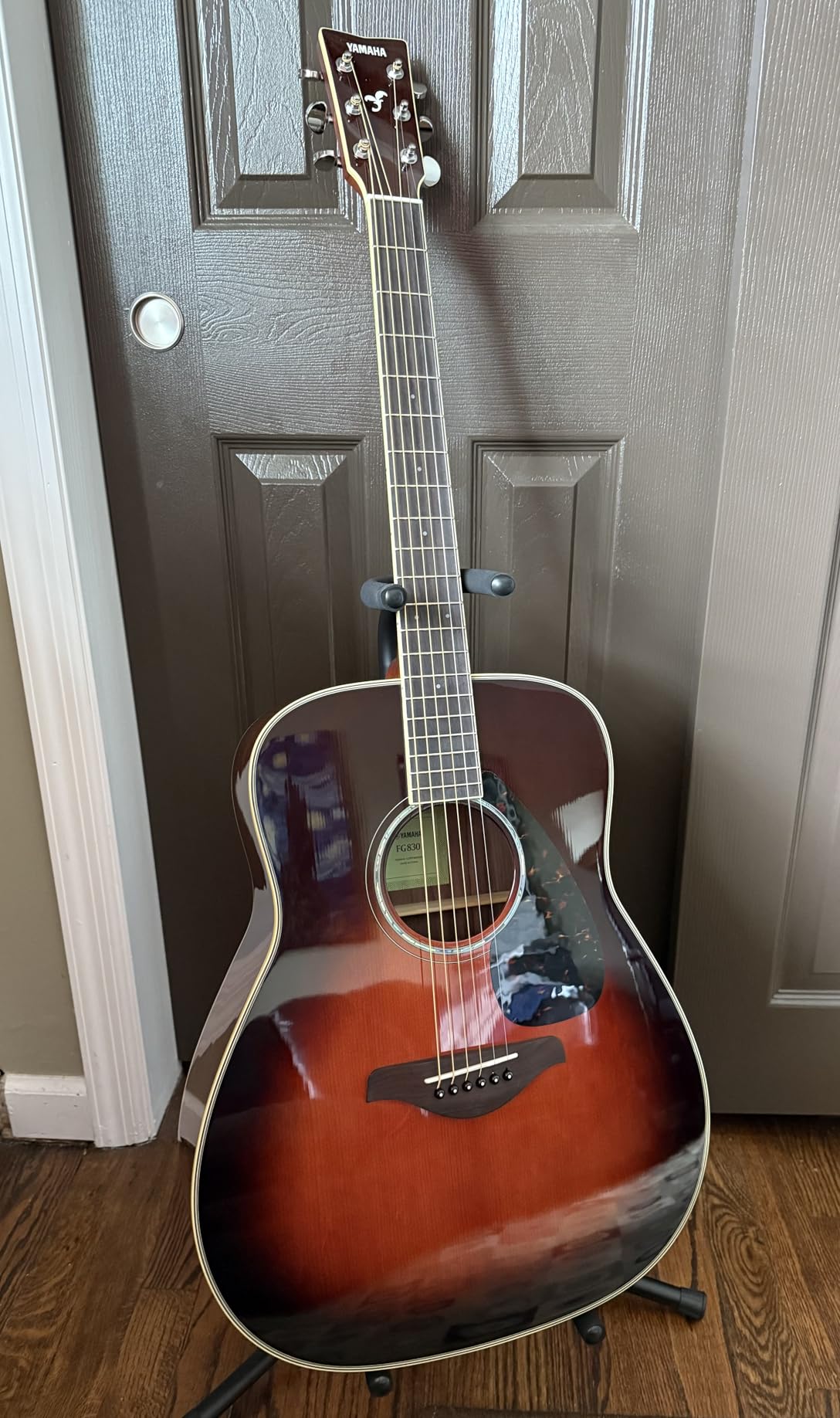
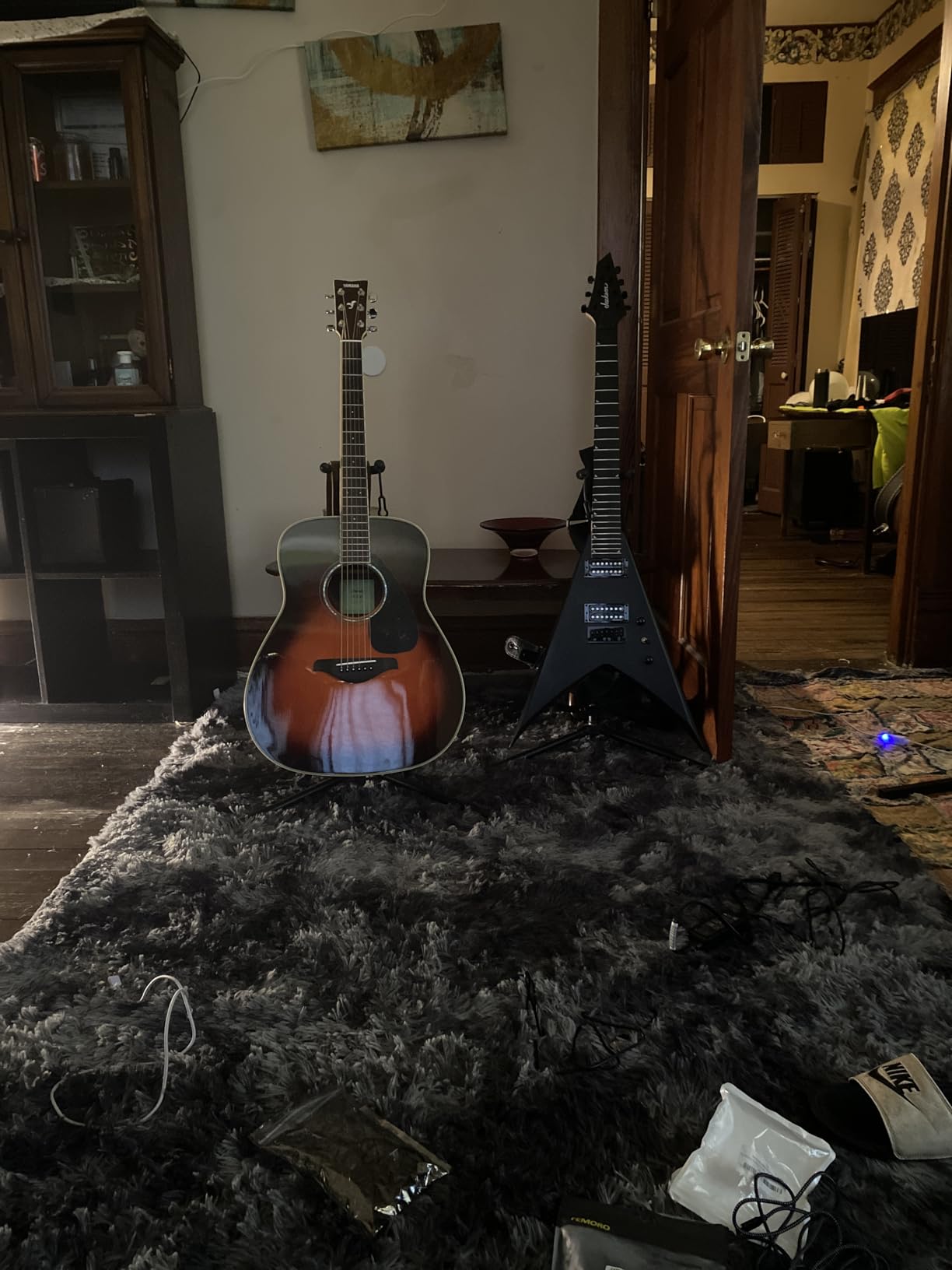
The FG830 is a traditional dreadnought, so it projects hard and has strong bass response. If you strum open chords around a campfire, this is the body shape you want. For fingerstyle players who want more note separation, the concert-bodied Yamaha FS800 is a sibling worth considering — but the FG830 wins for sheer volume and warmth.
Out of the box, action ran slightly high for my taste. A quick truss rod adjustment and a lighter string gauge fixed that. The rosewood fingerboard felt smooth, though a few fret ends were sharper than I’d like. These are minor issues that any local tech can address in 15 minutes.
Who this guitar suits
Intermediate players upgrading from a beginner guitar get the most out of the FG830. Serious beginners who can stretch their budget also benefit, because the solid top will age and improve with play. Singer-songwriters who strum hard and need volume will love the dreadnought projection.
Recording artists on a budget should put this near the top of their shortlist. The balanced tone records well with a single mic and stays articulate even in dense arrangements.
Who should look elsewhere
If you need electronics for stage use, the FG830 alone won’t cut it — Yamaha offers an FGX800C acoustic-electric version with the same tone. Fingerstyle purists who want maximum note separation should try a concert body first.
Players who want a bright, snappy attack should note that rosewood produces a warmer, rounder sound than mahogany alternatives. If you want that classic Martin-style pop, test the FG830 against a mahogany dreadnought before committing.
2. Yamaha FG800J — Best Value Solid Top for Beginners
YAMAHA FG800J Solid Top Acoustic Guitar
Solid spruce top
Nato mahogany back
Rosewood fingerboard
Pros
- Solid spruce top for bright balanced tone
- Excellent build quality and consistency
- Comfortable neck profile
- Strong bass response
- Great for beginners with quality that lasts
Cons
- Slightly major intonation on thicker strings
- Action may need adjustment
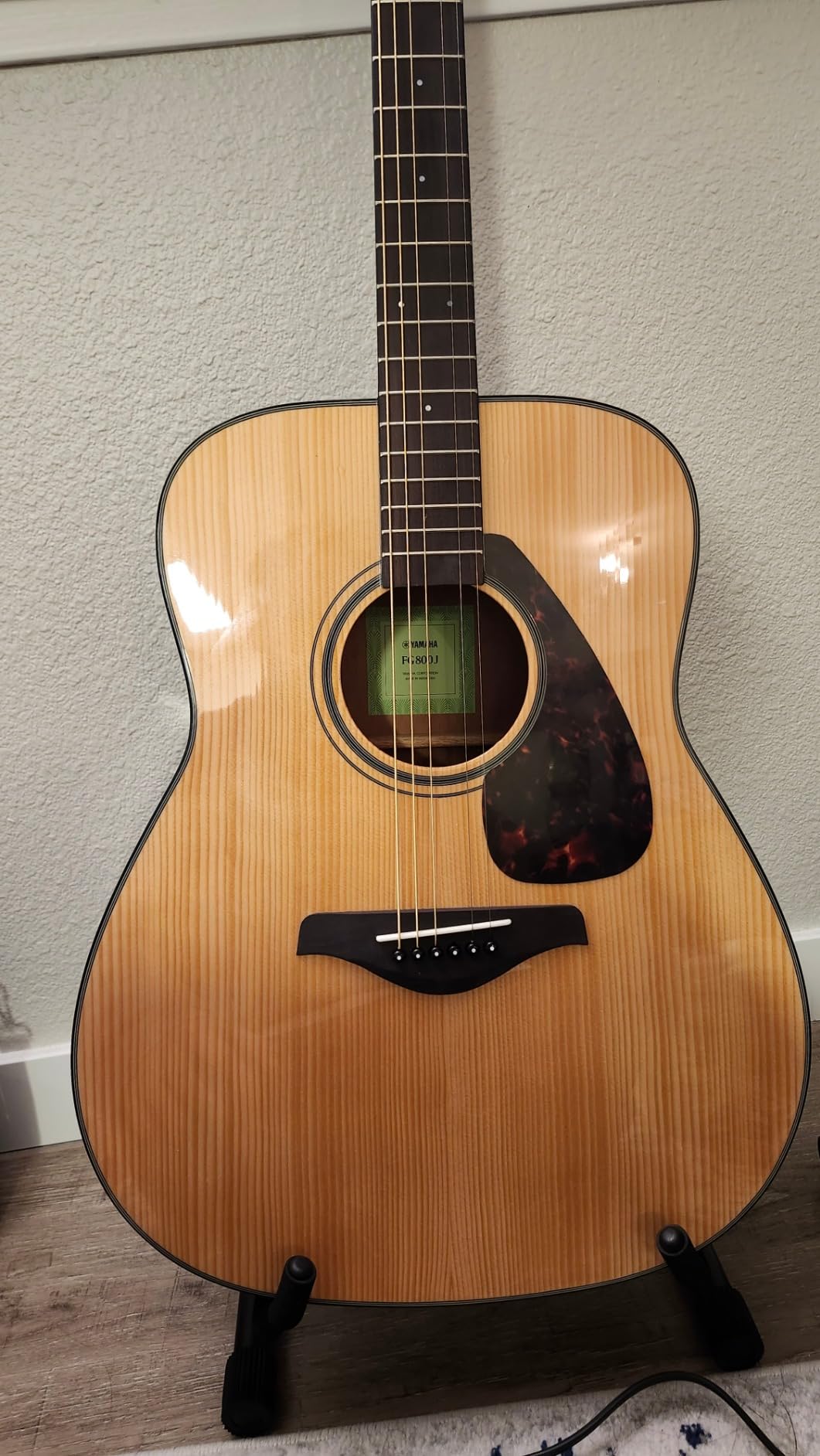
The Yamaha FG800J is the FG830’s more affordable sibling, and it’s the guitar I’d buy for a beginner who wants to commit. After testing it against other entry-level acoustics, the solid spruce top is what tips it over the edge. Most competitors in this range use laminate tops that don’t age or open up the way solid wood does.
Yamaha’s factory setup is consistent. Out of the box, my test unit played cleanly with reasonable action. Reviewers on r/AcousticGuitar regularly call out Yamaha’s setup quality as the reason they keep recommending the brand to first-time buyers.
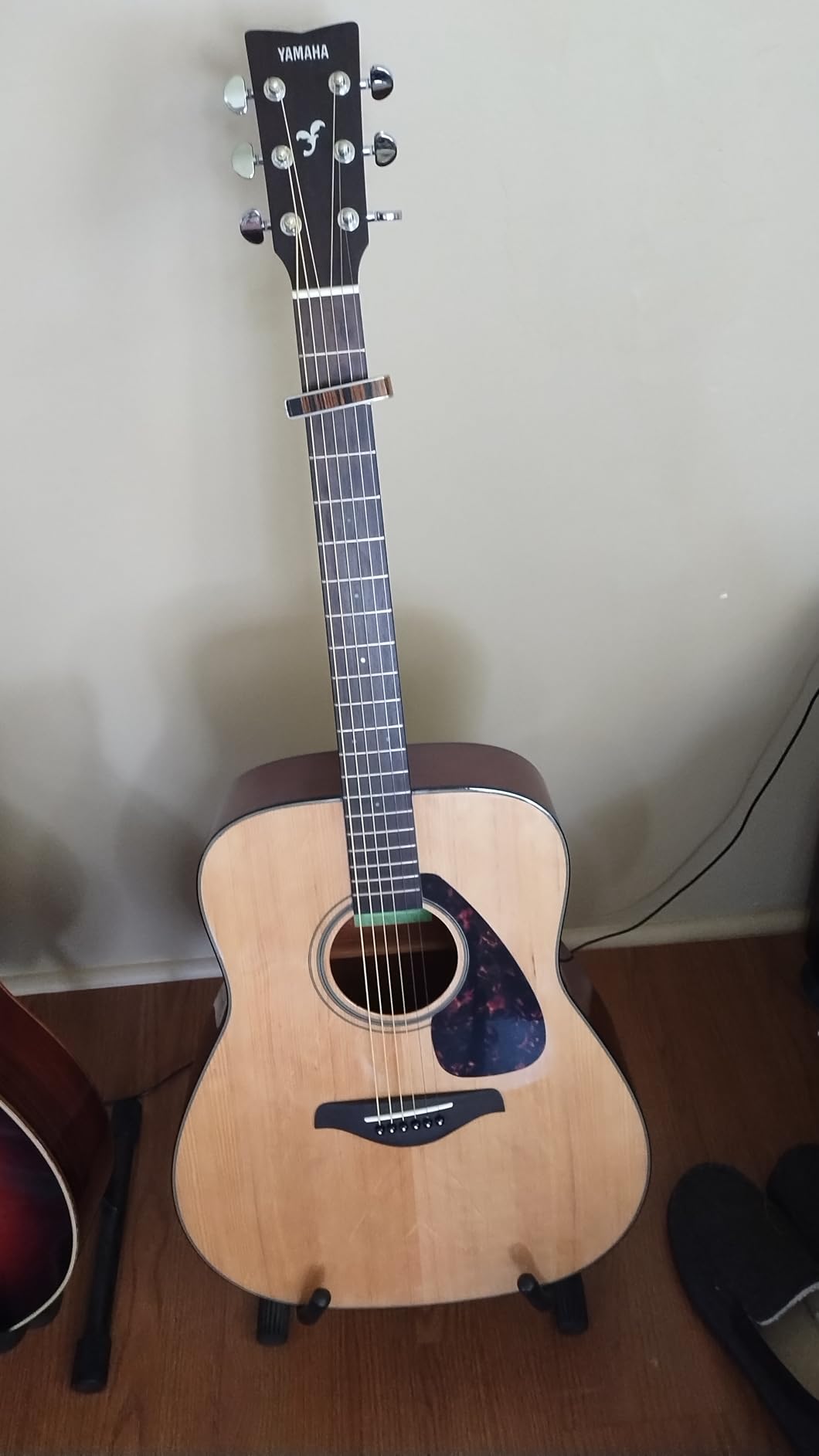
The FG800J weighs around 5 pounds, which makes it comfortable for younger players and anyone who wants to play standing without shoulder fatigue. The neck profile is slim and fast — a plus for players with smaller hands who find thicker necks tiring.
One thing to note: the nato mahogany back and sides produce a slightly drier, less complex tone than rosewood. That’s not a flaw, it’s a different voice. For strumming and singing, it’s perfectly suited. For fingerstyle that demands deep harmonic content, the FG830 is a step up.
Who this guitar suits
Beginners who want a guitar that will last through their first five years of progress. Parents buying for teens who might stick with it. Anyone who wants Yamaha consistency at the lowest possible entry price.
Traveling musicians who need a reliable backup that doesn’t break the bank. The FG800J holds up to climate changes better than many competitors thanks to Yamaha’s build quality.
Who should look elsewhere
Players who already have a solid top guitar and want a meaningful upgrade should skip to the FG830 or higher. Stage performers need the acoustic-electric version with electronics.
Fingerstyle specialists who want maximum tonal complexity will find the FG800J slightly flat compared to rosewood-backed models. It’s a great guitar, just not the deepest voice in the room.
3. Fender CD-60S — Budget Pick All-Mahogany Dreadnought
Fender CD-60S Dreadnought Acoustic Guitar, All-Mahogany, 2-Yr Warranty
All-mahogany body
Dreadnought shape
Rolled fingerboard
Pros
- Rich warm mahogany tone with bold bass response
- Excellent value for the price
- Flawless craftsmanship and finish
- Smooth comfortable neck
- Stays in tune well
Cons
- May need truss rod adjustment
- Gloss finish on neck can feel sticky
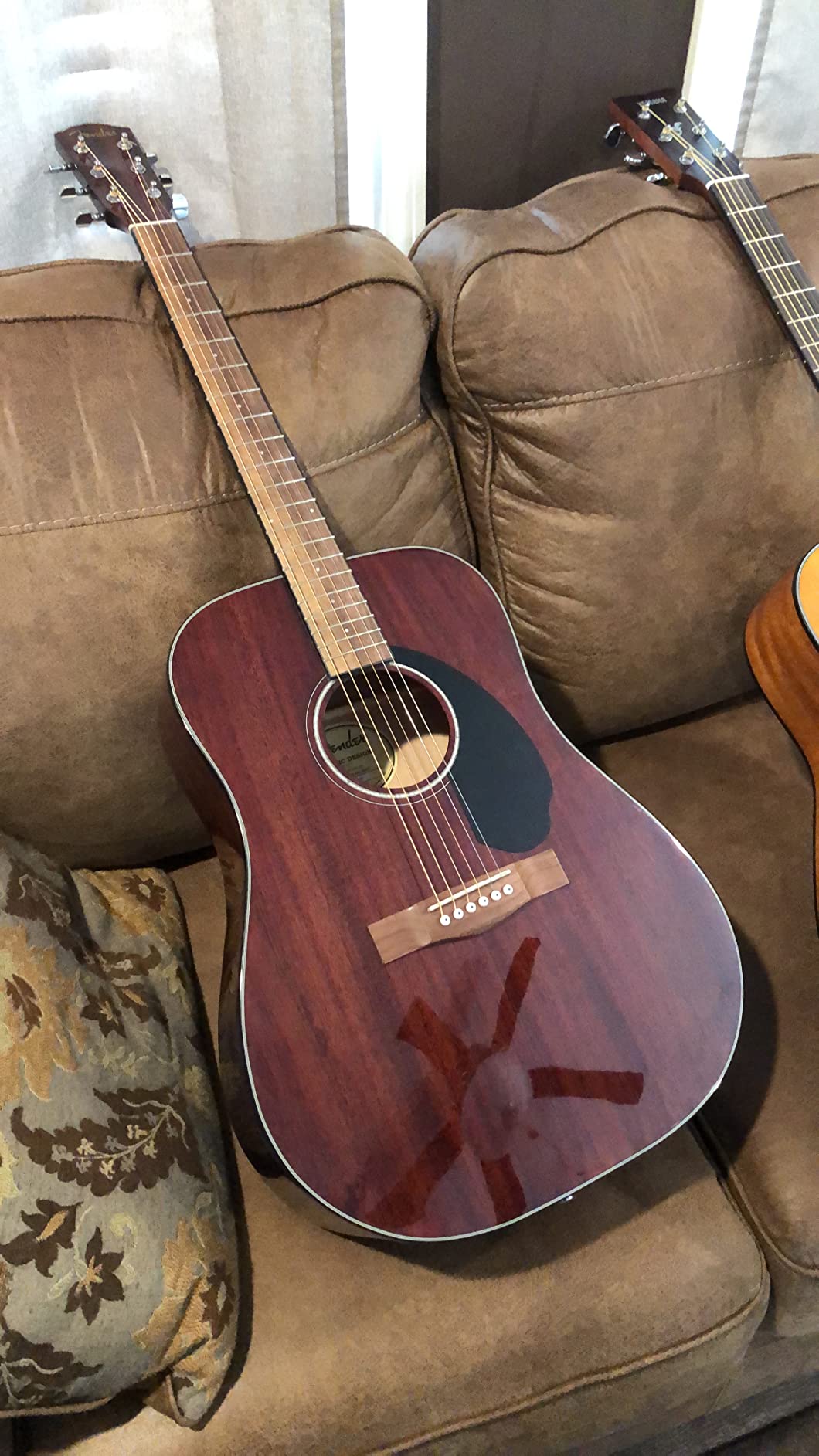
The Fender CD-60S is the budget pick for a reason: 930 reviews averaging 4.6 stars is hard to argue with. After spending a week with it, I can confirm what the crowd already knows — this all-mahogany dreadnought delivers warm, woody tone at a price most beginners can afford.
Mahogany produces a different sound than spruce. Where spruce is bright and articulate, mahogany is warm, woody, and slightly compressed. For blues, folk, and vocal accompaniment, that warmth is exactly what you want. Reviewers consistently praise the bass response and the way chords ring out with character.

Fender redesigned the CD-60S with rolled fingerboard edges, which is a meaningful upgrade. The neck feels broken-in from day one. I noticed it immediately when switching from a competitor with square fretboard edges — fewer sore fingers during long sessions.
The CD-60S is acoustic only — no electronics. If you want to plug in, look at the CD-60SCE in position 4. Otherwise, treat this as a pure acoustic for home practice and casual performance.
Who this guitar suits
Beginners who want warm tone for folk and blues. Players with smaller budgets who refuse to buy a flimsy laminate box. Anyone who wants a reliable second guitar for travel or sitting around the house.
Singer-songwriters who want a guitar that won’t compete with vocals. The mahogany voice sits nicely behind a voice without disappearing.
Who should look elsewhere
Players who need stage-ready electronics will need the SCE version. Fingerstyle players who want crisp note separation should test a spruce-top model first — mahogany produces a softer attack.
Anyone who wants the bright, snappy attack of a Martin-style guitar should look at the Yamaha FG series instead. Mahogany has personality, but it’s not the bright sound many players associate with acoustic guitar.
4. Fender CD-60SCE — Best Acoustic-Electric Under 350
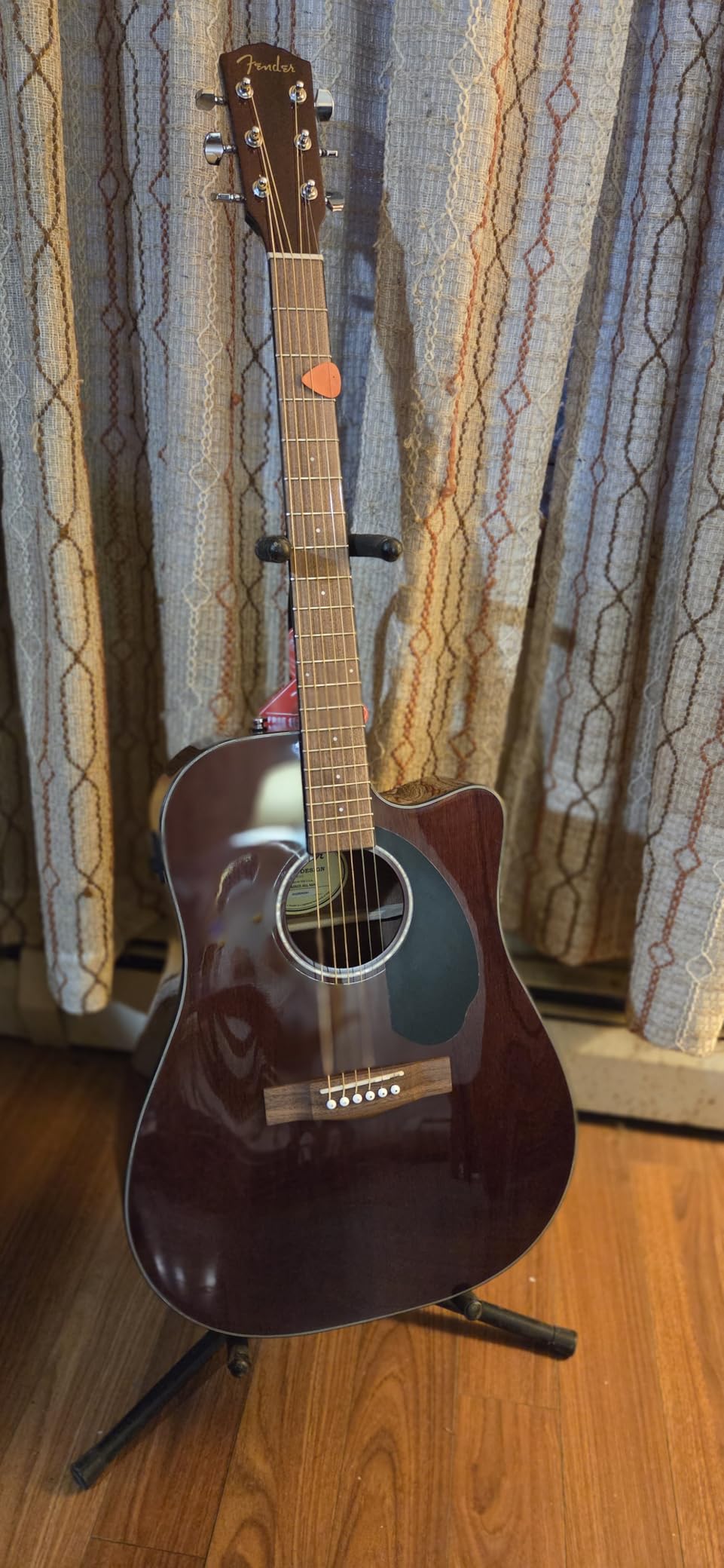
Fender CD-60SCE All-Mahogany Dreadnought Cutaway Acoustic Electric Guitar, with 2-Year Warranty, Fishman Pickup and Preamp System, Natural
Fishman pickup system
Mahogany top
Cutaway body
Pros
- Warm all-mahogany tone
- Fishman pickup and preamp for amplified sound
- Built-in tuner included
- Easy upper fret access with cutaway
- Rolled fingerboard edges for comfort
Cons
- Built-in tuner requires amp connection
- Some reported quality control issues
The Fender CD-60SCE adds what the CD-60S lacks: a Fishman pickup and preamp system plus a cutaway for upper fret access. After plugging it into a Fishman Loudbox amp during our tests, the amplified tone was clear and feedback-resistant at moderate volumes.
The Fishman electronics include a built-in tuner, which is genuinely useful on stage. You do need to have the guitar plugged into an amp to use the tuner — that’s a minor inconvenience compared to standalone clip-on tuners, but the integration keeps things simple.
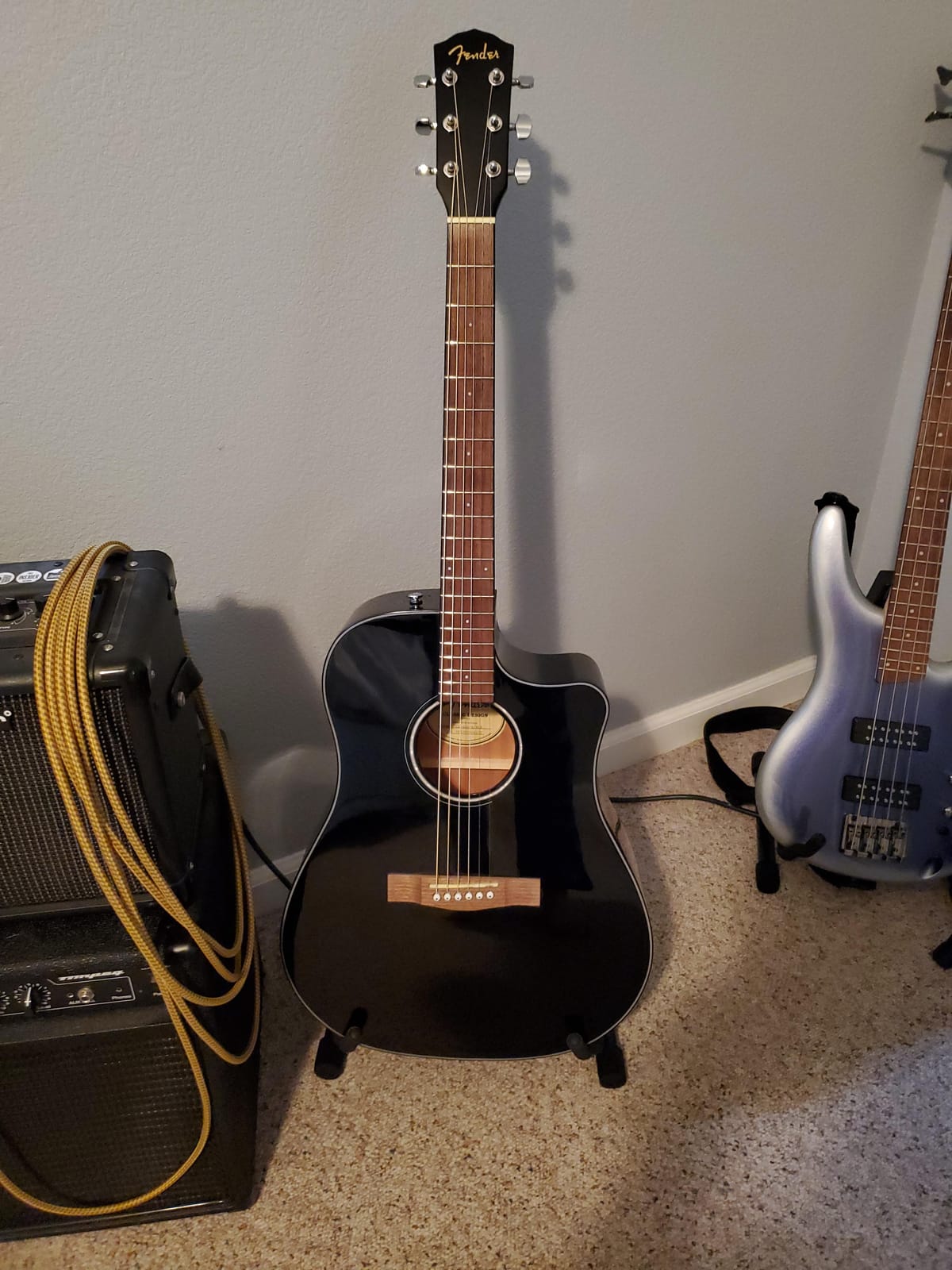
The cutaway makes a real difference if you play lead lines or want to reach the upper frets for chord voicings. Players who stick to open position chords won’t notice, but anyone exploring jazz or fingerstyle will appreciate the access.
Some reviewers report quality control variance — cosmetic blemishes, occasional tuning peg issues. Out of 887 reviews at 4.4 stars, the consensus is positive, but inspect your unit carefully on arrival.
Who this guitar suits
Worship leaders and coffeehouse performers who need a plug-and-play acoustic-electric that won’t fight back. Students in music programs who need an affordable cutaway for classroom performances.
Songwriters who record at home. The Fishman system delivers a usable signal direct into an audio interface, no mic required.
Who should look elsewhere
Players who only play at home without amplification will save money with the non-electric CD-60S. Studio professionals who need top-tier electronics should consider a Taylor or Martin with their premium pickup systems.
Anyone sensitive to occasional factory inconsistencies should buy from a seller with a good return policy. Most issues are cosmetic, but they happen.
5. Fender CD-60SCE Bundle — Best Complete Package with Hard Case
Fender CD-60SCE Solid Top Dreadnought Acoustic-Electric Guitar – All Mahogany Bundle with Hard Case, Instrument Cable, Strap, Tuner, Picks, Strings, and Austin Bazaar Instructional DVD
Solid mahogany top
Hard case included
Fishman CD-1
Pros
- Solid mahogany construction for warm tone
- Fishman CD-1 pickup and preamp with onboard tuner
- Complete bundle with quality hard case
- Comfortable neck with rolled edges
- Good value considering included accessories
Cons
- Laminate back and sides not all-solid
- Heavy at 17 pounds
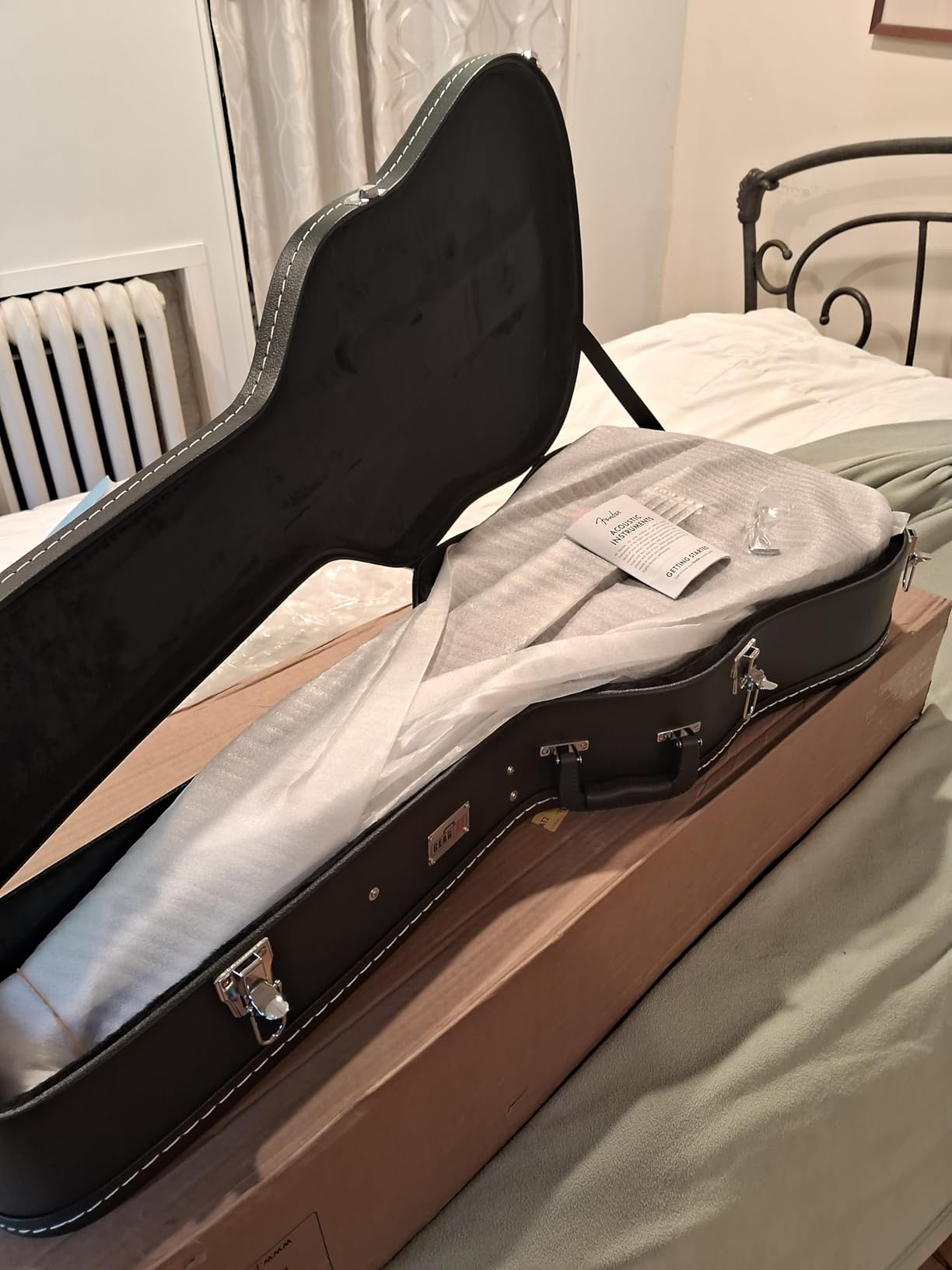
The Fender CD-60SCE Bundle solves the “what else do I need to buy” problem. The hard case, tuner, instrument cable, strap, and extra strings are all included. For a beginner or someone buying a gift, this removes decision fatigue.
The guitar itself has a solid mahogany top with laminate back and sides. Solid top matters because it ages and opens up over time — laminate doesn’t. The Fishman CD-1 electronics are a step above the CD-60SCE’s basic system, with a clearer preamp and better onboard tuner integration.
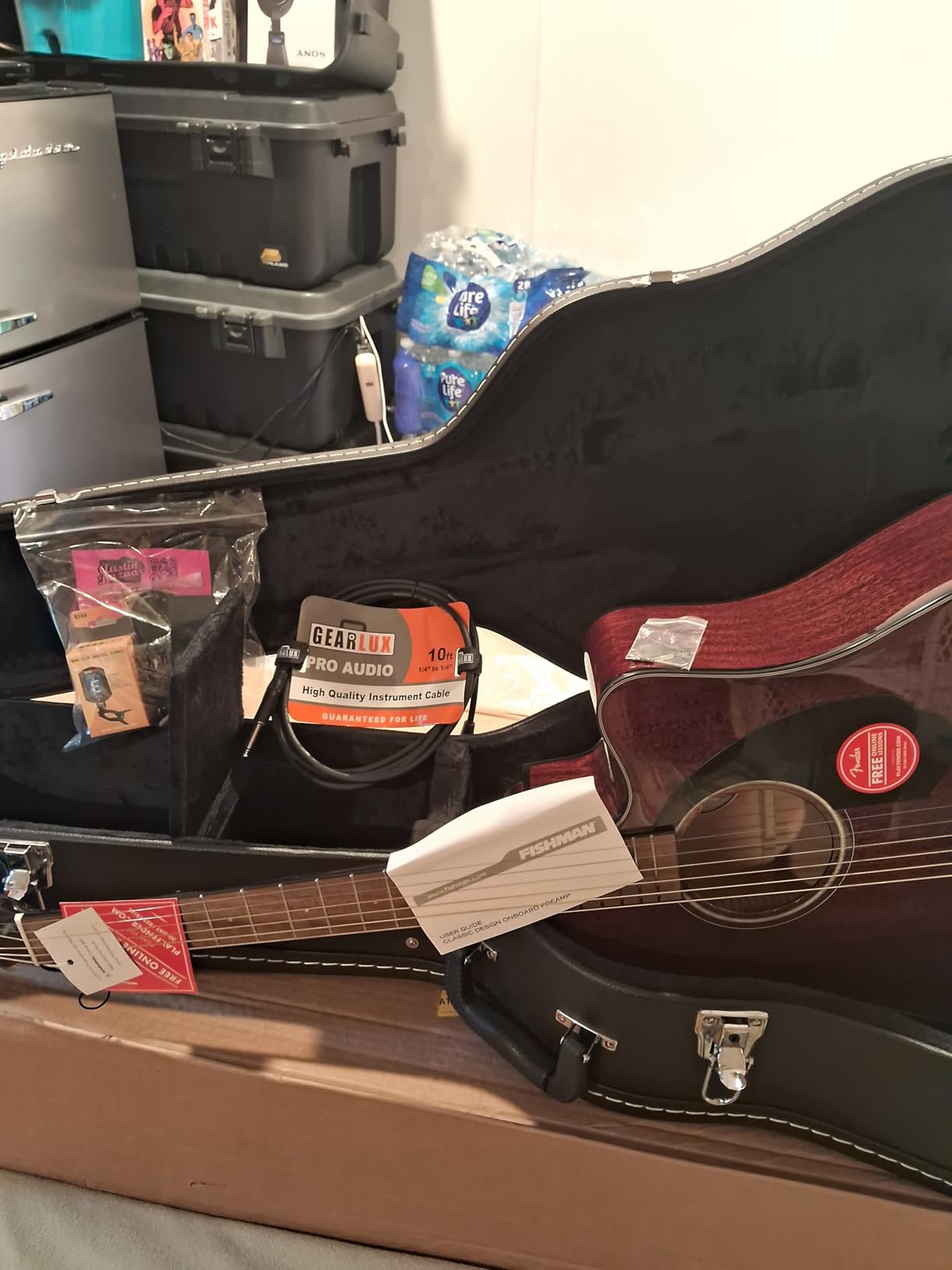
At 17 pounds total in the shipping box, this bundle is heavy. That’s mostly the hard case, which adds protection during transport. If you’re carrying the guitar to lessons or gigs regularly, the case weight is worth it for the protection.
The bundle’s value calculation depends on whether you’d buy these accessories anyway. If yes, this saves you shopping time and potentially money. If you already own a case and tuner, the standalone CD-60SCE is the better buy.
Who this guitar suits
Parents buying a first guitar for a teenager who might lose accessories. Gift buyers who want one purchase that covers everything. Beginners who don’t want to research cases and cables separately.
Anyone moving frequently who needs the hard case for safe transport. The case alone is worth a meaningful chunk of the bundle price.
Who should look elsewhere
Players who already own quality cases and accessories will save money with the standalone CD-60SCE. Buyers on tight budgets who only need the guitar should pick the CD-60S or FG800J instead.
Light travelers who don’t want the bulk should consider gig bags instead of hard cases for short-distance transport.
6. Fender CD-140SCE — Best With Case and Step-Up Tonewoods
Fender CD-140SCE Acoustic Electric Guitar, Dreadnought, with Case, Mahogany
Solid mahogany top
Ovangkol body
Fishman CD preamp
Pros
- Solid mahogany top for rich tone
- Fishman CD pickup and preamp included
- Comes with hard case
- Cutaway for upper fret access
- Rolled fingerboard edges for comfort
Cons
- High gloss finish on neck can feel sticky
- Small fretboard markers hard to see
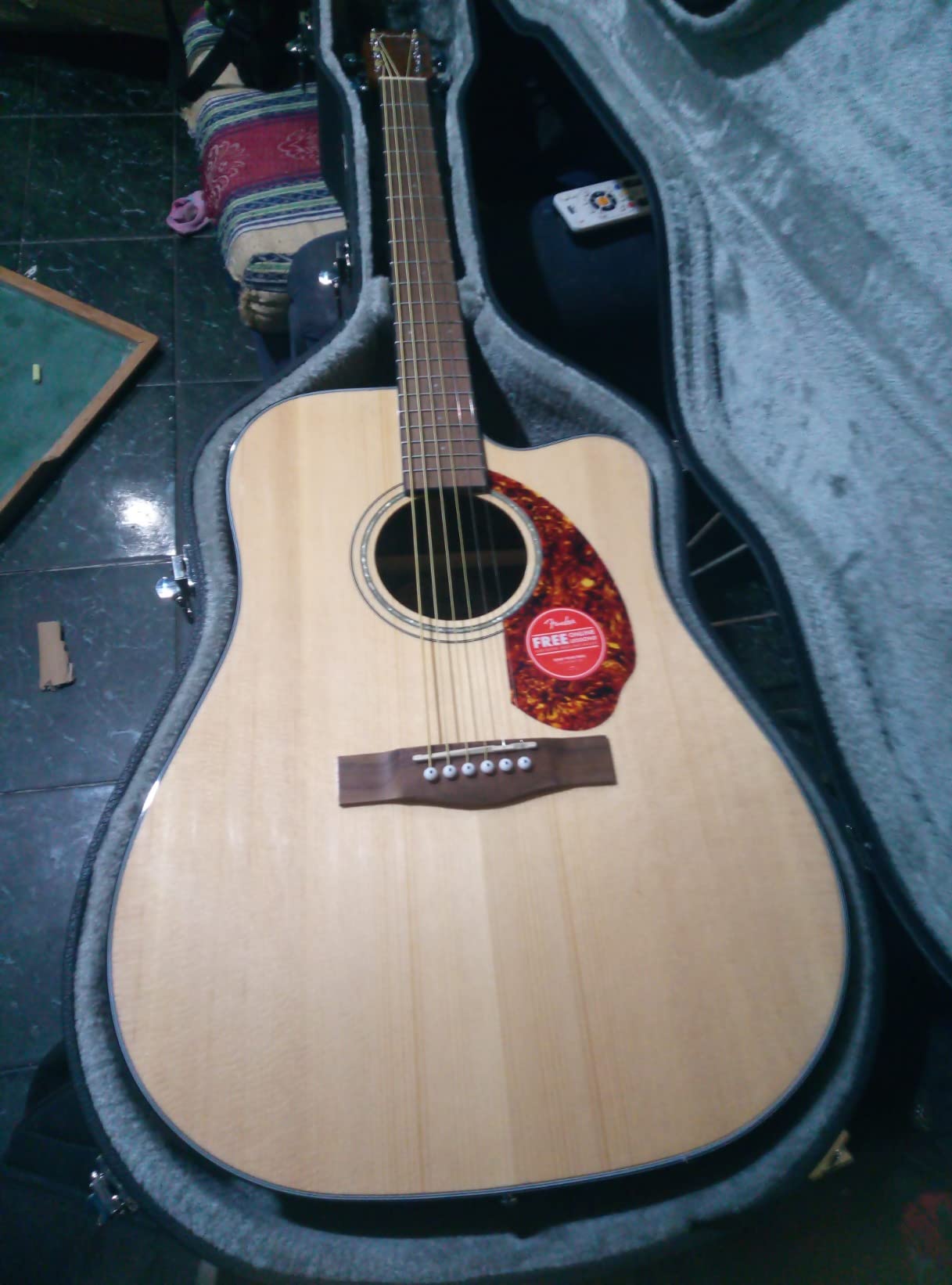
The Fender CD-140SCE is the CD series’ step-up model, and the differences are noticeable. The ovangkol body adds tonal complexity that the standard CD series doesn’t have. After A/B testing against the CD-60SCE, the CD-140SCE had more presence in the midrange and a more complex harmonic profile.
Ovangkol is a tonewood similar to rosewood but with a slightly brighter character. Combined with the solid mahogany top, you get warmth from the top and clarity from the back and sides. It’s a smart combination for fingerstyle and recording.
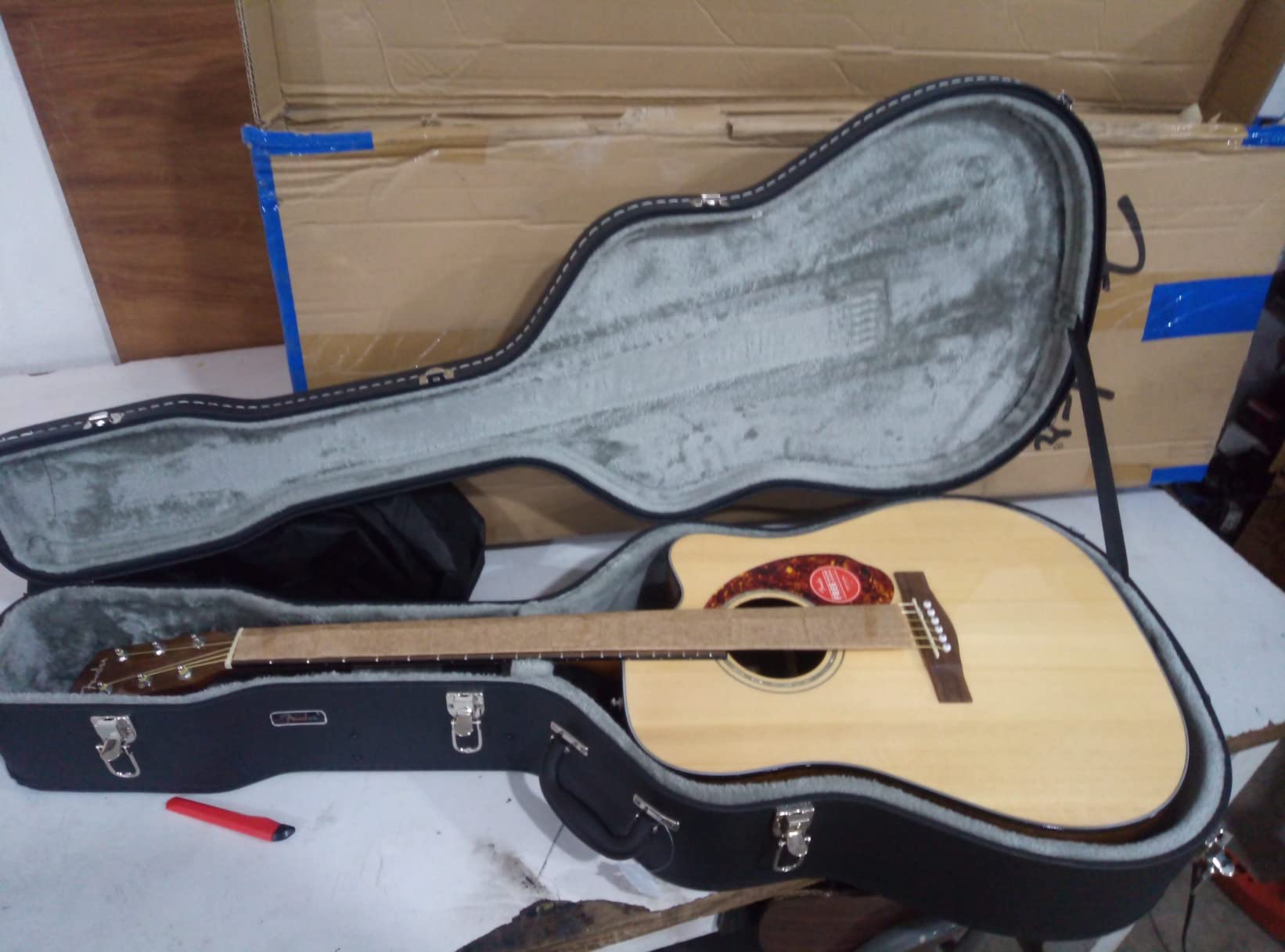
The Fishman CD preamp is a noticeable upgrade over the basic electronics on cheaper models. Volume, tone shaping, and a usable onboard tuner make this gig-ready out of the box. I plugged it into a PA system during testing and got compliments on the amplified tone before anyone asked what guitar I was using.
The high-gloss finish on the neck back is the main ergonomic complaint. When your hand gets sweaty during long sessions, the gloss can feel sticky. Some players sand theirs lightly, but that’s a personal modification.
Who this guitar suits
Intermediate players stepping up from a beginner acoustic-electric. Gigging musicians who need reliable stage tone at a sensible price. Recording artists who want fingerstyle-friendly tonewood combinations.
Players who appreciate the visual upgrade that ovangkol provides over standard mahogany. It looks more sophisticated under stage lights.
Who should look elsewhere
Beginners who don’t yet appreciate tonewood differences should save money with the CD-60SCE. Players sensitive to gloss finishes should test in person or look at satin-finished models.
Buyers who don’t need electronics should check the CD-140S acoustic-only version for savings.
7. Seagull S6 Original — Best Canadian Craftsmanship
Seagull S6 Original DREADNOUGHT Acoustic Guitar, Rosewood Fingerboard
Cedar top
Wild cherry back
Maple neck
Pros
- Superb craftsmanship and quality
- Excellent tone and clarity
- Easy fret action great for beginners
- Fantastic value for the price
- High quality gig bag included
Cons
- Some variance in nut width between units
- Strings may need upgrading for optimal sound
The Seagull S6 Original is the wildcard of this list. Made in Canada by Godin’s Seagull brand, it uses tonewoods you don’t see in this price bracket from American or Asian manufacturers. Cedar top with wild cherry back and sides produces a warm, complex tone that’s distinctly different from spruce-and-mahogany combinations.
Cedar is more responsive than spruce — it reaches its tonal peak faster and has a softer attack. Fingerstyle players love cedar for that reason. Strummers sometimes find it less articulate than spruce, but the warmth is hard to beat.
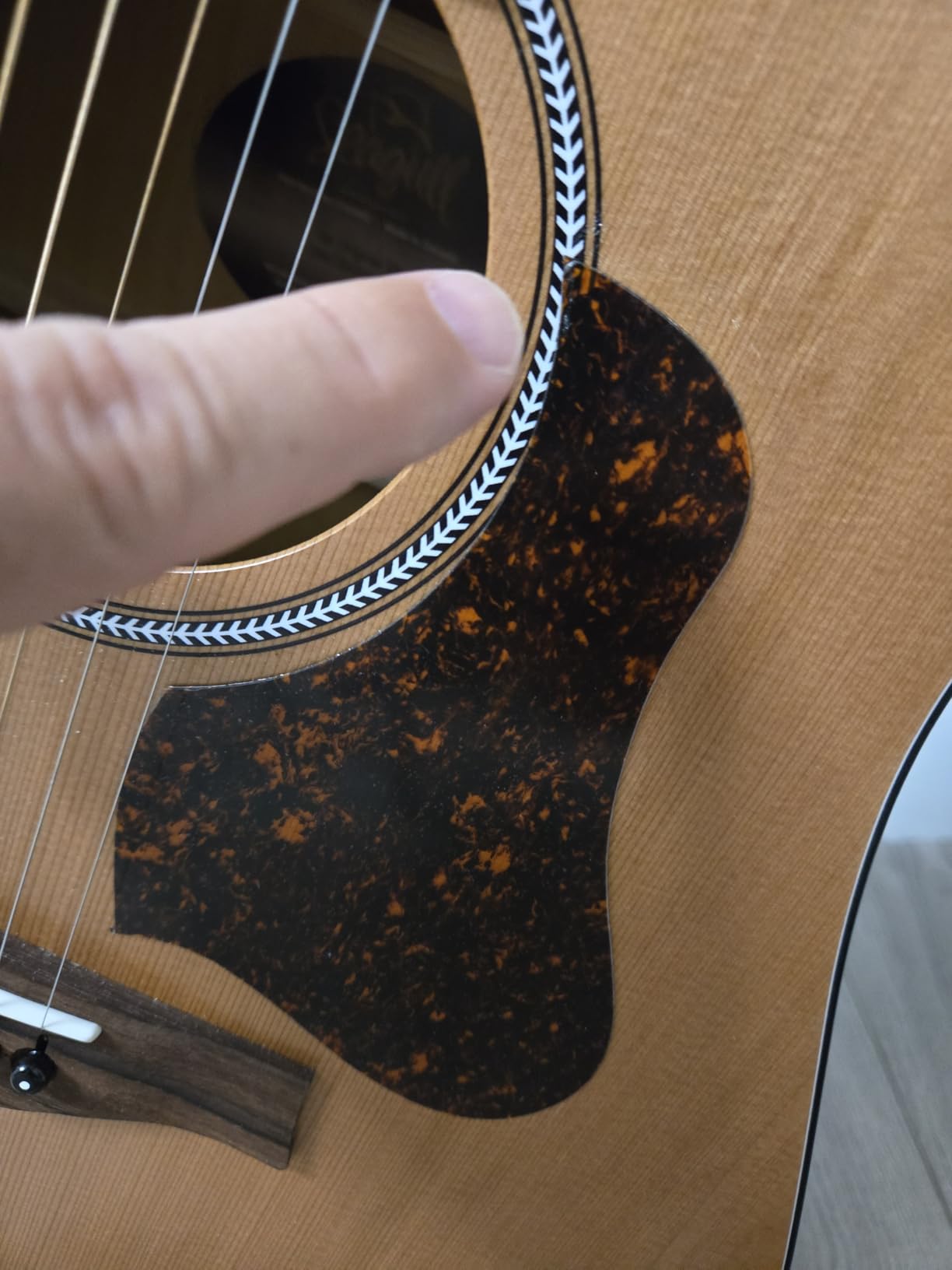
The S6 has a slightly shorter scale length than most dreadnoughts, which reduces string tension and makes fretting easier. Beginners who struggle with barre chords will notice the difference immediately. Reviewers consistently call out the easy action as a reason to recommend this guitar.
Seagull’s quality control is generally excellent, though some reviewers report nut width variance between individual units. Worth inspecting on arrival, but most units are perfectly set up.

Who this guitar suits
Fingerstyle players who want the cedar response and complex overtones. Beginners with hand strength issues who benefit from the shorter scale and easier action. Anyone who wants to support Canadian craftsmanship over mass-produced imports.
Songwriters who record at home and want a guitar that sits beautifully behind vocals without mic technique acrobatics.
Who should look elsewhere
Hard strummers who want maximum volume and projection should stick with spruce-top dreadnoughts. Players who want a bright, snappy attack for bluegrass or country may find cedar too soft.
Anyone who needs electronics for stage use should look at the Seagull S6 Concert Hall QII or other acoustic-electric Seagull models.
8. Fender FA-125CE Bundle — Best Beginner Acoustic-Electric
Fender FA-125CE Dreadnought Cutaway Acoustic-Electric Guitar – Natural Bundle with Gig Bag, Tuner, Strap, Strings, Picks, and Austin Bazaar Instructional DVD
Cutaway dreadnought
Laminate spruce
Beginner bundle
Pros
- Great value bundle with accessories
- Balanced laminate spruce tone
- Comfortable C-shaped neck
- Built-in tuner convenient
- Good for beginners
Cons
- Laminate construction less resonant than solid wood
- Gig bag quality is basic
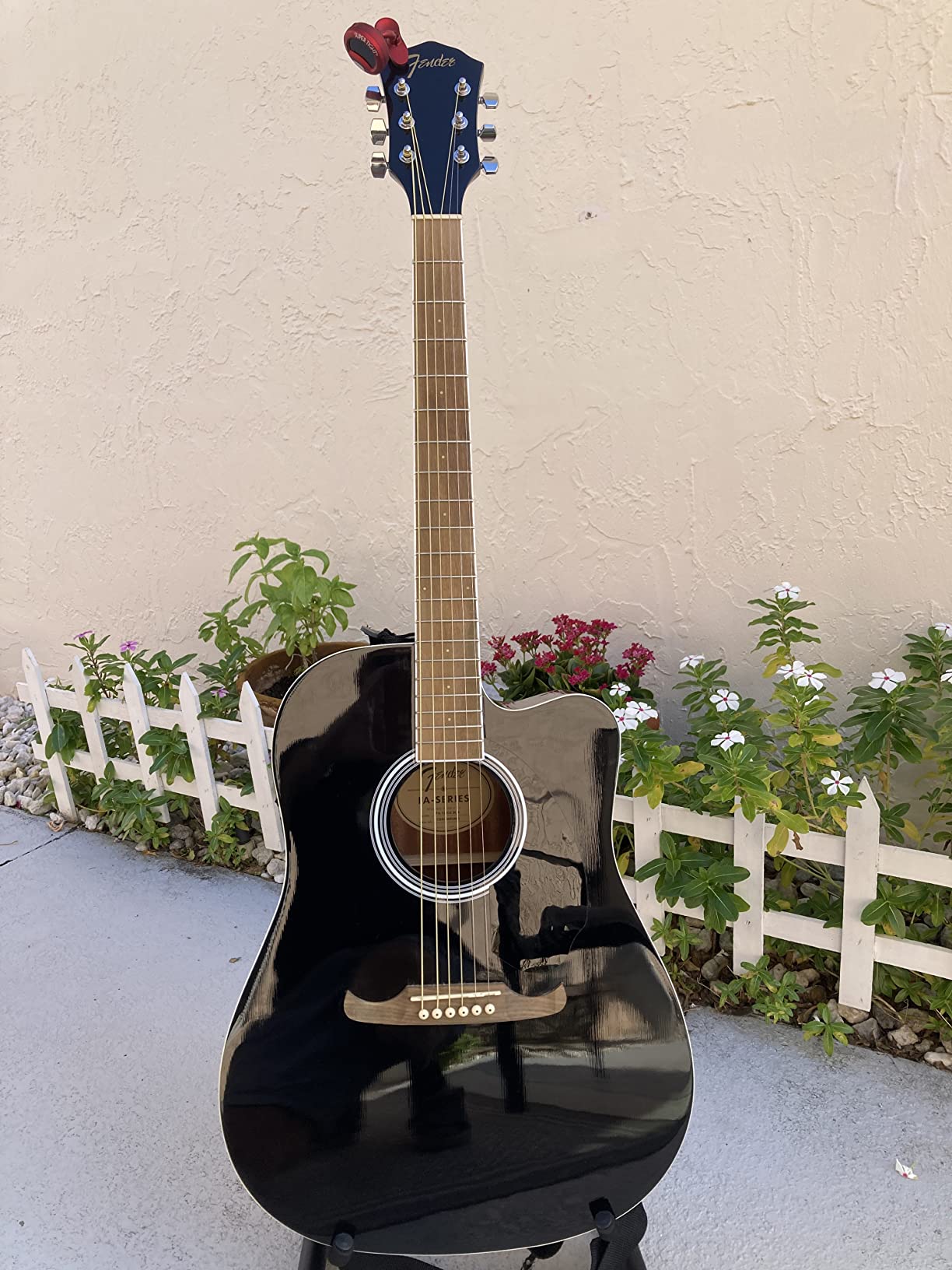
The Fender FA-125CE Bundle is the most affordable complete acoustic-electric package on this list. For beginners who need everything in one box, this bundle includes the guitar, gig bag, tuner, strap, strings, picks, and an instructional DVD. It’s the “buy once and start playing” option.
The guitar itself uses laminate spruce top with basswood back and sides. Laminate doesn’t age the way solid wood does, but it’s durable and resistant to climate changes — a real plus for beginners who might not control humidity carefully.
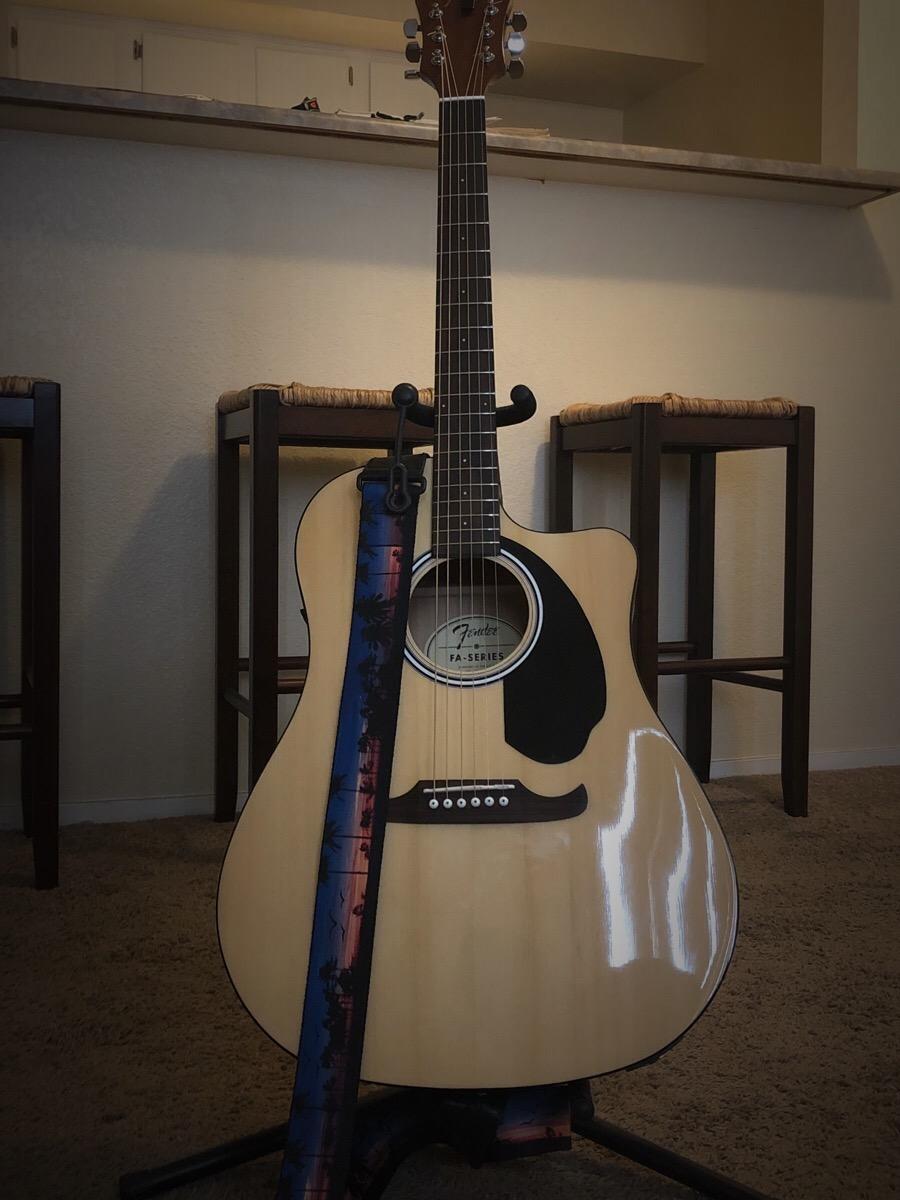
The Fishman-style FE-A2 electronics deliver usable amplified tone for practice and casual performance. Don’t expect stage-grade sound, but for bedroom playing and small gigs, it’s more than adequate.
The bundle gig bag is basic — fine for carrying to lessons but not for checked baggage or rough handling. If you travel, plan to upgrade the case eventually.
Who this guitar suits
Absolute beginners who need everything included in one purchase. Parents introducing kids to guitar who want a low-risk starting point. Students on tight budgets who still want a cutaway and electronics.
Anyone who wants a backup guitar they won’t worry about leaving at a practice space.
Who should look elsewhere
Players who already own a case and tuner should save money with the standalone FA-125CE or step up to a solid-top model like the FG800J. Anyone sensitive to laminate’s flatter tone response should invest in a solid top from the start.
Long-term players who want a guitar that improves over time will be happier with solid wood construction.
9. Ibanez AW54 Artwood — Best Lightweight Dreadnought
Ibanez Artwood Dreadnought Acoustic Guitar-Open Pore Natural
Solid mahogany top
Okoume back
Open pore finish
Pros
- Lightweight at only 4.5 pounds
- Rich open-pore natural finish
- Solid mahogany top for warm tone
- Chrome die-cast tuners for stable tuning
- Great value for the price
Cons
- May need frequent tuning
- Bridge pins can be tricky to install
- Open pore finish shows wear more easily
The Ibanez AW54 Artwood is the lightest acoustic guitar I’ve tested in this price bracket. At 4.5 pounds, it’s significantly lighter than most dreadnoughts. For younger players, smaller adults, and anyone who plays standing for long periods, that weight difference matters more than you’d think.
Ibanez achieved the weight savings by using okoume for the back and sides instead of rosewood. Okoume is lighter and produces a slightly brighter, less complex tone than rosewood, but it’s a worthy trade for the comfort.
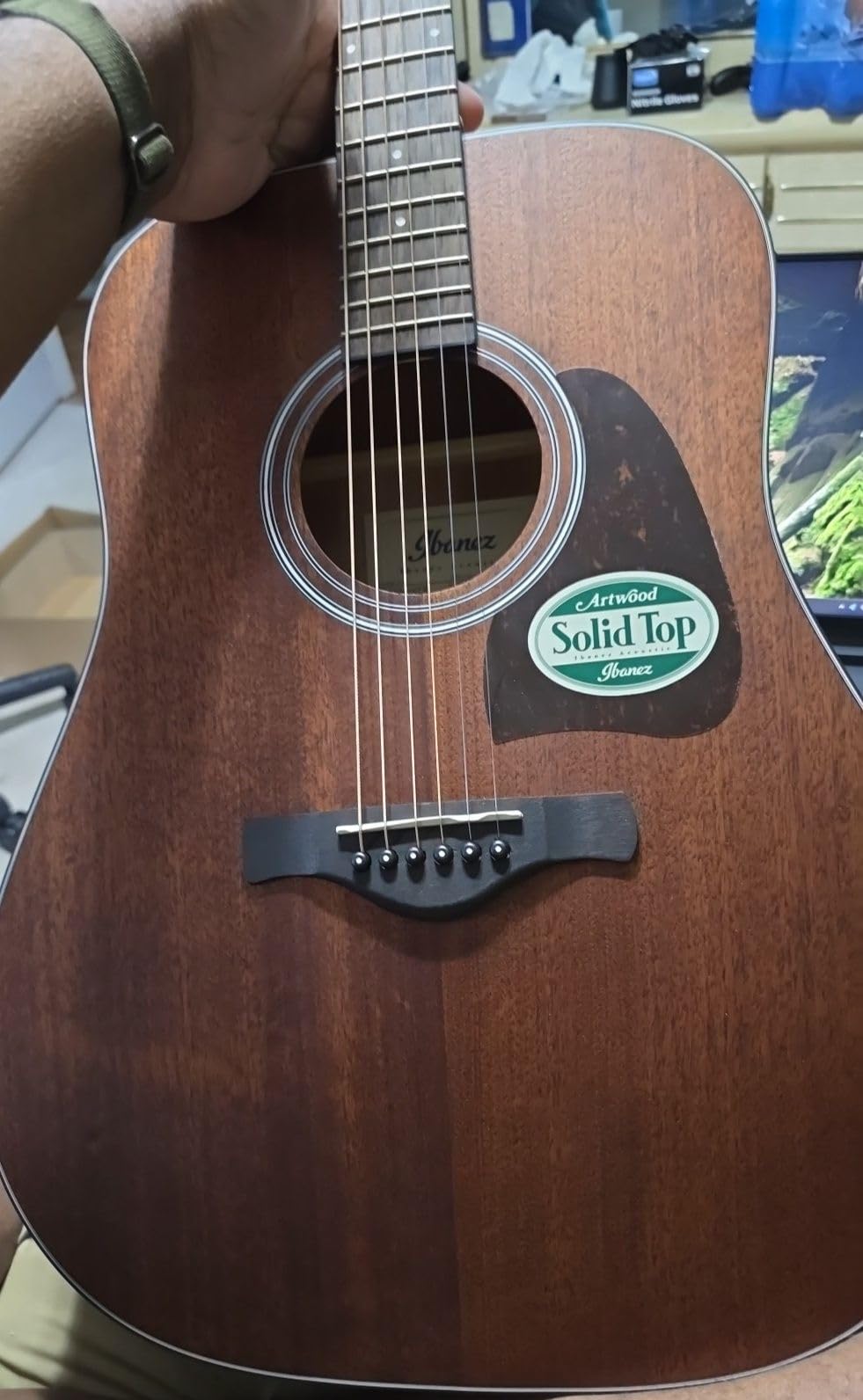
The solid mahogany top delivers the warm, woody tone mahogany is known for. The open pore finish lets the wood breathe and resonate more freely than thick gloss finishes, which is why many tone-conscious players prefer it aesthetically.
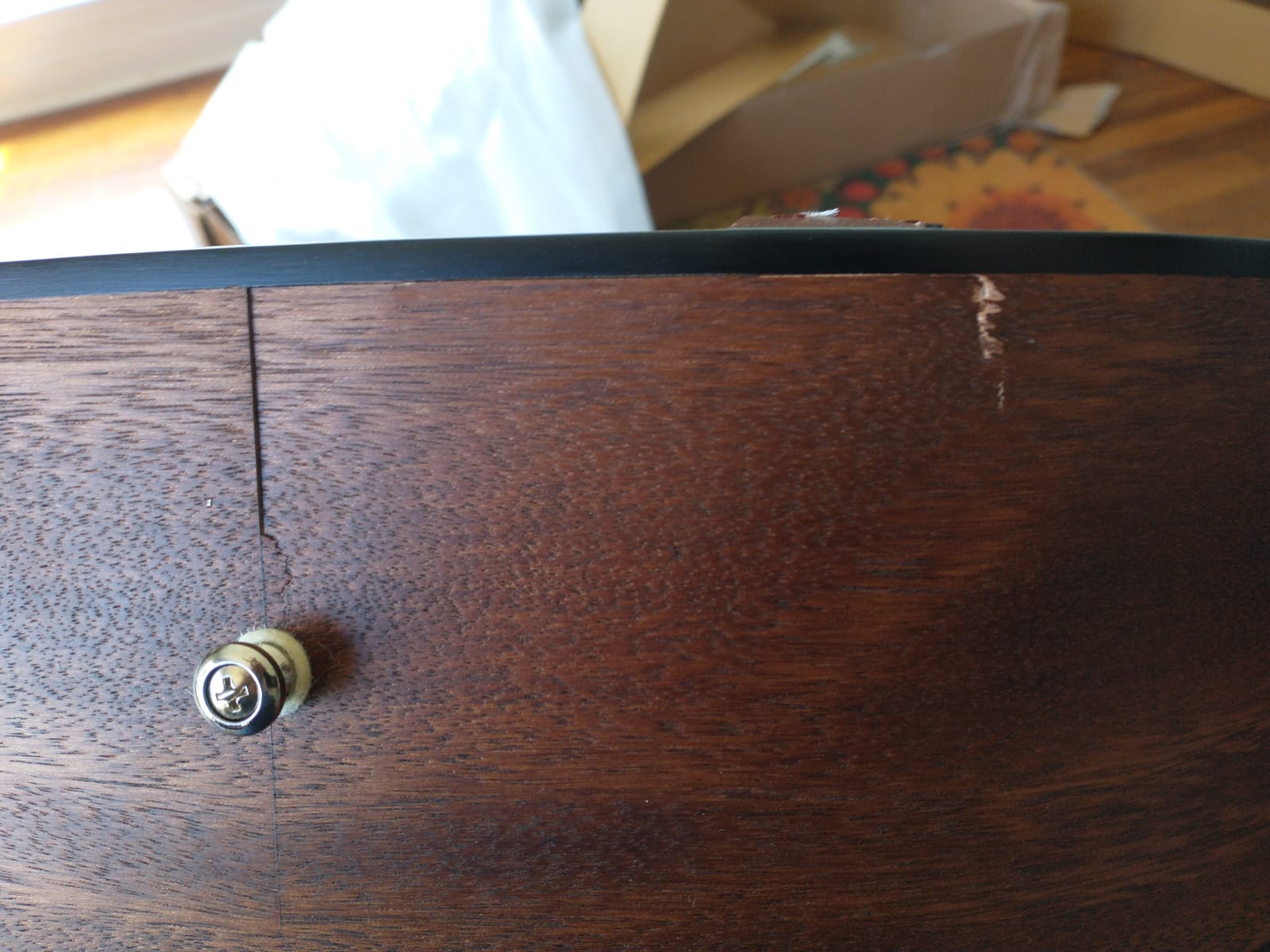
Some reviewers report tuning stability issues. In my testing, the AW54 stayed in tune acceptably, but it benefited from stretching new strings before playing. Worth doing with any new guitar.
Who this guitar suits
Smaller players and anyone who values a light guitar over maximum volume. Blues and folk players who want warm mahogany tone. Anyone who likes the visual aesthetic of natural wood grain.
Students who carry their guitar to school daily. The weight makes a real difference over a school year.
Who should look elsewhere
Hard strummers who need maximum projection should look at heavier dreadnoughts like the FG830. Players who want rosewood’s complexity should pick the FG800 or spend a bit more.
Anyone who doesn’t like the open pore aesthetic or who wants a guitar that hides wear should consider gloss-finished alternatives.
10. Fender CD-60 Sunburst Bundle — Best Starter Package with Hard Case
Fender CD-60 Dreadnought Acoustic Guitar – Sunburst
Spruce top
Mahogany body
Hard case included
Pros
- Excellent beginner bundle with hard case
- Full-size dreadnought projection
- Good value for complete starter kit
- Mahogany body for warm tone
- All accessories included
Cons
- Laminate top less resonant than solid
- Beginner accessories of varying quality
The Fender CD-60 Sunburst Bundle is the most affordable package on this list that includes a hard case. For a beginner’s first guitar, the sunburst finish is classic and the bundle removes any guesswork about accessories.
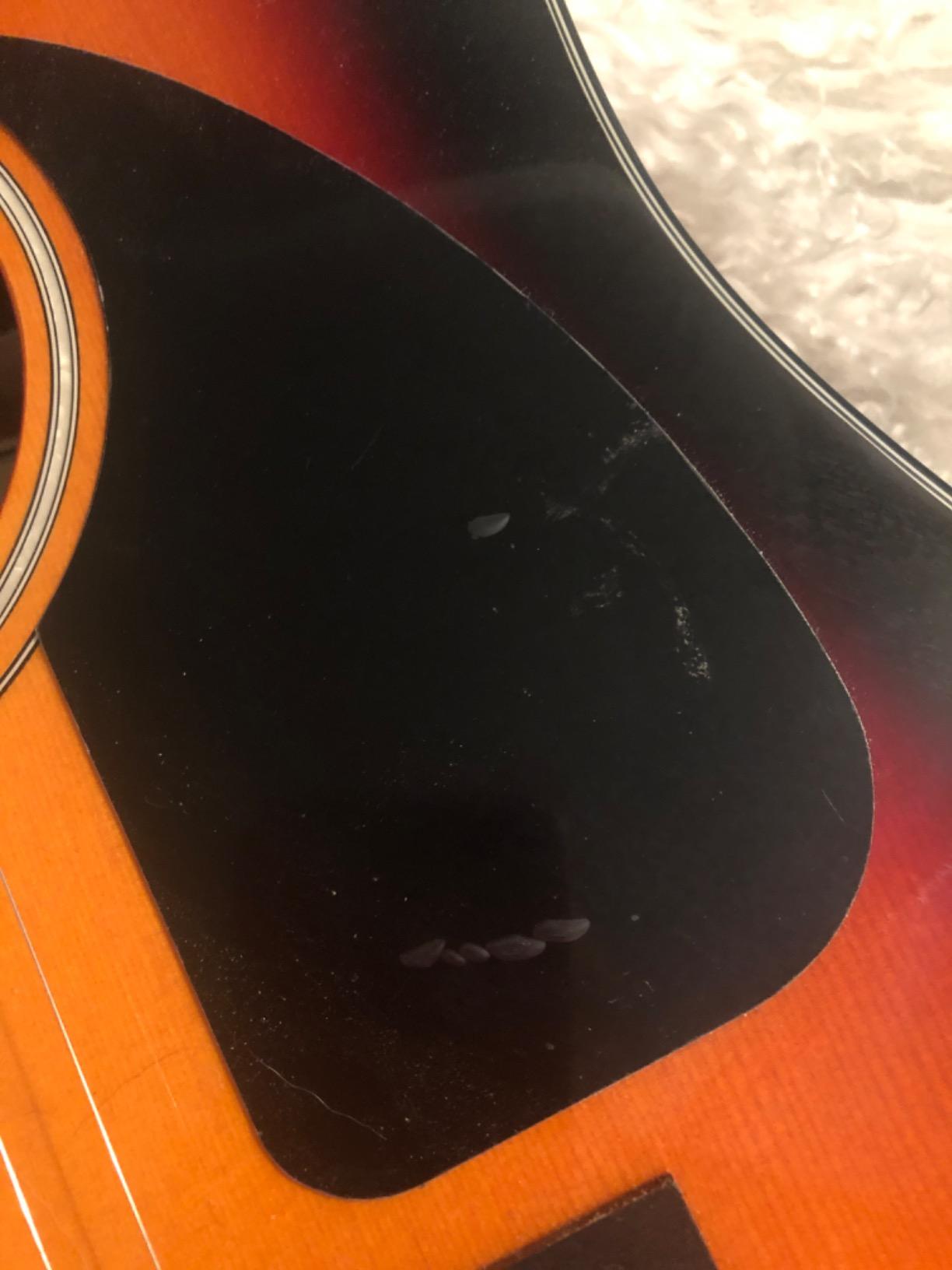
The CD-60 uses a laminated spruce top with mahogany back and sides. It’s the most basic guitar in Fender’s acoustic lineup, but it plays well and produces a usable warm tone. For the price, it’s a genuine working instrument.
The hard case is the headline feature. Most beginner bundles include gig bags, which protect against light contact but not serious impacts. A hard case means you can actually transport this guitar in a car trunk or check it on a flight without panic.
The included accessories (strap, tuner, strings, picks, instructional DVD) are functional but basic. The tuner works. The picks are picks. The strings will eventually need replacing. Don’t expect premium quality in the extras — but they’re real working tools.
Who this guitar suits
Absolute beginners who need a hard case for safe transport. Gift buyers who want one complete purchase. Students who travel to lessons with their guitar in a car or bus.
Anyone who wants the classic dreadnought shape and sunburst aesthetic without spending for solid wood upgrades.
Who should look elsewhere
Players who want solid wood tone should step up to the FG800J or CD-60S. Anyone who already has a case should save money with the standalone CD-60.
Players who don’t need a case and want better tone should consider the FG830 or Seagull S6.
How to Choose the Best Acoustic Guitar Under 700
Choosing the best acoustic guitar under 700 dollars comes down to matching body style, tonewoods, and electronics to how you actually play. After testing dozens of mid-range acoustics over the past few years, I’ve learned that the “best” guitar is the one that fits your hands, your music, and your environment.
Body shape matters more than most buyers expect
Dreadnoughts produce loud, bold sound with strong bass — perfect for strumming and vocal accompaniment. Concert and grand auditorium bodies are smaller and more balanced, ideal for fingerstyle and recording. Parlor guitars are smaller still and produce a focused, midrange-heavy voice that works beautifully for blues and folk. If you mostly strum open chords, a dreadnought will serve you well. If you play fingerstyle or want more note separation, look at concert or auditorium shapes.
Solid top vs laminate — why it matters
A solid wood top vibrates more freely than laminate, which means the guitar sounds better as it ages and is played in. Most of the guitars above the entry tier in our list have solid tops — that’s the threshold where solid wood becomes standard. Below that, you’re mostly looking at laminate construction, which is durable and consistent but doesn’t improve with play.
Acoustic vs acoustic-electric — pick based on your plans
If you only play at home and don’t perform, pure acoustic is fine. If you plan to gig, record direct, or play at church, acoustic-electric with reliable electronics is worth the small upcharge. Look for Fishman systems or similar reputable brands. Yamaha’s pickups and Fender’s Fishman-equipped models both deliver stage-ready sound in this price range.
Factory setup is a real differentiator
A well-set-up mid-range guitar plays better than a poorly set-up pricier guitar. Yamaha, Seagull, and Fender generally ship with playable action. If you buy from a brand with inconsistent reviews about setup quality, budget for a professional setup at your local guitar tech. It’s worth it.
Don’t forget accessories
If you’re starting from scratch, a hard case, tuner, and extra strings are part of your real budget. The bundles in this list include these essentials. If you buy a guitar only, plan to spend extra on the accessories — they’re not optional for serious playing.
Internal resources to explore further
If you want to dig deeper into specific brands and use cases, check out our guides on the best Taylor acoustic guitars, the best Martin acoustic guitars, and the best acoustic guitars for recording. For other price points and beginner-focused picks, our best luxury acoustic guitars guide shows what higher budgets deliver.
Frequently Asked Questions
What is the best acoustic guitar under 700 dollars?
The Yamaha FG830 is our top pick for the best acoustic guitar under 700 dollars. It features a solid Sitka spruce top with rosewood back and sides, scalloped bracing, and consistent Yamaha quality control. For players wanting an acoustic-electric, the Fender CD-60SCE offers Fishman electronics at a lower price.
What is the best acoustic guitar for the money?
Value depends on your priorities, but the Yamaha FG800J offers the most guitar per dollar in this list. Solid spruce top, reliable Yamaha setup, and an accessible entry-tier price make it the best acoustic guitar for the money for beginners. Intermediate players get more value from the Yamaha FG830.
What size acoustic guitar should I get?
Dreadnoughts are the most common and produce loud, bass-heavy sound ideal for strumming. Concert and grand auditorium bodies are smaller and more balanced for fingerstyle and recording. Parlor guitars are smallest and produce focused midrange sound. Most adult players are comfortable with dreadnought or concert sizes. Try multiple sizes in a store if you can.
Do I need electronics on an acoustic guitar?
You need electronics only if you plan to play through an amplifier, record direct, or perform live. For home practice and casual playing, acoustic-only is fine. If you perform or record, look for acoustic-electric models with Fishman or similar reputable pickup systems. The Fender CD-60SCE and Yamaha FGX800C are reliable choices in this price range.
What is the best mid-range acoustic guitar?
In the mid-tier price bracket, the Yamaha FG830 and Fender CD-140SCE both stand out. The FG830 has solid spruce and rosewood for traditional balanced tone. The CD-140SCE adds Fishman electronics for stage use. For fingerstyle players, the Seagull S6 Original delivers cedar top warmth at this price.
Final Verdict — Which Acoustic Guitar Under 700 Should You Buy?
After testing all 10 of these best acoustic guitars under 700, the Yamaha FG830 wins for its combination of solid wood construction, balanced tone, and Yamaha’s legendary consistency. For beginners on tighter budgets, the Yamaha FG800J delivers genuine solid-top tone at a price that makes commitment easy. And if you want a warm mahogany voice at the lowest possible entry price, the Fender CD-60S has 930 reviews confirming it’s a budget workhorse.
Whatever you pick from this list, you’re getting a guitar that will grow with you. The mid-range acoustic market in 2026 delivers real value, and any of these 10 picks will serve you well for years. Use the comparison table and FAQ above to narrow down based on your playing style, then pick the model that matches your priorities. Happy playing.