

The best acoustic guitars for recording are the ones whose body size, voice, and electronics suit the track rather than just filling a room. A smaller Grand Auditorium, OM-style, or parlor voice often gives an engineer focused mids and controlled bass, while a dreadnought can supply the larger low-end needed for an exposed strumming part.
I would begin with the source before buying anything: record a solo singer-songwriter part, a dense band arrangement, and a direct pickup track need different things. The 12 supplied guitars below range from conventional spruce-top acoustics to carbon-fiber models with USB recording, so there is a clear route for a home studio, travel setup, or amplified session.
For this guide, I compared the listing details, declared materials, body descriptions, electronics, included gear, and supplied customer feedback. I did not treat a star rating as a sound measurement; it is simply one signal alongside the practical facts that affect recording, such as a solid top, a pickup, a tuner, scale length, and body size.
Forum discussions repeatedly raise the same issues: dreadnought boom in dense mixes, reflections in untreated rooms, and the difficulty of making a pickup sound like a microphone. Those concerns shape the picks here, and the buying guide gives a simple way to match the guitar to the recording situation.
Table of Contents
The Top 3 Picks Give Most Recordists a Clear Starting Point
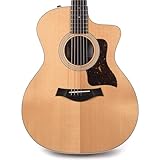
The Taylor 214ce is the broadest all-around choice because its Grand Auditorium format, walnut back and sides, ebony fingerboard, and Expression System 2 electronics support both microphone work and a practical direct option. Its listing describes the sound as balanced, clear, and warm, which is a sensible target when a part must sit around a vocal.
The Yamaha FG800J is the straight-ahead full-size acoustic option for players who want a solid spruce top and declared bright, balanced voice with strong bass response. The Taylor GS Mini Sapele is the compact alternative when a shorter 23.5-inch scale and a physically smaller guitar matter more than a full-size body.
These Acoustic Guitars for Recording Cover 12 Different Workflows in 2026
This quick view is a shortlist, not a substitute for matching a guitar to your playing and room. Grand Auditorium, parlor, dreadnought, travel, 12-string, and hybrid electric-acoustic formats make different demands on a microphone, a DI input, and EQ.
| Product | Specifications | Action |
|---|---|---|
 Taylor 214ce Taylor 214ce |
|
View Details |
 Taylor 24ce Taylor 24ce |
|
View Details |
 Taylor GS Mini Sapele Taylor GS Mini Sapele |
|
View Details |
 Gretsch Jim Dandy Parlor Gretsch Jim Dandy Parlor |
|
View Details |
 Fender Acoustasonic Standard Fender Acoustasonic Standard |
|
View Details |
 Yamaha FG800J Yamaha FG800J |
|
View Details |
 Fender Redondo CE Fender Redondo CE |
|
View Details |
 Enya NOVA GO SP1 Enya NOVA GO SP1 |
|
View Details |
 Washburn WA90CE Washburn WA90CE |
|
View Details |
 Ibanez PC50WSCE Ibanez PC50WSCE |
|
View Details |
 Enya X3 PRO Enya X3 PRO |
|
View Details |
 Vangoa VEG120 Pro Vangoa VEG120 Pro |
|
View Details |
1. The Taylor 214ce Is the Balanced Grand Auditorium Choice
Taylor 214ce Grand Auditorium Acoustic-electric Guitar – Natural
Grand Auditorium
Walnut back and sides
ES2 electronics
Pros
- Spruce top
- Ebony fingerboard
- Walnut back and sides
- ES2 electronics
Cons
- Right-handed orientation
- No buyer cons supplied
The Taylor 214ce is the first guitar I would examine for a voice-and-guitar recording because Grand Auditorium proportions commonly aim between a small-body focus and dreadnought weight. The supplied listing calls its voice balanced, clear, and warm, and that description points toward an acoustic part that does not need to dominate the lowest range.
Its material list is unusually useful for a studio buyer: walnut back and sides, an ebony fingerboard, a Neo-Tropical Mahogany neck, and a 25.5-inch scale. The listed D’Addario XS coated phosphor bronze light strings give a concrete starting point, although any guitar should be recorded with strings that are clean and settled.
The Expression System 2 electronics give this model a declared direct-recording path through its quarter-inch output. I would still treat a microphone as the main source where the room permits, then capture the direct signal as an editing or blending option.
The Grand Auditorium Shape Fits Mixed Arrangements
The body format is the reason this is the most generally useful choice in the group. A Grand Auditorium can give rhythm parts enough width while leaving headroom for kick, bass, and low vocal fundamentals.
That does not mean it is automatically less bass-heavy than every dreadnought; microphone position and the player decide a lot. It does mean the design begins from a more middle-ground recording role than a large-bodied strummer.
The ES2 Output Gives a Backup Recording Source
The ES2 electronics make a simultaneous DI track possible if the session has an interface with an instrument input or a suitable DI box. That track will not replace air in front of the guitar, but it can bring attack and consistency into a crowded arrangement.
Customer feedback is small in number but unanimous in the supplied data: 22 reviews at 5.0, with praise for the balanced, clear, warm profile. Treat that as encouragement to audition the setup, not proof that every room will produce the same track.
2. The Taylor 24ce Is the Mellow Mahogany-Top Alternative
Taylor 24ce Grand Auditorium Acoustic-electric Guitar – Natural
Grand Auditorium
Mahogany top
GT-2 electronics
Pros
- Mahogany top
- Ebony fingerboard
- Sapele back and sides
- GT-2 electronics
Cons
- Right-handed orientation
- No buyer cons supplied
The Taylor 24ce trades the 214ce’s spruce-top listing for a Neo-Tropical Mahogany top, sapele body material, and a stated mellow, earthy tone with rich projection. I would reach for this sort of declared voice when a brittle pick attack is the problem, not the goal.
It remains a Grand Auditorium acoustic-electric, so the body concept is familiar for a home-studio player who wants one instrument to cover rhythm and picked parts. The West African Crelicam ebony fingerboard and hard rock maple neck are the other listed construction details.
Fishman Sonitone GT-2 electronics are included, along with a gig bag, and the recordable connection is a quarter-inch audio jack. A direct take from this guitar can be practical for demos, layering, or a session where room noise makes a microphone difficult.
The Mahogany Top Favors a Mellow Declared Voice
The listing explicitly calls the 24ce mellow and earthy rather than bright and glassy. That characteristic can be helpful behind a sharp vocal or cymbal-heavy arrangement, where a softer edge may need less high-frequency trimming.
There is no universal wood formula that makes a finished record work. The player, string condition, and microphone choice still decide whether the result has enough clarity.
The GT-2 Electronics Support Simple Direct Capture
The installed Fishman Sonitone GT-2 system makes it possible to capture a direct signal without adding an external pickup. Keep that track clean at the source, avoiding excessive onboard level, so it can be blended after the microphone track is heard.
The supplied customer record is 10 reviews at 5.0 and specifically praises mellow, earthy tones with rich projection. The small review count means the construction facts deserve more weight than the aggregate rating.
3. The Taylor GS Mini Sapele Is the Compact Songwriting Choice
Taylor GS Mini Sapele Acoustic Guitar – Natural with Black Pickguard
23.5 inch scale
Spruce top
Layered sapele body
Pros
- Compact size
- Spruce top
- Ebony fingerboard
- Mahogany neck
Cons
- No built-in electronics listed
- Shorter 23.5 inch scale
The Taylor GS Mini Sapele earns its place when portability and a smaller physical footprint matter as much as a familiar acoustic feel. Its listed 23.5-inch scale is shorter than the 25.5-inch Taylor 214ce and Yamaha FG800J scales, and the complete instrument weighs 9 pounds according to the supplied details.
The construction list includes a spruce top, layered sapele back and sides, an ebony fingerboard, and a mahogany neck. No onboard electronics appear in the supplied listing, so this is a microphone-first selection rather than an automatic DI option.
For a writer recording close to a computer desk or working in a small room, I would rather manage a small guitar that encourages a relaxed performance than force a larger instrument into an awkward position. Its compact size is the customer attribute praised most clearly in the supplied feedback.
The Short Scale Helps a Small-Space Recording Routine
A shorter 23.5-inch scale changes the physical feel under the fretting hand and reduces the guitar’s overall length to the listed 42.5 inches. That can make the guitar easier to position with a boom stand and a seated player.
It does not automatically make the instrument a quiet or thin recording source. Start with the microphone a little off the neck joint, then listen for the balance instead of assuming the small body needs exaggerated bass.
The Acoustic-Only Listing Calls for a Microphone Plan
No pickup configuration or output is listed for this GS Mini, so an interface and microphone matter from the outset. A single close microphone is enough for a focused sketch, while a room microphone should only join when the room itself sounds useful.
The supplied review average is 4.9 from 37 reviews, with buyers praising portability while retaining quality tone. That makes it a credible compact choice, but it does not change the need to hear how its shorter scale suits your hands.
4. The Gretsch Jim Dandy Is the Focused Parlor-Size Option
Gretsch Jim Dandy Parlor Acoustic Guitar – Deep Cherry Burst
Parlor acoustic
Sapele top
39.37 inch length
Pros
- Compact parlor size
- Walnut fingerboard
- Sapele top
- 7 pound weight
Cons
- Laminate top
- Laminate back and sides
The Gretsch Jim Dandy is the smallest traditional-body choice in this list, at a stated 39.37 inches long and 7 pounds. Its parlor format has a practical recording advantage: it can be easier to keep low-end buildup under control than a large dreadnought when many instruments occupy the mix.
The supplied data describes a sapele top, laminate back and sides, walnut fingerboard, nato neck, and a voice of warmth and sonic punch. Those terms are useful as an intended sound profile, while the laminate construction is a real tradeoff for a buyer who specifically wants a solid top.
I would choose this as a character part, a compact songwriting guitar, or a source that needs a tight footprint. It is not an acoustic-electric listing, so capture depends on microphone placement rather than a pickup path.
The Parlor Body Helps Keep the Low End in Check
Forum users often describe boominess as the problem when recording a large acoustic into a dense production. A parlor-sized source gives an engineer less reason to fight broad low-frequency resonance before the arrangement is even built.
That benefit is context-dependent: a solo guitar part might need more body than a parlor supplies. In that case, a closer microphone position can add proximity effect, but it should be adjusted by ear.
The Laminate Build Sets a Clear Expectation
The listing identifies both the top and back and sides as laminate, which is a transparent constraint beside solid-top models here. The appeal is compact warmth and punch, not a claim of all-solid construction.
The 16 supplied reviews average 4.9, and the comments mentioned in the data praise the compact size, warmth, and sonic punch. I would take that as a strong sign of audience fit for the parlor role rather than a substitute for a mic test.
5. The Fender Acoustasonic Standard Is the Direct-Track Hybrid
Fender Acoustasonic Standard Telecaster Acoustic-electric Guitar – Black
Acoustic-electric hybrid
Spruce top
Rosewood fingerboard
Pros
- Acoustic-electric design
- Spruce top
- Rosewood fingerboard
- Quarter-inch jack
Cons
- Right-handed orientation
- Nyatoh body material
The Fender Acoustasonic Standard Telecaster is the different choice here because its listing positions it as an acoustic-electric guitar with a hybrid design rather than a conventional hollow-body acoustic. It has a spruce top, nyatoh body and neck, rosewood fingerboard, and a quarter-inch jack.
I would consider it when the recording job requires quick switching between an acoustic-flavored layer and an electric-guitar workflow. The listed sound profile is balanced, while the pickup configuration is identified only as H, so the most exact evidence is its acoustic-electric category and connection.
A close microphone can still reveal useful body sound if the guitar produces it in the room, but the main reason to select this model is its direct signal flexibility. It is a better fit for arrangement speed than for someone seeking only a traditional miked acoustic capture.
The Hybrid Format Suits Layered Productions
A hybrid instrument can simplify a session where an acoustic attack and an electric part need to live in the same arrangement. Recording the direct output gives repeatable timing and a manageable source when live room sound is a liability.
That does not make it interchangeable with a spruce-top dreadnought in front of a condenser. Choose it for its stated acoustic-electric identity, then decide whether any microphone layer adds a sound the DI does not.
The Direct Connection Reduces Room Dependence
The quarter-inch jack is the practical studio detail. It allows a quiet direct recording path through an appropriate interface input, while a microphone can be added only when the space is controlled.
The supplied feedback shows a 4.8 average from 12 reviews and says buyers praise the hybrid versatility. The review pool is limited, so the decision should center on whether a hybrid source matches the part you record most often.
6. The Yamaha FG800J Is the Solid-Top Dreadnought Workhorse
YAMAHA FG800J Solid Top Acoustic Guitar
Dreadnought
Solid spruce top
25.5 inch scale
Pros
- Solid spruce top
- Bright balanced profile
- Strong bass response
- 5.07 pound weight
Cons
- Right-handed orientation
- Not all-solid construction listed
The Yamaha FG800J is the conventional dreadnought selection: a full-size guitar with a solid spruce top, a 25.5-inch scale, and a stated bright, balanced profile with strong bass response. That formula suits a solo strumming track or a part that needs a wide, authoritative acoustic foundation.
Its supplied materials include rosewood back material, mahogany body material, a nato neck, and a rosewood fingerboard. Yamaha’s listing describes the nato and mahogany back and sides as warm and full-bodied, while the details do not present this model as all-solid construction.
The review base is much larger than most models here, at 352 reviews and a 4.7 average. Buyers in the supplied summary praise workmanship, warmth, and the solid spruce top, which gives this one more community feedback than the newer listings.
The Dreadnought Voice Serves Exposed Rhythm Parts
Large-body projection can give a strummed part satisfying weight when the guitar is the main accompaniment. I would start a microphone farther from the soundhole than instinct suggests, aiming around the 12th fret or neck joint to avoid an oversized bass bloom.
In a dense production, high-pass filtering and deliberate playing may be needed. The guitar’s declared strong bass response is an asset only when the arrangement has space for it.
The Solid Spruce Top Is the Recording-Focused Detail
A solid spruce top is the key construction point listed for the FG800J. It is a concrete reason to put it ahead of several laminate-top alternatives when the goal is an unplugged microphone tone.
The model is right-handed only and has no listed onboard pickup system, so it is best approached as a miked acoustic. Add a separate pickup only if direct capture becomes necessary later.
7. The Fender Redondo CE Is the Beginner-Friendly Plug-In Choice
Fender California Debut Redondo CE Series Beginner Acoustic Guitar,Sunburst
Spruce top
Under-saddle piezo
Built-in tuner
Pros
- Built-in tuner
- Under-saddle piezo
- C-shaped neck
- Onboard electronics
Cons
- Laminate body
- Right-handed orientation
The Fender California Debut Redondo CE is the easy-entry acoustic-electric choice because it includes a built-in tuner, onboard electronics, and a listed under-saddle piezo pickup. Its spruce top, basswood body material, nato neck, and walnut fingerboard make the construction picture clear.
The supplied description calls it a dreadnought body shape with a lightweight all-laminate body and an easy-to-play C-shaped neck. That mix is aimed at getting a beginner playing and recording without separate tuning gear or an added pickup.
I would record its piezo output when speed and isolation are more important than a natural room sound. For a more organic result, put a microphone on the guitar and keep the direct signal as a quiet support layer.
The Built-In Tuner Keeps Session Setup Simple
A stable tuning routine matters more to a multi-track recording than a complicated signal chain. The onboard tuner makes it easier to check intonation between takes, especially for a player tracking alone.
The listing includes a Fender Play subscription, but the recording benefit comes from the guitar’s immediate playable setup rather than the subscription. The C-shaped neck is another supplied detail that new players may find relevant.
The Piezo Output Is Best Treated as a Controlled Source
An under-saddle piezo gives a direct sound that is isolated from room reflections and external noise. It can be the primary sound for a rough demo, or a blend under a microphone for definition.
The 826 supplied reviews average 4.6, with buyers praising playability, the tuner, and the lessons. The same listing calls the body all-laminate, so audition it as a practical recording tool rather than expecting a solid-wood construction claim.
8. The Enya NOVA GO SP1 Is the USB Travel Recording Tool
Enya NOVA GO SP1 Carbon Fiber 35-Inch Smart Acoustic-Electric Travel Guitar
Carbon fiber
USB recording
23.12 inch scale
Pros
- USB Type-C recording
- Built-in effects
- Carbon fiber body
- 4 pound weight
Cons
- 35 inch size
- Carbon fiber aesthetic
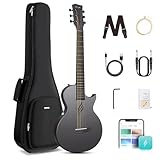
The Enya NOVA GO SP1 is the most self-contained recording tool in the lineup. It is a 35-inch carbon-fiber acoustic-electric with a 23.12-inch scale, a stated 4-pound weight, USB Type-C connectivity, and the SP1 pickup system.
The supplied details state that USB On-The-Go can record direct to a phone or computer without an audio interface. That is a specific workflow advantage for sketching parts away from a studio desk, and the package includes the USB Type-C cable and an instrument cable.
The SP1 system includes reverb, delay, and fusion effects without amplification, plus a Bluetooth speaker for playback. I would capture a dry version when possible, because a dry take leaves more mix choices than a printed ambient effect.
The USB Connection Removes an Interface Requirement
Direct USB recording is the feature that separates this guitar from a normal travel acoustic. A writer can plug into a phone or computer and collect an idea before it disappears.
That convenience does not make a direct recording identical to a studio microphone capture. It does provide a fast, repeatable source when an untreated room would color every take.
The Carbon-Fiber Body Fits Changing Environments
The product data says its carbon-fiber construction is impervious to temperature and humidity changes. That makes this a practical instrument to keep in a mobile setup where wood-care conditions are unpredictable.
Feedback from 131 reviews averages 4.6 and highlights travel and gigging, along with the USB and effects functions. The 35-inch size is the stated compromise for players who prefer a standard full-size guitar.
9. The Washburn WA90CE Is the Complete Recording Starter Kit
Washburn WA90CE Acoustic-Electric Guitar Kit Tobacco Burst
Dreadnought cutaway
LX4 preamp
Built-in tuner
Pros
- Barcus Berry LX4 preamp
- Built-in tuner
- Cutaway body
- Complete accessory kit
Cons
- Linden top
- Right-handed orientation
The Washburn WA90CE arrives as a full acoustic-electric kit rather than a guitar-only package. The supplied components include a gig bag, clip-on tuner, strap, picks, extra strings, string winder, folding stand, and online lessons, which removes several obstacles for a first recording setup.
The guitar itself is a dreadnought cutaway with an okoume body and neck, linden top, black walnut fretboard, and a Barcus Berry LX4 preamp with built-in tuner. Its quarter-inch jack offers a direct path to an interface, while the cutaway makes upper-fret access easier.
I would treat the bundled stand and tuner as setup aids rather than reasons to choose its sound. The decisive question is whether you want a practical acoustic-electric package and a large-body source for strumming, blues, or flat-picking.
The Included Kit Supports a First Home Setup
New recordists often overlook basic items such as a tuner, stand, spare strings, and a string winder. The listed accessories cover those needs, and a stable stand is particularly useful while moving microphones or checking playback.
The guitar also includes four months of online lessons according to the supplied record. Better playing consistency has more effect on a take than adding another plugin after the fact.
The Cutaway and Preamp Serve Direct Tracking
The LX4 preamp and built-in tuner provide an immediate direct-recording route, while the cutaway supports higher-position parts. A Dreadnought Cutaway can cover a broad strumming role, but it will still benefit from careful low-end control under a vocal.
The data shows 133 reviews and a 4.5 average, with the complete kit and electronics among the stated strengths. The linden top is the listed construction constraint for players comparing it against solid-spruce-top instruments.
10. The Ibanez PC50WSCE Is the Straightforward Preamp-and-Tuner Option
Ibanez PC50WSCE Acoustic-electric Guitar – Open-pore Natural
White Siris top
Preamp and tuner
Meranti neck
Pros
- Preamp included
- Tuner included
- Meranti neck
- Open-pore finish
Cons
- Limited review count
- Some supplied details are TBD
The Ibanez PC50WSCE is a simple acoustic-electric option with a preamp, tuner, and quarter-inch audio jack included in the supplied specification. Its listed material details are a White Siris top and back and sides, a Nandu fingerboard, and a Meranti neck.
The open-pore natural finish is a visual and tactile detail rather than a recording guarantee, but it gives the model a distinct identity. The full-size designation makes it a conventional seated or standing instrument rather than a travel format.
Some product details are marked TBD in the supplied data, so I would avoid making claims about body shape or complex electronics that are not documented. What is established is a direct-recording pathway and basic onboard tuning support.
The Preamp and Tuner Make Direct Takes Convenient
A built-in preamp and tuner make this model ready for a quiet interface recording without extra pickup installation. Start with gain set conservatively, then use the recorded waveform and headphones to avoid an overloaded input.
The quarter-inch jack lets the signal enter an interface through an appropriate instrument or DI stage. That is handy in a small room where reflected sound makes microphone tracks less predictable.
The Limited Listing Detail Calls for an In-Person Check
The supplied record explicitly leaves some product information as TBD and contains only 19 reviews. That is not a flaw in the guitar by itself, but it means a buyer should verify neck feel, body comfort, and acoustic voice before treating it as a known recording quantity.
The available review average is 4.5, with feedback noting construction and the open-pore finish. The guitar’s documented strengths remain its straightforward electronics package and full-size layout.
11. The Enya X3 PRO Is the Full-Size Carbon-Fiber Effects Choice
Enya X3 PRO Carbon Fiber 41-Inch Smart Acoustic-Electric Travel Guitar
41 inch carbon fiber
SP1 effects
Bluetooth speaker
Pros
- Built-in effects
- Bluetooth playback
- Carbon fiber build
- USB Type-C
Cons
- Lower 4.3 rating
- Carbon fiber acoustic voice
The Enya X3 PRO brings the feature set of the smaller NOVA GO into a stated 41-inch format with a 25.75-inch scale. Its carbon-fiber body and neck, Richlite fretboard, USB Type-C connection, and SP1 AcousticPlus pickup establish it as a technology-led acoustic-electric choice.
The pickup system has built-in reverb, chorus, delay, and wah, while Bluetooth audio can play backing tracks. I would use those features for rehearsing arrangement ideas or monitoring a performance, but I would save an unprocessed recording whenever the system allows.
At 5.95 pounds according to the listing, it is still relatively light among the full-size models here. The stated balanced and versatile sound profile gives it a broad brief, though its customer average of 4.3 is lower than most other listings in this guide.
The Full-Size Scale Feels Closer to a Standard Guitar
The 25.75-inch scale is substantially closer to a conventional full-size feel than the NOVA GO’s 23.12-inch scale. That matters to players who want a travel-tough material without adapting to a reduced-scale instrument.
Its 41-inch format also gives it a more familiar physical presence for a seated tracking session. The tradeoff is that it is less compact than the 35-inch NOVA GO.
The Built-In Effects Need Deliberate Printing Choices
Reverb, chorus, delay, and wah can inspire a part, but a recorded effect cannot be removed after the take. For a mix-ready acoustic sound, record dry where possible and create a separate effected track only when the sound is part of the arrangement.
The supplied 224 reviews include a 4.3 average, with favorable remarks about durability, travel, and sound quality. The rating distribution also includes 7 percent one-star feedback, which is a reason to inspect setup and workflow expectations carefully.
12. The Vangoa VEG120 Pro Is the 12-String Layering Choice
Vangoa 12 String Guitar Solid Wood, Twelve String Acoustic Electric Guitar Kit with Premium Spruce Top, Mahogany Body, Upgraded EQ, Bone Nut, Saddle, Classical Brown
12 strings
Solid spruce top
Mahogany body and EQ
Pros
- Solid spruce top
- 12-string texture
- Upgraded EQ
- Bone nut and saddle
Cons
- 10 pound weight
- 12-string tuning workload
The Vangoa VEG120 Pro is the specialist choice because it has 12 strings rather than six. The supplied listing pairs a solid spruce top with a mahogany body, phosphor bronze strings, an upgraded EQ, a bone nut and saddle, and a 10-pound weight.
A 12-string is not the default acoustic guitar for every recording, but it can add spread, octave shimmer, and a finished rhythm texture without copying the sound of a six-string. I would use it for a featured chorus layer, a wide intro, or a part deliberately written around doubled courses.
The curved fretboard and rounded fret ends are listed playability features, while the included kit makes it ready to begin. Its reported 477 reviews are a substantial feedback base, although the 4.2 average is the lowest among the traditional wood acoustics listed here.
The Twelve Strings Create a Distinct Arrangement Layer
A 12-string produces more string activity and harmonic information than a six-string, so it can fill a stereo arrangement quickly. That makes selective performance and microphone placement especially useful; a busy part can compete with vocal consonants and cymbals.
Rather than recording it exactly on top of a six-string strum, try a complementary voicing or higher capo position. The goal is a separate layer, not a larger version of the same frequency content.
The Solid Spruce Top Supports the Unplugged Route
The solid spruce top is the central construction detail for someone planning to use a microphone. The upgraded EQ and quarter-inch jack supply a direct option, but a close microphone will capture the interaction of all 12 strings in a way a DI may not.
The 10-pound listed weight and additional tuning workload are real practical considerations. Its 477 reviews average 4.2, so it is better framed as a specific texture tool than an automatic first choice for every player.
The Right Recording Guitar Depends on Body Control, Source, and Room
The first decision is body behavior, not brand. A dreadnought such as the Yamaha FG800J or Washburn WA90CE can offer the full, strong bass response that flat-picked rhythm needs, but the larger voice can crowd bass guitar, kick drum, and low vocal information.
A Grand Auditorium such as the Taylor 214ce or 24ce gives a more middle-ground starting point for a singer-songwriter or general session player. The parlor Gretsch Jim Dandy and compact Taylor GS Mini offer focused alternatives when low-end buildup is the recurring problem.
The Body Shape Should Match the Arrangement
Pick a dreadnought when the acoustic is exposed and needs broad strumming weight. Pick a smaller or medium body when the part must cut through a dense mix without a large bass footprint.
That is a starting rule, not a law. A gentle player on a dreadnought can record a controlled part, and an assertive player can make a parlor sound surprisingly forceful.
The Construction Facts Should Set Expectations
Solid spruce tops are listed on the Yamaha FG800J and Vangoa VEG120 Pro, while the Taylor GS Mini lists a spruce top with layered sapele back and sides. The Gretsch Jim Dandy and Fender Redondo CE explicitly list laminate elements, which is relevant when comparing construction but does not tell you the final microphone sound by itself.
Mahogany, walnut, sapele, nyatoh, and carbon fiber appear across these guitars. I would use the supplied declared sound profiles as a first filter, then listen to the exact instrument with the same strings and playing style you expect to record.
The Microphone Is Usually the Natural-Tone Source
For a natural acoustic guitar recording, place one microphone roughly 6 to 12 inches from the area around the 12th fret or neck joint, angled slightly away from the soundhole. Move it while listening in headphones, because room reflections and pick attack can matter more than the starting measurement.
A small-diaphragm condenser is common for detail, but the microphone on hand is often enough to learn the source. An SM57 can work for acoustic guitar because it is a workable close microphone; position and gain matter more than assuming it is wrong on sight.
The Pickup Is Best for Isolation and Blending
A pickup or preamp is helpful when the room is noisy, the setup needs speed, or the guitar must stay isolated from speakers and other instruments. The Taylor ES2, Taylor GT-2, Fender piezo, Washburn LX4, Enya SP1 systems, and listed Ibanez preamp all give a direct capture route.
Direct acoustic sound can be less like the air in front of the guitar, so try recording the DI and microphone together when possible. Aligning their timing and polarity by ear can prevent thinness when they are blended.
The Room and Strings Affect the Take Before EQ Does
Forum conversations often point to room reflections as a reason acoustic tracks sound harsh or distant. Record away from bare parallel walls where possible, reduce nearby reflective surfaces with soft furnishings, and keep the microphone’s back or rejection area aimed toward the worst reflection.
Fresh strings are a practical reset before a serious session, but they need a short settling period so tuning stays consistent. Use a tuner before every take, play consistently, and make a test recording before building a stack of tracks around a problem sound.
The Recording Setup Can Stay Simple
A workable beginner setup is one guitar, one microphone or one direct input, closed-back headphones, and a quiet room. Add a second source only when you can explain what it contributes, such as pick definition from a DI or space from a room microphone.
For a small room, the Taylor GS Mini, Gretsch Jim Dandy, Enya NOVA GO, or a direct-capable acoustic-electric may be easier to manage than a large dreadnought. For a solo performance, the Yamaha FG800J, Taylor 214ce, or Vangoa 12-string can make a more expansive foundation when their body voices suit the song.
These Recording Questions Have Straight Answers
What is the best acoustic guitar for recording?
The Taylor 214ce is the broadest starting choice in this list because it combines a Grand Auditorium body, a balanced clear and warm listed sound profile, walnut back and sides, and Expression System 2 electronics. Choose the Yamaha FG800J instead for a solid-spruce-top dreadnought voice, or the Taylor GS Mini when compact size is the priority.
What is the most recorded acoustic guitar?
There is no single most-recorded acoustic guitar in the supplied product data. Forum discussions often praise Gibson J-45 and Martin D-18 or D-28 models, but those guitars are not among the 12 reviewed here; body shape, player, microphone, and room shape the recorded result as much as the model name.
Is an SM57 good for recording acoustic guitar?
Yes, an SM57 can record acoustic guitar well, especially as a close microphone in a modest room. Start around the 12th fret or neck joint, angle it away from the soundhole to limit boominess, and move it while listening rather than relying on a fixed position.
How to make acoustic guitar recording sound better?
Start with tuned, settled strings and a quiet room, then place one microphone 6 to 12 inches around the 12th fret or neck joint. Control boominess by angling away from the soundhole, use a direct pickup track only when it adds definition or isolation, and make a short test take before recording the full part.
The Taylor 214ce Is the Most Balanced Starting Choice
The Taylor 214ce is my first recommendation because its Grand Auditorium format and declared balanced, clear, warm sound profile make it a sensible starting source for many voice-and-guitar sessions. The Yamaha FG800J is the better pick when a solid spruce top and traditional dreadnought foundation matter most, while the Taylor GS Mini offers the most appealing compact route.
The best acoustic guitars for recording in 2026 are not decided by a name on the headstock or a star rating alone. Match the guitar’s body, listed construction, pickup needs, and physical size to the song, then take the time to position a microphone and listen to the actual room.
Choose the model that makes you play the part well, record a short test, and change the microphone position before reaching for heavy processing. That repeatable process will teach you more about your recording acoustic guitar than a long gear list.
5 thoughts on “12 Best Acoustic Guitars for Recording (September 2026) Picks”