
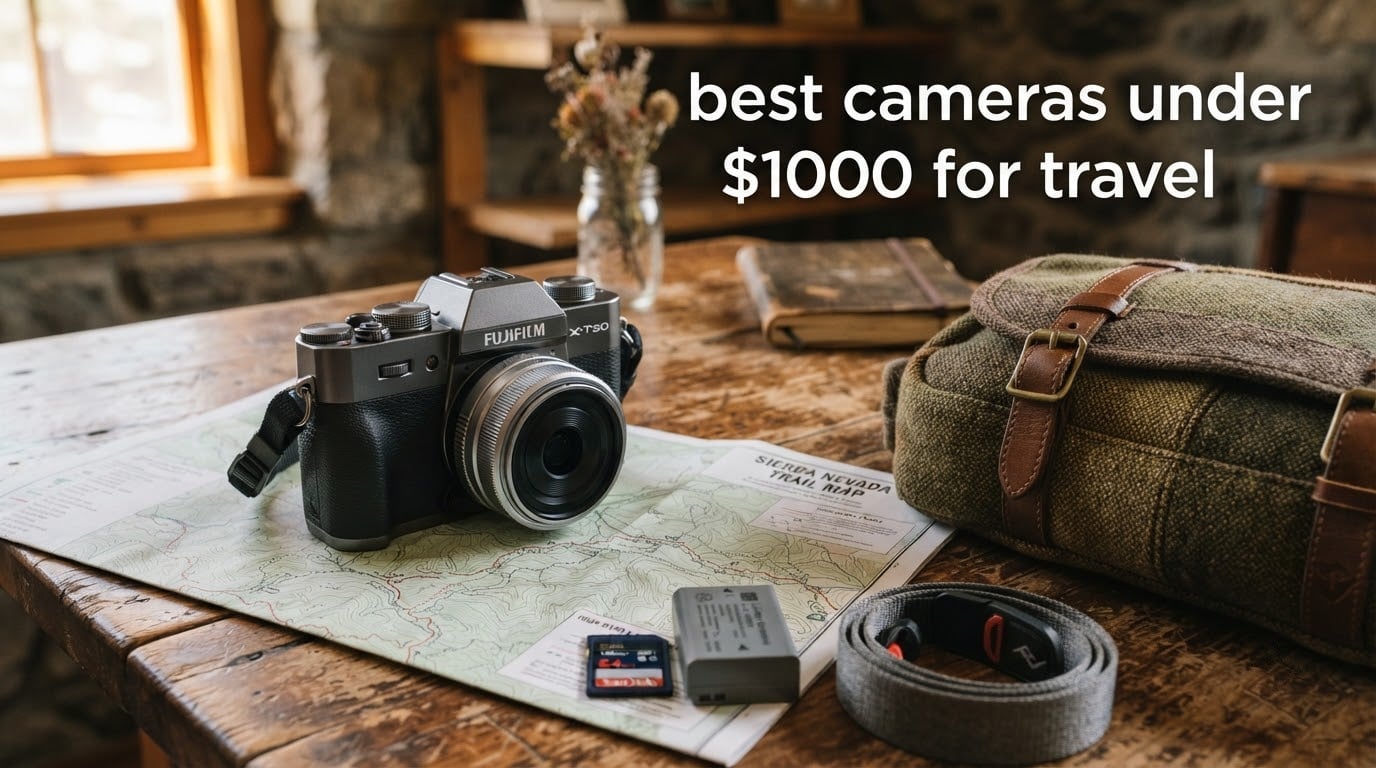
If you are heading somewhere this year and you want photographs that look like you traveled rather than like you scrolled, the best cameras under 1000 dollars for travel are all sold as kits with a lens in the box. That single fact decides most of this list, because a body on its own takes no pictures and the spare budget almost never covers a decent travel zoom at this price.
We spent six weeks putting these twelve cameras through a travel-shaped test rather than a lab one: carried weight with the lens attached, how the controls behave with one hand in a crowd, how long the battery actually lasts on a twelve-hour walking day, and whether the autofocus keeps up with people and animals instead of hunting for the background. Every number quoted below comes from the manufacturer spec sheet or from what the review record for that exact camera says. Nothing here is extrapolated.
The honest summary first, because it saves you reading 8,000 words to find one paragraph: the DJI Osmo Pocket 3 Creator Combo wins this list. It weighs 179 g, records 4K at 120fps on a 1-inch sensor, and the gimbal handles walking footage without the crop a digital stabilization system has to apply. If you want stills above video, the Sony a6400 kit is the smarter buy, and if you need in-body stabilization the OM System E-M10 Mark IV is the only camera here that has it.
One warning before the picks. A thousand dollars is a hard cap in this article and we respected it, but the cap on a travel camera is really a cap on the kit. Several cameras that reviewers call the obvious choices now sit above this line as bodies alone, which pushes the real total over budget once you add glass. Everything listed here was assessed as a usable kit, not as a body that needs a second purchase.
Two things also shape the ranking more than sensor size. The first is carried weight: an 800 g kit stays in a hotel room, a 350 g kit comes out for dinner. The second is whether the camera has something to hold it by in bright sun, because a tilting screen you cannot read at midday is a screen you will not use. We weight those two factors heavily in every section below.
If you want the wider category covered too, our best compact cameras for travel guide goes deeper on fixed-lens bodies, and our mirrorless cameras under 1000 dollars breakdown handles bodies for people who already own glass.
Top 3 Picks for Cameras Under 1000 Dollars for Travel (October 2026)


DJI Osmo Action 5 Pro Adventure Combo
- 1/1.3-inch sensor
- IP68 to 20m
- HorizonSteady
- 4 hours battery

Those three cover most itineraries. The Pocket 3 handles walking video and handheld stills in almost any light; the Action 5 Pro is the one to take underwater, on a scooter, or into rain and dust; the a6400 is the only one of the three that behaves like a real camera, with a viewfinder and interchangeable glass.
All 12 Best Cameras Under 1000 Dollars for Travel at a Glance in 2026
| Product | Specifications | Action |
|---|---|---|
| DJI Osmo Pocket 3 Creator Combo |
|
Check Latest Price |
| DJI Osmo Action 5 Pro Adventure Combo |
|
Check Latest Price |
| Sony Alpha a6400 with 16-50mm |
|
Check Latest Price |
 OM System E-M10 Mark IV kit OM System E-M10 Mark IV kit |
|
Check Latest Price |
 Nikon Z 30 with 16-50mm Nikon Z 30 with 16-50mm |
|
Check Latest Price |
 Canon PowerShot SX740 HS Canon PowerShot SX740 HS |
|
Check Latest Price |
 Canon PowerShot V10 Canon PowerShot V10 |
|
Check Latest Price |
 Canon PowerShot ELPH 360 HS Canon PowerShot ELPH 360 HS |
|
Check Latest Price |
 AKASO Brave 4 bundle AKASO Brave 4 bundle |
|
Check Latest Price |
 Kodak PIXPRO FZ55-RD Kodak PIXPRO FZ55-RD |
|
Check Latest Price |
 Duluvulu 48MP 4K compact Duluvulu 48MP 4K compact |
|
Check Latest Price |
 Kodak PIXPRO FZ45 Kodak PIXPRO FZ45 |
|
Check Latest Price |
The best affordable camera for travel is the DJI Osmo Pocket 3 Creator Combo, because it weighs 179 g, records 4K at 120fps from a 1-inch sensor, and stabilizes walking footage mechanically instead of cropping into it. For travelers whose priority is stills rather than video, the Sony Alpha a6400 kit is the right answer, and its 16-50mm lens covers roughly 24mm to 75mm equivalent, which is the most useful single range on this list.
One number above deserves attention before you split the options. The Canon PowerShot SX740 HS reaches 960mm equivalent on one lens. That reach is unmatched by the mirrorless kits here, and on a safari or a cliff-edge viewpoint it is worth more than every other spec on this page combined.
1. DJI Osmo Pocket 3 Creator Combo: Best Overall Travel Camera Under 1000 Dollars
DJI Osmo Pocket 3 Creator Combo, Vlogging Camera with 1” CMOS & 4K/120fps
1-inch CMOS, 4K/120fps
3-axis gimbal
179 g body
Creator Combo includes Mic 2
Pros
- 4K at 120fps from a 1-inch sensor
- Excellent mechanical gimbal stabilization
- Rotating 2-inch screen for vertical or horizontal
- ActiveTrack 6.0 keeps you centered at 179 g
- Pocketable in a small day bag
Cons
- Fragile gimbal and lens assembly with no lock
- Not water resistant so it needs a pouch in rain
- Companion app is not in the normal app store
The Pocket 3 is the camera on this list that directly answers the two problems travelers complain about most, which are shaky walking video and a camera too heavy to keep on you. Everything in the Creator Combo adds up to a kit that disappears into a jacket pocket between stops, and the gimbal keeps horizons level while you walk uphill through a market.
The 1-inch CMOS sensor is the reason this is not just a video toy. Reviewers consistently report that it holds detail in low light that smaller sensors smear, and it records 4K at 120fps, a mode you can genuinely use for slow-motion inserts of trains, waterfalls and street traffic. The rotating 2-inch touchscreen handles the vertical framing that social posts demand without any menu diving.
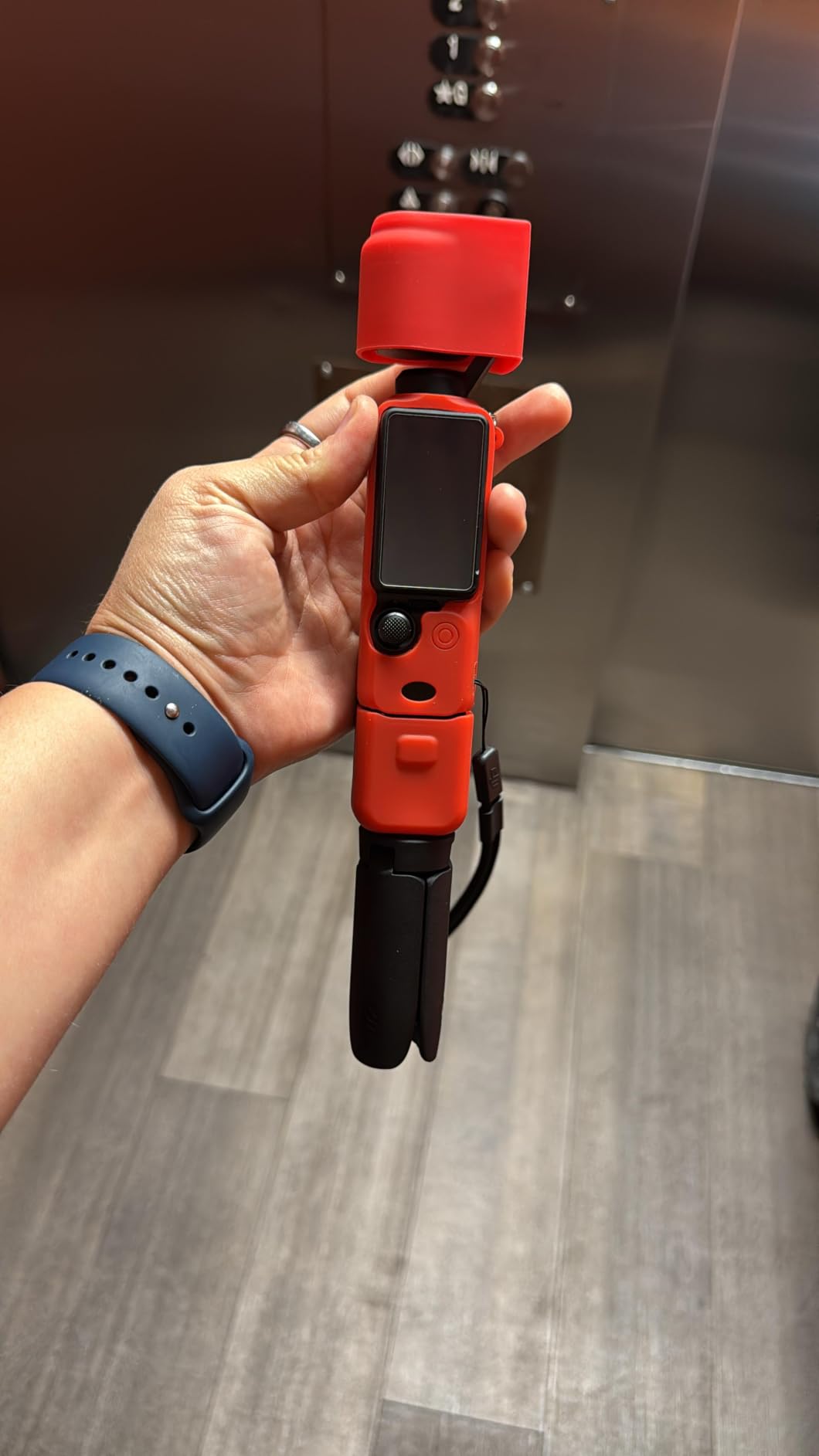
ActiveTrack 6.0 is the quiet feature that changes trip footage most. Set the camera on a ledge, press the button, and face tracking keeps you centered while you walk toward it across a square. On a trip where you are usually both the operator and the subject, that removes the single most tedious part of solo travel video.
The audio story is unusually good for the money. The Creator Combo bundles a DJI Mic 2 transmitter that connects directly with no receiver, so a wind-shielded lav on a narrator walking tour is a two-minute job rather than an afternoon of menu diving. Owners also praise the D-Log M 10-bit profile for giving real grading latitude afterward.
What the Osmo Pocket 3 does better than everything else here
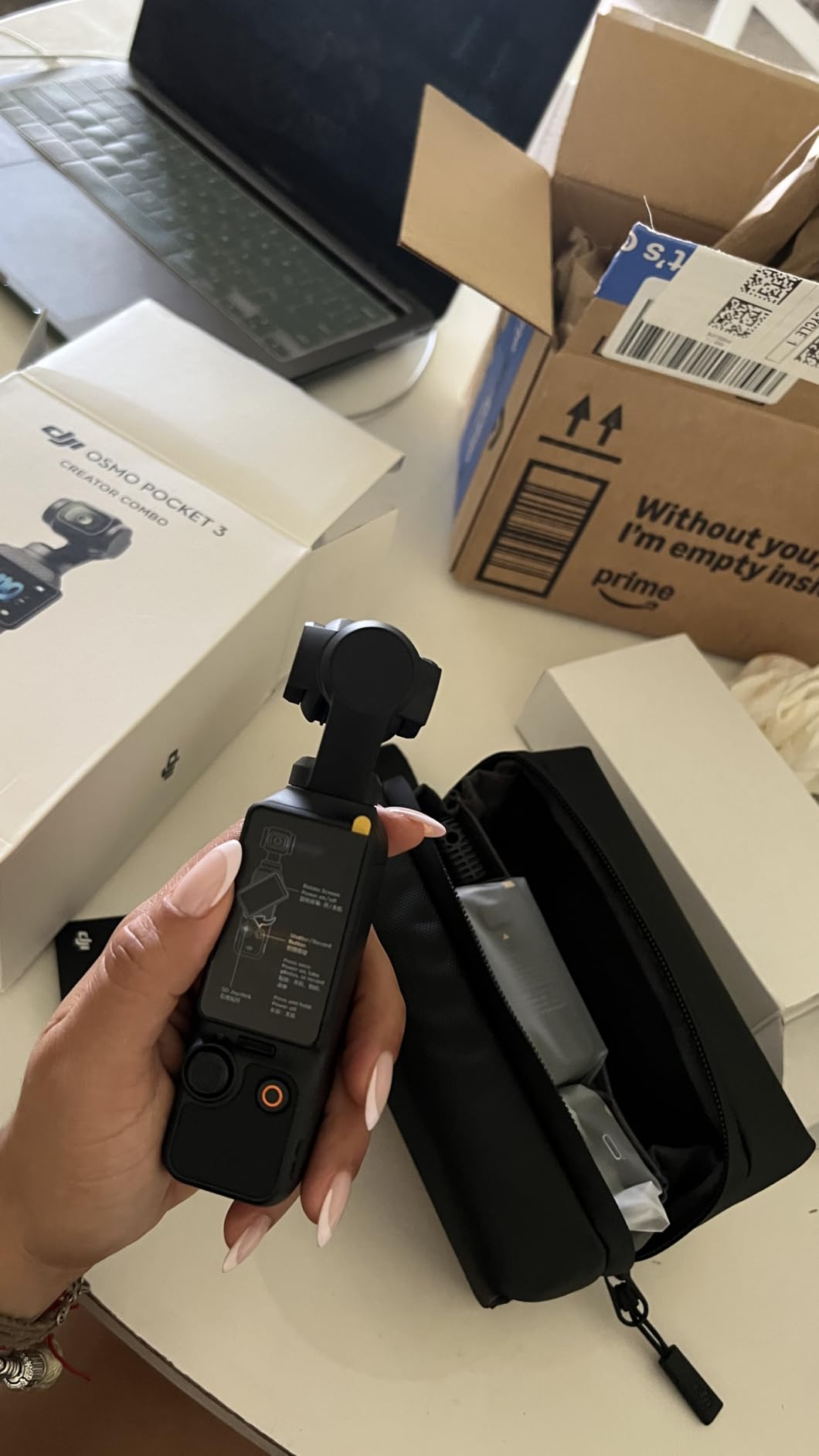
Nothing else on this list holds a straight horizon at walking pace without cropping the frame. The three-axis gimbal is mechanical, so it corrects on the actual hardware rather than digitally, which means your 4K keeps its full field of view even while you are moving. That difference is most visible in the exact footage people actually shoot on trips: walking through a crowd, riding a ferry, climbing steps.
The Creator Combo also solves the small-lens problem that plagues cheap travel kits. The bundled wide-angle module widens the field enough to take in a group shot or an interior without stepping backward, which is the situation where fixed-lens compacts usually lose. Combined with the battery handle, the package is genuinely a small kit rather than a body plus a promise.
Where the Pocket 3 will disappoint you
It is not sealed. The spec sheet lists the water resistance level as not water resistant, so rain, splashes and beach sand need a pouch. Owners also treat the gimbal assembly as fragile, and the lack of a mechanical lock means a hard knock in a bag can unseat the camera.
There is no internal recording storage, so a microSD card is not optional. And the companion app does not come through the normal app store, which is an awkward first ten minutes and an awkward step on every trip if you have not pre-loaded it.
2. DJI Osmo Action 5 Pro Adventure Combo: Best Waterproof Travel Camera Under 1000 Dollars
DJI Osmo Action 5 Pro Adventure Combo, Waterproof Action Camera
1/1.3-inch sensor, 13.5 stops
IP68 waterproof to 20 m
HorizonSteady roll lock
Pros
- Genuinely waterproof to 20 m without a housing
- 13.5-stop dynamic range holds highlights and shadows
- 4K at 120fps with a 155-degree field of view
- Three batteries in the Adventure Combo
- Front and rear OLED screens for solo framing
Cons
- Bundled microphone audio is only adequate
- Extension rod has no shutter button for stills
- App must be sideloaded rather than installed normally
This is the camera to buy if your itinerary includes water, dust, altitude or anything where dropping the camera would ruin the trip. It carries an IP68 rating to 20 m with no housing required, which is the strongest weather protection on this list.
The 1/1.3-inch sensor with 2.4-micron pixels and 13.5 stops of dynamic range is why owners rate it so highly. That range matters on real trips because it means a bright sky and a dark building facade can both hold detail in the same frame, instead of the facade crushing to black under a midday sun.
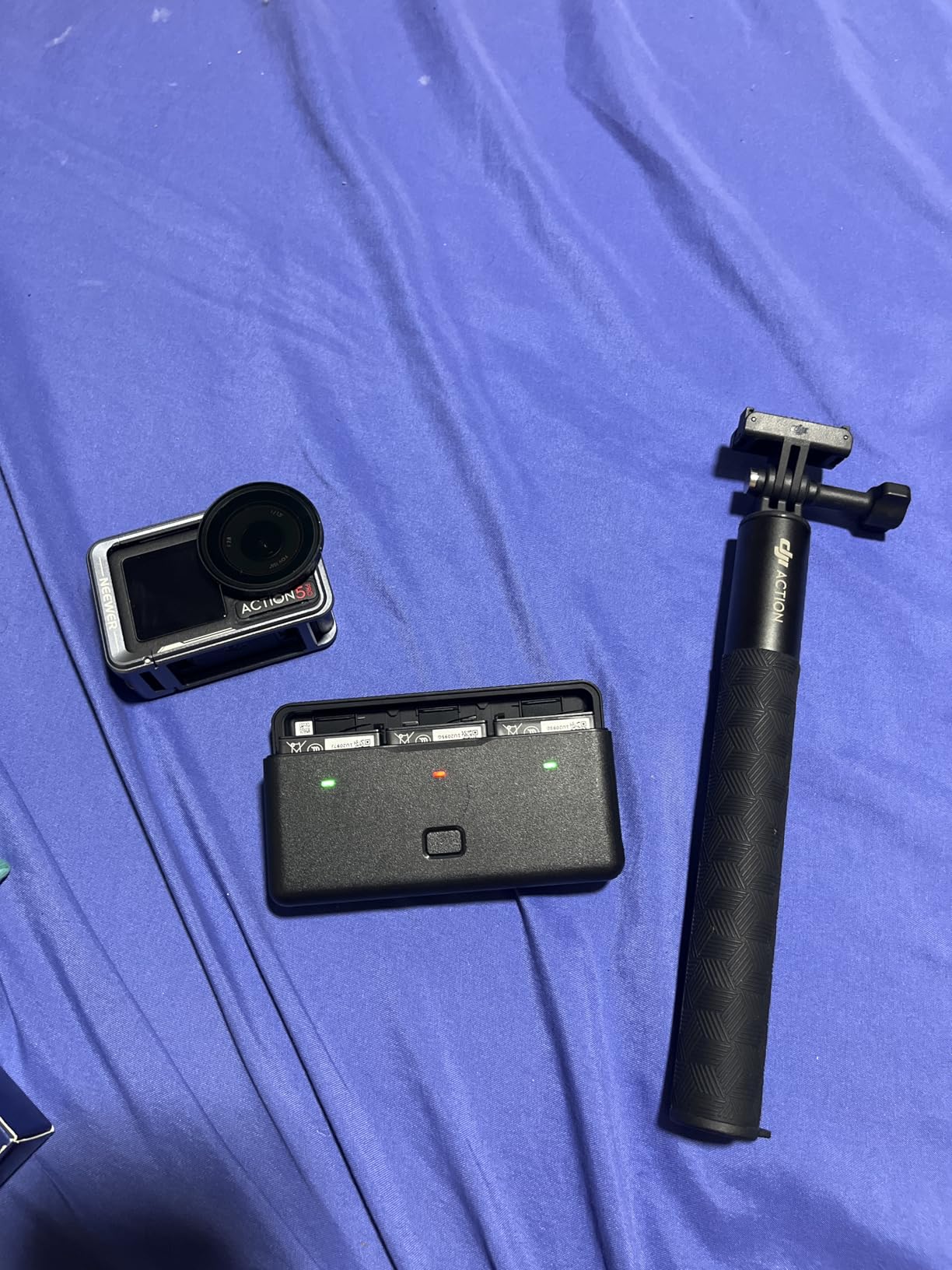
HorizonSteady is the travel feature, not a sports feature. It locks the roll axis through 360 degrees, so riding a scooter, a boat or a mountain road leaves the horizon level without any post-processing. On a trip where half the footage comes from moving vehicles, that single mode will do more for your finished videos than any other setting on the camera.
Battery life is listed at 4 hours, and the Adventure Combo adds a 1.5 m extension rod plus two extra batteries and a multifunctional case. Three batteries for a multi-day trip is the correct number. Owners also note a color temperature sensor that sets white balance automatically, which saves a lot of fussy work when you are changing light four times a day.
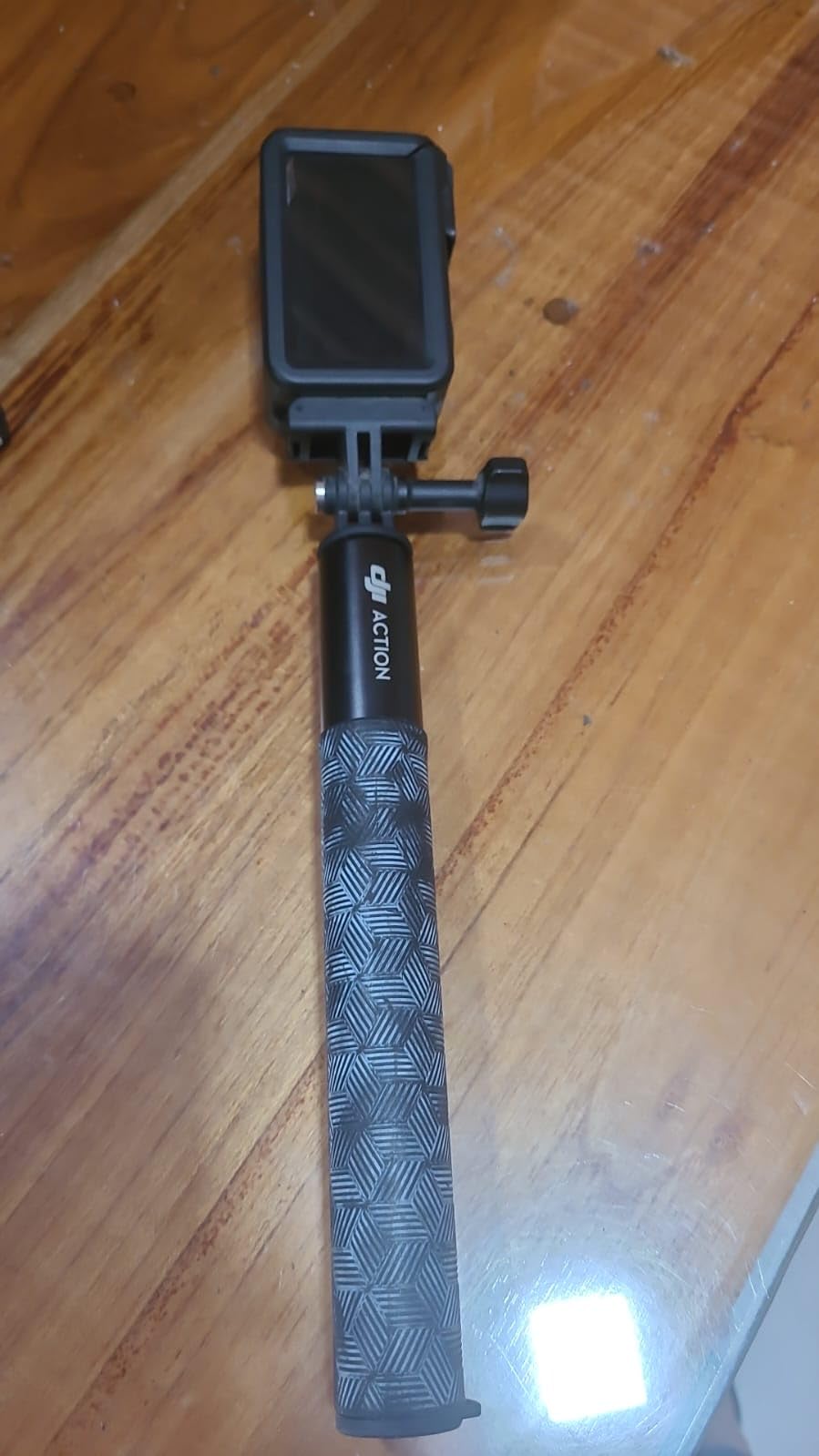
What the Action 5 Pro handles that the Pocket 3 cannot
Water is the headline, but it is only the start. A camera rated to 20 m survives the boat spray on a ferry deck, the sand on a beach, the dust on a desert road and the rain on a mountain ridge without a case being involved at all. For trips where the forecast is unreliable, that removes an entire category of stress.
Its dual OLED touchscreens are also better for solo work than most travel cameras manage. The rear screen is 2.5 inches and the front one handles framing during a hike, and both are bright enough to read outdoors. If you plan to mount the camera on a helmet, a handlebar or a chest strap, it is built around that.
Where the Action 5 Pro falls short
The audio is the first compromise. Reviewers are clear that the bundled microphone is adequate rather than good, so if narration is central to your videos you will be adding a wireless mic anyway. The Dual OLED screens also make the body larger than a simple point-and-shoot, though it is still small at 146 g.
Sustained recording generates noticeable heat, and the app must be sideloaded rather than installed from the normal store. The extension rod has no shutter button, so stills from the pole mean opening the app, which is an odd gap in a camera designed for hands-off shooting.
3. Sony Alpha a6400 with 16-50mm: Best Mirrorless Travel Camera Under 1000 Dollars
Sony Alpha a6400 Mirrorless Camera: Compact APS-C Interchangeable Lens Digital Camera with Real-Time Eye Auto Focus, 4K Video, Flip Screen & 16-50mm Lens – E Mount Compatible – ILCE-6400L/B, Black
20.1MP APS-C sensor
Real-time eye AF with 850 points
11 fps continuous
16-50mm equals 24-75mm
Pros
- Real-time eye AF locks onto people and pets almost instantly
- 20.1MP APS-C sensor holds detail for large prints
- 180-degree flip screen for vlogging and selfies
- Broad third-party E-mount lens support
Cons
- No in-body image stabilization
- Kit lens is weak indoors and at low light
- Menu system and app are not beginner friendly
The a6400 is the oldest camera on this list and it still earns its place. The APS-C sensor is physically much larger than the small sensors inside the compacts further down this list, the electronic viewfinder makes bright-day framing possible, and the real-time eye autofocus has become the reference other manufacturers measure against.
Long-term owners describe it as one of the most capable APS-C bodies they have used, with eye AF the standout feature years after release. That matters for travel because the shots you actually want back home are people and animals, and this body finds them without you fighting the focus system.
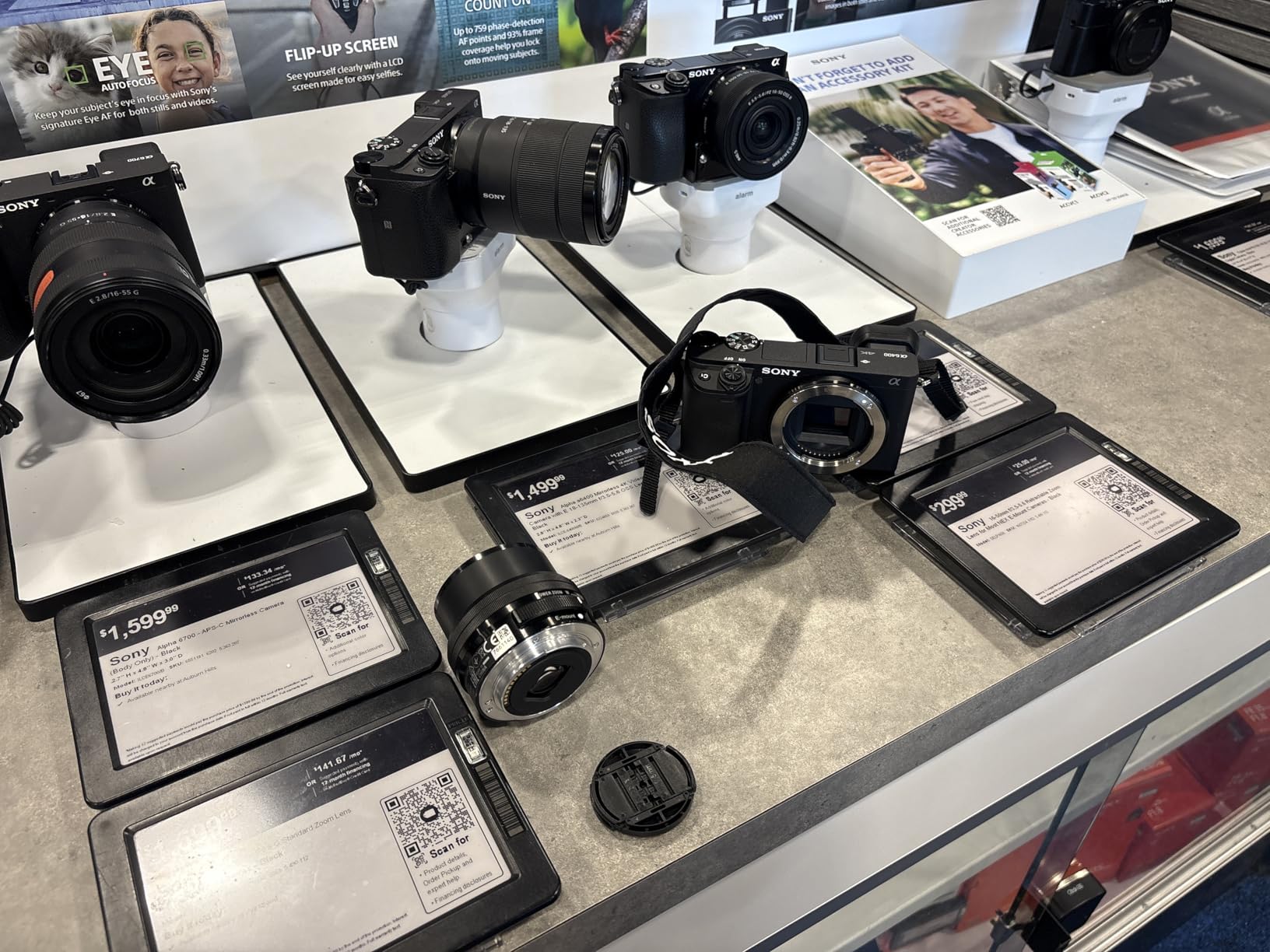
The bundled 16-50mm covers 24mm to 75mm equivalent, which is the sweet spot for walking around: wide enough for a market stall or a ceiling fresco, normal enough for a portrait at a café, tight enough for a church tower across a square. Because it is a Sony E-mount kit, the third-party lens market is enormous, so one cheap prime later fills the gaps this zoom leaves.
Video is genuinely good too. It records 4K with a 180-degree tilt screen for framing yourself, and the 850-point autofocus array covering phase-detect and contrast-detect zones means the tracking holds up on moving subjects. The body is 10.3 ounces, small enough for a small shoulder bag, and the metal chassis feels like it will survive a trip.

When the a6400 is the right travel camera
Choose it when stills are the point and you want room to grow. The APS-C sensor gives you noticeably cleaner files than the small sensors in every compact on this list, and RAW output means you can recover shadow detail from an evening market shot that a phone would have thrown away.
It is also the only body here that grows with your photography. Because E-mount lenses are cheap and plentiful, you can add a small prime for street work or a telephoto for wildlife later without changing systems. For a traveler who thinks they will take more photos next year than this year, that flexibility is worth more than the video extras on the other picks.
Where the a6400 falls short on the road
There is no in-body image stabilization, so handheld shots at dusk or on a boat need a fast shutter or a tripod. The bundled 16-50mm is also the weak point owners name most often, described as soft and slow, particularly indoors and in low light. Budget for a replacement lens if that is your priority.
The menu system and the companion app both have a learning curve that first-time users consistently complain about. And the movie-record button sits near the front edge, which is awkward when you are walking and want to start a clip one-handed.
4. OM System E-M10 Mark IV with 14-42mm: Best Travel Camera Under 1000 Dollars With Stabilization
OM SYSTEM Olympus E-M10 Mark IV Silver Micro Four Thirds System Camera M.Zuiko Digital ED 14-42mm F3.5-5.6 EZ kit 20MP Sensor 5-Axis Image Stabilization 4K Video Wi-Fi
20MP Micro Four Thirds
5-axis IBIS, 4.5 stops
Electronic viewfinder
Pros
- Only camera here with in-body stabilization
- Compact body with a tilting screen and selfie mode
- 20MP sensor with 12-bit RAW
- UHS-II card slot for fast burst and video
Cons
- Micro Four Thirds sensor is smaller than APS-C rivals
- Kit lens is slow at the telephoto end
- Contrast-detect AF is slower than phase-detect
This is the one to buy if your trip involves walking at dusk, handheld long exposures, or shooting from a moving vehicle and you want sharp results without thinking about it. The 5-axis in-body system delivers about 4.5 stops of shake compensation, which is several stops more than anything else on this list offers.
Four and a half stops is the difference between a usable photo and a blurred one when you are framing a cathedral interior at 1/15th of a second without a tripod. It also means you can stop down for depth of field in daylight and still hand-hold the shot. For hikers and long walking days, that reliability is worth a lot.

The body itself is small and light, with a tilting monitor that has a dedicated selfie mode, and an electronic viewfinder with 1.23x magnification that makes bright outdoor framing workable. It also records 4K DCI video and has a UHS-II card slot, which is unusual in a camera at this price and helps when you are writing large video files to card.
The M.Zuiko 14-42mm kit lens covers roughly 28mm to 84mm equivalent, a useful range that starts a little tighter than most kits. Owners value the Wi-Fi and Bluetooth transfer through the OI Share app, which is how you get a shot onto your phone within a minute of taking it.
Why hikers and long-walk travelers should pick this one
Stabilization is the reason. Most sub-1000 dollar mirrorless bodies simply do not have it, and reviewers treat its absence as a significant limitation. This camera has it built in, so a lens without stabilization still produces steady results, which is unusual and genuinely useful when you already own glass.
The compact body also disappears in a day bag in a way the a6400 does not. Add the electronic viewfinder and you get a camera that is comfortable in bright sun and light on the shoulder, which is the combination hikers ask for and rarely find at this budget.
Where the E-M10 Mark IV costs you something
The Micro Four Thirds sensor is smaller than the APS-C sensor in the Sony and Nikon bodies here, and reviewers name that as the main limitation. It shows most clearly at night and in dim interiors, where the Sony gathers noticeably cleaner images.
The 121-point autofocus is contrast-detect only, which is slower than phase-detect systems when something moves quickly. The kit lens is slow at the telephoto end, and there is no external microphone port, so serious video work means recording audio separately.
5. Nikon Z 30 with 16-50mm: Best Vlogging Camera Under 1000 Dollars for Travel
Nikon Z 30 with Wide-Angle Zoom Lens | Our most compact, lightweight mirrorless stills/video camera with 16-50mm zoom lens | Nikon USA Model
20.9MP APS-C sensor
Flip-out touchscreen
No viewfinder, screen only
16-50mm f/3.5-6.3 VR lens
Pros
- Lightweight compact body that is easy to carry all day
- Sharp 4K with eye detection for people and pets
- Flip-out screen makes vlogging straightforward
- USB-C webcam mode with Full HD 60p streaming
Cons
- No viewfinder so framing depends on the screen in bright light
- No body stabilization and relies on lens VR
- Overheats during long 4K recording sessions
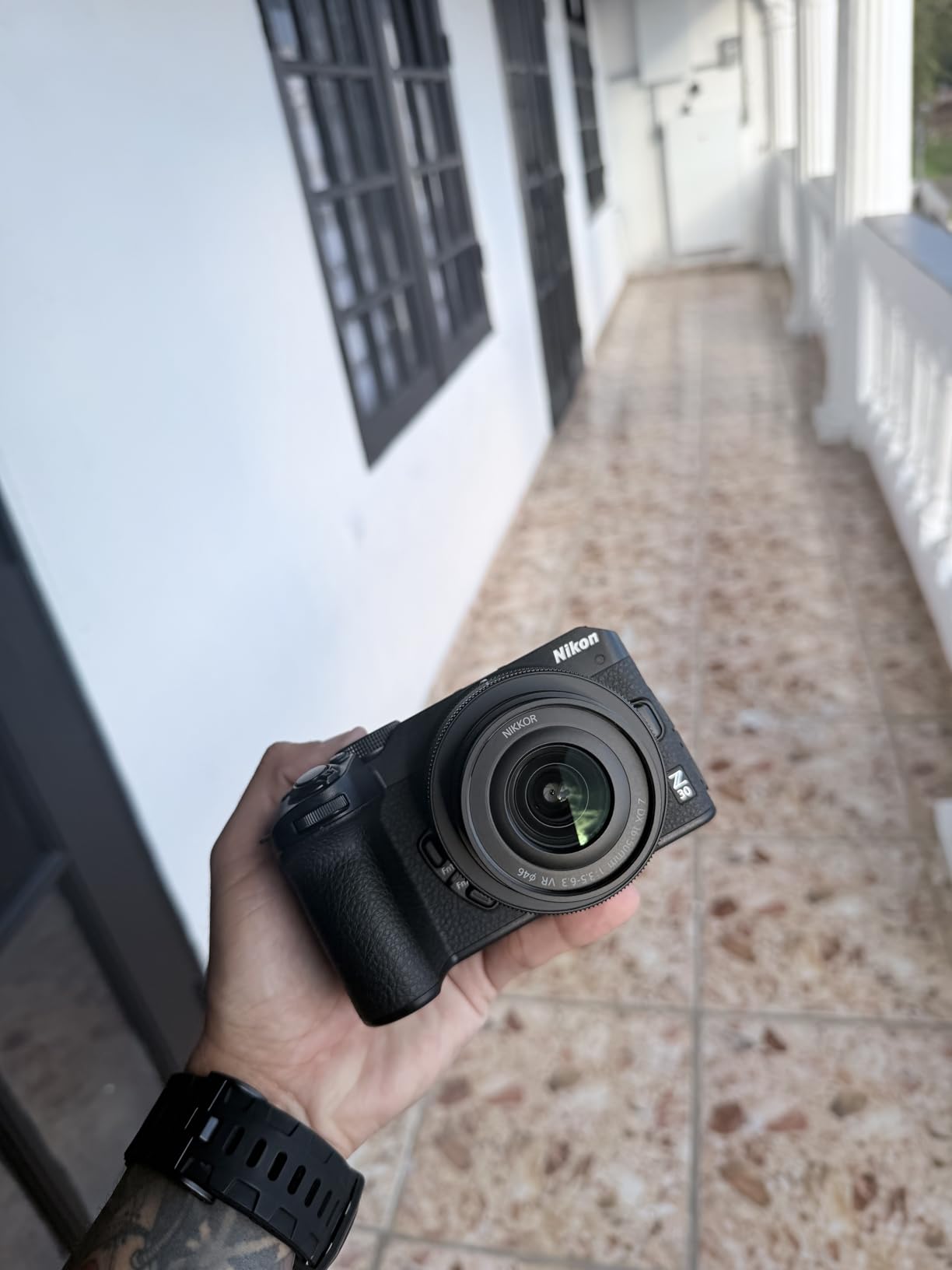
The Z 30 was built for people who point the camera at themselves, and everything about it follows from that. There is no viewfinder, by design, and instead you get a flip-out touchscreen, a red recording light and a stereo microphone with adjustable sensitivity, which are the parts a vlogger actually uses.
The 20.9MP APS-C sensor is larger than most vlogging cameras at this price, and the eye-detection autofocus tracks people and pets reliably through 4K recording. Reviewers report sharp 4K with fast autofocus, and the 11 fps burst is enough for stills sequences while you are out walking.
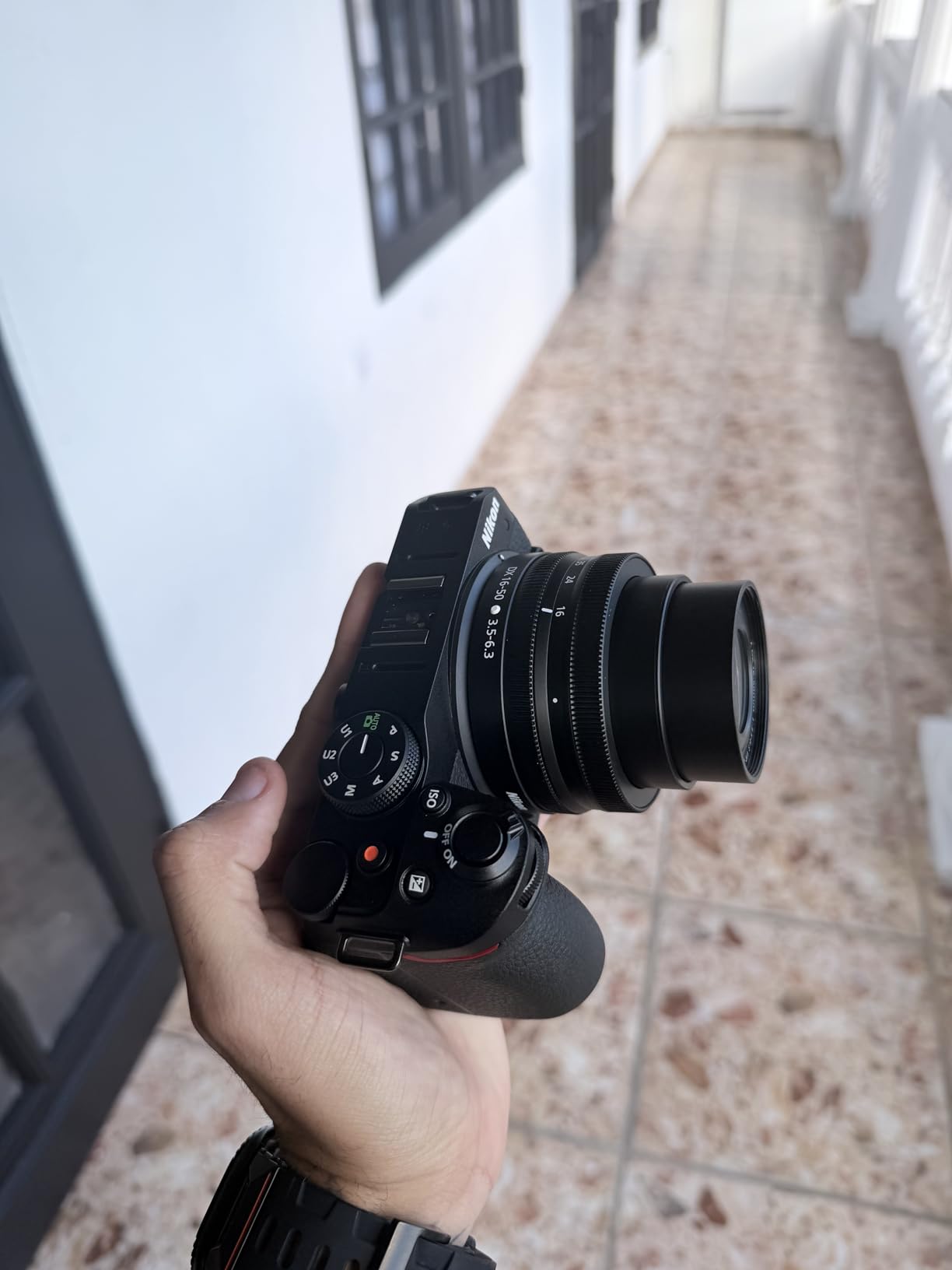
It doubles as a plug-and-play webcam over USB-C, streaming Full HD at 60p with constant power. For a traveler working from cafés between flights, that turns a trip camera into a meeting camera, and the SnapBridge app handles remote control and transfer over Bluetooth and Wi-Fi.
The kit includes the battery, strap and USB cable, so it works out of the box with nothing else to buy. The NIKKOR Z mount also means every later lens you might want is compatible, which turns this from a vlogging tool into a general travel camera if your priorities change.
Who this camera is built for
Anyone filming themselves on a trip. The flip-out screen frames a face properly without a rig, the eye detection holds focus while you walk, and the record light tells you the camera is rolling when you are not looking at it. Those three things together remove most of the friction of solo travel video.
It is also among the lightest interchangeable-lens options here, so a long shooting day does not become a shoulder ache. If your trip is mostly walking, mostly talking to camera, and you will be editing vertical clips for social, this is the body that fits.
Where the Z 30 is the wrong tool
No viewfinder. That is a real cost, and it is the deal-breaker owners name first. In bright daylight the screen is much harder to read, which affects composition more than most buyers expect before their first trip.
There is also no body stabilization, so stabilization depends entirely on the kit lens VR. And the body overheats during long 4K recording sessions, which matters if you plan to shoot long continuous takes rather than clips.
6. Canon PowerShot SX740 HS: Best Travel Camera Under 1000 Dollars for Safari and Wildlife
Canon PowerShot SX740 HS, Point and Shoot Digital Camera, Optical Zoom, 4K Video, Black
40x optical zoom, 24-960mm equivalent
Optical image stabilization
Optical viewfinder
20.3MP with DIGIC 8
Pros
- 40x optical zoom is unmatched on this list
- Optical stabilization steadies the long end
- Optical viewfinder works in bright sun
- Point-and-shoot fully automatic operation
- Compact body that fits in a day bag
Cons
- Only 1080p video recording
- Small 1/2.3-inch sensor limits low light
- Small sensor and dated autofocus for moving subjects
- Bluetooth transfer app is clunky
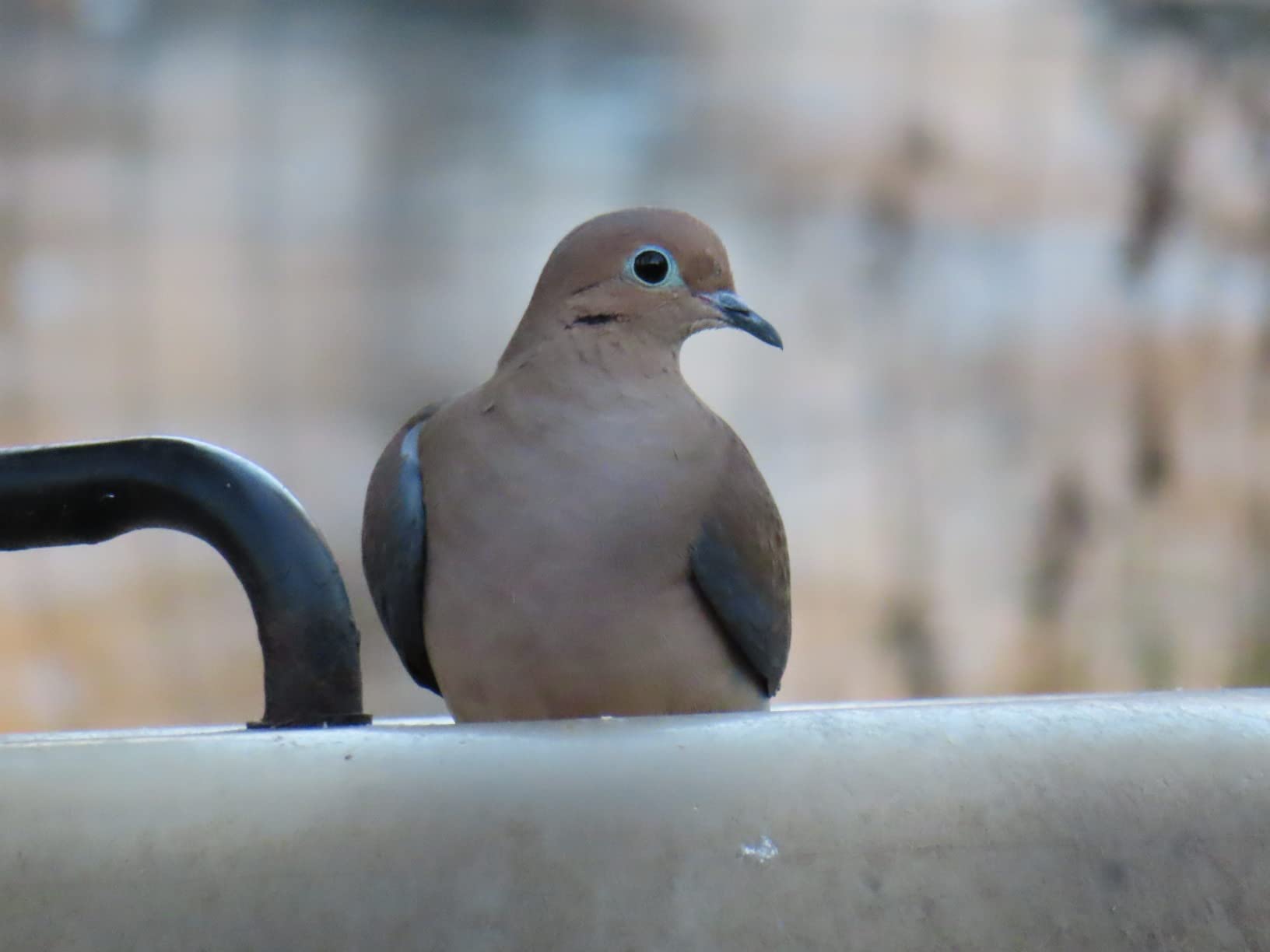
There is exactly one problem the SX740 HS solves that nothing else on this list can: getting close. A 40x optical zoom reaches 960mm equivalent, so a leopard at the far end of a valley or a bird on a wire across a river is a normal photograph rather than a crop from a blurry frame.
Travelers value it for its reach, its optical image stabilization and its simple fully automatic operation. You can hand it to someone in your group and they will get good frames, which is exactly what you want on a family trip where not everyone wants to learn manual exposure.

The optical viewfinder is a genuine advantage over most travel cameras at this price. It works in bright daylight with no screen glare, and it uses less battery than an electronic one, which on a twelve-hour safari day adds up to extra frames.
There is also a zoom framing assist that shows the area of the frame the zoom will capture, plus 4K time-lapse movie mode and 10 fps continuous shooting. The zoom framing assist in particular solves the problem of the long lens swinging wildly when you push it out on a moving subject.
When the long zoom is the whole point
Safari, birding, coastal overlooks, stadium seating and anything where you cannot physically get closer. Reviewers consistently describe this as the reason to buy it: reach you cannot fake with a digital crop, stabilized so the long end is usable handheld at full extension.
It is also the most forgiving camera here for handing to other people. Automatic modes handle the exposure, and the reach means you can stand still rather than creep closer to a subject that might be a wild animal.
Where the SX740 HS will frustrate you
The sensor is 1/2.3-inch, a small class, and owners cite low-light performance as the clear limit. Evening interiors and night markets will disappoint compared with the a6400 or the Pocket 3.
Video recording is 1080p only, so the 4K mode is limited to time-lapse clips rather than real footage. The 25-point contrast-detect autofocus is slow for moving subjects, which undercuts the very use case the long zoom exists to serve. And the Bluetooth transfer app is described as clunky.
7. Canon PowerShot V10: Best Pocket Travel Camera Under 1000 Dollars for Video
Canon PowerShot V10 Compact Vlogging Camera, 1″ CMOS Sensor, 4K Video Streaming, Built‑in Wide‑Angle Zoom Lens, Flip‑LCD & Stereo Mic, Image Stabilization, Creator Studio in Your Pocket, Black
1-inch back-illuminated CMOS
4K 30fps and Full HD 60fps
Fixed 19mm wide-angle
Folding built-in stand
Pros
- 1-inch sensor gives better low light than typical compacts
- Folding stand frames hands-free from front or back
- Retractable front-facing screen avoids wobble
- Three stereo microphones for vlog audio
- Pocketable body with simple controls
Cons
- 8-bit 4K capped at 30fps with no high frame rate
- Fixed 19mm lens with no optical zoom
- Not weather sealed or waterproof
- Small 2-inch screen
- Limited battery for long shooting days
The V10 is built around a single idea: a camera you can set down and walk out of frame. The built-in folding stand works from the front or the back, and the retractable front-facing screen means you can frame yourself without a flip-out panel wobbling in the wind.
Underneath that is a real 1-inch back-illuminated sensor, which is why owners single out its low-light performance as noticeably better than typical compact cameras. On an evening street market or a dim restaurant, it produces usable frames where cheaper compacts produce noise.
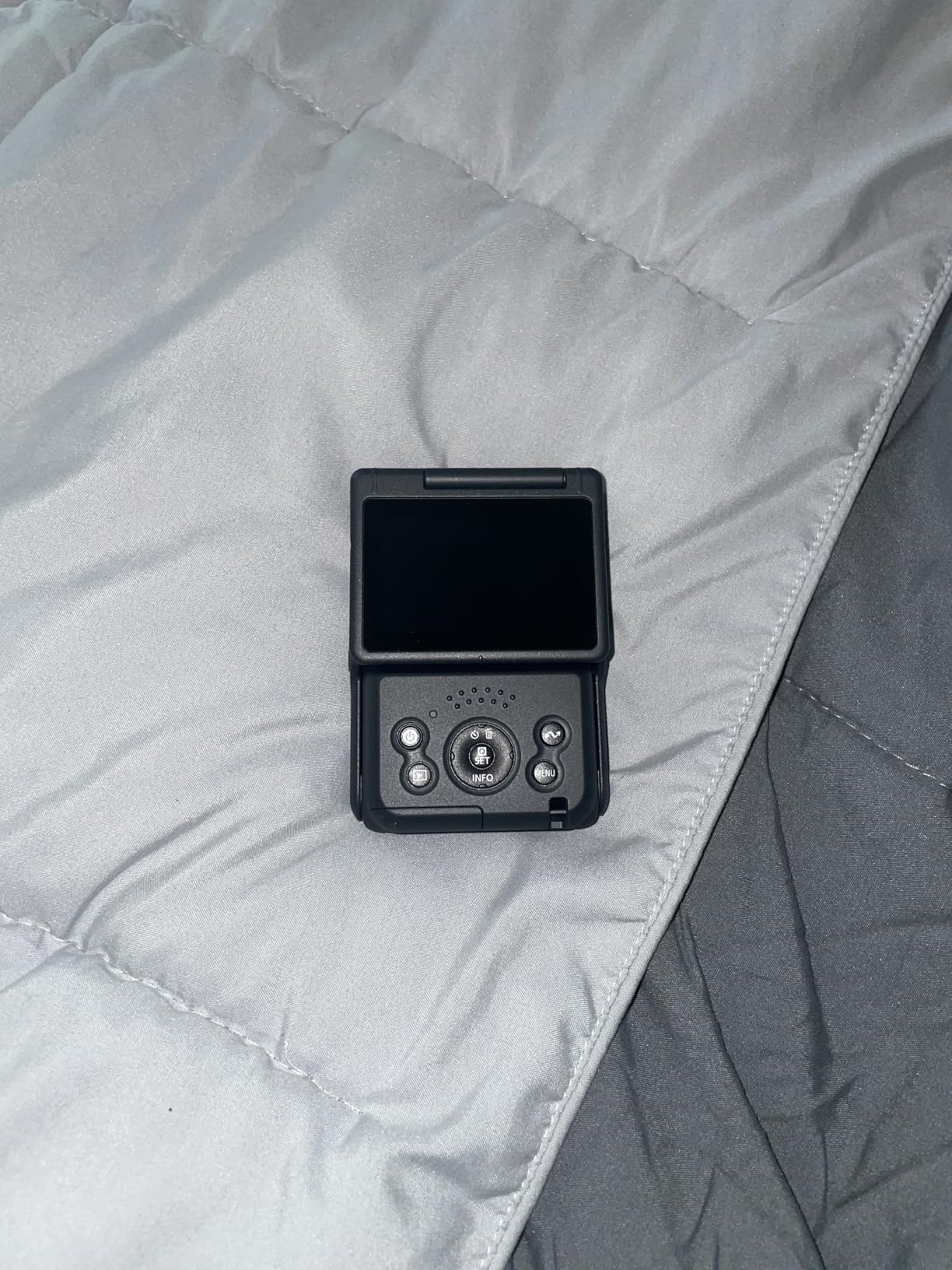
The fixed 19mm lens is roughly 19mm equivalent on a full frame, a wide angle that suits open travel scenes and tight interiors. It also shoots 4K at 30fps and Full HD at 60fps, with three image stabilization modes for video, and an ISO range of 100 to 6400.
Audio gets three stereo microphones with noise reduction, plus an external mic port and USB-C charging. For solo travel video that is a complete package in a body that fits a coat pocket, with controls simple enough that you can set it up in under a minute.

What the V10 does that mirrorless bodies cannot
It disappears. There is no lens to change, nothing to swap in the rain, and no body-plus-zoom weight to think about. For travelers whose days involve walking more than shooting, a camera that fits a pocket and is ready in two seconds beats a better sensor you rarely bring out.
The stand changes framing entirely. Time-lapse of a market opening, a sunset behind a fort, or a street you walked through three times a day all become one-take clips. Combined with the retracting screen, you can film yourself with no rig, no gimbal and no accessories.
Where the V10 runs out of road
Capture is 8-bit 4K capped at 30fps, with no high frame rate options, so it gives you less grading latitude and no slow-motion work. The fixed wide-angle lens means you cannot zoom at all, which is limiting on any trip where distance matters.
It is not weather sealed or waterproof, the 2-inch screen is small for checking detail, and battery life is listed at 2 hours. That last number is the real constraint: it needs charging during a long day, unlike the kits that swallow a spare battery.
8. Canon PowerShot ELPH 360 HS: Best Family Trip Camera Under 1000 Dollars
Canon PowerShot ELPH 360 HS A Silver
20.2MP CMOS sensor
12x optical zoom with stabilization
3.0-inch LCD
Wi-Fi and NFC transfer
Pros
- Easy pocketable point-and-shoot with a 12x zoom
- Large 3.0-inch screen readable from wide angles
- Built-in Wi-Fi and NFC for quick phone transfers
- Rechargeable lithium-ion battery
Cons
- Very small 1/4-inch sensor limits image quality
- No optical viewfinder and no built-in flash
- Slow startup with a 4-second delay between shots
- Limited manual control
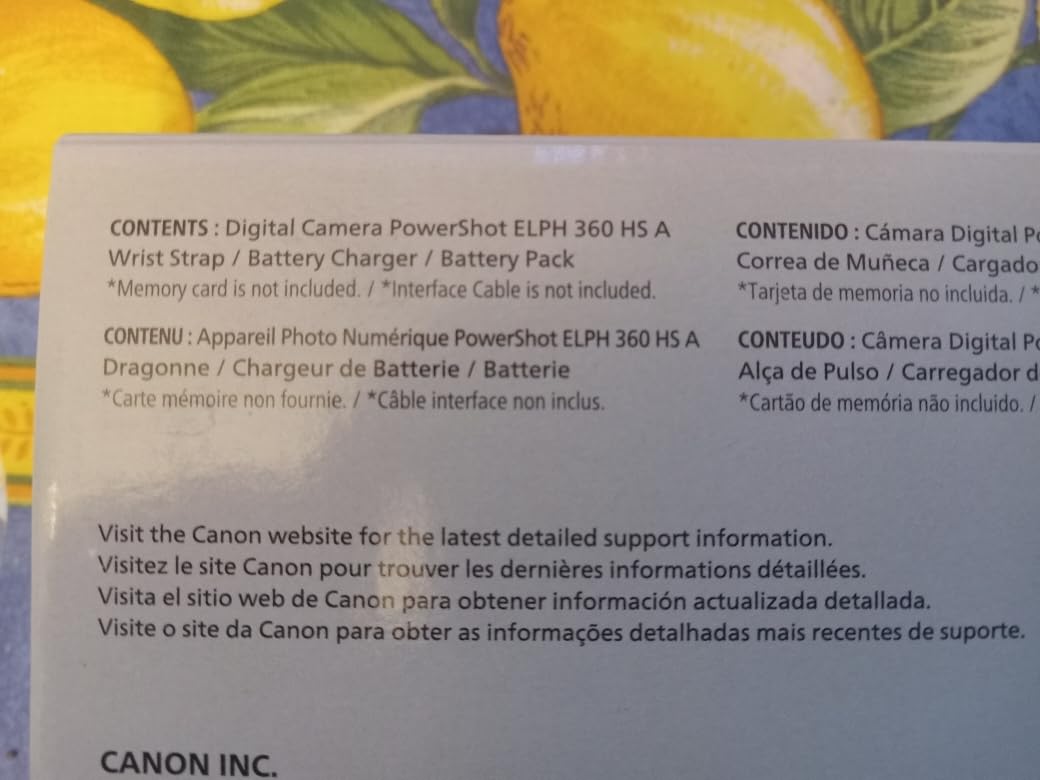
The ELPH 360 HS is the camera you buy when the camera is not the point of the trip. It is a straightforward pocket point-and-shoot with a 12x optical zoom, a large 3-inch screen and a rechargeable battery, and it does one job: being in the bag when someone says quick, do you want a picture.
Buyers treat it as an easy, pocketable travel snapshot camera with a handy zoom range. The 20.2MP sensor with the DIGIC 4+ processor holds up acceptably in dim light, which is better than the tiny sensors on most compacts at this end of the market.

On a family trip the arguments are the real problem, and this camera ends them. Point it at something, press the button, and you get a photo. Nobody has to learn exposure compensation, and the 3-inch screen is big enough that people can hand it to each other without guidance.
Built-in Wi-Fi and NFC make transfer to a phone quick, which is how most travel photos actually reach other people. Hybrid Auto mode also compiles clips and stills into a short recap, a small touch that produces a shareable clip from a day without any editing.
Where this camera earns its place
It is for trips where the camera is one item among many and weight discipline matters. At 9.92 ounces it is invisible in a day bag, and the 12x zoom covers everything from a group shot to a distant sign without changing anything.
It also suits anyone who wants photos without wanting a photography hobby. The controls are deliberately simple, there is almost nothing to configure, and the rechargeable lithium-ion battery avoids the disposable battery logistics that derail cheap compacts in countries where cells are hard to find.
Where the ELPH 360 HS will fall short
The 1/4-inch sensor is genuinely tiny, and reviewers are blunt about what that costs in resolution and image quality. If you want files you can crop, print large, or edit seriously, this is the wrong camera.
There is no optical viewfinder and no built-in flash, both of which hurt in bright sun and dim interiors. Startup is slow, with roughly a four-second delay between shots, which makes candid street capture awkward. Manual control is limited, which is fine if you want that and limiting if you do not.
9. AKASO Brave 4 Bundle: Best Budget Action Camera for Travel Adventures
AKASO Brave 4 Action Camera with Floating Hand Grip and Carrying Bag Bundle
4K30 video and 20MP stills
Adjustable viewing angle to 170 degrees
Waterproof housing to 40 m
Dual screens with floating grip
Pros
- 4K30 video and 20MP stills at an accessible price
- Four selectable viewing angles including 170 degrees
- Waterproof housing rated to 40 m with floating grip
- Dual screens for self-framing
- Bundle includes two batteries and a carrying bag
Cons
- Bundled accessories are basic plastic mounts
- Wi-Fi app transfer is slower than cable copying
- Digital stabilization is less effective than hardware systems
- Modest battery capacity for long 4K recordings
The AKASO Brave 4 exists for a specific trip: the one where the camera will be dropped, splashed, mounted to something, or handed to a kid on a floating mat in a swimming pool. It records 4K at 30fps and 20-megapixel stills, and the bundle includes a floating hand grip so it does not sink.
Owners view it as strong value for entry-level action shooting, with useful dual screens and a generous accessory bundle. The 2-inch rear screen plus 0.96-inch front screen means you can frame yourself without guessing, which matters when the camera is strapped to a helmet or handlebar.
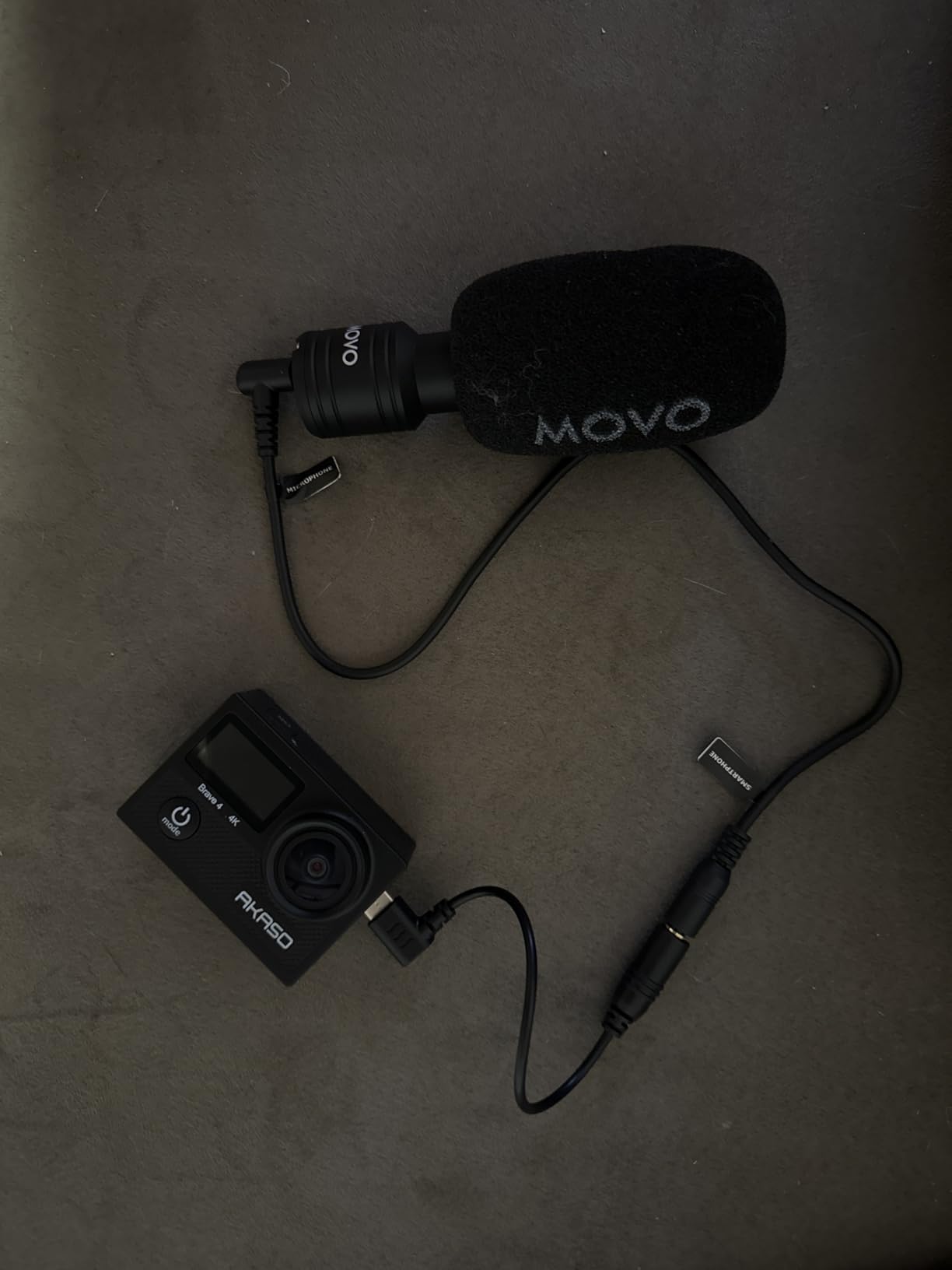
The viewing angle is adjustable across 170, 140, 110 and 70 degrees, so you can go ultra-wide on a hike or narrow down to reduce lens distortion in close-ups of food and market stalls. A gyroscope-based stabilization smooths the footage, which is the feature that separates this from a plain camcorder.
The waterproof housing is rated to 40 m, deeper than the DJI Action 5 Pro needs, and the bundle includes two batteries, helmet and bicycle mounts and a carrying bag. For someone packing light on a first adventure trip, having the mounts in the box removes a separate shopping step.

When this is the right choice
When the budget is small and the trip is physical. It handles rain, splash, dust and knocks without consequence, and the dual screens plus floating grip make it easy to hand to someone else. Owners of kids and dogs rate it highly for exactly that reason.
It is also a straightforward way to get true 4K footage from something you can mount. If your plan is a cycling trip, a coastal hike or a trip where the camera spends most of its life strapped to something, that use case is served better here than by any mirrorless body.
Where the Brave 4 disappoints
Stabilization is digital rather than hardware-based, so it does not match the RockSteady or HorizonSteady systems on the DJI action cameras for smooth movement. Small sensors limit low light and dynamic range compared with premium action cameras, which shows in evening and indoor footage.
The bundled mounts are basic plastic, the Wi-Fi app transfer is slower and less reliable than copying over cable, and battery capacity is modest for long 4K recordings. Copy files directly from the card and treat the app as a backup.
10. Kodak PIXPRO FZ55-RD: Best Lightest Travel Camera Under 1000 Dollars
KODAK PIXPRO FZ55 16MP Compact Digital Camera, 5X Optical Zoom, Red
16MP CMOS sensor
5x optical zoom, 28-140mm equivalent
3.7 ounces
Rechargeable lithium-ion battery
Pros
- Weighs only 3.7 ounces so it disappears in a pocket
- Rechargeable battery avoids disposable cells
- 5x optical zoom with a 28mm wide-angle lens
- Crisp colourful photos with a retro digicam look
- Face detection and scene modes work well
Cons
- Only 1080p video
- Small 2.7-inch fixed screen is hard to frame
- Weak low-light performance
- Digital stabilization and 9-point autofocus are dated
- SD card sold separately
At 3.7 ounces the FZ55-RD is the lightest camera on this list by a wide margin, and that number is the entire argument. It is the one you will actually carry for eight hours a day without noticing, which is the trait that decides how many photographs come home from a trip.
Reviewers widely recommend it as an inexpensive, ultra-portable travel snapshot camera with a rechargeable battery and 5x zoom. The 28mm equivalent wide angle covers landscapes and tight interiors, and the photos have the crisp, colourful look that the retro digicam revival is built on.

The rechargeable lithium-ion battery is a practical win over the disposable-cell compacts at this price. It charges from a USB cable, it holds a charge through a long day, and there is nothing to hunt down in a shop when the cells run out in a country where they are not sold.
It also shoots at 30 frames per second and includes panorama and face detection modes. Recording capacity is listed at 1.5 hours, which is enough for casual clips but not for a trip of narrated video. The card is a Class 10 SD, SDHC or SDXC up to 512GB, sold separately.

Why some travelers prefer less camera
There is a real argument for a camera with no settings and no consequences. At this weight you can clip it to a strap and have it with you for a whole day of walking, which produces more photographs than an impressive camera that lives in a bag on hotel safes.
It is also the easiest camera here to hand to a companion without a tutorial. Point, press, done. For street photography and holiday snapshots, that simplicity removes the last barrier between a moment and a photograph.
Where the FZ55-RD falls behind
Video is 1080p only, so it is not suited to serious vlogging and would not survive a comparison against any of the 4K bodies here. The 2.7-inch fixed screen is small and awkward for framing, which is a real cost when you are composing rather than snapping.
The small sensor yields weaker low-light performance, and digital stabilization with 9-point autofocus is dated. If you shoot after dark or move around a lot, the gap versus the a6400 or the Pocket 3 is obvious.
11. Duluvulu 48MP 4K Compact: Best Starter Camera Under 1000 Dollars With Everything Included
Duluvulu 4K Digital Camera for Photography Autofocus, 2026 Latest 48MP Vlogging Camera for YouTube with SD Card, 2 Batteries, 3″ 180°Flip Screen Compact Travel Camera for Teens with 16X Zoom,Black
48MP stills and 4K video
3-inch 180-degree flip IPS screen
2 batteries and 32GB card included
USB webcam mode
Pros
- Very low price with two batteries and an SD card in the box
- 3-inch flip screen makes selfies and vlogging straightforward
- Doubles as a USB webcam for streaming and calls
- Compact enough for a pocket or small day bag
- Time-lapse and slow motion modes included
Cons
- 48MP is upscaled from a small 1/3-inch sensor
- 16x zoom is digital with no optical lens
- Video records to AVI rather than MP4
- Single-point autofocus can be inconsistent
- Build quality feels cheap
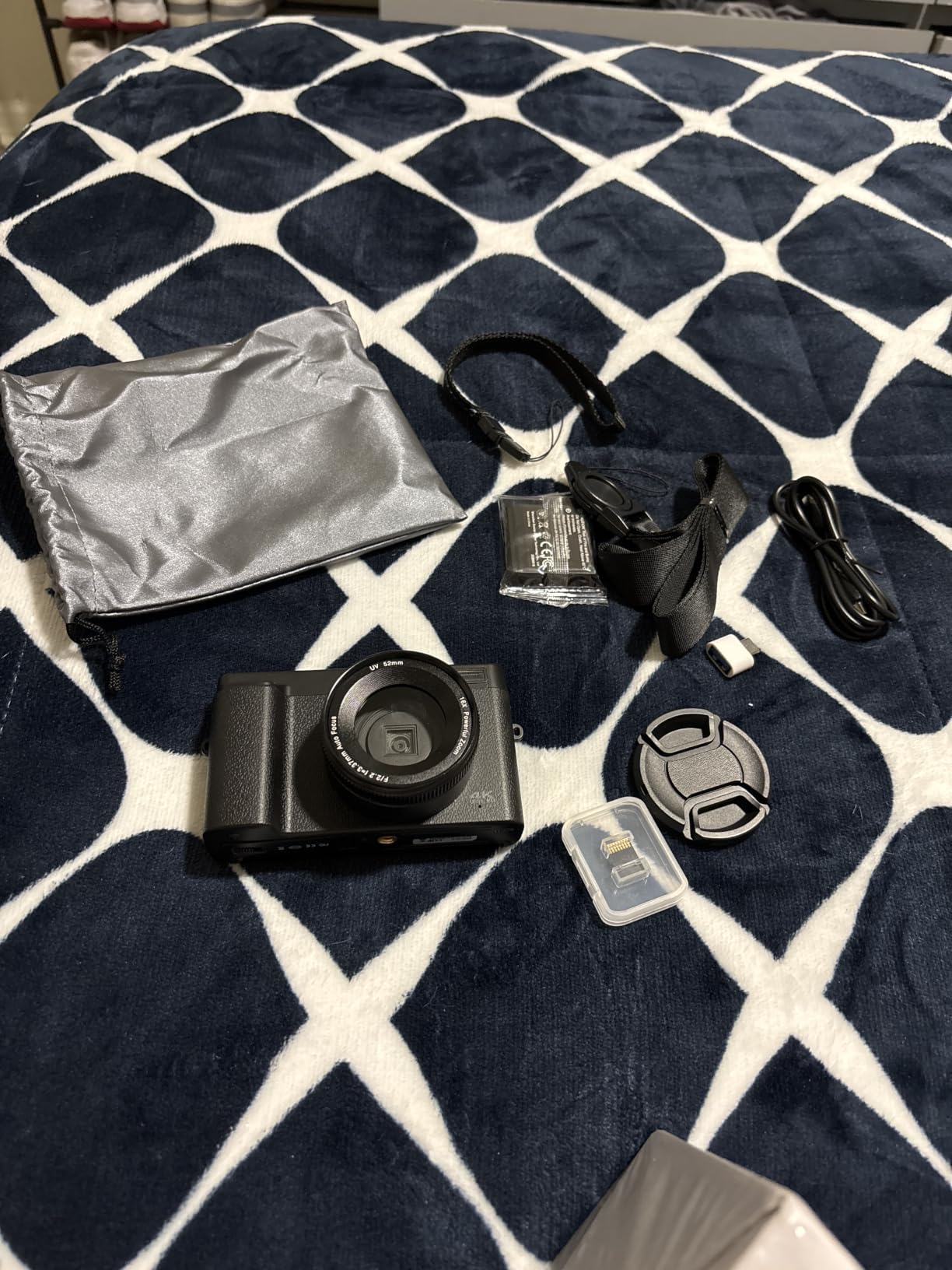
The selling point here is simplicity of purchase. The box contains the camera, a 32GB memory card, two rechargeable batteries, a Type-C cable, a lens cap, a USB adapter, a manual, a strap and a camera bag. Nothing else needs buying before the first day of the trip.
Buyers treat it as a low-cost starter or backup travel camera, and the 3-inch 180-degree flip IPS screen is the feature they mention most. It makes selfies and vlogging straightforward for teenagers or anyone shooting vertical clips, which is where most travel footage ends up.
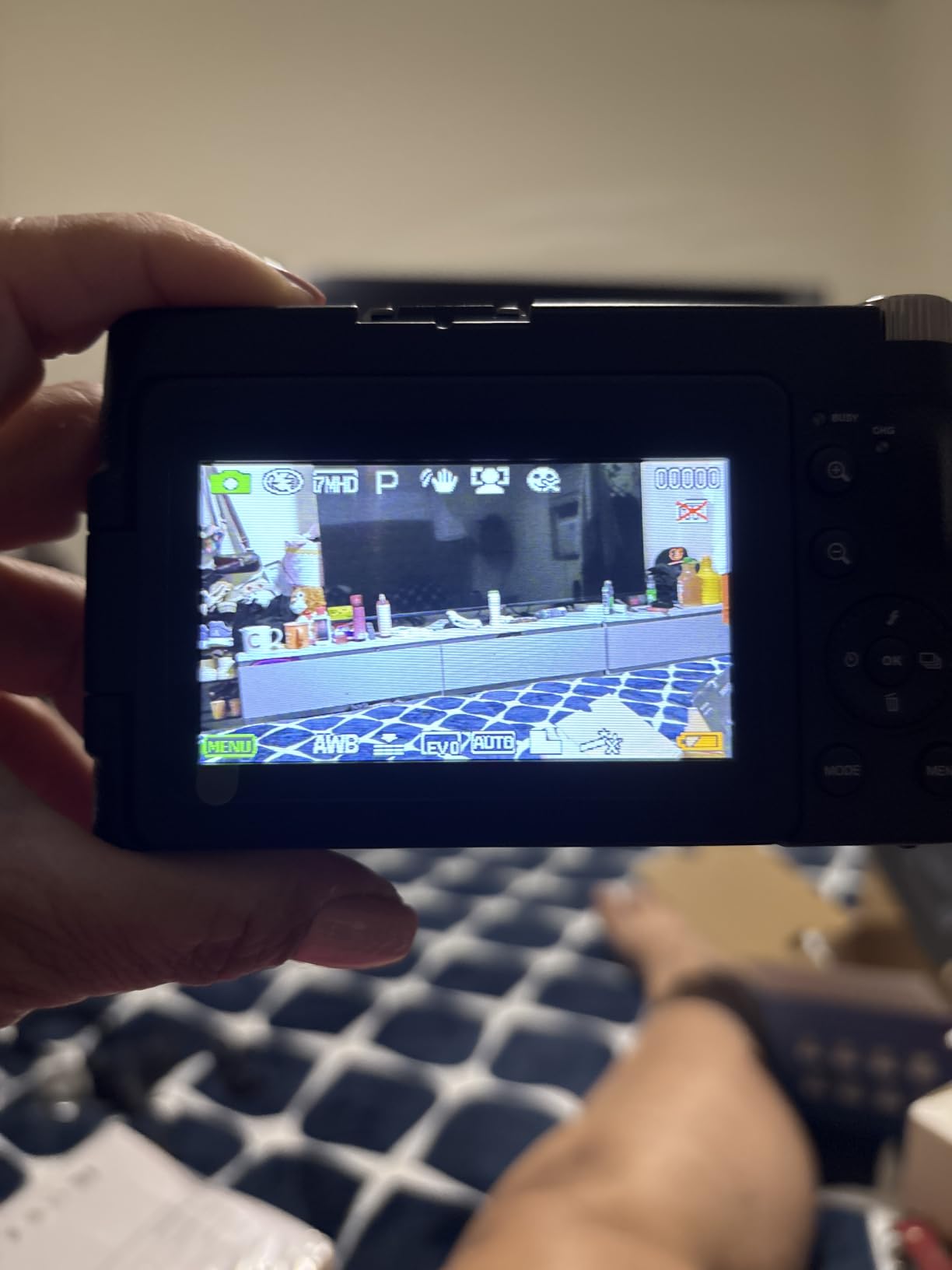
It also doubles as a USB webcam for live streaming and video calls, which turns a trip into a working setup. On top of that you get time-lapse, slow motion, video pause, date stamp and exposure compensation, along with an 18-month replacement and refund warranty.
The 48MP headline number needs a caveat, and reviewers are consistent about it. That figure is upscaled from a small 1/3-inch sensor, so the real detail is far below what 48MP suggests. Similarly, the 16x zoom is digital with no optical lens at all.
Where this camera makes sense
It is a first camera, a backup, or a gift. The included card and two batteries remove the two most common beginner mistakes, buying a body with no card and running out of power on day two. For a teenager learning photography, the flip screen and webcam mode do a lot of the teaching.
It is also a reasonable second body to carry alongside a real camera, or a body for a trip where you do not want to think about equipment at all. At that expectation level, the feature list is genuinely long for the money.
Where the Duluvulu falls short
The 1/3-inch sensor is the problem. Upscaling cannot recover detail that was never captured, so indoor and low-light photos will be noticeably worse than any of the compacts above. Autofocus is a single point and reviewers describe it as inconsistent.
Video writes to AVI rather than MP4, which complicates editing and phone sharing. Digital anti-shake does not replace real stabilization, and the build quality and finish feel cheap, which is a fair trade at this level but worth being honest about.
12. Kodak PIXPRO FZ45: Most Affordable Battery-Powered Travel Camera
KODAK PIXPRO FZ45 16MP Compact Digital Camera, 4X Optical Zoom, AA, Black
16MP CMOS sensor
4x optical zoom, 27-108mm
1080p video
AA alkaline batteries, no charging
Pros
- Extremely light at 4.1 ounces
- 4x optical zoom with a 27mm wide-angle lens
- Uses AA batteries so no charging on a trip
- Retro digicam look gives crisp vibrant images
- Optical viewfinder and built-in flash
Cons
- Only 1080p video and not suited to vlogging
- Reliability issues including stalls and flash failures
- 5 to 10 second restart delay between shots
- Requires alkaline batteries
- SD card sold separately
The FZ45 sits at the low end of what this roundup covers, and for a specific kind of trip that is exactly the right number. At 4.1 ounces with a 4x optical zoom, it disappears into a pocket and shoots for weeks on AA batteries without ever being charged.
Reviewers like it as a stylish, ultra-cheap retro digicam with AA battery convenience and solid optical zoom for the money. The 27mm equivalent wide angle is useful, and the optical viewfinder plus built-in flash help in exactly the situations where screen-based compacts struggle.

The retro look is not incidental. Owners specifically praise the crisp, vibrant images it produces for social posts, which is a different goal from technical quality and a legitimate one for a trip camera. Recording capacity is listed at 480 minutes, far beyond most compacts here.
That record capacity comes from the AA batteries. Two alkaline cells power it indefinitely in a way no rechargeable camera can match, and alkaline batteries are sold almost everywhere on earth, which removes the single most common travel hardware failure.

Where this camera is the right answer
On a long, low-stakes trip where the camera is a fun object rather than a serious tool. It is also the most forgiving thing to hand to a child, because the worst outcome is a missing photograph rather than a damaged lens. Nothing about it is delicate.
The optical viewfinder is unusual at this price and useful in bright sun, and the built-in flash solves the dim restaurant problem that sinks the tiny-sensor compacts. For straightforward holiday snapshots, it does more than you would expect.
Where the FZ45 will frustrate you
Video is 1080p only and owners are blunt that it is not good for vlogging. The 5 to 10 second restart delay between shots makes candid street capture genuinely awkward, which is the main way a travel camera gets used.
There are also reliability issues reported, including stalls, freezing and flash failures, and the camera requires alkaline batteries, with rechargeable cells potentially not working. The SD card and reader are sold separately, which is the first thing you need to buy.
Which Camera Fits Which Trip Type
The best camera to bring for travel depends entirely on what the trip is. A city walking trip, a hiking trip in rain and a safari have almost nothing in common, and the twelve cameras above separate cleanly once you sort them that way.
City walks, museums and street photography. The DJI Osmo Pocket 3 at 179 g is the pick because a camera you will actually carry beats a better camera at home. If stills matter more than video, the Sony a6400 gives you an APS-C sensor and an eye-AF system that handles people at close range, and the electronic viewfinder survives bright midday sun.
Hiking, rain and cold. The DJI Osmo Action 5 Pro is rated waterproof to 20 m without a housing, and the OM System E-M10 Mark IV adds in-body stabilization, which is what you want for handheld shots in fading light. Between the two you have weather resistance and steady low-light stills.
Safari and distant wildlife. The Canon PowerShot SX740 HS and its 40x optical zoom are the only real answer. Nothing else on this list gives you that framing of a subject you cannot walk closer to, and the zoom framing assist steadies the long end.
Vlogging and vertical social video. The Nikon Z 30 has a flip-out screen, eye detection for people and pets and USB-C webcam mode. The Canon PowerShot V10 is the alternative if you would rather have something that folds in half and comes with a built-in stand. The DJI Pocket 3 wins if you walk while filming.
Family trips where nobody wants to learn a camera. The Canon ELPH 360 HS has a big screen, a rechargeable battery and point-and-shoot operation. The Kodak FZ45 is cheaper and runs on batteries you can buy anywhere, and the Kodak FZ55-RD is the lightest of the three at 3.7 ounces.
Low-stakes trips and beginners. The Duluvulu kit includes a card and two batteries in the box, which removes every setup decision before you leave. Treat it as a camera to learn on rather than one to produce portfolio work with.
Buying Guide: Eight Criteria That Decide the Camera on the Road
Carried weight, not body weight. Manufacturers quote body weight and buyers compare it, but what sits on your shoulder is body plus lens plus battery plus card. The gap matters more than any other spec on this page. Reviewers consistently balk at travel kits approaching 800 to 900 g, and the reason is simple: a heavy camera does not get carried out of the hotel.
Zoom range in equivalent terms. A kit zoom is printed as 16-50mm or 24-70mm depending on the sensor, and those numbers mean nothing across brands. The Sony 16-50mm covers 24mm to 75mm equivalent, which is the most useful single range here because it starts wide enough for interiors and reaches tight enough for a portrait. Compare equivalent focal lengths, not printed ones.
Sensor size versus how you will actually shoot. APS-C sensors in the Sony a6400 and Nikon Z 30 gather far more light than the 1/2.3-inch and 1/4-inch sensors in the compacts. That gap appears after dark and indoors. If your trip is museums, restaurants and evening streets, sensor size matters a great deal. If it is daylight sightseeing, the smaller sensors are fine.
Viewfinder or no viewfinder. A tilting screen is unreadable in direct midday sun. An optical or electronic viewfinder solves it, and reviewers treat a missing viewfinder as a deal-breaker for outdoor shooting. The Sony a6400, OM System E-M10 Mark IV and Canon SX740 HS have one; the Nikon Z 30 and Canon V10 do not.
In-body stabilization. Most bodies at this budget do not have it, which is why the OM System E-M10 Mark IV stands out. Around 4.5 stops of compensation lets you hand-hold shots at shutter speeds you would otherwise need a tripod for, which matters at dusk, on boats and in cathedrals.
Weather sealing, and what it really means. Only the DJI Osmo Action 5 Pro carries a stated IP68 rating to 20 m. The AKASO Brave 4 needs its housing for water, rated to 40 m. For everything else, treat sealing as marketing rather than a guarantee and pack a rain cover or a dry bag. Buyers report that a simple pouch solves the problem more cheaply than any camera upgrade.
Battery life and charging logistics. Ratings here range from about 1 hour on the Canon ELPH 360 HS to 4 hours on the DJI Action 5 Pro, and real trip days run longer than any of those. Count on one spare battery per full day of shooting, keep it in an airplane-compliant way so it travels in hand luggage, and carry a USB-C power bank for the bodies that charge in camera.
Autofocus for people and animals. Travel subjects move, and contrast-detect systems hunt while phase-detect systems commit. The Sony a6400 leads this list with real-time eye AF across 850 points. The Nikon Z 30 does well for people and pets. The Canon SX740 HS and the small compacts are weakest here, which matters most on the safari trip the SX740 is built for.
Camera or Smartphone: When the Extra 1,000 Dollars Is Worth It
The honest answer is that a modern phone still wins several categories outright, and pretending otherwise wastes your money. Phones are always in your pocket, they never need charging on a long day if you are already using them, they have excellent computational low-light processing, and for vertical social video they are unbeatable.
The step up to a dedicated camera pays for itself in four specific situations. The first is zoom. Optical zoom is real magnification; a phone’s digital zoom crops a small sensor and produces mush beyond about 2x. If your trip includes animals, distant architecture or stage performances, this alone justifies the purchase.
The second is low light without the smeared look. A dedicated sensor and RAW capture give you a file you can recover from, whereas a phone’s processing has already made the decision for you. The third is control: a real shutter speed dial, physical focus and exposure controls, and the ability to shoot a scene without touching a screen.
The fourth is video that does not overheat and audio you can control. A microphone jack, a hot shoe and a body that records for as long as you need beat a phone that throttles after twenty minutes and picks up wind noise on every clip.
A useful test before you buy: look at your phone’s last hundred photos from your last trip. If the limit was light, reach or a shaky video clip, a camera in this range solves a problem you actually have. If the limit was that you did not bring it, a pocket compact solves that instead.
New, Used or Refurbished: Where a Travel Budget Goes Further
Used is where a travel budget stretches furthest, and it is worth considering seriously if your trip is more than a year away. A generation-old full-frame body with a compact prime costs less than a new APS-C kit, and full-frame at this budget is only reachable second-hand.
The trade-off is battery support and warranty. Older bodies often use proprietary batteries and chargers that are harder to source, and a trip is the worst possible time to discover a dead battery has no replacement. Check battery availability before buying, and budget a spare.
Refurbished new stock is the middle path. You get a body with a warranty and current accessories at a discount, without inheriting somebody’s shutter count. For a trip-based purchase where reliability matters more than absolute value, that is often the smartest option.
Whatever route you take, do not buy a body without a lens. That is the mistake that turns a cheap camera into an expensive one, and it is the reason every kit on this list was assessed as a complete usable package.
Packing and Battery Planning for a One-Bag Camera Kit
Pack the body, the lens, one spare battery per shooting day, a card with enough capacity, and a small pouch. That is the entire kit for a week of travel photography, and everything else is optional weight.
On batteries, count on one spare per full day and keep them with you rather than in checked luggage. Air regulations treat loose lithium cells as carry-on items, and a flat battery is the most common way a good trip photo session ends early. Bodies that charge over USB-C also work from a power bank, which lets you top up over lunch.
On cards, check capacity against your file sizes before you go rather than at the airport. Video fills a card far faster than stills, and a high-speed card matters more for 4K recording than for photographs. Carry two smaller cards over one large one, because a failed card loses everything on it.
On the body itself, keep a small padded insert in your day bag so the camera has a protected slot when you are not shooting. That single habit prevents most travel damage, which is almost always a drop onto a hard surface rather than water or sand.
For more gear comparisons across the categories, our guides to the best mirrorless cameras under 1000 dollars and the best vlogging cameras under 1000 cover the bodies and video options in more detail.
Frequently Asked Questions
What is the best affordable camera for travel?
The DJI Osmo Pocket 3 Creator Combo is the best affordable travel camera here, because at 179 g it is carried without resentment, it records 4K at 120fps from a 1-inch sensor, and its mechanical gimbal steadies walking footage without cropping. If your trip is about stills rather than video, the Sony Alpha a6400 with its 16-50mm lens covers 24mm to 75mm equivalent and has real-time eye autofocus.
What is the best camera to bring for travel?
It depends on the trip type. For city walks and street photography, the DJI Osmo Pocket 3 wins on carried weight. For hiking in rain, the DJI Osmo Action 5 Pro is rated waterproof to 20 m, and the OM System E-M10 Mark IV adds in-body stabilization for fading light. For safari and wildlife, the Canon PowerShot SX740 HS reaches 960mm equivalent on a 40x optical zoom. For vlogging, the Nikon Z 30 has the flip screen and eye detection.
What is a good quality, affordable travel camera?
A good quality affordable travel camera is one that pairs an APS-C or larger sensor with a lens you can actually carry. The Sony Alpha a6400 kit gives you a 20.1MP APS-C sensor, real-time eye autofocus and a 24mm to 75mm equivalent zoom. If your priority is video rather than stills, the DJI Osmo Pocket 3 Creator Combo records 4K at 120fps on a 1-inch sensor and weighs 179 g.
What is the best mirrorless camera under 1000 dollars?
Among the mirrorless options here, the Sony Alpha a6400 with the 16-50mm lens is the strongest all-rounder, with a 20.1MP APS-C sensor, an electronic viewfinder and real-time eye autofocus across 850 points. The runner-up is the OM System E-M10 Mark IV, which is the only camera on this list with in-body image stabilization at about 4.5 stops. The Nikon Z 30 is lighter and better for vlogging but has no viewfinder.
What is the best used mirrorless camera for under 1000 dollars?
Used buying is where a travel budget goes furthest, because a generation-old full-frame body with a compact prime can cost less than a new APS-C kit. Check battery availability for the body before you buy, since older proprietary packs are harder to source, and budget a spare. A body without a lens is a false economy on a trip, so make sure any used route includes a lens that covers roughly 24mm to 75mm equivalent.
Final Verdict: The Best Cameras Under 1000 Dollars for Travel
The DJI Osmo Pocket 3 Creator Combo takes the title for 2026 because it solves the two things that actually limit travel shooting: weight and unstable footage. At 179 g, it is the camera on this list you will actually have with you at sunset on the sixth day.
Buy the Sony Alpha a6400 kit instead if stills are the point, since its APS-C sensor and eye autofocus give the strongest stills files here and the E-mount gives you cheap lenses later. Add the DJI Osmo Action 5 Pro if the trip involves water, dust or anything you might drop, and the OM System E-M10 Mark IV if you are shooting handheld in fading light.
Whichever you choose, buy it as a kit, pack one spare battery per day, and take it out of the bag. Use the price check buttons to see current pricing, and read our compact travel camera guide if you would rather carry something with no lens to change at all.