
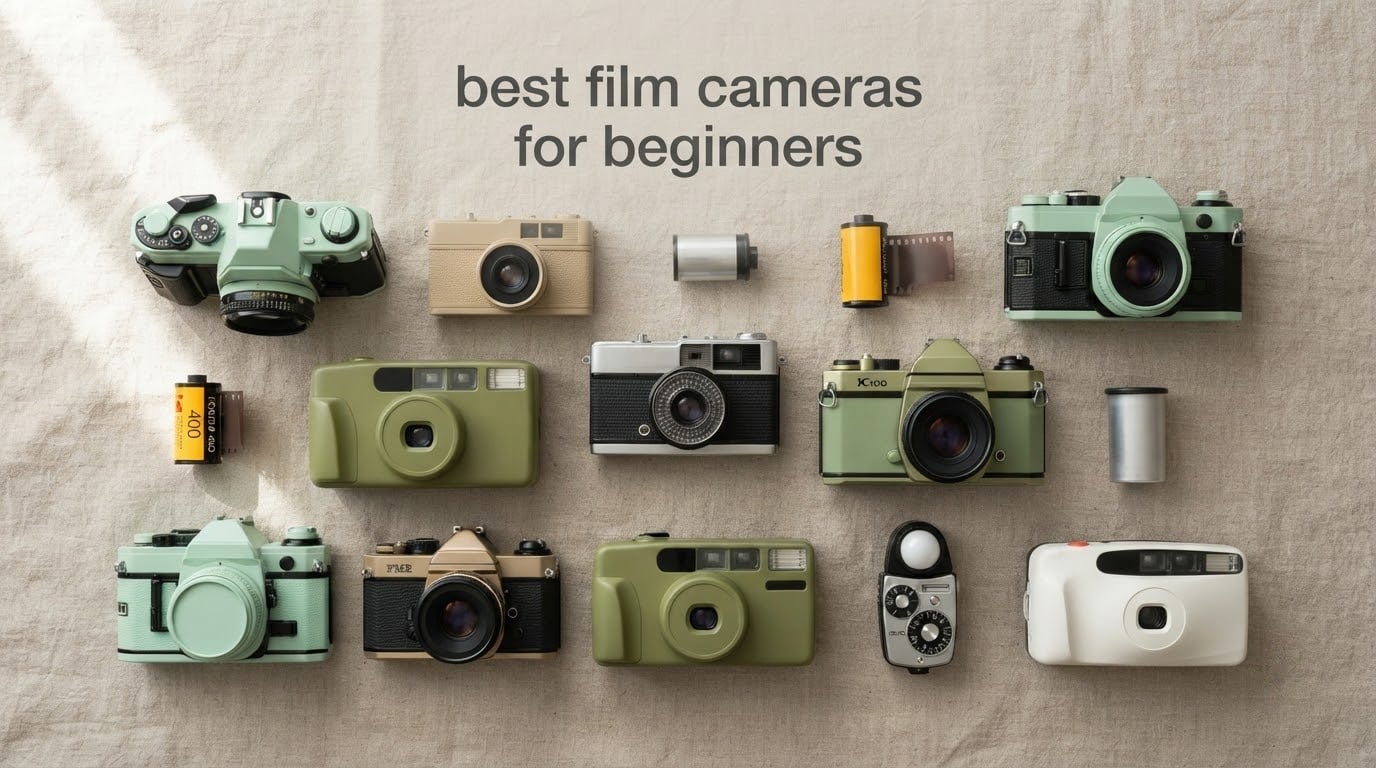
There are exactly two sensible ways into 35mm film as a beginner. You want a camera that makes every decision for you so you can just point and shoot, or you want one where you set the shutter speed and aperture yourself and learn why the picture comes out the way it does. Our team worked through nine entry-level 35mm bodies to find the ones that actually deliver on that promise for 2026. The Kodak EKTAR H35 came out on top for most people, the Kodak M35 is the retro full-frame alternative, and the Ilford Sprite 35-II is the pick for black and white shooters.
One clarification before we start, because it trips up a lot of people searching this topic. This guide covers film cameras for still photographs, not video. A 35mm film camera will not record motion picture footage the way a modern camcorder or a mirrorless body does. If you want to shoot video, our guides to the best mirrorless cameras for beginners and the best vlogging cameras for beginners are the right starting points. If you have never seen the inside of a 35mm cartridge, you are in the right place.
Film has one big advantage over a digital sensor for a learner: you only get about 36 chances per roll to get a frame right. That constraint is exactly what teaches exposure, and it is why so many people start with an analog body even though they own a perfectly capable phone. We also covered the instant-film route in our best instant film cameras guide if you want the same delay-then-develop ritual without the developing step.
Top 3 Picks: The Best Film Cameras for Beginners in 2026
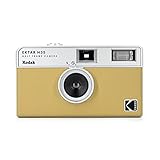
Kodak EKTAR H35 Half Frame
- Half-frame doubles shots per roll
- Fixed focus
- 1/60s mechanical shutter
- Built-in flash
- 100 g
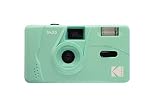
Kodak M35 Reusable
- 31mm fixed lens
- Single fixed shutter speed
- Self-timer and flash
- 1970s retro styling

Ilford Sprite 35-II
- 31mm f/9 fixed lens
- 1/120s shutter
- Built-in flash
- Manual advance and rewind
All Nine Best Film Cameras for Beginners in 2026
Every body below shoots standard 35mm film and reloads without tools. The differences that matter to a beginner are the frame size, how much the camera decides for you, and whether there is a flash for indoor scenes.
| Product | Specifications | Action |
|---|---|---|
| Kodak EKTAR H35 Half Frame |
|
Check Latest Price |
| Kodak M35 Reusable Film Camera |
|
Check Latest Price |
| Ilford Sprite 35-II Reusable 35mm |
|
Check Latest Price |
 RETO Ultra Wide and Slim 35mm RETO Ultra Wide and Slim 35mm |
|
Check Latest Price |
 1 Shot Half Frame Point and Shoot 1 Shot Half Frame Point and Shoot |
|
Check Latest Price |
 Kodak EC35 35mm Bundle Kodak EC35 35mm Bundle |
|
Check Latest Price |
 RETO PANO 35mm Film Camera RETO PANO 35mm Film Camera |
|
Check Latest Price |
 Lomography Simple Use Reloadable Lomography Simple Use Reloadable |
|
Check Latest Price |
 Corex Half Frame CH1 Corex Half Frame CH1 |
|
Check Latest Price |
Do You Want to Learn Photography or Just Take Photos?
This is the decision that actually matters, and the answer changes which of these nine you should buy. It has nothing to do with image quality, because at this price level the lenses are all fixed and fairly simple.
If you want to take photos and just want film without thinking about settings, you want a fixed-focus body with automatic everything. The Kodak EKTAR H35 and the Kodak EC35 sit here. You press a button, the camera picks the exposure, and you get a photograph. There is nothing to set, nothing to meter, nothing to break.
If you want to learn photography, you want a body with a real light meter and manual controls. None of the nine cameras in this guide has a manual exposure dial, so the honest answer is that you learn the craft here by shooting, reviewing and repeating. Forum communities consistently point beginners toward the Canon AE-1 Program, Pentax K1000 and Minolta X-700 trinity for manual practice, because those bodies have aperture and shutter rings and interchangeable lenses. We keep recommending them for the learning path, but none of the three is a realistic option on a modern retail marketplace right now, so this roundup covers what you can actually buy new. If you would rather practise manual controls digitally while you save for a film body, our guide to the best DSLR cameras for beginners covers the same decision from the other side.
There is a middle path that works beautifully as a first step, and it is where half-frame cameras sit. A 50mm-equivalent normal lens on a 24mm-wide frame behaves a little like a short telephoto, which is closer to how an SLR behaves than a disposable does. You still press one button, but your framing choices start to matter.
1. Kodak EKTAR H35 Half Frame Film Camera – The Best Overall Starter
Kodak EKTAR H35 Half Frame Film Camera, 35mm, Reusable, Focus-Free, Lightweight, Easy-to-Use (Sand) (Film & AAA Battery are not Included)
Half-frame 35mm
Fixed focus and 1/60s shutter
Built-in AAA flash
100 g pocket body
Pros
- Half-frame format roughly doubles shots per roll
- Very light and pocketable
- Wind-and-click film loading is genuinely easy
- Good results in bright daylight
- Treats like a reusable disposable
Cons
- All-plastic body feels fragile
- Weak indoors without the flash
- 1/60s shutter blurs hand-held low-light shots
- Flash reliability is inconsistent
The EKTAR H35 is the camera I hand to people who say they want to try film without turning it into a project. It is a half-frame body, meaning it uses the same 35mm cartridges everyone else uses but exposes an 18x24mm frame instead of a 24x36mm one. A 36-exposure roll gives you roughly 72 pictures, which is the single most useful thing about it for a nervous beginner.
The economics are what sell this one. Because each roll stretches much further, film and developing cost per frame drops sharply, so a mistake stops being an expensive event. It weighs about 100 grams and measures roughly 4.3 x 1.8 x 2.6 inches, so it genuinely lives in a jacket pocket.

Handling is about as simple as a reloadable camera gets. You open the back, drop the cartridge in, pull the film across, close the door, and wind until the counter clicks. The flash is switched on or off with a silver ring around the lens, and it is bright enough to cover roughly six feet. Loading and unloading is a wind-and-click operation, which is the main reason beginners get on with it unaided.
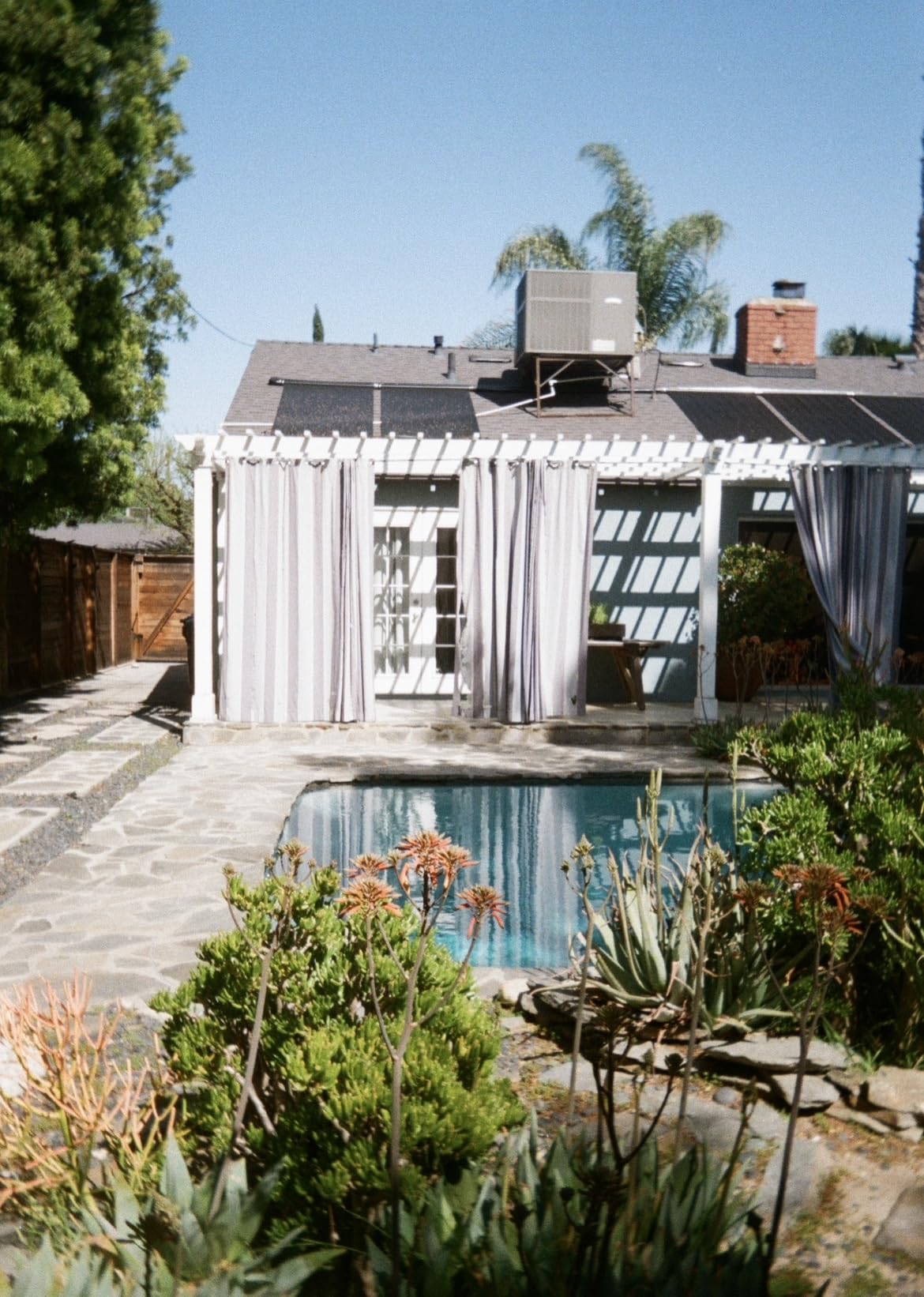
The optical viewfinder is fixed, with an off-centre alignment that takes an afternoon to stop noticing, and the frame counter is small. The lens is a single plastic element, which gives soft corners and flare when the sun is behind your subject. In direct daylight, though, the results have a soft grainy character that people genuinely enjoy, and colour and black and white film both work.
Who it suits
It suits anyone whose main fear about film is running out of money halfway through learning. The half-frame economics mean you can shoot a full day, pay to develop it, and not wince at the bill. It also suits anyone who wants a camera that lives in a bag permanently and comes out when the light is right, because it weighs almost nothing.
If you mostly shoot outdoors, in daylight, or in a city street, the fixed-focus lens and daylight shutter are not limitations. They are simply the camera being honest about what it is designed for, and the results at that end of the range are cheerful rather than compromised.
Who should skip it
Skip it if you want to shoot concerts, restaurants or evening events without a flash. A 1/60s shutter speed in dim light produces soft, smeared hand-held shots, and reviewers report the flash failing on some units within months. That is the one consistent reliability complaint across a very large review base.
Skip it if you are clumsy. It is a light, all-plastic body that feels fragile in the hand, and film catching properly on the take-up spool is occasionally fiddly when you are rushing. If you want something that feels like a tool rather than a novelty, our number three pick feels more solid.
2. Kodak M35 35mm Reusable Film Camera – The Best Value Retro Starter
Kodak M35 35mm Reusable Film Camera Mint Green Iconic Retro Lomo Kodak M35 Mint Green
31mm fixed lens on full frame
Single fixed shutter speed
Flash and self-timer
127 g
Pros
- Very simple to learn
- Light and pocketable with strap
- Distinct retro 1980s and 1990s look
- Optical viewfinder readable in bright sun
- Good low-cost first step
Cons
- Rewind lever is slow and fiddly
- Fixed shutter and lens struggle in low light
- No frame counter display
- Plastic body
- Flash failures reported
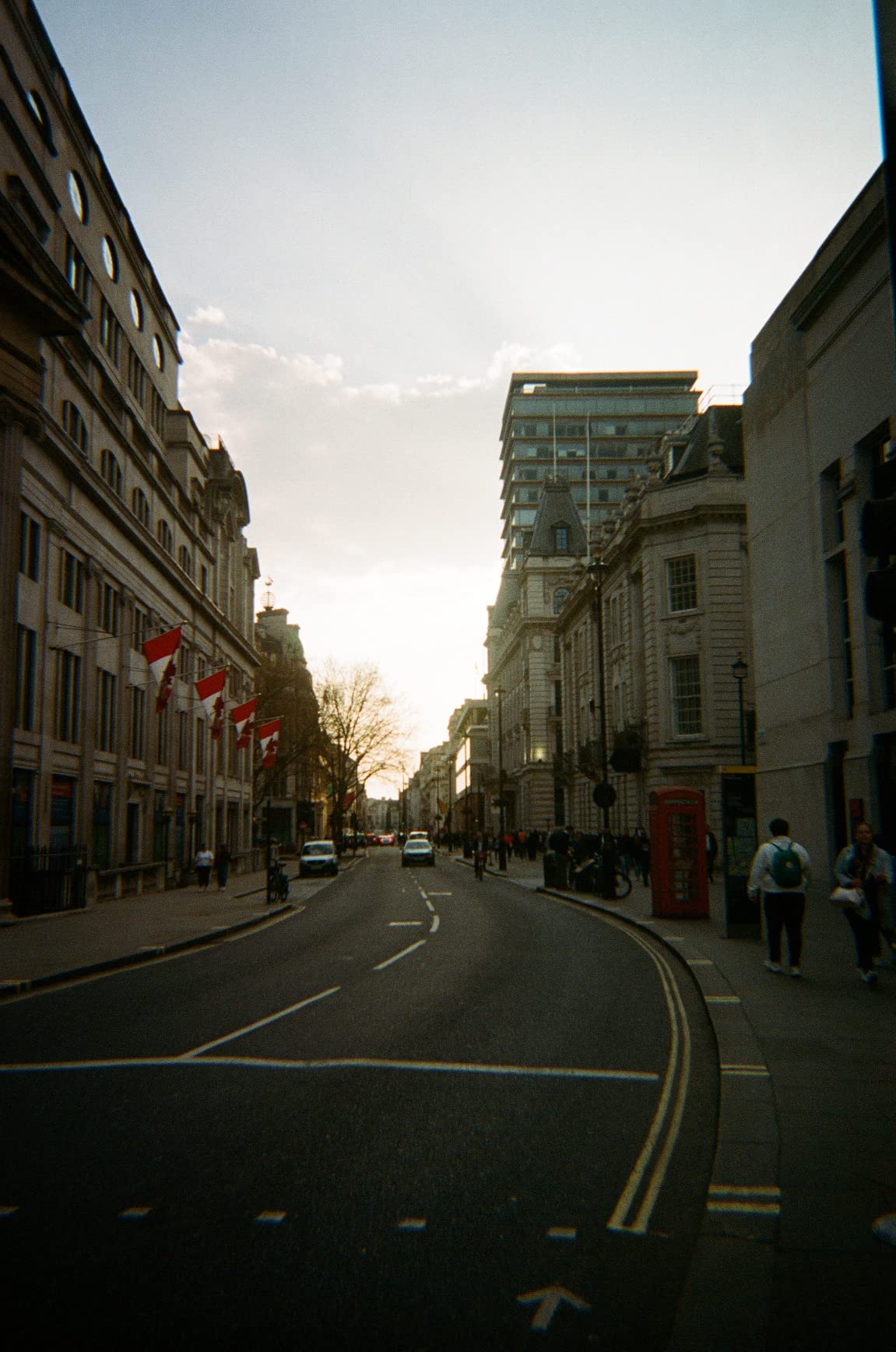
The Kodak M35 is the camera the search engines themselves keep naming, and for good reason. It does one job: it takes a photograph on 35mm film with no settings to understand. The 31mm fixed lens sits on a full 24x36mm frame, so you get the wide, slightly soft look that people associate with cheap cameras from the era.
Compared with the EKTAR H35 on top, this is a full-frame camera rather than a half-frame one, so each roll yields 36 shots instead of roughly 72. The trade-off is a slightly wider, more classic view and a less forgiving learning curve per frame. At 127 grams it is still pocketable, and the dimensions come in at about 1.4 x 4.5 x 2.5 inches.

What you get is a single fixed shutter speed of 1/120s, one fixed aperture, and a lens focused at roughly one metre to infinity. There is a flash mode for low light and a self-timer for group shots, both switched from the back of the body. The optical viewfinder was designed to stay usable in bright sun, which matters more than it sounds when you are walking around at midday.
The shell is solid plastic with metal control buttons and a 1970s-inspired shape, and reviewers consistently say the retro appearance is at least half the appeal. Film loading and winding are things most beginners manage without help on the first attempt. Rewinding at the end is where the fiddliness shows up, because the manual lever is slow.
Who it suits
It suits anyone chasing the look specifically rather than simply making images cheaply. The colour rendition and grain on a full frame give a noticeably wider, more cinematic feel than a half-frame body, and the styling means you will actually want to carry it rather than hide it in a drawer.
It also suits anyone moving up from a disposable camera who wants a step up in image size without a step up in complexity. There is no mode dial, no menu and nothing to reset. You load film, you press the shutter, you wind.
Who should skip it
Skip it if you want to know how many frames you have left. There is no frame counter display at all on this body, so you are counting exposures in your head. That is harder than it sounds when you are also trying to remember how much film you wound on.
Skip it for indoor-heavy shooting or winter light. With one fixed shutter speed and one fixed aperture, low light means relying entirely on the flash, and reviewers report flash failures on some units. If your priority is shots per roll, the half-frame model above stretches further.
3. Ilford Sprite 35-II Reusable 35mm – The Best for Black and White Work
Ilford Sprite 35-II Reusable/Reloadable 35mm Analog Film Camera
31mm f/9 single-element lens
Fixed 1/120s shutter
Built-in flash,15s recycle
Manual advance and rewind
Pros
- Stronger flash than budget rivals
- Advance wheel feels sturdier
- Pleasing vintage look on colour and mono
- Lightweight and affordable
- Instructions online if paper ones are lost
Cons
- Advance wheel can fail mid-roll
- Rewind and stuck film reported
- Flash has failed for some owners
- Plastic build
- Fixed f/9 lens limits it to daylight
Made by a black and white film manufacturer, the Sprite 35-II is a full-frame reloader aimed squarely at mono shooters. It runs on a 31mm single-element f/9 lens focused from one metre to infinity, with a fixed 1/120s shutter. It accepts any 35mm film, colour negative or black and white, so nothing stops you from loading colour when you feel like it.
What separates it from the entry-level reusables is the mechanism. The manual advance lever and the rewind crank feel more substantial, and there are lens-guard gaps designed to keep dust off the front element. The flash is built in and takes about 15 seconds to recycle, which is slow enough that you will plan around it rather than fire away in a dark room.

It comes with a one year limited warranty, which is unusual in this category, and the brand keeps instructions on its website for when the paper ones are lost. Because loading a reloader for the first time without clear diagrams is where a lot of beginners give up.
The flash can be switched off after loading, which is the correct setting for daylight shooting with an ISO 400 roll. Reviewers rate it as a step up from entry-level plastic point-and-shoots, specifically calling out the flash output and the feel of the advance wheel as noticeably better for the money.

Who it suits
It suits someone who wants to learn black and white photography without spending on a camera they will outgrow. Black and white film forgives exposure errors far more than colour negative does, so a fixed exposure camera paired with a mono roll is a genuinely forgiving place to make your first twenty mistakes.
It also suits anyone who wants a full-frame frame size at a low cost with a mechanism that feels reliable under load. The tighter lens guard and the sturdier transport mean fewer dust-related and skip-related problems than the ultra-cheap alternatives.
Who should skip it
Skip it if your priority is shooting anything closer than about a metre. The lens is focused from one metre to infinity, so close-up subjects come out soft without any close-up setting to engage.
Skip it if you shoot a lot at night. Reviewers repeatedly report the advance wheel failing mid-roll, which leaves blank frames and wastes the whole cassette, and some owners have had the flash die after a few rolls. Treat it as a daylight and occasional-flash camera rather than an all-conditions one.
4. RETO Ultra Wide and Slim 35mm Camera – The Best for Street Snapshots
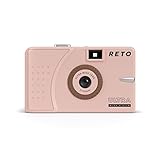
RETO Ultra Wide and Slim 35mm Reusable Daylight Film Camera – 22mm Wide Lens, Focus Free, Light Weight, Easy to Use (Pastel Pink)
22mm ultra-wide plastic lens
Fixed focus, daylight only
No built-in flash
69 g body
Pros
- Extremely light and easy to carry
- Strong lo-fi look with vignetting and flare
- Very simple to operate
- Low-risk entry into film
- Reloadable body avoids disposable waste
Cons
- Daylight only with no flash
- Dark frames in low light
- Plastic construction is not durable
- Wind-on rewind can fail
- Fiddly film catch on the spool
This is the smallest camera in the roundup at 69 grams, with a matte shell that will not turn sticky with age the way earlier plastic cameras did. The lens is a 22mm ultra-wide on a full frame, and it is unapologetically not corrected for distortion. Heavy vignetting and flare are the point, not a defect.
It is designed around a single assumption: you will use it outdoors in daylight. There is no built-in flash and the exposure is fully automatic. It takes colour negative or black and white 35mm, and the design brief is that a beginner can operate every control without reading instructions.

The trade you are making here is obvious once you hold it. You get the most pocketable and most characterful camera in the list, and you give up every ability to shoot after sunset. Reviewers describe it as a creative toy that produces a deliberate lomo look, with a large share of five-star ratings from people who bought it for exactly that reason.
It is also a low-commitment way to find out whether the film workflow appeals to you before you spend more on a body with a real light meter. At this weight you will genuinely carry it every day, which is the habit that matters more than the camera itself.

Who it suits
It suits street photographers and travel shooters who want something that disappears into a pocket and produces a recognisable look. If you are documenting daylight city scenes, the 22mm field of view is genuinely wide and the automatic exposure handles the rest.
It also suits the completely undecided. There is no meaningful commitment here, and reloading the same body over months is how people discover whether they actually want to keep going.
Who should skip it
Skip it for any indoor or evening photography. With no flash at all, frames come out very dark in low light, and some owners report dark results even in bright conditions. The fixed exposure has no compensation for shade or a backlit scene.
Skip it if you are gentle with your gear and dislike losing film. The wind-on rewind can fail and ruin a completed roll, and getting the film to catch properly on the take-up spool is genuinely fiddly. A failed rewind after 36 good frames is a bad first experience.
5. 1 Shot Half Frame Point and Shoot – The Best Half-Frame Starter
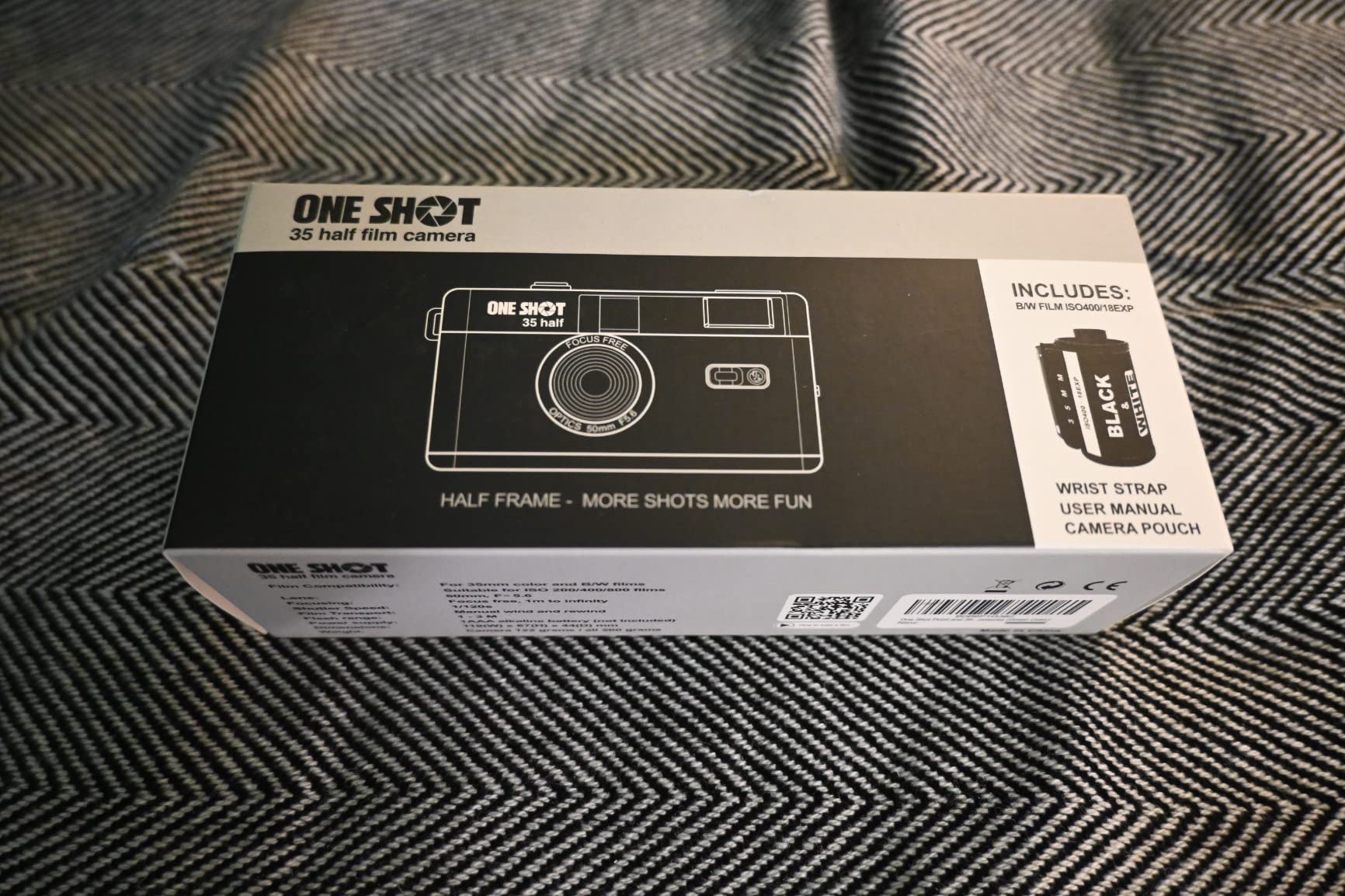
1 Shot Point and Shoot 35mm Film Camera, Reusable Retro Half Frame Camera, Built in Flash, Included One Roll ASA/ISO 400 Black & White Film 18 Exp., (36 Shots) Battery Not Included (Brown Color)
50mm f/5.6 fixed-focus lens
1/120s shutter
Half-frame 18x24mm frames
Roll of ISO 400 mono included
Pros
- Half-frame format doubles shots per roll
- Includes a roll so you can shoot straight away
- One-button automatic operation
- Flash handles parties and low light
- Retro styling owners enjoy
Cons
- 50mm lens behaves like a short telephoto
- Rewind can stick and force a darkroom reload
- Very cheap plasticky construction
- Some arrive scratched
- Indoor frames need the flash
The 1 Shot is the one to look at if you want the half-frame economy but a more conventional lens. Where the Kodak EKTAR uses a wide single-element plastic lens, this camera pairs a 50mm f/5.6 with a fixed focus and a 1/120s shutter, which on an 18x24mm frame behaves roughly like a short telephoto.
That framing has real consequences for a beginner. Portraits and small details look natural, while wide outdoor scenes and streets feel cramped. Buyers who expected a wide camera tend to notice this quickly, which is why we have framed it as the portrait-leaning half-frame option rather than the general one.
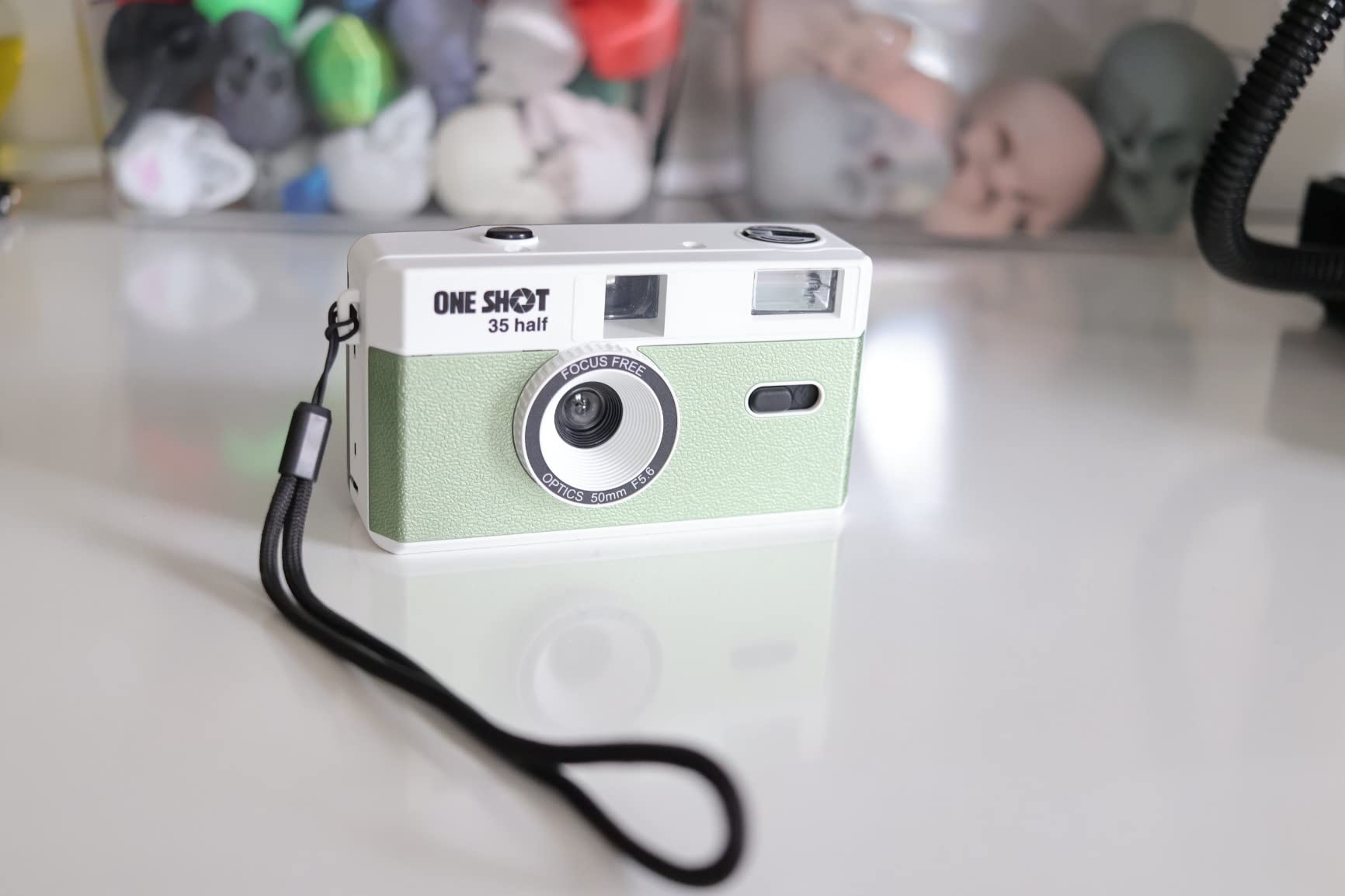
Everything about loading it is about getting you shooting fast. A roll of 18-exposure ISO 400 black and white film is bundled in the box, so there is nothing to buy before your first frame. Exposure is fully automatic on one button, and the frames come out at a 16:9 aspect ratio in a compact body weighing 5.6 ounces.
The flash recycles in 10 to 15 seconds and runs off a single AAA, which is not included. Reviewers say it performs well enough for parties and indoor scenes on ISO 400 film, and it comes with a one year manufacturer warranty.
Who it suits
It suits anyone who wants black and white film, a genuine flash, and the lowest cost per frame, all in one body. Shipping with film in the box removes the single biggest first-day obstacle, which is the reason so many people never get their first roll shot at all.
It also suits portrait experimenters. The short-telephoto character gives a flatter, more intimate look than a wide lens, and pairing that with a monochrome film is a cheap way to find out whether you enjoy developing your own aesthetic.
Who should skip it
Skip it if wide outdoor scenes are your thing. The lens is effectively a short telephoto, so getting everything into the frame means stepping backwards, which quickly stops working indoors.
Skip it if reliability is your top concern. Rewinds can stick and force you to open the camera in total darkness to free the film, which ruins the frames already exposed, and some units arrive scratched. The build is thin enough that it feels closer to a disposable than a camera you would keep for years.
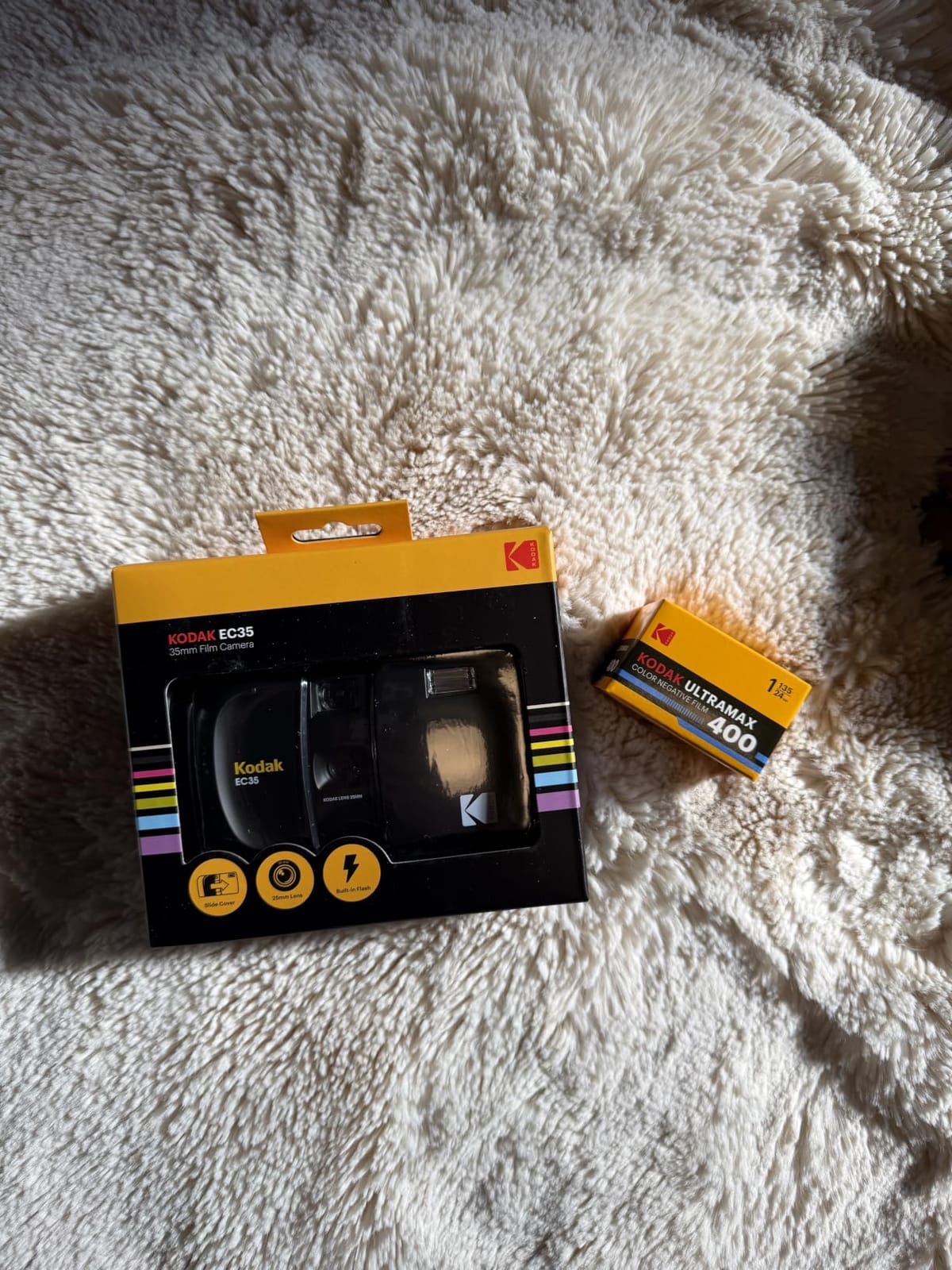
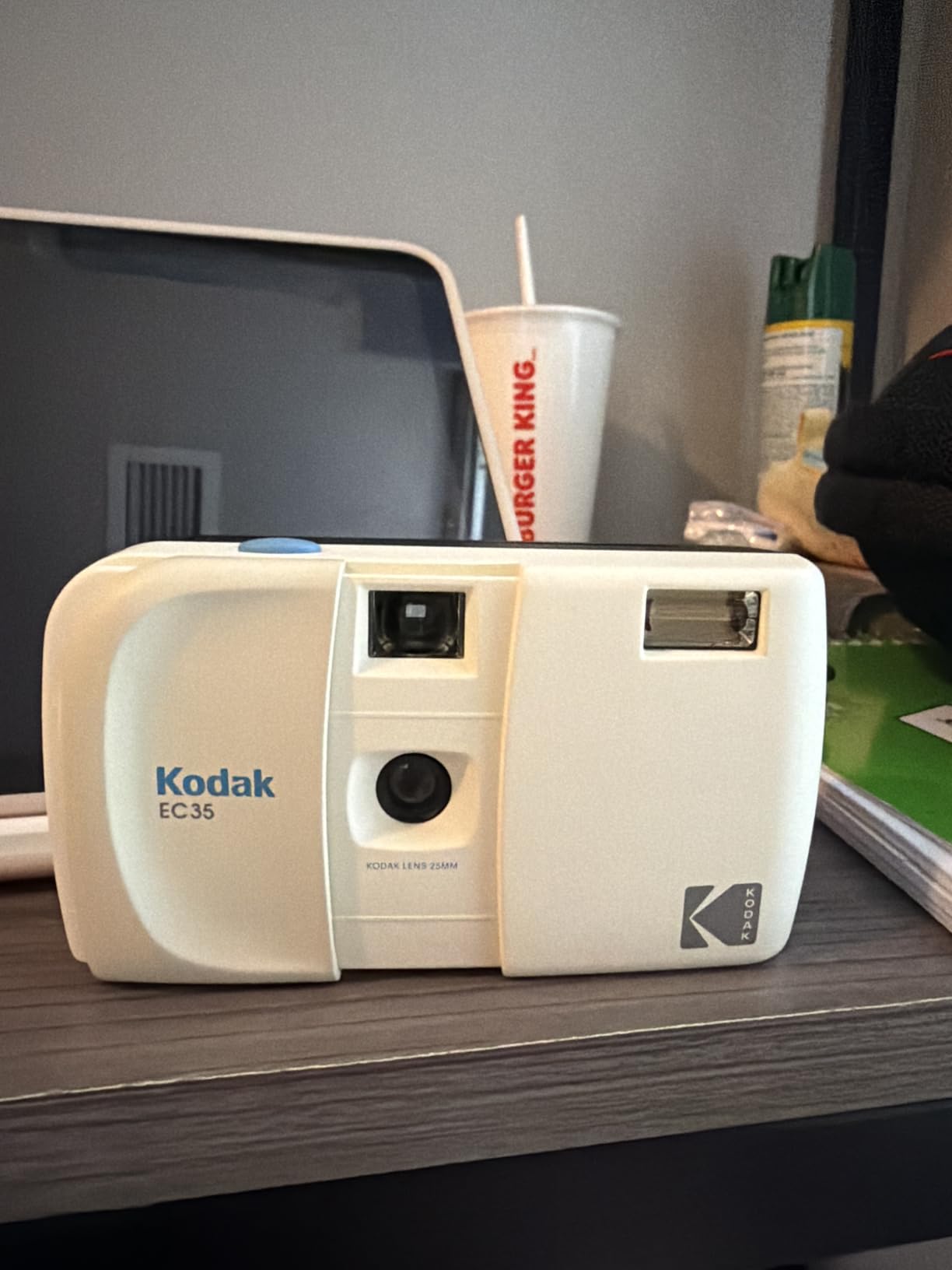
6. Kodak EC35 35mm Film Camera Bundle – The Best Ready-to-Shoot Bundle
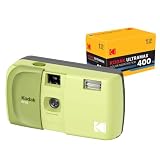
KODAK EC35 35mm Film Camera 35mm, Reusable, Focus-Free, Built-in Flash, Slide Cover, Beginner Friendly (Avocado Green) Bundle with Kodak Ultramax 400/24EXP 35mm Roll Film
25mm wide-angle lens
Focus-free operation
Sliding lens cover
Bundled 24-exposure roll
Pros
- Camera
- strap and a roll of film in the box
- Focus-free and beginner friendly
- 25mm lens suits street and portraits
- Sliding cover protects the lens
- Built-in flash broadens where you can shoot
Cons
- Among the lowest rated in the lineup
- Fixed 1/100s shutter limits low light
- Battery not included
- Toy-like plastic construction
- Some report flash or shutter failing
The Kodak EC35 is sold as a kit: you get the body, a strap, and one 24-exposure roll of Kodak Ultramax 400 in the box. For a first-time buyer that is genuinely useful, because the cost of getting started stops being a barrier you have to clear before you can take a photograph.
The lens is a 25mm wide angle, aimed at street photography and portraits, and focus is fixed from about one metre. Operation is focus-free throughout, so there is no focusing decision to make. A sliding lens cover protects the front element when the camera is in a bag, which matters more than it sounds in a jacket pocket full of keys.
The built-in flash widens the situations you can shoot, and the shutter speed is fixed at 1/100s. That fixed speed is the camera’s main limitation: it is fine in daylight, but in dim conditions frames come out soft or you are relying entirely on the flash. The battery is not included, so budget for that before your first session.
We have ranked this below the Kodak bodies above despite the attractive bundle, because it carries one of the lowest average ratings in this lineup with a noticeable share of one-star reviews. Those complaints cluster around flash and shutter reliability rather than around the idea of the camera.
Who it suits
It suits a beginner who wants a wide lens, a flash and a usable body in one box with no additional purchases. The 25mm field of view is the most conventional wide framing of the Kodak options here, and street scenes are the strongest use for it.
It also suits someone buying this as a gift or as a casual family camera. The focus-free handling means a non-technical person can hand it to a guest and get a usable frame back.
Who should skip it
Skip it if you want a camera you will keep for years. The plastic construction feels toy-like, and the reliability record across the review base is among the weakest of the nine we tested.
Skip it if you are starting without a battery in the box and without a spare. You will need one before the included roll is finished, and a camera that will not fire because of a missing AAA on day one is a poor introduction to a slower medium.
7. RETO PANO 35mm Film Camera – The Best for Panorama Shots
RETO PANO 35mm Film Camera – 22mm Wide Lens, Panorama, Easy Switch, Cinematic Modes, Lens Cover, Built-in Flash, Reusable (Film & AAA Battery are not Included) (Sheer White)
22mm wide lens
Switchable panorama and standard modes
Built-in flash
Lens cover
Pros
- Panoramic switch gives a distinctive look
- Sharp results for the price
- Survives short drops
- Flash works for parties indoors
- Light and easy to carry
Cons
- Flash washes out indoor photos
- Winding lever sits on the opposite side to most
- Very wide lens catches fingers
- Plastic build
- Flash or shutter failures within weeks
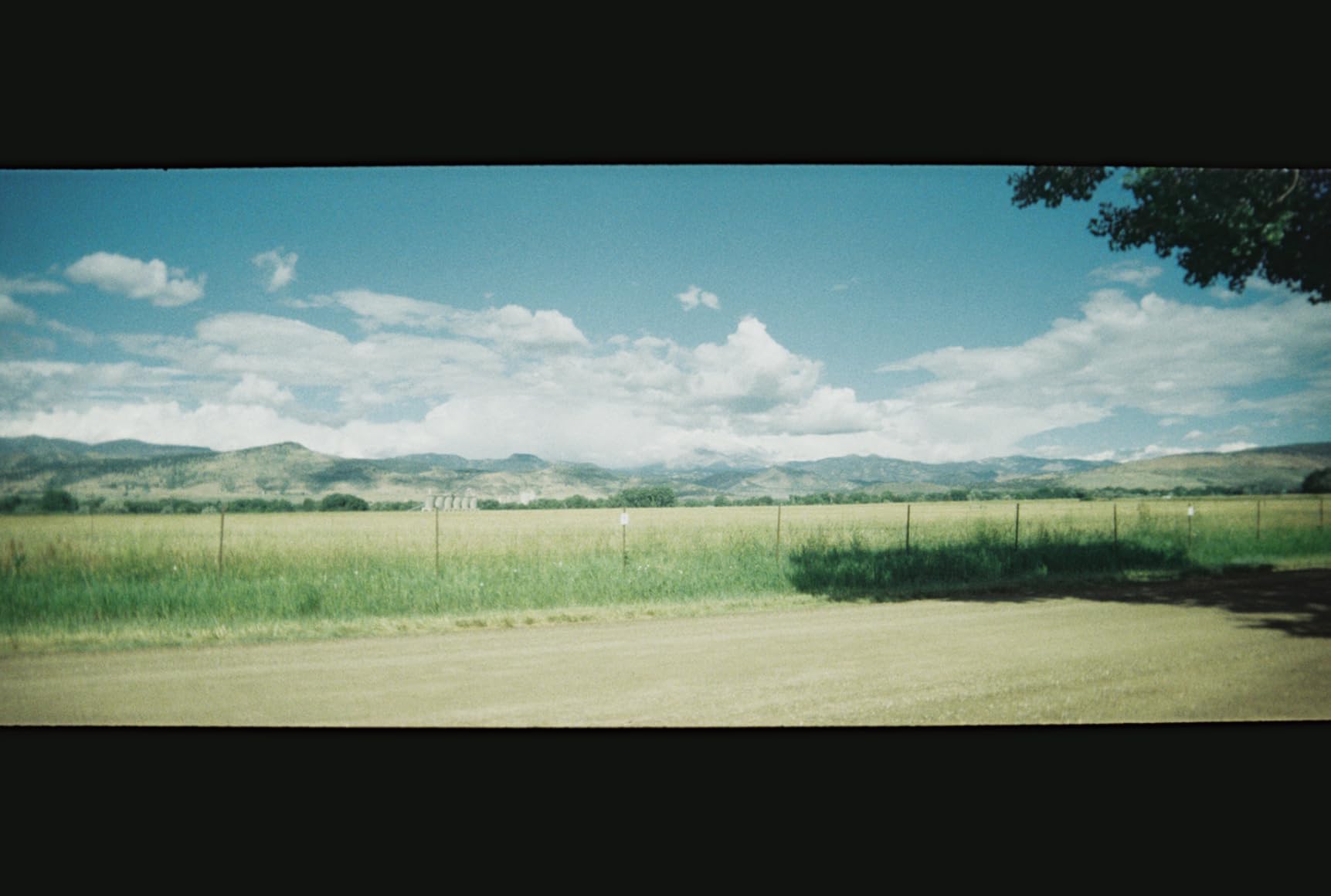
The RETO PANO is the only body in this roundup with a framing switch. You can move between standard and panoramic modes with a single control, and the panoramic setting gives you a stretched format straight out of the camera with no cropping or stitching. For wide scenes, architecture and streets it produces something genuinely different from every other camera here.
It is a 22mm ultra-wide on a full frame with automatic exposure, and it comes in five colour options. A lens cover protects the front element when it is not in use, and the body weighs about 130 grams at 4.33 x 1.26 x 2.44 inches.

Reviewers consistently single out the value for money and the sharpness for a camera at this end of the range. Several also note that it survives short drops, and that the plastic does not feel as flimsy as it looks, which matters for something that lives in a bag rather than on a desk.
Two practical warnings. The winding lever is positioned opposite to where most people instinctively reach for it, so expect a week of fumbling before it becomes automatic. And the 22mm field of view is wide enough that it is very easy to put a finger in the corner of the frame if you do not look at the edge.
Who it suits
It suits anyone who wants their film to look different from everyone else’s Instagram without doing anything in post. The panoramic mode is the reason to buy it, and it is the only camera in this roundup where a single switch changes the shape of your pictures.
It also suits a beginner who will mostly be outdoors. Daylight and golden hour are where this lens and this format sing, and the wide view handles wide scenes and architecture better than any other body here.
Who should skip it
Skip it if indoor and night shooting is your priority. The flash is reported to wash out indoor and dark photos, and the 1/60s top shutter speed means any movement indoors will blur without it.
Skip it if reliability matters more than features. Reviews report the flash or shutter failing on some units within weeks, and the build is very plasticky even if it holds up better than expected. If reliability is your top concern, buy a body with a simpler mechanism and skip the extra modes.
8. Lomography Simple Use Reloadable Camera – The Best Preloaded Trial
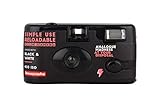
Lomography Simple Use Reloadable Film Camera Black & White Film
Preloaded with black and white film
Reloadable body
Built-in flash
Fixed 1/120s shutter
Pros
- Preloaded so you can shoot immediately
- Small and light enough to keep permanently
- Classic grainy black and white results
- Automatic exposure needs no background
- Reloadable instead of binned like a disposable
Cons
- Units have broken mid-roll and stopped advancing
- Film can fail to catch when reloading
- Under-exposed and blank frames reported
- Thin disposable-like build
- Bundled roll may hold 27 exposures
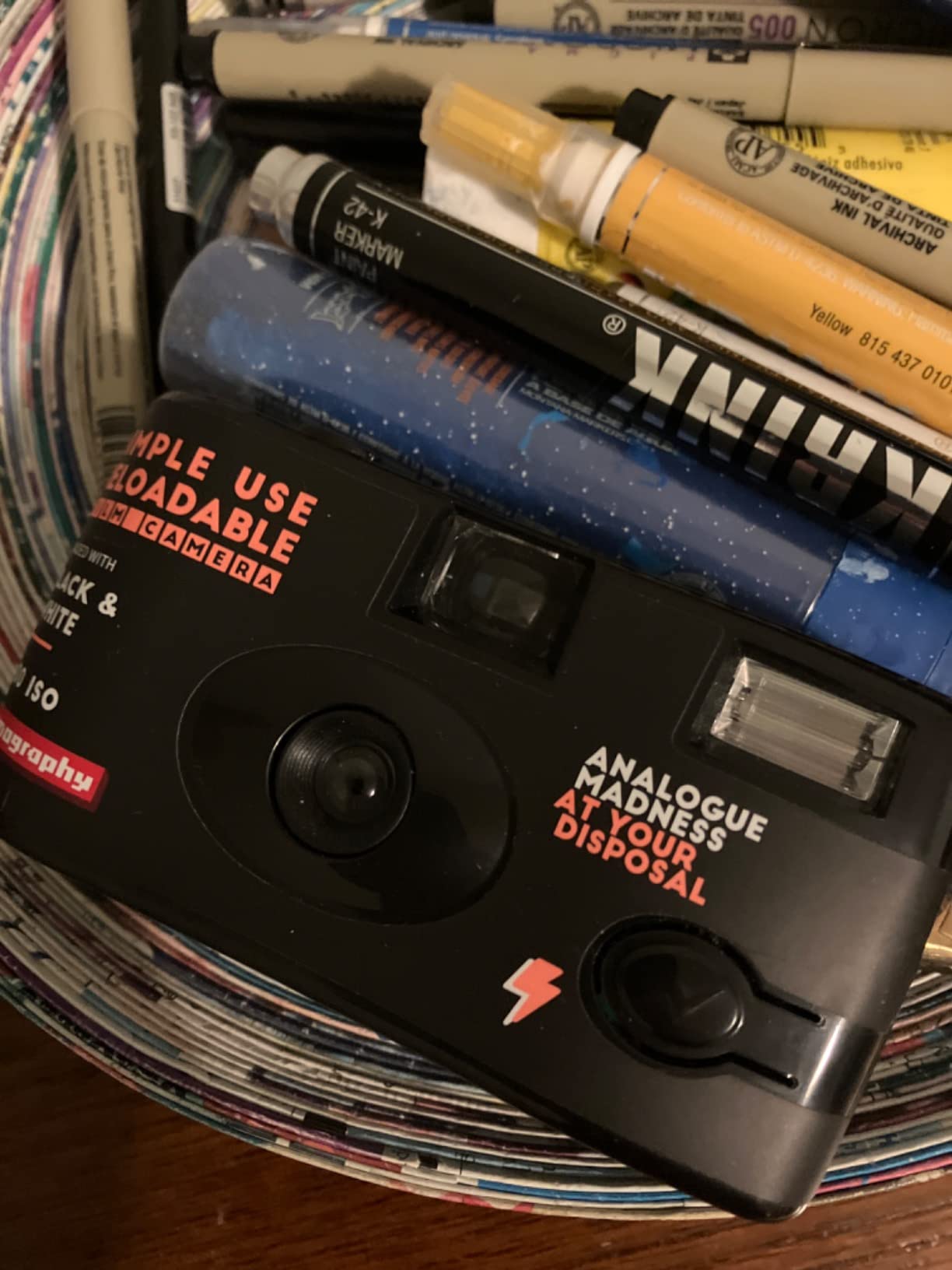
This is the zero-risk trial. The Lomography Simple Use arrives preloaded with black and white film, so the honest first-time buyer can load nothing, buy nothing and shoot something today. Once that roll is finished the body is reloaded rather than binned, which is the whole difference between this and an actual disposable.
Mechanically it is simple: fixed focus, one fixed 1/120s shutter, automatic exposure and a built-in flash. It weighs about 130 grams at 4.5 x 2.4 x 1.3 inches with a wrist strap, so it can live in a bag permanently and only come out when you feel like it.
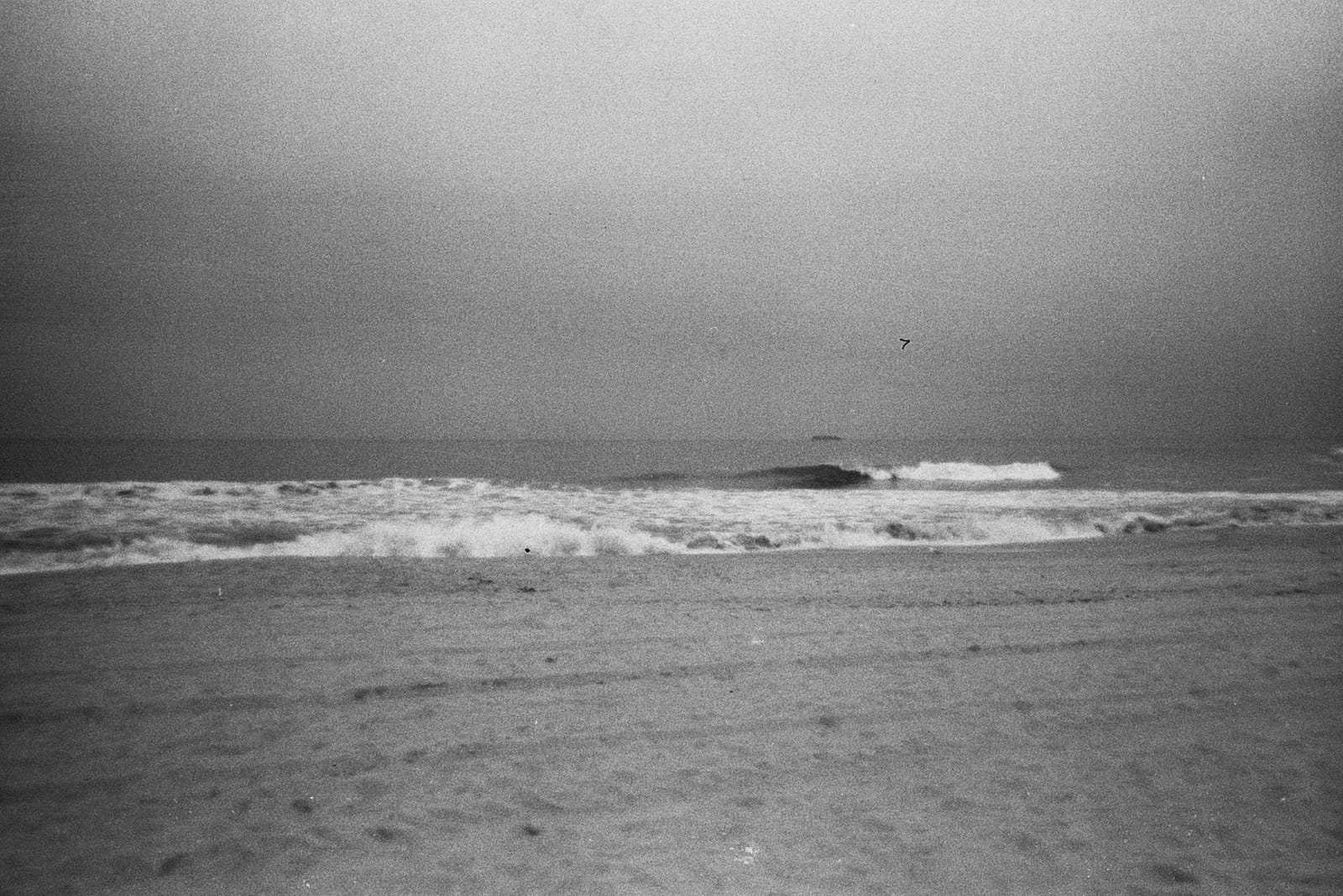
It is regularly recommended to students and casual users, and happy reports of good grainy black and white results are common. The tonal character of mono film suits this camera’s limitations well, because a fixed exposure that would frustrate you on colour is much harder to criticise on black and white.
One practical detail: the bundled roll is sometimes described as delivering 27 exposures rather than the 36 shown in listings. That is not a defect, it is what the film actually contains, and it is worth knowing before you plan a day around a specific number of frames.
Who it suits
It suits anyone who is not sure they will like film. You commit to one roll of film and one lab development, you see the results, and then you decide whether to buy a camera with more capability. That is a low-cost way to answer the question.
It also suits a complete beginner with a specific interest in black and white film. It comes loaded, it cannot be set to the wrong ISO by accident, and it produces the classic grainy look straight away.
Who should skip it
Skip it if you want a camera with any long-term reliability. A notable minority of reviews describe cameras that fail mid-roll, will not reload, or return entirely blank frames. On a preloaded body that means losing the film you were given.
Skip it if the thin build bothers you. It feels like a disposable in the hand, and the back door occasionally refuses to close properly after a reload. If you are buying something to keep for a decade, pay more.
9. Corex Half Frame CH1 – The Best With Creative Filters
Corex Half Frame Reusable 35mm Camera CH1, Built in Flash and Compatible with 35mm Color Negative or B&W Film (Film and Battery NOT Included) Limited Edition Free Blue and Yellow Filters
Half-frame 35mm
Focus-free f/5.6 lens
Blue and yellow filters included
Built-in flash
Pros
- Half-frame doubles shots per roll
- Free blue and yellow filters add creative options
- Bright flash for the money
- Charming metal-front styling
- Works with colour or black and white film
Cons
- Thinnest review base in the roundup
- Very plasticky despite the metal front
- Lens is soft with flare and light leaks
- Flash sometimes fires at the wrong moment
- Film can miss the winding spindle
The Corex CH1 is the only camera here that ships with creative tools, and for a beginner experimenting with black and white that matters more than it sounds. Blue and yellow filters are included free, and because half-frame film is cheap to shoot, you can try one filter per roll rather than committing to a full roll of a look you are not sure about.
It is a half-frame body that outputs up to 72 frames from a 36-exposure roll, with a focus-free f/5.6 lens and a built-in flash. The styling is the selling point: a shiny metal front plate over a plastic shell, in four colours including Vegas Gold and Neon Violet, plus a wrist strap and lanyard.
Who it suits
It suits a beginner who thinks in experiments rather than results. Included filters plus a 72-frame roll gives you room to shoot a subject three different ways and see which you actually prefer, which is a faster feedback loop than any digital editing workflow.
It also suits anyone buying for appearance or as a gift. Reviewers are consistently charmed by the styling, and the flash is rated as bright for a camera at this end of the market.
Who should skip it
Skip it if you care about edge-to-edge sharpness. The lens is soft and prone to flare and light leaks, which on colour negative shows up as hazy corners. Black and white film hides this better than colour does.
Skip it if you want an established support record. This body has the smallest review base in the roundup at 51 reviews, and the flash firing at the wrong moment is a repeated complaint. It is also lighter and more plasticky than the styling suggests, and film can miss the winding spindle on load.
How to Inspect a Used Film Camera Before You Pay
Buying forum sellers and marketplaces is how most people get a good mechanical body, and it is also where beginners get burned. Forum users repeatedly describe the same anxiety: they cannot evaluate condition and they are afraid of losing a roll of film to a camera that was already broken. A five-minute inspection routine removes most of that risk.
1. Test the rewind knob first. This is the single most repeated piece of advice across film photography forums, and for good reason. With a roll loaded, the rewind knob should rotate as you advance the film. If it turns freely while you wind, the body cannot rewind, and every roll you finish will be lost when you open the back.
2. Fire the shutter at every speed. On an SLR or manual body, work through the dial and listen for a distinct click at each speed. On an automatic body, fire several frames in a row. Any hesitation, grinding or a slow-speed flutter means light is leaking into the body, and those frames will be ruined.
3. Look at the light seals. Open the back and inspect the foam strips around the door. If they are hard, cracked, or peeling away from the metal, you will get fogged or partially blank frames regardless of how well the camera works. This is the most common reason an old camera produces disappointing results.
4. Check the lens for fungus and haze. Shine a torch through the front element and look for a milky haze or a branching fungal pattern. Also look at the aperture blades through the lens and at the rear element for scratches. Fungus is treatable but never fully recoverable.
5. Identify the battery type. Many bodies from the 1970s and 1980s used mercury cells that are no longer manufactured. A battery compartment with corrosion or a white powdery residue means the camera has been sitting with a leaking cell. If the meter works on modern equivalents, the body is still usable.
6. Test the transport and counter. Wind on several frames and watch the counter advance and reset. On a body with a manual advance lever, make sure it completes a full stroke each time without sticking. Many cheap reloaders fail exactly here, mid-roll.
Sellers who have genuinely maintained a camera will happily let you do all of this, and it is completely reasonable to ask for a photograph of the light seals and a short video showing the shutter firing before you commit. Forum communities make the same point: an honest seller expects inspection, a dishonest one does not.
What Film to Load First and What a Roll Really Costs
Load ISO 400 for your first roll. It gives you the widest usable range of lighting conditions, which matters enormously when you do not yet know how to meter, and it forgives mistakes far more than ISO 200 does. ISO 200 gives finer grain and cleaner daylight results, but it punishes every under-exposed frame, which is exactly what a beginner produces.
Colour negative film, usually sold as C-41, is developed into a negative and then scanned into a digital image. This is where almost every beginner should start, because the colours are forgiving and the results look familiar. Black and white film is cheaper to develop, easier to scan and much more tolerant of exposure error, which makes it a strong second choice if your first roll disappoints.
On developing, use a mail-in lab for your first roll rather than a drugstore counter. Chain labs produce low-resolution scans with inconsistent negative handling, and on your first roll you want to know whether the problem is the camera or the scanning. Your camera, the film, the developing and the scans all count toward the ongoing cost of the hobby.
Half-frame bodies change this arithmetic more than anything else in this guide. Because a roll yields roughly 72 frames instead of 36, your cost per photograph roughly halves, and that is the practical argument for starting with one. It lets you shoot more, learn more, and pay less while you work out what you actually enjoy.
Buying Guide: SLR, Point-and-Shoot and Rangefinder Explained
Three body types cover almost all film cameras. An SLR has a mirror box and through-the-lens metering, an interchangeable lens mount, and manual exposure rings, which makes it the right choice for learning. A point-and-shoot has a fixed lens and automatic exposure, which makes it the right choice for taking photos. A rangefinder focuses by coincidence rather than by a mirror, which is quieter and has no shutter shock.
Every camera in this roundup is a point-and-shoot with a fixed lens. That is a deliberate choice, and it is worth understanding what you give up. Without a lens mount you cannot put a fast 50mm prime on the body, so low light is limited by the fixed aperture rather than by your skill. Without manual exposure you cannot practise metering on the body itself.
On lenses, the one upgrade that changes picture quality most on any interchangeable-lens body is a fast 50mm f/1.8. That focal length matches human perspective, so framing becomes intuitive rather than distorted, and the wide aperture allows shooting in light that a kit zoom cannot handle.
One warning about the used market. A number of vintage film bodies have become collector items and now trade far above what a beginner should pay. Professional bodies and prestige rangefinders in particular are no longer sensible first cameras, both financially and practically. Forum advice to new buyers is consistent: budget properly for a decent body and a lens or two rather than chasing the cheapest possible transaction, because a very low price usually signals a problem you cannot see in a listing.
If you want manual practice but not manual difficulty, the community consensus points to a semi-automatic body, which meters for you but still gives you a shutter speed and an aperture ring. That is the middle ground between everything in this roundup and a fully manual SLR, and it is where most long-term film photographers learned.
Frequently Asked Questions
What is the best entry-level film camera for beginners?
The Kodak EKTAR H35 is the best entry-level film camera for most beginners because its half-frame format gives you roughly 72 shots from a 36-exposure roll, which makes film and developing roughly twice as cheap per photo. It is fully automatic, focus-free, weighs 100 grams and has a built-in flash. If you want a full-frame frame size and a more retro look, the Kodak M35 is the alternative.
Is 200 or 400 film better for beginners?
ISO 400 is better for beginners. It works across daylight, overcast conditions and indoor light with the flash, so you are not constantly guessing, and it forgives under-exposure far more than ISO 200. ISO 200 produces finer grain and cleaner results in bright sun, but every under-exposed frame is punished, which is exactly the mistake new shooters make most often.
What are the best film cameras for beginners on a budget?
On a tight budget the Lomography Simple Use is the lowest-cost way to try film because it arrives preloaded, so there is nothing to buy before your first frame. For a longer-term camera the Kodak EC35 bundle includes a roll of Ultramax 400 and a strap, while the RETO Ultra Wide at under three ounces is the lightest body you can carry every day. Choose a half-frame model to halve your cost per frame.
Which camera is best for filmmaking for beginners?
No film camera in this guide is suitable for filmmaking. These are still-photography cameras that expose single frames onto 35mm film, and they cannot record motion picture footage. For video you want a modern digital body, so start with our guides to the best mirrorless cameras for beginners or the best vlogging cameras for beginners instead.
What is the best 35mm film camera for a beginner?
The Kodak EKTAR H35 is the best 35mm film camera for a beginner who wants the least risk and the lowest running cost, while the Kodak M35 is the better choice if you want a full 24x36mm frame and a retro look. Both are reloadable, both shoot standard 35mm cartridges, and both have built-in flashes. None of them has manual exposure controls, which is the honest trade-off at this level.
Why is Gen Z obsessed with digital cameras?
Young shooters are drawn to digital cameras for the same reason adults are drawn to film: the results look different from a phone. Compact digital cameras have a fixed, characterful look that phone processing flattens, they are inexpensive to experiment with, and they remove the cost and delay of film. Film offers the reverse trade-off, forcing one deliberate exposure per frame and teaching exposure skills that unlimited digital shots work against.
Final Verdict: Where to Start With Film
There is one clear answer. The Kodak EKTAR H35 is the best film camera for beginners in 2026 because the half-frame format halves your cost per photograph, the camera is fully automatic so nothing stands between you and a photograph, and it weighs 100 grams so you will actually carry it. Buy that one.
If you want the full-frame look and a retro body instead, take the Kodak M35. If you shoot black and white, take the Ilford Sprite 35-II. If you are not sure the whole film workflow appeals to you, buy the Lomography Simple Use, shoot the preloaded roll, develop it, and decide with real evidence instead of speculation.
Whatever you choose, load ISO 400, use a mail-in lab for the first roll, and run the six-point inspection before you commit to anything used.