
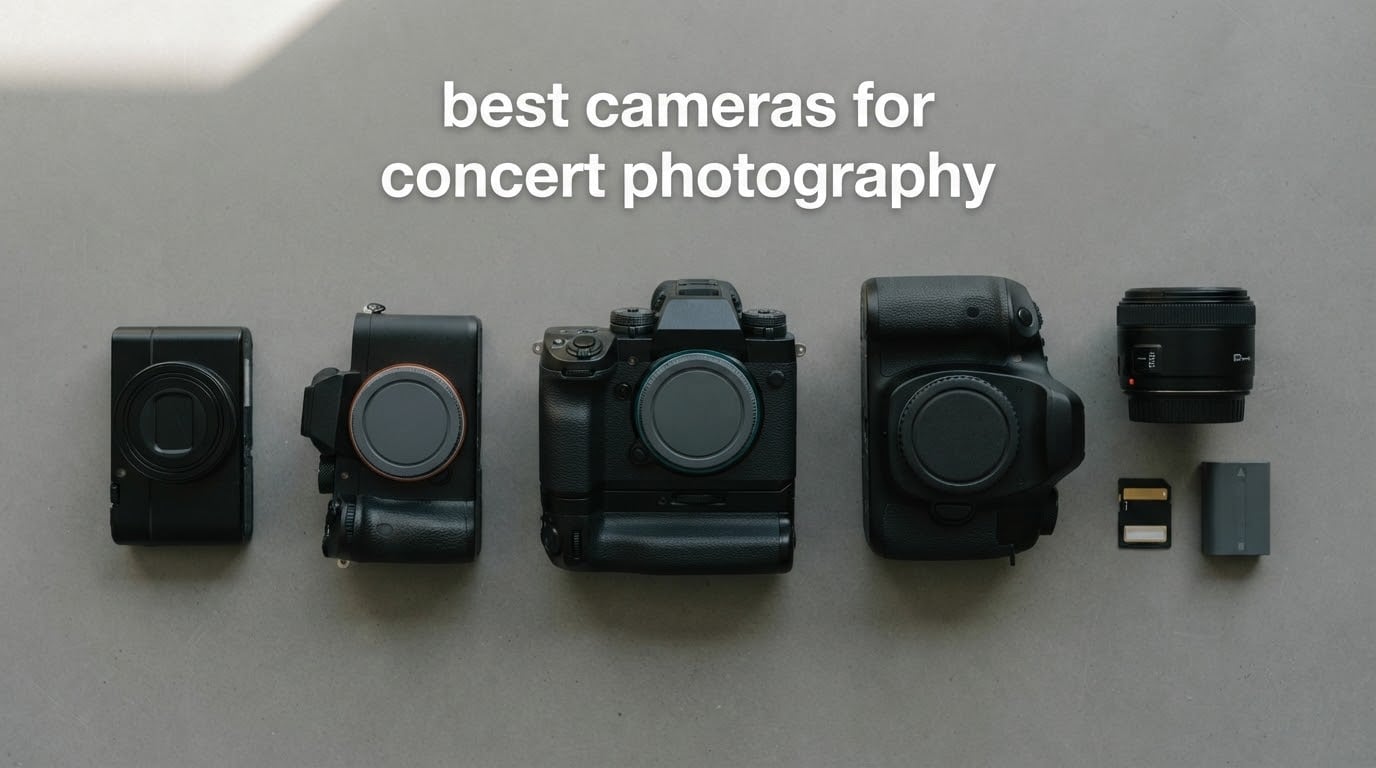
Concert photography punishes cameras more than almost any other kind of shooting. The stage is lit by moving coloured beams, the air is full of haze, the performer changes direction without warning, and flash is banned in nearly every venue worth photographing. That combination means your camera has to hold focus on a moving face at ISO 6400, run a fast enough shutter to freeze a jump, and survive three hours of continuous bursts without dying.
So what do the best cameras for concert photography actually have in common? Almost all of them are mirrorless bodies with a fast sensor, reliable eye-detection autofocus and a burst rate that gives you more chances than a single moment deserves. The differences come down to how far you can push ISO before the files turn to mush, whether the autofocus holds a face through stage haze, how many frames the buffer will take before it stalls, and whether you can carry the thing for a whole night in a cramped photo pit. This 2026 guide covers ten of them in the order we would hand them out.
We spent weeks going through owner feedback on ten of the strongest options across full frame, APS-C, Micro Four Thirds and pocketable compacts, then sorted them by what a concert photographer will notice first. The list runs from a stacked-sensor flagship that can pre-capture the moment before it happens to a 275 g compact that fits through a venue door nobody wants to make a scene at.
One answer up front, since it is the single most-asked question in this space: most working concert photographers shoot a 24MP to 33MP full-frame mirrorless body with a fast zoom or a short telephoto, dual card slots if the shoot is paid, and they shoot RAW at ISO 3200 to 6400 with the mechanical shutter engaged. That is the working baseline, and everything below either clears it or tells you honestly where it falls short.
One note before we get into the picks. Plenty of the cameras in this roundup come as bodies with no lens at all, because the lens you pick changes concert results far more than the body does. Where a kit is bundled, we say so. Where the bundled glass is too slow for stage light, we say that too. If you also shoot outdoors, our guide to the best mirrorless cameras for wildlife photography overlaps on tracking and burst performance, and the photography reflectors guide is worth a look if you ever work a stage where a bounced flash is permitted.
Top 3 Picks for Concert Photography in 2026
If you want the short version, these are the three bodies we would hand to a photographer shooting a full show. The Canon EOS R6 Mark II is the most complete package for stage work, the Canon EOS R8 wins on portability, and the Sony Alpha 7 IV holds the strongest combination of tracking reliability, dual card slots and lens choice.

Canon EOS R6 Mark II
- 24.2MP full-frame CMOS
- 40 fps electronic burst
- deep-learning subject detection
- 5-axis stabilization


Sony Alpha 7 IV
- 33MP back-illuminated sensor
- Real-time Eye AF
- dual card slots
- fully articulating screen
The 10 Best Cameras for Concert Photography in 2026
Here is the full lineup in one pass. Every camera below gets its own section further down, but this table is the fastest way to narrow the field before you commit to a lens mount.
| Product | Specifications | Action |
|---|---|---|
| Canon EOS R6 Mark II |
|
Check Latest Price |
| Canon EOS R8 |
|
Check Latest Price |
| Sony Alpha 7 IV |
|
Check Latest Price |
 Nikon Z 8 Nikon Z 8 |
|
Check Latest Price |
 Nikon Z6 III Nikon Z6 III |
|
Check Latest Price |
 OM System OM-1 Mark II OM System OM-1 Mark II |
|
Check Latest Price |
 Panasonic LUMIX G85 Panasonic LUMIX G85 |
|
Check Latest Price |
 Canon EOS 90D Canon EOS 90D |
|
Check Latest Price |
 Sony RX100 VII Sony RX100 VII |
|
Check Latest Price |
 Sony Alpha a6400 Sony Alpha a6400 |
|
Check Latest Price |
Why Concert Photography Is Hard
Concert photography is hard because the stage is the only light source and you cannot add any. The light is dim, coloured, and constantly changing, which forces ISO into the thousands where noise lives and shadows break apart. Performers move unpredictably across the frame, often with backs turned, while haze in the air scatters the beams and can confuse contrast-based autofocus systems.
Flash is banned at essentially every venue with a decent audience, so exposure has to come from aperture and shutter alone. You will be shooting somewhere between f/1.8 and f/4 depending on your glass, at 1/250s or faster, at ISO 3200 to 6400, and hoping the autofocus keeps up. That is the whole technical problem in three settings, and it is why sensor quality, tracking behaviour and burst rate matter more than megapixel counts.
There is a fourth problem people forget: reliability over a three-hour set. Buffers fill, batteries drain, cards fill, and you cannot stop to swap equipment while the song you travelled for is playing. Dual card slots, a deep buffer and spare batteries are not luxuries at a show.
1. Canon EOS R6 Mark II
Canon EOS R6 Mark II Mirrorless Camera (Body Only), Full-Frame Camera, 24.2 Megapixel CMOS Sensor, Photo and Video Capabilities, Black
24.2MP full-frame CMOS
40 fps electronic burst
5-axis stabilization
1.3 lb
Pros
- 40 fps electronic burst freezes fleeting expressions
- Deep-learning subject detection for people and more
- Head
- face
- eye and body tracking holds on moving subjects
- Bright 3.69M-dot 120 fps electronic viewfinder
Cons
- High-ISO output is mid-pack among modern full-frame bodies
- No built-in flash on the body-only configuration
We keep coming back to the R6 Mark II because the 40 fps electronic burst is the single most useful number on this list for stage work. Most of the best frames of a live set happen inside a one-second window, and shooting at 40 fps turns that window into forty chances. Owner feedback is close to unanimous on the subject detection doing its job on people, including head, face and eye tracking that survives a performer turning away and back.
The 24.2MP sensor is not the biggest here, and that is a deliberate trade. In dim rooms the smaller pixels per area of some high-resolution rivals translate into cleaner files, and the R6 Mark II’s 4.7-star rating across 651 reviews reflects how few owners complain about noise at concert-level settings.

Two things to plan around. The first is that a body-only configuration has no built-in flash, which for a concert shooter is not a real problem since flash is banned anyway. The second is storage: the listed specifications do not advertise dual card slots the way the Sony and Nikon bodies do, so if you shoot paid work where a card failure would cost you the job, confirm the slot arrangement before you commit.
Video is a genuine strength. The body records uncropped 4K up to 60 fps oversampled from 6K, plus Full-HD at 180 fps, and up to six hours of continuous Full-HD recording. If your set list is as much about video clips as it is about stills, this body handles both without a second camera.

Who it suits
This is the camera we recommend to someone shooting arena and theatre shows on a regular basis, or working paid gigs. Forty frames per second, subject detection across people, and a bright viewfinder that stays usable in a dim venue cover the majority of what a stage actually demands.
It is also a strong hybrid. If you are delivering vertical clips for social alongside gallery stills, the oversampled 4K and the 180 fps Full-HD give you slow-motion crowd inserts without a second body.
Who it does not suit
If your priority is the highest possible resolution for aggressive cropping of distant performers, a 45.7MP stacked body will give you more to work with. The R6 Mark II trades resolution for burst speed, and that is the right trade for movement but not the right one for a distant, tightly framed subject.
Budget buyers should also look elsewhere. Owner reviews note that high-ISO results are solid but not class-leading among current full-frame bodies, and if your scenes are genuinely dark, spending up front on a faster sensor or a brighter lens matters more than the frame rate.
2. Canon EOS R8
Canon EOS R8 Mirrorless Camera with RF 24-50mm f/4.5-6.3 is STM Lens, Black
24.2MP full-frame CMOS
1,053 AF zones
Uncropped 4K/60p
RF 24-50mm kit
Pros
- Low-light image quality and high-ISO performance well above its class
- Much improved rolling shutter for fast panning action
- Small and light body easy to carry through a venue all night
Cons
- No in-body image stabilization
- Bundled 24-50mm f/4.5-6.3 is slow for dim stages
- Single SD card slot with no backup
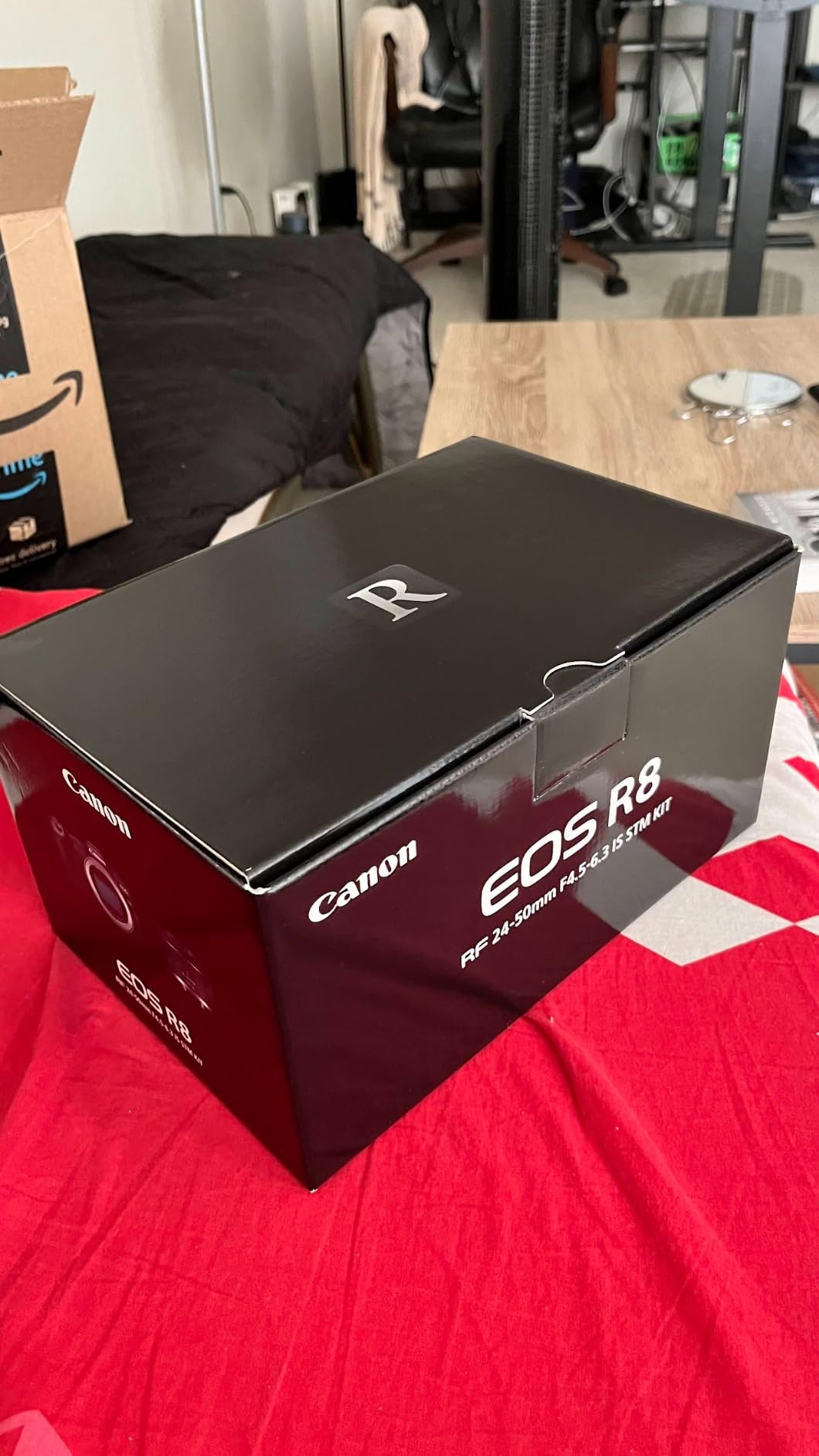
The R8 is the full-frame body you can forget you are carrying. It shares the 24.2MP sensor and DIGIC X processor with bodies far above it in the range, and owners consistently report that low-light image quality punches well above what the size suggests. If you shoot from the floor of a small club rather than a photo pit, the difference between a body you tolerate and one you enjoy is largely weight.
Autofocus is Dual Pixel CMOS AF II with 1,053 zones across 100% of the frame, and the deep-learning subject detection now includes aircraft, trains and horses alongside people. On stage, the practical part is that coverage is total, so you are not hunting for focus points in the corners of a dim frame.
The rolling shutter improvement is worth calling out because it is a concert-specific fix. When a performer crosses the frame fast, older sensor designs bend them into a curve. The R8’s readout is much closer to full, so stage action looks straighter even while you pan to follow.
Video is the sleeper feature. Uncropped 4K up to 60 fps oversampled from 6K, Full-HD 180 fps, plus Canon Log 3 and HDR PQ, means this body can carry a hybrid shoot on its own. For creators shooting both stills and motion at small gigs, that is a lot of capability in a small shell.
Who it suits
The R8 suits anyone who wants full-frame image quality without a full-frame weight problem. Festival photographers walking miles between stages, club shooters who need discretion, and hybrid creators covering a set for both photos and video will all feel the difference versus a larger body.
It is also a strong entry point if you want Canon’s RF mount without spending flagship money, and the RF lens ecosystem now covers fast primes and f/2.8 zooms well enough to shoot a show properly.
Who it does not suit
There is no in-body image stabilization, so low-light handheld frames depend entirely on stabilized lenses. At a dark show with a slow lens, that is a real limitation and owners mention it repeatedly alongside weak battery life that makes spares mandatory.
The bundled RF 24-50mm f/4.5-6.3 is the other caution. Its maximum aperture is slow for stage light, and the body caps at 1/4000 second, so a fast lens is effectively a requirement rather than an upgrade. Treat the kit lens as a daylight lens and buy glass for the venue.
3. Sony Alpha 7 IV
Sony Alpha 7 IV Full-frame Mirrorless Interchangeable Lens Camera
33MP Exmor R sensor
10 fps
759-point Fast Hybrid AF
0.99 kg
Pros
- Dual card slots write to CFexpress Type A and SD simultaneously
- Real-time Eye AF holds a performer's eye in tricky light
- 33MP files give real room for cropping
- Fully articulating touchscreen for high and low angle framing
Cons
- 10 fps burst is modest against newer stacked-sensor bodies
- 3.0-inch 1.04M dot screen is small and low-resolution for a dark stage
- Battery endurance is average for long multi-hour shoots
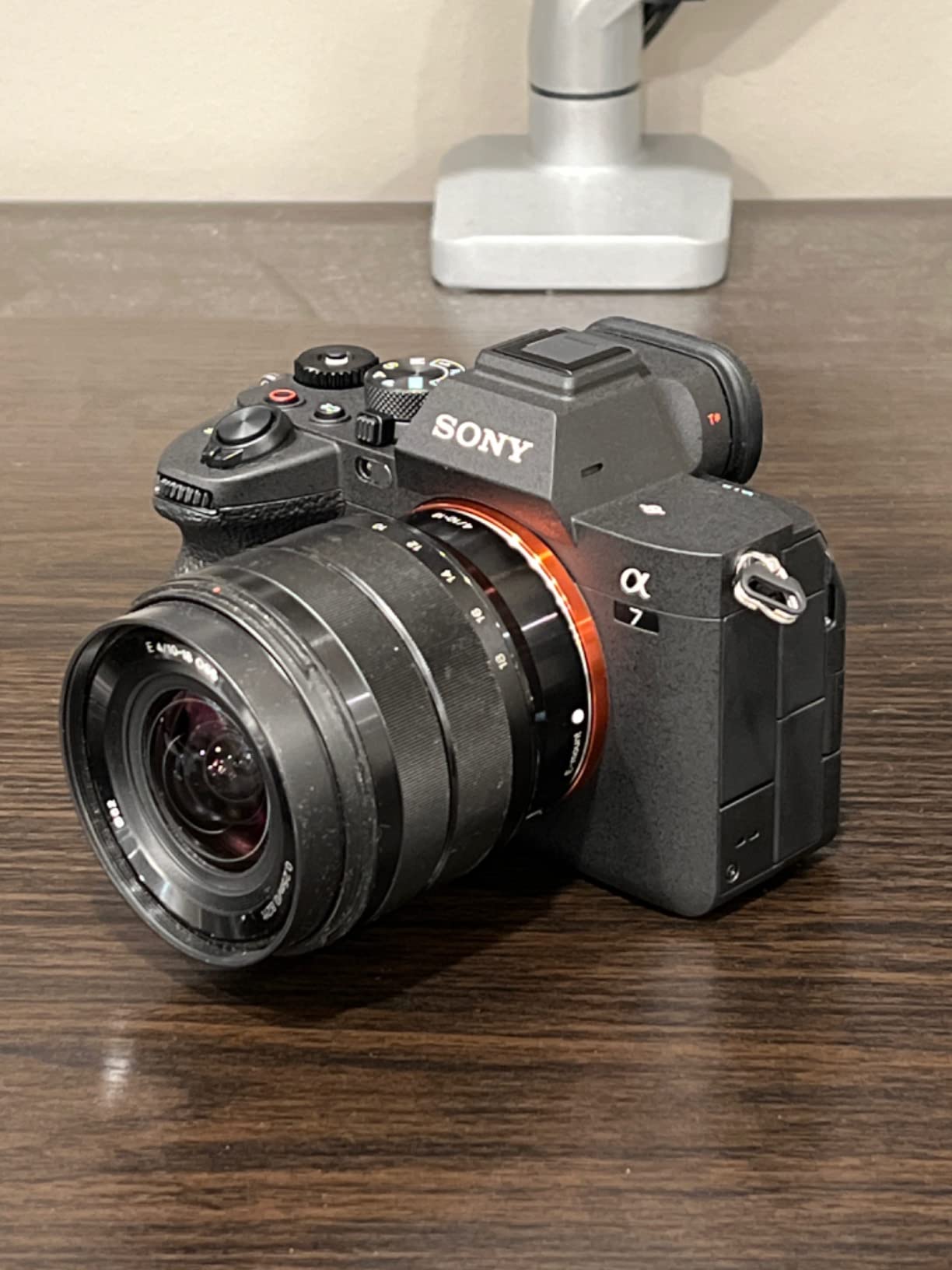
The Alpha 7 IV is a body we keep recommending to a photographer who already knows what they want from an ecosystem. Across 768 reviews it holds a 4.7-star average, and the recurring theme is that the combination of a 33MP back-illuminated sensor, Real-time Eye AF and dual card slots is hard to argue with for event work.
Those dual slots matter more than the spec sheet suggests. One slot takes CFexpress Type A and the other takes SD, and the camera can write to both simultaneously. For anyone shooting paid concerts, that redundancy removes a failure mode that no amount of autofocus skill can compensate for.
The 33MP resolution is the quiet advantage here. A 70-200mm frame of a performer at the back of a room is a small subject, and the extra pixels give you room to crop without the frame turning to mush. It also means one body covers both a wide 24mm and a tight 200mm crop of the same moment.
Real-time Eye AF is the feature owners single out most. Rather than picking a focus point and hoping the subject stays near it, the camera finds the eye and holds it, which is exactly what you need when a singer is moving through a red wash of stage light.

Who it suits
This is our pick for paid work and for anyone committed to buying into a lens system. The E-mount third-party ecosystem is the deepest of any we cover, so a fast prime or a stabilised telephoto is easy to find years after you buy the body.
Video is strong too, with 4K 60p 10-bit 4:2:2 full pixel readout and 7K oversampled 4K 30p, plus an S-Cinetone profile for a filmic look straight out of camera. Hybrid shooters will not feel short-changed.
Who it does not suit
The 10 fps ceiling is the main reservation. A drummer hitting a fill or a guitarist spinning a mic stand can be over before ten frames have passed, and stacked-sensor bodies give you four times that. If your work is fast, action-heavy and unforgiving, the frame rate is where you feel the age of this design.
The 3.0-inch 1.04M dot screen is also worth noting. In a dark venue you will be composing through the viewfinder anyway, but the small, low-resolution panel makes reviewing frames and changing settings less pleasant than it should be.
4. Nikon Z 8
Nikon Z 8 | Professional Full-Frame mirrorless Stills/Video Hybrid Camera
45.7MP stacked BSI CMOS
20/30/60/120 fps
Pre-Release Capture
1.8 lb
Pros
- 45.7MP stacked sensor with huge cropping headroom
- Frame rates of 20
- 30
- 60 and 120 fps cover every situation
- Deep-learning detection down to -9 EV
- Internal 8K/60p and 4K/120p plus 12-bit RAW video
Cons
- Heat management is weaker than larger bodies on long 8K takes
- High-resolution files fill cards very quickly during long bursts
- Battery drain is heavy
The Z 8 is the speed and resolution answer. A 45.7MP stacked sensor means no blackout between frames and no rolling shutter distortion on fast panning, which is precisely the combination a concert photographer wants when a performer crosses the frame in a fraction of a second. Event and sports shooters in owner reviews consistently single out the silent electronic shutter as the feature that gets them past venue noise policies.
Pre-Release Capture is the underrated one. The camera can buffer frames before you press the shutter, so when a singer hits a note and jumps, the peak moment is already saved. For live music, where the best frame lasts a fraction of a second, that is worth more than any resolution increase.
Colour handling under stage lights deserves a mention. Skin Softening and Portrait Impression Balance are computational features designed for exactly the mixed-colour lighting a stage produces, and they can rescue a face that raw magenta and green wash would otherwise ruin.
You also get CFexpress Type B plus SD slots, file formats including 14-bit RAW and High Efficiency RAW, and a sensor shield that lets you change lenses in the field without dust or droplets. For a body this capable, the video side is serious: internal 8K/60p and 4K/120p plus 12-bit N-RAW and ProRes RAW.

Who it suits
The Z 8 suits photographers whose venues are loud enough that a silent shutter matters, or whose work lives and dies on catching a precise instant. Festival and arena shooters who need a tight crop of a distant performer will also find 45.7MP genuinely useful.
It is a good hybrid body too, with 8K/60p internal and 4K/120p for slow-motion crowd and stage inserts, plus a tilting 3.2-inch screen for low-angle pit work.
Who it does not suit
The smaller shell dissipates heat less well than larger bodies, so long 8K takes are shorter. If your concerts are being delivered as long unbroken video takes rather than edited clips, plan for that.
Cards and batteries are the other running costs. High-resolution files fill CFexpress capacity quickly during long bursts, and drain is heavy enough that owners report needing several batteries per shooting day. Budget accordingly, and read the menu structure carefully before a show because it is deep.
5. Nikon Z6 III
Nikon Z6 III, Black | Full-Frame Mirrorless Stills/Video Camera with 6K/60p Internal RAW Recording | USA Model
24.5MP full-frame sensor
4000-nit EVF
AF to -10 EV
6K/60p N-RAW
Pros
- World-class 4000-nit 120 fps viewfinder stays clear in bright conditions
- Subject detection down to -10 EV
- roughly 20% faster than the Z6 II
- Essentially no rolling shutter on a full sensor readout
- Sealed construction that owners report surviving heavy rain
Cons
- Rubber grip has drawn durability complaints from some owners
- No fully open-gate 8K readout
- Body is small for average hands and drains a battery in a couple of hours
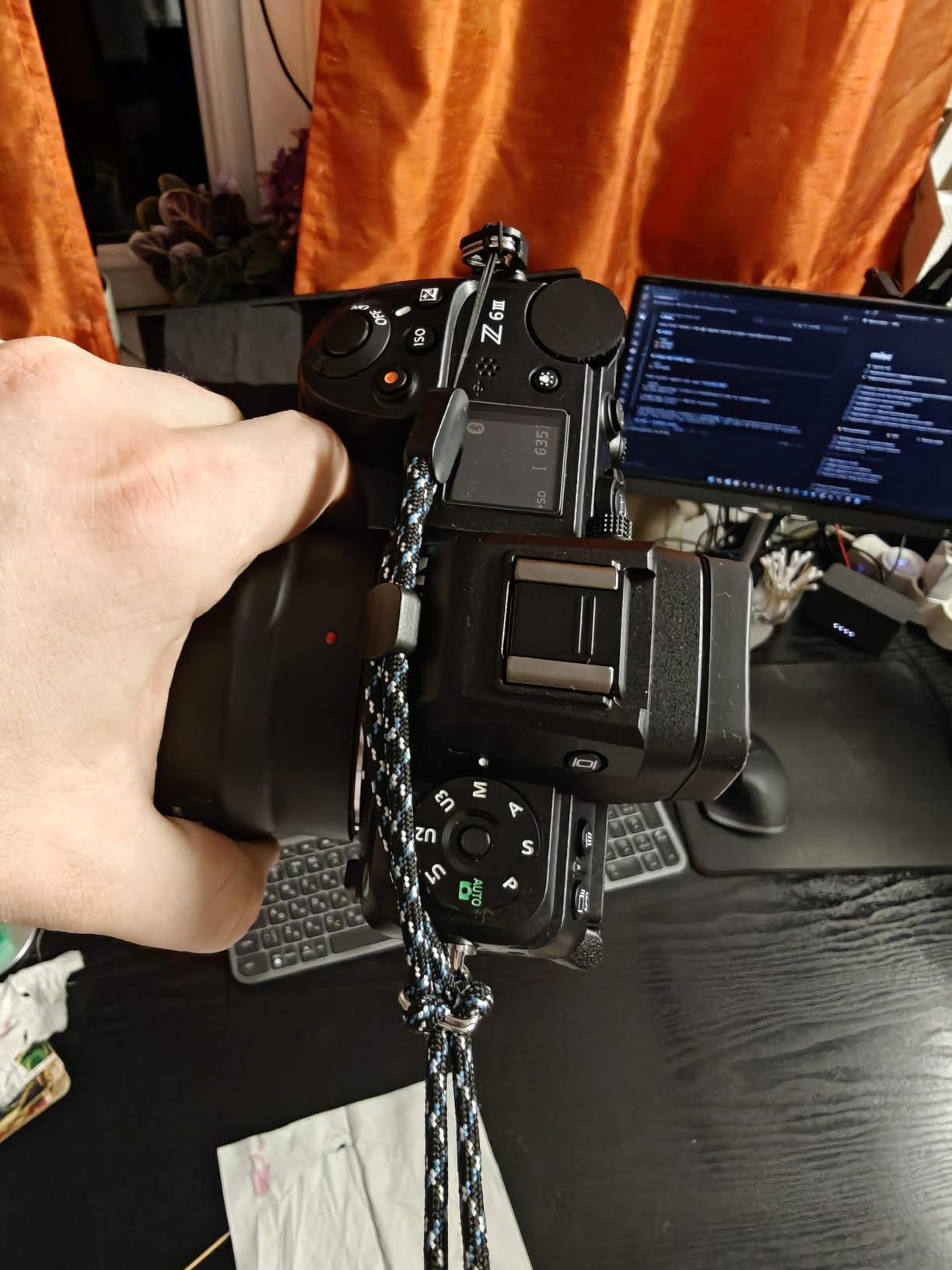
The Z6 III is described by owners as the best value hybrid body in its class, and for concert work the reason is specific: the 4000-nit, 5760k-dot viewfinder with 120 fps refresh. Stage lighting is dim, but phone screens and exit signs are not, and a viewfinder this bright means you can actually see the frame in a dark room or a bright corridor on the way in. Event shooters in owner reviews call out its low-light capability for both stills and video as a headline strength.
Subject detection reaches down to -10 EV and runs around 20% faster than the Z6 II, with faces recognised at roughly 3% of frame height. That is small enough to track a performer’s face across a distant stage rather than only when they fill a good part of the frame.
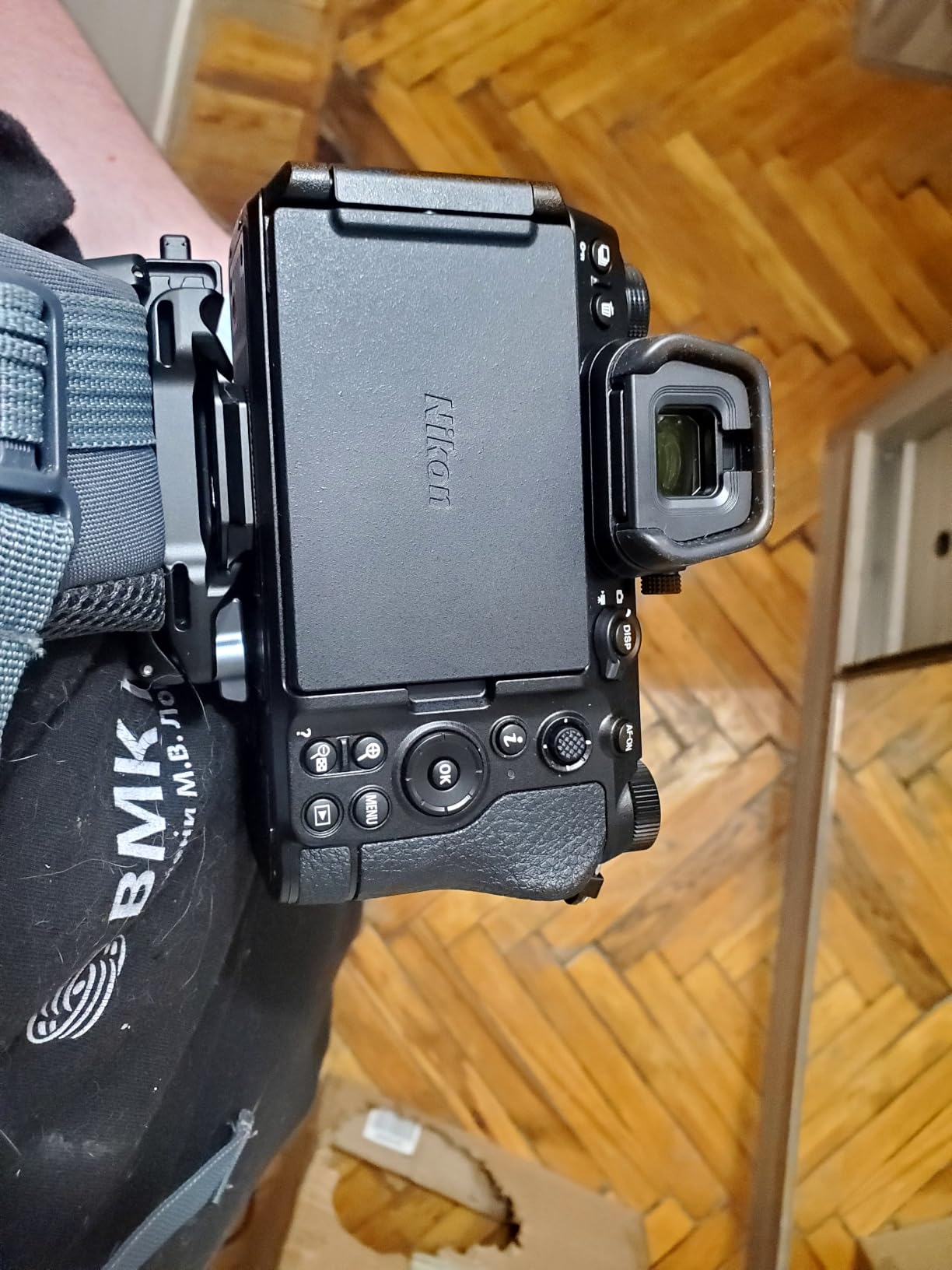
The full sensor readout means essentially no rolling shutter, so panning with a fast-moving performer does not produce the rubbery bend you get from cheaper stacked designs. Combined with 20/30/60/120 fps options, you can hold a whole verse at a modest rate and then dump a burst at the drop.
The ISO range runs 100 to 64000, extended further, which gives you real room in a genuinely dark room. For video, 6K/60p internal N-RAW, oversampled 4K UHD, 4K/120p and Full HD/240p slow motion make this a credible hybrid body for a creator covering a full set.
Who it suits
This is the body for someone who wants modern full-frame performance without flagship pricing, especially if the shoot involves both stills and video. Owners highlight low-light capability for both formats as a headline strength, and the sealed build has a track record in heavy rain at outdoor festivals.
If you are coming from Canon, note that the menu system and the placement of the front and rear dials will feel unfamiliar. Budget an hour with the manual before your first show rather than during it.
Who it does not suit
The most serious complaint in owner reviews is a cluster of reports about the rubber grip failing within the first year, compounded by support that was not helpful. That is worth weighing heavily if you are buying for heavy professional use.
The body is also small for average hands and drains a battery in roughly a couple of hours of shooting, so spares are not optional. It does not record a fully open-gate 8K readout like higher-end Nikon bodies, and no charger is included in the box.
6. OM System OM-1 Mark II
OM SYSTEM Olympus OM-1 Mark II Micro Four Thirds System Camera 20MP BSI Stacked Sensor Weather Sealed Design (US Manufacturer Warranty)
20.4MP stacked BSI Live MOS
600mm-equivalent stabilization
IP53 sealed
1.1 lb
Pros
- Around 0.5 lb lighter than comparable full-frame bodies
- Class-leading stabilization rated up to 600mm equivalent handheld
- High ISO handling far beyond the previous generation
- IP53 sealing rated to -10 C
- Two card slots and computational shooting modes
Cons
- 20MP sensor leaves little room for aggressive cropping
- Autofocus and tracking trail the best full-frame systems
- Accepts a single battery so spares are always needed
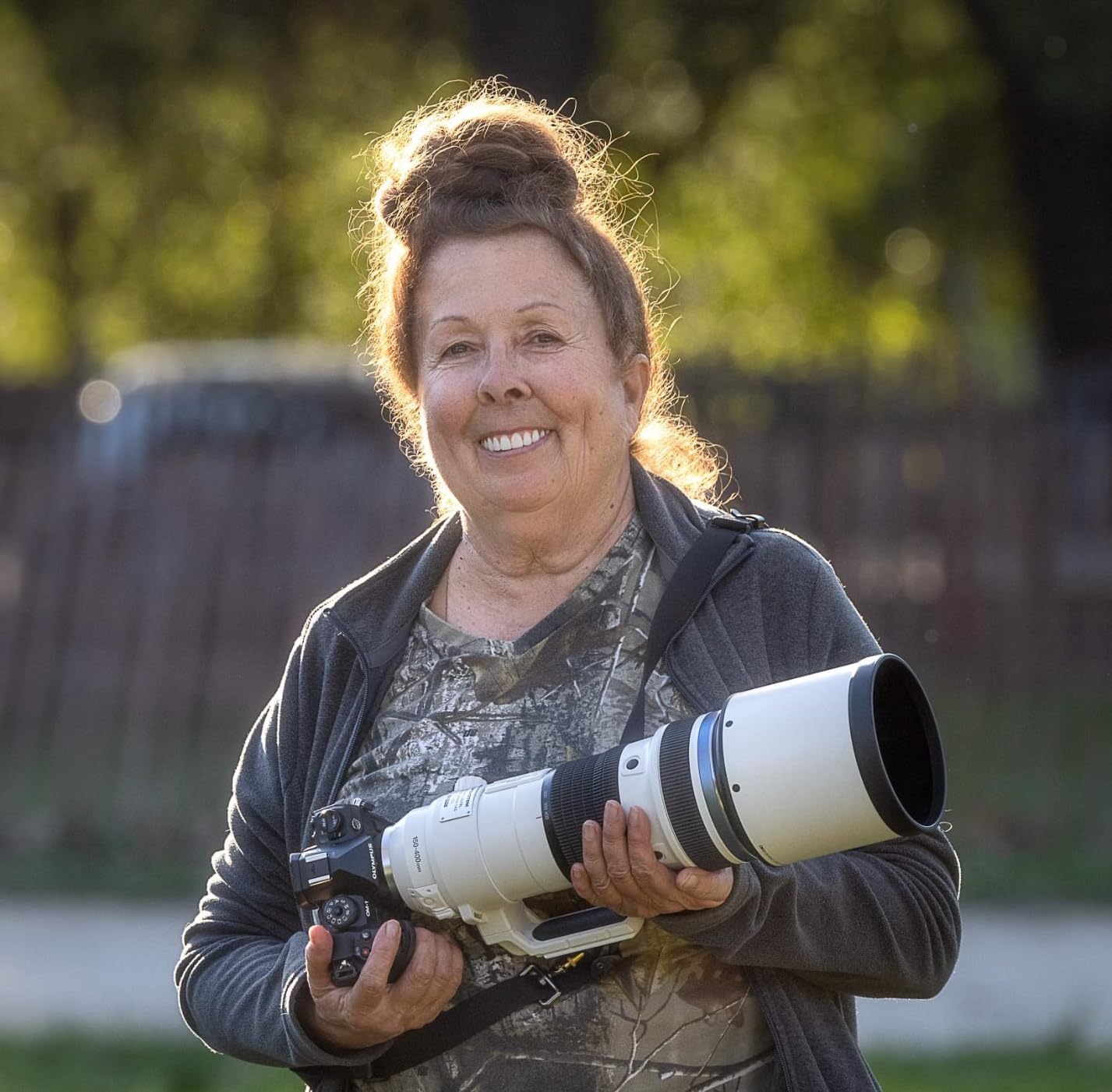
The OM-1 Mark II solves a problem that full-frame bodies never really do: how heavy a long telephoto feels after four hours in a photo pit. At 1.1 pounds it is around half a pound lighter than comparable full-frame bodies, and the in-body stabilization is rated to handhold a 600mm full-frame equivalent comfortably. That combination is genuinely transformative for stage work at distance.
High ISO behaviour is the second surprise. Owners report shooting ISO 10,000 and beyond with minimal visible noise, a large step up from the previous generation and from what Micro Four Thirds is usually assumed to deliver. For a smaller sensor in a dim venue, that is the number that matters.
The computational shooting modes are built for exactly the conditions a concert creates. Live GND and Live ND let you hold a wide aperture and control exposure with a filter you do not have to carry, and Handheld High Res Shot and focus stacking handle static scenes between songs without a tripod.
Weather sealing is rated IP53 for dust and splash, freeze proof to -10 C, which for outdoor festivals in the cold is a real reliability gain rather than a spec-sheet nicety. Two card slots are present, though they do not auto-switch once the first card fills without a manual change.
Who it suits
This is the pick for anyone whose photography is mostly tight, distant frames of a stage. It is also a strong festival body for cold weather, and the stabilization means a slower, lighter, cheaper telephoto can produce sharp results hand-held at a small club.
If you already own Micro Four Thirds glass, the computational features reduce the need to carry filters, rails and a tripod, which is exactly the kind of weight you want to cut before a pit.
Who it does not suit
The 20.4MP sensor is small by modern standards. If you want to crop hard on a performer across a wide stage, you will run out of detail before you run out of reach. Resolution-hungry shooters should look at a 45.7MP full-frame body instead.
Autofocus and subject tracking trail the best full-frame systems, and owners note the occasional lost face or eye through fast movement. There is also a single battery slot, and the Mark II draws more power than the original OM-1, so a spare battery is mandatory for a full show.
7. Panasonic LUMIX G85
Panasonic LUMIX G85 4K Digital Camera, 12-60mm Power O.I.S. Lens, 16 Megapixel Mirrorless Camera, 5 Axis in-Body Dual Image Stabilization, 3-Inch Tilt and Touch LCD, DMC-G85MK (Black)
16MP Micro Four Thirds
5-axis dual IS
12-60mm kit
1.1 lb
Pros
- Class-leading 5-axis dual in-body stabilization for the price
- No low-pass filter gives roughly 10% more fine detail than earlier 16MP sensors
- 12-60mm covers a useful 24-120mm equivalent range
- Compact weather-resistant body with an integrated viewfinder
Cons
- 16MP leaves the least headroom for cropping distant stage shots
- 49-point AF with eye detection is dated on fast erratic motion
- Single SD card slot with no backup option
The G85 has been the entry point into a stabilised Micro Four Thirds system for years, and at 4.6 stars across 750 reviews it holds up. The 5-axis dual in-body image stabilization works in both stills and 4K video and is the feature that keeps frames usable at concert-level light speeds with slower glass.
The 12-60mm Power O.I.S. kit lens covers roughly a 24-120mm equivalent range, which is a sensible starting span for a show: wide enough for the whole stage, long enough for a front-of-stage portrait. Buying a fast prime later is an easy upgrade in this mount.

Removing the low-pass filter is the quiet upgrade here, worth roughly 10% more fine detail than earlier 16MP Micro Four Thirds sensors. On a fast lens with stabilisation you will see that detail in stage shots more than you would in a spec sheet.
4K QFHD capture at 3840×2160 with 4K Photo and 4K Post Focus up to 30 fps give a hybrid option, and the built-in 4K Photo mode records a burst of focus positions so you can pick the sharp one after a jump.

Who it suits
The G85 suits someone starting out who wants stabilisation, a viewfinder and a usable zoom without spending flagship money. It is also a good second body to carry alongside a fast prime, giving you a wide backup for wide shots.
Owners consistently describe it as a value entry point rather than a specialist low-light machine, and at 1.1 pounds it is easy on the neck for a full night in a crowd.
Who it does not suit
Age shows in two places that matter for concerts. The 16MP sensor has the least cropping headroom on this list, which hurts when a performer is small in frame. And the 49-point autofocus system with eye detection is less reliable on fast, erratic motion than modern mirrorless, which is the hardest possible combination to pair.
There is a single SD card slot with no backup, and a 1/160 second flash sync speed that limits any off-camera flash work. Neither matters much if you never use flash, but the single slot matters if you shoot paid.
8. Canon EOS 90D
Canon DSLR Camera [EOS 90D] with 18-135 is USM Lens | Built-in Wi-Fi, Bluetooth, DIGIC 8 Image Processor, 4K Video, Dual Pixel CMOS AF, and 3.0 Inch Vari-Angle Touch LCD Screen, Black
32.5MP APS-C CMOS
10 fps
Optical pentaprism EVF
0.6 kg
Pros
- 32.5MP sensor holds detail well when cropped
- 10 fps continuous with no viewfinder lag
- Existing EF and EF-S lenses work without adapters
- EF 18-135mm gives a stabilised 28.8-216mm equivalent reach
Cons
- Optical viewfinder means no real-time exposure preview in the dark
- Mirror slap and shutter noise make it poor for quiet halls
- Body is heavy and lacks weather sealing
The 90D exists for a very specific person: someone already sitting on a shelf of EF and EF-S lenses who wants a capable body without adapters. At 32.5 megapixels the APS-C sensor resolves well and holds up when cropped, and the bundled 18-135mm covers a 28.8-216mm equivalent range with stabilisation, which is a genuinely useful concert span.
The optical pentaprism viewfinder is worth appreciating for what it is: 0.95x magnification with no shutter blackout lag. Some concert photographers prefer optical because the viewfinder never runs out of battery and never suffers electronic artefacts in strobing stage light.
![Canon DSLR Camera [EOS 90D] with 18-135 is USM Lens | Built-in Wi-Fi, Bluetooth, DIGIC 8 Image Processor, 4K Video, Dual Pixel CMOS AF, and 3.0 Inch Vari-Angle Touch LCD Screen, Black customer photo 1](https://lockah.net/wp-content/uploads/2026/09/B07WHV3HXL_customer_1.jpg)
Ten frames per second with no time lag is competitive enough for stage action, and the 45-point all cross-type AF with 27 points working at f/8 gives solid tracking when the aperture is wide open. Dual Pixel CMOS AF in live view handles video and rear-screen framing.
Connectivity is decent too, with built-in Wi-Fi and Bluetooth plus webcam software for streaming. If you want to run a livestream of a small show from a fixed position, that is one less box to buy.
![Canon DSLR Camera [EOS 90D] with 18-135 is USM Lens | Built-in Wi-Fi, Bluetooth, DIGIC 8 Image Processor, 4K Video, Dual Pixel CMOS AF, and 3.0 Inch Vari-Angle Touch LCD Screen, Black customer photo 2](https://lockah.net/wp-content/uploads/2026/09/B07WHV3HXL_customer_2.jpg)
Who it suits
The 90D suits a Canon EF owner who wants reach without changing systems. That 216mm equivalent end of the bundled lens is real working distance on a stage, and matched with a 70-200mm f/2.8 it covers the classic pit setup entirely.
It is also a reasonable choice as a second body for a working photographer who wants a backup that will not be out of sync with the lenses already in the bag.
Who it does not suit
Mirrorless is genuinely better in the two situations that define concert work. The optical viewfinder gives no real-time exposure preview and no focus peaking in a dark room, so you will be guessing exposure. And a 45-point phase-detect system is slower and less reliable on erratic moving subjects than modern mirrorless tracking.
The body is also heavy at 0.6 kg, lacks weather sealing compared with pro-grade bodies, and its mirror slap and shutter noise make it a poor fit for quiet seated halls. The 1/250 second sync and single card slot are further limits for paid work.
9. Sony RX100 VII
Sony RX100 VII Premium Compact Camera 1.0-Type CMOS Sensor Black
20.1MP 1-inch stacked sensor
Built-in 24-200mm f/2.8-4.5
275 g
20 fps
Pros
- Pocketable 275 g body with a built-in 24-200mm f/2.8-4.5 lens
- 0.02 second autofocus with 357 phase-detect points
- 20 fps blackout-free with AF/AE calculation up to 60 times per second
- Real-time tracking and eye AF for people
Cons
- 1-inch sensor is noticeably noisier at high ISO than any full-frame body here
- Aperture narrows to f/4.5 at the long end
- Battery life is short for a full evening
This section exists because venue camera bans are real. Many clubs and small music venues restrict anything that does not fit in a pocket, which rules out DSLRs and pro bodies outright. The RX100 VII weighs 275 grams, fits in a jacket, and has a built-in Zeiss 24-200mm f/2.8-4.5 lens, so you are not choosing between getting the shot and being allowed to be there.
It is also more capable inside that constraint than the category usually suggests. Autofocus is 0.02 seconds with 357 phase-detect points, and it fires 20 frames per second blackout-free with autofocus and exposure recalculated up to sixty times per second. Real-time tracking and eye AF are there for people in both stills and video.
The 1.0-type stacked sensor handles high ISO about as gracefully as a small sensor can, and the pop-up electronic viewfinder means you are not relying on the rear screen in a dark room. The tilting LCD is only three inches, so treat the viewfinder as the working tool and use the screen for quick checks.
Video is respectable for a compact: 4K with S-Log3, Active mode stabilisation, and a microphone jack for a proper audio feed. That combination makes it a genuinely viable hybrid body for a creator who cannot bring anything bigger through the door.

Who it suits
The RX100 VII suits fans shooting from the floor at restricted venues, anyone who wants one camera that covers 24mm to 200mm without a bag, and photographers who travel light and shoot many different kinds of work.
It is also a good second camera. At this size and weight you can put one in a jacket pocket and keep a larger body with a telephoto ready for the wide shots.
Who it does not suit
It is the lowest-rated camera in this roundup at 4.2 stars, and the reason is consistent across reviews. The 1-inch sensor produces noticeably more noise at high ISO than any modern full-frame body here, and the aperture narrows to f/4.5 at the long end, so shutter speeds drop exactly when the stage gets dark.
Twenty megapixels also leaves little room for heavy cropping of distant performers, and the small single SD slot plus short battery life are poor companions to a three-hour set. Shoot this one as a supplement, not as your only stage body.
10. Sony Alpha a6400
Sony Alpha a6400 Mirrorless Camera: Compact APS-C Interchangeable Lens Digital Camera with Real-Time Eye Auto Focus, 4K Video, Flip Screen & 16-50mm Lens – E Mount Compatible – ILCE-6400L/B, Black
20.1MP stacked Exmor RS APS-C
425 phase-detect points
11 fps
180-degree screen
Pros
- Real-time Eye AF reported sharp on the vast majority of dynamic shots
- 11 fps continuous RAW captures stage action reliably
- Light compact body that fits a small bag with two lenses
- 180-degree tilting screen makes low and high angle framing straightforward
Cons
- No in-body image stabilization so low light depends on stabilized lenses
- 1/4000 second maximum shutter and 1/160 second flash sync
- Sony APS-C lens lineup is limited especially for telephoto reach
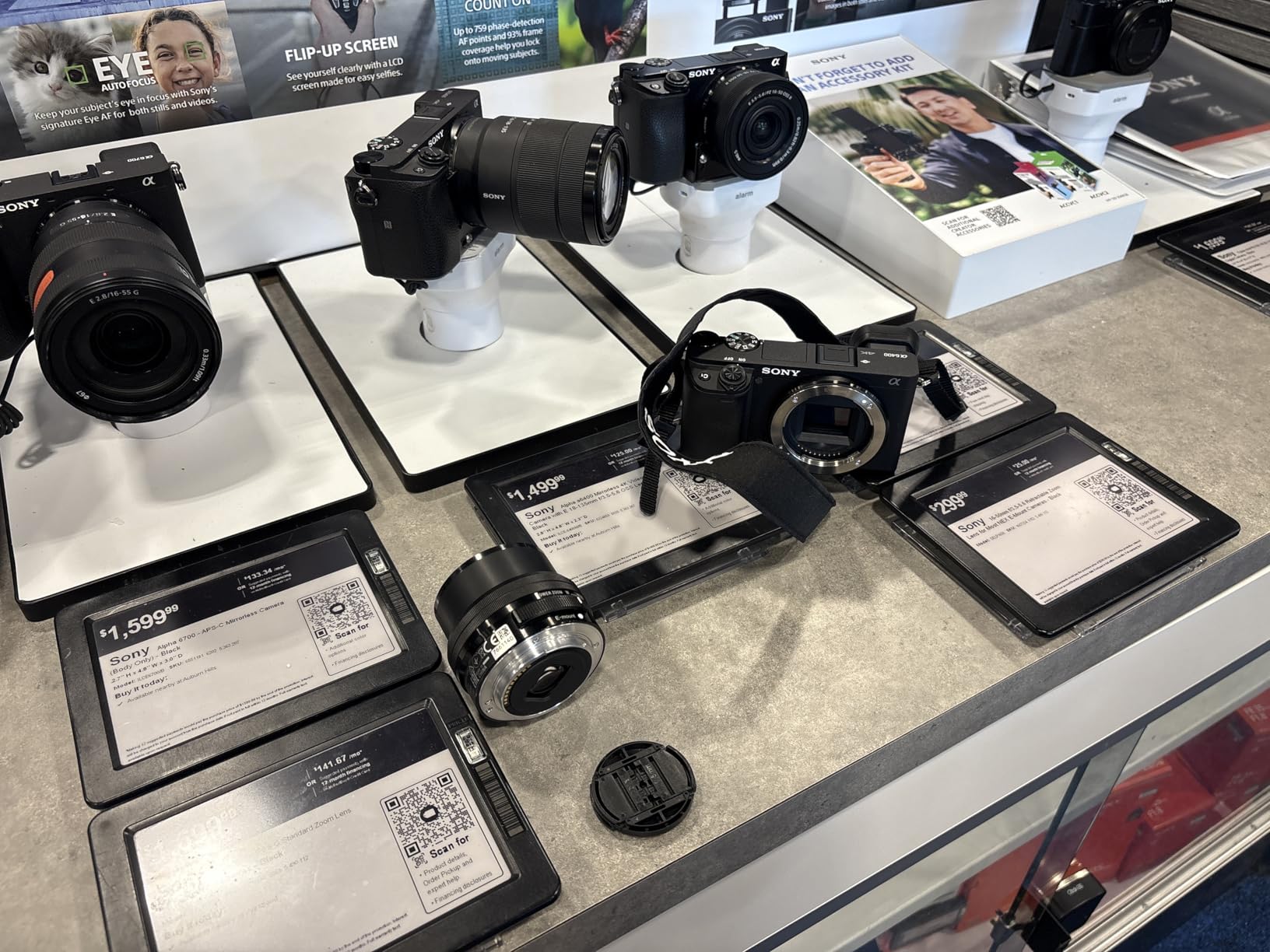
The a6400 has the most reviews of any camera here at 1,052, and one owner reports more than 20,000 shots over three years and still considers it a top-tier APS-C body. What the numbers describe is a camera whose headline feature, Real-time Eye AF, genuinely changes how you shoot a moving subject. The 425 phase-detect and 425 contrast-detect points cover 84% of the sensor, and long-term owners report the majority of dynamic shots coming out sharp.
At 10.3 ounces with a 180-degree tilting screen, it is the camera most people will actually carry. The screen tilt makes low-angle pit shots and high-angle balcony framing straightforward in a way that a fixed screen does not.
Burst rate is 11 frames per second at full resolution RAW, which is more than enough to catch a jump or a mic drop. The 20.1MP stacked back-illuminated Exmor RS sensor is a proven design that holds up well for its size, and 4K UHD video plus built-in time lapse and slow-motion functions cover the hybrid case.
One practical advantage is the lens ecosystem. The bundled 16-50mm covers 24-75mm equivalent, and the third-party APS-C support is strong, with fast primes like a 30mm f/1.4 and zooms such as a Sigma 18-50mm f/2.8 readily available. That means you can shoot a show on a fast prime without leaving the system.
Who it suits
The a6400 suits beginners who want modern tracking without flagship complexity, and experienced shooters who want a light second body. If you shoot from the floor of a small venue rather than a pit, the light weight matters more than a burst rate you will rarely use.
It also suits anyone upgrading from an older entry-level DSLR, because eye autofocus is the single biggest quality-of-life change in low-light moving-subject work.
Who it does not suit
There is no in-body image stabilization, so low-light results depend on stabilised lenses. With the bundled kit lens that is a real constraint in a dark club, and APS-C high-ISO noise is more visible than current full-frame bodies in dark venues.
The Sony APS-C lens lineup remains limited, especially for telephoto reach, and the 1/4000 second maximum shutter plus 1/160 second flash sync limit fast action and low-light flash. There is a single SD slot, so plan card management carefully on paid work.
Buying Guide: What Actually Matters in a Concert Camera
Start with high ISO performance, not megapixels. Everything else on this list is negotiable; a body that produces clean, detailed files at ISO 6400 is what separates usable concert photographs from noise with a person in it. Sensor size is the rough guide, but the real answer comes from reviews of the specific generation, because stacked and back-illuminated designs have narrowed the gap between formats considerably.
Second is autofocus that holds a face. The number of AF points matters far less than whether the system can acquire and then stay on a moving performer. Subject detection trained on people is the feature that changed this genre, and every camera recommended above has some version of it. Some of the smallest bodies on this list do it very well indeed.
Third, burst rate and buffer depth. Twenty frames per second sounds impressive, but a body that fills its buffer in one second and locks up is worse than a slower camera that keeps shooting. Stacked sensors avoid the blackout and buffer penalty of older designs, and this is where paying up genuinely pays back at a show.
Fourth, the mechanical versus electronic shutter question. Reviewers on photography forums reach a clear consensus: shoot mechanical shutter, or risk banding from LED stage lighting. Electronic shutters with rolling shutter bend fast panning, and LED fixtures flicker at a frequency that draws hard bands across a frame. A silent electronic shutter with an adjustable artificial shutter sound is the compromise, and it is one reason the Z 8 appeals to event shooters.
Fifth, lens mount ecosystem, and this is where most decisions should be made. You are choosing a system, not a body, and the fast glass you will want in three years has to exist. Mounts differ in depth of support for fast primes, f/2.8 zooms and telephotos, and third-party lenses are the deciding factor in several of them.
Sixth, the aperture question that dominates every forum thread on this topic: is f/2.8 enough? The honest answer is that f/2.8 is a workable starting point for most stages, and you will also need ISO 3200 to 6400 alongside it. But f/2.8 is a ceiling rather than a comfort zone, and anyone shooting small clubs or seated theatre shows will feel the difference moving to f/1.8 or f/1.4. Kit zooms at f/3.5 to f/5.6 are the real problem, because they force shutter speeds down until movement blurs.
Seventh, physical reliability. Weather sealing to IP53 or better matters for outdoor festivals, and a dual card slot is non-negotiable if you are being paid. Battery count is the last consideration and the most commonly underestimated. A full show is 500 frames or more, and most bodies here will need at least one spare battery in the bag.
Finally, venue rules. Some venues restrict camera size, some ban flash entirely, and some limit shooting to specific positions. Check the policy before you travel, because a body that is too large for the door can waste an entire trip. If you shoot smaller venues regularly, that consideration should move much further up this list. If you are covering performers who also want a stage instrument of their own, our picks for the best concert ukuleles for fingerstyle and ukulele strings built for the stage are the natural companion reads.
Concert Settings Cheat Sheet
Every venue is different, but the baseline is remarkably consistent. Start in manual exposure, set the aperture as wide as your lens allows, then set the shutter speed to 1/250s or faster and let the ISO float to whatever the light requires. Most stages land somewhere between ISO 3200 and 6400, which is why high ISO performance dominates this whole roundup.
For a small club with a fast prime, f/1.8 at 1/250s is achievable with ISO climbing. For an arena with a f/2.8 zoom, expect to work at 1/320s or 1/400s to keep the shutter angle tight enough to stop a jumping performer turning soft. The rule of thumb is simple: if motion blurs, raise the shutter speed before anything else, and let ISO absorb the cost.
Shoot RAW. Stage lighting puts a hard colour cast on skin tones that no amount of in-camera correction fully fixes, and a RAW file lets you neutralise magenta and green washes in editing rather than guessing at the venue. Set white balance manually to roughly 3200K to 4000K under tungsten stage wash to avoid a second pass later.
Focus mode matters as much as exposure settings. Use continuous autofocus with subject detection set to people, and a wide or zone area rather than a single point, so the camera can reacquire when a performer moves outside your initial frame. Turn off anything that slows the viewfinder down, and keep electronic shutter banding in mind if the rig uses LED fixtures.
Venue Rules and Camera Size Restrictions
Before any of the technical advice matters, there is a gate you have to pass. Plenty of clubs and smaller music venues restrict cameras that do not fit in a pocket, which in practice means DSLRs, pro bodies and anything with a long lens attached are refused at the door. This is the single most common frustration reported in forum discussions about concert photography, and it is the reason compacts earn a place in a roundup otherwise full of full-frame bodies.
Here is what to check before you travel. Confirm the camera-size policy on the venue website or social channels, because it is often buried in small print. Ask whether non-professional cameras are permitted in the pit or restricted to the floor. Check whether flash, video and audio recording are allowed, since these are often prohibited even when photography is not. And confirm whether a photo pass or accreditation is required, which changes everything about which body is worth carrying.
Where size limits apply, the RX100 VII on this list is the direct answer, and it is not a compromise piece. You get a built-in 24-200mm f/2.8-4.5 lens, 20 fps blackout-free shooting and real-time eye autofocus in a 275 g body. Where no limits apply, ignore this section and buy for sensor quality and glass instead.
Silent operation is the other half of venue etiquette. A silent electronic shutter avoids bothering the act and the audience, which matters more than people expect in a small room. Several cameras here support a silent mode with an adjustable artificial shutter sound, and flash sync behaves differently in electronic mode, so test before you rely on it.
Frequently Asked Questions
What camera do most concert photographers use?
Most working concert photographers use a full-frame mirrorless body with a 24MP to 33MP sensor, a fast zoom or short telephoto lens, and continuous autofocus with people-detection tracking. For paid work, dual card slots matter because a card failure mid-set is unrecoverable. Typical settings are 1/250s or faster at ISO 3200 to 6400, shooting RAW with the mechanical shutter to avoid banding from LED stage lighting.
What camera is good for taking concert photos?
Any modern mirrorless body with reliable subject-detection autofocus will produce good concert photos, because the stage lighting forces high ISO regardless of body. The Canon EOS R6 Mark II, Sony Alpha 7 IV and Nikon Z6 III cover the main use cases, with the Canon EOS R8 for photographers who want a lighter carry. The lens matters more than the body: a fast f/1.8 or f/2.8 lens gathers far more light than any sensor upgrade.
What is the best affordable camera for concert photography?
The Panasonic LUMIX G85 is the strongest affordable entry point, combining 5-axis in-body stabilization, a 12-60mm lens covering roughly 24-120mm equivalent, and a 16MP Micro Four Thirds sensor. The Sony Alpha a6400 is the better choice if you want modern eye autofocus, with 11 fps and a 180-degree tilting screen. Both handle stage lighting acceptably when paired with a fast prime lens.
Is f/2.8 enough for concert photography?
Yes, f/2.8 works for most arena and stage shows, especially paired with ISO 3200 to 6400 and a shutter speed of 1/250s or faster. It becomes uncomfortable in small clubs and seated theatres, where light levels are lower and you may need to drop below 1/250s, causing motion blur. Moving to f/1.8 or f/1.4 buys you a full stop of light and a noticeably cleaner result in those rooms.
Do concert venues ban large cameras?
Many clubs and small music venues restrict cameras that do not fit in a pocket, which excludes DSLRs, pro bodies and long telephoto lenses. Larger venues and festivals are usually more permissive, though flash is prohibited almost everywhere. Check the venue policy before travelling, and consider a compact such as the Sony RX100 VII if you regularly shoot rooms with size restrictions.
Final Verdict
For most people reading this, the Canon EOS R6 Mark II is the best camera for concert photography on this list. Forty frames per second, deep-learning tracking that recognises people, and a bright viewfinder cover the demands of an arena stage, and the 4.7-star rating across 651 reviews suggests the result matches the spec sheet.
If weight is what stops you shooting, take the Canon EOS R8 for a smaller full-frame body that still handles high ISO well. If you shoot paid work or want the widest lens choice, the Sony Alpha 7 IV is the stronger long-term investment thanks to its dual card slots and E-mount ecosystem. Our broader mirrorless guides cover the wildlife and long-lens side of the same decisions in more depth.
Whatever you buy, buy the lens before the body. A fast prime or a 24-70mm f/2.8 will do more for your concert photographs than any generation of sensor, and it is the one piece of kit that solves the high ISO problem rather than merely managing it. Bring spare batteries, check the venue’s camera policy, and go shoot something loud in 2026.