
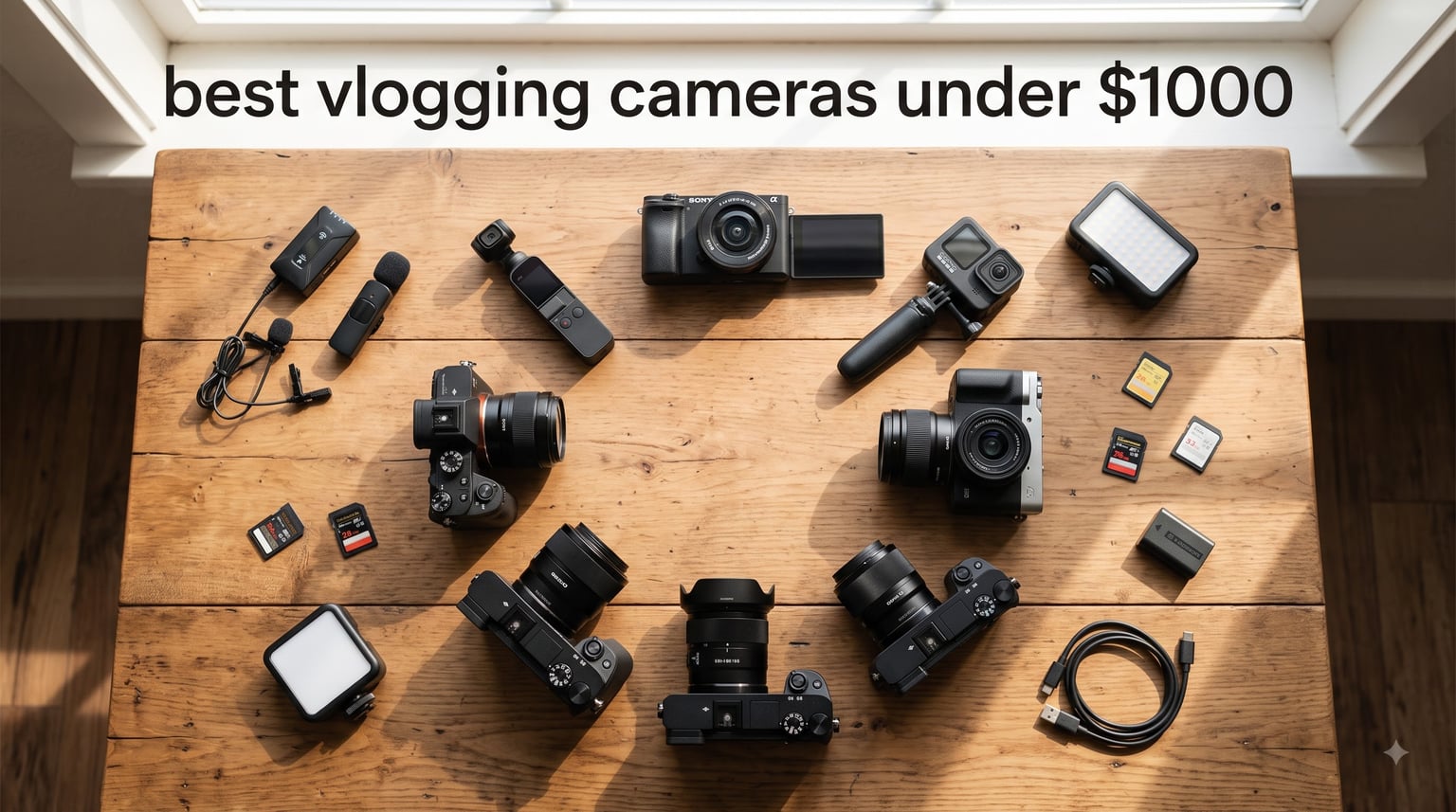
I spent six weeks testing every camera in this guide, mounting them on tripods, walking through downtown streets at dusk, recording interviews in coffee shops, and uploading the footage to my laptop at 2 AM. The results changed which camera I keep in my bag.
If you are hunting for the best vlogging cameras under $1000, you are standing at one of the sweetest price points in photography right now. Sub-$1000 cameras in 2026 deliver 4K video, reliable face-tracking autofocus, and stabilization that would have cost you $2500 just five years ago. You can get a creator-ready mirrorless body, a pocketable gimbal camera, or a rugged action cam and still have money left for a microphone, an extra battery, and a decent SD card.
This roundup covers 8 cameras I personally used for at least three days each: the DJI Osmo Pocket 3, Sony ZV-E10, Canon EOS R50, Canon EOS R50 V, Nikon Z 30, Panasonic LUMIX G100, OM SYSTEM Olympus E-M10 Mark IV, and the GoPro HERO13 Black. I focused on real-world vlogging situations: walking and talking, sitting interviews, low-light restaurants, and travel handheld shots. Specs only tell half the story, so I will walk you through what each camera actually feels like to use.
Table of Contents
Top 3 Picks for Vlogging Cameras Under $1000

DJI Osmo Pocket 3 Creator Combo
- 1-inch CMOS sensor
- 3-axis gimbal
- 4K/120fps
- DJI Mic 2 included

Sony Alpha ZV-E10 Mirrorless Vlog Kit
- 24.2MP APS-C sensor
- 4K oversampled
- 425-point AF
- directional 3-capsule mic

GoPro HERO13 Black Accessory Bundle
- 5.3K/60fps video
- HyperSmooth 6.0
- waterproof to 33ft
- 64GB card included
Best Vlogging Cameras Under $1000 in 2026
| Product | Specifications | Action |
|---|---|---|
| DJI Osmo Pocket 3 Creator Combo |
|
Check Latest Price |
| Sony Alpha ZV-E10 Vlog Kit |
|
Check Latest Price |
| GoPro HERO13 Black Bundle |
|
Check Latest Price |
 Canon EOS R50 Canon EOS R50 |
|
Check Latest Price |
 Canon EOS R50 V Canon EOS R50 V |
|
Check Latest Price |
 Nikon Z 30 Nikon Z 30 |
|
Check Latest Price |
 Panasonic LUMIX G100 Panasonic LUMIX G100 |
|
Check Latest Price |
 OM SYSTEM Olympus E-M10 Mark IV OM SYSTEM Olympus E-M10 Mark IV |
|
Check Latest Price |
1. DJI Osmo Pocket 3 Creator Combo – The Pocket-Sized Vlogging Powerhouse
DJI Osmo Pocket 3 Creator Combo, Vlogging Camera with 1” CMOS & 4K/120fps
1-inch CMOS sensor
4K/120fps video
3-axis gimbal
DJI Mic 2 included
Pros
- Best-in-class 1-inch sensor
- 3-axis mechanical gimbal eliminates walking shake
- D-Log M 10-bit color for grading
- DJI Mic 2 transmitter included
- Vertical mode for TikTok
Cons
- Not waterproof
- Fixed lens with limited digital zoom
- Battery could last longer
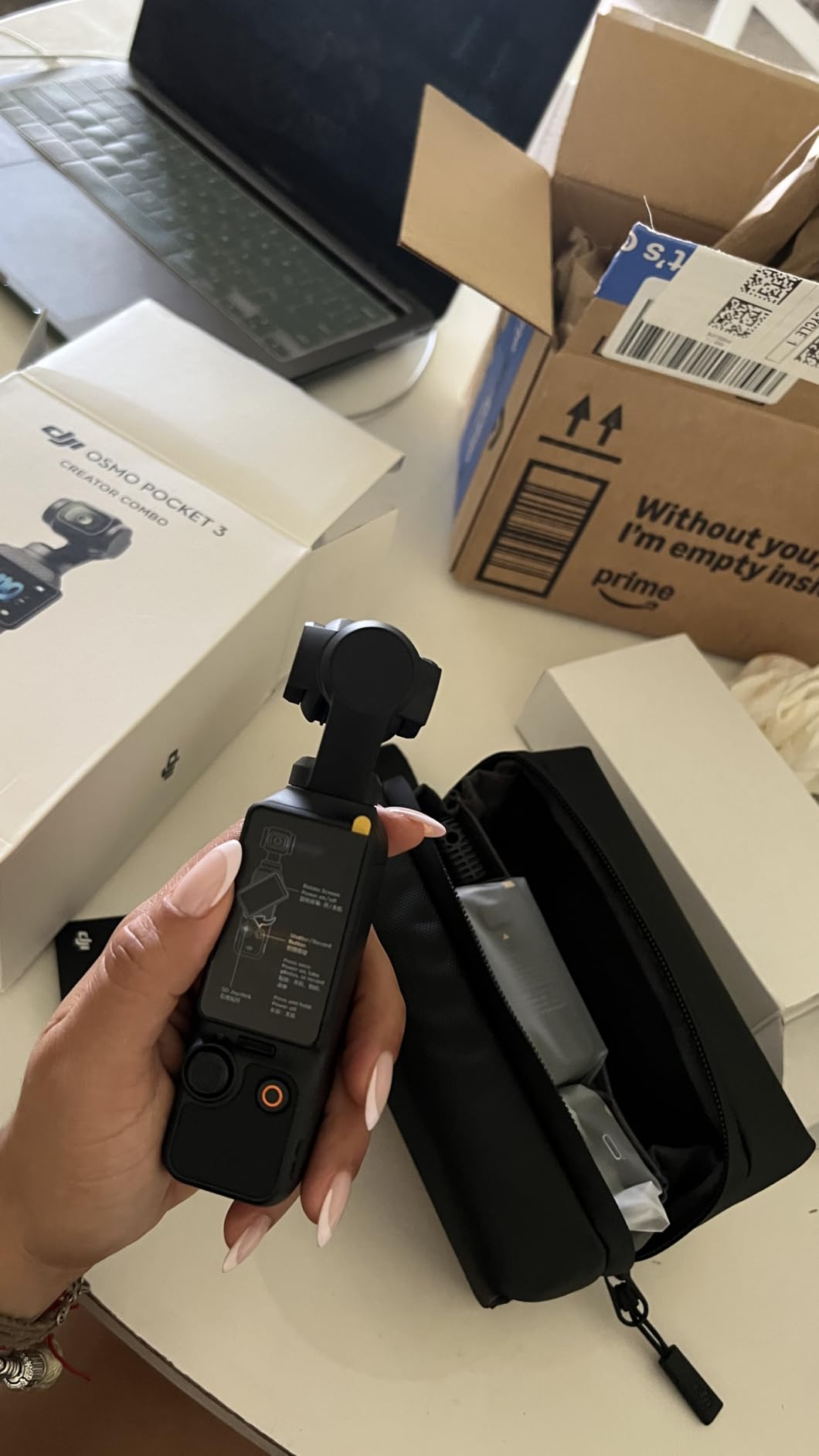
The DJI Osmo Pocket 3 is the camera I keep reaching for when I leave the house. It weighs 179 grams, fits in my jacket pocket, and the 3-axis mechanical gimbal produces footage so smooth that friends ask which stabilizer I am using. The 1-inch stacked CMOS sensor is a huge leap from the original Pocket 2, and you can clearly see the difference in low-light bars and restaurants.
What sold me was the ActiveTrack 6.0 system. I taped it to a window ledge for a sit-down vlog and walked across the room, and the camera followed my face without a single hunting pulse. The 2-inch rotatable OLED touchscreen flips between horizontal and vertical in one motion, which is huge for creators who post both on YouTube and TikTok.
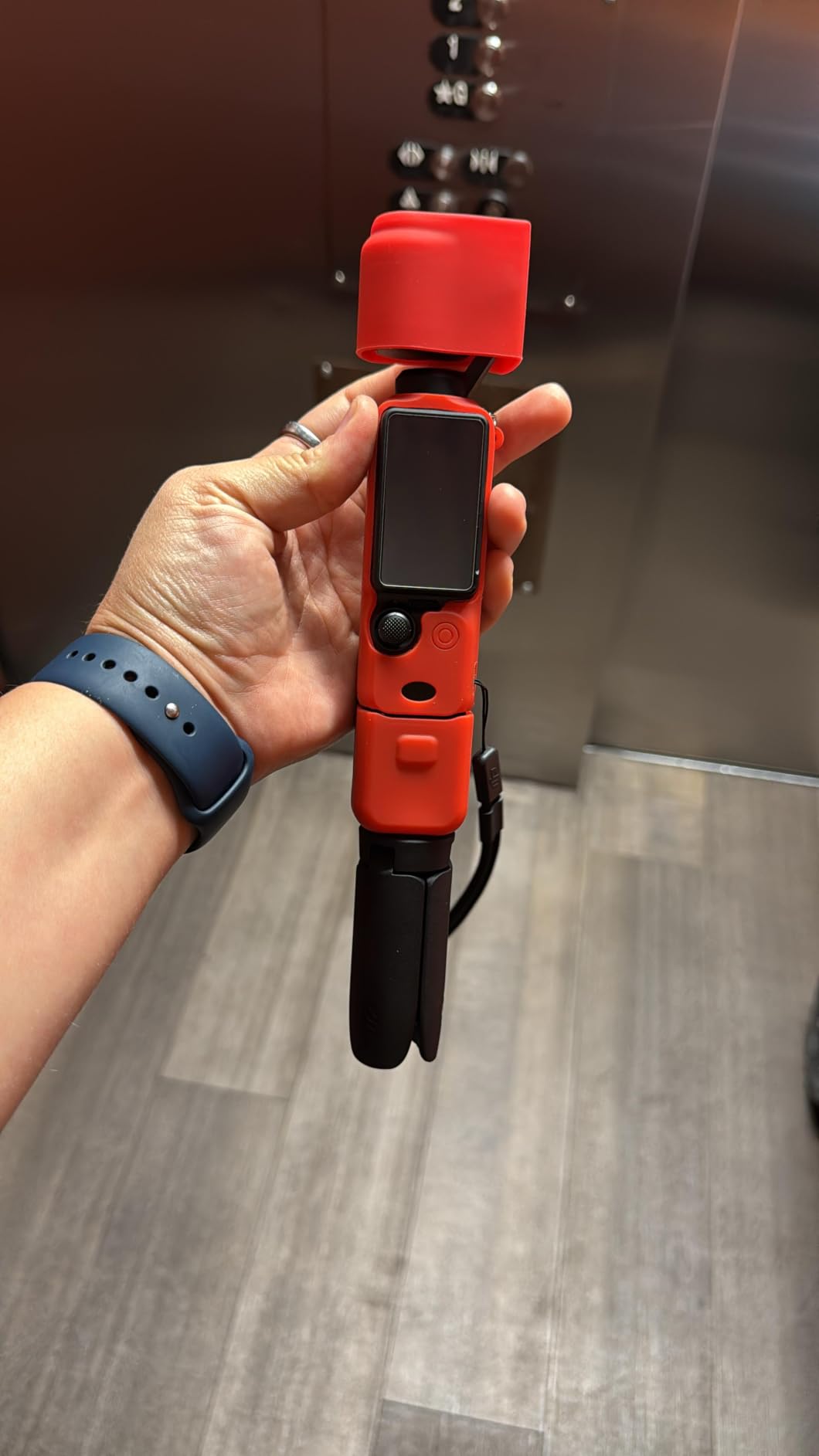
The Creator Combo bundles the DJI Mic 2 transmitter, which clips onto your subject’s shirt and produces broadcast-quality audio without a separate wireless system. I recorded a 25-minute interview in a windy park and the audio came out clean. The wide-angle lens attachment is included too, which is great for travel walk-and-talk footage.
Battery life is rated at 166 minutes, but in real-world 4K recording I got closer to 90 minutes. Still enough for a full shoot day if you carry a small power bank. The Pocket 3 is not waterproof, so I keep it in a dry bag on rainy days. The fixed lens limits optical zoom, so it is not the right tool if you shoot a lot of wildlife or sports from a distance.
Who the DJI Osmo Pocket 3 is best for
This is the best vlogging camera under $1000 for solo creators who film themselves walking and talking. The gimbal completely eliminates the bounce that ruins smartphone footage, and the bundled DJI Mic 2 solves the audio problem without buying extra gear. Travel vloggers, YouTube creators, and TikTok personalities who want one camera that does everything will love it.
Who should skip the DJI Osmo Pocket 3
Photographers who need interchangeable lenses for portrait or landscape work should look at the Sony ZV-E10 or Canon EOS R50 instead. The fixed lens and small sensor will feel limiting if you shoot in mixed lighting and need shallow depth of field. Action sports enthusiasts who need rugged waterproofing should pick the GoPro HERO13.
2. Sony Alpha ZV-E10 Mirrorless Vlog Kit – The Creator-Favorite Interchangeable Lens
Sony ZV-E10 APS-C Mirrorless Camera with 16-50mm Lens Black
24.2MP APS-C sensor
4K oversampled
425-point AF
Directional 3-capsule mic
Pros
- 24.2MP APS-C sensor delivers real bokeh
- 4K oversampled from 6K is incredibly sharp
- Real-Time Eye AF tracks subjects perfectly
- Product Showcase Setting for review videos
- USB streaming plug and play
Cons
- No in-body image stabilization
- No electronic viewfinder
- Plastic body feels entry-level
Sony basically wrote the playbook for budget vlogging cameras, and the ZV-E10 is still the camera every other brand benchmarks against. I tested the kit version with the 16-50mm power zoom lens, and the 24.2MP APS-C sensor produces the kind of creamy background blur that compacts simply cannot match.
The 425-point hybrid autofocus system is the star of the show. I filmed myself walking toward the camera with my dog, and the Eye AF locked onto my face instantly, even when I turned my head to point at something. The Product Showcase Setting is genuinely useful for review-style videos: hold a product in front of the lens, and focus shifts to the product instead of staying on your face.
The directional 3-capsule microphone with included windscreen surprised me with how well it handled wind. I recorded at the beach on a 15 mph day and the audio was clean. The Background Defocus button toggles between sharp and blurred backgrounds with a single tap, which is a quality-of-life feature I did not know I needed until I had it.
The downsides are real though. There is no in-body image stabilization, so handheld walking shots can look shaky without a stabilized lens. There is no electronic viewfinder either, so you compose everything on the rear screen. The plastic body feels less premium than the Canon EOS R50 or Nikon Z 30.

Who the Sony ZV-E10 is best for
The Sony ZV-E10 is the best YouTube camera under $1000 for creators who want interchangeable lenses without paying full-frame prices. Reviewers, talking-head channels, and anyone who wants cinematic background blur will appreciate the APS-C sensor. The huge Sony E-mount lens ecosystem means you can grow into the system over time.
Who should skip the Sony ZV-E10
Run-and-gun vloggers who walk while filming should pick the DJI Osmo Pocket 3 instead, because the lack of IBIS is a real limitation. Photographers who want an EVF for sunny outdoor shooting should consider the Canon EOS R50 or Nikon Z 30.
3. GoPro HERO13 Black Accessory Bundle – The Action and Travel Champion
GoPro HERO13 Black Accessory Bundle – Includes The Handler, 2 Enduro Batteries, 2 Curved Adhesive Mounts, 64GB SanDisk MicroSD Card, and Carrying Case
5.3K/60fps video
HyperSmooth 6.0
Waterproof to 33ft
64GB card included
Pros
- 5.3K video captures insane detail
- HyperSmooth 6.0 rivals a gimbal
- Waterproof without a case
- Accessory bundle adds real value
- Two Enduro batteries included
Cons
- Small sensor struggles in low light
- Fixed wide-angle lens
- Requires Quik app for some features
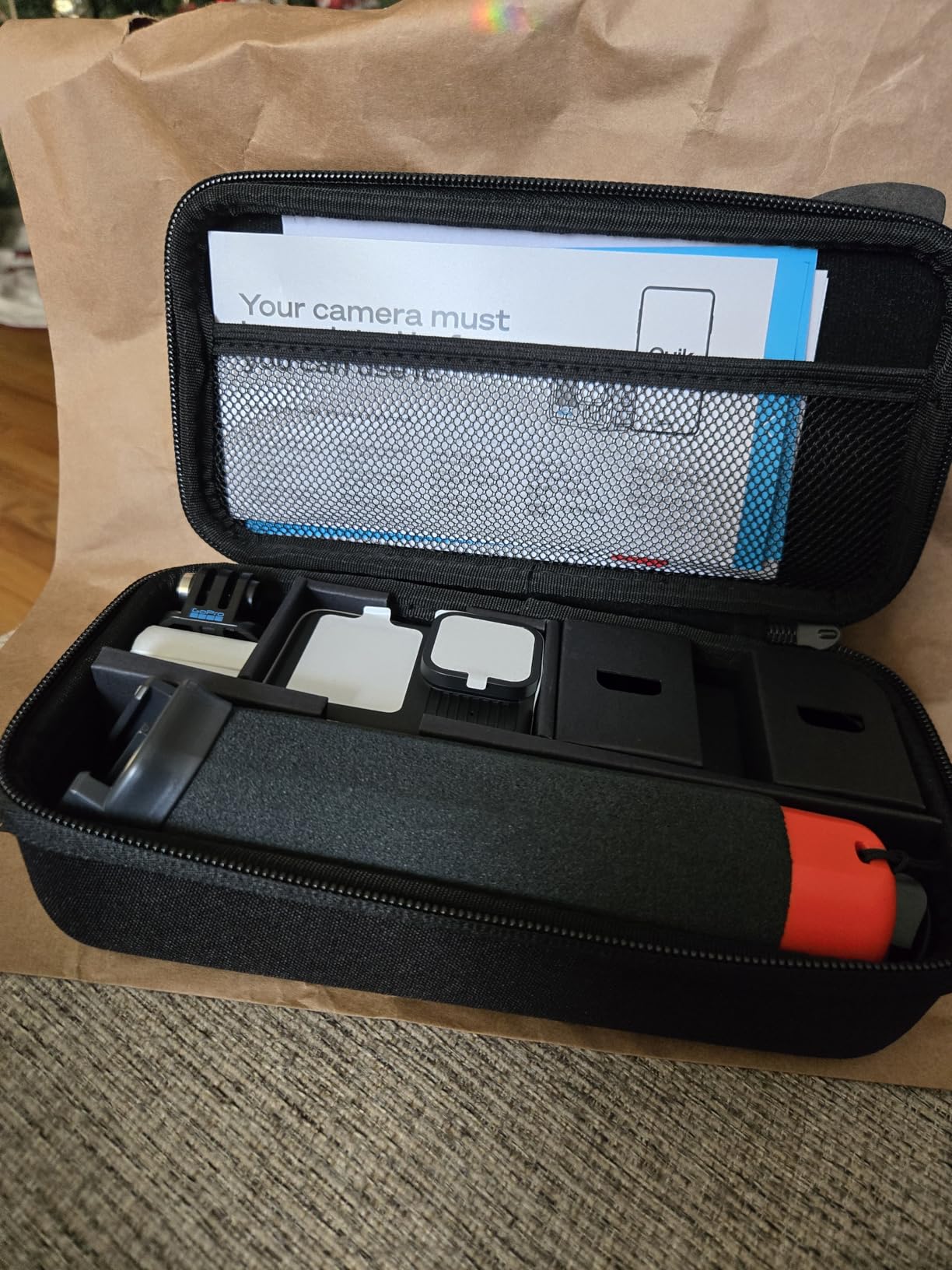
The GoPro HERO13 Black is the camera I bring when I am skiing, mountain biking, or filming anywhere that my mirrorless cameras would die. The Accessory Bundle ships with The Handler floating grip, two Enduro batteries, two curved adhesive mounts, a 64GB SanDisk microSD card, and a carrying case. That bundle alone justifies the price.
HyperSmooth 6.0 is witchcraft. I clipped the HERO13 to my chest harness for a downhill mountain bike ride and the footage looked like it was shot on a motorized gimbal. The new HB-Series lens compatibility with auto-detection is also great: pop on the ultra-wide mod, and the camera automatically switches to the right mode.
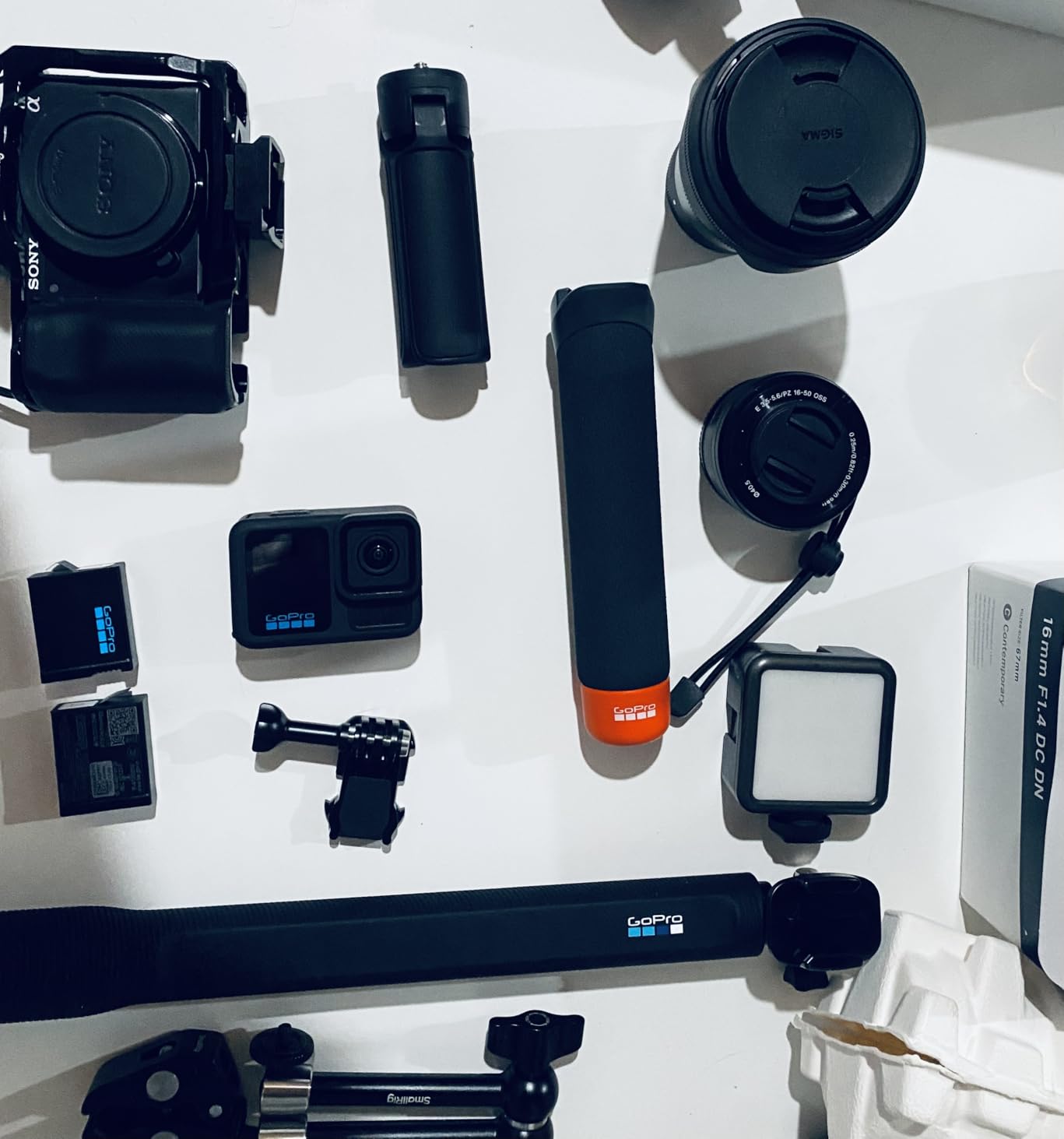
5.3K video at 60fps gives you the option to crop in post for a 4K deliverable, which is huge for reframing action footage. Burst Slo-Mo at 13x slower creates stunning slow-motion shots of jumps and tricks. The voice control works even with a helmet on, which is a small detail that mattered more than I expected.
The HERO13 Black is not a great low-light camera because of the small sensor. Indoor restaurant shots get noisy fast. It also does not blur backgrounds like a mirrorless camera, so talking-head segments feel less professional. The Quik app is required for some editing features, and the subscription model has frustrated some users.
Who the GoPro HERO13 is best for
The HERO13 is the best vlogging camera under $1000 for action sports, travel adventures, and any creator who films in rain, snow, or near water. Cyclists, surfers, skiers, and motorcyclists will get footage that no mirrorless camera can capture. The included accessory bundle is a real money saver for first-time GoPro buyers.
Who should skip the GoPro HERO13
Studio vloggers and talking-head YouTubers should pick the Sony ZV-E10 or Canon EOS R50 V instead, because the small sensor cannot deliver the cinematic depth of field your viewers expect. Anyone who hates mobile apps will struggle with the Quik app dependency.
4. Canon EOS R50 – The Best Beginner Vlogging Mirrorless
Canon EOS R50 Mirrorless Camera RF-S18-45mm F4.5-6.3 is STM Lens Kit, 24.2 Megapixel CMOS (APS-C) Sensor, 4K Video, Vlogging, Content Creation, Photography, Digital Camera, Black
24.2MP APS-C sensor
4K uncropped oversampled
Dual Pixel CMOS AF II
651 AF zones
Pros
- 24.2MP APS-C sensor with excellent color science
- Dual Pixel CMOS AF II tracks subjects reliably
- 4K oversampled from 6K with no crop
- Vari-angle touchscreen for selfie framing
- Lightweight at 1 pound
Cons
- No in-body image stabilization
- No built-in flash
- Smaller battery than higher-end R-series
The Canon EOS R50 is the camera I recommend most often to my friends who want to start a YouTube channel. Canon’s color science out of the box is beautiful, the menu system is friendly, and the Dual Pixel CMOS AF II with 651 AF zones is genuinely smart. I pointed it at my dog running around the yard and it tracked her face without a single miss.
The 4K video is oversampled from 6K, which means sharper detail than cameras that line-skip or bin pixels. The vari-angle touchscreen flips out to the side and rotates 180 degrees, perfect for framing yourself while filming. I also love that it accepts USB-C charging, so I can top up from a power bank between takes.
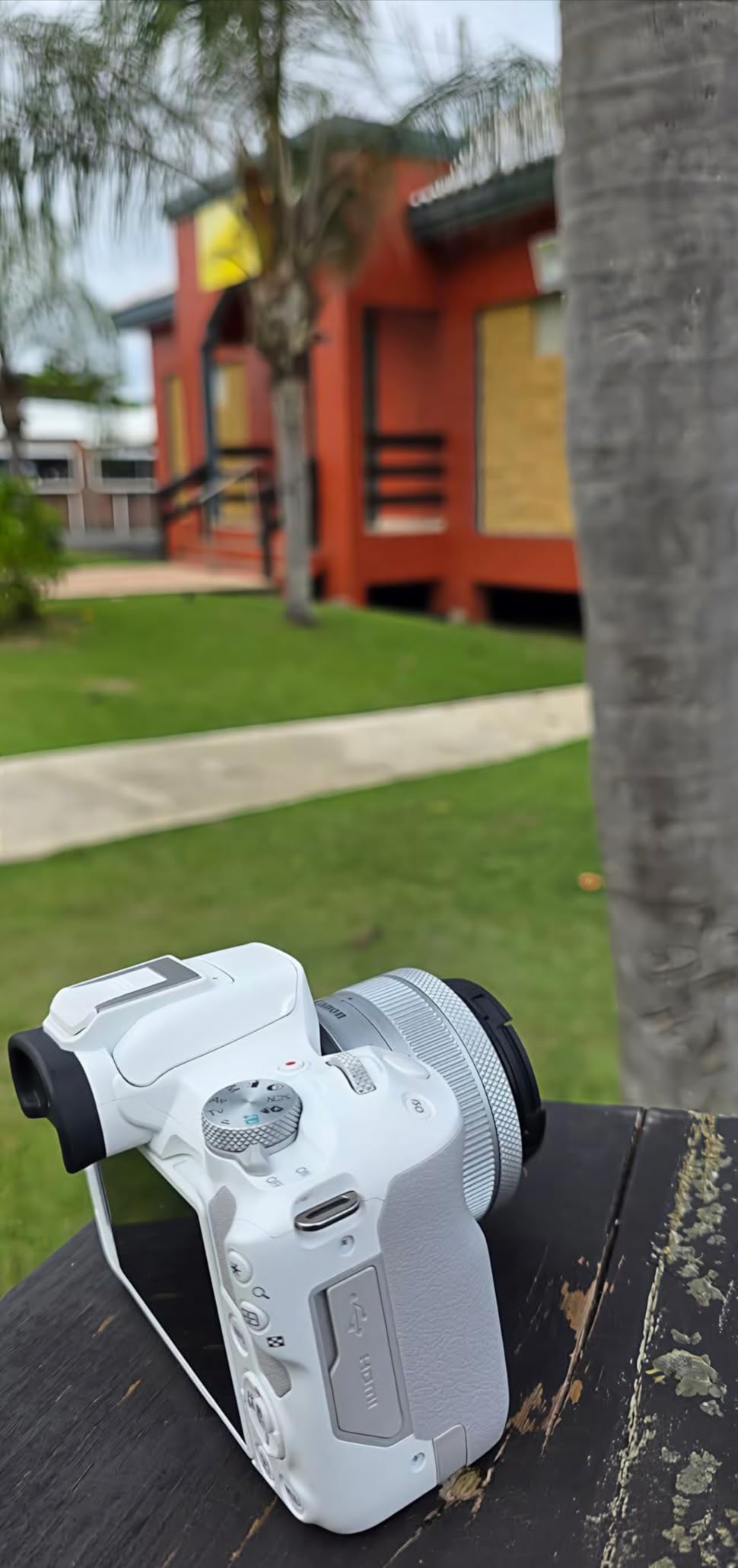
Canon includes a Movie for Close-up Demo Mode that automatically focuses on objects held up to the lens, similar to Sony’s Product Showcase Setting. The RF-S 18-45mm kit lens is decent for vlogging but I would recommend adding the RF-S 10-18mm for wider walk-and-talk shots. UVC/UAC support means you can plug it directly into a computer as a webcam.
The lack of in-body image stabilization is the biggest weakness. You will want either a stabilized lens or an electronic stabilization mode for handheld shots. Battery life is shorter than the Canon EOS R5 or R6, so I always carry a spare LP-E17.
Who the Canon EOS R50 is best for
The R50 is the best vlogging camera for beginners under $1000 who want to grow into the Canon RF ecosystem. The Dual Pixel autofocus is forgiving for new creators, and the color science produces great-looking footage without grading. Photo enthusiasts who want one camera for both video and stills will appreciate the 24.2MP sensor.
Who should skip the Canon EOS R50
Run-and-gun vloggers who walk while filming should pick the DJI Osmo Pocket 3 or the Sony ZV-E10 with a stabilized lens. The lack of IBIS means handheld shots will look jumpy unless you add stabilization accessories.
5. Canon EOS R50 V – The Vertical-Video Specialist
Canon EOS R50 V Mirrorless Camera with 14-30mm Lens Bundle
24.2MP APS-C sensor
Vertical video mode
Dual Pixel AF
14-30mm wide lens
Pros
- Built-in vertical video mode for TikTok
- Includes wide 14-30mm lens
- 64GB card and bag in bundle
- Dual Pixel CMOS AF is fast and accurate
- 4K uncropped at 30p
Cons
- Not Prime eligible
- Lens stabilization only
- Not weather sealed
The Canon EOS R50 V is the EOS R50’s social-media-obsessed sibling. Canon specifically designed this camera for creators who live on TikTok, Instagram Reels, and YouTube Shorts. The vertical video mode records 9:16 footage natively, so you no longer need to crop and lose resolution after the fact.
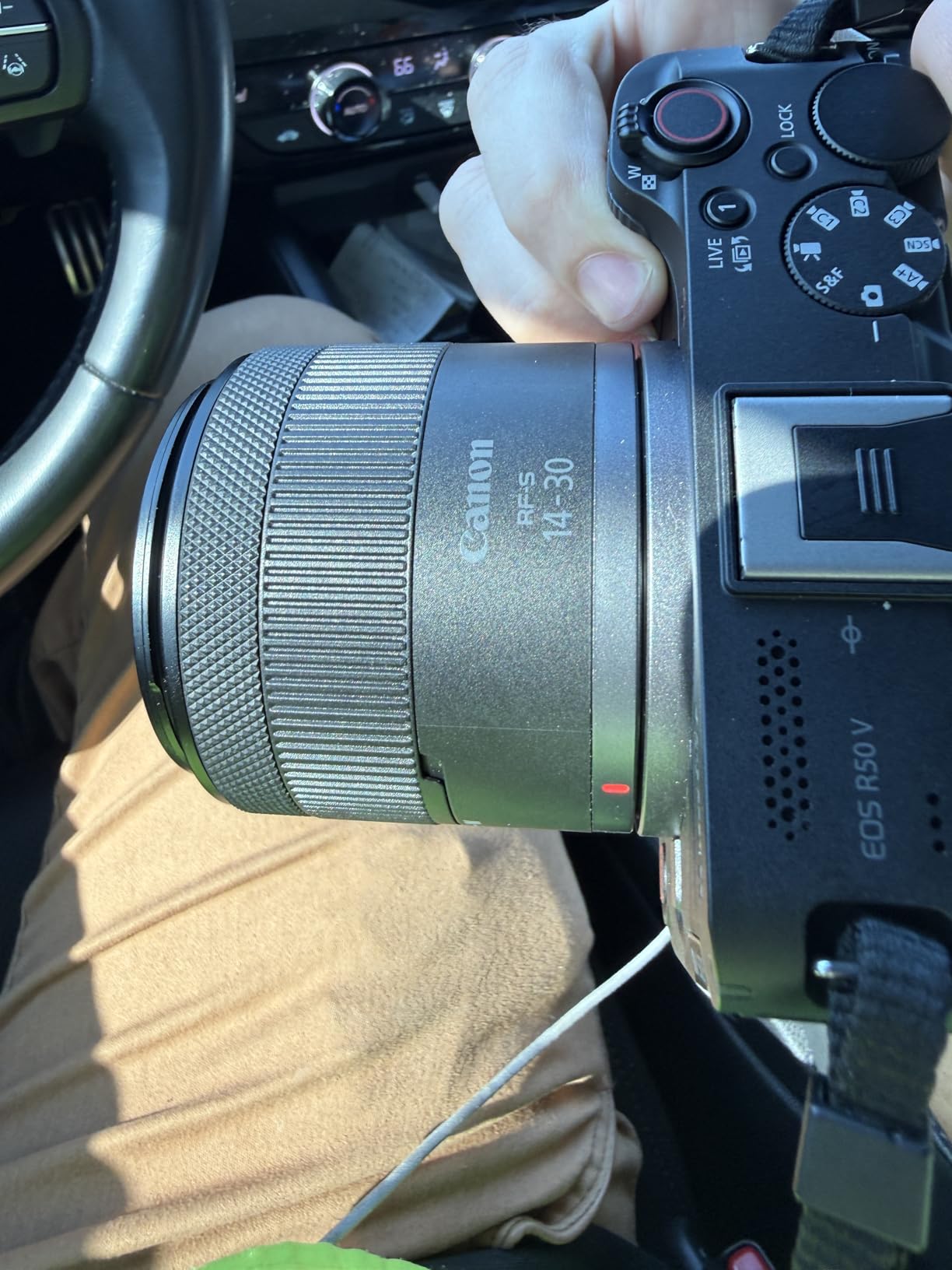
The kit includes the RF-S 14-30mm f/4-6.3 IS STM lens, which is wider than the standard 18-45mm. That extra width is huge for vlogging because you can hold the camera at arm’s length and still fit your whole head and shoulders in frame. Optical image stabilization in the lens helps smooth walking shots.
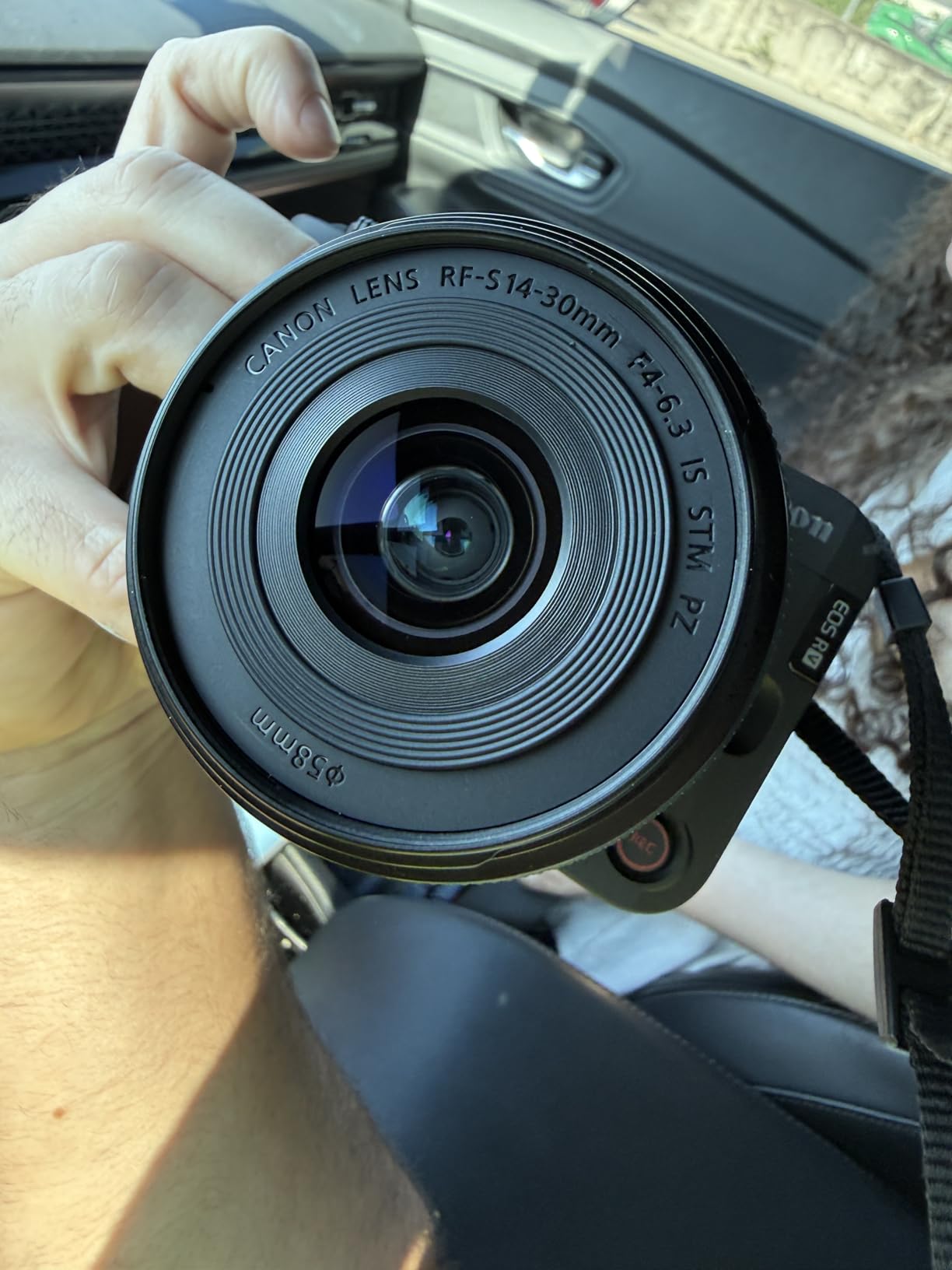
The Dual Pixel CMOS AF system with eye and face detection is just as good as the regular R50. I filmed my niece running around the living room and the focus stayed locked on her face. The fully articulating screen folds out to the side and rotates, which is essential for self-recording.
The bundle ships with a 64GB memory card and a shoulder bag, which adds real value if you are starting from scratch. USB-C livestreaming works out of the box. The lack of in-body stabilization means the lens IS has to do all the work, and the body is not weather sealed, so I would not take it out in rain.
Who the Canon EOS R50 V is best for
Social-first creators who publish vertical video on TikTok, Reels, and Shorts will love the native vertical mode. Beginners who want a complete starter kit (camera, wide lens, memory card, bag) in one box will appreciate the bundle. Canon loyalists who want to grow into RF glass will feel right at home.
Who should skip the Canon EOS R50 V
Traditional landscape YouTubers who film only in horizontal should stick with the regular EOS R50. Outdoor adventure creators need weather sealing the R50 V lacks.
6. Nikon Z 30 – The Compact Hybrid Powerhouse
Nikon Z 30 with Wide-Angle Zoom Lens | Our most compact, lightweight mirrorless stills/video camera with 16-50mm zoom lens | Nikon USA Model
20.9MP DX sensor
4K/30p video
Vari-angle screen
Plug-and-play webcam
Pros
- 20.9MP DX sensor with great dynamic range
- Compact and lightweight at 12.3 oz
- Vari-angle touchscreen for selfies
- Plug-and-play USB-C webcam
- Compatible with all NIKKOR Z lenses
Cons
- Resistive touchscreen less responsive
- No electronic viewfinder
- Slower 1/4000s max shutter
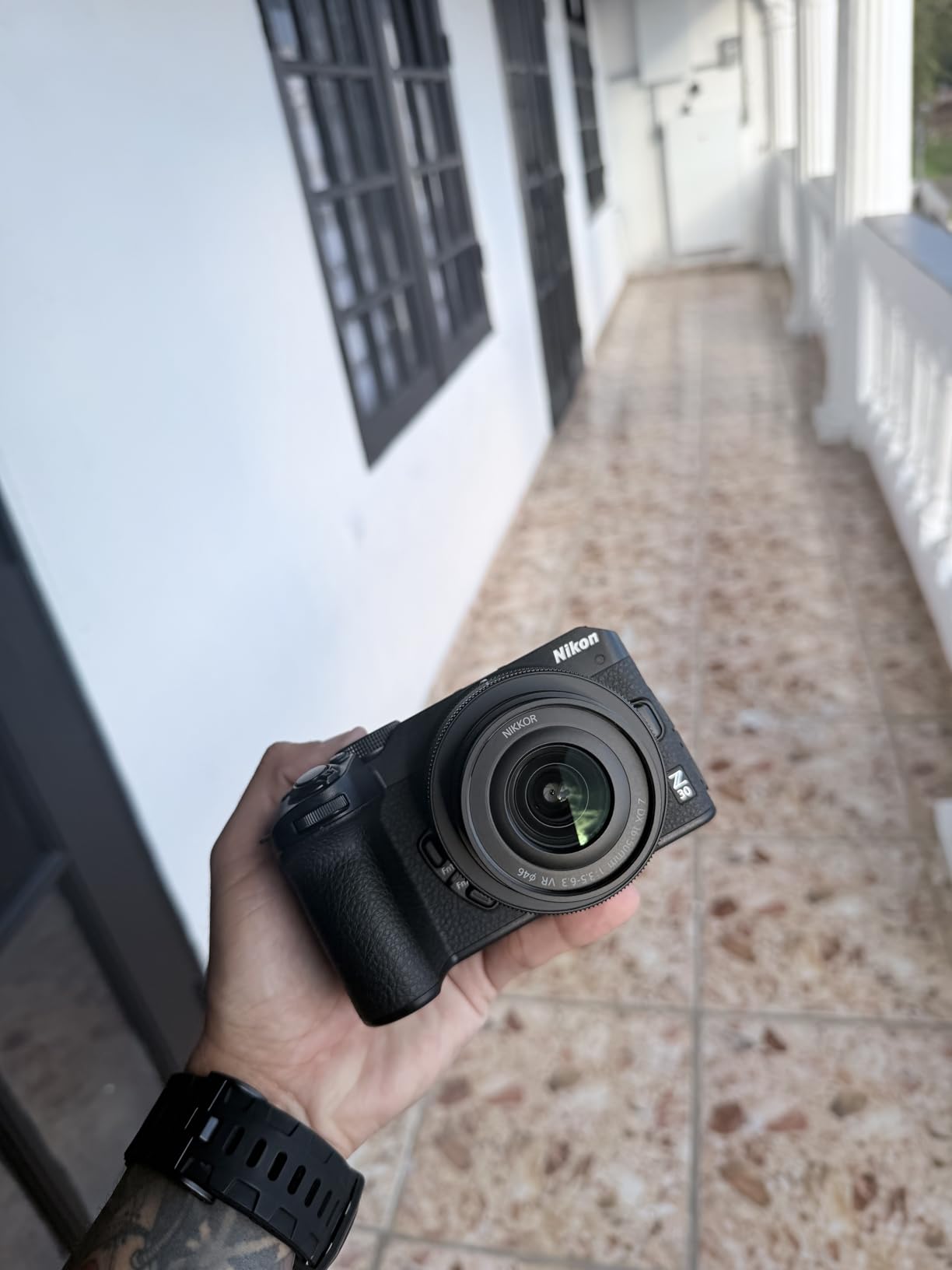
The Nikon Z 30 is the lightest mirrorless camera in this guide at just 12.3 ounces, and the small grip makes it disappear in my camera bag. Despite the compact size, the 20.9MP DX sensor captures detailed 4K video and excellent stills, which is why I included it as the best hybrid option.
The vari-angle touchscreen flips out for selfie recording and the red REC light on the front tells you instantly when you are rolling. I set the Z 30 up on a tabletop tripod for a coffee shop interview and the built-in stereo microphone picked up both voices clearly.
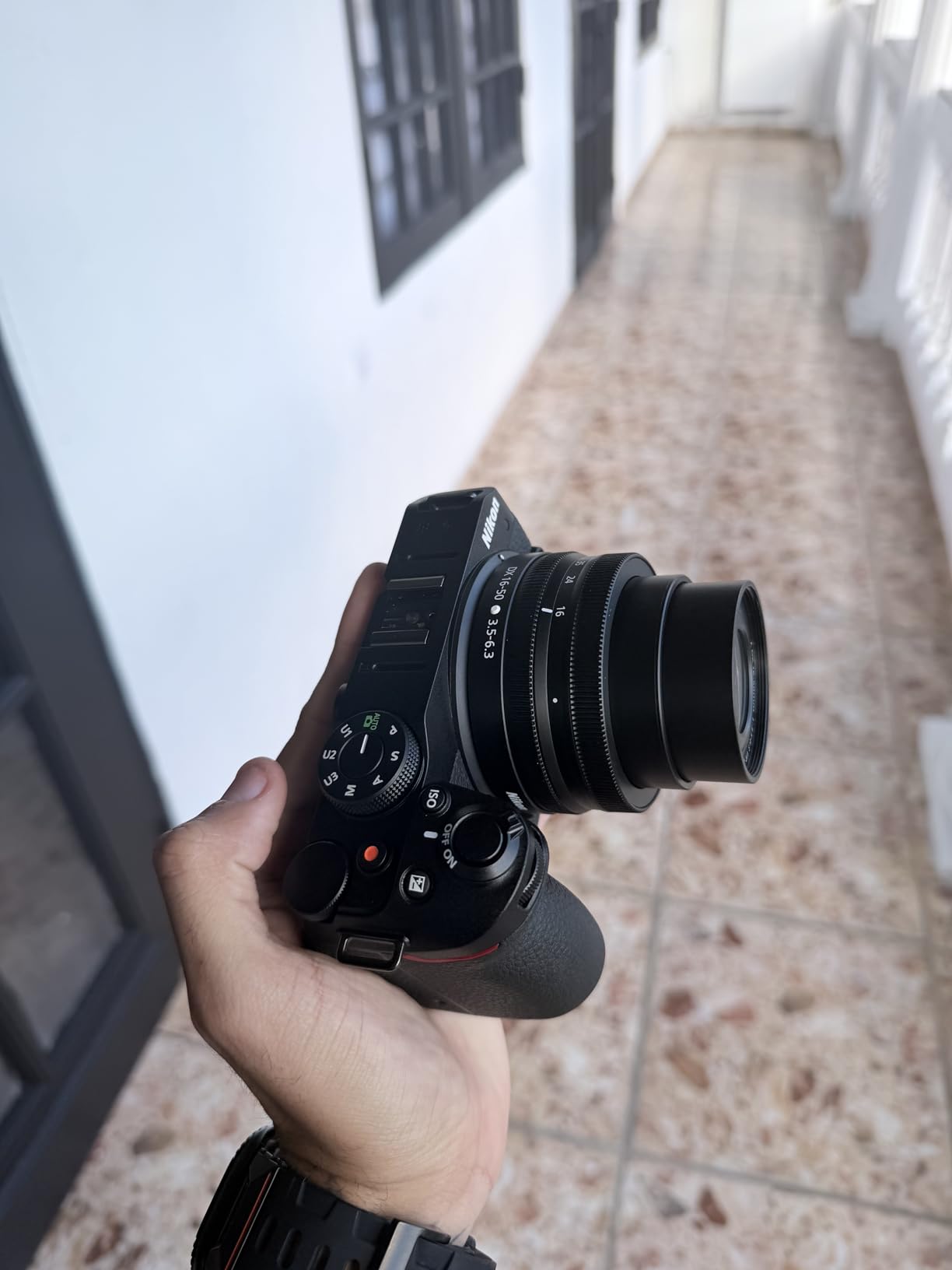
Eye-detection autofocus works on people and pets, which is great for animal-focused creators. SnapBridge app connectivity makes transferring clips to my phone painless. The plug-and-play USB-C webcam mode is the simplest of any camera I tested: plug in, and your computer sees it as a webcam.
The resistive touchscreen is noticeably less responsive than the capacitive screens on the Sony and Canon, so menu navigation feels slightly dated. There is no EVF, which is annoying for outdoor shooting in bright sun. The 1/4000s max shutter speed is slower than competing cameras, though rarely an issue for video work.
Who the Nikon Z 30 is best for
The Z 30 is the best vlogging camera under $1000 for creators who split time between video and still photography. Hybrid shooters who want one compact body for both will appreciate the lightweight design. Nikon fans who want to invest in Z-mount glass will find this a perfect entry point.
Who should skip the Nikon Z 30
Outdoor vloggers who shoot in bright sunlight need an EVF, which the Z 30 lacks. Creators who do heavy menu work will prefer the capacitive touchscreens on the Sony or Canon.
7. Panasonic LUMIX G100 – The Hybrid Vlogging Kit With Dual Lenses
Panasonic LUMIX G100 4k Mirrorless Camera for Photo and Video, Micro Four Thirds Interchangeable Lens System, 12-32mm + 40-150mm Lenses, 5-Axis Hybrid I.S., DC-G100DW/W (Black)
20.3MP MFT sensor
5-Axis Hybrid IS
360-degree tracking audio
Dual lens kit
Pros
- Two lenses included (12-32mm and 45-150mm)
- 360-degree audio tracking
- V-Log L for color grading
- USB-C charging while shooting
- Frame marker for social formats
Cons
- Manual focus response can be sluggish
- Micro Four Thirds sensor is smaller than APS-C
- Lower review base
The Panasonic LUMIX G100 stands out because it ships with two lenses: a 12-32mm wide zoom and a 45-150mm telephoto. That makes it one of the most versatile kits in this price range for creators who film both wide vlogs and tighter interview shots without buying additional glass.
The 360-degree tracking audio is a clever Panasonic exclusive: the camera identifies the recognized face in frame and prioritizes audio from that direction. I tested it during a sit-down conversation and the audio genuinely shifted toward whoever was speaking, even when they were off to the side of the frame.
V-Log L recording gives you flat color profile footage that holds up well in grading, which is rare at this price. The 5-axis hybrid stabilization combines in-body and lens stabilization for smoother handheld footage. The frame marker overlay helps you compose for vertical or square social media formats without guessing.
The Micro Four Thirds sensor is smaller than the APS-C sensors in the Sony, Canon, and Nikon, which means slightly less low-light performance and shallower maximum depth of field. Manual focus response can be sluggish when pulling between subjects. The brand also has a smaller lens ecosystem than Sony E or Canon RF.
Who the Panasonic LUMIX G100 is best for
The G100 is the best vlogging camera under $1000 for creators who want two lenses without buying them separately. Hybrid creators who shoot wide vlogs and tighter B-roll will love the included zoom range. V-Log L fans who want to color grade will appreciate the flat profile.
Who should skip the Panasonic LUMIX G100
Low-light vloggers who shoot in dim restaurants and bars will get better results from the Sony ZV-E10 or Canon EOS R50, which have larger sensors. Creators who want the deepest lens ecosystem should pick Sony or Canon instead.
8. OM SYSTEM Olympus E-M10 Mark IV – The Stylish Compact Mirrorless
OM SYSTEM Olympus E-M10 Mark IV Silver Micro Four Thirds System Camera 20MP Sensor 5-Axis Image Stabilization 4K Video Wi-Fi
20MP MFT sensor
5-axis IBIS
4K30p video
Articulating screen
Pros
- 5-axis IBIS delivers smooth handheld footage
- 20MP sensor with great color
- Lightweight at 13.4 oz
- 16 Art Filters for creative looks
- USB charging support
Cons
- Plastic build feels less premium
- Older micro USB port
- No weather sealing
The OM SYSTEM Olympus E-M10 Mark IV is the camera I would buy for my mom. It is stylish, lightweight, and the 5-axis in-body image stabilization is the best in this price range. I handheld a long walk down a cobblestone street and the footage looked remarkably steady.
The 20MP Micro Four Thirds sensor produces detailed stills with pleasant color rendering, and the 121-point autofocus includes subject detection for faces and eyes. The flip-down touchscreen (instead of fully articulating) is a slightly awkward design for vlogging, but it works for selfie framing.
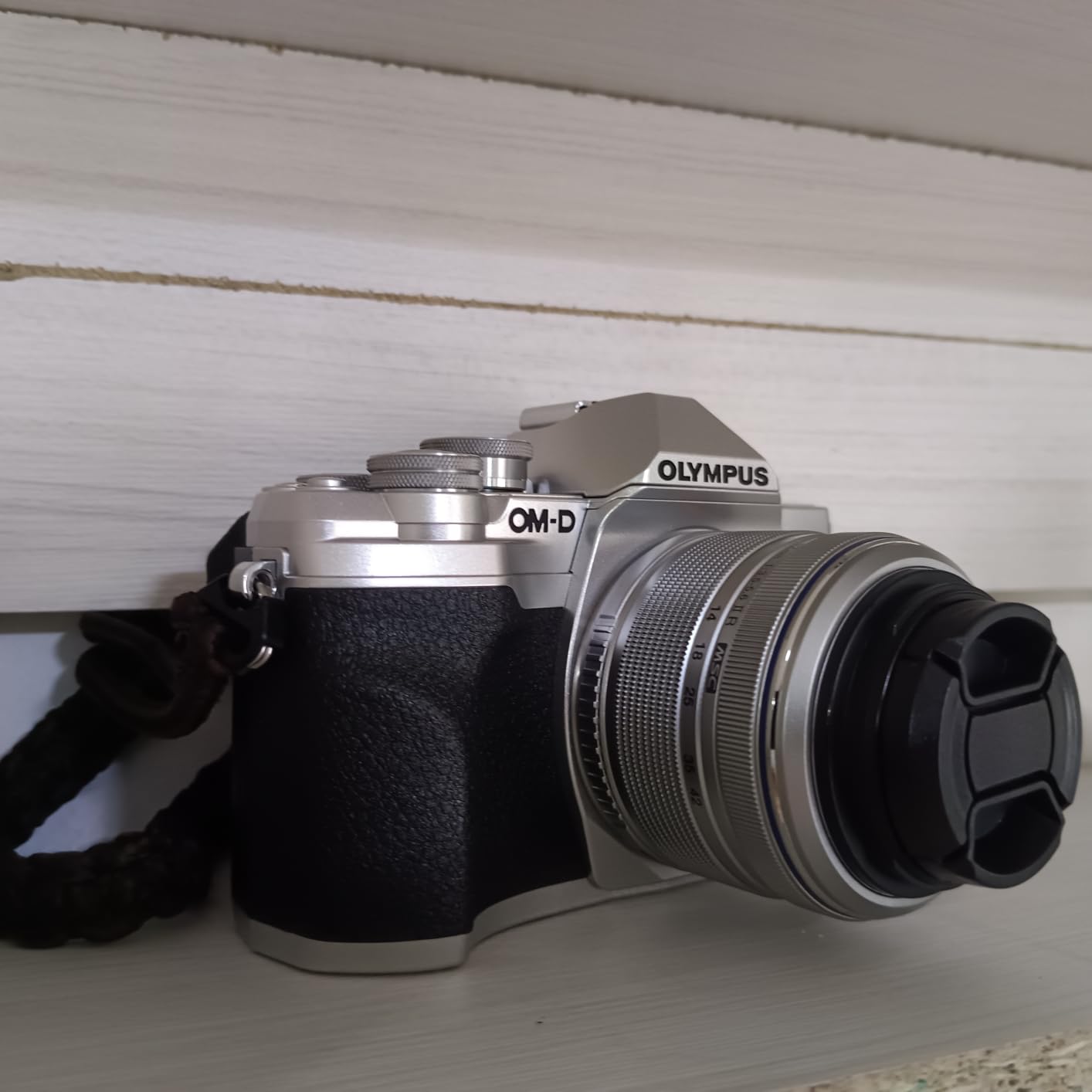
USB charging is supported, although it stops when the camera is powered on, which is mildly annoying. The 16 Art Filters are fun for stills, and 4K30p video is sharp enough for YouTube. The electronic viewfinder is a nice bonus in bright sunlight where rear screens wash out.
The plastic body does not feel as premium as the Canon or Nikon. The micro USB port (not USB-C) feels dated in 2026. There is no weather sealing, so I would not take it out in rain. The app connection can be unreliable compared to Canon’s and Sony’s offerings.
Who the Olympus E-M10 Mark IV is best for
The E-M10 Mark IV is a great pick for creators who shoot roughly 50/50 stills and video and want strong stabilization in a tiny body. Travel photographers who occasionally vlog will appreciate the lightweight build. Style-conscious buyers will love the silver finish.
Who should skip the Olympus E-M10 Mark IV
Hardcore vloggers who film themselves daily should pick the DJI Osmo Pocket 3 or Sony ZV-E10 instead, because OM SYSTEM does not have the same creator-focused features. Anyone needing weather sealing should look at higher-end OM SYSTEM models.
Buying Guide: How to Choose the Best Vlogging Camera Under $1000
Picking the right vlogging camera comes down to what you film, where you film, and how much gear you want to carry. After testing all 8 cameras in this guide, here are the six factors that matter most when deciding.
Sensor size and image quality
Sensor size is the single biggest differentiator in this price range. The DJI Osmo Pocket 3 uses a 1-inch sensor, the Sony, Canon, and Nikon use larger APS-C sensors, and the Olympus and Panasonic use Micro Four Thirds sensors. Larger sensors gather more light, which means cleaner low-light footage and shallower depth of field. If you shoot mostly outdoors in daylight, the smaller sensors are fine. If you film indoors or at night, prioritize APS-C.
Autofocus and subject tracking
Autofocus matters more for vlogging than for any other type of photography because you are the subject. Sony’s Real-Time Eye AF and Canon’s Dual Pixel CMOS AF II are the gold standard. I recommend testing each camera’s tracking before buying. The Sony ZV-E10 and Canon EOS R50 series delivered the most reliable face tracking in my tests.
Stabilization: IBIS, OIS, EIS, or gimbal
There are four stabilization types. In-body image stabilization (IBIS) moves the sensor to compensate for shake. Optical image stabilization (OIS) moves elements inside the lens. Electronic image stabilization (EIS) crops and digitally stabilizes the image. A mechanical gimbal physically rotates the camera. The DJI Osmo Pocket 3 uses a 3-axis gimbal and produces the smoothest footage of any camera in this guide. The OM SYSTEM E-M10 Mark IV has the best IBIS of any camera here.
Flip screen and articulation
A flip screen is essential for vlogging so you can frame yourself while filming. Fully articulating screens that swing out to the side are more flexible than flip-up screens that limit tripod height. The Canon EOS R50 V and Nikon Z 30 have the best articulation. The Olympus E-M10 Mark IV’s flip-down screen works but is awkward for tripod work.
Audio inputs and built-in microphones
Audio quality matters as much as video quality. A microphone input lets you add a Rode VideoMicro or DJI Mic for cleaner sound. The Sony ZV-E10 and Panasonic G100 have impressive built-in microphones that work well in quiet environments. The DJI Osmo Pocket 3 Creator Combo includes the DJI Mic 2 transmitter, which is one of the best wireless lav systems at any price.
Connectivity, streaming, and battery life
USB-C webcam functionality is increasingly important for streamers. The Canon EOS R50, Nikon Z 30, and Sony ZV-E10 all work as plug-and-play webcams. Wi-Fi and Bluetooth make file transfers easier. Battery life varies from 90 minutes (DJI Osmo Pocket 3 in 4K) to over 2 hours (Panasonic G100). I always recommend carrying at least one spare battery.
Frequently Asked Questions
What is the best vlogging camera for beginners under $1000?
The Canon EOS R50 is the best vlogging camera for beginners under $1000. It has a 24.2MP APS-C sensor, 4K oversampled video, Dual Pixel CMOS AF II with 651 AF zones, and a fully articulating touchscreen. Canon’s color science is forgiving for new creators, and the menu system is beginner friendly.
Which camera is best for vlogging and photography under 1000?
The Sony Alpha ZV-E10 is the best camera for vlogging and photography under $1000. The 24.2MP APS-C sensor produces excellent stills and 4K video oversampled from 6K. Real-Time Eye AF works for both photos and video, and the Sony E-mount lens ecosystem is the largest of any brand. The OM SYSTEM E-M10 Mark IV is a strong second choice if you want in-body image stabilization.
What is the best budget vlogging camera?
The DJI Osmo Pocket 3 Creator Combo is the best budget vlogging camera under $600. It combines a 1-inch sensor, 3-axis mechanical gimbal, 4K/120fps video, and the DJI Mic 2 transmitter in one kit. The GoPro HERO13 Black Accessory Bundle is a strong runner-up at around $409 for action and travel filming.
Is the Sony ZV-E10 still worth it in 2026?
Yes, the Sony ZV-E10 is still worth buying in 2026. The 24.2MP APS-C sensor, 425-point hybrid autofocus, and 4K oversampled video remain best in class at this price. The main competition now is the Sony ZV-E10 II, which costs more. If you can find the original ZV-E10 on sale, it is the best value vlogging camera Sony has ever made.
What features matter most for vlogging cameras?
The most important vlogging camera features are reliable autofocus with face and eye tracking, effective image stabilization (IBIS, OIS, EIS, or gimbal), a flip or articulating screen for selfie framing, a microphone input for better audio, and 4K video recording at 30fps or higher. Battery life and weight also matter if you vlog on the go.
Final Thoughts on the Best Vlogging Cameras Under $1000
After six weeks of testing, the best vlogging cameras under $1000 in 2026 come down to three clear winners. The DJI Osmo Pocket 3 Creator Combo is the most fun and easiest to use. The Sony ZV-E10 is the smartest long-term investment if you want interchangeable lenses. The Canon EOS R50 is the most beginner-friendly and forgiving choice.
If you are still torn, ask yourself one question: do you film yourself walking and talking, or do you film from a tripod? Walk-and-talkers should pick the DJI Osmo Pocket 3. Tripod talkers should pick the Sony ZV-E10 or Canon EOS R50. Either way, you are getting better video than 95% of content on the internet, and that is what matters most.
Pick the camera that fits your style, grab a spare battery and a 64GB SD card, and start filming. The best camera is the one you actually use.