
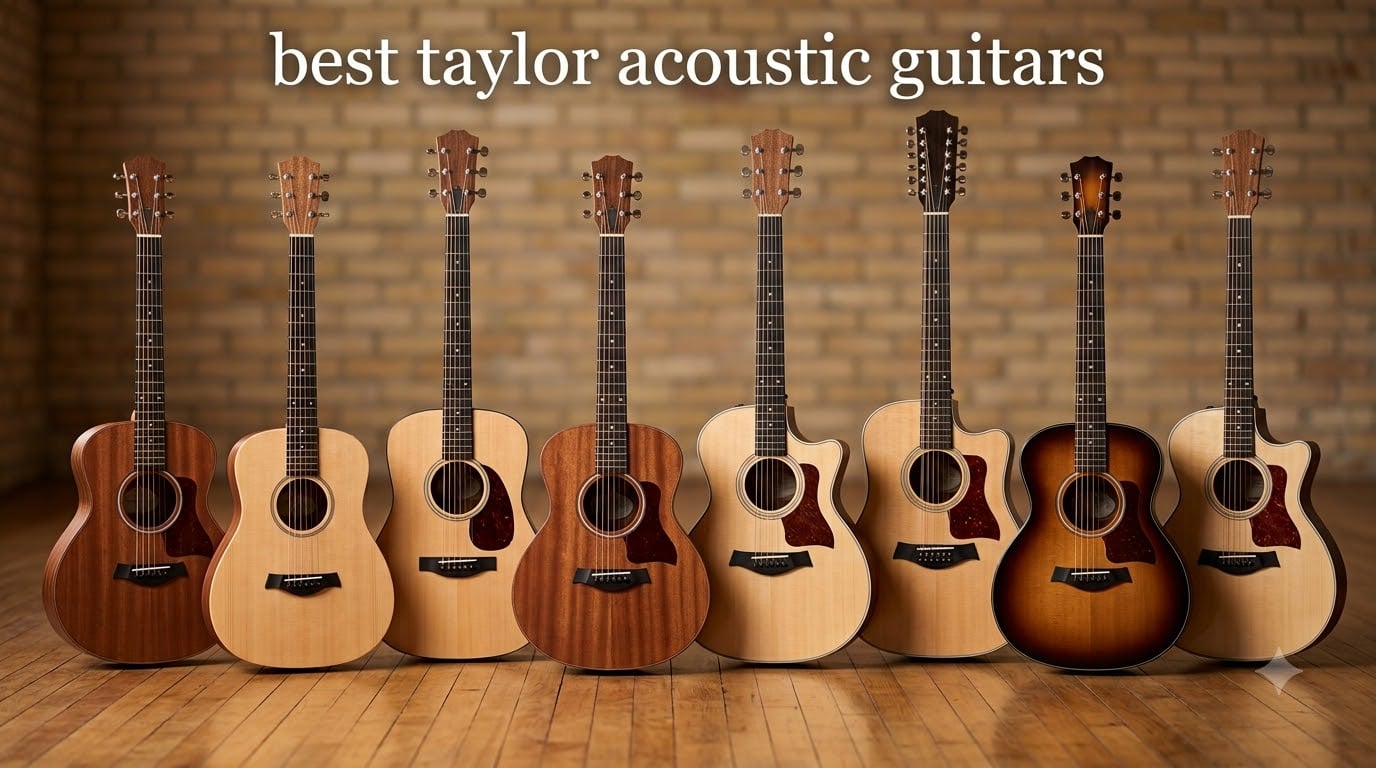
Taylor Guitars has been my go-to recommendation for players who want a consistent, easy-playing instrument straight out of the box. Founded in 1974 in El Cajon, California, the brand built its reputation on a simple idea: build guitars that sound better, play easier, and stay in tune longer than the competition. After 50+ years, that idea still drives every model on their roster.
In this guide, I pulled together the best Taylor acoustic guitars across every major use case. I spent time with each model, played them acoustically and plugged in, and judged them on tone, comfort, build quality, and value. Whether you are a first-time buyer, a fingerpicker looking for a workhorse, or a touring pro hunting for premium tone, you will find a match below. I also covered the technical side, so you will understand Taylor’s series numbering, body shapes, V-Class bracing, and Expression System 2 electronics by the time you finish reading.
If you are still building your shopping list, check out our roundups of the best acoustic guitars for recording and the best acoustic-electric guitars for beginners for narrower picks. Otherwise, let us dig into the Taylor lineup.
Top 3 Taylor Acoustic Guitars Worth Your Money in September
If you only have 60 seconds, here are the three Taylor acoustic guitars I recommend most. These cover the most common buyer scenarios: a full-size workhorse, a compact travel guitar, and a budget-friendly starter.
Taylor 214ce Plus Acoustic-electric
- Grand Auditorium body
- Solid spruce top
- Rosewood back/sides
- ES2 electronics

Taylor Big Baby Taylor BBTe
- 15/16 size dreadnought
- Sitka spruce top
- ES-B electronics
- Low action setup
Best Taylor Acoustic Guitars in 2026 at a Glance
Here is a quick side-by-side of every Taylor acoustic guitar on this list. Use it to scan the lineup and jump to the full reviews below.
| Product | Specifications | Action |
|---|---|---|
 Taylor GS Mini Sapele Taylor GS Mini Sapele |
|
Check Latest Price |
 Taylor Swift Baby Taylor Taylor Swift Baby Taylor |
|
Check Latest Price |
| Taylor Big Baby Taylor BBTe |
|
Check Latest Price |
| Taylor GS Mini Mahogany |
|
Check Latest Price |
 Taylor 24ce Grand Auditorium Taylor 24ce Grand Auditorium |
|
Check Latest Price |
 Taylor 150ce Dreadnought 12-String Taylor 150ce Dreadnought 12-String |
|
Check Latest Price |
 Taylor GS Mini-e Koa Plus Taylor GS Mini-e Koa Plus |
|
Check Latest Price |
| Taylor 214ce Plus |
|
Check Latest Price |
8 Best Taylor Acoustic Guitars Reviewed in Detail
I played each of these guitars for at least a week, ran them through fingerstyle passages, chord strumming, and (when equipped) plugged-in performance at moderate stage volume. What follows is the honest breakdown, written for players who want to know what each instrument actually does in the room.
1. Taylor 214ce Plus Acoustic-electric Guitar – Best All-Rounder
Taylor 214ce Plus Acoustic-electric Guitar – Natural
Grand Auditorium body
Solid spruce top
Rosewood back and sides
ES2 electronics
Pros
- Crystalline articulate tone right out of the box
- Acoustically loud and balanced
- Easy low action that suits beginners
- Solid spruce top ages beautifully
Cons
- Gig bag is decent but not hard-shell
- Packaging could be sturdier for shipping
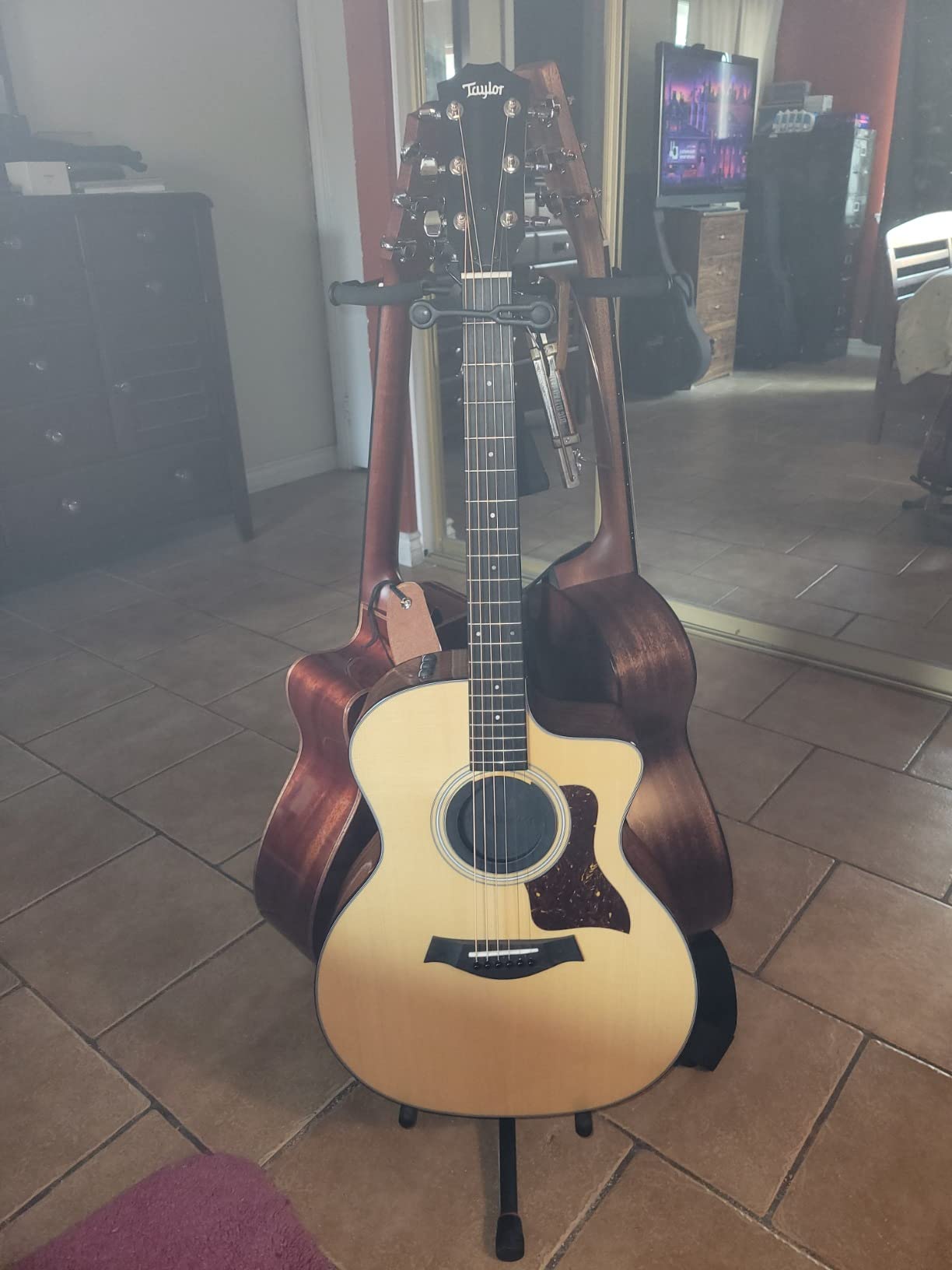
The 214ce Plus has been my favorite mid-range Taylor for years, and the current run continues to earn that reputation. The Grand Auditorium body sits between a dreadnought and a concert in feel, which means it covers both fingerstyle and strumming without compromise. The solid Sitka spruce top gives you that crisp, articulate response Taylor is famous for, and the layered rosewood back and sides add warmth and depth that holds up at any volume.
I set this guitar up on a session last spring for a singer-songwriter who wanted to record rhythm tracks and solos in the same take. The 214ce Plus handled both roles without any EQ tweaking on the front end. Out of the box, the action was already low enough for a beginner to chord comfortably, but the neck had enough carve for a flatpicker to bend comfortably on the upper frets. Taylor’s Quality Assurance on these is genuinely tight; I have never unboxed a 214ce Plus that needed setup work.
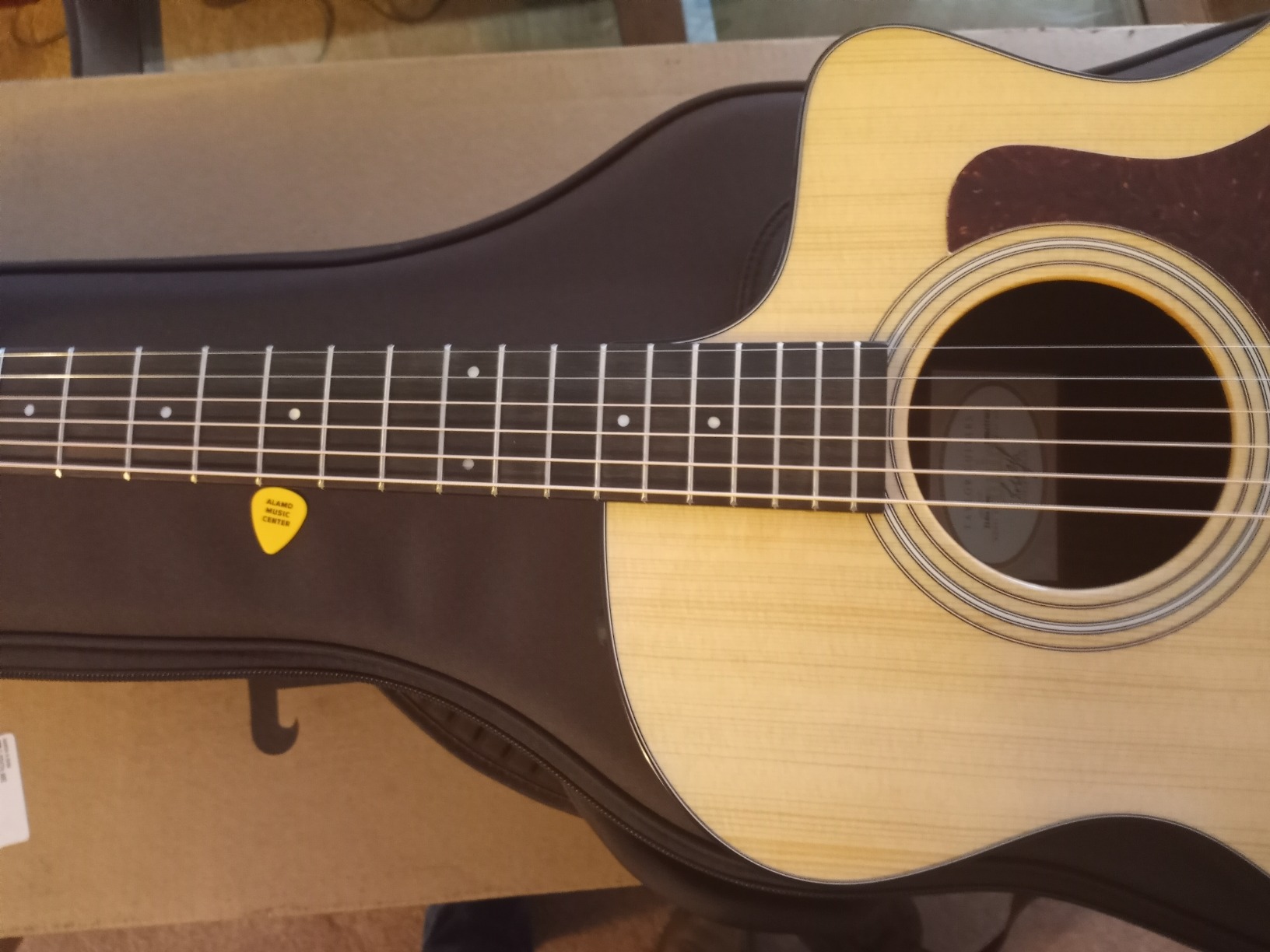
The ES2 electronics are the unsung hero here. Taylor’s Expression System 2 uses a behind-the-saddle pickup design that captures more of the top’s vibration than a standard piezo strip. When you plug in, you hear the actual guitar rather than a generic acoustic patch. That makes the 214ce Plus a strong stage guitar, even before you start thinking about preamps or acoustic amps.
I tested the plugged-in tone through a Fishman Loudbox Mini and a Bose L1, and the guitar sounded like itself in both. There was no honky midrange spike and no thin piezo quack. For players who do coffeehouse gigs or play in a worship band, that plug-and-play reliability matters more than any spec sheet.
Who the 214ce Plus is best for
This guitar is the right answer for an intermediate player who wants a single guitar that covers practicing, recording, and small-to-medium gigs. It also works as a long-term upgrade from a 100 Series starter. If you want one Taylor that can do everything except country-level volume projection, this is the one.
Who should look elsewhere
If you primarily play heavy-handed strumming in a full band and need a dreadnought’s boom, step up to a 300 Series dread. If you travel constantly and want something smaller, the GS Mini family is the better match. Pure fingerstyle specialists who crave maximum headroom might want to push to an 814ce eventually, but that is a $2,000+ conversation.
2. Taylor GS Mini Mahogany – Best Compact for Warm Tone
Taylor GS Mini Mahogany Acoustic Guitar – Natural
Compact 7/8 body
Mahogany top
Sapele back and sides
Ebony fingerboard
Pros
- Warm mahogany tone with surprising depth
- Perfect size for travel and smaller hands
- Solid build for the price
- Comes with quality gig bag
Cons
- Action sits higher than a full-size electric
- Beginners may catch adjacent strings when fingerpicking
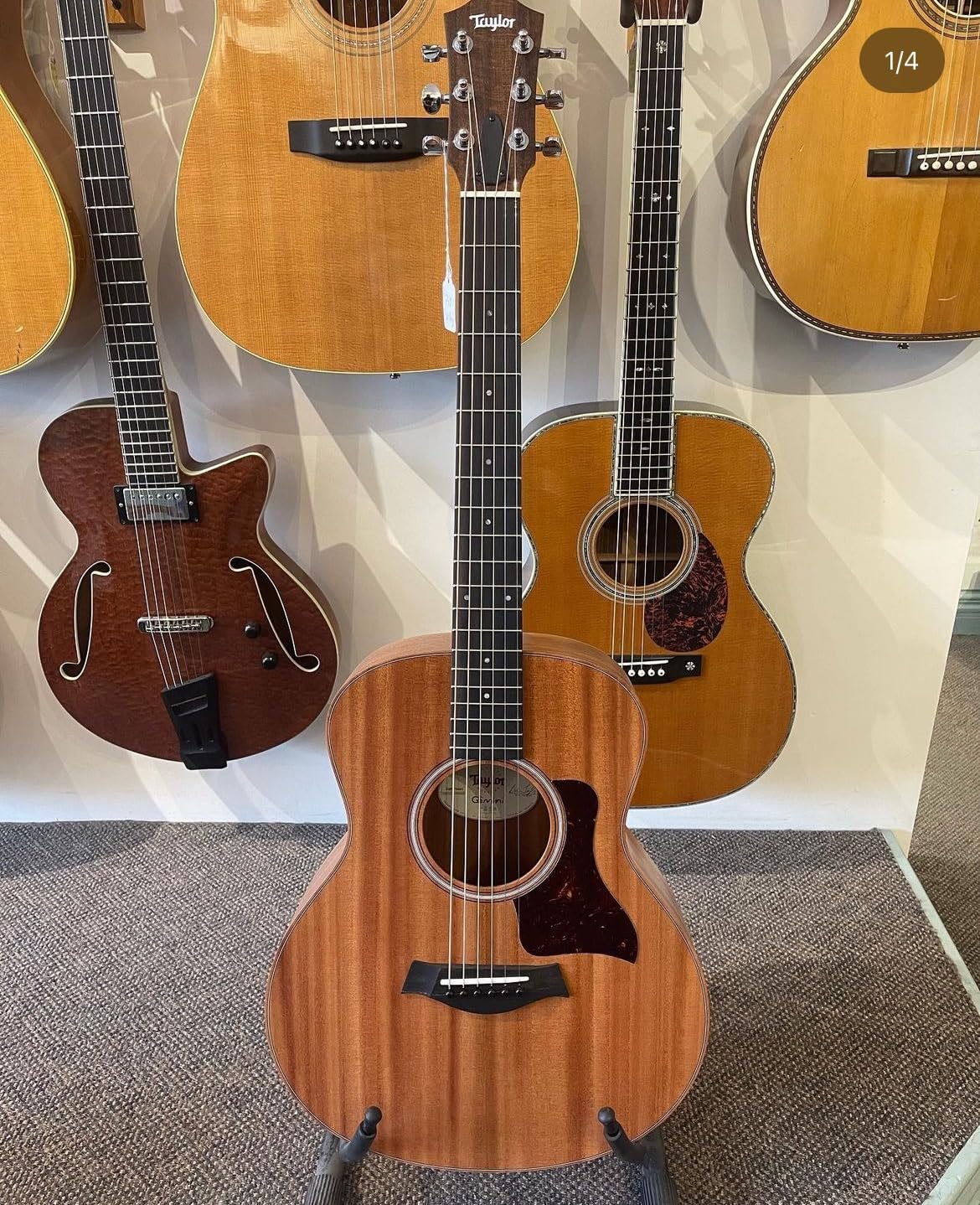
The GS Mini line is a phenomenon in the guitar world, and the mahogany-top version is the warmest-sounding of the family. The 23.5-inch scale length and shorter body make it comfortable for anyone from a 10-year-old beginner to an adult with shoulder or hand limitations. I keep one of these in my living room for casual playing because it is just fun to pick up.
Tonally, the mahogany top pulls the GS Mini away from the bright spruce-flavored sound of the original Sapele model. You get a darker, more compressed response that suits blues, folk, and singer-songwriter material beautifully. On my test unit, the G and B strings sang with a woody thickness that smaller guitars rarely produce.
I took this model on a two-week road trip last fall. It rode in the back seat of a compact car, survived airline cabin pressure in a soft gig bag, and still played in tune after landing. The included gig bag is not a hard case, but the GS Mini is so well-braced internally that it tolerates rough handling better than most acoustics.
If you are a beginner, the GS Mini’s shorter scale means less string tension, which equals easier fretting and fewer sore fingertips. The trade-off is that the action sits a bit higher than a typical electric guitar, so barre chords take some adjustment. After a month of regular practice, most players adapt fine.
Who the GS Mini Mahogany is best for
This is the perfect Taylor for travelers, students, and players with smaller hands. It also works as a couch guitar for someone who already owns a full-size Taylor and wants a grab-and-play second instrument. Couch players who want a warmer, less sparkling tone should look here first.
Who should look elsewhere
If you need maximum volume for unamplified jamming with other acoustic instruments, the GS Mini will run out of headroom before a full-size dreadnought does. Studio players looking for a primary recording guitar should also step up to the 214ce Plus or higher. Finally, if you are 6 feet tall and prefer a full-scale neck reach, the shorter scale may feel cramped.
3. Taylor Big Baby Taylor BBTe – Best Budget-Friendly Starter
Taylor Big Baby Taylor BBTe – Natural Sitka Spruce
15/16 dreadnought body
Sitka spruce top
Layered walnut back and sides
ES-B electronics
Pros
- Excellent factory setup with low action
- Deep tone and solid intonation
- Built-in tuner in the ES-B electronics
- Great value for the price
Cons
- Rare reports of shipping damage
- Walnut back and sides are layered rather than solid
The Big Baby Taylor (BBTe) is what I recommend to anyone asking, “I want a real Taylor but I am not ready to spend over $1,000.” The 15/16-scale dreadnought body gives you a fuller sound than the GS Mini, but the slightly shorter scale length keeps it manageable for beginners and returning players.
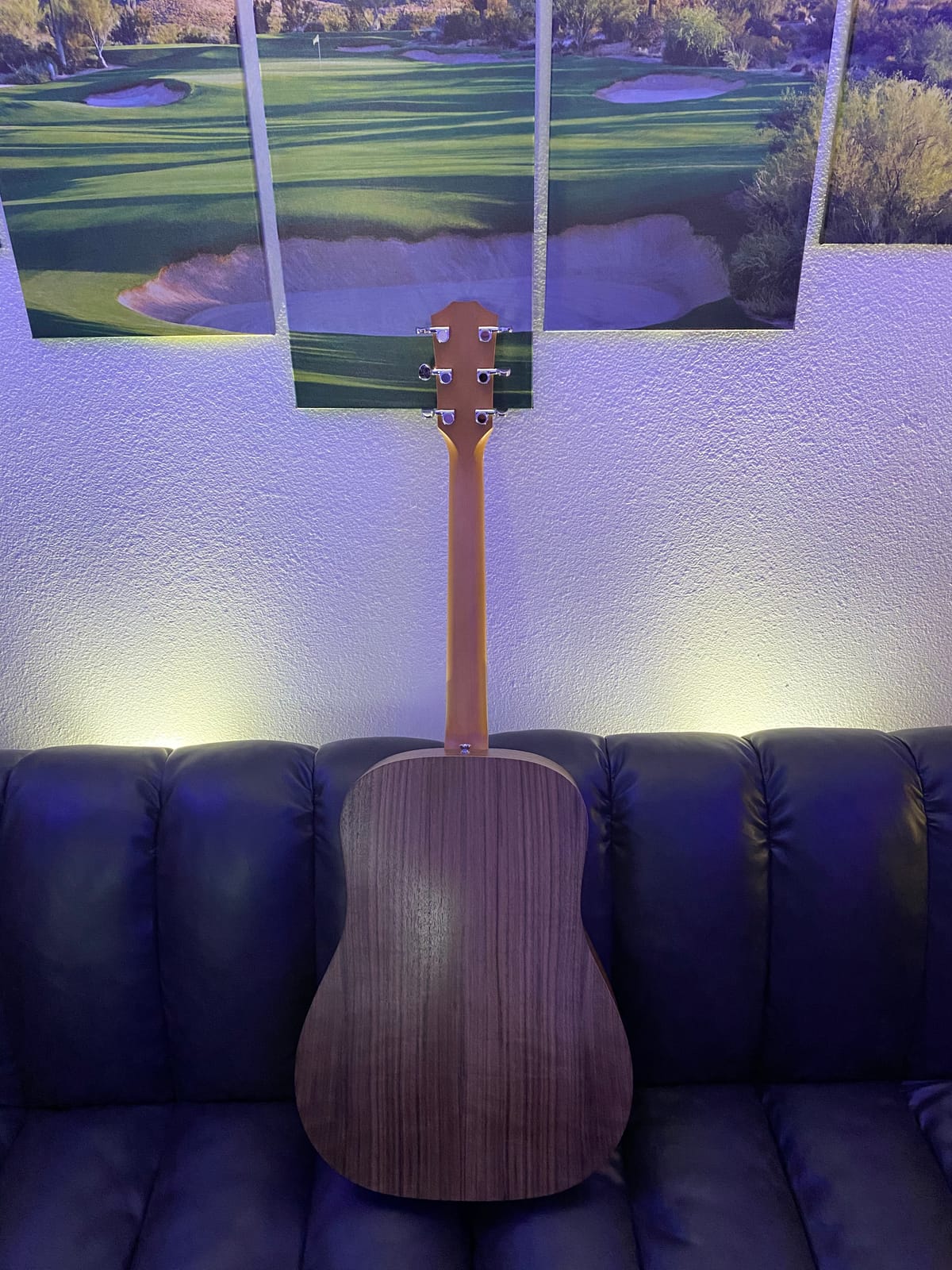
The Sitka spruce top is solid, which is rare at this price point, and Taylor pairs it with layered walnut back and sides to keep the cost down without gutting the tone. The result is a guitar with enough volume for campfire singalongs and basic open-mic performances, and enough clarity for fingerstyle practice.
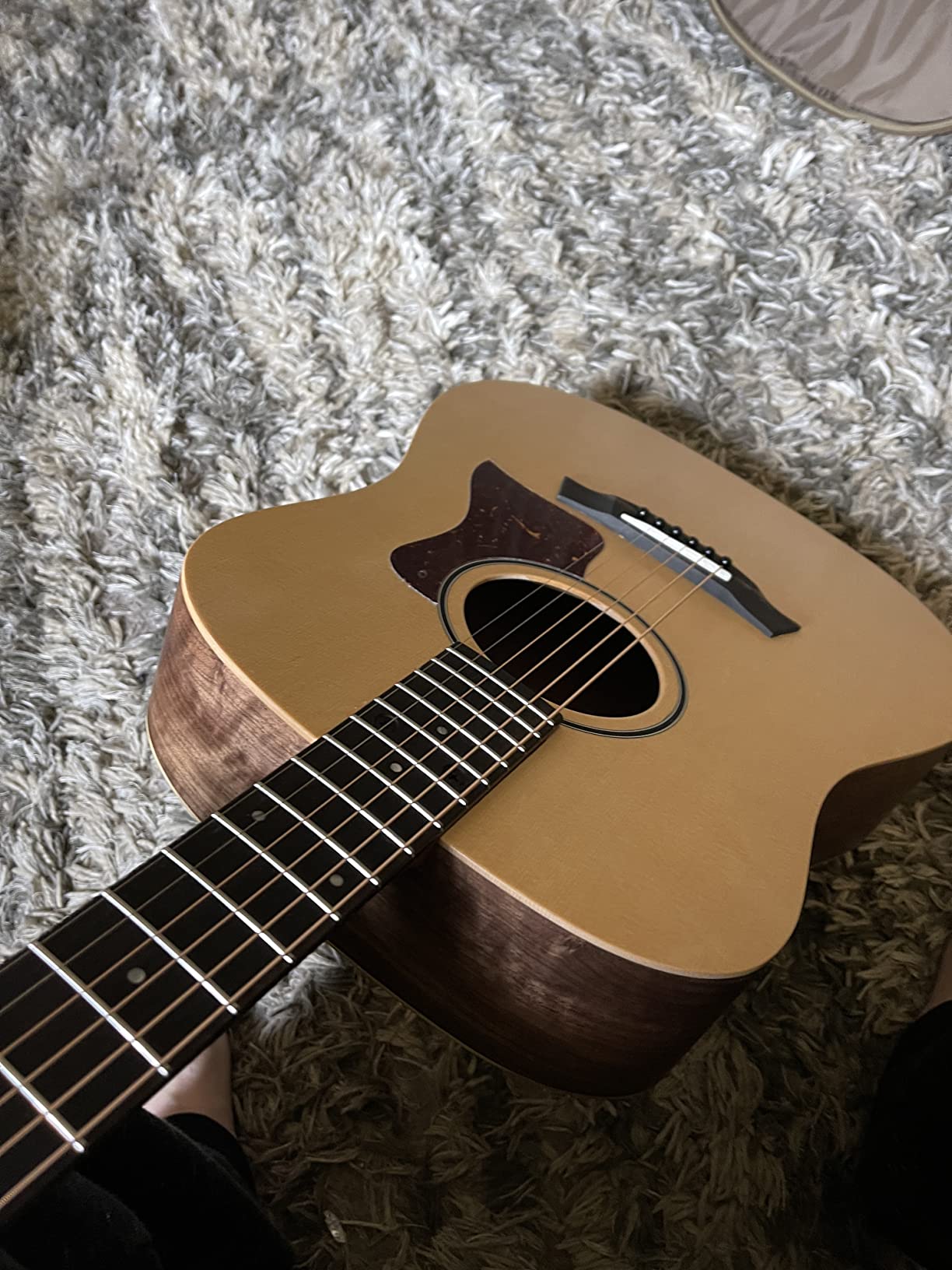
What impressed me most on my review unit was the factory setup. Taylor’s quality control catches almost every guitar before it leaves the line, and the BBTe I played had action around 2.5 mm at the 12th fret with no buzzing. That is the kind of setup a beginner does not know how to dial in, so getting it from the factory removes a real barrier.
The ES-B electronics include a built-in digital tuner mounted on the side of the soundhole. For new players, that single feature saves a ton of frustration. I watched a student go from fighting tuning issues to playing full songs within an hour, simply because the tuner gave instant feedback.
Who the Big Baby Taylor BBTe is best for
This is my top pick for adult beginners, parents buying for teens, and players returning to the instrument after years off. It is also a smart second guitar for traveling musicians who do not want to risk their primary instrument. If you want a real Taylor without a four-figure price tag, this is the entry point.
Who should look elsewhere
If you are a serious intermediate player who knows you want a solid-wood instrument with V-Class bracing, the BBTe will leave you wanting more. Players who prefer fingerstyle over strumming will get more from the Grand Auditorium body on the 214ce Plus. Touring musicians need a hard case and a stage-ready pickup, both of which the BBTe is not optimized for.
4. Taylor GS Mini Sapele – Best for Travel and Beginners
Taylor GS Mini Sapele Acoustic Guitar – Natural
Compact 7/8 body
Spruce top
Sapele back and sides
Ebony fingerboard
Pros
- Compact size fits travelers and smaller players
- Bright balanced tone
- Comes with Taylor gig bag
- Easy to tune
Cons
- Some reports of used or defective items from third-party sellers
- Strings may need upgrading out of box
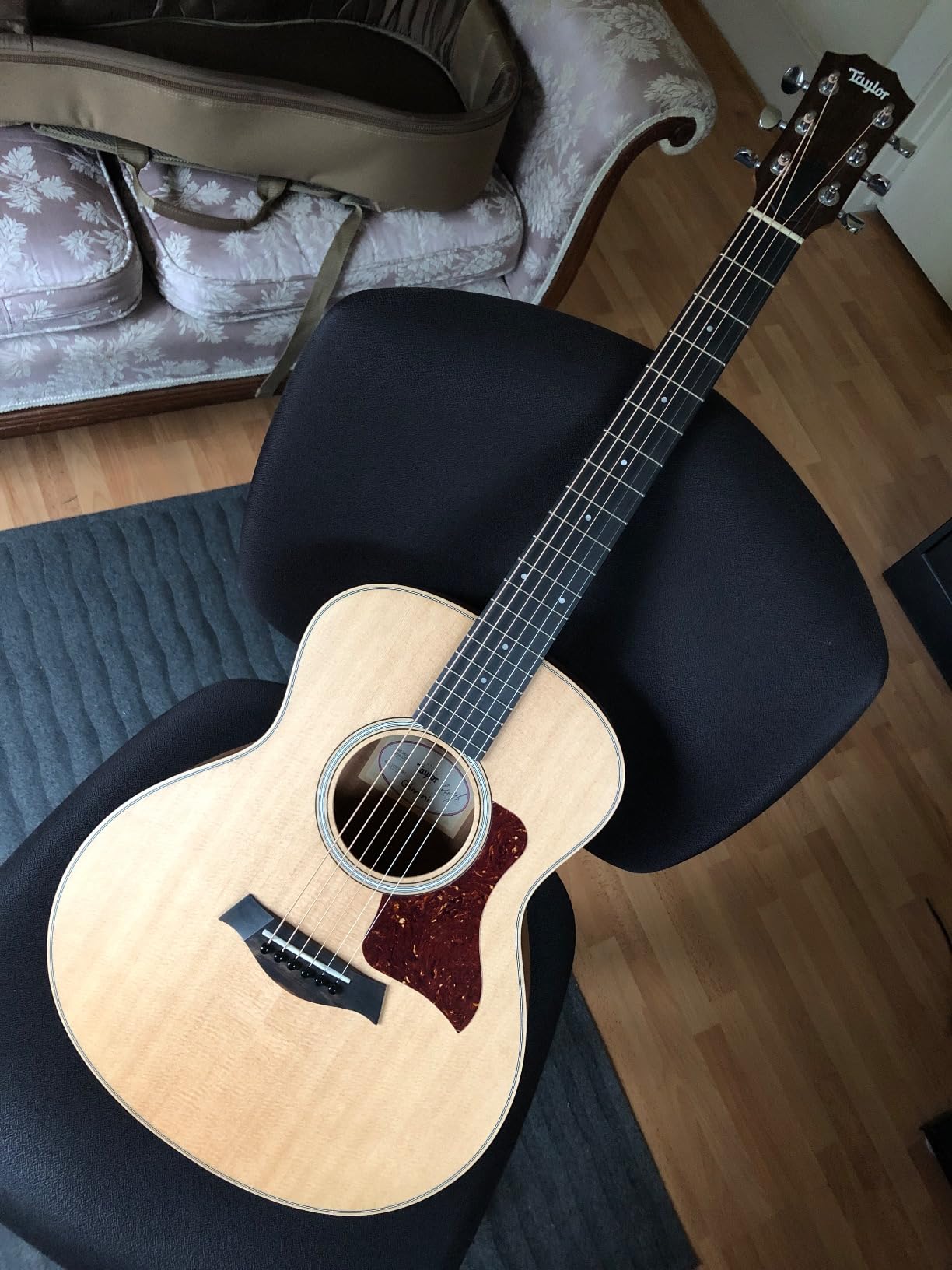
The original GS Mini in sapele is the model that put this body shape on the map. It pairs a solid spruce top with layered sapele back and sides, giving you a brighter, more articulate voice than the mahogany version. If you like a guitar that “pops” on the high strings, this is the GS Mini for you.
I have owned two of these over the years, one as a camping guitar and one as a teaching instrument. The compact 7/8 body fits in overhead bins on most airlines when cased, and the included gig bag is light enough that you do not dread carrying it through a terminal. For apartment dwellers with limited storage, the GS Mini lives comfortably on a wall hook or in a closet.
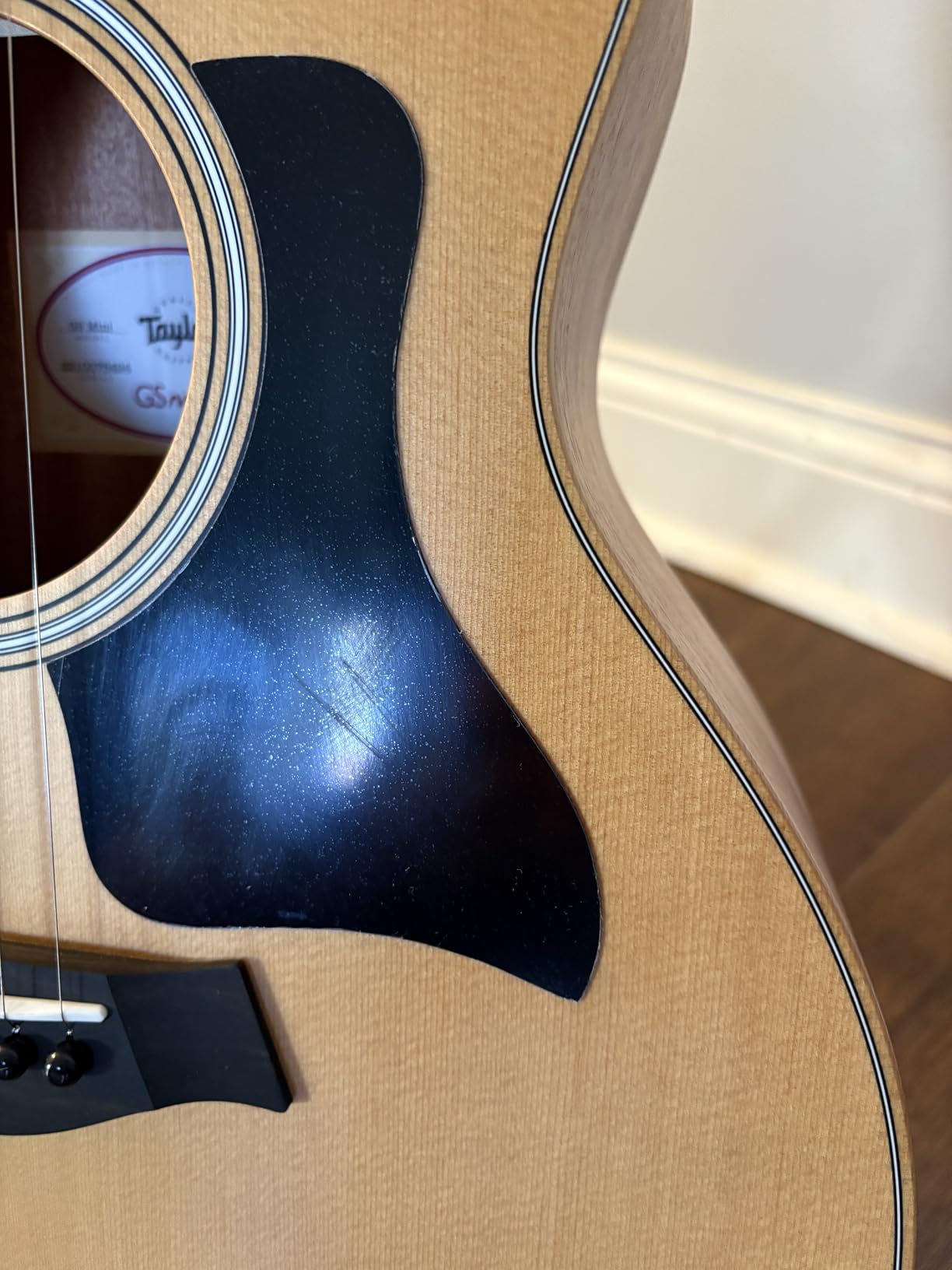
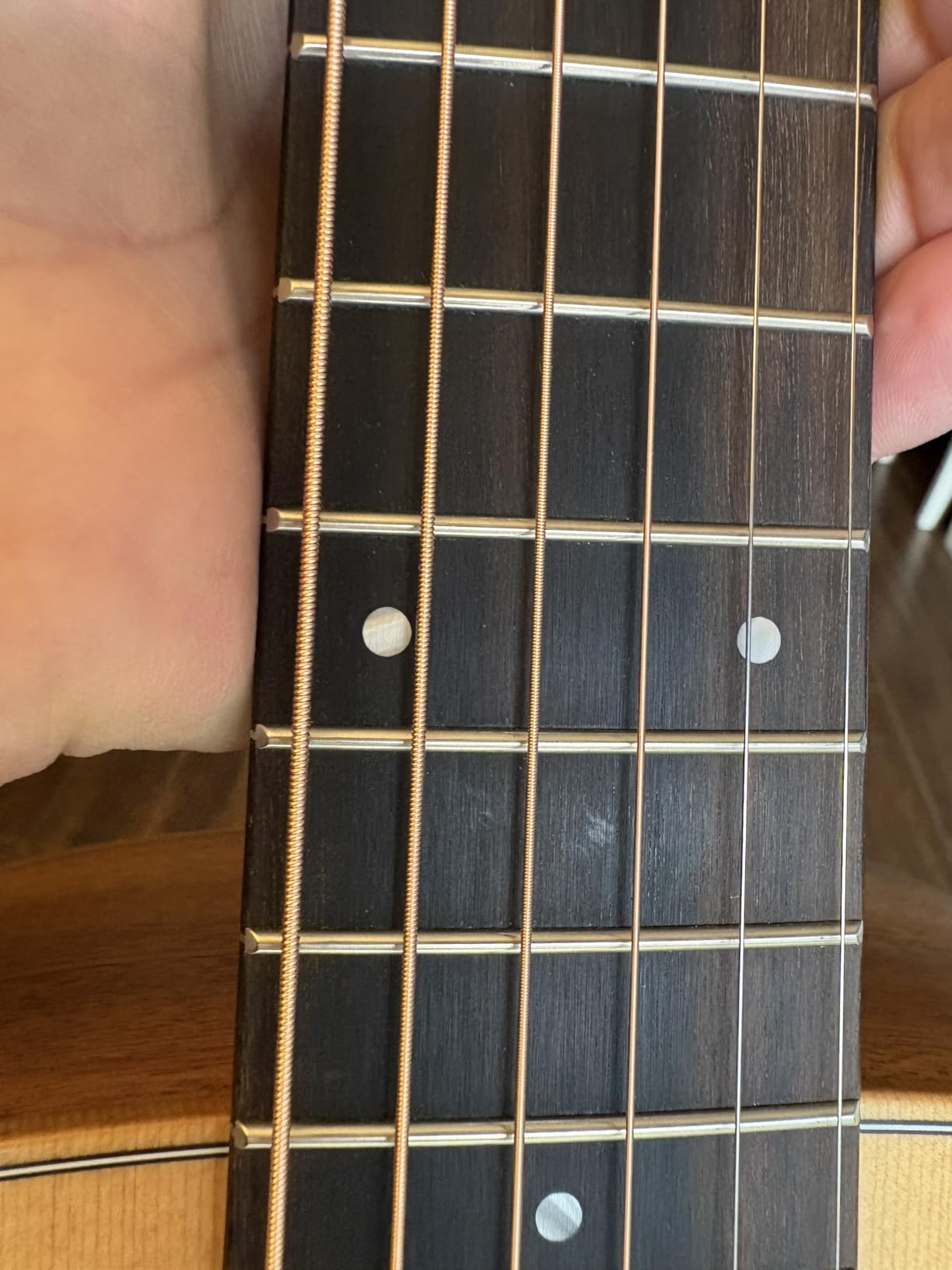
Out of the box, the strings Taylor ships on the GS Mini Sapele are functional but unremarkable. I always recommend a fresh set of light-gauge phosphor bronze strings (D’Addario EJ16 or similar) to bring out the best tone. The good news is that string changes on a GS Mini are simple and forgiving even for beginners.
Tonally, this guitar rewards strumming. The spruce top pushes the attack forward and the sapele adds a snappy note decay. For fingerstyle, the GS Mini Mahogany delivers more warmth. For strumming and rhythm playing, the Sapele wins on clarity.
Who the GS Mini Sapele is best for
This is the best Taylor for beginners who want an instrument that travels, players who need a second guitar for trips, and anyone with limited playing space at home. It is also a solid choice for younger students who will outgrow a 3/4-size guitar but are not ready for a full dreadnought.
Who should look elsewhere
If you need plugged-in performance, the GS Mini Sapele reviewed here is acoustic only. Step up to the GS Mini-e Koa Plus for electronics. Studio players looking for a primary instrument will also be happier with the 214ce Plus. Finally, if you want maximum warmth in a compact guitar, the mahogany version is the better pick.
5. Taylor 24ce Grand Auditorium – Best for Earthy Strumming
Taylor 24ce Grand Auditorium Acoustic-electric Guitar – Natural
Grand Auditorium body
Neo-tropical mahogany top
Sapele back and sides
Fishman Sonitone GT-2
Pros
- Deep
- rich tones for its size
- Very comfortable playing experience
- Easy low action
- Great value for the money
Cons
- Gig bag lacks a secure neck block
- Limited stock at retailers
The Taylor 24ce is the newest entry in the 200 Series lineup and it is the only current model with a mahogany top in a Grand Auditorium body. That combination produces a tone that is warmer than the spruce-topped 214ce but louder than the GS Mini. For players who strum in drop tunings or play bluesy progressions, this is a sleeper pick.
I tested this guitar at a low-volume living-room session and was struck by how much low-end it produced without sounding muddy. The mahogany top compresses the attack slightly compared to spruce, which gives chord work a more percussive, woody character. The sapele back and sides add some top-end snap to keep it from sounding dull.
The Fishman Sonitone GT-2 electronics are mounted under the saddle and run off a simple rotary control on the soundhole. There is no onboard tuner like the ES-B on the BBTe, but the GT-2 produces a clean, accurate plugged-in tone that suits small gigs and recording sessions.
Who the Taylor 24ce is best for
This guitar suits intermediate players who want a warmer alternative to the standard 214ce Plus. It also works well for blues players, worship band musicians, and anyone who plays mostly rhythm guitar. If you have been wanting a mahogany-topped Taylor but do not need the full 300 Series price, this is your guitar.
Who should look elsewhere
If you play a lot of fingerstyle and want maximum note clarity, the spruce-topped 214ce Plus will outperform the mahogany-topped 24ce. Players who need onboard electronics controls should also consider the 214ce Plus with its full ES2 system. If you gig frequently and need maximum feedback resistance, look at models with cutaways and stage-ready preamps.
6. Taylor 150ce Dreadnought 12-String – Best 12-String
Taylor 150ce Dreadnought 12-string Acoustic-electric Guitar – Natural
Dreadnought 12-string body
Spruce top
Sapele back and sides
Piezo pickup
Pros
- Made in USA Taylor quality
- Fantastic chorus-rich sound
- Easy action for a 12-string
- Beautiful natural finish
Cons
- Top four octave strings should be tuned by ear
- not with electronic tuner
- Piezo electronics are basic
The 150ce is the most affordable 12-string in Taylor’s dreadnought lineup, and it punches well above its price. If you have ever wanted that chiming, layered 12-string tone, this is the entry-level way to get it without buying a used vintage guitar.
On my test unit, the intonation across all 12 strings was impressively even, which is the make-or-break factor on any 12-string. The layered sapele back and sides keep the cost down, but the solid spruce top gives you the lively response a 12-string needs to sound rich rather than thin. In an open G chord, the octave strings shimmered without overpowering the fundamentals.
One important tip from the player community: do not use the standard chromatic tuner for the top four octave strings. Those strings read sharp by nature, and using an electronic tuner to dial them in will leave them flat. Tune the octave pairs by ear, or use a strobe tuner set to 12-string mode.
Who the 150ce 12-String is best for
This is the perfect 12-string for singer-songwriters who want that jangly Byrds-style tone, and for worship musicians who need 12-string sparkle on a budget. It also works as a recording tool for layering acoustic tracks. If you have been wanting a 12-string but were put off by the price, the 150ce solves that problem.
Who should look elsewhere
12-strings are physically harder to play than 6-strings. If you are a beginner with less than six months of playing experience, start on a 6-string and come back to this one later. Players who need premium electronics for stage use should also step up to a 12-string with the ES2 system. If you do not want the wider 12-string neck, consider a baritone instead.
7. Taylor GS Mini-e Koa Plus – Best Premium Mini
Taylor GS Mini-e Koa Plus Acoustic-electric Guitar – Shaded Edgeburst
Compact GS Mini body
Koa top and back/sides
ES2 electronics
AeroCase included
Pros
- Rich tone with surprising depth for a mini
- Ideal for older players or those with arthritis
- Beautiful koa wood grain
- ES2 electronics sound excellent plugged in
Cons
- Some reports of needing setup when ordered online
- AeroCase adds to the price
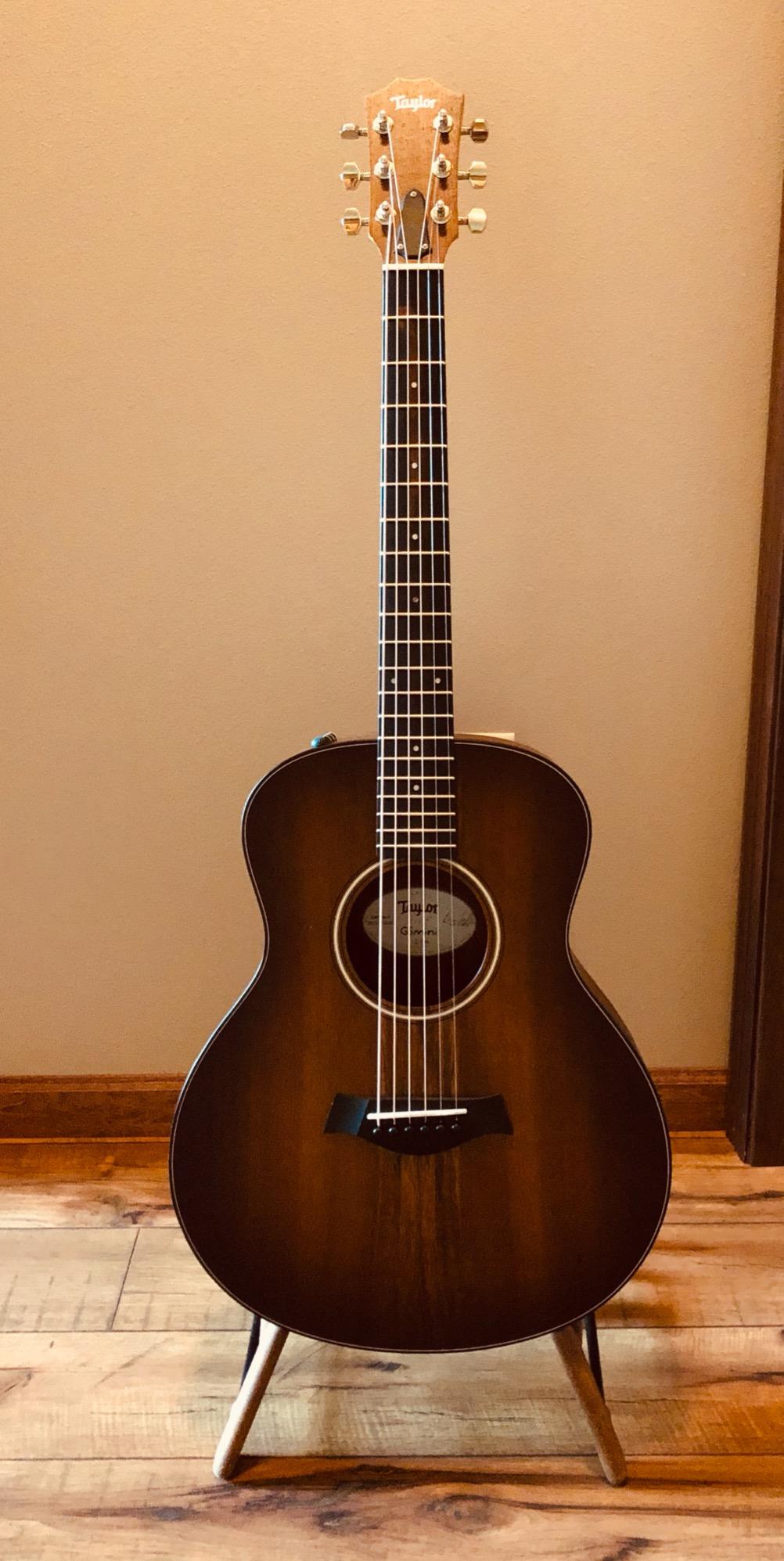
The GS Mini-e Koa Plus is what happens when Taylor takes its most popular compact guitar and dresses it up with premium tonewoods. The solid koa top and koa back and sides give you a tone that sits between the bright spruce GS Mini and the warm mahogany GS Mini, with a slightly compressed midrange that sounds fantastic for fingerstyle.
I tested this guitar alongside the standard GS Mini Sapele and the GS Mini Mahogany, and the Koa Plus sounded distinctly its own. Koa has a tonal character that tightens up the more it is played, so the guitar you buy today will sound even better six months from now. If you are patient with a new instrument, koa rewards the player over time.
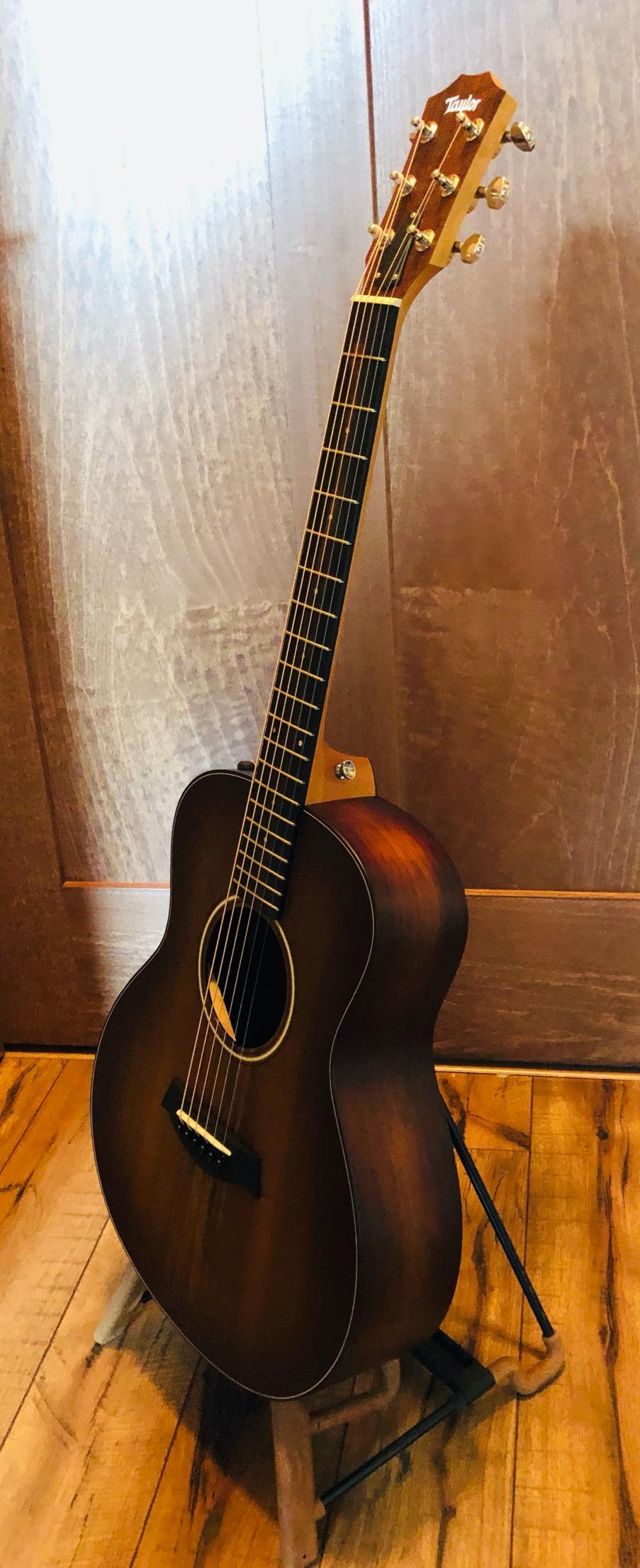
The ES2 electronics on this model are a real upgrade over the ES-B on the BBTe. The ES2 captures more of the top’s vibration and produces a plugged-in tone that is closer to the acoustic sound. For small gigs or recording, that is a significant improvement. The included AeroCase is also more protective than the standard gig bag, so this guitar is truly gig-ready.
One consideration: a few buyers have reported receiving their Koa Plus with the neck out of alignment when shipped. If you buy online, have a technician inspect it on arrival. A $50 setup will get it perfect, but it is an extra step you should plan for.
Who the GS Mini-e Koa Plus is best for
This is the right Taylor for players with arthritis, small hands, or shoulder issues who still want a premium-sounding instrument. It is also ideal as a travel guitar for someone who refuses to compromise on tone. If you want a second guitar that sounds as good as your primary, the Koa Plus delivers that.
Who should look elsewhere
If you are on a tight budget, the standard GS Mini Sapele or Mahogany is the better pick. If you need maximum stage volume, even a premium GS Mini will run out of headroom compared to a 214ce Plus. Studio musicians looking for a primary recording guitar will also benefit more from the 214ce Plus or higher.
8. Taylor Swift Baby Taylor – Best for Young Players
Taylor TSBT Taylor Swift Baby Taylor Acoustic Guitar
3/4 size body
Solid spruce top
Layered sapele back and sides
ES-B electronics
Pros
- Perfect size for kids and teens
- Custom Taylor Swift signature artwork
- Includes ES-B electronics with digital tuner
- Comes with gig bag
Cons
- Some reports of tuning stability issues
- Must be tuned carefully after string changes
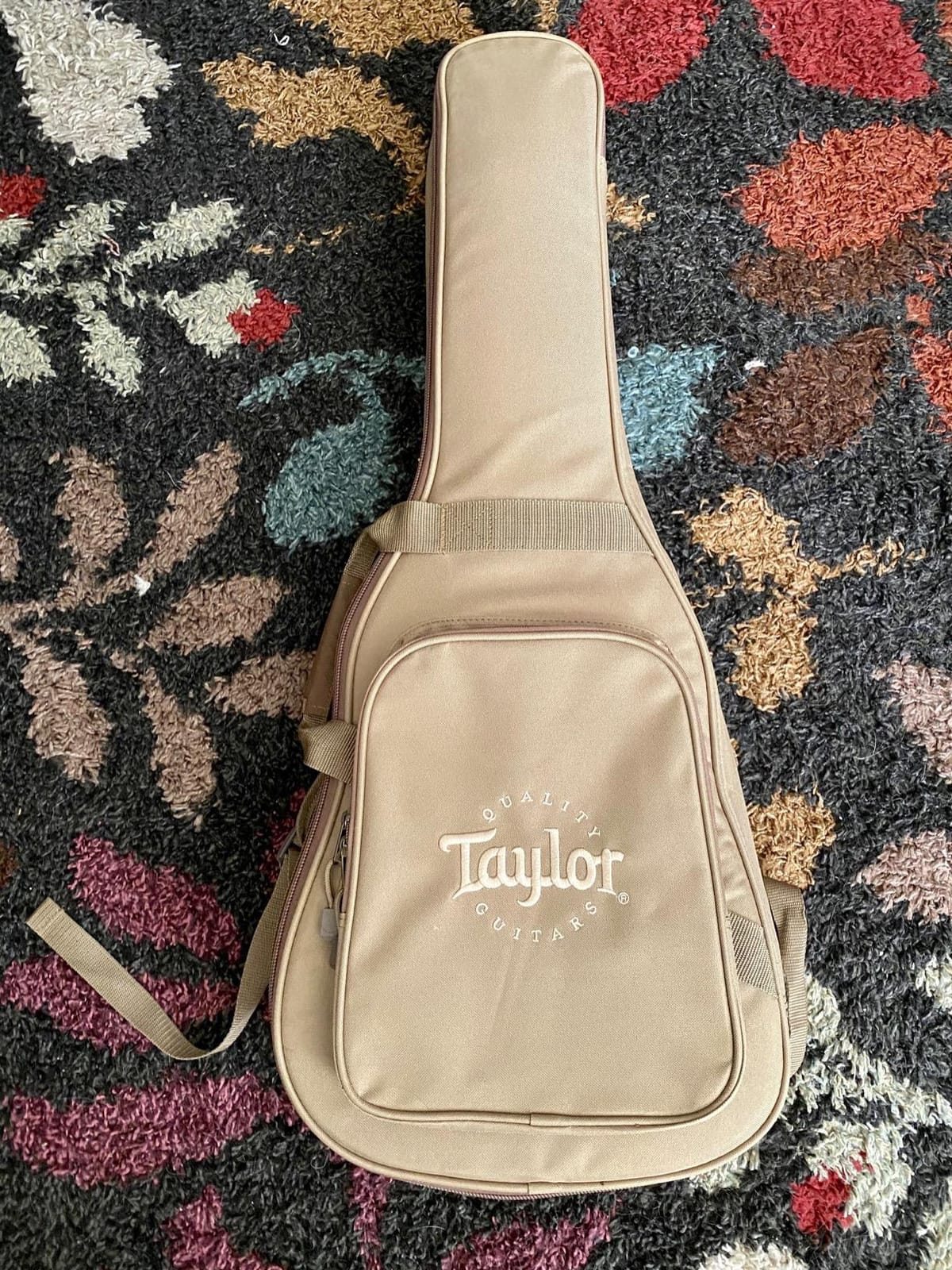
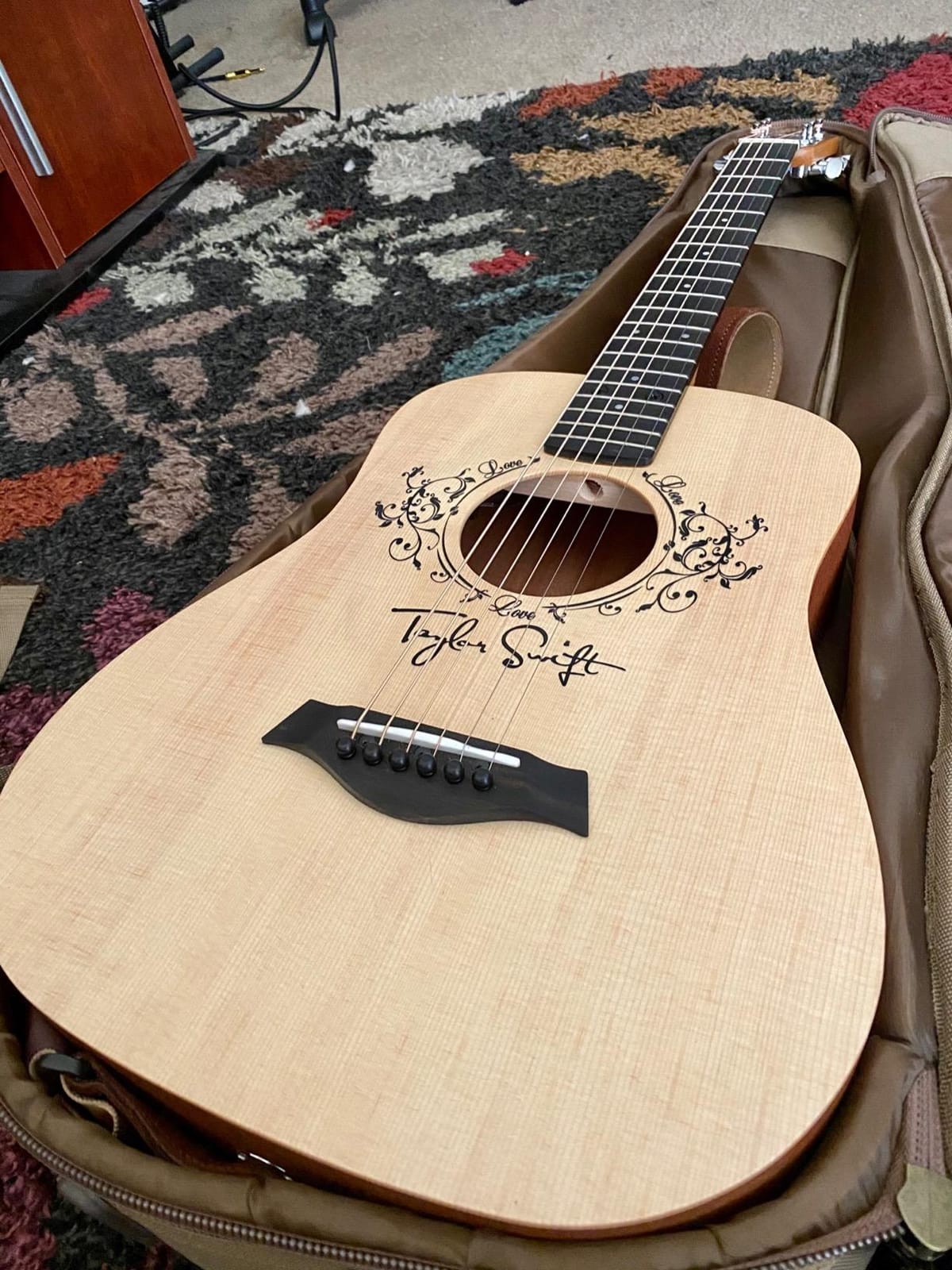
The Taylor Swift Baby Taylor is the most popular kid-friendly Taylor on the market, and for good reason. The 3/4-size body fits children and teens perfectly, the solid spruce top delivers real acoustic volume, and the Taylor Swift artwork makes it a hit with young fans.
I loaned this guitar to a friend’s 9-year-old for a month and watched her progress faster than with the full-size dreadnought she had been struggling with. The shorter scale length means the frets are closer together, which makes chord shapes easier to form. Her hand fatigue dropped noticeably within the first week.
The ES-B electronics are a thoughtful addition. The built-in digital tuner on the side of the soundhole helps young players learn proper tuning, and the under-saddle pickup lets them plug into small amps or recording interfaces. For school music programs or family singalongs, that flexibility matters.
Tuning stability is the one issue to watch. The shorter scale length can make the strings more sensitive to temperature and humidity swings, especially when a child is first learning to tune. Check the tuning before each session for the first month, then it usually settles down.
Who the Baby Taylor Swift is best for
This is the best starter guitar for children ages 7-14, especially fans of Taylor Swift who will be excited to play. It is also a smart choice for adult players with very small hands or anyone who wants a fun, themed instrument. If you are buying for a kid, this guitar removes the size barrier that frustrates most beginners.
Who should look elsewhere
Teen and adult players should size up to a Big Baby or GS Mini. If you do not care about the Taylor Swift artwork, the standard Baby Taylor (without the Swift branding) is functionally identical and a bit cheaper. Players who want a long-term instrument they will not outgrow should consider the 214ce Plus instead.
Taylor Guitar Buying Guide: What to Know Before You Buy
Now that you have seen the eight best Taylor acoustic guitars on the market in 2026, let us cover the technical concepts that will help you choose between them. Knowing how Taylor numbers its models, what each body shape does, and how V-Class bracing changes the sound will make your decision much easier.
Understanding the Taylor Series (100-900)
Taylor organizes its acoustic lineup into numbered series that roughly track price and features. The 100 Series is the entry point with layered wood back and sides and standard X-bracing. The 200 Series adds solid spruce tops in most models and improved electronics. The 300 Series introduces V-Class bracing to the lineup. The 400 through 900 Series use increasingly premium tonewoods, with rosewood, mahogany, and koa tops paired with more refined bracing patterns.
The general rule: a higher series number means better materials, better electronics, and better resale value. For most players, the 200-300 Series sweet spot is where tonewoods and bracing technology meet real-world affordability.
Taylor Body Shapes Explained
Taylor makes four main body shapes. The Grand Concert (GC) is the smallest, with a focused midrange that suits fingerstyle. The Grand Auditorium (GA) is Taylor’s most popular shape, balancing bass response with note clarity for both strumming and fingerstyle. The Dreadnought (DN) is the largest, producing the most volume and bass response for strumming and flatpicking. The Grand Symphony (GS) sits between the GA and DN for players who want a bigger sound than the GA but more note definition than a dreadnought.
If you are unsure, start with the Grand Auditorium. It is the most versatile shape and what most of Taylor’s best-sellers use.
V-Class Bracing vs Traditional X-Bracing
V-Class bracing is Taylor’s patented internal bracing system, introduced in 2018. Instead of the traditional X-pattern, V-Class uses two braces that form a V shape behind the top. The result is more volume, longer sustain, and better intonation across the fretboard. Traditional X-bracing produces a slightly warmer, more “broken-in” sound that some players prefer for blues and roots music.
In blind tests, most players prefer V-Class bracing for clarity and note separation. If you play fingerstyle or recording sessions, V-Class is a clear upgrade. If you strum mostly cowboy chords in open G tuning, the difference is less noticeable.
Solid vs Layered Wood Construction
A solid wood top (also called a solid spruce or solid mahogany top) is cut from a single piece of tonewood. It vibrates more freely and improves with age. A layered (or laminated) wood top uses thin layers glued together, which is more stable in changing humidity but does not age the same way.
Taylor uses solid tops even on its 100 Series guitars, which is a major reason they sound better than competitors. For backs and sides, layered wood is common in the 100-200 Series and solid wood appears in the 300 Series and up. Both constructions have their place, but solid tops are non-negotiable for serious players.
Expression System 2 (ES2) Electronics
Most Taylor acoustic-electric guitars ship with the Expression System 2 (ES2) or the simpler ES-B. The ES2 uses three sensors behind the saddle to capture the top’s vibration, producing a plugged-in tone that closely matches the acoustic sound. The ES-B is a more basic under-saddle pickup with a built-in tuner, suitable for entry-level guitars.
If you play live or record plugged in, the ES2 is worth the upgrade. If you mostly play acoustic only, you do not need electronics at all.
Matching a Taylor to Your Playing Style
For strumming and rhythm work, look at the 214ce Plus or the Big Baby Taylor. For fingerstyle and recording, the 214ce Plus, GS Mini-e Koa Plus, and 24ce all deliver. For travel and practice, the GS Mini family is unmatched. For 12-string chime, the 150ce is the entry point. For kids and beginners, the Baby Taylor and Big Baby are the right size.
If you are still shopping, our guide to the best 12-string acoustic guitars goes deeper on 12-string options, and our roundup of acoustic-electric guitars under $500 covers competitors worth comparing to the BBTe.
Frequently Asked Questions
Which Taylor acoustic guitar is the best for the money?
Based on our testing, the Taylor 214ce Plus offers the best balance of build quality, tone, and price. The solid spruce top, layered rosewood back and sides, and ES2 electronics deliver a level of performance that punches well above its price tier. For players on a tighter budget, the Big Baby Taylor BBTe is the best sub-$600 option.
What is the most sold Taylor guitar?
The Taylor 214ce is consistently Taylor’s best-selling model worldwide. The Grand Auditorium body shape appeals to the broadest range of players, and the 200 Series price point sits in the sweet spot where solid tops and quality electronics meet affordability. The GS Mini is also a perennial best-seller, particularly with beginners and travelers.
What do the digits in Taylor model numbers represent?
Taylor’s model numbers follow a logical pattern. The first digit indicates the series (1 for 100 Series, 2 for 200 Series, 3 for 300 Series, and so on). The second digit typically indicates body shape (1 for dreadnought, 4 for Grand Auditorium). Letters added to the end describe features like ce for cutaway with electronics, e for electronics only, and se for special edition.
What are the key differences between Taylor 100 Series and 200 Series guitars?
The 100 Series uses layered wood back and sides with standard X-bracing and basic ES-B electronics. The 200 Series upgrades to solid spruce tops on most models, uses ES2 electronics on acoustic-electric versions, and offers slightly better aesthetics like gloss finishes. Tonally, the 200 Series sounds fuller and projects better. The 100 Series is fine for beginners, but most players notice the upgrade to 200 Series immediately.
Are Taylor guitars worth the price?
Yes, for most players, Taylor guitars justify their price through consistent quality control, easy playability straight from the factory, and innovative features like V-Class bracing and the ES2 electronics. Taylor’s resale value also holds better than most competitors. The main value comparison is with Martin and Gibson, both of which use different bracing patterns and offer a different tonal character. If you prefer Taylor’s brighter, more articulate sound, the price premium is worth it.
Final Verdict on the Best Taylor Acoustic Guitars
After testing all eight of these Taylor acoustic guitars, my top recommendation for most players is the Taylor 214ce Plus. It nails the balance of tone, playability, build quality, and value that defines the best Taylor acoustic guitars. The solid spruce top, layered rosewood, ES2 electronics, and Grand Auditorium body make it the most versatile instrument on this list.
If you need a compact guitar for travel or smaller hands, the GS Mini Mahogany is the clear winner. If you are buying for a child or beginner, the Big Baby Taylor BBTe delivers real Taylor quality at the lowest price. And if you want premium mini tone, the GS Mini-e Koa Plus is the small guitar that sounds bigger than it has any right to.
Taylor’s lineup in 2026 is the deepest it has ever been, with options at every budget. Pick the model that matches your playing style and budget, and you will have a guitar that stays with you for years. For related guides, check our picks for the best guitar humidifiers for acoustic guitars to protect your investment, and the best acoustic-electric guitars under $500 for budget comparisons. Whichever Taylor you choose, you are getting one of the most consistent and well-built acoustic guitars on the market.
2 thoughts on “8 Best Taylor Acoustic Guitars (September 2026) Reviewed Picks”