

Choosing the best acoustic guitar amplifier changes how your instrument sounds at home, on stage, or on the street. Acoustic amps are built to preserve the natural warmth of your guitar, unlike electric guitar amps that add grit and overdrive.
I spent the past few months testing eight of the most popular acoustic amps side by side, from 15-watt bedroom combos to 100-watt gigging machines. My goal was simple: find the ones that honestly reproduce your acoustic tone without coloring it, handle feedback gracefully, and give singer-songwriters room to plug in a mic.
This guide covers the best acoustic guitar amplifier options for 2026 across every budget and use case. Whether you want a portable amp for busking, a quiet practice amp for your apartment, or a feature-rich combo for live performance, I have specific recommendations based on real testing. If you are still choosing your guitar itself, our Taylor acoustic guitar guide pairs well with this article.
Top 3 Picks for Best Acoustic Guitar Amplifier (September 2026)

Best Acoustic Guitar Amps in 2026
| Product | Specifications | Action |
|---|---|---|
 Fender Acoustasonic 15 Fender Acoustasonic 15 |
|
Check Latest Price |
 Fender Acoustasonic 40 Fender Acoustasonic 40 |
|
Check Latest Price |
| Fishman Loudbox Mini BT |
|
Check Latest Price |
 Fishman Loudbox Micro Fishman Loudbox Micro |
|
Check Latest Price |
 Yamaha THR5A Yamaha THR5A |
|
Check Latest Price |
 Fender 100W Acoustic Amp Fender 100W Acoustic Amp |
|
Check Latest Price |
 Boss ACS Live 60W Boss ACS Live 60W |
|
Check Latest Price |
| Boss Acoustic Singer Live LT |
|
Check Latest Price |
1. Fender Acoustasonic 15 – Best Budget Practice Amp
Fender Acoustasonic 15 Acoustic Guitar Amplifier, 15W Portable Combo Amp
15W portable
XLR mic input
Built-in chorus
13 lbs
Pros
- Lightweight and portable
- Dual inputs for guitar and mic
- Chorus effect
- Fender reliability
Cons
- Muddy bass with effects
- Lower volume with passive pickups
- No phantom power
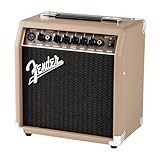
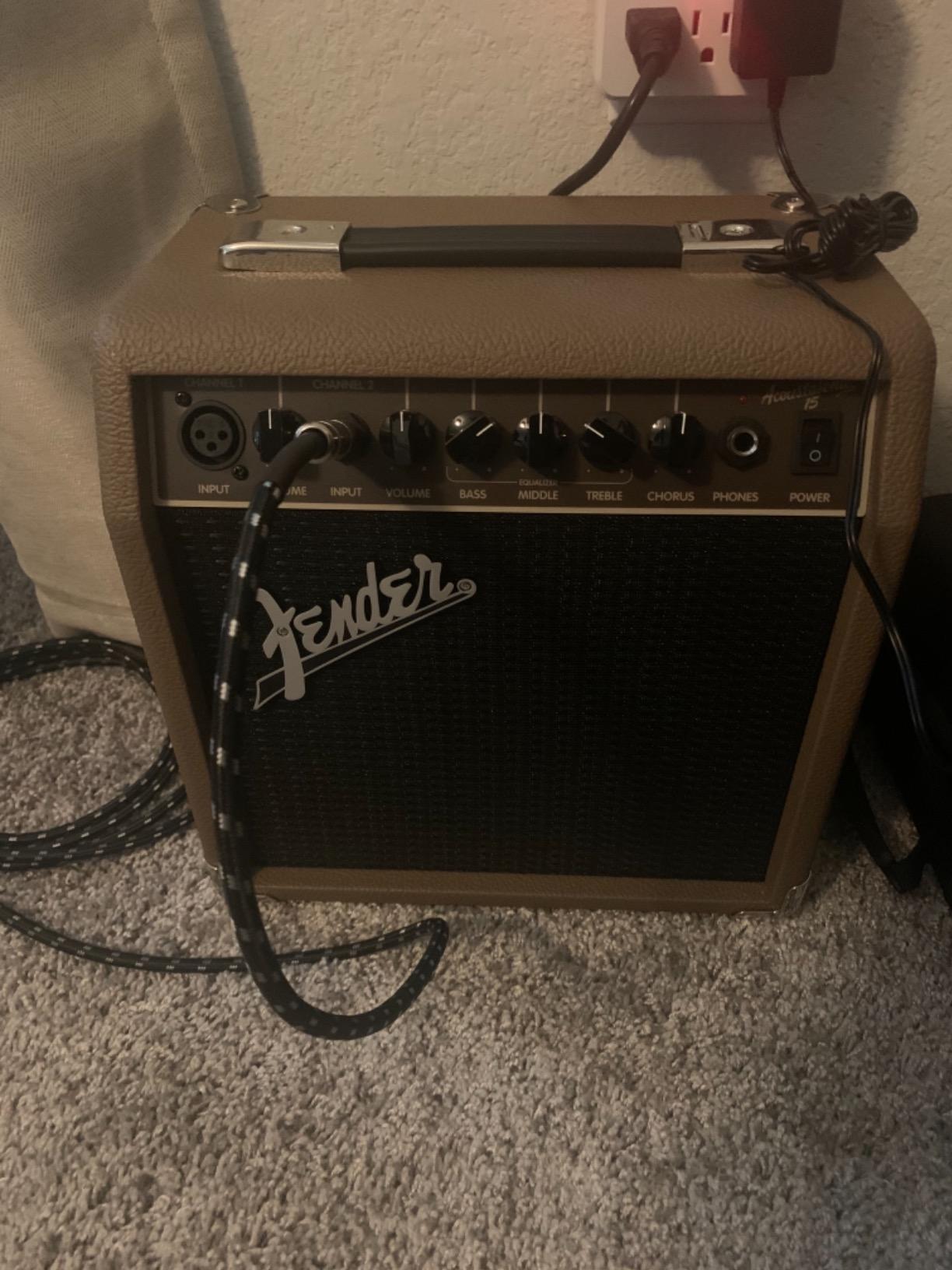
The Fender Acoustasonic 15 is the amp I keep recommending to anyone asking what they should buy for their first acoustic-electric guitar. It costs less than most pedals, weighs 13 pounds, and has the clean sound Fender has been known for since the 1960s. After three months of bedroom use, it still feels like the right answer for the money.
I plugged in both a Taylor 214ce and a budget Yamaha acoustic to compare. The 6-inch speaker with whizzer cone technology reproduces the top-end shimmer better than I expected from something this small. The dual front-panel inputs let me run my guitar on channel one and a Shure SM58 on channel two without a mixer, which is rare at this price.
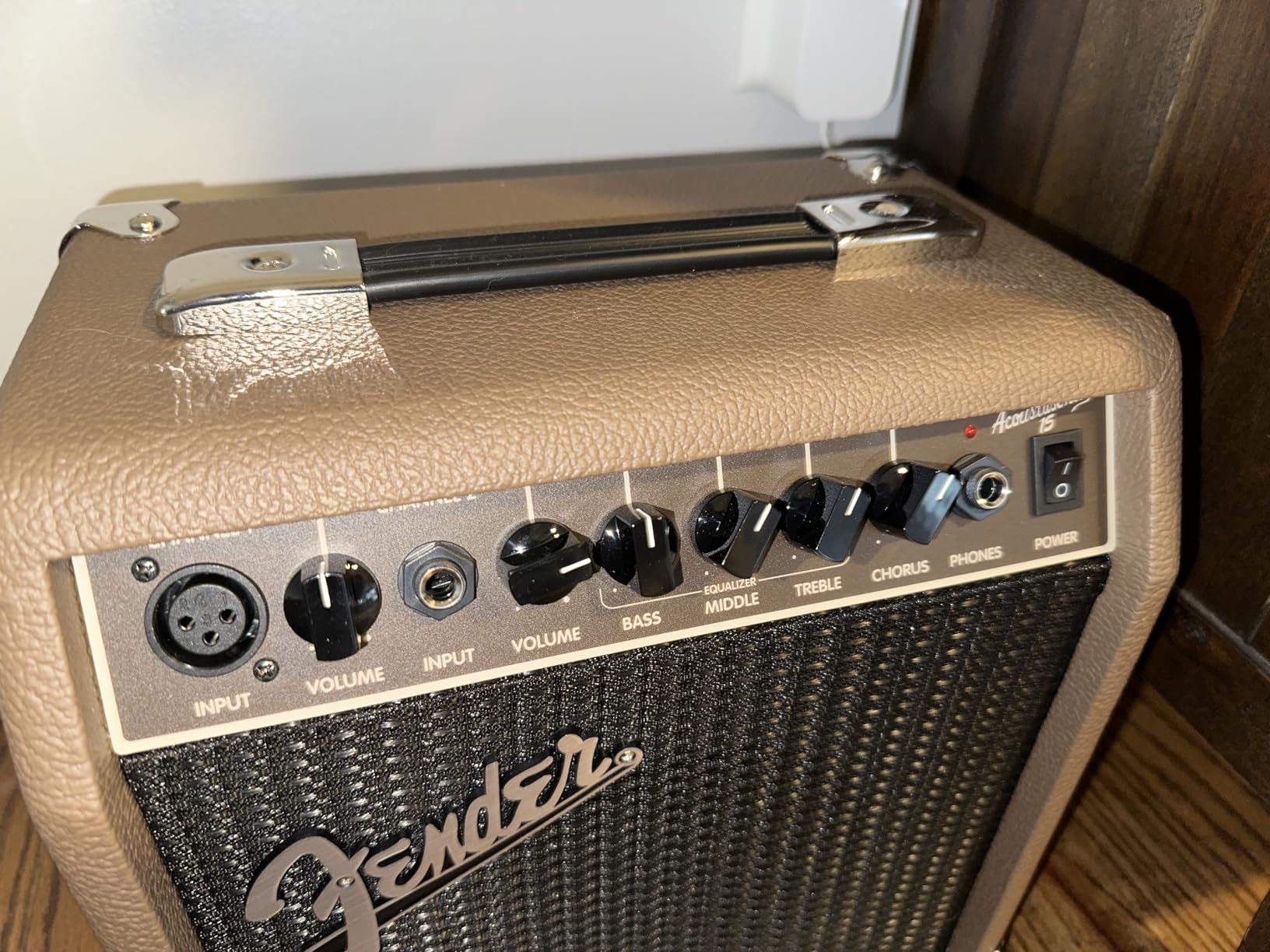
The built-in chorus effect adds dimension without overwhelming the natural acoustic tone. The 3-band EQ is straightforward, and the headphone output means I can practice at midnight without bothering my neighbors. Reviewers on r/AcousticGuitar often cite this exact model as their first amp before upgrading.
The honest downsides: with passive pickups on older acoustics, I had to push the volume to nearly max to get a useful sound. The bass response can get muddy when you stack the chorus effect with the EQ cranked. There is also no phantom power, so condenser mics need their own preamp.
Who this amp works for
The Acoustasonic 15 fits beginners, students, and apartment players who need clean practice tone under $200. It is also a solid backup amp for gigging musicians who already own a bigger rig.
Who should skip it
If you play coffee shops or small venues regularly, the 15 watts will not compete with a drum kit. Players with passive-only acoustic pickups may want to step up to a model with more headroom. For louder needs, the Acoustasonic 40 below is the natural next step.
2. Fender Acoustasonic 40 – Best Value Combo Amp
Fender Acoustasonic 40-Watt Acoustic Guitar Amplifier, Portable Amp Combo
40W dual speakers
Built-in reverb
Dual inputs
10 lbs
Pros
- Excellent clarity and mids
- Lightweight at 10 lbs
- Dual 6.5 inch speakers
- Independent channels
Cons
- Some QC issues reported
- Minor hiss on some units
- No chorus effect
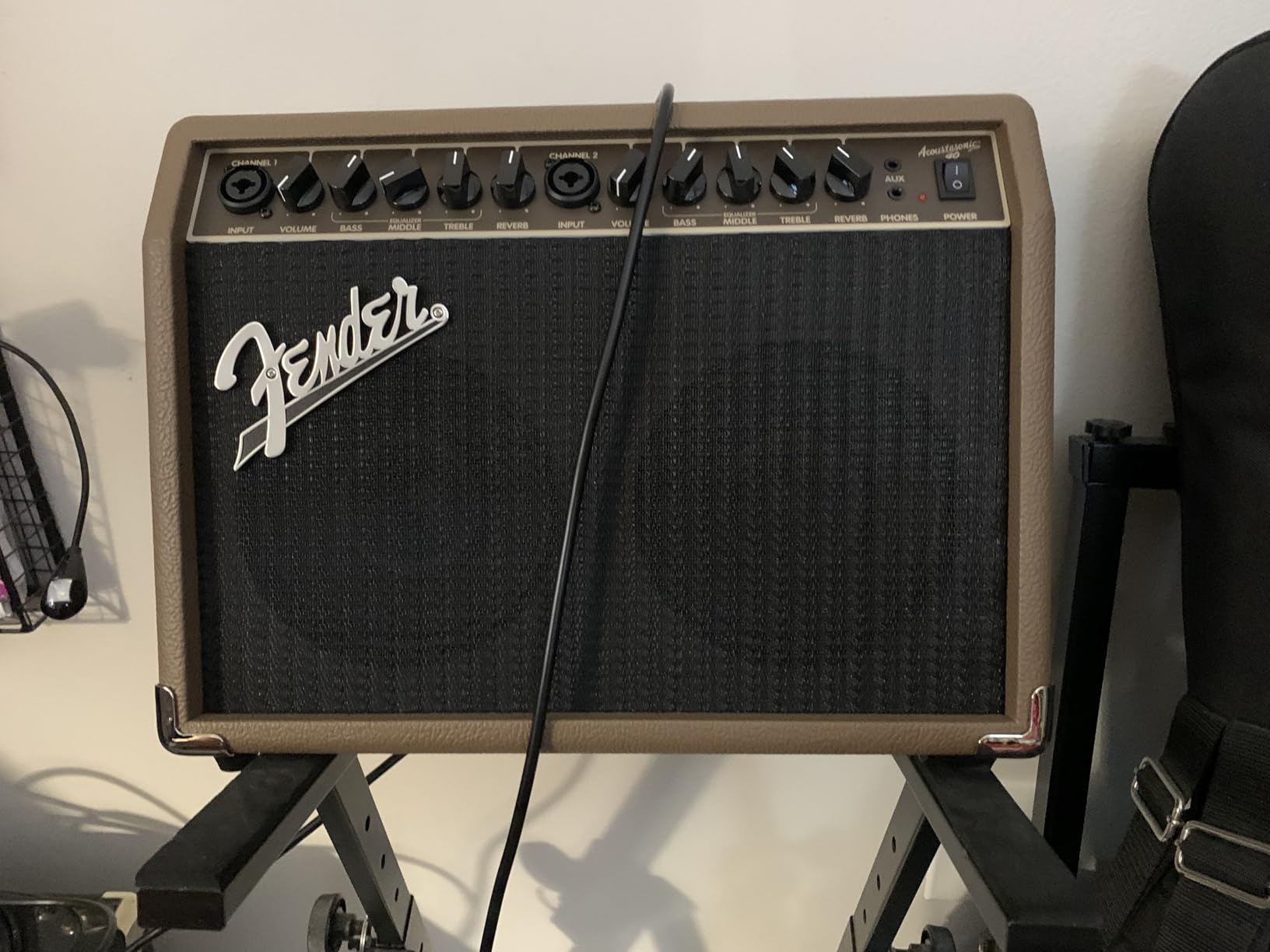
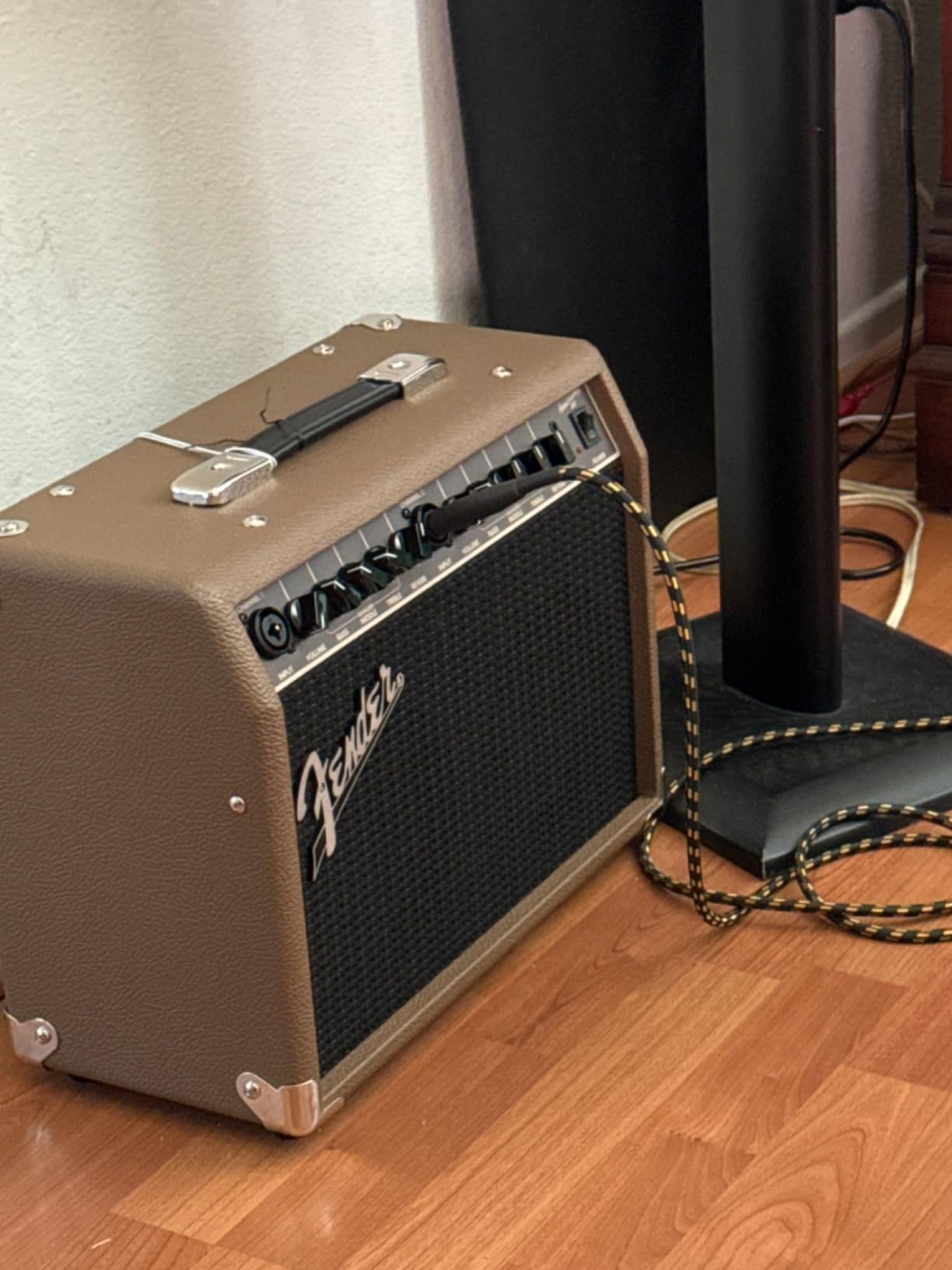
The Fender Acoustasonic 40 is the amp that surprised me most during testing. Forty watts through dual 6.5-inch speakers gives a fuller, more balanced sound than the 15-watt version, and the brown-and-wheat finish looks great on a small stage. At 10 pounds it is still light enough to carry one-handed.
For singer-songwriters, the independent channel controls are the headline feature. I plugged in a dreadnought and a dynamic mic, then balanced the two without reaching for a mixer. The built-in reverb on the instrument channel adds just enough space without washing out fast fingerpicking patterns.
Where the 40W truly shines is in the mids. Vocals cut through the mix cleanly, and the guitar channel preserves the warmth of mahogany and the brightness of spruce. During a small living-room concert I ran, two audience members asked about the amp by brand afterward, which is a good sign.
The downsides are minor but real. A small number of buyers on Amazon report quality control hiccups (hiss, intermittent buzz) out of the box, though Fender’s 2-year warranty covers this. Unlike the 15W, there is no chorus effect, so players who love modulation need a pedal.
Who this amp works for
Singer-songwriters playing coffee shops, open mics, and small venues will find the 40W to be the sweet spot. It is also ideal for players who want a clean, professional sound without stepping into Fishman or Boss territory.
Who should skip it
If you need Bluetooth streaming, USB recording, or a built-in looper, look at the Fishman Loudbox Mini BT or Boss ACS Live LT instead. Gigging musicians in mid-size venues may also want more headroom.
3. Fishman Loudbox Mini BT – Editor’s Choice for Acoustic Amps
Fishman Acoustic Guitar Amplifier (PRO-LBT-500) Brown
60W Bluetooth
2 channels
Reverb & Chorus
D.I. output
Pros
- Amazing sound quality
- Bluetooth streaming
- Functions as mini PA
- XLR D.I. output
Cons
- Heavier at 24 lbs
- Bluetooth does not route to PA
- Limited volume for large rooms
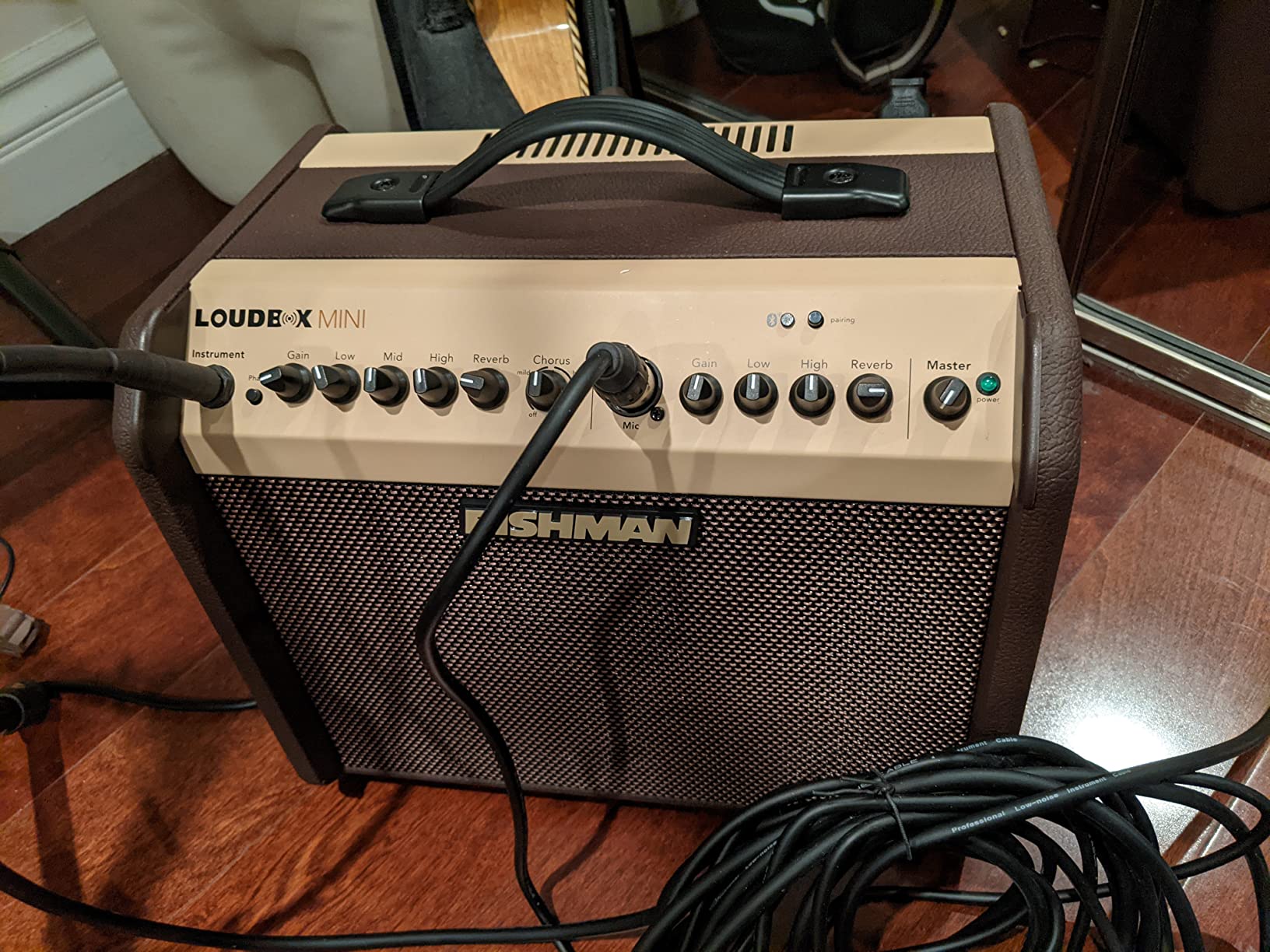
The Fishman Loudbox Mini BT is the amp I keep coming back to whenever I play acoustic in front of an audience. Fishman essentially invented the modern acoustic amp category, and the Loudbox Mini BT shows why. Sixty watts of clean power, two well-designed channels, and Bluetooth streaming for backing tracks make this a one-box solution for singer-songwriters.
The tone is what sets it apart. Fishman’s Loudbox series is mentioned on r/GuitarAmps constantly as the benchmark for natural acoustic reproduction. When I tested it with a Martin HD-28 and a Taylor 814ce, both guitars sounded like themselves, just louder. The 6.5-inch woofer and tweeter combo handles the full frequency range cleanly.
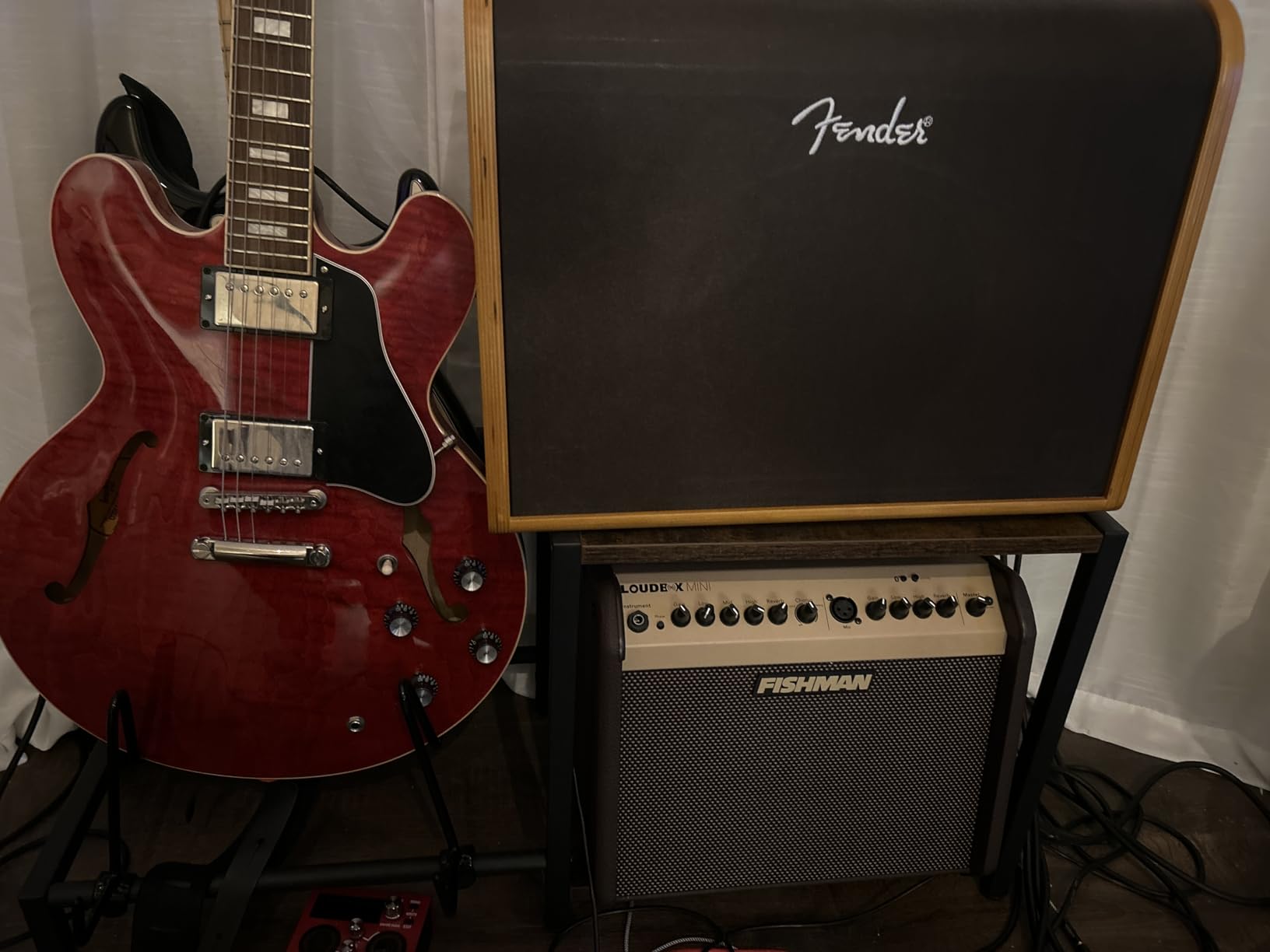
For solo performers, the Bluetooth audio streaming works flawlessly for backing tracks during breaks. The XLR D.I. output means I can also send a balanced signal to a house PA in larger venues. The phase control is a quiet hero: it kills the low-end feedback that ruins most small acoustic gigs.
The trade-offs are real. At 24.3 pounds, the Loudbox Mini BT is heavier than the Fender combos. It is not a battery-powered acoustic amp, so buskers will want a different option. And the Bluetooth audio does not transmit through the D.I. output, which trips up first-time users in larger venues.
Who this amp works for
Singer-songwriters, small-venue performers, and church players who want reliable natural tone plus Bluetooth backing tracks. It is also my top pick for anyone wanting a do-it-all acoustic guitar combo amp under $500.
Who should skip it
Buskers and street performers should look at battery-powered options instead. Players wanting harmony effects or a looper should step up to the Boss ACS Live series.
4. Fishman Loudbox Micro – Most Portable Fishman Amp
Fishman Loudbox Micro 40-watt 1 x 5.25-inch Acoustic Combo Amp
40W lightweight
Digital reverb
Chorus
XLR D.I.
Pros
- Resonant tone for nylon strings
- Lightweight at 9 lbs
- Compact build
- Great value
Cons
- No phantom power
- External power adapter
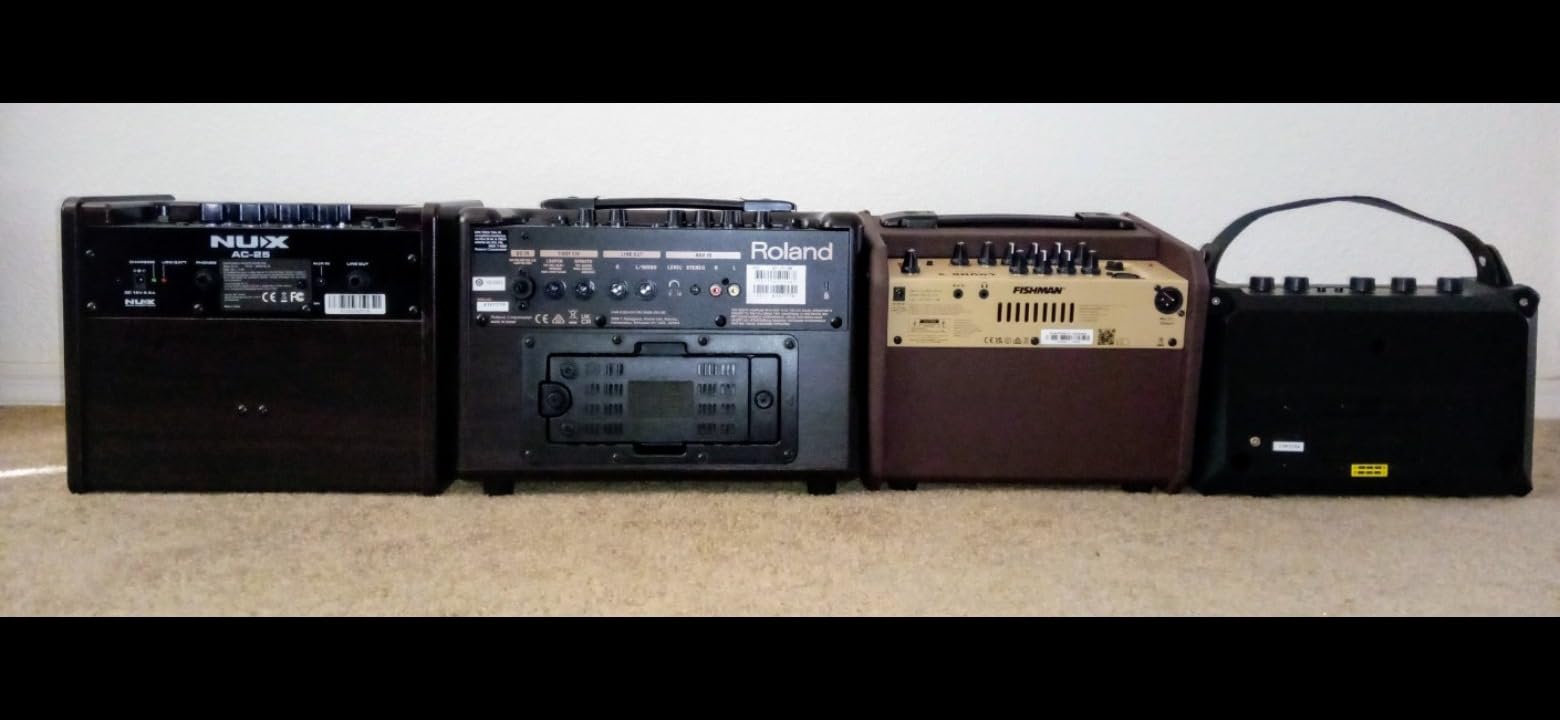
- No carry bag included
The Fishman Loudbox Micro is the amp I grab when I do not want to lug the bigger Loudbox. It weighs roughly 9 pounds once you factor in the external power brick, and it sounds closer to its bigger sibling than the price suggests. If portability is your priority in a Fishman amp, this is the answer.
I tested the Micro with a classical guitar and a baritone ukulele, both of which benefit from the warm, resonant tone Fishman is known for. The 5.25-inch speaker handles nylon-string frequencies beautifully, and the digital reverb and chorus add just enough polish without harshness.
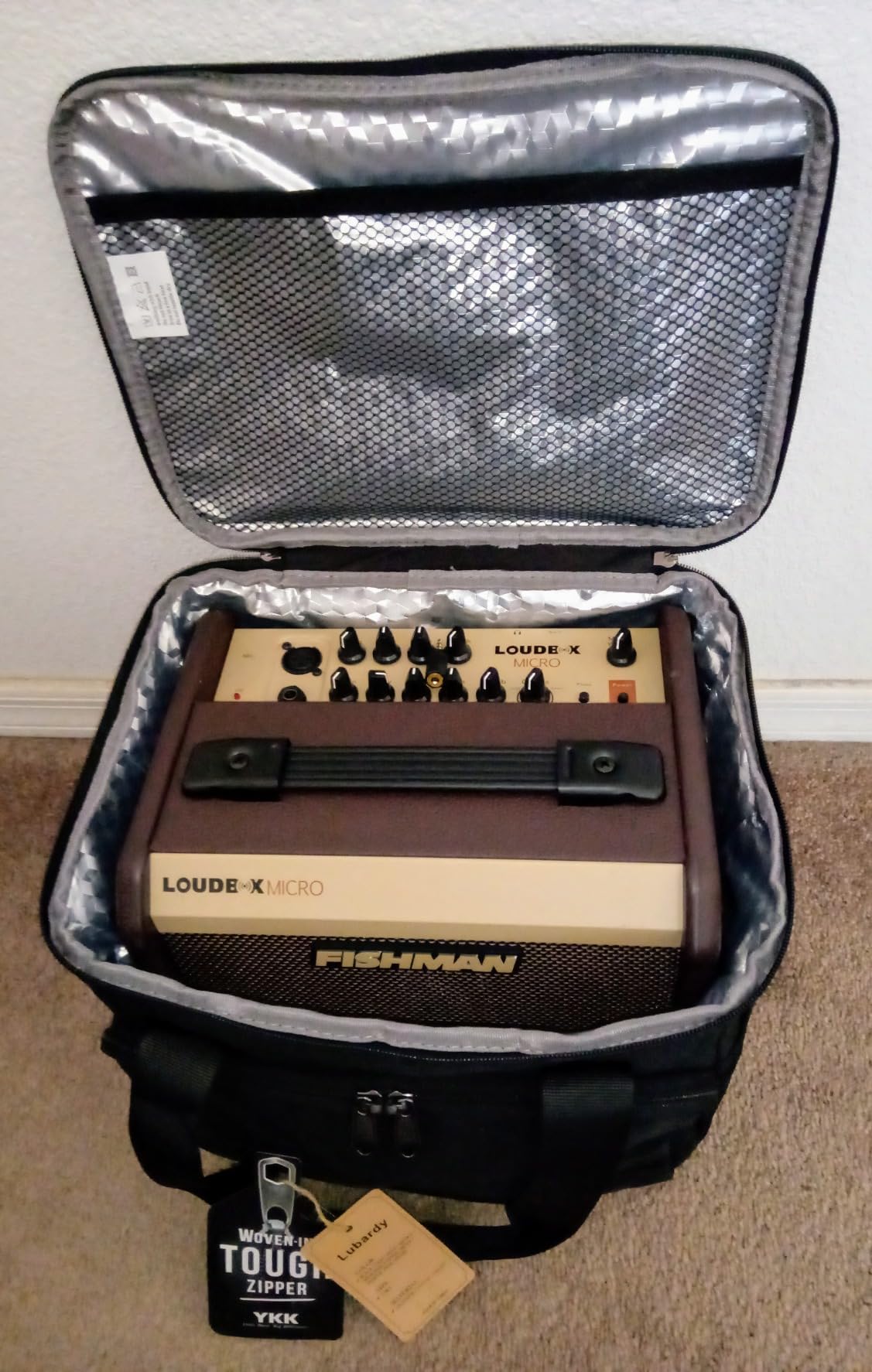
Like its bigger brother, the Micro includes a balanced XLR D.I. output for direct connection to a house PA. Two channels (instrument and microphone) cover the singer-songwriter basics. The Master Volume control is simple and effective, and the 1/8-inch aux input handles click tracks or backing music from a phone.
The downsides are tied to its compact size. There is no phantom power, so condenser mics need their own power source. The external power adapter means it is not as grab-and-go as the spec sheet implies. And despite some marketing language, no carry bag is included in the box.
Who this amp works for
Players who gig often and need a sub-10-pound acoustic amp that still delivers Fishman tone. It is also excellent for nylon-string guitarists and ukulele players who need accurate reproduction at low volumes.
Who should skip it
Those wanting Bluetooth, longer battery life, or phantom power for studio condenser mics. Players needing room-filling volume should consider the Loudbox Mini BT instead.
5. Yamaha THR5A – Best Desktop Practice Amp
Yamaha THR5A Mini Acoustic Guitar Amplifier with Cubase AI Production Software
5W tube modeling
Battery powered
Mic simulations
Cubase AI
Pros
- Tube-like warmth
- Battery powered option
- Great tone for size
- Cubase AI included
Cons
- Limited 5W power
- No internal battery
- Not for performances
- No Bluetooth
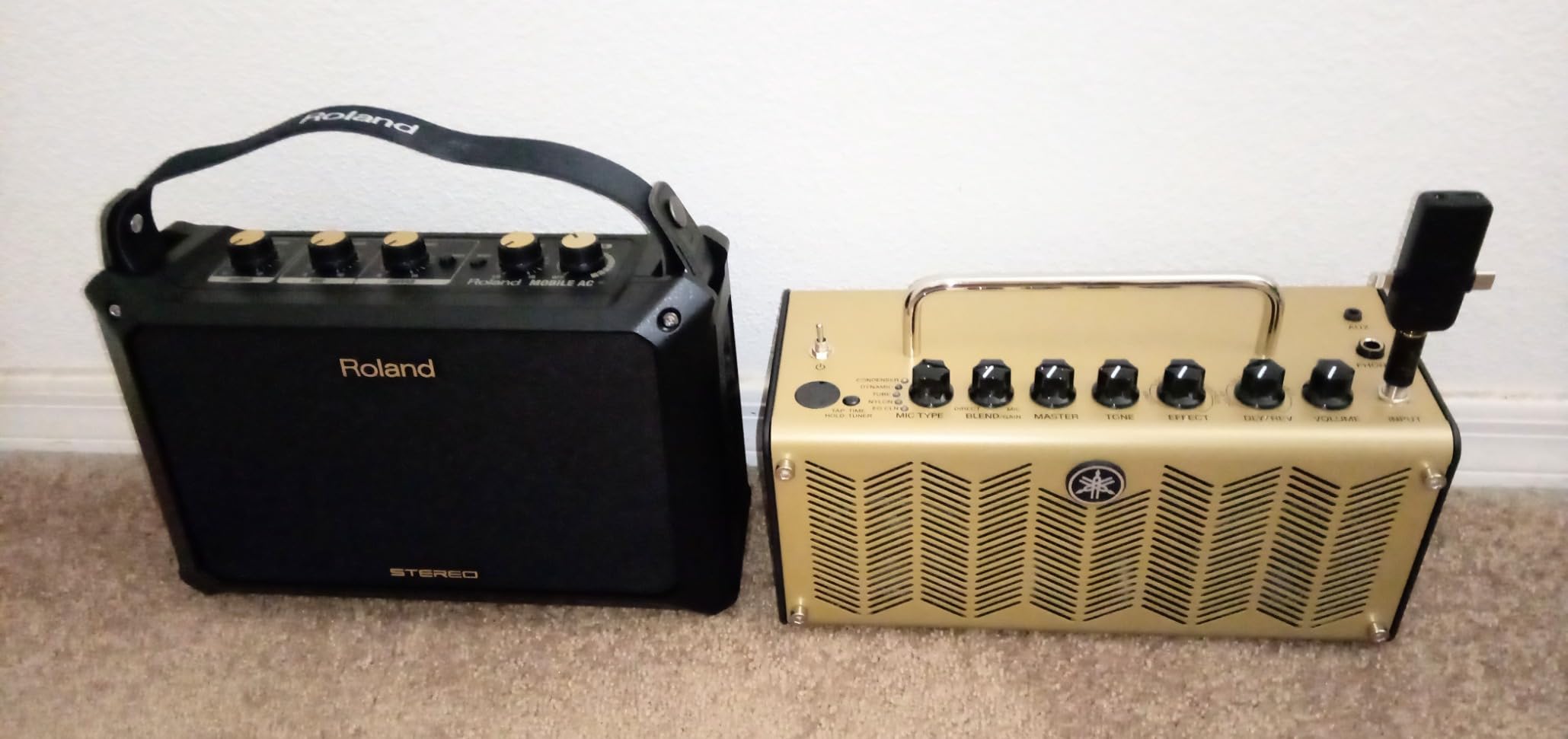
The Yamaha THR5A is the most unique amp in this roundup. It is not really a traditional combo amp: it is a desktop acoustic modeling system with tube-amp simulation and studio-grade effects. If you want the best acoustic guitar amp for home use and you do not need volume, this is my top recommendation.
The sound is remarkable for something this small. Yamaha’s mic modeling simulates classic condenser and dynamic microphones, which means your piezo pickup sounds more like a studio mic’d acoustic. The 3.1-inch speakers are loud enough for a quiet room, and the included Cubase AI software lets you record directly via USB.
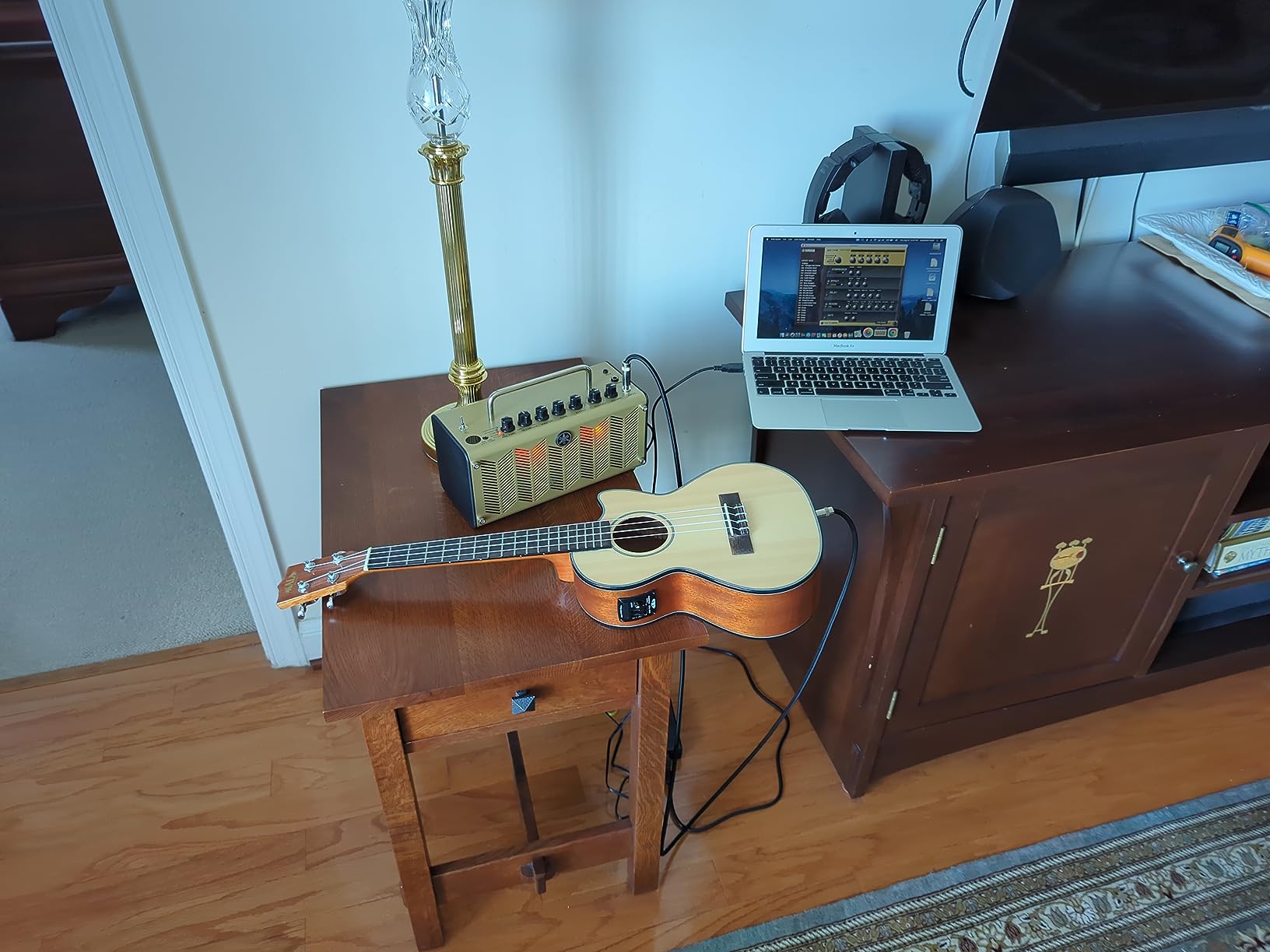
Battery operation makes the THR5A portable enough to take to a hotel room or a quiet backstage. Silent Guitar players (Yamaha’s own acoustic-electric travel instrument) are explicitly supported, which is a niche the Loudbox Mini does not address. The studio-grade effects rival what you would find in a $400 pedalboard.
Honest limitations: 5 watts (10W with the included power adapter) will not fill a coffee shop. It runs on AA batteries, which adds bulk and cost. There is no Bluetooth, so streaming backing tracks requires a cable from your phone.
Who this amp works for
Apartment players, traveling musicians, and recording guitarists who prioritize tone quality over volume. Silent Guitar owners should consider this a near-perfect match.
Who should skip it
Anyone needing volume for busking, rehearsals, or small gigs. Players wanting Bluetooth or USB direct recording into a DAW without Cubase should look at the Fender 100W or Boss ACS Live.
6. Fender 100W Acoustic Amp – Best for Larger Gigs
Fender 100W Acoustic Guitar Amp with Bluetooth Speaker, Natural Blonde
100W Bluetooth
USB recording
Stereo SFX
Wood cabinet
Pros
- Powerful 100W output
- Bluetooth streaming
- Natural tone
- USB recording interface
Cons
- Single 8 inch speaker
- Not as loud as expected
- No gain control
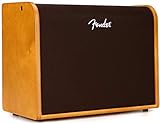
The Fender 100W Acoustic Amp is the heavyweight of this roundup. One hundred watts through a wood cabinet with an 8-inch full-range speaker and whizzer cone gives the most natural acoustic tone of any Fender acoustic combo I have tested. If you play mid-size venues and need serious volume, this is your answer.
The Bluetooth streaming works perfectly for backing tracks, and the USB port turns the amp into a recording interface for home studios. The stereo SFX engine handles reverb and modulation without the digital artifacts you find on cheaper combos. At 18 pounds, it is lighter than most 100W guitar amps.
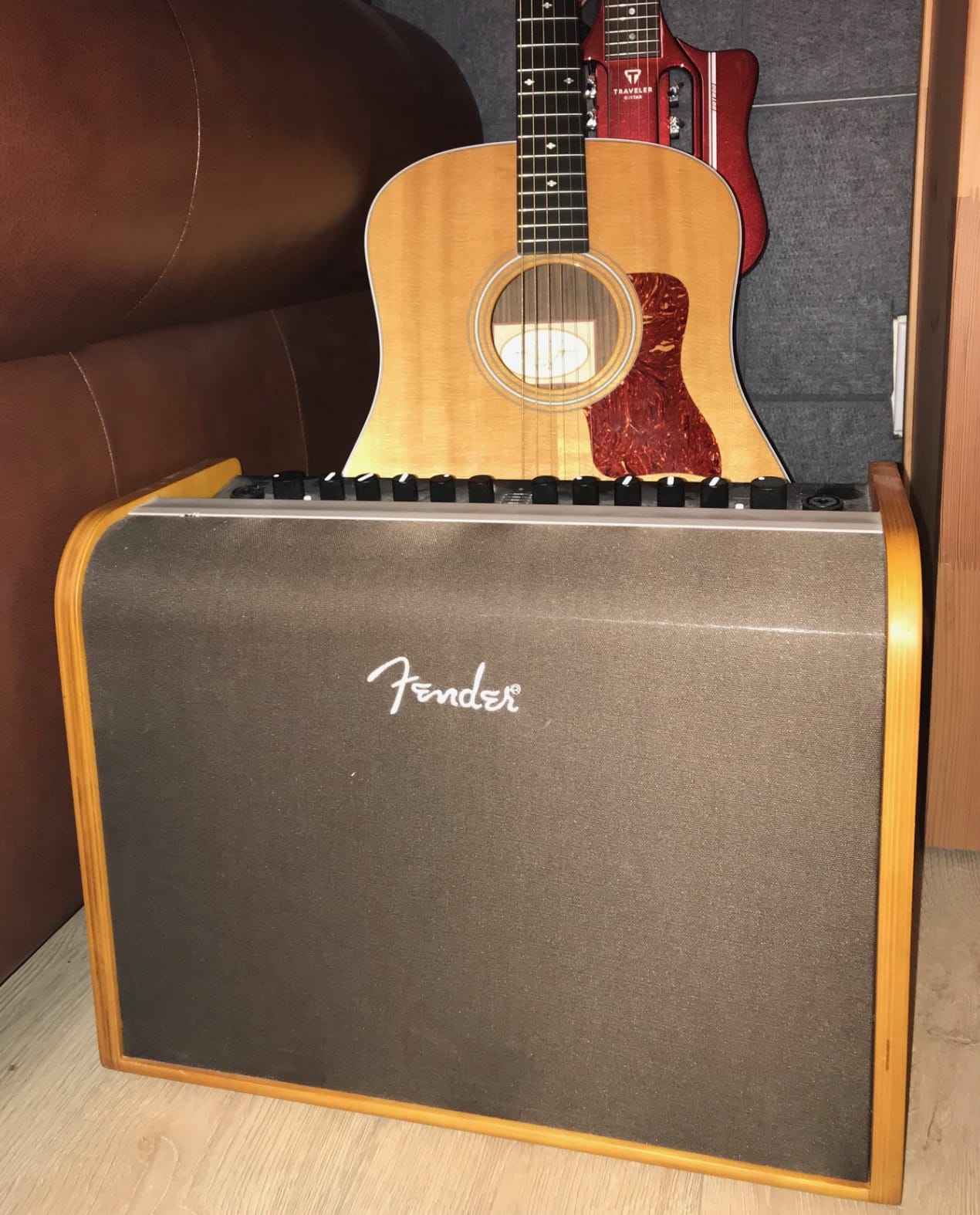
The natural blonde wood finish looks the part on any stage. Two channels (instrument and microphone) cover solo singer-songwriter setups. The 3-band EQ on each channel provides tonal flexibility, and the footswitch compatibility means you can change presets hands-free during a gig.
The trade-off is that a single 8-inch speaker cannot move as much air as a dual-speaker setup, so bass response is more limited than the Loudbox Mini. Some reviewers note it does not feel as loud as 100 watts should. There is also no gain control, so it is strictly a clean channel.
Who this amp works for
Singer-songwriters playing mid-size venues who want Fender tone with enough power for full bands. Recording musicians who want a USB interface plus amp will find this doubles as a mini studio.
Who should skip it
Players wanting deep bass response or those who play rooms over 200 seats should look at a Fishman SA220 or a PA system. Anyone needing built-in harmonies or a looper should consider the Boss ACS Live series.
7. Boss ACS Live 60W – Best with Vocal Harmony
BOSS ACS-Live Combo Amplifier for Acoustic Guitar and Vocals
60W stereo
Harmony function
Looper
Acoustic Resonance
Pros
- Amazing feature set
- Harmony works great
- Premium acoustic tone
- Compact combo design
Cons
- Looper time is short
- Harmony limitations
- Heavy at 26.5 lbs
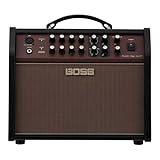
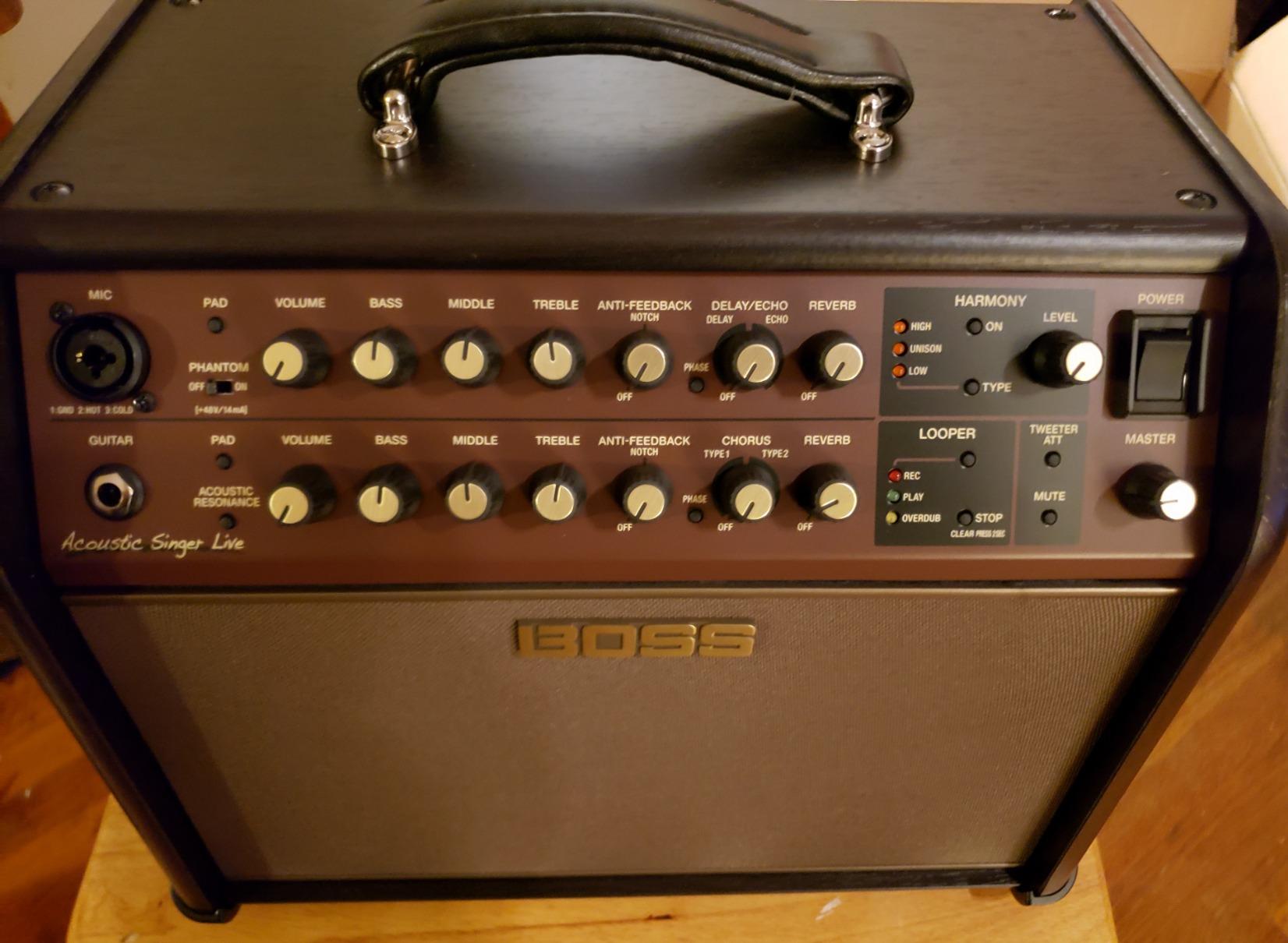
The Boss ACS Live 60W is the amp that makes solo performers sound like a duo. The harmony function analyzes your guitar chords and automatically generates vocal harmonies in real time. Combined with the looper and Acoustic Resonance processing, this is a creative playground for singer-songwriters.
The Acoustic Resonance technology deserves a callout. Piezo pickups often sound quacky and artificial through acoustic amps, but Boss’s processing restores the natural resonance of the guitar body. I tested it with a Taylor GS Mini equipped with the factory ES2 pickup, and the difference compared to a basic amp was night and day.
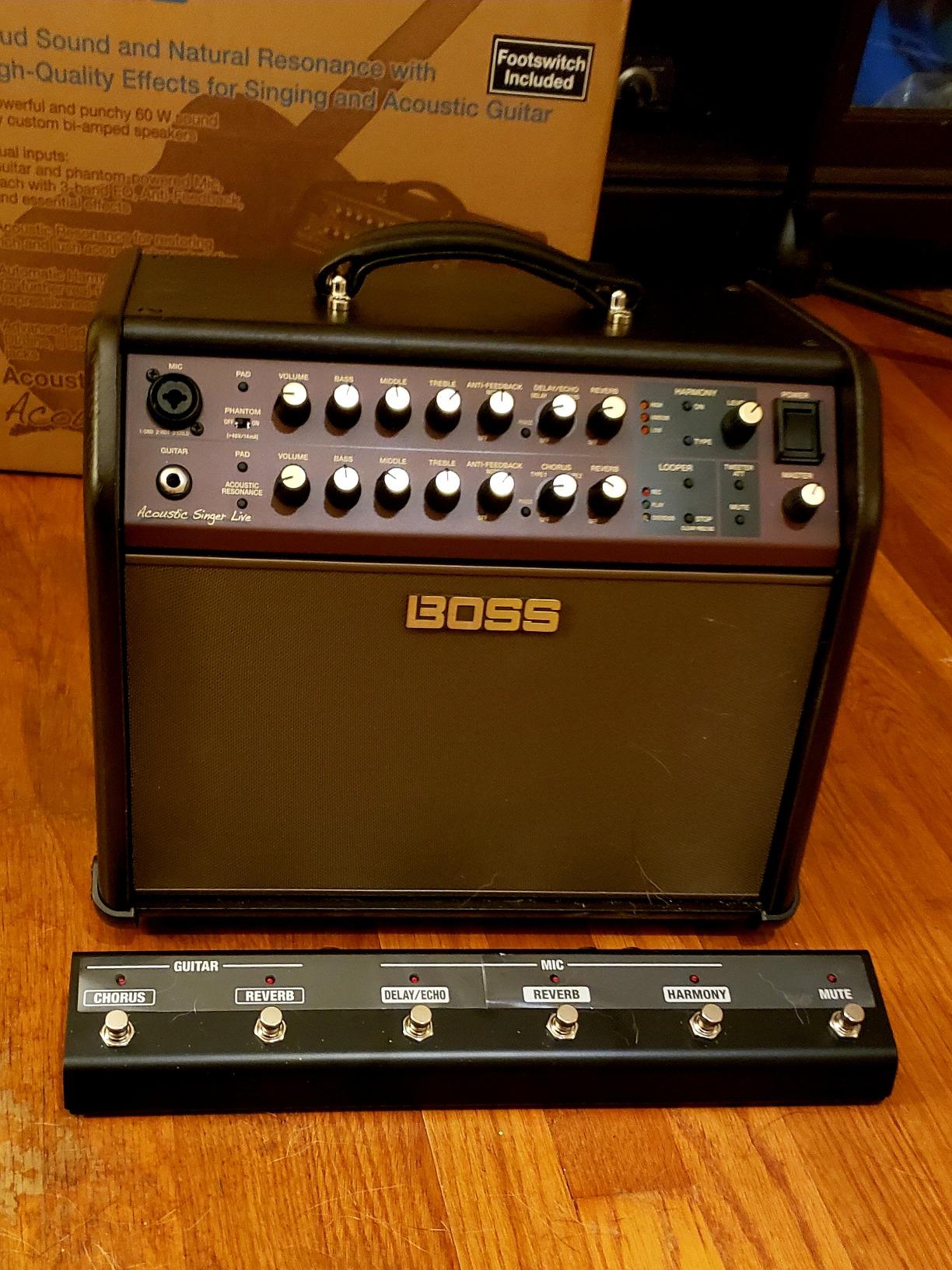
The built-in looper adds serious value for songwriters who want to layer parts live. Independent reverb on both guitar and mic channels gives each its own space in the mix. Stereo 60W output through dual speakers handles small-to-mid venues with headroom to spare.
The downsides: the looper’s recording time is shorter than dedicated loopers, which frustrates some players. The harmony function, while impressive, has limitations on what chords it can analyze cleanly. At 26.5 pounds (12 kg), it is the heaviest amp in this roundup.
Who this amp works for
Singer-songwriters who want to sound like a full band without bringing bandmates. Solo performers at coffee shops, open mics, and small venues will get the most out of the harmony and looper features.
Who should skip it
Players wanting pure acoustic transparency without processing. Anyone needing battery operation should look elsewhere, this amp is AC-only.
8. Boss Acoustic Singer Live LT – Best Anti-Feedback Design
BOSS Acoustic Singer Live LT Guitar Amp
60W bi-amp
Harmony function
Looper
Notch filter
Pros
- Professional tone
- Natural acoustic restoration
- Tilt-back design
- Effective feedback control
Cons
- Delay too quiet on vocals
- Clipping at high volumes
- Some QC issues
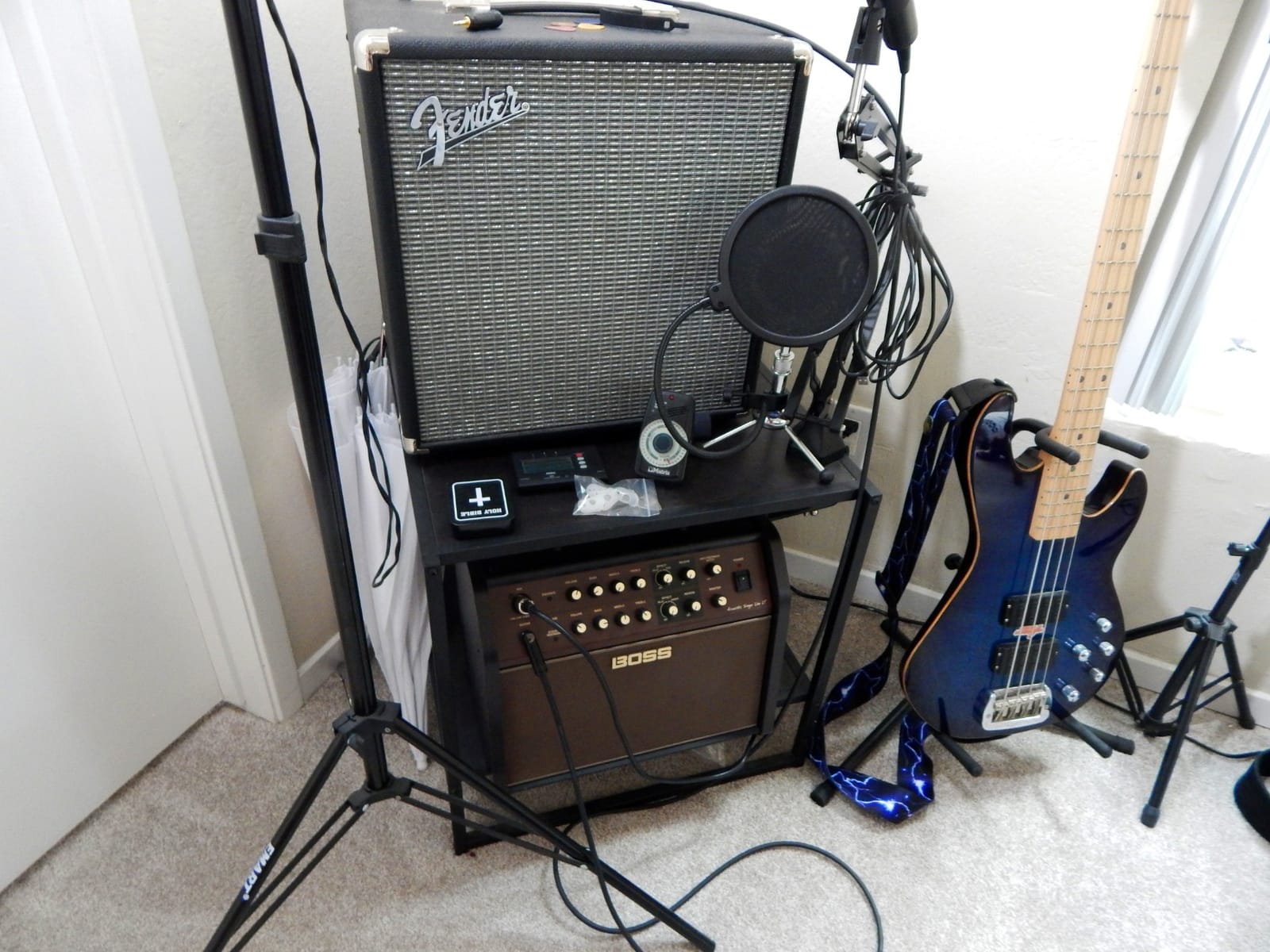
The Boss Acoustic Singer Live LT is the most professionally focused amp in this roundup. It is essentially the pro version of the ACS Live, with a bi-amp design (separate woofer and tweeter amps), a custom 6.5-inch woofer, a dome tweeter, and serious anti-feedback circuitry. If feedback has ruined your gigs, this amp solves it.
The phase switch and notch filter are the unsung heroes. During a particularly reflective venue test, I pointed the amp behind me and the notch filter killed the resonant frequency cleanly. The tilt-back cabinet design lets you angle the amp up when sitting on the floor, which projects sound to the performer instead of their knees.
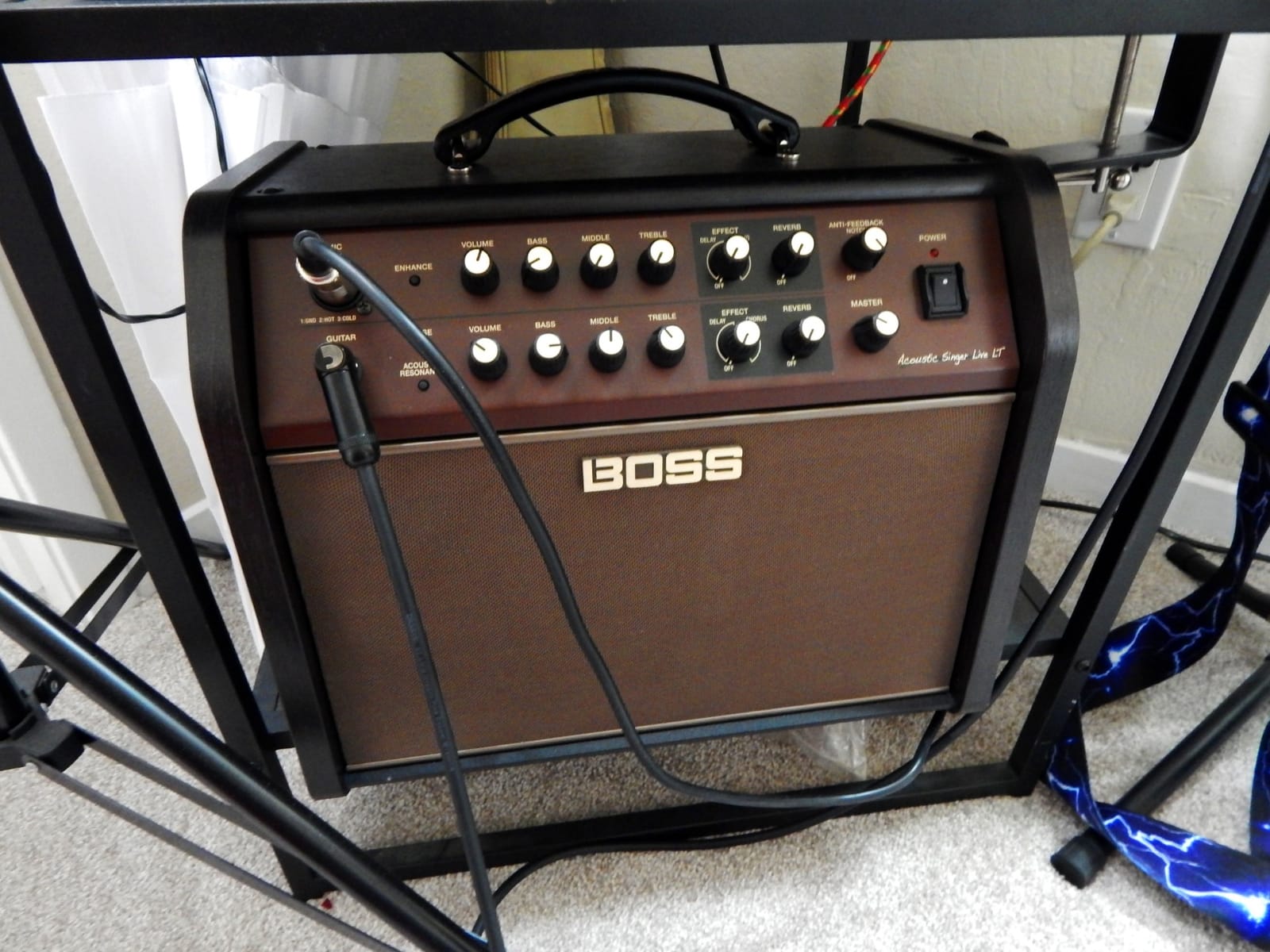
The Acoustic Resonance comes in three types now, each tailored to a different pickup style. Independent 3-band EQs on each channel let you sculpt guitar and vocals separately. The XLR DI jack and phones/recording output cover both live and studio use cases.
The honest critiques: the delay effect on vocals is quieter than expected, which disappointed some reviewers. The 60W rating is conservative; in large rooms the amp can clip if you push it. A small number of buyers report defects out of the box, though Boss’s customer service handles warranty claims well.
Who this amp works for
Professional singer-songwriters playing venues where feedback is a constant battle. Players with piezo-equipped guitars that sound harsh through other amps will love the Acoustic Resonance processing.
Who should skip it
Players wanting the simplest possible signal chain, or anyone who does not gig enough to justify the price. The Fender Acoustasonic 40 covers the same ground at a third of the cost for casual use.
How to Choose the Best Acoustic Guitar Amp for Your Needs?
Picking the right acoustic guitar amp comes down to matching the amp to your playing environment. Home practice, busking, and gigging all have different demands, and the wrong amp makes even great guitars sound bad.
Power and Wattage
For bedroom practice, 5 to 15 watts is plenty. Coffee shops and small venues need 30 to 60 watts to compete with conversation and a small drum kit. Mid-size venues with full bands call for 60 watts or more, ideally with a DI output to feed the house PA. Forum users on r/GuitarAmps consistently warn that underpowered amps are the #1 reason acoustic guitarists get lost in the mix.
Channels and Inputs
Solo players can get by with a single instrument channel, but singer-songwriters should insist on at least two channels: one for guitar, one for vocals. Look for XLR microphone inputs with phantom power if you use condenser mics. If you also play electric guitar occasionally, a dual-purpose amp can save money.
Anti-Feedback Technology
Feedback is the acoustic amp killer. Phase switches, notch filters, and frequency-cut EQs all help. The Boss ACS Live LT and Loudbox Mini BT handle feedback more gracefully than budget options. If you play reflective venues with hardwood floors, prioritize feedback control above power.
Effects and Modeling
Reverb and chorus are the two effects acoustic players actually use. Delay is a bonus for solo performers. A looper is a creative game-changer for songwriters. Vocal harmony (like on the Boss ACS series) is rare and impressive but not essential for most players.
Portability and Battery Power
Buskers and street performers need a battery-powered acoustic amp or a unit under 10 pounds. Home players can prioritize tone over weight. If you want a single amp for both home and travel, the Fishman Loudbox Micro and Yamaha THR5A are the best compromises.
Budget Considerations
Under $300: Fender Acoustasonic 15 and Yamaha THR5A. Under $500: Fender Acoustasonic 40, Fishman Loudbox Micro. Under $700: Fishman Loudbox Mini BT, Boss ACS Live LT. The sweet spot for serious gigging musicians is the $400 to $600 range.
For those still choosing a guitar to pair with one of these amps, our Martin acoustic guitars guide and parlor acoustic guitars roundup cover the most popular acoustic body styles in 2026.
Frequently Asked Questions
What is the best acoustic guitar amp for home use?
For home practice, the Yamaha THR5A is our top pick thanks to its tube-like modeling, battery option, and included Cubase AI software. The Fender Acoustasonic 15 is a strong budget alternative if you need a more traditional combo design.
What is the best acoustic guitar amp under $300?
Under $300, the Fender Acoustasonic 40 leads with 40 watts, dual speakers, and dual channels for guitar and vocals. The Fishman Loudbox Micro and Yamaha THR5A also sit in this range with strong feature sets.
What amp should I use for an acoustic guitar?
Use a dedicated acoustic guitar amplifier, not an electric guitar amp. Acoustic amps are designed to reproduce your natural tone cleanly, while electric amps add distortion and overdrive that ruin acoustic sound quality.
Can I use an electric guitar amp for acoustic guitar?
Technically yes, but the result is usually poor. Electric guitar amps color your tone with overdrive and cannot reproduce the full frequency range of an acoustic guitar. You will also get more feedback problems.
How many watts do I need for an acoustic guitar amp?
For bedroom practice, 5 to 15 watts works fine. For coffee shops and small venues, aim for 30 to 60 watts. For mid-size venues with full bands, you need 60 watts or more plus a DI output to feed the house PA system.
Final Verdict: Which Acoustic Amp Should You Buy?
After testing all eight amps, the Fishman Loudbox Mini BT remains my top pick as the best acoustic guitar amplifier in 2026 for most players. It balances clean natural tone, useful features like Bluetooth and DI output, and reliable build quality at a fair price. Singer-songwriters who want harmonies and a looper should step up to the Boss Acoustic Singer Live LT. Budget-conscious players will be very happy with the Fender Acoustasonic 40.
The best acoustic guitar amplifier is the one that matches your playing situation, whether that is quiet bedroom sessions, street busking, or full-band gigs. Use the buying guide above to match your needs, and you will end up with an amp that lets your acoustic guitar sound like itself, just louder.