
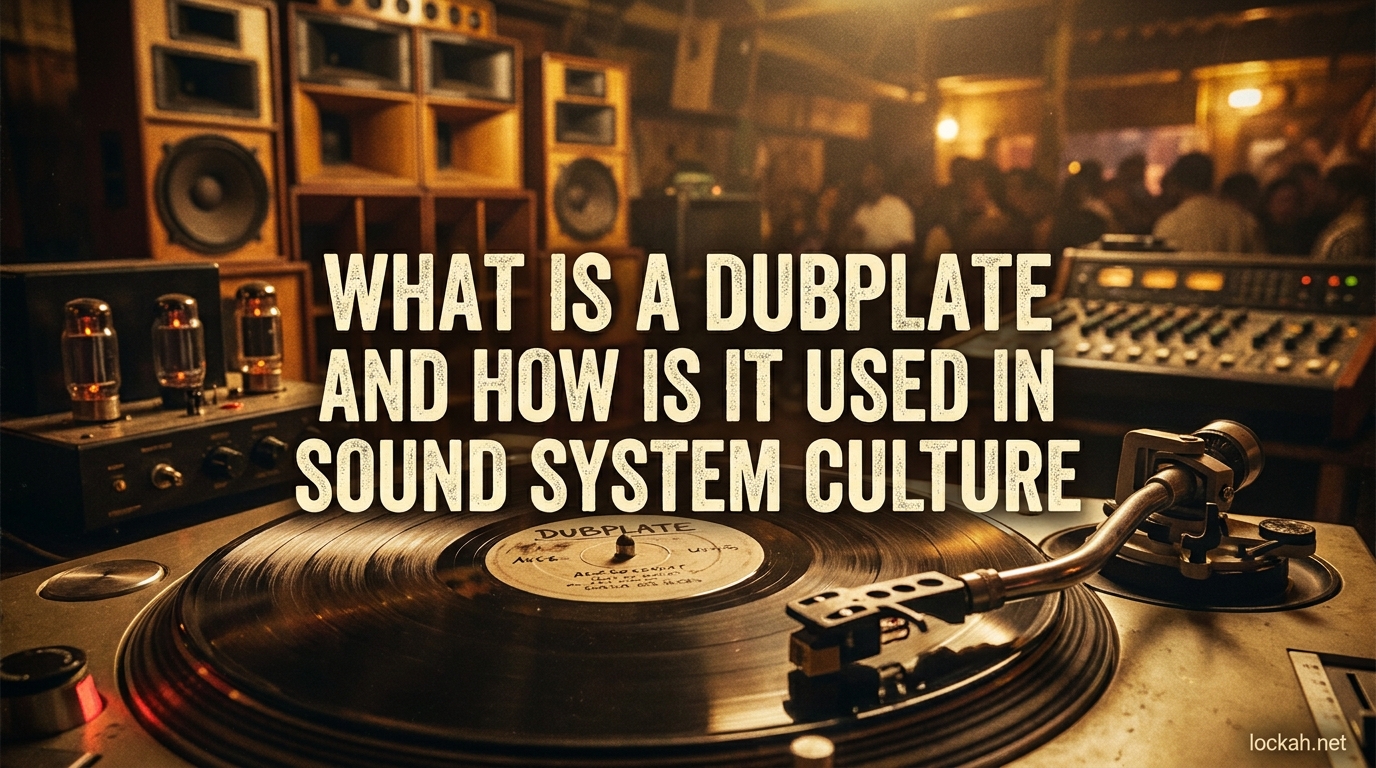
A dubplate is an exclusive, often personalized version of a track cut onto an acetate disc, traditionally used by sound systems to play unique music that competitors cannot access. These one-off pressings represent the heart of sound system culture, giving selectors and DJs a competitive edge through musical exclusivity. Understanding what is a dubplate and how is it used in sound system culture opens a window into one of music’s most fascinating traditions.
I remember the first time I held an actual dubplate. The weight felt different from regular vinyl. The surface had that distinct acetate sheen. Most importantly, I knew I was holding something that only a handful of people in the world possessed.
That exclusivity is what makes dubplate culture so enduring, even in our digital age.
Table of Contents
What Is a Dubplate?
A dubplate is a custom-made acetate disc containing a one-off pressing of a track, often featuring personalized lyrics, name drops, or exclusive versions unavailable anywhere else. Unlike commercial vinyl records that are mass-produced, each dubplate is unique to the person who commissioned it.
The term originates from Jamaica, where sound system operators would have special versions of reggae and dancehall tracks cut just for them. These discs allowed a sound system to play music that no other system had, creating an irresistible draw for audiences seeking fresh, exclusive tunes.
Technically, a dubplate consists of a thin layer of nitrocellulose lacquer coated onto an aluminum disc. A mastering engineer uses a precision cutting lathe to etch audio grooves directly into this surface using a diamond-tipped stylus. The result is a playable record that can be used on standard turntables.
How Dubplates Differ From Commercial Vinyl?
Commercial vinyl records are pressed from metal stampers in large quantities. Dubplates are cut individually in real-time. This difference matters for several reasons.
First, dubplates allow for immediate playback. There is no manufacturing delay. Second, each dubplate can be customized with specific lyrics or versions. Third, the limited lifespan of acetate means these exclusives remain truly exclusive.
A standard vinyl record might last for thousands of plays. A dubplate acetate typically degrades noticeably after 50 to 100 plays, sometimes fewer depending on the quality of the cut and the stylus used.
Origins in Jamaican Sound System Culture
Sound system culture emerged in Kingston, Jamaica during the late 1950s and early 1960s. Operators like Coxsone Dodd and Duke Reid would set up massive speaker systems at dances, competing to draw the biggest crowds through superior sound quality and exclusive music selections.
These early sound systems imported American R&B records, but as Jamaican musicians began creating their own music, the demand for exclusive versions grew. Producers started creating special mixes and versions specifically for favored sound systems.
The practice evolved naturally. If Sound System A had a version of a track that Sound System B did not, crowds would gravitate toward the exclusive provider. This competitive pressure drove innovation and created the culture of the dubplate.
The Rise of Specialized Studios
By the 1970s, dedicated dub cutting studios opened in Kingston. King Tubby’s legendary studio became synonymous with the dub genre itself, creating extended versions and special mixes that defined an era. These studios served as hubs where sound system operators would gather, share news, and commission their latest exclusives.
The social aspect cannot be understated. Studios functioned as community centers where relationships were built, deals were made, and the hierarchy of the sound system world was established and maintained.
The Role of Dubplates in Sound Clashes (2026)
Sound clashes represent competitive events where two or more sound systems battle for crowd approval through music selection, sound quality, and exclusive content. Dubplates serve as the ultimate weapon in these confrontations.
When a selector drops a dubplate featuring the name of their sound system in the lyrics, the crowd erupts. That moment of recognition, that personalized connection between artist and sound system, creates an electric atmosphere that commercial tracks cannot replicate.
Experienced clash competitors stockpile dubplates specifically for these events. They might have versions with lyrics dissing rival sound systems, or tracks that name-check their own crew in creative ways. The element of surprise is paramount.
The Psychology of Exclusivity
Human beings crave exclusive experiences. Sound system culture weaponizes this craving brilliantly. When a crowd hears a track they know cannot be found anywhere else, when they recognize their sound system being celebrated by name in the lyrics, loyalty forms instantly.
This psychological effect drives the entire dubplate economy. Artists charge premium rates for dubplate versions because the value created through exclusivity justifies the cost.
How Dubplates Are Made: The Cutting Process (2026)
Creating a dubplate requires specialized equipment and skilled operators. The process begins with a high-quality audio source, typically sent to the cutting studio as a WAV file or sometimes still as analog tape.
The mastering engineer prepares the audio for cutting, adjusting levels and EQ to optimize for the acetate medium. Different music requires different approaches. Bass-heavy tracks need careful handling to prevent the cutting stylus from jumping.
The cutting lathe itself is a precision instrument. The Neumann VMS-70 and VMS-80 models remain industry standards decades after their manufacture. These machines use a heated diamond stylus to carve grooves into the rotating acetate blank.
Step-by-Step Cutting Process
Step 1: The engineer mounts a fresh acetate blank onto the lathe spindle.
Step 2: Audio playback begins while the lathe rotates at the correct speed.
Step 3: The heated stylus descends and begins cutting the lead-in groove.
Step 4: As audio plays, the cutting head moves across the disc, carving the signal into the lacquer surface.
Step 5: The engineer monitors levels continuously, adjusting on the fly if needed.
Step 6: Once complete, the disc is inspected, labeled, and packaged for the customer.
The entire process takes roughly 15-30 minutes per side, depending on the length of the audio.
Evolution Through Genres: From Reggae to Jungle and Drum & Bass
While dubplates originated in Jamaican reggae and dancehall, the culture spread globally as sound system principles influenced new musical movements. The UK adopted these traditions wholesale during the 1970s and 1980s.
When jungle emerged in the early 1990s, dubplate culture exploded. Producers like Dillinja, Lemon D, and Roni Size cut hundreds of exclusive tracks that defined the scene. The competitive nature of jungle DJ culture made dubplates essential.
Drum and bass continued this tradition through the late 1990s and 2000s. Labels like Metalheadz and Ram Records maintained active dubplate cutting schedules. The scene’s emphasis on DJ skills and exclusive sets kept the practice alive.
Dubstep and Modern Continuations
Dubstep’s emergence in the 2000s brought another wave of dubplate culture to London and beyond. Producers like Mala, Coki, and Benga cut dubplates that circulated among a tight-knit community of DJs before ever seeing official release.
Today, the practice continues in UK garage, grime, and bass music scenes. While digital distribution has reduced some aspects of exclusivity, the cultural prestige of owning a physical dubplate remains undiminished among serious practitioners.
Dubplate Etiquette and Customs
Sound system culture operates according to unwritten rules that govern how dubplates are treated and shared. Understanding these customs matters for anyone entering the scene.
The queue at a dub cutting studio operates on respect and hierarchy. Established sound systems might receive priority treatment. Newcomers wait their turn and observe. The studio itself functions as neutral ground where rival systems coexist peacefully.
Sharing dubplates between sound systems happens, but always with permission. Playing another system’s exclusive without authorization constitutes a serious breach of protocol. Respect for exclusivity maintains the value of the entire ecosystem.
The Social Hub of Cutting Studios
Studios like Music House in London became legendary not just for their cutting services but for their role as community gathering points. Producers, DJs, and sound system operators would spend hours waiting, chatting, and building relationships.
This social function created a “shit filter” as one veteran producer described it. The time and cost investment meant only serious, quality tracks got cut. The community aspect ensured that standards remained high.
How to Get a Dubplate Made Today?
Despite predictions of its demise, dubplate culture persists into 2026. Several studios worldwide continue offering cutting services, with some modern innovations making the process more accessible.
Traditional acetate cutting remains available at select locations. Peckham Cuts in London, Dubstudio in Bristol, and various specialists in Jamaica and the United States maintain the classic approach. Expect to pay between £40-£90 per plate depending on length and quantity.
Modern plastic dubplates offer an alternative. These polycarbonate discs do not wear like acetate and can last for thousands of plays. The sound quality differs slightly, but for many applications, the durability advantage outweighs this concern.
The Process for First-Timers
Contact a studio directly to discuss your project. Provide high-quality audio files, typically 24-bit WAV format. Specify whether you want acetate or plastic, how many copies, and any special requirements.
Turnaround times vary from same-day service to several weeks depending on the studio’s workload. Rush jobs often command premium pricing.
Some studios now offer mail-order services, allowing you to send audio files digitally and receive finished dubplates by post. This has democratized access for producers outside major cities.
Acetate vs Modern Plastic Dubplates
Choosing between traditional acetate and modern plastic dubplates depends on your priorities and use case. Each material offers distinct advantages and limitations.
Acetate provides a warmer, more organic sound quality that many purists prefer. The material responds dynamically to the cutting process in ways that create subtle sonic characteristics. However, acetate wears out. After approximately 50-100 plays, noticeable degradation occurs.
Plastic dubplates, typically polycarbonate, last significantly longer. Some claim thousands of plays without degradation. The trade-off is a slightly different frequency response, often described as brighter or more clinical than acetate.
Cost and Practical Considerations
Acetate generally costs more due to material expense and the traditional prestige associated with the format. Plastic offers budget-friendly options for those who want the dubplate aesthetic without the fragility.
For collectors and occasional players, acetate remains the authentic choice. For working DJs who play the same plates regularly, plastic makes practical sense.
Frequently Asked Questions
How long does a dubplate last?
A traditional acetate dubplate typically lasts between 50 to 100 plays before noticeable degradation occurs. The exact lifespan depends on several factors including the quality of the original cut, the condition of the stylus used for playback, and proper handling and storage. Modern plastic dubplates made from polycarbonate can last for thousands of plays, offering a more durable alternative for working DJs who need longevity.
Why are dubplates so special to DJs?
Dubplates represent exclusivity and competitive advantage in DJ culture. A dubplate gives a DJ access to music that no other DJ possesses, often featuring personalized lyrics or name drops that create unique crowd reactions. Beyond the practical benefits, owning dubplates signals serious commitment to the culture and connects the holder to historical traditions of sound system competition that date back decades.
How do dubplates impact music culture?
Dubplates have shaped music culture by creating systems of exclusivity that drive innovation and quality. The investment required to cut a dubplate acts as a filter, ensuring only serious productions reach the dance floor. This culture influenced the development of entire genres including reggae, dancehall, jungle, drum and bass, and dubstep. Dubplates also created social structures around cutting studios that helped build and sustain musical communities.
How are dubplates used in sound clashes?
In sound clashes, dubplates serve as secret weapons that can turn the tide of competition. A selector might drop a dubplate featuring their sound system’s name in the lyrics, immediately rallying crowd support. Dubplates can also contain disses against rival sound systems or exclusive versions of popular tracks. The surprise element matters enormously in clashes, and an unknown dubplate that the crowd has never heard creates maximum impact.
What is a dubplate?
A dubplate is a custom-made acetate disc containing a one-off pressing of a music track, typically featuring exclusive or personalized content unavailable elsewhere. Originally created for Jamaican sound systems in the 1960s, dubplates allow selectors and DJs to play music that competitors cannot access, creating competitive advantage through exclusivity. Each dubplate is cut individually using a precision lathe and diamond-tipped stylus.
Conclusion
What is a dubplate and how is it used in sound system culture? The answer spans decades of musical innovation, competitive tradition, and community building. These exclusive acetate discs represent far more than custom records. They embody the spirit of musical competition and the value of scarcity in an increasingly abundant digital world.
From Kingston sound systems of the 1960s to modern jungle and bass music scenes, dubplates have maintained their cultural relevance. The practice of cutting exclusive versions continues because it serves real purposes. Exclusivity creates value. Competition drives quality. Community sustains tradition.
If you are serious about sound system culture, understanding dubplates is essential. Whether you ever hold one yourself or simply appreciate their role in musical history, the dubplate remains one of the most fascinating artifacts of underground music culture.
The next time you hear a DJ drop a track with personalized lyrics shouting out their sound system, remember the tradition behind that moment. Decades of cultural evolution, technical craft, and competitive spirit flow through those grooves.