
If you want one telescope that gets you onto galaxies and nebulae fastest, take the Celestron AstroMaster 130EQ. It is not the biggest scope here, but its 130mm mirror, German equatorial mount and slow-motion knobs give you steady, trackable views of the Orion Nebula, Andromeda and the Virgo cluster without much outlay. Aperture decides what you can see at the eyepiece, and this is the most direct way to buy a meaningful amount of it.
A deep sky object is anything beyond the solar system you observe through a telescope: galaxies, emission and reflection nebulae, planetary nebulae and star clusters. Not planets, not the Moon. That distinction matters because deep sky is a light-gathering problem, while planets are a magnification and steadiness problem. Magnification only makes an object bigger. Aperture makes it visible in the first place.
We spent weeks comparing the ten scopes below, checking apertures, focal lengths, mount designs, weights and the complaints buyers actually write about. Most of them sit in the 130mm to 150mm class, with two 8-inchers and one 102mm Maksutov and one 80mm triplet at the ends for comparison. Forum consensus is consistent on one point: buy the largest aperture you can actually carry to a dark site, because a 10-inch under a Bortle 3 sky beats an 8-inch under city glow every time. If you are still choosing a very first instrument, our beginner telescope guide covers the wider decision.
This roundup was updated in 2026 and reflects the current generation of visual deep sky equipment. Prices move constantly, so use the buttons rather than any figure you remember from a review.
Top 3 Picks for Deep Sky Viewing in 2026

Celestron AstroMaster 130EQ
- 130mm coated primary mirror
- 650mm focal length
- German equatorial mount with slow-motion knobs

Sky-Watcher Classic 200 Dobsonian
- 203mm aperture
- 1200mm focal length at f/6
- 2-inch Crayford-style focuser

Celestron StarSense 8 inch Dobsonian
- 203mm aperture
- 1200mm focal length
- app-guided object finding
Best Telescopes for Deep Sky Viewing in October
Every scope below appears in this table with its aperture, focal length, mount and the kind of deep sky target it favours. Use it to narrow the field before reading the individual reviews.
| Product | Specifications | Action |
|---|---|---|
| Celestron AstroMaster 130EQ |
|
Check Latest Price |
 Celestron NexStar 8SE Celestron NexStar 8SE |
|
Check Latest Price |
 Gskyer 130EQ Gskyer 130EQ |
|
Check Latest Price |
 MEEZAA 150EQ MEEZAA 150EQ |
|
Check Latest Price |
| Sky-Watcher Classic 200 Dobsonian |
|
Check Latest Price |
| Celestron StarSense 8 inch Dobsonian |
|
Check Latest Price |
 Sky-Watcher Heritage 150 Tabletop Sky-Watcher Heritage 150 Tabletop |
|
Check Latest Price |
 Dianfan 150EQ Dianfan 150EQ |
|
Check Latest Price |
 Sky-Watcher Skymax 102 Maksutov Sky-Watcher Skymax 102 Maksutov |
|
Check Latest Price |
 SVBONY SV550 80mm ED Triplet SVBONY SV550 80mm ED Triplet |
|
Check Latest Price |
1. Celestron AstroMaster 130EQ – the best first deep sky telescope
Celestron AstroMaster 130EQ Telescope for Deep-Sky Beginners
Aperture: 130mm coated primary
Focal length: 650mm at f/5
Mount: German equatorial
Weight: 17 lb
Pros
- Sharp aluminium and SiO2 coated 130mm mirror
- Two slow-motion knobs for easy tracking
- Red dot finder and two eyepieces included
- Tool-light setup with clear instructions
Cons
- Polar alignment takes practice to learn
- Light steel tripod legs and plastic fittings
- Heavy to move once assembled
The AstroMaster 130EQ carries the largest base of owner feedback in this roundup, and reading through those reviews the praise is remarkably consistent: owners like the image sharpness, they like the mount, and they tolerate the tripod. The 130mm primary carries aluminium and silicon dioxide coatings, and reviewers report the Orion Nebula showing the wings that a cheaper bare-aluminium mirror smears away.
What separates it from the other entry-level reflectors here is the mount. A German equatorial with slow-motion knobs in right ascension and declination means you can nudge a target and keep it put, which matters enormously for deep sky where you often spend twenty minutes on a single object. The included StarPointer red dot finder and the 20mm and 10mm eyepieces get you started without a shopping trip.
Buyers rate it as 4.3 out of 5 across more than 3400 reviews, and the recurring gripes are mechanical rather than optical. The tripod is the weak link, with light steel legs and plastic fittings that will wobble if you bump the eyepiece hard. It also needs periodic collimation, and a laser collimator is a worthwhile extra purchase.
The honest downside is the learning curve on polar alignment. Nobody hands you the scope and points at the Andromeda Galaxy. The newtonian also makes a poor astrophotography platform without significant modification, so treat this as a visual instrument.
Who the AstroMaster 130EQ suits best
This is the right pick for a total beginner who wants real galaxies and nebulae on the first clear night and does not want to learn star hopping from scratch. The 650mm focal length is short enough that the tube sits comfortably on the included tripod, which is a bigger practical win than it sounds.
It also works for suburban observers. At 130mm you can reach the brighter Messier objects and the Virgo cluster from a Bortle 5 backyard, and pushing to a darker site on a weekend is where the extra aperture really pays.
Where the AstroMaster falls short
If your interest is astrophotography, the German equatorial and the light tripod will disappoint you. The mount has no motor drive, and long exposures on this rig are painful at best.
It is also the bulkiest-per-user option here. At 17 pounds assembled it is manageable in a car, but the 38 inch footprint is awkward in a small flat. Anyone who wants a grab-and-go instrument should look further down the list.
2. Celestron NexStar 8SE – best for hands-free finding
Celestron NexStar 8SE Computerized Telescope – Schmidt-Cassegrain
Aperture: 203mm Schmidt-Cassegrain
Focal length: 2032mm at f/10
Mount: GoTo altaz fork
Weight: 24 lb
Pros
- True 8-inch aperture in a compact tube
- 40000 plus object GoTo database
- SkyAlign needs only three bright stars
- Easy to move and set up
Cons
- Bulkier and pricier than a manual Dobsonian
- Slight contrast loss from the secondary mirror
- Electronics need batteries or external power
The NexStar 8SE solves the problem that stops most people: finding things. You centre three bright stars, pick an object from a database of more than 40000 entries, and the fork arm slews to it. For observers who have never located M51 or M101 by hand, that is worth a great deal.
Optically it is an 8-inch Schmidt-Cassegrain, so you get real aperture in a 43.2 cm tube. The trade is focal ratio: at 2032mm it is an f/10 design, which means narrow fields and high magnification. Planetary and lunar detail is excellent, and globular clusters such as M13 resolve into glittering point masses.
Owners consistently praise the combination of aperture and motorized pointing. The most common criticisms are practical: the unit is heavy at 24 pounds, the hand controller takes practice, and the electronics need 8-AA batteries or a 12v supply for an all-night session. None of that touches the optics, which reviewers rarely complain about.
Rated 4.3 across 1579 reviews. Note that the secondary mirror obstruction in a Schmidt-Cassegrain costs a little contrast compared with a same-aperture Newtonian, so a Newtonian of equal aperture will still out-perform it on low surface brightness targets such as the Veil Nebula.
Who the NexStar 8SE suits best
It suits observers who know what they want to see but not where it is. If your sessions are spent hunting through a Messier or NGC list, GoTo removes hours of star hopping and frustration, and the 40,000 plus object database covers everything a visual observer realistically wants.
It is also a strong choice for families sharing one telescope. Pointing at a target takes seconds, so children get to the interesting part without waiting for an adult to line up an object.
Where the NexStar 8SE falls short
Deep sky is not the native strength of this design. The f/10 focal ratio gives you small, narrow fields, so sweeping large emission nebulae like M8 or the Veil is less pleasant than through a fast Newtonian, and the fork arm can introduce vibration at high power.
There is also a real cost to the electronics. Batteries die mid-session, alignment drifts, and the whole assembly is more fragile to transport than a Dobsonian base and tube. If pointing is not your main problem, an 8-inch manual Dobsonian does the same job for less.
3. Gskyer 130EQ – the budget equatorial package
Gskyer 130EQ Professional Astronomical Reflector Telescope
Aperture: 130mm multi-coated
Focal length: 650mm at f/5
Mount: German equatorial
Weight: 30.1 lb
Pros
- Coated all-glass optics give bright views
- Bundled with three eyepieces and a 3x Barlow
- German EQ mount tracks targets smoothly
- Bluetooth phone shutter included
Cons
- All-plastic focuser needs an upgrade later
- Shipped eyepieces are entry level
- Two-person carry once assembled
The Gskyer 130EQ is the accessory bundle winner. Where most competitors ship two eyepieces, this one includes three, plus a 3x Barlow lens, a finderscope and an adjustable tripod. Buyers mention the accessory count as generous more than anything else.
The optics are 130mm of all-glass with high transmission coatings, giving bright views of the Moon, the planets and the brighter galaxies and nebulae. At 650mm the f/5 focal ratio is fast enough to keep images punchy, and the toothless focusing base keeps focusing smooth despite the plastic focuser underneath.
Rated 4.4 from 454 reviews, which puts it above the group average on stars if you discount volume. The recurring advice from owners is consistent: upgrade the eyepieces and the focuser later, and expect some assembly and alignment work before the view is comfortable.
At 30.1 pounds it is among the heaviest things in the roundup despite being among the smallest in aperture, so transport is a genuine consideration. The included Bluetooth remote is a nice touch for phone photos but does nothing for visual observing.
Who the Gskyer 130EQ suits best
It suits a beginner who wants to own a full kit on one transaction and would rather spend nothing on accessories for a year. Three eyepieces plus a Barlow gives a usable magnification range straight out of the box.
It is also a reasonable second step for someone moving up from a 70mm or 90mm starter refractor. The German equatorial mount with tracking dials handles faint targets far better than a small altaz tripod, and 130mm opens up the Virgo cluster and the brighter Messier galaxies.
Where the Gskyer 130EQ falls short
The plastic focuser is the main cost-cut. It works for visual use but flexes, and anyone moving toward long-exposure imaging will replace it almost immediately. The included eyepieces are entry-level Kellners, and swapping them can shift focus enough to lose the target.
It is also not a portable instrument despite the modest aperture. Thirty pounds with a full-length tripod is awkward to move between rooms, let alone to a dark site an hour away.
If your budget sits at the lower end of the market, our entry-level telescope guide compares this against the wider starter range.
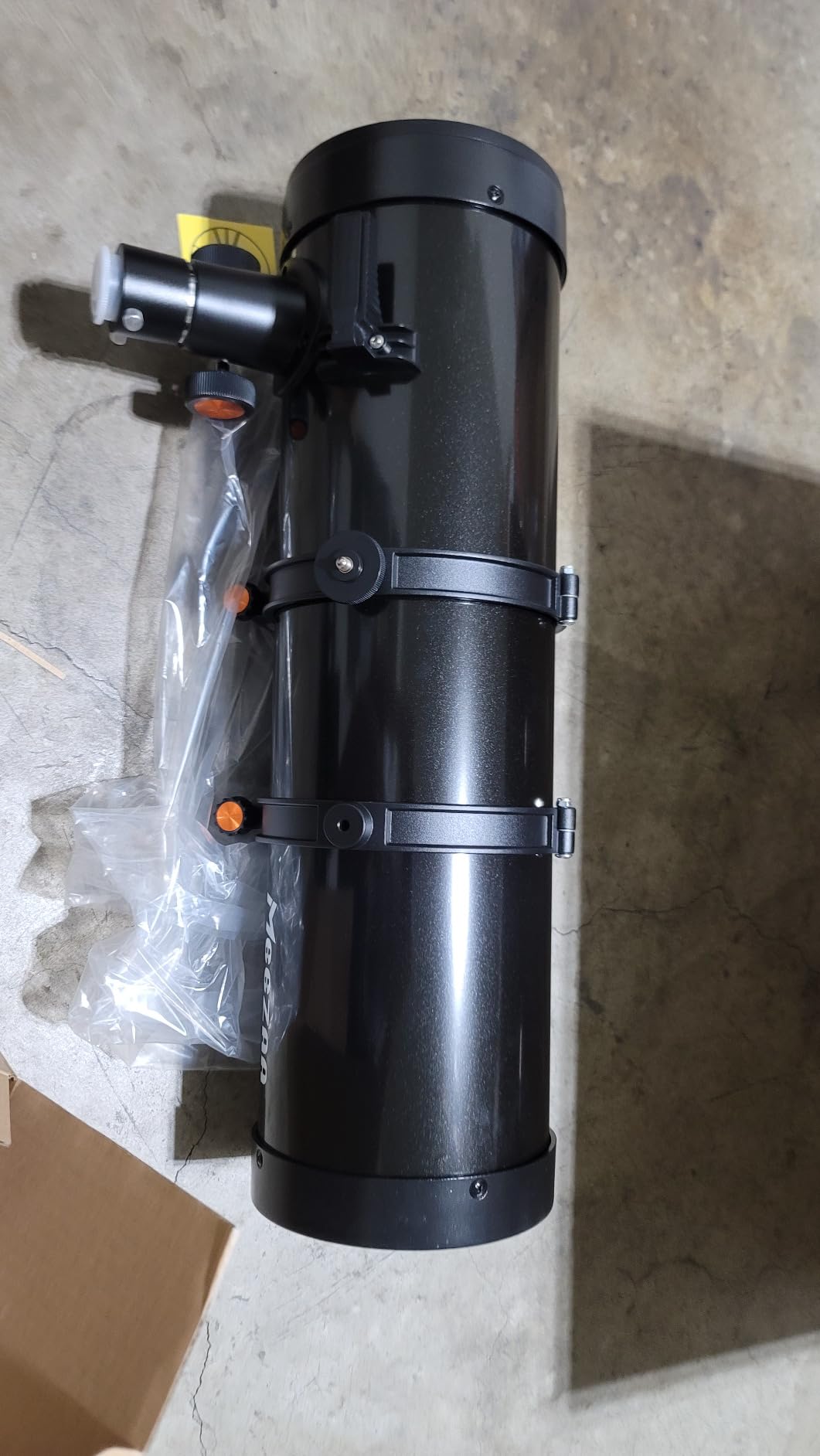
4. MEEZAA 150EQ – the 150mm that reaches further under city glow
MEEZAA Telescope, 150EQ Newtonian Reflector Telescope for Adults Astronomy Beginners, Professional Astronomical Telescopes with Equatorial Mount, Tripod, Phone Adapter, Moon Filter and Large Carry Bag
Aperture: 150mm
Focal length: 650mm
Mount: German equatorial with slow motion
Includes: 2 eyepieces, Barlow, moon filter
Pros
- 150mm aperture reaches fainter galaxies under light pollution
- Very complete box with moon filter and carry bag
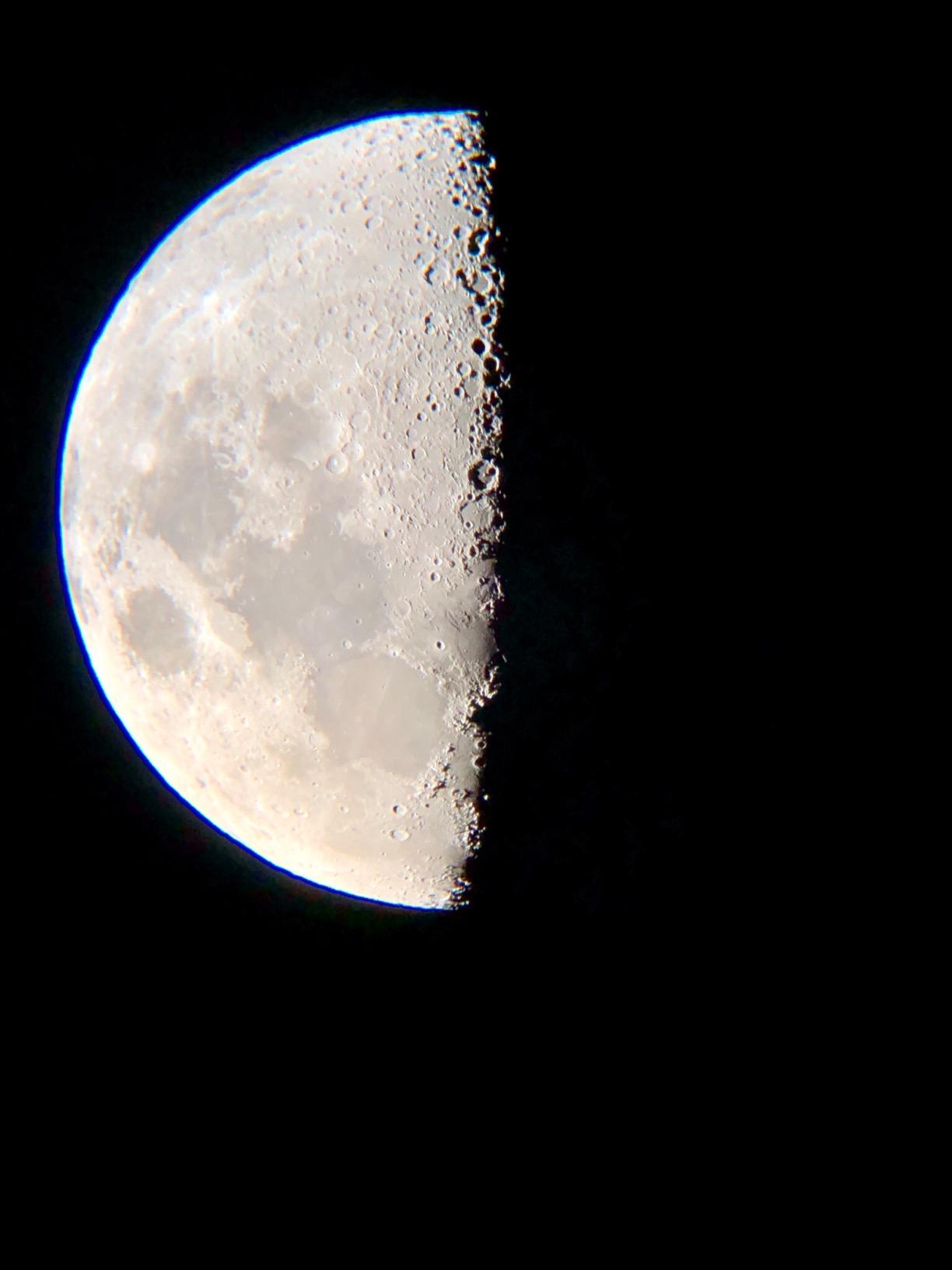
- Sharp views of the Moon and Saturn
- Slow-motion cables hold targets at high power
Cons
- Some buyers report mirror smaller than claimed
- Entry-level Kellner eyepieces
- Assembly has many small pieces
The MEEZAA 150EQ is the largest aperture available in this group without moving up to an 8-inch Dobsonian. A 150mm primary is around 33 percent more light-gathering area than the 130mm scopes above it, and reviewers single that out as the reason the scope reaches fainter galaxies and nebulae even under moderate light pollution.
At 650mm it is a long-ish tube for the aperture, so the images are not as bright per unit magnification as an f/5 design, but the contrast is good and the box is unusually complete: two eyepieces, a 2x Barlow, a red dot finder, a moon filter, a phone adapter and a carry bag that takes the whole kit.
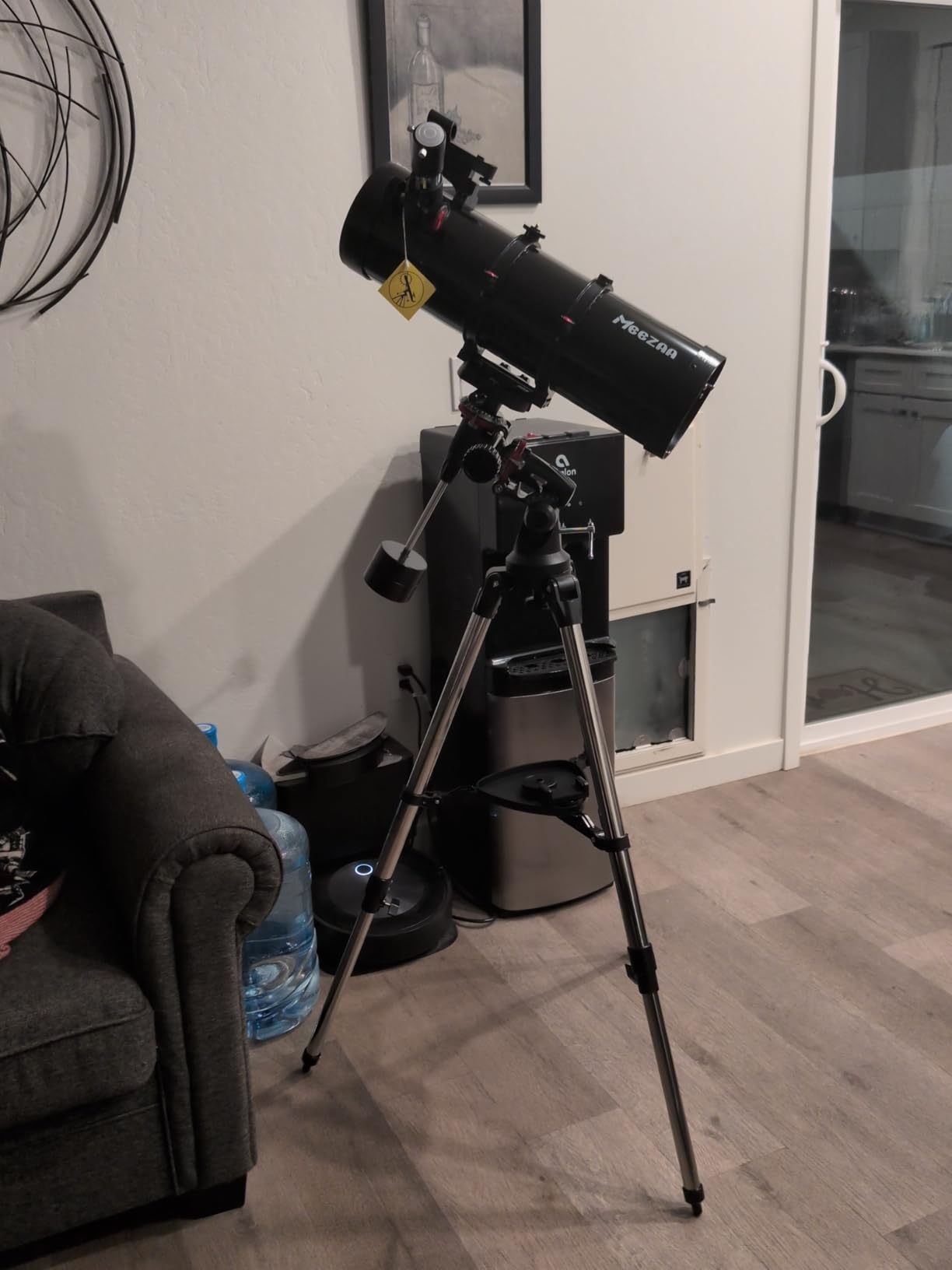
Rated 4.4 from 250 reviews. Owners consistently call out the optics-to-price ratio and say the Moon and Jupiter look excellent after collimation. The most-reported issue is a discrepancy between advertised and actual aperture, so check the mirror diameter on arrival if you care about the number.
The included Kellner eyepieces are the weak link, and swapping them can knock the focus enough to lose a small target. Assembly is also described as having many pieces and being non-intuitive if you have never built an equatorial mount before.
Who the MEEZAA 150EQ suits best
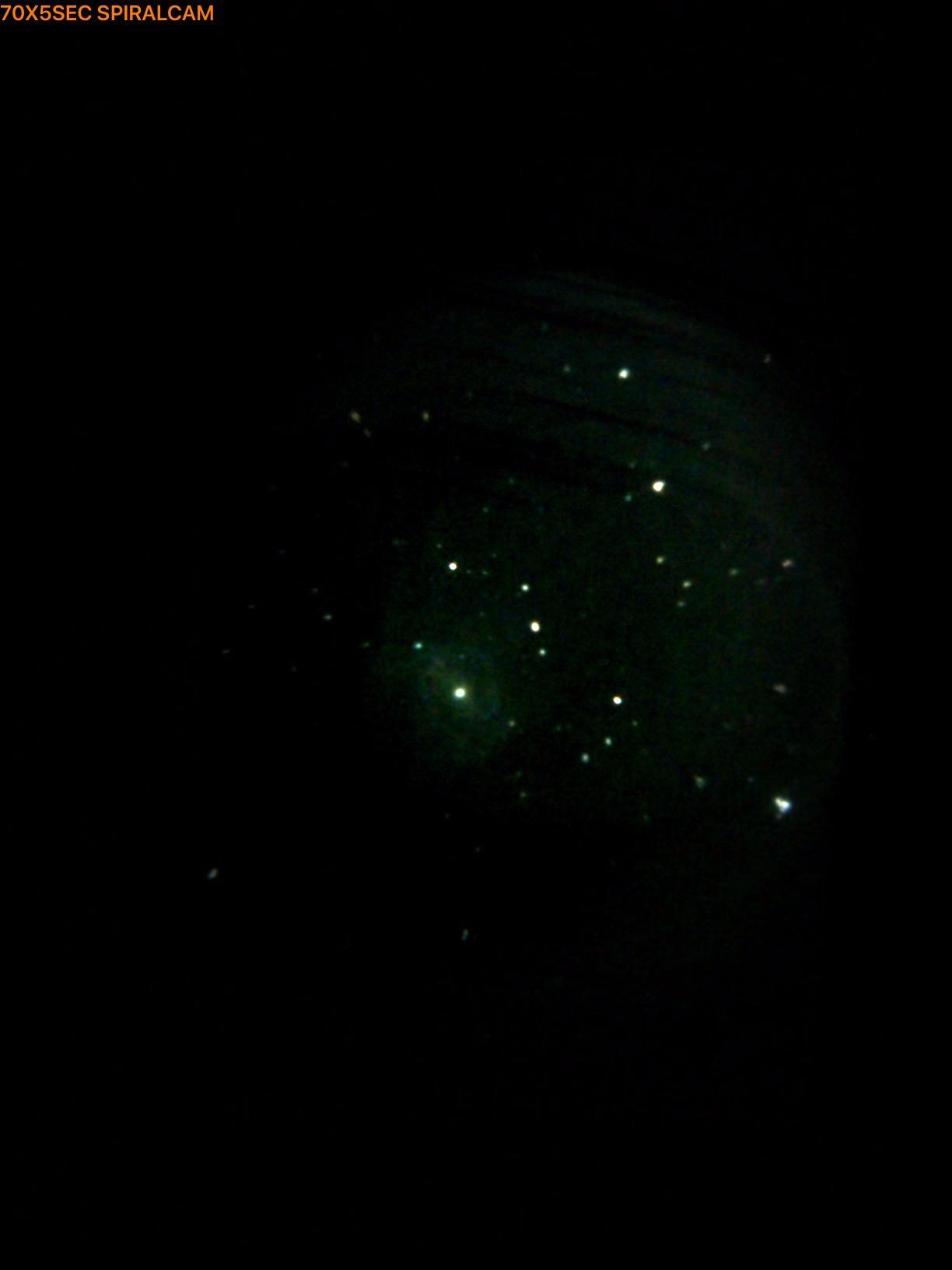
It suits suburban observers who want maximum aperture without stepping up to an 8-inch Dobsonian. 150mm from a backyard is a genuinely different experience from 130mm, particularly on objects like the Whirlpool Galaxy or the Dumbbell Nebula where extra light-grasp changes a smudge into a shape.
The moon filter and the carry bag also make it a good family instrument. The bag means the whole kit can live in a car boot rather than a cupboard, and the filter takes the edge off lunar glare for younger family members.
Where the MEEZAA 150EQ falls short
Assembly and polar alignment are the friction points. The German equatorial has slow-motion knobs, which helps a lot once aligned, but the initial setup is the hardest part of owning one. Budget an evening with the instructions.
It is also heavy once assembled, and reviewers consistently describe moving it as a two-person job. If your observing site is not at home, the weight matters more than the aperture.
5. Sky-Watcher Classic 200 Dobsonian – the faint galaxy specialist
Sky-Watcher Classic 200 Dobsonian 8-inch Telescope – Solid-Tube – Simple, Traditional Design – Easy to Use, Perfect for Beginners, White (S11610)
Aperture: 203mm parabolic
Focal length: 1200mm at f/6
Focuser: 2-inch Crayford style
Weight: 45 lb assembled
Pros
- 8-inch aperture at f/6 gives bright high-contrast views
- Reaches faintest stellar magnitude 14.2
- Tension control handles and Teflon bearings
- No polar alignment or star charts needed
Cons
- Heaviest item in the roundup at 45 pounds
- About 19 percent of reviews are 1-star on durability
- No motorised tracking so faint objects drift
This is the scope for the specific goal of seeing faint galaxies. An 8-inch parabolic primary at f/6 is the classic deep sky configuration: bright enough to punch through suburban glow, slow enough to avoid demanding perfect collimation under high power, and large enough to resolve spiral structure in M51 rather than just locating it.
The mirror coatings are specified at 94 percent reflectivity with a Radiant Aluminum Quartz treatment, and Sky-Watcher rates the faintest stellar magnitude at 14.2. The tube is fully baffled, which reduces the stray light halo around bright objects and is exactly what you want when hunting low surface brightness nebulae.
At 4.0 out of 5 it carries the lowest average rating in this roundup, and the reason is not the optics. Reviewers broadly agree the mirror quality is excellent for the money. The drag comes from durability and quality-control complaints about the base and the mirror cell, and about 19 percent of reviews are 1-star.
The transport problem is real. Forty-five pounds fully assembled, split 20 pounds of tube and 25 pounds of base, means this is a two-person lift and a car-space commitment. If the nearest dark site is more than an hour away, that friction stops people observing.
Who the Classic 200 Dobsonian suits best
It suits an observer with a car and a decent patch of dark sky who has decided that galaxies are the point. 203mm of aperture reaches objects that smaller scopes only hint at, and the f/6 focal length gives a comfortable field for sweeping the Virgo cluster or hunting the Veil.
It is also the easiest mount in the roundup to learn. There is no polar alignment, no electronics and no star chart requirement. You point the tube, you look, you adjust. That simplicity is why the design has survived since the 1960s.
Where the Classic 200 Dobsonian falls short
The weight and the size. This is the largest, heaviest instrument here, and it will not fit in a hatchback without the seats down. Owners who regret this purchase almost always cite portability, not optics.
The base has no motorised tracking, so faint targets drift within a few minutes at high magnification and you must re-centre. That is a manageable habit but it is an extra step at 200x. Buyers who want pointing automation should compare our Dobsonian telescope guide for manual versus GoTo bases.
6. Celestron StarSense Explorer 8 inch Dobsonian – the beginner finder
Celestron StarSense Explorer 8″ Dobsonian Telescope with Smartphone App
Aperture: 203mm XLT coated
Focal length: 1200mm
Mount: manual altazimuth Dobsonian
Weight: 43.4 lb
Pros
- Phone app and sky recognition remove the need for star charts
- 8-inch XLT coated Newtonian shows M42 and M31 well
- Stable manual base for smooth pointing
- Works from suburban and city locations
Cons
- Needs a compatible smartphone and paid app unlock
- No tracking so targets drift
- Heavy at 43.4 pounds
Where the Classic 200 solves the finding problem with simplicity, the StarSense Explorer solves it with technology. You dock your phone in the included cradle, the app compares star patterns to work out where you are pointing, and then draws arrows to walk you onto the target. First-time observers consistently credit this as the reason they kept using the scope.
Underneath it is a serious instrument. The 203mm primary carries XLT reflective coatings with silicon dioxide and tantalum pentoxide, and reviewers report the Orion Nebula, Andromeda and Jupiter all look good through it. The 2-inch Crayford focuser, 25mm eyepiece, collimation cap and accessory tray are a better starting kit than most 8-inch packages.
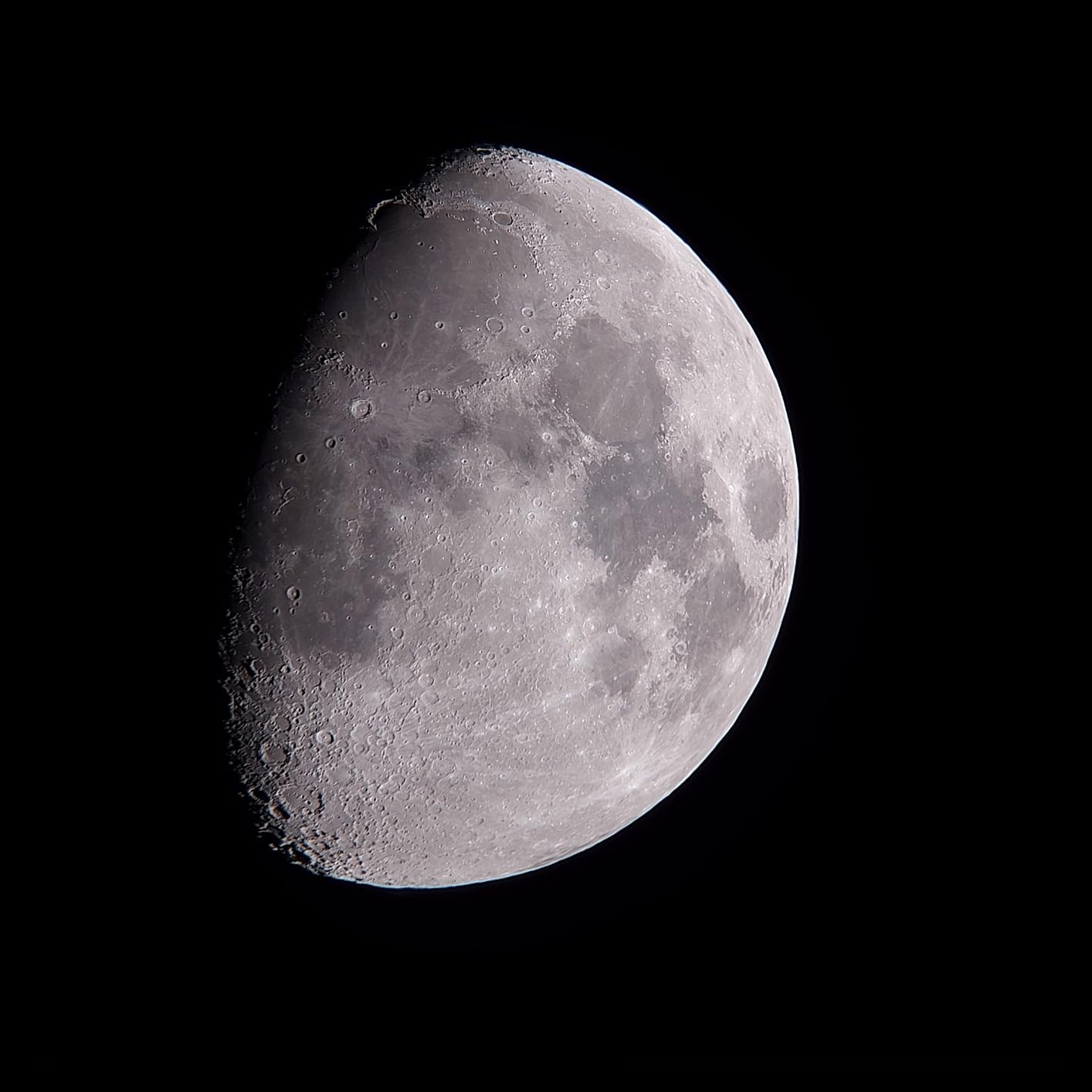
Rated 4.4 from 190 reviews. The star rating is strong, but the dependency is real: a compatible smartphone and a paid app unlock are required for full function, and the manual altazimuth mount means targets still drift out of the field with no tracking to recover them.
It is also the second heaviest scope in the roundup at 43.4 pounds, and it is awkward to move assembled. Phone dock alignment is also imperfect when you use the bullseye indicator precisely, which is a small annoyance that only matters if you are trying for long exposures.
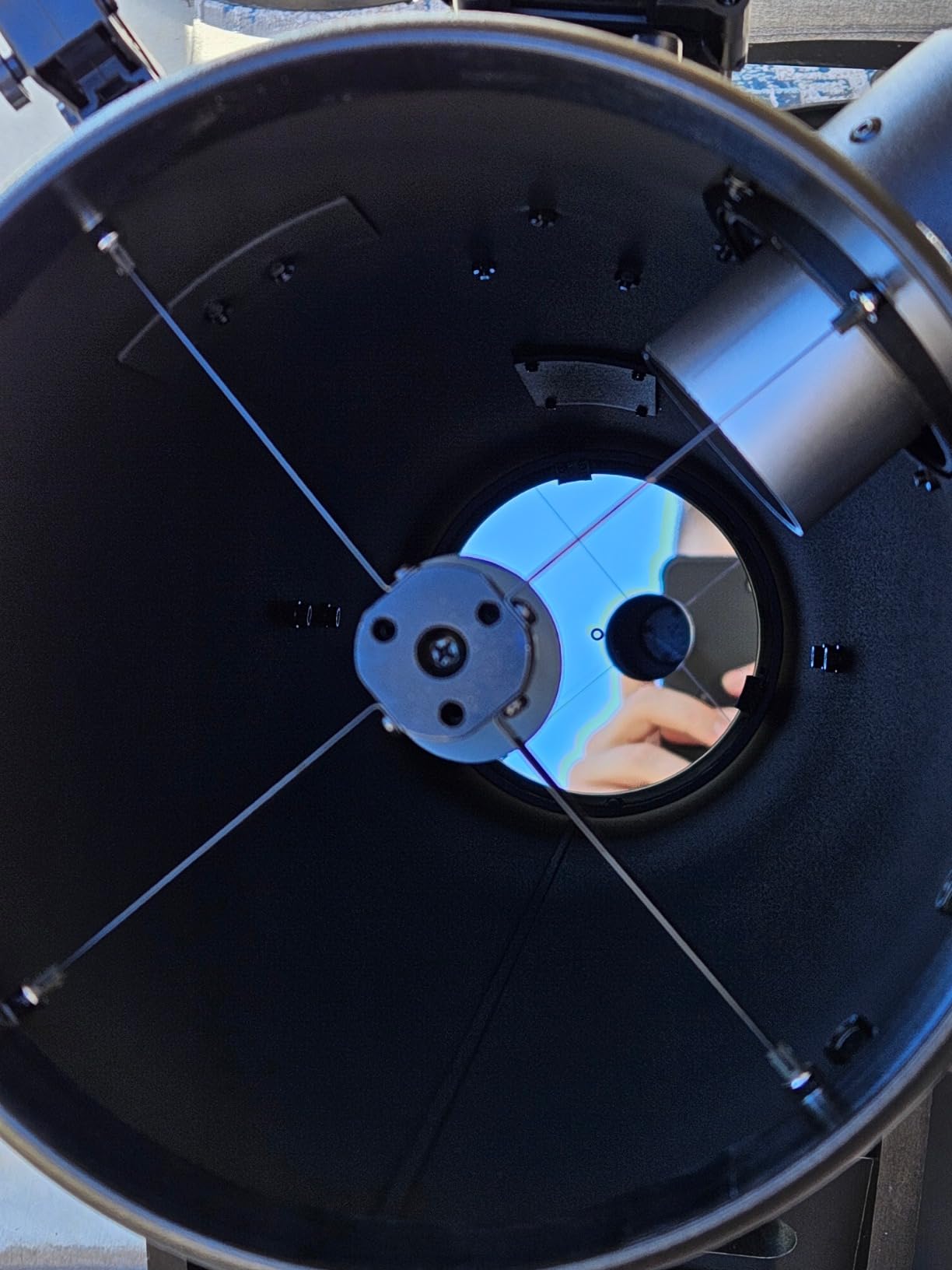
Who the StarSense Explorer suits best
It suits someone whose real obstacle is not aperture but confidence. If you have never held a telescope and worry about pointing at nothing, this removes the steepest learning curve while still giving you 8 inches of light.
It also suits anyone observing from a light-polluted site who wants a curated target list rather than a planisphere. The app generates recommendations based on your time and location, which is exactly what a new observer needs on a cold evening.
Where the StarSense Explorer falls short
The app dependency is a genuine downside. If your phone is old, unsupported, or you would rather not pay for the unlock, most of the convenience disappears and you are back to star hopping with an 8-inch Dobsonian, which is still fine but no longer special.
It is a manual mount, so faint objects drift and you re-centre. And at 43.4 pounds the weight is comparable to the Classic 200, so the portability argument against 8-inchers applies here too.
7. Sky-Watcher Heritage 150 Tabletop Dobsonian – the portable one
Sky-Watcher Heritage 150 Tabletop Dobsonian Telescope – Perfect for Beginners, Easy Setup, Portable, and Fun (S11710)
Aperture: 150mm parabolic
Focal length: 750mm at f/5
Tube: collapsible, keeps collimation
Weight: 23 lb
Pros
- 150mm aperture with crisp contrast-rich views
- Fast f/5 ratio keeps images bright and wide
- Collapsible tube stores small without losing collimation
- Lowest weight of any 150mm class scope here
Cons
- No eyepieces included
- Needs a sturdy table or stand
- No tracking so targets drift quickly
The Heritage 150 is the telescope to buy if your dark site is not at home. It collapses into a small package, keeps its collimation when folded, and at 23 pounds is the lightest thing in this roundup with a real 150mm aperture. The f/5 ratio keeps images bright, which is exactly what you want from a compact instrument used under a suburban sky.
The borosilicate parabolic primary carries the same Radiant Aluminum Quartz coating used on Sky-Watcher’s larger tubes, and reviewers describe the Moon, planets and brighter deep sky objects as crisp and contrast-rich. The tabletop base uses rubber feet to damp vibration, which matters when you are leaning on a table at high power.
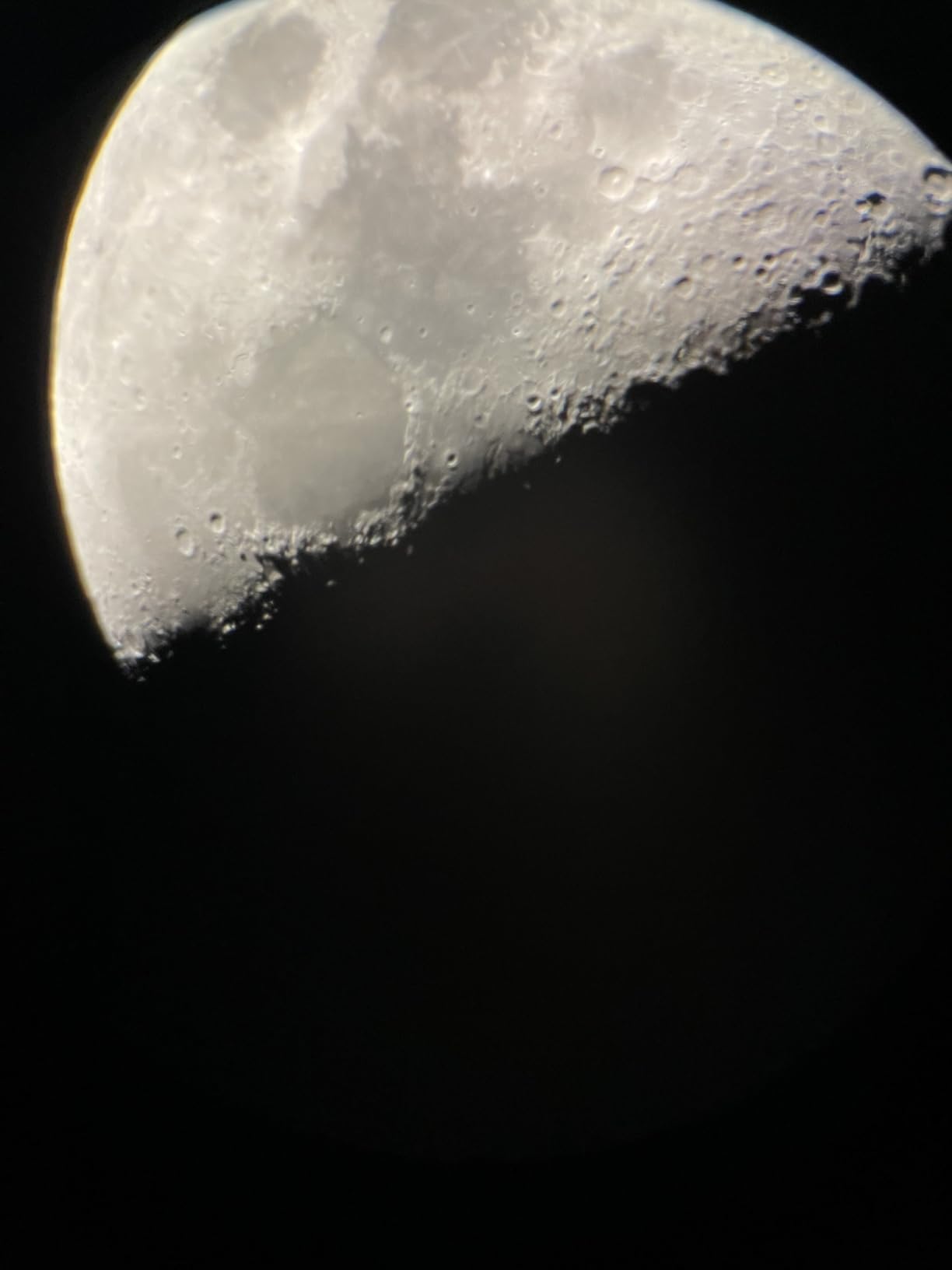
Rated 4.2 from 104 reviews. Optical quality is described as good for its size class, and the low-friction setup with no equatorial alignment is repeatedly praised. The gap in the reviews is consistent: eyepieces are not included, so you budget for them before the first session.
The manual tabletop mount means no tracking, and at high magnification targets drift quickly, which is more noticeable with a short 750mm tube than with a long one. You also need a table or stand at a comfortable standing height, so it is not quite as grab-and-go as the name suggests.
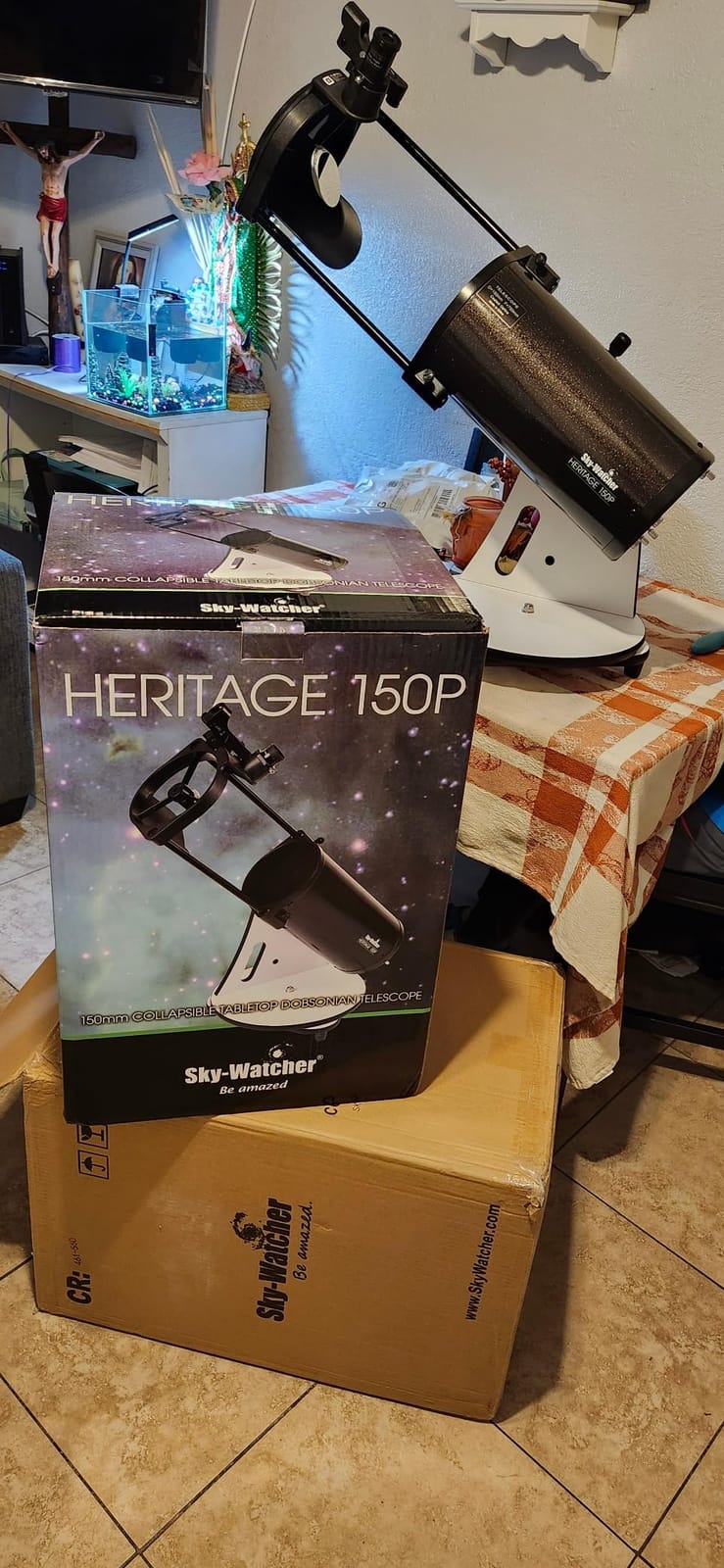
Who the Heritage 150 suits best
It suits observers who travel to dark sites, live in flats with no garden space, or want a second instrument that fits in a cupboard. 150mm is still enough aperture for the Orion Nebula, Andromeda, the Ring Nebula and the brighter globulars, so you are not sacrificing the deep sky experience entirely.
It is also a good first telescope for a child or a family sharing a session, because setup is genuinely simple and there is nothing to align. Point, look, adjust.
Where the Heritage 150 falls short
The empty accessory box. Buying eyepieces and a finder separately adds cost and delay before the first night, and this is the main reason it trails the 150mm packages on value.
It also gives up magnification range with its 750mm focal length, so faint planetary detail and small deep sky targets are harder than in a longer scope. And a tabletop mount with no tracking means every object needs re-centring.
8. Dianfan 150EQ – the best value 150mm kit
Dianfan 150EQ Professional Astronomy Telescope for Adults High Powered
Aperture: 150mm fully coated
Focal length: 650mm
Mount: pre-assembled German EQ
Weight: 31 lb in carry bag
Pros
- Genuinely large aperture with clean optical coatings
- Pre-assembled EQ mount cuts setup to about 20 minutes
- Kit includes finder
- phone adapter
- moon filter and bag
- Stainless steel tripod with adjustable height
Cons
- Entry-level eyepieces limit planetary detail
- Altitude slow-motion is stiff under load
- Tracking is manual and needs periodic adjustment
It is the option for anyone who dreads assembly. The equatorial head arrives pre-assembled, and reviewers report roughly 20 minutes from unpacking to first look. That alone removes the most common reason new telescope owners give up in the first month.
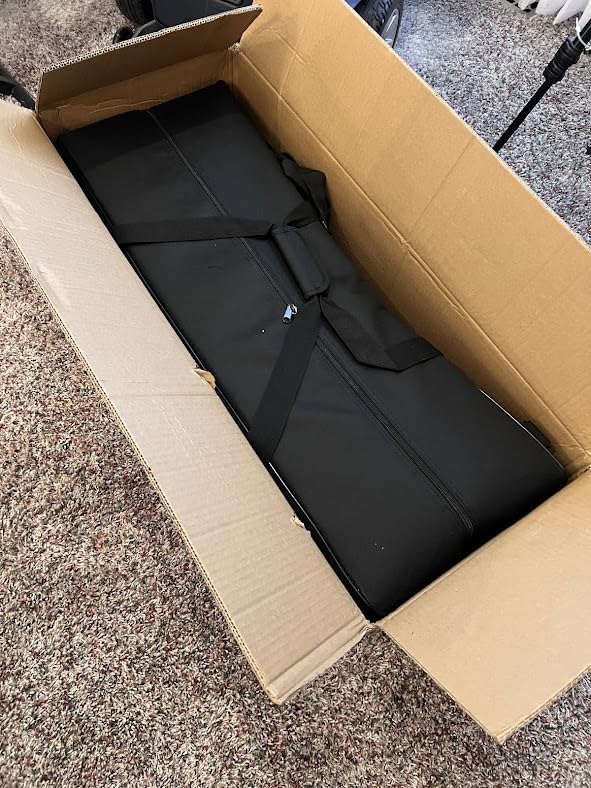
The equipment is the whole package: a 150mm fully coated reflector at 650mm, a stainless steel tripod adjustable from 48.4 to 66.2 inches, and a red dot finder, phone adapter, moon filter and custom carry bag in the box.
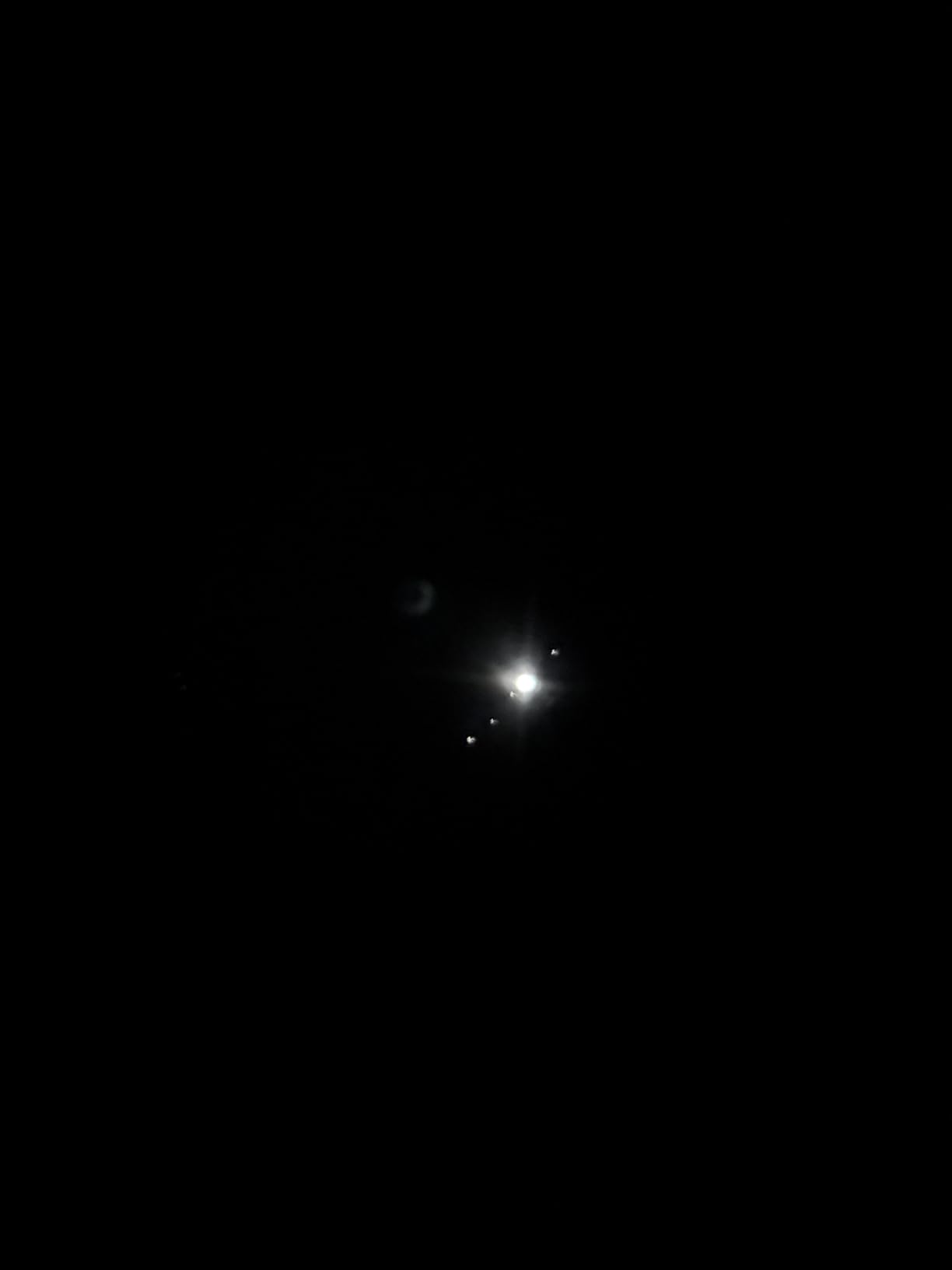
Rated 4.3 from 286 reviews. The kit is the headline: red dot finder, phone adapter, moon filter and a custom carry bag that holds the whole rig at 14 kg. The most common complaints concern the altitude slow-motion, which owners report is stiff because of the weight it carries.
The included eyepieces are entry-level, and fine eyepieces are needed for the best planetary detail at higher magnification. Swapping eyepieces can also lose focus and force you to re-find the target, which is a recurring theme across this class of telescope.
Who the Dianfan 150EQ suits best
It suits a family that wants one kit to cover the Moon, the planets and the brighter deep sky without a second purchase. The adjustable tripod and included accessories make it a complete starting setup rather than a bare optical tube.
It is also a good fit for someone who will observe at home and wants manual tracking. The German equatorial with dials and slow-motion cables keeps a faint galaxy in the field far longer than a plain altazimuth tripod, which matters on the longer targets.
Where the Dianfan 150EQ falls short
The stiff altitude adjustment is the standout flaw, and it is the control you use most on a faint object. The mount is also manual, so tracking still needs periodic correction even though it is much better than a simple altaz mount.
At 31 pounds in the bag it is not a travel instrument, and the included Kellner eyepieces will be the first thing you replace.
9. Sky-Watcher Skymax 102 Maksutov-Cassegrain – the grab-and-go option
Sky-Watcher Skymax 102mm Maksutov-Cassegrain – Large Aperture Compound-Style Reflector Telescope
Aperture: 102mm
Focal length: 1300mm at f/12.7
Tube only, no mount
Weight: 4.6 lb
Pros
- 4.5 star rating with sharp planetary views
- Only 4.6 pounds and very compact
- Fully baffled tube with 94 percent reflectivity mirrors
- Vixen dovetail fits any standard mount
Cons
- Sold as optical tube only with no mount
- 102mm aperture limits the faintest targets
- Manual focus needs frequent refocusing
At 4.6 pounds and 12.25 inches long, the Skymax 102 is the only instrument here you can genuinely carry in one hand to a field, a balcony or a car boot in thirty seconds. It is a 102mm Maksutov-Cassegrain with a 1300mm focal length, so it is built for magnification rather than for light.
Optically it is among the best rated items in the roundup at 4.5 out of 5, and reviewers single out sharp, contrast-rich planetary images and clean dark skies from the fully baffled tube and 94 percent reflectivity mirrors. The kit includes 10mm and 25mm eyepieces, a red dot finder, a 90-degree star diagonal and a padded bag.
The critical detail is that this is an optical tube only. No mount and no tripod are included, so the true cost includes a solid altazimuth head or an equatorial mount before the first use. The Vixen-style dovetail with a 1/4-20 thread makes that easy, and it lets you rebalance the scope later.
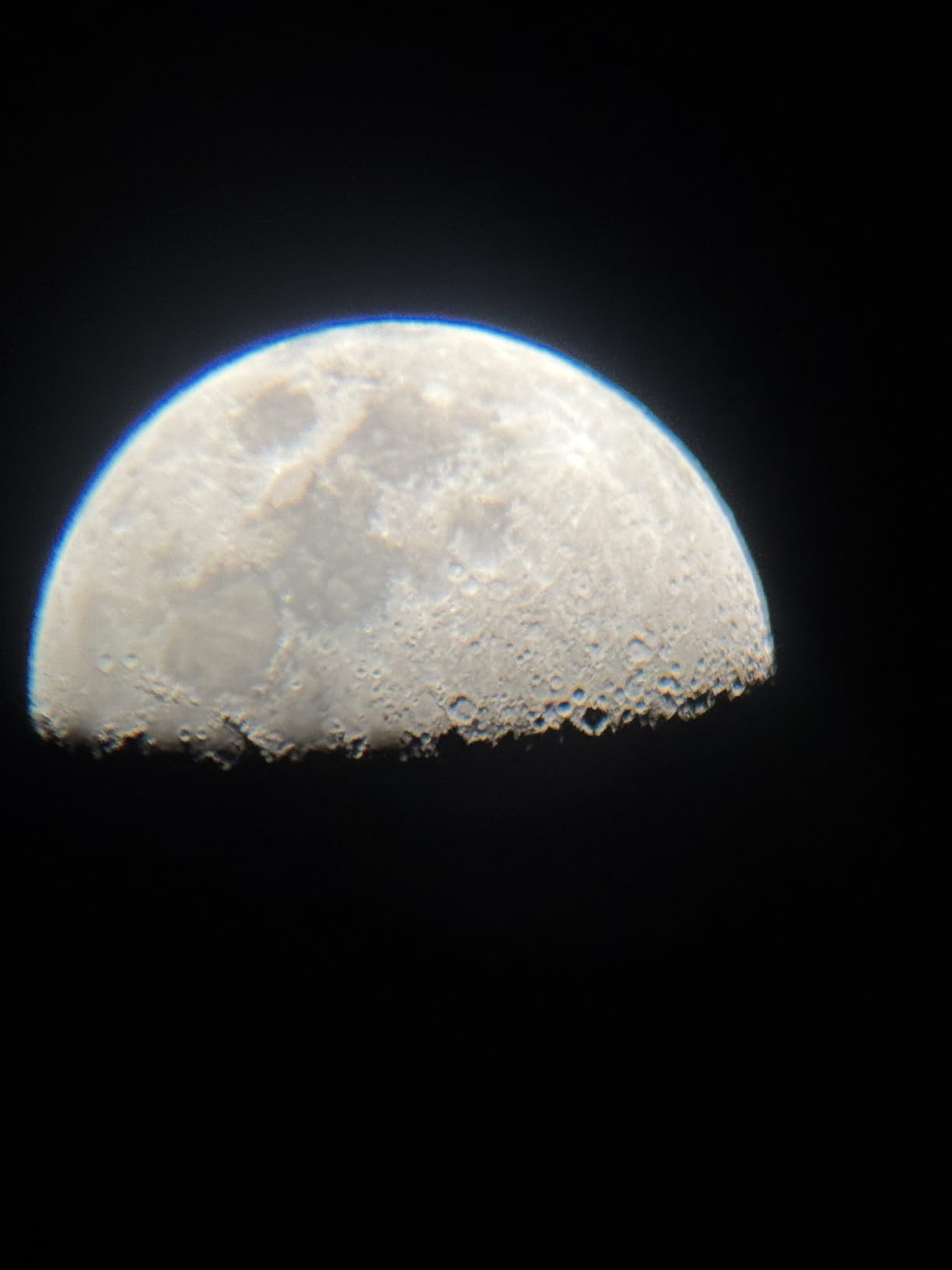
At 102mm the aperture is the limit for deep sky. You will see the Moon, Jupiter, Saturn, the Orion Nebula and Andromeda, and the brighter clusters, but the faint galaxies and low surface brightness nebulae that define this hobby will stay out of reach.
Who the Skymax 102 suits best
It suits a city observer who wants a permanently set-up telescope in a small apartment, or a traveller who wants a real optical instrument rather than the flimsy 70mm starters sold for travel. Under a suburban sky it still reaches the Moon and planets well.
It is also a strong second instrument for anyone who already owns a Dobsonian and needs something with the opposite character. A long f/12.7 Maksutov on a steady mount gives planetary detail that a fast Newtonian on a simple base cannot match.
Where the Skymax 102 falls short
It is the wrong primary instrument for this particular article. 102mm is less than half the light-gathering area of an 8-inch scope, and if galaxies and nebulae are your interest you should spend elsewhere.
Manual focus also needs frequent attention at high power, and the secondary needs occasional alignment adjustment. Add the missing mount to the equation and the total cost climbs quickly for a tube that will never compete on deep sky.
10. SVBONY SV550 80mm ED Triplet – the wide-field refractor
SVBONY SV550 AP0 Telescope, 80mm ED F6 Triplet Apochromatic Refractor OTA
Aperture: 80mm triplet
Focal length: 480mm at f/6
Tube only with Vixen dovetail
Weight: 6.3 lb
Pros
- Triplet ED glass with almost no false colour
- Build quality rivals premium brands
- 2.5 inch magnesium dual-speed focuser with 10:1 ratio
- 5.6 degree field shows large objects whole
Cons
- Optical tube only
- mount and diagonal sold separately
- Light focus locks can shift after a bump
- Focuser tube short for electronic autofocusers
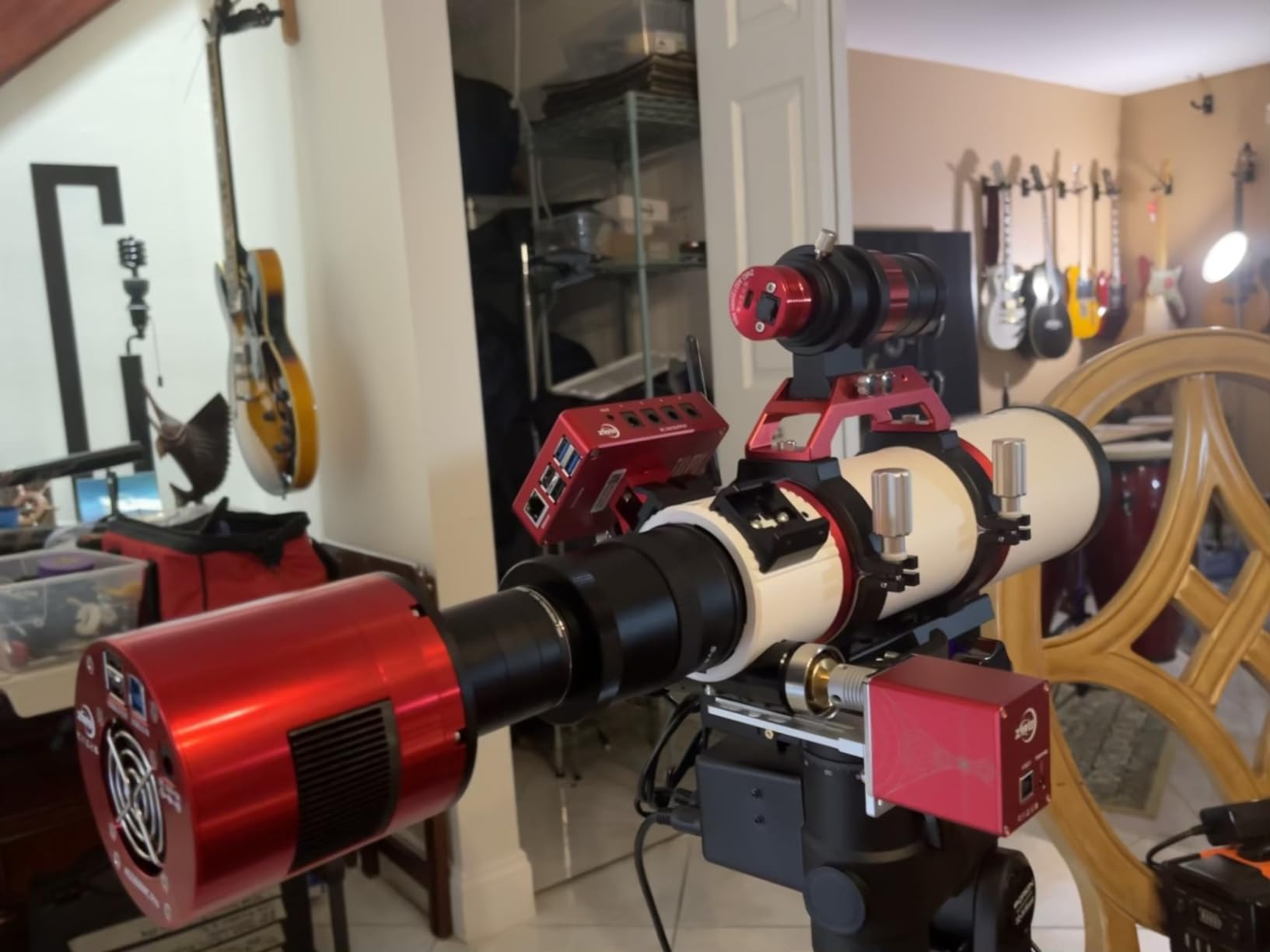
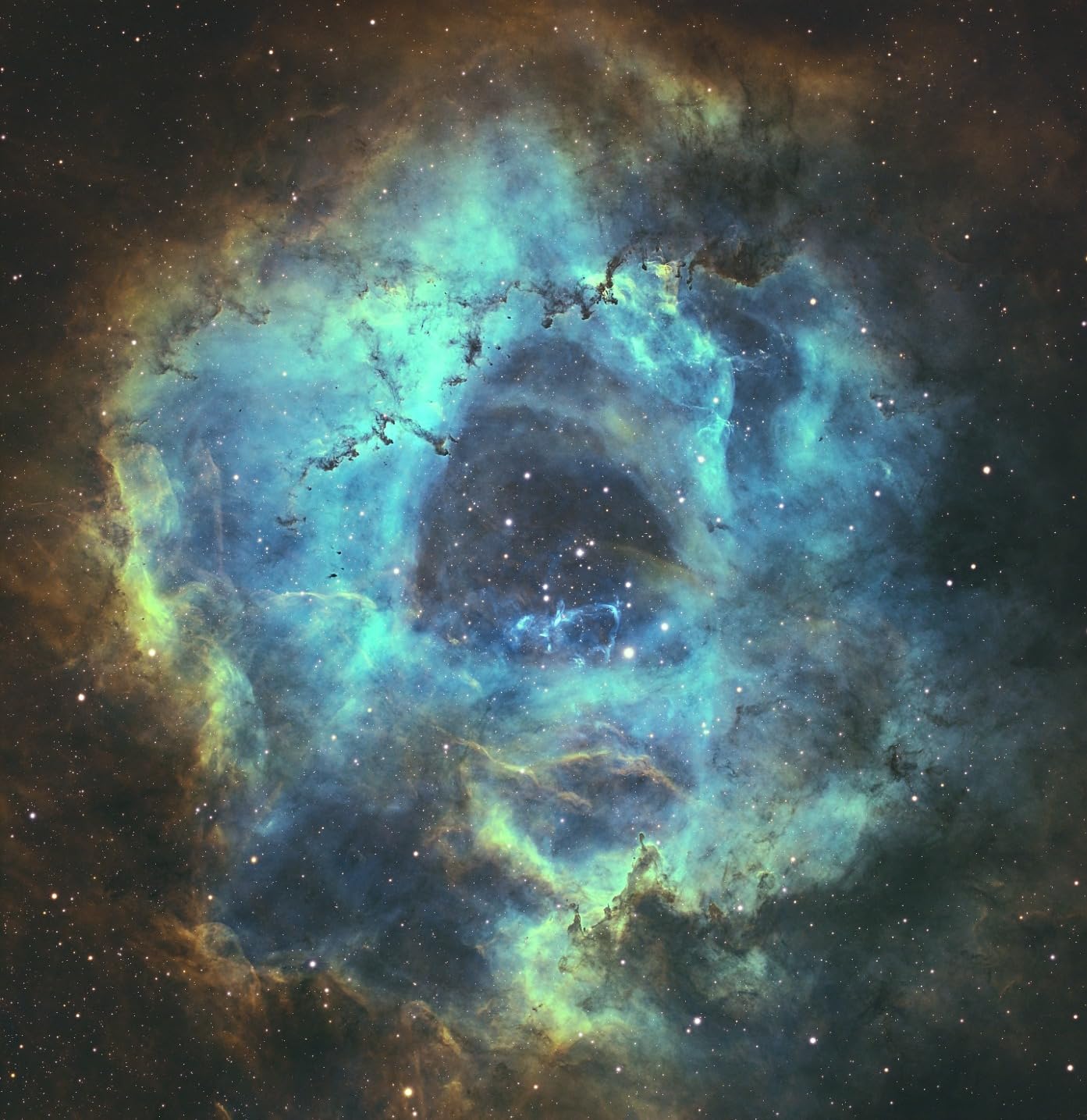
The SV550 is the only refractor in the roundup and the odd one out. An 80mm air-spaced triplet using S-FPL51 low-dispersion glass plus two correction elements produces virtually no chromatic aberration, so stars are pinpoint and the Orion Nebula shows colour rather than a blue fringe. A 5.6 degree field also means large objects like the Andromeda region and the Veil fit in one view.
The 2.5 inch magnesium alloy dual-speed focuser with a 1:10 ratio is genuinely serious hardware, and internal baffles in the focuser and lens barrel suppress stray light. Owners compare the fit and finish favourably to premium branded tubes at a fraction of the cost.
It carries a 4.5 rating, matching the Skymax for the highest in the group, from 39 reviews. That is a small sample, so treat the number as encouraging rather than conclusive. The criticisms are all accessory-related: light focus locks that can shift after a bump, a focuser tube too short for some electronic autofocusers, and occasional examples arriving with internal dust between lens elements.
It is also an optical tube only. A mount, a diagonal, a finder and an imaging train all have to be purchased separately, which makes it a specialist choice for someone who already knows what they are doing.
Who the SV550 suits best
It suits an experienced observer who wants wide-field, high-contrast views of large targets rather than maximum light on small ones. Seeing the Veil Nebula, the North America Nebula or the whole Andromeda group in one field is something no instrument in this roundup can do.
It is also the natural companion to a Dobsonian. A fast 8-inch for globulars and small galaxies, an 80mm triplet for wide nebulae, is a pairing many visual observers end up with. Our refractor telescope guide covers the wider aperture options if 80mm is not enough.
Where the SV550 falls short
80mm is a small aperture for deep sky. Contrast is superb, but total light is limited, so the fainter galaxies stay invisible regardless of how good the glass is. This is a second instrument, not a first one.
The accessory cost is the real barrier. Nothing needed to actually use it comes in the box, and light focus locks mean a knock in the dark can shift the focus or let the tube slip in its rings. Buy a sturdier mount than the price suggests.
Aperture Reality Check: What Each Size Actually Shows
Light-gathering power scales with the square of aperture, so the jump from a 6-inch to an 8-inch is far bigger than the two-inch difference suggests. Relative to a 6-inch scope, an 8-inch gathers about 178 percent of the light, a 10-inch about 278 percent, a 12-inch about 400 percent and a 14-inch about 544 percent. This is why observers on forums repeat the same advice: step up a size rather than buying better eyepieces.
Here is an honest view of what each class in this roundup delivers. A 102mm Maksutov shows you the Orion Nebula as a fuzzy patch with structure, and M31 as an oval smudge. A 130mm Newtonian shows the Orion Nebula’s wings and trapezium, resolves M13 into a granular ball, and gives you the Ring Nebula as an annulus. A 150mm brings in the Dumbbell and the Whirlpool’s companion. An 8-inch turns the Veil from a suggestion into structure and starts to resolve the spiral arms of M51.
The other limit is sky brightness, not aperture. Under a Bortle 8 city sky, an 8-inch shows you maybe a Bortle 3 object at half its true contrast. No amount of glass fixes that. Travel matters as much as aperture, which is why several buyers on r/telescopes recommend driving an hour to reach darker ground before buying anything larger. A 10-inch under a dark sky will outperform an 8-inch under city glow, and the reverse is also true.
Eyepieces matter far less than most buyers assume. A better eyepiece sharpens the field and cleans up the edge of vision, which is enjoyable, but it does not make an invisible galaxy visible. Only aperture does that.
Buying Guide: How to Choose a Deep Sky Telescope
Aperture: the one spec that decides everything
Choose aperture first, and choose the largest one you can genuinely transport to where you will observe. Light-gathering area scales with the square of the diameter, and resolving power scales with diameter directly, so aperture controls both how faint an object becomes visible and how much detail you can make out. Everything else in this guide is secondary. If you have our Dobsonian telescope roundup, the 8-inch section is the most common first step for this reason.
Newtonian, Dobsonian, Schmidt-Cassegrain or refractor?
For visual deep sky, a Newtonian reflector on a Dobsonian altazimuth mount is the value champion. You get the largest mirror for the money, the simplest pointing, and no polar alignment. The Celestron AstroMaster and the Sky-Watcher Classic 200 represent that formula at 130mm and 203mm.
A Newtonian on a German equatorial mount adds tracking dials and slow-motion knobs, which help on faint objects but cost you setup time and calm. That is the Celestron AstroMaster 130EQ, the Gskyer 130EQ, the MEEZAA 150EQ and the Dianfan 150EQ in this roundup.
A Schmidt-Cassegrain is compact and long, which suits planets and the Moon, and computerized versions like the NexStar 8SE add pointing automation. A refractor gives the sharpest, highest contrast images with no collimation, but aperture is expensive at that quality level. Our refractor telescope guide covers those options in more detail.
Focal length and focal ratio
Magnification is the telescope’s focal length divided by the eyepiece’s focal length. A 650mm tube with a 25mm eyepiece gives 26x, and with a 10mm eyepiece gives 65x. Useful deep sky magnification sits roughly between 20x and 120x; beyond that, you are dimming the image and seeing empty sky.
Focal ratio is focal length divided by aperture. A fast f/5 design like the Heritage 150 gives bright, wide, high-contrast images at low power, which suits sweeping nebulae. A slow f/6 Newtonian or f/10 Schmidt-Cassegrain is easier to collimate and steadier at high power, which suits planets and small targets.
Collimation and maintenance
Any Newtonian with a parabolic primary needs periodic collimation, typically a few times a year, more often if the tube is transported. A laser collimator costs very little and takes about ten minutes once you have done it twice. Beginners worry about this far more than they should. The Heritage 150 and the collapsible flextube designs hold collimation better than a solid tube that lives in a car.
Other practical deep sky constraints matter too. A large mirror needs 30 to 90 minutes to cool to ambient temperature before you get a sharp image, so take it out early. Dew control heaters matter for smaller apertures in humid months, and open tube designs without a light shroud lose contrast to stray light.
GoTo versus star hopping
GoTo solves finding, not seeing. If you are confident with a star chart, a manual Dobsonian costs less, has fewer failure points and never runs out of batteries. If finding objects is your real barrier, the NexStar 8SE or the StarSense Explorer 8-inch will get you to targets in seconds.
For a completely hands-off option with no learning curve at all, our smart telescope roundup covers the electronic category, which trades aperture and transparency for automation.
Budget for eyepieces and a finder
Reserve money beyond the scope. A 25mm wide-field eyepiece, a 10mm or 12mm for detail, and a Telrad or quality red dot finder are the three upgrades that change your first year most. Two of the scopes in this roundup, the Heritage 150 and the SVBONY SV550, ship without everything you need to observe comfortably, so factor that into the comparison.
Observing technique matters as much as the scope
Use averted vision. Look slightly beside a faint object rather than straight at it, so its light falls on the more sensitive rod cells in your peripheral vision. Give your eyes 30 to 90 minutes to dark-adapt, and use a head torch with a red filter so you do not undo the process every time you check the chart.
Averted vision, dark adaptation, a dark site and a cool tube are the four things that decide whether you see a galaxy or squint at nothing. The telescope is one input among five.
Frequently Asked Questions
What is the best telescope for viewing deep sky objects?
The Celestron AstroMaster 130EQ is our top pick because its 130mm coated mirror, German equatorial mount and slow-motion knobs give steady, trackable views of galaxies and nebulae at the lowest sensible cost. If you can carry it, an 8-inch Dobsonian such as the Sky-Watcher Classic 200 reaches fainter targets and resolves more detail. Aperture decides what is visible; everything else is secondary.
What type of telescope is best for deep sky?
A Newtonian reflector on a Dobsonian altazimuth mount is the best value for visual deep sky because you get the largest mirror for the money and the simplest pointing, with no polar alignment to learn. Refractors give the sharpest contrast but cost more per inch of aperture. Schmidt-Cassegrains are compact and excellent on planets, but their long focal ratio and mirror obstruction cost contrast on faint nebulae.
Which aperture is best for a telescope?
The largest aperture you can actually carry to a dark sky site. Light-gathering power scales with the square of the diameter, so an 8-inch gathers about 178 percent of the light of a 6-inch, a 10-inch about 278 percent and a 12-inch about 400 percent. Below 100mm you are limited to the Moon, planets and the brightest targets, and no eyepiece upgrade will change that.
Can you see Saturn with an 8 inch Dobsonian?
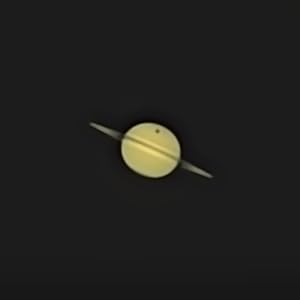
Yes, comfortably. An 8-inch Dobsonian is one of the best telescopes for Saturn, showing the ring system, the Titan and Rhea transits, the Cassini Division at steady seeing, and the Titan and Enceladus shadows when they cross the disc. The same aperture also handles the Moon, Jupiter’s belts and spots, and the brighter deep sky objects, which makes it a strong all-round visual instrument.
What are the disadvantages of a Dobsonian?
The main drawbacks are weight, size and the lack of tracking. A Dobsonian has no motorised tracking, so targets drift out of the field within a few minutes at high magnification. Newtonian Dobs also need periodic collimation, and the supplied eyepieces are often modest. Scopes above 8 inches become a two-person carry, which is the single biggest reason people stop observing.
What size telescope do I see Saturn’s rings with?
Around 70mm you can see the rings as a ring shape but not the division. At 130mm the ring system becomes obvious and the Cassini Division starts to appear in steady seeing. An 8-inch shows the shadow of the rings on the planet, the ring shadow on Saturn, and the Cassini Division reliably. It is a strong planet scope as well, and we compare the beginner options in our first telescope guide.
Final Verdict for 2026
When we rank the best telescopes for deep sky viewing in 2026, the Celestron AstroMaster 130EQ comes first for most people: the largest amount of usable aperture with real tracking controls at the lowest sensible outlay, and more than 3400 reviews backing the verdict. Buy the Sky-Watcher Classic 200 Dobsonian instead if you have a car and a dark site, the Heritage 150 if you need portability, or the Celestron StarSense Explorer 8-inch if finding objects is what holds you back.
Whichever you pick, spend the extra budget on two eyepieces and a finder, take the tube outside early so the mirror can cool, and give your eyes a full hour in the dark. Aperture gets you to the object, but technique is what makes it look good.