
The best telescopes under $500 are the ones that put steady optics, enough aperture, and a usable mount ahead of headline magnification. I compared eight real models ranging from tabletop manual scopes to app-guided reflectors, looking at what beginners can actually see rather than relying on exaggerated zoom claims.
Around this budget, the sweet spot is a 114mm to 150mm reflector or a well-made refractor with a stable mount. You can expect clear views of the Moon, Jupiter’s largest moons, Saturn’s rings, double stars, brighter star clusters, and some nebulae; tracking faint galaxies and galaxies’ fine detail depends more on your sky than on the label on the box.
I also considered forum feedback. Astronomy communities repeatedly steer beginners toward sturdy 8-inch Dobsonians when space and transport allow, while StarSense users praise the easier target-finding experience. That balance matters: a budget telescope is only useful when you can set it up, point it, and keep observing.
My top pick is the Celestron StarSense Explorer DX 130AZ because its 130mm optics and guided app solve the hardest beginner problem—finding the object. The Sky-Watcher Heritage 130P is my value pick, the Celestron StarSense Explorer LT 114AZ is the lighter budget choice, and the Celestron AstroMaster 130EQ remains a strong traditional option for people willing to learn an equatorial mount.
Top 3 Picks for Telescopes Under $500 (October 2026)
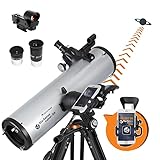
Celestron StarSense Explorer DX 130AZ
- 130mm aperture
- StarSense app guidance
- Manual altazimuth mount

Sky-Watcher Heritage 130mm Tabletop Dobsonian
- 130mm aperture
- Tabletop base
- 10mm and 25mm eyepieces

Celestron StarSense Explorer LT 114AZ
- 114mm reflector
- Smartphone sky tour
- 10.4-pound weight
Best Telescopes Under $500 in 2026
| Product | Specifications | Action |
|---|---|---|
| Celestron StarSense Explorer DX 130AZ |
|
Check Latest Price |
 Celestron AstroMaster 130EQ Celestron AstroMaster 130EQ |
|
Check Latest Price |
| Sky-Watcher Heritage 130mm Tabletop Dobsonian |
|
Check Latest Price |
 MEEZAA 150EQ MEEZAA 150EQ |
|
Check Latest Price |
 Koolpte 130EQ Koolpte 130EQ |
|
Check Latest Price |
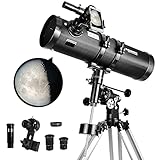 SOLOMARK 130EQ SOLOMARK 130EQ |
|
Check Latest Price |
| Celestron StarSense Explorer LT 114AZ |
|
Check Latest Price |
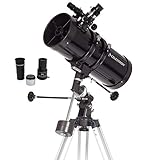 Celestron PowerSeeker 127EQ Celestron PowerSeeker 127EQ |
|
Check Latest Price |
1. Celestron StarSense Explorer DX 130AZ — Best Overall for Guided Backyard Viewing
Celestron StarSense Explorer DX 130AZ Smartphone Guided Newtonian Telescope
130mm reflector
650mm focal length
StarSense app guidance
Pros
- Guided object finding
- Strong 130mm light gathering
- Manual dual-axis controls
- Useful for bright deep-sky targets
Cons
- Tripod can wobble
- Phone dock may need a case removed
- Limited altitude clearance
I would start here for a first telescope. The 130mm parabolic reflector gives the scope a useful balance of light gathering and manageable size, and the 650mm focal length makes it a flexible instrument for the Moon, planets, and bright deep-sky objects.
The reason I rank it first is not a spec number. Celestron’s StarSense app uses your phone’s camera view of the sky to show arrows toward the target, which helps a new observer get past the frustration of searching with a finder scope alone.
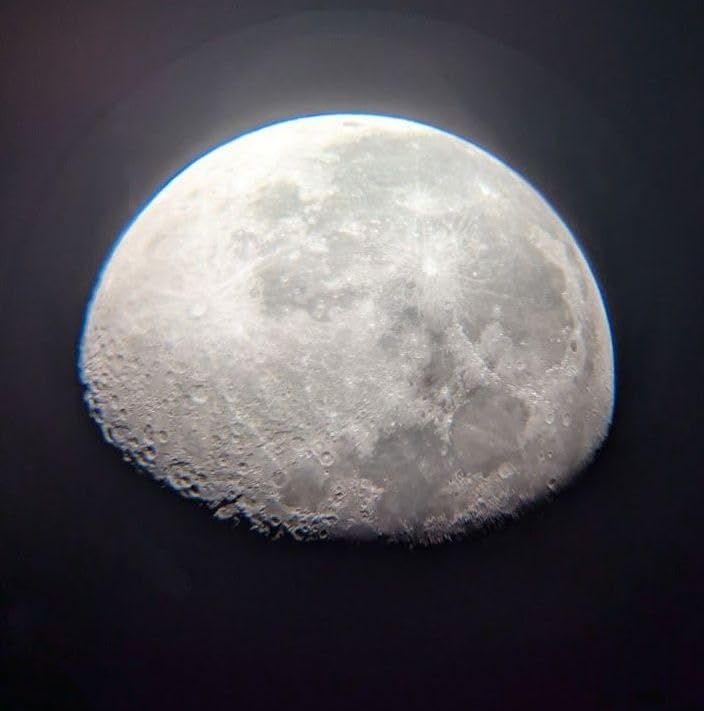
The mount is manual rather than motorized, but the dual-axis slow-motion controls let you follow an object comfortably. I found that this approach teaches sky orientation better than handing every movement to a computer, while the app still removes much of the initial guesswork.
Its main weakness is stability. The supplied tripod can flex at full height, and the plastic mount neck may feel less planted in wind; placing the scope on solid ground and keeping the tripod legs short helps. The phone dock also needs careful alignment, especially with a thick case.

Best for a beginner who wants help finding targets
Choose the DX 130AZ if you are learning the sky and want guidance without paying for a full GoTo system. It is especially good for backyard sessions where phone navigation matters more than automated tracking.
It also suits a family that wants to move from the Moon to Jupiter, Saturn, star clusters, and brighter nebulae. You will still need to align the app and make small corrections as Earth rotates.
Best for someone who values a guided learning curve
Skip it if you expect a rock-solid photographic platform or live GoTo tracking. Its 65–70 degree altitude clearance can be restrictive near the zenith, and the mount is best treated as a visual observing tool rather than an imaging system.
For visual astronomy, however, the combination of 130mm aperture, StarSense, and a familiar altazimuth mount is hard to beat.
2. Celestron AstroMaster 130EQ — Best Traditional Equatorial Choice
Celestron AstroMaster 130EQ Telescope for Deep-Sky Beginners
130mm Newtonian
650mm focal length
Manual equatorial mount
Pros
- Strong light gathering
- Accurate slow-motion tracking
- No-tool setup
- Useful astronomy software
Cons
- Equatorial setup takes practice
- Needs periodic collimation
- Tripod can wobble
The AstroMaster 130EQ is a classic budget telescope because it gives you a full 130mm reflector and a German equatorial mount for a modest outlay. I see it as a good choice for a beginner who wants to learn the conventional way: locate an object, align the mount’s polar axis, and use the slow-motion controls to keep it centered.
The 650mm focal length and 130mm aperture make the Moon and planets rewarding targets. With properly aligned optics, the scope can also show bright star clusters and some brighter deep-sky objects.

Setup is refreshingly straightforward, and the adjustable tripod accommodates different observing heights. The included erect-image 20mm eyepiece is useful for daytime viewing, while the astronomy software helps with planning and learning target locations.
The learning curve is real. An equatorial mount must be balanced and aligned before slow-motion tracking feels natural, and a reflector needs occasional collimation. If that sounds like part of the hobby rather than a nuisance, the AstroMaster is capable and well supported.
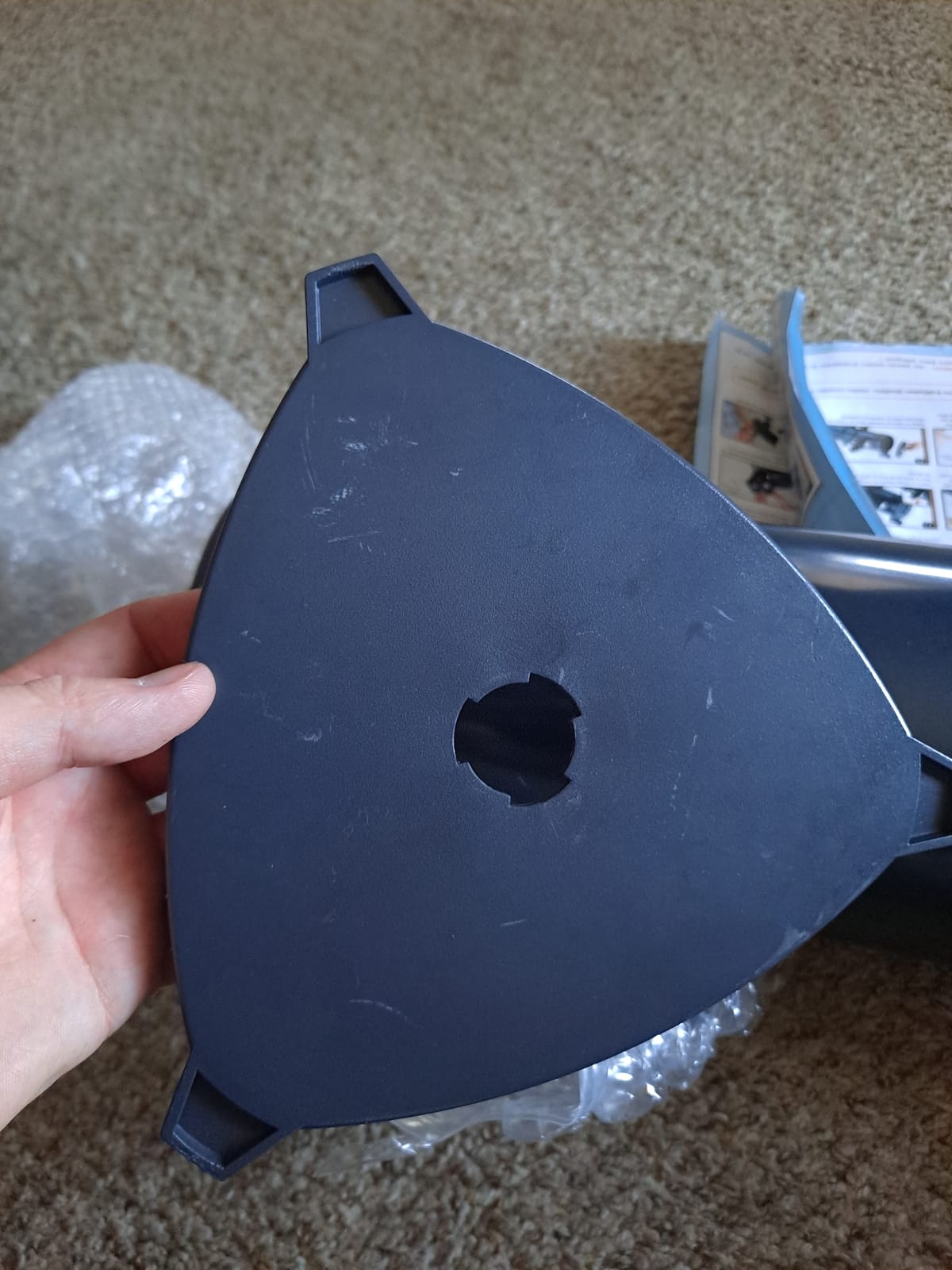
Best for a patient visual observer
Pick this model when you want more control over tracking and do not mind a short setup routine. It is a better learning instrument than a fragile beginner scope with a wobbly tripod, but it is less intuitive than StarSense on the first night.
I would recommend adding a comfortable chair and a simple planisphere before buying extra eyepieces. Those small additions make longer sessions much easier.
Best for someone who wants a full-size tripod
It is not my first choice for a child, apartment balcony, or frequent traveler. The 17-pound package is portable enough for a car, but it is less convenient than a tabletop Dobsonian or the 10.4-pound StarSense LT.
Its long-term strength is a familiar platform with useful tracking controls and a large pool of practical astronomy knowledge behind it.
3. Sky-Watcher Heritage 130P — Best Tabletop Value and Light Gathering
Sky-Watcher Sky-Watcher Heritage 130mm Tabletop Dobsonian 5-inch Aperture Telescope – Innovative Collapsible Design – Easy to Use, Perfect for Beginners, Black/White (S11705)
130mm aperture
650mm focal length
Collapsible tabletop Dobsonian
Pros
- Strong aperture for the money
- No assembly required
- Collapsible tube
- Two useful eyepieces
Cons
- Needs a sturdy table
- Focuser can feel tight
- Finder can lose alignment
The Heritage 130P delivers the most straightforward optical bargain in this group. Its 130mm reflector is larger than the aperture in many entry-level bundles, while the compact tabletop base keeps the design simple and stable when it is placed on a suitable table.
I like the fact that it arrives assembled. There is no tripod geometry to figure out at dusk: put it on a stable surface, extend the collapsible tube, add an eyepiece, and begin with a bright target.
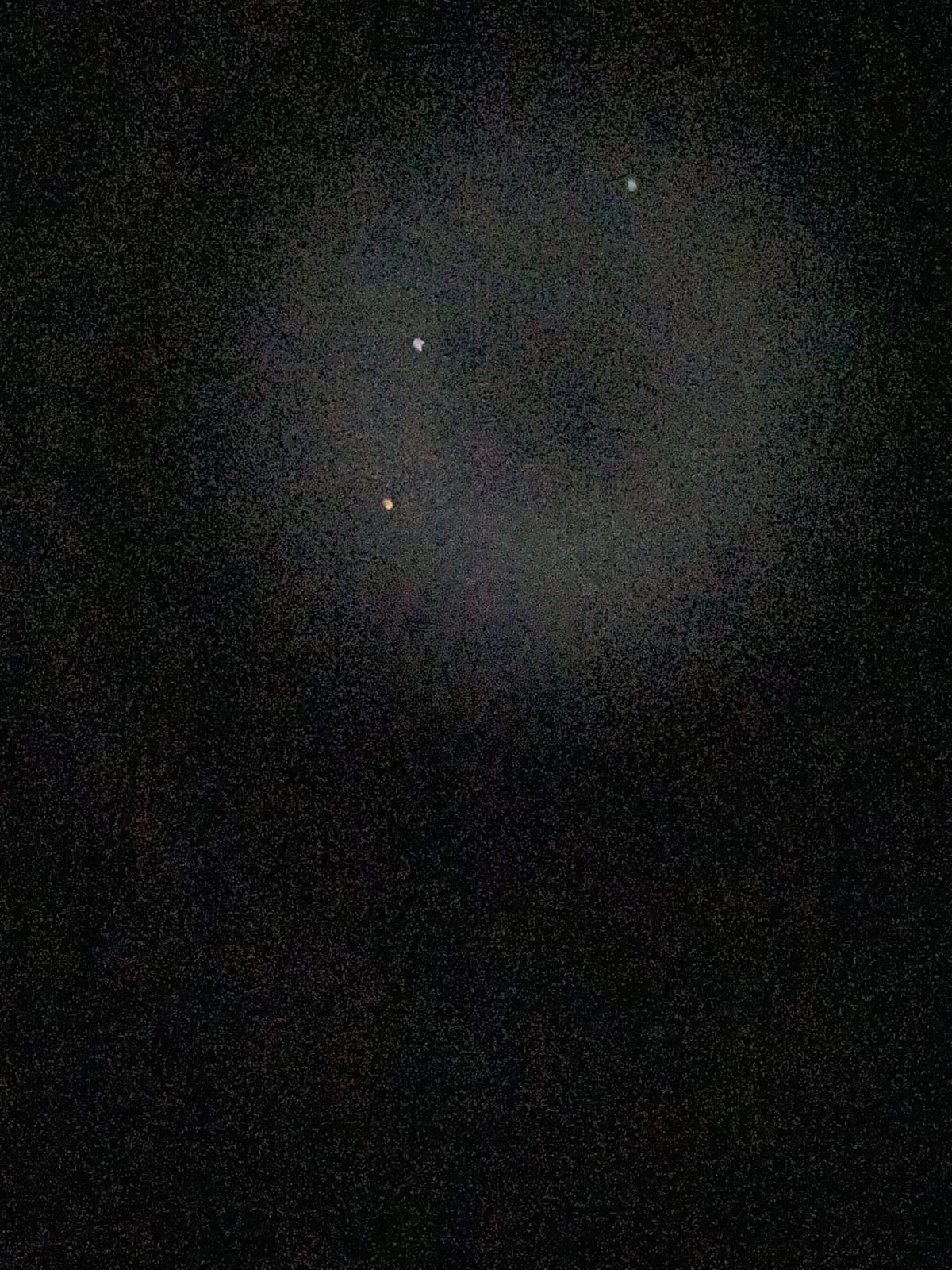
The 650mm focal length and included 10mm and 25mm eyepieces make the scope approachable for lunar and planetary viewing. It can also gather enough light for bright star clusters and some deep-sky targets, although a dark sky makes a much bigger difference than switching eyepieces.
This is not a grab-and-go scope for an uneven lawn. The supplied red-dot finder may need frequent checking, and the focuser can feel stiff when first used, but those are manageable issues compared with a weak tripod.
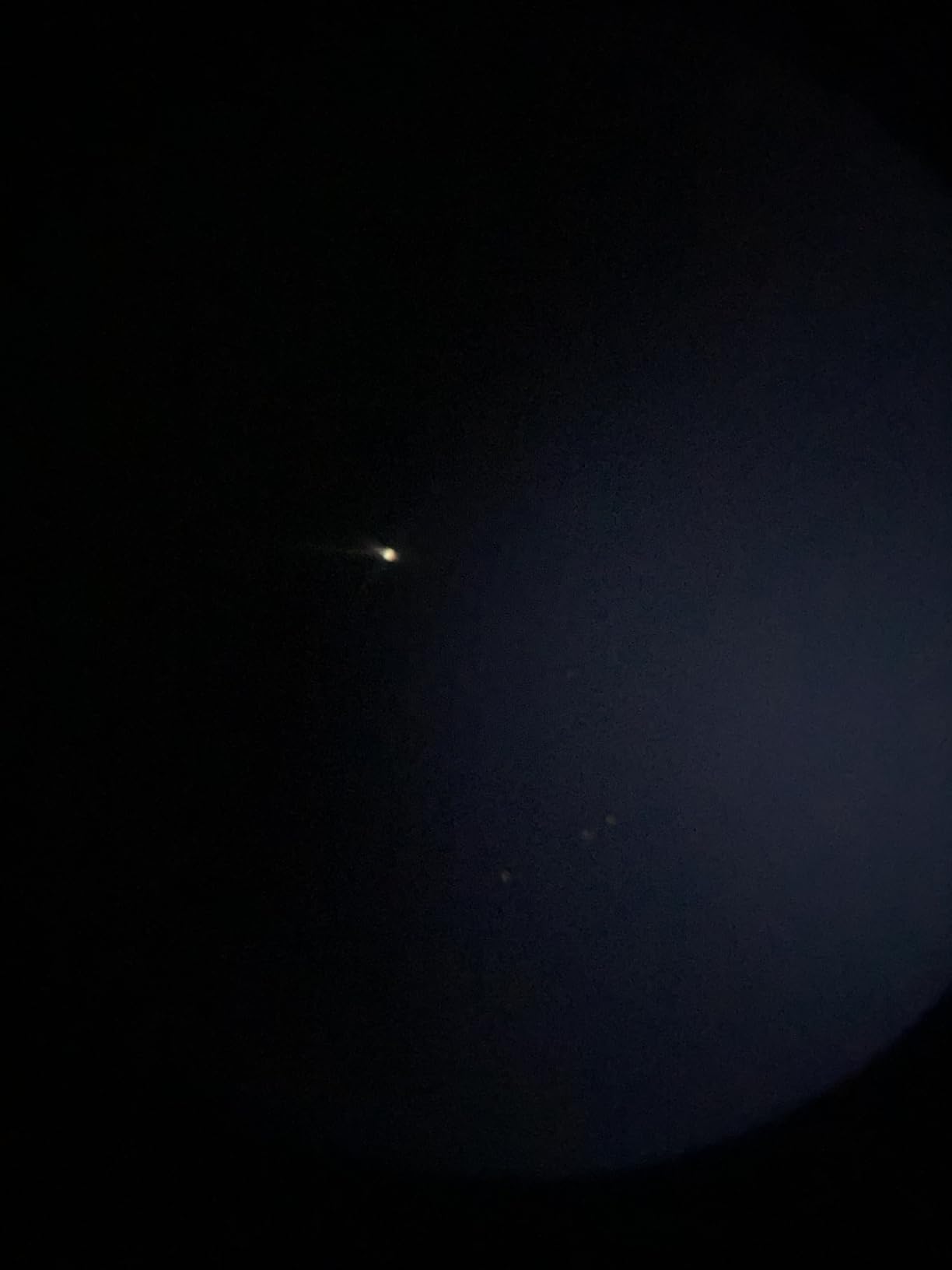
Best for a backyard with a sturdy table
Choose the Heritage 130P if maximum aperture and simple mechanics matter more than app guidance. A park bench, picnic table, or low patio table can turn it into a comfortable observing station, but a flimsy folding table will transmit every vibration.
It is also a good family scope because children can understand its two-axis base quickly. I would supervise the tube around the base and keep the table away from crowded walkways.
Best for someone who wants to learn visual observing
Avoid it if you need one-handed carrying or a scope that automatically finds objects. The Heritage rewards a little patience, and its lack of electronics is a strength for users who want to learn star-hopping without a phone.
For a beginner who already has a safe observing surface, this is one of the best values in the under-$500 category.
4. MEEZAA 150EQ — Best for Aperture and a Complete Accessory Kit
MEEZAA Telescope, 150EQ Newtonian Reflector Telescope for Adults Astronomy Beginners, Professional Astronomical Telescopes with Equatorial Mount, Tripod, Phone Adapter, Moon Filter and Large Carry Bag
150mm aperture
650mm focal length
German equatorial mount
Pros
- Large 150mm light grasp
- Sturdy stainless tripod
- Complete accessory kit
- Carry bag included
Cons
- Heavy setup
- Plastic focuser may disappoint
- Stock eyepieces are entry-level
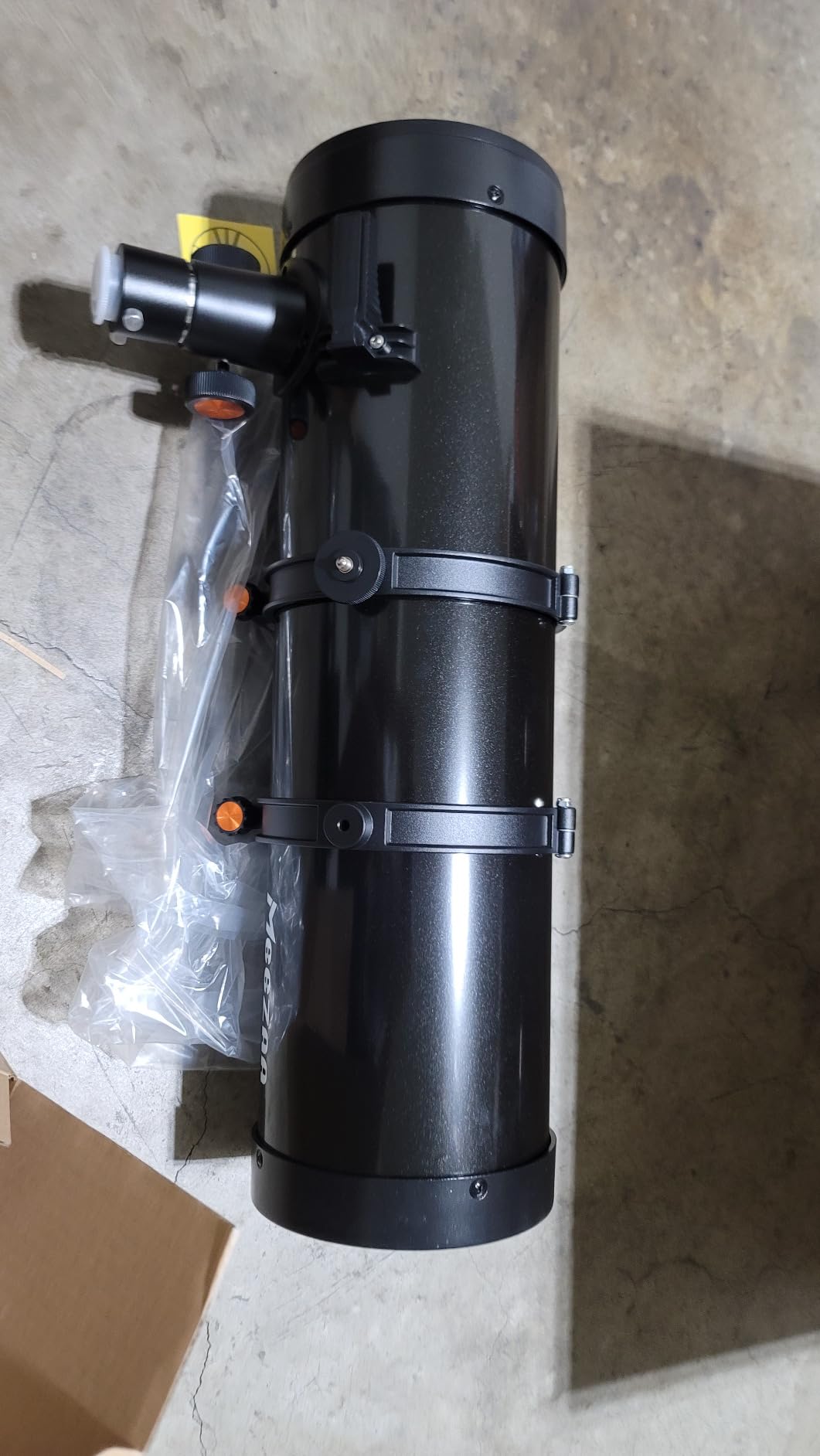
The MEEZAA 150EQ makes a strong case for spending a little more on aperture. Its 150mm mirror is the largest in this roundup, and that extra light-gathering area can make faint star clusters and brighter nebulae more satisfying than a smaller scope will.
At 650mm focal length, the scope supports 26x to 130x with the included eyepieces and 2x Barlow. The Moon and planets remain the easiest targets, while the 150mm mirror gives you more room to grow into deep-sky observing.
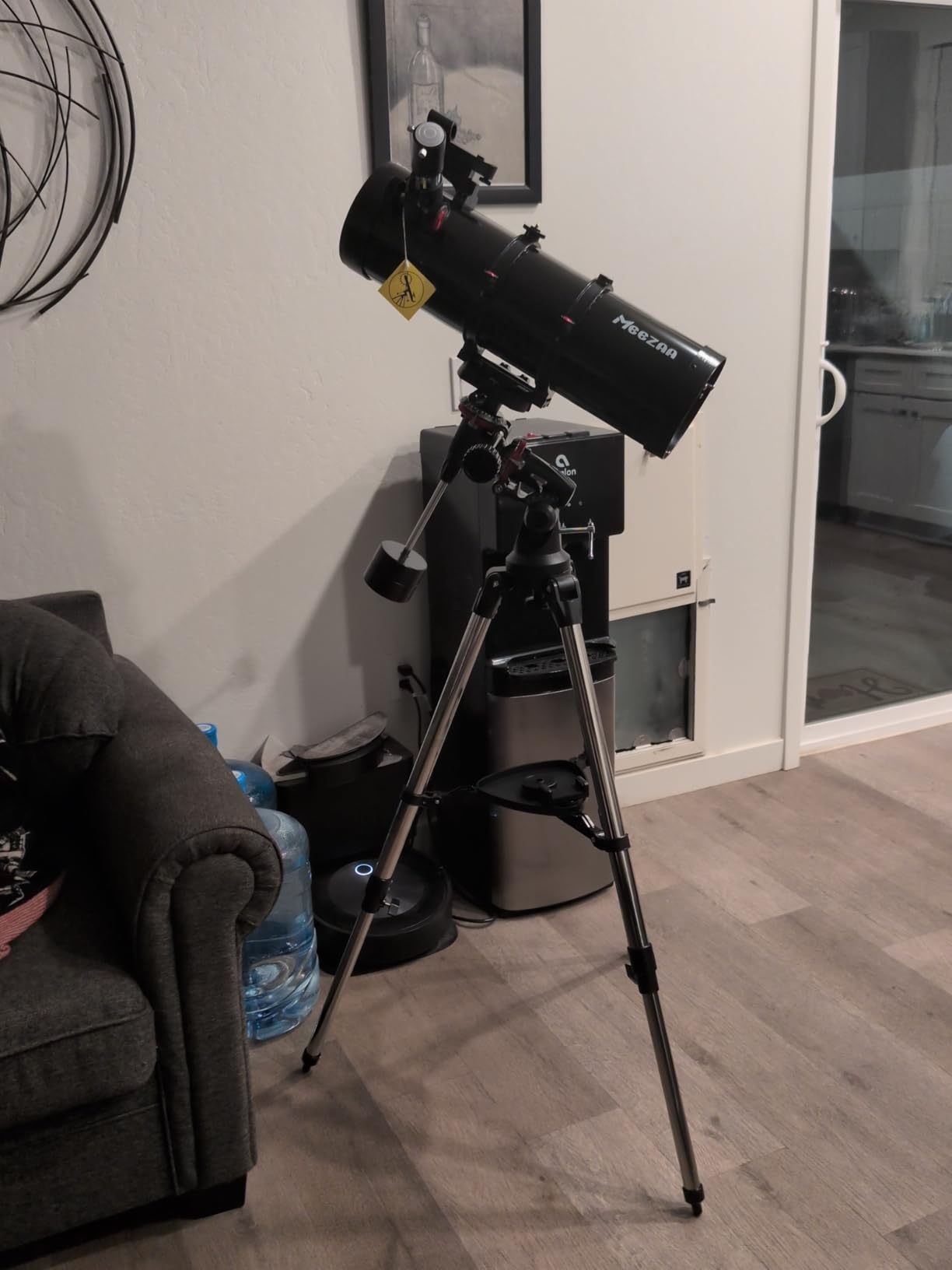
The German equatorial mount has slow-motion controls and an adjustable stainless steel tripod. It arrives with two eyepieces, a Barlow, finderscope, moon filter, phone adapter, and carry bag, so it feels like a complete kit rather than a bare optical tube.
The tradeoff is weight and setup complexity. I would assemble it near the observing area, level the tripod carefully, and allow time to balance the equatorial axis; a second person can be helpful during initial assembly.
Best for an observer who wants extra light grasp
Choose the 150EQ if you have room to store and transport a full-size tripod. It is a better match for suburban and rural skies than a tiny scope, and the larger mirror is more forgiving when you move from the Moon to clusters and nebulae.
It is also appealing to buyers who want phone imaging included. Treat the adapter and stock eyepieces as starting points, not a substitute for careful polar alignment and a stable imaging setup.
Best for someone who wants a heavy-duty package
Do not choose it for a small apartment, a young child using it alone, or a traveler who needs a one-piece grab-and-go instrument. The stock focuser and eyepieces are the parts I would upgrade first after learning the mount.
For a deliberate setup and a desire to see dimmer targets, the 150mm aperture gives this package a clear purpose.
5. Koolpte 130EQ — Best Compact Reflector Package with Phone Support
Koolpte 130EQ Reflector Telescope, 130mm Aperture, EQ Mount
130mm reflector
650mm focal length
Phone adapter and remote
Pros
- 130mm aperture
- Complete accessory kit
- Portable design
- Good lunar clarity
Cons
- Assembly takes patience
- Counterweight needs adjustment
- Phone focusing can be finicky
The Koolpte 130EQ packs a 130mm Newtonian reflector, two eyepieces, a 2x Barlow, moon filter, phone adapter, wireless remote, and a red-dot finder into one package. For a new observer, that reduces the number of accessory decisions on the first night.
The 650mm focal length is a familiar configuration for the Moon, planets, and brighter deep-sky objects. The included 25mm and 6.5mm eyepieces provide 26x and 100x before the Barlow is added, while the phone adapter offers an easy way to try lunar snapshots.
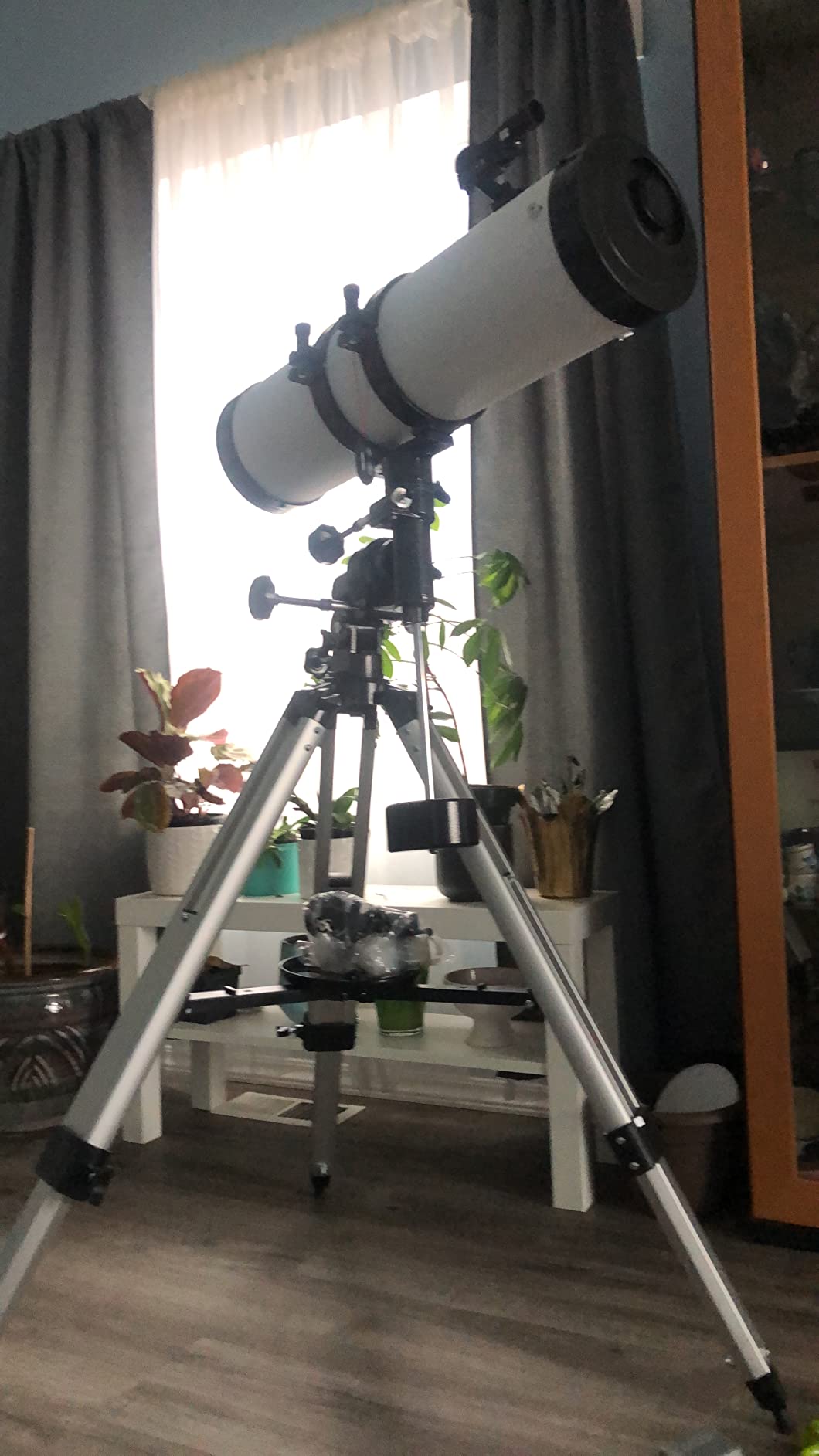
The equatorial mount gives you slow-motion tracking once it is balanced, and the compact dimensions make transport easier than some full-size 150mm packages. I would spend the first session learning the mount before expecting a phone photo to turn out cleanly.
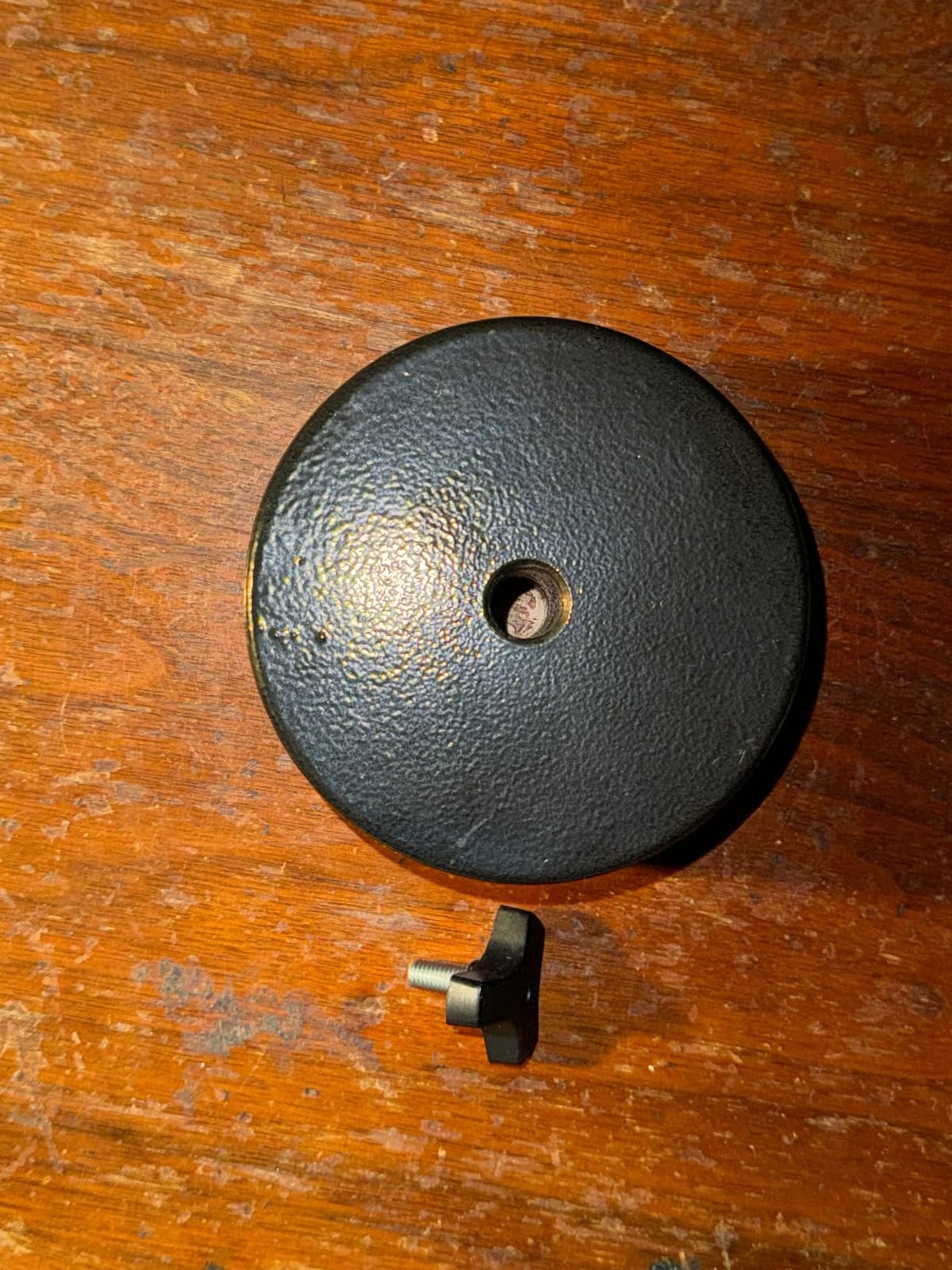
Assembly and counterweight adjustment are the most likely friction points. A phone adapter can struggle with exact focus, and the small included eyepieces are not the final word in optical comfort; a good chair and a planned target list matter just as much.
Best for a buyer who wants accessories included
Pick the Koolpte if you want a complete visual kit and enjoy learning a traditional mount. It is a good match for someone who values lunar detail and wants to experiment with phone photography without assembling every accessory separately.
It is less suitable if you want a setup that is ready to use in five minutes or if you have limited patience for collimation and alignment. The included instructions may not answer every question, so use the manual as a starting point and learn the mount outdoors in daylight.
Best for someone balancing portability and aperture
The 130mm mirror is a meaningful step up from the 114mm StarSense LT, while the compact footprint makes storage easier than a large Dobsonian. That makes it a sensible middle ground for a first telescope.
I would still call it a visual scope first. The phone adapter is a fun bridge to imaging, but a manual EQ mount is not a substitute for a tracking platform when exposure times increase.
6. SOLOMARK 130EQ — Best Feature-Rich Budget Reflector
Telescope 130EQ Newtonian Reflector Telescopes for Adults, Professional Telescopes for Adults Astronomy, Comes with 1.5X Barlow Lens Smartphone Adapter & 13% T Moon Filter
130mm reflector
650mm focal length
German equatorial mount
Pros
- Large aperture
- Sturdy aluminum tripod
- 1.5x Barlow
- Moon filter and phone adapter
Cons
- Collimation can be difficult
- Instructions need clarification
- Decorative carbon-fiber finish
The SOLOMARK 130EQ gives you a 130mm reflector and an unusually complete bundle for the price. The package includes two eyepieces, a 1.5x erecting Barlow, moon filter, smartphone adapter, and a stable-looking aluminum tripod.
Its 650mm focal length is suited to lunar, planetary, and bright deep-sky observing. I would start with the lower-power eyepiece for locating the Moon and then increase power for planetary detail, rather than beginning with the most aggressive setup.
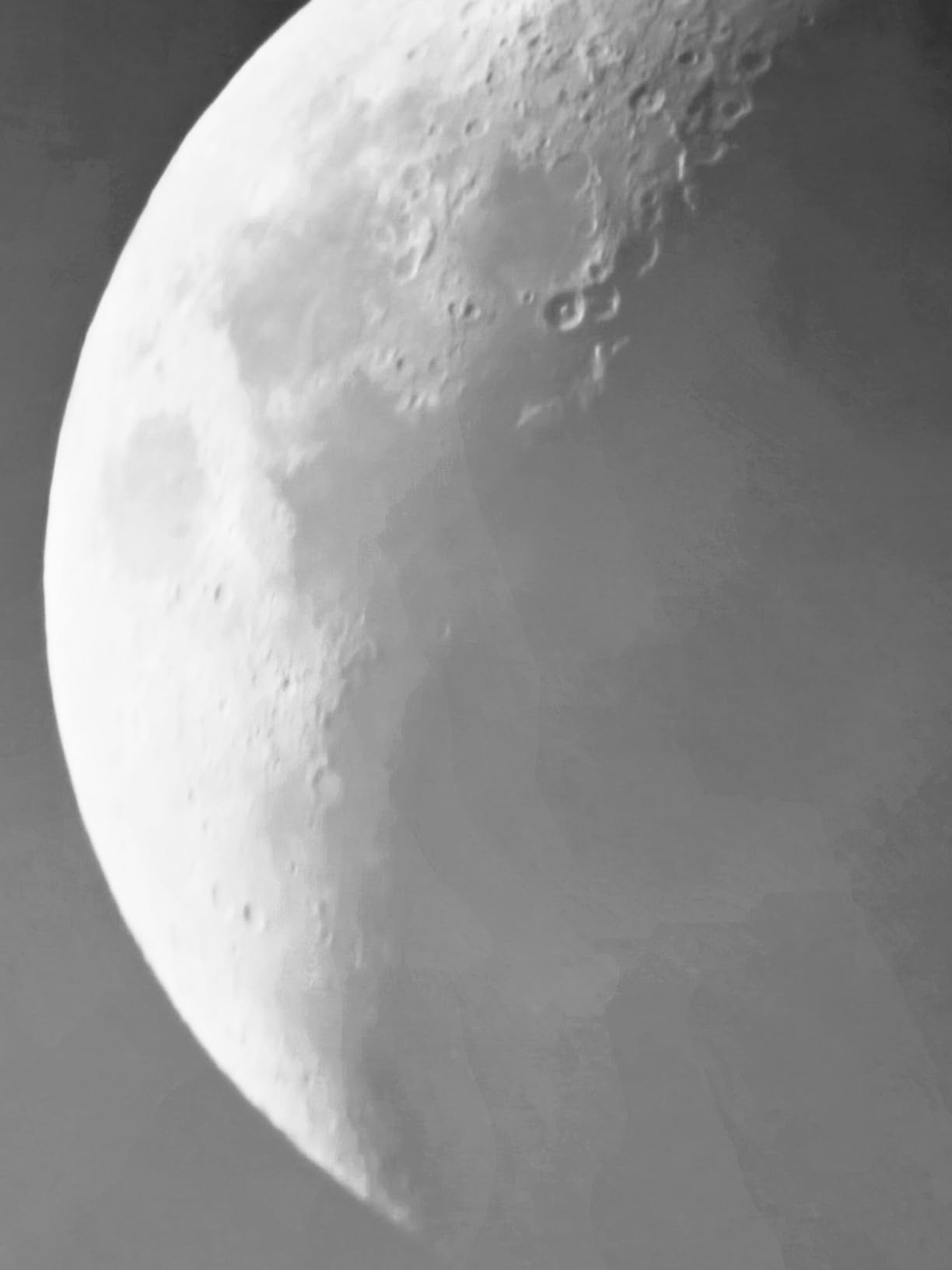
The German equatorial mount has fine control cables for tracking. Once balanced and aligned, it can be more comfortable for extended viewing than constantly nudging an altazimuth mount, although the setup process has a definite learning curve.
Users should expect to learn collimation, particularly after transport. The carbon-fiber texture on the tube is described as decorative in the product details, so do not assume it means carbon-fiber construction; judge stability by the mount and tripod instead.
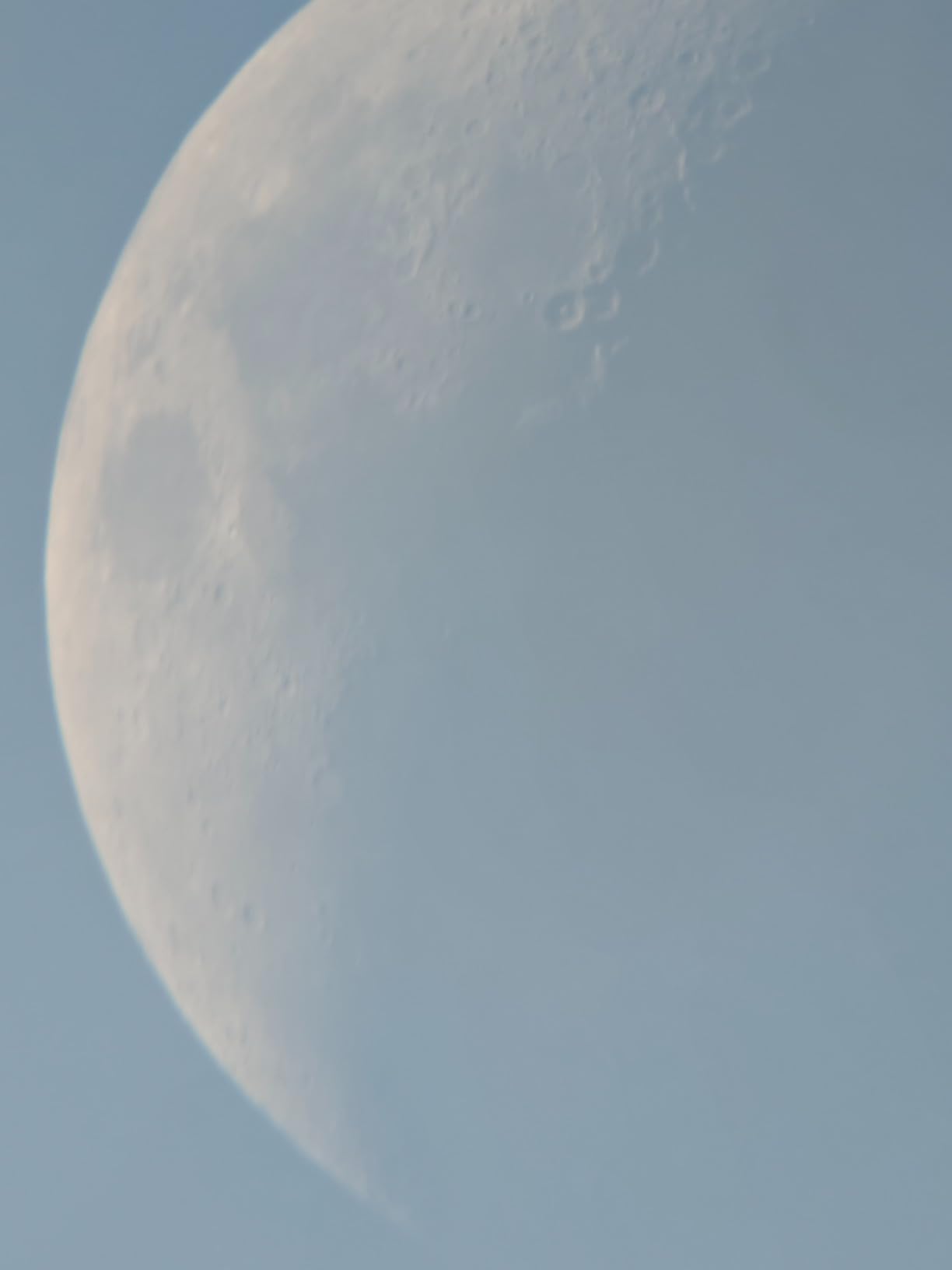
Best for a first budget kit
Choose the SOLOMARK if you want to try astrophotography basics through a phone adapter and need a traditional mount. It offers a lot of equipment for a relatively low entry point, which can be useful when you do not yet know which eyepiece or filter you will prefer.
The trade-off is that more accessories do not remove the need to learn the telescope. Set aside time for collimation and a daytime practice session.
Best for someone who wants a full tripod rather than a table
It is not the best option for a small storage space or a beginner who expects a quick, electronic tour of the sky. The 130EQ is best for a patient observer who values a complete kit and does not mind maintaining a reflector.
7. Celestron StarSense Explorer LT 114AZ — Best Lightweight Budget App-Guided Scope
Celestron StarSense Explorer LT 114AZ Newtonian Smartphone Guided Telescope
114mm Newtonian
1000mm focal length
10.4-pound weight
Pros
- StarSense guided tours
- Lightweight and portable
- Good lunar and planetary views
- US warranty and support
Cons
- Tripod wobble at full height
- Basic stock eyepieces
- App calibration takes patience
The StarSense Explorer LT 114AZ is the most portable app-guided model in the list. At 10.4 pounds, it is easier to carry to a dark-sky site or a balcony than the full-size DX 130AZ, and the StarSense app gives it a much more welcoming first-night experience.
The 114mm reflector provides bright lunar and planetary views, while the 1000mm focal length makes it a natural fit for higher-power observing. Its two-degree field of view is also useful for locating larger star fields and bright clusters.
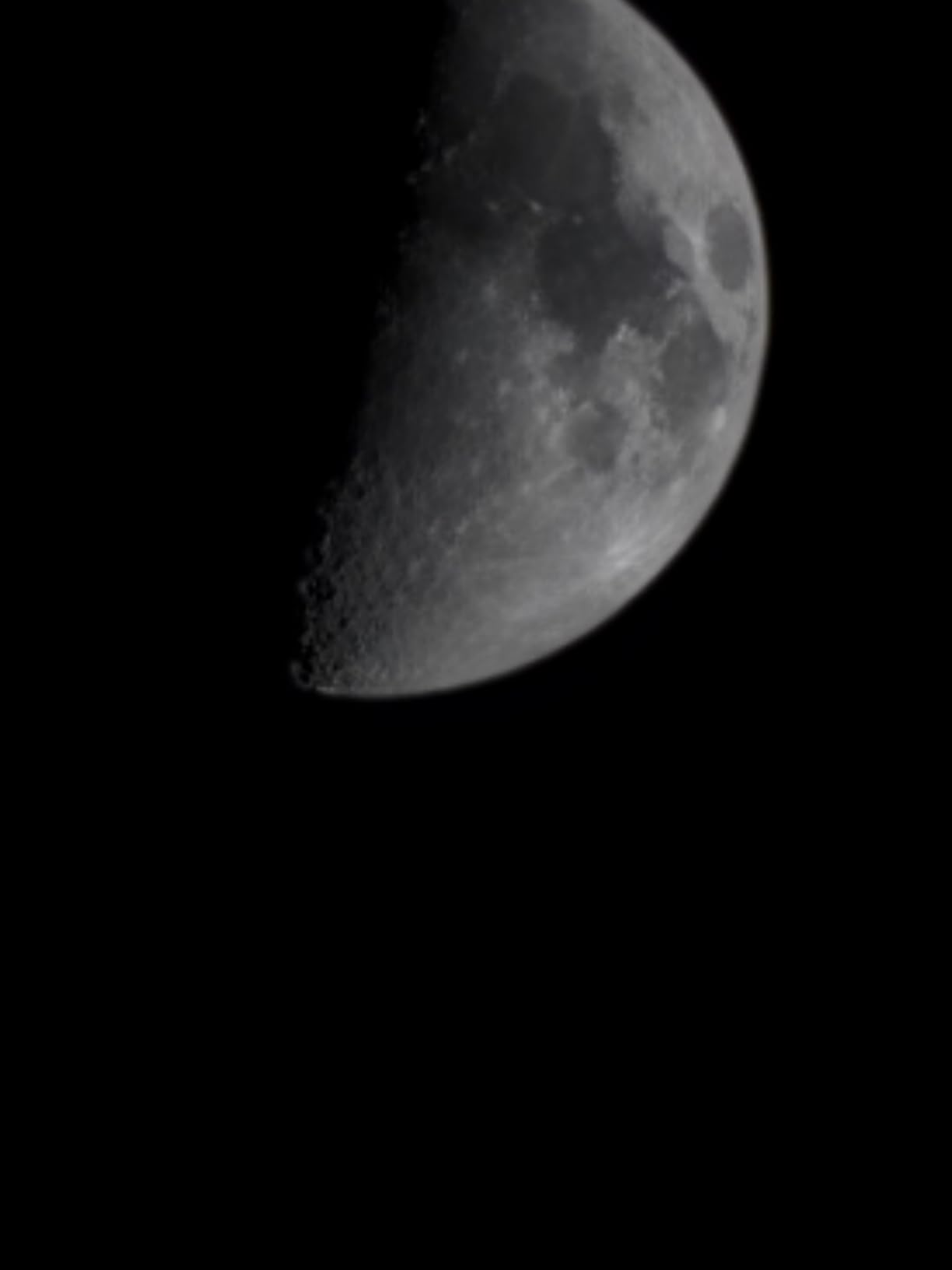
The app creates a guided tour based on your time and location, which is a better fit for many beginners than learning star-hopping from a blank sky. The mount has altitude slow-motion adjustment, and Celestron includes US warranty and support.
I would not extend the tripod to its maximum height on a hard surface; a shorter setup reduces shake. Calibration and phone-cradle alignment require patience, and the stock eyepieces are basic enough that comfort upgrades may be worthwhile later.
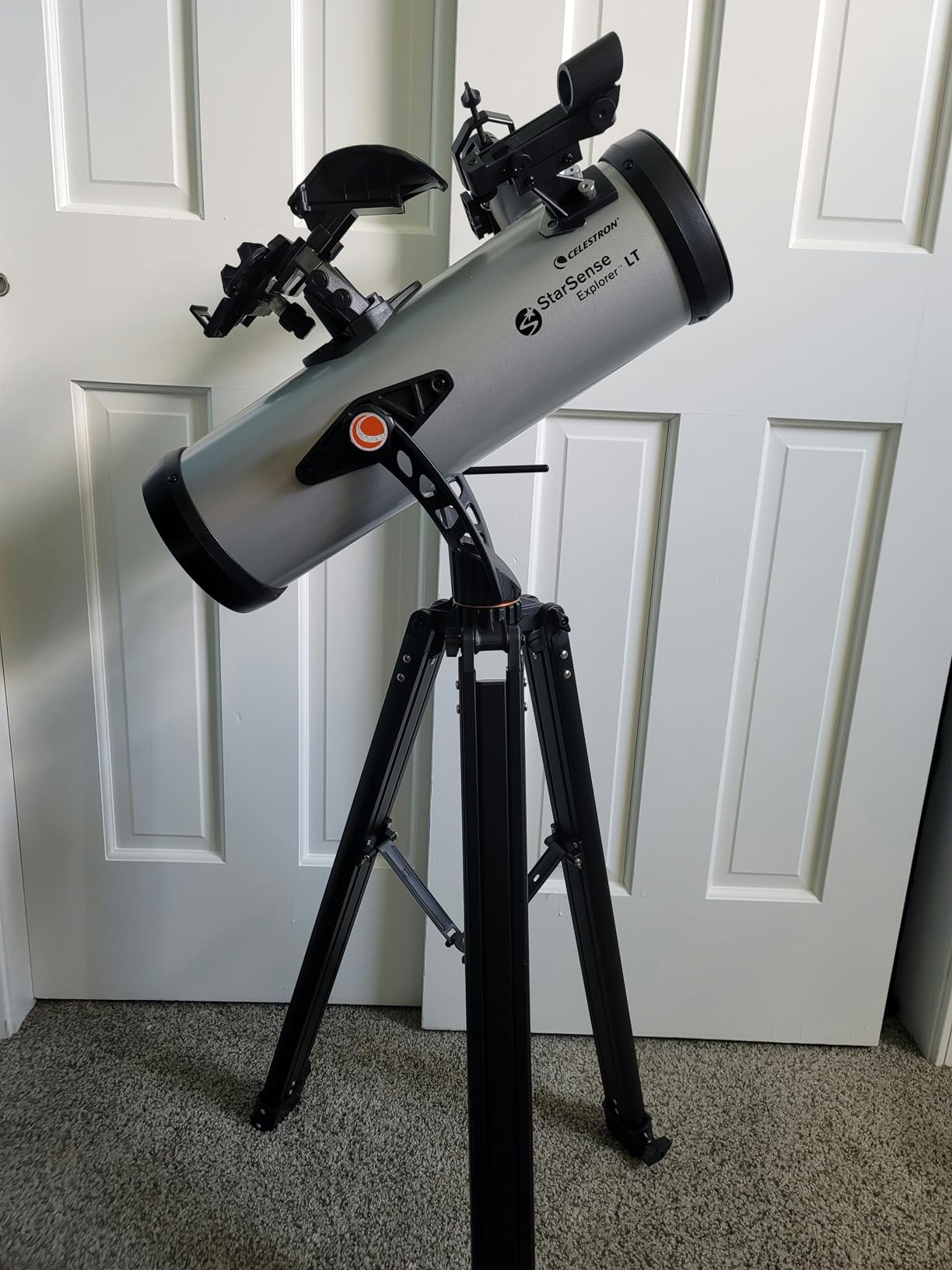
Best for portability and guided sessions
Choose the LT 114AZ if you are the kind of observer who will take the telescope outside, align the phone, and follow a short list of targets. It is a good family choice because the app helps turn a random bright point into a recognizable object.
It is also less intimidating to store than the 130AZ. If your observing area is small, its compact setup may matter more than the DX model’s extra aperture.
Best for someone who wants a lighter StarSense option
Do not expect the same deep-sky reach as a 130mm or 150mm reflector. Light pollution and tripod vibration will have a larger effect on the view, so use the lowest practical magnification and a steady surface.
For the price, it is a thoughtful beginner instrument: app guidance, respectable optics, and a manageable weight in one package.
8. Celestron PowerSeeker 127EQ — Best Low-Cost Full-Size Newtonian
Celestron PowerSeeker 127EQ Reflector Telescope for Home Astronomy
127mm reflector
1000mm focal length
Manual German equatorial mount
Pros
- Affordable full-size reflector
- Good lunar and planetary potential
- Slow-motion controls
- Compact 13-pound package
Cons
- Collimation can be challenging
- Stock eyepieces are basic
- Tripod and finder can wobble
The PowerSeeker 127EQ is a low-cost way to get a full-size Newtonian reflector and a manual equatorial mount. At 13 pounds, it is relatively easy to move, and the 1000mm focal length gives you plenty of reach for lunar and planetary observations.
The trade is that this is a scope you need to maintain. Its Bird-Jones optical design requires careful collimation, and the included 20mm and 4mm eyepieces plus 3x Barlow are best viewed as starting accessories rather than the last word in image quality.
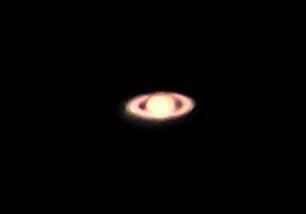
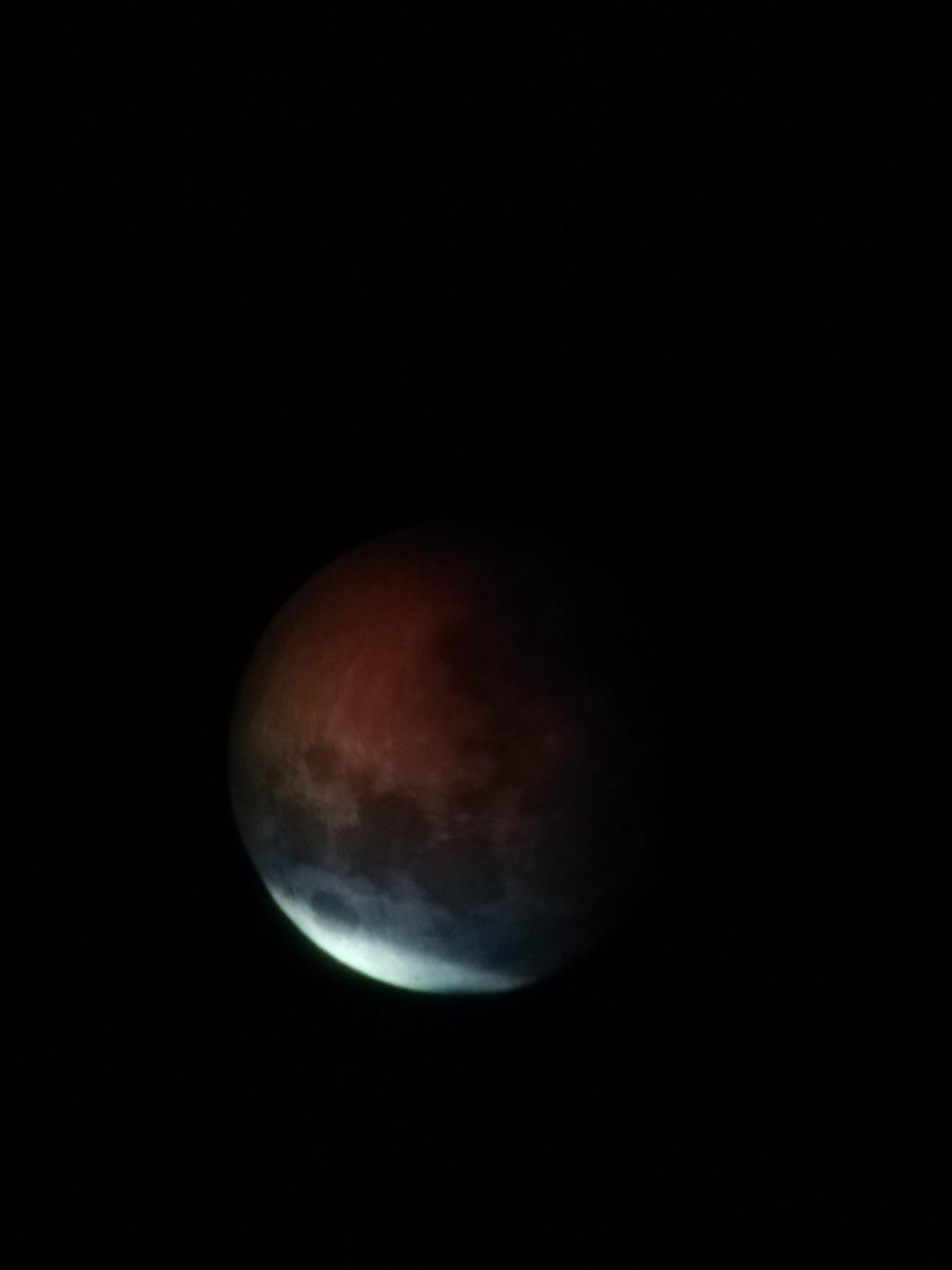
For the Moon, Jupiter, Saturn, double stars, and bright deep-sky objects, the 127mm mirror can deliver rewarding views when the optics are aligned. I would check the collimation before the first session and learn the process in daylight.
The tripod and finder are the weak points: both can feel wobbly or difficult to align, especially on uneven ground. Keep the tripod legs from being fully extended and use a solid observing surface whenever possible.
Best for a budget buyer who accepts setup work
Pick the PowerSeeker if your priority is a complete equatorial package and you are willing to learn maintenance. It can be a capable first scope, but I would not buy it for someone who wants effortless setup or app guidance.
Its long review history and broad accessory ecosystem make it easy to find advice, which is useful when a beginner has questions about collimation or alignment.
Best for someone who wants the lowest-cost traditional scope
It is less suitable for a family sharing a scope with several casual users, because every observer must wait for the mount and finder to be set up correctly. The stock 4mm eyepiece also produces a very dim, narrow exit pupil and should not be treated as the default.
If you are patient, the 127EQ is a legitimate way to begin visual astronomy without spending heavily on a larger mount.
How to Choose the Best Telescope Under $500
The best telescope under $500 is the largest aperture you can support with a stable mount and a design you will actually use. A 130mm reflector offers a strong balance of light gathering, portability, and price; a 150mm model gives you more reach but demands more room and setup care.
Aperture is the diameter of the objective lens or primary mirror and controls how much light the telescope gathers. A 130mm mirror has about 1.55 times the collecting area of a 100mm scope, so the extra aperture can make dim clusters and nebulae easier to see under the same sky.
Do not buy on magnification alone. A 4mm eyepiece can create a very high number, but atmospheric seeing, optical quality, mount stability, and the telescope’s exit pupil determine whether the image remains sharp and bright.
Choose aperture and optical design for your targets
Reflectors such as the Newtonian models here give you a lot of aperture per dollar. They are excellent for the Moon, planets, clusters, and brighter nebulae, but they need periodic collimation and should be handled carefully during transport.
Refractors use a lens at the front and generally need less optical maintenance. A quality refractor can be a pleasant visual instrument, but a similarly capable refractor often costs more at this budget, so the list emphasizes reflectors and the tablet-top Heritage design for value.
Compound telescopes, including Maksutov-Cassegrain designs, use folded optics to deliver a long focal length in a shorter tube. They are often excellent for planets, but the models and price points in this data make the reflector choices better fits for a sub-$500 roundup.
Choose a mount you can operate without fighting it
Altazimuth mounts move up, down, left, and right, which makes them intuitive and well suited to casual observing. They can include slow-motion controls or a StarSense phone guide, but the basic manual versions require continuous small corrections as objects move.
Equatorial mounts tilt one axis toward the celestial pole. Once aligned, that axis can track the sky more naturally, which is useful for lunar detail and planetary sessions, but setup takes longer and beginners must learn balance and polar alignment.
Dobsonian mounts are simple altazimuth bases with a broad, stable design. They trade electronic features for low cost and stability, which is why a tabletop Dobsonian is often a better first instrument than a cheap computerized package with a fragile tripod.
Plan for the sky you actually have
Light pollution matters. In a bright suburb, the Moon, planets, double stars, and bright clusters remain useful targets, while faint nebulae and galaxies may look washed out; in a dark rural location, a 130mm to 150mm scope becomes much more rewarding.
The Bortle scale is a simple way to describe sky darkness. Bortle 1 is an exceptionally dark rural sky, Bortle 5 is a bright suburban transition, and Bortle 8 or 9 describes a city sky where light domes dominate the horizon.
Start with the brightest accessible targets, use a moon filter when lunar glare is uncomfortable, and move to darker skies when possible. For astrophotography, remember that a phone adapter and manual EQ mount can capture short lunar shots, but long-exposure deep-sky imaging needs accurate tracking and a much more deliberate setup.
Common beginner mistakes cost more time than money
Avoid choosing a scope solely by its highest listed magnification, setting a lightweight tripod at full height, or expecting a small refractor to reveal detailed galaxies from a bright city. Those shortcuts lead to shaky views and disappointment even when the optics are decent.
For a reflector, learn collimation and check it after transport. Keep the dust cap on when the scope is stored, avoid touching optical surfaces, and use a soft brush or proper optical cleaning supplies only when necessary.
Finally, buy a few essential comforts before expanding the kit: a red-light flashlight, a planisphere or app, a stable chair, and a low-power eyepiece for finding targets. The most useful accessory is the one that helps you spend more time looking through the telescope.
Frequently Asked Questions
What is the best telescope for a budget of around $500?
For most beginners, the Celestron StarSense Explorer DX 130AZ is the best overall choice because it combines a useful 130mm reflector with guided smartphone navigation. The Sky-Watcher Heritage 130P is the best value for a simple manual setup, while the Celestron StarSense Explorer LT 114AZ is the lighter and less expensive guided option.
Which telescope is powerful enough to see planets?
The Celestron AstroMaster 130EQ, Celestron StarSense Explorer DX 130AZ, and MEEZAA 150EQ are strong planetary choices because their 130mm to 150mm apertures provide useful light gathering. Expect clear views of the Moon, Jupiter’s largest moons, Saturn’s rings, and bright cloud bands, but use sensible magnification and steady atmospheric conditions.
What can I actually see with a telescope under $500?
You can see the Moon’s craters, Jupiter and its four largest moons, Saturn’s rings, double stars, bright star clusters, and several brighter nebulae and galaxies. Faint galaxies and fine nebula detail require a dark sky, accurate collimation, and patience; a telescope under $500 will not make distant objects look like long-exposure photographs.
Should I get a Dobsonian or a computerized telescope?
Choose a Dobsonian when you want simple mechanics, good stability, and more aperture for visual observing. Choose a computerized or app-guided telescope when finding objects is the main obstacle and you value guided navigation; just remember that electronics do not replace a stable mount or a dark sky.
What aperture do I need for deep space viewing?
A 114mm to 130mm reflector is a sensible starting point for brighter star clusters, nebulae, and galaxies, while a 150mm reflector gives you more light-gathering ability for a modest size increase. Your local light pollution and the darkness of the sky matter as much as aperture.
Final Thoughts: The Best Telescope for Your 2026 Stargazing Goals
The best telescope under $500 is the one that matches your sky, your targets, and your patience for setup. I would choose the StarSense Explorer DX 130AZ for the easiest guided start, the Heritage 130P for the best manual value, and the MEEZAA 150EQ when extra light gathering and a full accessory kit justify the larger package.
Whichever model you pick, begin with the Moon and bright planets, learn one mount control at a time, and let a dark sky—not a larger eyepiece—show you what the scope can do. For 2026, that is the most reliable path to rewarding budget stargazing.