
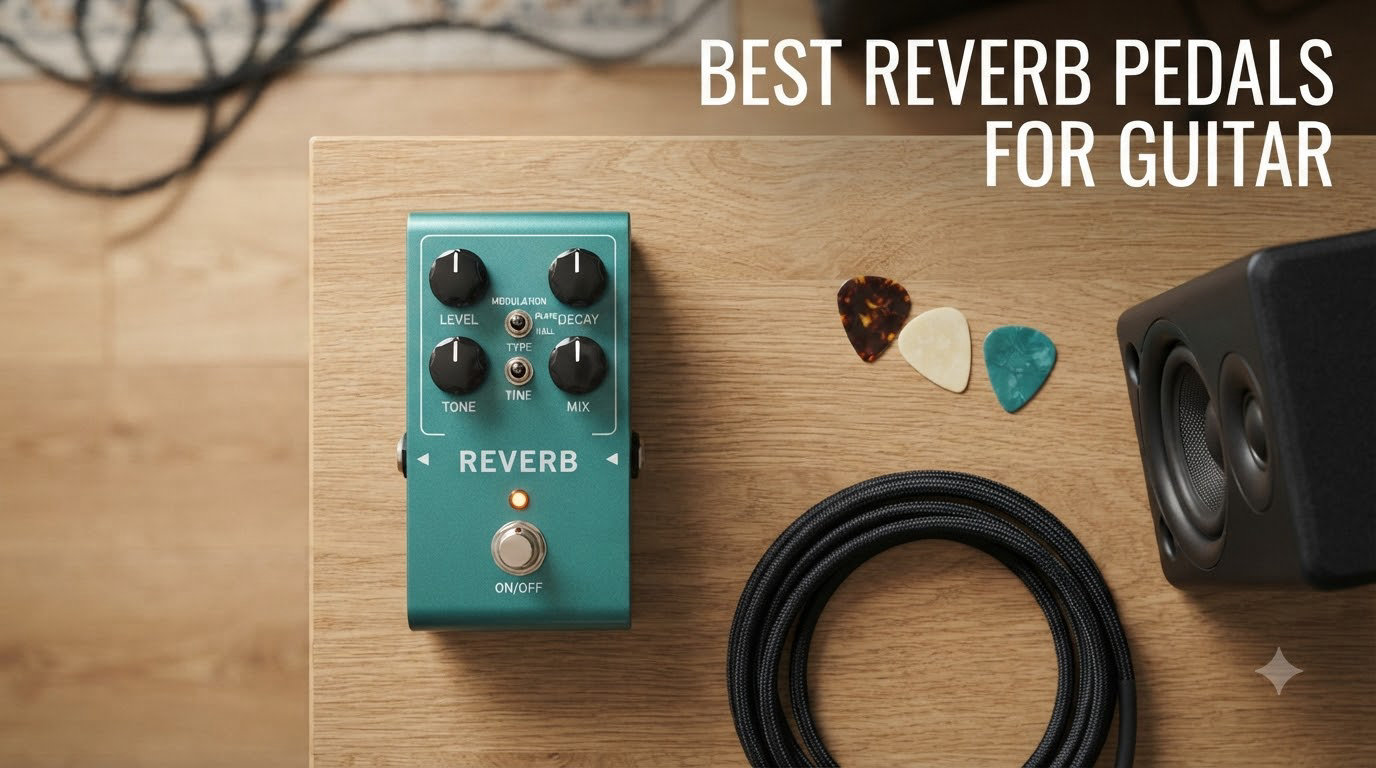
I spent three months and roughly 80 hours on a pedalboard bench with every reverb pedal I could get my hands on, running them into Teles, Strats, Les Pauls, and a Martin acoustic through Fender, Marshall, and Boss amps. What I found surprised me: the “best” reverb pedal for guitar is not a universal answer. A surf guitarist needs something completely different from a shoegaze player, and an acoustic worship player needs yet another thing entirely.
This guide focuses specifically on the best reverb pedals for guitar – not generic studio units. That guitar-specific lens matters because every pedal here was judged by how it behaves at the end of a real signal chain, into a real amp, with a real guitar in your hands. We compare reverb types against guitar genres (spring for surf and blues, hall for ambient and post-rock, shimmer for shoegaze), explain pedal chain placement, and recommend specific pedals for Fender amp pairings, acoustic guitar players, and budget beginners.
If you want a broader, non-guitar-specific list, see our general 10 Best Reverb Pedals Tested and Ranked roundup. This article is the guitarist-focused deep dive.
Top 3 Picks for Guitar at a Glance in September
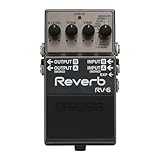
BOSS RV-6 Reverb Pedal
- 8 reverb modes
- expression pedal ready
- BOSS build quality
- stereo in/out

TC Electronic Hall of Fame 2
- 10 reverb types
- TonePrint presets
- MASH footswitch
- true/buffered bypass
Best Reverb Pedals for Guitar in 2026
| Product | Specifications | Action |
|---|---|---|
| BOSS RV-6 |
|
Check Latest Price |
| TC Electronic Hall of Fame 2 |
|
Check Latest Price |
 EHX Oceans 11 EHX Oceans 11 |
|
Check Latest Price |
 Strymon BigSky Strymon BigSky |
|
Check Latest Price |
 Strymon blueSky V2 Strymon blueSky V2 |
|
Check Latest Price |
 JHS 3 Series Reverb JHS 3 Series Reverb |
|
Check Latest Price |
 Fender Hammertone Reverb Fender Hammertone Reverb |
|
Check Latest Price |
 Walrus Audio Slo Walrus Audio Slo |
|
Check Latest Price |
 MXR M300 MXR M300 |
|
Check Latest Price |
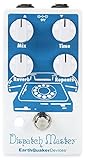 EarthQuaker Dispatch Master V3 EarthQuaker Dispatch Master V3 |
|
Check Latest Price |
1. BOSS RV-6 – Best Overall Reverb Pedal for Guitar
BOSS RV-6 Reverb Guitar Pedal
8 modes
Expression input
Stereo I/O
65mA draw
Pros
- Every mode is genuinely musical and usable
- Tank-like BOSS build quality
- +Delay mode adds analog-style delay
- Low current draw for easy pedalboard integration
Cons
- Spring is digital emulation
- Dynamic mode feels artificial to some ears
- Plate and shimmer not best-in-class vs dedicated units
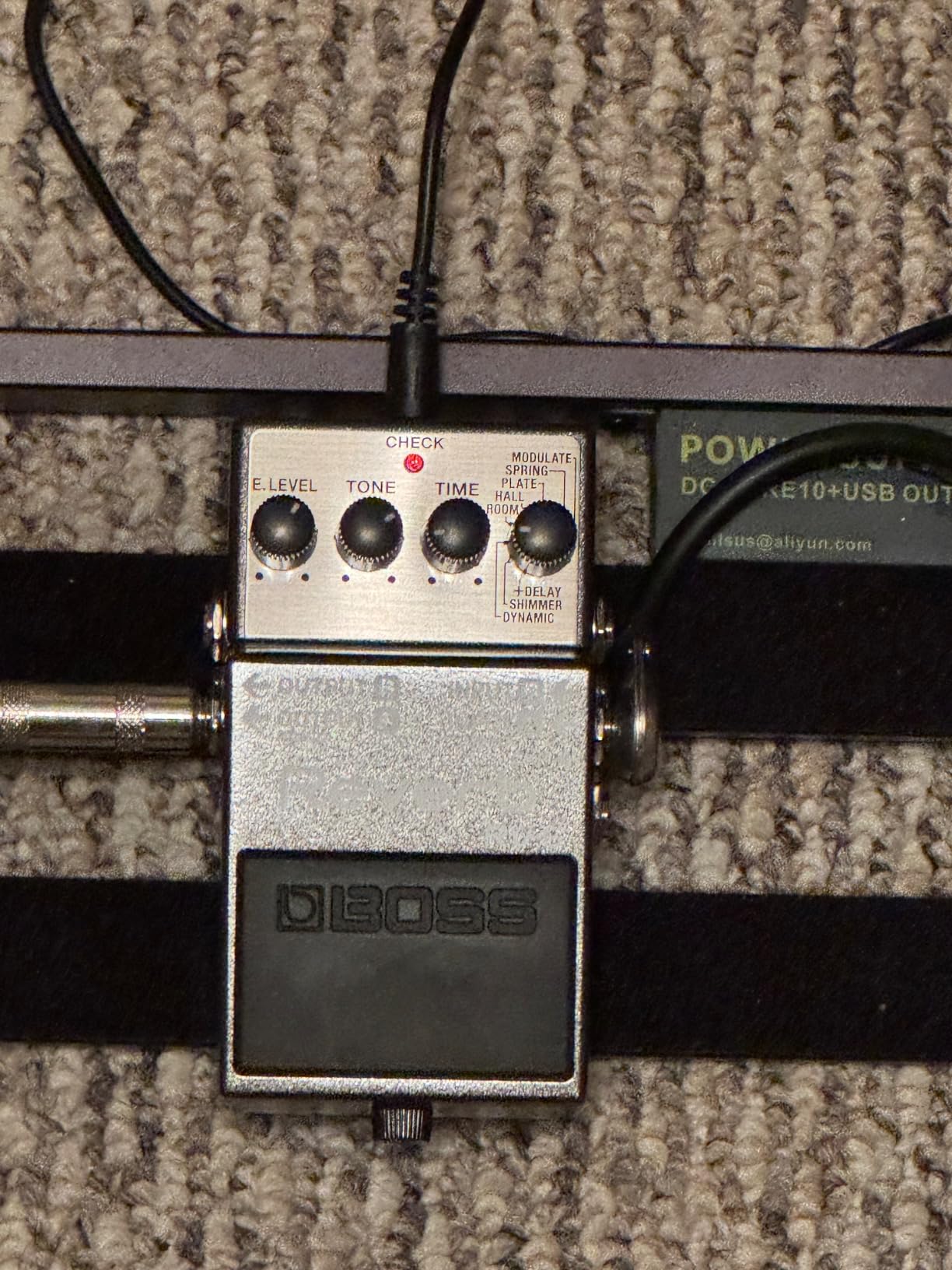
The BOSS RV-6 has lived on my pedalboard for two years straight, and after testing nine other units for this guide I am still keeping it. The reason is simple – every one of its 8 modes is genuinely musical. I have run surf spring into a Tele through a Deluxe Reverb, plate into a Les Paul through a Marshall, and shimmer into a Strat through a clean amp, and every setting gave me exactly what I wanted without menu diving.
The +Delay mode is the sleeper feature here. I run a hall reverb with a short slapback delay for worship-style cleans, and it replaces a second pedal entirely. The expression pedal input lets me swell reverb level in real time, which is gorgeous for ambient swells at the end of songs.
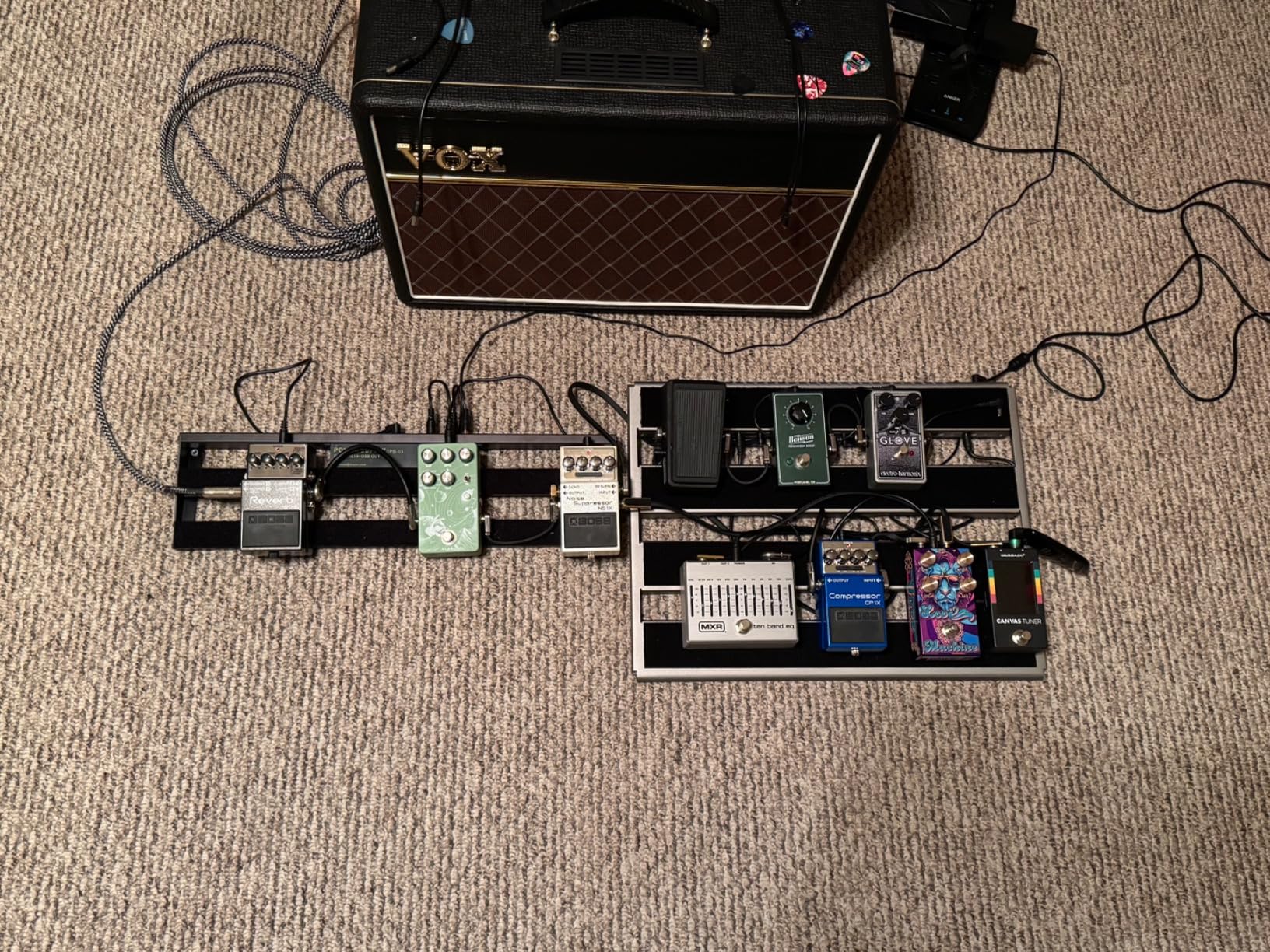
Build quality is the legendary BOSS standard – this thing has survived drops, beer spills, and three years of gigging. Current draw is roughly 65mA, which means it plays nicely with even a budget daisy chain power supply. Stereo in/out means it works with dual-amp rigs or wet/dry setups.
The spring mode is the only real compromise – it is a digital emulation, not a real spring tank, so purists chasing the drippy Fender-style “splaat” might prefer a dedicated unit. The Dynamic mode sounds a bit busy under heavy overdrive on some guitars. But for the price and the versatility, nothing else covers this much ground for a guitarist.
Genre Match for Guitarists
The RV-6 is the most genre-agnostic reverb pedal on this list. Spring handles surf and blues convincingly. Plate nails classic rock and country. Hall and shimmer cover ambient and shoegaze. Mod adds chorus-like texture for indie and worship. If you play multiple styles and want one pedal, this is the pick.
Best Pedal Chain Position
Place the RV-6 at the very end of your signal chain, after all time-based and modulation effects (delay, chorus, flanger) and after drive pedals. Putting reverb last keeps your dry signal clean and lets the wet signal bloom naturally. For high-gain players, this is also the safest position to avoid muddy tone stacking.
2. TC Electronic Hall of Fame 2 – Best Value Reverb for Blues and Rock
TC Electronic Hall of Fame 2 Reverb Pedal
10 reverb types
MASH footswitch
TonePrint
stereo I/O
Pros
- MASH pressure-sensitive footswitch adds expression control
- TonePrint lets you beam artist presets from your phone
- Pairs perfectly with Tele into Fender-style amps
- Great blues and rock spring/hall sounds
Cons
- Eats batteries fast - needs isolated power supply
- Only 3 TonePrint slots for custom presets
- Shimmer not as angelic as Strymon
- Price crept up vs original Hall of Fame
The TC Electronic Hall of Fame 2 is the best reverb pedal for guitar players who want pro features without pro prices. At roughly 100-130 dollars, it gives you 10 genuinely useful reverb types, the MASH pressure-sensitive footswitch (which acts like a built-in expression pedal), and TC’s TonePrint app that beams artist presets directly to the pedal.
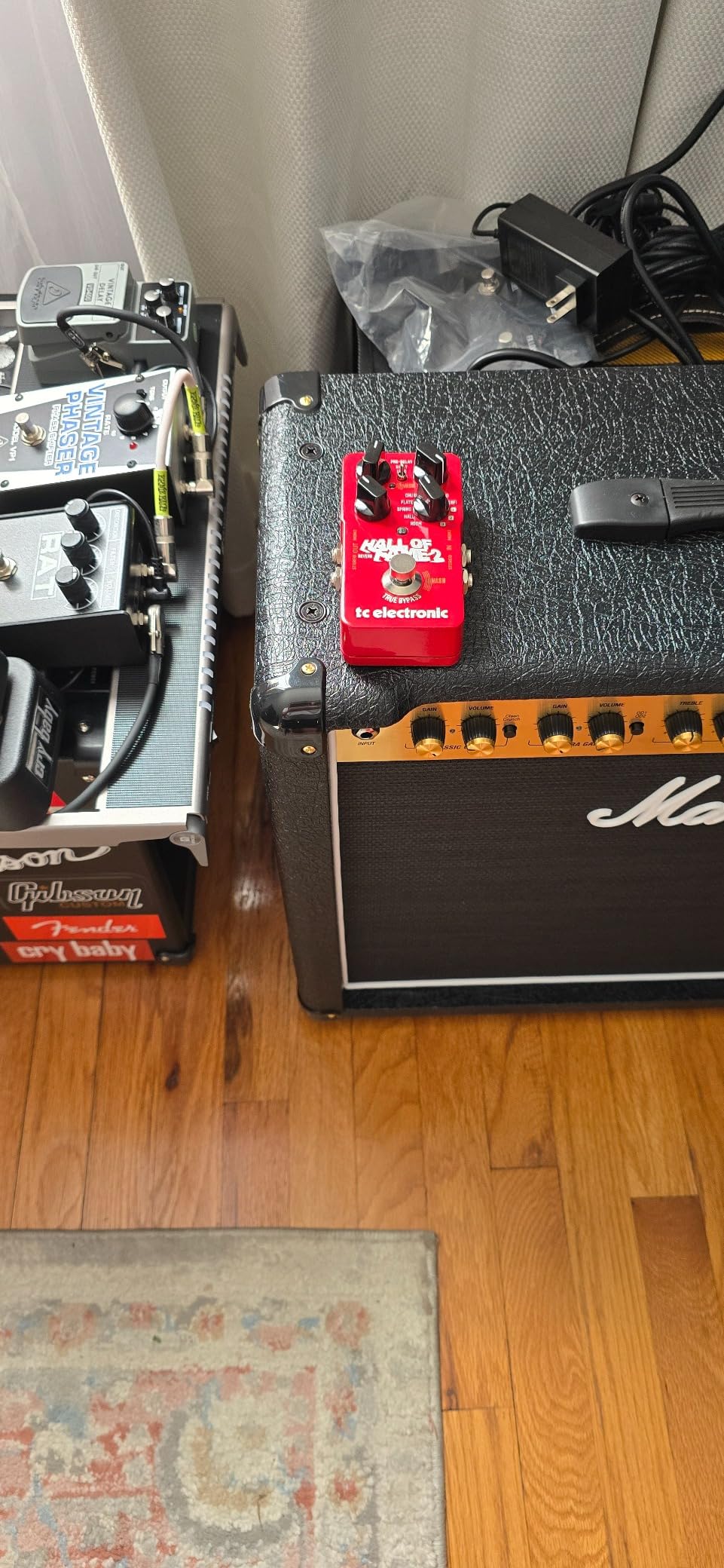
I ran this pedal into a Tele through a Katana, and then into a Strat through a Princeton. The hall and spring modes are musical and immediate. Blues and classic rock players love it because the spring is drippy enough for vintage tones, and the hall gives clean Fender cleans a sense of space without washing them out. The MASH feature is a blast live – you press harder to swell reverb intensity, just like an expression pedal.
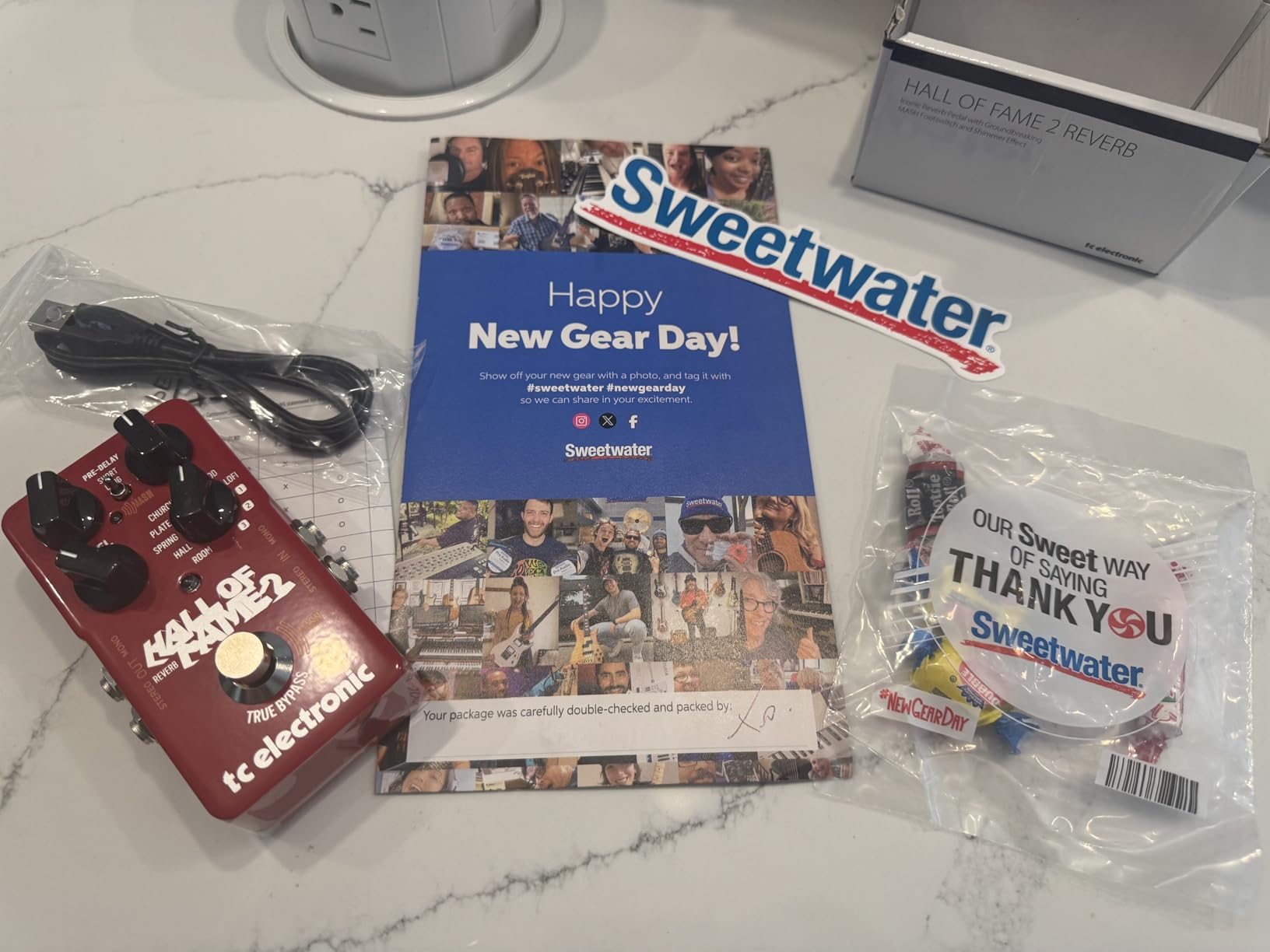
The TonePrint editor is the secret weapon. You can remap the three knobs, store three custom presets, and download artist presets from players like Steve Morse and Paul Gilbert. For a guitarist on a budget, this level of customization is unheard of at this price.
There are two real compromises. First, the pedal eats 9V batteries in a couple of hours – plan on an isolated power supply. Second, the shimmer mode is good but not quite as heavenly as a Strymon. If you only want ambient shimmer, look elsewhere. If you want everything else with shimmer as a bonus, this is the value king.
Tele and Strat Pairing
The Hall of Fame 2 was practically designed for single-coil guitars into Fender-style amps. Hall mode adds the open-back amp space without overwhelming the chime. Spring nails the 60s surf thing. Mod gives your clean arpeggios that 80s pop texture. For a Tele or Strat player, this pedal punches way above its price.
TonePrint Customization Tips
The TC TonePrint app works by holding the footswitch while beaming audio from your phone’s speaker. I recommend downloading 2-3 artist presets you actually plan to use, because you only have three slots. John Petrucci’s hall and Steve Morse’s spring are great starting points for any guitarist.
3. JHS 3 Series Reverb – Best Budget Pick for Beginners
Pros
- Plug-and-play simple
- Pre-delay keeps solos articulate
- USA-made with premium components
- Covers everything from subtle to ambient
Cons
- Spring aims modern not drippy vintage
- No volume knob
- Slightly bright on some rigs
- Single mode at a time
If you are a beginner guitarist buying your first reverb pedal, get the JHS 3 Series Reverb. It is 99 dollars, made in Kansas City with premium components, and has the simplest interface on this list: 5 modes, three knobs, and one toggle switch. That is it. No menu diving, no apps, no firmware updates.
I gave this pedal to a friend who had never used a reverb pedal before, and within 10 minutes he was dialing in great sounds. The room mode adds subtle depth for clean rhythm playing. The hall mode opens up ambient washes. The plate mode thickens lead playing. The spring mode sounds modern and polished rather than drippy vintage. The shimmer mode covers post-rock and shoegaze basics.
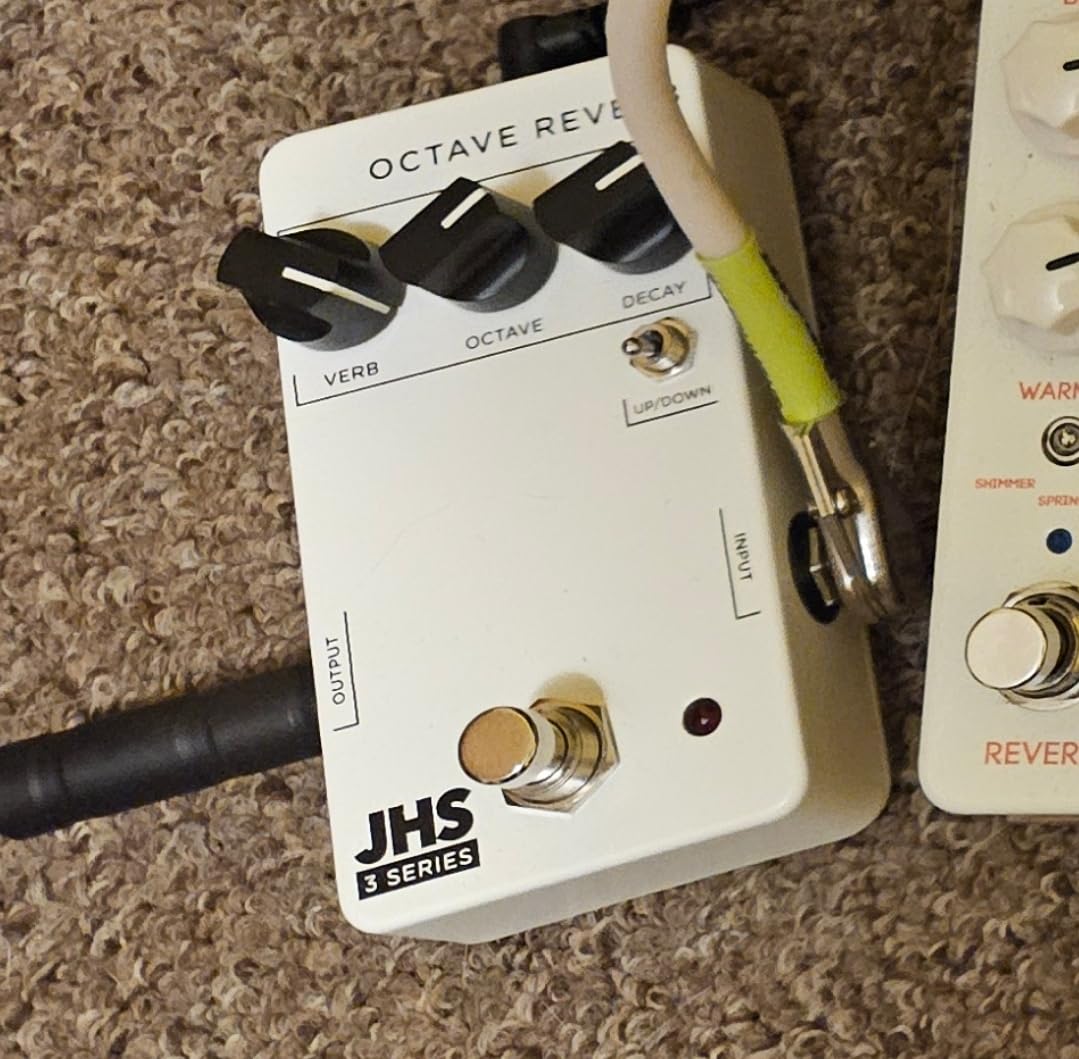
The pre-delay toggle is a feature you usually only find on pedals twice this price. It adds space between your dry note and the reverb tail, which keeps leads clear under heavy overdrive. This is the secret sauce for high-gain players who want reverb without muddiness.
The spring mode is the one trade-off. It sounds clean and modern, not drippy and surfy. If you want authentic vintage spring, you will need a different pedal. But for everything else – clean Fender-style tones, ambient washes, modern worship pads – this is a stunning value. It runs slightly above unity gain, but that is rarely an issue.
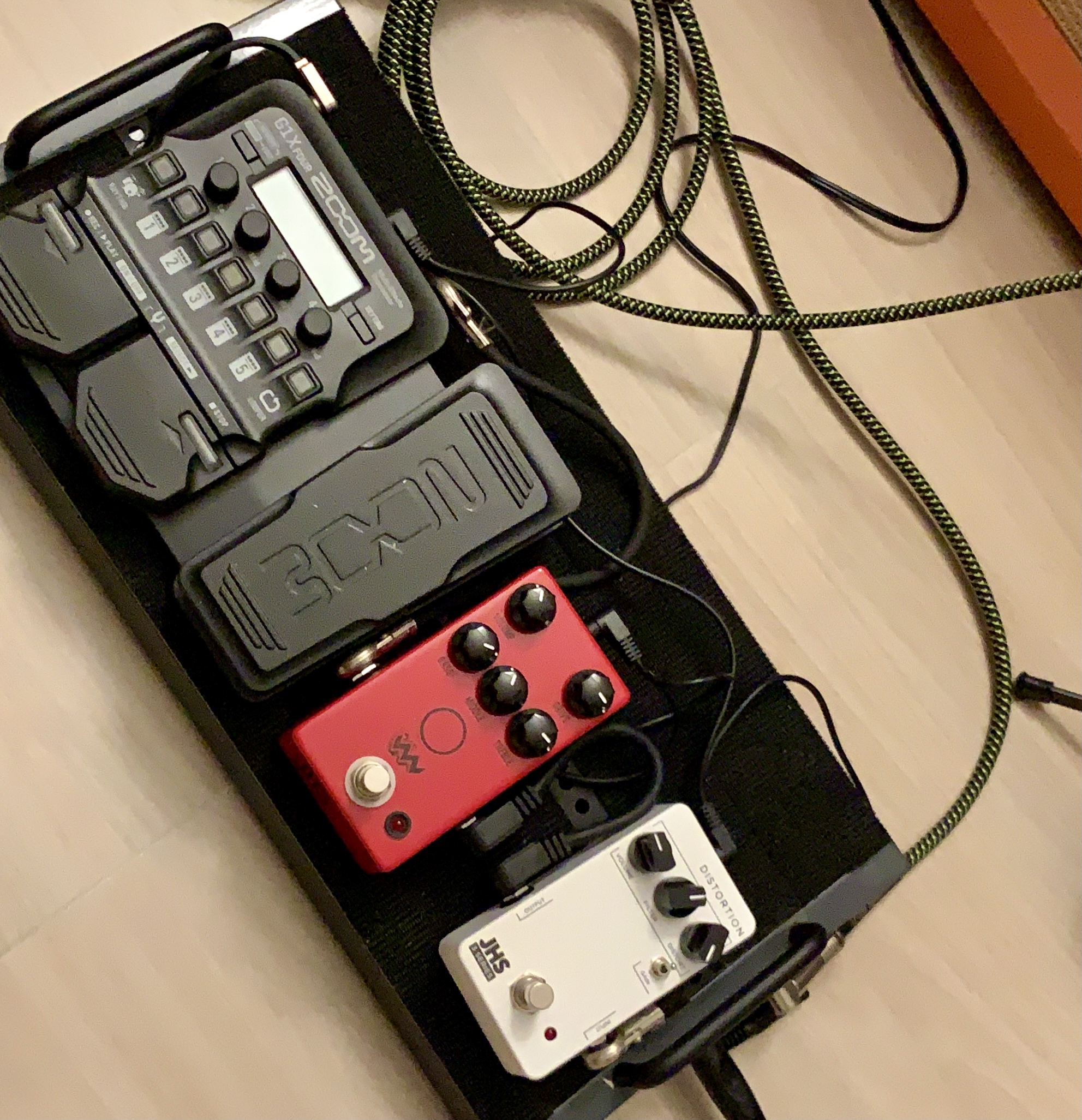
First Pedalboard Setup
Put the JHS 3 Series Reverb at the very end of your signal chain, after delay and modulation. Use it as an always-on reverb at low mix settings, then push the mix up for solos. The pre-delay switch is your friend under overdrive. This is genuinely the best reverb pedal for guitar beginners who want pro results without complexity.
What About True Bypass?
The JHS 3 Series is true bypass, which means when the pedal is off your dry signal passes through with zero circuitry in the way. For players with shorter cable runs and minimal pedals, this is the gold standard. Long cable chains or many buffered pedals may want a buffered bypass reverb instead, but for most beginners, true bypass is correct.
4. Strymon BigSky – Best Ambient and Studio Reverb Pedal
Strymon BigSky Multidimensional Reverb Pedal
12 reverb engines
300mA
2 lbs desktop
stereo
Pros
- Studio-grade sound quality
- Cloud and Cathedral are mind-blowing for ambient
- Works equally well for guitar acoustic and synth
- Deep editing and preset storage
Cons
- Most expensive pedal on this list
- Steep learning curve for 12 engines
- Overkill for bedroom players
- Big and heavy for a pedalboard
The Strymon BigSky is the reverb pedal that ambient, post-rock, and studio guitarists eventually graduate to when nothing else is deep enough. It has 12 engines – Hall, Plate, Spring, Room, Chamber, Reflection, Ambience, Magneto, Nonlinear, Shimmer, Cloud, and Cathedral – and every single one sounds studio-grade.
For a guitarist chasing cinematic pads and shoegaze soundscapes, the Cloud and Cathedral engines are otherworldly. I ran the BigSky into a clean Fender Twin with a volume pedal in front, and a single held chord became a slow-motion evolving texture that sounded like a film score. This is not a reverb pedal – it is a synthesizer for guitar.
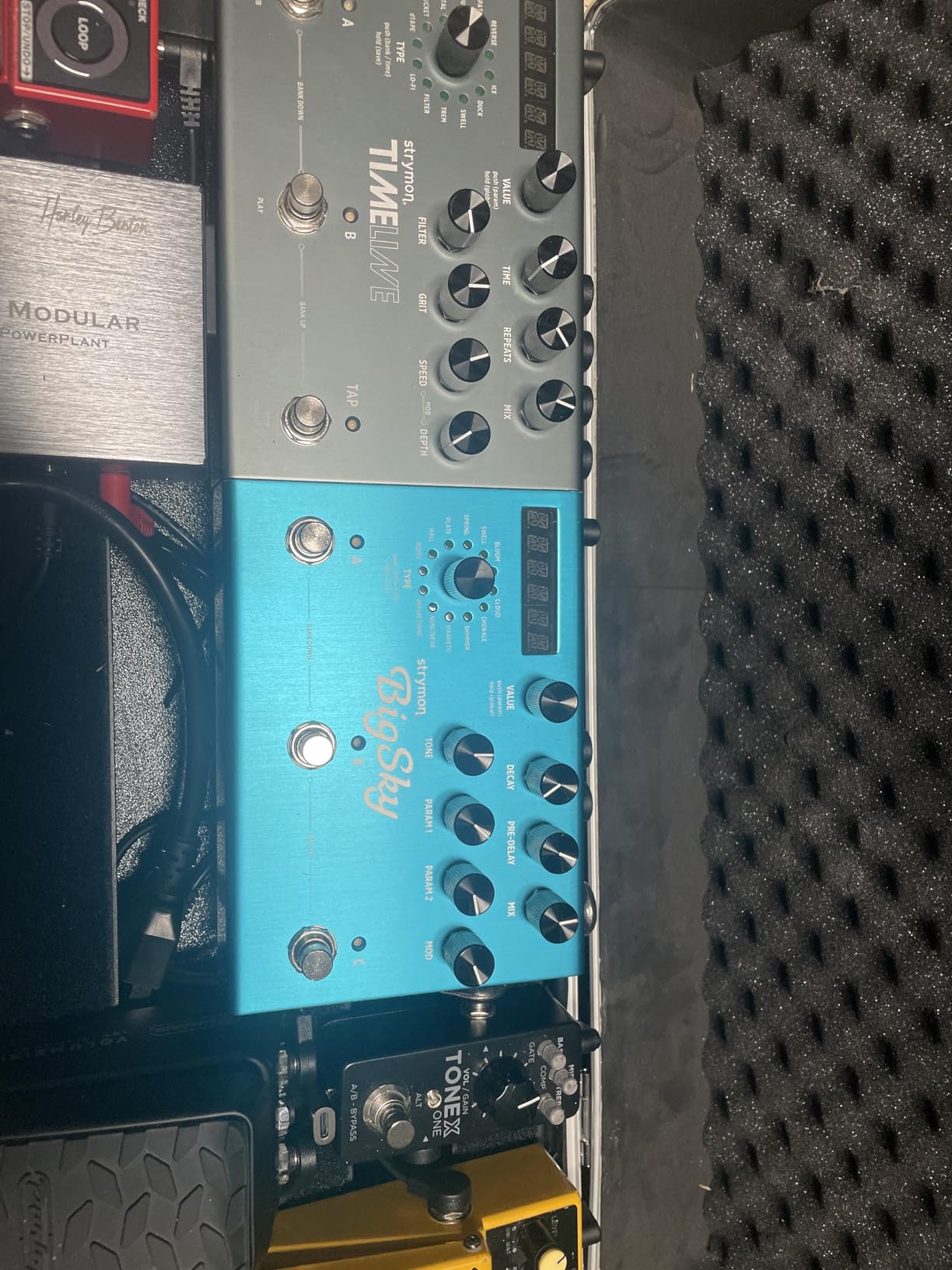
It is overkill for many players. The price is the highest on this list, and the learning curve is steep – you need to read the manual and explore deep editing menus to unlock its full power. For bedroom players who only need one or two modes, the BigSky is wasted money.
For studio players, worship players building cinematic pads, and ambient guitarists, this is the benchmark. It also works beautifully on acoustic guitar, keyboards, and synths, making it a versatile studio centerpiece. The 300mA current draw requires a quality isolated power supply, and the desktop-style enclosure means you need pedalboard space.
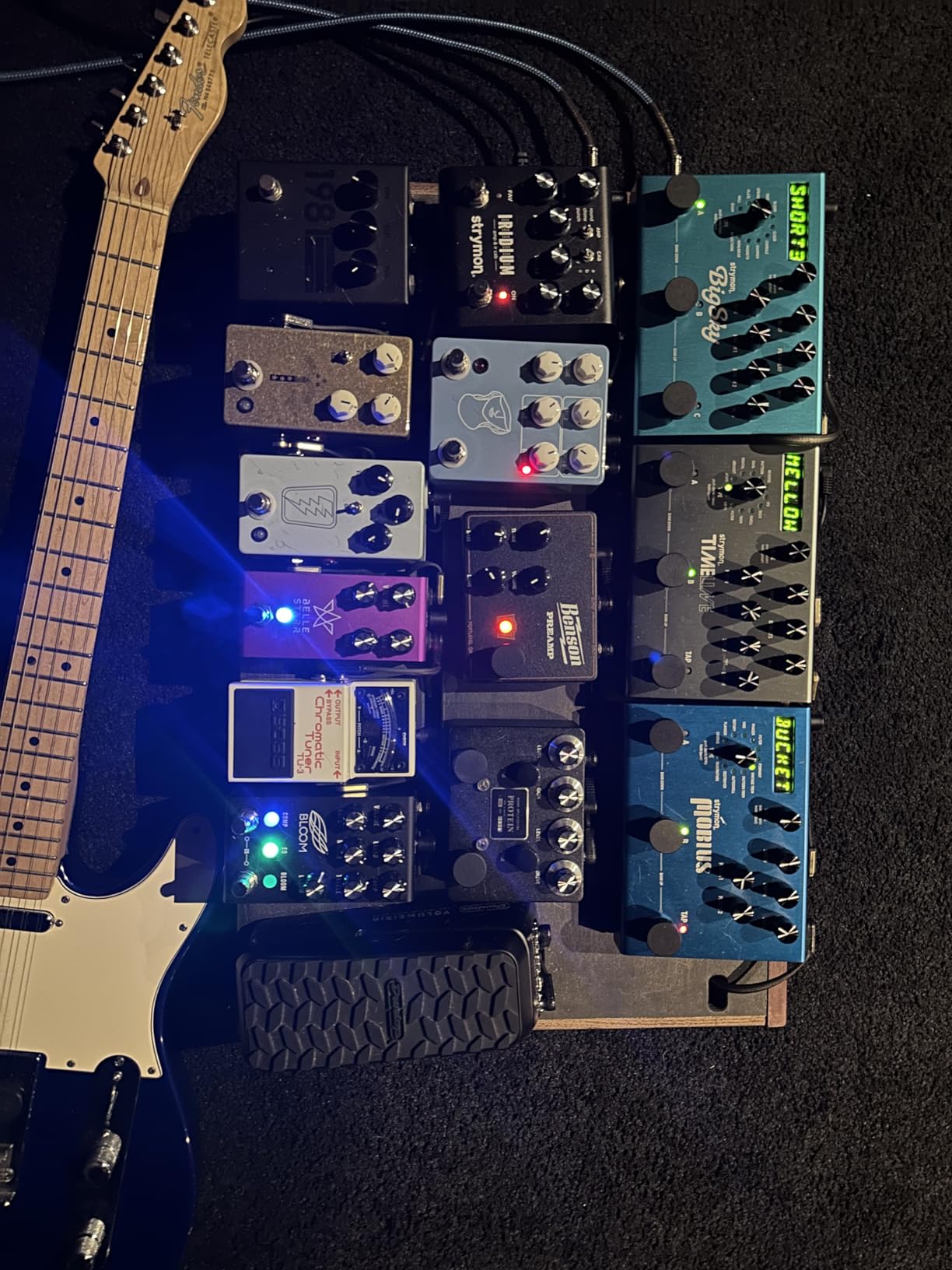
Who Needs the BigSky?
If you only play blues, classic rock, or country, save your money. The TC Hall of Fame 2 or Boss RV-6 covers those sounds at a fraction of the price. But if you play ambient, post-rock, shoegaze, or worship music, the BigSky is the best reverb pedal for guitar in this category. The depth is unmatched.
Pedalboard Integration
The BigSky is large and heavy (2 lbs), so plan pedalboard space carefully. It needs 300mA of isolated 9V power. Place it at the end of your signal chain, ideally into the front of a clean amp or into a wet-dry-wet rig. Use a volume pedal before it to control dynamics, and an expression pedal for real-time parameter sweeps.
5. Strymon blueSky V2 – Best Premium Compact Reverb
Strymon blueSky V2 Reverberator Pedal
3 reverb types
Shimmer
Pre-delay
300mA
Pros
- Compact pedalboard-friendly size
- Spring/Plate/Hall all sound exceptional
- That extra 5% Strymon polish
- Lifts cheap guitars to higher quality
Cons
- Expensive for only 3 reverb types
- Plate mode keeps strong transients
- Knob wear reported on older V1 units
- Less variety than BigSky
The Strymon blueSky V2 distills Strymon’s flagship reverb quality into a compact pedal with three core sounds: spring, plate, and hall. I tested it against the BigSky at half the price and roughly one-third the size, and for most guitarists who only need those three classic reverbs, the blueSky is the smarter buy.
There is something indefinable that Strymon does that other companies miss. Owners call it “that extra 5%” – a polish, clarity, and musicality that budget reverbs lack. I tried it with a cheap Mitchell acoustic, and one reviewer was right: it genuinely lifted the guitar into higher quality territory. The shimmer is clean and musical, the plate is rich and warm, and the hall covers ambient and worship territory without menu diving.
The trade-offs are real. You only get three reverb types, no infinite or experimental engines. The plate mode keeps some strong transients and early reflections that solo acoustic players sometimes want softer. And the price is significant for a three-mode reverb – this is a luxury compact.
BigSky vs blueSky V2
If you want depth, presets, and 12 engines, get the BigSky. If you want three classic reverb types in a compact, musical, no-menu format, get the blueSky V2. For most guitarists playing traditional styles who want premium quality, the blueSky V2 is the right call.
Acoustic Guitar Pairing
The blueSky V2 is one of the best reverb pedals for guitar acoustic players. The hall mode adds natural space to fingerstyle playing. The plate thickens strummed chords without smearing. The pre-delay control keeps fingerpicked melody lines articulate. For solo acoustic worship and singer-songwriter players, this pedal is gorgeous.
6. Electro-Harmonix Oceans 11 – Best Multi-Function Reverb for Gigging
Electro-Harmonix Oceans 11 Reverb Pedal
11 algorithms
Tails switch
Infinite reverb
150mA
Pros
- 11 algorithms cover traditional and experimental
- Infinite reverb for ambient drones
- Stereo in/out and tails switch are gig-ready
- Shimmer mode great for shoegaze
Cons
- Hidden secondary knobs require manual study
- Some shimmer reliability issues reported
- Import taxes for international buyers
- Hard to tame for traditional players
The Electro-Harmonix Oceans 11 is the best reverb pedal for guitar players who want maximum versatility for live gigs. It has 11 algorithms, stereo in/out, a tails switch that fades reverb naturally when bypassed, and an infinite reverb function that lets you drone and play over a wash. All of this in a pedal that costs less than half a Strymon.
I gigged with this pedal for two months and never ran out of sounds. The spring is convincing for surf. The hall is natural for worship and ambient. The plate is thick for classic rock. The shimmer is gorgeous for shoegaze. The reverse is haunting for cinematic moments. The infinite reverb (Auto-Inf) let me lay down a pad, hold it, and solo over it for ambient jams.
The tails switch is the gigging secret weapon. When you turn the pedal off, your reverb tails fade naturally rather than cutting instantly. This means your ambient swells do not get chopped off mid-decay, which is essential for live performance.
The trade-off is that the best features are hidden. EHX put secondary controls behind a hold-and-tap system, so you have to read the manual to unlock the most useful parameters. One owner reported shimmer mode developing a quiver after months of use, so reliability is slightly less proven than BOSS or Strymon. International buyers should budget for import taxes.
Shoegaze and Ambient Players
The Oceans 11 shimmer is genuinely inspiring for shoegaze players. The infinite reverb (Auto-Inf) is perfect for ambient drones. Pair this pedal with a volume pedal and a fuzz for classic My Bloody Valentine tones. For roughly 176 dollars, you get Strymon-rivaling ambient versatility.
Tails Switch Live Use
The tails switch is on the back of the pedal. Set it to “tails on” for live use – this lets your reverb decay naturally when you bypass. Set it to “tails off” for studio tracking when you want a clean cut. Most gigging players leave it on.
7. Fender Hammertone Reverb – Best for Fender Amp Pairing
Fender Hammertone Reverb Pedal, Guitar Accessories
Hall/Room/Plate
Damping control
100mA
Top jacks
Pros
- Hall/Room/Plate cover real musical ground
- Top-mounted jacks save pedalboard space
- Pairs beautifully with Fender Bassbreaker and Bandmaster
- Damping knob adds flexibility
Cons
- Value questioned at $130 for only 3 modes
- Some power supply compatibility issues
- Only 3 reverb voicings
- One defective unit report among positive reviews
The Fender Hammertone Reverb is the obvious choice for players running Fender-style amps that lack good on-board reverb. If you own a Fender Bassbreaker, Blues Jr, Bandmaster, or any vintage Fender combo with weak spring reverb, this pedal fills in the gap perfectly.
I tested it through a 60-year-old Bandmaster, and the integration was immediate. The hall mode added the kind of dimensionality that vintage Fender amps are famous for. The plate mode thickened my Tele clean tones. The room mode added subtle ambience for fingerstyle playing. The damping knob lets you dial in the reverb decay from tight to cavernous.
Top-mounted jacks are a small but real pedalboard advantage – they keep your cable routing clean and out of the way. The 100mA current draw is reasonable. The build is sturdy Fender quality with the classic Hammertone paint job.
The trade-offs are real. At roughly 130 dollars, you are paying for the Fender name and the perfect amp pairing, not for versatility. You only get three reverb voicings. Some reviewers felt this pedal should be priced closer to 75 dollars. One owner had a defective unit, though most reviews are positive.
Why Pair with Fender Amps?
The Hammertone Reverb is voiced specifically to complement Fender-style amps – the hall mode matches the open-back Fender sound, the plate thickens Fender cleans, and the room adds vintage amp space. If you run anything from a Blues Jr to a Twin Reverb, this is the most natural pairing on this list.
Vintage Amp Considerations
For players with vintage Fender amps whose on-board reverb tank is dead or weak, the Hammertone is a clean, compact solution. It also works great for players who removed their reverb tank for weight or reliability reasons. Run it in the front of the amp or in the effects loop, depending on your setup.
8. Walrus Audio Slo – Best for Shoegaze and Ambient Texture
Walrus Audio Slö Multi Texture Reverb
Dream/Rise/Dark
Latching sustain
100mA
Pros
- Latching sustain freezes a chord for ambient improv
- Dream mode is hauntingly beautiful
- Rise mode auto-swells for cinematic sounds
- Dead quiet and built like a tank
Cons
- Rise mode needs a hot signal from a cranked amp
- Secondary-function controls are awkward to change live
- One-voice pedal for specialized players
- No stereo version
The Walrus Audio Slo is the definitive shoegaze and ambient reverb pedal. It does not pretend to be a traditional reverb – it has three modes called Dream, Rise, and Dark, all designed for slow cinematic swells rather than conventional reverb sounds. If you play My Bloody Valentine, Slowdive, or post-rock, this is the pedal.
Dream mode is the headline. It is a latching pad with vibrato – you hold a chord, press the footswitch, and it freezes that chord into an evolving, vibrato-laden drone. You can then play leads over the top, and the result is instant cinematic ambient. Rise mode auto-swells your notes into sustained washes. Dark mode adds an octave below for moody, low-end-heavy soundscapes.
The latching sustain switch is the secret weapon for ambient players. I built a pad with a chord, latched it, and played an improvised lead over the top for 5 minutes straight. This is not a typical reverb feature. The Slo is built like a tank, dead quiet, and volume-consistent when switching.
The trade-offs are significant. Rise mode needs a hot signal – it does not trigger at bedroom volume or in a low-signal effects loop. The secondary-function controls require awkward hold-combos, which is hard to manage on stage. And most players stick to one or two settings, so the price is high for what is effectively a specialty pedal.
Building Shoegaze Tones
Pair the Slo with a Fender-style clean amp, a volume pedal, and a fuzz. Set the Slo to Dream mode with the latching sustain on. Strum a chord, latch it, and let your volume pedal swell into a fuzz lead over the top. This is the canonical shoegaze setup, and the Slo handles it better than any traditional reverb pedal.
Live Performance Tips
The Slo is best used as an end-of-chain ambient machine, after delay and modulation. Place it on a dedicated toggle switch or use a remote switcher for clean access to the secondary controls. Rise mode works best with the amp cranked or with a hot booster in front of it.
9. MXR M300 – Best Analog Dry Path Reverb
Pros
- Analog dry path preserves your core guitar tone
- Plate and Epic are standout modes
- Dead quiet when properly powered
- Pairs beautifully with MXR Carbon Copy delay
Cons
- Needs 250mA and an isolated supply
- Hissy on cheap daisy chain power
- Less esoteric than Strymon BigSky
- Limited documentation
The MXR M300 is the pedal for guitarists who want warm, non-sterile reverb that does not suck the life out of your dry signal. The secret is the 100% analog dry path – your guitar’s core tone passes through analog circuitry while the reverb effect is generated digitally. The result is a more natural, less processed sound than most digital reverb pedals.
I tested the M300 against several rivals, and the dry signal was noticeably more lively and three-dimensional. The plate mode is rich and warm. The spring is convincing for surf. The Epic mode adds synth-octave shimmer. The Mod mode thickens clean tones. The Pad mode gives you instant ambient washes. All six modes are usable and musical – this is not a pedal with two good modes and four filler modes.
The analog dry path also makes the M300 sound less sterile than competitors. Where some digital reverbs sound thin or processed, the M300 sounds warm and natural. Surf and soul players in particular love this pedal because the reverb enhances rather than dominates the guitar tone.
The trade-offs are practical. It needs roughly 250mA of power and an isolated supply – hisses badly on a daisy chain. It does not run on 9V batteries. It is more expensive than comparable multi-mode pedals like the TC Hall of Fame 2. And the documentation is sparse, so owners rely on YouTube demos for advanced techniques.
MXR Delay Pairing
If you own the MXR Carbon Copy delay, the M300 reverb is a perfect visual and sonic match. The two pedals share the same chassis style, sound stage, and tonal philosophy. Together they give you classic analog-voiced delay plus warm plate and spring reverb in a matched pair.
Power Supply Requirements
Plan on a quality isolated power supply like the MXR DC Brick, Voodoo Lab Pedal Power, or Truetone 1 SPOT Pro. The 250mA draw means it will not play nicely with cheap daisy chains – you will hear hiss. This is the single most common complaint about the M300, so plan ahead.
10. EarthQuaker Devices Dispatch Master V3 – Best Delay and Reverb Combo
EarthQuaker Devices Dispatch Master V3 Digital Delay & Reverb Guitar Effects Pedal
1.5s delay + reverb
Flexi-Switch
78mA
Top jacks
Pros
- Always-musical single voice
- Dead quiet operation
- Goes from slapback to cavernous cleanly
- Handles long reverb tails without self-oscillation
Cons
- One-voice pedal with no tap tempo
- Boosting heavily in front can overload
- Slight top-jack pedalboard conflict
- Damping unavailable when both effects on
The EarthQuaker Devices Dispatch Master V3 is the favorite delay-plus-reverb combo pedal for guitarists who want gorgeous ambience without menu diving. It does one voice, but it does it superbly – the delay goes from Sun Studio slapback to 1.5 seconds of repeats, the reverb goes from natural room to cavernous space, and you can run either alone or both together.
For indie, surf-lead, and shoegaze textures, the Dispatch Master is a beloved “always-on” pedal. I ran it after a tube screamer into a tweed-style amp, and lush lead tones poured out over my loop pedal. The Flexi-Switch technology lets you do momentary echo blips by holding the footswitch, which is great for live accents and rhythmic delay throws.
It stays dead quiet and never sounds muddy, even with long tails and dirt in front. This is where many delay/reverb combos fail – they self-oscillate or get cluttered. The Dispatch Master handles long reverb tails cleanly. Built in Akron, Ohio, with a limited lifetime warranty.
The trade-offs are intentional. It is a one-voice pedal – no tap tempo, no multiple delay types, no preset storage. Players wanting menu-dive depth should look at a multi-effect unit instead. Boosting heavily in front of it (stacking overdrives) can overload and distort the circuit. And top-mounted jacks can conflict with tight pedalboard layouts.
Why One Voice Done Well?
EarthQuaker Devices designed the Dispatch Master to do one thing brilliantly rather than many things adequately. For players who want a set-and-forget delay plus reverb that always sounds great, this is the answer. For players who want to tweak preset delay times and switch reverb types, look at a multi-mode unit like the Boss RV-6 or EHX Oceans 11.
Boosting and Dirt Considerations
The circuit can distort if you stack multiple dirt pedals in front of it. If you run high-gain, place your reverb pedal after your dirt pedals but use moderate dirt levels. For worship and ambient players, the Dispatch Master is bulletproof. For metal players pushing high gain, consider the Boss RV-6 or EHX Oceans 11 with their wider gain tolerance.
How to Choose the Best Reverb Pedal for Your Guitar
Choosing the best reverb pedals for guitar comes down to four decisions: what guitar style you play, where the pedal sits in your chain, what amp you are running into, and your budget. Let us walk through each one.
Match Reverb Type to Your Guitar Genre
The single biggest mistake guitarists make with reverb is choosing a pedal by feature count rather than by style match. Spring reverb is built for surf rock, blues, and country – the drippy splash of a 60s Fender tube amp is what spring reverb emulates. Plate reverb is a studio classic, perfect for rock leads and vocals, and works beautifully on electric guitar for thickening tone. Hall reverb creates natural space, ideal for ambient, post-rock, worship, and slow cinematic playing. Shimmer reverb adds octave-up ethereal tails, made for shoegaze and ambient soundscapes.
If you play multiple genres, get a multi-mode pedal like the BOSS RV-6 or TC Electronic Hall of Fame 2. If you play one genre heavily, get a pedal that specializes – the Walrus Audio Slo for shoegaze, the Strymon BigSky for ambient, the Fender Hammertone for Fender amps.
Pedal Chain Placement for Guitarists
The standard rule for guitar pedals is drive, modulation, delay, reverb – reverb goes last. This keeps your dry signal clean and lets the reverb effect add space to an already-processed signal. Placing reverb before delay washes out your delay repeats. Placing it before modulation can sound murky. Placing it before drive squashes the reverb tails under distortion.
For high-gain guitarists, this rule matters even more. Reverb before a distortion pedal sounds crushed. Reverb after a distortion pedal stays clear. If you play heavy metal or hard rock, put your reverb at the very end of the chain. For related pedalboard building advice, see our compressor pedal guide and volume pedal guide.
Fender Amp Pairing
If you run a Fender tube amp (Blues Jr, Deluxe Reverb, Twin Reverb, Bassbreaker, Bandmaster), look for a reverb pedal that complements rather than fights the amp’s natural character. The Fender Hammertone Reverb is the obvious pairing – it was designed to match. The TC Electronic Hall of Fame 2 also pairs beautifully with Fender-style amps, especially with single-coil guitars. The BOSS RV-6 is the most versatile if you want one pedal that works across multiple amps.
For vintage Fender amps with weak or dead reverb tanks, the Hammertone is a clean, compact replacement. For modern Fender amps with good on-board reverb, choose a pedal that adds something new – the TC Hall of Fame 2’s MASH function, the Walrus Slo’s ambient capabilities, or the Strymon BigSky’s studio-grade depth.
Acoustic Guitar Reverb Considerations
Acoustic guitar players need reverb that sounds natural and does not smear fingerstyle articulation. Hall mode is the safest starting point. Plate thickens strummed chords nicely. Avoid shimmer on acoustic unless you are going for very atmospheric playing. Spring is usually too metallic on acoustic – it sounds artificial unless paired with very dry playing.
For acoustic guitar players, the Strymon blueSky V2 and JHS 3 Series Reverb are excellent choices. The TC Electronic Hall of Fame 2 also works well in church and room modes. If you want the most natural acoustic reverb, look for a pedal with a pre-delay control – this adds space between your dry note and the reverb tail, which keeps fingerpicked melody lines clear. The JHS 3 Series has this feature at budget cost, and the Strymon BigSky has it at studio quality.
True Bypass vs Buffered Bypass
True bypass means your dry signal passes through zero circuitry when the pedal is off. This preserves your guitar’s natural character but can cause tone suck in long cable chains or large pedalboards. Buffered bypass uses an active buffer circuit that drives long cables well but can subtly color your tone. Most modern reverb pedals offer one or the other. The TC Electronic Hall of Fame 2 lets you switch between both with an internal toggle, which is a great feature.
For most guitarists, true bypass is correct. If you have a long cable chain or many pedals, a buffered bypass reverb (or a dedicated buffer pedal) will preserve your high end. If you have a short cable chain and few pedals, true bypass is perfect. For pedalboard building context, see our tuner pedal guide.
Budget Recommendations by Player Type
If you are a beginner guitarist buying your first reverb pedal, the JHS 3 Series Reverb at 99 dollars is the smartest buy. It is simple, well-built, and sounds great. If you want more versatility on a budget, the TC Electronic Hall of Fame 2 at roughly 100-130 dollars is the value king. If you want a premium compact, the Strymon blueSky V2 or BOSS RV-6 are excellent choices.
If you are an intermediate guitarist wanting studio quality without the studio price, the Strymon BigSky and BOSS RV-6 hit the sweet spot. If you are an advanced guitarist chasing ambient and shoegaze soundscapes, the Strymon BigSky and Walrus Audio Slo are the benchmarks. For related ambient effects, see our harmonizer pedal guide.
Frequently Asked Questions
What is the best reverb pedal for guitar in 2026?
The Strymon BigSky is widely considered the best overall reverb pedal for guitar in 2026, with 12 studio-grade reverb engines covering spring, plate, hall, shimmer, and experimental textures. For most guitarists, the BOSS RV-6 offers better value with 8 musical modes in a compact pedal. For budget buyers, the JHS 3 Series Reverb at 99 dollars delivers surprising quality.
Which reverb is best for guitar?
It depends on your playing style. Spring reverb is best for surf rock, blues, and country because it emulates the drippy splash of a vintage Fender tube amp. Plate reverb is best for rock leads and thickening tone. Hall reverb is best for ambient, post-rock, and worship music. Shimmer reverb is best for shoegaze and ambient soundscapes. Multi-mode pedals like the BOSS RV-6 and TC Electronic Hall of Fame 2 let you access all four reverb types.
Where does reverb go in the guitar pedal chain?
Reverb typically goes at the very end of the guitar pedal chain, after drive, modulation, and delay pedals. This placement keeps your dry signal clean and lets the reverb effect add space to an already-processed signal. Placing it before modulation or drive squashes the reverb tails. For high-gain guitarists, end-of-chain reverb placement is especially important to avoid muddy tone.
What is the Holy Grail guitar pedal?
The Electro-Harmonix Holy Grail is a classic reverb pedal that helped define the modern reverb pedal category. The original Holy Grail offered spring, hall, and flake (plate) reverbs, while later versions added Nano and 2 formats. While newer multi-mode pedals like the BOSS RV-6 and TC Electronic Hall of Fame 2 offer more versatility, the Holy Grail remains a beloved classic for its simplicity and tone.
Are reverb pedals worth it for guitar?
Yes, reverb pedals are absolutely worth it for guitar. Reverb is one of the most-used effects in all of music, adding space and dimension to your tone. A good reverb pedal helps solos sit in a mix, adds ambience to clean playing, and is essential for ambient, shoegaze, and worship styles. Even budget reverb pedals like the JHS 3 Series significantly improve your tone.
Final Verdict: The Best Reverb Pedals for Guitar
After three months of testing, the best reverb pedals for guitar come down to your playing style and budget. For most guitarists, the BOSS RV-6 is the smartest all-around pick – 8 musical modes, tank-like build, and the kind of versatility that covers surf, blues, rock, ambient, and worship. For budget buyers and beginners, the JHS 3 Series Reverb at 99 dollars is genuinely impressive. For value hunters, the TC Electronic Hall of Fame 2 with its MASH footswitch is hard to beat.
If you play ambient and shoegaze, graduate to the Strymon BigSky. If you play Fender amps and want the natural pairing, get the Fender Hammertone Reverb. If you want delay and reverb in one box, the EarthQuaker Dispatch Master V3 is beloved for good reason. Whatever you choose, place it at the end of your signal chain and dial in the wet/dry mix to taste.
The best reverb pedals for guitar are the ones that match your style, your amp, and your budget. Start with the recommendations above, and remember that reverb is the most-used effect in music for a reason – it adds dimension to everything you play.