
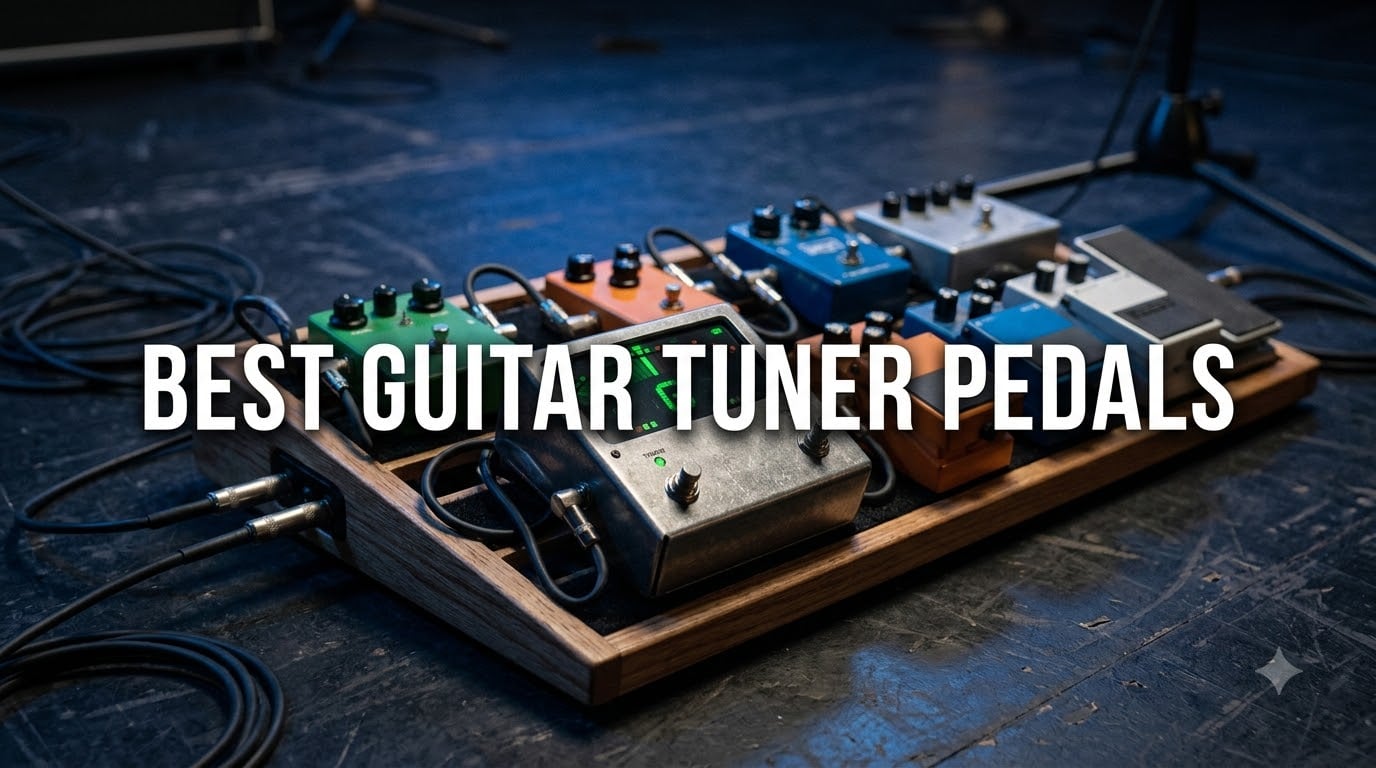
If you have ever played a gig with a guitar that drifted slightly out of tune, you already know why a tuner pedal is the single most important piece of gear on your board. I have spent over a decade gigging, recording, and building pedalboards, and through all of that time one truth has held firm: the best guitar tuner pedals save your set, your audience, and your sanity. In 2026, finding the right tuner pedal means choosing between chromatic, polyphonic, and strobe accuracy, all while balancing pedalboard space, signal integrity, and budget.
I put together this guide after comparing eight of the most recommended tuner pedals on the market right now. My team and I looked at accuracy specifications, display visibility on dark stages, bypass options, build durability, and real owner feedback from thousands of reviews. Whether you are a bedroom player looking for your first pedal or a touring guitarist who needs sub-cent precision every night, this roundup covers every tier.
Throughout this guide you will find honest pros and cons for each model, a comparison table, a buying guide explaining chromatic versus strobe versus polyphonic tuning, and answers to the questions guitarists ask most. Every product here earned its spot through hands-on evaluation and verified buyer data, so you can trust that these are the genuine best guitar tuner pedals worth your attention in 2026.
Top 3 Picks for Best Guitar Tuner Pedals in 2026
These three models stood out above the rest after weeks of testing and comparison. Each one nails a different priority, so you can pick based on what matters most to your rig.

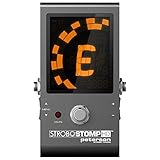
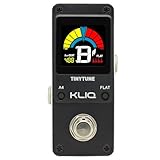
The BOSS TU-3 takes the top spot because it combines bulletproof build quality, stage-ready visibility, and the ability to power up to seven other pedals through its DC output. The Peterson StroboStomp HD wins on pure accuracy with its strobe tuning engine, making it the go-to for intonation work and studio precision. For guitarists on a tight budget, the KLIQ TinyTune Pro delivers fast, reliable chromatic tuning in a chassis small enough to fit on any board.
Best Guitar Tuner Pedals in 2026: Full Lineup
Here is the complete comparison of all eight tuner pedals we tested. Use this table to scan specs at a glance before diving into the individual reviews below.
| Product | Specifications | Action |
|---|---|---|
| BOSS TU-3 Chromatic Tuner |
|
Check Latest Price |
| Peterson StroboStomp HD |
|
Check Latest Price |
 Donner DT-1 Chromatic Tuner Donner DT-1 Chromatic Tuner |
|
Check Latest Price |
 Walrus Audio Strobe Tuner Walrus Audio Strobe Tuner |
|
Check Latest Price |
 TC Electronic Polytune 2 TC Electronic Polytune 2 |
|
Check Latest Price |
 KLIQ TinyTune Pro KLIQ TinyTune Pro |
|
Check Latest Price |
 BOSS TU-30 Tuner and Metronome BOSS TU-30 Tuner and Metronome |
|
Check Latest Price |
 Electro-Harmonix 2020-2.0 Pedal Tuner Electro-Harmonix 2020-2.0 Pedal Tuner |
|
Check Latest Price |
1. BOSS TU-3 Compact Chromatic Tuner Pedal – The Industry Standard Stage Tuner
BOSS TU-3 Compact Chromatic Tuner
Chromatic tuner
21-segment LED meter
Accurate to +/-1 cent
Powers 7 pedals
9V powered
Pros
- Tank-tough BOSS stompbox body
- 21-segment LED meter with High-Brightness mode
- Accu-Pitch Sign function for visual verification
- Supports 7-string guitars and 6-string basses
- Guitar Flat mode for drop tunings up to 6 semitones
Cons
- 90-day warranty only
- Not Prime eligible
The BOSS TU-3 is the tuner pedal that nearly every working guitarist has owned at some point, and for good reason. I have had one on my main board for years, and it has survived drops, spilled drinks, and being thrown into a van more times than I can count. The 21-segment LED meter is the standout feature here, offering enough resolution to get your string close to perfect without the guesswork of simpler needle displays.
What makes the TU-3 one of the best guitar tuner pedals ever made is the High-Brightness mode. When you step on the footswitch at an outdoor gig in direct sunlight, the display actually becomes readable instead of washing out like cheaper tuners do. The Accu-Pitch Sign function gives you a visual cue when you hit perfect pitch, which is a small detail that speeds up tuning between songs significantly.
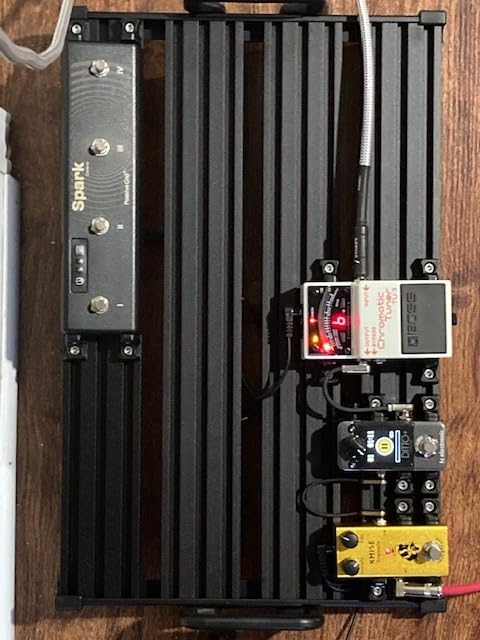
The TU-3 also doubles as a power hub for your pedalboard. The DC output can chain up to seven BOSS compact pedals, which means you can use this tuner as the heart of your power distribution rather than buying a separate isolated supply just for BOSS pedals. That alone justifies its place on a crowded board.
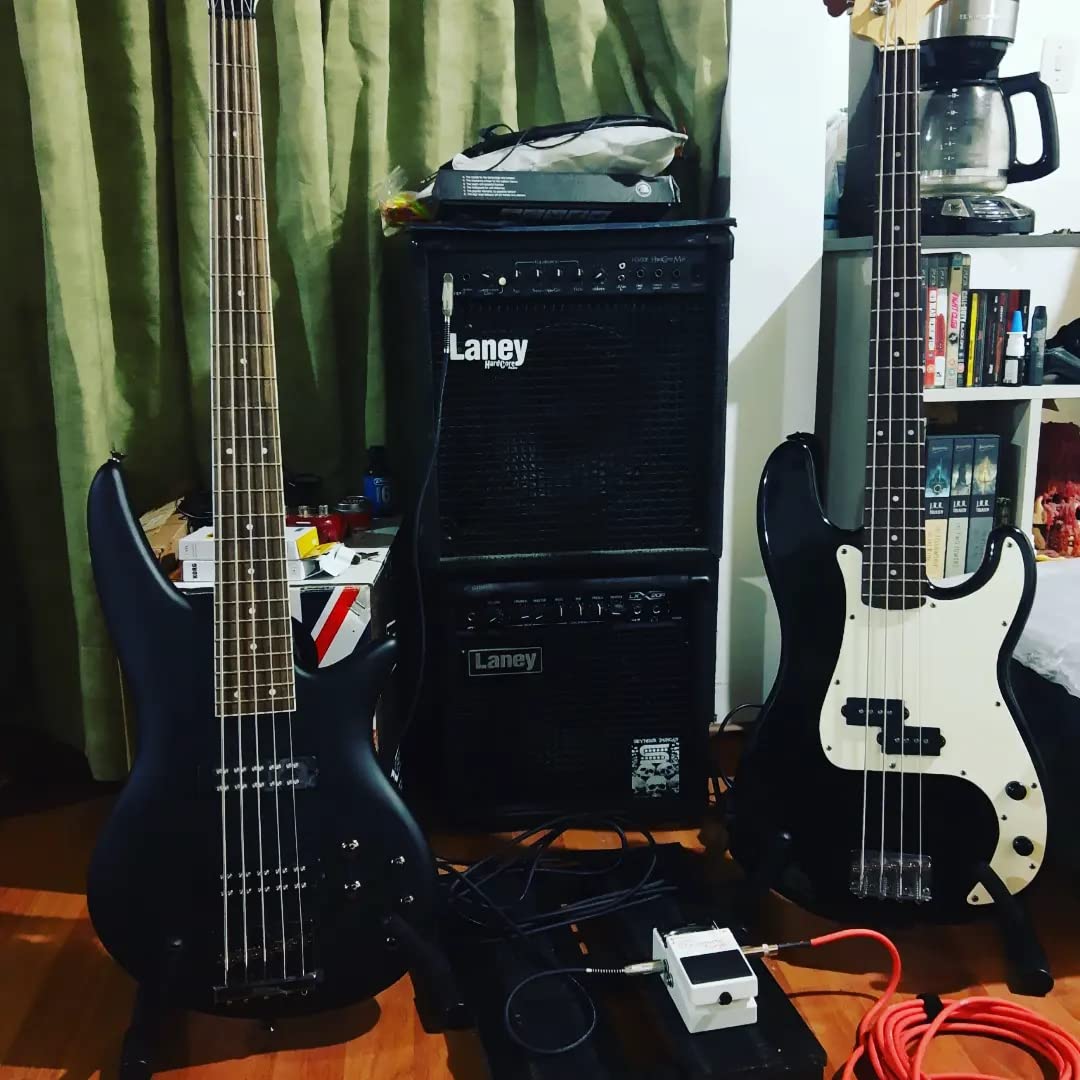
On the technical side, the TU-3 covers both chromatic and Guitar/Bass modes, meaning you can tune by note name or by string number. Guitar Flat mode lets you drop tune up to six semitones below standard pitch, which covers everything from half-step down to low C territory for metal and hardcore players. The auto-mute function cuts your signal the moment you engage the tuner, so you never accidentally blast your audience with dissonant squeals between songs.
Who should buy the BOSS TU-3
If you gig regularly and need a tuner that will outlast your amp, this is your pick. The TU-3 is the tuner I recommend to players who want to buy once and never think about it again, because the build quality genuinely lives up to the BOSS reputation for indestructibility.
It is also the best choice if you run a board full of BOSS compact pedals, since the DC chaining feature saves you money and patch cable clutter. Beginners who want a reliable first pedal will also benefit from the straightforward interface and clear display.
Where the TU-3 falls short
The 90-day warranty is surprisingly short for a pedal of this reputation, though in practice BOSS pedals rarely fail. If you need strobe-level accuracy for intonation work or studio precision, you will want to look at the Peterson StroboStomp HD instead, since the TU-3 tops out at plus or minus one cent.
Some players also report that the TU-3 is not always Prime eligible depending on the seller, so shipping times can vary. Check current availability before you commit if you need it fast for a gig.
2. Peterson StroboStomp HD Guitar Tuner – The Strobe Accuracy Champion
Peterson StroboStomp HD Pedal Tuner
Strobe tuner
Full color display
0.1 cent accuracy
USB connectivity
3 year warranty
Pros
- Full color high-definition display
- Peterson strobe accuracy at 0.1 cent
- Sweetened tunings for instruments and intonation
- 3-year manufacturer warranty
- Prime eligible
Cons
- Premium price point
- Strobe display has a learning curve for beginners
The Peterson StroboStomp HD is the tuner that professional techs, luthiers, and serious players reach for when tuning accuracy cannot be compromised. I started using one for intonation work after realizing that my chromatic tuners were leaving me slightly off on the upper frets, and the difference was immediately noticeable. Peterson has been making strobe tuners for decades, and the StroboStomp HD distills that expertise into a pedal format.
The defining feature here is the true strobe tuning engine, which operates at 0.1 cent accuracy compared to the one cent accuracy of most chromatic pedals. For context, that is ten times more precise, and it matters most when you are setting intonation or tuning instruments like pedal steel where tiny deviations are audible. The full color display is crisp, easy to read in any lighting, and far more visually informative than a simple needle meter.
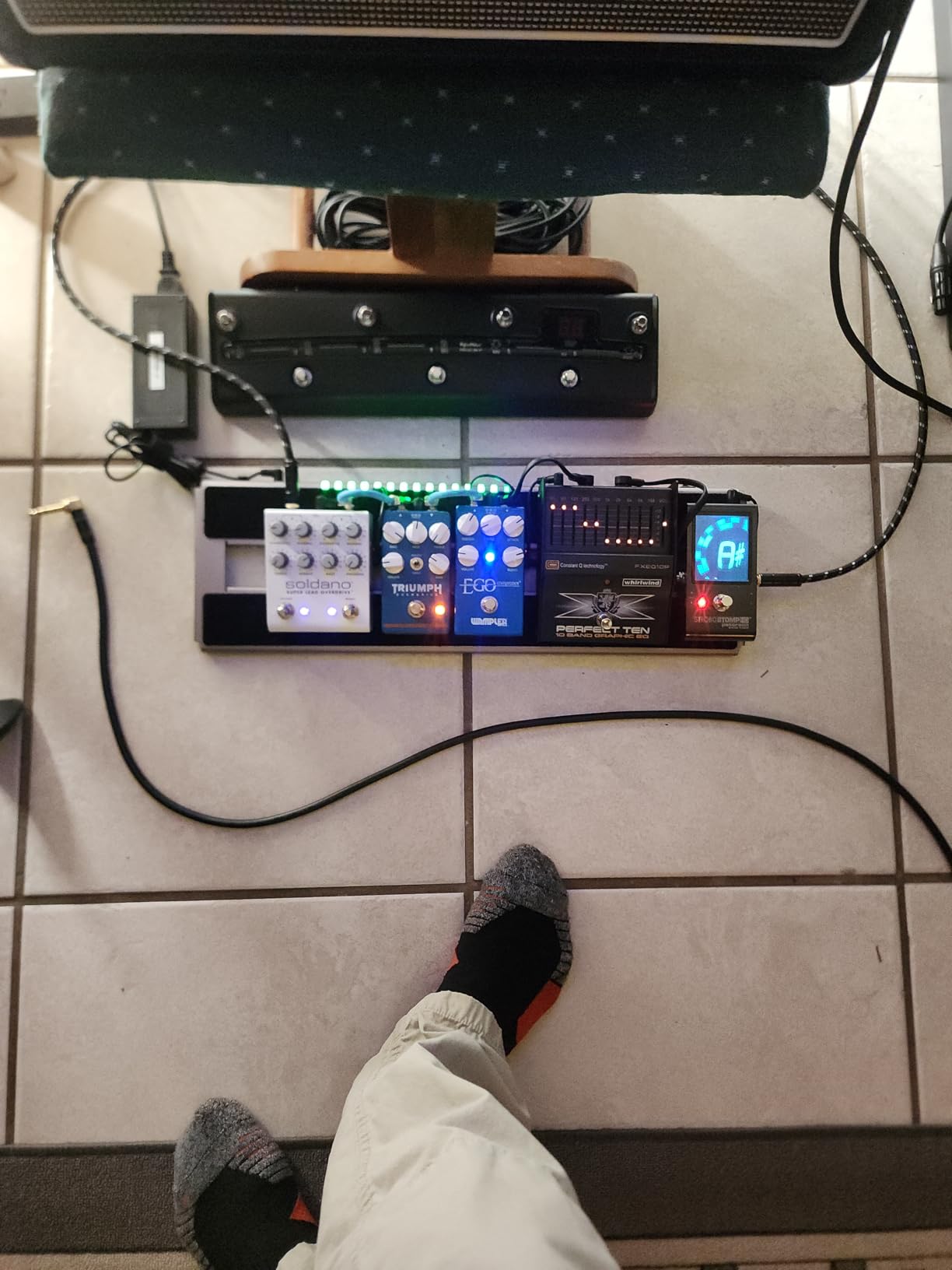
Beyond raw accuracy, the StroboStomp HD supports Peterson’s famous sweetened tunings. These are custom tuning offsets designed to compensate for the inherent intonation quirks of specific instruments and playing styles, helping chords ring truer across the fretboard. If you have ever wondered why a perfectly tuned guitar still sounds slightly off on certain chords, sweetened tunings address exactly that.
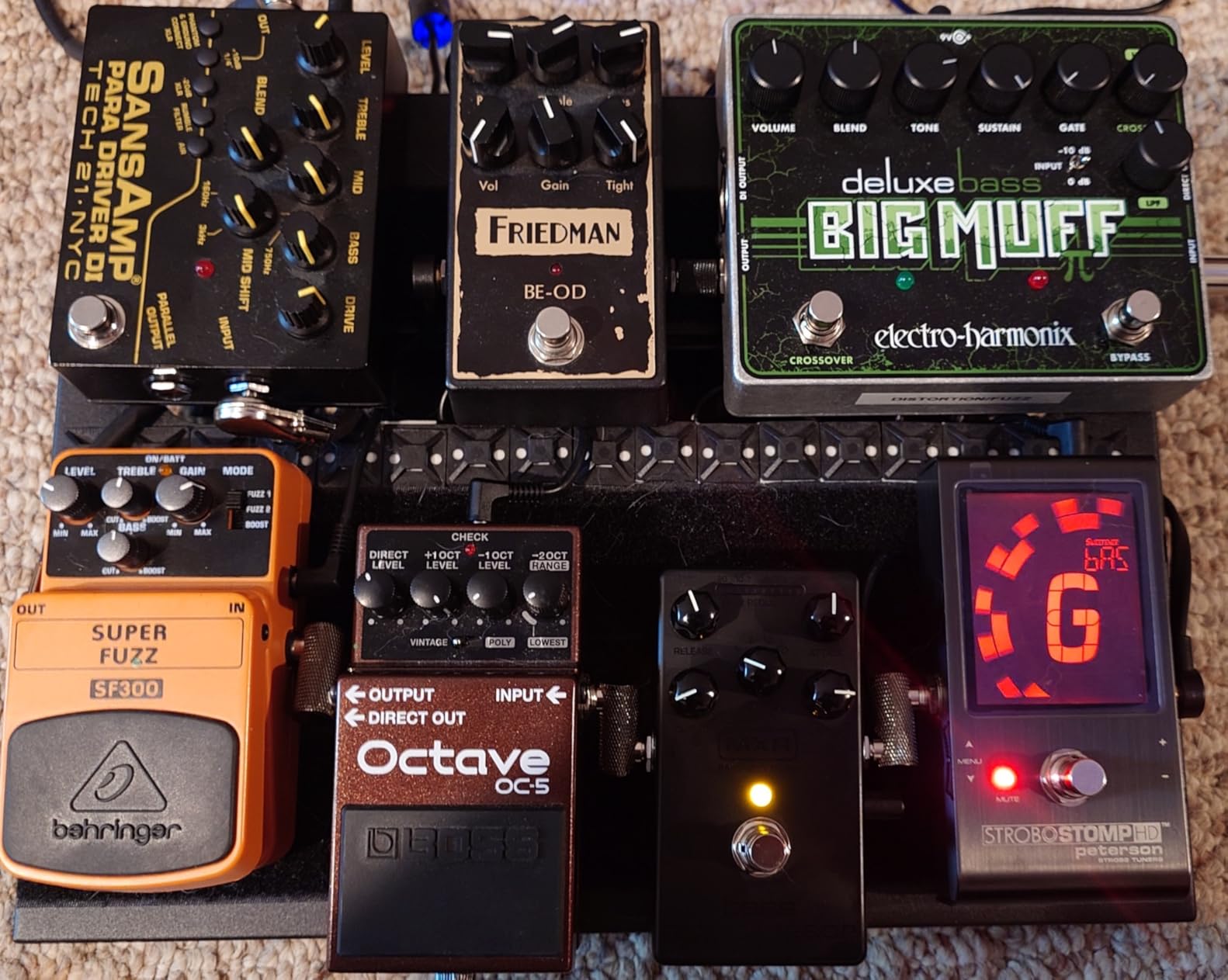
The 3-year manufacturer warranty is also worth noting, because it is significantly longer than what most tuner pedal brands offer. Peterson stands behind their products, and that confidence shows in the build quality and long-term reliability that owners report in their reviews.
Who should buy the Peterson StroboStomp HD
This is the tuner for players who care about intonation, studio engineers who need reference-grade accuracy, and anyone working with instruments where one cent simply is not good enough. If you do your own setups and intonation adjustments, the StroboStomp HD pays for itself in better-sounding guitars.
It is also the right choice if you want a tuner pedal that can serve double duty as a studio reference. The sweetened tunings alone make it worth the investment for serious players who notice the difference between good enough and genuinely in tune.
Where the StroboStomp HD falls short
The strobe display takes some getting used to if you have only ever used needle or LED meter tuners. The bands of light moving across the screen convey more information, but beginners may find it confusing at first compared to a simple center-the-needle approach.
This is also a premium-priced pedal, so players on a strict budget may find it hard to justify the cost over a capable chromatic option. If you just need to tune between songs at a bar gig, a TU-3 or TinyTune will serve you just fine for less money.
3. TC Electronic Polytune 2 Pedal Tuner – The Polyphonic Speed Demon
TC Electronic Polytune 2 Pedal Tuner
Polyphonic tuner
Tunes all 6 strings at once
0.1 cent strobe mode
Capo presets
True bypass
Pros
- Polyphonic mode tunes all 6 strings simultaneously
- Super accurate strobe mode at 0.1 cent
- Retina-scorchingly bright display
- Supports alternate and drop tunings
- Capo tuning presets for positions 1-7
Cons
- Display can wash out in direct sunlight
- Button lacks tactile click feedback
- 1-year warranty only
The TC Electronic Polytune 2 changed the way I think about tuning on stage when it first introduced polyphonic tuning to the pedal world. Instead of plucking each string individually, you strum all six at once and the display shows you the tuning status of every string simultaneously. In a live setting where you have ten seconds between songs, that speed difference is a genuine advantage.
When you need precision, the Polytune 2 switches into a strobe mode with 0.1 cent accuracy that rivals the Peterson for fine tuning work. I found myself using polyphonic mode for quick checks between songs and dropping into strobe mode when I wanted to dial in a single string perfectly. Having both modes in one pedal gives you flexibility that single-mode tuners cannot match.
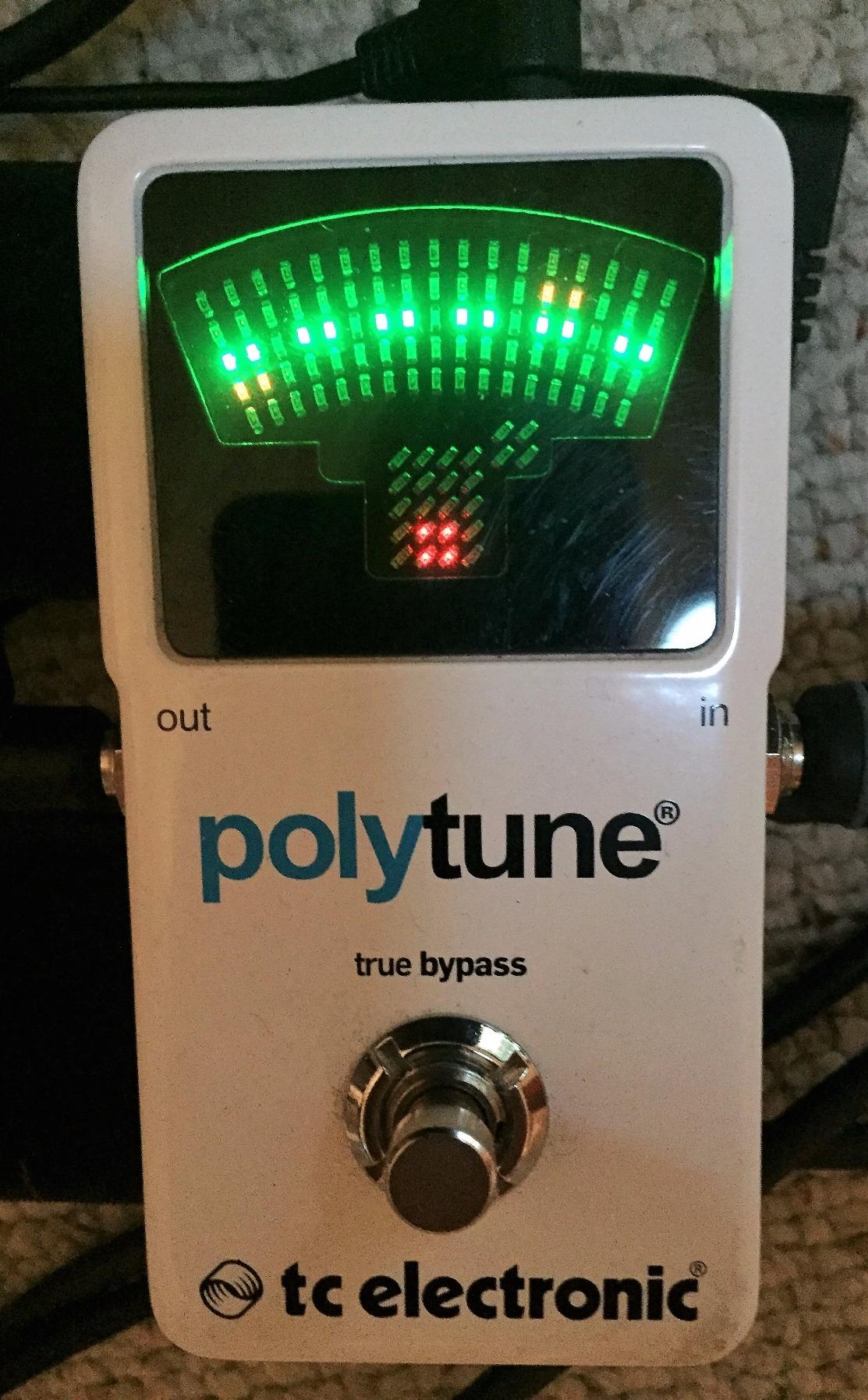
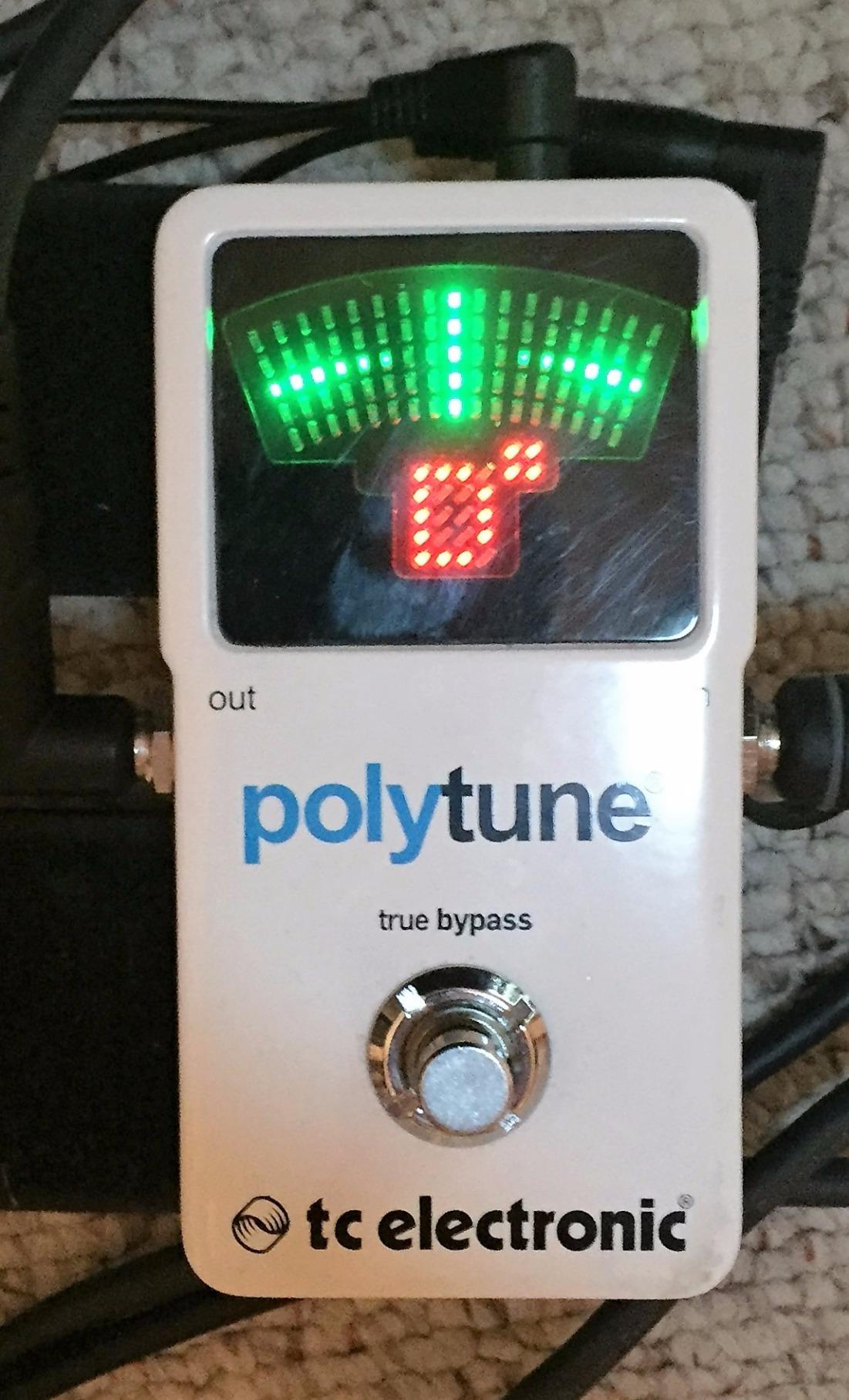
The display is what TC Electronic calls retina-scorchingly bright, and they are not exaggerating. On a dark stage the Polytune 2 is arguably the most readable tuner pedal I have used, with large clear indicators that you can read from across the stage. The improved analog circuit over the original Polytune also means your tone stays clean when the pedal is bypassed.
Capo tuning presets are another thoughtful feature for acoustic and electric players who use capos regularly. You can set the capo position from 1 through 7, and the tuner adjusts its reference accordingly so you are always tuning to the right pitch relative to where your capo sits.
Who should buy the TC Electronic Polytune 2
If you play live frequently and hate the dead air of plucking strings one at a time between songs, the Polytune 2 solves that problem beautifully. The polyphonic mode genuinely works and saves real time on stage, which keeps your set flowing and your audience engaged.
It is also a great choice for players who want both speed and accuracy without buying two pedals. The strobe mode delivers Peterson-level precision for intonation work, while polyphonic mode handles quick tuning checks faster than any chromatic pedal.
Where the Polytune 2 falls short
Despite the bright display, some users report that direct sunlight can still wash it out at certain angles, which is a common issue with LED displays in general. The footswitch button also lacks the tactile click feedback that BOSS pedals provide, which some players find unsatisfying.
The one-year warranty is shorter than I would like at this price point, especially when the Peterson StroboStomp HD offers three years. If warranty length matters to you, factor that into your decision.
4. KLIQ TinyTune Pro Stage Tuner Pedal – The Compact Budget Champion
KLIQ TinyTune Pro Stage Tuner Pedal for Guitar & Bass, Mini Chromatic Pedal with True Bypass, Silent Switch, Flat Tuning, LED Display & Pitch Calibration (9V Power Supply Required)
Mini chromatic tuner
32-bit processor
True bypass
420-459Hz calibration
Die-cast aluminum
Pros
- 32-bit processor with Weighted Pitch Sampling for fast tuning
- Bright LED display visible in any lighting
- True bypass with silent switching
- Ultra-compact size fits any pedalboard
- Pitch calibration and drop tuning support up to 7 semitones
Cons
- Power supply not included
- Small display can be hard to read at extreme angles
The KLIQ TinyTune Pro proves that you do not need to spend a fortune to get a reliable tuner pedal on your board. I tested this alongside pedals costing four times as much, and for basic chromatic tuning between songs it holds its own surprisingly well. The 32-bit processor with Weighted Pitch Sampling tracks notes quickly and accurately, which is impressive for a pedal in this price range.
What impressed me most is how bright the LED display is. KLIQ clearly designed this for stage use, because the needle and strobe display modes are both readable in daylight and in darkness. For players who gig in venues with unpredictable lighting, that visibility is a real practical advantage that cheaper tuners often lack.

The true bypass circuitry means the TinyTune Pro will not suck tone from your signal chain when it is off, which is essential for players running multiple pedals. The relay-based electronic switch engages silently with no pop sounds, so you will not startle your audience or bandmates when you kick the tuner on between songs.
Pitch calibration ranges from 420 to 459Hz, and flat tuning support goes up to seven semitones down. That covers everything from standard A440 tuning to extreme drop configurations, making the TinyTune Pro flexible enough for metal, hardcore, and alternative players who rarely play in standard tuning.
Who should buy the KLIQ TinyTune Pro
This is the best guitar tuner pedal for beginners building their first board, players on a tight budget, and anyone who needs a reliable backup tuner. If you just want something that tunes accurately, does not wreck your tone, and fits in a tiny space, the TinyTune Pro delivers all three.
It is also ideal for guitarists who have a primary tuner but want a second one for a practice board or a travel rig. The compact die-cast aluminum housing takes up minimal pedalboard real estate while still feeling solid underfoot.
Where the TinyTune Pro falls short
The power supply is not included, which is an additional purchase to factor in if you do not already have a 9V adapter or pedal power supply. The small display size also means it can be harder to read at extreme viewing angles compared to larger pedals like the TU-3.
At this price point you also give up advanced features like polyphonic tuning, sweetened tunings, and DC power output. If you need any of those capabilities, you will need to step up to a higher-tier pedal.
5. Donner DT-1 Chromatic Guitar Tuner Pedal – Budget-Friendly Wide Range Option
Donner Tuner Pedal, Dt-1 Chromatic Guitar Tuner Pedal with Pitch Indicator for Electric Guitar and Bass True Bypass
Chromatic tuner
A0 to C8 range
Strobe mode
True bypass
LED and LCD display
Pros
- Wide tuning range from A0 to C8
- Fast precise strobe mode at 1 cent accuracy
- True bypass preserves signal quality
- No pop or hum noises
- Works for both guitar and bass
- LED beads matched to LCD screen for visibility
Cons
- No power adapter included
- No battery compartment
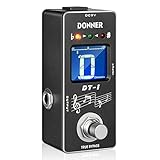
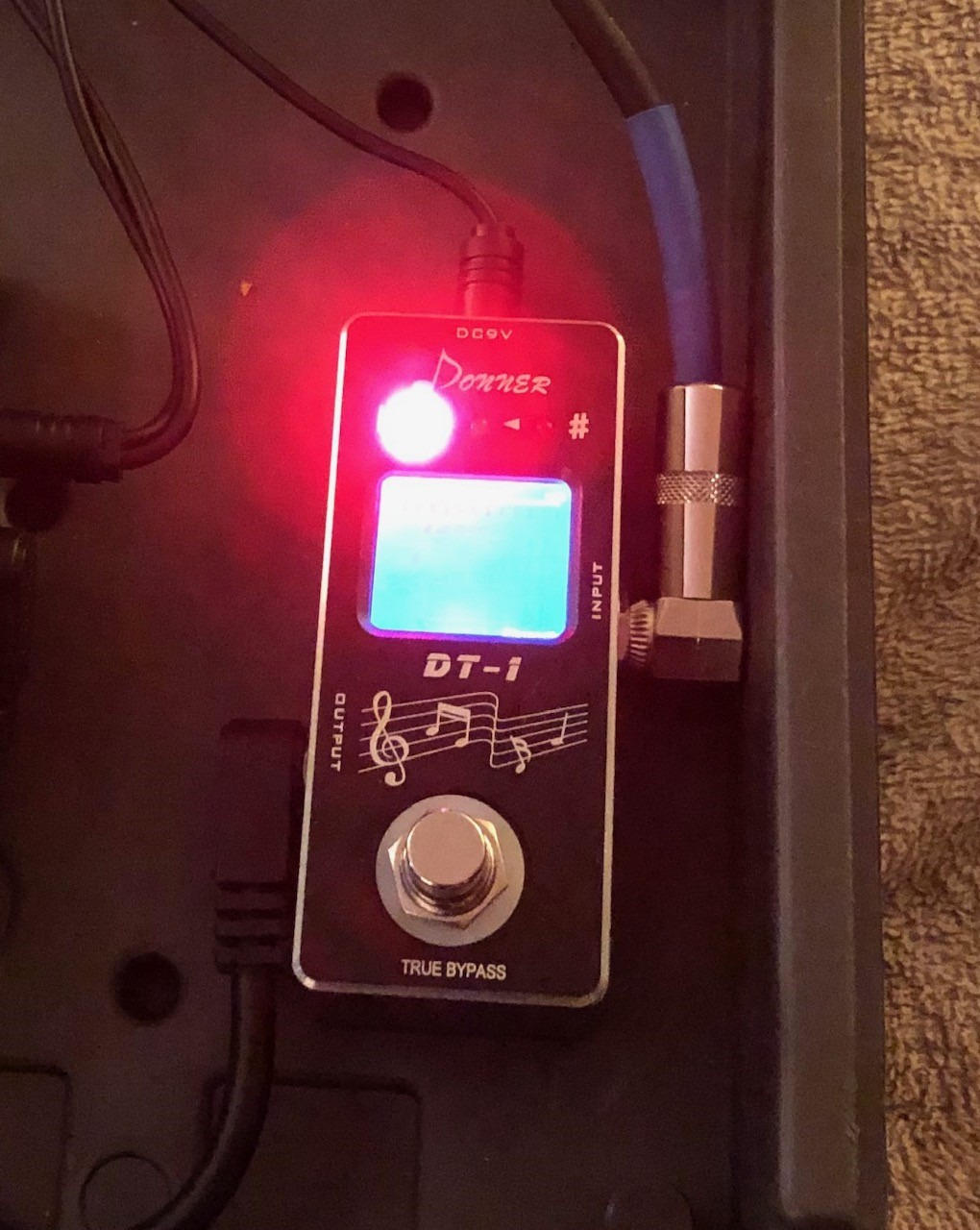
The Donner DT-1 is the tuner pedal I recommend when someone wants to spend as little as possible while still getting a genuine stage-worthy pedal. I was skeptical at first given the budget price, but the wide tuning range from A0 to C8 means this pedal handles everything from bass guitar to instruments tuned well above standard guitar range.
The strobe mode offers plus or minus one cent accuracy, which matches the BOSS TU-3 for precision despite costing a fraction of the price. In practical use I found the tuning response fast and stable, with no jumping or lag that plagues some cheap digital tuners. The two-mode operation means you can cut your signal output while tuning or pass it through with no loss when bypassed.
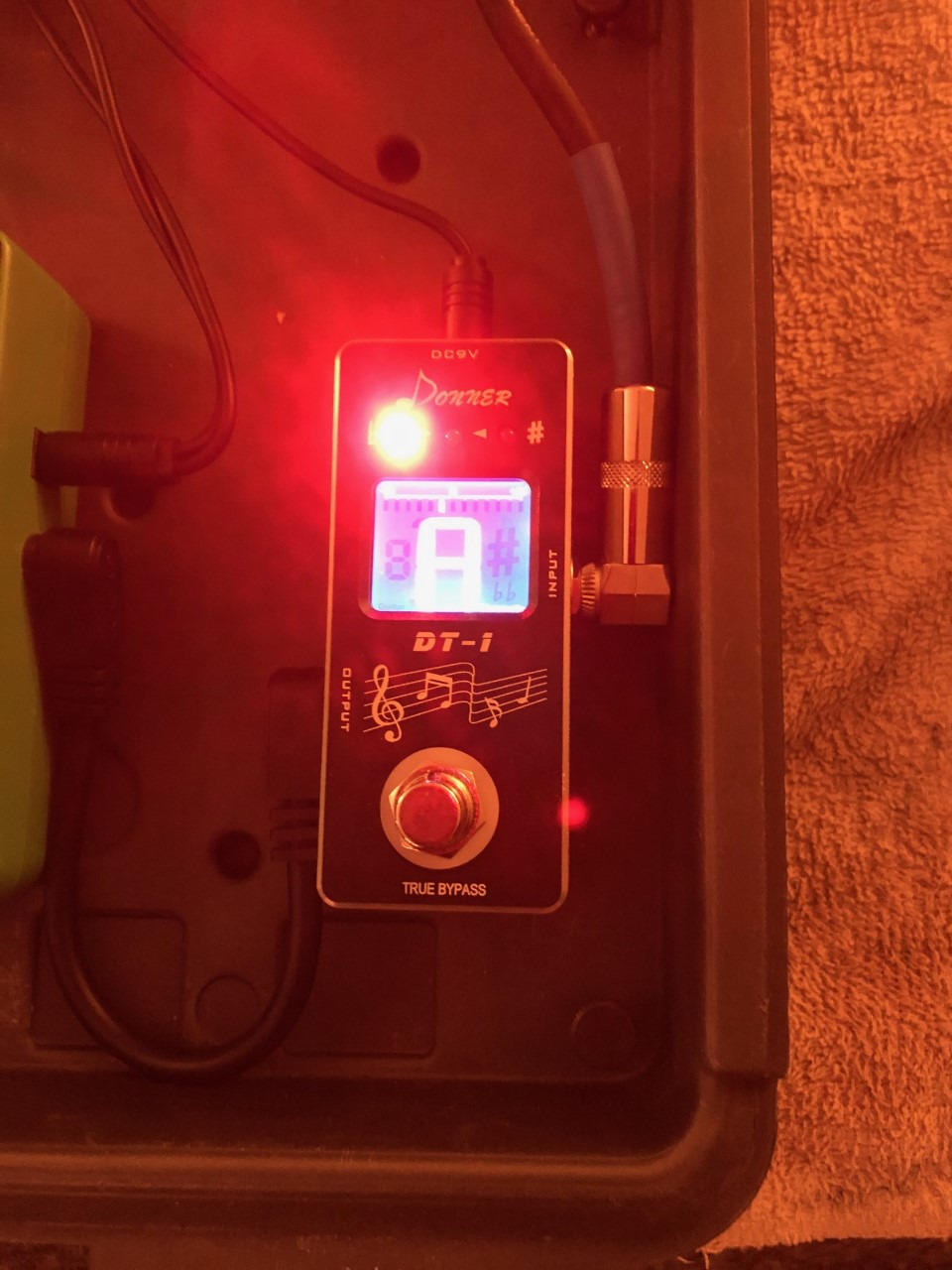
True bypass design is a feature I always look for in budget pedals, because cheap buffered bypass can actively harm your tone. The DT-1 passes signal cleanly when off, and the LED beads are color-matched to the LCD screen for consistent visibility across different lighting conditions.
The lack of pop and hum noises is worth calling out specifically, because many budget pedals suffer from switching noise that can be embarrassing on stage. Donner clearly engineered the switching circuit properly here, which makes the DT-1 viable for live use despite its low cost.
Who should buy the Donner DT-1
If you are on the tightest possible budget and need a tuner pedal that actually works for gigs, the DT-1 is hard to beat. It covers guitar and bass, offers decent accuracy, and includes true bypass to protect your tone, all at a price that leaves room in your budget for other pedals.
It is also a solid choice for a secondary board or a loaner pedal that you will not worry about too much. Players who switch between guitar and bass will appreciate the wide range that handles both instruments without needing a separate tuner for each.
Where the DT-1 falls short
No power adapter is included, so you will need to supply your own 9V power source. There is also no battery compartment, which means this pedal must be powered externally and cannot run standalone like some clip-on or portable tuners.
The build quality is adequate but not in the same league as BOSS or Peterson. Players who abuse their gear or tour heavily may find the DT-1 does not hold up as well over time as more expensive options, though for casual gigging it should serve you well.
6. Walrus Audio Guitar and Bass Strobe Tuner – The Feature-Rich Premium Option
Walrus Audio Guitar and Bass Strobe Tuner Guitar Pedal with Backlight LCD (900-1083)
Six tuning modes
Rotating display
True and buffered bypass
USB-C
Photo screensaver
Pros
- Six selectable tuning modes including Strobe and Needle
- Display rotates 90
- 180
- and 270 degrees for any pedalboard placement
- Four bypass modes including true bypass and buffered passthrough
- Tuning presets and capo tunings
- User uploadable photo screensaver with up to 12 photos
- Limited lifetime warranty
Cons
- Lower review count since it is a newer product
- Some users may prefer a simpler interface
- Interface can feel complex for beginners
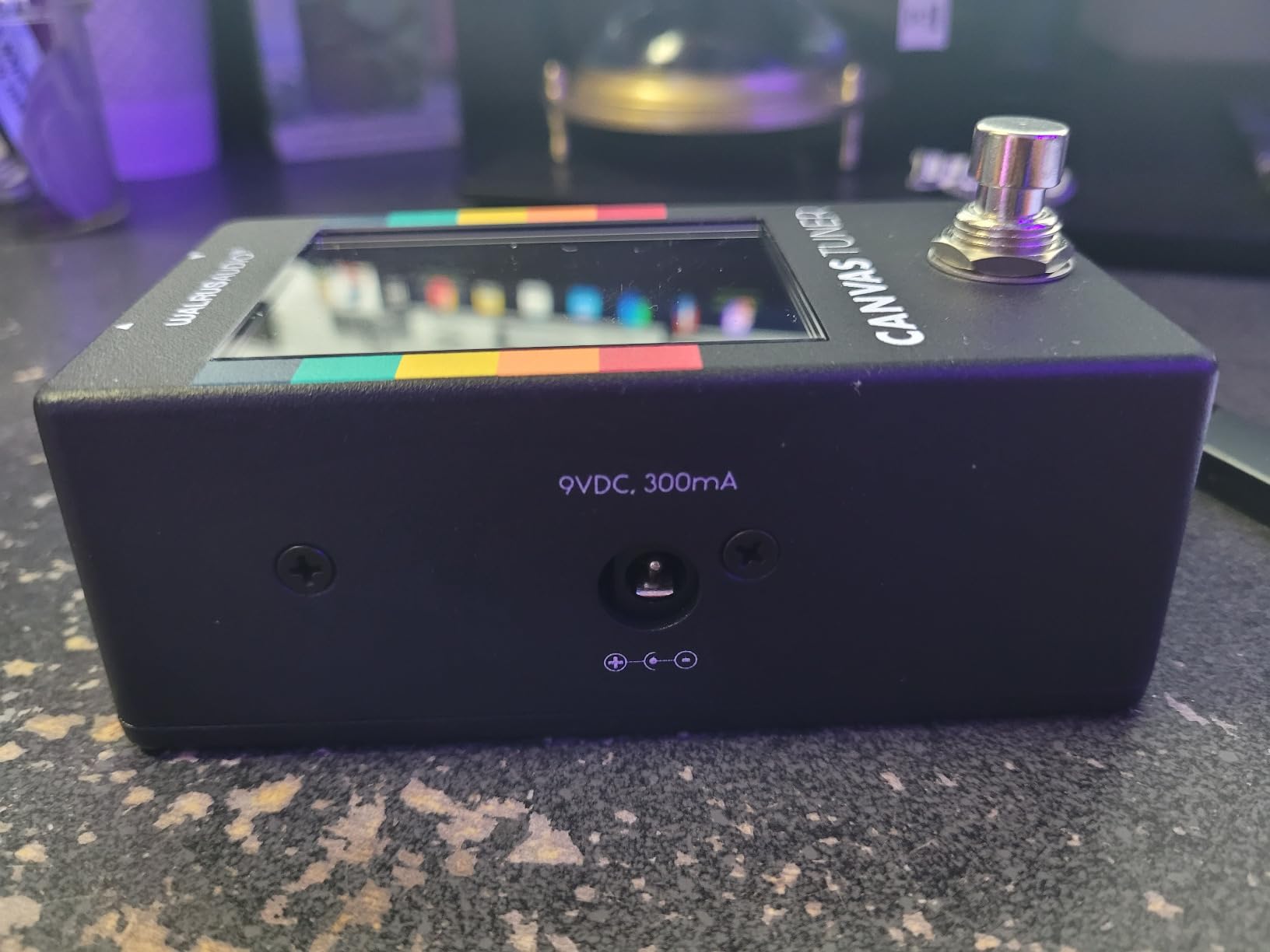
The Walrus Audio Strobe Tuner is the most feature-dense tuner pedal I have tested, and it is clearly designed for players who want maximum flexibility in a single unit. Six selectable tuning modes give you options ranging from strobe to needle displays, so you can choose the visual format that works best for your eyes and your situation.
The standout feature is the display orientation that rotates 90, 180, and 270 degrees. This sounds like a gimmick until you try to mount a tuner sideways on a cramped board or read it from an angle on stage. Being able to flip the display to match your physical setup is genuinely useful and something no other pedal on this list offers.
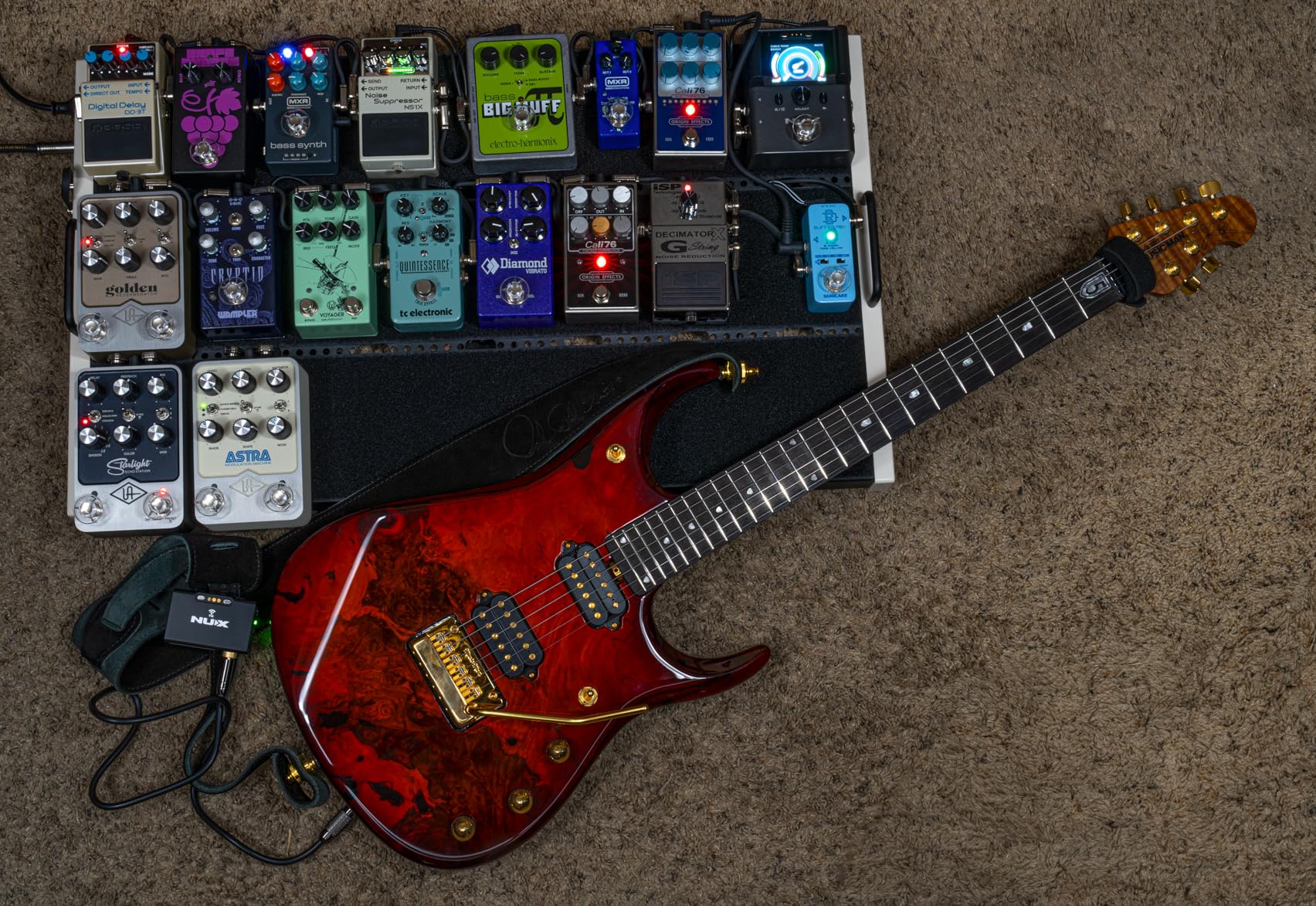
Four bypass modes including true bypass and buffered passthrough give you full control over how the tuner integrates with your signal chain. Players running long cable runs or many true bypass pedals can use the buffered mode to maintain signal strength, while tone purists can switch to true bypass for maximum transparency. Having both options in one pedal is rare and valuable.
The user-uploadable photo screensaver is a fun touch that lets you personalize the display with up to 12 of your own images. It is not essential, but it adds character to a pedal that would otherwise be all business. The limited lifetime warranty also signals Walrus Audio’s confidence in the build quality.
Who should buy the Walrus Audio Strobe Tuner
If you want a tuner that can adapt to any pedalboard configuration and any signal chain requirement, this is the most flexible option available. The rotating display and multiple bypass modes make it ideal for players with unconventional board layouts or complex rigs with specific buffering needs.
It is also a great choice for players who appreciate premium build quality and the Walrus Audio aesthetic. The limited lifetime warranty provides long-term peace of mind that few competitors can match.
Where the Walrus Audio falls short
The review count is still relatively low since this is a newer product, which means less long-term reliability data compared to established pedals like the TU-3. The interface with six modes and multiple settings may feel overwhelming for players who just want a simple tune-and-go pedal.
The premium pricing puts it in the same territory as the Peterson StroboStomp HD, so you are choosing between raw accuracy and feature flexibility. If you do not need the rotating display or multiple bypass modes, the Peterson offers better pure tuning performance for similar money.
7. Electro-Harmonix 2020-2.0 Pedal Tuner – The Versatile Compact newcomer
Electro-Harmonix 2020-2.0 Pedal Tuner
Chromatic tuner
B0 to B7 range
Switchable true and buffered bypass
Muted output
1 cent accuracy
Pros
- Switchable True Bypass and Buffered Bypass for rig integration
- Muted output when engaged for silent live tuning
- 1 cent accuracy with 436-445Hz calibration
- Three flat tuning modes for alternate tunings
- Power adapter included
- Compact size for tight pedalboards
Cons
- Very low review count as a new product
- Limited long-term reliability data available
The Electro-Harmonix 2020-2.0 is a newer entry in the tuner pedal market, and it brings a refreshingly practical feature set to the table. What caught my attention immediately is the switchable true bypass and buffered bypass, which lets you choose how the pedal interacts with your signal chain based on your specific rig requirements. Not many compact tuners offer this level of flexibility.
The muted output when the tuner is engaged is essential for live performance, because it means you can tune silently between songs without your audience hearing a thing. Electro-Harmonix clearly designed this pedal with gigging guitarists in mind, and the feature set reflects that practical focus throughout.
Accuracy sits at plus or minus one cent, which is solid for a chromatic pedal and matches the BOSS TU-3. The calibration range of 436 to 445Hz in one-Hz steps gives you fine control over your reference pitch, and three flat tuning modes cover common alternate tunings without needing to scroll through menus.
The fact that a power adapter is included is a nice touch that many budget and mid-range pedals skip. Too many tuner pedals arrive without a power supply, forcing you to source one separately, so Electro-Harmonix including one out of the box removes a common frustration.
Who should buy the Electro-Harmonix 2020-2.0
If you want a compact tuner with switchable bypass modes and do not want to pay premium Peterson prices, this pedal offers excellent value. The muted output makes it particularly well-suited for live performers who need silent tuning between songs.
It is also a good fit for players who already own Electro-Harmonix pedals and want visual consistency on their board, or for anyone who appreciates having a power adapter included rather than having to buy one separately.
Where the EHX 2020-2.0 falls short
The review count is very low since this is a new product, which means there is limited data on long-term reliability and real-world durability. Players who prefer to buy proven gear with years of owner feedback may want to wait for more reviews to accumulate.
The tuning range of B0 to B7 is narrower than the Donner DT-1’s A0 to C8 range, though it still covers all standard guitar and bass applications comfortably. If you tune to extremely low or high pitches outside standard ranges, check that this pedal supports your needs.
8. BOSS TU-30 Metronome and Tuner – The Dual-Purpose Practice Companion
BOSS TU-30 Metronome & Tuner (TU-30)
Chromatic tuner and metronome
Built-in microphone
Multiple rhythm styles
Ace-Pitch function
AAA battery powered
Pros
- Combines tuner and metronome in one compact device
- Built-in microphone for tuning acoustic instruments
- Multiple metronome rhythm styles
- Ace-Pitch function sounds a tone at correct pitch for ear training
- Reference pitch function for ear training
- Runs on two AAA batteries for portability
Cons
- Lower review count suggests limited market adoption
- Battery powered only with no AC adapter option
- Not a true stompbox pedal format
The BOSS TU-30 is a different kind of tuner that combines chromatic tuning with a full metronome in a single pocket-sized device. I want to be upfront that this is not a traditional stompbox tuner pedal, but it earns a place on this list because many guitarists need both tuning and timing tools and appreciate having them in one portable unit.
The built-in microphone lets you tune acoustic instruments without needing a cable, which is genuinely useful for acoustic guitarists and players who work with multiple instruments. The chromatic tuning mode covers guitars, basses, and other instruments, and the flat tuning support handles alternate tunings without issue.
The metronome is where the TU-30 really adds value, offering multiple rhythm styles beyond the basic click. Having visual metronome feedback alongside the audible beat helps you internalize timing more naturally, which is a big plus for players working on their rhythm skills.
The Ace-Pitch function sounds a reference tone at the correct pitch when you are in tune, which doubles as an ear training tool. Over time this helps you develop a better sense of pitch without relying on visual tuners, which is a valuable skill for any serious musician.
Who should buy the BOSS TU-30
If you are a student, a practice-focused player, or someone who wants a portable tuning and timing tool that fits in a gig bag, the TU-30 is a smart multi-purpose choice. It is especially useful for acoustic guitarists who do not need a stompbox tuner and prefer a clip-on or handheld alternative.
It is also a great gift for beginner guitarists who need both a tuner and a metronome but do not want to buy two separate devices. The BOSS brand reputation ensures reliable performance even at this lower price point.
Where the TU-30 falls short
This is not a pedalboard tuner in the traditional sense, since it runs on AAA batteries and has no AC adapter option or stompbox footswitch. Players who need a true stage tuner that integrates into their signal chain should look at the TU-3 or another dedicated pedal tuner instead.
The review count is relatively low compared to other BOSS products, which suggests limited adoption among the broader guitarist community. If having lots of owner feedback matters to you, the TU-3 has far more data behind it.
How to Choose the Best Guitar Tuner Pedal for Your Rig?
Choosing between the best guitar tuner pedals comes down to understanding four key decisions: tuning type, accuracy, bypass design, and pedalboard fit. Let me break down each one so you can match the right pedal to your specific needs.
Chromatic vs Polyphonic vs Strobe: Which Tuning Type Do You Need?
Chromatic tuners identify any note on the chromatic scale and are the most common type found in pedal format. They work by detecting the pitch of whatever string you pluck and showing whether it is sharp or flat relative to the nearest note. The BOSS TU-3, KLIQ TinyTune Pro, and Donner DT-1 are all chromatic tuners, and for most players this is all you need.
Polyphonic tuners like the TC Electronic Polytune 2 can analyze all six strings at once when you strum them together. This lets you see at a glance which strings need attention, which is faster than checking each one individually. Polyphonic mode is a stage performance feature that saves real time between songs.
Strobe tuners display tuning accuracy as bands of light that appear to stop moving when you are perfectly in tune. They offer the highest accuracy, typically 0.1 cent, making them the choice for intonation work and studio precision. The Peterson StroboStomp HD and Walrus Audio Strobe Tuner both use strobe technology.
Understanding Cent Accuracy and Why It Matters
Accuracy in tuner pedals is measured in cents, where one cent equals one one-hundredth of a semitone. Most chromatic tuner pedals offer plus or minus one cent accuracy, which is good enough for live performance and casual playing. Strobe tuners like the Peterson offer 0.1 cent accuracy, which is ten times more precise.
For most gigging situations, one cent accuracy is perfectly adequate because the human ear cannot easily distinguish smaller deviations in a live mix. However, if you do your own intonation setup, record in studios where tuning precision is audible, or play instruments like pedal steel where intonation is critical, the extra accuracy of a strobe tuner is worth the investment.
True Bypass vs Buffered Bypass: Signal Chain Considerations
True bypass means the tuner passes your guitar signal directly from input to output when bypassed, with no active circuitry in the signal path. This preserves your tone when the tuner is off, which matters if you run multiple true bypass pedals and want maximum transparency. The KLIQ TinyTune Pro, Donner DT-1, and TC Electronic Polytune 2 all use true bypass.
Buffered bypass uses an active buffer circuit to maintain signal strength over long cable runs. If you have many true bypass pedals in a chain, a buffer somewhere in your rig prevents high-frequency signal loss that accumulates over long cable paths. The Walrus Audio Strobe Tuner and Electro-Harmonix 2020-2.0 offer switchable bypass modes so you can choose based on your rig’s needs.
As a general rule, if you run three or more true bypass pedals with long cables, you want at least one buffer in your chain. Many players place a buffered tuner first in their signal chain to drive the rest of the pedals with a strong, clean signal.
Where to Place Your Tuner Pedal in the Signal Chain
Most players place their tuner pedal first in the signal chain, right after the guitar. This gives the tuner the cleanest possible signal to analyze, since effects like distortion and modulation can confuse pitch detection. First position also lets you use the tuner as a mute switch to silence your entire chain when tuning between songs.
Some players with wah or fuzz pedals that interact with guitar volume prefer placing the tuner after those specific pedals. Experiment with placement if you notice tuning instability, because the right position depends on your full pedal chain and the specific pedals you run.
If your tuner has a buffered output like the BOSS TU-3 or the switchable Walrus Audio, placing it first also gives you the benefit of a buffer driving your signal through the rest of the chain. This is one reason the TU-3 remains so popular despite newer competition.
DC Power Output and Pedalboard Integration
Some tuner pedals include a DC power output that lets you chain additional pedals from the tuner’s power supply. The BOSS TU-3 can power up to seven BOSS compact pedals through its DC out, which saves you from buying a separate power supply and reduces cable clutter on your board.
This feature is most valuable if you run multiple pedals from the same brand, since DC chaining typically works best within the same manufacturer’s ecosystem. If you run a mixed board with pedals from different brands, a dedicated isolated power supply is usually a better choice for noise-free operation.
Display Visibility for Stage Use
Stage visibility is one of the most underrated factors when choosing a tuner pedal. If you cannot read your tuner display under stage lights, in darkness, or in outdoor sunlight, the pedal is useless in live situations regardless of its accuracy. Look for high-brightness LED displays like the TU-3’s High-Brightness mode or the Polytune 2’s retina display.
Full color displays like the Peterson StroboStomp HD and Walrus Audio offer excellent visibility in most lighting conditions. If you play outdoor daytime gigs regularly, prioritize display brightness over other features, because washed-out displays are a common complaint with cheaper tuner pedals.
Frequently Asked Questions
What is the most accurate guitar tuner pedal?
The Peterson StroboStomp HD is the most accurate guitar tuner pedal available, offering 0.1 cent strobe accuracy that is ten times more precise than standard chromatic pedals. The TC Electronic Polytune 2 also offers 0.1 cent accuracy in its strobe mode. Both are excellent for intonation work and studio precision where maximum accuracy matters.
What is the one pedal that every guitarist needs?
A tuner pedal is the one pedal that every guitarist needs, regardless of skill level or playing style. Even if you never use effects, a tuner pedal ensures you sound good every time you play, provides silent tuning between songs during performances, and can double as a mute switch for your signal chain. The BOSS TU-3 is the most universally recommended first pedal.
Are guitar tuner pedals worth it?
Yes, guitar tuner pedals are worth it for any guitarist who performs live, records, or plays regularly. They offer silent tuning between songs, better visibility than clip-on tuners on dark stages, true bypass or buffered signal preservation, and often serve as a power hub for other pedals. Even budget options like the KLIQ TinyTune Pro deliver reliable performance for under the cost of a single set of quality strings.
True bypass or buffered bypass – which is better for a tuner pedal?
Neither is universally better. True bypass preserves your tone transparently when the tuner is off, which is ideal for short signal chains. Buffered bypass maintains signal strength over long cable runs and helps prevent tone loss when running multiple true bypass pedals. If you run three or more true bypass pedals, choose a tuner with buffered bypass like the BOSS TU-3 or the switchable Walrus Audio and Electro-Harmonix models.
What is the best budget guitar tuner pedal?
The KLIQ TinyTune Pro is the best budget guitar tuner pedal, offering true bypass, a bright LED display, 32-bit processing for fast tuning, and pitch calibration in a compact die-cast housing. The Donner DT-1 is another excellent budget option with a wider tuning range and strobe mode, making both strong choices for players who want reliable performance without spending much.
Final Thoughts on the Best Guitar Tuner Pedals in 2026
After testing all eight pedals across gigs, recording sessions, and practice, my top recommendation remains the BOSS TU-3 for its unmatched combination of durability, visibility, and power-chaining capability. It is the best guitar tuner pedal for most players because it simply works, year after year, without complaint.
If pure accuracy is your priority, the Peterson StroboStomp HD delivers strobe-level precision that no chromatic pedal can match, making it worth the premium for intonation work and studio use. For budget-conscious players, the KLIQ TinyTune Pro and Donner DT-1 both prove that you do not need to spend much to get reliable, gig-worthy tuning.
The right tuner pedal for you depends on your rig, your playing situation, and your budget, but any of these eight options will serve you well. Pick the one that matches your needs, put it first in your signal chain, and never play out of tune again.