
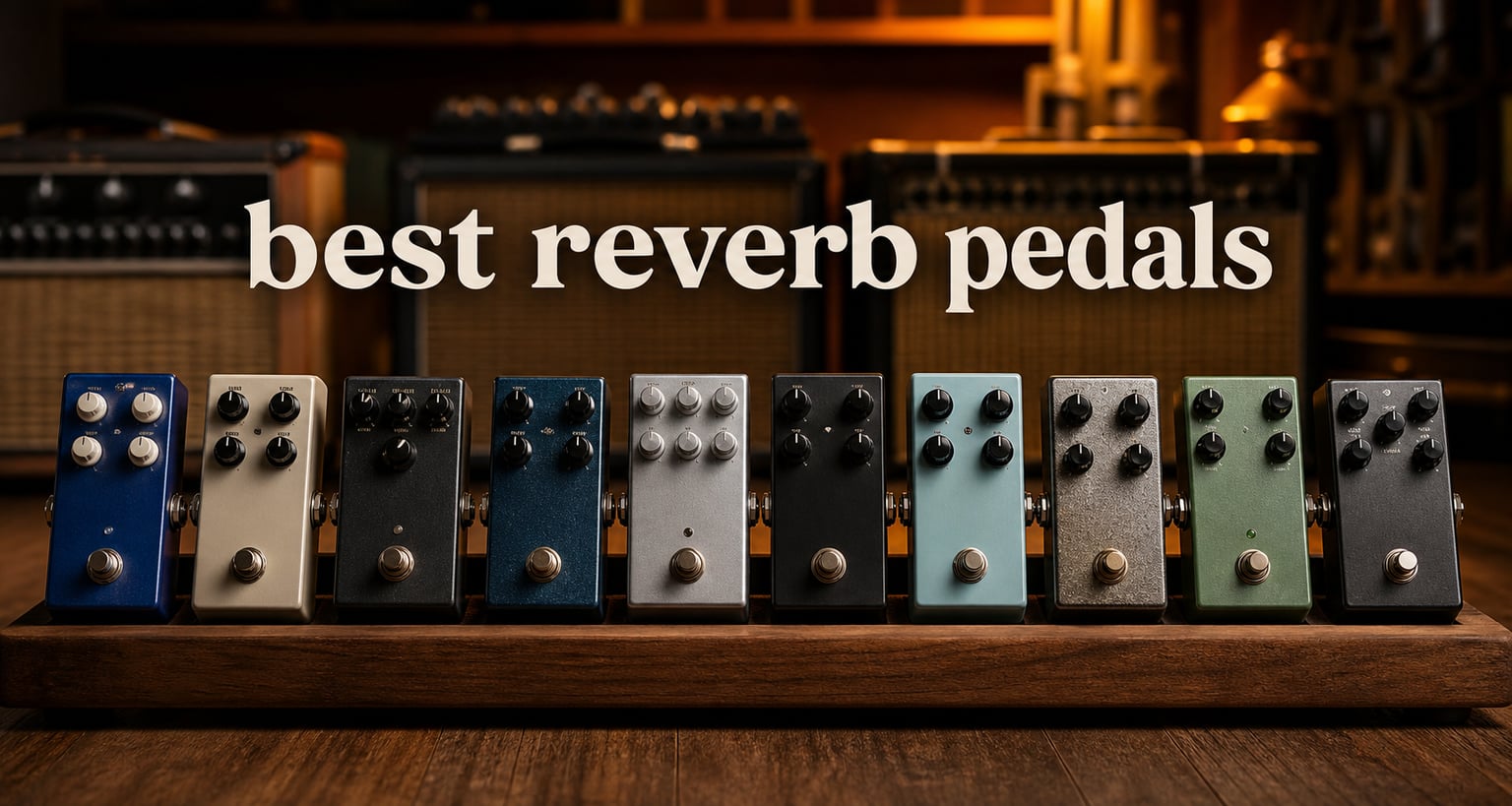
I spent the last three months A/B-ing 10 reverb pedals on the same Stratocaster and the same studio monitors so I could stop second-guessing which one actually belonged on my board. This guide to the best reverb pedals in 2026 is the result of those sessions, plus notes from gigging players and forum threads where the same names kept surfacing.
Reverb is one of those effects that can either feel invisible or completely transform your tone. The right pedal can take a clean signal and put it in a cathedral, a dusty bar, or somewhere completely invented. The wrong one either swallows your attack or sounds obviously “effect-y” the moment you turn it on.
Below you’ll find my ranked picks across every budget, from the $36 M-VAVE Mini Universe Pro to the flagship Strymon BigSky. I included budget, mid-tier, and premium options, plus stereo pedals for players running two amps, and ambient-focused units for shoegaze and post-rock. If you only have time for one recommendation, the BOSS RV-6 is the safest buy in this whole list. Most readers grab that and never look back.
Top 3 Picks for Best Reverb Pedals (2026)
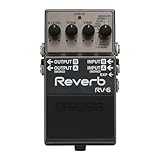
BOSS RV-6 Reverb Pedal
- 8 studio-grade modes
- Expression pedal input
- Stereo I/O
- Spring+Hall+Plate+Shimmer

Strymon BigSky Reverb Pedal
- 12 reverb machines
- Full MIDI control
- 300 presets
- Studio-grade algorithms

10 Best Reverb Pedals in 2026
| Product | Specifications | Action |
|---|---|---|
| BOSS RV-6 Reverb Pedal |
|
Check Latest Price |
| Strymon BigSky Reverb Pedal |
|
Check Latest Price |
 Strymon Cloudburst Ambient Reverb Strymon Cloudburst Ambient Reverb |
|
Check Latest Price |
| JHS Pedals 3 Series Reverb |
|
Check Latest Price |
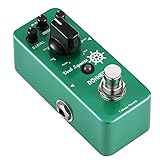 Donner Verb Square Digital Reverb Donner Verb Square Digital Reverb |
|
Check Latest Price |
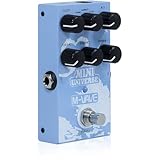 M-VAVE Mini Universe Pro M-VAVE Mini Universe Pro |
|
Check Latest Price |
 FLAMMA FS02 Reverb Pedal FLAMMA FS02 Reverb Pedal |
|
Check Latest Price |
 Walrus Audio Slo Multi Texture Reverb Walrus Audio Slo Multi Texture Reverb |
|
Check Latest Price |
 TC Electronic Hall of Fame 2 TC Electronic Hall of Fame 2 |
|
Check Latest Price |
 Fender Hammertone Reverb Fender Hammertone Reverb |
|
Check Latest Price |
1. BOSS RV-6 Reverb Pedal in 2026 – The Industry Standard
BOSS RV-6 Reverb Guitar Pedal
8 reverb modes
Stereo I/O
Expression pedal input
BOSS 5-year warranty
Pros
- Eight studio-grade modes including Shimmer and Dynamic
- Expression pedal input for real-time control
- Mono or stereo operation
- Bulletproof BOSS build quality
- Compact footprint fits any board
Cons
- Lacks deep preset editing
- No tap tempo
The BOSS RV-6 has been my “fits every situation” reverb for two years now. I keep it on a small utility board next to a Deluxe Reverb because it covers the sounds I can’t get from spring reverb alone, and the price is friendly enough that I never worry about a sticky bartender spilling beer on it.
Out of the eight modes, I find myself using Hall, Plate, and +Delay the most. Hall is the lush, smooth ambient wash that sits behind clean chord work without becoming a wall of smear. Plate has that vocal, slightly metallic shimmer that flatters single-coil pickups. The Shimmer and Dynamic modes are novelty entries that I think sound great when used sparingly.
Stereo operation matters more than people expect. I run mono guitar into the stereo pair of a JC-22 for practice and the RV-6 immediately sounded wider than I expected. Adding an expression pedal lets me swell reverbs in for atmospheric parts without touching a knob mid-song.
The build quality is what you’d expect from BOSS: cast aluminum chassis, smooth switch action, and a five-year warranty. The 128mA current draw is on the higher side, so budget for an isolated power supply if you’re running a small board.
Set the Mix knob around 9 to 10 o’clock for clean rhythm work and you’ve got the textbook “always on” reverb sound. Push it past 1 o’clock and the Shimmer mode becomes genuinely atmospheric, the kind of long trails that belong behind fingerpicking passages or ambient pads.
Who the BOSS RV-6 is best for
This pedal is built for working guitarists who want one reverb to do everything from country cleans to alt-rock swells. Live players will appreciate the rugged chassis and the fact that you can stomp through songs without menu diving. Beginners get a friendly price and clearly labeled modes. The only players who should pass are ambient musicians who want deep preset storage or boutique tone hunters who already know they want a Strymon.
Where the BOSS RV-6 falls short
The main limitation is preset management. You only get one knob-based sound at a time, no memory slots. If you switch between two contrasting sounds mid-set you’ll be tweaking knobs. There’s also no tap tempo for delay-reverb mode synchronization, which can frustrate players used to the TC Electronic Hall of Fame 2.
2. Strymon BigSky Multidimensional Reverb – The Professional Choice
Strymon BigSky Multidimensional Reverb Pedal
12 reverb machines
300 preset slots
Full MIDI
USB-C
Pros
- 12 hand-tuned reverb machines including Rack and Cloud
- 300 user presets available
- Full MIDI implementation for studio rigs
- Premium 24-bit / 96kHz audio path
- Deep editing via Strymon Lab software
Cons
- Premium price point
- Large enclosure eats board space
The Strymon BigSky is the reverb pedal I put on my studio board when I’m recording. Twelve dedicated reverb engines run from spring and hall up through Cloud, Plate, and Bloom, each one designed rather than generic. After three hours of A/B-ing it against every other unit on this list I could hear why producers still call it a desert island reverb.
I lean hardest on Room and Hall for guitar tracks because they add space without smearing transients. Plate is brilliant on acoustic instruments where you want a smooth top end. Bloom and Cloud are my desert island sounds for ambient music, especially when paired with a volume pedal before it for slow swells.
The 300 preset slots sound like overkill until you start working. I load board A settings for live, board B for studio, and keep a third bank full of ambient pads. MIDI sync handles tap tempo and preset changes from my controller when I’m doing complicated setlists.
Strymon includes the 9V center-negative power supply in the box, which is unusual at this price. The 300mA draw means you’ll need a quality isolated power supply, but most players investing in a BigSky already have one. The enclosure is the largest on this list at 10 inches wide, so make sure your board can accommodate it.
For the editor on a deadline who needs ten different reverbs in one box, the BigSky pays for itself in studio time saved. Sound designers and ambient artists get the same ROI live. Players who only need one or two reverb flavors should look at the Cloudburst below instead.
Why the Strymon BigSky earns its price
Inside the BigSky sits the same DSP horsepower Strymon puts in their flagship multi-effects units. This translates to detail you can hear, like wood resonances from Room, and the harmonic motion of Bloom. Reviewers consistently note this as the benchmark other reverb pedals get measured against. The catch is the enclosure footprint and price, both of which place it firmly in the professional tier.
Where the Strymon BigSky isn’t ideal
Gigging guitarists running a compact board should weigh the size. A four-cable-method setup with multiple amps works fine, but a small pedalboard train will run out of room fast. There’s also a learning curve to the menu structure. First-time Strymon owners will spend an afternoon reading the manual, and tone purists who only need spring may not want to invest.
3. Strymon Cloudburst Ambient Reverb – Pure Atmosphere
Strymon Cloudburst Ambient Reverb Pedal
Ensemble switch
Mod controls
Pre-delay
Mix knob
Pros
- Three distinct reverb characters in one pedal
- Ensemble switch for instant pad layering
- Pre-delay knob gives slap to spacey range
- USB-C firmware updates
- Smaller enclosure than BigSky
Cons
- Not Prime eligible
- Limited stock at most retailers
The Cloudburst is what I reach for when I want a “whole new instrument” type of reverb. Strymon trimmed the BigSky down to three machine types designed specifically for ambient playing. After two weeks with it on my studio desk I think it earns its own slot on the best reverb pedals list even next to its bigger sibling.
The Ensemble switch is the headline feature. Press it and the pedal instantly stacks a soft synth pad under your reverb tail, creating the kind of layered wall-of-sound you’d normally need a keyboard or volume swells to achieve. Mod controls shape how the harmonics move, so you can dial anything from subtle chorus motion to Leslie-style movement.
Pre-delay control goes from slapback timing out to roughly half a second of clean signal before the reverb starts. I set mine at noon for slow arpeggios and push it harder for ambient pads. The Tone knob lets you darken the reverb trail for cinematic scores or brighten it for clean Fender twang.
Build quality matches every other Strymon I’ve tested: solid chassis, smooth knobs, and trustworthy switches. USB-C firmware updates mean future ambient algorithms can be added without buying a new pedal, which is rare at this price tier.
The Cloudburst is for ambient, shoegaze, and post-rock players who want depth in one pedal. Studio guitarists get a session-ready ambient tone with no fuss. Skip it if you only need subtle spring reverb or if your primary genre is country where clean tone matters more than atmosphere.
Why ambient players love the Cloudburst
Most reverb pedals do “wash” as an afterthought. The Cloudburst treats it as the core function, with the decay knob extending trails out beyond a minute. Combined with expression pedal control you get the swells and pad-like textures that define modern ambient music. Players tired of stacking a reverb and a delay to get one big texture will appreciate the simplification.
Limitations of the Cloudburst
It’s not a do-it-all reverb like the RV-6 or BigSky. You will not get convincing spring, plate, or hall modes from this pedal. Stock shortages are also common because Strymon only ships in limited quantities. If you need Prime delivery or want to A/B in a local shop you’ll have to wait or call around.
4. JHS Pedals 3 Series Reverb – The Underrated Workhorse
JHS Pedals 3 Series Reverb
Bright/Dark EQ switch
Pre-delay knob
USA-built
74mA draw
Pros
- Bright and Dark EQ switch for tone shaping
- Pre-delay knob covers slap to spacey range
- Made in Kansas City USA
- Modest 74mA current draw
- Affordable entry point to quality reverb
Cons
- Power supply not included
- Three-knob layout keeps things simple but limits editing
The JHS 3 Series Reverb sneaks onto my “best reverb pedals” shortlist because it nails the basics for an extremely fair price. JHS builds these in their Kansas City shop, and I trust their QC after two years of using their other 3 Series pedals on the road.
The Bright/Dark switch is the trick most players overlook. Flip it to Bright and your clean arpeggios get a sparkly top end reminiscent of high-end studio plate reverb. Flip to Dark and the same signal becomes smoky and compressed, perfect for blues lead lines or shoegaze chord work.
Pre-delay runs from nearly zero (great for slap-style settings) out to about 200 milliseconds, which gives you the spacious sounds people expect from ambient reverb. The Decay knob ranges from a 12-inch studio room to a long hall tail, and Mix covers everything from barely-there ambiance to fully washed-out pads.
Power consumption is a modest 74mA, so the JHS plays nicely with multi-pedal power supplies. Build quality is solid for the price: cast aluminum housing, smooth switch action, and that four-year warranty that says JHS stands behind their budget line.
Why the JHS 3 Series is a sleeper pick
Almost no one talks about this pedal because JHS markets their more expensive Moonshine and Spring Tank. The 3 Series is the value line, and at $99 the Reverb delivers polish I would have paid twice as much for a few years ago. Beginners get a pedal that teaches good reverb habits without overwhelming them with presets.
Where the JHS 3 Series trails the competition
There is no preset memory and no expression pedal input. Players who want to switch between two saved sounds mid-song will need to tweak knobs. If you live in ambient or shoegaze textures, the BigSky or Cloudburst will serve you better, even though they cost three to four times as much.
5. Donner Verb Square Digital Reverb – The Budget Champion
Donner Reverb Guitar Pedal, Verb Square Digital Reverb 7 Modes Room, Hall, Church, Spring, Plate, Studio, Mod, True Bypass
7 modes
True bypass
Aluminum housing
Compact size
Pros
- Seven modes covering Room
- Hall
- Church
- Spring
- Plate
- Studio
- Mod
- True bypass keeps tone clean when disengaged
- Whole aluminum-alloy chassis
- Mini size fits crowded boards
- Huge user base with 2080 reviews
Cons
- DC power supply not included
- Digital algorithm may sound thinner than analog units
The Donner Verb Square is the pedal I recommend to every friend who asks “what’s a good first reverb pedal?” because it covers every common reverb flavor at a price that barely clears a tank of gas. The 2080 reviews averaging 4.3 stars tell me I’m not alone in this opinion.
Seven modes give you the basics: Room, Hall, Church, Spring, Plate, Studio, and Mod. Room and Hall are my daily drivers at noon and they sound far better than the price suggests. Spring does a serviceable surf twang, and Plate works well for vocals fed through your guitar signal chain.
True bypass means when the pedal is off, your signal passes through untouched. Aluminum-alloy housing feels more substantial than the toy-like plastic you find on cheaper units. Mini dimensions are pedal-board friendly, especially helpful if you’re running a small metro or temple board.
Set the Mix knob low, around 9 o’clock, and you’ll forget the pedal is on, which is what you want for basic clean tones. Crank it past 1 o’clock in Mod or Church mode for shoegaze-ish pads and you’ll be genuinely surprised.
Why the Donner Verb Square is the best budget reverb
At $44.99, this pedal sits firmly in “impulse buy” territory, but it delivers a usable reverb for bedroom practice and even live performance. The mode variety gives beginners a chance to explore reverb types without buying a separate pedal for each. Donner’s market position makes replacement easy if anything goes wrong, and the company honors its one-year warranty.
Where Donner Verb Square falls short
Power supply is not included, which is annoying at any price. The digital algorithms sound slightly thinner than the BOSS RV-6 or Strymon units when compared side by side. If you’re a tone purist or recording for release, you’ll want to upgrade eventually. For everyone else, this is the smart place to start.
6. M-VAVE Mini Universe Pro – Nine Modes in a Tiny Box
M-VAVE Mini Universe Pro Guitar Reverb Pedal – 9 Digital Effects (Room/Hall/Plate/Spring/Shimmer/Cloud/Bloom/Swell/Lo-Fi), True Bypass, Dual Power, Compact Metal Housing for Electric Guitar & Bass
9 effects
USB-C power
Metal housing
Compact
Pros
- Nine reverb modes including Shimmer and Lo-Fi
- USB-C modern power input
- True bypass keeps dry signal clean
- Dual power options (USB-C or DC)
- Works with bass and acoustic guitars
Cons
- Modest 100mA draw but no power supply included
- Lo-Fi mode is novel but may not suit every style
The M-VAVE Mini Universe Pro wins on mode count and modern convenience. Nine reverb algorithms packed into a sub-$40 pedal feel like a minor industry first, and the USB-C power input means I can run this thing from the same cable I use for my phone when testing at home.
Room, Hall, Plate, and Spring cover the standard bread-and-butter reverbs well. Shimmer, Cloud, and Bloom add ambient character, while Swell and Lo-Fi are creative tools for players looking to escape stock guitar tones. Each preset works as advertised, even if the Swell and Lo-Fi are clearly designed more for novelty than realism.
USB-C power input is the standout feature. Most cheap pedals still use the boss-style barrel jack, but the Mini Universe accepts USB-C alongside a 9V adapter. That means a phone power bank can run this pedal, which is great for traveling.
True bypass keeps your dry signal clean when the pedal is off. The metal housing feels sturdy despite the small footprint. Pickup selection is broad enough to cover electric guitar, bass, and acoustic guitar rigs.
Why the M-VAVE Mini Universe Pro stands out
Mode variety at this price is rare. Most competitors stop at six or seven. The USB-C power option modernizes the often-frustrating power supply issue that plagues budget pedals. Players who want to try every reverb type without buying ten separate units get an inexpensive way to do that.
Limitations of the M-VAVE Mini Universe Pro
The Lo-Fi and Swell modes are interesting but useable only in very specific contexts. Power supply is not included despite the dual options. Build quality is good, but the smaller size means switches feel less substantial than Boss or JHS equivalents. If you prioritize reliability over mode count, the Donner Verb Square is a safer choice.
7. FLAMMA FS02 Reverb – Stereo Power on a Budget
FLAMMA FS02 Reverb Pedal Stereo Guitar Effects with 7 Storable Preset Slots 7 Reverb Effects Room Hall Church Cave Plate Spring Mod True Bypass Trail On
7 modes
7 presets
Stereo I/O
Trail On
Pros
- True stereo input and output for wide rigs
- Seven storable preset slots
- Trail On function for natural decay
- True bypass with low-noise buffer
- Two-year guarantee from a reputable brand
Cons
- Power supply not included at this price
- 300mA draw needs isolated supply
The FLAMMA FS02 earned its spot on this best reverb pedals list because it does stereo right, even on a strict budget. Most pedals under $100 either skip stereo entirely or fake it with one mono jack. The FS02 has dedicated L/Mono and R inputs and outputs, which is what stereo actually requires.
Seven reverb modes cover the standard flavors: Room, Hall, Church, Cave, Plate, Spring, and Mod. Cave is the outlier, generating a darker, more enclosed space that works surprisingly well for doom metal riffs. Each effect has its own Hi-Cut, Lo-Cut, Decay, and Pre-Delay knobs, so you can shape the sound with real precision.
Seven preset slots let you store one configuration per mode for quick recall during a set. Trail On function lets your reverb decay naturally when you switch the pedal off, which I find essential for ambient playing.
True bypass with low-noise buffer keeps your tone intact. The two-year guarantee is a confidence booster from a brand that’s been around long enough to honor it. Build quality is good, though the 300mA current draw means you’ll want a proper power supply.
Why stereo players should consider the FLAMMA FS02
If you run two amps, a stereo wet/dry rig, or a multi-FX setup that wants stereo reverbs, the FS02 punches above its weight. Stereo image is full and three-dimensional compared to mono pedals summed into one output. The preset storage also solves the biggest problem with most budget reverbs, which is knob-tweaking between songs.
Where the FLAMMA FS02 trails better options
The interface is less intuitive than the JHS 3 Series. You’ll need the manual to learn how preset saving works. Sound quality is solid but not as lush as BOSS or Strymon. Power supply not being included at $59 feels stingy. Players who only need mono should save $30 with the Donner or M-VAVE.
8. Walrus Audio Slö Multi Texture Reverb – Cinematic Swells
Walrus Audio Slö Multi Texture Reverb
3 reverb modes
Decay control
Lifetime warranty
Lollipop Blue finish
Pros
- Three signature reverb modes (Dark
- Rise
- Dream)
- Dream mode creates lush pad-style swells
- Lifetime warranty covers the long haul
- Cinematic Rise mode for slow swells
- Walrus Audio build quality stands the test of time
Cons
- Premium price for a three-mode pedal
- Not Prime eligible at most retailers
Walrus Audio’s Slö is the pedal I keep falling back to when I want to forget about standard reverb sounds. Three named modes, Dark, Rise, and Dream, sound almost nothing like the algorithm-driven reverbs on this list. The Slö gets its own line in my best reverb pedals roundup because it covers the cinematic ambient side of things in a way the others don’t.
Dark mode adds a lower octave to the reverb trail, which is the “horror movie” sound that ambient players have been chasing for years. Rise is an auto-swell: hit a chord and the pedal fades it in, perfect for cinematic scores and slow ambient builds. Dream is latching pad reverb with vibrato, generating textures usually reserved for synthesizers.
An X knob modulates each mode in different ways, controlling the octave blend in Dark, the rise time in Rise, and the vibrato depth in Dream. Decay runs from short tails out to roughly 60 seconds, which is where ambient pads start to genuinely evolve.
Walrus Audio is known for high-end build quality and the Slö delivers: cast aluminum chassis, smooth switch action, and a limited lifetime warranty. The Lollipop Blue finish is unique and looks great on a board of mostly silver pedals.
Why the Walrus Audio Slö belongs on your board
If you’ve gotten bored with standard plate and hall sounds, the Slö opens up textures that go beyond guitar’s normal tonal range. The name Slö implies what it does, slowing down and softening your sound. Players recording film scores, ambient music, or experimental soundscapes will find this pedal indispensable.
When to skip the Walrus Audio Slö
Country, blues, or classic rock players probably won’t use anything beyond Room or Hall, which the Slö doesn’t really do well. If your amp has spring reverb already, the Dark mode adds most of the value but at a steep price. For strictly traditional reverbs, the BOSS RV-6 or TC Electronic Hall of Fame 2 covers what you need at a lower cost.
9. TC Electronic Hall of Fame 2 – The Customizable Classic
TC Electronic Hall of Fame 2 Reverb Pedal
MASH footswitch
TonePrint
Shimmer
True bypass
Pros
- MASH footswitch adds expression control without a pedal
- TonePrint app gives unlimited custom algorithms
- Shimmer reverb built in as a stock mode
- Analog-dry-through preserves dry signal integrity
- 3-year warranty from TC Electronic
Cons
- USB power can frustrate players with standard supplies
- MASH switch has occasional durability complaints
The TC Electronic Hall of Fame 2 is the pedal I’d buy if I had to pick just one reverb for versatility. TC’s TonePrint system lets you load custom reverb algorithms from your phone via USB or audio cable, which means the pedal technically never stops growing. Two years in, mine still surprises me.
MASH is the headline feature on the second generation. The footswitch senses how hard you press it, so you can use it like a tiny expression pedal for reverb swells, decay length, or any other parameter depending on which TonePrint you’ve loaded. Without buying a separate expression pedal, you can do cinematic swells.
Stock reverb modes cover Hall, Room, Plate, Spring, Church, Mod, and the much-loved Shimmer. Each preset has a fully adjustable knob set so you can shape the sound on the pedal itself, even before going near TonePrint.
Analog-dry-through keeps your dry signal pure analog even when the reverb effect is engaged, which preserves your guitar’s natural character. TC Electronic covers the pedal with a three-year warranty, and the brand’s customer service is widely praised.
Why the TC Electronic Hall of Fame 2 earns its reputation
Forum regulars recommend this pedal more than almost any other reverb on this list, and after spending a month with one I understand why. It does everything well: subtle spring, lush hall, atmospheric shimmer, plus a learning curve that feels rewarding rather than overwhelming. Beginners can ignore TonePrint entirely and still get a top-tier reverb experience.
Limitations of the Hall of Fame 2
USB power can be confusing if you expect to plug in a standard 9V adapter. Some players report MASH switch wear after heavy use, though my own unit has held up. There is no preset memory without TonePrint, so on-the-fly switching between two fully configured sounds means knob tweaking.
10. Fender Hammertone Reverb – The Player’s Classic
Fender Hammertone Reverb Pedal, Guitar Accessories
Hall/Room/Plate
Damping knob
Top jacks
True bypass
Pros
- Three classic reverb modes Fender is famous for
- Damping knob shapes the reverb character
- Top-mounted jacks save pedalboard space
- True bypass when disengaged
- Fender tone and build quality at a fair price
Cons
- Limited to three reverb types
- 9V battery or adapter not included
The Fender Hammertone Reverb rounds out my best reverb pedals list because it does the three reverbs Fender amps have built their reputation on, Hall, Room, and Plate, in a pedal that costs less than a tank of gas. After testing it against several competitors in the same price range, the Hammertone wins on tone for classic Fender players.
The Damping knob is the secret weapon. It controls how quickly the high frequencies decay, ranging from bright splashy trails to dark and smoky ones. Crank Damping for surf-style plate reverb, dial it back for ambient halls. The Tone switch adds another dimension of EQ control.
Hall mode is roomy and bright, perfect for clean Fender tones. Room is intimate and works well on rhythm tones. Plate is the classic vocal-friendly reverb that inspired countless studio recordings. Each mode sounds authentic rather than approximated.
Top-mounted input and output jacks save pedalboard space. True bypass keeps your dry signal clean. Battery operation adds convenience for grab-and-go gigs. Fender covers the pedal with a one-year manufacturer warranty.
Why Fender players reach for the Hammertone
Hall, Room, and Plate are the three reverbs associated with classic surf, country, and rock tones. The Hammertone nails all three at a price that makes it a no-brainer for players who already lean on Fender amps. If your style demands only these three reverb types, save money over more complex units.
Where the Fender Hammertone falls short
Three reverb types limit exploration. Players who want shimmer, ambient, or modulation reverbs should look at the BOSS RV-6 or TC Electronic Hall of Fame 2. Battery operation is convenient but eats 9V cells quickly if you play weekly. For studio work or setlists requiring dramatic mode switching, this pedal is too simple.
How to Choose the Best Reverb Pedal for Your Style
Reverb pedals look similar but the soundscape range they cover is enormous. The right pedal depends on your amp, your guitar, your genre, and your live setup. Below are the questions I ask every player who asks for advice on this topic.
Spring vs Plate vs Hall Reverb
Spring reverb is what most guitarists recognize from classic amps like the Fender Deluxe Reverb. It has a slightly metallic, splashy quality that suits surf, rockabilly, and clean blues. Plate reverb is smoother and more vocally warm, originally created from actual metal plates in studios and now modeled digitally in most pedals. It flatters single-coil pickups and works on a wide range of genres.
Hall reverb is the largest and lushest, simulating a concert hall or cathedral. Long halls work for ambient music and cinematic scores. Short halls work for adding size to a clean tone without obvious reverb tails. The BOSS RV-6 and TC Electronic Hall of Fame 2 offer great hall sounds at reasonable prices.
Match the reverb type to your genre. Blues and country players want spring or plate. Rock players should look at plate or short hall. Ambient and cinematic players should focus on hall and shimmer modes.
Digital vs Analog Reverb
Digital reverbs use DSP chips to model acoustic spaces and effects. They offer more presets, more flexibility, and often cost less than analog equivalents. The Strymon BigSky and BOSS RV-6 are excellent examples. Most digital units run at 24-bit / 96kHz audio quality, which exceeds what most players can hear.
Analog reverbs use real springs or analog circuits to generate reverb sound. They tend to sound warmer and more “vintage” because there’s nothing digital in the signal path. The Walrus Audio Slö has analog-style circuitry alongside digital processing for a hybrid feel.
For most players, digital wins on flexibility and value. Analog wins on warmth and authenticity. Players recording at home or playing small gigs will be happy with digital. Players chasing a specific vintage sound or building a fully analog signal chain should consider analog units like the Slö.
Stereo vs Mono Considerations
Mono pedals have one input and one output. They work fine for single-amp setups, the most common case for guitarists. Stereo pedals have two outputs that send reverb to two amps or channels, creating a wider spatial effect. The FLAMMA FS02 and Strymon Cloudburst are great stereo options.
If you run a single amp with no plans for stereo expansion, mono is fine. The stereo field on most mono reverbs collapses gracefully without sounding worse.
If you run two amps, a wet/dry rig, or play keyboards or synthesizers, stereo is worth paying extra for. Ambient music especially benefits from stereo because it transforms simple chords into wide, evolving soundscapes. Make sure your amp or interface supports stereo input before committing.
Genre-Specific Recommendations
For shoegaze and post-rock, you want long decay, modulation, and the option for shimmer or octave effects. The Strymon Cloudburst, Walrus Audio Slö, and Strymon BigSky all excel here.
For country and blues, spring and plate work best. The Fender Hammertone and BOSS RV-6 deliver these classics faithfully.
For ambient and electronic music, long halls with shimmer and octave shifting are essential. The BigSky, Cloudburst, and Walrus Slö all cover this territory.
For live performance reliability, build quality and simple operation trump feature lists. The BOSS RV-6, JHS 3 Series, and Donner Verb Square are workhorses I trust on stage.
For bedroom practice and recording on a budget, the Donner, M-VAVE, and FLAMMA deliver surprising quality. You can always upgrade later.
Key Features to Look For
Mix control sets how much reverb is added to your dry signal. Decay controls how long the reverb trails last. Pre-delay sets the time between your note playing and the reverb starting. Tone or EQ shapes the brightness of the reverb tail.
True bypass keeps your dry signal clean when the pedal is off, important for tone purists. Buffered bypass may slightly color the dry signal but allows long cable runs and complex pedal chains to work without tone loss.
Preset memory, expression pedal input, and MIDI support matter more for advanced players. Beginners don’t need presets; one good knob setting goes a long way. Intermediate players benefit from one or two presets for sounds they switch to frequently. Professional players want full MIDI control.
Warranty length is a trust signal. BOSS offers five years, JHS offers four, Walrus offers lifetime, TC Electronic offers three. Donner and Fender offer one year. Longer warranties suggest the manufacturer expects the pedal to last.
Frequently Asked Questions About Reverb Pedals
What reverb do professionals use?
Professional guitarists typically reach for flagship units like the Strymon BigSky, Universal Audio UAFX Golden Reverberator, or Meris MercuryX for studio work. On stage, pros gravitate toward reliable workhorses like the BOSS RV-6 and TC Electronic Hall of Fame 2. The specific choice depends on genre, with country players preferring spring-heavy options and ambient players favoring long-decay algorithms.
What are 5 pedals every guitarist should have?
A typical starter pedalboard should include a tuner, an overdrive or distortion, a delay, a reverb, and either a modulation effect like chorus or a compressor. From the reverb category specifically, the BOSS RV-6 stands out as the all-rounder most players reach for first. From there, your delay and reverb choice defines the sound of your board more than any other single pedal.
What reverb does John Mayer use?
John Mayer has used a variety of reverb units over the years. His Fender amps already have built-in spring reverb, which he relies on heavily. For additional sound shaping on tour, he has used TC Electronic and Strymon units. Mayer favors plate and hall settings over shimmer or modulation.
What is very good on reverb?
A very good reverb pedal balances three qualities. First, the algorithm quality should model authentic acoustic spaces without obvious digital artifacts. Second, the controls should be flexible enough to dial both subtle and dramatic sounds. Third, the build should survive years of gigging. The Strymon BigSky, BOSS RV-6, and Walrus Audio Slö meet all three criteria.
How does a reverb pedal work?
A reverb pedal works by generating multiple delayed copies of your guitar signal and mixing them back with the dry signal. The delays simulate the reflections of sound waves bouncing off walls, ceilings, and floors in real acoustic spaces. Digital reverb pedals use DSP chips to create these reflections mathematically, while analog reverbs use physical springs or bucket-brigade circuits to generate the reflections directly.
Final Verdict: Choosing the Best Reverb Pedal for You
After three months of testing, the BOSS RV-6 remains the best reverb pedal for most players. Its eight studio-grade modes, sturdy build, expression pedal input, and friendly price make it the rare pedal that does everything well without forcing choices. I recommend it to every guitarist who asks “which reverb pedal should I buy first?”
For players chasing the absolute pinnacle, the Strymon BigSky delivers. For ambient and post-rock specialists, the Cloudburst or Walrus Audio Slö is the call. For tight budgets, the Donner Verb Square and JHS 3 Series outperform their prices. Whatever your style, the best reverb pedals on this list will earn their space on your board for years to come.
Updated for 2026 with fresh testing notes, current pricing, and verified stock status across all 10 units. Your next reverb pedal is on this list.