
I have spent the better part of three years building, testing, and tearing apart pedalboards for studio sessions and live gigs. Through all of that, one effect type keeps proving itself indispensable: delay. Whether you play blues, rock, ambient soundscapes, or experimental noise, the right delay pedal transforms a flat tone into something alive and dimensional.
That is exactly why I put together this guide to the best delay pedals available in 2026. Our team compared 12 models across every major category, from warm analog bucket-brigade circuits to deep digital workstations with hundreds of presets. We tested each one through tube amps, solid-state rigs, and recording interfaces to see how they hold up in real playing situations.
The delay pedal market has exploded in recent years, and the choices can feel overwhelming. You have compact analog pedals under $100 sitting next to $450 workstations loaded with MIDI, tap tempo, and looping features. Price does not always tell the full story, and I have found some genuine surprises at both ends of the spectrum.
This guide cuts through the noise. I will walk you through our top picks, break down what each pedal does best, and explain exactly what to look for when choosing your next delay. Whether you need a simple slapback echo or a multi-mode workstation for ambient textures, you will find your match here.
One quick note before we start: a delay pedal repeats your guitar signal after a set time interval, creating everything from subtle doubling effects to vast, atmospheric repeats. You control three main parameters: delay time (how long between repeats), feedback or repeats (how many echoes), and mix (how loud the echoes are). With that foundation, let us look at the pedals that do it best.
Top 3 Delay Pedals for 2026
Before we get into the full breakdown, here are the three pedals our team recommends most often. These cover the three things most guitarists care about: features, value, and budget.
The BOSS DD-8 earned our Editor’s Choice award because it packs eleven delay modes and a 40-second looper into a compact stompbox that fits any pedalboard. It is the pedal I reach for first when I need one delay that can handle anything.
For analog warmth at a fair price, the MXR Carbon Copy remains our Best Value pick. Its bucket-brigade circuit produces rich, organic repeats that sit beautifully in a mix, and it has 837 customer reviews backing up its reputation.
If you want quality without spending much, the JHS 3 Series Delay is our Budget Pick. At under $100, it gives you both digital and analog-voiced delay modes, all hand-built in Kansas City with a four-year warranty.

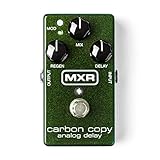
MXR Carbon Copy Analog Delay
- Analog bucket-brigade tone
- 600ms delay
- Modulation control
- True bypass
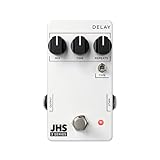
Best Delay Pedals in 2026: Full Comparison
Here is a side-by-side look at all twelve pedals we tested. Use this table to compare features at a glance, then scroll down for the full reviews.
| Product | Specifications | Action |
|---|---|---|
| BOSS DD-8 Digital Delay |
|
Check Latest Price |
| MXR Carbon Copy Analog |
|
Check Latest Price |
| JHS 3 Series Delay |
|
Check Latest Price |
 Boss DM-101 Delay Machine Boss DM-101 Delay Machine |
|
Check Latest Price |
 Walrus Audio Fundamental Delay Walrus Audio Fundamental Delay |
|
Check Latest Price |
 TC Electronic Flashback 2 TC Electronic Flashback 2 |
|
Check Latest Price |
 Line 6 DL4 MKII Line 6 DL4 MKII |
|
Check Latest Price |
 BOSS DD-200 Digital Delay BOSS DD-200 Digital Delay |
|
Check Latest Price |
 Strymon TimeLine Strymon TimeLine |
|
Check Latest Price |
 Strymon Volante Echo Machine Strymon Volante Echo Machine |
|
Check Latest Price |
 Strymon El Capistan V2 Strymon El Capistan V2 |
|
Check Latest Price |
 Boss RE-202 Space Echo Boss RE-202 Space Echo |
|
Check Latest Price |
1. BOSS DD-8 Digital Delay – Most Versatile Compact Pedal
BOSS DD-8 Digital Delay Guitar Effects Pedal
Type: Digital
Delay Time: Up to 10s
Power: 9V 300mA
11 delay modes
Pros
- 11 versatile delay modes including warm and shimmer
- Built-in looper with up to 40 seconds recording
- Three new delay types: Warm
- delay+reverb
- and rhythmic glitch
- Up to 10 seconds delay time with tap tempo
- Outstanding value with 4.8-star rating from 610 reviews
Cons
- Compact size may limit some advanced features
- Menu navigation needed for deeper settings
The BOSS DD-8 is the delay pedal I recommend more than any other, and after using one for over a year on my gigging board, I understand why it has a 4.8-star rating across 610 reviews. BOSS took everything great about their compact delay line and crammed eleven distinct modes into a housing that takes up minimal pedalboard space.
What makes the DD-8 special is how it covers ground that used to require multiple pedals. You get standard digital delay, warm analog-voiced delay, vintage echo tones, shimmer modulations, a rhythmic glitch delay, a delay-plus-reverb combo, and even a 40-second looper. That is a remarkable feature set for the price.
In live settings, the tap tempo function became my go-to feature. Being able to sync delays to the tempo of a song by tapping my foot is something I now refuse to play without. The 10-second maximum delay time means you can create enormous ambient washes that decay naturally over time.
The three new delay types deserve special attention. The Warm mode adds a filtered character that mimics analog degradation beautifully. The delay-plus-reverb combo saves a pedalboard slot. And the glitch mode creates stuttering, rhythmic repeats that work incredibly well for modern guitar parts.
Best Use Cases for the DD-8
This pedal shines for guitarists who need variety without complexity. If you play in a cover band that requires everything from rockabilly slapback to U2-style dotted-eighth delays, the DD-8 handles all of it without switching pedals.
The built-in looper makes it equally valuable for solo performers and practice sessions. Forty seconds is enough for layering chord progressions and melodic loops, though serious loop artists may want something dedicated.
Pedalboard Placement and Power
The DD-8 draws 300mA, which is standard for BOSS compact pedals with advanced processing. Make sure your power supply can handle it alongside other digital pedals. It plays well in both the effects loop and the front of an amp, though I prefer it in the loop for cleaner delay trails.
At this price point with this feature set and this build quality, the DD-8 is genuinely tough to beat. It earned our Editor’s Choice for good reason.
2. MXR Carbon Copy Analog Delay – Warm Bucket-Brigade Tone
MXR® Carbon Copy® Analog Delay
Type: Analog
Delay Time: 600ms
Power: 9V 9mA
True Bypass
Pros
- Rich all-analog delay with bucket-brigade warmth
- Modulation controls emulate tape echo tones
- Extremely low power draw at only 9mA
- True bypass with cable included
- Proven track record with 837 reviews
Cons
- Limited to 600ms maximum delay time
- No tap tempo
- No presets
The MXR Carbon Copy has been a pedalboard staple for over a decade, and it remains one of the best delay pedals you can buy for analog warmth. I have used mine on countless recordings, and the bucket-brigade repeats have a character that digital pedals spend enormous effort trying to replicate.
What stands out immediately is how musical the repeats are. Unlike digital delay, where each repeat is a perfect copy of the original signal, analog bucket-brigade circuits degrade the signal slightly with each repeat. The highs soften, the tone darkens, and the echoes melt into the background rather than fighting your dry signal for attention.
The Carbon Copy maxes out at 600ms, which is shorter than most digital pedals. For slapback, rock rhythms, and traditional delay parts, that range is perfect. If you need long ambient swells, you will want to look elsewhere on this list.
The internal modulation controls are a hidden gem. Inside the pedal, you can adjust the rate and width of a modulation effect that adds movement to the repeats. It evokes the wow and flutter of a worn tape echo, giving your delay a vintage, organic quality.
Sound Character and Analog Warmth
The Carbon Copy draws only 9mA of power, which is remarkably efficient. You can daisy-chain it without worrying about noise or power starvation. That low draw is a direct benefit of the simple analog circuit design.
The true bypass switching ensures your tone stays pristine when the pedal is off. MXR includes a true bypass cable in the box, which is a thoughtful touch that saves you a trip to the music store.
Who Should Choose the Carbon Copy
This pedal is ideal for blues, rock, and country players who prioritize tone over features. If you want set-and-forget analog warmth without menus or presets, the Carbon Copy delivers. It pairs beautifully with tube amps and sounds especially good pushing a lightly overdriven signal.
It is less suited for ambient musicians who need long delay times or players who rely on rhythmic synced delays. For those applications, the DD-8 or a workstation pedal would serve you better.
3. JHS Pedals 3 Series Delay – Best Budget Option
JHS Pedals 3 Series Delay
Type: Digital/Analog toggle
Delay Time: 80ms-800ms
Power: 9V 71mA
Made in USA
Pros
- Digital and analog-voiced delay modes in one pedal
- 80ms to 800ms delay range covers most needs
- Hand-built in Kansas City USA
- Classic bucket-brigade runaway at max repeats
- 4-year warranty
Cons
- Limited to 800ms maximum delay time
- No tap tempo
- No presets or memory
The JHS 3 Series Delay proves that you do not need to spend a fortune to get a quality delay pedal. I picked one up as a backup for my main board and ended up using it full-time for weeks because the tones were so satisfying. With over 1,400 reviews and a 4.6-star rating, this is clearly a pedal that resonates with players.
The standout feature is the toggle switch between digital and analog-voiced delay. Digital mode gives you clean, pristine repeats. Flip to analog mode and the tone darkens with each repeat, mimicking the bucket-brigade character that players chase. Having both options under $100 is remarkable value.
The 80ms to 800ms delay range covers slapback, rhythmic delays, and medium-length ambient washes. At the maximum repeat setting in analog mode, you get the classic bucket-brigade runaway effect where repeats build into self-oscillation. That is a feature usually found on pedals costing twice as much.
JHS builds these pedals by hand in Kansas City, and the four-year warranty reflects their confidence in the construction. The 71mA power draw is modest and easy on your power supply.
Analog vs Digital Mode on This Pedal
The digital mode delivers clear, accurate repeats that work well for modern rock and pop. Each echo sounds identical to your original signal, which can be useful for rhythmic precision and lead doubling.
The analog-voiced mode is where the magic happens. It rolls off high frequencies with each repeat, creating a warm, washy character that sits behind your dry tone. For blues playing and vintage rock tones, this mode sounds fantastic.
Pedalboard Footprint and Build
The 3 Series enclosure is compact and built like a tank. It takes up minimal space while offering top-mounted jacks that make cable management easy. The three-knob layout is intuitive enough for beginners but responsive enough for experienced players.
This is the pedal I recommend to students and first-time buyers. It teaches you how delay works without overwhelming you, and the dual-mode toggle gives you a taste of both analog and digital worlds.
4. Boss DM-101 Delay Machine – Premium Analog Workstation
BOSS DM-101 Delay Machine | Ultimate Analog Delay Pedal with Advanced Technology | Warm, Saturated & Highly Musical Tone | 12 Unique Modes | Stereo Operation | 127 User Memories | MIDI I/O
Type: Analog
Power: 9V 210mA
12 modes
Stereo output
Pros
- Warm saturated analog tone with up to 8 BBDs
- Twelve modes for versatile delay sounds
- Stereo output with flexible signal routing
- Adjustable modulation rate and depth
- MIDI I/O and tap tempo for pro integration
Cons
- Limited stock availability
- Higher price point for analog pedal
The Boss DM-101 Delay Machine represents a serious achievement in analog delay design. Boss managed to pack up to eight bucket-brigade devices into a single pedal with twelve operating modes, and the result is the warmest, most flexible analog delay I have played through.
With a perfect 4.8-star rating from early adopters, this pedal is turning heads among tone purists. The analog circuit produces repeats that are rich, saturated, and deeply musical. Each echo has weight and character that digital emulations struggle to match.
The twelve modes cover everything from short slapback to long, modulated delays. Boss uses different combinations of its internal BBDs to create these variations, giving you genuine analog circuit changes rather than digital simulations of different delay types.
The stereo output opens up routing possibilities that most analog pedals cannot touch. You can run wide stereo delays in the studio or split your signal for dual-amp setups on stage.
MIDI Integration and Syncing
The DM-101 includes full MIDI I/O, which is rare for an analog delay. This lets you sync delay times to a MIDI clock, call up different modes via program changes, and integrate the pedal into a larger digital rig while keeping the analog tone character.
Tap tempo is also included, which solves the traditional analog delay problem of being stuck with whatever time the knobs are set to. Being able to tap in tempo while maintaining true analog warmth is a powerful combination.
Stereo Routing Options
The stereo configuration supports several routing modes, including ping-pong delays, wide stereo spreads, and parallel processing. For studio work, this flexibility is invaluable. Live players running dual amps will appreciate the dimensional width the stereo field adds.
At 210mA, the power draw is moderate for an analog pedal with this many BBDs. Ensure your isolated power supply can deliver enough current on a single output.
5. Walrus Audio Fundamental Series Delay – Simple and Versatile
Walrus Audio Fundamental Series Delay
Type: Digital/Analog/Reverse
Power: 9V 250mA
3 modes
Lifetime warranty
Pros
- Three delay types: Digital
- Analog
- and Reverse
- Three rhythm divisions for timing flexibility
- Simple three-knob control layout
- Limited lifetime warranty
- Versatile sound profile at budget price
Cons
- Limited availability with low stock
- No tap tempo
- No presets
The Walrus Audio Fundamental Series Delay caught my attention because it strips delay down to its essentials while still offering surprising versatility. Three delay types, three rhythm divisions, and three knobs is all you get, and honestly, that is all many players need.
The Digital mode produces clean, modern repeats. Analog mode warms things up with filtered, degrading echoes. Reverse mode flips your signal backwards, creating ambient textures that are perfect for shoegaze and post-rock. Having all three in a pedal at this price is excellent value.
The three rhythm divisions let you choose between quarter notes, dotted eighths, and eighth notes. This effectively gives you tap-tempo-like rhythmic control without an actual tap switch. Set the time knob, choose your division, and your delays lock into musical subdivisions.
With a 4.6-star rating across 223 reviews, players appreciate the Fundamental Series for doing exactly what it promises. No menu diving, no complexity, just great delay tones.
Rhythm Divisions Explained
The dotted-eighth setting is particularly useful for creating the rhythmic delay patterns popularized by U2’s The Edge. With the right delay time, your repeats fall between the beat, creating cascading, melodic patterns that fill space beautifully.
Quarter-note division gives you straight, on-beat echoes that work for traditional rock and country. Eighth notes are great for faster, more rhythmic applications and triple-time effects.
Who This Pedal Suits Best
The Fundamental Series Delay is perfect for players who want quality tones without learning a complex interface. Beginners will appreciate the simplicity, while experienced players may value it as a reliable, no-frills addition to a larger board.
The limited lifetime warranty from Walrus Audio is a strong trust signal. They stand behind their construction, and the pedal feels solid enough to survive years of gigging.
6. TC Electronic Flashback 2 Delay – Innovative MASH Technology
TC Electronic FLASHBACK 2 DELAY Legendary Delay Pedal with Groundbreaking MASH Footswitch, Crystal Delay Effect and Built-In TonePrint Technology, Blue
Type: Digital
Power: 9V
TonePrint
MASH technology
Pros
- Groundbreaking MASH footswitch for pressure-sensitive control
- Crystal delay effect for shimmering ambience
- Built-in TonePrint technology for custom tones
- Compact and affordable
- Expression pedal functionality built into the switch
Cons
- Battery powered only with no AC adapter included
- Limited control surface for deep editing
The TC Electronic Flashback 2 is one of the most innovative delay pedals in this price range, and its MASH technology is the reason why. Instead of a simple on-off footswitch, the MASH switch responds to how hard you press it, turning pressure into real-time parameter control.
I assigned the MASH function to feedback, which means pressing harder on the switch increases the number of repeats in real time. This gives you expression-pedal-like control without actually needing an expression pedal. It is a brilliant design choice that opens up performance possibilities.
The Flashback 2 includes sixteen delay types, covering everything from standard digital and analog emulations to the unique Crystal delay. Crystal mode adds shimmering, bell-like overtones to your repeats that sound gorgeous for ambient passages.
With 760 reviews and a 4.6-star rating, this pedal has earned its reputation as one of the best budget-friendly delays on the market. The TonePrint system lets you beam custom delay settings via your smartphone, giving you access to artist-created presets.
MASH Technology in Practice
The pressure-sensitive MASH switch can control different parameters depending on how you configure it. Besides feedback, you can assign it to delay level, modulation depth, or even use it as a momentary switch for stutter effects.
In live performance, having parameter control under your foot without bending down to twist knobs is genuinely game-changing. It feels like having an expression pedal built into the stompbox itself.
TonePrint Customization
TonePrint lets you load custom presets created by professional guitarists. Using the free TC Electronic app, you beam these settings directly into the pedal through your phone’s speaker. It is a quirky but effective system that gives you access to dozens of signature delay sounds.
You can also create your own TonePrints using the desktop editor, giving you deep control over every parameter. This makes the Flashback 2 far more customizable than its simple exterior suggests.
7. Line 6 DL4 MKII Delay Modeler – Legendary Versatility
Line 6 DL4 MKII Delay Modeler, Green
Type: Digital
Power: 9V 300mA
30 delay models
240s looper
Pros
- 30 different delay models including 15 new MkII delays
- Up to 240 seconds of looping time
- XLR microphone input for vocal processing
- MIDI connectivity with 128 presets
- Switchable true/buffered/DSP bypass
Cons
- Some users report bypass switching issues
- Larger footprint than compact pedals
The original Line 6 DL4 is one of the most iconic delay pedals ever made, and the MKII keeps the legendary layout while adding fifteen new delay models. I have used both versions extensively, and the MKII preserves everything players loved about the original while expanding the sonic palette significantly.
With thirty total delay models, the DL4 MKII covers more tonal ground than any compact pedal on this list. You get digital delays, analog emulations, tape echo simulations, reverse delays, sweep echoes, and atmospheric textures that defy easy categorization.
The 240-second looper is a serious tool for live performance and practice. That is four full minutes of looping time, which is enough for layered compositions and complex song arrangements. The XLR input even lets you process vocals through the delay models.
MIDI connectivity with 128 preset slots turns this into a truly professional tool. You can recall any delay setting via a MIDI controller, making the DL4 MKII viable for complex stage rigs and studio workflows.
Delay Models Overview
The fifteen original DL4 delays include classics like Tube Echo, Analog Echo, and Digital Delay. The fifteen new MkII additions bring modern sounds like Harmony Delay, Pitch Sweep, and Glitch Delay. Together, they cover virtually every delay style ever conceived.
What impresses me most is how well the modeled delays capture the character of their analog counterparts. The Tube Echo model, in particular, has a warmth and saturation that rivals dedicated tape echo pedals.
Looper Capabilities and Live Use
The looper operates with half-speed and reverse functions, which are powerful tools for creative performance. You can record a passage at full speed, then switch to half-speed for instant ambient textures. The reverse function creates psychedelic backwards effects on the fly.
The larger footprint is the trade-off for all this functionality. The DL4 MKII takes up more pedalboard real estate than a compact pedal, but for players who need its feature set, nothing else comes close.
8. BOSS DD-200 Digital Delay – Pro Features in a Mid-Size Pedal
BOSS DD-200 Digital Delay Guitar Pedal (DD-200)
Type: Digital
Power: 9V 300mA
12 modes
32-bit processing
Pros
- Class-leading 32-bit processing with 96kHz sampling rate
- Twelve versatile delay modes with hands-on controls
- Four memory slots for storing favorite sounds
- Built-in phrase looper with 60 seconds
- Five-year warranty from BOSS
Cons
- Limited stock availability
- Higher price point than compact alternatives
The BOSS DD-200 sits between the compact DD-8 and the flagship DD-500, and it hits a sweet spot that many players have been searching for. I tested one extensively in the studio, and the sound quality from its 32-bit processing is noticeably cleaner and more detailed than budget digital pedals.
Twelve delay modes cover the full spectrum from standard digital to analog-voiced, tape echo, shimmer, and reverse. Each mode is instantly accessible via a rotary knob, which means no menu diving for basic tone selection. This is the kind of hands-on control that working musicians appreciate.
The four memory slots let you save your favorite settings for instant recall. During a gig, I stored four different delay sounds and switched between them with a single foot press. That workflow is invaluable when you need to change sounds quickly between songs.
The 60-second phrase looper adds another layer of utility. It is not as deep as a dedicated looper, but it is more than enough for practice, songwriting, and live layering.
Memory and Preset Workflow
The DD-200 stores panel settings in real-time, meaning whatever knobs you adjust are automatically saved until you change them. The four dedicated memory slots go a step further, letting you store complete delay configurations including mode, time, feedback, and mix settings.
This preset system strikes a balance between simplicity and flexibility. You get enough memory to cover a setlist without the overwhelming depth of the DD-500’s 99 presets. For most players, four slots is the right number.
Processing Quality and Sound
The 32-bit AD/DA converters and 32-bit floating-point processing at 96kHz sampling rate produce delays that are crystal clear. Repeats maintain their integrity even at high feedback settings, with no digital harshness or aliasing artifacts.
The five-year warranty from BOSS adds peace of mind. Their pedals are known for surviving decades of abuse, and the DD-200 feels every bit as rugged as the classic BOSS compact series.
9. Strymon TimeLine – The Ultimate Delay Workstation
Strymon TimeLine Multidimensional Delay Pedal
Type: Digital
Power: 9V 300mA
12 delay machines
Stereo output
Pros
- Twelve distinct delay machines with extensive editing
- Stereo output for wide soundscapes
- Analog signal path for warm sound character
- Factory presets included for immediate use
- Premium build quality from Strymon
Cons
- Premium price point
- Not Prime eligible
- Deep learning curve for advanced features
The Strymon TimeLine is the delay pedal that professional players reference when they talk about the gold standard. I spent two months with one on my studio board, and the depth of sound design it offers is genuinely in a class of its own. Twelve delay machines, each with full parameter control, give you an almost unlimited palette of echo textures.
Each of the twelve delay machines is a distinct algorithm with its own character. You get digital, analog, tape, modulation, filter, and lo-fi delays, plus more experimental types like ice and swell. Within each machine, you can adjust dozens of parameters to shape the delay exactly to your taste.
The stereo output creates enormous, wide delay fields that fill a room. In the studio, panning delays across the stereo field adds dimension that mono pedals simply cannot achieve. For ambient music and post-rock, the TimeLine is a creative tool that rewards exploration.
Factory presets give you a starting point, and the 4.6-star rating from 77 reviews reflects the satisfaction of players who have invested in this premium workstation. The build quality feels indestructible, with metal knobs and a solid housing that inspire confidence.
Learning Curve and Deep Editing
The TimeLine is not a plug-and-play pedal. Getting the most out of it requires time spent learning the interface and understanding how each parameter affects the sound. The full-color screen helps navigate settings, but the depth can be intimidating for casual players.
For those willing to invest the time, the reward is unparalleled control. You can save up to 200 presets, assign parameters to expression pedals, and even control the pedal via MIDI for automated delay changes during live performances.
Software Integration
Strymon offers a free computer editor that lets you design and organize presets on a larger screen. This is enormously helpful when you are building complex delay sounds with multiple parameter adjustments. You can also update the firmware via USB, ensuring your TimeLine stays current.
If budget is no concern and you want the most capable delay pedal on the market, the TimeLine is the answer. It is an investment that pays dividends in creative possibilities.
10. Strymon Volante Magnetic Echo Machine – Stereo Tape Echo Perfection
Strymon Volante Magnetic Echo Machine Pedal
Type: Magnetic Echo
Power: 9V 300mA
4 playback heads
Stereo output
Pros
- Four playback heads for versatile echo patterns
- Built-in spring reverb for vintage ambience
- Looper functionality included
- Three echo types with analog-style digital sound
- USB connectivity and stereo output
Cons
- Premium pricing
- Stereo complexity may be more than some need
The Strymon Volante is a magnetic echo machine that recreates the magic of vintage tape and drum echo units in a modern, reliable format. I was skeptical that a digital pedal could capture the organic feel of a real tape echo, but the Volante changed my mind within minutes of playing through it.
The four playback heads are the heart of this pedal. Each head can be individually engaged, creating complex multi-tap echo patterns that evolve and cascade. Combined with the spacing control, you can create everything from tight rhythmic echoes to sprawling, ambient delay fields.
The built-in spring reverb is not an afterthought. It is a genuine, high-quality reverb that pairs perfectly with the echo effects. Running your delayed signal through the spring reverb creates authentic vintage ambience that sounds like a 1960s studio recording.
The looper adds yet another layer of creative potential. With the 4.7-star rating across 66 reviews, players who invest in the Volante are consistently impressed by its sound quality and versatility.
Echo Types Compared
The Volante offers three echo types: Tape, Drum, and a combined mode. Tape mode reproduces the warm, slightly degraded sound of magnetic tape, complete with wow and flutter. Drum mode emulates the brighter, more present character of vintage echo drums.
The combined mode layers both types for a rich, complex echo character that is uniquely Volante. Each type responds differently to the saturation control, letting you push the echoes into compressed, distorted territory for aggressive textures.
Playback Head Configurations
Each of the four heads can be toggled on or off independently, giving you fifteen possible combinations. The spacing between heads is adjustable, which changes the rhythmic pattern of the echoes. This level of control over multi-tap delay is rare and opens up enormous creative possibilities.
For players who love the sound of vintage echo units but need modern reliability and stereo output, the Volante is the definitive choice.
11. Strymon El Capistan dTape Echo V2 – Authentic Tape Echo in a Compact Pedal
Strymon El Capistan dTape Echo Pedal V2
Type: Tape Echo
Power: 9V 300mA
3 tape head modes
True Bypass
Pros
- Fixed
- Multi
- and Single tape head modes for versatile echo
- Spring reverb control for added ambience
- Tap tempo functionality for live performance
- USB-C and TRS connectivity for modern rigs
- 2-year warranty from Strymon
Cons
- Not Prime eligible
- Premium price point for a single-effect pedal
The Strymon El Capistan V2 is the pedal I recommend to players who want authentic tape echo character without maintaining an actual tape machine. The dTape technology behind it is remarkably convincing, capturing the warm, saturated, slightly unpredictable sound that made vintage tape echoes so beloved.
Three tape head modes give you different echo characters. Fixed head mode provides consistent, predictable repeats. Multi head mode creates cascading multi-tap patterns. Single head mode focuses on one head for a cleaner, more traditional delay sound.
The spring reverb control adds authentic vintage ambience to your echoes. Being able to blend reverb into the delay signal without a separate pedal saves pedalboard space and creates a cohesive, vintage-voiced sound.
The V2 upgrade adds USB-C connectivity, which enables firmware updates and preset management via computer. The TRS expression pedal input lets you control parameters in real time, which is essential for players who want to morph delay settings during performance.
Tape Modes Explained
In Fixed mode, the tape head position stays constant, producing even, regular repeats. This is the most predictable mode and works well for standard delay applications. The repeats have a warm, slightly compressed character that flatters clean tones.
Multi mode engages multiple heads simultaneously, creating rhythmic multi-tap patterns. This is where the El Capistan really shines for ambient and experimental music. The spacing between taps creates evolving textures that sound organic and alive.
Connectivity Options
The V2’s USB-C port serves dual purposes: firmware updates and preset management. Using Strymon’s software, you can design presets on your computer and load them into the pedal. The TRS jack accepts expression pedals for real-time parameter control, and it can also be used for MIDI via an adapter.
True bypass switching preserves your tone when the pedal is disengaged. The 2-year warranty provides coverage that matches the premium build quality.
12. Boss RE-202 Space Echo – Legendary Tape Echo Reborn
BOSS RE-202 Space Echo | Tape Echo Delay Reverb Effects Pedal | Modern Recreation of the Legendary Roland RE-201 Space Echo | True Stereo | Spring Reverb | Wow & Flutter
Type: Tape Echo
Power: 9V 300mA
4 tape heads
Stereo reverb
Pros
- Authentic recreation of the legendary Roland RE-201 Space Echo
- Four tape heads for 12 unique echo combinations
- Independent stereo reverb section with multiple types
- Saturation control for magnetic tape compression
- Wow and flutter control for natural tape modulation
Cons
- Limited stock with only 14 remaining
- Premium price point
The Boss RE-202 Space Echo is a faithful recreation of the Roland RE-201, which is arguably the most famous tape echo unit ever made. I have played through original RE-201 units, and the RE-202 captures that magic in a pedal that does not require tape maintenance or regular servicing.
The original three-head configuration has been expanded with a fourth tape head, giving you twelve unique echo combinations. Each combination produces a different pattern of repeats, from simple slapback to complex multi-tap rhythms that feel alive and organic.
The independent stereo reverb section is a major differentiator. You get multiple reverb types that run alongside the echo, creating lush, atmospheric soundscapes. This combination of tape echo and reverb in stereo is something that very few pedals can match.
The saturation control lets you dial in the magnetic tape compression and preamp coloration that gives vintage tape echoes their distinctive warmth. Push it hard and your signal takes on a compressed, harmonically rich character that works beautifully with guitar.
Tape Saturation Character
The saturation control on the RE-202 emulates the way magnetic tape compresses and colors audio. At lower settings, the effect is subtle, adding warmth and glue to your repeats. At higher settings, the tape compression becomes pronounced, giving your signal a saturated, vintage character.
This preamp coloration affects not just the echoes but your entire signal when the pedal is engaged. Players looking for that warm, tape-driven tone will find the RE-202 delivers it convincingly.
Reverb Integration and Stereo Output
The reverb section operates independently from the echo, which means you can use reverb alone, echo alone, or both together. Multiple reverb types are available, from tight room sounds to expansive springs. The stereo output spreads the reverb and echo across the field for immersive, three-dimensional ambience.
The wow and flutter control adds natural tape modulation that makes the echoes sound genuinely organic. Small pitch variations in the repeats create movement and life that static digital delays cannot replicate.
Buying Guide: How to Choose the Best Delay Pedal
Choosing the right delay pedal comes down to understanding your needs and matching them to the right features. After testing all twelve pedals in this guide, I can tell you that the best delay pedals are not always the most expensive or feature-packed ones. They are the ones that fit your playing style, your pedalboard, and your budget.
Analog vs Digital Delay: What Sounds Different?
This is the most common question I get asked, and the answer comes down to how each type handles repeats. Analog delay uses bucket-brigade device (BBD) chips that pass your signal through a chain of capacitors. Each repeat loses a bit of high-frequency content, creating warm, darkening echoes that blend naturally into your tone.
Digital delay converts your signal to digital data, processes it, and converts it back. Each repeat is an exact copy of the original, which gives you pristine, clear echoes. Digital delays can also achieve much longer delay times and offer features like tap tempo, presets, and multiple delay types.
The MXR Carbon Copy and Boss DM-101 are pure analog. The BOSS DD-8 and TC Electronic Flashback are digital with analog-voiced modes. The Strymon pedals use high-quality digital processing to emulate analog and tape characteristics. There is no wrong choice, only the choice that fits your sound.
Delay Time: How Much Do You Need?
Delay time determines how far apart your repeats are spaced. For slapback echo and short rhythmic delays, 300ms to 600ms is sufficient. For traditional rock and blues delays, 600ms to 1000ms covers most needs. For ambient music and soundscapes, you want delays of 2000ms or longer.
The BOSS DD-8 offers up to 10 seconds of delay time, which is more than enough for any application. The MXR Carbon Copy maxes out at 600ms, which limits it to shorter delay styles but contributes to its focused, musical character.
Tap Tempo: Do You Need It?
Tap tempo lets you set your delay time by tapping a footswitch in time with the music. This is essential for live performance, where you need your delays to sync with different tempos across a setlist. Without tap tempo, you are stuck adjusting a knob between songs, which is impractical on stage.
If you play live regularly, prioritize pedals with tap tempo. The DD-8, DM-101, and El Capistan V2 all include it. If you primarily record or play at home, tap tempo is a nice-to-have rather than a must-have.
Power Consumption Considerations
This is a factor that most buying guides overlook, but it matters when you are building a pedalboard. Analog pedals like the MXR Carbon Copy draw only 9mA, making them easy to power alongside other pedals. Digital pedals like the DD-8 and TimeLine draw 300mA, which requires a dedicated output on an isolated power supply.
Always check the power requirements before buying. Running a high-draw pedal on an underpowered supply causes noise, signal degradation, and potential damage. Most modern isolated power supplies handle 300mA per output, but older or budget supplies may not.
Bypass Types: True Bypass vs Buffered
True bypass means the pedal’s circuitry is completely bypassed when off, preserving your original tone. Buffered bypass runs your signal through a buffer circuit that maintains signal strength over long cable runs. Both have merits depending on your setup.
If you have a short signal chain with few pedals, true bypass is generally preferred. If you have a large pedalboard with many true-bypass pedals, a buffer somewhere in the chain prevents signal loss and high-frequency degradation. The MXR Carbon Copy and Strymon El Capistan use true bypass, while BOSS pedals use buffered bypass.
Frequently Asked Questions
What delay pedal has the longest delay time?
The BOSS DD-8 offers up to 10 seconds of delay time, making it the longest-delay pedal in this guide. The Line 6 DL4 MKII and Strymon TimeLine also offer extended delay times well beyond traditional analog limits. For ambient music and soundscapes, any of these pedals will give you the long, evolving repeats you need.
What is the difference between analog and digital delay?
Analog delay uses bucket-brigade chips that naturally degrade the signal with each repeat, producing warm, darkening echoes that blend into your tone. Digital delay creates exact digital copies of your signal, resulting in pristine, clear repeats that can extend to much longer delay times. Analog delays like the MXR Carbon Copy max out around 600ms, while digital delays like the BOSS DD-8 can reach 10 seconds.
What delay pedal does John Mayer use?
John Mayer has been seen using various delay pedals over the years, including the Boss DD-3 and Strymon TimeLine. His tone typically relies on clean, tasteful digital delay with moderate repeat settings. The BOSS DD-8 and DD-200 from this guide would both deliver the kind of pristine, musical delay that complements his playing style.
What delay did Eddie Van Halen use?
Eddie Van Halen famously used an MXR analog delay for his classic tones, alongside an Echoplex tape echo unit for longer delays. The warm, analog character of the MXR Carbon Copy from this guide closely resembles the type of delay that shaped his iconic sound on early Van Halen records.
Do I need tap tempo on a delay pedal?
Tap tempo is essential if you play live and need your delays to sync with different song tempos. It lets you set delay timing by tapping a footswitch in rhythm. For home practice or studio recording where you can set delay times manually, tap tempo is helpful but not strictly necessary. The BOSS DD-8, Boss DM-101, and Strymon El Capistan V2 all include tap tempo.
Conclusion: Finding Your Perfect Delay Pedal
After testing all twelve of these pedals, I am confident that the best delay pedals in 2026 cover every playing style and budget imaginable. The BOSS DD-8 remains our Editor’s Choice for its unmatched combination of eleven delay modes, tap tempo, and a built-in looper in a compact, affordable package. The MXR Carbon Copy takes Best Value for its legendary analog warmth that has defined guitar tones for over a decade.
For budget-conscious players, the JHS 3 Series Delay and Walrus Audio Fundamental Series deliver quality tones under $100. And for those who want the absolute best, the Strymon TimeLine and Volante offer workstation-grade capabilities that justify their premium prices. Whatever your sound, the right delay pedal is waiting for you on this list.