
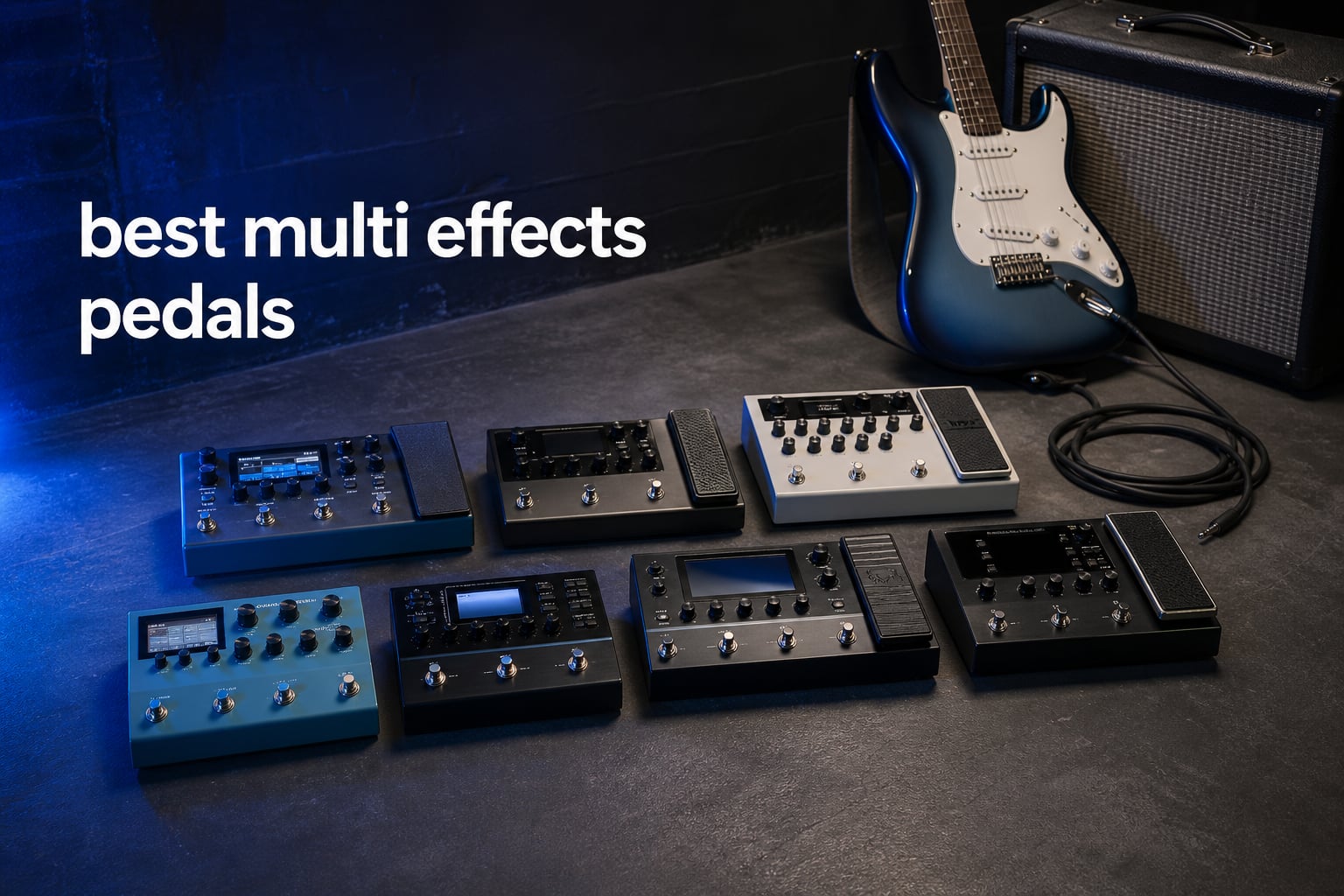
The best multi effects pedals put amp sounds, delay, reverb, drive, modulation, and often a looper in one floor unit. My direct pick for a guitarist who wants the broadest workstation-style control is the Fender Tone Master Pro, while the BOSS ME-90 makes more sense when immediate foot control matters and the MOOER GE100 is the straightforward entry point for practice.
A multi-effects pedal is a digital guitar processor that places several effects in a signal chain and lets you recall saved combinations as presets. That can replace a large FX pedalboard for a rehearsal, recording session, or live performance, but it does not make every player happier: the right unit depends on how quickly you need to change sounds, whether you need amp simulation, and how much editing you want to do away from the stage.
For this 2026 guide, I compared the eight supplied product listings rather than inventing test results that were not provided. I focused on stated effects counts, amp models, preset capacity, IR support, control layouts, connections, power figures, review ratings, and reported limitations; I also kept the community concern in view that no one wants to twiddle knobs between songs.
Table of Contents
The Top 3 Picks Give Three Clear Starting Points
The Fender is the feature-led professional pick because its listing combines amp modeling, a 7 inch touch display, an IR Manager, and Song/Set List Mode. The ME-90 is my practical live-performance choice for its eight multi-function switches, expression pedal, 11 AIRD amp models, and 60 GT-1000-derived effects.
The MOOER GE100 is the beginner-friendly selection because it states its core numbers plainly: 80 preset patches, 66 effect types, a 180-second looper, 40 drum rhythms, and expression control. These labels describe use cases, not a claim that one unit will sound best to every guitarist.
These Multi Effects Pedals Cover Eight Different Workflows in 2026
The quick comparison is a starting map, not a substitute for checking the connections on your amp, PA, computer, and existing pedals. The two MOOER units separate basic practice features from a higher-count processor with IR slots, while the BOSS and HeadRush units put more emphasis on amp models, touch control, or stage-ready foot operation.
| Product | Specifications | Action |
|---|---|---|
 Fender Tone Master Pro Fender Tone Master Pro |
|
Check Latest Price |
 IK Multimedia TONEX Pedal IK Multimedia TONEX Pedal |
|
Check Latest Price |
 BOSS ME-90 BOSS ME-90 |
|
Check Latest Price |
 MOOER GE100 MOOER GE100 |
|
Check Latest Price |
 MOOER GE150 Pro MOOER GE150 Pro |
|
Check Latest Price |
 HeadRush Flex Prime HeadRush Flex Prime |
|
Check Latest Price |
 BOSS GX-10 BOSS GX-10 |
|
Check Latest Price |
 NUX MG-400 NUX MG-400 |
|
Check Latest Price |
1. Fender Tone Master Pro Is the Best Professional Workstation
Fender Tone Master Pro Multi-effects Guitar Workstation
7 inch touchscreen
Set List Mode
Amp modeling
IR Manager
Pros
- Amp modeling
- Song Set List Mode
- 7 inch touchscreen
- IR Manager
Cons
- No limitations listed
- No customer image match
The Tone Master Pro is the supplied lineup’s most workstation-oriented choice. Fender lists amp modeling, effect modeling, a 7 inch touchscreen, an IR Manager, and Song/Set List Mode, which is a focused set of tools for a player arranging many saved sounds around a performance.
Its 4.8 out of 5 rating comes from 44 reviews, with the supplied review summary reporting 92% five-star ratings. I would put it at the top of a professional shortlist when set organization and on-unit visual control matter as much as the effects themselves.
The product details list USB connectivity, touch controls, corded power, a 15.32-pound weight, and dimensions of 8.6 by 19.9 by 15.3 inches. That footprint and weight make it a serious floor workstation rather than a compact grab-and-go guitar processor.
The listing calls the signal format analog while also describing digital-style modeling features, so I would verify the exact routing and output behavior against the manual before matching it to a specific amp or recording chain. No customer images or listing drawbacks were supplied, and I will not fill those gaps with guesses.
The Set List Workflow Fits Players Who Change Whole Songs at Once
Song/Set List Mode is the key reason to consider this model for organized stage work. A player moving through a fixed set can prioritize saved song groups instead of treating every sound as an unrelated preset.
That does not tell us how quickly any individual edit can be made during a song. It does show that the product was built with ordered performance material in mind, which directly addresses the common complaint about complex multi-FX programming at a gig.
The Large Floor Format Fits Dedicated Rig Builders
At 15.32 pounds, this is not the choice I would make solely to free up space in a small backpack. It fits players prepared to give their amp modeler and effects processor a central place in the rig.
The IR Manager matters for guitarists who work with speaker impulse responses, but the supplied data does not say how many IR files it stores. Treat IR handling as a reason to investigate the manual, not as a reason to assume unlimited capacity.
2. IK Multimedia TONEX Pedal Is the Best for Tone Library Access
IK Multimedia TONEX Pedal: Stereo multi-effects guitar and bass pedal with 150 Presets, 15 Pre/Post FX, Tuner, Tap Tempo, Headphone Out, Software Player and Editor
150 presets
15 pre post FX
Stereo
ToneNET access
Pros
- 150 presets
- 15 pre post FX
- Stereo engine
- ToneNET and editor
Cons
- No limitations listed
- No customer image match
The IK Multimedia TONEX Pedal is a focused route into a capture- and library-oriented workflow. Its supplied feature list specifies 150 presets, an AI-powered tone-modeling approach, 15 pre/post effects, stereo operation, VIR cabinets, and access to ToneNET through software and an editor.
It has a 4.6 out of 5 rating from 555 reviews, the second-largest review sample in this group. For my own studio-and-stage shortlist, that combination of many presets and a named software ecosystem is the reason it stands apart from simpler all-in-one units.
The listing names distortion, delay, reverb, compressor, and overdrive among its audio output effects. It also states a headphone output, tuner, tap tempo, USB, 9-volt operation, 200-milliamp current, and a 1,280-gram weight.
Those facts support a compact processor role, but they do not prove that every downloaded or modeled sound will suit a particular guitar. The product information does not supply a stated drawback or customer-image match, so I would judge its workflow through the editor and preset system before committing to it.
The Software and ToneNET Workflow Fits Explorers of Saved Sounds
ToneNET access and the included TONEX MAX Mac or PC software give this pedal a clear reason to connect to a computer. That is useful for the guitarist who prefers browsing, organizing, and editing sounds away from a busy stage.
It may be less appealing to someone who wants every adjustment from one row of physical knobs. The data confirms an editor and librarian, not the exact speed or simplicity of any particular editing task.
The Stereo Layout Fits Players Building a Wider Signal Chain
The listing explicitly calls the engine stereo, which is a meaningful distinction for players sending left and right outputs to a recording interface or two destinations. Stereo capability only helps when the rest of the signal chain is also set up to carry it.
The pedal is rated for 200 milliamps at 9 volts in the supplied details. Before placing it on a shared board supply, match those published figures against the supply’s available output and the manufacturer documentation.
3. BOSS ME-90 Is the Best for Direct Stage Control
BOSS ME-90 Guitar Multi-Effects Guitar Processor
11 AIRD amps
60 GT-1000 effects
8 footswitches
IR loading
Pros
- 11 AIRD amp models
- 60 GT-1000 effects
- 8 footswitches
- Expression pedal
Cons
- No limitations listed
- No customer image match
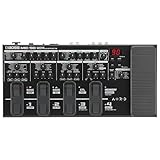
The BOSS ME-90 is the clearest answer for guitarists who care about reaching several controls with their feet. The listing gives it eight multi-function footswitches, a redesigned expression pedal, 11 AIRD amp models, 60 effects derived from the GT-1000, and IR loading.
Its 4.5 out of 5 rating is based on 238 reviews, and the supplied summary says 73% are five-star ratings. I would start here for a live player who wants a named control count rather than a promise of a deep menu system.
The ME-90 uses 24-bit AD/DA conversion and 32-bit floating-point processing according to the product data. It lists USB-C, an effects loop, 9-volt operation, and a 300-milliamp requirement, while the physical details report a one-pound weight and dimensions of 21.35 by 11.1 by 4.9 inches.
There is a useful tension in this design: the data suggests a substantial set of modeled sounds but also calls out physical switches and an expression pedal. That is the sort of arrangement I would inspect first when the goal is to avoid a screen-heavy correction between chorus and verse.
The Footswitch Count Fits Musicians Who Need Visible Choices
Eight multi-function switches give the ME-90 a concrete control advantage over units with fewer stated foot controls. They are paired with an expression pedal, so volume or wah-style control is part of the supplied configuration rather than an assumed add-on.
Multi-function does mean the exact assignment depends on the selected mode and preset. Set up a rehearsal patch with your real song changes before deciding whether the switching layout is intuitive enough for your feet.
The IR Loading Fits Players Moving Beyond Stock Cabinets
IR loading is specifically named alongside the 11 AIRD amp models, making this a strong comparison point against models without stated speaker-response support. An IR is a file that models a speaker cabinet and microphone response in a digital signal chain.
The supplied listing does not state an IR-slot count or third-party file workflow. I would not treat that omission as a flaw, but I would check it if custom cabinet choices are central to your recorded tone.
4. MOOER GE100 Is the Best Beginner Practice Pedal
MOOER GE100 Multi-Effects Guitar Pedal 80 Presets, 66 Effects
80 presets
66 effects
180 second looper
40 drum rhythms
Pros
- 80 preset patches
- 66 effect types
- 180 second looper
- 40 drum rhythms
Cons
- No limitations listed
- No customer image match
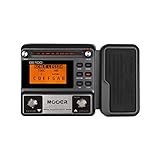
The MOOER GE100 is the most straightforward beginner recommendation in this group because its supplied listing centers on self-contained practice tools. It provides 80 preset patches and 80 user patches, 66 effect types in eight modules, a 180-second looper, 40 drum rhythms, a tuner, tap tempo, and a headphone output.
Its 4.4 out of 5 rating comes from 1,448 reviews, the largest review count of the eight products. That larger count does not settle a sound-quality question, but it gives a new buyer a wider pool of supplied customer feedback than the smaller-sample models here.
The GE100 also lists an expression volume-wah pedal and six assignable expression-pedal parameters. Its physical details give a 730-gram weight and dimensions of 9.06 by 2.36 by 5.51 inches, while power can come from a 9-volt DC adapter or four AA batteries.
The product data names distortion, delay, chorus, and reverb, which covers a sensible first set of digital effects. It does not list amp models, USB audio, IR loading, or an effects loop in the supplied details, so I would choose it for stated practice and basic effects features rather than assume advanced routing.
The Looper and Drums Fit Players Building Practice Habits
A 180-second looper plus 40 drum rhythms gives a guitarist a defined way to work on timing, layering, and chord changes without another device. The listing also includes scale and chord learning functions, which supports the beginner case directly.
These features will not replace a drummer or a full recording setup. They do make the pedal more than a collection of effects when the aim is daily practice through headphones or an amp.
The Battery Option Fits Simple Portable Sessions
Four AA batteries are listed as one power option, alongside a DC 9-volt adapter. That is unusual enough among the supplied pedals to matter for a player who practices away from a fixed power outlet.
The current requirement is listed at 300 milliamps. Battery duration is not supplied, so no responsible comparison can predict how long a set of cells will last under a particular use pattern.
5. MOOER GE150 Pro Is the Best Feature-Heavy Compact Option
MOOER GE150 Pro Guitar Multi Effects Processor, 200 Presets & 170 Effects, NAM & MNRS Support, 55 Amp Models, 26 Cab Sims, 20 IR Slots, USB OTG Recording, 4-Footswitch, Looper & Expression Pedal
200 presets
170 effects
55 amp models
20 IR slots
Pros
- 200 factory presets
- 170 effects
- 55 amp models
- 20 IR slots
Cons
- No limitations listed
- No customer image match
The MOOER GE150 Pro brings the densest stated count of presets and effects among the two MOOER models. Its listing calls out 200 factory preset tones, 170 effects, 55 classic amp preamps, 26 cabinet simulations, 20 IR slots, NAM and MNRS support, and four multi-purpose footswitches with an expression pedal.
It carries a 4.4 out of 5 rating from 586 reviews. I would consider it when a player wants far more amp-and-cab options than the GE100 supplies but still values built-in practice and control features.
The unit lists USB-C, quarter-inch and 3.5 mm connections, an 80-second stereo looper, a drum machine with 40 rhythms, and USB OTG recording. The supplied data says it weighs 1.1 kilograms and uses 9-volt corded power with a stated 300-amp figure, an unusually high label that should be confirmed in the manual before choosing a power supply.
Custom IR capacity is unusually explicit here: 20 IR slots are stated, not inferred. The listing also names 26 cabinet simulations with MNRS support, which makes this one of the strongest choices for a guitarist who wants to compare stock cabinet sounds and selected custom samples.
The IR Slots Fit Players Who Want a Defined Custom-Cab Limit
Twenty IR slots tell you more than a generic claim of IR compatibility. A player who keeps a small, deliberate collection of cabinet files can plan around a known storage number.
The data does not say what file-management app or transfer procedure is used. NAM and MNRS support are named, so research those specific formats if they are part of your existing tone-model workflow.
The Four Switches Fit Setups With Sensible Preset Planning
Four multi-purpose footswitches plus an expression pedal can cover a compact performance layout, especially when patches are prepared before rehearsal. It is a different approach from the ME-90’s stated eight switches.
Players who must toggle many individual blocks during a song should map those actions before buying. The provided data confirms the number of switches but does not spell out every assignment combination.
6. HeadRush Flex Prime Is the Best Touchscreen Studio Connector
HeadRush Flex Prime Electric Guitar Multi-Effects Pedal
700 plus emulations
4 inch touchscreen
Wi-Fi
USB audio
Pros
- 700 plus emulations
- 4 inch touchscreen
- Wi-Fi sharing
- USB audio interface
Cons
- Learning curve for beginners
- Wi-Fi needs setup
The HeadRush Flex Prime is the supplied group’s most explicit blend of touchscreen control, cloud sharing, and recording features. Its listing names a 4 inch responsive color touchscreen, more than 700 emulations, more than 350 built-in IRs, unlimited storage for custom IRs, Wi-Fi preset sharing, Bluetooth, and a USB audio interface.
The 4.4 out of 5 rating comes from 133 reviews. I would place it high for a guitarist who wants one processor to serve as a practice, preset-management, and computer-recording hub without losing a physical floor format.
HeadRush also lists a pro looper with MIDI sync, Clone and SuperClone support, an IR loader, and bundled ReValver 5 and Amp Cloner software. The physical details report a 1.6-kilogram unit measuring 11.76 by 6 by 2 inches, with 12-volt corded power and a 3-amp rating.
There are two stated cautions: beginners may face a learning curve, and Wi-Fi connectivity requires additional setup. Those are useful limitations to take seriously, particularly for the player whose forum-level priority is a no-fuss live rig.
The Cloud and Wireless Features Fit Connected Preset Workflows
Wi-Fi sharing through HeadRush Cloud and Bluetooth are named features, not assumptions based on the touchscreen. They make sense for someone who wants a connected library workflow rather than keeping every tone-management task isolated on the hardware.
Wireless functions add their own setup step, which the listing acknowledges. I would configure accounts, sharing, and any required connection well before a rehearsal rather than make a live show the first trial.
The USB Audio and MIDI Looper Fit Recording-Centered Players
A built-in USB audio interface is a direct advantage for a guitarist recording to a computer, while MIDI sync on the looper speaks to tempo-aware setups. The product data gives both functions a clear place in a home-studio signal chain.
The connector list includes quarter-inch TRS, quarter-inch TS, quarter-inch stereo, 1/8-inch MIDI, and USB Type-B. Confirm which cable and input mode your interface or controller requires before building the rest of the rig around it.
7. BOSS GX-10 Is the Best Compact Modern BOSS Processor
BOSS GX-10 Compact Guitar & Bass Effects Processor
32 amp types
170 BOSS effects
Touch display
WAV IR support
Pros
- GX-100 sound engine
- 32 amp types
- 170 BOSS effects
- WAV IR support
Cons
- Smaller format limits features
- May need external power
The BOSS GX-10 is the compact option for players who want the GX-100 sound engine in a smaller device. The listing specifies 32 amplifier types, 170 BOSS effects, a color touch display, AIRD technology, 24-bit AD and 32-bit DA conversion, 32-bit floating-point processing at 48 kHz, and support for WAV speaker IRs.
It is rated 4.4 out of 5 from 95 reviews. In my view, its stated technical format and sound-engine link make it a compelling compact alternative for a guitarist who wants broad modern BOSS processing without the ME-90’s named row of eight switches.
The GX-10 lists USB-C and a 600-milliamp requirement at 9 volts; its details also describe it as USB powered and note that some uses may need an external adapter. Reported dimensions are 7.32 by 12 by 2.96 inches, and the listed weight is 0.09 pounds.
The product data flags its smaller form factor as a possible feature limit compared with the GX-100. That is a fair trade-off to examine rather than a defect: a smaller floor unit can be attractive when the pedalboard has a strict space limit.
The High Processing Specification Fits Detail-Focused Modeler Users
The supplied specification is unusually detailed about conversion and processing: 24-bit AD, 32-bit DA, and 32-bit floating-point processing at 48 kHz. Those terms describe the digital audio system, not a promise that any preset will suit every speaker or guitar.
AIRD is named as the technology intended to provide tube-amplifier tone and response. Use your own amp, FRFR speaker, or recording monitors to decide how that response feels in the actual signal chain.
The Compact Format Fits Boards With Limited Real Estate
A 12-inch stated width and a 7.32-inch stated length put this in a different packing conversation from the larger workstations. The color touch display keeps touchscreen access available despite the smaller physical format.
The listing warns that the smaller format may limit some features compared with the GX-100. Check the footswitch requirements for your songs, because physical control count can matter more than an effects total on stage.
8. NUX MG-400 Is the Best Editor-Based Home Recording Choice
NUX MG-400 Guitar Multi-FX Pedal with dual processors and delivering high definition models and increased flexibility. Integrated effect
Dual processors
TSAC-HD models
USB audio
PC Mac editor
Pros
- Dual processors
- TSAC-HD models
- Expression pedal
- USB audio interface
Cons
- Limited stock listed
- May need external power
The NUX MG-400 is a compact multi-FX centered on dual processors, TSAC-HD amplifier and effect models, expression control, USB audio, and computer editing. The supplied feature list also names two programmable control switches, core modulation effects, a drum machine, and looper functionality.
It holds a 4.3 out of 5 rating from 40 reviews. I would view it as an editor-friendly option for a home player or recording guitarist who wants USB audio and is comfortable making deeper changes on a PC or Mac.
The product details list USB-C, a 9-volt DC power supply, a 300-milliamp requirement, a 1.28-kilogram weight, and dimensions of 11.38 by 6.3 by 2.8 inches. Those facts make it easy to compare against the other compact floor units without assuming unsupported features such as IR loading or wireless sharing.
The listing notes limited stock and says some setups may require an external power supply. Availability changes quickly, so I would treat stock language as a momentary listing note; the more lasting buying question is whether the stated 9-volt, 300-milliamp requirement fits your board.
The Computer Editor Fits Players Who Prefer Deep Changes Offstage
A dedicated PC or Mac editor is a practical feature for the guitarist who would rather build presets from a larger screen. The unit’s USB audio interface lets the same device participate in a recording workflow.
That approach is not automatically faster for stage edits. It is best for players who plan sounds at home, then use the expression pedal and two programmable control switches for the selected live actions.
The Dual Processors Fit Players Comparing Modeling Architecture
NUX explicitly says the MG-400 has dual processors delivering high-definition models and flexibility. TSAC-HD amp and effect models are also named, giving technically curious buyers a specific architecture label to research.
The data does not provide a numeric amp-model or effect count. Compare the actual preset needs and available controls instead of assuming that dual processors imply more of every feature than competing units.
The Buying Guide Starts With Your Actual Signal Chain
A multi-effects pedal is worth it when you need several sounds in one transportable unit and can benefit from saved presets. It is less compelling when you only use one or two effects, insist on a particular analog stompbox response, or want every adjustment to happen with one dedicated knob.
The forum discussions behind this topic repeatedly circle the same practical issue: players do not want to make complicated changes during a live performance. Start with the number of song changes you make, then choose controls and preset organization that let you rehearse those moves before the stage.
The Best Control Layout Is the One You Can Operate Without Looking Down
For direct hardware control, the ME-90 lists eight multi-function switches and an expression pedal. The GE150 Pro lists four multi-purpose switches plus expression, the MG-400 lists two programmable control switches plus expression, and the GX-10 uses a touch display with multi-mode switches.
Those are feature descriptions, not a universal ranking. Write down the actions you need in one song: preset up, preset down, tap tempo, drive change, delay change, volume, wah, and looper; then rule out layouts that cannot make those actions comfortable.
Touchscreens make visual editing appealing, but they are not the same as foot-operated access. The Fender provides a 7 inch touchscreen, the HeadRush Flex Prime a 4 inch responsive color touchscreen, and the GX-10 a color touch display, while each still needs to fit your real switching style.
The Amp Modeling and IR Needs Should Match Your Destination
If you play into a PA, recording interface, or full-range speaker, amp and cabinet modeling may be central to the sound. The Fender lists amp modeling and an IR Manager; the ME-90 lists 11 AIRD amp models and IR loading; the GE150 Pro lists 55 amp preamps, 26 cabinet simulations, and 20 IR slots.
The GX-10 supports WAV speaker IRs, and the HeadRush lists more than 350 built-in IRs with unlimited storage for custom IRs. The TONEX lists amp, cab, and pedal modeling with VIR cabinets, while the supplied GE100 and MG-400 data does not state IR features.
An IR is a speaker-and-microphone response file, so it matters most when you want a modeled cabinet sound rather than relying only on a physical guitar amplifier. Check accepted file formats, slot limits, software requirements, and output modes in the manual; the product titles alone do not answer all four questions.
The Recording Connections Matter More Than a Huge Effects Count
USB audio can reduce the number of boxes between a guitar and a computer. The HeadRush Flex Prime, NUX MG-400, and MOOER GE150 Pro explicitly list USB audio or USB recording features, while the Fender, TONEX, ME-90, and GX-10 list USB connections.
USB connectivity does not automatically mean every unit functions as a complete audio interface in every operating system. The HeadRush is expressly described as a built-in USB audio interface, and the NUX explicitly names a USB audio interface; use those exact statements instead of assuming the same role for the others.
For silent practice, the GE100 and TONEX list headphone outputs. A looper and drum machine can also change how useful a pedal feels at home: the GE100 lists both, the GE150 Pro lists an 80-second stereo looper and 40 rhythms, and HeadRush names a pro looper with MIDI sync.
The Power Requirement Must Be Checked Before It Reaches Your Board
Never choose a shared power supply by plug shape alone. The supplied details list 9 volts and 200 milliamps for the TONEX, 9 volts and 300 milliamps for the ME-90, GE100, and MG-400, and 9 volts and 600 milliamps for the GX-10.
The HeadRush lists 12 volts and 3 amps, which makes it especially important to follow the specified adapter requirement. The GE150 Pro listing has a 9-volt description but a stated 300-amp figure, an unusual entry that should be verified directly with MOOER before any power decision.
The Fender is listed as corded electric but the supplied listing does not state a current figure. Confirm polarity, connector type, isolated-output requirements, and actual current needs from the official manual; a generic statement about power compatibility would not be reliable enough for a gigging rig.
The Best Beginner Choice Has Practice Tools and Clear Limits
For a first effects processor, a shorter path from guitar to sound is usually more helpful than the largest published feature count. The GE100 offers a plainly described package of 66 effects, 80 preset patches, a looper, drum rhythms, tuner, tap tempo, headphone output, and expression control.
The GE150 Pro is the next step for a learner who already knows they want amp models, cabinet simulations, custom IR slots, USB recording, and more presets. The HeadRush listing itself mentions a learning curve for beginners, so its added connected features should be a deliberate choice, not a default upgrade.
The Best Alternative Is Individual Pedals When Your Sound Is Already Narrow
Five core effect categories cover a lot of guitar work: overdrive or distortion, delay, reverb, modulation, and compression. A multi-FX can place versions of several of these in one signal chain, while separate pedals let you choose a dedicated control layout and one sound at a time.
Choose a multi-effects pedal when preset recall, amp modeling, practice functions, or travel simplicity solve a real problem. Choose individual stompboxes when you only need a few familiar sounds and want to change them with dedicated physical controls instead of preset menus.
The best multi effects pedals are not automatically replacements for every pedalboard. They are tools for reducing the amount of gear you carry and for recalling more complex combinations, which is why stage-control layout and sound setup should lead the decision.
The FAQs Answer Common Multi-Effects Pedal Questions
Yes—are multi-FX pedals worth it?
Yes, when you need several effects, saved presets, or amp modeling in one portable floor unit. They are especially useful for rehearsal, recording, and live sets that require quick sound changes. They are less useful when you only need a few dedicated stompbox sounds and prefer one-knob-per-effect control.
The MOOER GE100 is the best multi-FX pedal for beginners—why?
The supplied GE100 listing combines 66 effects, 80 preset patches, a 180-second looper, 40 drum rhythms, a tuner, tap tempo, a headphone output, and an expression pedal. That clear practice-focused set of features makes it the most direct beginner pick in this eight-product comparison.
Five core effects are distortion, overdrive, delay, reverb, and modulation—what 5 pedals should every guitarist have?
A practical five-effect starting point is an overdrive or distortion, delay, reverb, modulation pedal, and compressor. The exact choices depend on genre and amp, and a multi-effects pedal can combine versions of several categories in one preset-based processor.
The BOSS GX-10 is the strongest listed modulation-capable option here—what is the best multi-modulation pedal?
The GX-10 lists 170 BOSS effects, 32 amp types, a color touch display, and the GX-100 sound engine, so it is a strong compact option when broad effect variety matters. The supplied data does not separate a numerical modulation count, so compare actual chorus, phaser, flanger, tremolo, and other required effects before choosing.
The Right Pick Depends on How You Change Sounds
The Fender Tone Master Pro is my feature-led workstation choice, the BOSS ME-90 is the practical direct-control pick, and the MOOER GE100 is the clearest practice-first beginner choice. For computer-centered tone libraries, look at the TONEX; for connected recording and cloud features, look at the HeadRush Flex Prime.
Use this best multi effects pedals guide for 2026 as a way to narrow the field, then match each published connection, current requirement, control layout, and modeled-sound feature to the rig you actually use. A few minutes of careful compatibility checking before you buy is more useful than choosing by an effects count alone.
2 thoughts on “8 Best Multi Effects Pedals (September 2026) for Guitarists”