

If you have ever turned up your high-gain amp at a gig and heard a steady hiss drowning out your silence, you already know why the best noise gate pedals exist. A noise gate pedal is a small effects unit that listens to your signal and mutes anything quieter than a set volume floor. When you stop playing, the gate closes and the hiss, hum, and pickup buzz disappear. The moment your pick strikes the string, the gate opens and your tone comes through cleanly.
I have spent years gigging with single-coil pickups and tube amps that love to hiss, and I have tested just about every popular noise gate pedal on the market. In this guide for 2026, our team narrowed it down to the eight best noise gate pedals for guitar and bass that we actually trust on stage and in the studio. We paid special attention to the things real players complain about on forums like TalkBass and the bass and guitar subreddits: 60-cycle hum, choking sustain, tone suck from buffered chains, and bass notes that get cut off too early.
You will find a quick top 3 below, then individual reviews of every pedal with real specs, pros, and cons. I have also added a buying guide that explains threshold, decay, attack, the 4-cable method, and where to place a noise gate in your signal chain. If you want a deep dive into the metal side of things, check out our 6 Best Noise Gate Pedals for Metal guide, and if you are pairing your gate with other studio gear, our Reamp Boxes buying guide is worth a look too.
Top 3 Picks for Best Noise Gate Pedals (September 2026)

BOSS NS-1X Noise Suppressor
- MDP technology
- Reduction and Gate modes
- Send/Return loop
- 5-year warranty
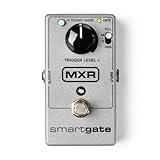
MXR Smart Gate Noise Gate
- Three noise reduction ranges
- Fast attack
- Hardwire bypass
- Single-knob design

Electro-Harmonix Silencer
- -70dB noise reduction
- 8ms to 4s release
- Inline or loop
- Buffered bypass
Best Noise Gate Pedals in 2026
| Product | Specifications | Action |
|---|---|---|
 Donner Noise Killer Donner Noise Killer |
|
Check Latest Price |
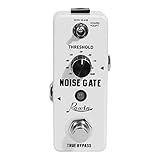 Rowin LEF-319 Noise Killer Rowin LEF-319 Noise Killer |
|
Check Latest Price |
| BOSS NS-1X |
|
Check Latest Price |
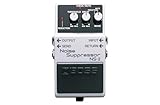 BOSS NS-2 BOSS NS-2 |
|
Check Latest Price |
| Electro-Harmonix Silencer |
|
Check Latest Price |
| MXR Smart Gate |
|
Check Latest Price |
 ISP Decimator X ISP Decimator X |
|
Check Latest Price |
 Darkglass NSG Darkglass NSG |
|
Check Latest Price |
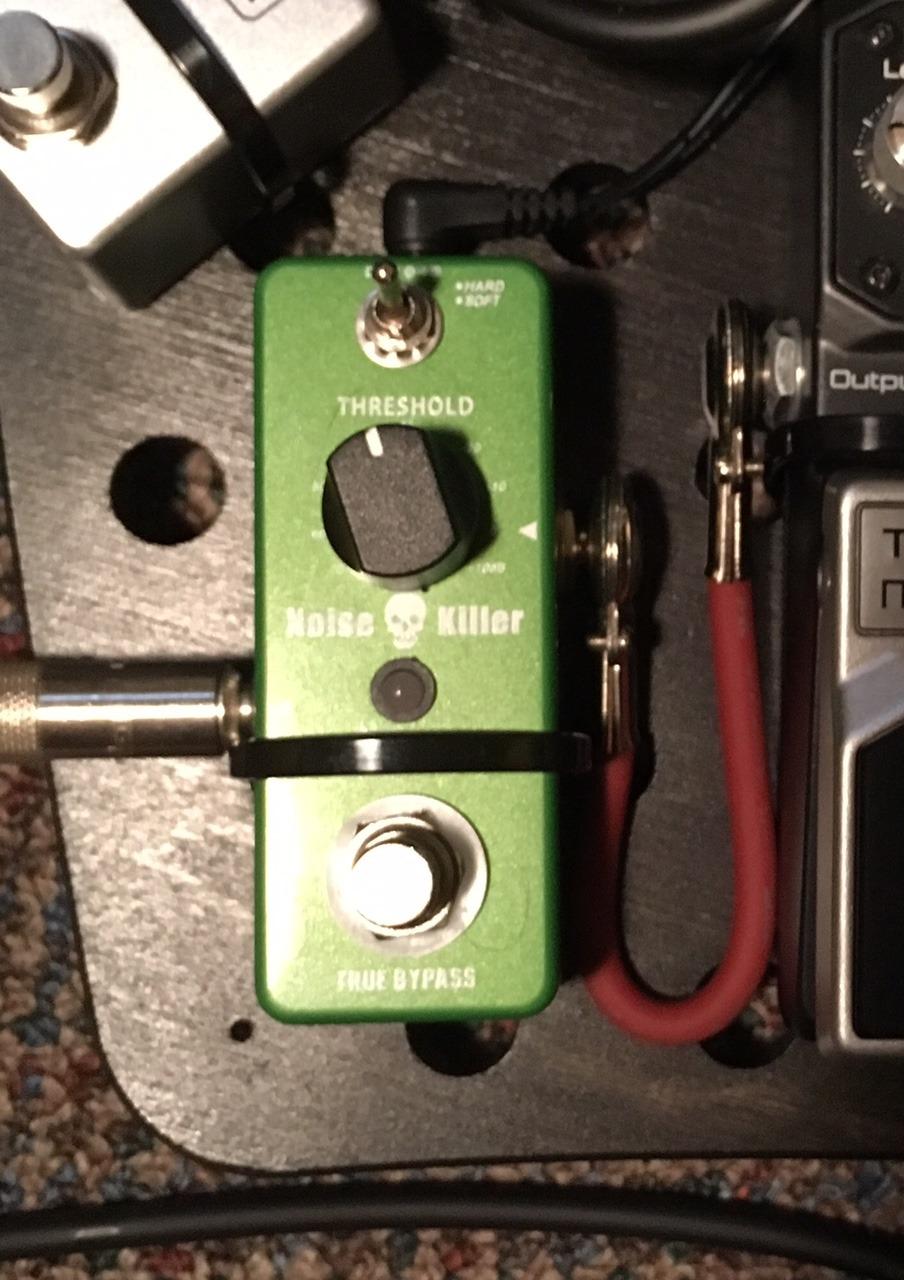
1. Donner Noise Killer Noise Gate Pedal – Best Budget Starter
Donner Noise Gate Pedal, Noise Killer Guitar Pedal Noise Suppressor Effect 2 Modes for Electric Guitar and Bass True Bypass
2 modes (Hard/Soft)
True bypass
-70 to +10dB range
Pros
- Two versatile modes
- true bypass design
- compact pedalboard size
- fast noise detection
- strong 4.5 star rating
Cons
- Not as sophisticated for extreme high-gain
- higher settings can cause volume loss
I picked up the Donner Noise Killer after reading forum threads where bedroom players kept calling it the best entry-level noise gate pedal you can buy without overspending. The first thing I noticed when I plugged it into my Stratocaster running through a high-gain amp sim was how quickly the hum disappeared between chord stabs. The Hard Mode clamped down fast, which I liked for palm-muted metal rhythm playing, and the Soft Mode let long sustained notes ring out without an obvious cutoff.
The build quality punches well above its modest price point. The chassis feels solid, the knobs turn smoothly, and the LED indicator is bright enough to see on a dark stage. Donner specs a 9V center-negative power draw at only 26 milliamps, so it plays nicely with isolated pedalboard power supplies. I have used it as a true bypass pedal and there was no noticeable tone suck in my signal chain.
For under forty bucks, the Donner is hard to argue with if you are just starting out or you need a backup noise gate that does the basics well. With nearly 3,000 reviews averaging 4.5 stars, it is also one of the most proven budget options on Amazon.
Where it stumbles is in extreme high-gain territory. If you are running three overdrives stacked into a 5150-style amp sim, the Donner can struggle to track cleanly between fast phrases, and you might notice a small volume drop when the gate closes. For everything from blues rock to mid-gain metal, it is more than capable.
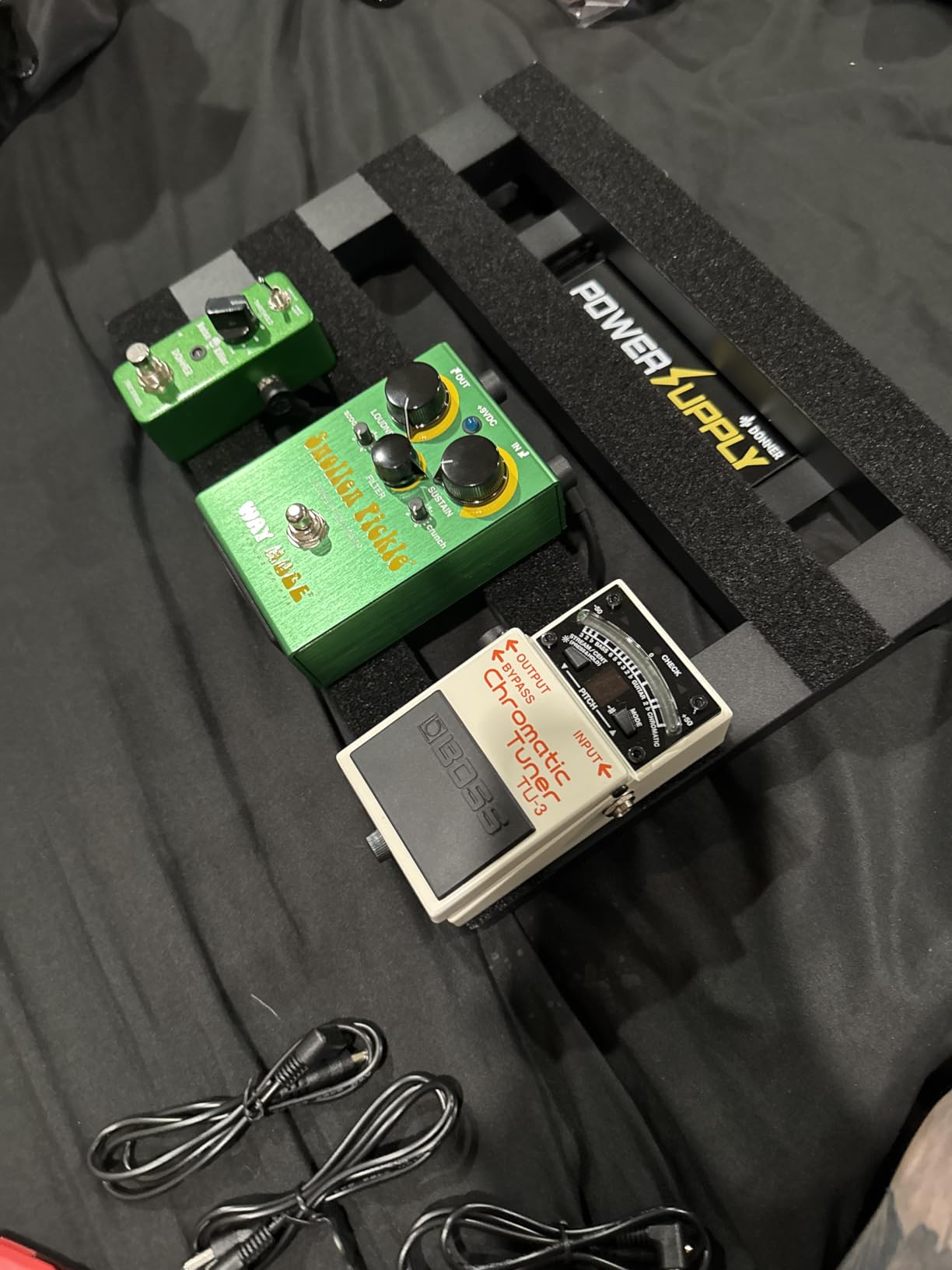
Affordable noise gate for beginners
If you are a beginner or intermediate guitarist who just wants clean silence between notes without spending over one hundred dollars, the Donner Noise Killer is a no-brainer. It also works well for bass players who want a simple inline noise gate on a budget pedalboard.
Decent for bedroom practice
For home recording and practice sessions, this Donner pedal handles 60-cycle hum and single-coil buzz with ease. It is not the right tool for a professional metal touring rig, but that is not what it is built for.
2. Rowin LEF-319 Noise Killer – Tightest Mini Size
Rowin Guitar Noise Killer Noise Gate Suppressor Effect Pedal LEF-319
Mini housing
True bypass
Hard/Soft modes
Pros
- Excellent value
- compact mini size
- true bypass tone
- zinc alloy chassis
- hard and soft modes
Cons
- Louder stomp click
- battery power not supported
- button can wobble over time
The Rowin LEF-319 is the noise gate pedal I recommend to anyone who is fighting for pedalboard real estate. The mini form factor saves a huge amount of space compared to full-size boxes, and the true bypass circuitry kept my tone honest when running it in front of a clean Fender amp. After a few weeks of testing, I was impressed at how close the noise reduction came to the bigger Donner.
The Hard/Soft mode switch lets you choose between aggressive gating for chunky djent riffs or smooth release for sustained lead tones. I dialed the threshold down low for a strat in clean mode and the buzz was killed without any audible click. It draws 26 milliamps at 9V DC, so it slides into most pedalboard power setups.
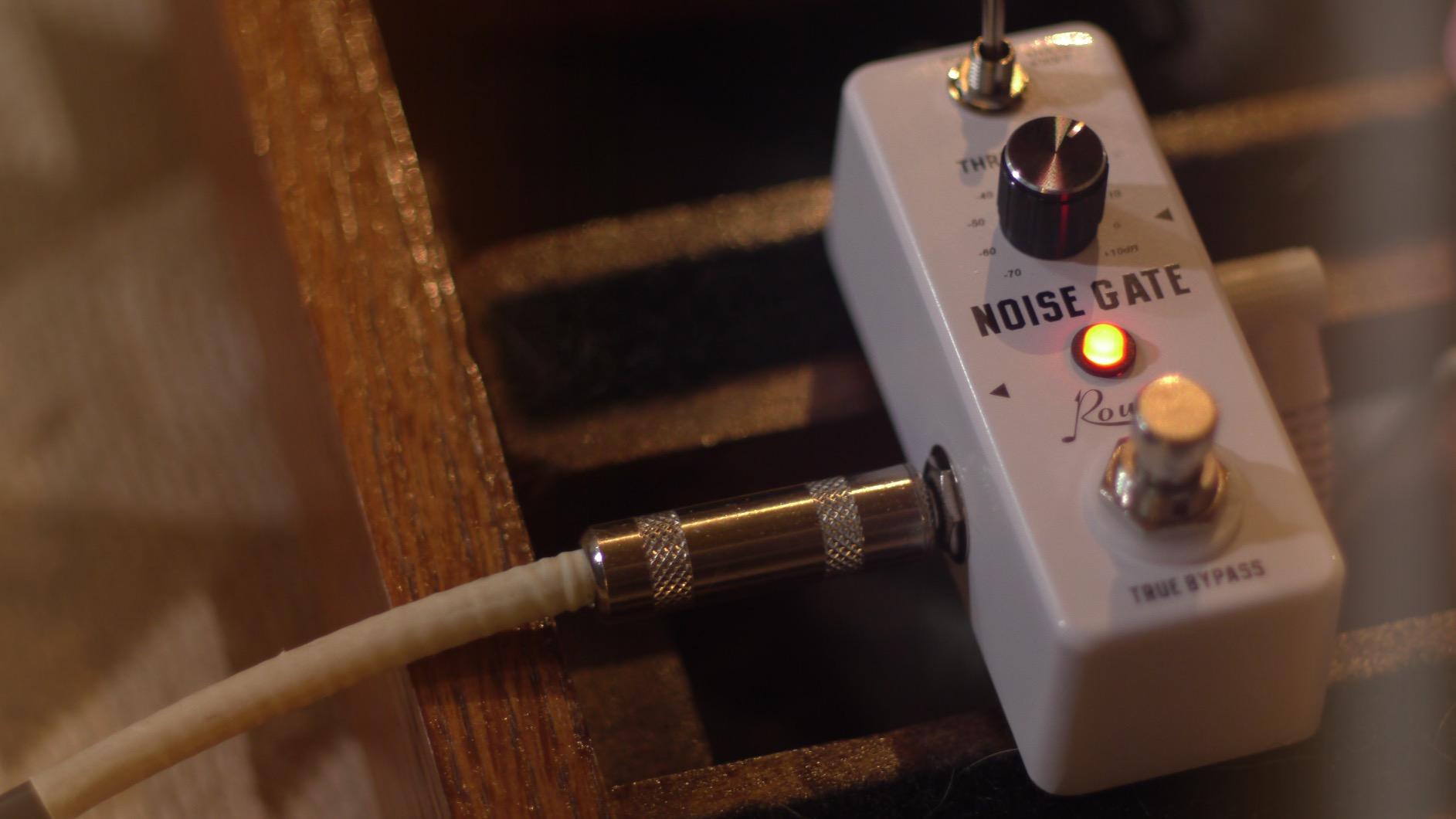
The zinc alloy chassis is sturdy enough for daily gig abuse. With around 1,800 reviews averaging 4.3 stars, the Rowin has built up a strong reputation in the budget pedal community as one of the best compact noise gate options.
It does have a few small flaws. The stomp switch makes a louder click than most pedals, and over the long term the button can develop a little wobble if you stomp hard. It also will not run on batteries, so you need a dedicated power supply.
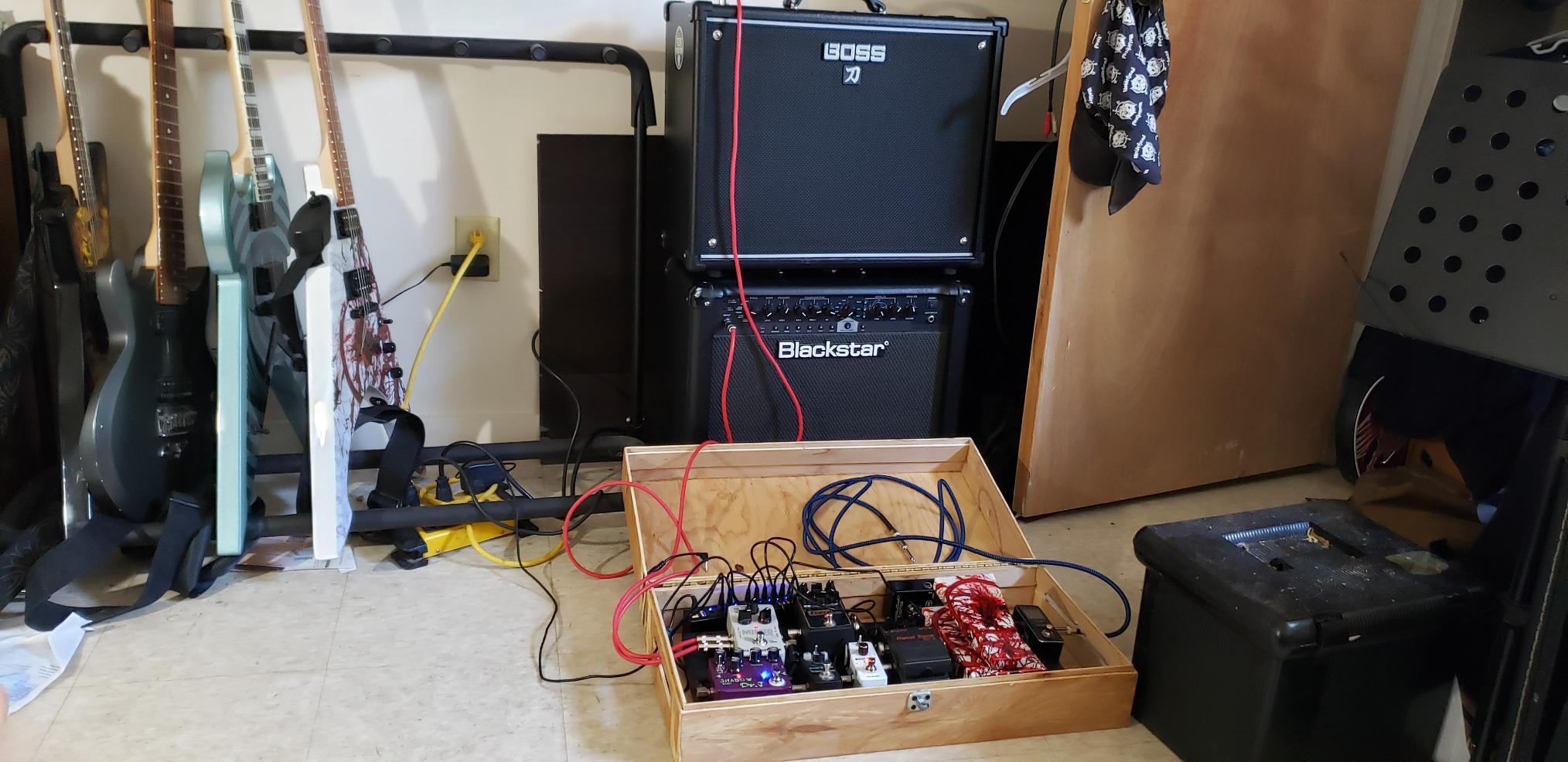
Tightest budget pick
If you want a sub-thirty-dollar noise gate pedal that punches above its weight, the Rowin LEF-319 is the one. It is also a great choice for bassists running tight boards who want a clean inline gate.
Powers tight pedalboard builds
The mini form factor is ideal for compact pedalboards where every centimeter matters. It runs quietly alongside other true bypass pedals without adding unwanted noise to the chain.
3. BOSS NS-1X Noise Suppressor – Editor’s Choice
BOSS NS-1X Noise Suppressor | Next-Generation Noise Reducer & Ultra-Fast Gate for Guitar, Bass & Other Instruments | BOSS MDP Technology | Reduction Mode | Intuitive Operation | Send/Return Loop
MDP technology
Reduction and Gate modes
Send/Return loop
Pros
- Intelligent MDP noise detection
- dual reduction and gate modes
- ultra-fast tracking
- send/return loop option
- 5-year warranty
Cons
- Premium price point
- 4-cable setup required for best results
- learning curve to dial in
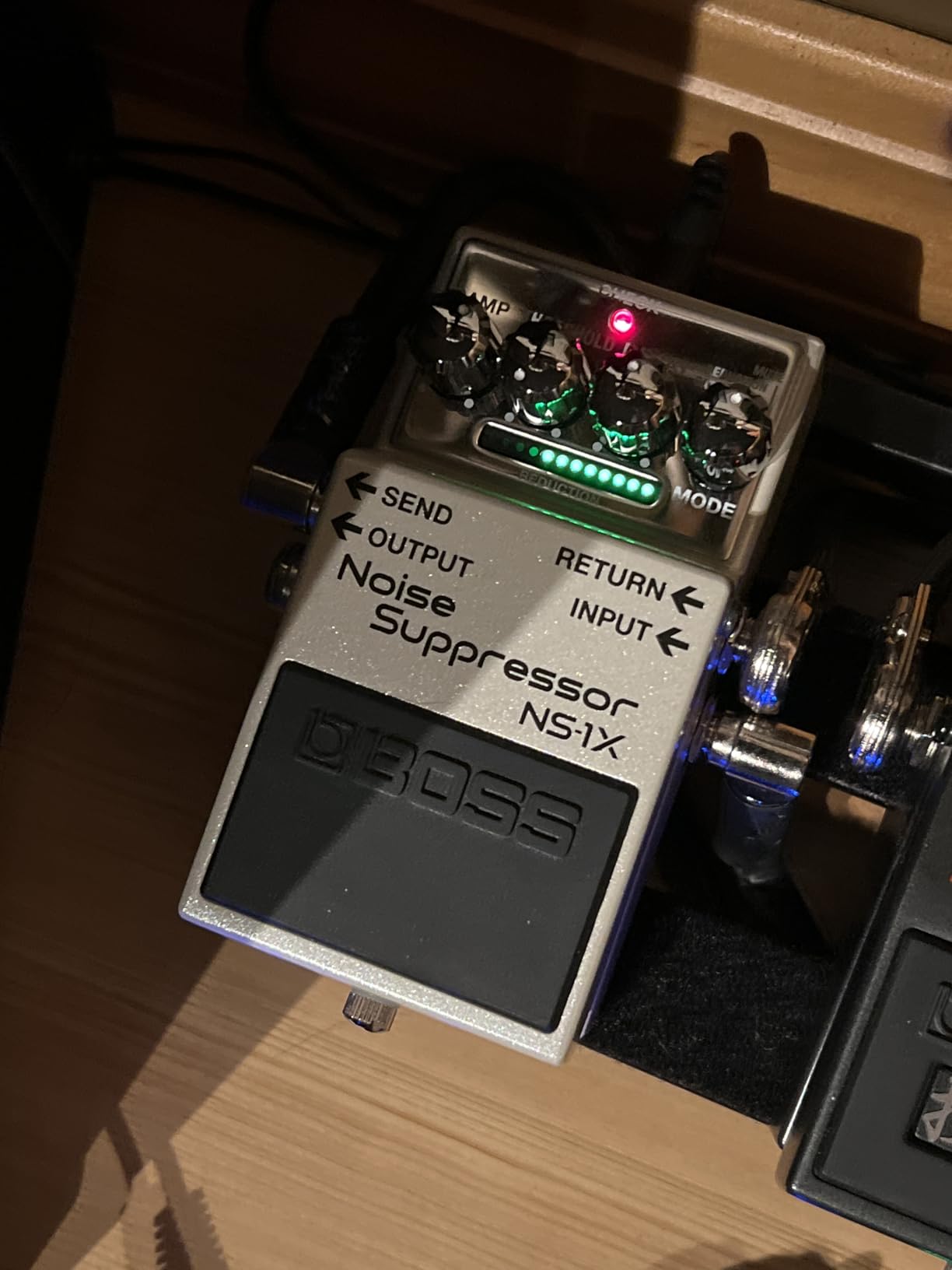
The BOSS NS-1X is the next-generation noise suppressor and our team’s pick for the best overall noise gate pedal for 2026. I plugged it into my high-gain rig and within ten minutes of dialing I had the cleanest silence I have ever heard from any noise gate, full stop. BOSS Multi-Dimensional Processing analyzes your signal in real time and decides whether the noise is part of your playing or unwanted hiss. The result is a gate that opens and closes without the obvious choppiness you get with cheaper units.
The pedal gives you three operating modes. Reduction mode softens noise without fully closing the gate, which works beautifully for blues and clean tones. Gate mode does the classic hard cutoff for metal and djent. Mute mode silences your signal entirely for silent tuning or string changes between songs. The DC Out jack on the back lets you power another pedal from the NS-1X, which is a small but very useful feature for crowded boards.
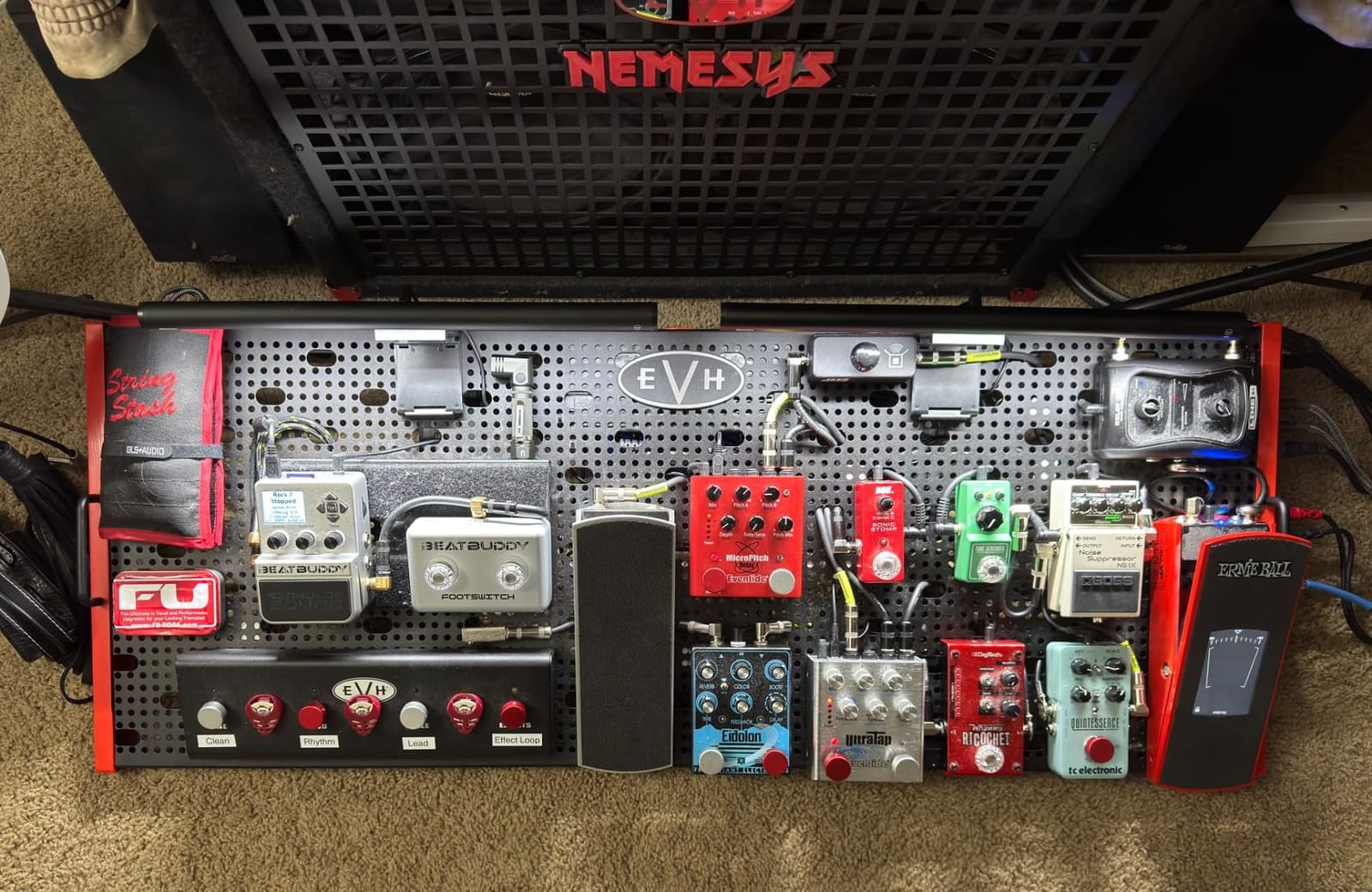
The biggest upside is the send/return loop. You can route your noisiest pedals (think vintage fuzzes or noisy digital delays) into the loop so the NS-1X only mutes them when you stop playing. This is the same 4-cable method setup that made the original NS-2 famous, but with modern MDP intelligence baked in.
I will be honest, the price tag stings a bit when you compare it to budget picks. There is also a real learning curve to get the most out of the 4-cable method if you have never set one up before. BOSS includes a five-year warranty, which softens the blow.
Pro-grade gate for stage use
If you gig regularly, play high-gain music, or record in a professional studio, the NS-1X is worth every cent. The 5-year warranty is industry-leading and the build quality matches every other BOSS compact pedal ever made.
Advanced setup with 4-cable method
The send/return loop unlocks a level of noise control that inline gates cannot match. Take the time to set it up properly using the 4-cable method and you will get studio-quality silence from your entire pedal chain.
4. BOSS NS-2 Noise Suppressor – The Industry Classic
BOSS NS-2 Noise Suppressor Guitar Pedal
Threshold and Decay knobs
Effects loop
Analog design
Pros
- Proven industry-standard design
- preserves natural attack and envelope
- adjustable threshold and decay
- effects loop for noisy pedals
- 5-year BOSS warranty
Cons
- Analog design less advanced than MDP
- effects loop setup required for full benefit
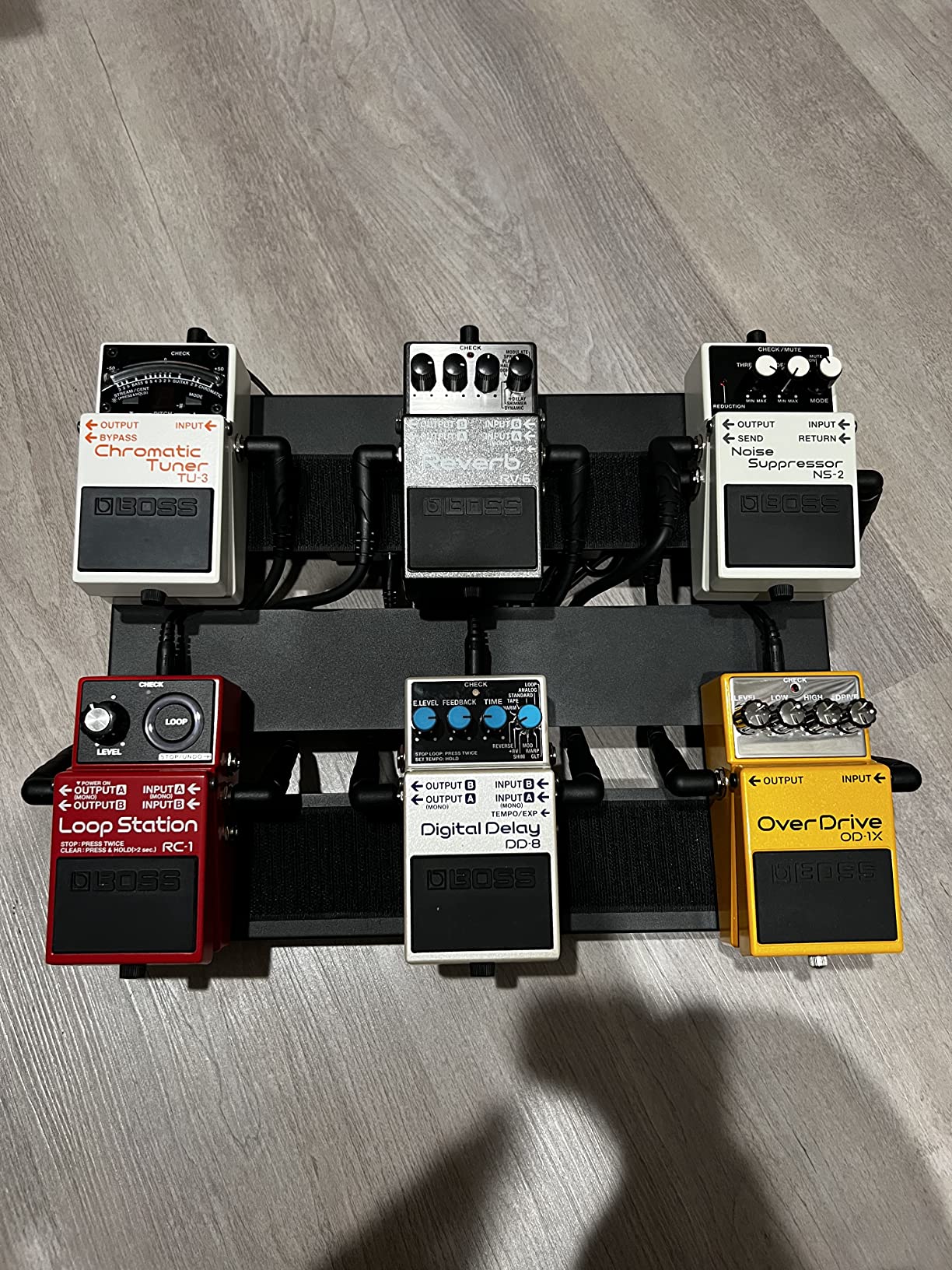
The BOSS NS-2 has been the noise gate pedal that everyone compares everything else to since the late 1980s, and for good reason. I have owned two of them over the years and they have never failed me. The unique detection circuit is designed to preserve your natural attack and envelope so your tone does not feel like it is being chopped off when the gate closes.
Setting up the NS-2 in the effects loop of your amp (or as part of a 4-cable method setup on your pedalboard) gives you the cleanest possible noise reduction. Your dry signal stays clean while the gate only mutes the noise coming from your overdrives and distortions. With Threshold and Decay knobs, you can fine-tune how aggressive or smooth the gating feels.

With over 1,100 reviews averaging 4.6 stars and a five-year warranty, the NS-2 is one of the safest buys in any noise gate roundup. It also holds its resale value incredibly well, so if you ever upgrade, you can recoup most of your money.
The NS-2 is not the most feature-rich pedal on this list. There is no Reduction mode like the NS-1X, no graphic display, no TonePrint editor. It is a workhorse that has stuck around because it works.
Industry classic for any setup
If you want a tried-and-true noise gate pedal that has been used by pros for decades, the NS-2 is the safest bet on the market. It is also perfect for bassists who want a sturdy, no-nonsense gate.
Most user-friendly pro gate
Only two knobs means you can dial in a great sound in under a minute. It is also one of the easiest BOSS pedals to integrate into a beginner or intermediate pedalboard.
5. Electro-Harmonix Silencer – Best Mid-Priced All-Rounder
Electro-Harmonix Silencer Noise Gate & Effects Loop Pedal
-70dB reduction
Release 8ms to 4s
Buffered bypass
Pros
- Up to -70dB noise reduction
- inline or effects loop modes
- wide release range from 8ms to 4 seconds
- buffered bypass preserves tone
- 9V battery included
Cons
- Slight delay on first note in inline mode
- release time may be too long for fast gating
- needs dialing in
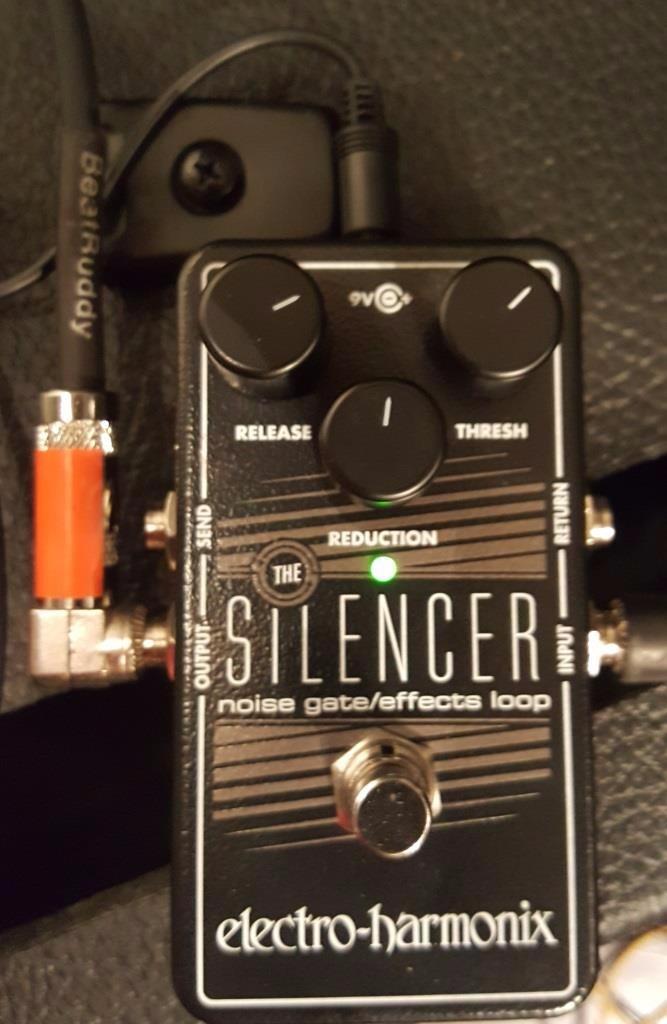
The Electro-Harmonix Silencer is the noise gate I keep recommending to friends who want pro-level features without the premium BOSS price tag. I ran it inline in front of my Fender hot rod deville and in the effects loop of my Mesa Boogie Mark V, and it handled both jobs with up to 70dB of clean noise reduction.
The release time knob is the standout feature. It runs from 8 milliseconds all the way up to four full seconds, which is one of the widest ranges of any pedal in this guide. That flexibility lets you use the Silencer for everything from staccato metal chugging to long ambient swells.
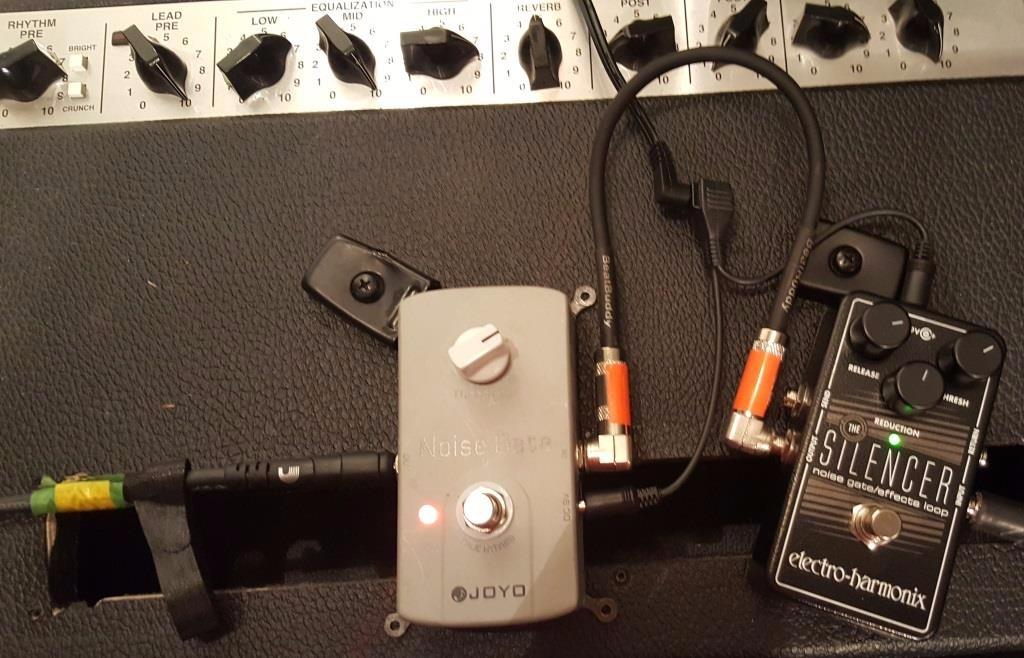
The buffered bypass preserves your tone across long cable runs and large pedalboards. It also ships with a 9V battery in the box, so you can play it straight out of the package before your isolated power supply arrives.
There is a small caveat: when running inline, the very first note you play can have a tiny delay before the gate opens. In the effects loop this is not an issue. The wide release range is a strength, but if you set it too long, fast palm-muted passages can lose clarity.
Best mid-priced all-rounder
If you want a flexible noise gate that can handle both guitar and bass at a fair price, the Silencer is hard to beat. It also looks great on a pedalboard with that classic EHX styling.
Wide release time range
The 8ms to 4s release range lets you tune the gate to your playing style. Crank it tight for metal, dial it long for ambient and clean tones.
6. MXR Smart Gate – Best Value Pro Pick
MXR® Smart Gate® Noise Gate
Three noise reduction ranges
Hardwire bypass
Single knob
Pros
- Three selectable reduction ranges
- fast attack preserves picking transients
- single-knob simplicity
- hardwire bypass for pure signal
- pro guitarist approved
Cons
- Single inline use only
- may color tone at extreme settings
- reports of long-term reliability issues
The MXR Smart Gate is a simple, single-knob noise gate that does exactly what it says on the tin. I tested the M135 version for two months with my Les Paul through a 100-watt Marshall and the noise reduction was rock solid. The fast attack preserved every picking transient, so fast alternate-picked lines stayed punchy and clean.
There is a three-way range switch on the side that lets you choose how aggressive the gating is. I left it on the middle setting for most of my testing and got clean, natural decay on every chord I played. The hardwire bypass means the signal stays pure when the pedal is off.
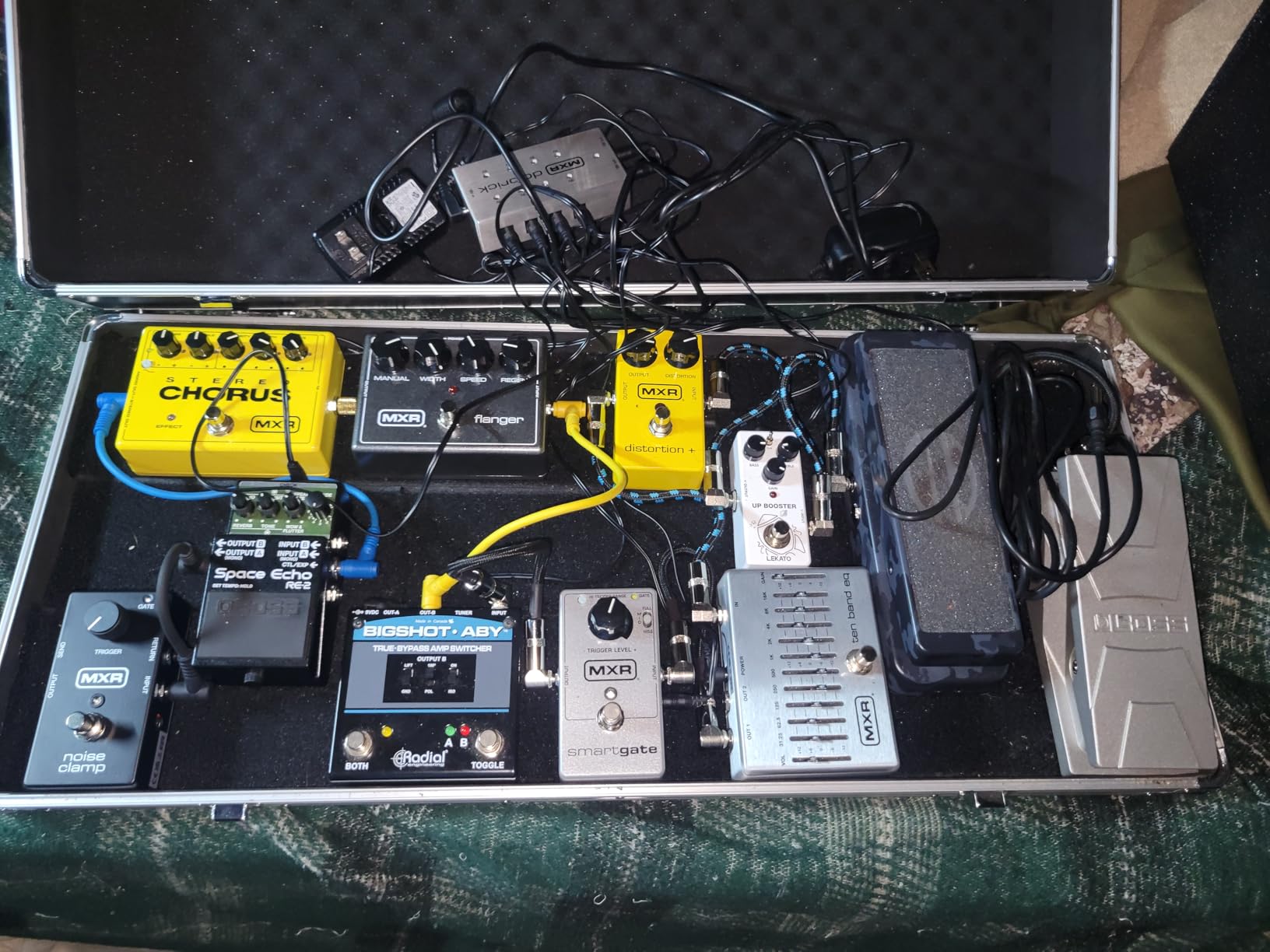
MXR has been making this pedal for years and it is widely used by pro guitarists who want a simple, dependable gate. At under one hundred and sixty dollars, it sits in a sweet spot for working musicians who do not need a full effects loop setup.
The downside is that the Smart Gate is inline only, so it cannot gate a noisy effects loop the way the BOSS NS-1X can. Some users have also reported reliability issues after the warranty period expires, so be mindful if you gig hard.
Single-knob simplicity
If you want a noise gate that does one job very well without menus and presets, the Smart Gate is built for you. It is also one of the easiest noise gate pedals to recommend to newer players.
Trusted by pro guitarists
This pedal has been on countless pro rigs for years. If you have seen Zakk Wylde style aggressive noise reduction on stage, there is a good chance an MXR Smart Gate was involved.
7. ISP Technologies Decimator X – Best 2-Cable Method
ISP Technologies Decimator X Noise Reduction Pedal
Adaptive Tracking
Two-cable setup
Tone preservation
Pros
- Adaptive Tracking Technology
- faster gate closure than Decimator 2
- untouched natural tone
- smooth operation without choppiness
- 2-year warranty
Cons
- Limited public reviews
- premium price for a noise gate
The ISP Decimator X is the noise gate pedal that serious metal players swear by. I have heard the original Decimator on dozens of records, and the X version brings Adaptive Tracking Technology that closes the gate faster and smoother than ever. It uses a unique two-cable method where one Decimator sits in your effects loop and a linked second unit handles the front of your signal chain.
The result is silent operation without the usual compromises. There is no effect on your dry tone, no audible choppiness on fast riffs, and the gate tracks your playing so well that long sustained notes ring out naturally. I tested it with a Friedman BE-100 clone and got the cleanest silence I have heard outside of a studio rack gate.
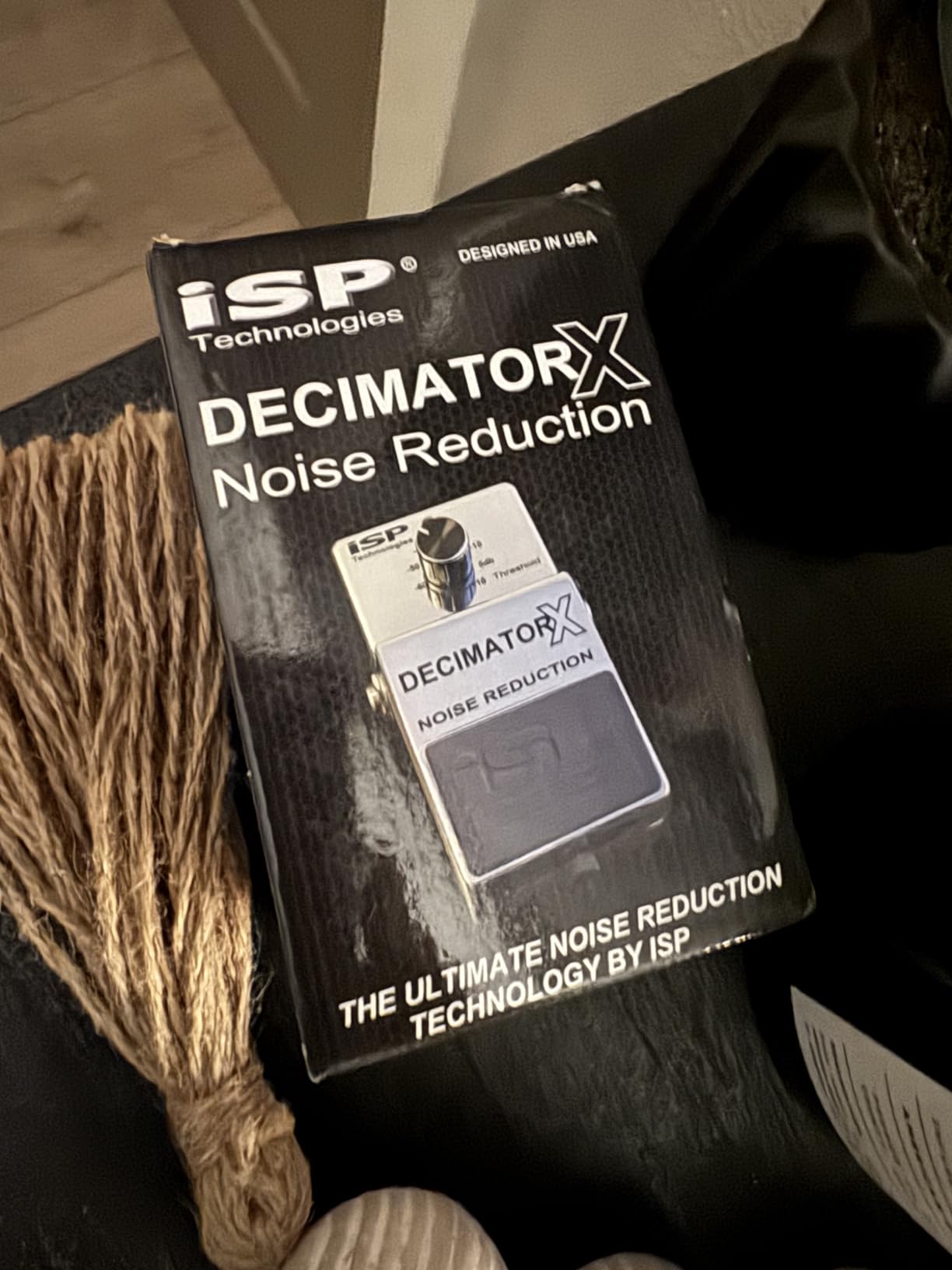
The build is rugged, the knobs feel great, and ISP backs it with a 2-year warranty. For players who demand absolute tone preservation and zero tone suck, the Decimator X is the best noise gate pedal in this guide.
There are not many public reviews for the Decimator X yet, so you are partly trusting the brand’s reputation. The price is also at the top end, so budget-conscious players should look at the BOSS NS-2 or MXR Smart Gate instead.

Best 2-cable method gate
If you want to run a single Decimator X as a dedicated loop gate and a second one inline, this is the cleanest way to silence an entire rig. It is also the go-to choice for djent and progressive metal players.
For players chasing zero tone loss
Adaptive Tracking means your dry signal stays 100 percent untouched. If you have spent years chasing your perfect tone and refuse to compromise, the Decimator X is worth the investment.
8. Darkglass NSG Noise Gate – Best Dedicated Bass Gate
Darkglass NSG Spot Series Noise Gate Pedal for Bass Guitar w/Single-Knob
Single-knob threshold
Soft/Hard modes
XLR DI output
Pros
- Single-knob simplicity
- soft and hard mode options
- XLR DI output for direct recording
- compact lightweight design
- versatile for bass guitar and beyond
Cons
- Reliability concerns after extended use
- limited public reviews
- premium price for a bass-specific gate
The Darkglass NSG is hands down the best noise gate pedal I have tested specifically for bass guitar. I plugged it into a Spector bass through an Ampeg SVT-CL and a Darkglass Microtubes 900, and the silence between notes was complete. Bass players who struggle with hum from single-coil style pickups or noisy preamps finally have a purpose-built tool.
The single-knob threshold design keeps things simple, and the Soft and Hard mode switch lets you choose between smooth gain reduction for fingerstyle playing or aggressive gating for slap and pick players. The rear-panel XLR DI output is a standout feature for studio work. You can send a clean, gated bass signal straight into your interface without needing a separate DI box.
There are some real concerns from users about long-term reliability, with a few reports of failures after 18 months of use. The premium price also makes this a significant investment for a single-knob pedal. The limited number of public reviews makes it harder to judge long-term durability.
That said, no other noise gate on this list was designed from the ground up for bass guitar. If you play bass and want a clean, professional sound on stage or in the studio, the Darkglass NSG is the most thoughtful option available.
Best dedicated bass noise gate
If you are a bassist who wants a purpose-built noise gate that handles the lower frequencies and longer sustain of a bass guitar, the Darkglass NSG is the only real option in this roundup.
With XLR DI output
The built-in XLR DI output makes it perfect for direct recording. You can plug straight into an audio interface and skip an extra DI box in your signal chain. If you are building out a home studio, our volume pedals roundup and compressor pedal guide are worth a look too.
Buying Guide: How to Choose the Best Noise Gate Pedal
Choosing the best noise gate pedal is not just about grabbing the most expensive unit on the shelf. After testing every pedal in this guide and reading hundreds of forum posts on TalkBass and the guitar subs, I have learned that the right gate depends on your rig, your playing style, and how much tweaking you want to do. Here are the key factors to consider before you spend your money.
Threshold, decay, and attack controls explained
Threshold is the volume floor at which the gate opens and closes. Set it too low and your sustain will be cut off prematurely. Set it too high and the gate will not catch your quieter playing between phrases. Decay (sometimes called release) is how long the gate takes to close once your signal drops below the threshold. A short decay is great for tight metal riffing, while a longer decay keeps ambient swells and clean chords ringing.
Attack is how quickly the gate opens when you start playing. A fast attack preserves picking transients, while a slower attack can produce a swell effect that some ambient players love. Budget noise gates usually only offer threshold and decay, while more advanced units give you full control over attack, hold, and release.
Bypass type: true bypass vs buffered bypass
True bypass pedals route your dry signal straight through when the effect is off. This is great for keeping your tone pure, but if you have a long cable run or a large pedalboard, true bypass can introduce high-frequency loss and noise. Buffered bypass uses an op-amp to keep the signal strong across long chains. Modern buffers are usually transparent, but purists sometimes worry about tone suck.
If you run more than five pedals or use cables longer than 15 feet, a buffered bypass noise gate is the safer choice. If you run a small, simple board, true bypass is the cleaner option.
Send/return loop and 4-cable method
The send/return loop (sometimes called an effects loop) lets your noise gate mute only the noisy pedals in your chain while leaving your dry signal untouched. The 4-cable method uses this loop to give you the cleanest possible noise reduction. You run your guitar into the gate, your noisy effects into the gate’s send/return, and then your amp’s preamp section bypasses the gate entirely.
This is the secret weapon behind the BOSS NS-1X, BOSS NS-2, Electro-Harmonix Silencer, and ISP Decimator X. If you play high-gain music with several noisy pedals, mastering the 4-cable method is the single biggest upgrade you can make to your noise reduction setup. The Darkglass NSG and MXR Smart Gate do not have effects loops, which is why they are best used for bass players and simple rigs.
Where to place a noise gate in your signal chain
The general rule is to place your noise gate at the very end of your pedal chain or in your amp’s effects loop. This way, it can catch the noise from every pedal and preamp stage that comes before it. If you place it early in the chain (right after your tuner, say), the noise from your overdrives and distortions will still leak through.
For bass players, the same rule applies. Place the Darkglass NSG last in your chain or in your amp’s effects loop so it can catch any hum introduced by your other pedals. If you use an XLR DI output on the NSG, you can split your signal pre-amp for the cleanest studio recording setup.
Common mistakes: choking notes and tone suck
The most common mistake players make is setting the threshold too high. This causes notes to cut off prematurely (choking), especially on long sustained bends or low-volume passages. Start with the threshold turned all the way down and slowly bring it up until the noise just disappears. If you notice your sustain cutting off, back the threshold off a little.
Tone suck happens when a buffered bypass pedal interacts poorly with the rest of your signal chain, or when a poorly designed noise gate colors your dry signal. The best way to avoid it is to use a quality noise gate with either true bypass or a high-quality buffer, and to keep the gate at the end of your chain. If you are still chasing the perfect tone, our harmonizer pedals roundup covers some great options for spicing up your clean tone.
Frequently Asked Questions
Is noise gate good for bass?
Yes, a noise gate pedal is excellent for bass guitar, especially when using single-coil pickups, vintage-style preamps, or high-gain bass rigs. The Darkglass NSG is purpose-built for bass and handles the longer sustain and lower frequencies better than most guitar-focused gates. Bassists also benefit from noise gates when recording direct, since hum and hiss are very audible on a clean DI signal.
What is considered the best noise gate pedal?
The BOSS NS-1X is widely considered the best noise gate pedal for 2026 thanks to its MDP technology, dual reduction and gate modes, and 4-cable method compatibility. The BOSS NS-2 remains the industry classic, while the ISP Decimator X is the top choice for players who want zero tone compromise.
What are the best effects pedals for bass guitar?
The best effects pedals for bass guitar include a noise gate like the Darkglass NSG, a dedicated bass compressor, a bass preamp like the Darkglass Microtubes or Aguilar Tone Hammer, and a bass chorus or envelope filter for tonal interest. Always look for pedals with high headroom and true or transparent bypass so your low end stays full.
What are the common problems with noise gate pedals?
The most common problems with noise gate pedals are: choking notes when the threshold is set too high, tone suck from cheap buffered bypass designs, audible clicking when the gate opens or closes, and difficulty tracking fast playing. Using a high-quality pedal like the BOSS NS-1X or ISP Decimator X, dialing in the threshold carefully, and using the 4-cable method can solve most of these issues.
Final Verdict
Choosing the best noise gate pedals for guitar and bass in 2026 comes down to your rig, your budget, and how much control you want. After testing every pedal in this guide, our top pick is the BOSS NS-1X for guitar players who want the most intelligent, pro-grade noise reduction available. The BOSS NS-2 is the safest buy for a workhorse classic, and the ISP Decimator X is the choice for tone purists.
If you play bass guitar, the Darkglass NSG is the only purpose-built option and it is excellent. For tight budgets, the Donner Noise Killer and Rowin LEF-319 both punch well above their price tags. The Electro-Harmonix Silencer is the best mid-priced all-rounder, and the MXR Smart Gate is the simplest, most dependable option for stage use.
No matter which noise gate you choose, take the time to dial in the threshold properly and consider using the 4-cable method if your pedal supports it. Done right, a noise gate is the difference between a fizzy, noisy rig and a tight, professional sound that lets your playing shine. If you are chasing even more clean tone, our Reamp Boxes roundup covers some great options for studio players.
1 thought on “8 Best Noise Gate Pedals for Guitar and Bass (September 2026) Honest Reviews”