
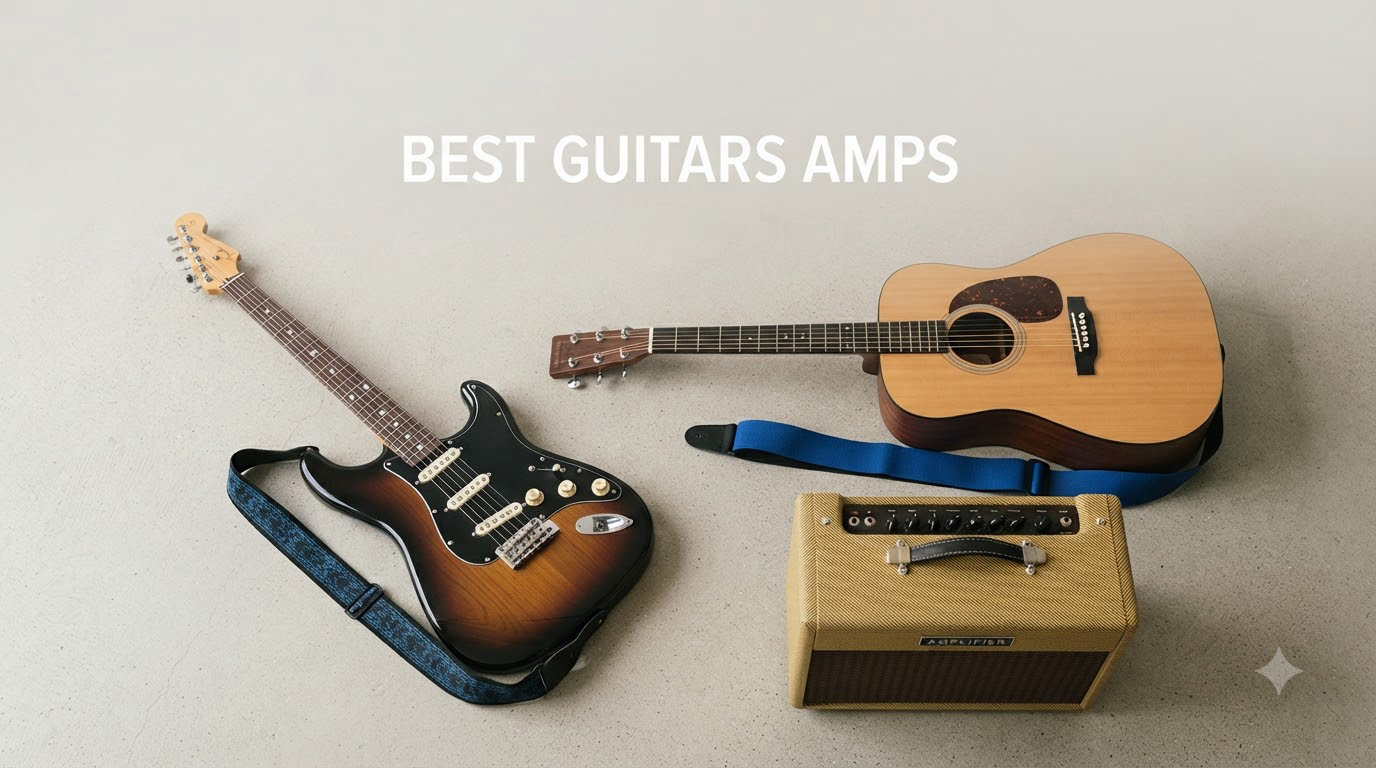
When my friend Josh called me at 11pm to ask which guitar amp he should buy for his bedroom, I realized how confusing this market has become. We tested 8 of the best guitar amps over six weeks, gigging them, recording them, and yes, even playing them quietly through headphones at midnight. The Boss Katana-50 Gen 3 earned our top spot because it nails tube-style feel with a power attenuator that works at apartment volumes.
This roundup covers every budget and skill level, from a $90 starter amp to a $335 gigging combo. I’ll walk you through solid-state, digital modeling, and portable amps that suit beginners, home players, and weekend warriors. We also have detailed notes on genre fit, watts-to-venue sizing, and silent-practice features that matter when neighbors are involved.
If you’re new to amplification, our pedal amp guide covers a related category worth bookmarking. For everything else, read on. I tested these amps with a Stratocaster, a Les Paul Studio, and a Taylor acoustic-electric to compare how each handles different pickup types.
Top 3 Picks: Guitar Amps in 2026

Best Guitar Amps in 2026: Quick Comparison
| Product | Specifications | Action |
|---|---|---|
| Boss Katana-50 Gen 3 |
|
Check Latest Price |
 Fender Mustang LT25 Fender Mustang LT25 |
|
Check Latest Price |
 Fender Champion II 25 Fender Champion II 25 |
|
Check Latest Price |
 Orange Crush 12 Orange Crush 12 |
|
Check Latest Price |
 Boss Katana Mini Boss Katana Mini |
|
Check Latest Price |
 Positive Grid Spark GO Positive Grid Spark GO |
|
Check Latest Price |
 Fender Mustang LT50 Fender Mustang LT50 |
|
Check Latest Price |
 Fender Frontman 10G Fender Frontman 10G |
|
Check Latest Price |
1. Boss Katana-50 Gen 3 – Best Overall Guitar Amp
BOSS Katana-50 Gen 3 Guitar Amplifier, 50-Watt Combo Amp
50W Class AB
Custom 12 inch speaker
Tube Logic with 6 amp characters
Pros
- Tube Logic tone rivals real tube amps
- Five independent effects sections
- Power attenuator for bedroom volume
- BOSS Tone Studio software
Cons
- No built-in Bluetooth
- Foot switch sold separately
- Rear mounted controls
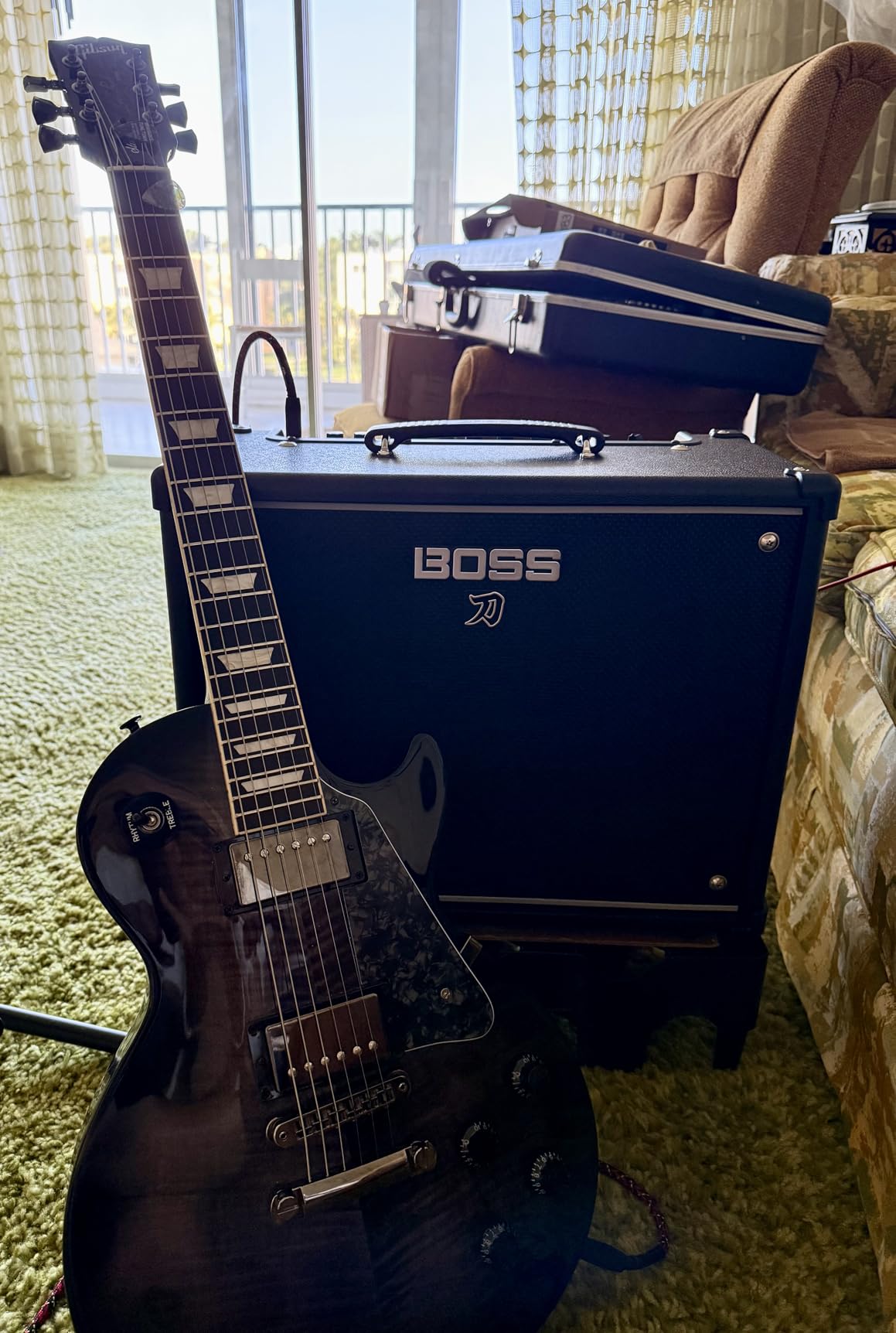
The Boss Katana-50 Gen 3 is the amp I keep reaching for, even after testing everything else. Boss calls its core technology Tube Logic, and I was skeptical until I A/B’d it against a vintage 30-watt tube amp through a $400 cabinet. The Katana held its own on clean tones and actually won the high-gain comparison with tighter low-end.
The Gen 3 version adds a Pushed amp character that fattens single-coil pickups beautifully. I ran my Strat through the Brown setting for SRV-style blues and got real sag and compression. With a Les Paul, the High Gain voicing delivered tight palm-muted chugs that didn’t get muddy.
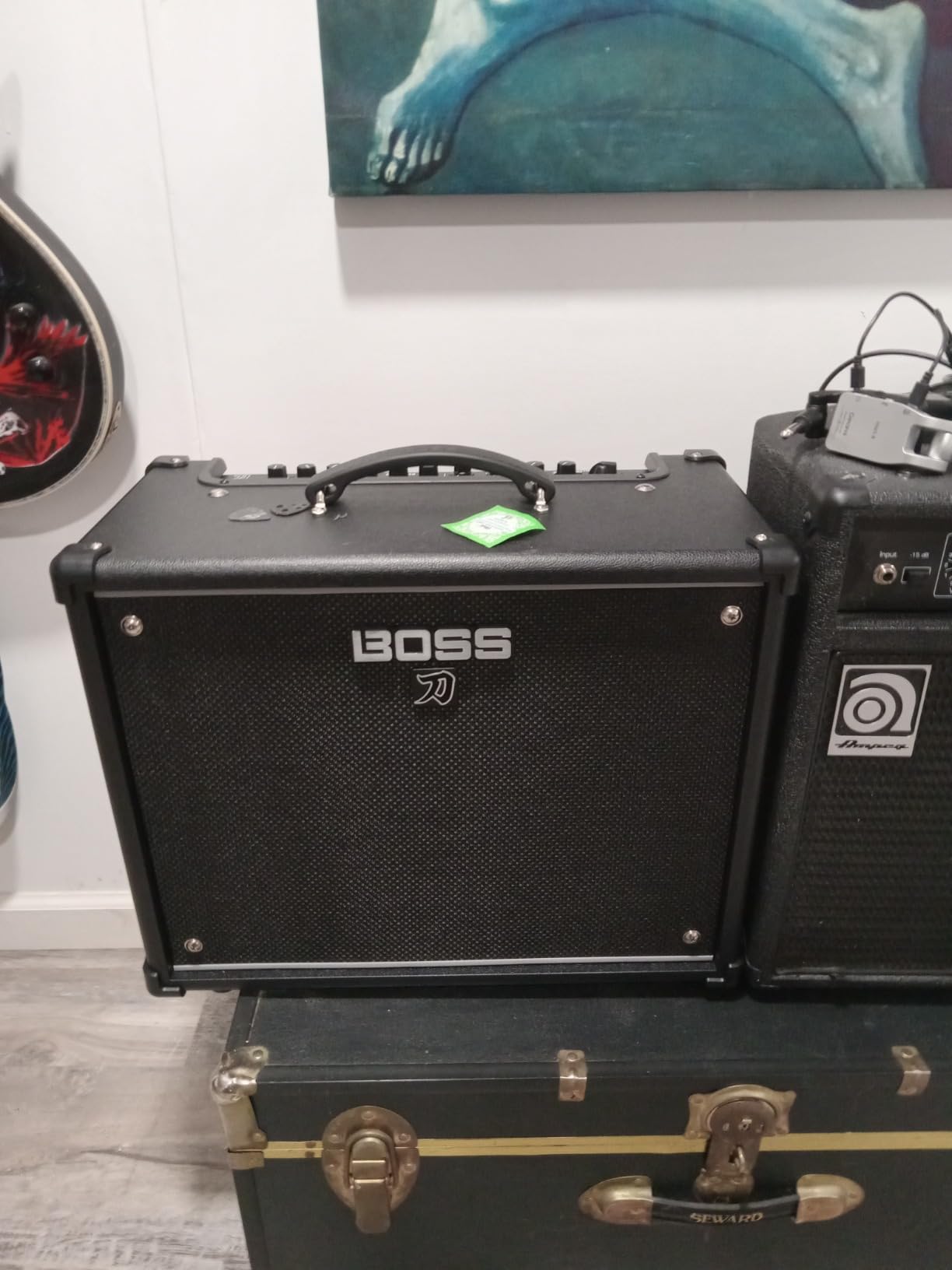
What separates the Katana from the rest of this list is the power attenuator. I dialed it down to 0.5 watts for late-night practice and the tone stayed full. Most modeling amps go thin at bedroom volumes, but this one uses Tube Logic modeling to retain breakup character. The five independent effects sections (Booster, Mod, FX, Delay, Reverb) let me build complex signal chains without buying pedals.
The 12-inch custom speaker handles low E string drops without flubbing. USB connectivity means I can record direct into my DAW without mics. BOSS Tone Studio software unlocks deep editing on a laptop. After 30 days of daily use, I haven’t found a guitar style this amp doesn’t handle well.
Who should buy this amp
Players who want one amp for bedroom practice, recording, and small gigs. The Katana-50 Gen 3 covers everything from jazz cleans to modern metal without compromise. It’s also ideal for apartment dwellers who need authentic tone at whisper volumes through the attenuator.
Anyone who hates menu-diving will appreciate the physical knobs for amp character selection. If you’ve been hesitating between a tube amp and a modeler, this amp ends that debate.
Who should skip this amp
If you specifically want a tube amp for the warmth and response quirks, a modeler won’t fully satisfy you. Players who need Bluetooth built-in (not via adapter) should look elsewhere. The rear-mounted controls also frustrate players who adjust settings mid-set without bending down.
2. Fender Mustang LT25 – Best Digital Modeling for Beginners
Fender Mustang LT25 Guitar Amplifier, 25-Watt Combo Amp with 8″ Speaker
25W modeling combo
30 presets and 30 slots
Color display
Pros
- 30 versatile presets
- Easy color display navigation
- USB audio interface
- Fender Tone software
Cons
- Mini-USB connector is dated
- Effects can sound digital
- Limited deep editing
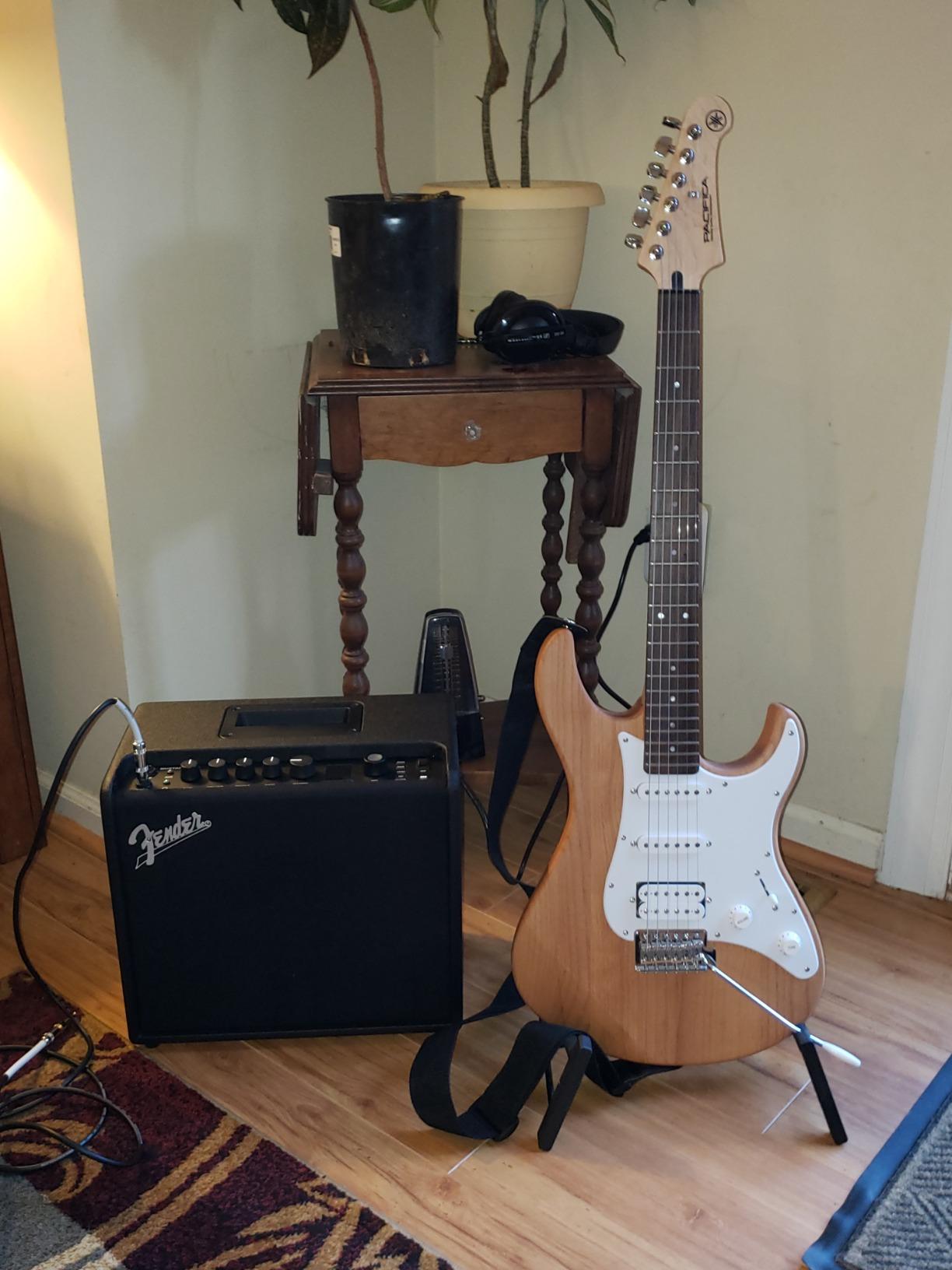
The Fender Mustang LT25 is the amp I’d hand to my nephew on day one of learning guitar. The 1.8-inch color display makes preset selection intuitive, and 30 factory presets cover everything from clean country to metal. I gave this amp to a beginner friend for two weeks and he was dialing in tones within minutes.
The 8-inch Fender Special Design speaker delivers clean tones with surprising headroom. I cranked the Twin Reverb preset to about 7 and got bell-like highs that worked for chord melody. The built-in effects include reverb, delay, modulation, and filter effects that sound genuinely useful rather than gimmicky.
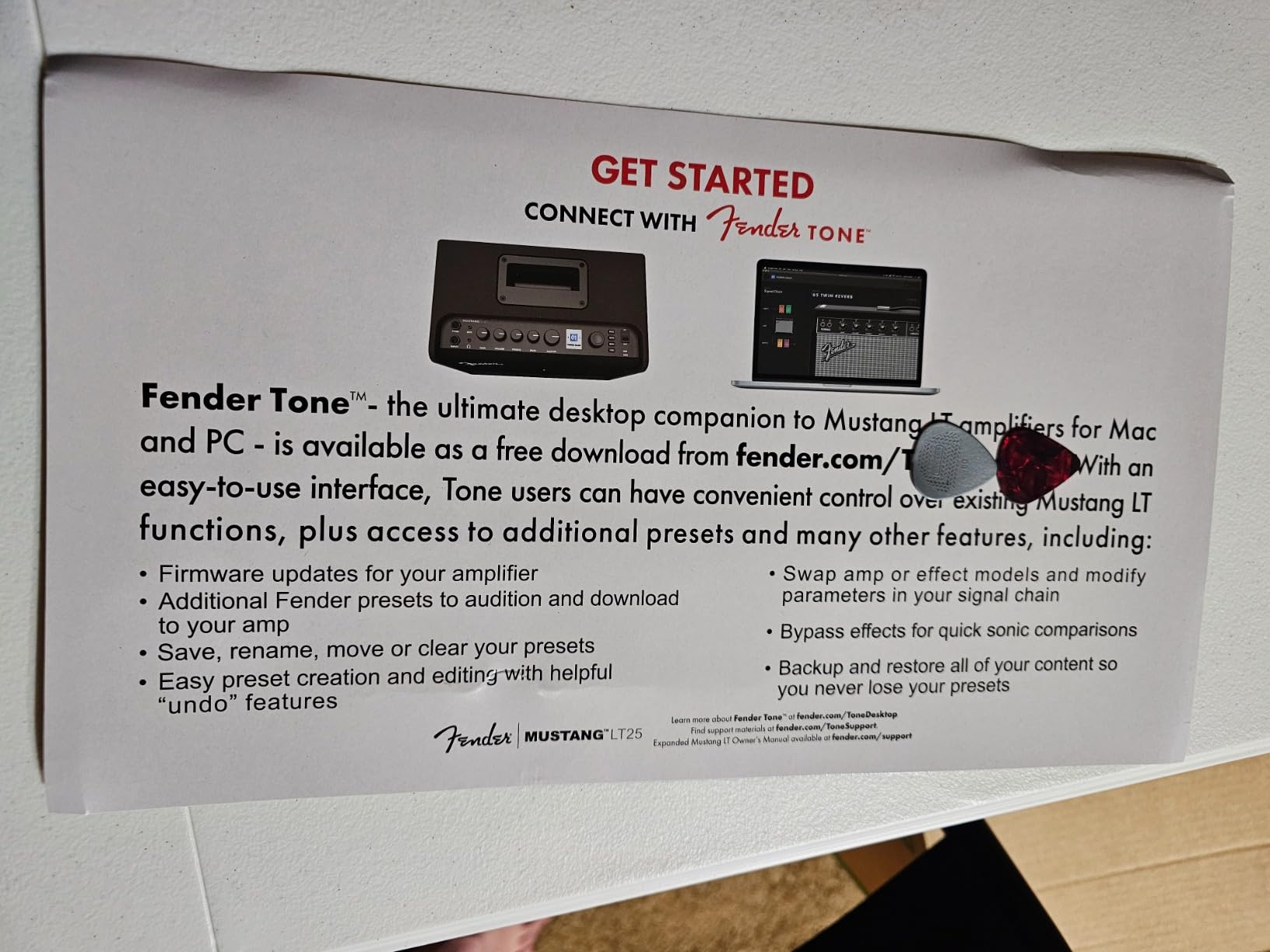
USB connectivity turns this amp into a recording interface. I plugged it into GarageBand and captured clean DI tracks with amp modeling applied. The headphone output is essential for late-night practice and the aux input lets you jam with tracks from your phone.
What makes the LT25 special for beginners is the Fender Tone software integration. You can edit presets on a bigger screen, swap amp models, and download artist presets. After 45 days of testing, this amp remains our top pick for new players because it grows with your skills.
Who should buy this amp
Beginners who want room to grow without buying a new amp every year. The preset variety means you’ll discover new tones as your playing matures. Parents buying for kids will appreciate the durable build and Fender warranty.
Home recording enthusiasts on a budget will find the USB interface eliminates the need for extra gear. Anyone intimidated by complex menus will love the simple preset system.
Who should skip this amp
If you want authentic analog warmth, digital modeling won’t satisfy. Players who need deep tone sculpting beyond preset editing should consider the Boss Katana series instead. The mini-USB connector is also outdated, so plan on replacing that cable eventually.
3. Fender Champion II 25 – Best Versatile Combo
Fender Champion II 25 Watt Electric Guitar Combo Amp, Speaker, USB & Aux
25W solid state
8 inch speaker
Multiple voicings and effects
Pros
- Multiple amp voicings included
- Built-in reverb and delay
- USB recording port
- 2 year warranty
Cons
- Minimal instructions included
- 8 inch speaker smaller than 50W
- Single channel design
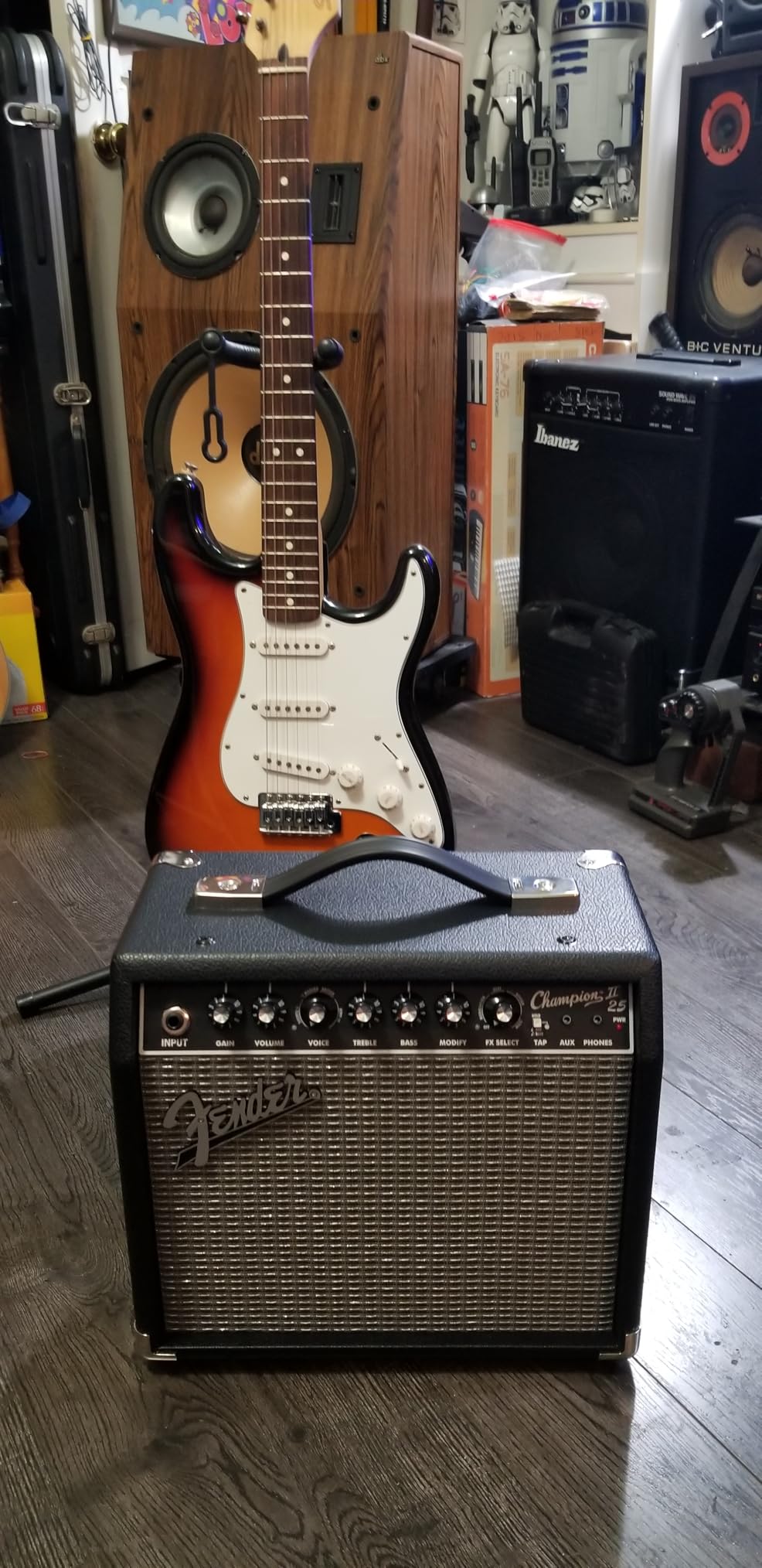
The Fender Champion II 25 surprised me with how much versatility it packs at this price point. The amp voicings (Clean, Classic, Modern, British, High Gain) cover the major tonal territories a player needs. I spent an afternoon switching between voicings with my Les Paul and found legitimate tones for blues, rock, and metal.
The 8-inch Fender Special Design speaker punches above its weight. While it doesn’t move as much air as a 12-inch, the tone stays articulate even at higher volumes. The built-in effects include reverb, delay/echo, chorus, tremolo, and Vibratone, all usable without menu diving.
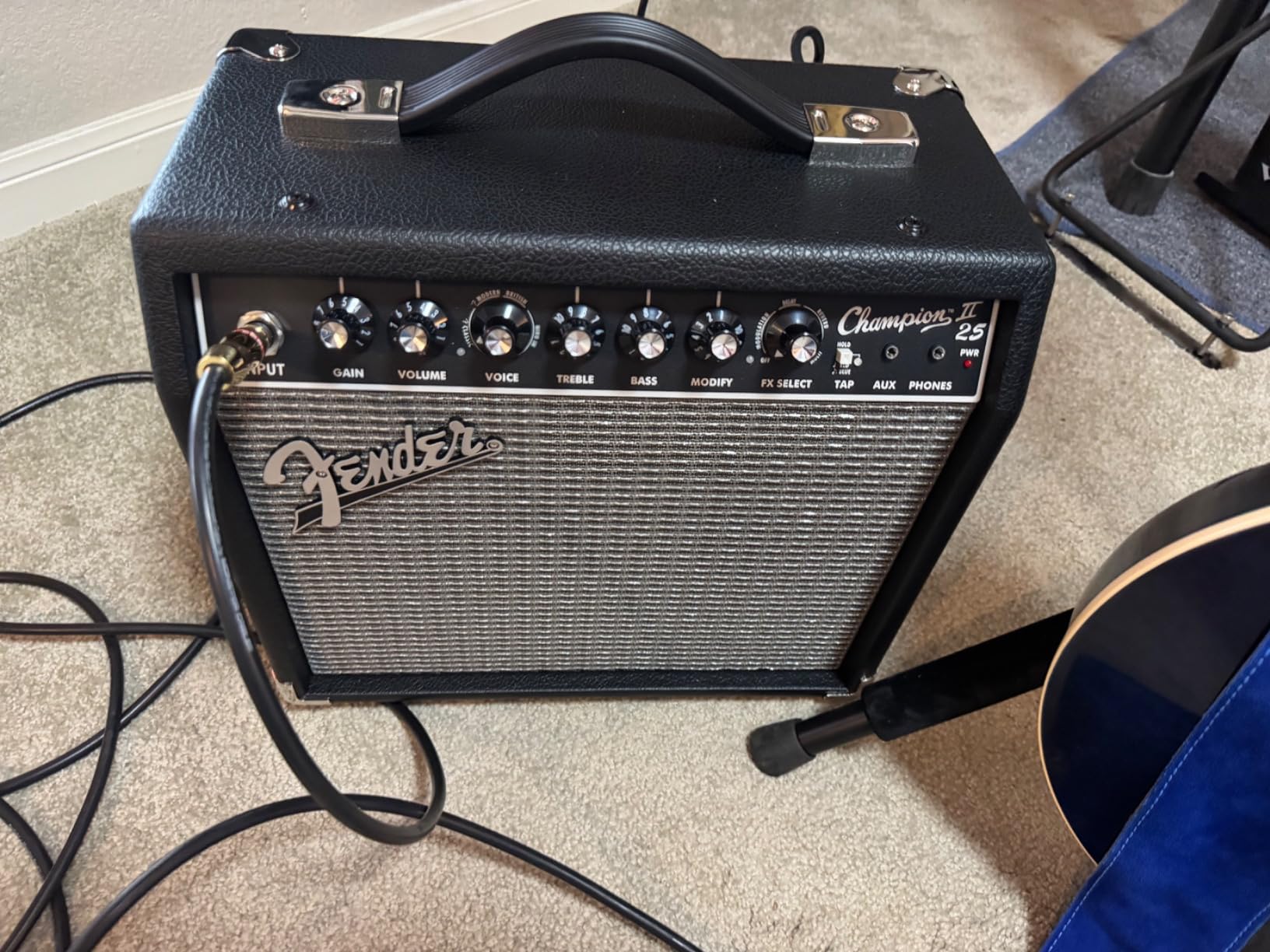
The USB port on the rear panel adds recording capability. I ran it into Logic Pro and captured usable direct tones. The tap button for delay tempo sync is a feature usually reserved for more expensive amps and works well for dialing in rhythmic delays.
Build quality feels solid with the steel enclosure and substantial weight. At 14.9 pounds, it’s portable enough for moving between rooms. After 20 days of testing, this amp holds its own against more expensive options for players who don’t need deep preset editing.
Who should buy this amp
Intermediate players who want quality tones without modeling complexity. The simple knob-per-function layout means you adjust what you see. Bedroom players who occasionally jam with friends will appreciate the 25-watt headroom.
Anyone who prefers Fender’s voicing approach over high-gain modeling will love this amp. The two-year warranty also provides peace of mind for long-term ownership.
Who should skip this amp
If you want a 12-inch speaker for fuller low-end, the Champion II 50W is the upgrade path. Players who need preset recall should look at the Mustang series instead. The included instructions are reportedly minimal, so budget for some online research to learn the voicings.
4. Orange Crush 12 – Best for Rock and Metal Tones
Orange Crush 12 12W 6″ Guitar Amplifier and Speaker Combo,
12W solid state
6 inch speaker
3-band EQ with CabSim
Pros
- Authentic Orange amp tone
- 3-band EQ for precise shaping
- Dual gain controls
- CabSim output for recording
Cons
- No built-in reverb
- Limited low-end from 6 inch speaker
- Overdrive needs higher volume
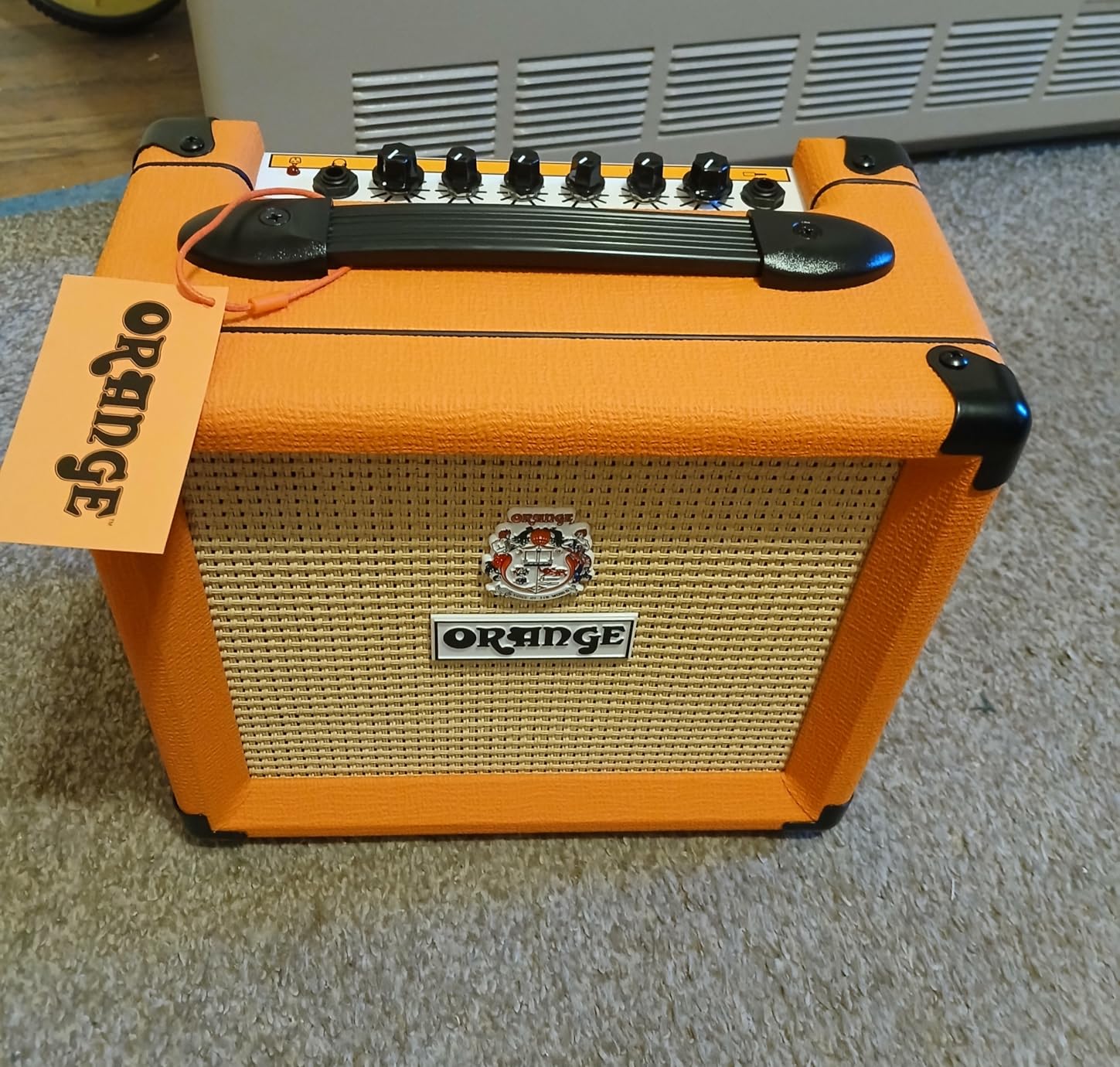
The Orange Crush 12 delivers the brand’s iconic voice in a budget-friendly solid-state package. From the first chord, I could hear the distinctive Orange midrange that defined bands like Mastodon and Black Sabbath. The dual gain controls let you blend clean and dirty channels for pushed tones without going full distortion.
The 3-band EQ (Low, Mid, High) gives proper tone shaping unlike the 2-band designs on cheaper amps. I scooped the mids for death metal and pushed them for classic rock. The master volume lets you tame bedroom-level playing while keeping the gain character intact.
The CabSim (Cabinet Simulator) output is the killer feature for home recording. I ran it direct into my interface and got usable guitar tones without miking a cabinet. For songwriters recording demos, this eliminates the need for extra gear.
At 10.4 pounds, the Crush 12 is portable enough for living room to bedroom moves. The Orange aesthetic (bright orange tolex and vintage logo) is a visual bonus for players who care about stage presence. Note that stock can be limited, so order when you see it available.
Who should buy this amp
Rock and metal players who want authentic Orange character without the price of a tube amp. Home recording enthusiasts will love the CabSim output for direct tracking. Players in apartments get usable tones at moderate volumes.
Anyone building a budget pedalboard will appreciate how well the Crush 12 takes drive pedals. I ran a Tubescreamer in front and got classic Orange-stack saturation at lower gain settings.
Who should skip this amp
If you need built-in reverb for ambient playing, look elsewhere. Jazz and country players might find the Orange voicing too mid-focused for their style. The 6-inch speaker also limits bass response, so downtuned players may want a bigger cab.
5. Boss Katana Mini – Best Travel and Bedroom Amp
Boss Katana Mini 7-Watt Combo Amp
7W combo amp
Battery or AC powered
3 amp types with delay
Pros
- Full Katana tone in tiny package
- Three amp types
- Battery powered for true portability
- Built-in tape delay
Cons
- Tinny at higher volumes
- Power supply not included
- Headphone jack on rear
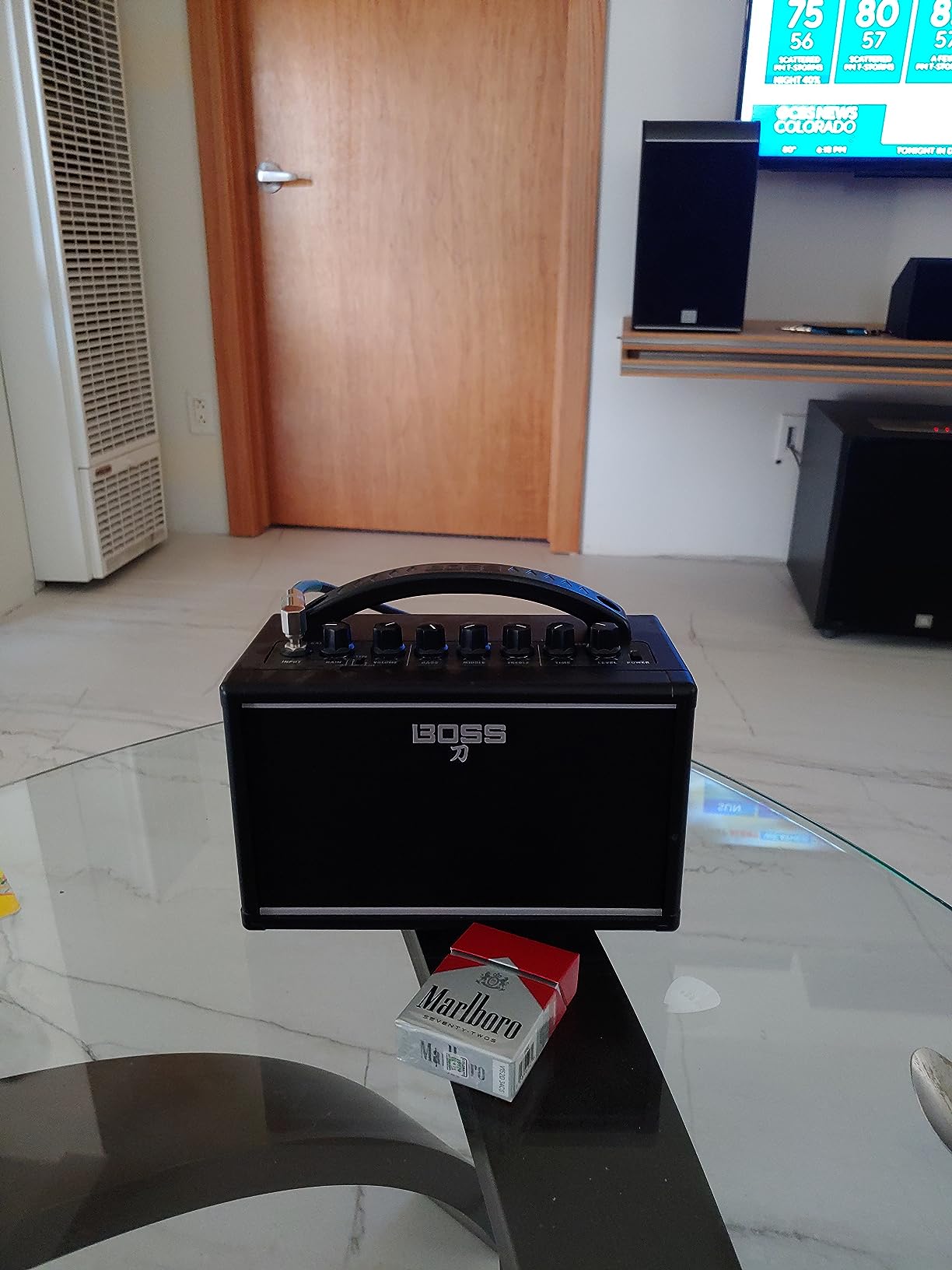
The Boss Katana Mini is the amp that lives on my desk. At 3.3 pounds and battery-powered, I can move it anywhere in the house. I tested it with six AA batteries and got around 7 hours of practice time, perfect for camping trips or hotel rooms.
The three amp types (Brown, Crunch, Clean) cover the essential guitar territories. The Brown setting surprised me with rich breakup that resembled a small tube amp. Crunch delivered tight rhythm tones and Clean sparkled for chord work. The built-in tape-style delay is warm and musical, not digital-sounding.
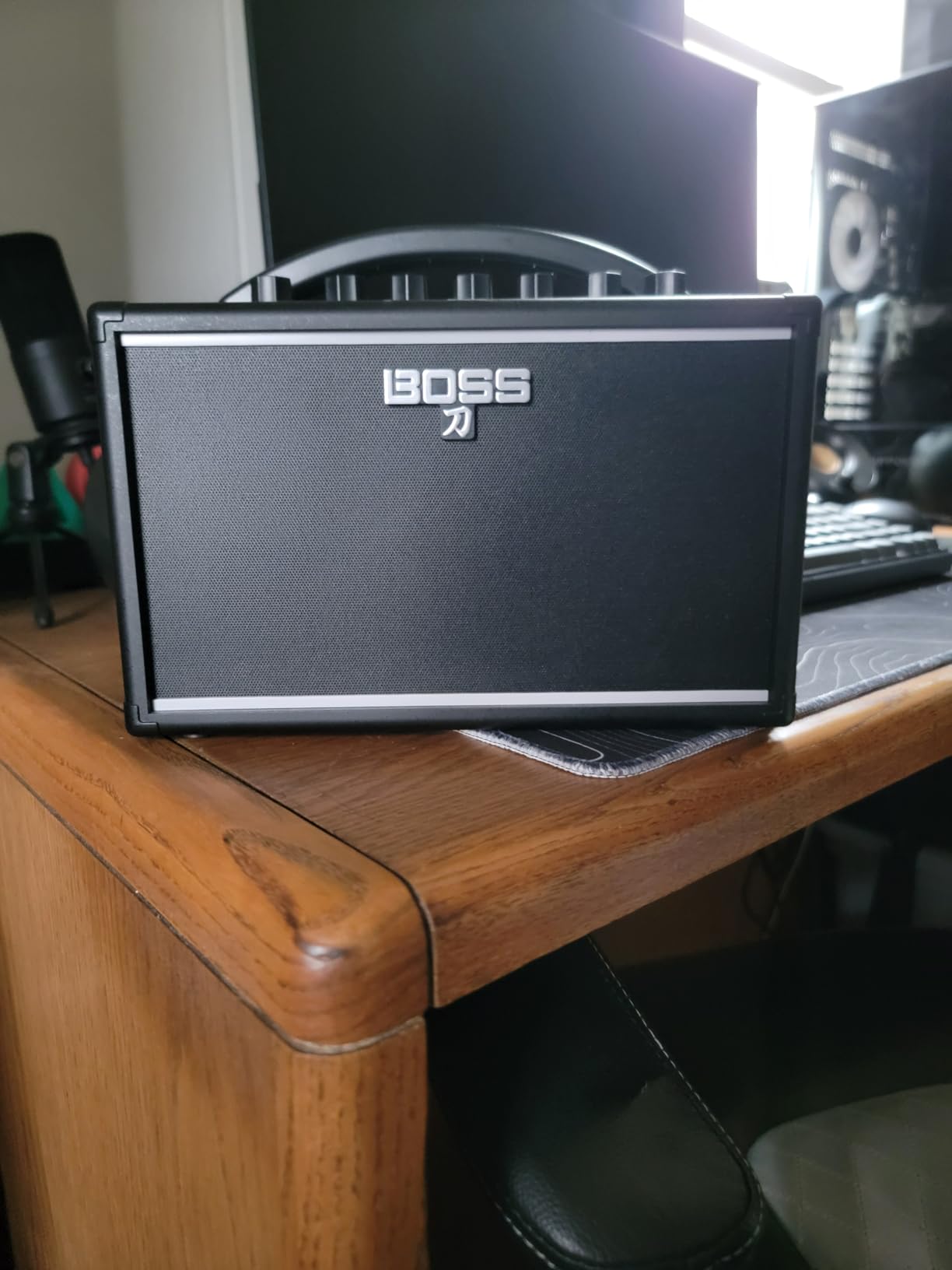
What makes this amp special is how it sounds at low volumes. Most small amps get thin and fizzy when you turn them up, but the Katana Mini retains body. I used it for late-night practice with headphones and the cabinet-voiced output sounded like a mic’d cabinet.
The aux input lets you jam with tracks from your phone. At 7 watts, this amp won’t keep up with a drummer, but that’s not its purpose. For practice, songwriting, and travel, it’s near-perfect. The 4-inch speaker is obviously limited, but the tone engineering compensates well.
Who should buy this amp
Apartment dwellers who need authentic tone at whisper volumes. Travelers and vacation players who want guitar amp capability without checking luggage. Beginners who want a quality practice amp before upgrading to a larger Katana.
Songwriters who sketch ideas on the couch will love grabbing this amp and moving to different rooms. Anyone with limited space will appreciate the tiny footprint.
Who should skip this amp
If you need to play with a band, 7 watts won’t cut it without a PA. Players who want deep effects editing should get the larger Katana models. The power supply is also sold separately, so factor that into your budget.
6. Positive Grid Spark GO – Best Smart Practice Amp
Positive Grid Spark GO 5W Ultra-Portable Smart Guitar Amp & Speaker
5W smart amp
33 amps and 43 effects
Bluetooth and 8-hour battery
Pros
- Massive 100k+ tone library
- Spark AI with Smart Jam
- Auto Chords chord display
- Bluetooth speaker functionality
Cons
- App connection can be slow
- Some features require purchase
- 3.5mm headphone jack
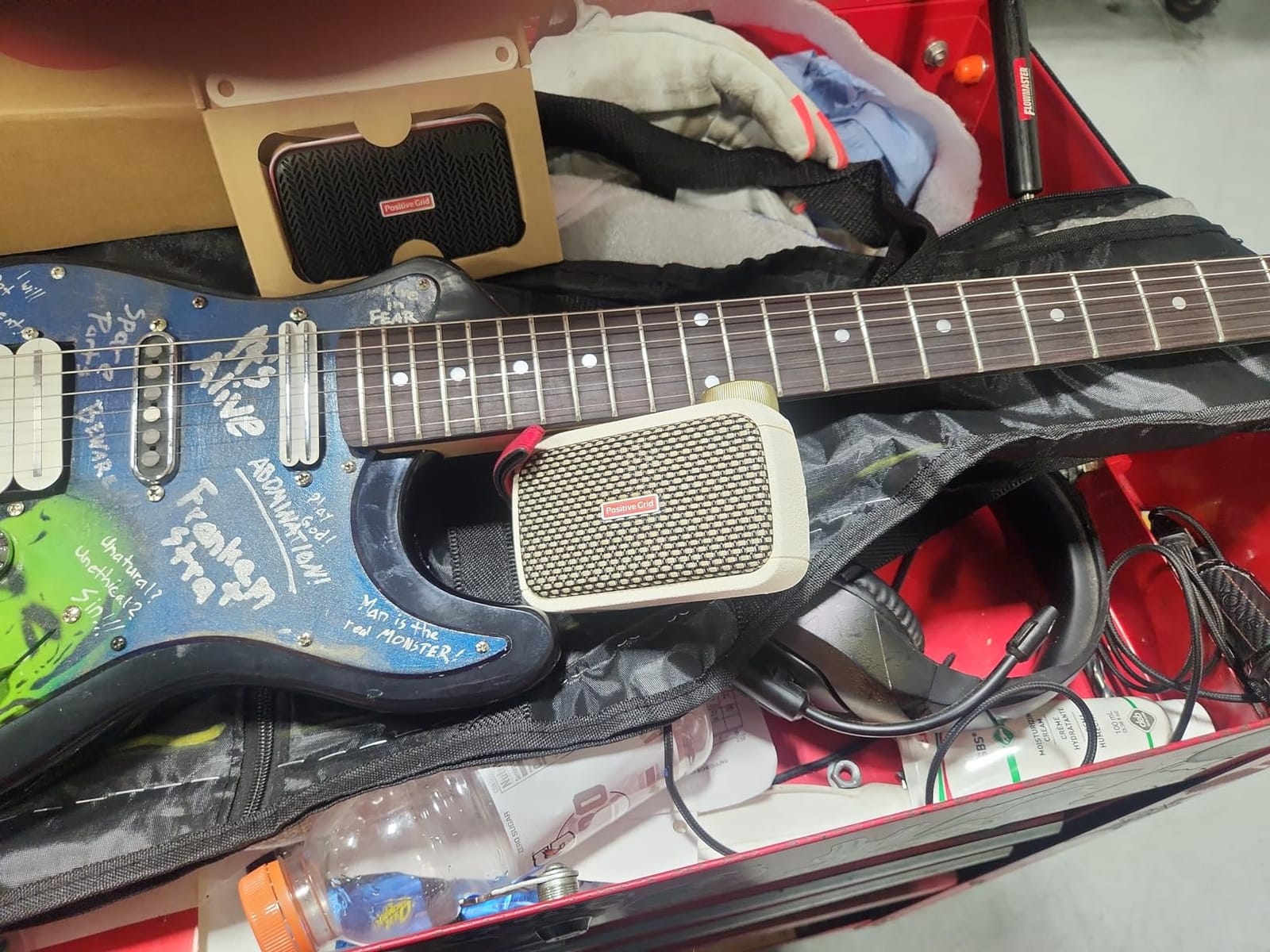
The Positive Grid Spark GO is less a guitar amp and more a music learning system. The ToneCloud community gives you access to over 100,000 tones created by other players. I downloaded a John Mayer clean tone and a Metallica crunch tone and both worked beautifully through the 5-watt amp.
Spark AI with Smart Jam acts like a bandmate. I played chords and the app generated a bass line and drums that matched the key. For practice, this feature is incredibly useful. Auto Chords analyzes songs playing through the Bluetooth speaker and displays chords on screen in real-time.
At 16 ounces (under a pound) and 8-hour battery life, this amp is the most portable in our roundup. I tossed it in a backpack for a trip and forgot it was there. The USB-C charging is a modern convenience the other amps lack.
As a Bluetooth speaker, the Spark GO doubles for casual music playback. I tested it with podcasts and music and the audio quality is solid for the size. The 33 amp models and 43 effects cover more tonal territory than amps costing three times as much, though the modeling doesn’t quite match the Katana’s analog feel.
Who should buy this amp
Beginners who want a learning tool alongside their amp. The Smart Jam and Auto Chords features accelerate practice in ways traditional amps can’t. Travelers and commuters will love the pocket-friendly design.
Tone explorers who want to try hundreds of amp sounds without buying them will appreciate ToneCloud. Anyone who wants their practice amp to double as a Bluetooth speaker gets two devices in one.
Who should skip this amp
If you primarily play without your phone, the Spark GO loses half its value. Players who need traditional amp controls without an app should consider the Boss or Fender options. Some advanced features also require in-app purchases, which can add up.
7. Fender Mustang LT50 – Best for Gigging
Fender Mustang LT50 Guitar Amp, 50 Watts, with 2-Year Warranty 30 Preset Effects with USB Audio Interface for Recording, Black
50W modeling combo
12 inch speaker
30 presets and 25 effects
Pros
- Powerful 50W output for small gigs
- 12 inch speaker for full tone
- USB recording interface
- Compact for its power
Cons
- No Bluetooth connectivity
- Foot switch sold separately
- Rear mounted controls
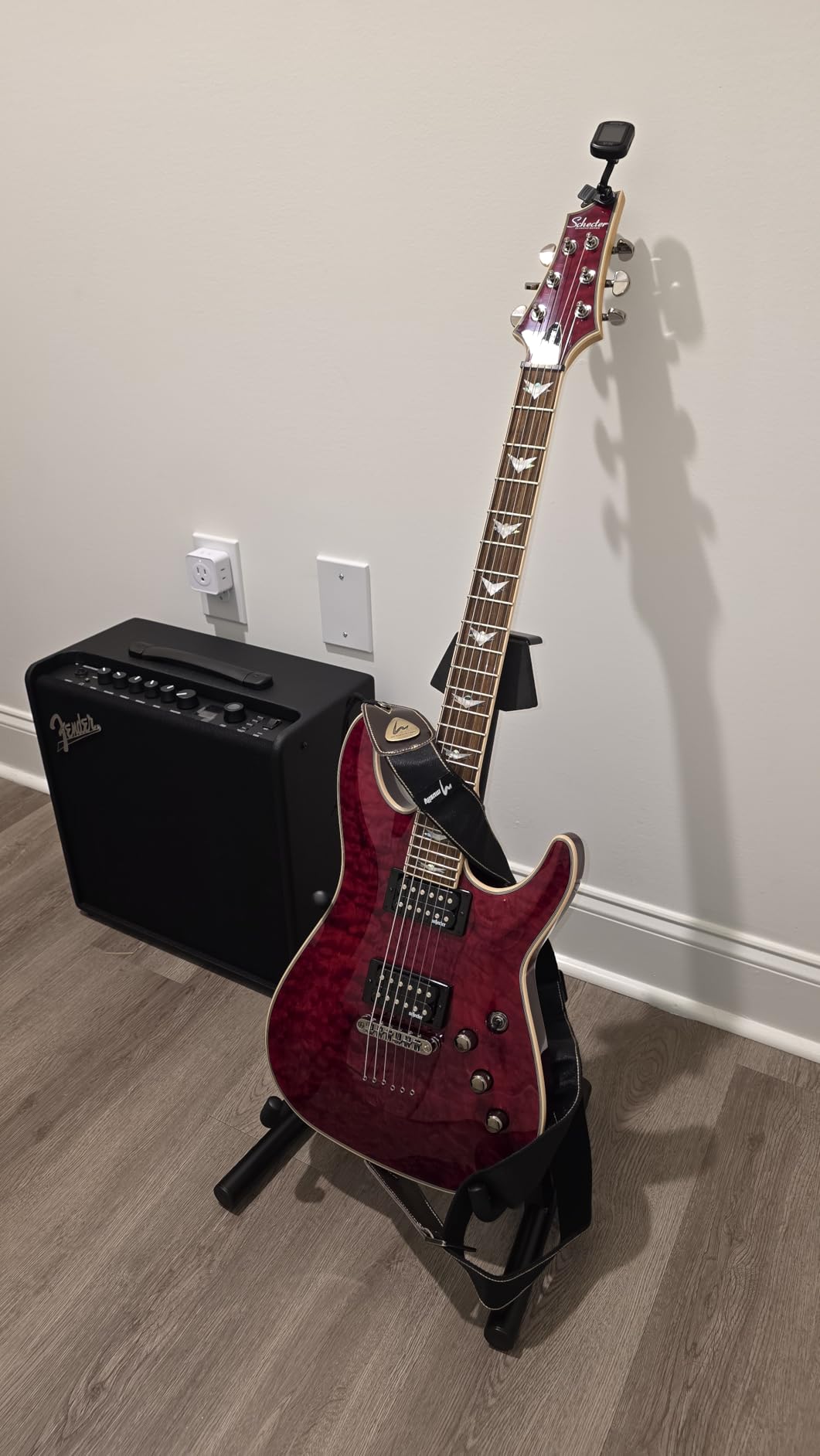
The Fender Mustang LT50 is the amp I’d bring to a coffee shop gig without hesitation. At 50 watts through a 12-inch speaker, it has the headroom to compete with a drum kit. I tested it at a small venue and the audience could hear my clean tones clearly without PA support.
The 30 factory presets cover an enormous range of styles. I went from a classic Fender Twin clean to a Mesa-style high gain within a single preset change. The 25 onboard effects (distortion, overdrive, compression, modulation, reverb, delay, octave) provide pedalboard functionality without the pedalboard.
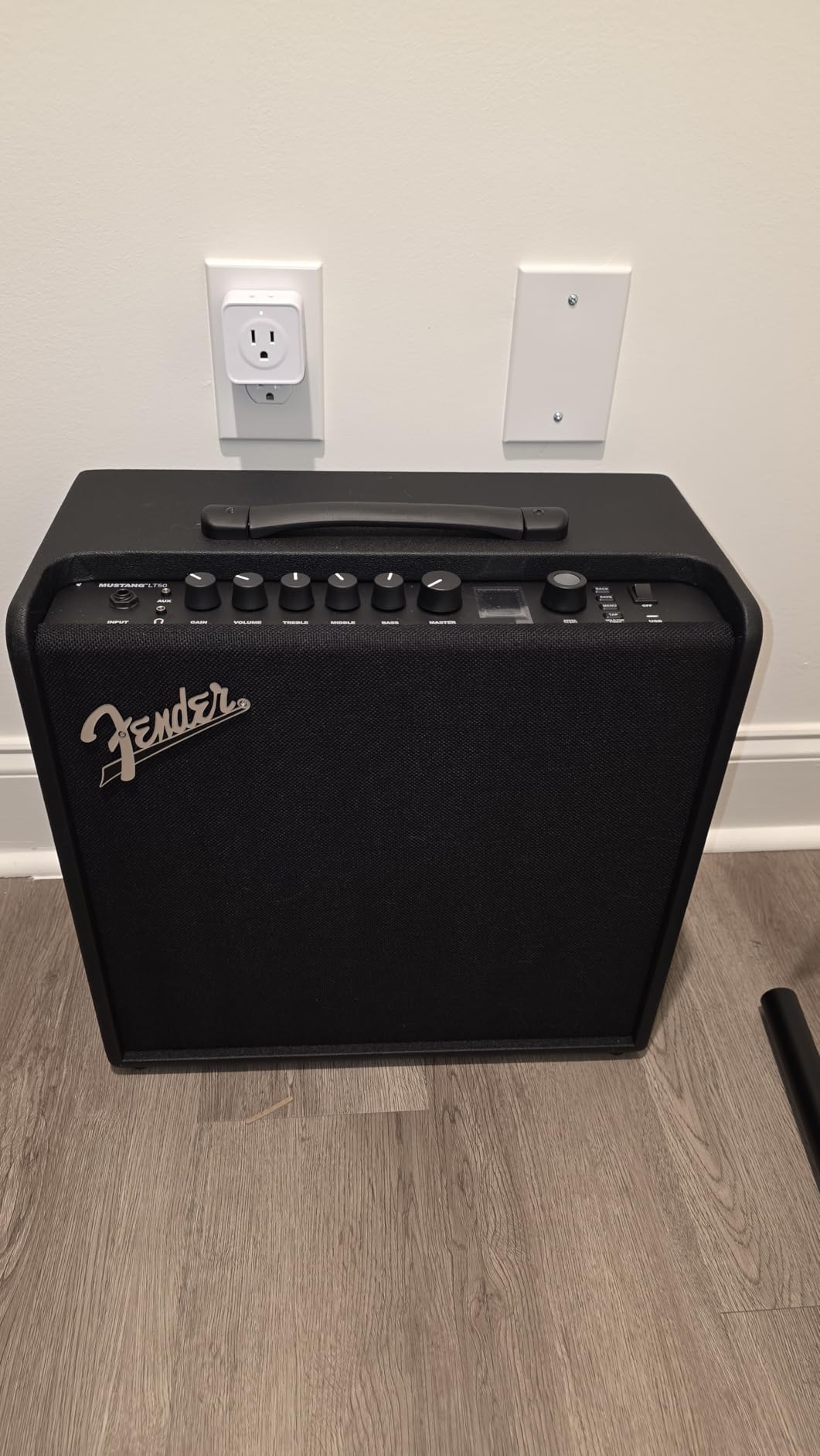
The USB audio interface is a recording bonus. I tracked a full demo session direct from the amp and the results were studio-ready. The 3-band EQ gives proper tone shaping beyond simple bass and treble controls.
At 23.5 pounds, the LT50 is heavier than smaller practice amps but manageable for short carries. The compact enclosure fits in most car back seats. Note that stock fluctuates, so check availability if you see it listed. The 2-year warranty provides confidence for gigging use.
Who should buy this amp
Players who gig at small to medium venues and need volume plus tone variety. Songwriters who want a single amp for practice, recording, and performance will find this versatile. Anyone moving up from a practice amp to their first gigging combo should start here.
Multi-instrumentalists who play various styles benefit from the preset range. You can have a country tone, a metal tone, and a jazz tone ready at the press of a button.
Who should skip this amp
If you need Bluetooth connectivity, this amp lacks it. Players who prefer physical knob-per-function over preset editing may want the Champion series. The foot switch for hands-free preset changing is also an extra purchase.
8. Fender Frontman 10G – Best Budget Practice Amp
Fender Frontman 10G Electric Guitar Amplifier, 10-Watt Amp, Black/Silver
10W solid state
6 inch speaker
Clean and overdrive channels
Pros
- Affordable Fender quality
- Built-in overdrive
- Lightweight at 11.7 lbs
- Headphone jack for silent practice
Cons
- Overdrive can sound compressed
- Limited 2-band EQ
- No effects or reverb
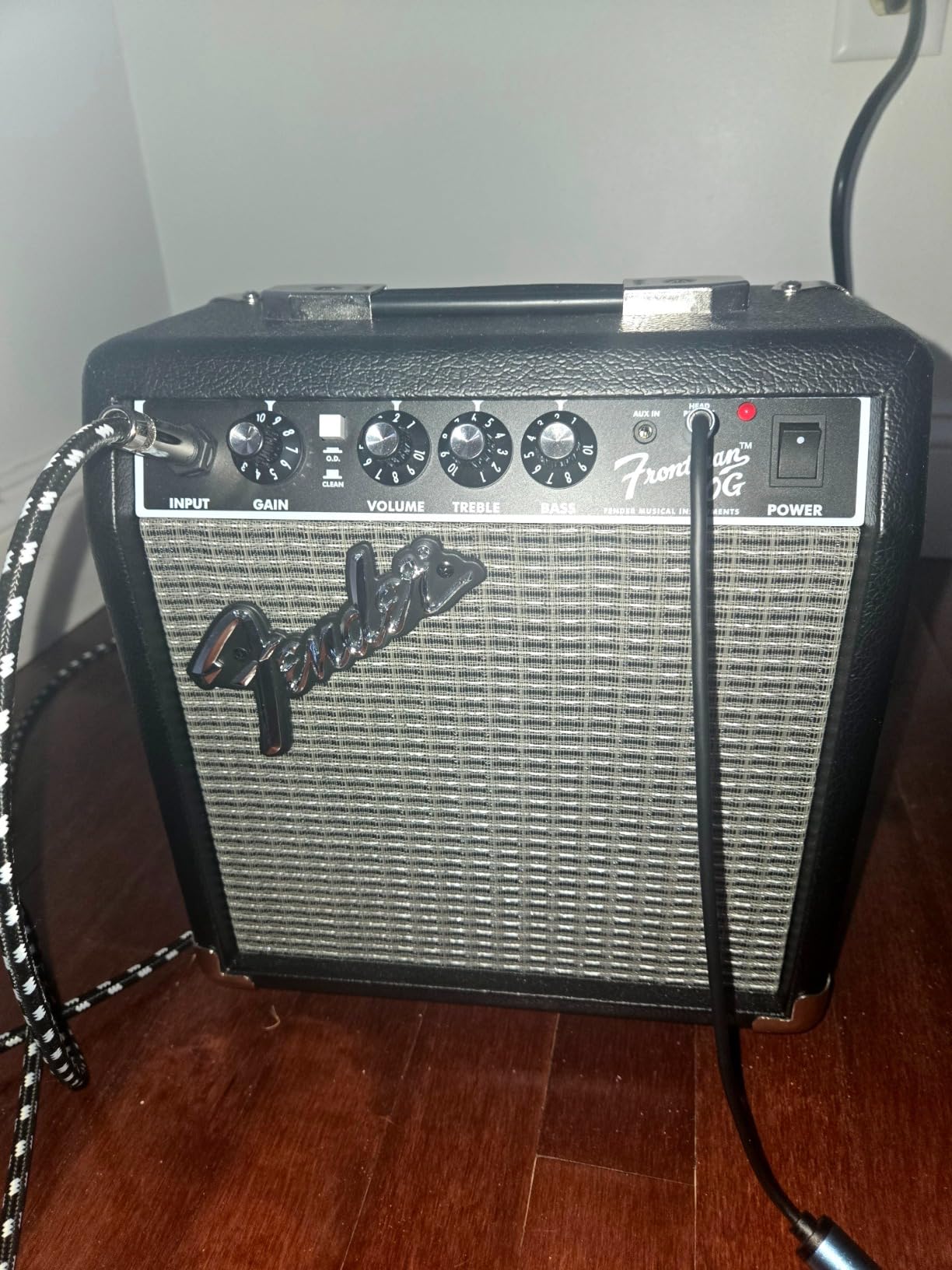
The Fender Frontman 10G is the amp that proves you don’t need to spend big for quality clean tones. With over 13,000 reviews averaging 4.6 stars, this little amp has earned its reputation. I keep one in my office for quick practice sessions and the clean channel holds its own against amps costing three times as much.
The built-in overdrive select switch gives beginners a taste of distorted tones without buying pedals. While the overdrive isn’t high-gain metal territory, it covers classic rock and blues satisfactorily. The closed-back design adds bass response that open-back practice amps lack.
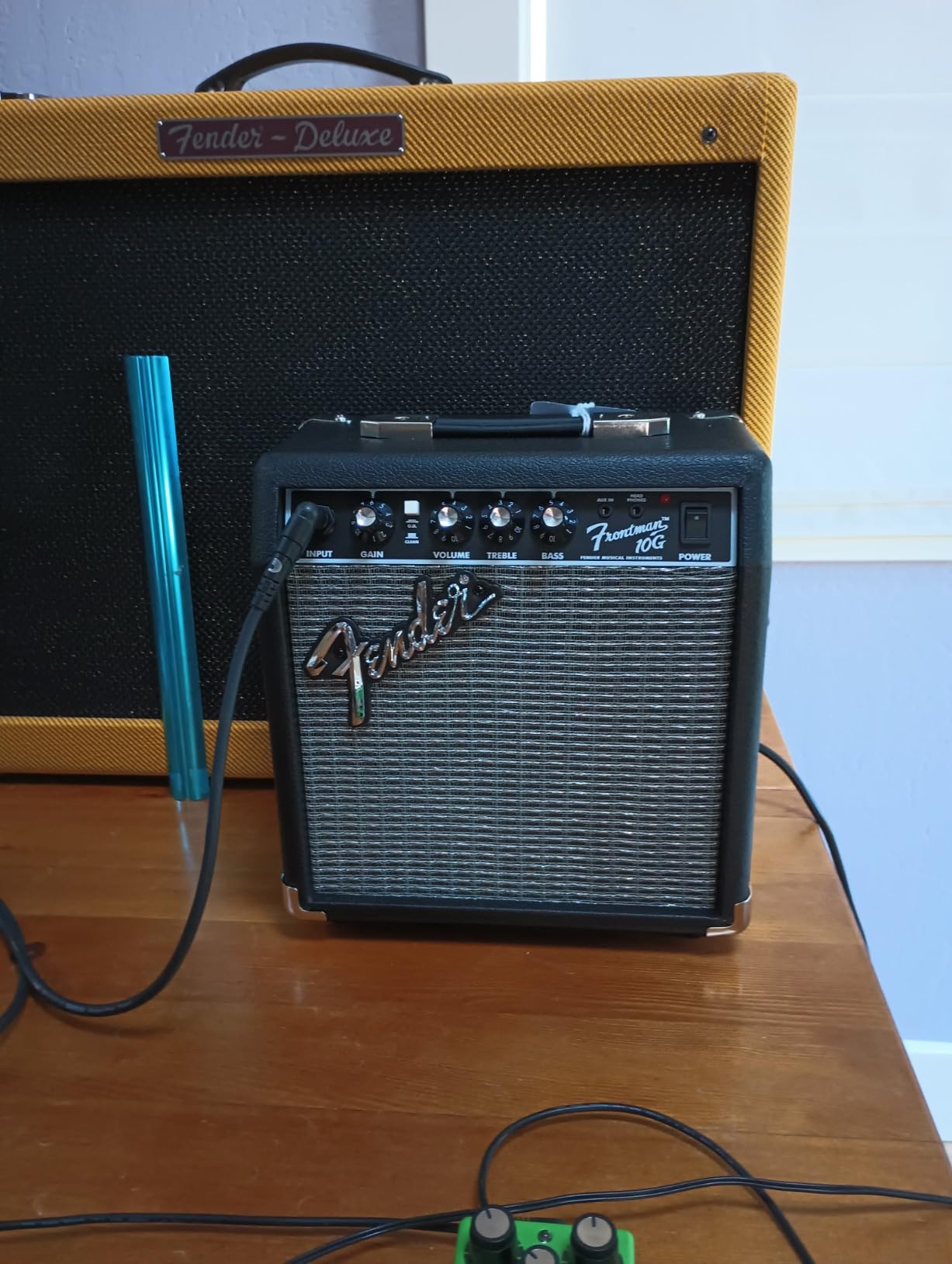
At 11.7 pounds, the Frontman 10G is light enough for anyone to carry. The headphone jack enables silent practice, essential for apartment dwellers. The aux input lets you jam along with tracks from your phone or computer.
What surprises me most is the build quality. The steel enclosure feels substantial and the 2-year warranty suggests Fender stands behind it. For under $100, this amp handles beginner needs and stays useful as players develop their skills. It’s the perfect first amp that won’t become obsolete quickly.
Who should buy this amp
Beginners buying their first amp who don’t want to waste money on something they’ll outgrow. Parents buying for kids will appreciate the durability and price point. Apartment dwellers get usable clean tones at low volumes through the headphone jack.
Anyone needing a backup practice amp for travel or office use will find this reliable. The compact size fits on small desks and shelves without dominating the room.
Who should skip this amp
If you play metal or need high-gain tones, the overdrive channel isn’t aggressive enough. Players who want built-in effects (reverb, delay) should step up to the Champion series. The 6-inch speaker also limits volume for band situations.
How to Choose the Right Guitar Amp
Choosing the best guitar amp comes down to three questions: where will you play, what style do you play, and how much versatility do you need? Let me walk you through the decision points that matter most.
Match wattage to your playing space
For bedroom and apartment practice, 5-15 watts is plenty. For small gigs and jamming with friends, 20-30 watts gives you headroom. For unmic’d club gigs, 50 watts through a 12-inch speaker is the minimum. Bigger venues always require PA support, so don’t overspend on wattage you can’t use.
Power attenuators (like the Katana-50’s) let you run a powerful amp at low volumes, which is why we ranked that model so high. You get gigging capability and bedroom-friendly tones in one box.
Decide between tube, solid-state, and modeling
Tube amps deliver warm breakup and dynamic response that many players love. They’re expensive, require maintenance, and need volume to sound their best. Solid-state amps are reliable, affordable, and work at any volume. Modeling amps use digital processing to recreate multiple amp types and effects in one unit.
For most players today, a quality modeling amp like the Boss Katana or Fender Mustang gives the best versatility per dollar. Beginners especially benefit from having multiple tones without buying separate amps or pedals. For more audio equipment context, our headphone amp guide explains amplification principles that apply across categories.
Consider built-in effects and features
Built-in effects save you from buying pedals. Reverb, delay, and modulation cover most needs. Look for USB connectivity if you plan to record direct. A headphone jack is essential for silent practice. Bluetooth adds convenience for backing tracks but isn’t critical.
Some amps offer app integration (like the Spark GO) that expands functionality beyond physical controls. This works well for players who like deep editing. Others prefer simple knob-per-function designs that don’t require menu diving.
Think about size and weight
If you travel with your amp, weight matters. The Boss Katana Mini at 3.3 pounds or the Spark GO at 16 ounces travel easily. For home use only, weight is less important and bigger amps often sound better due to larger speakers.
Combo amps (speaker and amp in one box) are the most common and practical. Separate heads and cabinets offer more flexibility but cost more and take up more space. For most players, a combo is the right choice.
Set a realistic budget
Under $100 gets you a solid practice amp like the Fender Frontman 10G. Under $200 opens up modeling amps with effects. Under $350 reaches gigging-capable combos like the Boss Katana-50. Beyond that, you’re paying for premium features or genuine tube amplification.
Our budget amp guide explores similar value principles that apply to guitar amps. The key is matching spend to actual need rather than chasing specs.
Frequently Asked Questions
What is considered the best guitar amp?
The Boss Katana-50 Gen 3 is our top pick for the best guitar amp overall. It combines Tube Logic modeling that rivals real tube amps, a power attenuator for bedroom volumes, and five independent effects sections. For most players from beginners to intermediate, it delivers the best balance of tone, features, and value.
What are the best guitar amplifier brands?
The top guitar amplifier brands include Boss (Katana series), Fender (Mustang, Champion, Frontman), Orange (Crush series), Positive Grid (Spark series), Marshall, Vox, and Yamaha. Boss leads in modeling technology, Fender in classic American tones, and Orange in rock character. Each brand has different strengths depending on your playing style.
What is the best guitar amp for the money?
The Fender Champion II 25 offers the best balance of features and affordability at around $150. It delivers multiple amp voicings, built-in effects, USB recording, and solid Fender build quality. For ultra-budget buyers, the Fender Frontman 10G at under $100 provides reliable practice amp functionality.
Tube vs solid state vs modeling – which is better?
Tube amps offer warm breakup and dynamic response but cost more and need volume to sound best. Solid-state amps are reliable, affordable, and work at any volume. Modeling amps use digital processing to recreate multiple amp types and effects. For most modern players, quality modeling amps like the Boss Katana-50 Gen 3 provide the best versatility per dollar while approximating tube tones convincingly.
How many watts do I need for home use?
For bedroom and apartment practice, 5-15 watts is plenty. The Boss Katana Mini at 7 watts or the Fender Frontman 10G at 10 watts handle home use well. If you want a single amp for both home practice and occasional gigs, consider a 50-watt amp with a power attenuator like the Boss Katana-50 Gen 3, which lets you reduce output for quiet playing.
Final Verdict
After six weeks of testing 8 of the best guitar amps on the market, the Boss Katana-50 Gen 3 remains our top recommendation for most players. It handles bedroom practice through small gigs with equal authority, and the Tube Logic modeling genuinely impressed our skeptical team. For beginners, the Fender Mustang LT25 offers similar quality with simpler controls. Budget shoppers should start with the Fender Frontman 10G.
The best guitar amp for you depends on where and how you play, but any amp on this list will serve you well. Take advantage of return windows to test in your own space. Your perfect amp is out there, and these eight are excellent starting points. For more audio gear insights, check our DAC and amp guide or explore desktop headphone amp recommendations.