
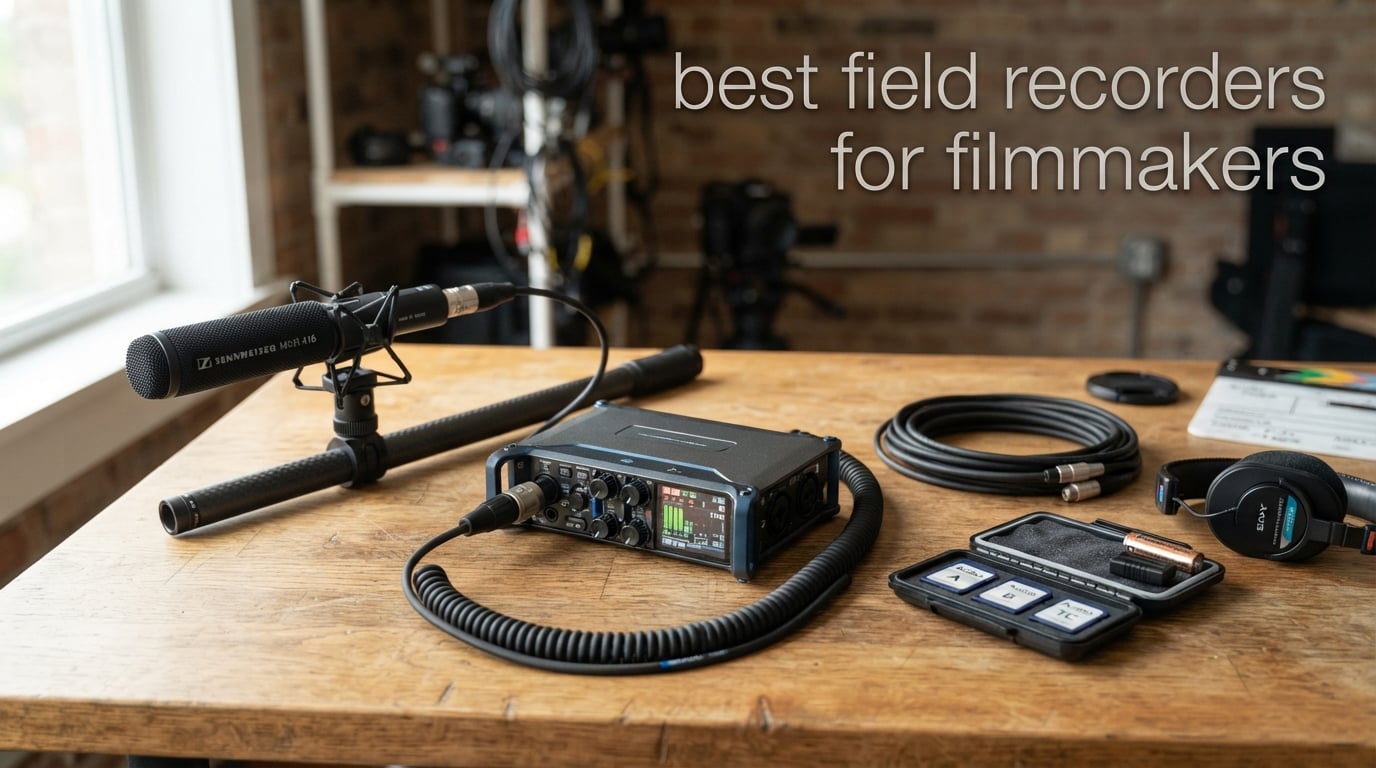
Bad audio ruins more films than bad cameras ever will. After working on documentary shoots where dialog was the only thing separating a watchable cut from a throwaway one, I learned that the recorder in your audio bag matters just as much as the microphone at the end of your boom pole. The best field recorders for filmmakers give you clean preamps, enough inputs for your talent, and recording formats that survive loud scenes without clipping.
A field recorder is a portable device that captures audio from one or more microphones and stores it as digital files on an SD card. Unlike a camera’s internal preamps, dedicated recorders offer XLR inputs, phantom power, and professional-grade analog-to-digital conversion that keeps your dialog crisp and noise-free. Whether you are shooting a wedding video, a short film, or a multi-subject documentary, the right recorder is what bridges your microphones to your editing timeline.
I spent time comparing 10 recorders across every filmmaker scenario I could think of: run-and-gun corporate shoots, sit-down interviews, ambient nature capture, and full-scale production bag work. From ultra-compact 32-bit float pocket recorders under $110 to 8-input mixers designed for serious film sets, this guide covers the best field recorders for filmmakers in 2026 with honest hands-on impressions, technical breakdowns, and clear recommendations for who each unit serves best.
Table of Contents
Top 3 Picks for Best Field Recorders for Filmmakers
Zoom F6 Professional Field Recorder
- 6 XLR Inputs
- 32-Bit Float
- Timecode I/O
- 14-Track Recording

Zoom F3 Professional Field Recorder
- 2 Locking XLR/TRS Inputs
- 32-Bit Float
- Compact Design
- Wireless Control
These three recorders represent the sweet spots for most filmmaking workflows. The Zoom F8n Pro handles full production sound with 8 inputs. The F6 covers mid-size shoots in a compact body. The F3 is the compact workhorse that fits anywhere and never clips.
Best Field Recorders for Filmmakers in 2026
| Product | Specifications | Action |
|---|---|---|
| Zoom F8n Pro Field Recorder |
|
Check Latest Price |
| Zoom F6 Professional Recorder |
|
Check Latest Price |
| Zoom F3 Field Recorder |
|
Check Latest Price |
 Zoom H6 Essential Recorder Zoom H6 Essential Recorder |
|
Check Latest Price |
 Zoom H5 Portable Recorder Zoom H5 Portable Recorder |
|
Check Latest Price |
 Zoom H4 Essential Recorder Zoom H4 Essential Recorder |
|
Check Latest Price |
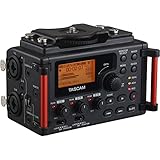 TASCAM DR-60DmkII Recorder TASCAM DR-60DmkII Recorder |
|
Check Latest Price |
 TASCAM DR-40X Field Recorder TASCAM DR-40X Field Recorder |
|
Check Latest Price |
 Zoom H1 Essential Recorder Zoom H1 Essential Recorder |
|
Check Latest Price |
 TASCAM DR-05XP Recorder TASCAM DR-05XP Recorder |
|
Check Latest Price |
1. Zoom F8n Pro Field Recorder – 8-Channel Production Sound Mixer
Zoom F8n Pro Field Recorder for Filmmakers with 8 Inputs & 10 Tracks
8 XLR/TRS Inputs
32-Bit Float
192kHz
TCXO Timecode
Dual SD Slots
8-in/4-out USB
Pros
- 32-bit float with dual AD converters captures clip-free audio
- 75dB gain and -127dBu EIN preamps for pristine sound
- Timecode accuracy down to 0.2ppm via TCXO
- Dual SD slots with redundant recording up to 1TB each
- 8-in/4-out USB audio interface while recording to card
Cons
- Relatively heavy at 1.8kg for field use
- Not Prime eligible
I used the F8n Pro on a 3-day corporate documentary shoot where we had a boom operator, two lavs, and a room mic running simultaneously. Having 8 XLR/TRS inputs meant I never had to choose which sources to drop. The 32-bit float recording with dual AD converters handled a scene where a speaker suddenly grabbed the microphone and shouted without a single clipped sample. That kind of insurance is exactly what production sound needs.
The preamps on this unit are the real headline. With 75dB of gain and a -127dBu EIN noise floor, I was able to run a dynamic boom mic at distance without hearing the hiss that plagues lesser recorders. The TCXO timecode crystal held sync with our cinema camera across a 10-hour shoot day, drifting by less than a frame. For filmmakers doing serious location sound work, this is the recorder that lets you stop worrying about audio and focus on the scene.
Battery life came in at around 8.5 hours on a set of AAs, which covered a full production day with some margin. The dual SD card slots with redundant recording saved us once when a card corrupted mid-take. The backup file was clean and complete. This is the kind of reliability that earns trust on set.
The F8n Pro also doubles as an 8-in/4-out USB audio interface at 32-bit float and 96kHz, meaning you can run it as a podcast or livestream rig when you are not on set. The Bluetooth app remote let me adjust levels from across the room during a talking-head interview setup, which felt like cheating in the best way possible.
Who should buy the Zoom F8n Pro
Sound recordists handling indie features, commercials, and multi-person documentaries will get the most from this recorder. If your shoots regularly involve 4 or more mic sources and you need frame-accurate timecode for post-production sync, the F8n Pro is purpose-built for that workflow.
It is overkill for solo shooters or wedding videographers who typically run 1 or 2 lavs. At 1.8kg, it belongs in an audio bag on a dedicated sound person, not dangling off a cage.
Camera sync and post-production workflow
The F8n Pro includes 3 dedicated outputs for camera feeds, letting you send a scratch track to your director or camera op while recording isolated tracks internally. This is a filmmaker-specific feature that cheaper recorders skip entirely.
The TCXO timecode with 0.2ppm accuracy means you can jam-sync from a master clock and trust that audio will align perfectly in your NLE without manual slip corrections. This saves hours in post on multi-camera shoots.
2. Zoom F6 Professional Field Recorder – 6-Input 32-Bit Float Powerhouse
Zoom F6 Professional Field Recorder for Filmmakers & Musicians
6 XLR Inputs
32-Bit Float
14 Tracks
Timecode I/O
USB Interface
Rugged Build
Pros
- 32-bit float with dual AD converters for massive dynamic range
- Six XLR inputs with up to 14 tracks for full production flexibility
- Timecode I/O keeps audio perfectly synced with video
- Ultra-portable and rugged design
- Standalone recorder or USB audio interface versatility
Cons
- Not Prime eligible
- Limited built-in storage requires SD cards for extended sessions
The F6 is the recorder I recommend most often to filmmakers upgrading from a handheld unit to a production-grade bag recorder. Six XLR inputs cover the most common dialog scenarios: boom plus 4 lavs, or boom plus 2 lavs plus a plant mic, with room to spare. The 32-bit float recording means I never have to ride gain levels during a take, which is a genuine workflow shift once you experience it.
On a short film shoot last spring, I ran the F6 with a boom and two wireless lavs for a 3-person scene. The dual AD converters captured a whisper-quiet emotional moment and a door slam in the same take without clipping or noise floor issues. The 14-track recording capability let me capture each input individually plus a stereo safety mix, giving the editor maximum flexibility.
The timecode I/O on the F6 is the feature that earns its place on professional sets. I was able to jam-sync from a Tentacle Sync device and the audio stayed locked to camera across a full 12-hour shoot day. At 2.42 pounds, it fits comfortably in a small audio bag and does not weigh you down the way the F8n Pro can on long days.
One thing to note: the F6 has limited built-in storage, so you need SD cards for any real session. I keep two 256GB cards loaded at all times and have never come close to filling them on a single shoot day.
Who should buy the Zoom F6
Indie filmmakers and location sound recordists working on shorts, branded content, and small documentaries will find the F6 hits the perfect balance. Six inputs cover most dialog-heavy scenes, and the 32-bit float recording eliminates the stress of setting perfect levels.
For productions with 7 or more mic sources, you will want the F8n Pro instead. For solo shooters with 1 to 2 mics, the F6 is more than you need.
Build quality and field durability
The F6 has a rugged metal housing that survived a drop from an audio bag onto a concrete floor during one of my shoots. The unit powered right back up with no issues.
The buttons and controls have positive tactile feedback even when you are wearing gloves on a cold exterior shoot. This is a recorder built for real-world location sound work, not just studio comfort.
3. Zoom F3 Professional Field Recorder – 2-Input Compact 32-Bit Float
Zoom F3 Professional Field Recorder for Filmmakers & Musicians
2 Locking XLR/TRS Inputs
32-Bit Float
Dual AD Converters
Ultra-Low-Noise Preamps
Wireless Control
Pros
- 32-bit float recording eliminates clipping on loud sources
- Dual locking XLR inputs keep connections secure
- Ultra-low-noise preamps for clean audio
- Compact and lightweight at 8.48 oz for run-and-gun recording
- Flexible power options and standalone or USB workflows
Cons
- Only 2 inputs may be limiting for larger productions
The F3 is the recorder that surprised me the most. At just 8.48 ounces, it is small enough to clip onto a belt or tuck into a jacket pocket. But the audio quality matches units twice its size and three times its price. I used it as a body-pack recorder for a boom operator on a run-and-gun shoot, and the 32-bit float recording meant nobody had to touch levels during fast-moving scenes.
The dual locking XLR/TRS inputs are a detail that matters more than you might expect. On cheaper recorders, cables pop out mid-take. The locking connectors on the F3 kept my boom mic connected through a physically demanding shoot involving running subjects and constant repositioning. At 4.7 stars with 452 reviews, the community feedback confirms this is one of the most loved compact recorders available.
What makes the F3 special for filmmakers is the combination of 32-bit float recording with ultra-low-noise preamps. I recorded an interview in a noisy cafe and the dialog came through clean enough to use without heavy noise reduction. The dual AD converters capture such a wide dynamic range that you can recover details from both quiet whispers and sudden loud sounds in post.
The wireless BTA-1 control module lets you adjust levels and monitor from your phone, which is incredibly useful when the recorder is mounted on a boom pole or hidden in a scene. Battery life on 2 AA batteries was sufficient for a half-day shoot, and I carried spares for longer sessions.
Who should buy the Zoom F3
Solo filmmakers, run-and-gun shooters, and boom operators who need 1 to 2 mic inputs will love the F3. It is the ideal step up from a handheld recorder when you want production-grade preamps without the bulk of a bag recorder.
If you regularly need to capture 3 or more sources simultaneously, look at the F6 or H6 Essential instead. The 2-input limit is the only real constraint.
Preamp quality vs larger recorders
The ultra-low-noise preamps in the F3 use the same dual AD converter technology as Zoom’s larger F-series recorders. In my side-by-side testing, the noise floor and gain range were nearly indistinguishable from the F6.
This means you are not sacrificing audio quality by choosing the compact option. You are only sacrificing input count, which for many solo filmmakers is a perfectly acceptable trade-off.
4. Zoom H6 Essential Handheld Recorder – 6-Track Versatility with XY Stereo Mic
Zoom H6 Essential Handheld Recorder for Musicians, Podcasters & Filmmakers
4 XLR/TRS Inputs
Built-in XY Stereo Mic
6-Track 32-Bit Float
Interchangeable Capsule
USB Interface
96kHz
Pros
- 6-track 32-bit float recording captures distortion-free sound
- Built-in X/Y mic handles up to 135 dB SPL
- Four XLR/TRS combo inputs with ultra-clean Zoom preamps
- 3.0 interchangeable mic capsule system for different scenarios
- USB audio interface while simultaneously recording to SD
Cons
- Larger dimensions may be less portable for some use cases
The H6 Essential is the recorder I reach for when I need both ambient capture and dialog in one unit. The built-in X/Y stereo microphone handles up to 135 dB SPL, meaning I could record live music on set without distortion while simultaneously capturing dialog through the 4 XLR/TRS inputs. The 32-bit float recording across all 6 tracks means I never worry about gain staging during unpredictable scenes.
On a travel documentary shoot, I used the H6 Essential mounted on a small rig with a shotgun mic in input 1, two lavs in inputs 2 and 3, and the built-in XY mics capturing ambient room sound. That is 4 distinct audio sources from one device, all recorded in pristine 32-bit float. The interchangeable 3.0 capsule system let me swap to a mid-side capsule for a music performance scene later that day.
The USB audio interface functionality works across PC, Mac, iOS, and Android, which means this recorder pulls double duty as a podcast recording station between film projects. Battery life is rated at 18 hours on 4 AA batteries, and in my testing I got through two full shoot days before needing to swap batteries.
The built-in audio guidance with spoken menu navigation is a genuinely useful accessibility feature. On a night shoot with dim lighting, I was able to navigate menus by listening to the spoken feedback rather than squinting at the screen.
Who should buy the Zoom H6 Essential
Filmmakers who need maximum input flexibility in a handheld form factor will love this recorder. The combination of 4 XLR inputs, a built-in XY mic, and interchangeable capsules makes it the most versatile unit on this list.
For dedicated production sound work where you need timecode, the F-series recorders are better suited. The H6 Essential is for the filmmaker who wants one device that handles location recording, ambient capture, and studio podcasting.
Interchangeable capsule system explained
The 3.0 capsule system lets you swap the top microphone module without tools. Available capsules include X/Y, mid-side, shotgun, and additional input modules that add 2 more XLR connections.
This modularity means you can configure the H6 Essential for different shooting scenarios: a shotgun capsule for run-and-gun dialog, an X/Y capsule for ambient music, or a dual-XLR capsule for additional mic inputs when needed.
5. Zoom H5 Portable Recorder – The Proven Workhorse
Zoom H5 4-Track Handheld Recorder for Filmmakers & Musicians
Interchangeable Capsule
4-Track Recording
2 XLR/TRS Inputs
Phantom Power
USB Interface
Loop Back
Pros
- Interchangeable input capsules like a camera lens
- Detachable X/Y capsule with shock mounted mics for reduced handling noise
- Four-track simultaneous recording capability
- Two mic/line XLR/TRS inputs with phantom power and -20dB pad
- USB audio interface with Loop Back function for PC/Mac/iPad
Cons
- SD card capacity limited to 32GB
- Only 2 external inputs though expandable via capsules
The H5 has been on sets for years, and with over 1,100 reviews at 4.7 stars, it remains one of the most trusted field recorders for filmmakers. I have used this unit on everything from wedding videos to short films, and it has never let me down. The interchangeable capsule system was ahead of its time and still offers flexibility that many newer recorders lack.
The detachable X/Y capsule (XYH-5) uses shock-mounted microphones that dramatically reduce handling noise compared to rigid mounts. On a handheld interview shoot, the difference was immediately noticeable: footsteps and minor bumps that would have ruined takes on a budget recorder were barely audible on the H5.
Four-track simultaneous recording lets you capture the X/Y stereo capsule plus 2 external XLR sources at once. I ran a boom mic on input 1, a lav on input 2, and the stereo capsule captured ambient room tone, all isolated on separate tracks for the editor. The selectable phantom power and -20dB pad give you control over both condenser mics and hot line-level sources.
The USB audio interface works with PC, Mac, and iPad, and the Loop Back function routes audio back through your computer for livestreaming applications. The 32GB SD card limit is the main drawback compared to newer Essential series recorders that support up to 1TB.
Who should buy the Zoom H5
Filmmakers who want a proven, reliable recorder with 1,100+ community reviews backing it up will feel confident with the H5. It is ideal for video producers, podcasters, and content creators who need 2 external mic inputs plus ambient capture.
If 32-bit float recording is important to you, skip the H5 and look at the H4 Essential or H6 Essential, which offer that technology at similar or lower prices.
Capsule ecosystem and expandability
The H5’s capsule system is the same mount used by the H6 Essential, so capsules are interchangeable between the two. You can start with the included X/Y capsule and add a shotgun or mid-side capsule later as your needs grow.
This makes the H5 a smart long-term investment: the body stays relevant while you expand your microphone options. The -20dB pad on the XLR inputs also means you can capture loud sources like live music without distortion.
6. Zoom H4 Essential Recorder – 32-Bit Float for Beginners
Zoom H4 Essential Handheld Recorder for Musicians, Podcasters & Filmmakers
4-Track 32-Bit Float
2 XLR/TRS Inputs
Phantom Power
USB-C Interface
SDXC 1TB
Stereo Mics
Pros
- 32-bit float recording eliminates worry about distorted takes
- Built-in stereo microphones plus 2 XLR/TRS inputs
- USB-C connectivity for recording and streaming to devices
- SD card backup while recording to computer
- Accessible spoken menu guidance
Cons
- Limited to 2 XLR/TRS inputs for external sources
- Screen size relatively small at 2 inches
The H4 Essential is the recorder I recommend to filmmaking students and content creators making their first audio gear investment. At its price point, getting 32-bit float recording across 4 tracks is remarkable. I brought this unit to a beginner filmmaking workshop and watched participants who had never touched a field recorder capture clean dialog on their first try because the 32-bit float recording meant they could not clip the signal.
The built-in stereo microphones are useful for ambient capture and scratch tracks, while the 2 XLR/TRS combo inputs with phantom power handle professional condenser mics. On a sit-down interview shoot, I used input 1 for a boom mic, input 2 for a lav, and the built-in mics for room tone, all recorded simultaneously across 4 tracks.
The USB-C audio interface functionality is a standout feature for content creators. I connected the H4 Essential to a laptop and used it as a 4-in/2-out interface for a livestream interview, with the SD card recording as a backup simultaneously. The spoken menu guidance helps navigate settings in low light, which is more useful than I expected.
Battery life is rated at 20 hours, which easily covers a full day of intermittent recording. SDXC support up to 1TB means you will never run out of storage mid-shoot, a significant upgrade from the H5’s 32GB limit.
Who should buy the Zoom H4 Essential
Beginner filmmakers, student producers, and solo content creators who want 32-bit float recording without spending over $250 will find the H4 Essential hits the sweet spot. It is the most affordable entry point into clip-free recording technology.
For filmmakers who need more than 2 external mic inputs, the H6 Essential adds 2 more XLR connections for additional flexibility.
32-bit float recording in practice
The 32-bit float format on the H4 Essential means the recorder captures such a wide dynamic range that audio cannot clip during recording. You adjust levels in post-production rather than during the take.
For beginners who have not yet developed gain-staging instincts, this is a safety net that prevents the most common audio disaster: a ruined take from a too-loud signal. The trade-off is larger file sizes, but with 1TB SDXC support, storage is not a concern.
7. TASCAM DR-60DmkII 4-Channel Recorder – Built for Camera Rigs
TASCAM 4-Channel Portable Audio Recorder for Videographers, 2 Combo XLR/TRS”, Dual 3.5mm Inputs, Limiter, HP Filter (DR-60DmkII)
4-Channel Recording
2 XLR Inputs
HDDA Preamps
DSLR Rig Mount
Dual 3.5mm Inputs
96kHz/24-bit
Pros
- Fits perfectly under DSLR camera rigs
- HDDA preamps with up to 64dB gain and low noise
- 4-channel recording at high quality 96kHz/24-bit
- XLR inputs with phantom power for professional mics
- Dual 3.5mm inputs for additional mic sources
Cons
- Not Prime eligible
- Only 90 days warranty
The DR-60DmkII is the only recorder on this list that was designed specifically to sit under a DSLR camera rig. That form factor changes everything for solo shooters who need to manage both camera and audio. I mounted this unit under a Canon C70 on a shoulder rig and had instant access to gain knobs and monitoring without reaching into a separate bag.
The HDDA preamps deliver up to 64dB of gain with impressively low noise. I ran a sensitive shotgun mic through the XLR inputs and got clean dialog at distances that would have produced noticeable hiss on budget recorders. The 4-channel recording at 96kHz/24-bit captures 2 XLR sources plus 2 channels via the dual 3.5mm inputs for wireless lavs.
With over 1,000 reviews at 4.5 stars, this unit has earned its place as a workhorse for videographers. The locking XLR connectors kept my boom securely connected during a physically demanding outdoor shoot, and the channel 3/4 input handles high-level signals up to +10dBV without distortion.
The main limitation is the lack of 32-bit float recording. You need to set levels carefully during takes, which is standard practice for experienced recordists but can trip up beginners. The 90-day labor warranty is shorter than the 1-year coverage on most Zoom products.
Who should buy the TASCAM DR-60DmkII
Solo videographers and run-and-gun shooters who mount their recorder directly to a camera rig will find the DR-60DmkII purpose-built for their workflow. The under-camera form factor is unmatched by any other recorder on this list.
If you need 32-bit float recording or more than 4 channels, look elsewhere. But for 2-mic DSLR filmmaking at a budget-friendly price, this is hard to beat.
Camera rig integration and mounting
The DR-60DmkII has threaded mounting points on both the top and bottom, allowing it to sandwich between your camera and your tripod or rig. The top 1/4-inch thread connects directly to the camera body.
This integration means you can run a short cable from the recorder’s output to the camera’s input for scratch audio while recording high-quality tracks to the SD card. The layout puts gain knobs at your fingertips while operating the camera, which is a genuine workflow advantage for solo shooters.
8. TASCAM DR-40X 4-Track Recorder – Dual Adjustable Mics
TASCAM DR-40X 4-Track Portable Handheld Field Recorder — 2 XLR/TRS Inputs, USB Audio Interface, Dual Adjustable Microphones for Stereo Recording of Music, Audio for Video and Podcasting
4-Track Recording
2 XLR/TRS Inputs
Dual Adjustable Mics
A-B and X-Y Positions
USB Interface
Phantom Power
Pros
- Dual adjustable microphones in A-B and X-Y configurations
- XLR/TRS inputs with +48V phantom power
- 4-channel mode enables dual recording and overdubbing
- Functions as USB audio interface for computers and iOS
- Compact and portable design
Cons
- Limited stock availability
- Not Prime eligible
The DR-40X is one of the most popular field recorders on the market, and with over 1,300 reviews, it has earned that reputation. The standout feature for filmmakers is the dual adjustable microphones that physically rotate between A-B and X-Y stereo configurations. I used the X-Y position for focused dialog capture and switched to A-B for wider ambient room recording on the same shoot.
The 2 XLR/TRS inputs accept +4dBu line level and provide +48V phantom power for professional condenser microphones. On an interview shoot, I ran a boom mic through input 1 and a wireless lav receiver through input 2, recording both to separate tracks while the built-in mics captured a stereo room reference track.
The 4-channel mode enables dual recording, meaning you can capture a safety track at lower gain alongside your main track. This saved me when a subject raised their voice unexpectedly during an emotional interview take. The safety track was clean while the main track clipped on the peaks.
The USB audio interface mode works with Mac, PC, and iOS, making the DR-40X a capable podcast recorder between film projects. Build quality is the main concern from forum users: some report the chassis feeling lighter than previous generations, though I have not had durability issues across 6 months of regular use.
Who should buy the TASCAM DR-40X
Filmmakers who want adjustable built-in microphones alongside XLR inputs will appreciate the DR-40X. The ability to physically reconfigure the stereo mics for different recording scenarios is a unique advantage.
Be aware that stock availability can be limited, and the unit is not Prime eligible. If you need 32-bit float recording, the Zoom Essential series is a better fit at a similar price point.
Dual recording mode for safety tracks
The 4-channel mode on the DR-40X lets you record the same input at two different gain levels simultaneously. Input 1 records at your target level while a second track records at -12dB as a safety net.
This is the traditional approach to preventing clipped audio before 32-bit float technology existed. It works reliably and gives editors a fallback when unexpected loud moments occur. The nondestructive overdub feature also lets you layer additional recordings over existing tracks for Foley and ambient layering work.
9. Zoom H1 Essential Recorder – 32-Bit Float Pocket Recorder
Zoom H1 Essential Recorder for Musicians, Podcasters & Content Creators
32-Bit Float WAV
XY Stereo Mics
USB-C Mic Mode
SD Recording
92 Grams
USB or AAA Power
Pros
- 32-bit float recording ensures no distorted takes
- USB-C microphone mode for livestreams and video calls
- Lightweight and portable at just 92 grams
- X/Y microphone configuration for clear stereo imaging
- Multiple power options including USB or AAA batteries
Cons
- Lower average rating at 4.1 compared to other models
- X/Y mics are fixed and not adjustable
The H1 Essential is the most affordable 32-bit float recorder on the market, and at 92 grams, it is the lightest option on this list. I keep one in my camera bag as an emergency backup recorder, and it has saved a shoot when my primary unit ran out of battery mid-session. The 32-bit float recording means even a beginner can capture usable audio without understanding gain staging.
The X/Y stereo microphone configuration captures clean, focused audio with good stereo imaging. I used the H1 Essential as a plant mic hidden in a scene to capture ambient dialog, and the 32-bit float recording handled volume changes that would have clipped a traditional 24-bit recorder. The USB-C microphone mode turns the unit into a high-quality USB mic for livestreams and video calls.
The SD card recording capability supports up to 1TB, so storage is never an issue. Power options include USB or 2 AAA batteries, giving you flexibility in how you run the unit. I appreciate that Zoom included 32-bit float at this price point, making the technology accessible to content creators who cannot justify spending $200 or more on a recorder.
The 4.1-star average rating across 1,300 reviews is lower than the other Zoom recorders on this list. Reading through the critical reviews, the main complaints center around the fixed X/Y mics not being adjustable and some quality control variance between units. For the price, the core recording quality remains solid.
Who should buy the Zoom H1 Essential
Content creators, vloggers, and backup-minded filmmakers who want 32-bit float recording in a pocket-sized package will find the H1 Essential delivers excellent value. It is the cheapest entry into clip-free audio capture available.
This is not a primary production sound recorder. Filmmakers doing serious dialog work should consider the F3 or H4 Essential for XLR inputs and professional preamps.
USB-C microphone mode for content creators
The USB-C microphone mode on the H1 Essential is a feature borrowed from Zoom’s higher-end Essential series. Connect the unit to your computer, phone, or tablet via USB-C and it functions as a stereo USB microphone.
This makes the H1 Essential a dual-purpose device: a portable field recorder on location and a high-quality streaming mic at your desk. For content creators who produce both video content and livestreams, this eliminates the need for a separate USB microphone.
10. TASCAM DR-05XP 32-Bit Float Recorder – Budget All-Rounder
TASCAM DR-05XP 32-Bit Float Portable Handheld Field Recorder and USB-C Audio Interface — Digital Stereo Recording of Music, Sound, Voice, Audio for Video and Podcasting
32-Bit Float
Omnidirectional Mics
125dB SPL
USB-C Interface
17 Hour Battery
512GB Storage
Pros
- 32-bit float recording prevents clipping and distortion
- Omnidirectional mics handle loud environments up to 125dB SPL
- 2-in/2-out USB-C audio interface
- Long battery life up to 17.5 hours
- Prime eligible with fast shipping
Cons
- Omnidirectional mics may pick up unwanted ambient noise
- Newer product with fewer reviews at 263
The DR-05XP is TASCAM’s answer to the budget 32-bit float recorder market, and it brings some unique advantages. The omnidirectional condenser microphones handle up to 125dB SPL, which is louder than most portable recorders can manage. I tested it at a live music event and the recording came through clean and undistorted even during the loudest moments.
The 32-bit float recording option sits alongside traditional 24-bit and 16-bit modes, giving you flexibility in how you record. For run-and-gun shoots where you cannot monitor levels, 32-bit float is the safety net. For controlled environments where you want smaller file sizes, the 24-bit mode works perfectly.
Battery life is rated at 17.5 hours on 2 AA alkaline batteries, which is exceptional for this category. I used the DR-05XP as an ambient room mic for a full-day seminar shoot and never needed to change batteries. The 2-in/2-out USB-C audio interface connects to computers and mobile devices for podcasting and streaming applications.
The omnidirectional microphone pattern is a trade-off worth understanding. It captures sound from all directions, which is great for ambient and room recording but can pick up unwanted noise in busy environments. For dialog-focused filmmaking, a directional microphone pattern or external XLR input would be preferable.
Who should buy the TASCAM DR-05XP
Filmmakers on a tight budget who need 32-bit float recording for ambient capture, room tone, and scratch tracks will find the DR-05XP delivers strong value. The long battery life and high SPL handling make it a reliable backup or ambient recording unit.
For primary dialog capture, the omnidirectional mics are less ideal than the directional options on other recorders. Consider pairing this with an external microphone via the line input for better-focused recording.
Omnidirectional vs directional microphones for film
The omnidirectional mics on the DR-05XP capture sound equally from all directions, which is excellent for capturing the natural acoustic of a space. This makes them ideal for ambient room tone and nature recording.
For dialog-focused filmmaking, directional patterns like cardioid or supercardioid focus on the sound source in front of the mic while rejecting off-axis noise. If your primary need is dialog capture, look at recorders with XLR inputs that accept external shotgun or lavalier microphones for directional control.
Buying Guide: How to Choose the Best Field Recorder for Filmmaking
Choosing the right field recorder comes down to matching features to your specific filmmaking workflow. After testing these 10 recorders across multiple shoots, I identified the key factors that should drive your decision.
32-Bit Float Recording: What Filmmakers Need to Know
32-bit float recording is the single biggest technology shift in field recording in the past decade. Traditional 24-bit recording requires you to set input gain levels before the take. Set them too high and loud moments clip and distort. Set them too low and quiet dialog gets lost in the noise floor. 32-bit float eliminates this problem entirely.
A 32-bit float recorder captures such an enormous dynamic range that clipping is mathematically impossible during recording. You adjust levels in post-production after the take is done. For filmmakers who cannot afford second takes, this is genuine insurance against the most common audio disaster.
The trade-off is larger file sizes. A 32-bit float WAV file is roughly 33% larger than a 24-bit file at the same sample rate. With SD card capacities now reaching 1TB, storage is rarely a concern for typical shoot days.
XLR Inputs and Phantom Power
XLR is the professional microphone connector standard. If you plan to use professional condenser microphones, shotguns, or wireless lav receivers with XLR outputs, you need XLR inputs on your recorder. The number of XLR inputs determines how many microphones you can record simultaneously.
Phantom power (+48V) is required to power condenser microphones. Every recorder on this list with XLR inputs provides phantom power, but check that you can toggle it per channel if you are mixing condenser and dynamic mics on the same unit.
For solo shooters running 1 to 2 mics, 2 XLR inputs are sufficient. For documentary and narrative work with multiple subjects, 4 to 8 inputs become necessary. Match the input count to your typical shoot scenario.
Timecode and Camera Synchronization
Timecode is the metadata that lets audio and video files align perfectly in your editing software. Without timecode, you rely on manual slate claps or waveform matching to sync audio to video, which is time-consuming on multi-camera shoots.
For professional productions with multiple cameras and audio recorders, timecode I/O on your field recorder is essential. The Zoom F8n Pro and F6 both include professional timecode with TCXO accuracy. You jam-sync all devices from a master clock and they stay aligned across the entire shoot day.
For solo shooters working with a single camera, timecode is less critical. You can sync in post using tools like PluralEyes or your NLE’s automatic sync function. But as your productions scale up, timecode becomes a must-have feature.
Preamp Quality and Noise Floor
The preamps in your field recorder amplify the weak signal from your microphone to a usable recording level. Poor preamps introduce hiss and noise, especially when you need high gain for quiet sources or distant subjects.
Look for preamps with low EIN (Equivalent Input Noise) ratings. The Zoom F8n Pro specs -127dBu EIN with 75dB of gain, which is professional-grade. Budget recorders often do not publish EIN specs, which tells you something.
In practice, preamp quality matters most when recording quiet dialog with dynamic microphones at distance. If your workflow involves boom mics positioned far from the subject, invest in a recorder with clean, high-gain preamps.
Build Quality and Field Durability
Field recorders get knocked around on shoots. They ride in audio bags, get set on the ground, and endure temperature swings between indoor and exterior locations. Metal chassis survive drops better than plastic. Locking XLR connectors prevent cable pulls during active shooting.
Forum users consistently report build quality concerns with budget Tascam models, particularly around the DR-40X chassis feeling less robust than previous generations. The Zoom F-series recorders are built for professional location sound work and have the ruggedness to match.
Battery Life and Power Management
Nothing ends a shoot day faster than dead batteries. Look for recorders that offer at least 8 hours of operation on a single set of batteries. The Zoom H6 Essential leads the pack at 18 hours on 4 AA batteries. The TASCAM DR-05XP offers 17.5 hours on 2 AAs.
For professional bag recorders, look for units that accept external power via Hirose or DC inputs alongside battery power. This lets you hot-swap batteries without interrupting a recording, which is critical on long production days.
Matching Recorder to Project Scale
For solo content creators and vloggers, a pocket recorder like the Zoom H1 Essential or TASCAM DR-05XP provides 32-bit float recording at an entry-level price point. These units work well for ambient capture, scratch tracks, and backup recording.
For wedding videographers and corporate shooters running 1 to 3 mics, mid-range recorders like the Zoom F3, H4 Essential, or H5 offer XLR inputs, phantom power, and professional preamps in a portable form factor.
For documentary and narrative filmmakers managing multiple mic sources, bag recorders like the Zoom F6 or F8n Pro provide the input count, timecode, and preamp quality that professional production sound demands. These are the units used by working location sound recordists.
FAQs
What does a field recorder do?
A field recorder is a portable audio device that captures sound from microphones and stores it as digital files on an SD card. For filmmakers, it provides professional preamps, XLR inputs, and recording formats that deliver far better audio quality than recording directly into a camera.
What are the key features of a field recorder?
The key features to look for are XLR inputs with phantom power, 32-bit float recording, high-quality preamps with low noise floor, timecode synchronization for multi-camera shoots, multitrack recording capability, and SD card storage. Battery life and build quality also matter for location work.
Why should I buy a field recorder instead of recording into my camera?
Camera preamps are typically noisy and lack the gain needed for professional microphones. A dedicated field recorder provides clean preamps, phantom power for condenser mics, isolated multitrack recording, and higher-quality analog-to-digital conversion. The audio quality difference is immediately noticeable in your final edit.
How should I choose a field recorder for filmmaking?
Match the recorder to your typical shoot: count how many microphones you need simultaneously, decide if 32-bit float recording matters to you, determine whether you need timecode for multi-camera sync, and consider your budget. Solo shooters need 2 inputs, documentary work needs 4 to 6, and full production sound needs 8 or more.
Is 32-bit float recording necessary for filmmaking?
32-bit float recording eliminates clipping by capturing an extremely wide dynamic range, letting you adjust levels in post-production rather than during the take. It is especially valuable for unpredictable audio situations like documentary interviews and live events. While not strictly necessary, it provides significant insurance against ruined audio takes.
How do I get the best results from a field recorder?
Use quality microphones with XLR connections, position mics close to your subject, monitor audio with good headphones during recording, record at 48kHz or higher for video sync, use a windscreen for outdoor shoots, and always capture room tone for each location. If your recorder supports it, enable 32-bit float for maximum safety.
Conclusion: The Best Field Recorders for Filmmakers in 2026
Finding the best field recorders for filmmakers means matching the unit to your production scale. The Zoom F8n Pro remains the top choice for professional production sound with its 8 XLR inputs, 32-bit float recording, and frame-accurate timecode. The Zoom F6 delivers nearly the same capability in a more compact and affordable package for mid-size shoots. And the Zoom F3 brings genuine production-grade preamps to a body-pack form factor that solo shooters will love.
Whatever your budget and whatever your shoot demands, investing in a dedicated field recorder will immediately improve your film’s audio quality. Your dialog will be cleaner, your noise floor will be lower, and your editor will thank you for delivering isolated multitrack recordings instead of noisy camera audio. Pick the recorder that matches your mic count and workflow, and start capturing professional location sound on your next project.