
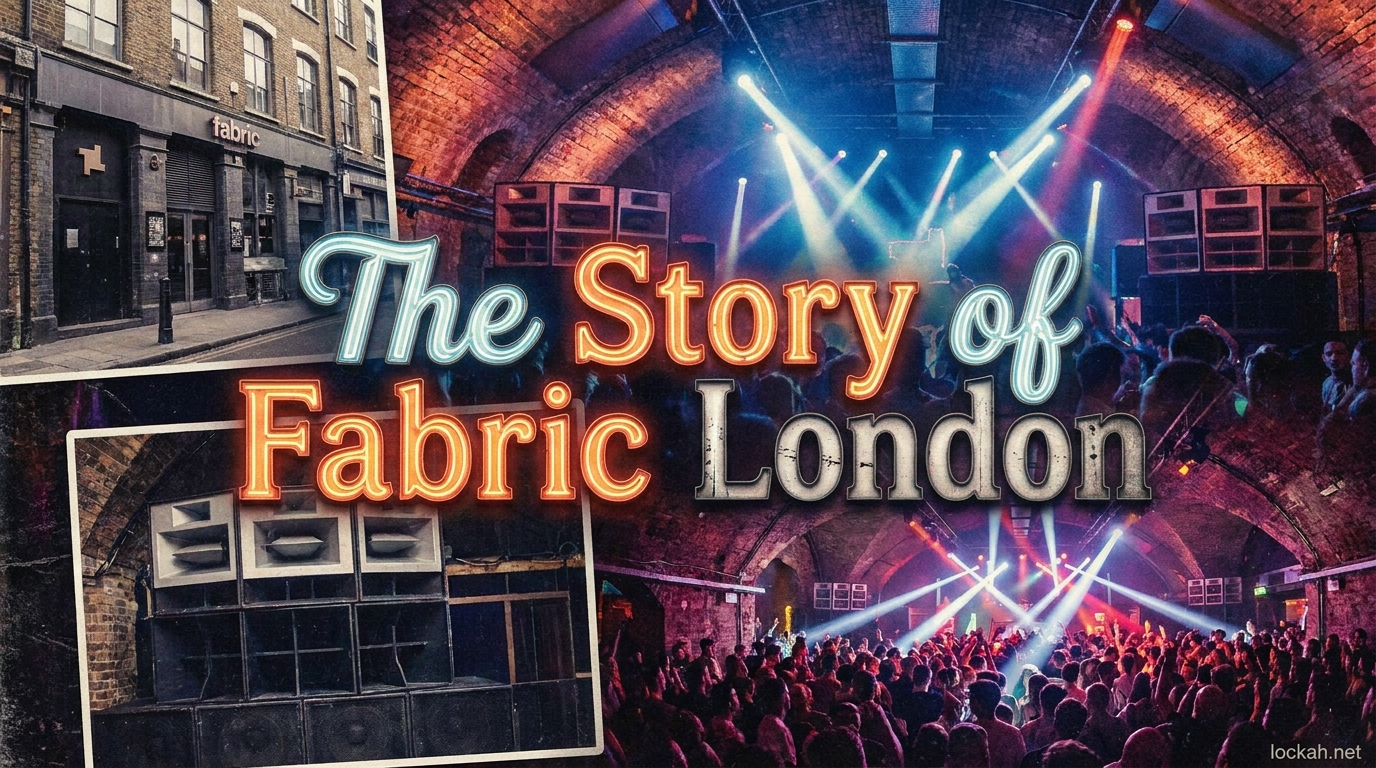
On October 22, 1999, a former Victorian meat warehouse on Charterhouse Street opened its doors and transformed London clubbing forever. That night, Fabric was born, and over the next quarter century it would become one of the most influential electronic music venues in the world, earning the title of World’s Number 1 Club multiple times and inspiring a generation of underground dance spaces.
In this guide, I will take you through the complete fabric London history – from its rebellious origins as a reaction against commercialized superclubs to its iconic bodysonic dance floor that lets you physically feel the bass through 400 bass transducers. You will learn about the residency culture that has kept Craig Richards and Terry Francis behind the decks for over 25 years, and discover how this club survived a near-fatal closure in 2016 to emerge stronger than ever in 2026. Whether you are planning your first visit, researching UK clubbing culture, or simply curious about what makes a nightclub truly legendary, this story has something for you.
The Founding Story: How Two Visionaries Changed London Clubbing in 2026?
Keith Reilly had a vision that was radically different from the shiny, corporate superclubs dominating the late 1990s. He wanted to create something authentic, underground, and rooted in the warehouse party spirit that had defined British rave culture a decade earlier. The commercialization of clubland had stripped away much of what made the early scene special, replacing community and musical discovery with VIP areas, expensive cocktails, and radio-friendly playlists.
Reilly partnered with Cameron Leslie, and together they began searching for a location that could capture that raw, industrial energy. They looked at dozens of properties across London, seeking something with history, character, and the right acoustic properties. Leslie brought technical expertise and business sense to complement Reilly’s creative vision and deep connections within the underground music scene.
They found their perfect location in the cold stores beneath Smithfield Market – a space that had been storing meat since the Victorian era, with a thousand years of market history above it. The building at 77a Charterhouse Street had everything they needed: thick stone walls that provided natural soundproofing, cavernous underground spaces that could house multiple rooms, and an industrial aesthetic that no amount of interior design could fake.
“We wanted to create a club that was about the music, not about selling VIP tables or bottle service,” Reilly explained in an early interview. This philosophy would become the foundation of everything Fabric stood for. They were not interested in creating the next Ministry of Sound or competing with the massive corporate venues that were dominating the scene. Instead, they wanted to build something that felt like the warehouse parties they had loved in the late 1980s and early 1990s.
The location itself was a statement. Smithfield Market had been a center of London’s meat trade since medieval times, with its first charter granted in 1327. The cold, cavernous Victorian warehouses beneath the market had seen generations of butchers and traders, surviving the Great Fire of London and centuries of urban development. Now they would house something entirely different – a temple to electronic music that honored the space’s working-class history rather than gentrifying it.
Transforming the derelict meat storage facility into a nightclub was no simple task. The building required extensive renovation to meet safety standards while preserving its raw, industrial character. Reilly and Leslie invested heavily in creating three distinct rooms, each with its own atmosphere and sound system, while maintaining the underground warehouse aesthetic that made the space unique. They worked with acoustic engineers to optimize the natural properties of the stone rooms, turning the building’s industrial heritage into an audio advantage.
The financial risk was significant. Opening an underground-focused club in a meat warehouse, deliberately avoiding the commercial formulas that were making other venues profitable, seemed like a gamble to many observers. But Reilly and Leslie believed that London was hungry for something authentic, a space that prioritized music over profit and community over exclusivity.
Architecture and Location: A Victorian Meat Warehouse Reborn
Fabric sits at 77a Charterhouse Street, directly opposite Smithfield Market in London’s Farringdon district. The club occupies three cavernous rooms that were once cold stores for the meat market above, and that industrial heritage is woven into every aspect of the venue. From the exposed brickwork to the metal fixtures and the general sense of having descended into London’s underground history, Fabric feels like nowhere else in the city.
The Smithfield Market connection is more than just a historical footnote. This area has been a center of commerce for over a millennium, with records of a market on this site dating back to the 10th century. The Victorian buildings that house Fabric were constructed in the 19th century to support London’s growing meat trade, featuring thick stone walls and vaulted ceilings designed to maintain cold temperatures year-round.
Those same thick walls and underground location now serve an entirely different purpose. They provide natural soundproofing that allows Fabric to operate at full volume without disturbing the surrounding neighborhood. The cavernous spaces create an acoustic environment that modern purpose-built clubs struggle to replicate. While contemporary venues spend fortunes on acoustic treatment, Fabric’s Victorian construction does much of the work naturally.
The layout consists of three distinct rooms spread across multiple levels, each with its own character and musical focus. Room One is the largest and most famous, housing the legendary bodysonic dance floor and serving as the main space for house and techno events. The room’s sheer scale, combined with its historic architecture, creates a sense of stepping into another world – a temporary escape from London above.
Room Two offers a more intimate space for different genres, with its own dedicated sound system and a more compact dance floor that creates a different energy entirely. This room has hosted everything from experimental electronic nights to breakout sets from DJs who would go on to global fame. The smaller capacity allows for programming that takes more risks, knowing that a dedicated crowd will fill the space regardless of the names on the flyer.
Room Three provides a dedicated area for drum and bass and other bass-heavy styles, with a sound system configured specifically for the sub-bass frequencies that define those genres. This separation allows Fabric to host events with very different musical identities simultaneously, with each room’s isolation preventing sonic bleed between spaces.
The interconnected warren of corridors, chillout areas, and smoking terraces creates the labyrinthine feel of an authentic warehouse party. Getting from one room to another involves navigating stairs, passages, and unexpected corners, adding to the sense of exploration and discovery. This layout encourages movement between spaces while maintaining distinct atmospheres in each room.
Sound Innovation: The Legendary Bodysonic Dance Floor
Fabric’s most famous technical innovation is the bodysonic dance floor in Room One – a technology that quite literally lets you feel the music through your entire body. The floor contains over 400 bass transducers mounted beneath the surface, vibrating in sync with the sub-bass frequencies being played through the main sound system.
When the system is running at full power, dancers do not just hear the bass – they feel it physically. The vibrations travel up through your feet and into your chest, creating a sensory experience that standard speaker systems cannot match. This is not a gimmick; it is a fundamental part of what makes a Fabric night unforgettable. The physical connection to the music creates a shared experience among everyone on that dance floor, a collective sensation of being literally moved by the sound.
The technology behind the bodysonic system is relatively straightforward but brilliantly executed. Bass transducers convert low-frequency audio signals into physical vibration, essentially turning the entire dance floor into a giant speaker. But because the vibration happens through direct contact rather than air pressure, the sensation is more intense and immediate than even the most powerful subwoofers could achieve.
The sound system goes far beyond the vibrating floor. Fabric invested in Martin Audio speakers and custom-engineered acoustic treatments for each room. Every space has its own independent sound system tailored to its size and shape, allowing different genres to coexist without compromise. The technical team at Fabric has refined these systems over two decades, making incremental improvements while preserving the core character that makes the sound distinctive.
Room One’s system is particularly impressive, capable of delivering clean, powerful sound at volumes that would damage lesser equipment. The combination of the bodysonic floor and the room’s natural acoustics creates what many consider the finest club sound system in the United Kingdom. DJs regularly comment that their records sound better at Fabric than anywhere else in the world, a testament to the acoustic engineering and maintenance standards.
This commitment to audio quality was revolutionary in 1999. While most clubs prioritized lighting rigs and VIP areas, Fabric put sound first. That decision paid off – the club quickly gained a reputation among serious music fans and professional DJs who appreciated being able to hear their tracks properly. In an era when many venues treated music as background to the drinking experience, Fabric insisted on putting it front and center.
The sound system has been upgraded over the years, with major overhauls in 2005, 2012, and again following the 2016 reopening. Each iteration has maintained the Fabric sound signature while incorporating new technologies and responding to how electronic music production has evolved. The bass has become deeper and more precise, the mid-range clearer, and the overall experience more immersive.
Residency Culture: The DJs Who Built a Legacy
The residency culture at Fabric represents one of the most significant long-term commitments in British clubbing history. While most clubs rotate DJs weekly or monthly, Fabric invested in resident DJs who would shape the musical identity of the venue over decades. This approach was almost unheard of when the club opened, and remains rare today.
Craig Richards started his Fabric residency at the club’s opening in 1999 and remains a regular fixture 2026. That is over 25 years of continuous relationship with the venue – a tenure that is virtually unheard of in the fast-moving world of electronic music. While other DJs chase headliner slots at different clubs every weekend, Richards has stayed loyal to Fabric, and Fabric has stayed loyal to him.
Richards’ sound – a distinctive blend of house, techno, and obscure influences that defies easy categorization – has become synonymous with Fabric itself. His marathon sets, often stretching to six or eight hours, allow him to explore musical territories that shorter slots cannot accommodate. Regular Fabric attendees have grown up with Richards’ selections, trusting his taste to introduce them to records they would never find themselves.
Terry Francis joined shortly after the opening and has been equally central to the club’s sound. His deep house selections provide a slightly different flavor from Richards’ more eclectic approach, giving Fabric’s Saturday nights their distinctive character. Together, Richards and Francis have defined what Fabric means musically: a focus on house and techno that prioritizes quality over trends, with the residents free to dig deep into their record collections and take musical risks.
Residency culture matters because it creates consistency. When you go to Fabric on a Saturday night, you know the residents will be there, guiding the energy of the room with an intimate understanding of the space and the crowd. They know exactly how the bodysonic floor responds at different volumes, how the room breathes at various times of night, and how to build a set that works specifically for that environment. This knowledge takes years to accumulate and cannot be replicated by visiting DJs, no matter how famous.
This model stands in stark contrast to the guest DJ culture that dominates most superclubs. While Fabric does host international headliners, the residents remain the heart of the programming. Their presence ensures that even on nights without famous names on the flyer, the music will be exceptional and the atmosphere will be right. It creates a continuity that regulars appreciate, a sense that the club has a musical identity that persists beyond individual events.
The residency model also benefits the DJs themselves. Having a regular home allows artists to develop their sound over time, to experiment with new material, and to build genuine relationships with their audience. Craig Richards has spoken about how his Fabric residency has allowed him to evolve as an artist in ways that would be impossible with only touring gigs. The trust that comes from a long-term relationship with a venue and its crowd encourages creative risks.
Other notable residents have included Cassy, who held a long-running Sunday residency; Ricardo Villalobos, whose appearances became legendary for their duration and unpredictability; and numerous drum and bass specialists who have defined Room Three’s sound. But Richards and Francis remain the constants, the foundation upon which everything else is built.
Cultural Impact: An Island Against Commercialization
Fabric emerged as a direct reaction against the commercialization of British club culture in the 1990s. While superclubs like Ministry of Sound and Cream were scaling up with corporate sponsorships, VIP tables, and mainstream radio support, Fabric deliberately stayed underground. This was a principled position as much as a business strategy.
This positioning earned the club a devoted following among serious electronic music fans. Fabric became the place you went when you wanted to hear proper underground music in a proper underground setting. The lack of cameras, the focus on the music, and the absence of bottle service created an atmosphere that felt like the early rave days – a temporary autonomous zone where the usual rules of clubland did not apply.
The international recognition came quickly. DJ Magazine named Fabric the World’s Number 1 Club in its Top 100 Clubs poll, a ranking the venue has held multiple times over the years. DJs from Berlin to Detroit speak of Fabric as a pilgrimage site – a club every serious artist wants to play and every serious fan wants to experience. The award represents more than just popularity; it acknowledges Fabric’s role in maintaining standards for club culture globally.
For London tourists interested in authentic clubbing culture, Fabric has become an essential destination. People travel from across Europe and beyond specifically to spend a night in that Victorian meat warehouse, to stand on the vibrating dance floor, and to hear what 25 years of residency culture sounds like. Tourism guides regularly list Fabric alongside Buckingham Palace and the Tower of London as must-see London experiences, albeit for a very different type of visitor.
The club’s influence extends beyond its walls. Fabric Records and the Houndstooth label have released hundreds of tracks and albums, documenting the sound of the club and supporting emerging artists. The Fabriclive mix series became particularly influential, showcasing the club’s musical direction through carefully curated compilations mixed by residents and guest DJs. These releases functioned as both artistic statements and promotional tools, spreading the Fabric sound to people who had never visited the club.
The club has inspired similar venues worldwide, from Berlin’s underground spaces to Brooklyn’s warehouse parties. The Fabric model – prioritize sound, invest in residents, maintain an underground aesthetic – has been replicated across the global electronic music scene. While few have managed to achieve Fabric’s longevity, many have taken lessons from its approach to programming, sound engineering, and community building.
Fabric has also played a significant role in London’s cultural economy, employing hundreds of people over the years and contributing millions of pounds to the local area. The club’s presence helped transform Farringdon from a quiet business district into a nightlife destination, though the owners have always been careful to maintain good relationships with neighbors and authorities.
The 2016 Crisis and Triumphant Reopening
In September 2016, Fabric faced its greatest challenge when Islington Council revoked its license following two drug-related deaths at the venue. The closure appeared to signal the end of an era for one of London’s most beloved cultural institutions, and sent shockwaves through the UK’s nightlife community.
The two deaths, occurring six weeks apart, involved young men who had taken MDMA at the club. While drug-related deaths in nightlife settings are tragically not unique to Fabric, the concentration of incidents led the council to conclude that the venue’s management was not doing enough to prevent drug use. The license revocation was immediate and devastating.
The council’s decision cited concerns about drug use and security procedures, but many saw the closure as part of a broader pattern of nightlife venues being forced out of central London. The campaign to save Fabric became a rallying point for club culture advocates across the United Kingdom, uniting DJs, musicians, politicians, and ordinary clubbers in defense of the venue.
A public crowdfunding campaign raised over 140,000 pounds, while a petition to reopen the club gathered hundreds of thousands of signatures. The campaign highlighted Fabric’s cultural significance, its investment in harm reduction, and its economic contribution to the area. High-profile supporters included London’s then-Mayor Sadiq Khan, major electronic music artists, and cultural figures from across the spectrum.
The Save Fabric campaign argued that closing the club would not solve the underlying issues of drug use in nightlife settings, and would remove one of London’s safest managed spaces. They pointed to Fabric’s extensive welfare programs, its cooperation with police, and its generally excellent safety record over nearly two decades of operation. The campaign successfully reframed the debate from being about two tragic incidents to being about the future of London nightlife.
In November 2016, after two months of closure, Fabric reached an agreement with Islington Council and reopened with enhanced security measures. The new protocols included airport-style ID scanning, increased security staffing, and stricter drug enforcement policies. While some longtime fans found the new security procedures clinical compared to the old days, the reopening ensured Fabric’s survival.
The crisis ultimately strengthened the club’s position. The massive public support demonstrated how deeply Fabric was woven into London’s cultural fabric, and the enhanced security procedures addressed legitimate safety concerns without compromising the musical experience. The club that emerged in 2026 is more secure but remains true to its founding vision – still prioritizing music over profit, still maintaining those 25-year residencies, still vibrating that bodysonic dance floor into the early hours.
Frequently Asked Questions
What is the history of fabric London?
Fabric London was founded on October 22, 1999 by Keith Reilly and Cameron Leslie in a former Victorian meat warehouse beneath Smithfield Market. The club was created as a reaction against the commercialized superclub scene of the 1990s, focusing instead on underground electronic music culture. Known for its innovative bodysonic dance floor with 400+ bass transducers and long-term DJ residencies including Craig Richards and Terry Francis for over 25 years, Fabric has been voted World’s Number 1 Club multiple times by DJ Magazine and remains one of the most influential electronic music venues globally.
What is the hardest club to get into in London?
Fabric has a reputation as one of London’s more selective clubs, with strict door policies that prioritize the music-focused crowd over casual partygoers. The club maintains high entry standards to protect the atmosphere inside, and security is thorough following the 2016 reopening with airport-style ID scanning and bag checks. While not impossible to enter, Fabric rewards those who understand and respect the club’s culture – dress sensibly, arrive with genuine enthusiasm for the music, and be prepared for enhanced security screening. The selection at the door is designed to maintain the underground atmosphere that has defined the club since 1999.
Why did fabric get shut down?
Fabric was temporarily shut down in September 2016 when Islington Council revoked its license following two drug-related deaths at the venue over a six-week period. The council cited concerns about inadequate security procedures and drug use prevention. However, after a massive public campaign called Save Fabric raised over 140,000 pounds and gathered hundreds of thousands of petition signatures, the club reached an agreement with the council. Fabric reopened in November 2016 with significantly enhanced security protocols including ID scanning, stricter door policies, and increased security staffing, while maintaining its core musical identity.
What is fabric London known for?
Fabric London is known for three distinctive features: the legendary bodysonic dance floor with over 400 bass transducers that lets you physically feel the bass through your feet and body, its pioneering residency culture featuring Craig Richards and Terry Francis who have played regularly at the club for over 25 years since 1999, and its unique location in a Victorian meat warehouse beneath historic Smithfield Market. The club is also recognized for exceptional Martin Audio sound systems in three independent rooms, underground atmosphere without VIP pretension, and being voted World’s Number 1 Club by DJ Magazine’s Top 100 Clubs poll multiple times.
Conclusion
The fabric London history is a story of staying true to a vision while the world around you changes. From its founding in 1999 as a reaction against commercialization, through its 2016 crisis and triumphant reopening, Fabric has remained an island of authenticity in an increasingly corporate club landscape. The commitment to sound quality, the belief in residency culture, and the determination to maintain an underground atmosphere have all contributed to its legendary status.
The bodysonic dance floor still vibrates with 400 bass transducers beneath the feet of dancers. Craig Richards and Terry Francis still guide the musical journey through their decades-long residencies, introducing new generations to underground house and techno. And the Victorian meat warehouse beneath Smithfield Market continues to host some of the finest electronic music nights on the planet, just as it has for over 25 years. For anyone interested in London clubbing culture, a night at Fabric in 2026 remains an essential experience that connects you to the authentic spirit of UK electronic music.