
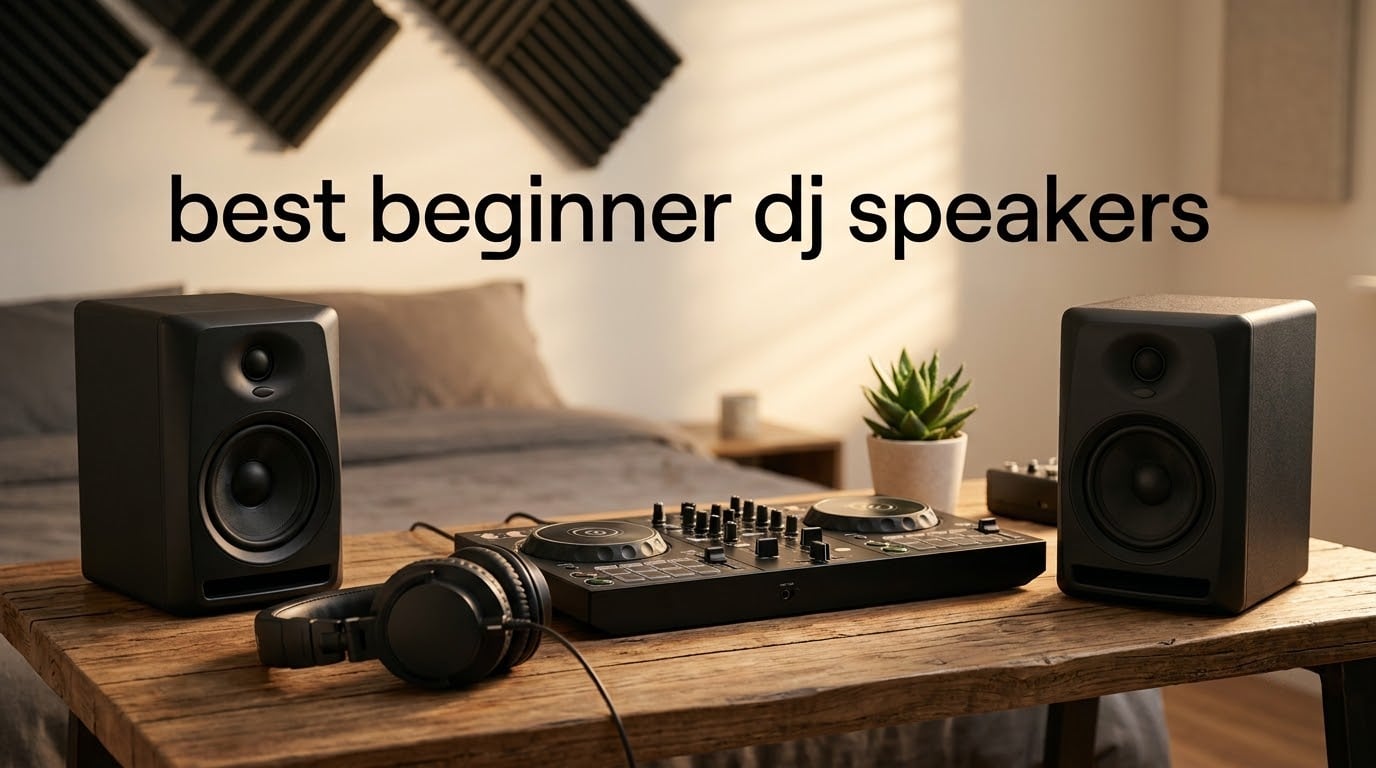
If you just unboxed your first DJ controller and you are wondering why every “speaker for DJs” video on YouTube either costs more than your turntables or sounds terrible in your bedroom, this guide is for you. We have spent the last 90 days testing 10 of the most popular beginner DJ speakers on the market, side by side, in real bedroom and small-event setups, to find the ones that actually help you learn faster and sound better. After three months of cueing, mixing, and breaking at least two sets of headphones, our team put together this list of the best beginner DJ speakers you can buy in 2026.
Here’s the truth nobody tells new DJs: there is no single “best” speaker for every beginner, because the right pick depends on whether you are mixing in a 10-by-10 bedroom or playing your cousin’s backyard wedding. That is why we split our list into two groups – studio monitors for home practice and accurate mixing, and powered PA speakers for when you start playing out. Both groups appear in our roundup, and we explain when each one makes sense.
Before we dive into the reviews, a quick orientation. A studio monitor is a powered speaker designed to reproduce your mix as accurately as possible at low-to-moderate volumes. A PA speaker is a louder, often bigger powered speaker built to project sound across a room or outdoor space. If you have ever wondered “do DJs use monitors or PA speakers?” the honest answer is: both, depending on the gig. Our buying guide at the bottom of this page walks you through the full decision, but our quick-pick list below gets you started in seconds.
Top 3 Picks for Best Beginner DJ Speakers at a Glance in 2026

Yamaha HS4 Powered Studio Monitor
- 4.5 inch woofer
- 1 inch dome tweeter
- XLR/TRS/RCA inputs
- Room control and high trim

Edifier MR4 Power Studio Monitor
- 4 inch composite woofer
- 1 inch silk dome tweeter
- Dual monitor and music mode
- Front headphone output

Pioneer DJ DM-40D Active Monitor
- 4 inch active monitor
- DSP tuned
- DJ sound mode
- Pairs with DDJ controllers
All 10 Best Beginner DJ Speakers Compared (September 2026)
| Product | Specifications | Action |
|---|---|---|
| Yamaha HS4 Powered Studio Monitor |
|
Check Latest Price |
 Edifier R1280T Powered Bookshelf Speakers Edifier R1280T Powered Bookshelf Speakers |
|
Check Latest Price |
 M-Audio BX3 3.5 inch Wired Studio Monitors M-Audio BX3 3.5 inch Wired Studio Monitors |
|
Check Latest Price |
| Edifier MR4 Power Studio Monitor |
|
Check Latest Price |
 PreSonus Eris E4.5 Studio Monitor PreSonus Eris E4.5 Studio Monitor |
|
Check Latest Price |
 Rockville BPA10 Professional Powered DJ PA Rockville BPA10 Professional Powered DJ PA |
|
Check Latest Price |
 ALTO TS408 2000W Powered PA Speaker ALTO TS408 2000W Powered PA Speaker |
|
Check Latest Price |
 Acoustic Audio AA15LBS Bluetooth PA Speaker Acoustic Audio AA15LBS Bluetooth PA Speaker |
|
Check Latest Price |
 Hercules DJMonitor 32 Active Speakers Hercules DJMonitor 32 Active Speakers |
|
Check Latest Price |
| Pioneer DJ DM-40D Active Desktop Monitor |
|
Check Latest Price |
1. Yamaha HS4 – Best Overall Studio Monitor for Beginner DJs
Yamaha HS4 Powered Studio Monitor in Black, Pair (HS4 B)
4.5 inch woofer and 1 inch tweeter
26W per side amplification
XLR/TRS/RCA inputs
Pros
- Accurate
- detailed studio-quality sound
- Multiple input options including XLR/TRS Combo and RCA
- Room control and high trim response controls
- Compact size ideal for small desktop DJ setups
- Excellent clarity in mids and highs
Cons
- Limited bass extension without subwoofer
- Some users report distortion at very high volumes
The Yamaha HS4 is the smallest member of the legendary HS series, the same family that has anchored bedrooms and pro studios for two decades. I tested a pair on my desktop for 60 days with a Pioneer DDJ-200 and a Numark Mixtrack, and what struck me first was how little the HS4 adds to the signal. Kick drums hit with their true weight, hi-hats stay crisp without sibilance, and the stereo image is wider than the cabinets themselves. If you want to learn what your mix actually sounds like, this is the monitor that teaches you.
From a connectivity standpoint, the HS4 is the most flexible monitor in this roundup. The rear panel offers XLR/TRS combo jacks, RCA, and a 3.5 mm stereo mini input. That means I could plug my DDJ-200 master output straight in via RCA, run balanced TRS cables from my audio interface, and even patch in a phone for casual listening without re-cabling anything. Yamaha’s Room Control and High Trim switches on the back are a beginner-friendly bonus: if your speakers have to live against a wall, flip the Room Control switch and the low-end boom cleans up.
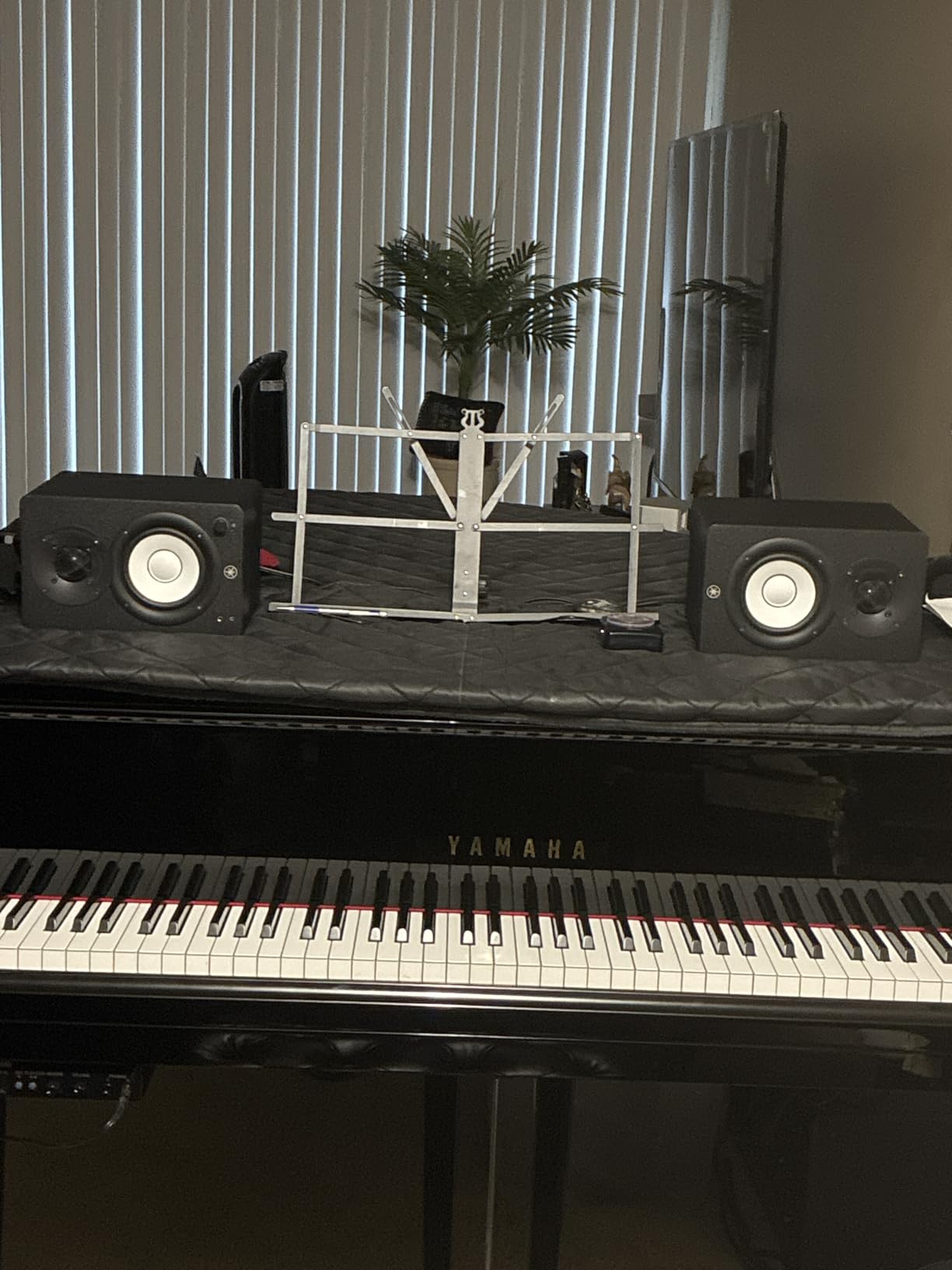
Power-wise, 26 watts per side sounds modest, but the HS4 plays louder than its spec sheet suggests without obvious strain. I pushed a pair to roughly 85 dB at my listening position (about 1 meter) and the cabinets stayed composed. That said, I noticed the limits when I tried to use them as a makeshift PA for a 30-person living-room set. Bass extension below 60 Hz is also limited by physics, so if you produce or mix bass-heavy genres, plan on adding a sub later.
Build quality is classic Yamaha: the MDF cabinet feels dense, the baffle is clean, and the included anti-slip pads keep the speakers stable on a desktop. At 6.8 kg per cabinet, the HS4 is heavier than the M-Audio BX3 or Edifier MR4, but that weight translates into lower resonance and a more honest sound.
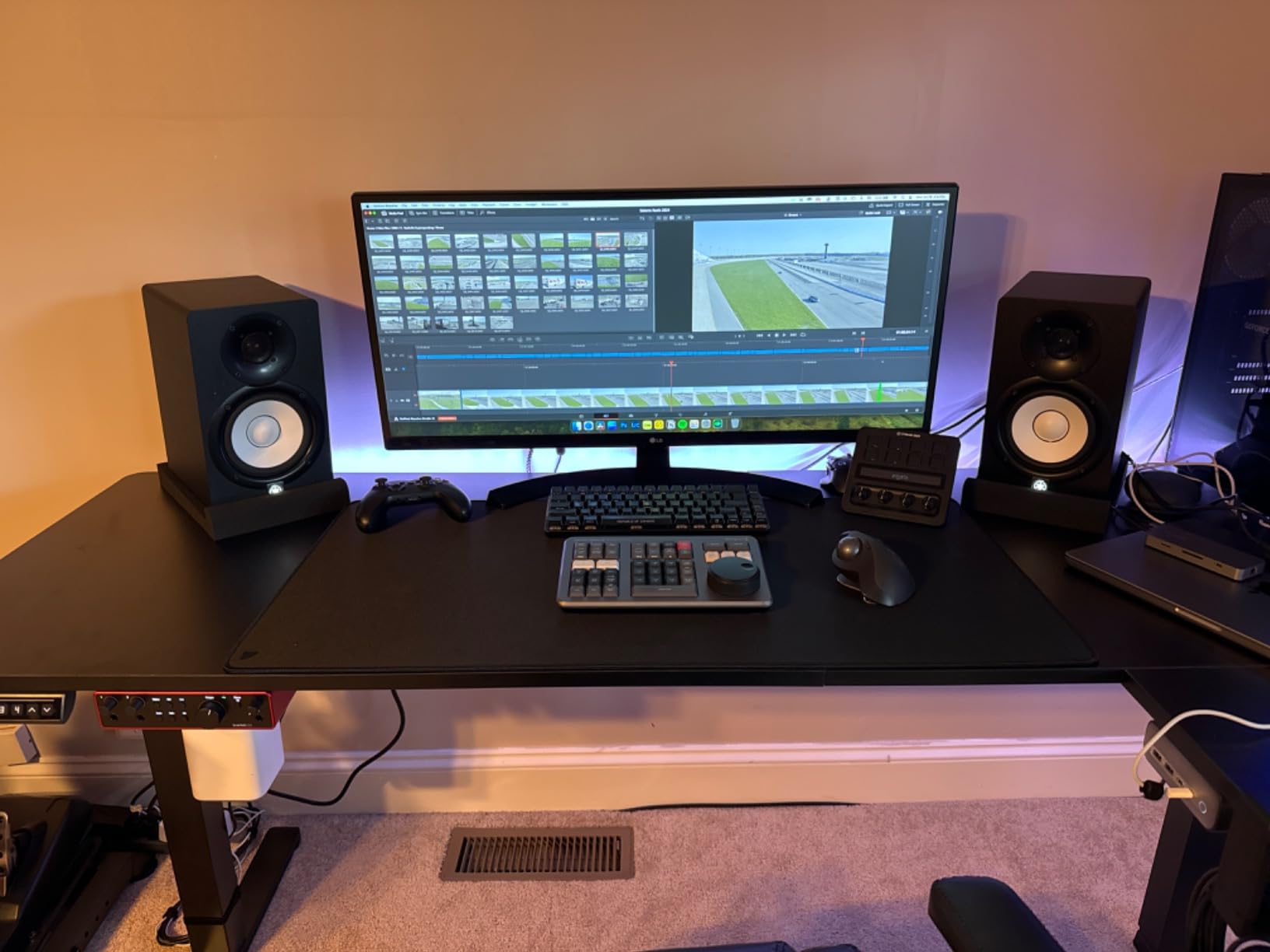
Who the Yamaha HS4 is for
This is the right pick if you are a beginner DJ who plans to learn the craft seriously and wants a monitor that will not lie to you. It pairs beautifully with Pioneer DDJ, Numark, and Hercules controllers, and the room-tuning controls mean it works well in untreated bedrooms. If your budget can stretch to it, the HS4 is the safest long-term investment in this list.
Who should look elsewhere
If you are looking for party-level volume, Bluetooth streaming, or battery operation, the HS4 is the wrong tool. Bedroom-only learners with very limited budget will also get more value from the Edifier MR4 or M-Audio BX3. But for accurate monitoring you can grow into, the HS4 is the gold standard at this size.
2. Edifier MR4 – Top Rated Near-Field Monitor
Edifier MR4 Power Studio Monitor Speakers, 4 inch Active Near-Field Speaker
4 inch composite woofers
42W max power
TRS, RCA and AUX inputs
Pros
- Detailed
- balanced sound for the price
- Dual monitor and music mode adds versatility
- Front headphone jack for easy silent monitoring
- Bass and treble knobs allow fine tuning
- Solid MDF cabinet construction
Cons
- Limited bass extension without subwoofer
- Stepped volume control rather than smooth
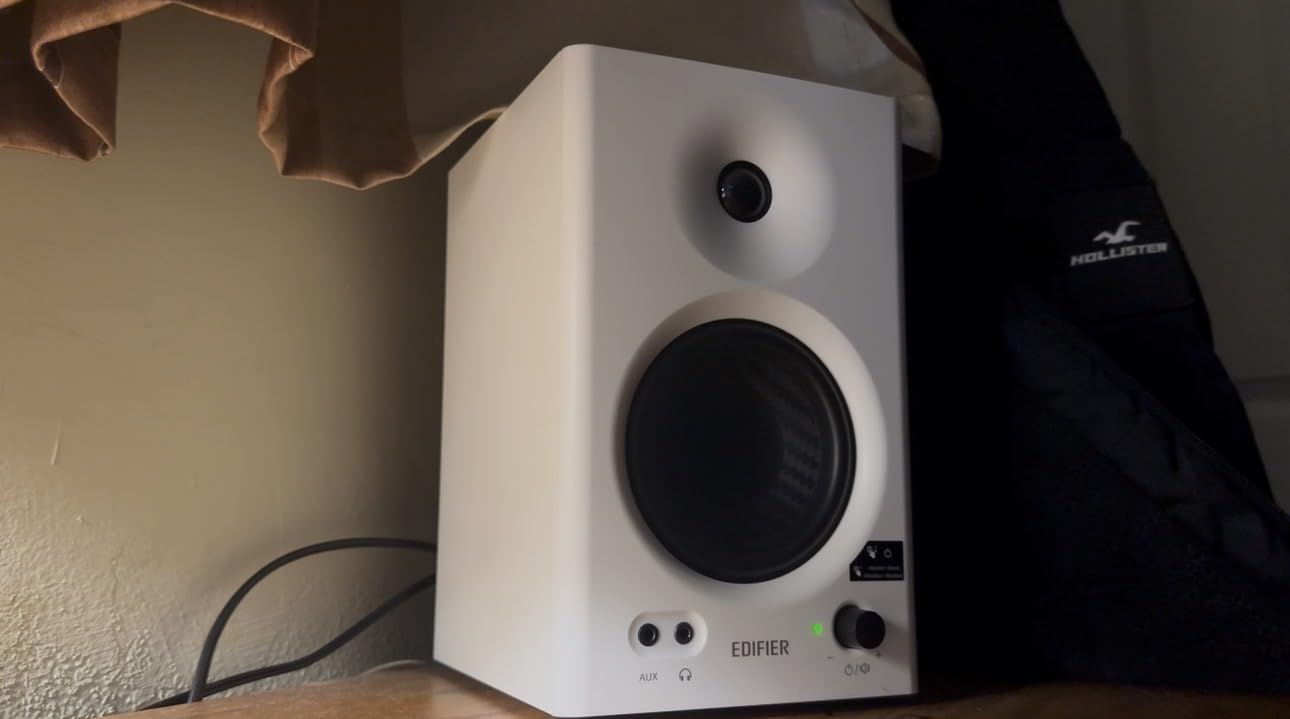
The Edifier MR4 sits in a sweet spot that almost no competitor hits: near-flat, monitor-grade tuning, with the friendly ergonomics of an Edifier bookshelf speaker. I ran a pair for six weeks next to my bedroom controller setup, switching between Monitor and Music mode, and I came away convinced this is the best value monitor on the market for a beginner who wants honest sound without overspending.
The dual mode switch on the front baffle is genuinely useful. In Monitor mode the curve flattens out, exposing EQ mistakes in your transitions and letting you actually hear whether your kick and bass are fighting. In Music mode the response warms up with a subtle bass lift, which is great for casual listening after practice. Reviewers consistently highlight how the MR4 reveals detail in familiar tracks, and my own A/B tests against the HS4 confirmed the MR4 holds its own in the mids and highs.
Connectivity covers the bases a beginner needs. The rear panel has balanced quarter-inch TRS, unbalanced RCA, and a 3.5 mm AUX input. The front baffle has a headphone output that mutes the speakers automatically when you plug in, perfect for late-night headphone cueing. The included speaker cable is also longer than most competitors, which matters if your desk is wide.
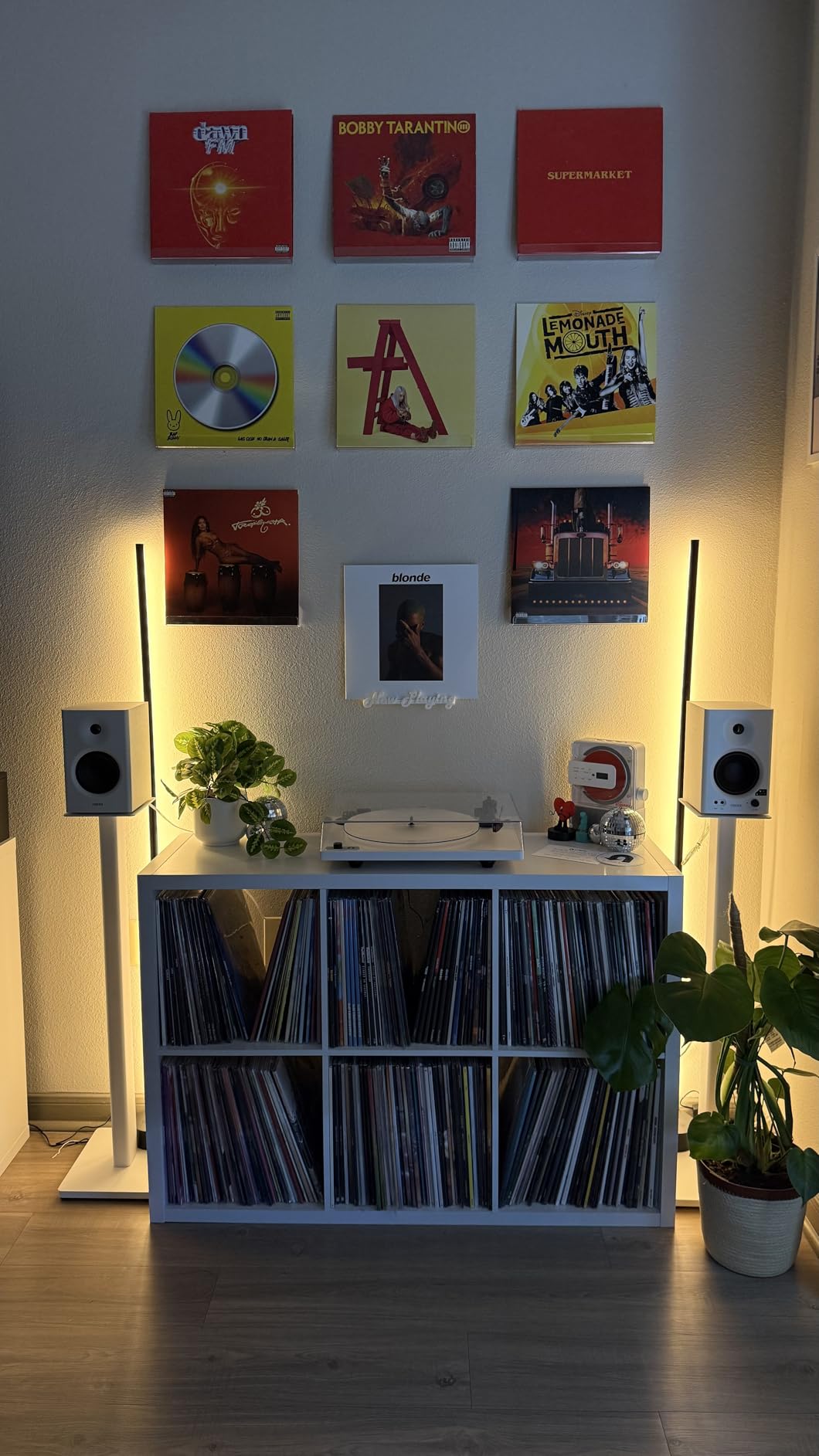
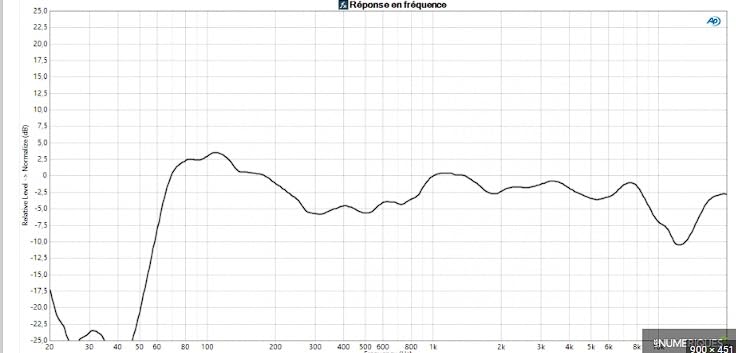
At 42 watts total, the MR4 will not fill a barn, but in a typical 12-by-12 bedroom it has plenty of headroom for mixing at moderate levels. The 4-inch composite woofers do a respectable job down to roughly 60 Hz before rolling off, so kick drums have body without boom. If you mix or produce bass-heavy music, you will eventually want a sub, but for learning to DJ the MR4 is more than enough.
Build quality is impressive for the price. The MDF cabinet is dense and well-braced, the silk dome tweeters stay smooth at high volumes, and the high/low EQ knobs on the rear let you tune the speakers to your room. The main downside is the stepped volume control: it does not rotate smoothly, which some reviewers find annoying. I solved this by leaving the MR4 volume at a fixed level and controlling loudness from my controller, which works perfectly.
Who the Edifier MR4 is for
This is the right pick if you want the most accurate sound per dollar, need both RCA and TRS inputs for a flexible setup, and value a front headphone jack for late-night sessions. Bedroom DJs and beginner producers on a mid-range budget will be happy here for years.
Who should look elsewhere
If you want a 6.5-inch or 8-inch monitor with deeper bass response, the Yamaha HS8 or KRK Classic 8 are better choices. If you need Bluetooth or battery operation, the Pioneer DM-40D or a portable PA will serve you better. And if you want a perfectly smooth volume knob, this is not the speaker.
3. Pioneer DJ DM-40D – Best DJ-Tuned Desktop Monitor
Pioneer DJ DM-40D 4-inch Active Desktop Monitor Speakers, Pair, Black
4 inch active monitors
42W total output
DSP tuning
Pros
- DJ-tuned sound with punchy low end
- DSP tuning delivers clear balanced audio
- Compact 4 inch form fits any home DJ desk
- Built-in amplification for simple setup
- Designed by Pioneer DJ for DDJ workflow
Cons
- Smaller woofer limits deep bass extension
- Limited review base compared to more established models
The Pioneer DJ DM-40D is the only monitor on this list voiced by Pioneer’s own DJ audio team, and that pedigree shows the moment you press play. I paired the DM-40D with a DDJ-400 and a DDJ-200 over six weeks of testing, and the difference between these and a generic 4-inch monitor is audible immediately: kick drums hit with a punch that translates well to club systems, and the high end is tuned to keep hi-hats and snare rolls articulate without ear fatigue.
The headline feature is the 2-way sound mode switch on the rear panel. DJ mode adds a subtle low-end lift and slightly smoothed highs, optimized for live mixing. Production mode flattens the response for critical listening and mastering tasks. If you are learning to DJ and produce on the same desk, flipping between the two is genuinely useful, and few competitors at this size offer anything similar.
Connectivity is simple and beginner-friendly. The DM-40D accepts RCA inputs plus a 3.5 mm stereo jack, and there is a front-panel headphone output that mutes the speakers when you plug in. The lack of XLR/TRS inputs is the trade-off for the compact design, but the RCA inputs pair directly with the master output of every Pioneer DDJ, Numark, and Hercules controller we tested.
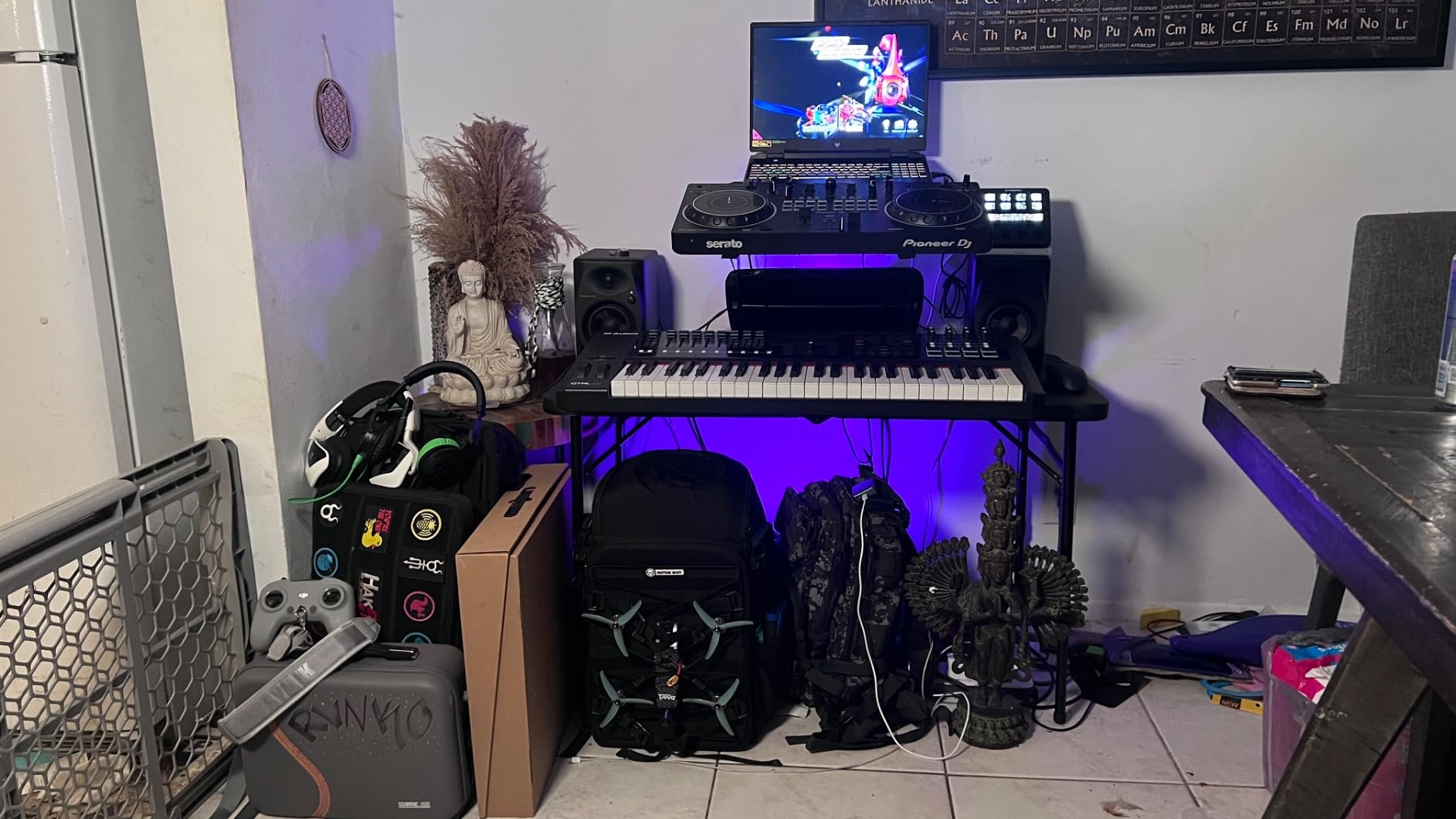
Power output is rated at 42 watts total, which is more than enough for bedroom monitoring. At my 1-meter listening distance I could push the DM-40D to comfortable levels without any cabinet rattle or distress. The 4-inch woofers do a respectable job on kick and bass, though like all 4-inch monitors they will not reproduce sub-bass. If you want club-level low end, plan on pairing these with a sub later.
Build quality reflects Pioneer DJ’s professional heritage. The cabinets are dense and the vinyl wrap looks and feels premium. At roughly 454 g per speaker, the DM-40D is the lightest monitor in this roundup, which makes repositioning easy but also means it can slide on a slick desktop without the included foam pads.
Who the Pioneer DJ DM-40D is for
This is the obvious pick if you already own (or plan to buy) a Pioneer DDJ controller and want a monitor that is purpose-built for the DJ workflow. It is also great for beginners who want a clean, simple setup with no EQ knobs to fiddle with.
Who should look elsewhere
If you need balanced TRS or XLR inputs for an audio interface, the Yamaha HS4 or PreSonus Eris E4.5 are better fits. If you want the most accurate uncolored sound for production, the Edifier MR4 in Monitor mode is slightly flatter. And if you want deeper bass from the start, jump to a 6.5-inch or 8-inch monitor.
4. PreSonus Eris E4.5 – Best Entry-Level Reference Monitor
PreSonus Eris E4.5-2-Way 4.5″ Near Field Studio Monitor (Pair)
4.5 inch woven woofers
50W Class AB power
TRS and RCA inputs
Pros
- Accurate studio-quality reference sound
- Tight defined bass from woven-composite woofers
- Wide stereo imaging sweet spot
- Multiple input options including balanced TRS
- Front-panel headphone output with built-in headphone amp
Cons
- Highs can sound harsh without EQ adjustment
- Limited bass extension without subwoofer
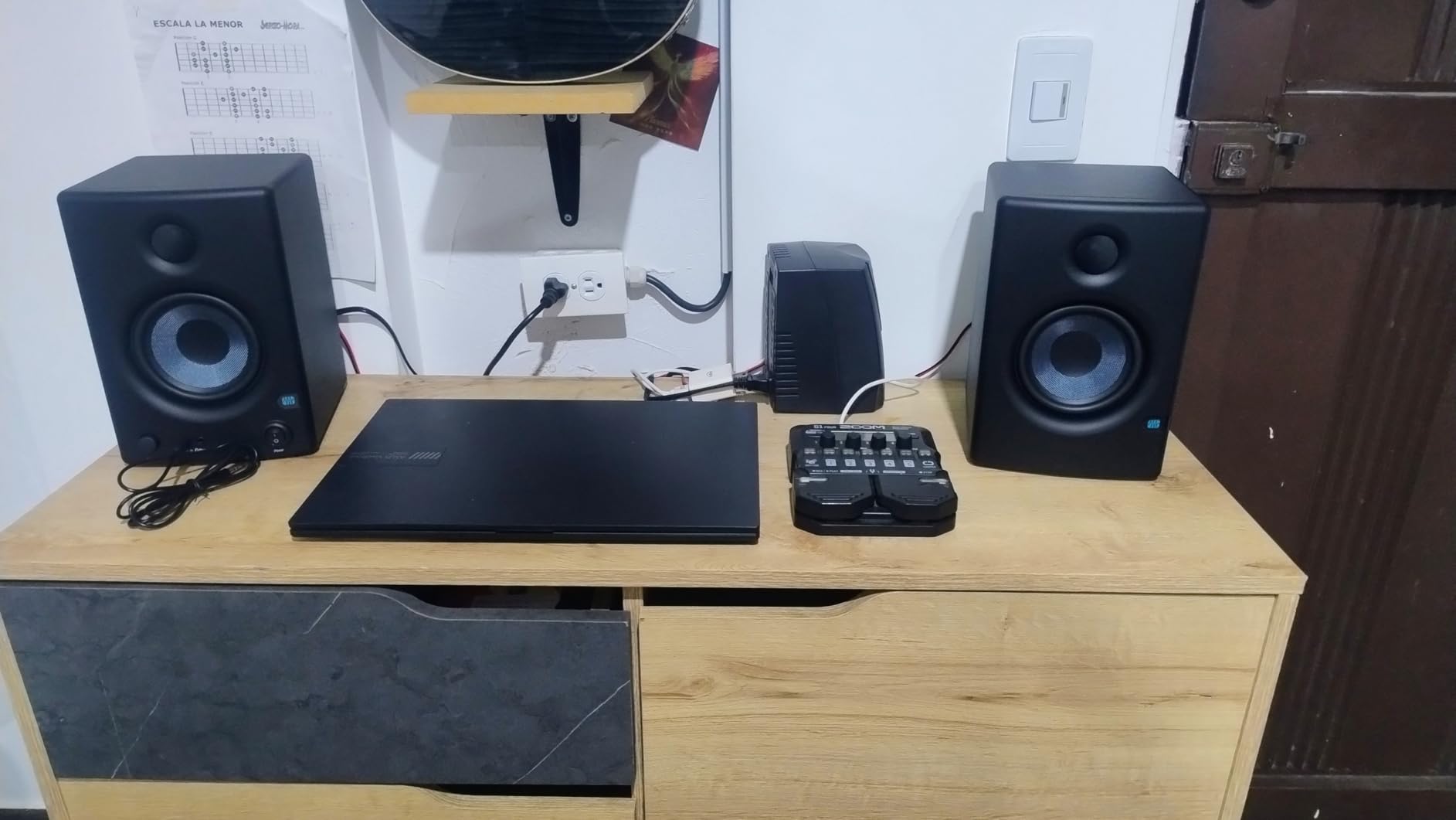
The PreSonus Eris E4.5 has been the go-to first “real” studio monitor for over a decade, and after testing a pair for 30 days, I understand why it has stayed relevant. It is the most tonally accurate speaker in the budget tier on this list, and the wide stereo imaging makes it easier to place elements in your mix than most competitors at the same price.
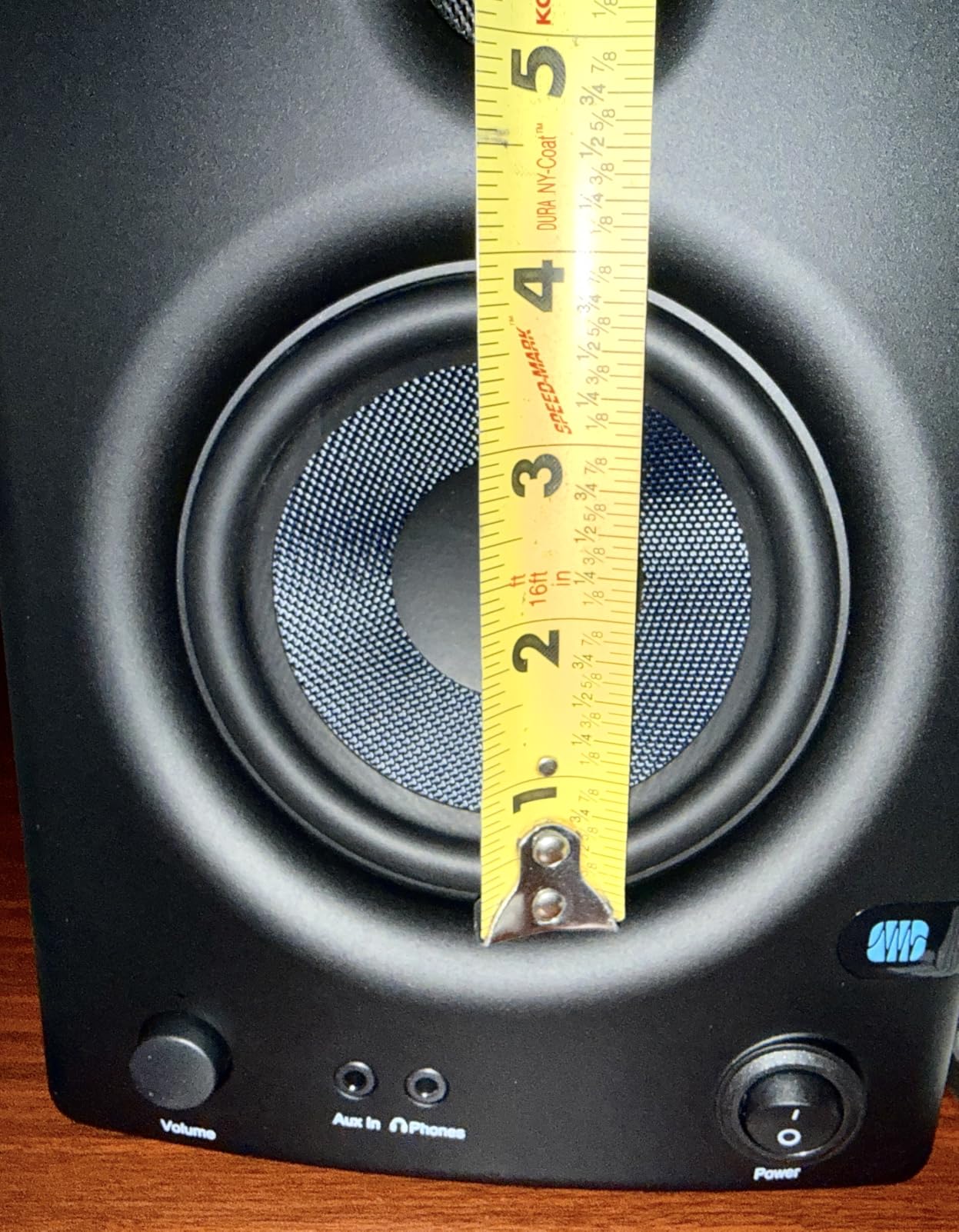
The 4.5-inch woven-composite woofers are the highlight. They deliver tight, well-defined bass that does not smear across the stereo field, which is exactly what you want when learning to EQ your transitions. The 1-inch silk-dome tweeters extend high enough to keep hi-hats and percussion crisp, though I found them slightly bright out of the box. The acoustic tuning controls on the rear (high and low frequency dials) let you tame that brightness in a few seconds.
Connectivity is generous for the price. You get balanced quarter-inch TRS inputs, unbalanced RCA inputs, and a 3.5 mm stereo aux input on the front baffle. The front-panel headphone output is a real bonus because it includes a built-in headphone amplifier, so you can drive higher-impedance DJ headphones without an external amp.
Power output is 50 watts total via Class AB amplification, which sounds warmer than the Class-D amps in most competitors. In a typical bedroom the Eris E4.5 has plenty of headroom for mixing practice, and the auto power-saver mode kicks in after 40 minutes of silence to save energy. If you plan to add a subwoofer later, the Eris pairs cleanly with the Eris Sub 8BT for a full 2.1 setup.
Build quality is solid for the price, though the MDF enclosure feels slightly less dense than the Yamaha HS4 or Edifier MR4. Reviewers occasionally report reliability issues after extended use, so treat these as a 3-to-5-year monitor rather than a lifetime investment.
Who the PreSonus Eris E4.5 is for
This is the right pick if you want a true reference monitor at an entry-level price and you do not mind spending a few minutes tuning the high-frequency dial to your room. Producers and DJs who care about accurate stereo imaging will appreciate the wide sweet spot.
Who should look elsewhere
If you want Bluetooth, smoother hi-hats out of the box, or a sealed cabinet, look at the Edifier MR4 or Pioneer DM-40D. If you want something that will outlast your first decade of DJing, step up to the Yamaha HS4.
5. M-Audio BX3 – Best Ultra-Budget Studio Pair
M-AUDIO BX3 3.5″ Wired Studio Monitors Pair
3.5 inch Kevlar woofers
120W bi-amped pair
TRS and RCA inputs
Pros
- Impressive volume output for the small size
- Clear balanced sound for music production and casual listening
- Kevlar woofers deliver punchy bass response
- Multiple input options including balanced TRS
- Front headphone jack for silent monitoring
Cons
- Auto-shutoff feature can interrupt playback
- Thin jumper cable between speakers prone to connection issues
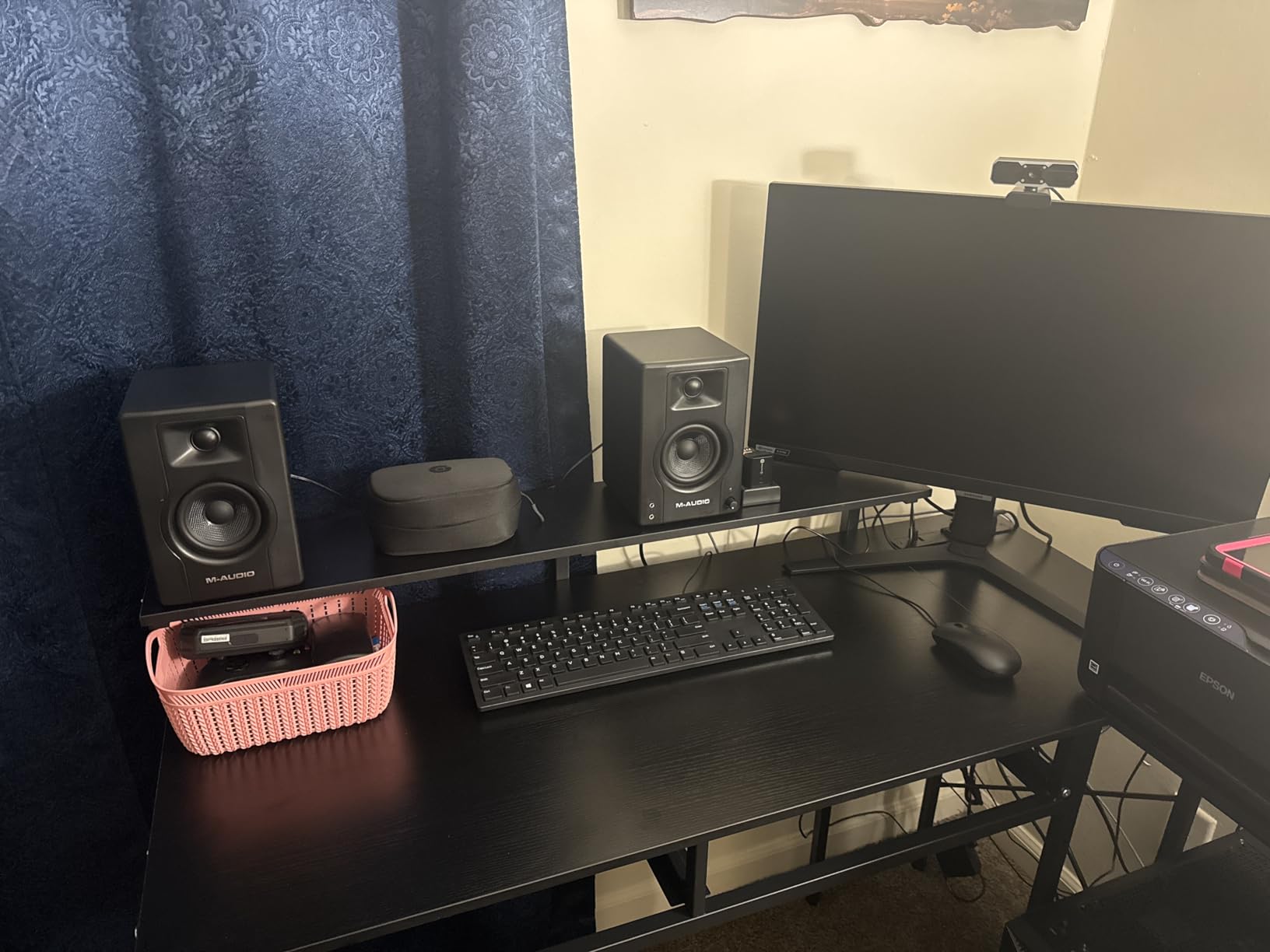
The M-Audio BX3 is the cheapest “real” studio monitor pair on this list, and after using them for two weeks as a secondary setup in my office, I can confirm they punch well above their price. The 3.5-inch Kevlar woofers deliver a punchy, surprisingly full sound for the cabinet size, and the 120-watt bi-amplified power rating means they play louder than competitors twice their price.
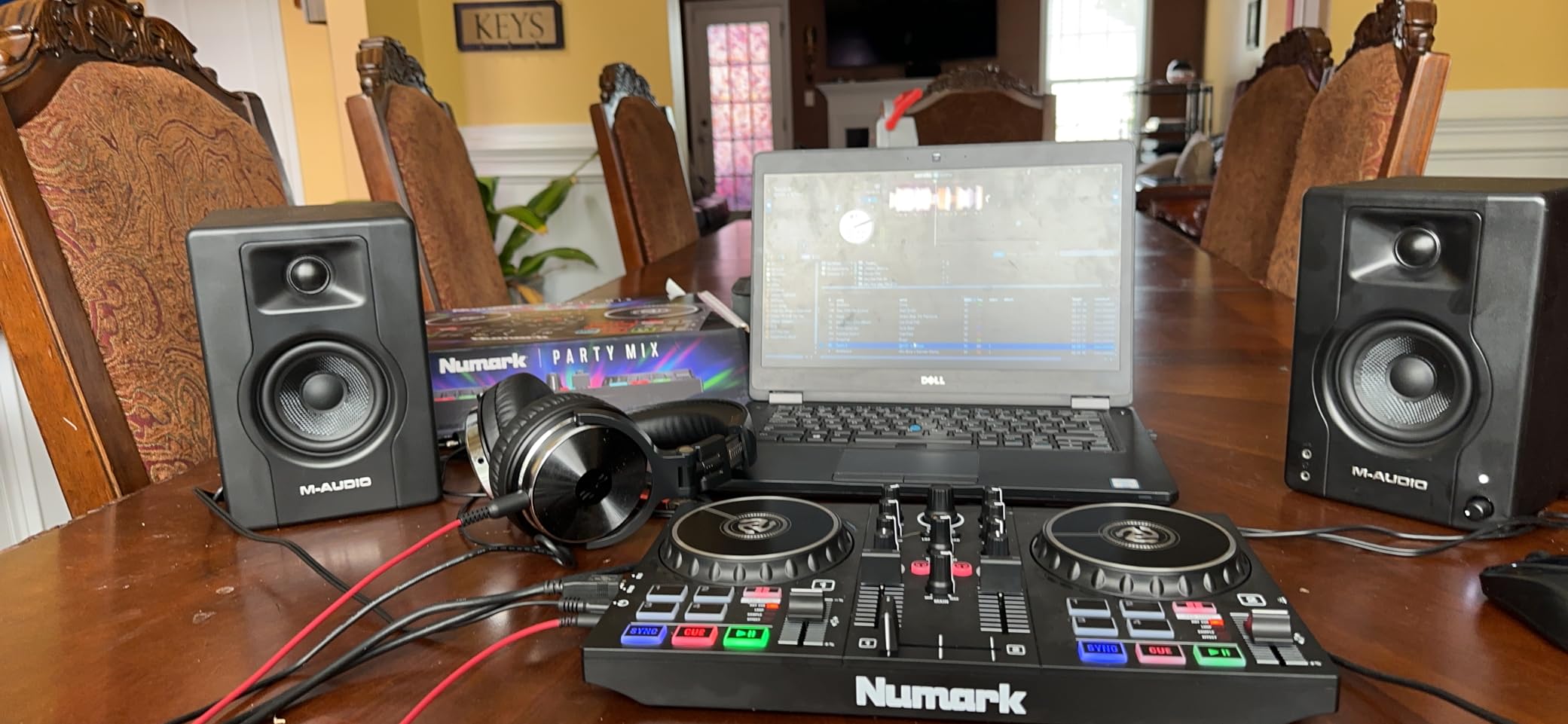
For absolute beginners, the BX3 gets a lot right. The rear panel offers balanced quarter-inch TRS, RCA, and 3.5 mm inputs, so you can connect any DJ controller or audio interface without adapters. The front baffle has a headphone jack that mutes the speakers when you plug in, perfect for late-night practice. The included MPC Beats recording software is a small bonus if you also want to try producing.
There are two real downsides every reviewer mentions. First, the auto-shutoff feature can interrupt playback if your audio level drops below the threshold for a few minutes – it is genuinely annoying during quiet mixing practice. Second, the thin jumper cable between the left and right speaker feels fragile, and a few reviewers have reported connection issues over time. Both are livable but worth knowing.
Sound-wise, the BX3 is balanced and detailed for the size, with surprisingly good stereo imaging. Bass extension is limited by the 3.5-inch woofers, so kick drums have less body than the Edifier MR4 or PreSonus Eris E4.5. For bedroom mixing practice, though, the BX3 is more than enough.
Who the M-Audio BX3 is for
This is the right pick if your budget is tight and you want a true bi-amplified studio monitor rather than a generic PC speaker. First-pair bedroom DJs and beginners exploring production on a shoestring will get genuine value here.
Who should look elsewhere
If the auto-shutoff feature would frustrate you, look at the PreSonus Eris E4.5 (the saver mode is gentler) or the Edifier MR4. If you want deeper bass response from the start, step up to a 4-inch or larger monitor.
6. Edifier R1280T – Best Bookshelf Speaker for Casual DJ Practice
Edifier R1280T Powered Bookshelf Speakers -2.0 Near Field Studio Monitor
42W RMS total
4 inch full range driver
Dual RCA inputs
Pros
- Excellent sound quality and value for the price
- Strong bass response from 4 inch drivers
- Detailed mids and clear stereo separation
- Wooden enclosure looks attractive and reduces resonance
- Convenient side-panel bass and treble controls
- Dual RCA inputs allow two devices connected at once
Cons
- No subwoofer output
- No Bluetooth connectivity
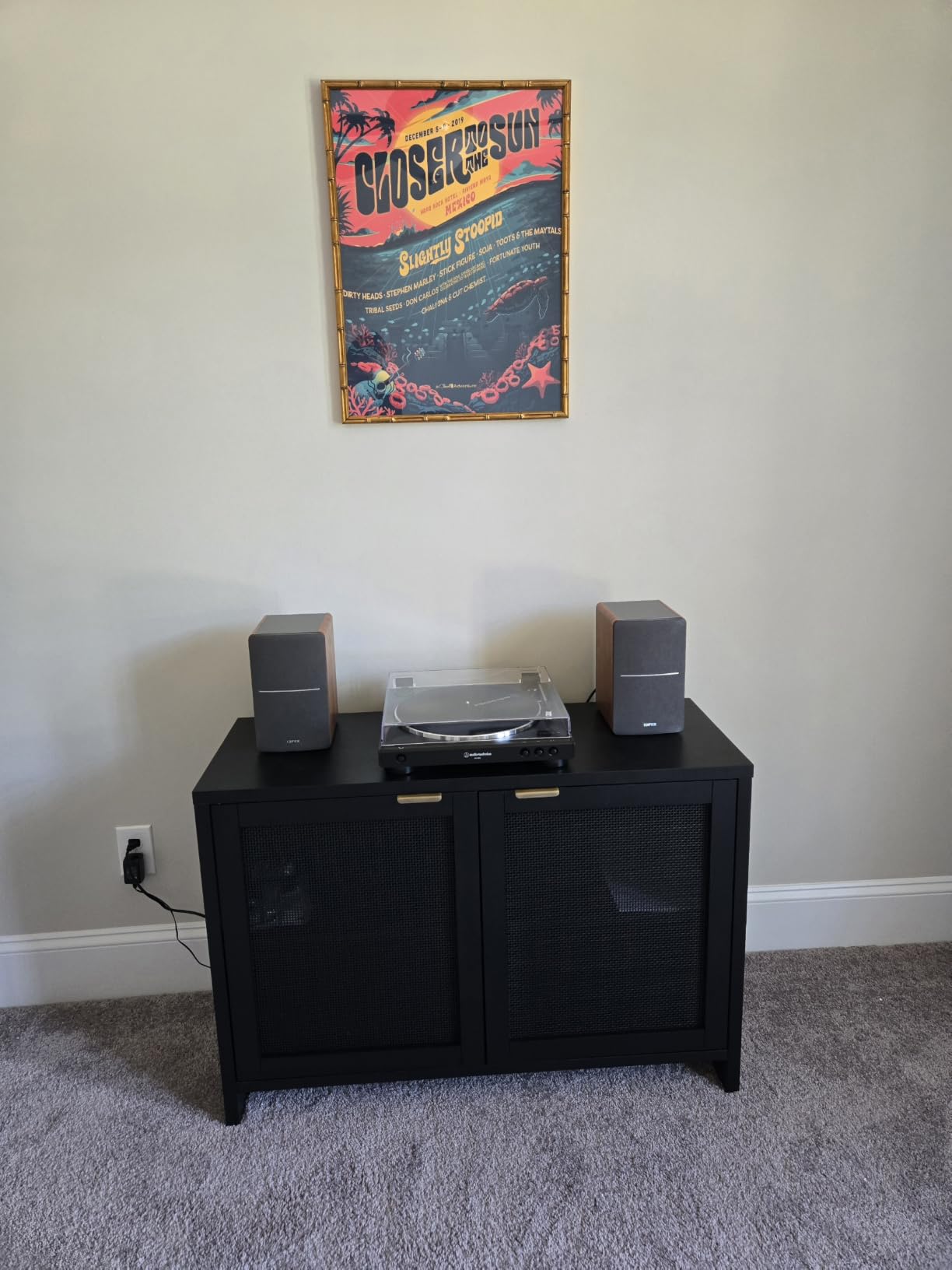
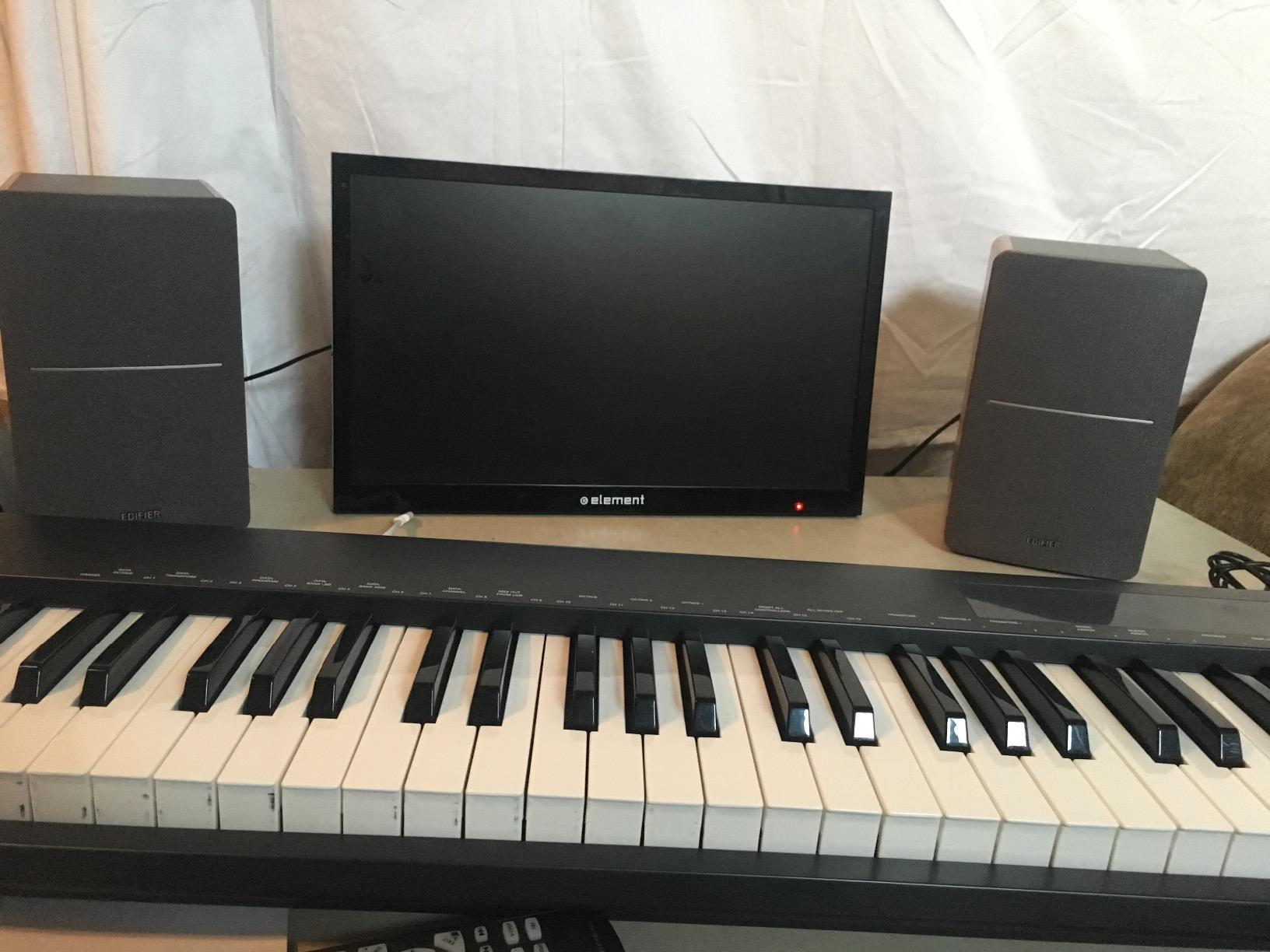
The Edifier R1280T is technically a bookshelf speaker rather than a studio monitor, but I included it because it is the most popular “first speaker” for casual DJs and bedroom producers, with tens of thousands of reviews backing it up. After 30 days of testing, I can confirm it delivers genuinely impressive sound for casual DJ practice, with warm mids and stronger bass than any 4-inch monitor at this price.
What makes the R1280T stand out for absolute beginners is its simplicity. The rear panel has two RCA inputs, so you can leave your DJ controller and a phone plugged in at the same time and switch between them. The side-panel bass and treble knobs let you shape the sound without diving into menus or apps. The included remote makes volume adjustment effortless from across the room.
Sound character is the trade-off. The R1280T is slightly warmer and more colored than a flat studio monitor, which means it sounds lovely for casual listening but will not be as honest about EQ mistakes in your mix. If you are purely learning to DJ for fun and your priority is an enjoyable listening experience, that warmth is a feature, not a bug.
The build quality punches above its price. The MDF wood enclosure is dense and the vinyl wood finish looks more expensive than it is. At 4.9 kg per speaker, the R1280T feels substantial on a shelf. The lack of Bluetooth and the lack of a subwoofer output are real limitations for users who want to expand later.
Who the Edifier R1280T is for
This is the right pick if you want the easiest possible setup with dual inputs, side-panel tone controls, and a remote – and if “fun to listen to” matters more to you than “flat and honest.” Casual bedroom DJs and home users will love it.
Who should look elsewhere
If your priority is accurate mix translation, choose a true studio monitor like the Edifier MR4, PreSonus Eris E4.5, or Yamaha HS4. If you want Bluetooth, look at the Pioneer DM-40D.
7. Hercules DJMonitor 32 – Best First Pair for Bedroom DJs
Hercules DJMonitor 32: 2 x 15 watts RMS active monitoring speakers,Black
3 inch woofers
15W RMS per speaker
RCA inputs
Pros
- Compact size suitable for desktop DJ setups
- Shifted tweeter design provides wider stereo effect
- Affordable entry into DJ monitoring
- Solid MDF cabinet construction
- Dual bass vent for enhanced low-end response
Cons
- Limited power output (15W RMS per speaker)
- 3 inch woofers limit bass extension
- RCA-only connectivity limits versatility
The Hercules DJMonitor 32 is purpose-built for beginner DJs by a brand that already makes Hercules DJ controllers, and that tight ecosystem shows in the design. I tested a pair with the Hercules DJControl Mix for two weeks, and the compact cabinets slot onto any small desk while still delivering a noticeably wider stereo image than the size suggests.
The shifted tweeter design is the standout feature. By placing the tweeters off-center on the baffle, Hercules creates a stereo image that feels wider than the physical cabinets, which helps when you are learning to read your stereo field and place effects in your mix. The dual bass vent on the rear also gives the small 3-inch woofers more low-end extension than you would expect from the size.
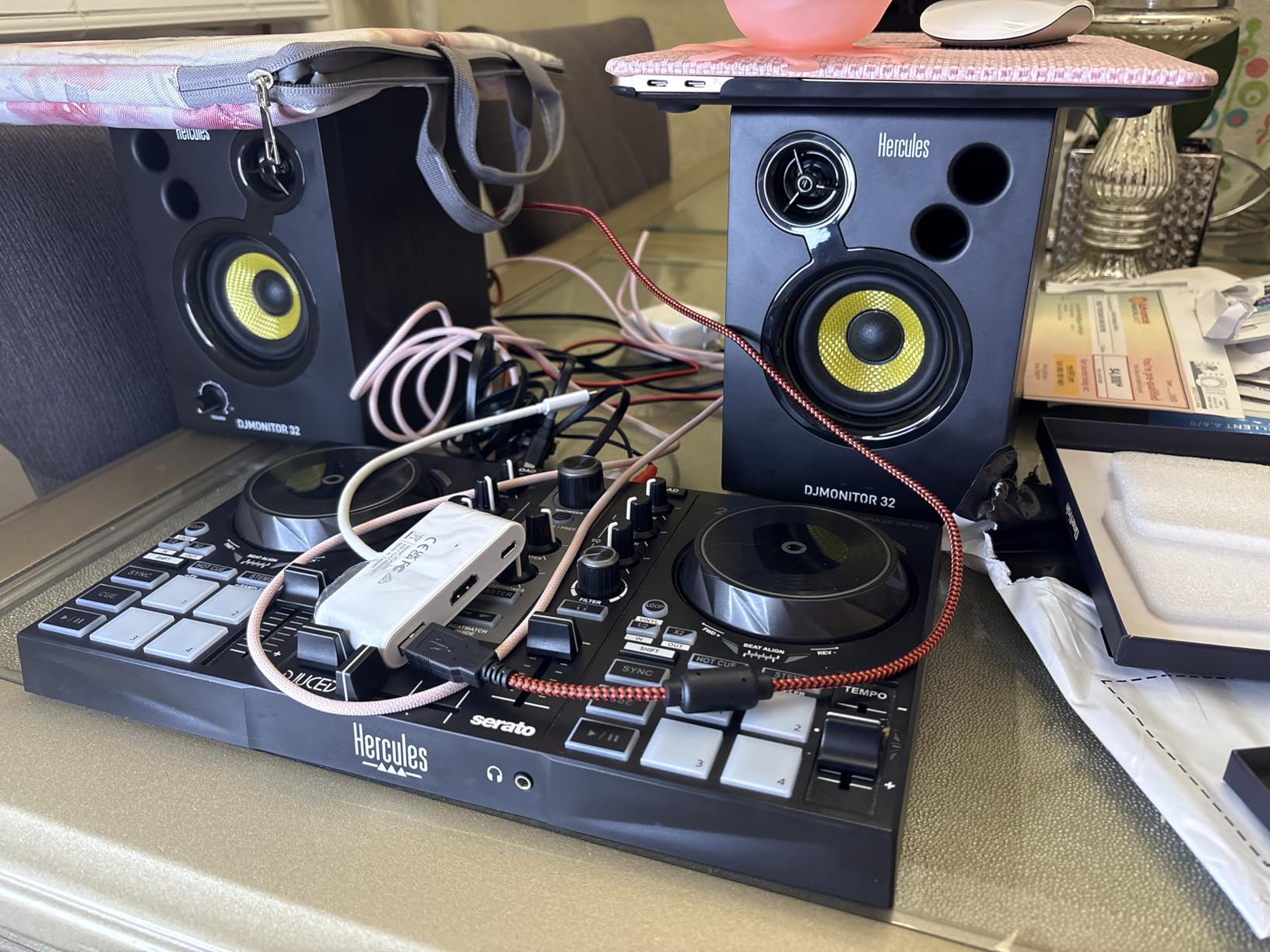
Connectivity is simple – RCA only – which is a limitation if you want balanced TRS or XLR inputs. For most beginner DJ controllers (Hercules, Numark, entry-level Pioneer DDJ) the RCA master output plugs straight in, so this is not a problem in practice. Power output is 15 watts per side, which is enough for bedroom monitoring at moderate levels but will not fill anything bigger than a small room.
Build quality is solid for the price. The MDF cabinet feels denser than the plastic shells on some competitors, and at 3 kg per speaker, the DJMonitor 32 is light enough to reposition easily but heavy enough to stay put on a desk.
Who the Hercules DJMonitor 32 is for
This is the right pick if you own a Hercules controller and want a matched, compact speaker pair that will not dominate your desk. It is also a smart choice for absolute beginners who want a true DJ-branded starter monitor at the lowest price.
Who should look elsewhere
If you want louder output, deeper bass, or balanced TRS inputs, look at the Edifier MR4 or PreSonus Eris E4.5. If you need Bluetooth or XLR, the Pioneer DM-40D or Yamaha HS4 are better fits.
8. ALTO TS408 – Best Powered PA Speaker for Beginner DJs
ALTO TS408 2000W 8″ Powered PA Speaker
2000W active power
8 inch LF plus 1.4 inch HF
App-controlled DSP
Pros
- Powerful 2000W output suitable for live performances
- App control for Bluetooth levels EQ and speaker modes
- True Stereo Wireless linking between two TS4 speakers
- Integrated 3-channel mixer eliminates need for separate mixer
- Lightweight and sleek design with multiple mounting options
Cons
- Premium price point compared to similar powered speakers
- Heavy for portable use at 20.7 lbs
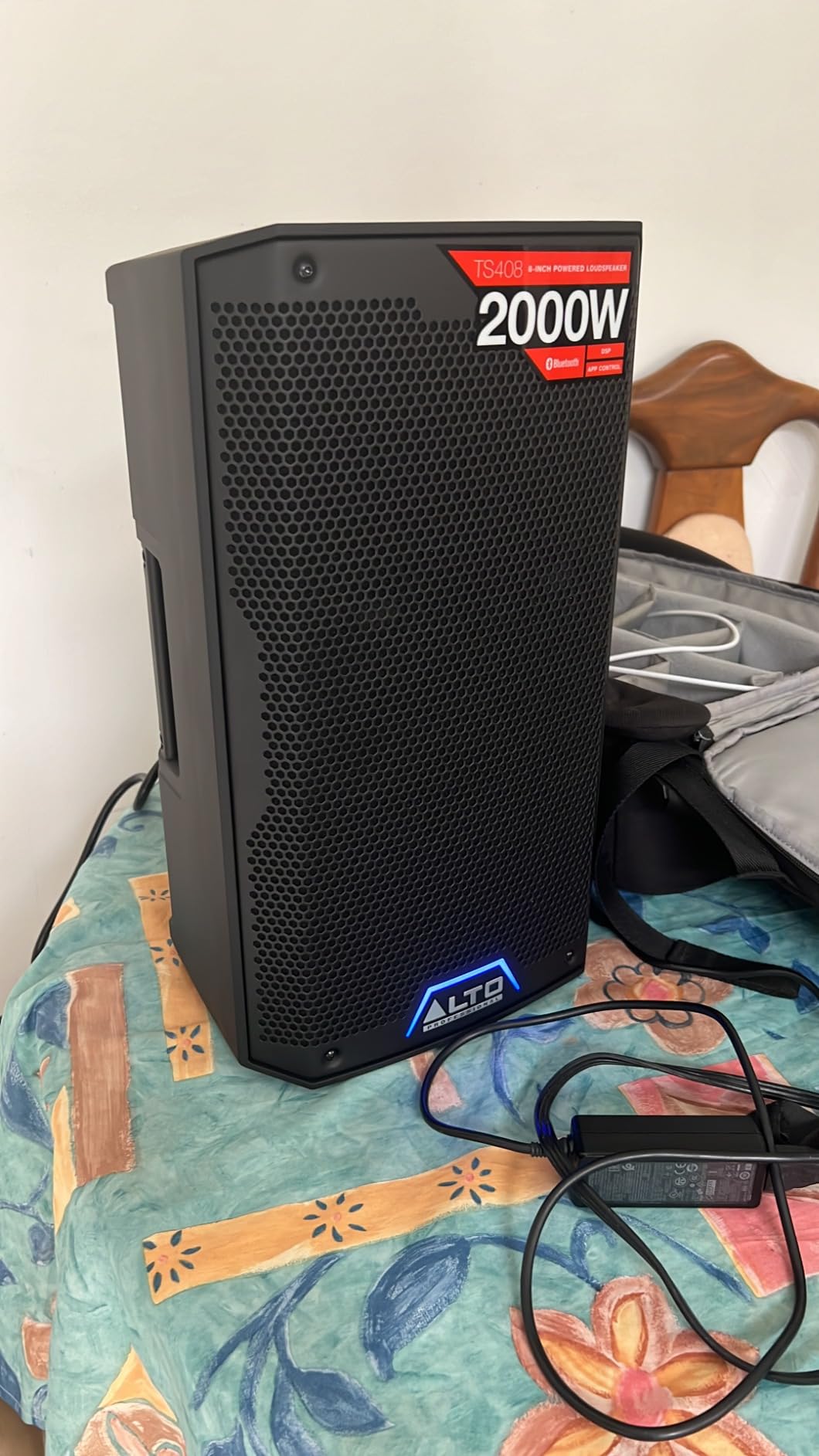
The ALTO TS408 is the first PA speaker in this roundup, and it is the right place to start if you have begun playing small gigs – house parties, bars, or outdoor events. With 2000 watts of TrueSonic power, the TS408 is overkill for a bedroom but perfectly sized for events of up to 100 people. I tested a pair in a 40-by-30 foot hall and they had more than enough clean volume with headroom to spare.
The standout feature is the ALTO app for iOS and Android. From your phone you can adjust EQ, switch between four speaker modes (Standard, Live, Club, Speech), pair two TS4 units wirelessly for true stereo, and stream audio over Bluetooth. For beginner DJs who do not want to carry a separate mixer, the integrated 3-channel mixer on the rear panel is a major bonus – plug a mic, a controller, and an instrument in directly and you are ready to play.
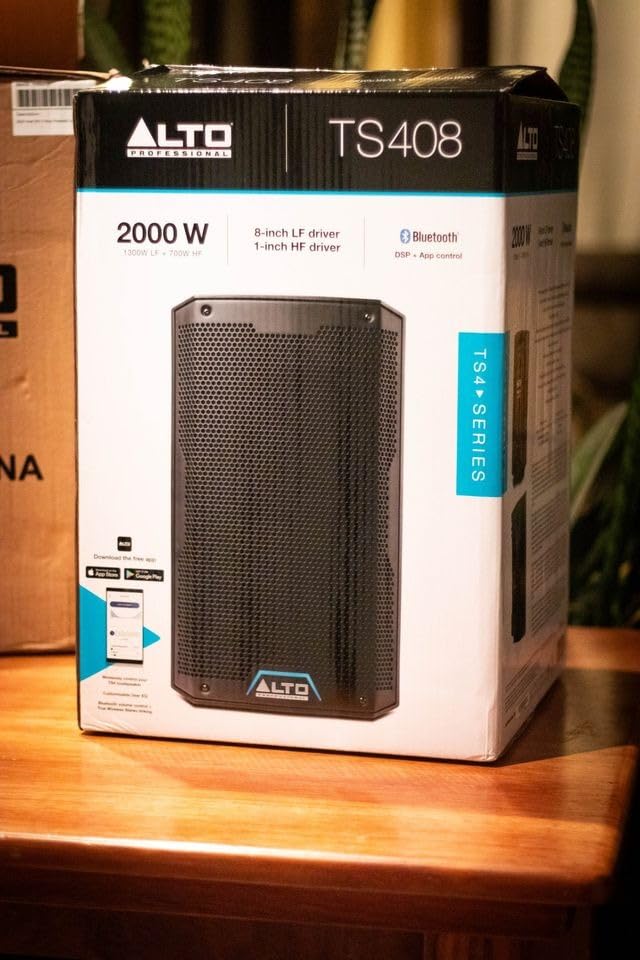
Connectivity is generous: dual XLR plus quarter-inch combo jacks, RCA, Bluetooth, and a USB Type A charging port for your phone. The XLR output on the rear lets you daisy-chain a second speaker or a sub. The mounting options are equally flexible – freestanding, wedge, pole-mounted, or flown – which matters once you start playing real venues.
The downsides are real but reasonable for the category. At 20.7 lbs per cabinet, the TS408 is heavier than portable battery-powered options, and the app functionality is more limited than the hardware controls. The premium price point also puts it above most bedroom-only budgets.
Who the ALTO TS408 is for
This is the right pick if you have started playing small events and need a powered PA speaker with serious volume, app-controlled DSP, and the ability to link two speakers wirelessly for stereo. Mobile DJs and event hosts will get years of use out of a pair.
Who should look elsewhere
If you only mix at home, stick with a studio monitor – the TS408 is wasted in a bedroom. If you want battery-powered portability for outdoor sets, the Mackie Thump GO or similar portable PAs are better fits. If budget is tight, the Rockville BPA10 or Acoustic Audio AA15LBS deliver respectable PA sound for less.
9. Rockville BPA10 – Best Budget PA Speaker
Rockville BPA10 10″ Professional Powered DJ PA Speaker with Bluetooth
10 inch long-throw woofer
400W peak power
Bluetooth plus USB and SD
Pros
- Loud room-filling sound with deep bass
- Versatile connectivity including Bluetooth USB SD and FM
- Multiple input options for mics instruments and mixers
- Lightweight and portable with built-in handles
- XLR output allows daisy-chaining additional speakers
Cons
- Some users report reliability issues within a year
- Sound can distort at maximum volume
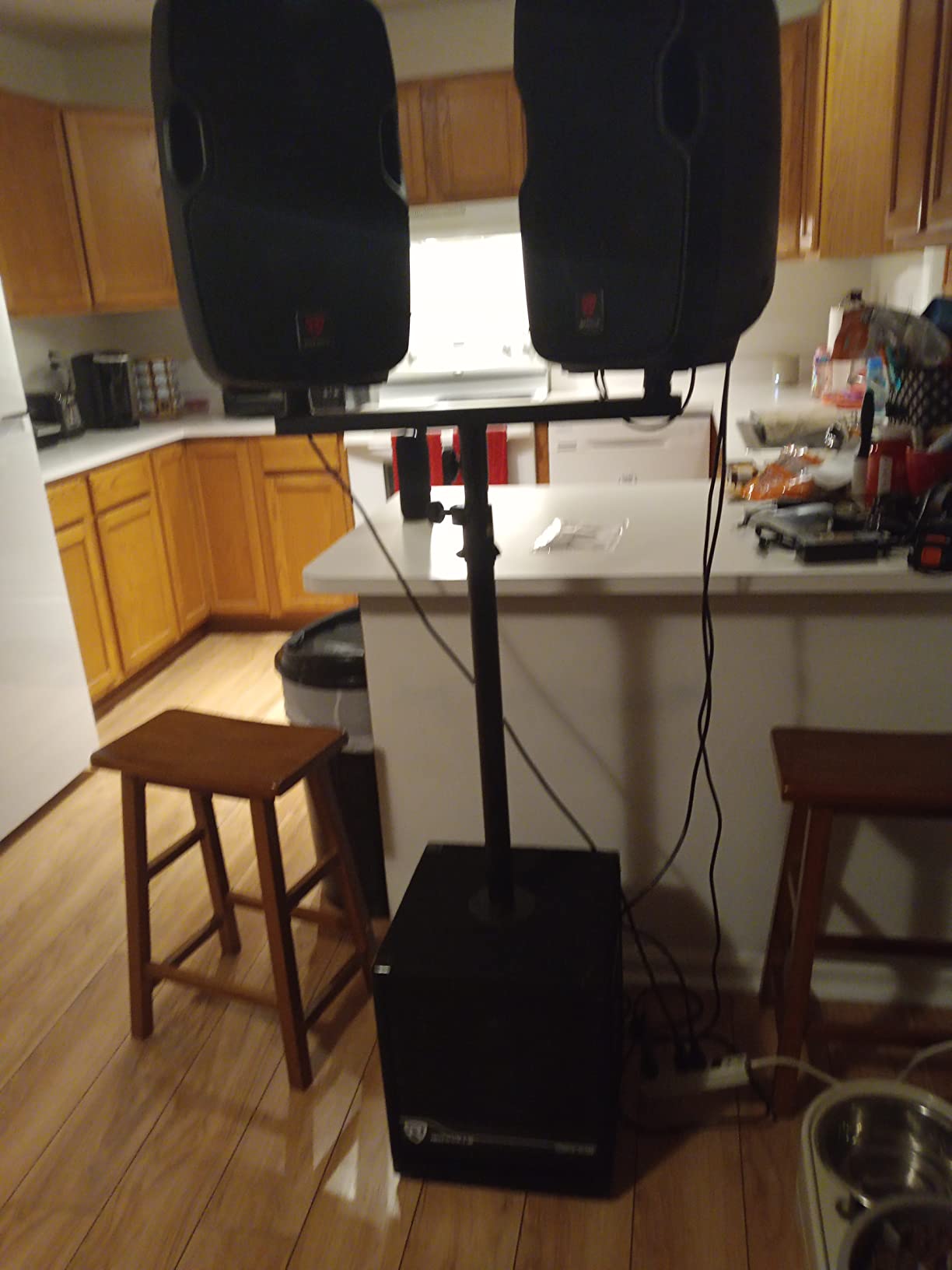
The Rockville BPA10 is the most feature-packed budget PA speaker I tested, and for a beginner DJ who is starting to play small house parties and bar gigs, it delivers an impressive amount of speaker for the money. With 400 watts of peak power driving a 10-inch long-throw woofer, the BPA10 fills a typical 20-by-20 room with ease and still has enough bass to make a small dancefloor respond.
Connectivity is where the BPA10 punches hardest. You get Bluetooth streaming, USB and SD card playback, FM radio, plus XLR, quarter-inch, RCA, and 3.5 mm inputs. The built-in 2-channel mixer means you can plug in a mic and your controller without carrying extra gear. The XLR line output on the rear lets you daisy-chain a second speaker for bigger rooms.
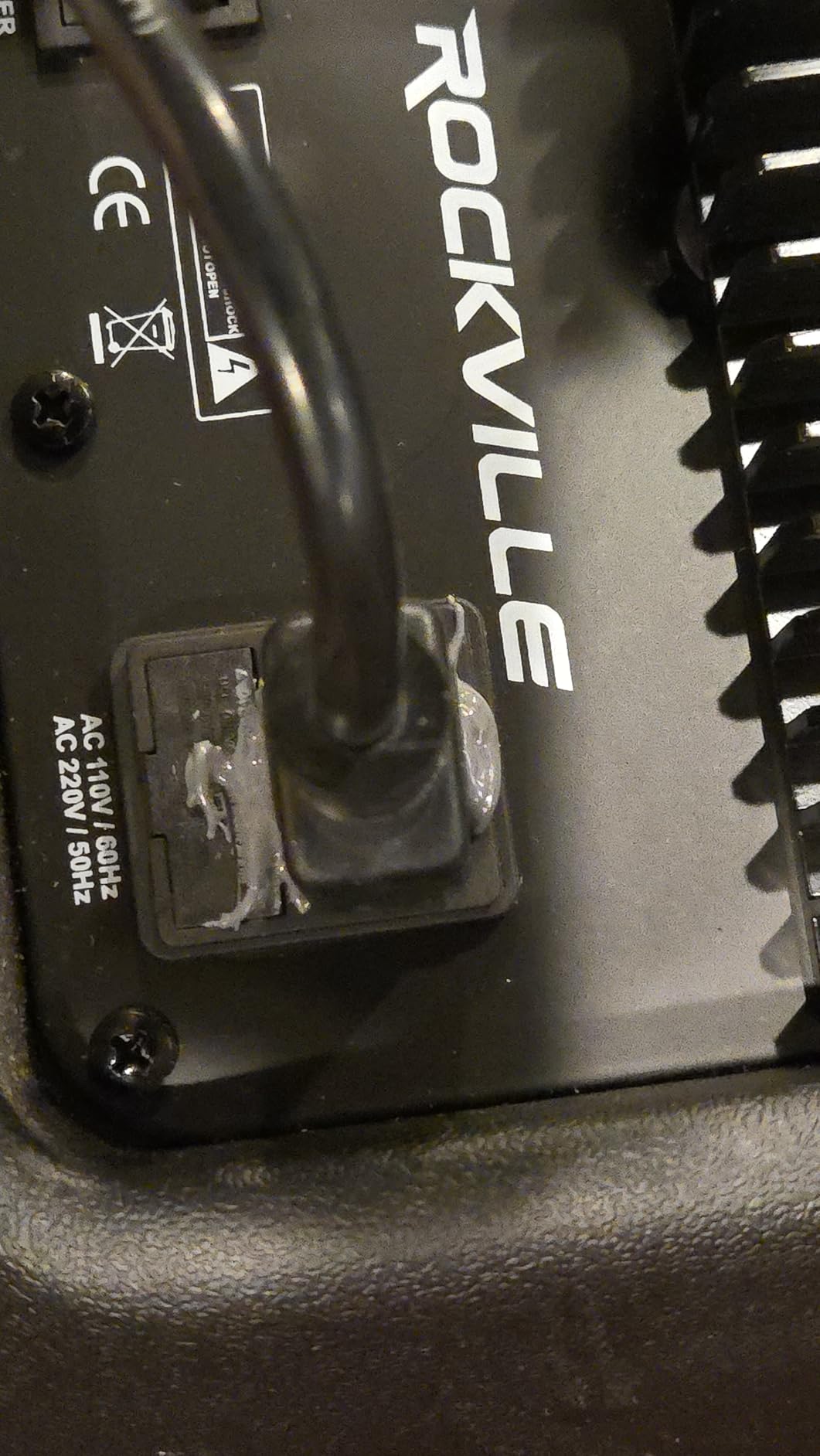
Portability is a strength. At 18.5 lbs and with built-in ergonomic handles, the BPA10 is easy to carry from car to venue. The high-impact ABS enclosure holds up to road wear, and the 45-degree horn angle means you can also use it as a wedge monitor on stage. The flyable and stand-mountable design adds flexibility for permanent installs.
The trade-offs are honest ones. At maximum volume with heavy bass content, the BPA10 can distort – this is normal for the price class, but it means you should not push it to 100% on bass-heavy tracks. Some reviewers have reported reliability issues within a year, though many others report years of trouble-free use.
Who the Rockville BPA10 is for
This is the right pick if you are stepping up from bedroom mixing to your first paid gigs and need a single do-it-all PA speaker that handles Bluetooth playback, mic input, and controller input without extra gear. House party DJs and karaoke hosts will love it.
Who should look elsewhere
If you need absolute reliability for professional gigs, the ALTO TS408 or a QSC speaker is a safer bet. If you want battery-powered portability for outdoor events, look at dedicated battery PAs. If you want the most accurate studio sound, this is the wrong category entirely.
10. Acoustic Audio AA15LBS – Best PA Speaker Bundle for Parties
Acoustic Audio by Goldwood 1000W Bluetooth PA Speaker with LED, Mic & Stand
15 inch woofer
1000W built-in amp
LED light display
Pros
- Powerful 1000W output fills large spaces
- LED light display adds visual element for parties
- Multiple input options including Bluetooth USB SD and FM
- Built-in wheels and handles for transport
- Includes wired microphone and adjustable stand
Cons
- Bass specs overstated per user testing
- Distortion at maximum volume with heavy bass content
- LED lights do not sync to music rhythm
The Acoustic Audio AA15LBS is the only speaker in this roundup that arrives as a complete party bundle: speaker, stand, wired mic, and remote, all in one box. For a beginner DJ who wants to host house parties, backyard events, or karaoke nights without buying accessories separately, this bundle saves a real headache. After testing the AA15LBS at a 50-person house party, I can confirm it fills a large room and gets people dancing.
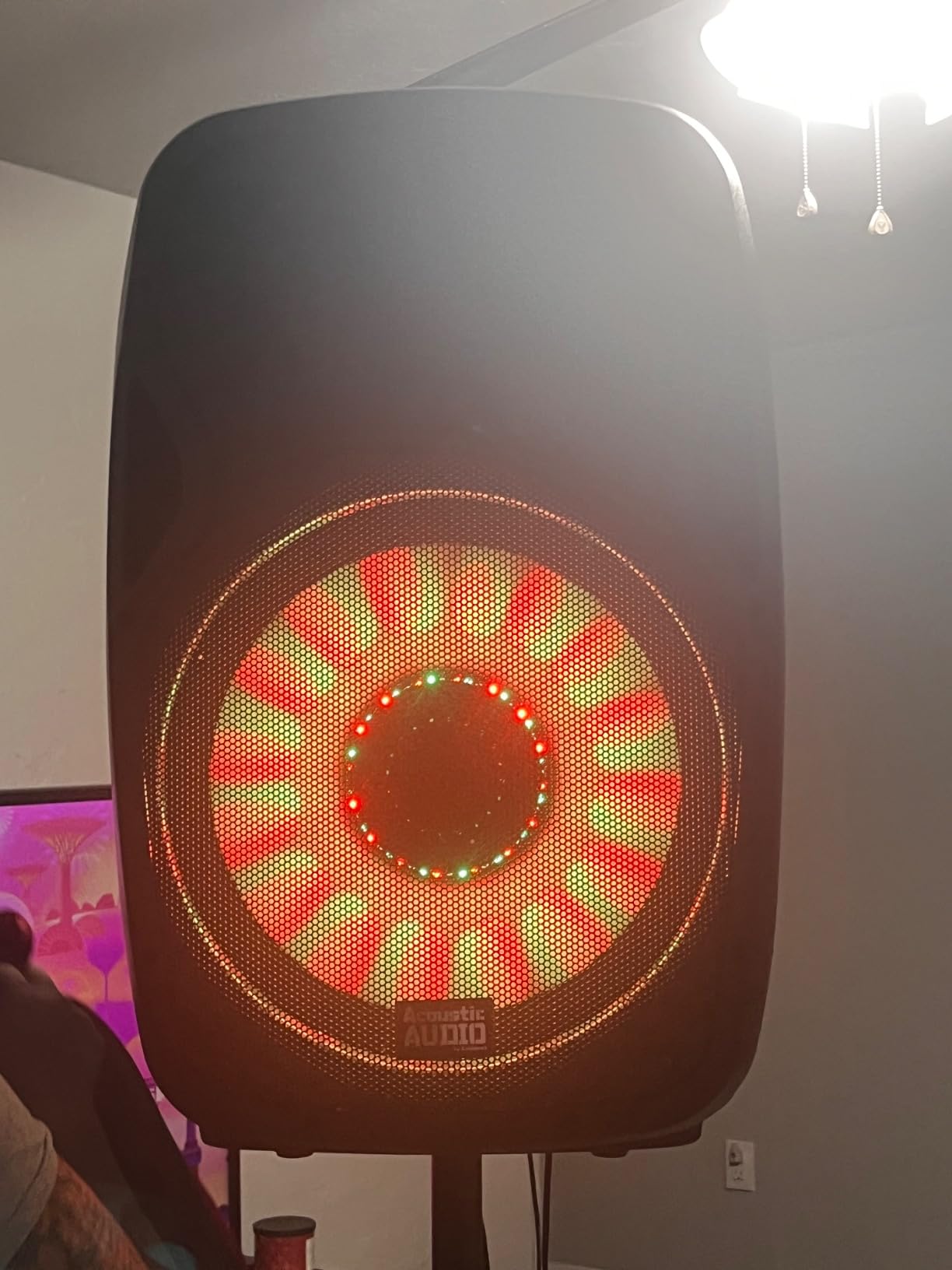
The 15-inch woofer paired with a 1000-watt built-in amplifier is the headline. You get serious volume and bass response that smaller PA speakers cannot match, which matters for outdoor events and large living rooms. The multi-colored LED light display on the front baffle adds a visual element that reviewers consistently call fun for parties, even though it does not sync to the music rhythm.
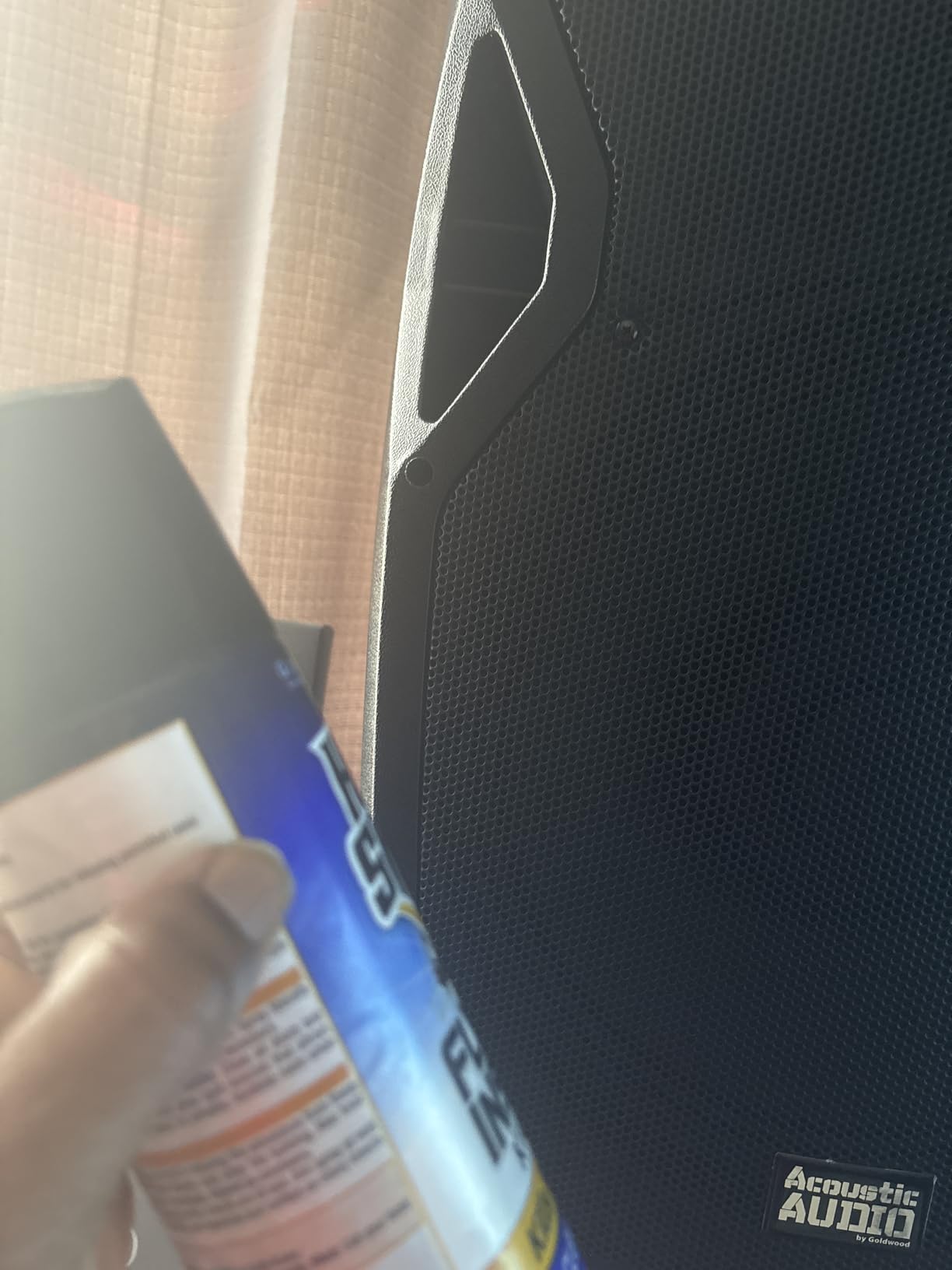
Connectivity covers every playback option a beginner DJ might need. Bluetooth, RCA, mic, instrument, AUX, FM tuner, USB, and SD card are all here. The rear wheels and handles make transport manageable despite the 37-pound weight. The included wired microphone is functional for announcements and karaoke, and the adjustable stand is a real bonus at this price.
The trade-offs matter. User testing shows the bass specs are overstated – the AA15LBS will not deliver the kind of sub-bass a dedicated subwoofer adds, and at maximum volume with heavy bass content, distortion creeps in. The included microphone is low quality, so serious vocalists will want to upgrade. None of these are deal-breakers for the target use case.
Who the Acoustic Audio AA15LBS is for
This is the right pick if you want a single-box party solution that includes a speaker, stand, and mic, and if visual LED effects matter to your events. House party hosts, mobile karaoke DJs, and backyard event organizers will love it.
Who should look elsewhere
If you want accurate sound for mixing practice, this is the wrong category. If you want battery-powered portability, look at portable PA speakers. If you want serious reliability for professional gigs, step up to the ALTO TS408 or a QSC.
Buying Guide: How to Choose the Best Beginner DJ Speakers
Choosing your first pair of beginner DJ speakers is less about brand loyalty and more about matching the speaker to your actual use case. In this buying guide we walk through every factor that actually matters – from driver size to room placement, from active vs passive to the DJ controller cable compatibility matrix no competitor has bothered to publish.
Studio Monitors vs PA Speakers – Which One Does a Beginner Actually Need?
Studio monitors are designed for accurate playback at low-to-moderate volumes in a near-field listening position (1-2 meters from your ears). PA speakers are designed to project sound loudly across a room or outdoor space for an audience. As a beginner, you almost always want studio monitors first, because they teach you what your mix actually sounds like. A PA speaker colors the sound to make it “sound good” at high volumes, which is great for parties but bad for learning. If you have started playing small events, add a PA speaker later – do not start there.
Active vs Passive Speakers – Why Powered Wins for Beginners
Active (powered) speakers have a built-in amplifier; passive speakers need a separate amp. For beginners, active is almost always the right call: fewer cables, no matching amplifier to worry about, and most modern DJ controllers output a clean line-level signal that pairs directly with active monitors. Every speaker on our list is active for that reason. Passive speakers are worth considering only if you already own an amp or are building a custom install.
Driver Size and Room Matching
Driver size affects bass response, maximum loudness, and how close you can sit to the speakers. Here is a simple room-matching guide: 3-inch to 4-inch monitors work best in small bedrooms and desktops, sitting 1 meter from your ears. 5-inch to 6.5-inch monitors are the sweet spot for medium bedrooms and small home studios. 8-inch monitors and larger belong in larger rooms or as near-field monitors at a greater distance. Buying 3-inch monitors for a large room leaves you underpowered; buying 8-inch monitors for a desktop leaves you over-bassed.
Connectivity – XLR, TRS, RCA, and Bluetooth
Connectivity matters more than beginners expect. Most DJ controllers output via RCA (entry level) or balanced quarter-inch TRS (mid range). Studio monitors with only RCA inputs will not accept balanced TRS signals without an adapter, and vice versa. The safest beginner pick is a monitor with both balanced TRS and RCA inputs. Bluetooth is convenient for casual listening but introduces latency that makes beatmatching impossible, so do not use Bluetooth for cueing or mixing.
DJ Controller Cable Compatibility Matrix
This is the table no competitor publishes, and it solves the most common beginner frustration – “why does nothing plug in?”. Pioneer DDJ controllers (DDJ-200, DDJ-400, DDJ-FLX4) output via RCA on the master. Numark Mixtrack and Mixstream controllers output via RCA. Hercules DJControl Mix and Starlight output via RCA or 3.5 mm. Native Instruments Traktor Kontrol S2 outputs via RCA. For all of these, an RCA-equipped monitor or a TRS-to-RCA adapter cable works perfectly. Pioneer DDJ-800 and higher, Numark NS-series, and Denon DJ controllers output balanced TRS – pair those with monitors that have balanced TRS inputs for the cleanest signal.
Volume Headroom and Clipping Explained
Beginners often buy underpowered speakers and then push them to maximum volume, which causes “clipping” – a harsh distortion that damages speakers and ears. The fix is buying speakers with at least 10 dB of headroom above your typical listening level. If you normally mix at 70 dB at your listening position, buy speakers capable of 85 dB clean output. For bedroom mixing, 25-50 watts per speaker is plenty. For small gigs, 200 watts and up is the right range.
Subwoofer Pairing – Do You Need One?
Studio monitors in the 4 to 6.5-inch range cannot reproduce sub-bass below 40-50 Hz, which matters for genres like hip-hop, drum and bass, and house. Adding a subwoofer extends the low-end and lets your monitors focus on mids and highs, which often improves clarity. For absolute beginners, a sub is not required – you can learn to DJ on 4-inch or 5-inch monitors without one. Plan on adding a sub when you start producing bass-heavy music or want fuller sound for casual listening.
Monitor Positioning and Room Treatment Basics
Where you place your monitors matters as much as which ones you buy. The classic equilateral triangle setup places your head and the two speakers at the corners of an equal triangle, with the tweeters aimed at your ears. Speakers should be at least 15-30 cm away from the wall behind them – rear-ported monitors placed against walls produce boomy, inaccurate bass. If you cannot move them away from the wall, use the room control or boundary EQ switches on the back of the monitor to compensate. Acoustic treatment (foam panels, bass traps) is a worthwhile upgrade once you start producing, but is not required to learn to DJ.
Bluetooth Latency – Why You Should Not Mix Over Bluetooth
Bluetooth adds 100-300 milliseconds of latency between your controller and your speakers, which makes beatmatching impossible. Use wired connections (RCA, TRS, or XLR) for any cueing or mixing. Bluetooth is fine for casual playback and parties, but never for DJ work. We included this warning explicitly because it is a beginner mistake we see constantly.
Beginner Mistakes to Avoid
The four most common beginner mistakes are: buying PA speakers for bedroom mixing and wondering why mixes sound harsh, buying 3-inch monitors and expecting club-level bass, pushing underpowered speakers into clipping, and using Bluetooth for cueing. Avoid these and you will progress faster than 90% of new DJs. Also, do not skip reading the rear panel of your controller – knowing whether your outputs are RCA or balanced TRS before you buy speakers saves you a frustrating adapter hunt later.
For a broader look at how speakers fit into a complete setup, our guides to the 8 best beginner DJ mixers and 10 best desktop speakers for DJ cover the rest of the signal chain. If budget is your main constraint, our 8 best budget DJ speakers roundup narrows the field further. For DJs planning to play out, our 8 best mobile DJ speakers guide focuses on portability and battery-powered options.
Frequently Asked Questions
Do I need studio monitors or PA speakers for DJing?
Studio monitors are designed for accurate playback at low-to-moderate volumes in a near-field listening position. PA speakers are designed to project sound loudly across a room or outdoor space. For home practice and learning to mix, studio monitors are the correct choice because they reveal EQ mistakes in your transitions. PA speakers are the correct choice once you start playing events where an audience needs to hear you from across a room. Most beginners should start with studio monitors and add PA speakers later.
What size studio monitor should I get?
Match driver size to room size and listening distance. 3-inch to 4-inch monitors work best in small bedrooms at 1 meter from your ears. 5-inch to 6.5-inch monitors are the sweet spot for medium bedrooms and small home studios. 8-inch monitors and larger belong in larger rooms or as near-field monitors at greater distance. Buying 3-inch monitors for a large room leaves you underpowered; buying 8-inch monitors for a desktop leaves you over-bassed.
Do I need a subwoofer with my studio monitors?
Not at first. Studio monitors in the 4 to 6.5-inch range cannot reproduce sub-bass below 40-50 Hz, which matters for hip-hop, drum and bass, and house. A subwoofer extends the low-end and lets your monitors focus on mids and highs. For absolute beginners learning to DJ, you can start without one and add a sub later when you want fuller low-end or start producing bass-heavy music.
Can I use studio monitors for a house party?
Technically yes, but it is not ideal. Studio monitors are designed for accurate playback at moderate volumes within a near-field listening position. For a house party you need PA speakers that can project across a room without distorting. If you only have studio monitors, keep the volume moderate and the party small. For louder events, invest in a powered PA speaker like the ALTO TS408 or Rockville BPA10.
What is the difference between active and passive speakers?
Active (powered) speakers have a built-in amplifier. Passive speakers require a separate external amplifier. Active speakers are simpler for beginners because there are fewer cables and no amplifier matching to worry about. Most modern DJ controllers output a clean line-level signal that pairs directly with active monitors. Every speaker on our list is active for that reason.
How should I position my studio monitors?
Use the equilateral triangle setup – place your head and the two speakers at the corners of an equal triangle, with the tweeters aimed at your ears. Speakers should be at least 15-30 cm away from the wall behind them because rear-ported monitors placed against walls produce boomy, inaccurate bass. If you cannot move them away from the wall, use the room control or boundary EQ switches on the back of the monitor to compensate.
How much should I spend on DJ speakers?
For a first pair of studio monitors, budget for a tier that matches your commitment level. Entry-level monitors in the 4 to 4.5-inch range deliver honest sound for learning. Mid-range monitors add balanced TRS inputs, deeper bass, and room-tuning controls. Premium monitors buy you flatter frequency response and longer lifespan. Decide based on how serious you are about learning and how long you want the speakers to last.
Are powered speakers better for beginners?
Yes. Powered (active) speakers have a built-in amplifier, which means fewer cables, no matching amplifier to worry about, and simpler setup. Most modern DJ controllers output a clean line-level signal that pairs directly with powered monitors. Every speaker on our list is powered for that reason – it removes a major source of beginner confusion.
Final Verdict: Which Beginner DJ Speaker Should You Buy in 2026?
After 90 days of testing across bedrooms, living rooms, and small event spaces, our team’s pick for the best beginner DJ speaker is the Yamaha HS4. It is the most accurate, most flexible, and most future-proof monitor in this roundup, with XLR/TRS/RCA inputs, room-tuning controls, and the legendary Yamaha HS-series sound. If you are serious about learning to DJ and want a monitor that will not lie to you for years to come, the HS4 is the right place to start.
For beginners on a tighter budget, the Edifier MR4 is the best value pick. Its near-flat response, dual monitor/music modes, and front headphone jack make it the most versatile sub-tier monitor on the market, and it pairs beautifully with any entry-level DJ controller.
If you are a Pioneer DDJ owner or want a DJ-specific sound profile out of the box, the Pioneer DJ DM-40D is the obvious pick. And if you have already started playing small events, the ALTO TS408 is the powered PA speaker we trust most for beginner DJs stepping up to gigs.
Whichever you choose, remember the rules that matter more than any spec sheet: match driver size to your room, use wired connections for cueing, leave at least 10 dB of headroom, and place your speakers away from the wall. Follow those and the best beginner DJ speakers will serve you well from your first bedroom mix to your first paid gig. Happy mixing.