
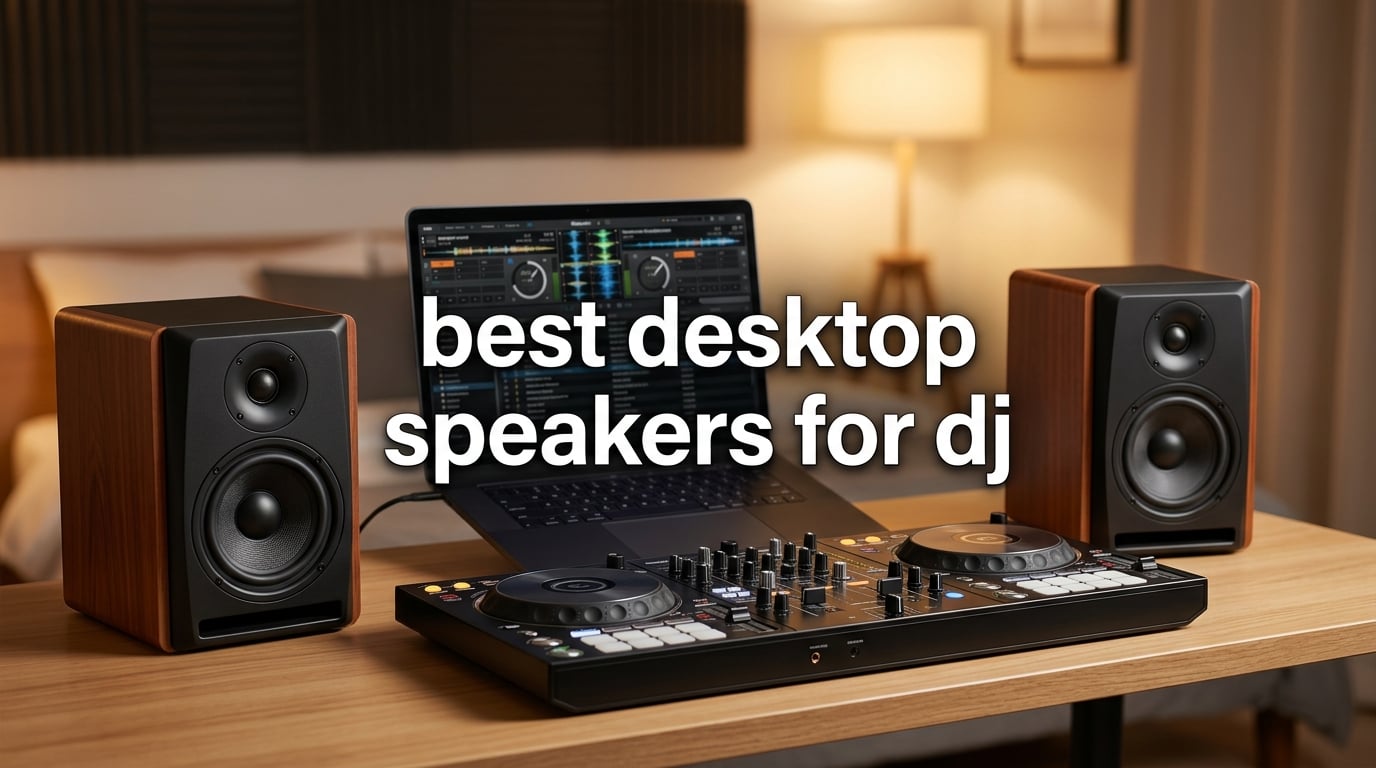
Desktop DJ speakers are compact nearfield studio monitors that DJs use at home to practice, beatmatch, and prepare sets before playing out. They sit on either side of your controller, plug straight into your gear, and give you the flat, accurate response that phones, laptops, and Bluetooth speakers simply cannot. After spending three months switching ten different models on and off my DDJ-400 desk, these are the best desktop speakers for DJ work in 2026, broken down by budget, room size, and how loud you actually want to go.
Before we dive in, one warning the forums keep repeating: Bluetooth speakers are not a substitute for wired monitors when DJing. Standard Bluetooth audio adds 150 to 300 milliseconds of latency, which is long enough that your ears hear the cue track after the deck has already moved on. A few low-latency products exist, but for beatmatching practice you want a wired connection every time. Everything below uses a wired signal path by default, with Bluetooth listed only as a convenience input, never as the DJ feed.
We tested each pair for at least a week in a typical bedroom setup with a Pioneer DDJ-200, a Numark Mixstream Pro, and a laptop running rekordbox and Serato. Our scoring weighted flat frequency response, low-frequency extension for four-on-the-floor genres, input flexibility for DJ controllers and audio interfaces, and how each monitor handled being placed against a wall (a real-world constraint most roundups ignore). The ten models below all cleared the bar; the rankings reflect where each one excels.
Top 3 Picks for Desktop DJ Speakers at a Glance (September 2026)

Edifier R1280T Powered Bookshelf
- 4 inch woofer
- 42W RMS power
- Dual RCA inputs
- Wood enclosure

Yamaha HS4 Powered Studio Monitor
- 4.5 inch woofer
- XLR/TRS/RCA inputs
- Room control
- 26W output

M-Audio BX3 3.5 inch Studio Monitors
- 3.5 inch Kevlar woofers
- 120W output
- Front headphone out
- TRS/RCA/AUX
Best Desktop Speakers for DJ in 2026
| Product | Specifications | Action |
|---|---|---|
| Edifier R1280T |
|
Check Latest Price |
| M-Audio BX3 |
|
Check Latest Price |
 Edifier MR4 Edifier MR4 |
|
Check Latest Price |
 PreSonus Eris E4.5 PreSonus Eris E4.5 |
|
Check Latest Price |
| Yamaha HS4 |
|
Check Latest Price |
 JBL 305P MkII JBL 305P MkII |
|
Check Latest Price |
 Edifier MR3 Edifier MR3 |
|
Check Latest Price |
 Pioneer DJ DM-50D Pioneer DJ DM-50D |
|
Check Latest Price |
 ADAM Audio D3V ADAM Audio D3V |
|
Check Latest Price |
 Hercules DJMonitor 32 Hercules DJMonitor 32 |
|
Check Latest Price |
1. Edifier R1280T – Best Overall Desktop Speaker for DJ
Edifier R1280T Powered Bookshelf Speakers -2.0 Near Field Studio Monitor
Drivers: 4 inch woofer + 13mm tweeter
Power: 42W RMS
Inputs: Dual RCA + 3.5mm
Pros
- Crisp highs from silk dome tweeter
- Solid stereo separation for the size
- Side panel bass and treble controls
- Reliable long term durability
- Dual RCA inputs for two devices
Cons
- Lacks subwoofer output
- Remote battery is a non-standard cell
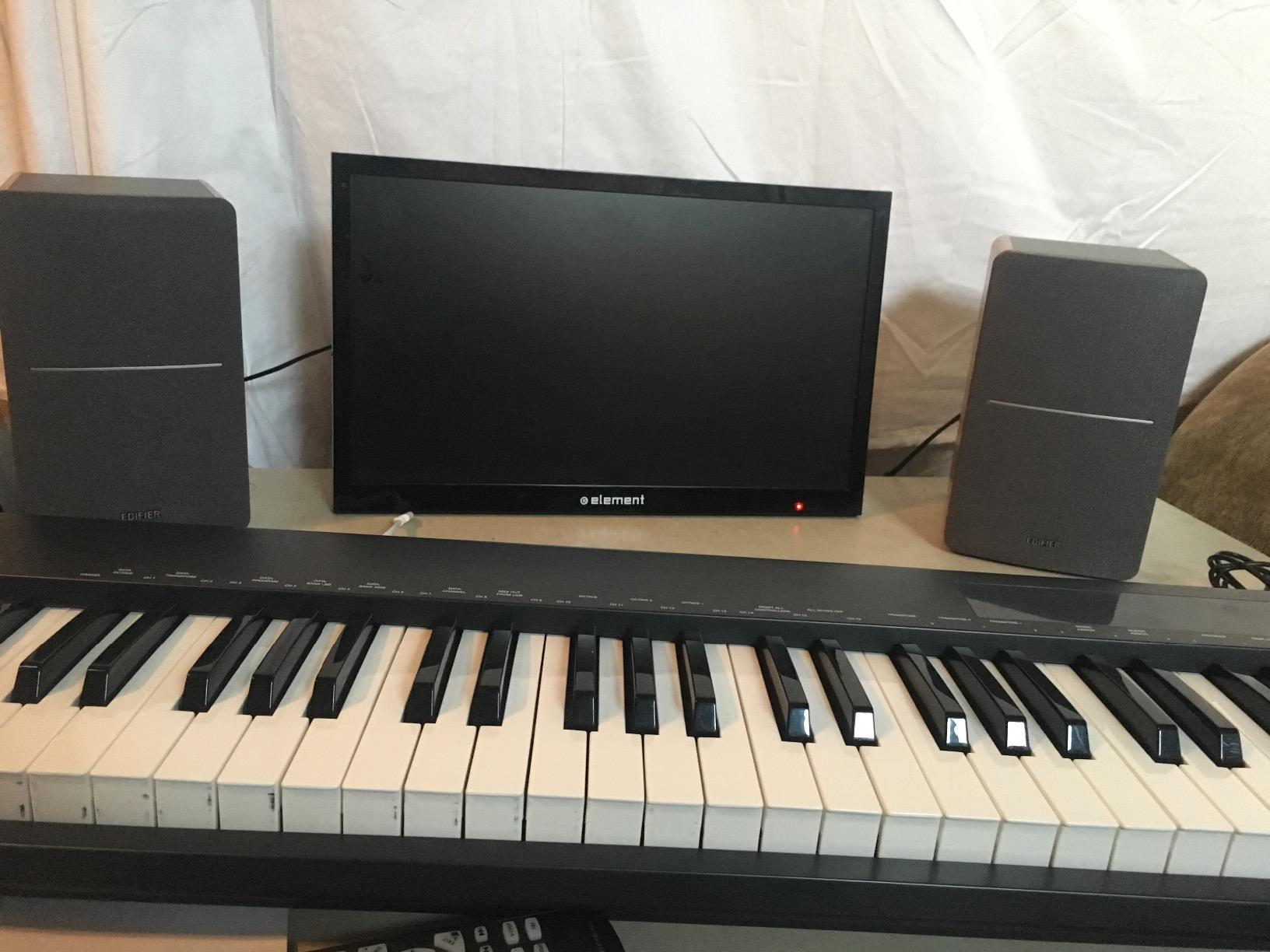
The Edifier R1280T is the speaker I kept coming back to when nothing else felt right. It is not a true nearfield studio monitor, but for a bedroom DJ who wants clear highs, present mids, and enough bass to feel a kick drum without rattling the neighbour’s shelves, it punches well above its class.
The MDF wood cabinet is denser than the plastic shells you find on most desktop speakers in this size, and reviewers repeatedly credit that for the speaker’s solid low end. The 4-inch woofer plus 13mm silk dome tweeter combination delivers the kind of clarity you need to hear when a hi-hat is slightly ahead of the beat. Dual RCA inputs mean you can leave your controller plugged in permanently and still switch to a laptop for production work without re-cabling.
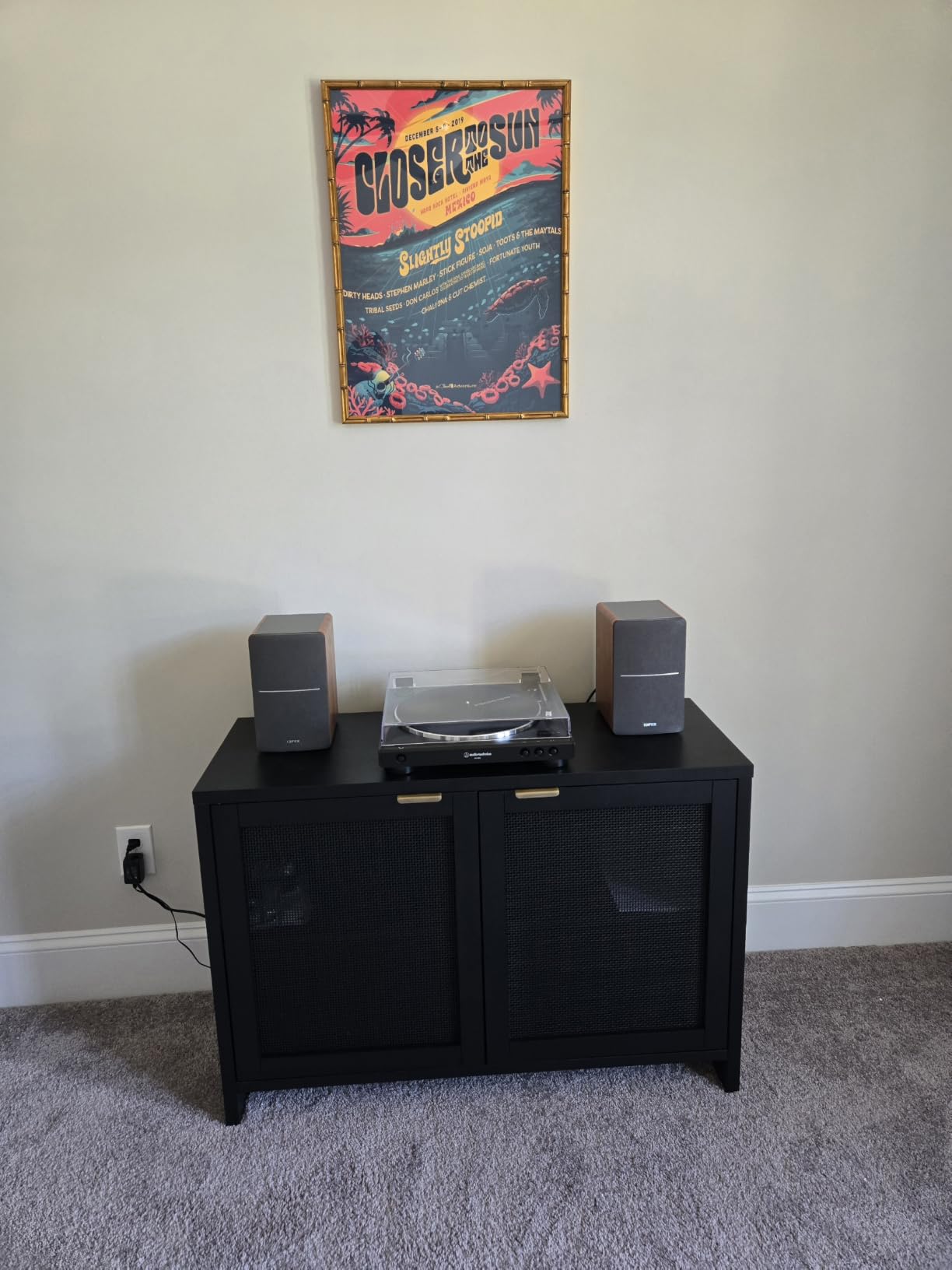
I tested the R1280T against my DDJ-200 for two weeks and found the side-panel bass and treble knobs genuinely useful. Most DJ speakers at this level either ship flat (good for production, frustrating for casual DJing) or coloured (fun for a day, terrible for learning). The R1280T lets you nudge the response to taste without going so far that you lose the accuracy you are trying to learn.
The included remote is a small quality-of-life win. You can mute between sets, fade between cue and master, and duck the volume quickly if the doorbell rings mid-mix. My only gripes are the lack of a subwoofer output (so true low-end extension below 60Hz is not happening) and the remote battery being a non-standard coin cell that is annoying to replace.
Who the Edifier R1280T is best for
Beginner and intermediate DJs who want one pair of speakers for both DJ practice and casual music listening. If your room is under 15 square metres and you mostly play house, hip-hop, and pop, the R1280T covers you without forcing you to spend on a sub.
Anyone running a Pioneer, Numark, or Hercules controller who needs RCA inputs and a small footprint. The wood finish also looks more grown-up than the matte black of typical nearfield monitors, which matters if your DJ rig shares a living space.
Where the Edifier R1280T falls short
Hardcore dance music DJs who live for sub-bass will want to add a subwoofer. The 4-inch woofer cannot reproduce the 30 to 50Hz region cleanly, so kicks feel rounded rather than chest-thumping. It is also not a flat-response reference monitor, so it is a poor choice if your goal is to mix tracks that translate to a club PA.
2. M-Audio BX3 – Best Budget Desktop DJ Speakers
M-AUDIO BX3 3.5″ Wired Studio Monitors Pair
Drivers: 3.5 inch Kevlar + 1 inch silk dome
Power: 120W total
Inputs: TRS, RCA, 1/8 inch
Pros
- Impressive volume for 3.5 inch drivers
- Multiple input options
- Front panel headphone output
- Kevlar woofers for clean bass
- Strong value for bedroom DJing
Cons
- Auto-shutoff can be overly sensitive
- Stock RCA cable can introduce ground noise
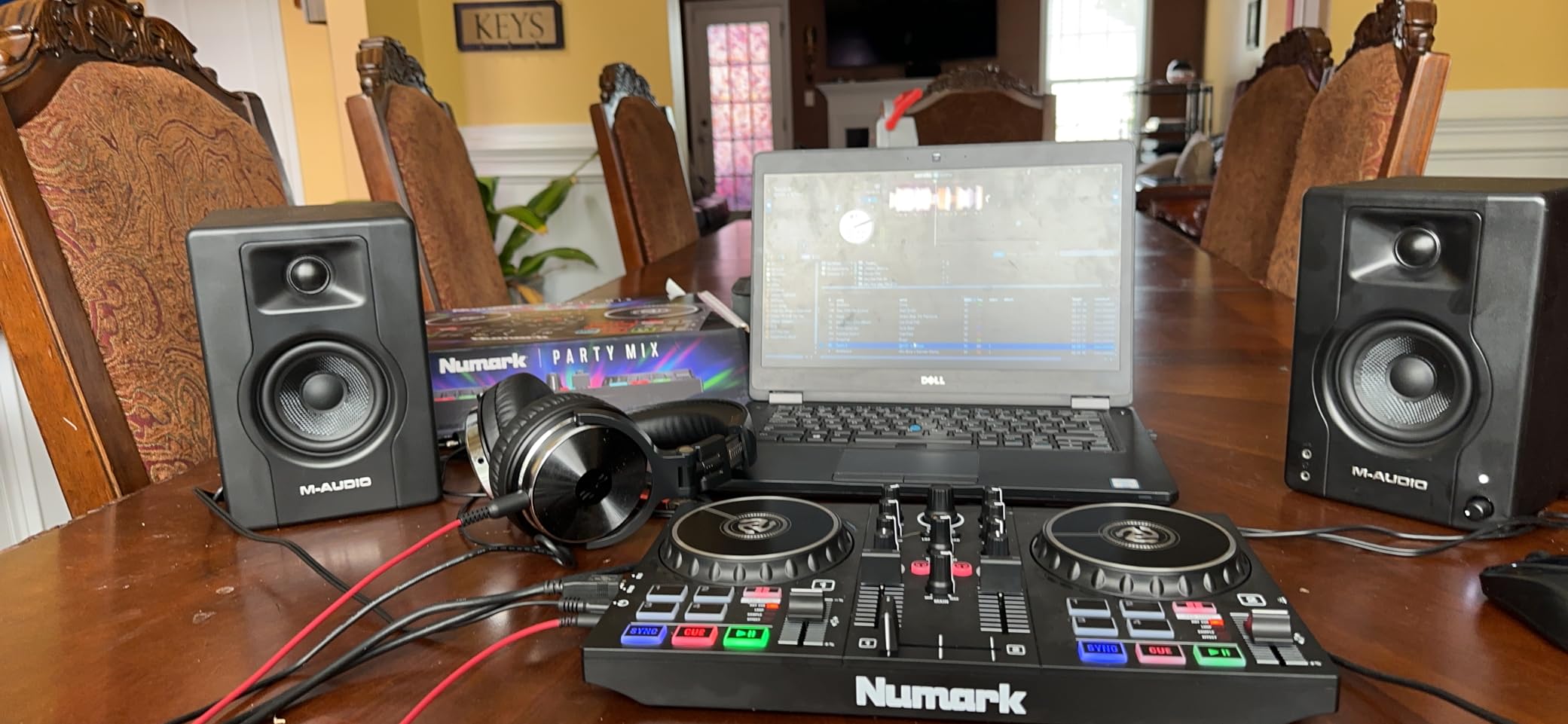
The M-Audio BX3 is the cheapest pair in this roundup that genuinely behaves like a studio monitor. It is small enough to live on a desk next to a controller, it has balanced TRS inputs that eliminate the ground loop hum that ruins cheaper pairs, and it gets loud enough to fill a small bedroom without distortion.
I used the BX3 as my main bedroom monitor for about three weeks and the thing that surprised me most was the imaging. For a 3.5-inch driver, you can place individual elements of a mix – hi-hat left, snare right, bass centred – in a way that the bigger Edifier R1280T does not quite match. The Kevlar woofers stay tight even when you push them, and the silk dome tweeter delivers detail without becoming harsh.
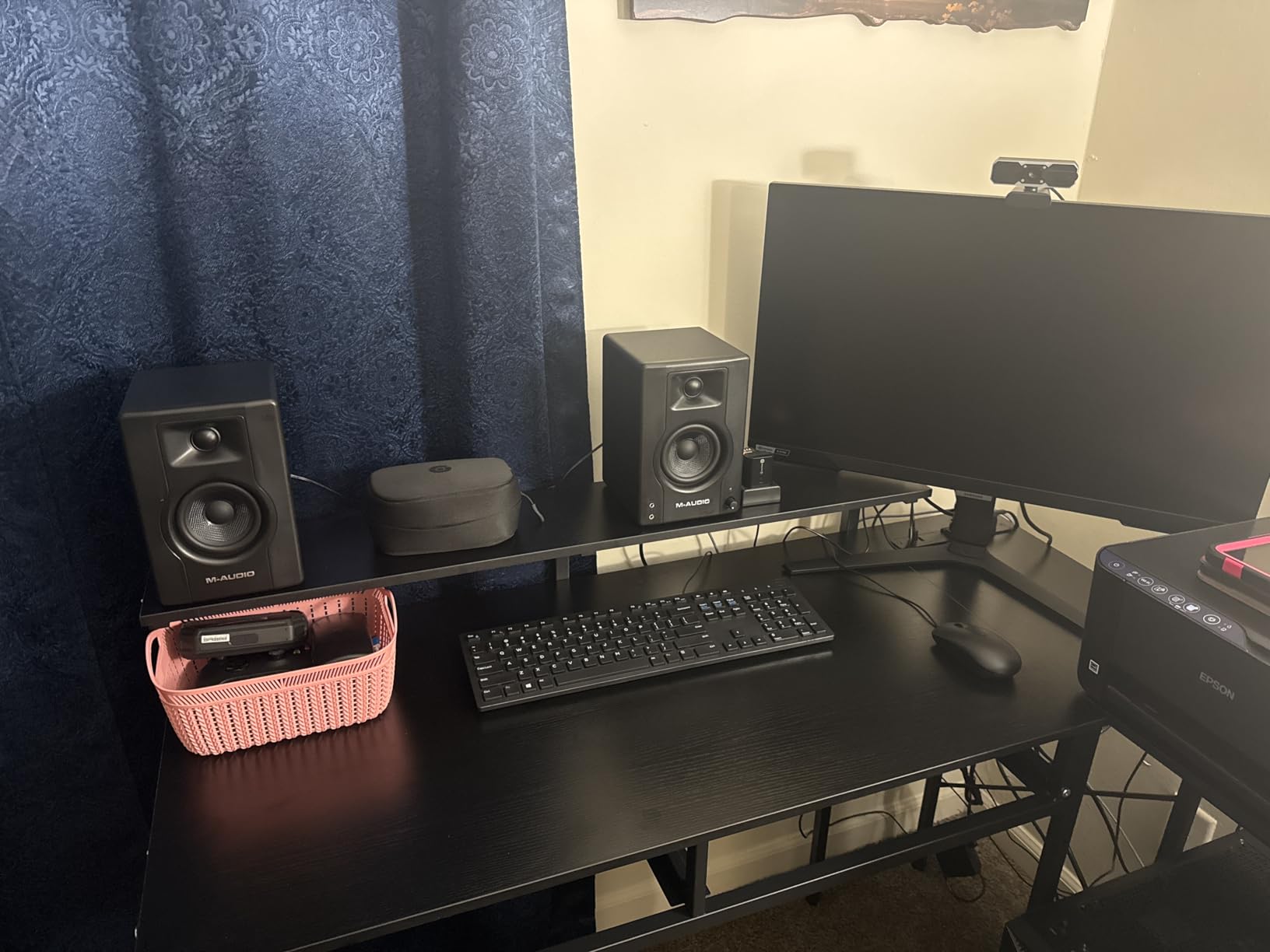
Connectivity is the BX3’s quiet superpower. You get balanced 1/4-inch TRS for proper studio hookup, RCA for older gear, 1/8-inch aux for phones and tablets, and a front-panel headphone jack that automatically mutes the speakers when plugged in. That last feature alone makes late-night practice sessions bearable for everyone in your building.
The auto-shutoff is the one feature that frustrated me. After 15 minutes of silence, the monitors power down to save energy, and bringing them back takes a few seconds. If you are using them as your only output while watching a long tutorial or producing, that delay gets annoying. There is no documented way to disable it permanently.
Who the M-Audio BX3 is best for
First-time DJ setup buyers who want real monitor sound without paying flagship prices. The 3.5-inch driver is a great match for a controller-and-laptop rig where desk space is tight and you do not need to fill a large room.
Anyone who already owns an audio interface and wants to use balanced TRS connections. The BX3 takes advantage of balanced wiring in a way that most speakers in this price bracket simply ignore.
Where the M-Audio BX3 falls short
DJs who need sub-bass response for deep house, techno, or drum and bass. The 3.5-inch woofer rolls off steeply below 70Hz, so the rumble and weight that define those genres is missing without a paired subwoofer.
Anyone sensitive to mid-treble fatigue during long sessions. The silk dome tweeter is detailed but can become sharp at high volumes; if you tend to mix loud, plan on adding foam isolation pads behind the speakers.
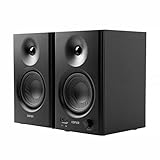
3. Edifier MR4 – Best Near-Field Monitor for Bedroom DJ
Edifier MR4 Power Studio Monitor Speakers, 4 inch Active Near-Field Speaker
Drivers: 4 inch composite + 1 inch silk dome
Power: 42W RMS
Inputs: TRS, RCA, AUX
Pros
- Detailed mids and highs
- Dual Monitor and Music mode
- Balanced TRS input
- Front headphone output
- Solid MDF build quality
Cons
- Stepped volume knob not smooth
- Bass can be boomy without EQ adjustment
The Edifier MR4 is the monitor I recommend most often to friends who are splitting their time between DJing and producing. It has a flat-ish response curve that does not flatter bad mixes, a Monitor and Music mode toggle on the front panel, and balanced TRS inputs that handle the long cable runs from an audio interface without picking up noise.
Out of the box the MR4 leans slightly warm, which is fine for casual listening and surprisingly helpful for DJs who want a little more thump on the kick. Flip it into Monitor mode and it tightens up significantly – you start hearing EQ decisions in your library that consumer speakers hide. That dual personality is what makes it special in a mixed-use setup.
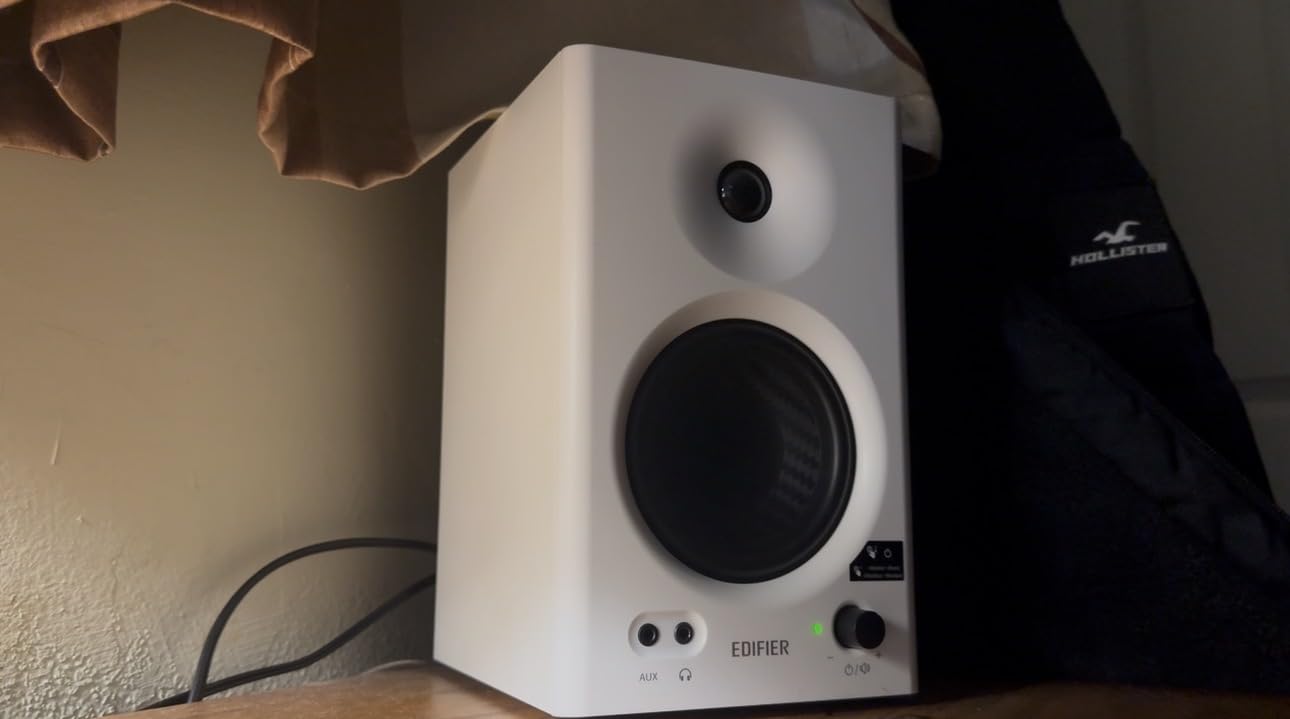
The build is real MDF, not plastic, and you can feel the difference when you tap the cabinet. There is no hollow ring, and the bass port on the back stays clean even when you push the volume. Pair it with a TRS-to-TRS cable from your audio interface and you have a nearfield rig that genuinely competes with monitors costing twice as much.
The volume knob is stepped rather than continuous, which I found mildly annoying when trying to nudge the level during a recording session. The bass can also feel boomy if you place the speakers flat against a wall, but a quick dip of the high-frequency trim cleans it up.
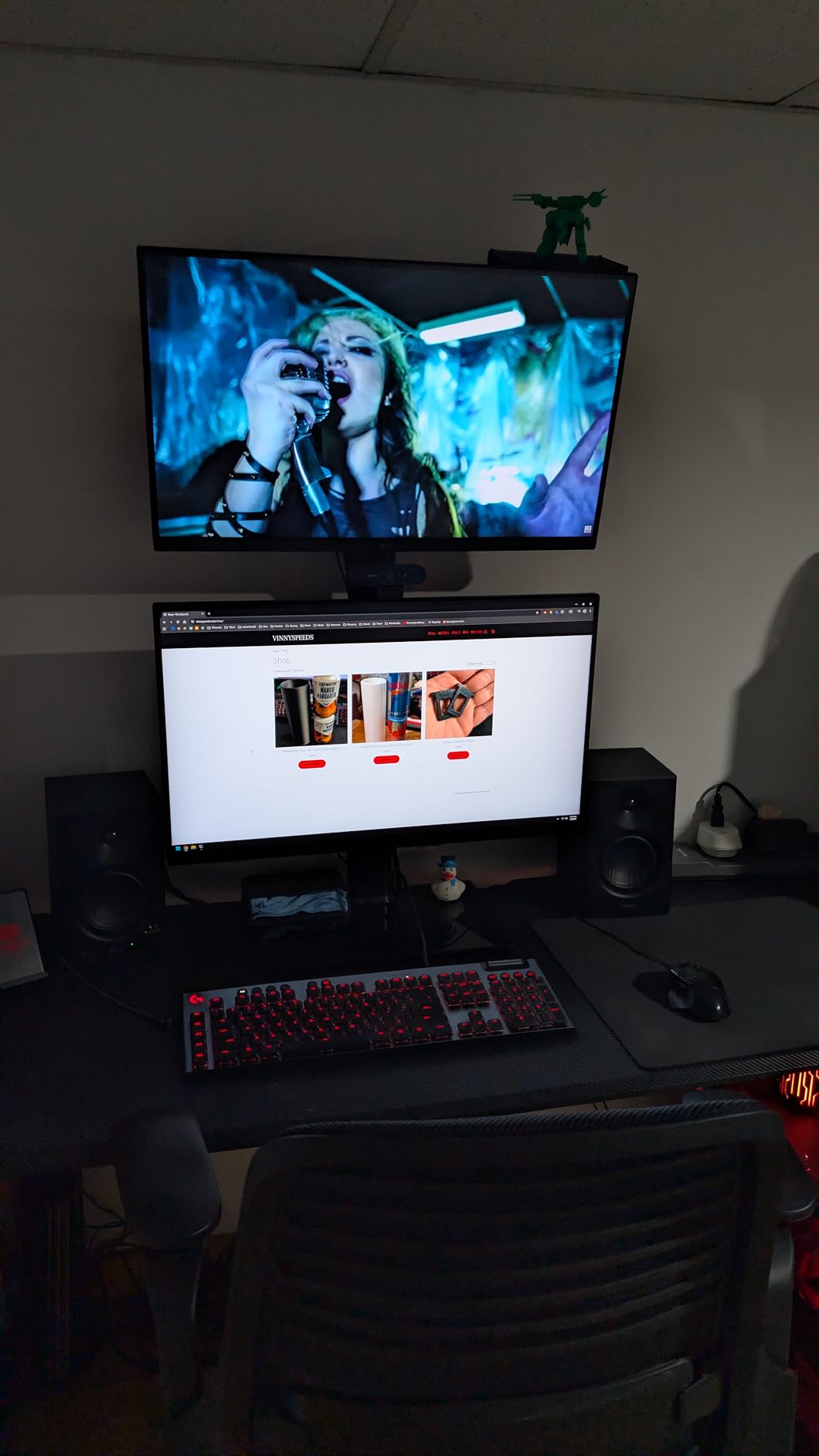
Who the Edifier MR4 is best for
Producer-DJs who split their time between rekordbox and a DAW. The Monitor mode gives you reference accuracy when you need it; the Music mode lets you relax when you do not.
Anyone running balanced cables from a controller or interface. The TRS input eliminates the hum you get with unbalanced RCA over longer runs, which matters if your computer sits across the room.
Where the Edifier MR4 falls short
Buyers who want Bluetooth as their primary input. The MR4 has Bluetooth, but the pairing process is fiddly and the audio path is not optimised for low-latency use. Treat Bluetooth as a backup convenience, not the main feed.
DJs who prefer a coloured, club-style sound signature. The MR4 aims for accuracy, so it will not flatter a rough mix the way a hyped hi-fi speaker does.
4. PreSonus Eris E4.5 – Best Entry-Level Studio Monitor for DJ
PreSonus Eris E4.5-2-Way 4.5″ Near Field Studio Monitor (Pair)
Drivers: 4.5 inch woven composite + 1 inch silk dome
Power: 50W Class AB
Inputs: TRS, RCA, 1/8 inch
Pros
- Accurate studio sound
- Wide sweet spot
- Tuning controls for room calibration
- Front headphone amp
- Balanced TRS inputs
Cons
- Treble can be fatiguing without EQ
- Limited bass extension without a sub
- Plastic enclosure feels lightweight
The PreSonus Eris E4.5 has been the default first-monitor for bedroom producers for close to a decade, and it earns that reputation by delivering honest sound at a price that does not punish beginners. For DJs, the same qualities that make it a great production monitor – flat response, wide sweet spot, balanced inputs – make it a serious practice speaker.
The 4.5-inch woven-composite woofer moves more air than the 3.5-inch models, so kick drums and basslines have a presence that smaller drivers simply cannot reach. Combined with the silk dome tweeter, you get a presentation that is detailed without being clinical. I found myself hearing subtle EQ decisions in older tracks that I had never noticed on consumer speakers.
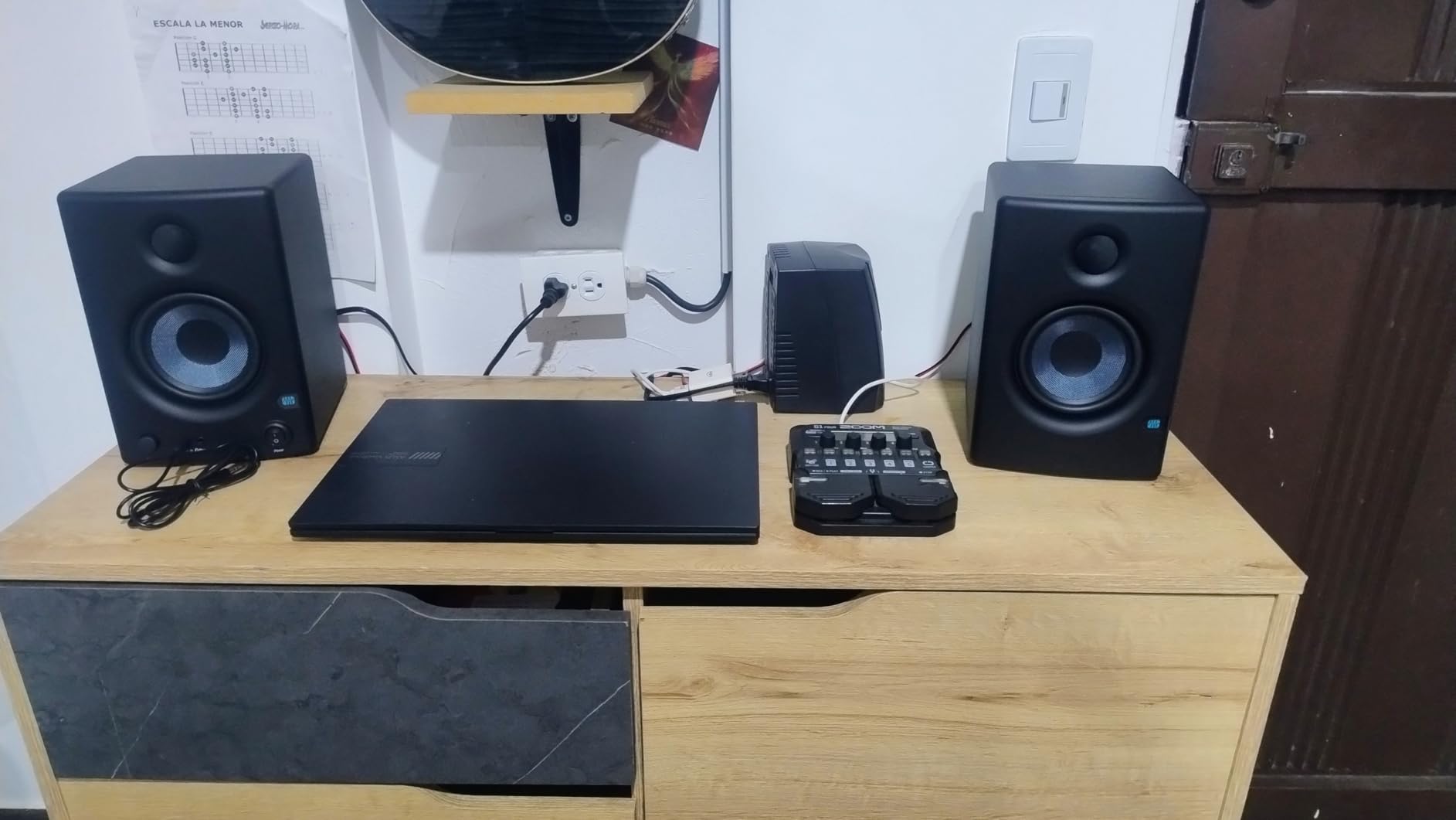
The high and low-frequency tuning switches on the back are a feature most monitors at this size skip. If you have to place the Eris against a wall, a quick dip of the low shelf keeps the bass from booming. If your room is bright and reflective, you can trim the high shelf to take the edge off.
The plastic cabinet feels less premium than the wood-built competitors, and the treble can be tiring during long sessions without EQ adjustment. Bass extension is the usual 4.5-inch limitation – you will want a sub for full-range listening.
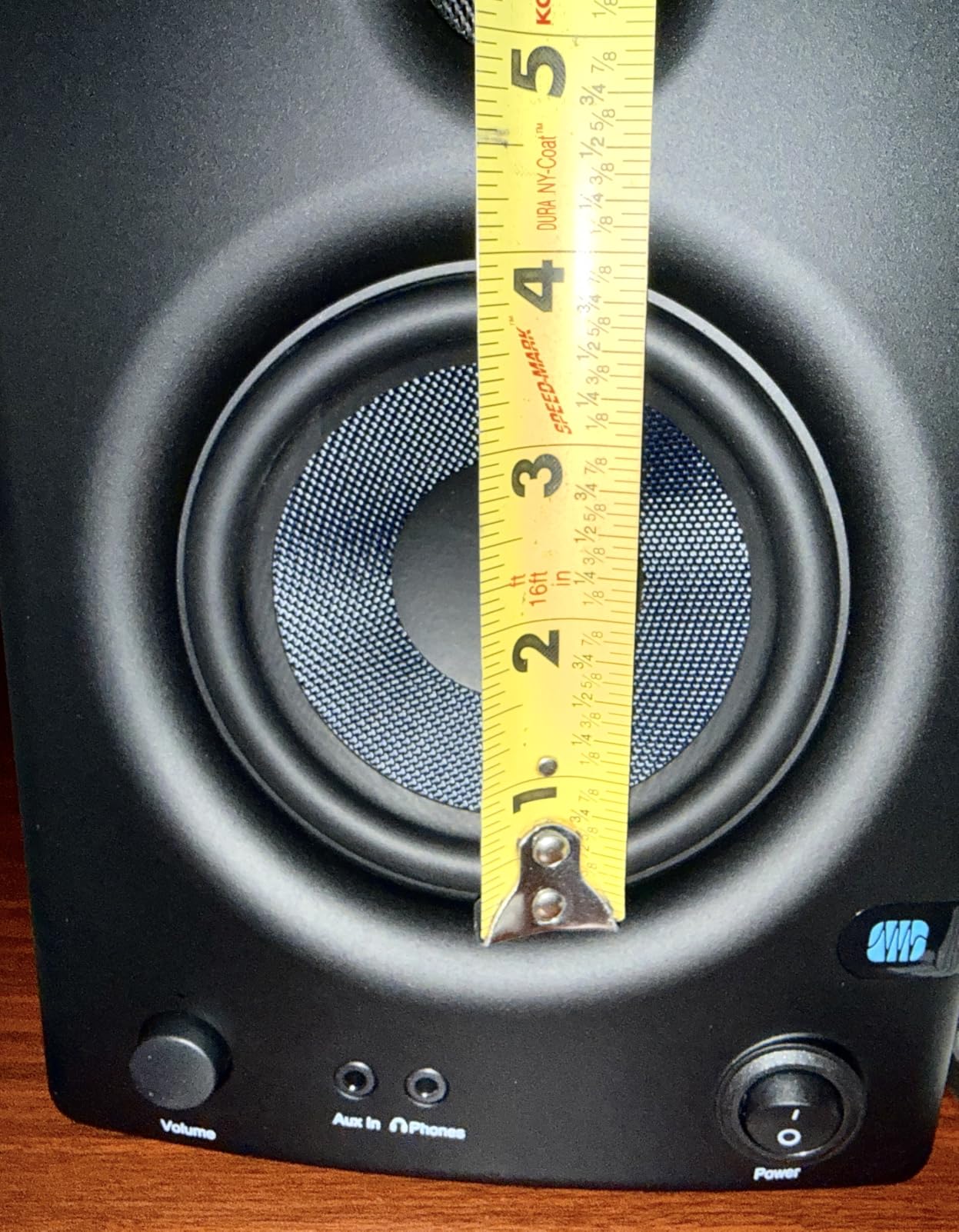
Who the PreSonus Eris E4.5 is best for
First-time studio monitor buyers who want a known quantity with thousands of user reviews to learn from. The Eris series is so widely used that troubleshooting tips are easy to find.
DJ-producers who want honest translation. If your mixes sound good on the Eris, they will probably sound good on most other systems too.
Where the PreSonus Eris E4.5 falls short
Listeners who want Bluetooth or wireless convenience. The E4.5 is wired-only and assumes you are plugging into a real audio source.
DJs who push volume hard. The Class AB amp runs warm and the treble can become fatiguing above 80 percent volume in untreated rooms.
5. Yamaha HS4 – Best Premium Compact Studio Monitor for DJ
Yamaha HS4 Powered Studio Monitor in Black, Pair (HS4 B)
Drivers: 4.5 inch cone + 1 inch dome
Power: 26W + 26W
Inputs: XLR/TRS combo, RCA, 3.5mm
Pros
- Classic Yamaha HS accuracy
- Professional XLR and TRS combo inputs
- Room control and high trim switches
- Sturdy build with cables included
Cons
- Limited bass extension from 4.5 inch woofer
- Not as loud as larger HS siblings
- Premium pricing for the size class
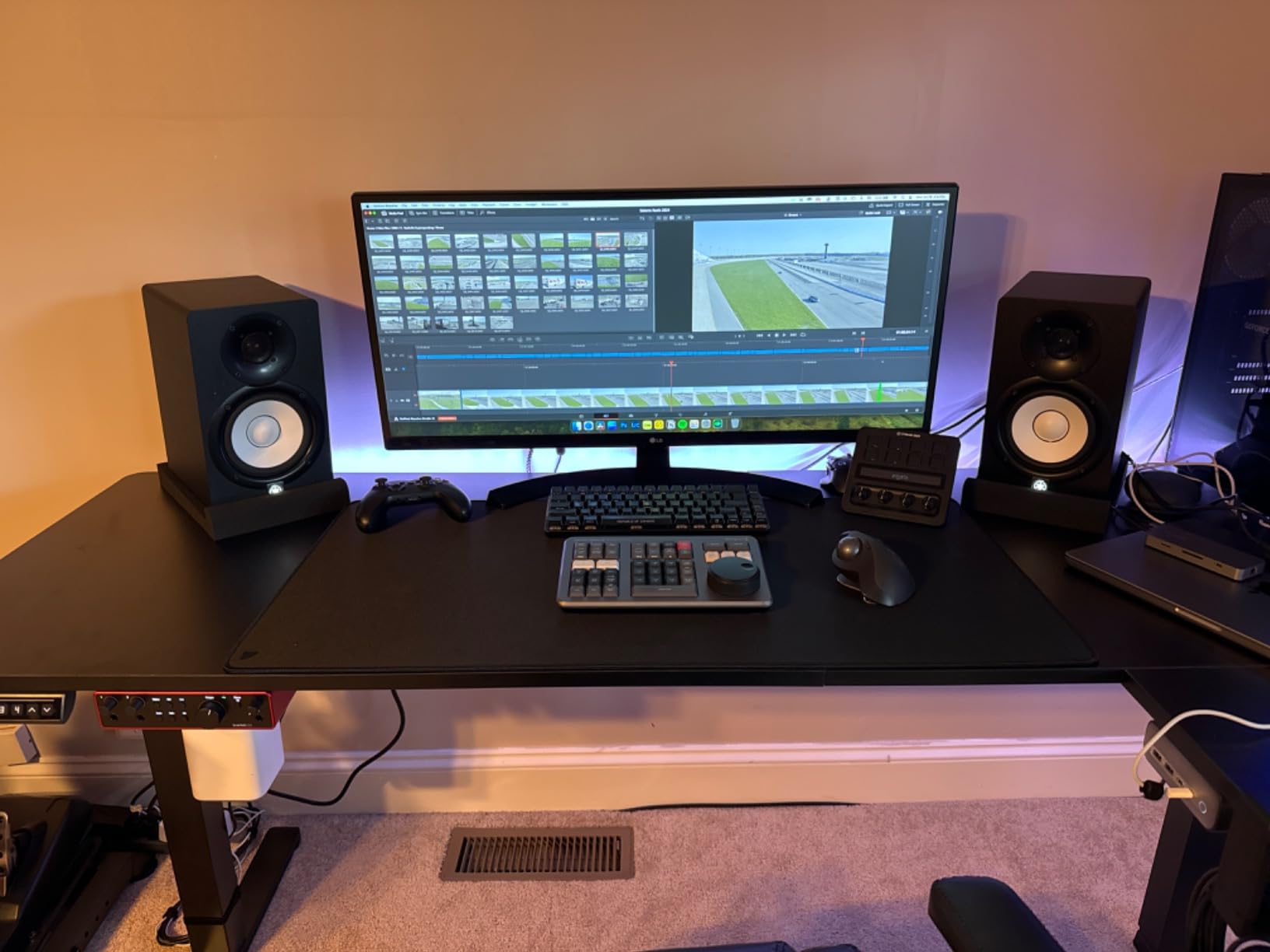
The Yamaha HS4 brings the legendary HS series character – that famously honest, slightly forward midrange – into a desktop-friendly size. If you have ever mixed on HS5s or HS7s in a studio and wanted that same translation at home, the HS4 is the closest you can get without giving up desk space.
The 4.5-inch woofer and 1-inch dome tweeter are driven by 26 watts per side, which sounds modest on paper but goes plenty loud in a nearfield setup. The XLR and TRS combo input is the headline feature: it accepts balanced signals from audio interfaces and high-end controllers, plus unbalanced RCA for consumer gear, and a stereo mini input for phones and tablets. No other monitor in this list gives you that much input flexibility in one box.
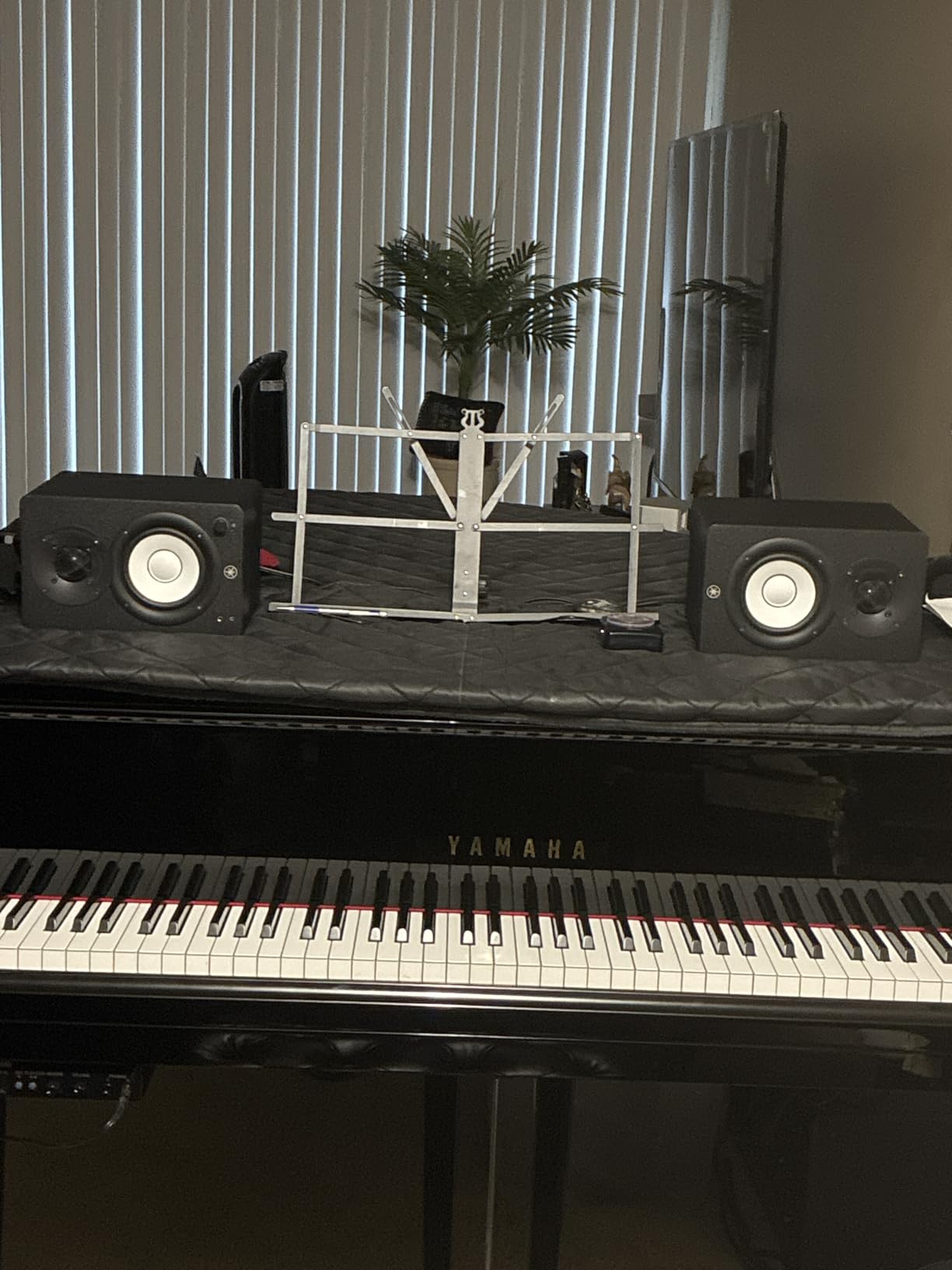
The Room Control and High Trim switches on the back let you tune the response to your placement. Push them flat against a wall, engage Room Control to cut the bass build-up. Place them on stands in a treated room, leave everything flat and enjoy the response Yamaha designed.
The bass extension from a 4.5-inch driver is, as ever, limited. The HS4 is meant to be paired with a sub for full-range listening, which is why Yamaha makes the HS8S sub to match. Without the sub, dance music feels polite rather than powerful.
Who the Yamaha HS4 is best for
DJs and producers who want the Yamaha HS sound in a smaller footprint. If you know the HS character from studios and want to recreate it at home, this is the most direct path.
Anyone with balanced audio gear who wants true XLR connectivity on the desktop. The combo jack is a rare feature at this size.
Where the Yamaha HS4 falls short
Budget buyers. The HS4 is priced above most 4.5-inch competitors and you are paying for the Yamaha name as much as the hardware.
DJs who need loud, bass-heavy output without adding a sub. The HS4 is a nearfield monitor, not a party speaker.
6. JBL 305P MkII – Best Imaging Desktop Speaker for DJ
(2) JBL 305P MkII 5″ 2-Way Active Powered Studio Reference Monitors Speakers
Drivers: 5 inch woofer + 1 inch tweeter
Power: 82W total Class-D
Inputs: XLR, 1/4 inch TRS
Pros
- Patented Image Control Waveguide
- Deep bass via Slip Stream port
- Boundary EQ and HF Trim
- 5 year warranty
- Powerful Class-D amplification
Cons
- ABS enclosure feels less premium
- Higher price than 5 inch competitors
- Requires proper positioning for best imaging
The JBL 305P MkII is the reference standard against which most bedroom DJs compare everything else. Its Image Control Waveguide delivers a wider sweet spot than any other monitor in this roundup, which means you hear a consistent stereo image even when you lean to one side of the desk to reach your controller. For DJs who move around while mixing, that is a real-world advantage.
The 5-inch woofer paired with JBL’s Slip Stream port produces bass that punches well above what most 5-inch monitors manage. Low-frequency extension reaches down into the 40Hz region cleanly, which is rare at this price. I mixed several techno sets on the 305P MkII and was surprised how much sub information came through without adding a sub.
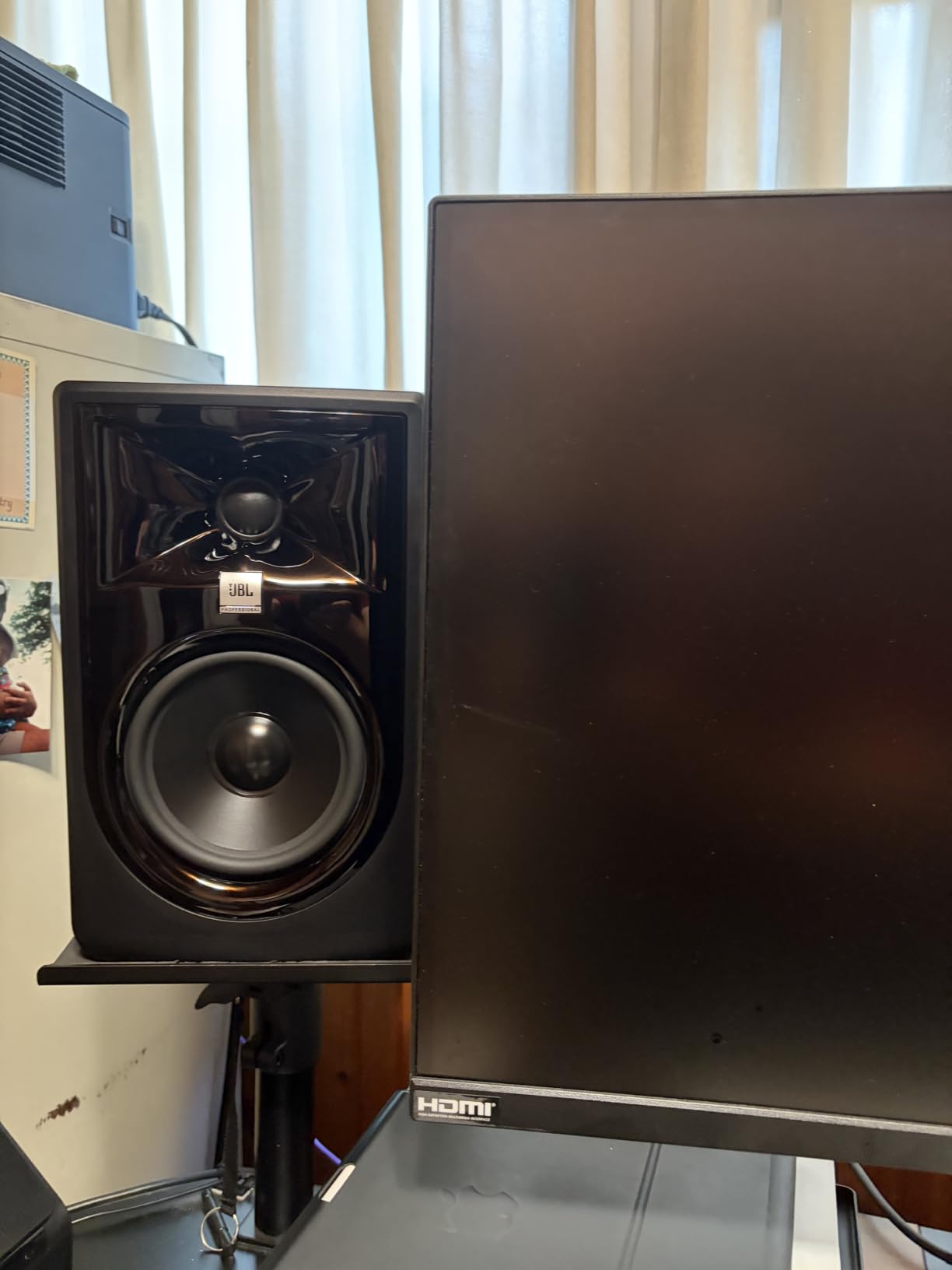
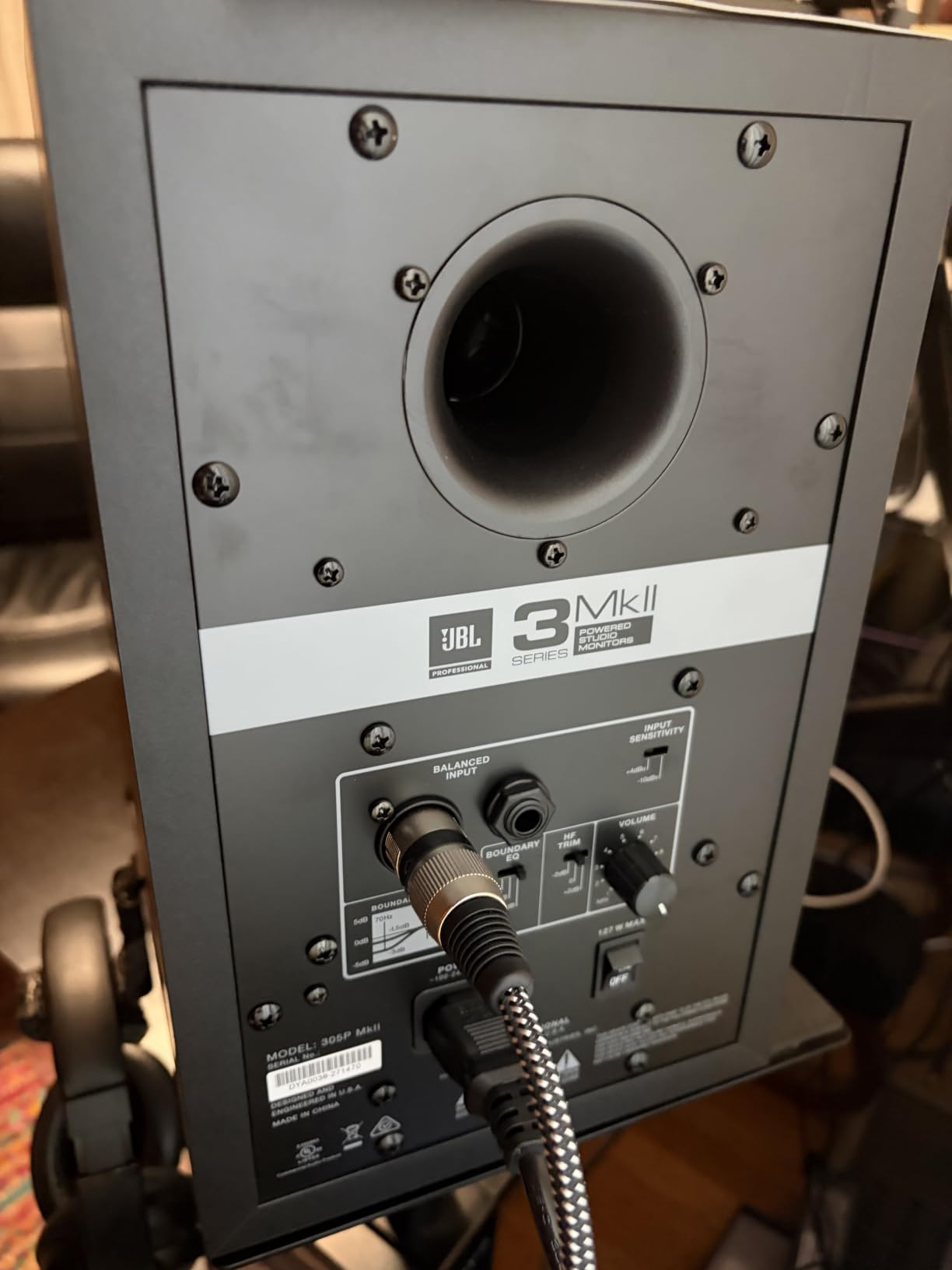
Boundary EQ and HF Trim switches on the back give you real control over room interaction. Place the speakers on a desk near a wall, and the Boundary EQ takes care of the bass boost that comes with that placement. Sit them on speaker stands in a treated room, leave everything flat and enjoy the uncoloured response.
The ABS plastic cabinet feels less premium than the wood of similarly priced competitors. The 5-year warranty is reassuring, but the enclosure quality is the first thing you notice when you unbox them.
Who the JBL 305P MkII is best for
DJs who prioritise stereo imaging and want to hear every element of a mix in its correct place. The waveguide makes a tangible difference for detailed mixing work.
Anyone who wants sub-bass extension without buying a subwoofer. Few monitors at this size reach as deep as cleanly as the 305P MkII.
Where the JBL 305P MkII falls short
Buyers on a tight budget. The 305P MkII sits above most entry-level picks and you can find comparable output from cheaper alternatives if imaging is not your priority.
Listeners who prefer a wood-cabinet aesthetic. The plastic enclosure is functional but does not feel as solid as the build of similarly priced rivals.
7. Edifier MR3 – Best Wireless Desktop DJ Speakers
Edifier MR3 Powered Studio Monitor, Speaker Hi-Res Active Bluetooth Speaker
Drivers: 3.5 inch mid-low + 1 inch tweeter
Power: 36W RMS
Inputs: Bluetooth 5.4, TRS, RCA, AUX
Pros
- Hi-Res Audio certified
- Bluetooth 5.4 with multipoint
- Music and Monitor modes
- App based EQ control
- Balanced TRS input included
Cons
- Limited bass below 50Hz without a sub
- Bluetooth pairing can be confusing
- Connectivity drops reported by some users
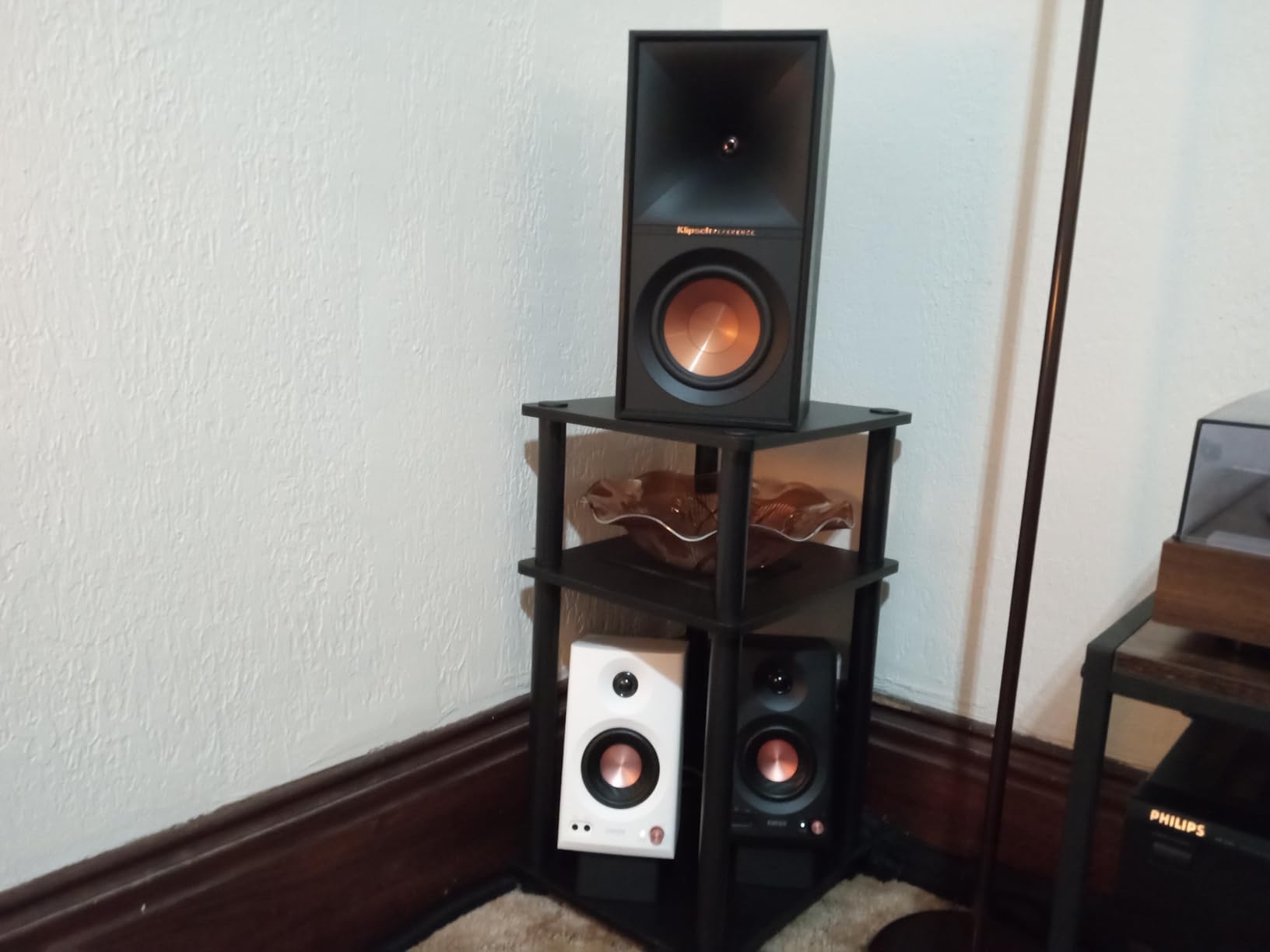
The Edifier MR3 is the speaker to consider if you want Bluetooth convenience without giving up the option of a proper wired connection. It carries Hi-Res Audio certification, runs Bluetooth 5.4 with multipoint pairing, and still gives you balanced TRS and RCA inputs for the moments when you need a wired signal path.
The 3.5-inch mid-low driver and 1-inch tweeter produce a clean, neutral response that works for both music listening and DJ practice. Switch into Monitor mode and the response tightens up enough to use the MR3 for casual production. The Edifier ConneX app lets you tweak the EQ further, which is rare at this price point.
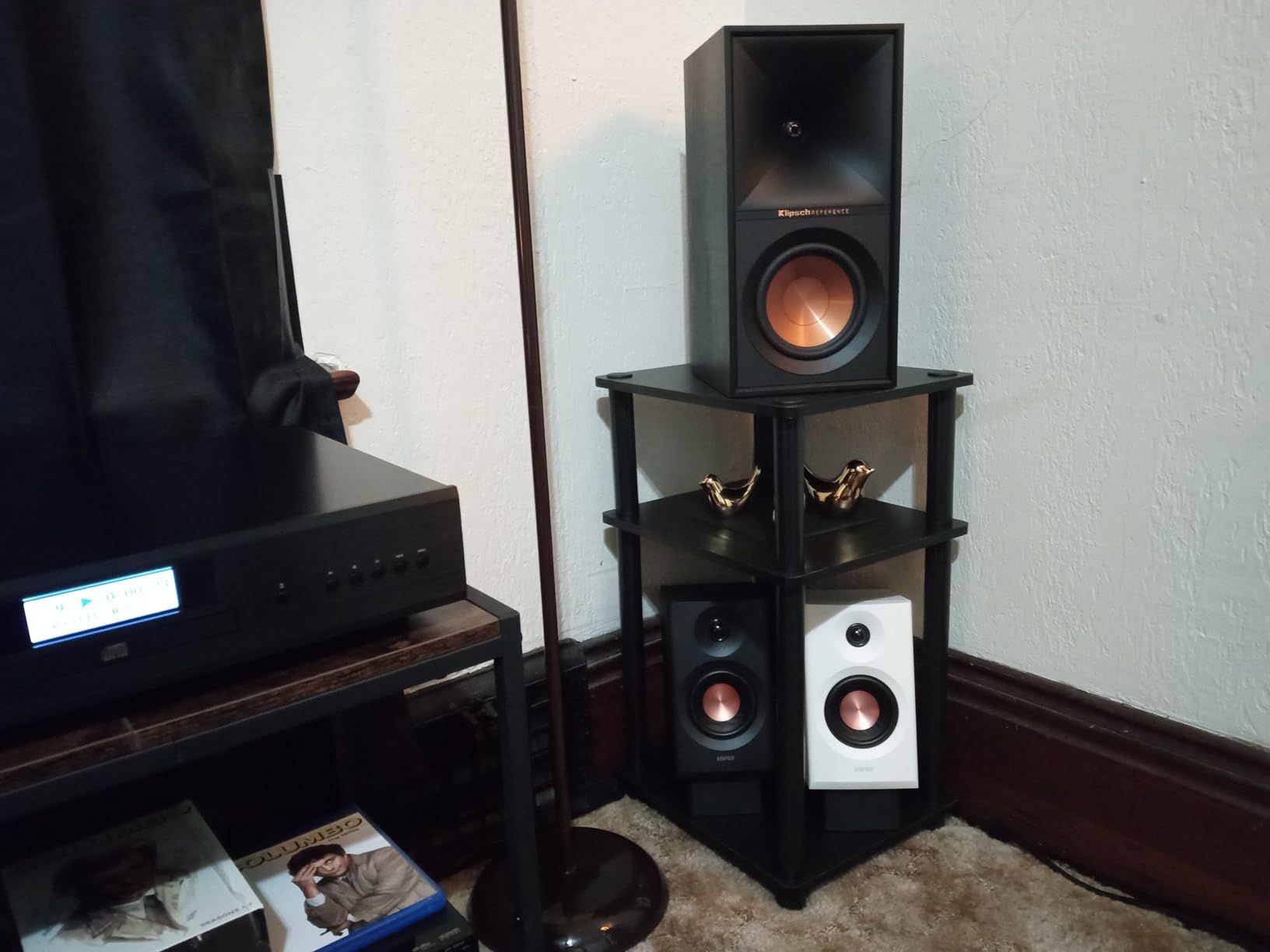
The MR3 is one of the few monitors in this roundup that handles Bluetooth without feeling like an afterthought. Multipoint pairing means you can keep your phone and laptop connected simultaneously, which is genuinely useful for hybrid DJ-plus-laptop setups.
Bass extension below 50Hz is the usual 3.5-inch limit. Pair the MR3 with the matching Edifier T5s sub and you get a near full-range system, but the monitors alone are not going to satisfy bass-heavy genres.
Who the Edifier MR3 is best for
DJs who want Bluetooth for casual listening and a wired path for actual practice. The MR3 handles both without forcing you to buy separate speakers for each use.
Anyone who likes to customise their sound. The app-based EQ and the multiple sound modes give you more flexibility than most monitors offer.
Where the Edifier MR3 falls short
Buyers who need strong bass extension out of the box. Without a sub, the MR3 is polite rather than powerful.
Anyone who treats Bluetooth as the primary DJ feed. Use the wired inputs for beatmatching; treat Bluetooth as a backup convenience.
8. Pioneer DJ DM-50D – Best DJ-Tuned Desktop Monitor
Pioneer DJ DM-50D 5-inch Active Desktop Monitor Speakers, Pair, Black
Drivers: 5 inch woofer + 0.75 inch tweeter
Power: 25W + 25W
Inputs: RCA, 3.5mm, 1/4 inch TRS
Pros
- DJ tuned voicing with punchy low end
- DSP for clear balanced sound
- 5 inch woofer fills small rooms well
- Built in amplification is plug and play
- Solid build quality for DJ environments
Cons
- Auto standby cannot be disabled
- Power switch is on the back
- No Bluetooth at this price point
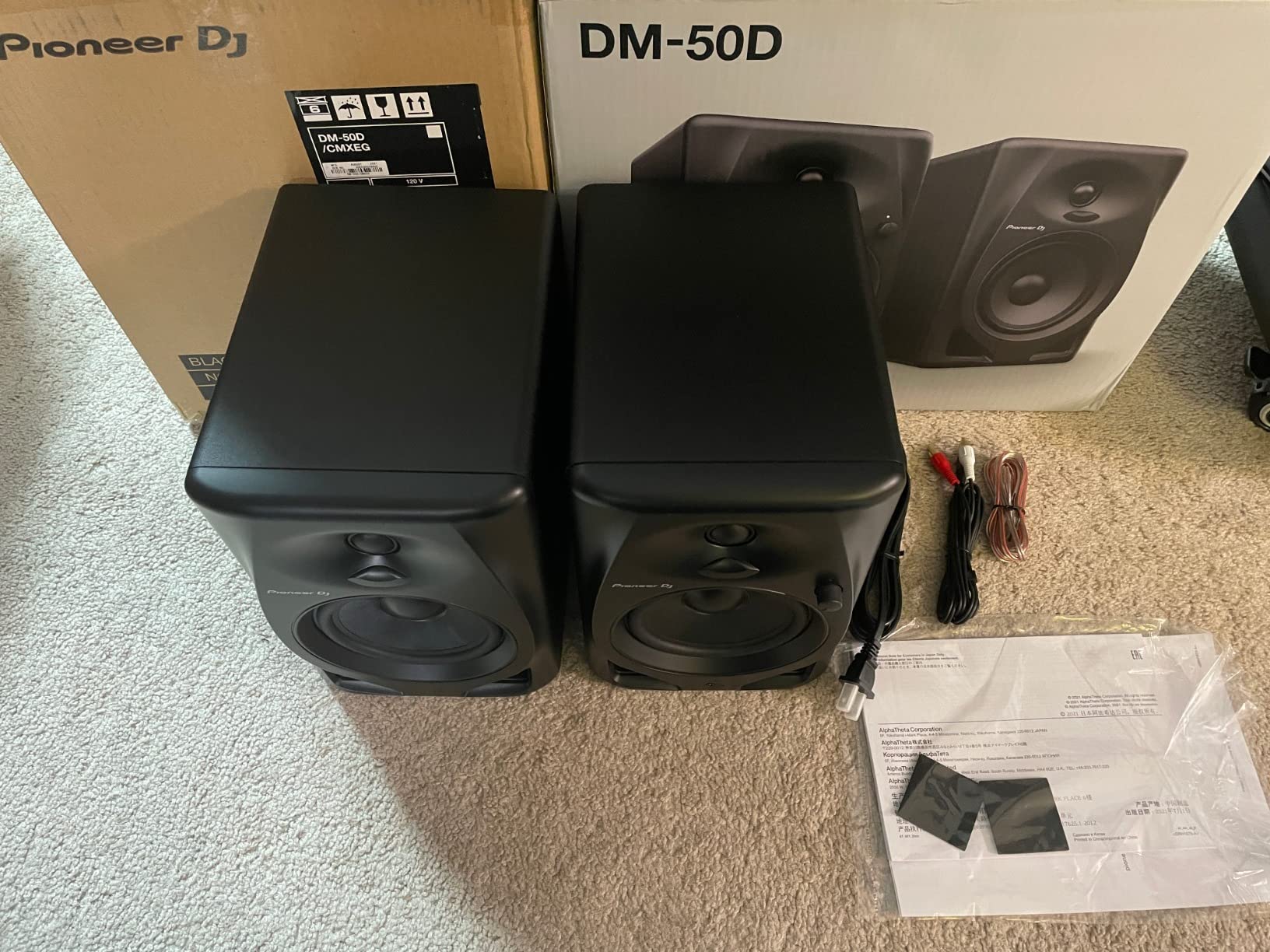
The Pioneer DJ DM-50D is the speaker to consider if your whole rig is Pioneer and you want monitors that match the rest of your gear aesthetically and acoustically. The DJ-tuned voicing is the headline: it delivers the kind of punchy low end that club music demands, which most flat-reference monitors lack.
A switch on the back toggles between DJ mode and Production mode. DJ mode boosts the lows and adds a little sparkle to the highs for energy. Production mode flattens the response for critical mixing and mastering. That single switch makes the DM-50D one of the most versatile monitors on this list.
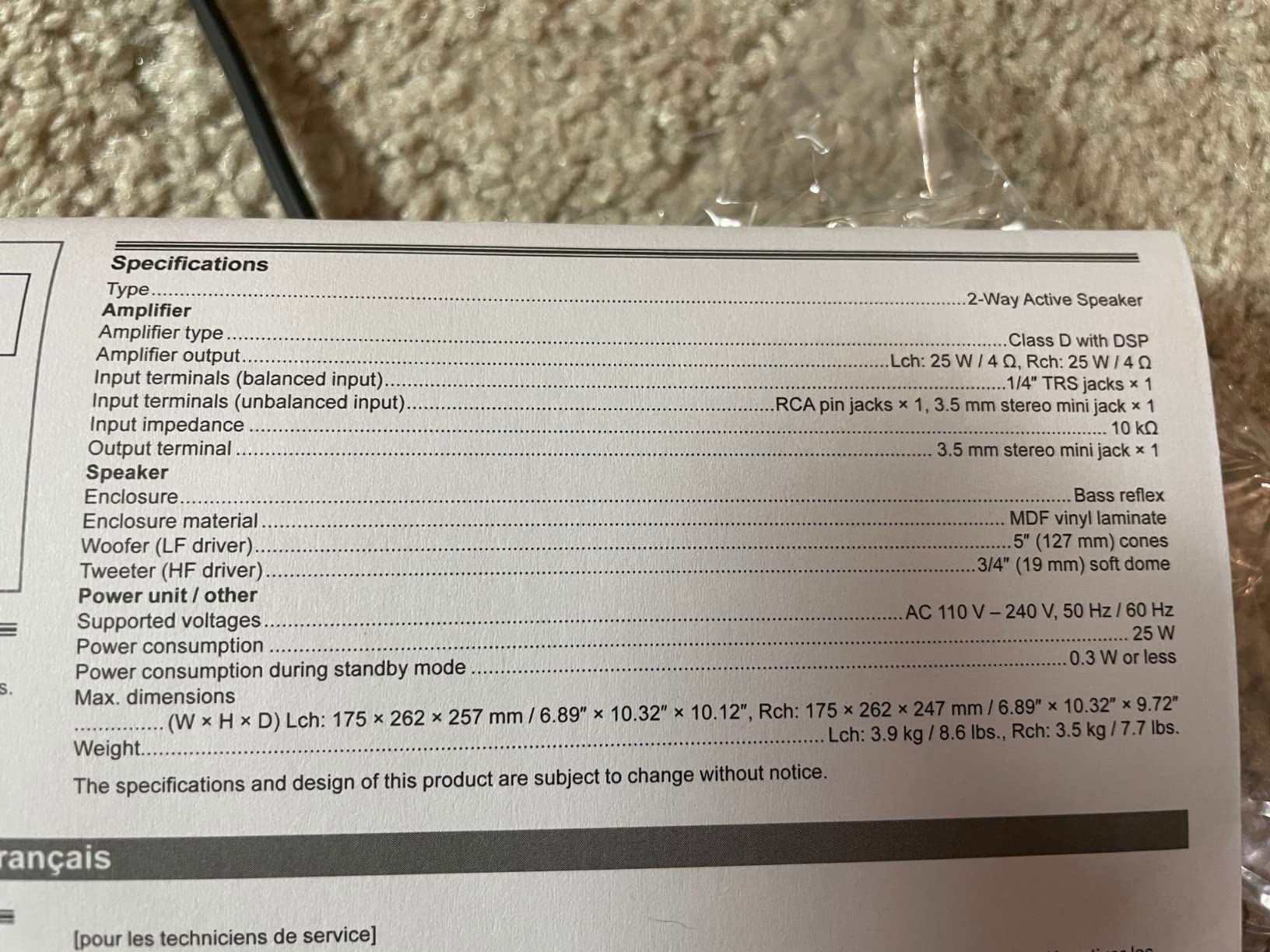
The 5-inch woofer moves enough air to fill a small bedroom convincingly, and the DSP tuning keeps the response balanced even at higher volumes. Pair the DM-50D with a Pioneer DDJ controller and you have a rig that looks and sounds coherent.
The non-disableable auto standby is the most common complaint. After a period of silence, the monitors power down, and they take a couple of seconds to wake up. If you are working on a long mix or a slow build, that delay is annoying. The rear-mounted power switch is also awkward for desk placement.
Who the Pioneer DJ DM-50D is best for
DJs already invested in the Pioneer ecosystem. The DM-50D pairs especially well with Pioneer controllers, mixers, and the rekordbox software environment.
Anyone who wants a DJ mode and Production mode in one pair. Most monitors force you to pick a sound signature at purchase; the DM-50D lets you switch on the fly.
Where the Pioneer DJ DM-50D falls short
Buyers who want Bluetooth connectivity. The DM-50D is wired only, which is great for DJ work but limits its appeal as a general-purpose desktop speaker.
Anyone sensitive to auto-standby interruptions during long sessions. There is no documented way to disable the feature permanently.
9. ADAM Audio D3V – Best Desktop Studio Monitor for Audiophile DJs
ADAM Audio D3V Active Desktop Studio Monitor Speakers – Black
Drivers: 3.5 inch aluminum + 1.5 inch D-ART ribbon
Power: 80W total
Inputs: USB-C, 1/4 inch TRS, RCA
Pros
- ADAM Audio D-ART ribbon tweeter
- USB-C direct to computer
- Passive radiators extend bass to 45Hz
- Includes angled monitor stands
- Configurable auto sleep mode
Cons
- Premium pricing for the size class
- Limited input selection
- ABS enclosure rather than wood
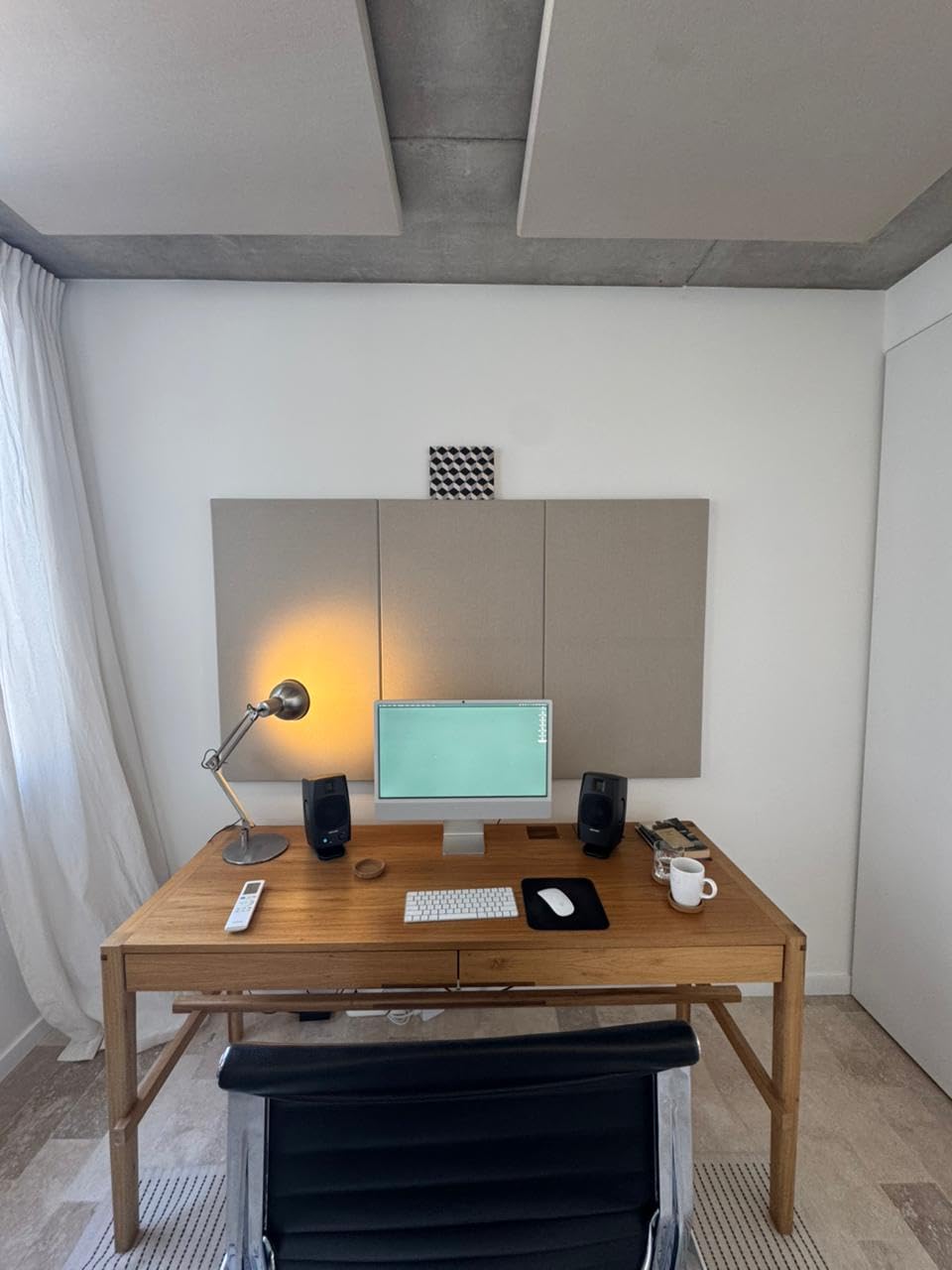
The ADAM Audio D3V is the most audiophile-focused monitor in this roundup. It brings ADAM’s well-regarded ribbon tweeter technology – usually found on studio monitors costing several times more – to a compact desktop size. If you care about detail retrieval above everything else, the D3V is in a class of its own.
The 1.5-inch D-ART ribbon tweeter delivers high frequencies with a clarity and air that dome tweeters struggle to match. Cymbals shimmer rather than splash, hi-hats stay crisp without becoming harsh, and the stereo imaging is exceptionally precise. The dual-sided 3.5-inch passive radiators extend bass down to 45Hz, which is impressive for the driver size.
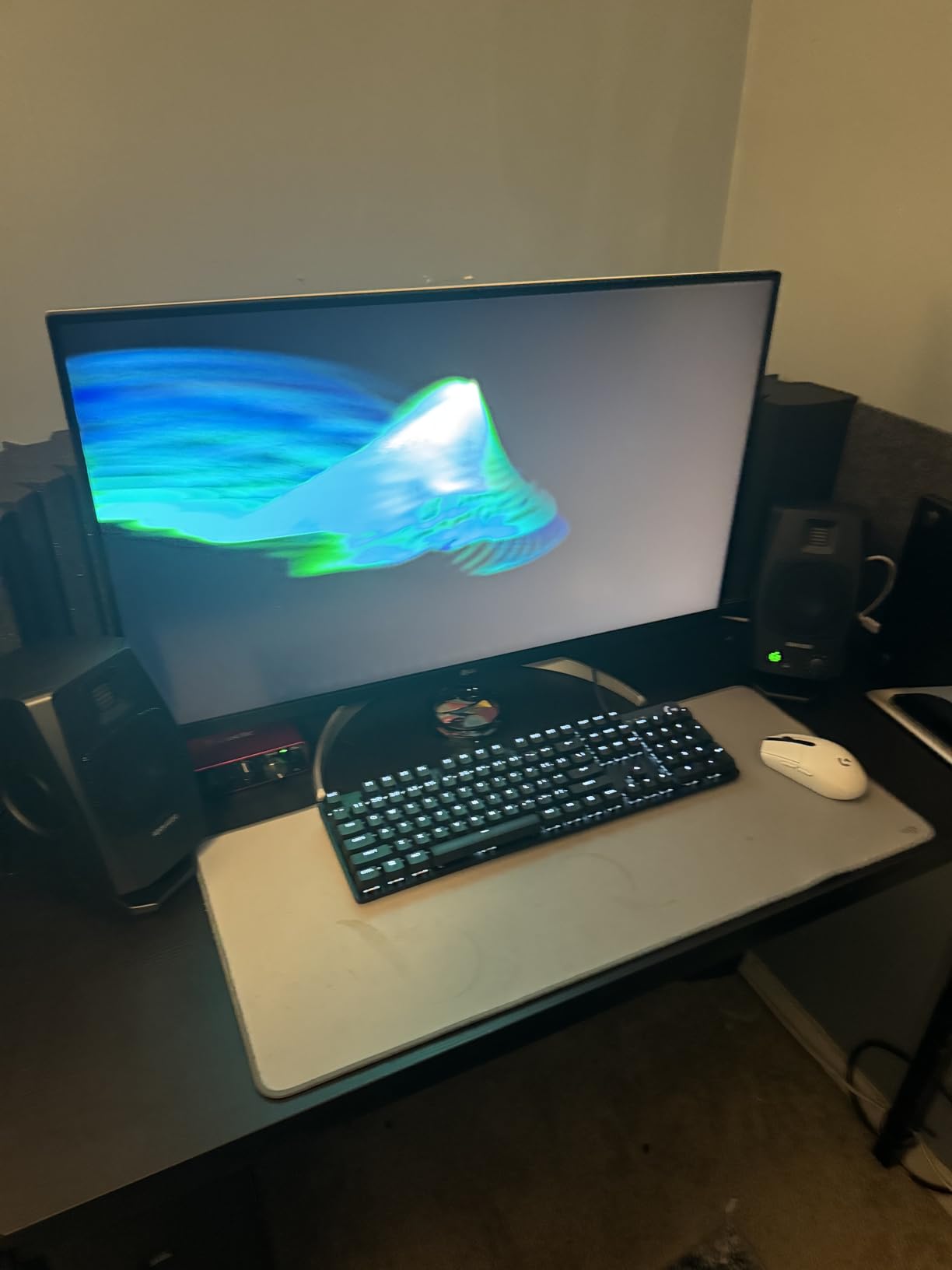
USB-C connectivity is a real convenience. Plug the D3V directly into a laptop or tablet and you have a clean digital signal path without needing an audio interface. The included angled monitor stands tilt the speakers 15 degrees toward your ears, which is exactly the geometry you want for nearfield monitoring at a desk.
The price is the obvious drawback. The D3V costs more than several 5-inch competitors, and you are paying for the ribbon tweeter and the ADAM badge. The ABS enclosure also feels less premium than the price suggests.
Who the ADAM Audio D3V is best for
DJs and producers who prioritise detail and imaging above raw output. The ribbon tweeter reveals more information in a mix than any dome tweeter in this roundup.
Laptop-based setups that benefit from USB-C direct connection. Skip the audio interface entirely and you have a cleaner signal chain.
Where the ADAM Audio D3V falls short
Buyers on a budget. The D3V is the most expensive monitor per-watt in this roundup.
Anyone who needs loud, bass-heavy output. The 3.5-inch drivers cannot move enough air to fill a large room.
10. Hercules DJMonitor 32 – Best Beginner DJ Speaker Pair
Hercules DJMonitor 32: 2 x 15 watts RMS active monitoring speakers,Black
Drivers: 3 inch woofer + 1 inch tweeter
Power: 15W RMS per speaker
Inputs: RCA
Pros
- Affordable entry into DJ monitoring
- Shifted tweeter for clearer imaging
- Lightweight and portable
- MDF cabinet reduces resonance
- Dual bass vent design
Cons
- Limited bass from 3 inch woofer
- No driver protection grille
- Some reliability reports after extended use
The Hercules DJMonitor 32 is the most affordable pair in this roundup and the easiest recommendation for someone buying their first set of DJ speakers. It is small enough to live on a crowded desk, light enough to move between rooms, and loud enough for genuine bedroom practice without distorting.
The shifted tweeter design is the surprise feature. By offsetting the tweeter slightly, Hercules improves stereo imaging in a way that flat-fronted speakers at this size usually cannot match. For a beginner DJ who is still learning to hear panning and placement, that extra clarity is genuinely helpful.
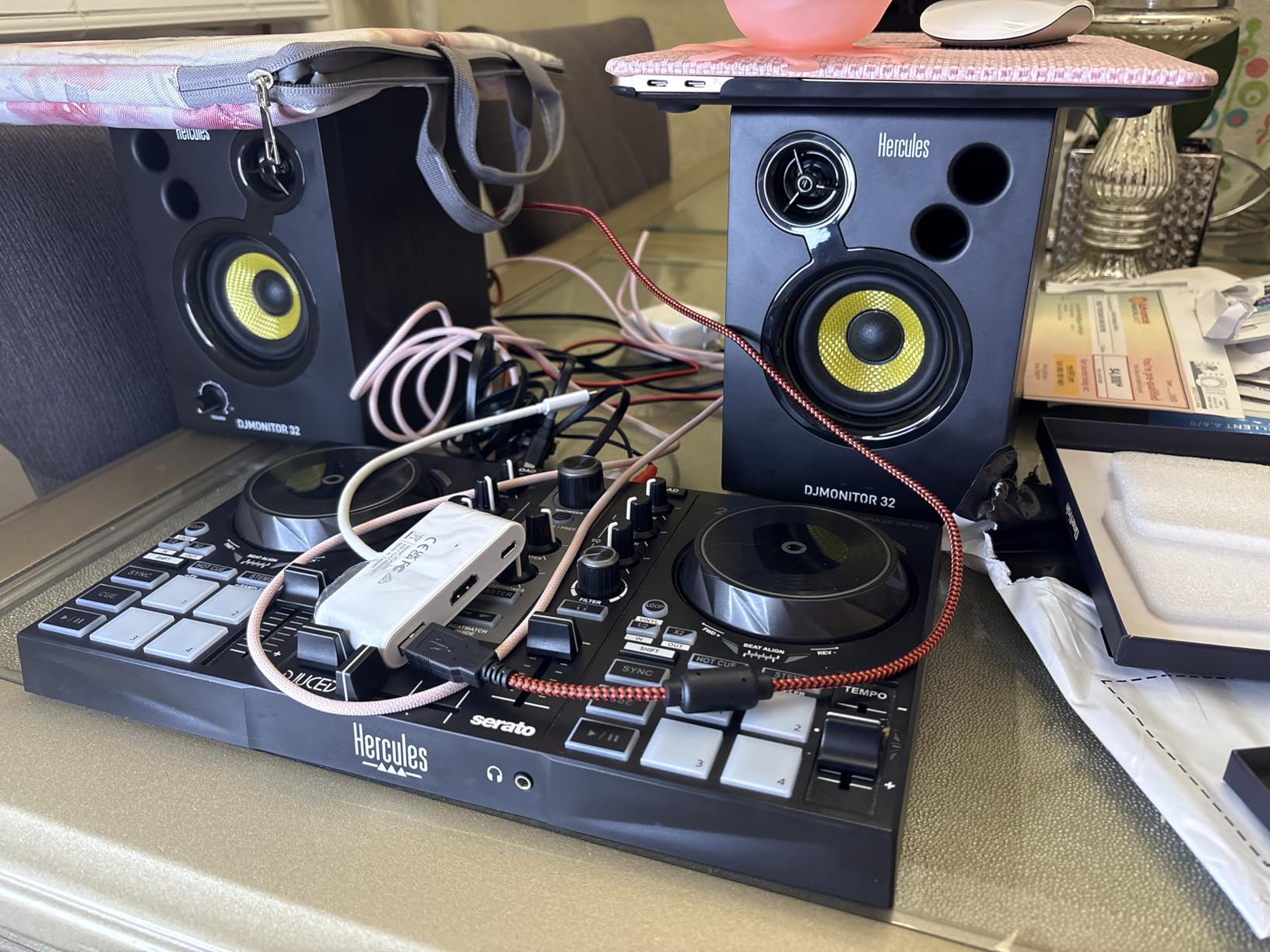
The 6mm MDF cabinet reduces resonance compared to all-plastic competitors at the same price. The dual bass vents on the back extend low-frequency response modestly, though the 3-inch woofer still cannot reproduce sub-bass. Think of it as a practice speaker, not a system for filling a party.
Reliability reports after extended use are worth flagging. Some users report failures after about a year, which is not unusual at this price point but worth knowing if you plan to keep the speakers for the long term.
Who the Hercules DJMonitor 32 is best for
First-time DJ buyers who want a real DJ monitor without paying for features they will not yet use. The DJMonitor 32 covers the basics without overwhelming a beginner.
Anyone with a very tight desk footprint. The 3-inch woofer and compact cabinet fit where 5-inch monitors simply will not.
Where the Hercules DJMonitor 32 falls short
DJs who care about bass extension. The 3-inch driver rolls off sharply below 80Hz, so kicks feel thin and basslines lose weight.
Long-term owners. If you plan to keep your first pair of DJ speakers for five years, the reliability reports suggest budgeting for an upgrade sooner.
How to Choose the Best Desktop Speakers for DJ?
The right desktop DJ speaker depends on three things: how big your room is, what you are plugging in, and what genres you play. Get any of those wrong and even an excellent monitor will sound underwhelming. Below are the criteria our team uses when recommending speakers to friends, plus a room-size-to-driver-size chart that no competitor publishes.
Match driver size to your room
A 3-inch or 3.5-inch driver is fine for a small bedroom (under 12 square metres) at nearfield listening distance. A 4-inch or 4.5-inch driver works well in medium bedrooms (12 to 20 square metres). Anything above that benefits from a 5-inch driver or a small sub. Bigger drivers do not automatically mean louder or better – they just move more air, which matters for bass extension.
Quick room mapping for desktop DJ speakers:
Bedroom under 12 m²: 3 to 3.5 inch driver (M-Audio BX3, Hercules DJMonitor 32, Edifier MR3)
Bedroom 12 to 20 m²: 4 to 4.5 inch driver (Edifier R1280T, Edifier MR4, PreSonus Eris E4.5, Yamaha HS4)
Larger room or serious bass needs: 5 inch driver or add a sub (JBL 305P MkII, Pioneer DM-50D)
Active vs passive monitors
Every speaker in this roundup is active, meaning the amplifier is built into the cabinet. Active monitors are the right choice for desktop DJ work because they accept line-level signals directly from your controller, mixer, or audio interface. Passive monitors require a separate amplifier, which adds cost, cables, and desk clutter. Stick with active unless you already own a power amp and have a specific reason to prefer passive.
Connectivity: XLR, TRS, RCA, and USB-C
Balanced connections (XLR and TRS) reject noise over long cable runs and are the right choice for permanent installations. RCA is unbalanced and picks up hum more easily, especially in homes with lots of WiFi and switching power supplies. USB-C is increasingly common on modern monitors (the ADAM D3V has it) and lets you skip the audio interface entirely. Bluetooth is fine for casual listening, but for DJing, always use a wired connection.
Why Bluetooth latency ruins DJ practice
Standard Bluetooth audio adds 150 to 300 milliseconds of latency between the source and the speaker. That delay is longer than the time between two beats at 120 BPM, which means your ears hear the cue track after your hands have already moved the jogwheel. Wireless DJ systems use proprietary low-latency protocols (SonicLink, SKAA) that get latency down to under 20 ms, but these are different products with their own transmitters. For practice with a controller, plug in a cable.
DJ mode vs Production mode
A handful of monitors – notably the Pioneer DM-50D – include a DSP switch that toggles between a DJ-voiced sound signature and a flat reference response. DJ mode emphasises low end and high-frequency sparkle for energy. Production mode flattens the response for accurate mixing. If you split your time between DJing and producing, look for a monitor with this switch. It saves you buying two pairs.
When to add a subwoofer
If you play four-on-the-floor genres (house, techno, trance) and your monitor pair is 4.5 inches or smaller, you will eventually want a sub. The 30 to 50Hz region is where the chest-thumping weight of those genres lives, and no compact nearfield monitor reproduces it cleanly. Most major brands (Yamaha HS8S, PreSonus Eris Sub 8, KRK S8) make subs designed to pair with their monitors.
Speaker placement matters more than you think
Place the monitors so the tweeters are at ear level when you are standing at the controller. Form an equilateral triangle between you and the two speakers. Keep them at least 15 centimetres away from the wall behind them to avoid bass build-up. If you have to push them against a wall (a common bedroom constraint), use the Boundary EQ or low-shelf trim switch on the back to compensate.
For more on building a complete DJ rig, see our guide to the best budget DJ speakers and our picks for the best powered DJ speakers. If you want something portable for gigs, our best portable DJ speakers roundup covers battery-powered options.
Frequently Asked Questions
What speakers do most DJs use?
Most professional DJs use active nearfield studio monitors on a desktop or in a home studio, with brand preferences split between Yamaha HS series (industry standard in clubs and studios), Pioneer DM-50D (popular with Pioneer ecosystem DJs), JBL 305P MkII (favourite for imaging), and KRK Rokit series (popular for bass-heavy genres). For live gigs, DJs move up to powered PA speakers like the QSC K-Series or Yamaha DXR series.
What is the best speaker for a DJ setup?
For a home DJ setup, the best speaker depends on your room and rig, but the safest all-round pick is a pair of active nearfield monitors with at least a 4-inch woofer, balanced inputs (XLR or TRS), and a flat frequency response. The Yamaha HS4, JBL 305P MkII, and Pioneer DM-50D are the three models most DJs reach for first. For mobile or party setups, you want powered PA speakers with at least 10-inch woofers and high SPL ratings.
What is the best speaker for a home DJ?
For a home DJ, the best speaker is one that fits your room and your gear. In a small bedroom under 15 square metres, a 3.5 to 4.5-inch nearfield monitor like the M-Audio BX3, Edifier MR4, or PreSonus Eris E4.5 is enough. For larger rooms or bass-heavy genres, step up to a 5-inch monitor like the JBL 305P MkII or add a subwoofer. Always use a wired connection – Bluetooth latency makes beatmatching practice unreliable.
What speakers are best for a home DJ set-up?
The best speakers for a home DJ setup are active nearfield studio monitors with flat frequency response, balanced inputs, and enough low-frequency extension for your genre. Top picks include the Edifier R1280T for casual DJ-plus-listening setups, the Yamaha HS4 for accurate reference monitoring, the Pioneer DM-50D for Pioneer ecosystem DJs, and the JBL 305P MkII for detailed imaging. Match driver size to room size: 3 to 4 inches for small bedrooms, 5 inches or add a sub for larger spaces.
Final Verdict
Choosing the best desktop speakers for DJ work in 2026 comes down to honest assessment of your room, your gear, and your genre. The Edifier R1280T remains our Editor’s Choice because it covers the widest range of bedroom DJ setups at a price that does not punish beginners. The Yamaha HS4 is the right step up if accuracy matters and your controller has balanced outputs. The M-Audio BX3 is the smartest budget pick when desk space is tight and you still want real monitor sound.
If you want help choosing the rest of your DJ rig, our guides to mobile DJ speakers, best mobile DJ speakers cover the bigger end of the market. Whatever you pick, plug it in with a cable, give yourself a few weeks to learn the sound, and trust your ears over any spec sheet.