
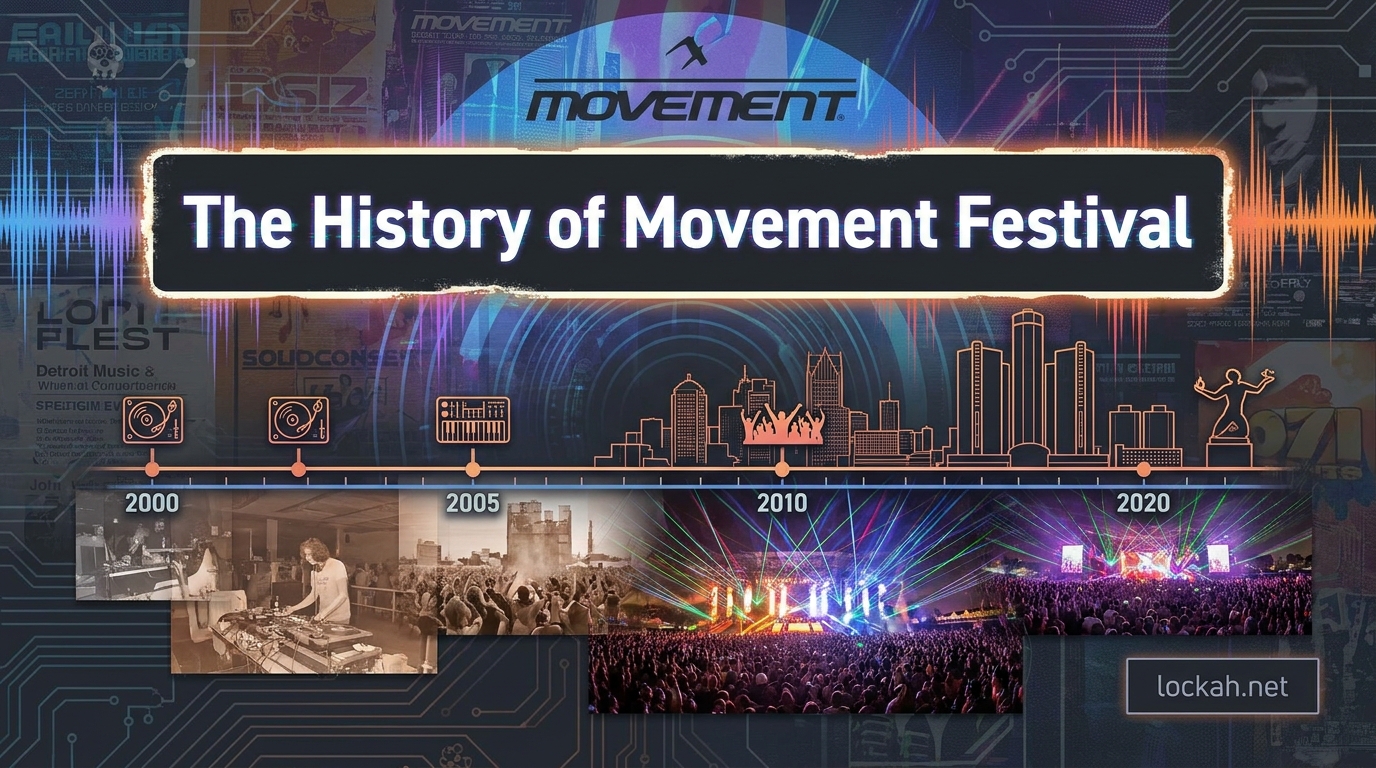
Every Memorial Day weekend, tens of thousands of electronic music enthusiasts make a pilgrimage to Hart Plaza in downtown Detroit. They come from Berlin, Tokyo, London, and across the United States to experience Movement festival, the annual celebration of Detroit techno held in the genre’s birthplace. The connection between Movement festival and Detroit techno runs deeper than a typical music festival and its featured genre. Movement exists specifically to honor Detroit’s legacy as the home of techno music, invented by the Belleville Three in the 1980s and exported to the world from this Midwestern industrial city.
Understanding the history of Movement festival requires understanding Detroit techno first. The festival began in 2000 as the Detroit Electronic Music Festival (DEMF), founded by Carol Marvin and her organization Pop Culture Media with techno pioneer Carl Craig as artistic director. What started as a free, grassroots celebration has evolved into one of the world’s premier electronic music events, while maintaining its authentic connection to Detroit’s techno roots.
The History of Movement Festival and Detroit Techno (2026)
The history of Movement festival and Detroit techno is inseparable. The festival would not exist without the music that preceded it, and techno would not have its global recognition without events like Movement preserving and celebrating this heritage. This complete guide explores both stories: how three friends from Belleville, Michigan created an entirely new genre of electronic music, and how a festival was born two decades later to honor that innovation.
From the first DEMF in 2000 to the modern Movement festival of 2026, this journey spans over four decades of musical innovation, cultural exchange, and community building. The story involves legendary DJs, dedicated organizers, shifting ownership, and an unwavering commitment to keeping Detroit techno’s legacy alive.
Origins of Detroit Techno
Detroit techno emerged in the early 1980s from the industrial landscape of a city facing economic decline. The music reflected Detroit’s automotive heritage through mechanical, repetitive rhythms and futuristic themes. Three high school friends from Belleville, Michigan-Juan Atkins, Derrick May, and Kevin Saunderson-would become known as the Belleville Three and create a sound that would transform global electronic music.
Their influences were diverse. Kraftwerk’s robotic precision from Germany merged with Parliament-Funkadelic’s funky soul from Detroit. Radio DJ The Electrifying Mojo played these eclectic sounds alongside new wave and early hip-hop, creating a sonic landscape that inspired young listeners. This fusion of European electronic experimentation with African American musical traditions created something entirely new.
By the mid-1980s, these teenagers were experimenting with synthesizers and drum machines. The Roland TR-909 and TB-303 became their instruments of choice. They created music that sounded like the future Detroit they imagined: sleek, mechanical, yet soulful. The term “techno” itself came from Atkins, who described the music as technological and futuristic.
The Belleville Three
The Belleville Three each contributed distinct elements to what became Detroit techno. Juan Atkins, often called the “godfather of techno,” founded Cybotron and established the foundational blueprint for the genre. His track “Clear” became a blueprint for the Detroit sound, combining Kraftwerk-inspired synth lines with funk rhythms.
Derrick May brought a more emotional and rhythmic approach. His production “Strings of Life” remains one of the most recognizable techno tracks ever created. May’s music captured the tension between Detroit’s industrial reality and its aspirational future, creating tracks that felt both mechanical and deeply human.
Kevin Saunderson expanded techno’s reach through his group Inner City. Tracks like “Big Fun” and “Good Life” brought Detroit techno to international audiences and the pop charts. While Atkins and May maintained underground credibility, Saunderson proved the commercial viability of the Detroit sound.
Together, these three friends from Belleville High School created not just a genre but an entire culture. They established Detroit as the birthplace of techno, a status the city maintains decades later. Their influence extends far beyond their individual tracks-they established the philosophy, production techniques, and cultural context that define Detroit techno.
Detroit Electronic Music Festival: DEMF Origins
The Detroit Electronic Music Festival emerged from a desire to celebrate the city’s techno legacy locally. Carol Marvin, working with her organization Pop Culture Media, envisioned a free festival that would bring Detroit’s electronic music community together. She approached Carl Craig, one of the second generation of Detroit techno producers who had established himself internationally, to serve as artistic director.
The first DEMF took place Memorial Day weekend in 2000 at Hart Plaza, the downtown riverfront venue that would become synonymous with the festival. Admission was free. The lineup featured both legendary Detroit techno pioneers and rising local talents. Thousands gathered to experience electronic music in the city that created it.
The inaugural festival exceeded expectations. Estimates suggest over one million attendees visited Hart Plaza throughout the weekend. For a city accustomed to economic struggle and population decline, this influx of visitors celebrating Detroit culture represented something significant. DEMF became an annual tradition, remaining free through 2003.
Those early years established the festival’s identity: a celebration of Detroit techno held in its birthplace, accessible to everyone regardless of economic status. The free festival era from 2000-2003 represented a utopian vision of electronic music culture, where the community gathered purely for the love of the music.
Transition Years: 2004-2005
The free festival model proved unsustainable despite its popularity. By 2004, organizational and financial challenges forced changes. The festival continued but faced uncertainty about its future. Different organizers attempted to maintain the event, but the magic of those early years seemed threatened.
Carol Marvin and Pop Culture Media struggled to secure funding for another free festival. Corporate sponsors were hesitant to support an event with no admission revenue. The city of Detroit, facing its own budget crises, could not provide sufficient support. The festival that had brought so many people to Hart Plaza seemed endangered.
These transition years tested the resolve of Detroit’s electronic music community. Would the festival survive? Could the free model be sustained? The uncertainty surrounding DEMF’s future created anxiety among techno fans who had come to rely on this annual gathering. Something needed to change for the festival to continue.
Movement Era Begins: Paxahau Takes Over
In 2006, Detroit-based production company Paxahau took over festival operations, rebranding the event as “Movement: Detroit’s Electronic Music Festival.” This marked the beginning of the modern era. Paxahau, founded by local electronic music enthusiasts, brought professional production experience and a deep commitment to Detroit’s techno heritage.
The name change to Movement carried symbolic weight. It suggested forward momentum, progress, and the ongoing evolution of Detroit techno. While the free festival era had ended, Paxahau maintained accessible pricing and the same Memorial Day weekend timing at Hart Plaza. The essential character of the festival-its Detroit identity-remained intact.
Under Paxahau’s leadership, Movement grew into an internationally recognized event. The lineup expanded to include global techno stars alongside Detroit legends. Attendance stabilized at tens of thousands annually. The festival maintained its reputation as the most authentic techno experience in the world because it remained rooted in Detroit.
Paxahau’s stewardship extended beyond the festival itself. They developed afterparty partnerships with local venues, creating a full weekend experience that showcased Detroit’s electronic music scene. Movement became not just a festival but a destination, drawing international visitors who treated attendance as a pilgrimage to techno’s birthplace.
Hart Plaza: The Festival’s Legendary Home
Hart Plaza has hosted Movement and its predecessor DEMF since the beginning. This downtown Detroit venue along the Detroit River provides a dramatic backdrop for electronic music. The plaza’s brutalist architecture, designed in the 1970s, complements techno’s industrial aesthetic perfectly.
The location carries historical weight. Hart Plaza sits on the site where Detroit founder Antoine de la Mothe Cadillac first landed. More recently, it hosted events during the city’s 300th anniversary celebration in 2001. For Movement attendees, it represents something equally significant: the physical space where Detroit techno is honored each year.
The festival has grown to utilize multiple stages throughout Hart Plaza. The main stage hosts headliners against the backdrop of the Detroit skyline and Windsor, Canada across the river. The Underground stage provides an intimate space for harder techno. The Stargate stage offers another distinct experience. This multi-stage setup allows Movement to showcase diverse electronic music styles while maintaining focus on techno.
Hart Plaza’s location in downtown Detroit places the festival at the center of the city’s cultural geography. Attendees can walk to restaurants, hotels, and afterparty venues. The festival’s presence brings life to downtown Detroit each Memorial Day weekend, contributing to the city’s ongoing revitalization while honoring its musical heritage.
Cultural Significance and African American Innovation
Detroit techno represents a crucial chapter in African American musical innovation. The Belleville Three created electronic music that drew from Black musical traditions-funk, soul, gospel-while pushing into futuristic sonic territory. This was Black innovation in electronic music at a time when the genre was largely associated with European artists.
Movement festival celebrates this heritage explicitly. The lineup consistently features Black artists, including the pioneers who created the genre. This representation matters in an electronic music industry that has sometimes erased the Black origins of dance music. Movement maintains the connection between techno and its creators.
The festival’s cultural significance extends beyond music. It brings international attention to Detroit, countering negative narratives about the city’s decline. For one weekend each year, Detroit becomes the center of global electronic music culture. Local businesses benefit from visitor spending. The city’s reputation benefits from association with cultural innovation.
Techno’s export from Detroit to Berlin and beyond represents a cultural exchange with Detroit at its center. German DJs and producers embraced Detroit techno, developing their own scenes that remain connected to the original. Movement provides a space where these international connections are renewed annually.
The Legacy and Impact of Movement Festival
Movement’s legacy extends beyond the music played at Hart Plaza each Memorial Day weekend. The festival has helped preserve Detroit techno’s place in music history. In an era when electronic music festivals have become corporate events featuring mainstream EDM, Movement maintains its focus on authentic techno and its Detroit roots.
The festival has inspired similar events worldwide. Cities around the globe now host electronic music festivals celebrating their local scenes, following the model Movement established. The idea that electronic music festivals should honor their local heritage, rather than simply booking the biggest names, has spread from Detroit.
For attendees, Movement offers something rare: an authentic connection to musical history. Most festivals take place in fields or stadiums with no particular cultural significance. Movement happens in techno’s birthplace, surrounded by the city that created the sound. This authenticity cannot be manufactured or replicated elsewhere.
The festival continues to evolve under Paxahau’s stewardship. New stages, new technologies, and new artists join the tradition each year. But the core mission remains unchanged: celebrating Detroit techno in the city where it was born. As long as that mission persists, Movement will remain essential to electronic music culture.
FAQs
When did Movement festival start?
Movement festival began in 2000 as the Detroit Electronic Music Festival (DEMF). The first free festival was held Memorial Day weekend at Hart Plaza in downtown Detroit, founded by Carol Marvin and Pop Culture Media with Carl Craig as artistic director.
What is the connection between Movement festival and Detroit techno?
Movement festival is the annual celebration of Detroit techno, held in the genre’s birthplace. The festival honors Detroit’s legacy as the home of techno music, invented by the Belleville Three in the 1980s, bringing the global techno community back to its roots each Memorial Day weekend.
Who founded the Detroit Electronic Music Festival?
The Detroit Electronic Music Festival was founded in 2000 by Carol Marvin and her organization Pop Culture Media. Legendary Detroit techno producer Carl Craig served as the festival’s first artistic director, helping shape the inaugural lineup and festival vision.
Where does Movement festival take place?
Movement festival takes place at Hart Plaza in downtown Detroit. This iconic outdoor venue along the Detroit River has hosted the festival since its inception in 2000, providing a dramatic backdrop with views of the Detroit skyline and Windsor, Canada.
How did Detroit techno originate?
Detroit techno originated in the early 1980s when three high school friends from Belleville, Michigan-Juan Atkins, Derrick May, and Kevin Saunderson-began creating electronic dance music inspired by Kraftwerk, Parliament-Funkadelic, and radio DJ The Electrifying Mojo. They combined synthesizers and drum machines with futurist themes to create a new sound that became known as techno.
Who are the Belleville Three?
The Belleville Three are Juan Atkins, Derrick May, and Kevin Saunderson-the three pioneers credited with inventing Detroit techno. All three attended high school in Belleville, Michigan in the late 1970s and began experimenting with electronic music production, each contributing distinct elements to what became the Detroit techno sound.
When did the festival change from DEMF to Movement?
The festival changed from DEMF to Movement in 2006 when production company Paxahau took over operations. After several years of organizational challenges from 2004-2005, Paxahau rebranded the event as Movement: Detroit’s Electronic Music Festival while maintaining its Memorial Day weekend tradition at Hart Plaza.
Who owns Movement festival now?
Movement festival is currently owned and produced by Paxahau, a Detroit-based electronic music event production company. Paxahau has operated the festival since 2006, establishing Movement as one of the world’s premier techno music events while maintaining its authentic connection to Detroit.
What makes Detroit techno unique?
Detroit techno is unique for its futuristic aesthetic, mechanical rhythms inspired by the city’s automotive industry, and emphasis on emotion and melody within electronic structures. Created by African American artists in a post-industrial Midwest city, it reflects Black innovation in electronic music while maintaining soulful, gospel, and funk influences alongside its electronic elements.
What is the significance of Hart Plaza to Movement festival?
Hart Plaza is significant to Movement festival as its iconic home since 2000. The downtown Detroit venue’s open-air setting, city skyline views, and acoustics have made it legendary. Hart Plaza’s location in the heart of Detroit-techno’s birthplace-adds cultural authenticity to the festival experience.
Conclusion
The history of Movement festival and Detroit techno represents a remarkable story of cultural innovation and preservation. From the Belleville Three’s teenage experiments in the early 1980s to the international pilgrimage that Movement has become in 2026, this music has maintained its Detroit identity while achieving global influence.
Movement festival serves as both celebration and preservation. It honors the pioneers who created techno while introducing new generations to the genre’s origins. The festival’s continued presence at Hart Plaza ensures that Detroit remains the spiritual home of electronic music, even as the sound has spread worldwide.
For anyone interested in electronic music history, understanding this connection is essential. Movement is not merely another music festival. It is the annual gathering of a global community in the place where their shared musical language was born. That authenticity, that connection to history, makes Movement unique among the world’s music festivals.