
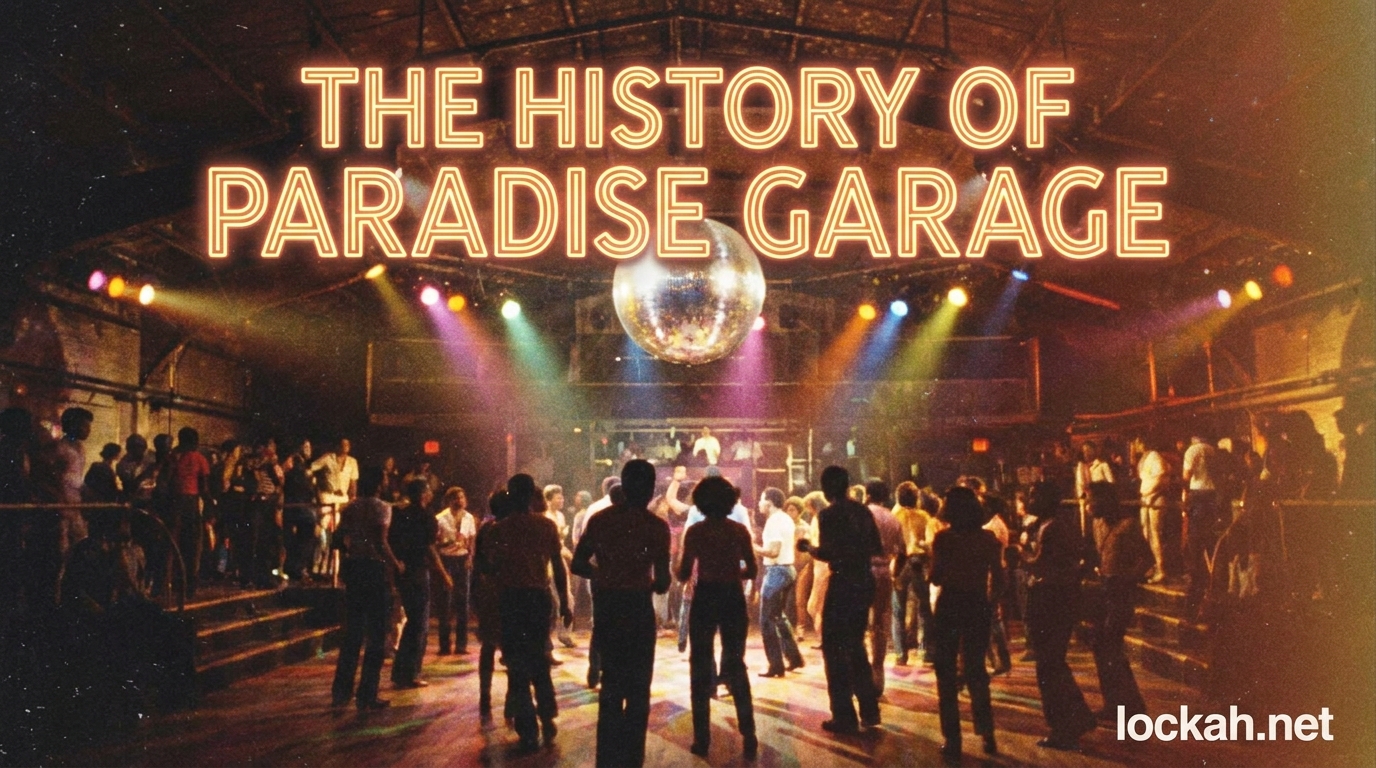
Paradise Garage was a legendary New York City discotheque located at 84 King Street in SoHo, operating from 1977 to 1987, renowned for its revolutionary sound system and resident DJ Larry Levan. It wasn’t merely a nightclub. It was a cultural phenomenon that fundamentally transformed how we experience dance music today.
In this guide, I’ll take you through the complete story of Paradise Garage and Larry Levan in NYC. From the club’s founding in a former parking garage to its closure a decade later, you’ll discover why dancers still speak of this place in reverent whispers. You’ll learn how one DJ’s genius created an entirely new genre of music and why the Garage remains the standard by which all other clubs are measured 2026.
Whether you’re a house music enthusiast, a dance culture historian, or simply curious about one of New York’s most influential underground institutions, this history will reveal why Paradise Garage earned its reputation as the greatest nightclub that ever existed.
Table of Contents
What Was Paradise Garage and Why Does It Still Matter?
Paradise Garage stood at 84 King Street in Manhattan’s SoHo neighborhood from 1977 until 1987. Unlike the glittering disco palaces of its era, the Garage embraced an underground aesthetic that prioritized musical excellence over celebrity spotting.
The club operated as a membership-only venue, which created an intimate community of dedicated dancers who returned weekend after weekend. This wasn’t a place for tourists or casual partygoers. It was a temple built for people who truly loved to dance.
What set Paradise Garage apart from every other club in New York—and arguably the world—was the combination of three elements working in perfect harmony. Larry Levan’s revolutionary DJ style. Richard Long’s custom-engineered sound system. And the unique sprung dancefloor that seemed to breathe beneath your feet.
The legacy of Paradise Garage extends far beyond its ten years of operation. The club gave birth to garage house music, a genre that would influence everything from deep house to modern EDM. It established the DJ as a creative artist rather than just a human jukebox. And it created a model for inclusive, community-centered nightlife that prioritized the dancefloor experience above all else.
The Birth of Paradise Garage: From Parking Garage to Dance Paradise (2026)
Michael Brody had a vision in 1976 that would change nightlife forever. He discovered a former parking garage at 84 King Street in Manhattan and saw something no one else could see. Where others saw an empty industrial space, Brody saw the potential for something revolutionary.
The building itself was unremarkable from the outside. A plain facade in the then-rough SoHo neighborhood gave no indication of what waited inside. Brody invested his own money and vision into transforming this utilitarian space into what would become the most influential nightclub in history.
Nicholas “Nicky” Holloway, an English club impresario, also played a role in the early development. His experience with London’s club scene helped inform some of the Garage’s unique characteristics. The concept was simple but radical. Create a space where the music and dancing came first, where the DJ was the star, and where everyone—regardless of background—could feel welcome.
The transformation took months of construction and careful planning. Brody focused on creating the perfect acoustic environment. He understood that great sound required more than just expensive equipment. It required thoughtful architecture and design.
Paradise Garage officially opened its doors in 1977. The timing couldn’t have been more perfect. Disco was reaching its commercial peak, but the Garage offered something different from the Studio 54 celebrity circus. While other clubs chased the rich and famous, Brody chased something more elusive. He wanted to create a genuine community built around music and movement.
The club’s name came naturally from its origins as an actual parking garage. But the “Paradise” part was earned through years of delivering transcendent experiences to everyone who walked through those unassuming doors.
Larry Levan: The Minister of Sound
Larry Levan became the resident DJ at Paradise Garage through a combination of talent, timing, and personal connection. He was already making a name for himself in New York’s competitive DJ scene when Michael Brody heard him play. Brody knew immediately that Levan was the one who could bring his vision to life.
Levan wasn’t like other DJs of his era. While many of his peers focused on beat-matching and smooth transitions, Levan approached DJing as a form of composition. He would spend hours crafting sets that built emotional narratives, taking dancers on journeys that could last from midnight until noon the next day.
Regulars at the Garage often described Levan as a minister preaching through records. He had an almost supernatural ability to read the energy of a room and respond with exactly the right record at exactly the right moment. Dancers would later recall moments when a particular song seemed to speak directly to their souls.
Born Lawrence Philpot on July 20, 1954, Levan grew up in Brooklyn. He developed his musical taste through exposure to gospel, soul, and early disco. His close friendship with Frankie Knuckles—who would later become the legendary resident at Chicago’s Warehouse—helped shape both of their approaches to DJing.
Levan’s technique was unorthodox and deeply personal. He would manipulate turntables in ways that no one had attempted before. Extending breaks, layering acapellas over instrumentals, creating dub versions live on the fly. These techniques would later become standard practices in house music, but Levan was pioneering them in real-time.
His relationship with Michael Brody went beyond employer and employee. Brody gave Levan complete creative freedom, trusting him to shape the musical identity of the club. This trust was rewarded with loyalty that lasted until the Garage’s final night.
Levan’s personal life was as complex as his DJ sets. He struggled with drug addiction throughout his career, a battle that would eventually contribute to his premature death. But on the dancefloor, none of that mattered. What mattered was the connection between the DJ, the sound system, and the dancers.
The Richard Long Sound System: Engineering Perfection
Richard Long of Richard Long & Associates designed and built the custom sound system that made Paradise Garage sound like no other club on Earth. Long was already known as a master of nightclub acoustics, but the Garage represented his magnum opus.
The system used a unique configuration of speakers positioned throughout the space to create uniform sound coverage. No matter where you stood in the club, the music sounded perfect. You could be right next to a speaker or in the back corner, and the experience remained consistent.
Long worked closely with Larry Levan to understand exactly what the DJ needed. Levan wanted a system that could reproduce the full frequency range of his records with clarity and power. He wanted bass that you felt in your chest without losing definition. He wanted highs that sparkled without becoming harsh.
The technical specifications were impressive for the era. Multiple subwoofer arrays handled the low frequencies. Custom-designed mid-range cabinets delivered vocal clarity. High-frequency drivers provided the shimmering detail that made every cymbal crash and string section come alive.
But numbers and specifications don’t capture what made this system special. Dancers who experienced it describe a physical sensation of being wrapped in sound. The music didn’t just play at the Garage. It enveloped you, surrounded you, moved through you.
Richard Long’s work at Paradise Garage influenced nightclub sound design for decades to come. The principle of consistent coverage and full-frequency reproduction became industry standards. Every modern club sound system owes something to what Long accomplished at 84 King Street.
The system was so finely tuned that Levan could play records with subtle details that would be lost in lesser venues. A quiet vocal ad-lib. A barely-audible keyboard texture. A low-frequency bass line that seemed to emerge from the floor itself. At the Garage, nothing was lost.
The Physical Space: More Than Just a Room
The Paradise Garage occupied a unique building that contributed significantly to its mystique. The former parking garage at 84 King Street offered high ceilings, open floor plans, and industrial architecture that Brody transformed into something magical.
The most famous feature of the physical space was the legendary sprung dancefloor. This wasn’t ordinary flooring. It was constructed with a suspension system that gave it bounce and responsiveness. When hundreds of people danced together, the floor would actually move with them, creating a sensation of floating.
Dancers described the experience as transformative. The sprung floor absorbed impact and returned energy, allowing people to dance for hours without the joint pain that comes from dancing on concrete or tile. You could lose yourself in movement for an entire night without physical exhaustion.
The membership-only model was another defining characteristic. Unlike Studio 54, where getting past the rope line was a game of social status, the Garage welcomed anyone willing to commit to the community. Membership wasn’t about exclusivity in the traditional sense. It was about creating a space where everyone knew each other, where trust developed between regulars, and where the crowd became a family.
One of the most radical policies was the no-alcohol rule. Paradise Garage didn’t serve liquor, which meant the club could stay open past the hours mandated for venues with alcohol licenses. This allowed Levan to play marathon sets that stretched from Saturday night through Sunday morning and beyond.
The absence of alcohol also shaped the culture of the space. Without the aggression that often accompanies heavy drinking, the atmosphere remained peaceful and focused on the music. People came to dance, not to get drunk.
The layout featured multiple levels and areas where dancers could find their preferred experience. Some spots offered proximity to the DJ booth for those who wanted to watch Levan work. Others provided more secluded spaces for intimate dancing or quiet moments of rest between songs.
The after-hours operation became legendary. While other clubs closed at 4 AM, the Garage might just be reaching its peak. The Sunday morning hours, when the sun rose and light streamed through the windows, created an almost spiritual atmosphere that regulars still describe with awe decades later.
The Birth of Garage House Music
Garage house music emerged from the specific sound that Larry Levan developed during his residency. It wasn’t just disco played in a particular club. It was a distinct genre with recognizable characteristics that would influence dance music for generations.
The Garage Sound emphasized soulful vocals, gospel influences, and extended arrangements that allowed for emotional build-ups and releases. Levan favored records with strong vocal performances, often female singers delivering passionate messages of love, freedom, and spiritual seeking.
West End Records played a crucial role in defining this sound. The label, founded by Mel Cheren, became closely associated with Paradise Garage. Cheren understood what Levan was doing and provided him with exclusive mixes, unreleased tracks, and special versions designed specifically for the Garage’s sound system.
Mel Cheren wasn’t just a record executive. He was a true believer in the culture that the Garage represented. His financial support and creative partnership helped sustain the club through difficult periods. The relationship between Cheren, Brody, and Levan formed a triangle of visionaries who each contributed something essential.
Garage house distinguished itself from other disco variants through its emotional depth and spiritual quality. Where mainstream disco could feel commercial and calculated, garage house felt raw and authentic. The records Levan played often had a yearning quality, a searching for something beyond the physical experience of dancing.
Levan’s mixing style contributed to the genre’s development. He would layer elements from multiple records, creating entirely new compositions in real-time. An acapella vocal from one song might float over the instrumental from another. A dub version might get extended with additional percussion loops. These techniques became foundational practices in house music production.
The influence of Paradise Garage on house music cannot be overstated. When Frankie Knuckles moved to Chicago and opened the Warehouse, he brought lessons learned from Levan’s approach. The connection between garage house and Chicago house is direct and acknowledged by both scenes.
By the mid-1980s, producers were deliberately making “garage” records—tracks designed to sound like what Larry Levan would play. The genre had become codified enough that it could be replicated and exported to other cities. But the original, the authentic Garage Sound, could only be experienced at 84 King Street with Levan at the controls.
Legendary Performances and Notable Artists
Grace Jones brought her theatrical brilliance to Paradise Garage on multiple occasions, creating moments that regulars still discuss with reverence. Her performances at the Garage weren’t typical concert appearances. They were integrated into the flow of the night, with Levan often DJing before and after her sets, creating seamless transitions between recorded and live music.
Keith Charles was another regular performer who became synonymous with the Garage experience. His soulful voice and charismatic stage presence made him a favorite among the membership. Charles understood the specific energy of the space and tailored his performances to complement what Levan was doing on the decks.
The list of artists who performed at Paradise Garage reads like a who’s who of dance music and R&B from the era. Jocelyn Brown, Loleatta Holloway, and other powerful vocalists brought their talents to the Garage stage. These weren’t just performances. They were communions between artist and audience that could last for hours.
What made these performances special was the integration with Levan’s DJing. He might play an extended dub version of an artist’s record, then mix into their live appearance seamlessly. The boundary between DJ set and live show dissolved, creating a continuous musical experience that could stretch for eight, ten, or twelve hours.
Levan also had access to exclusive tracks and unreleased versions that no other DJ could obtain. Record labels and producers would bring him acetates and test pressings, knowing that his endorsement could make a record a hit. These exclusive plays became part of the Garage’s mystique—songs you could only hear there, experiences you couldn’t replicate anywhere else.
The Garage’s reputation attracted surprise appearances from major artists who wanted to experience the legend themselves. Stories circulate of famous musicians sneaking in to dance anonymously among the regulars, drawn by the reputation of what was happening on those nights.
A Sanctuary: The LGBTQ Community and Paradise Garage
Paradise Garage created an inclusive atmosphere that was revolutionary for its time. In an era when many gay clubs operated in secrecy and fear, the Garage stood as an open, welcoming space where the LGBTQ community could express themselves freely and safely.
The membership model helped create this safety. When everyone knows each other, when the same faces return week after week, a sense of community develops that naturally excludes predators and troublemakers. The Garage became a family, and families protect their own.
Unlike Studio 54, where door selection created a hierarchy of coolness and celebrity, Paradise Garage welcomed anyone who loved to dance. The crowd was genuinely diverse—gay, straight, Black, white, Latino, wealthy, working-class—all moving together on that sprung dancefloor. This diversity wasn’t just tolerated. It was celebrated.
The absence of alcohol played a role in maintaining this peaceful atmosphere. Without the aggression and boundary-violation that often accompanies heavy drinking, people felt safer expressing themselves. The focus remained on dancing, on the music, on the communal experience rather than on picking up strangers or showing off wealth.
Dancers who experienced the Garage often describe it in religious terms. It was “like church,” they say. There was something spiritual about gathering with your community, moving your body to music that seemed to speak directly to your soul, sharing that experience with hundreds of others who were feeling the same thing.
Larry Levan understood this spiritual dimension. He often described himself as serving the crowd, as creating experiences that transcended entertainment. He would play gospel-influenced tracks that explicitly referenced religious themes, and the crowd would respond with raised hands and ecstatic dancing that looked like worship.
For many LGBTQ individuals in the 1970s and 1980s, Paradise Garage provided something that was difficult to find elsewhere. A space where they could be completely themselves without fear of judgment or violence. A community that accepted them exactly as they were. A place where they could experience joy without reservation.
The Garage’s legacy in LGBTQ history is recognized officially. The NYC LGBTQ Historic Sites Project includes Paradise Garage in its registry of significant locations. This recognition acknowledges what the community always knew—that this was more than a nightclub. It was a sanctuary during a difficult time.
The Final Days and Larry Levan’s Legacy
Paradise Garage closed in 1987 after a decade of operation. The closure wasn’t caused by a single dramatic event but by the accumulation of financial pressures and changing circumstances. Michael Brody had been subsidizing the club for years, and the mounting costs became unsustainable.
The final night at Paradise Garage has become the stuff of legend. Larry Levan played an emotional set that lasted until the early hours of the morning, knowing that this was the end of something that could never be replicated. Dancers who were there describe tears, embraces, and a sense that they were witnessing the conclusion of an era.
Larry Levan continued DJing after the Garage closed, but he never found another residency that matched what he had at 84 King Street. He played at various clubs in New York and internationally, always carrying the reputation of the Garage with him. But the specific magic of that room, that sound system, that community—once lost, it couldn’t be recreated.
Levan’s health declined in the early 1990s. Years of drug use had taken their toll on his body. He died on November 8, 1992, at the age of 38—far too young, but leaving behind a legacy that would influence dance music forever.
His death was mourned by the global dance music community. Memorial events were held in New York and around the world. Tributes poured in from DJs, producers, and dancers who had been transformed by his work. The minister of sound had preached his final sermon.
The building at 84 King Street stood for decades after the club closed, serving various commercial purposes but never again hosting the kind of magic that had occurred there. In 2018, the building was demolished to make way for new development. The physical space where Paradise Garage existed is now gone, replaced by something ordinary and forgettable.
But the legacy of Paradise Garage and Larry Levan continues to grow. Annual tribute events celebrate what they created. Documentaries including “Maestro” and “Larry’s Garage” preserve the stories for new generations. And every DJ who builds a set with emotional narrative, who treats the dancefloor as a community to be served rather than a crowd to be entertained, carries forward something that began at 84 King Street.
The influence on modern dance music is immeasurable. Garage house evolved into UK garage, then into dubstep and grime. The fundamentals of DJ mixing that Levan pioneered are now standard practice. The concept of the DJ as an artist who creates unique experiences through selection and manipulation of records is now universal.
Frequently Asked Questions About Paradise Garage
What is the story behind the Paradise Garage?
Paradise Garage was founded in 1977 by Michael Brody in a former parking garage at 84 King Street in New York City. It operated for ten years as a membership-only dance club that prioritized music and community over celebrity culture. The club became legendary for its custom sound system by Richard Long, its sprung dancefloor, and its resident DJ Larry Levan, who pioneered the garage house music genre that influenced dance music globally.
Who was the owner of Paradise Garage?
Michael Brody owned and operated Paradise Garage throughout its entire existence from 1977 to 1987. Brody was a visionary nightclub operator who invested his own money to create a space focused purely on dancing and music. He gave Larry Levan complete creative freedom and supported the club financially even when it wasn’t profitable, prioritizing the cultural mission over commercial success.
What happened to Larry Levan?
Larry Levan died on November 8, 1992, at the age of 38 from heart failure related to drug addiction. After Paradise Garage closed in 1987, Levan continued DJing internationally but never found another residency that matched his work at the Garage. His death was mourned globally by the dance music community, and his legacy continues to influence DJs and producers worldwide.
What year did Paradise Garage close?
Paradise Garage closed in 1987 after ten years of operation. The closure resulted from mounting financial pressures that made the club unsustainable despite Michael Brody’s personal subsidies. The final night featured an emotional extended set by Larry Levan that lasted until the early morning hours, with dancers knowing they were witnessing the end of an irreplaceable era.
Did Larry Levan invent house music?
Larry Levan didn’t invent house music single-handedly, but he was one of its most important pioneers alongside Frankie Knuckles in Chicago. Levan developed the garage house genre through his decade-long residency at Paradise Garage, creating techniques like extended dub mixes, live re-editing, and emotional narrative sets that became foundational to house music culture. The term “garage house” directly references his work at Paradise Garage.
The History of Paradise Garage and Larry Levan in NYC: A Lasting Legacy
Paradise Garage was more than a nightclub. It was a cultural revolution that changed how we think about dance music, DJ culture, and community space. For ten years at 84 King Street, Michael Brody, Larry Levan, Richard Long, and Mel Cheren created something that has never been replicated.
The Garage established principles that continue to guide underground dance culture today. The DJ as artist. The sound system as instrument. The dancefloor as sacred space. The community as family. These ideas, radical in the 1970s, are now accepted wisdom in dance music culture worldwide.
Larry Levan’s genius transformed what a DJ could be. He showed that selecting and mixing records could be a form of composition, that a skilled DJ could take dancers on emotional journeys lasting hours, that the right record at the right moment could create transcendent collective experiences.
Though the building at 84 King Street was demolished in 2018, and though Larry Levan passed away in 1992, what they created continues to influence music and culture. Every time a DJ crafts a set with narrative intention, every time a club invests in quality sound, every time dancers gather in inclusive community, the spirit of Paradise Garage lives on.
If you’re discovering this history for the first time, seek out the recordings, watch the documentaries, listen to the music that defined the Garage Sound. You may not be able to experience what it was like to dance on that sprung floor until sunrise with Larry Levan guiding the journey. But through the legacy they left behind, you can understand why those who were there still speak of Paradise Garage as the greatest club that ever existed.