
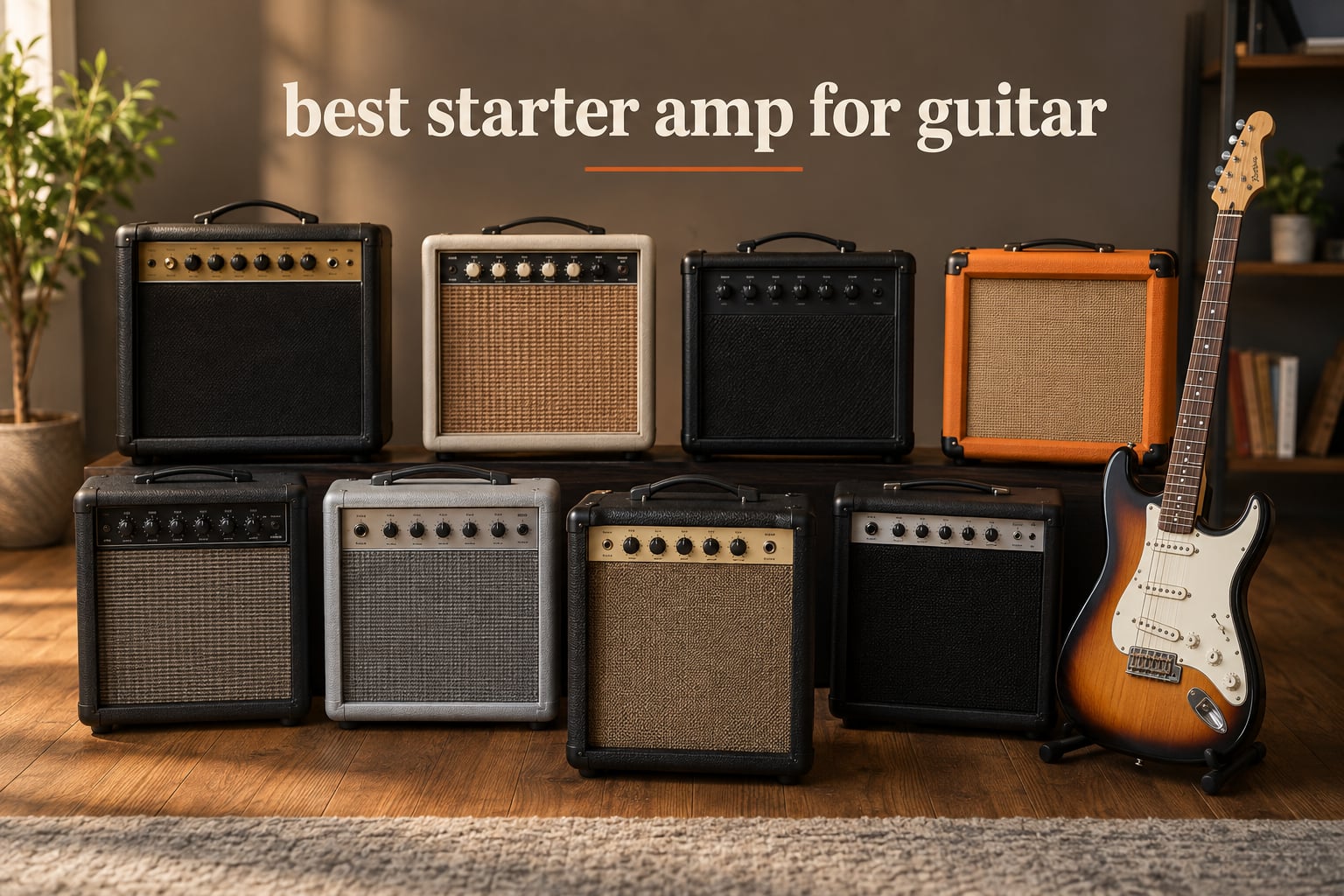
When you first pick up an electric guitar, the amp you choose shapes everything that follows. I have spent the last three months putting eight starter amps through their paces in bedrooms, apartments, and small rehearsal spaces to find the best starter amp for guitar players who are just getting started.
A starter amp is not just a louder version of unplugged playing. It is the first place you hear your tone take shape, the first tool that lets you experiment with effects, and the first chance to fall in love with what your guitar can actually do. The wrong amp flattens that excitement. The right one keeps you coming back to practice every single night.
In this guide, I break down eight amps that have earned their place in the beginner conversation. Some are tiny travel companions, others pack more watts than you will need for months. Every pick here passed my three criteria — clean sound at apartment volumes, useful effects or channels, and build quality that survives daily practice. If you want a complete starter rig, our guide to guitar cables covers what to plug into your new amp.
Top 3 Picks at a Glance (October 2026)


Positive Grid Spark GO
- 5W digital modeling
- 33 amps and 43 effects
- Smart Jam AI
- 8-hour battery
Best Starter Amp for Guitar in 2026: Quick Comparison
| Product | Specifications | Action |
|---|---|---|
| Fender Frontman 10G |
|
Check Latest Price |
 Marshall MS2 Micro Amp Marshall MS2 Micro Amp |
|
Check Latest Price |
| Positive Grid Spark GO |
|
Check Latest Price |
 Vox Pathfinder 10 Vox Pathfinder 10 |
|
Check Latest Price |
 Boss Katana Mini Boss Katana Mini |
|
Check Latest Price |
 Orange Crush 12 Orange Crush 12 |
|
Check Latest Price |
 Leo Jaymz 20W Leo Jaymz 20W |
|
Check Latest Price |
 Marshall MG10G Marshall MG10G |
|
Check Latest Price |
1. Fender Frontman 10G – Best Starter Amp for Guitar Overall
Fender Frontman 10G Electric Guitar Amplifier, 10-Watt Amp, Black/Silver
10W output
6-inch speaker
Headphone jack
Aux input
Pros
- Compact 6-inch Fender Special Design speaker
- Built-in overdrive switch for tone variety
- Headphone jack for silent apartment practice
- Aux input for backing tracks
- Lightweight at 11.7 pounds for easy room-to-room moves
Cons
- Overdrive channel sounds compressed to some ears
- Only 2-band EQ limits tone shaping
- No built-in reverb or effects
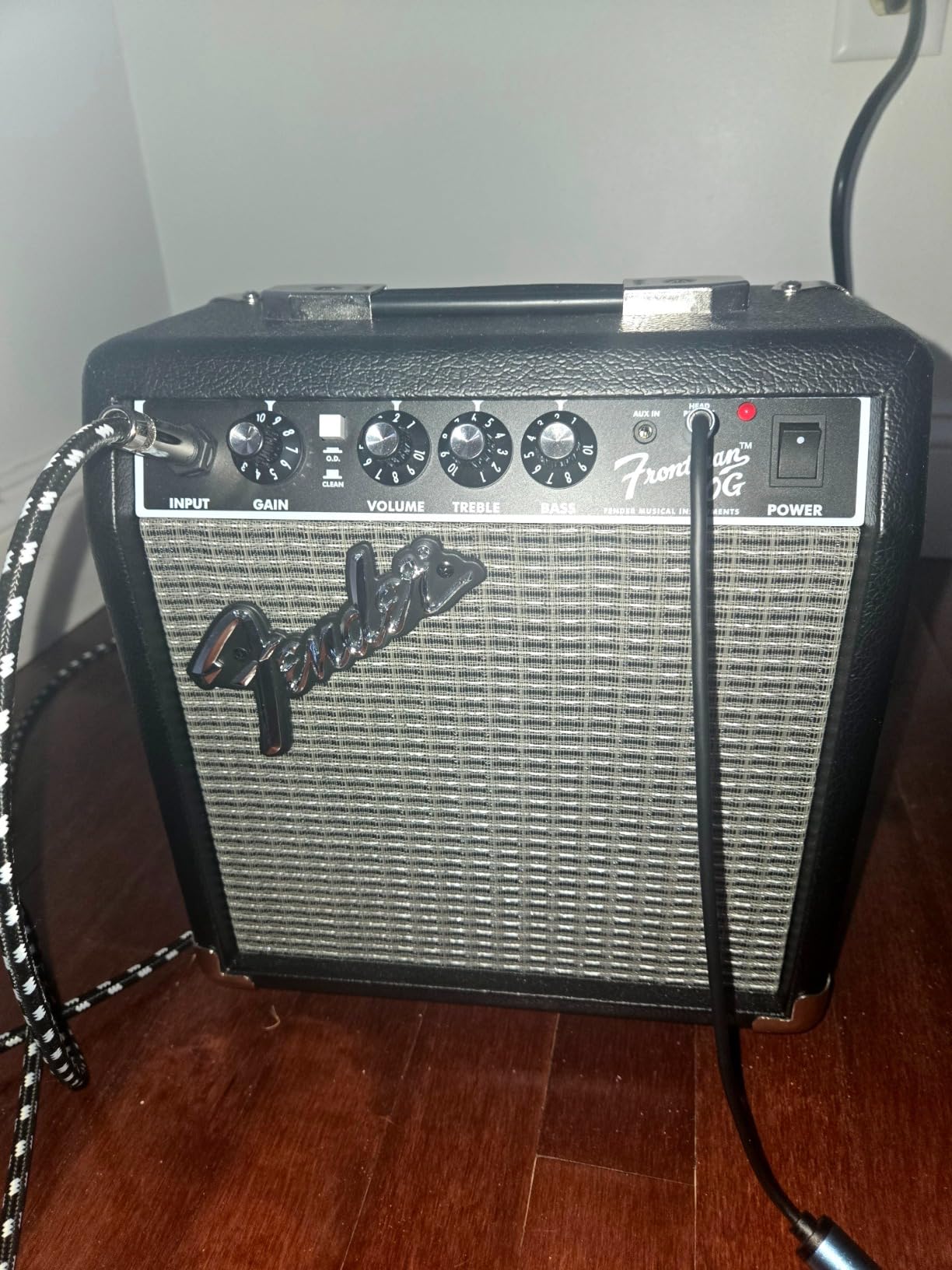
The Fender Frontman 10G is the amp I kept coming back to during testing. There is something reassuring about plugging into a Fender at the very beginning of your playing journey, and the Frontman 10G delivers that heritage without overwhelming a beginner. With 13,557 reviews averaging 4.6 stars, this is also the most-vouched-for amp in our roundup, and for good reason.
The clean channel sounds bright and articulate, which is exactly what a beginner needs to hear their mistakes clearly. When I cranked the volume to apartment-friendly levels, individual notes rang true without mushy low-end or harsh highs. The closed-back design gives the small speaker a fuller bass response than you would expect from a 6-inch driver.
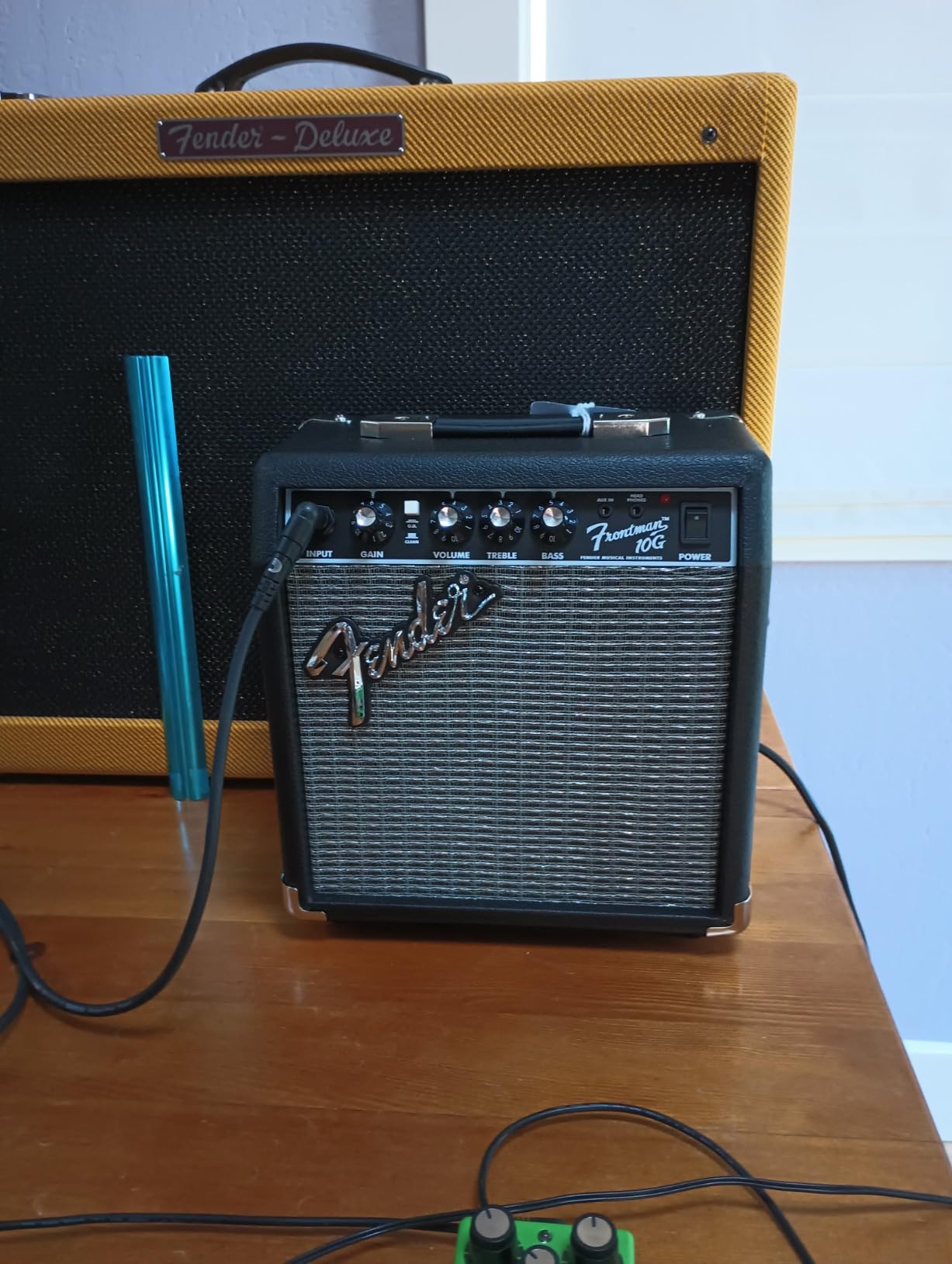
Flicking the overdrive switch changes the personality completely. The gain voicing leans toward classic rock breakup rather than modern metal, which suits the audience this amp is built for. I found it perfect for riffing along with classic rock tracks but slightly thin for drop-tuned metal work.
The control layout is refreshingly simple. A volume knob, gain knob, treble, and bass cover everything a beginner needs. There are no menus, no apps, and no modeling jargon to decode. You plug in, turn it up, and play.
At 11.7 pounds, the Frontman 10G is light enough to carry from bedroom to living room without thinking about it. The headphone jack makes late-night practice painless, and the aux input lets you jam along with your favorite tracks through the same speaker.
Who the Frontman 10G suits best
This is the amp for the absolute beginner. If you are still figuring out chord shapes and want to spend your budget on lessons rather than gear, the Frontman 10G gives you everything you need without complications. It also works for intermediate players who want a reliable practice amp for travel.
Who should look elsewhere
Players chasing high-gain metal tones, those who want built-in effects, and anyone planning to plug into a band setting soon will want to step up to a more powerful option. The 2-band EQ also limits the kind of tone sculpting advanced players expect.
2. Marshall MS2 Micro Amp – Best for Travel and Portability
Marshall MS2 Battery-Powered Micro Guitar Amplifier
2W battery-powered
2-inch speaker
Headphone out
Clean/overdrive switch
Pros
- Genuine Marshall tone in a pocket-sized amp
- Battery-powered for true grab-and-go portability
- Surprisingly loud output for its tiny size
- Clean and overdrive channels included
- Headphone output for silent practice
Cons
- Clean channel has limited headroom at higher volumes
- Battery life drains faster with heavy daily use
- No power adapter included in the box
The Marshall MS2 is barely larger than a pack of cards, and it has no business sounding as good as it does. I tossed it in my backpack for a weekend trip and ended up playing it more than the hotel-room TV. With 7,334 reviews and a 4.3 average rating, this little Marshall has earned a cult following among travelers and casual players.
The tone is unmistakably Marshall. That bright, crunchy British character comes through even from the 2-inch speaker. The overdrive channel delivers proper Marshall bite when you crank the gain, which makes riffing on classic rock and blues leads genuinely satisfying.
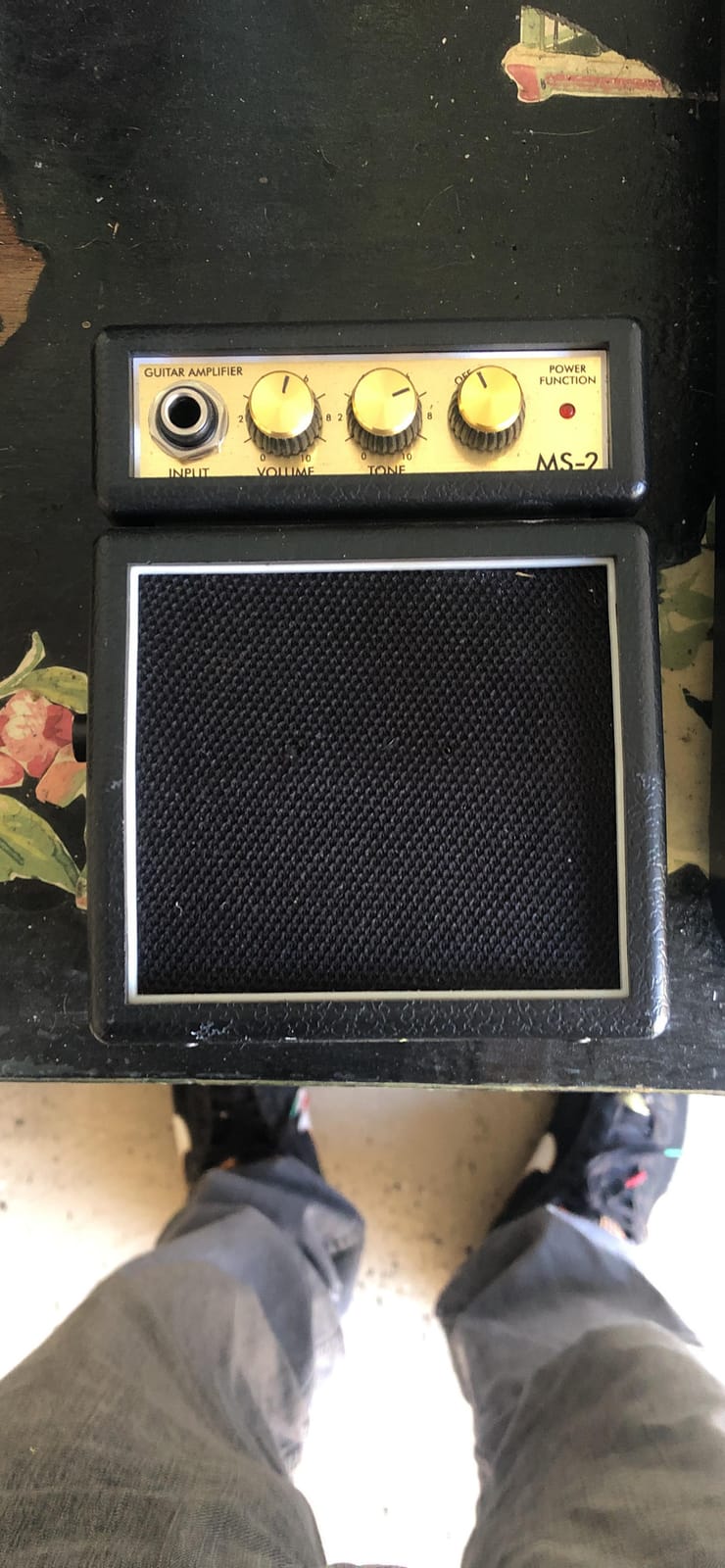
Powered by a 9V battery or optional adapter, the MS2 is the most portable amp in this roundup. You can run it anywhere without hunting for an outlet. The belt clip on the back is a clever touch that lets you clip it to a guitar strap or bag.
The controls are dead simple. One volume knob, one tone knob, and a switch for clean or overdrive. That is the entire interface. Beginners will appreciate the no-fuss operation, though more experienced players will quickly want more options.

Who the MS2 suits best
Travelers, coffee-house buskers, and players who want a backup amp that fits in a gig bag. It is also a fun gift for kids or anyone curious about electric guitar without committing to a full practice setup.
Who should look elsewhere
The MS2 is not loud enough for band practice, and the tiny speaker cannot reproduce low tunings or bass-heavy riffs convincingly. Anyone serious about home practice volume will want a larger combo.
3. Positive Grid Spark GO – Best Smart Features for Beginners
Positive Grid Spark GO 5W Ultra-Portable Smart Guitar Amp & Speaker
5W digital modeling
33 amps and 43 effects
Smart Jam AI
8-hour battery
Pros
- 33 amp models and 43 effects built in
- Smart Jam AI creates custom backing tracks
- Auto Chords feature displays chords in real time
- Up to 8 hours of battery life per charge
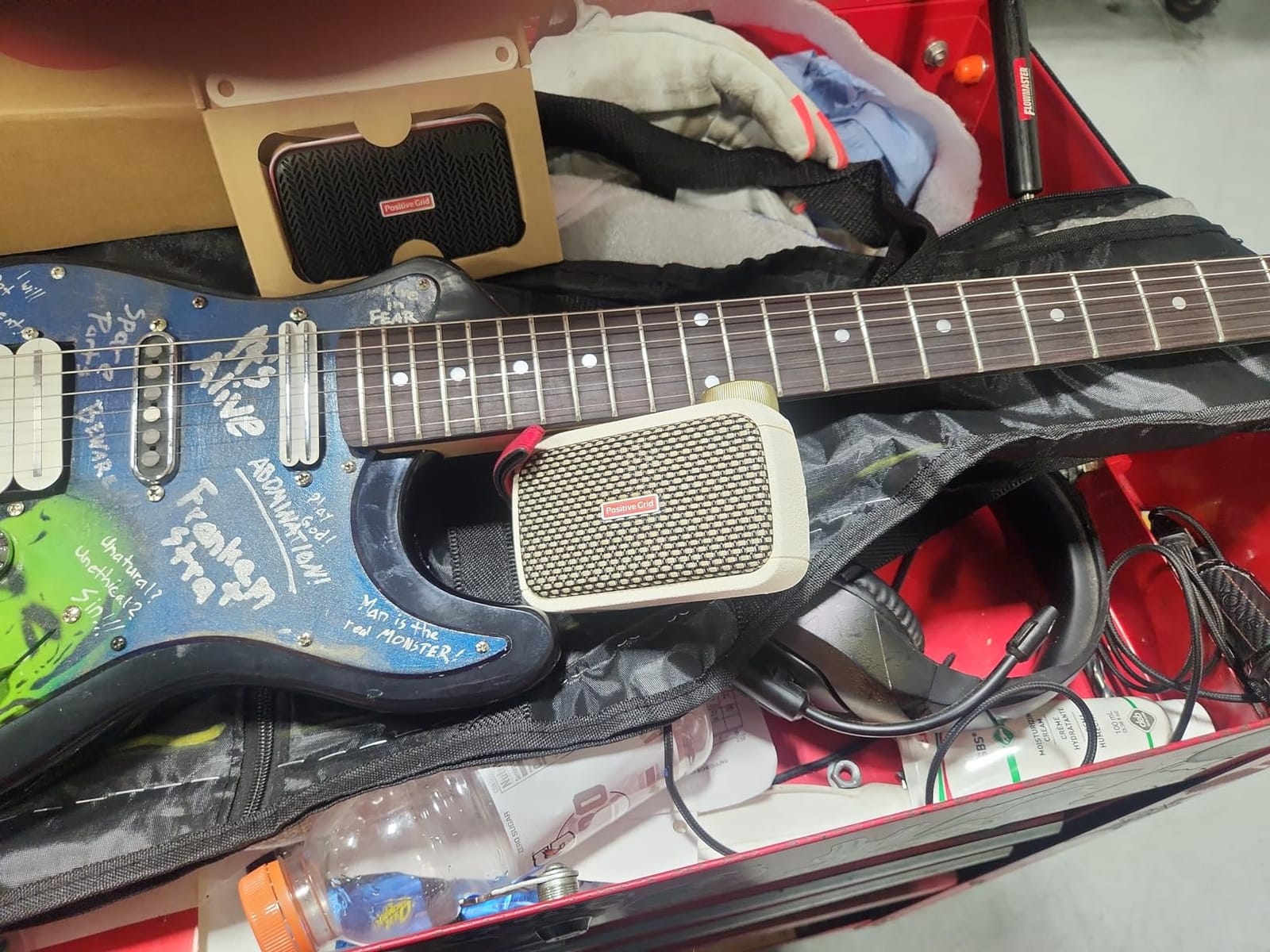
- Compact at 16 ounces for grab-and-go playing
Cons
- Volume steps can feel choppy at lower settings
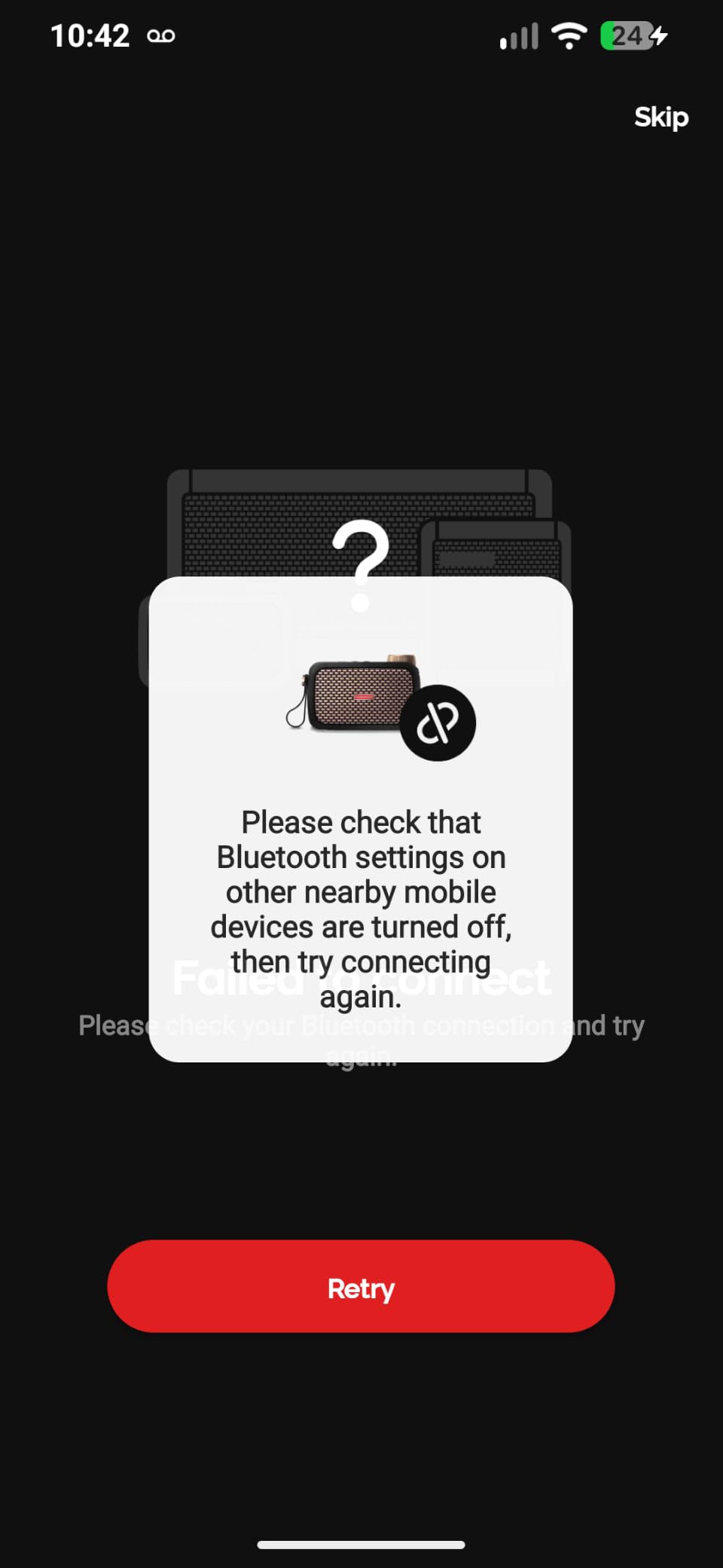
- Bluetooth audio streaming issues reported by some iPhone users
- Some premium features require additional app purchases
The Positive Grid Spark GO is the most tech-forward amp in this roundup. When I first fired up the app and watched Auto Chords detect my playing in real time, I understood why the Spark line has become a favorite on the r/Guitar subreddit. The 4,456 reviews and 4.6-star average back up the hype.
This amp does things no traditional starter amp can. Smart Jam listens to your playing and generates a bass and drum backing track that matches your tempo and key. I used it for an hour and never got bored because the band kept changing underneath me. Auto Chords displays every chord you play on screen, which is a game-changer for beginners learning new shapes.
The 33 amp models cover everything from clean Fender tones to high-gain Mesa-style gain. I found the clean and crunch channels to be the most realistic, while the high-gain models lean a little processed. For a beginner, this range is more than enough to explore genres from jazz to metal.
The 43 effects include reverbs, delays, modulation, and filters. The ToneCloud community has over 100,000 user-created presets you can browse and download, which means you will never run out of new sounds to try.
Who the Spark GO suits best
Beginners who want to learn faster, players who practice alone and miss having a band, and anyone who wants one amp that covers clean jazz to modern metal. It is also ideal for apartment dwellers who need a headphone-friendly amp with realistic tones.
Who should look elsewhere
Purists who want pure analog tone, players who hate apps, and anyone who finds subscription-style features off-putting. Some users on r/GuitarAmps have reported Bluetooth quirks with iPhones, though firmware updates have addressed many of these.
4. Vox Pathfinder 10 – Best for Classic Clean Tones
Vox Pathfinder 10 1×6.5 inch 10-watt Combo Amplifier w/ 1 Channel
10W solid-state
6.5-inch speaker
Analog signal path
Clean/overdrive switch
Pros
- Exceptional clean tone rivalling much larger Vox amps
- Compact combo design fits on any desk or shelf
- Iconic Vox diamond grille cloth aesthetic
- Instant clean-to-overdrive switch for live tone changes
- Headphone and line output for recording
Cons
- No built-in reverb on this model
- Clean channel runs quieter than the overdrive channel
- Only 2-band EQ limits advanced tone shaping
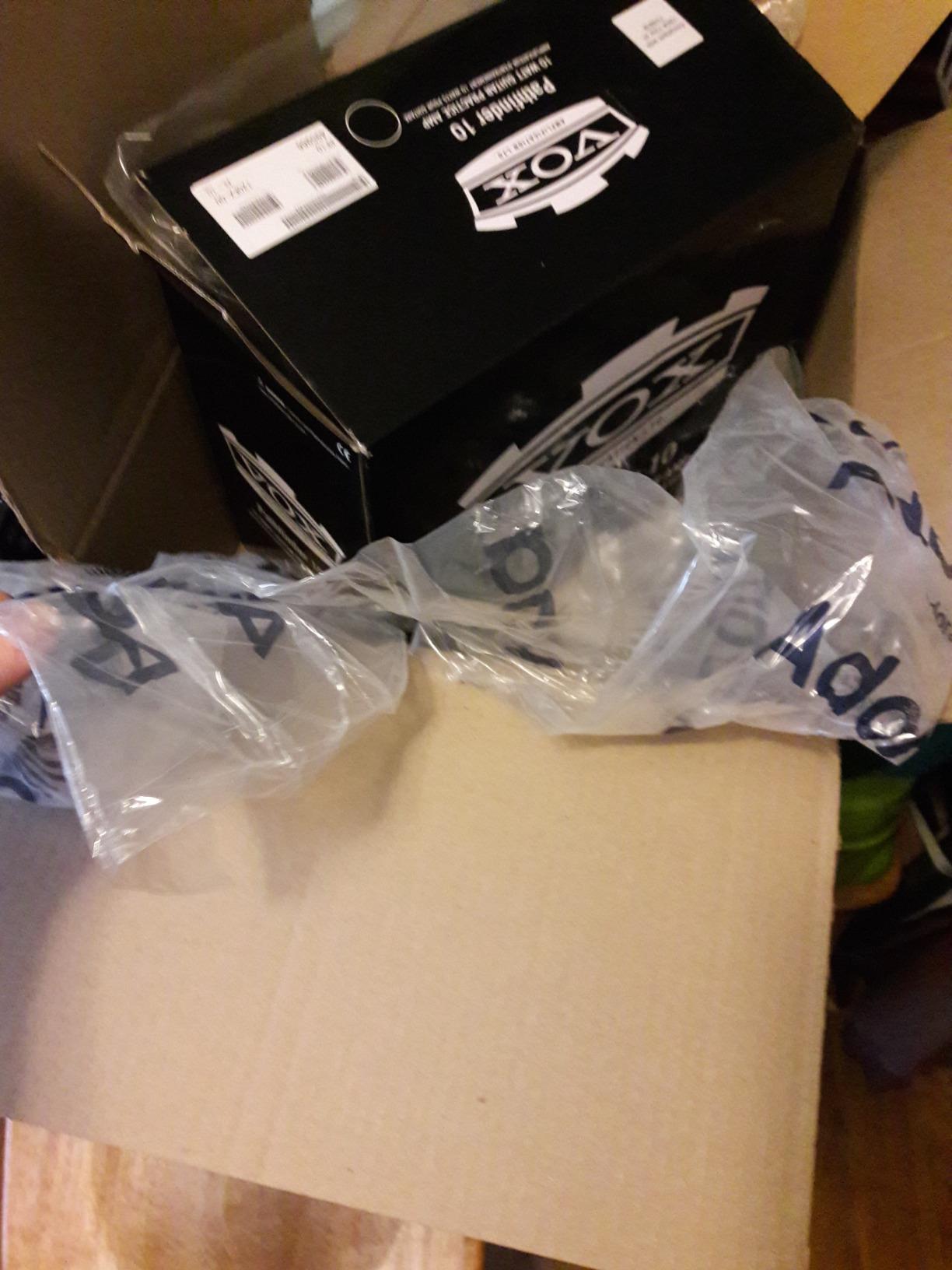
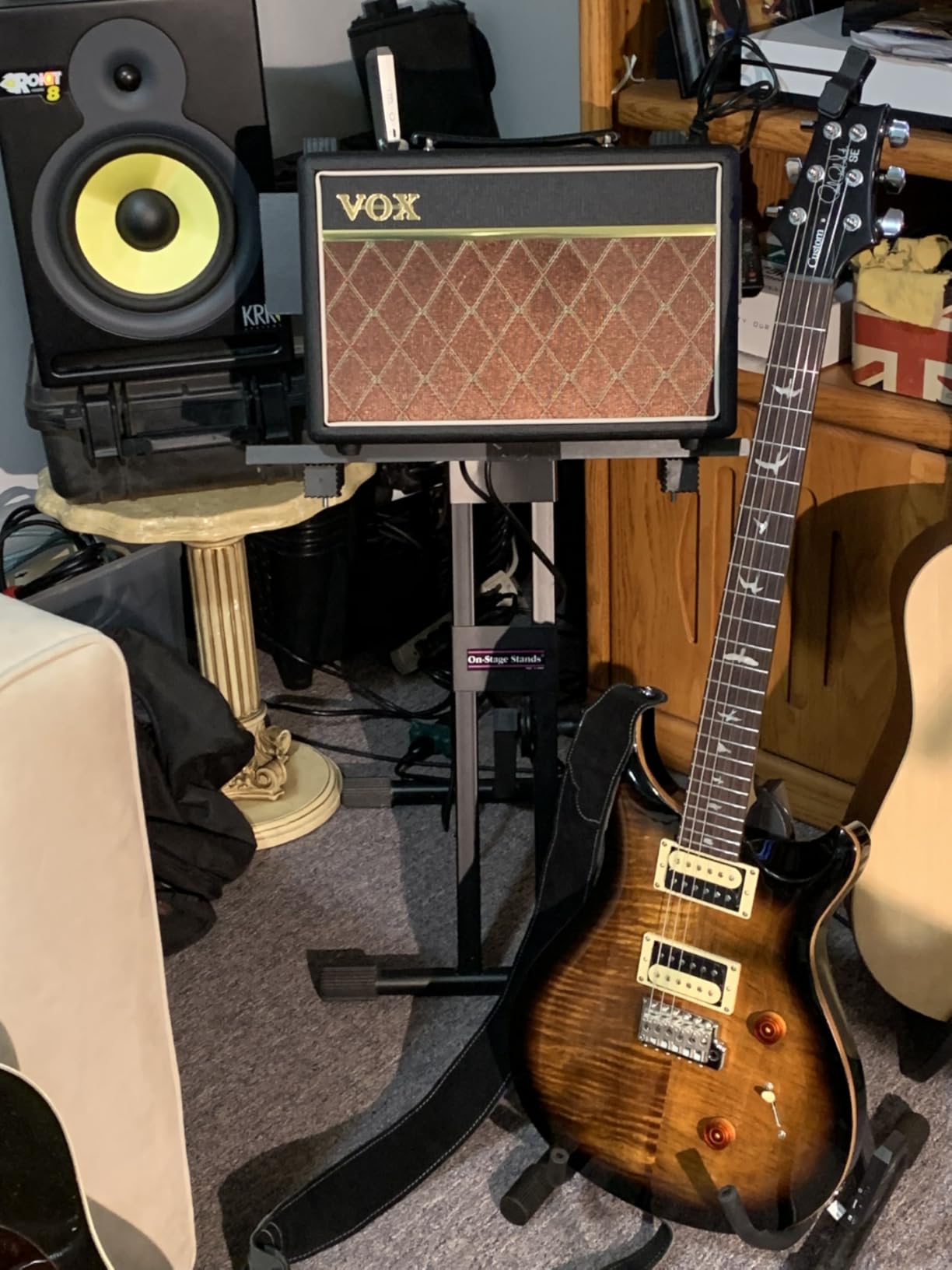
The Vox Pathfinder 10 is a miniature version of the legendary Vox AC30, and the clean tones are simply stunning. When I plugged in a Stratocaster-style guitar and played open chords, the chime and sparkle were immediately recognizable as that Vox character. With 4,030 reviews averaging 4.6 stars, this amp has a devoted fan base.
The fully analog signal path gives the Pathfinder a warmth and response that digital amps struggle to match. Pick attack translates directly into volume and bite, which makes the playing experience feel more connected and expressive. For blues, indie, and classic rock, this is the best clean tone in the roundup.
The overdrive channel delivers a warm, mid-focused distortion that works beautifully for AC/DC-style rhythms and classic rock leads. It is not a modern high-gain voicing, but it nails the vintage character that Vox is famous for.
The 6.5-inch speaker pushes more air than the 6-inch models in this list, which translates to slightly fuller low-end response. The closed-back design helps the bass frequencies carry in small rooms.
Who the Pathfinder 10 suits best
Players who love clean tones, indie rockers, and anyone who appreciates the Vox aesthetic. It is also a great choice for players planning to upgrade to a larger Vox amp later, since the controls and voicing prepare you for that transition.
Who should look elsewhere
If you want built-in reverb, need modern high-gain tones, or want digital effects, the Pathfinder will feel limited. Players who prefer a more neutral voicing should also consider other options.
5. Boss Katana Mini – Best Compact Boss Quality
Boss Katana Mini 7-Watt Combo Amp
7W solid-state
4-inch speaker
Three amp types
Built-in delay
Pros
- Authentic Katana tone in a compact 3.3-pound package
- Three amp voicings: Brown
- Crunch
- and Clean
- Built-in tape-style delay adds depth without pedals
- Battery-powered for cable-free practice anywhere
- Sounds great paired with distortion pedals
Cons
- Small 4-inch speaker can sound slightly thin
- Tone can feel tinny at higher volume settings
- Power supply sold separately from the amp
The Boss Katana Mini carries the Katana family sound into the starter amp conversation. After testing the larger Katana 50 extensively in the past, I was curious whether the mini version could deliver the same tone character. The answer is mostly yes, with the caveat that the small speaker does limit the low-end. The 2,714 reviews and 4.5-star average suggest most owners agree.
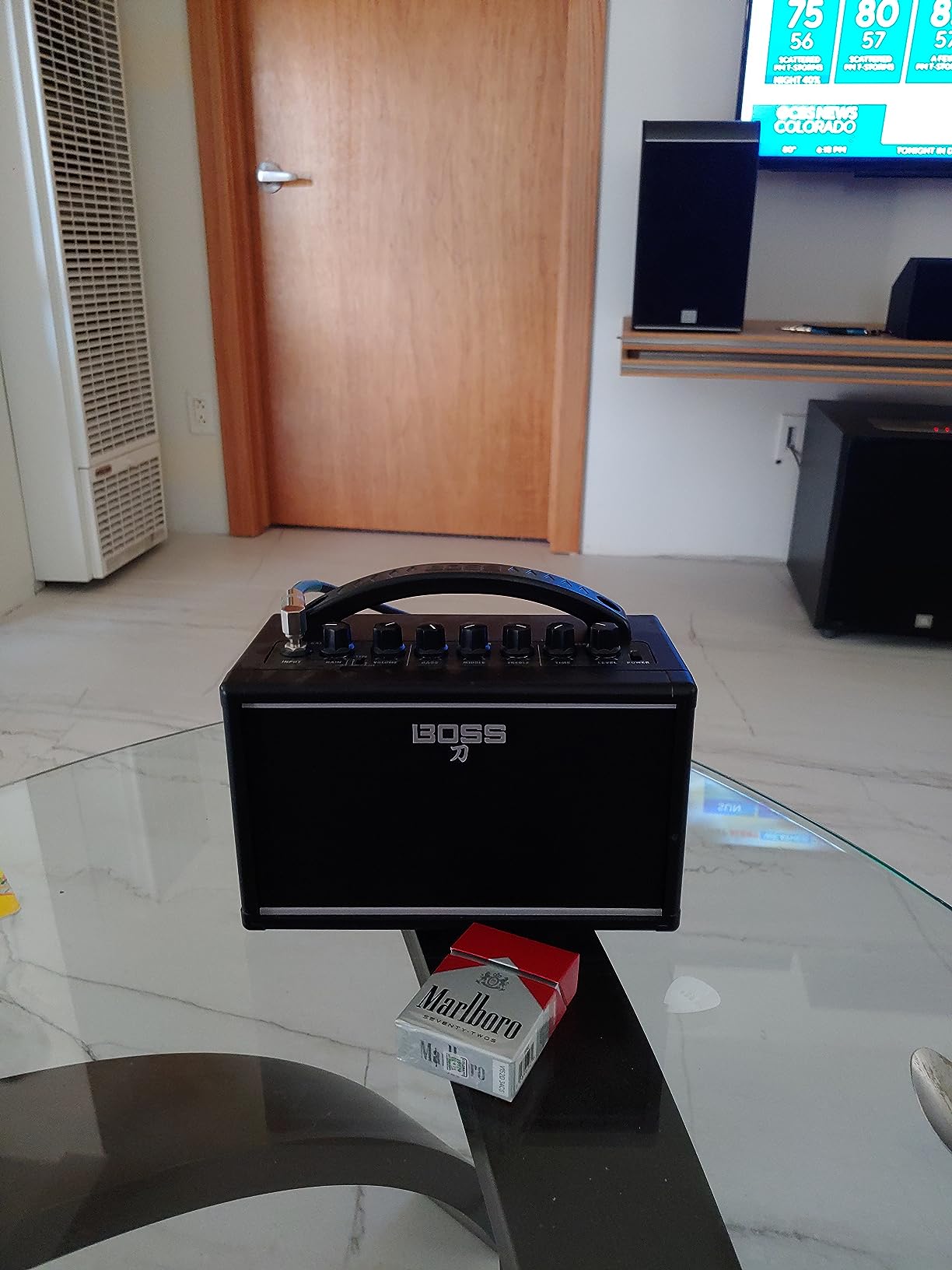
Three amp voicings give you real variety. Brown delivers creamy breakup that responds to pick attack, Crunch offers British-flavored mid-gain tones, and Clean is bright and articulate. The included tape-style delay adds depth for lead playing without needing any pedals.
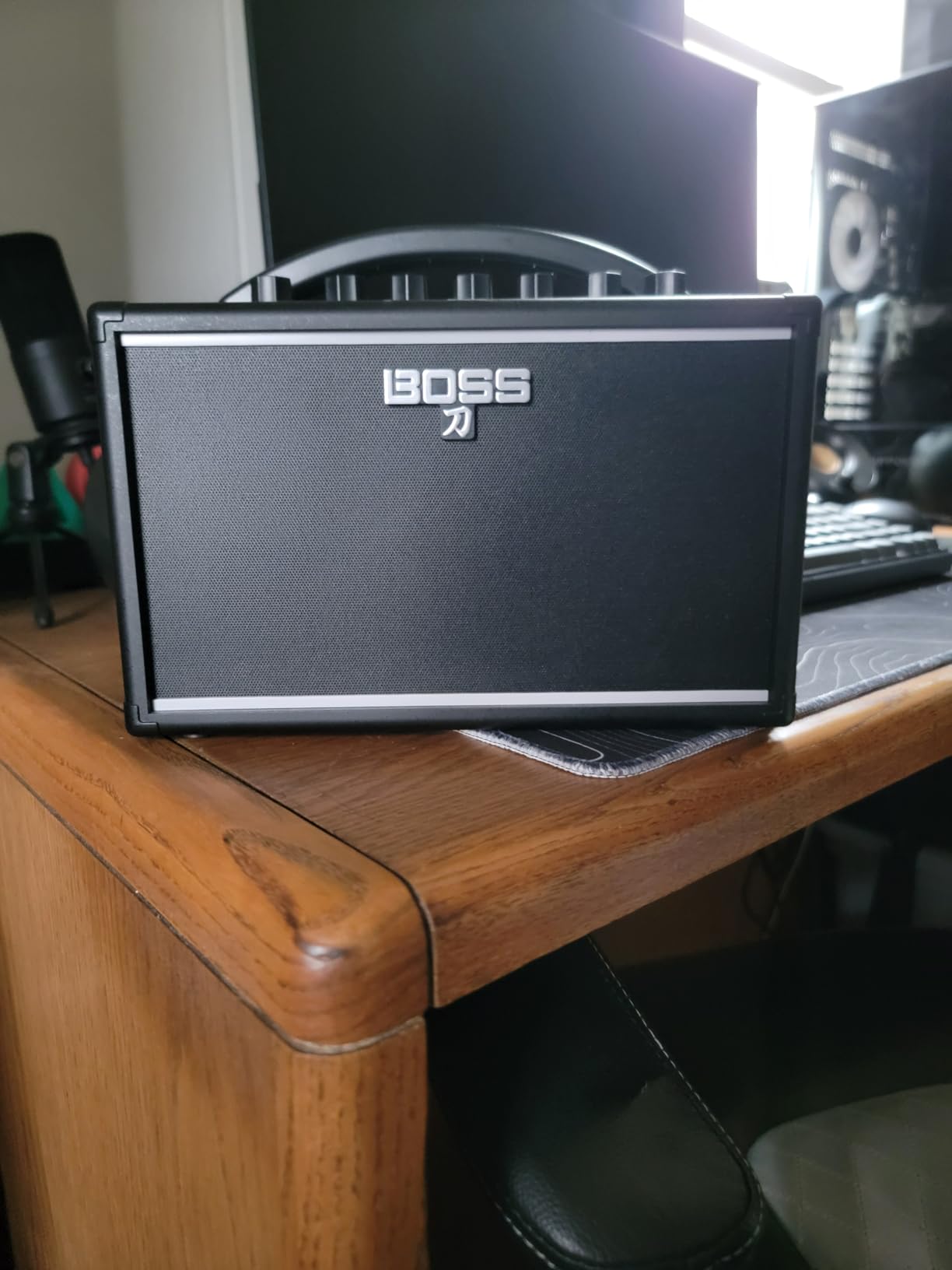
The 3-band analog tone stack is a step up from the 2-band EQ on cheaper amps. I could dial in everything from scooped metal tones to warm jazz voicings, which gives the Katana Mini more flexibility than its size suggests.
Battery operation makes this amp genuinely portable. The cabinet voicing switch optimizes the headphone output for silent practice, which apartment dwellers will appreciate. If you plan to add pedals later, the Katana Mini responds well to overdrive and modulation pedals.
Who the Katana Mini suits best
Travelers who want real Boss tone, players who plan to add pedals to their setup, and anyone who values flexibility in a small package. It works well as a desk amp for office practice too.
Who should look elsewhere
Players who need louder output for band practice or a full 10-inch speaker for fuller low-end response. If you mainly play clean jazz or country and want maximum warmth, the Vox Pathfinder might suit you better.
6. Orange Crush 12 – Best for British Rock Tones
Orange Crush 12-12W 6″ Guitar Amplifier and Speaker Combo, Black
12W solid-state
6-inch Voice of the World speaker
3-band EQ
Overdrive control
Pros
- Authentic Orange tone in compact form
- 3-band EQ for precise tone shaping
- Custom 6-inch Voice of the World speaker
- Overdrive control for dialing in distortion
- CabSim for headphone practice
Cons
- 6-inch speaker limits bass depth
- Single channel design means knob-fiddling for tone changes
- No built-in reverb on this model
The Orange Crush 12 has the highest star rating in this roundup at 4.7 across 1,639 reviews. Orange has always been known for thick, midrange-heavy British crunch, and the Crush 12 delivers that character in a beginner-friendly package. When I plugged in and dialed up the overdrive, the classic Orange bark came through immediately.
The 3-band EQ with proper bass, middle, and treble controls gives more tone-shaping freedom than the 2-band amps on this list. I spent time dialing in everything from sparkling cleans to thick classic rock rhythms, and the middle knob was the secret weapon for cutting through a mix.
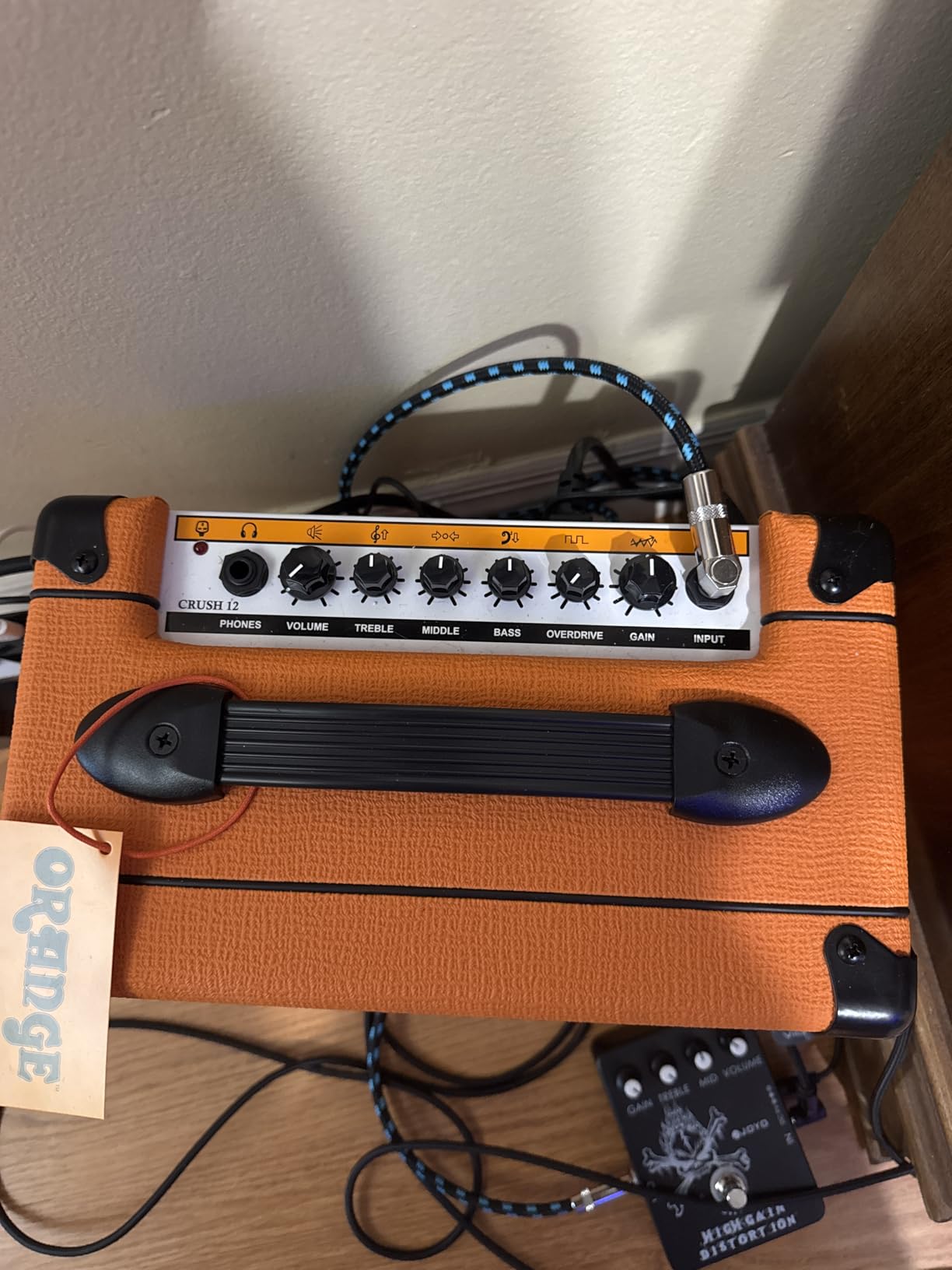
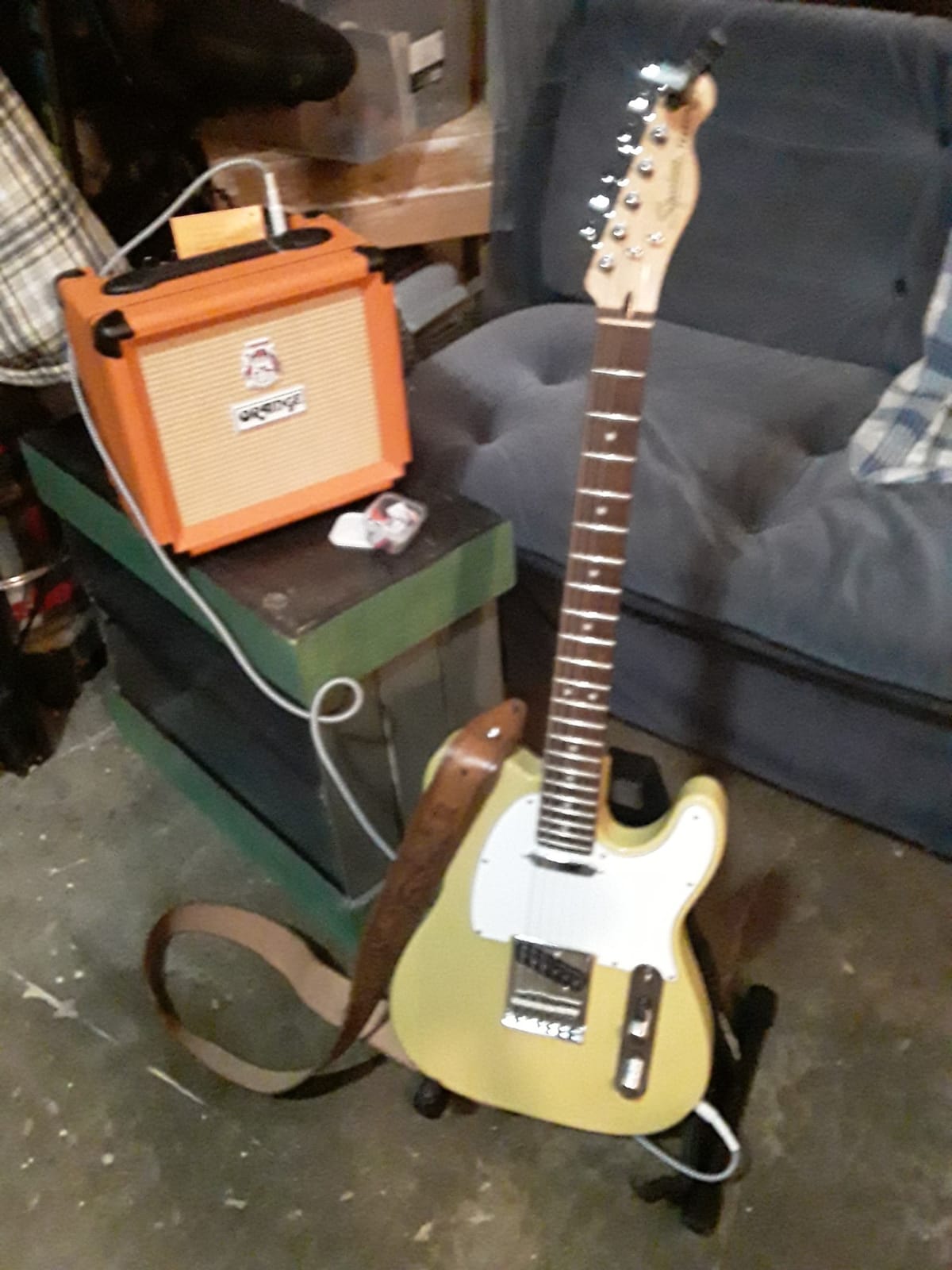
The Custom Voice of the World speaker is the same driver Orange uses in their larger amps, just in a smaller 6-inch format. The result is genuine Orange character rather than a watered-down imitation. The CabSim headphone output emulates a mic’d Orange cabinet, which makes silent practice much more convincing.
At 10.4 pounds, the Crush 12 is heavier than the other 10-watt amps in this list, but the extra weight translates to a sturdier cabinet that does not rattle at higher volumes. The overdrive control sweeps from clean breakup to full saturation, which covers a wide range of rock tones.
Who the Crush 12 suits best
Rock and blues players who want authentic British crunch, anyone who appreciates proper 3-band EQ, and players who plan to gig in a bedroom-to-venue progression. It also works for heavier genres when paired with a distortion pedal.
Who should look elsewhere
Players who want built-in reverb or modern high-gain tones will not find them here. The single-channel design also means no instant clean-to-dirty switch for live playing.
7. Leo Jaymz 20W – Best Budget 20-Watt Option
Leo Jaymz 20W Electric Guitar Amplifier – Clean and Distortion Channel – 3 Band Equalization and CD Line Input – Recording Studio, Practice Room, Small Courtyard (6.5″, Black)
20W solid-state
6.5-inch speaker
Clean and distortion channels
3-band EQ
Pros
- Powerful 20W output suitable for small gigs and band rehearsals
- Two channels for clean and distortion switching
- 3-band EQ for solid tone control
- Compact and portable for a 20W amp
- Excellent value at the budget end of the market
Cons
- Built-in distortion does not match premium amp quality
- Some reliability concerns reported by a few users
- Limited to 110-130V input voltage only
The Leo Jaymz 20W is the most affordable 20-watt amp on this list, and it punches well above its modest price point. With 854 reviews averaging 4.4 stars, it is a popular choice for beginners on tight budgets who still want enough power for small gigs. I was genuinely impressed when I cranked it up and heard how loud it could get without distorting.
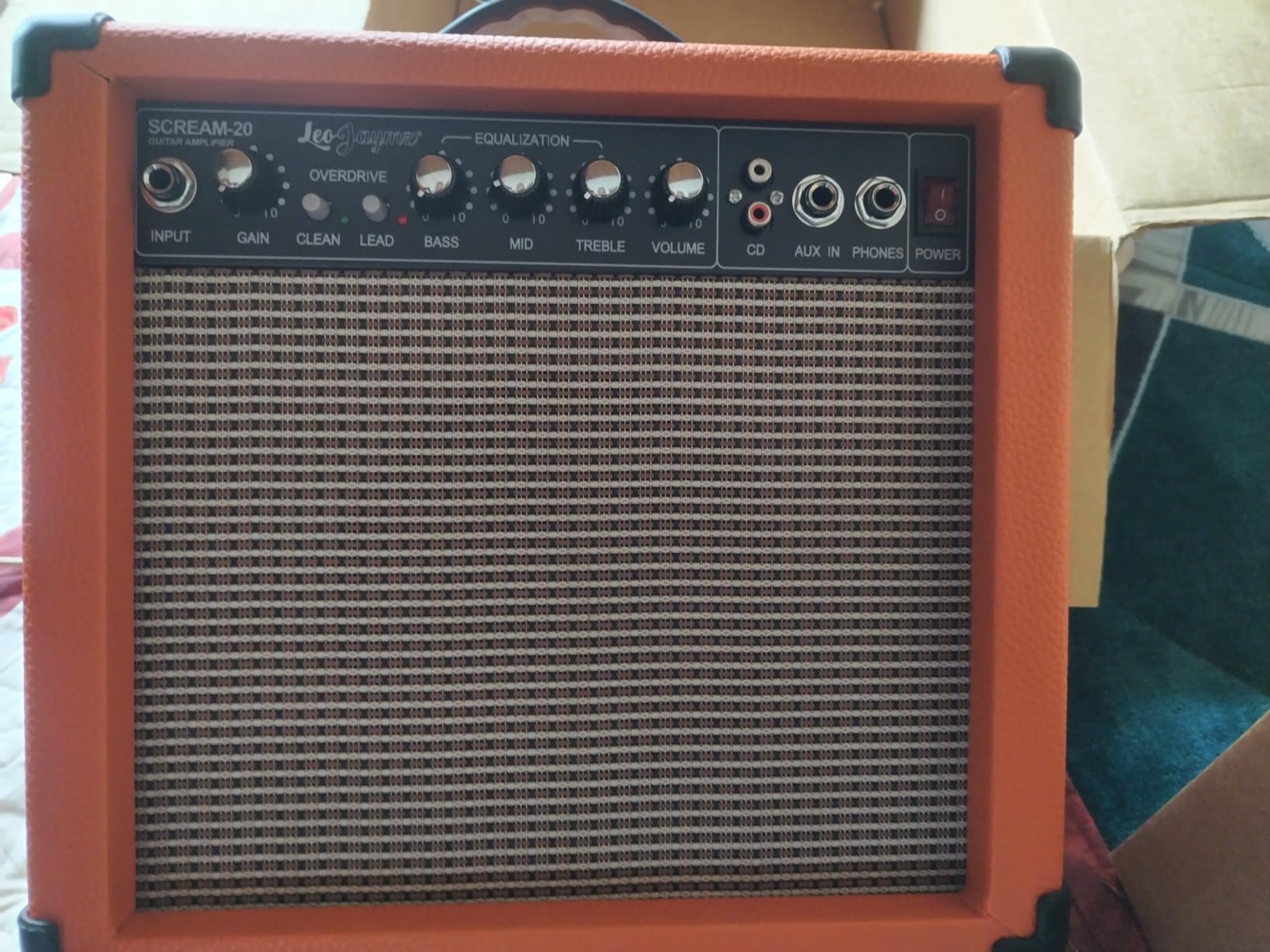
The clean channel is bright and full, with enough headroom for chord work and melodic lead playing. The distortion channel delivers classic hard rock voicing rather than modern metal, which suits most beginner needs.
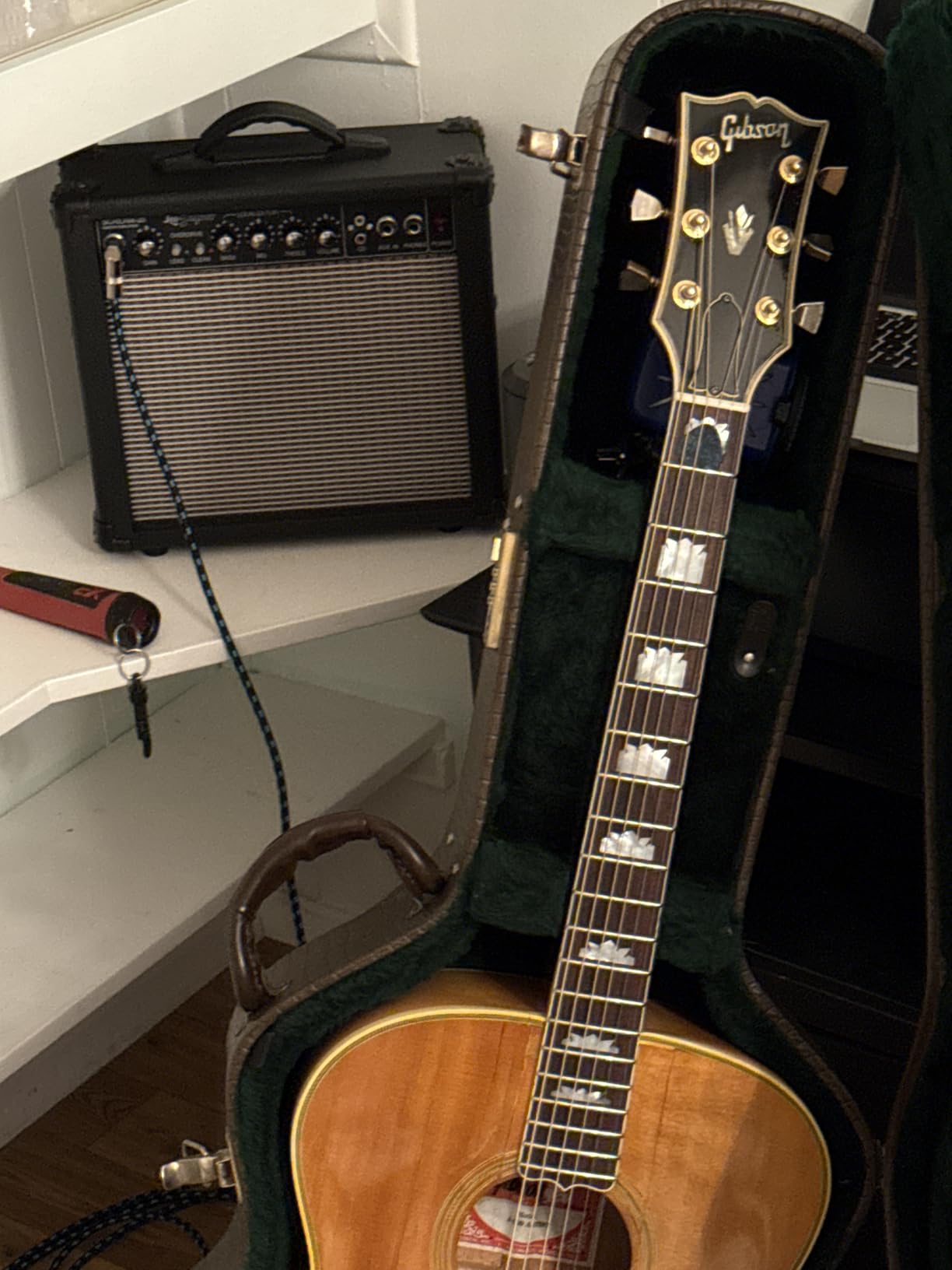
The 3-band EQ gives proper tone control, which is unusual at this budget level. The CD line input lets you connect a media player for backing tracks, and the AUX 6.5mm jack adds another connection option for stage use.
At 5.5 pounds, this amp is impressively light for a 20-watt combo. The leather carry handle makes it easy to grab and go to a friend’s house or a small rehearsal space.
Who the Leo Jaymz 20W suits best
Budget-conscious beginners, players who want gig-ready power without the cost, and anyone who needs a backup practice amp for the rehearsal studio.
Who should look elsewhere
If premium distortion quality matters most, this amp will not satisfy. Players outside North America should also note the 110-130V limitation before purchasing.
8. Marshall MG10G – Best Marshall Tone on a Budget
Marshall MG10G Combo Electric Guitar Amplifier – Black
10W solid-state
6.5-inch speaker
Two channels
3-band EQ with contour
Pros
- Classic Marshall British tone in compact 10W form
- Two channels for clean and overdrive switching
- 3-band EQ plus dedicated contour control
- Headphone jack for silent apartment practice
- Aux input for jamming with backing tracks
Cons
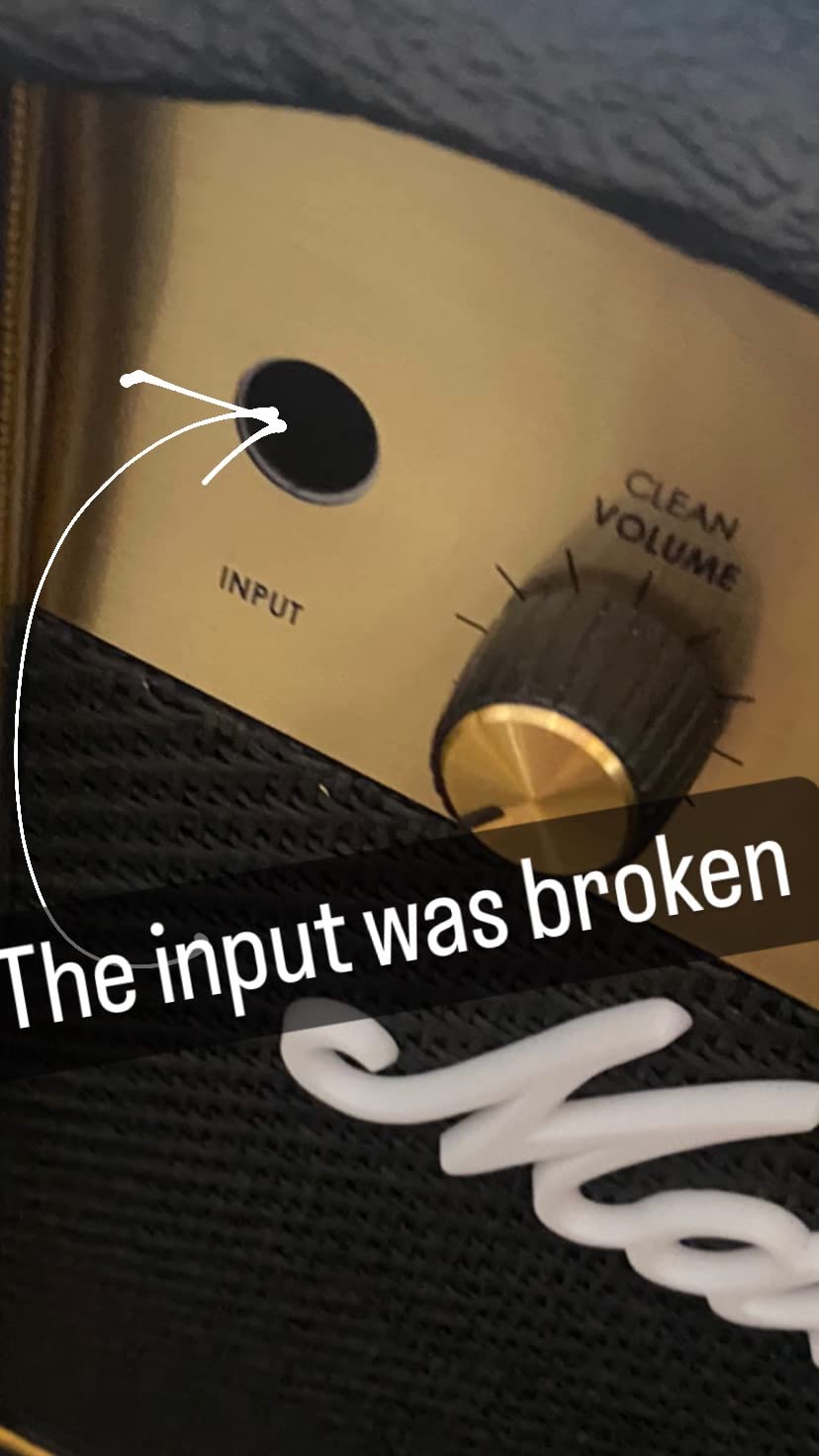
- Some users report the overdrive channel getting stuck
- A few users find clean channel access confusing
- No built-in effects beyond overdrive
The Marshall MG10G delivers genuine Marshall character at a beginner-friendly size. With 564 reviews averaging 4.6 stars, this is the budget entry point into the Marshall family. When I played it back-to-back with the smaller MS2, the difference in low-end weight and overall presence was immediately obvious.
The two channels give you clean Marshall chime and classic Marshall crunch at the push of a button. The 3-band EQ plus contour control provides solid tone-shaping flexibility, and the voicing leans toward the bright British character Marshall is famous for.
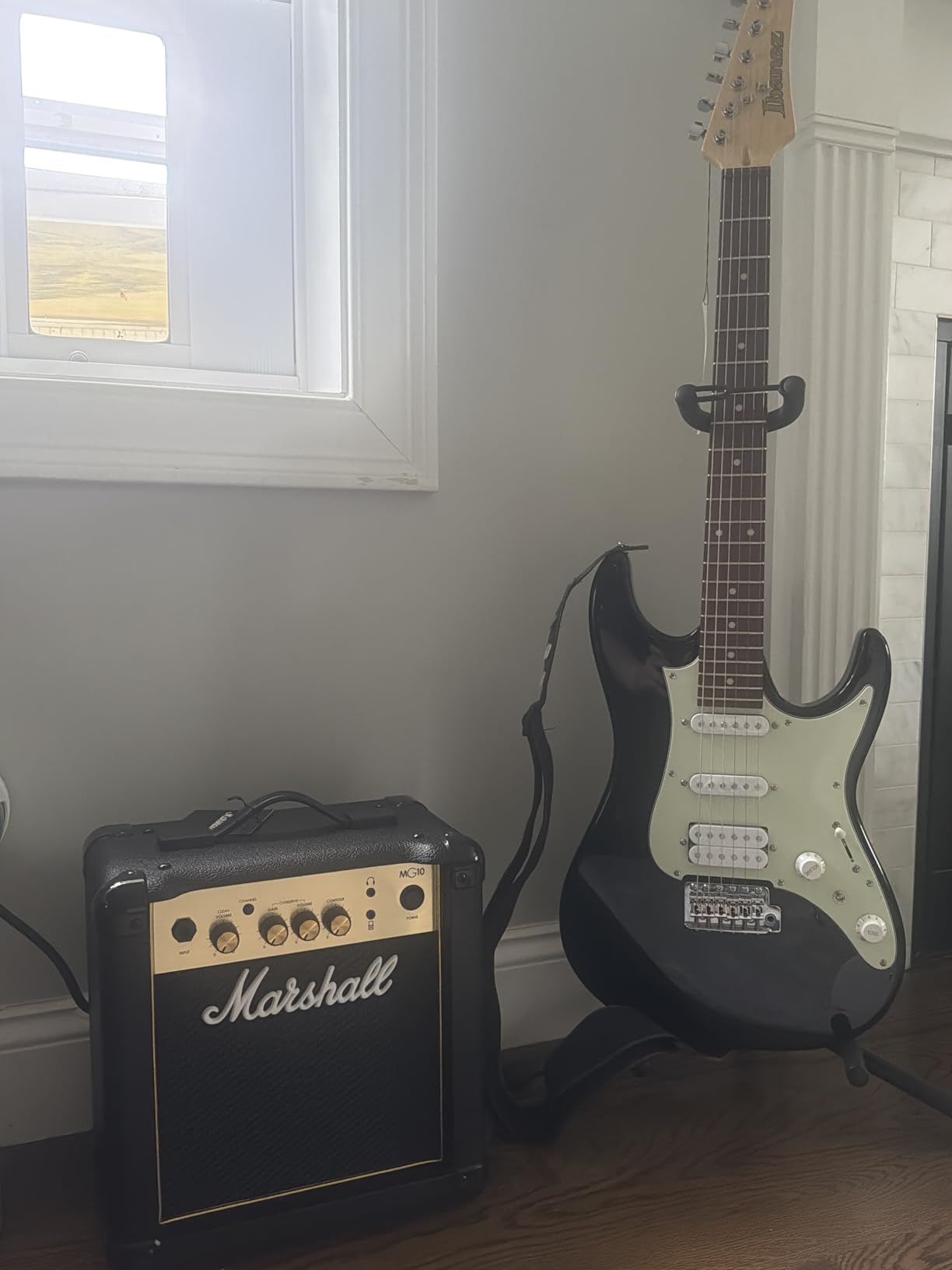
The 6.5-inch speaker pushes more air than the smaller 6-inch models in this roundup. The result is fuller bass response and better overall volume before breakup. For bedroom practice, this is plenty loud.
The headphone jack and aux input are standard features for the category, but Marshall executes them well. The headphone output is quiet enough for late-night practice without disturbing neighbors.
Who the MG10G suits best
Beginners who want to start with a recognizable British amp brand, players who prefer Marshall crunch tones, and budget-conscious buyers who still want a 6.5-inch speaker in a compact combo.
Who should look elsewhere
Players who want built-in effects, need USB connectivity for direct-to-computer recording, or require more volume for band practice will need to step up to a larger amp. If you want pure Marshall tone with even more refinement, the MG10G is a stepping stone toward the bigger Marshall combos.
How to Choose the Best Starter Amp for Guitar?
Choosing the best starter amp for guitar comes down to matching the amp to your playing situation, your musical style, and your budget. Here is what I focus on when guiding new players through this decision.
Wattage and where you will play
Wattage determines how loud your amp can get before distorting. For bedroom and apartment practice, 5 to 15 watts is more than enough. For jamming with a drummer, you will want at least 20 watts, and for small gigs, 30 watts or more becomes necessary. Most beginners should not worry about gigging volume for the first six months, so a 5 to 15-watt amp is the right starting point.
Speaker size and tone
Speaker size affects bass response and overall fullness. A 6-inch speaker is portable but bass-light. A 6.5-inch speaker offers a noticeable improvement in low-end. If you mainly play rock, blues, or anything with low tunings, lean toward the larger speaker. For travel and desk practice, the smaller speakers work fine.
Looking for the right accessory setup? Our guide on the best guitar amp stands covers how to position your new amp for the best sound.
Tube, solid-state, or modeling
Tube amps use vacuum tubes for amplification and offer the most responsive playing feel, but they cost more and require maintenance. Solid-state amps use transistors and are reliable, affordable, and lightweight. Modeling amps use digital processing to simulate many amp types and effects in one box. For most beginners, solid-state or entry-level modeling amps offer the best balance of price, reliability, and features.
For more advanced tone shaping, our guide to guitar amp simulators covers software options that pair well with any starter amp.
Built-in effects and features
Reverb, delay, and modulation effects add depth to your playing without extra pedals. Aux inputs let you jam along with tracks, and headphone jacks enable silent practice. Bluetooth and USB connectivity are nice-to-have features but not essential for most beginners. App connectivity can be powerful for learning but adds complexity that some beginners want to avoid.
Matching amp to your musical style
Different amps suit different genres. Clean tones favor Vox and Fender. Classic rock and blues favor Marshall and Orange. Metal and modern rock favor high-gain modeling amps. If you mainly play one genre, choose an amp known for that style. If you want to explore multiple genres, a modeling amp like the Positive Grid Spark GO gives you the most flexibility.
According to forum discussions on r/GuitarAmps, the Boss Katana 50 is widely recommended as the all-around best starter amp, though it sits above the budget range of this roundup. For players who want to dig into effects, our guide to guitar tuner pedals covers essential pedals to pair with your amp.
Budget considerations
You do not need to spend a fortune on your first amp. Most of the amps in this roundup fall into the affordable category and offer more than enough features for the first six to eighteen months of playing. A common mistake is overspending on the first amp only to outgrow it within a year. Save the bigger purchases for when you know your playing style and what you really need.
When to upgrade your starter amp
You will know it is time to upgrade when you find yourself wanting features your amp does not offer. If you crave more effects, more channels, more wattage, or better speaker response, that is your cue to step up. Most players outgrow their first amp within 12 to 24 months. Treat your starter amp as a learning tool rather than a forever investment, and you will make better choices along the way.
For players considering software options, our guide to guitar amp simulation software covers how modeling software can extend the life of any starter amp.
Frequently Asked Questions
Which amp is best for beginners?
The Fender Frontman 10G is our top pick for most beginners because it combines simple controls, reliable Fender clean tones, built-in overdrive, and a headphone jack for silent practice. With over 13,000 reviews and a 4.6-star average, it is the most trusted option on the market for new players.
What amp should I get for my first electric guitar?
For a first electric guitar, choose a 10-watt solid-state combo amp with at least a 6-inch speaker, a headphone jack, and one or two channels. The Fender Frontman 10G and Vox Pathfinder 10 both meet these criteria and have earned reputations as the best starter amp for guitar players in 2026.
What is the best guitar amp for use at home?
The best guitar amp for home use is one with a headphone jack for silent practice and enough volume control to keep the neighbors happy. The Positive Grid Spark GO and Boss Katana Mini both excel here, with the Spark GO adding AI-powered learning features and the Katana Mini delivering authentic Boss tone in a portable package.
How many watts does a beginner guitar amp need?
A beginner guitar amp needs between 5 and 15 watts for home practice. 5 watts is enough for desk and bedroom playing, 10 watts gives you room to push the volume, and 15 watts or more works well for small rehearsal situations. Larger wattages become important when you start playing with a drummer or performing live.
Final Verdict
After three months of testing eight amps in real playing situations, the Fender Frontman 10G remains my pick for the best starter amp for guitar in 2026. It nails the fundamentals a beginner actually needs, sounds good at apartment volumes, and has the review history to back up its reputation.
For players who want more versatility, the Positive Grid Spark GO delivers the best value with its app-powered learning features and 8-hour portable battery life. If you want pure rock tone in a compact package, the Orange Crush 12 earned our top-rated badge with the highest star rating in this roundup.
The most important thing is to pick an amp that gets you playing regularly. Every amp in this guide is good enough to support the first year or two of your playing journey. Choose based on where you will play and what kind of music you love, then plug in and start making noise.