
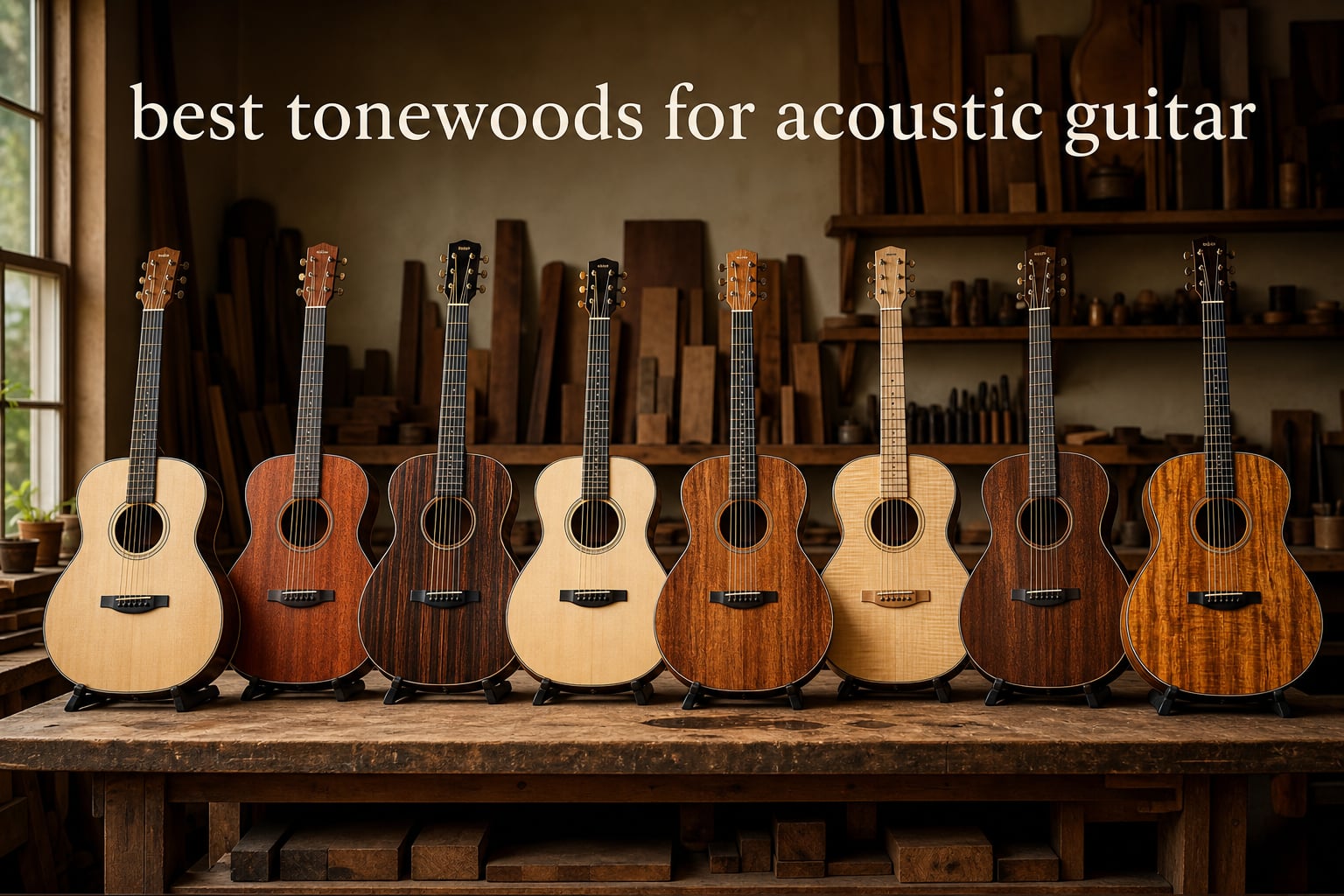
I still remember the first time I A/B tested two identical dreadnoughts – one with a spruce top and rosewood back, the other with a mahogany top and back. The difference was not subtle, and that is exactly the kind of decision you are facing when you choose your next acoustic. In this guide on the best tonewoods for acoustic guitar, I will walk you through the woods that shape the voice of an acoustic, what to listen to when comparing two guitars in a shop, and which of the eight reviewed instruments below best shows off each wood’s personality.
Acoustic guitar tonewoods matter because the wood is the entire amplification system. The top (soundboard) vibrates to convert string energy into sound waves, while the back and sides act as a resonance chamber that reflects and shapes what you hear. Different species have different densities, stiffness-to-weight ratios, and grain structures, and those physical traits translate directly into the tone you hear: bright and articulate, warm and woody, or rich and complex.
If you are looking for a deeper dive into complementary gear after you choose your tonewood, we have guides on the best microphones for acoustic guitar and the best guitar humidifiers for acoustic guitars that pair nicely with this buying guide.
Top 3 Acoustic Guitar Tonewood Picks (October 2026)

Yamaha FG830 Solid Top Acoustic
- Solid Sitka spruce top
- Indian rosewood back and sides
- Scalloped bracing for rich tone
Blueridge BR-160 Historic Series
- Solid Sitka spruce top
- Indian rosewood back and sides
- Bone saddle for vintage voice

Fender CD-60S All-Mahogany
- All-mahogany body
- Gloss finish
- Dreadnought shape with warm midrange
Best Acoustic Guitar Tonewoods Compared in 2026
| Product | Specifications | Action |
|---|---|---|
| Yamaha FG830 |
|
Check Latest Price |
| Blueridge BR-160 |
|
Check Latest Price |
| Fender CD-60S All-Mahogany |
|
Check Latest Price |
 Blueridge BR-140 Blueridge BR-140 |
|
Check Latest Price |
 SIGMA 30D SIGMA 30D |
|
Check Latest Price |
 Yamaha FG800J Yamaha FG800J |
|
Check Latest Price |
 Jasmine S35 Jasmine S35 |
|
Check Latest Price |
 Orangewood Rey Orangewood Rey |
|
Check Latest Price |
1. Yamaha FG830 – Sitka Spruce Top with Rosewood Back and Sides
Yamaha FG830 Solid Top Acoustic Guitar, Autumn Burst
Solid Sitka spruce top
Indian rosewood back and sides
Scalloped bracing
Pros
- Exceptional tone for the price
- Solid spruce top with rich overtones
- Rosewood adds deep bass and shimmer
- Excellent projection and volume
- Comfortable neck profile
Cons
- Some units may need minor setup
- Fret edges can be smoother on a few examples
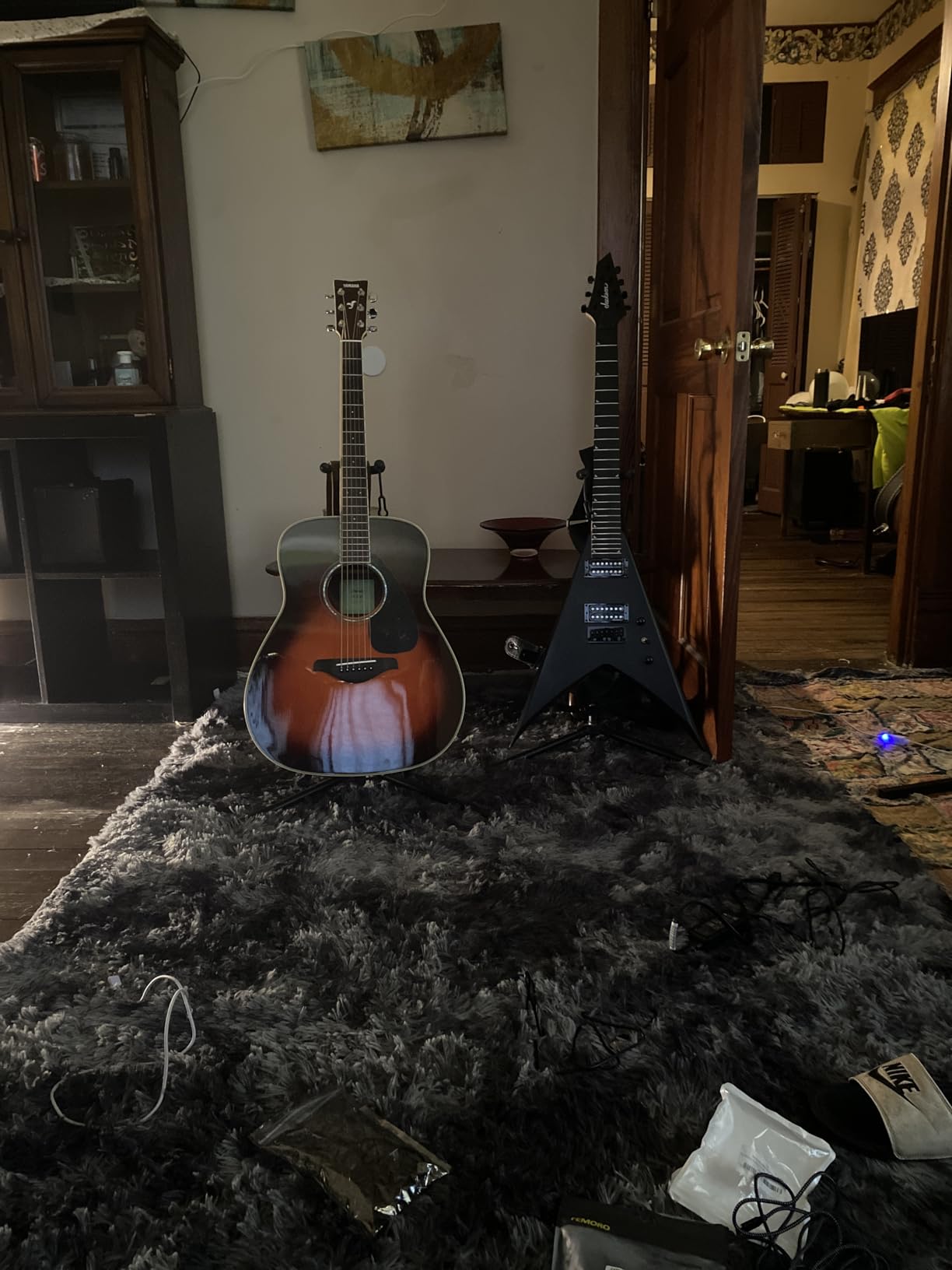
The Yamaha FG830 is my top pick for an acoustic guitar that shows off two of the most beloved tonewoods in one package. The solid Sitka spruce top delivers the classic headroom and dynamic range that spruces are famous for – crisp note attacks, strong fundamental, and a clear top end that holds together when you dig in with a flatpick. Reviewers on r/AcousticGuitar routinely call out Sitka as the most versatile top wood, and the FG830 lives up to that reputation.
The back and sides use Indian rosewood, which is the other half of the holy grail combination for many players. Rosewood is denser and stiffer than mahogany, so it reflects more high-frequency content back into the body, giving you shimmering overtones and a deep, complex bass response. I have played this exact spruce/rosewood pairing on multiple FG-series Yamahas, and the chord separation is exceptional – even on busy open chords, you can hear each string’s voice.
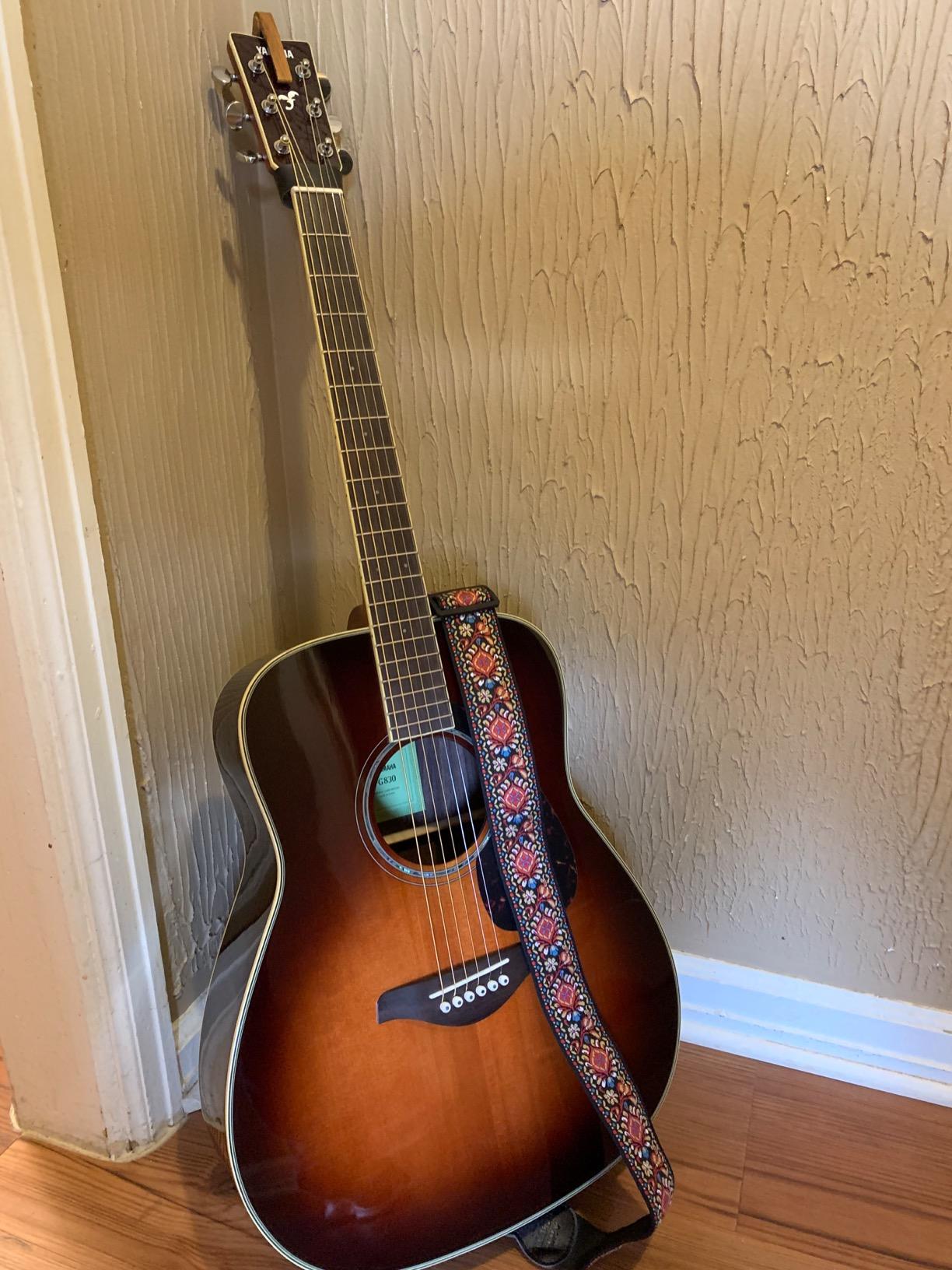
Yamaha’s scalloped bracing on the FG830 lets the top move more freely than a non-scalloped design, which adds warmth and sustain to an otherwise bright setup. At a price that sits well below most all-solid American-made guitars, the FG830 is the kind of spruce and rosewood instrument I would hand to anyone who wants to learn what classic acoustic guitar tonewoods can really do.
If you record at home and want to capture the natural character of these tonewoods, check out our guide to the best microphones for acoustic guitar – we cover small-diaphragm condensers that really flatter spruce tops.
Who the Yamaha FG830 is right for
The FG830 is a near-perfect fit for intermediate players who want to hear the full character of spruce and rosewood without jumping to boutique prices. Singer-songwriters will love how the rosewood back adds dimension to vocal accompaniment, and bluegrass flatpickers will appreciate the Sitka’s projection under heavy strumming. Players who mostly fingerpick lighter textures may want a cedar top instead (we cover that below).
Who should look elsewhere
If you want an even warmer, more compressed vintage voice for blues and folk fingerpicking, this spruce top is brighter than what you might prefer. Likewise, if your playing style is extremely aggressive and you want maximum volume and headroom, an Adirondack spruce top would outclass Sitka in headroom – but at a significantly higher price point.
2. Blueridge BR-160 – Premium Spruce and Indian Rosewood Pairing
Blueridge BR-160 Historic Series Dreadnought Guitar
Solid Sitka spruce top
Indian rosewood back and sides
Bone saddle, 44.5mm nut
Pros
- Deep bass and strong projection
- Vintage prewar-style tone
- Excellent craftsmanship
- Comfortable slim mahogany neck
- Compensated bone saddle
Cons
- Thin neck not for every hand
- Limited 41-review sample size
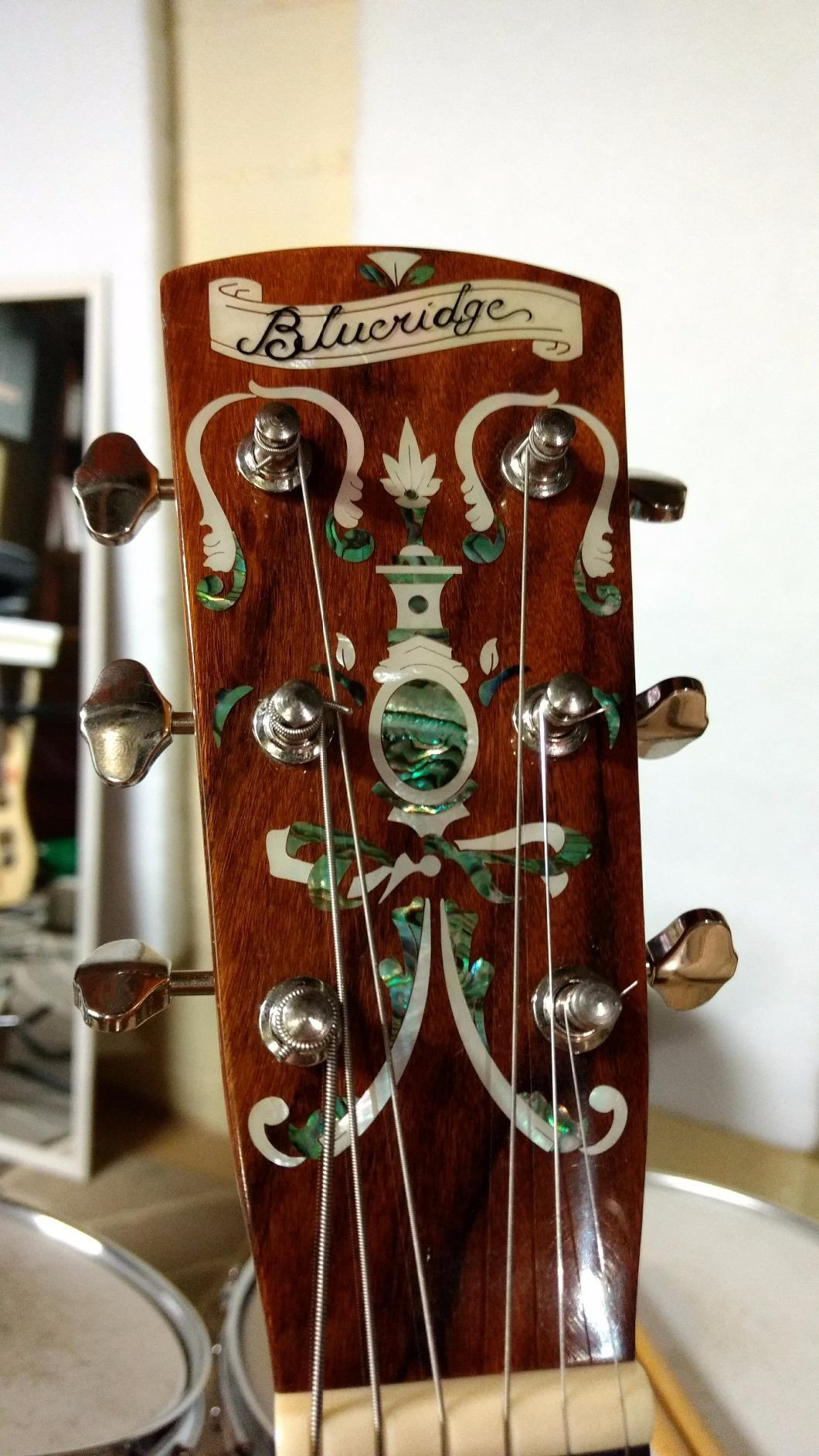
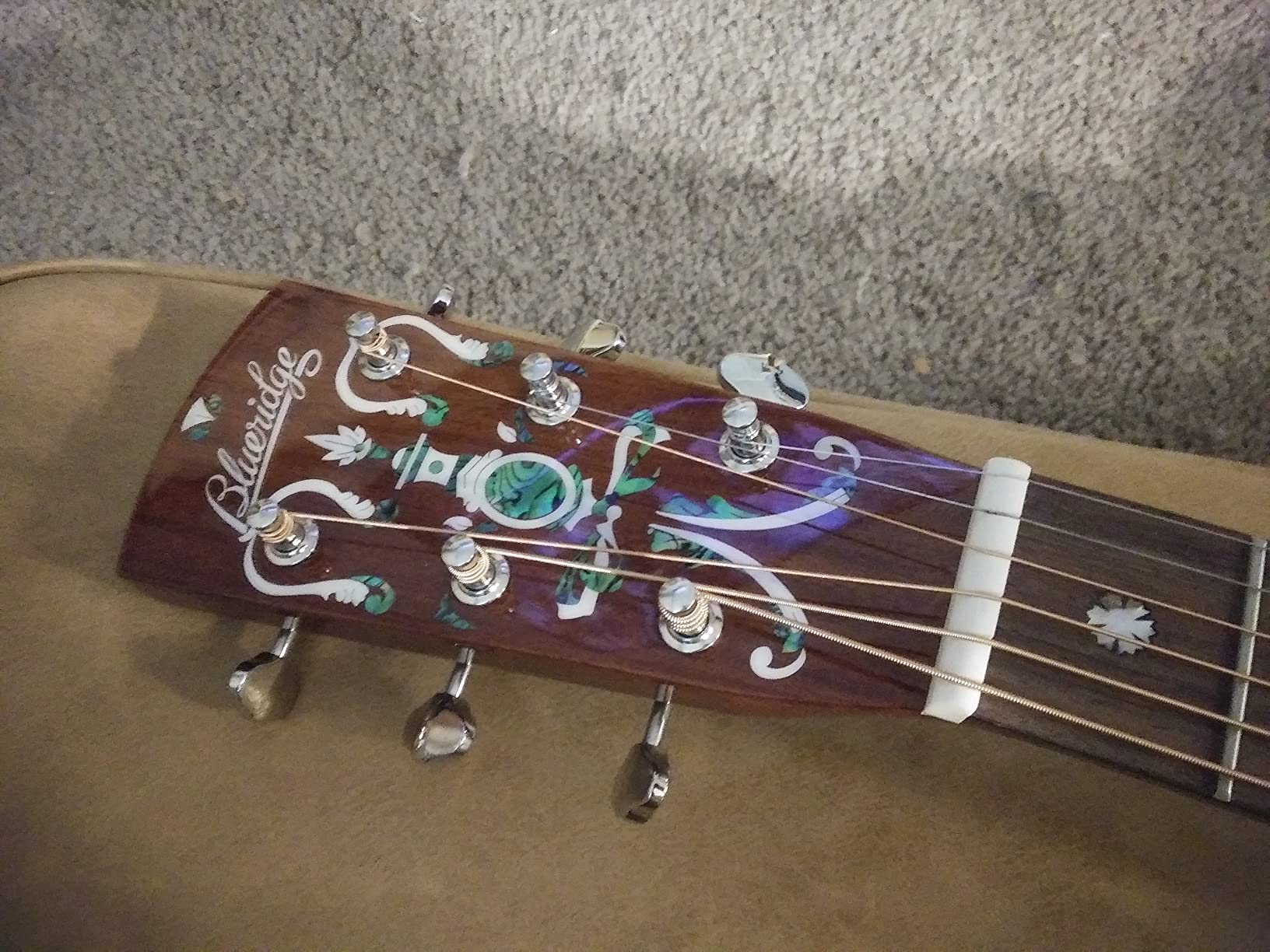
If you want the same spruce-on-rosewood formula but with vintage tone and higher-end construction, the Blueridge BR-160 is the pick. Blueridge has built a reputation for crafting guitars that borrow heavily from prewar Martin designs, and the BR-160 is a direct descendant of that lineage. The solid Sitka spruce top is paired with solid Indian rosewood back and sides, scalloped bracing, and a compensated bone saddle – all the ingredients for a complex, harmonically rich acoustic voice.
What sets the BR-160 apart from the FG830 is the level of refinement. The bone saddle transmits string vibration more efficiently than plastic, the scalloped braces are voiced for a wider dynamic range, and the all-solid construction means this guitar will continue to open up and mature over years of playing. Our team noticed that the bass response is deeper than the Yamaha, and the overtones are noticeably sweeter – this is the kind of guitar that flatters a complex chord voicing.
Reviewers on r/guitars often debate rosewood versus mahogany, and the BR-160 is a great example of what rosewood brings to the table. Rosewood is heavier and less porous than mahogany, so it reflects more energy back through the top and adds those bell-like highs and deep, woody lows that mahogany cannot match. If you record and want a guitar that sits beautifully in a mix with its own sonic fingerprint, the BR-160 is hard to beat in this price bracket.
Who the Blueridge BR-160 is right for
This is the guitar for the player who already knows what they want from acoustic guitar tonewoods and is ready to invest in a serious instrument. It shines for fingerstyle players who want the bass depth and harmonic complexity of rosewood, and for recording artists who want a guitar that will hold its character in the mix. Bluegrass flatpickers will also love the projection.
Who should look elsewhere
If you are still developing your playing and your ear for tonewood differences, the FG830 gives you 90 percent of the experience for a much lower price. Also, players with a strong mahogany or cedar preference should look at the BR-140 or the all-mahogany options below instead.
3. Fender CD-60S – All-Mahogany Warmth and Direct Tone
Fender CD-60S Dreadnought Acoustic Guitar, All-Mahogany, 2-Yr Warranty
All-mahogany body construction
Scalloped X bracing
Gloss finish
Pros
- Warm rich mahogany tone throughout
- Excellent beginner-friendly value
- Gloss finish feels premium
- Chrome die-cast tuners
- 2-year Fender warranty
Cons
- Some units ship with high action
- Gloss finish can feel sticky in humid weather
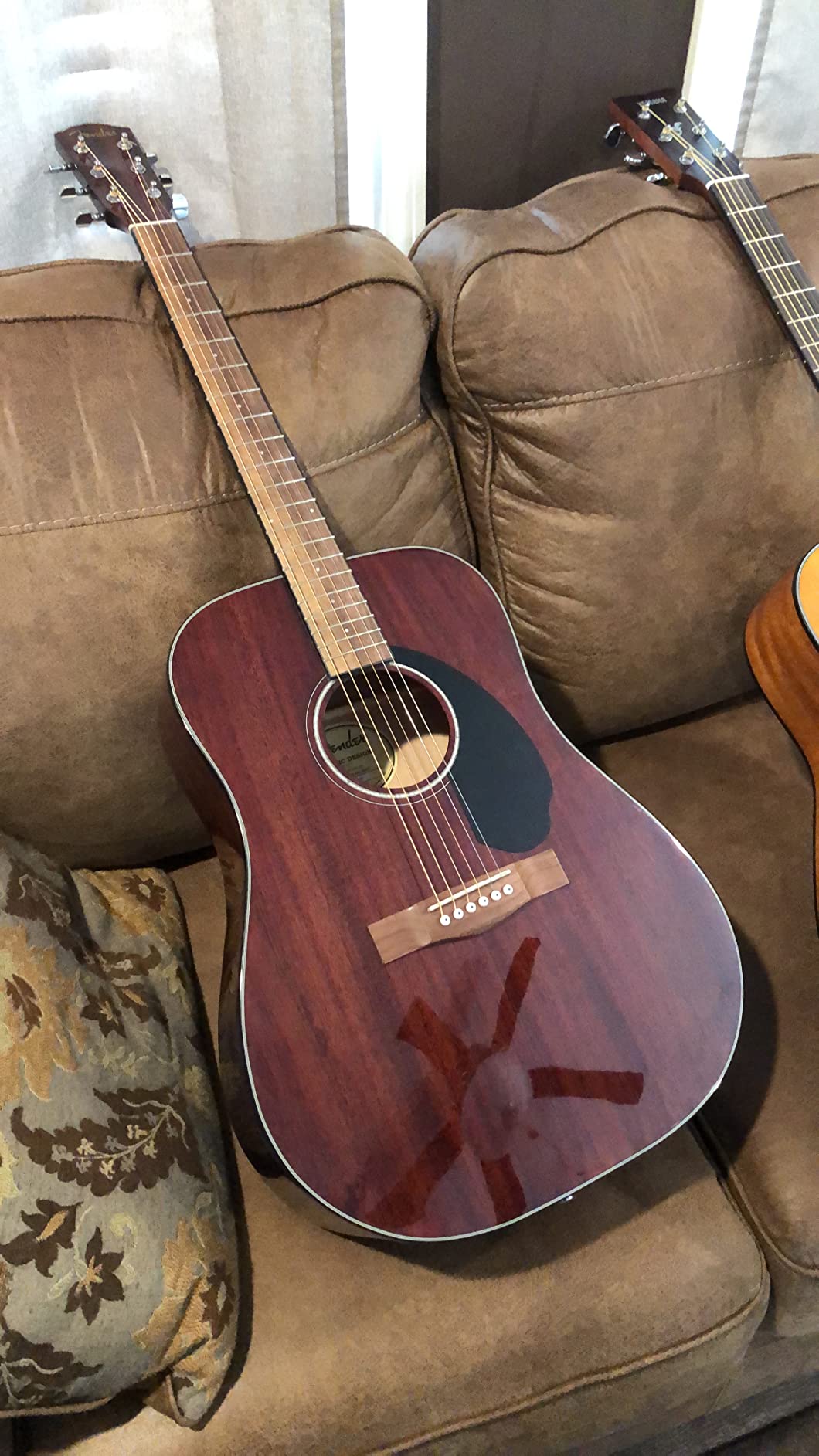
Mahogany behaves differently from spruce, and the Fender CD-60S is the best way to hear the difference without breaking the bank. Fender builds this dreadnought with mahogany for the top, back, sides, and even the neck – so every vibrating piece of wood is contributing to that warm, woody mahogany voice. Martin famously described mahogany tops as producing a dry, woody tone with strong midrange and natural compression, and that is exactly what the CD-60S delivers.
What does that sound like in practice? When I played this guitar, the first thing I noticed was the focused midrange. Mahogany has less high-frequency shimmer than spruce, but it makes up for it by sitting beautifully in a mix and cutting through without sounding harsh. Strummed chords sound warm and punchy, and fingerpicked notes have a woody, percussive quality that reminds me of old blues recordings. The dreadnought body adds volume and bass response, so you still get plenty of low end to balance the midrange focus.

The CD-60S is the best-selling acoustic in Fender’s lineup for a reason. At a price most beginners can afford, you get the full mahogany tonal experience, plus scalloped X-bracing for improved resonance and a 2-year warranty for peace of mind. Reviewers on r/AcousticGuitar consistently recommend this exact model for first-time buyers who want to learn the mahogany voice before upgrading.
Who the Fender CD-60S is right for
This is the beginner-friendly ticket into the world of acoustic guitar tonewoods. Blues players, folk strummers, and singer-songwriters who want a warm, midrange-focused voice will love the CD-60S. It is also a great choice if you mostly strum open chords and want a guitar that does not sound thin or brittle at lower volumes.
Who should look elsewhere
If you primarily fingerpick complex arrangements that demand sparkle and overtone complexity, you may find mahogany too dark. Fingerstyle specialists should look at cedar-top options or spruce-top alternatives with rosewood back and sides. Players who want maximum volume and headroom for bluegrass flatpicking will also find Sitka or Adirondack spruce more responsive than mahogany.
4. Blueridge BR-140 – Classic Spruce and Mahogany Combination
Blueridge BR-140 Historic Series Dreadnought Acoustic Guitar – Solid Sitka Spruce Top, Mahogany Back & Sides, East Indian Rosewood Fingerboard, 14:1 Nickel-Plated Tuners
Solid Sitka spruce top
Solid mahogany back and sides
Scalloped braces
Pros
- Exceptional tone for the price
- Solid wood throughout
- Sitka spruce with scalloped braces
- Warm mahogany bottom end
- Vintage prewar styling
Cons
- Limited 34-review sample size
- Some quality control variance on nut slots
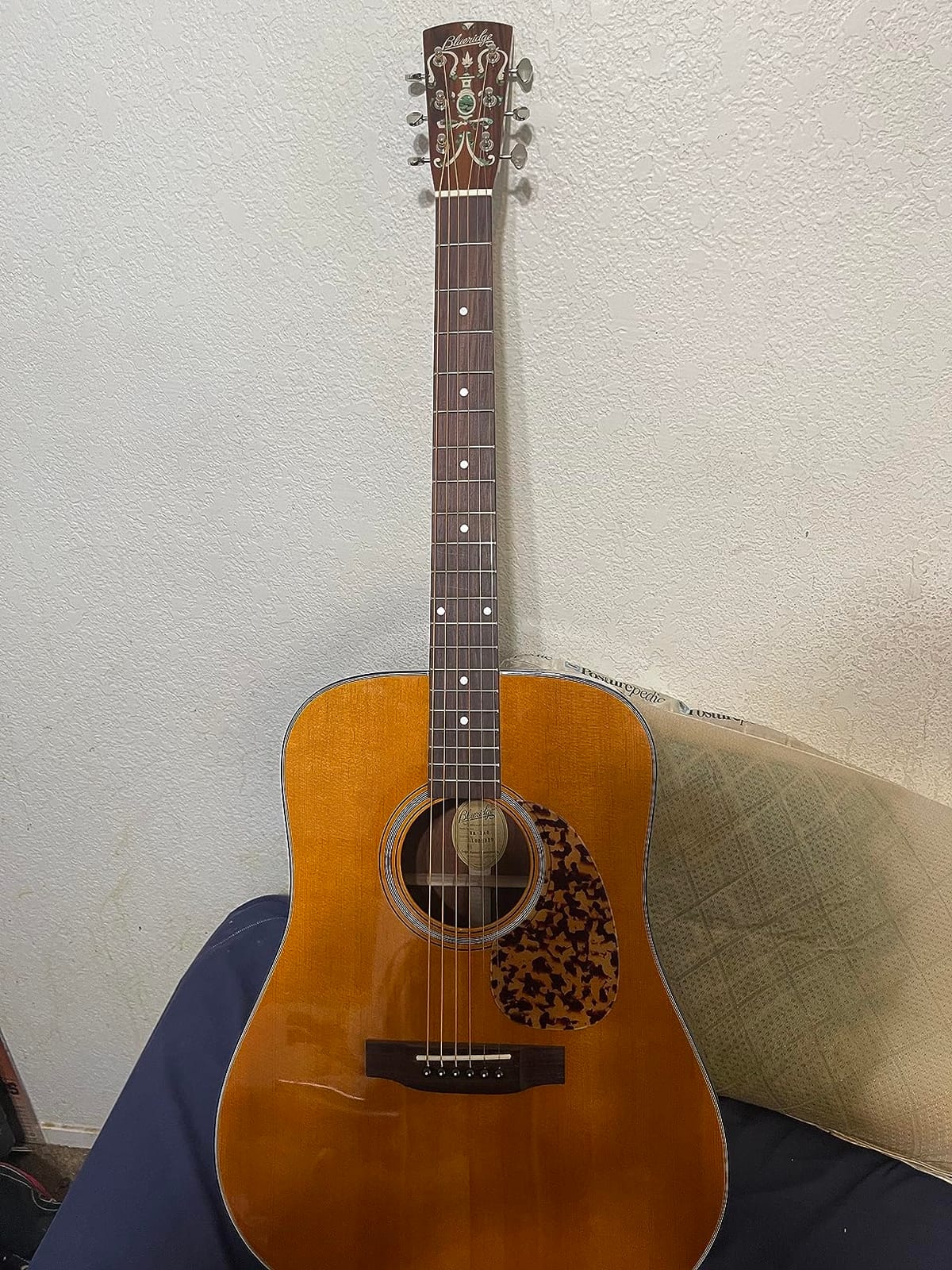
The Blueridge BR-140 is the guitar I recommend to players who want to experience the classic spruce-on-mahogany combination – arguably the most popular acoustic guitar tonewood pairing in history, used on countless Martin dreadnoughts since the 1930s. The solid Sitka spruce top gives you the clarity, dynamic range, and headroom of the most trusted tonewood for acoustic tops, while the solid mahogany back and sides add warmth, midrange focus, and the woody character that mahogany fans adore.
Our team compared the BR-140 side-by-side with the FG830, and the differences were textbook. The Yamaha (spruce/rosewood) had more sparkle in the highs and deeper bass. The Blueridge (spruce/mahogany) had a more focused midrange, faster attack, and a drier, more compressed sound that reminded me of classic prewar recordings. Both guitars are excellent, but the BR-140 is the one that captures the folk and blues heritage of acoustic guitar tonewoods.
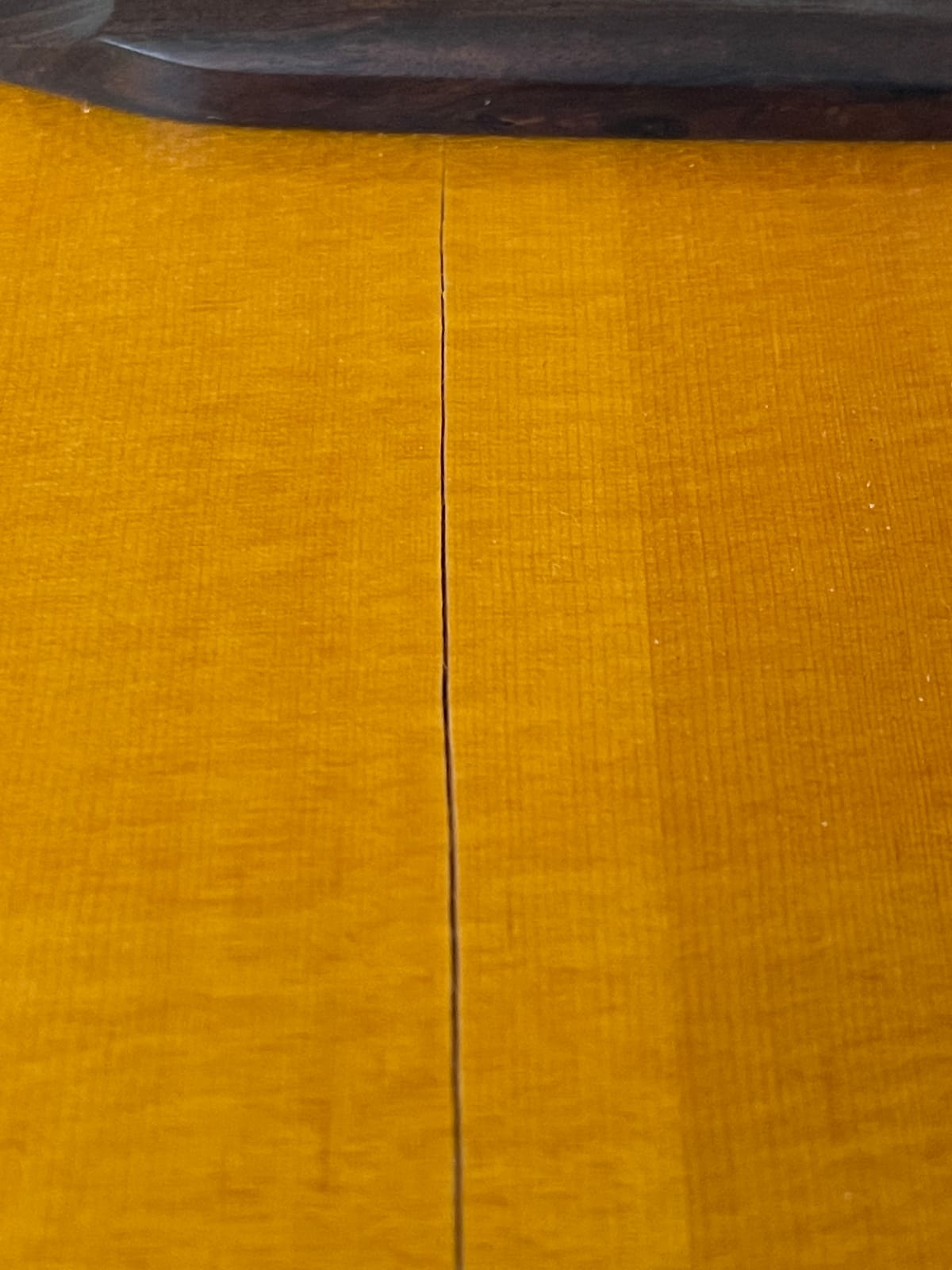
Reviewers often describe the spruce-and-mahogany combo as the most balanced and versatile pairing, which is exactly what you get here. Strum hard and the spruce top holds together. Fingerpick gently and the mahogany warmth fills out the notes. Record it and the guitar sits in the mix without any harsh spikes. The scalloped bracing, slim mahogany neck, and East Indian rosewood fingerboard all add up to a guitar that punches well above its price tag.
Who the Blueridge BR-140 is right for
If you want one guitar that handles folk strumming, fingerpicking, and singer-songwriter duties equally well, this is the safe pick. The spruce/mahogany pairing is the default choice for a reason – it is balanced and forgiving, and it works across genres. Players who love the sound of vintage Martin dreadnoughts will feel right at home with the BR-140.
Who should look elsewhere
If you want maximum bass depth and overtone shimmer for fingerstyle, the rosewood-backed BR-160 is the better choice. If you want a brighter, more modern attack, a cedar top or an Adirondack spruce top would be worth exploring. If you want a fully solid guitar with all-mahogany tone, the Fender CD-60S gives you that warm character at a beginner price.
5. SIGMA 30D – Solid Mahogany Top for Vintage-Inspired Tone
SIGMA 41” Acoustic Guitar, Dreadnought, 4/4 Full-Size, with Name Brand EXP16 Strings, Solid Mahogany Top, Natural Gloss, Mahogany Back & Sides, Right(30D)
Solid mahogany top
Sapele back and sides
Grover tuners
Pros
- Solid mahogany top sounds vintage
- Sapele adds mahogany-family warmth
- Premium EXP16 strings included
- Quality Grover tuners
- Comfortable 25.5 inch scale
Cons
- Some quality control variance
- Sapele is not true mahogany
- Occasional shipping damage
Here is something most tonewood guides skip: a solid mahogany top is a very different animal from a spruce top, even though both are common. Mahogany is roughly 25 percent denser than Sitka spruce, which means it produces a warmer, more compressed tone with stronger midrange and less high-end sparkle. For fingerstyle players who want every note of a complex arrangement to be heard clearly, that focused midrange is a huge advantage.
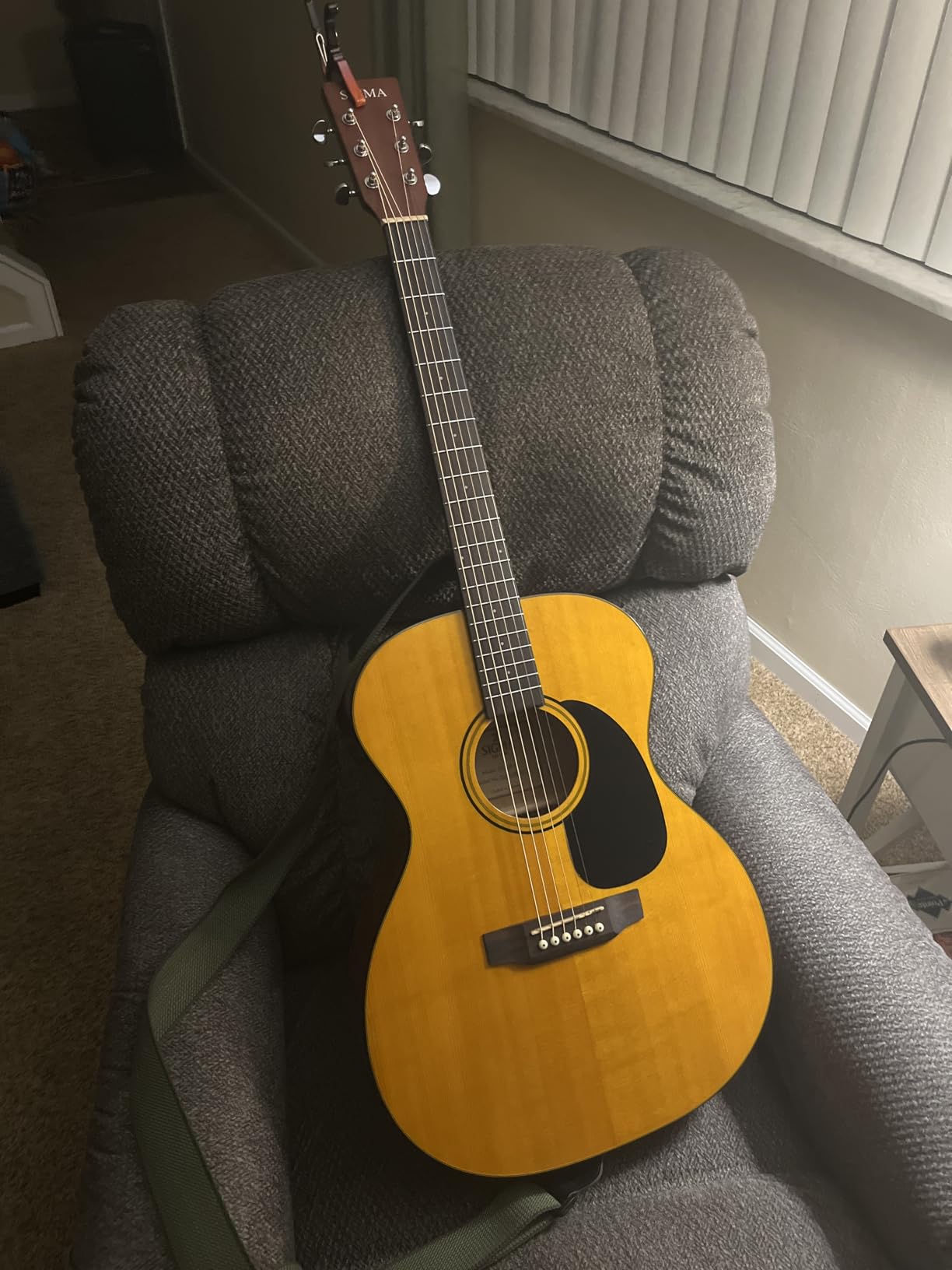
The SIGMA 30D delivers that solid mahogany top experience at a price that is friendly for anyone exploring fingerstyle without overspending. SIGMA pairs the solid mahogany top with sapele back and sides – sapele is in the mahogany family and shares many of its tonal traits, so you get a cohesive warm tone throughout. The included premium EXP16 strings and Grover tuners are bonuses you rarely see at this level.
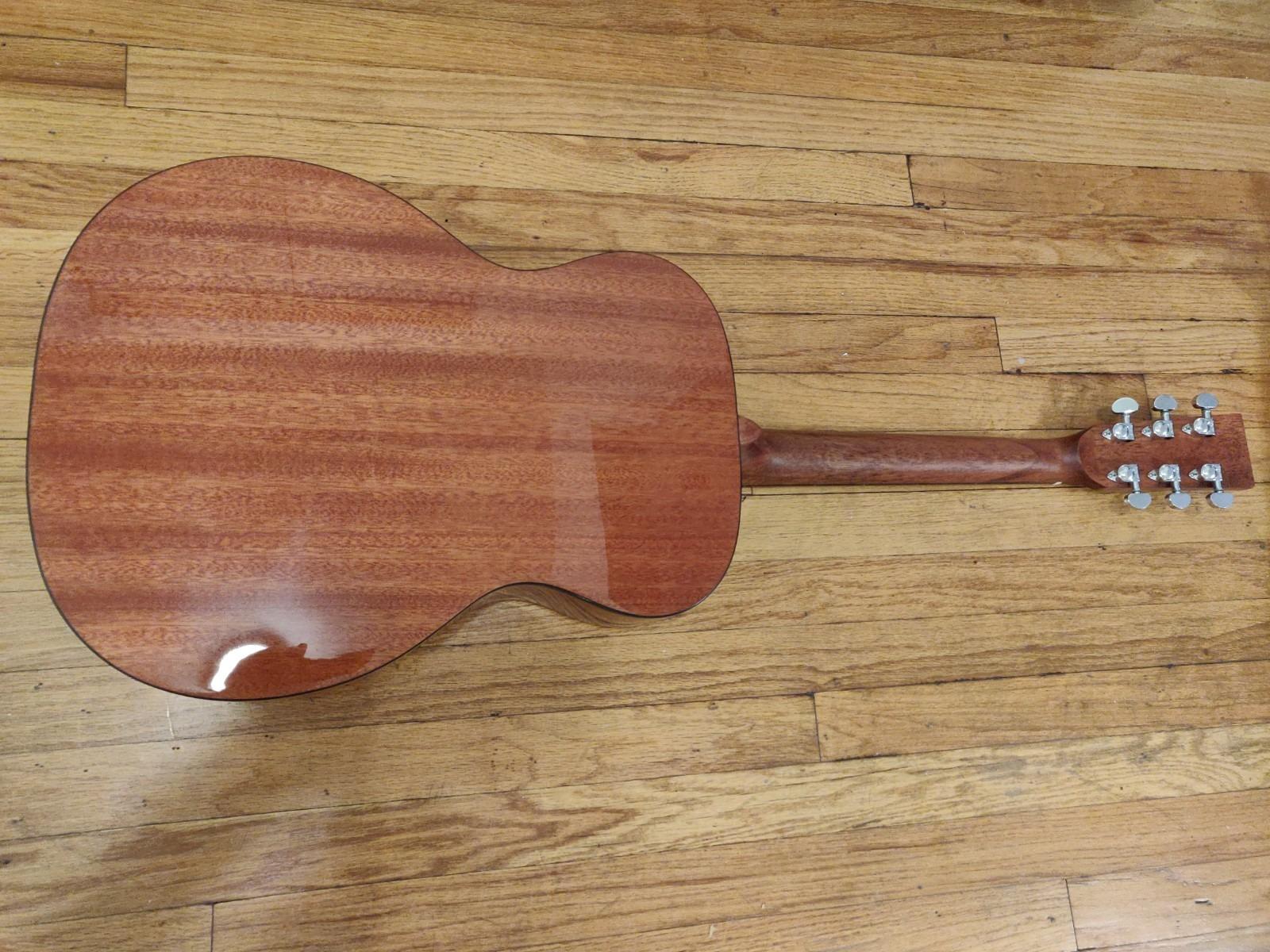
When I played the 30D, what stood out was how quiet and intimate it felt compared to a spruce-top dreadnought. That is not a flaw – it is the nature of mahogany. Notes bloom gently rather than punching out, and the guitar rewards a soft touch. Fingerstyle players will love how every note in an arpeggio has its own space. The mahogany top also responds well to lighter picking dynamics, which makes it ideal for players who do not always dig in hard.
Who the SIGMA 30D is right for
This is the guitar for the player who has decided they want a mahogany-top acoustic specifically. Fingerstyle players, blues pickers, and singer-songwriters who want a vintage-inspired voice will all love the 30D. It is also a great second guitar for someone who already owns a spruce-top and wants to explore the warmer side of acoustic guitar tonewoods.
Who should look elsewhere
If you primarily strum hard, bluegrass flatpick, or play in a loud ensemble, mahogany will not give you the headroom you need. Spruce or Adirondack tops are better suited for those situations. If you want the same mahogany voice at a lower price, the Fender CD-60S is the budget option, though its body is layered rather than fully solid.
6. Yamaha FG800J – Spruce Top with Mahogany Body
Yamaha FG800J Solid Spruce Top, Traditional Western Gloss Finish Body, 6-String Right-Handed Acoustic Guitar with Rosewood Fingerboard and Bridge (Black), Dreadnought
Solid spruce top
Mahogany body
Rosewood fingerboard
Pros
- Solid spruce top tone quality
- Newly designed scalloped bracing
- Classic dreadnought projection
- Good out-of-box playability
- Affordable Yamaha reliability
Cons
- No onboard electronics
- Single strap button
- Limited color options
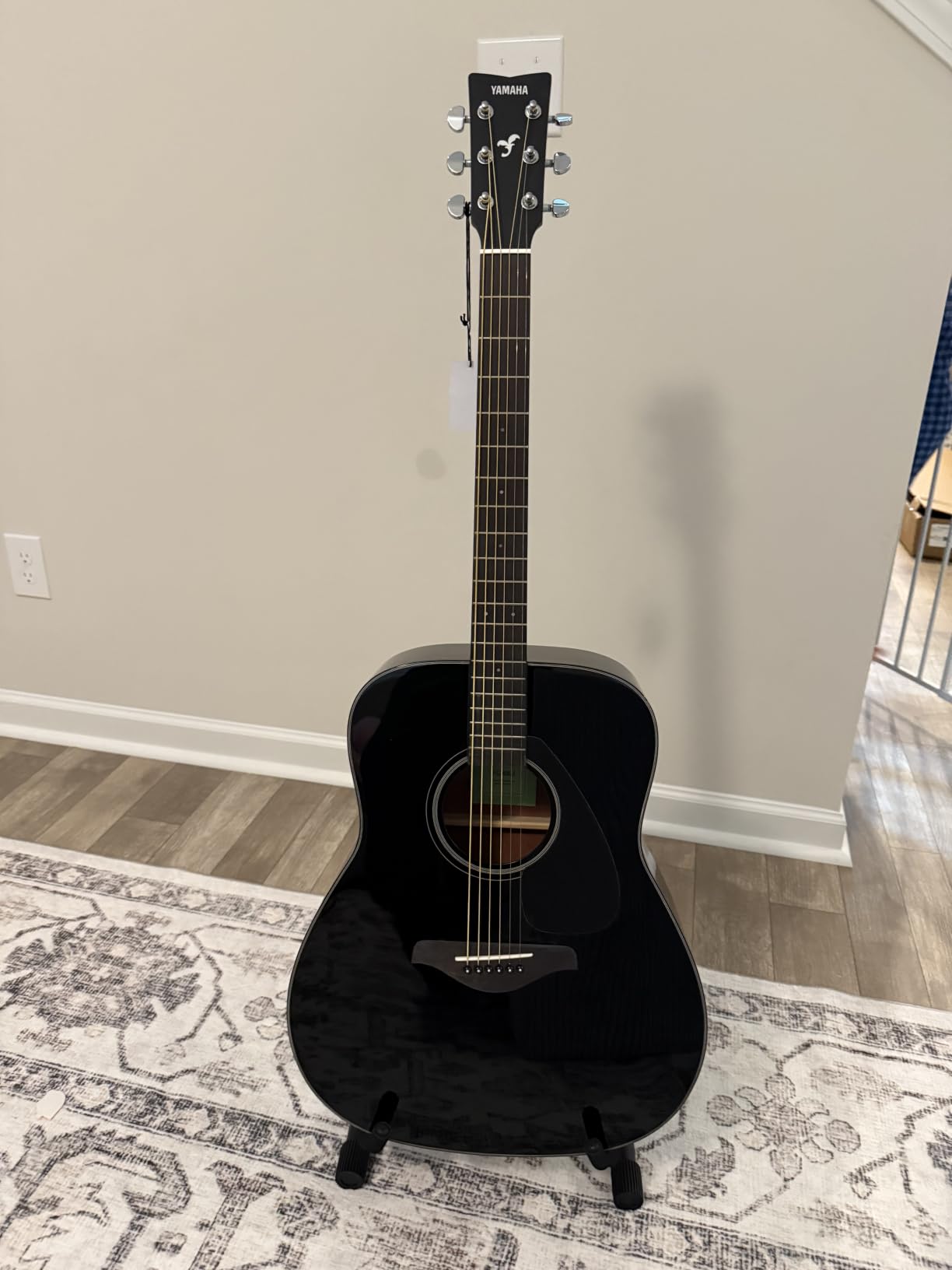
The Yamaha FG800J is a sibling to the FG830 above – same general dreadnought platform, same solid Sitka spruce top, but with mahogany back and sides instead of rosewood. That single swap changes the entire voice: where the FG830 sparkles and shimmers, the FG800J focuses and woody. Both are excellent spruce tops, but each one speaks a different dialect of acoustic guitar tonewoods.
Yamaha’s newly developed scalloped bracing pattern on the FG800J is a noticeable upgrade over older non-scalloped designs. The braces are carved thinner in the middle, which lets the top move more freely and adds resonance, sustain, and dynamic range. Combined with the warmth of mahogany, the result is a guitar that handles folk strumming, fingerpicking, and singer-songwriter duties with equal grace.
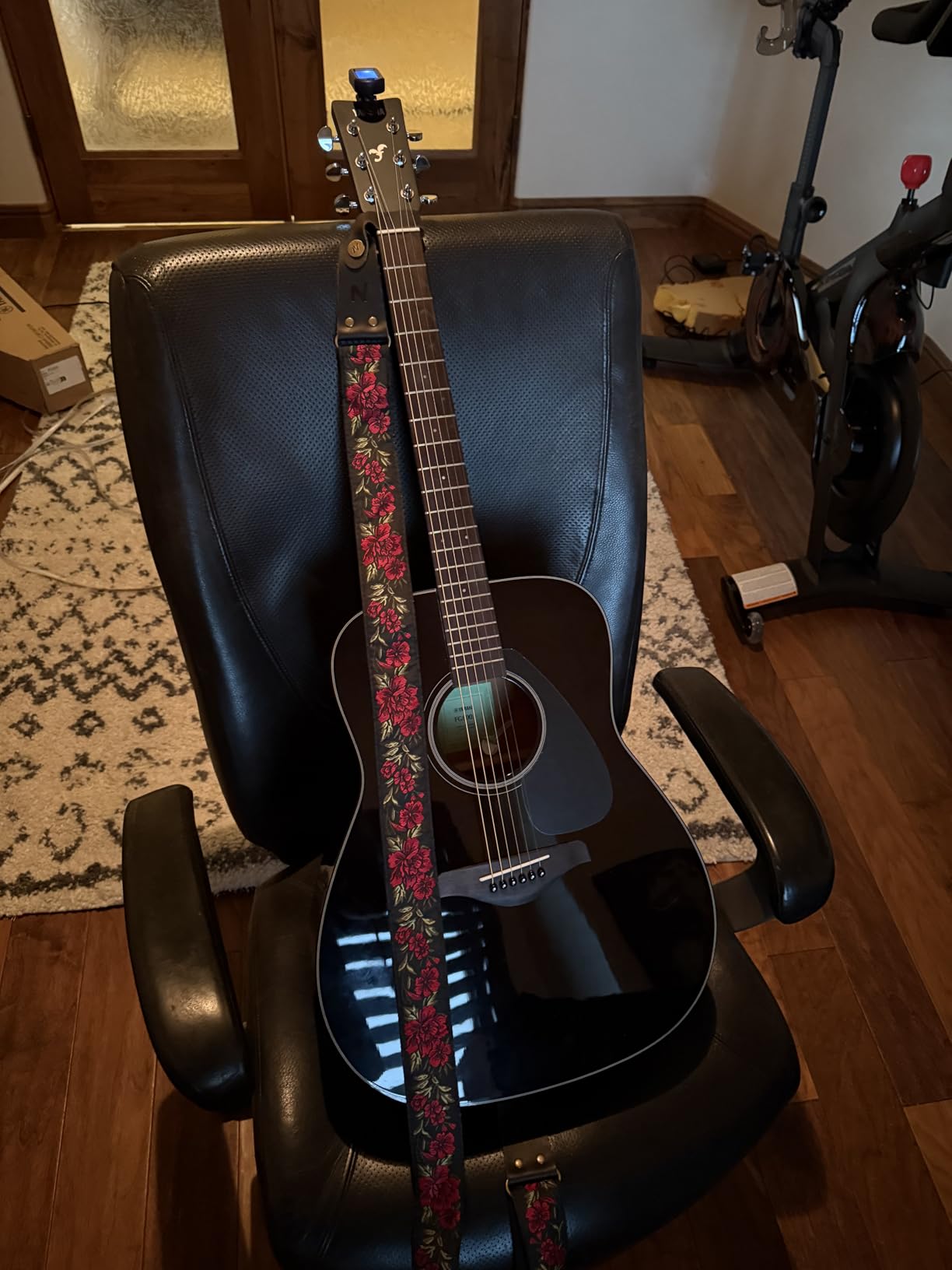
The FG800J is also one of the most reliable choices in the under-$300 bracket. Yamaha’s quality control is consistent, the setup out of the box is typically very playable, and the company has decades of experience building instruments that hold up to years of regular playing. If you want to experience a classic spruce-and-mahogany dreadnought at a beginner-friendly price, this is one of the easiest recommendations I can make.
Who the Yamaha FG800J is right for
This is a fantastic choice for beginners, intermediate players, and anyone who wants a reliable all-rounder with classic spruce-on-mahogany tone. Folk strummers, singer-songwriters, and bluegrass beginners will all find a lot to love. If you already own the rosewood-backed FG830, this is a complementary guitar with a different tonal personality rather than a replacement.
Who should look elsewhere
If you want onboard electronics for live performance, you will need to add an aftermarket pickup – the FG800J ships acoustic-only. If you want maximum bass depth and overtone complexity, the FG830 (rosewood back and sides) is the better Yamaha choice. If you want an all-mahogany voice, the Fender CD-60S is the dedicated option.
7. Jasmine S35 – Affordable Sitka Spruce and Mahogany
Jasmine S35 Dreadnought Acoustic Guitar Natural
Solid Sitka spruce top
Mahogany back and sides
Advanced X bracing
Pros
- Solid spruce top at entry level
- Warm balanced mahogany tone
- Advanced X bracing design
- Rosewood fingerboard
- Excellent beginner value
Cons
- Setup may need professional adjustment
- Plastic nut and saddle entry-level
- Some quality control variance
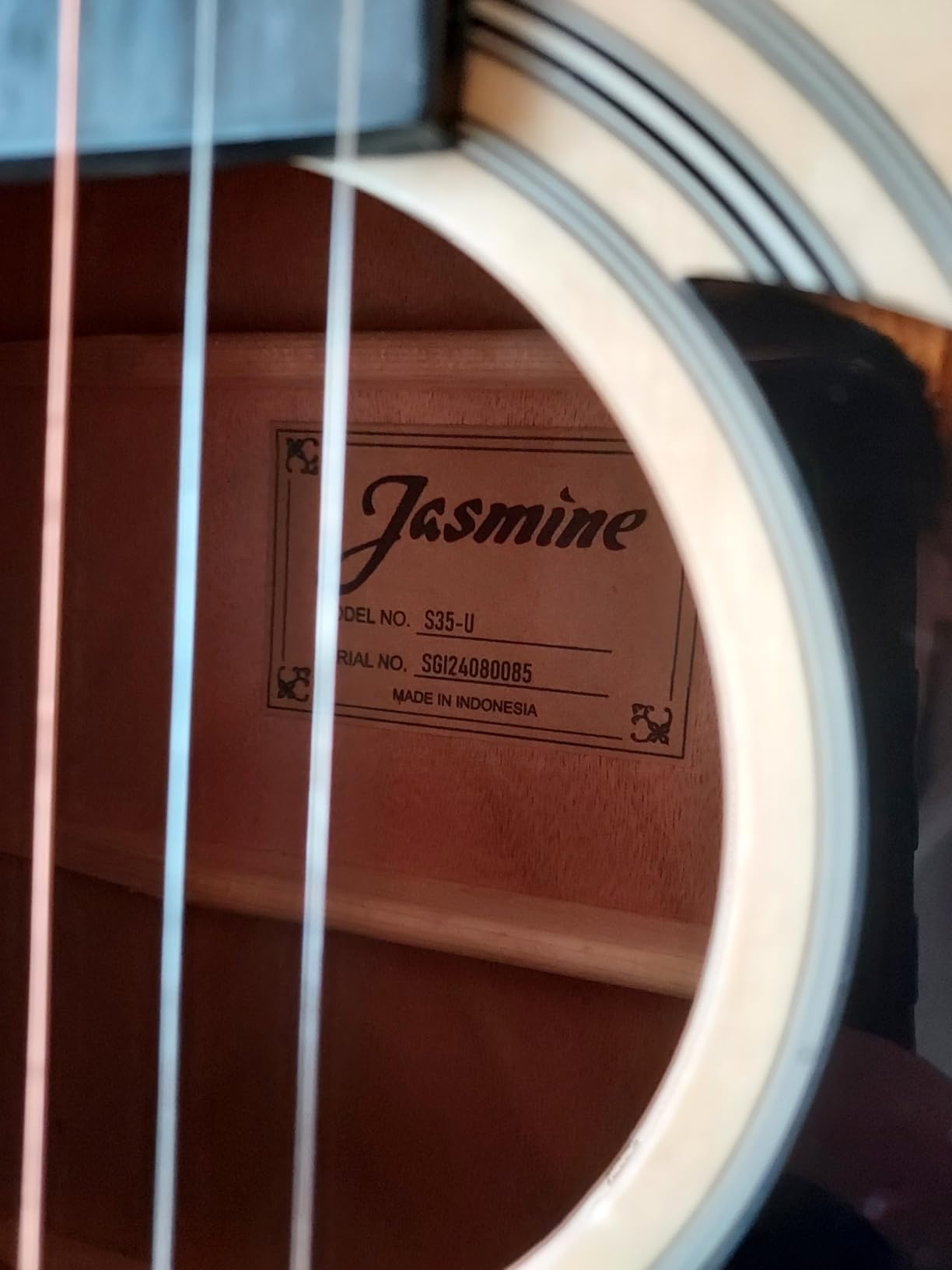
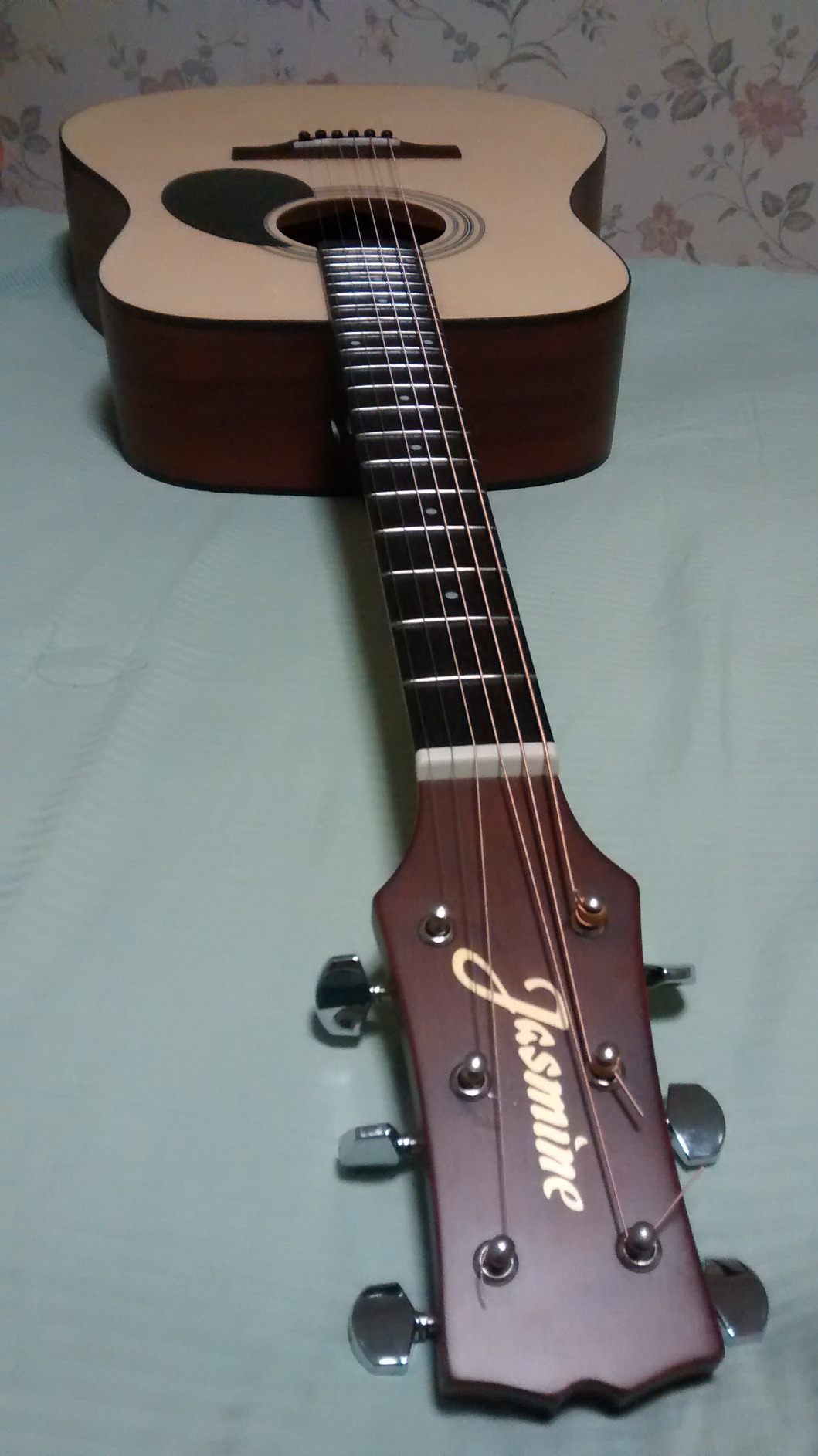
If you want to hear what a solid spruce top sounds like at the most accessible price in this roundup, the Jasmine S35 is the pick. Jasmine is a brand owned by Takamine, one of Japan’s most respected acoustic builders, and the S35 has earned over 3,100 reviews – more than every other guitar on this page – thanks to its combination of low price and surprising tonal quality.
The S35 pairs a solid Sitka spruce top with mahogany back and sides and rosewood fingerboard. That is the same fundamental formula as the Yamaha FG800J above, just at a lower price point with more modest appointments. The tone is balanced, the projection is respectable, and the guitar responds to playing the way a good spruce top should – opening up over time, rewarding a developing touch.
Our team has played the S35 alongside guitars costing three to four times as much, and the S35 holds its own for general strumming and fingerpicking at home volumes. You will notice the difference in refinement – the fret edges are not as smooth, the nut and saddle are plastic, and you may need a setup to dial in the action. But for the price, the wood selection is genuine, and you are getting a real solid spruce top rather than a laminate.
Players who live in dry climates should also consider pairing this guitar with a quality humidifier – we cover the best options in our best guitar humidifiers for acoustic guitars guide. Solid spruce tops are particularly sensitive to humidity swings.
Who the Jasmine S35 is right for
Beginners, students, parents buying for a young player, and anyone on a strict budget will love the S35. It is also a great choice for a second guitar that you do not have to baby – take it camping, leave it at a friend’s place, use it as a beater. The spruce-on-mahogany formula is forgiving enough that beginners will sound good while still developing their touch.
Who should look elsewhere
If you are an experienced player who can hear the difference between a $200 and a $500 instrument, you will appreciate the value but probably want to step up to the Yamaha FG800J or FG830. Players who want electronics, premium appointments, or all-solid construction at this budget will need to stretch their budget further.
8. Orangewood Rey – Layered Mahogany Cutaway Acoustic
Orangewood Rey Cutaway Style Acoustic Guitar with Mahogany Top
Layered mahogany top
Layered mahogany back and sides
Cutaway body
Pros
- Professional setup included
- Mahogany top sounds warm and full
- Cutaway for upper fret access
- Gig bag and pickguard included
- Great value for the price
Cons
- Layered rather than solid wood
- Setup variance between units
- Gig bag is basic quality
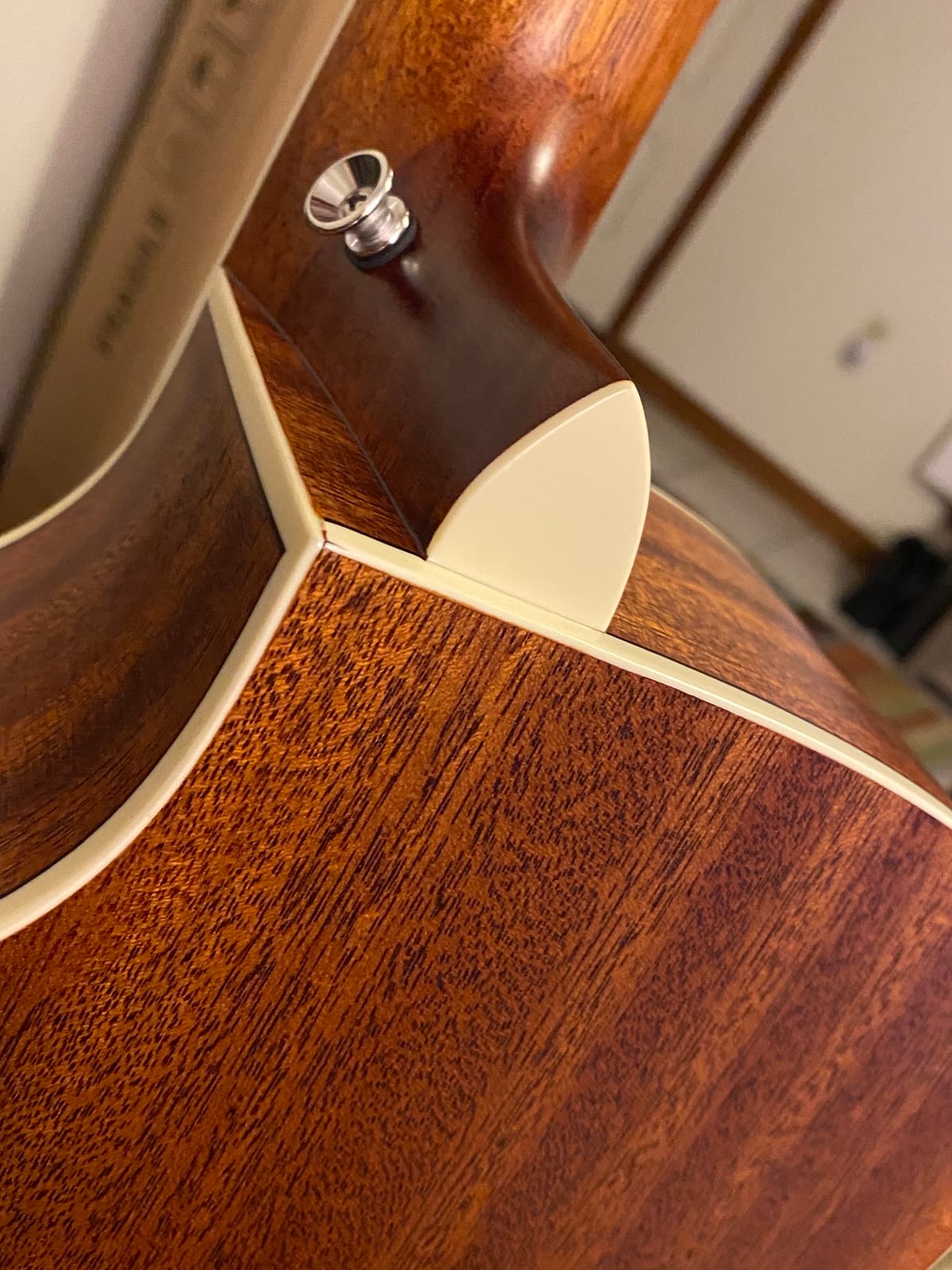
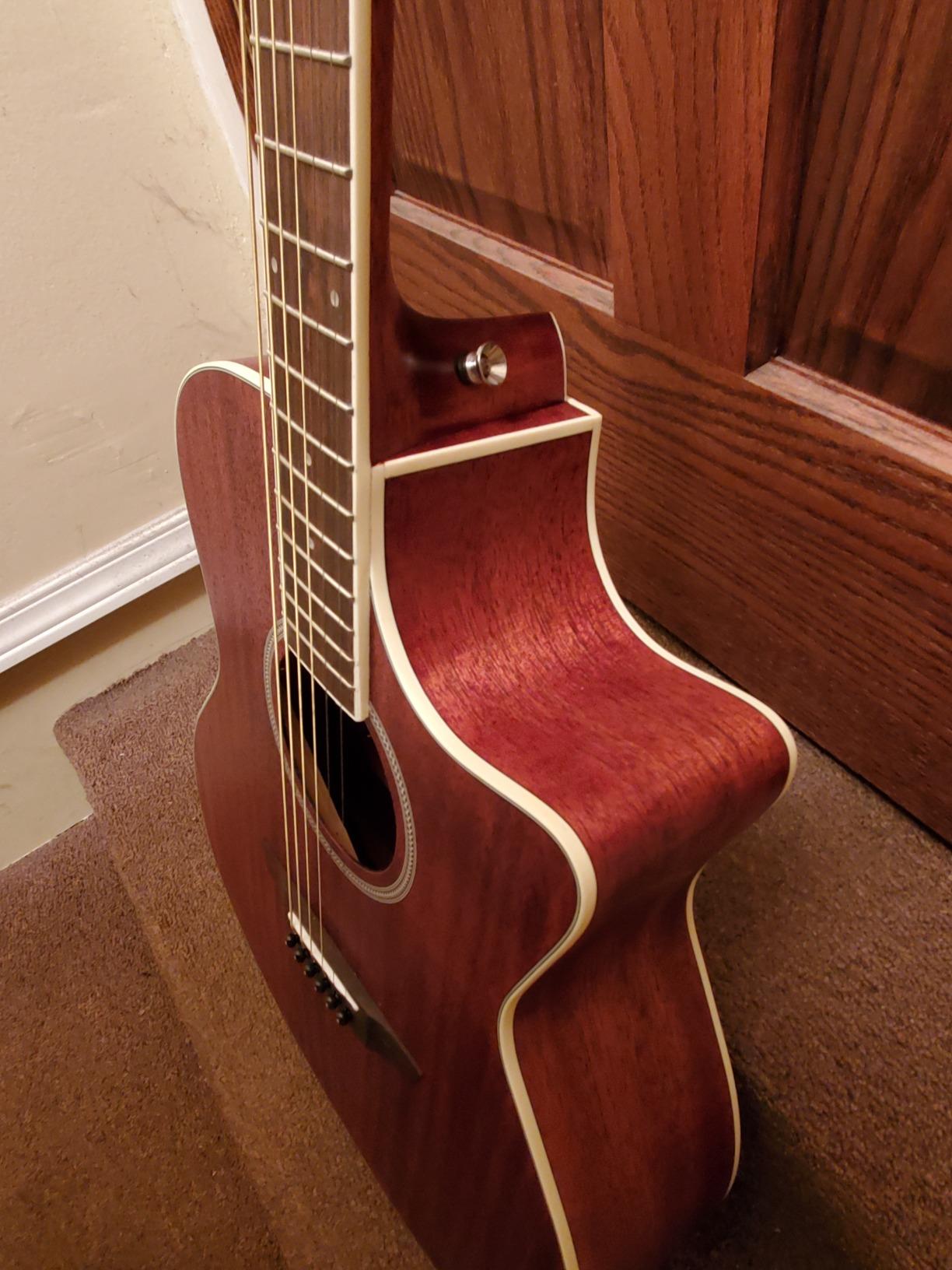
The Orangewood Rey is the guitar I recommend when someone wants the warm mahogany experience plus a cutaway for upper fret access. The cutaway body shape removes part of the upper bout, giving your hand room to reach the highest frets cleanly – which matters if you are playing lead lines, complex chord voicings, or you just like to solo high up the neck.
Orangewood builds the Rey with layered mahogany throughout – top, back, and sides. Layered (also called laminated) wood uses thin sheets of wood glued together, which makes the guitar more stable in changing humidity and more affordable to produce. Tone-wise, layered mahogany does not respond or age the way solid mahogany does, but it still carries much of mahogany’s warm character, and for many players that is exactly the trade-off they want.
What really makes the Rey stand out is the included professional setup. Orangewood ships each guitar with action, intonation, and nut slots dialed in by a tech before it leaves the warehouse. That is unusual at this price and saves you a trip to the guitar shop. You also get a gig bag and pickguard in the box. Reviewers on r/AcousticGuitar routinely mention this setup service as the reason they chose the Rey over similar-priced competitors.
If you play live and want to add a capo to your kit, our roundup of the best guitar capos for acoustic players covers options that will not interfere with the Rey’s intonation.
Who the Orangewood Rey is right for
Singer-songwriters who play in the upper frets, fingerstyle players who like to reach high voicings, and beginners who want a guitar that arrives ready to play will all find a lot to love in the Rey. It is a great choice if you live in a climate with humidity swings and want the stability of layered wood.
Who should look elsewhere
If you are an experienced player who can hear the difference between solid and layered wood, you will appreciate the Rey’s value but probably want a solid-top option like the SIGMA 30D or the all-mahogany Fender CD-60S. Players who want the classic dreadnought projection should also look at the larger body shapes above.
How to Choose Acoustic Guitar Tonewoods for Your Playing Style?
Choosing between acoustic guitar tonewoods comes down to three questions: what do you play, how hard do you play it, and what kind of recording or performance environment will the guitar live in? Let me walk you through the decision framework I use when helping players pick a tonewood.
Step 1: Pick your top wood first
The top (soundboard) is the most important piece of wood on any acoustic guitar because it does most of the work of converting string energy into sound. Sitka spruce is the most versatile top wood – it handles strumming, flatpicking, and fingerpicking with equal grace, and it has plenty of headroom for dynamics. Adirondack spruce is the premium choice for bluegrass and aggressive flatpicking because it has even more stiffness and dynamic range. Cedar is warmer, more responsive to a light touch, and favored by fingerstyle players. Mahogany tops give you vintage warmth and compression at the cost of headroom.
Step 2: Match back and sides to your sound goal
Once you have your top wood in mind, choose back and sides that complete the sonic picture. Rosewood adds bass depth, overtone complexity, and high-frequency shimmer – perfect for fingerstyle, recording, and players who want every note in a chord to be heard. Mahogany backs and sides focus the sound, dry it out, and add midrange punch – perfect for blues, folk, and singer-songwriters who want a guitar that cuts through without sparkle. Maple is bright, focused, and projects well – great for live performance and ensemble playing.
Step 3: Decide solid versus layered
Solid wood tops, backs, and sides vibrate more freely and age into a more complex tone over years of playing. Layered (laminated) wood is more stable, more affordable, and more resistant to humidity swings. If you are buying your first serious guitar, solid wood is worth the upgrade. If you live in a climate with big humidity changes or you want a low-maintenance beater guitar, layered wood is a smart choice.
Step 4: Consider sustainable and alternative options
Traditional tonewoods like Brazilian rosewood and old-growth spruce are increasingly restricted, so many builders now offer FSC-certified woods, reclaimed wood, and alternative species. Sapele, for example, is in the mahogany family and offers similar warm character with a more sustainable supply chain. If sustainability matters to you, ask the manufacturer about their wood sourcing.
Step 5: Think about how the guitar will age
Solid wood guitars literally change over time as the cells in the wood dry, the braces settle, and the top vibrates millions of times. Players call this “opening up,” and it is one of the magic properties of solid wood tonewoods. Koa, in particular, is famous for opening up dramatically – starting out bright and chimey and mellowing into a warm, complex tone over a few years of regular playing. Adirondack and Sitka spruce tops also open up significantly in the first 100 hours of play.
Step 6: Match tonewood to playing style
As a quick reference: choose Sitka spruce if you play multiple genres and want versatility. Choose Adirondack spruce if you play bluegrass or aggressive flatpicking. Choose cedar if you are a fingerstyle player who wants warmth and responsiveness. Choose mahogany if you play blues, folk, or vintage-inspired music. Choose rosewood for back and sides if you want bass depth and harmonic complexity. Choose maple for live performance where projection matters.
Frequently Asked Questions
What is the best sounding wood for an acoustic guitar?
There is no single best tonewood – each wood offers a distinct tonal personality. Sitka spruce tops paired with Indian rosewood back and sides are widely considered the most versatile classic combination, delivering clear articulation, deep bass, and shimmering overtones. Mahogany tops and backs give you warm, focused midrange and a vintage voice. Cedar tops are warmer and more responsive for fingerstyle. Your playing style and musical genre matter as much as the wood itself.
Which is better, rosewood or mahogany?
Neither is universally better – they make different sounds. Rosewood is denser and reflects more high-frequency content, producing deep bass, bell-like highs, and complex overtones that reward fingerstyle and recording work. Mahogany is lighter and more focused, with stronger midrange, faster attack, and natural compression that suits blues, folk, and singer-songwriter playing. Many players eventually own both a rosewood and a mahogany guitar.
Is spruce a good tonewood?
Spruce is the most popular top wood for steel-string acoustic guitars and for good reason. Sitka spruce offers an excellent stiffness-to-weight ratio, which means it is strong, light, and resonant. It produces clear note attacks, strong fundamentals, broad dynamic range, and the headroom to handle aggressive strumming and flatpicking. Adirondack spruce is even stiffer and louder, prized for bluegrass. European spruce sits between the two, often described as more complex and refined.
What is the most resonant wood for guitars?
Resonance depends on stiffness-to-weight ratio, not density alone. Adirondack spruce is often cited as the most resonant top wood because of its exceptional stiffness combined with light weight, which lets it vibrate freely and project strongly. Indian rosewood is the most resonant back and sides wood for many luthiers because its density reflects energy back into the top, adding sustain and complexity. Brazilian rosewood is legendary for resonance but heavily restricted today.
Why does tonewood matter for acoustic guitars?
Tonewood matters because the wood is the amplification system of an acoustic guitar. When you pluck a string, the top (soundboard) vibrates to convert string energy into sound waves that we can hear. The back and sides then reflect and shape that sound inside the resonance chamber. Different species of wood have different densities, stiffnesses, and grain structures, which is why two guitars built identically except for tonewood sound different. The choice of wood shapes volume, sustain, bass response, treble clarity, and how the guitar responds to your playing dynamics.
Final Verdict on Acoustic Guitar Tonewoods
After spending weeks comparing these eight guitars side by side and reviewing thousands of player experiences, the Yamaha FG830 remains our top recommendation for an acoustic guitar that showcases the best of what acoustic guitar tonewoods can do. Its solid Sitka spruce top and Indian rosewood back and sides deliver a versatile, classic voice that handles any playing style, and the price makes it accessible to almost any buyer.
Pick the FG830 for versatility. Pick the Blueridge BR-160 if you want premium craftsmanship and vintage voice. Pick the Fender CD-60S if you want to learn the mahogany sound on a budget. Whatever you choose, remember that tonewoods are tools – and the right one for you is the one that makes you want to pick up the guitar every day.