
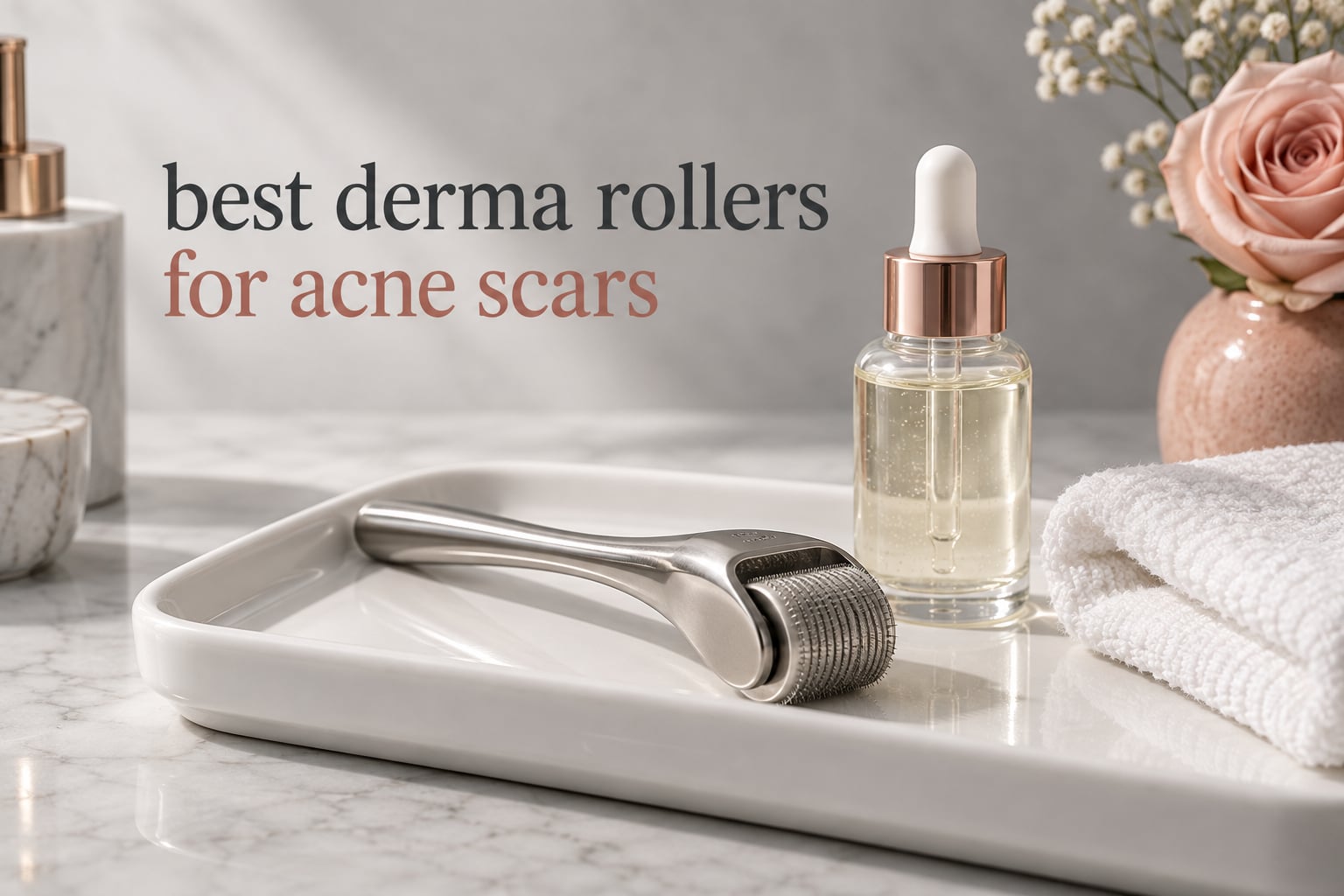
A derma roller for acne scars is a handheld wheel covered in hundreds of tiny needles that you roll across depressed skin to create controlled micro-injuries. The wound-healing response that follows produces new collagen and elastin over the following weeks and months, which gradually softens the look of atrophic scars — the pitted, depressed kind left behind by acne. Clinical reviews of microneedling for acne scarring report scar improvement in most trials that included it, with stronger results when it is combined with chemical peels.
Let me set expectations before we get into the picks. A home roller softens and fades scars. It does not erase them, and it will not fix ice pick or tethered scars that are bound down beneath the surface. Veterans on acne.org still describe dermarolling as an excellent cheap at-home method while equally experienced members push toward stamping tools for deeper work, and the honest read is that both are right about different scar types. If you want the general version of this guide, our best derma rollers roundup covers rollers for texture, hair and beard use as well.
I compared all ten devices below on needle length, needle count, needle material, grip, storage and the complaints buyers actually report. Nine of the ten sit at 0.25mm, which is the depth most sellers call home-safe, and only one gives you real options to step up in depth over time. That single fact shapes most of the recommendations. Last updated October 2026.
Top 3 Best Derma Rollers for Acne Scars (October 2026)

Sdara Skincare Derma Roller
- 0.25mm-class needles
- Storage case included
- Face hair and beard use
All 10 Derma Rollers Compared Side by Side
| Product | Specifications | Action |
|---|---|---|
| Sdara Skincare Derma Roller |
|
Check Latest Price |
 ROSELYNBOUTIQUE Derma Roller ROSELYNBOUTIQUE Derma Roller |
|
Check Latest Price |
 Lexi White Beauty Derma Roller Lexi White Beauty Derma Roller |
|
Check Latest Price |
 Koi Beauty 540 Titanium Roller Koi Beauty 540 Titanium Roller |
|
Check Latest Price |
 Angel Kiss 4 in 1 Kit Angel Kiss 4 in 1 Kit |
|
Check Latest Price |
 The Beard Club Derma Roller The Beard Club Derma Roller |
|
Check Latest Price |
 RadBizz Derma Roller RadBizz Derma Roller |
|
Check Latest Price |
 Prosper Beauty 6 Piece Kit Prosper Beauty 6 Piece Kit |
|
Check Latest Price |
 Koi Beauty 200 Real Pin Roller Koi Beauty 200 Real Pin Roller |
|
Check Latest Price |
 CLETINA 540 Titanium Roller CLETINA 540 Titanium Roller |
|
Check Latest Price |
1. Sdara Skincare Derma Roller — Best Overall for Acne Scars
Sdara Skincare Derma Roller Microneedling Roller for Face – Includes Free Storage Case (Pack of 1) Unisex
0.25mm-class microneedles
1.57 x 6.5 x 1.89 inches
1.44 ounces
Storage case included
Pros
- Very large review base at over 30000 ratings
- Reported softening of atrophic and cystic scars with consistent use
- Low pain at shallow depth
- Included storage case
- Works for face hair and beard
Cons
- 0.25mm depth is too shallow for deeper scarring
- Redness can last several hours
- Some buyers see no improvement after weeks
- Over-rolling causes irritation or pinpoint bleeding
This is the roller I recommend first for anyone whose scars are mild to moderate and whose skin has been calm for a while. With more than 30,000 ratings behind it, the pattern in the reviews is unusually consistent: people notice plumping and better serum absorption within a session or two, and scar softening shows up later, usually after a run of weeks rather than days. Reviewers repeatedly mention that rolling is barely more than a prickling sensation at this depth, which matters if you are new to dermarolling and nervous about it.
What surprised me was how often reviewers describe it as a face, hair and beard tool rather than a scar device. That breadth is honest — at 0.25mm it is doing gentle texture work first and scar work second. The build is plain plastic with a matte finish, the head does not detach, and the storage case keeps it from rattling around a bathroom cabinet. It is not a luxury object and does not pretend to be.

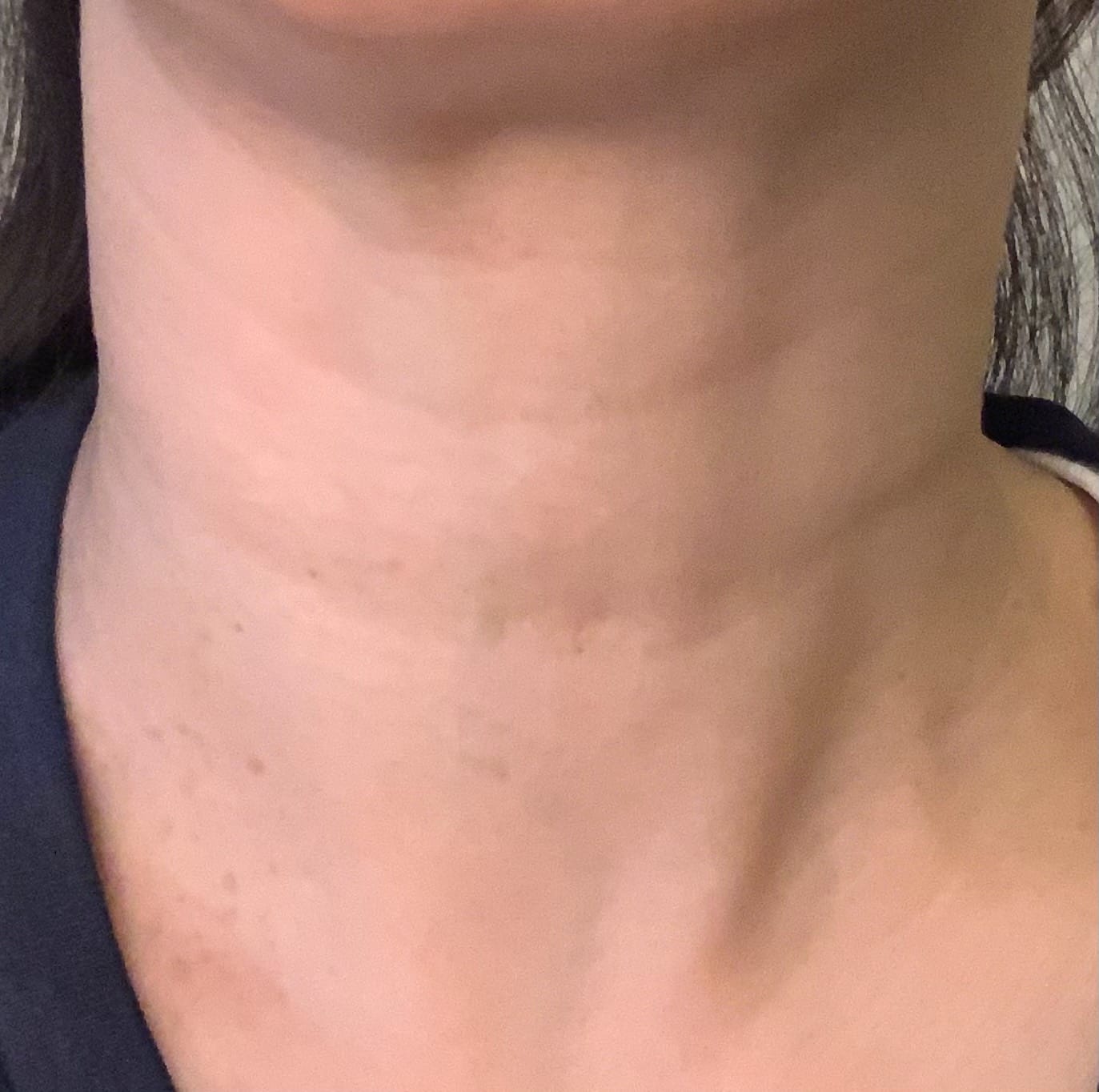
The main limitation is the one that applies to most sub-0.3mm rollers: it will not reach a scar that is tethered down to deeper tissue. Several buyers say they rolled consistently for weeks and saw nothing, and a few note visible pinpoint bleeding when they pressed too hard over the same spot. Redness that hangs around for hours afterward is common enough that you should plan your sessions around it rather than being surprised by it.
The listed dimensions are 1.57 x 6.5 x 1.89 inches at 1.44 ounces, so it travels well and fits a small bag. If your scars are shallow and recent, this is the right depth. If they are years old and deeply pitted, keep reading — the Koi Beauty 540 below is the one that lets you increase depth later.
Who this roller suits
It suits people with recent, mild scarring who want a low-commitment starting device, and it suits anyone who also wants one tool for scalp, beard and body work. Reviewers consistently describe it as easy to hold and easy to clean with alcohol between uses, and the included case means you can store it dry rather than loose.
It also suits deeper skin tones who want to keep depth conservative. At 0.25mm the inflammatory response is mild, and post-inflammatory hyperpigmentation risk stays lower than it would with longer needles. That is not a licence to skip sunscreen, but it does mean fewer variables on a schedule you are just learning.
Who should skip it
Skip it if your scars are deep ice pick, rolling or tethered scars that have been present for more than a couple of years. No 0.25mm wheel reaches that depth, and buying one anyway is how people end up with a bathroom drawer full of disappointing devices. Several buyers in this category describe exactly that.
Also skip it if you have active cystic acne on the area you want to treat, or if you have eczema, psoriasis or rosacea on that patch of skin. Rolling over inflamed or broken skin is the fastest route to a problem you did not have before.
2. Koi Beauty 540 Titanium Roller — Best Value for Deeper Scars
Koi Beauty Derma Roller Titanium Microneedle Roller, 540 Microneedling Roller for Men Women Face Scalp, Beard Roller for Men, Premium Micro Needling Roller Matte Black
540 titanium microneedles
Depths from 0.5mm to 1.5mm
6.02 x 1.65 x 1.54 inches
2.89 ounces
Pros
- Highest rated option in this group at 4.6 stars
- Depth options let you step up gradually
- Titanium needles resist bending and rust
- Frosted grip improves control
- Works on face scalp and beard
Cons
- Longer heads are uncomfortable without numbing cream
- Each variant is depth specific so you buy one depth
- One buyer received a different needle length than ordered
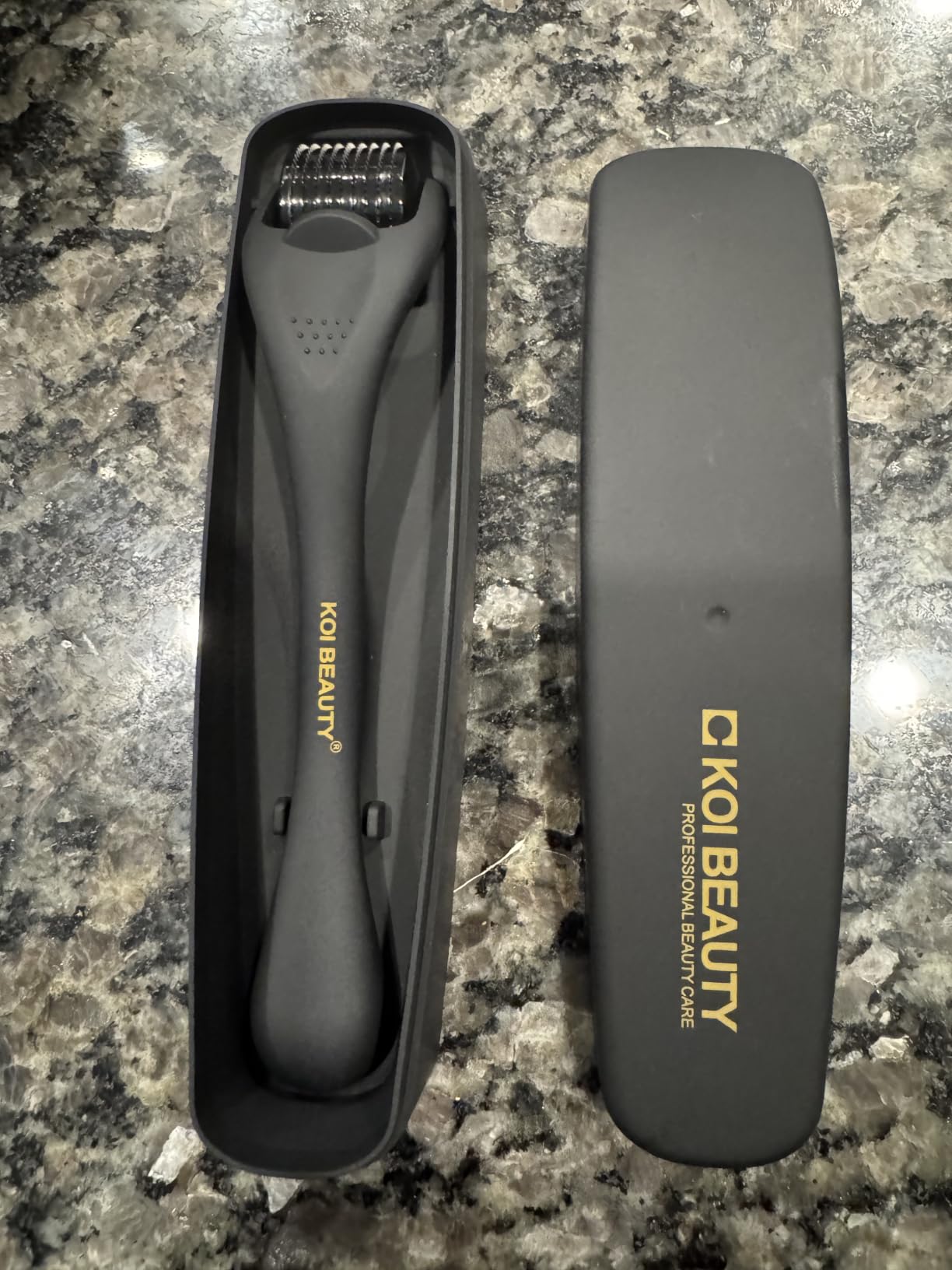
This is the one I would pick over every other roller in the group for scar work specifically, because it is the only manual roller here that lets you change depth. The same model is made at 0.5mm, 1.0mm and 1.5mm, so the sensible path is to start at 0.5mm, let your skin acclimatise, and only then consider going longer. Everything else on this list traps you at a single depth for life.
At 4.6 stars with a 76% five-star share, the build quality is the other story. Reviewers talk about the frosted grip finish giving real control when you press, and about titanium needles that have not bent or rusted after months of use. People using it report improved hydration, smoother texture and visible change to mild scarring, though the texture and hydration benefits come far sooner than the scar benefits.
The 1.0mm and 1.5mm heads are the reason to slow down. Reviewers of the longer heads say the pass is uncomfortable without numbing cream, and they generally pair them with a session every two to four weeks rather than weekly. If you are under any medical care, or you have darker skin and a history of pigmentation after skin injury, treat those heads as a discussion with your dermatologist rather than an experiment.
One practical wrinkle: because each depth is a separate variant, check the needle length on the listing before you order. At least one buyer reported receiving a different length than the one they selected. It is an occasional fulfilment issue, not a widespread pattern, but it is worth a glance at the box when it arrives.

How depth choice changes the experience
At 0.5mm most users report a real prickling sensation and a short-lived flush that settles within a few hours. That is the depth that does most of the useful work for shallow to moderate atrophic scarring, and it is the depth I would stay on for a three-month block before reassessing.
At 1.0mm and 1.5mm you are into territory where numbing cream, a slower schedule and real aftercare matter. Reviewers using those heads are more cautious in their language, and the results they describe are about texture and firmness rather than dramatic scar change.
What to check before you commit
Confirm the depth variant on the product page before ordering, since that is the single most common fulfilment complaint. Then decide your schedule by depth: weekly for the shorter head, every two to four weeks for the longer ones. Anything more frequent than that is how you earn yourself a week of downtime.
If you are someone who will chase a bigger number and end up over-treating, buy the 0.5mm version deliberately and leave the longer heads alone until a dermatologist tells you otherwise. The rollers do not stop you. You do.
3. Koi Beauty 200 Real Pin Roller — Best for Genuine Titanium Needles
Koi Beauty Professional Derma Roller, 200 Real Individual Titanium Microneedle Roller, Microneedling Roller for Face Body Scalp, Micro Needle Beauty Tool for Men Women
200 individual titanium pins
Depths 0.25mm to 1.0mm
6.06 x 1.61 x 1.57 inches
2.68 ounces
Pros
- Highest five-star share in the group at 78 percent
- Arrives in sterile packaging
- 200 individually pressed pins
- Illustrated instruction manual included
- Storage case included
Cons
- Head is not replaceable so the whole unit is discarded when pins dull
- Smaller head may feel less substantial than a 540-needle roller
- Several buyers found it smaller than expected
The fake-needle problem is the loudest complaint on every acne and microneedling forum, so a roller that specifically claims individually manufactured titanium pins in sterile packaging is worth a close look. This listing says 200 real individual pins rather than a stamped plate, and buyers with sharp eyes say the pin ends look pressed rather than moulded, which is what you want to see at the surface.
At 4.6 stars and a 78% five-star share it has the highest satisfaction share in the group. Reviewers mention the sterile packaging specifically as a pleasant surprise, and the illustrated manual has genuinely helped first-timers get through a first attempt without guessing. Reported effects after one or two sessions include smaller-looking pores and smoother texture.
The catch is that 200 pins is fewer than the 540 you get elsewhere, so a single pass covers less area and you will work a section for longer. Several buyers said the roller was smaller than the listing photos suggested. If you like to cover your whole face quickly, that is a genuine annoyance; if you are working a small scar area, it is an advantage.
Depth options are listed across 0.25mm, 0.3mm, 0.5mm and 1.0mm, which puts it in the same bracket as the Koi Beauty 540 above rather than trapped at one length. The real limitation is that the head does not detach, so once the pins dull you replace the entire roller instead of just the head.
Why the needle claim matters
A stamped fake needle head spreads the pressure across a blunt tip, which hurts more, penetrates less and takes more passes to get the same effect. A pressed pin keeps its point under pressure. When you read a listing, that distinction is the difference between a cosmetic massage tool and something that actually reaches the dermis.
Buyers on this model report the pins holding their shape rather than bending sideways, which is the practical test. Roll a pass onto your palm first — a real pin leaves a clean line of tiny points rather than a drag mark. This is the product where that test tends to pass.
Where the smaller head earns its keep
Two hundred pins across a narrower head is genuinely useful when you are treating a defined area rather than your whole face. Cheek dimples, a single cluster of boxcar scars on the chin, or the jawline all get more concentrated passes than a wide 540-needle wheel would give you.
It also suits people who want one roller per concern. Keep the wide wheel for body and full-face texture work, and use this one on the specific scar patch you are focused on. Reviewers who treated both ways report the concentrated approach feels more deliberate and easier to control.
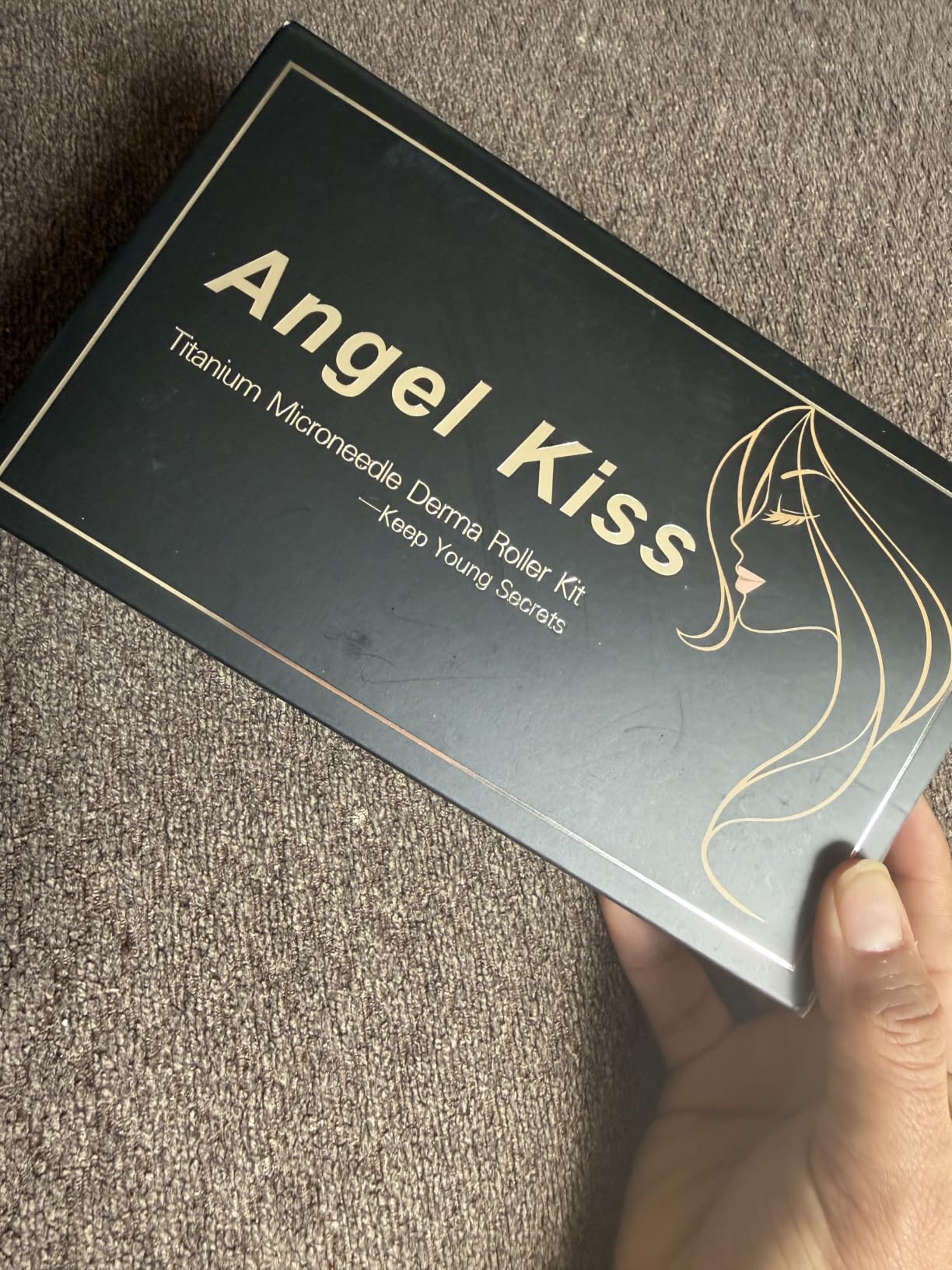
4. Angel Kiss 4 in 1 Titanium Kit — Best Multi-Head Kit
Angel Kiss 4 in 1 Titanium Microneedling Derma Roller Kit for Face and Body
Three roller heads plus case
1200 needles at 0.3mm for body
720 needles at 0.25mm for face
300 needles for small areas
Pros
- Three heads cover body face and small areas separately
- Disinfection case included
- Titanium needles resist bending and rust
- All depths safe for beginners and sensitive skin
Cons
- Heaviest kit in the group at 7.37 ounces
- Every head stays between 0.25mm and 0.3mm so deeper scarring is out of reach
- Bulkier kit takes more storage space
The logic of this kit is density rather than depth. You get a 1200-needle 0.3mm head for body work, a 720-needle 0.25mm head for your face and a 300-needle 0.25mm head for small or sensitive areas. Buyers say the 300-pin head is the one they reach for most, because it lets you work around the nostrils and the edge of the cheek without the wheel running off into areas you did not intend to touch.
At 4.4 stars with more than 4,000 ratings, it holds up as a well-used kit. Reviewers appreciate the included disinfection case, which solves the storage problem that trips up most single rollers, and the titanium needles are repeatedly described as smooth with no bending or rusting. The manufacturer positions it clearly as a home-use, sub-0.3mm device rather than overselling it.
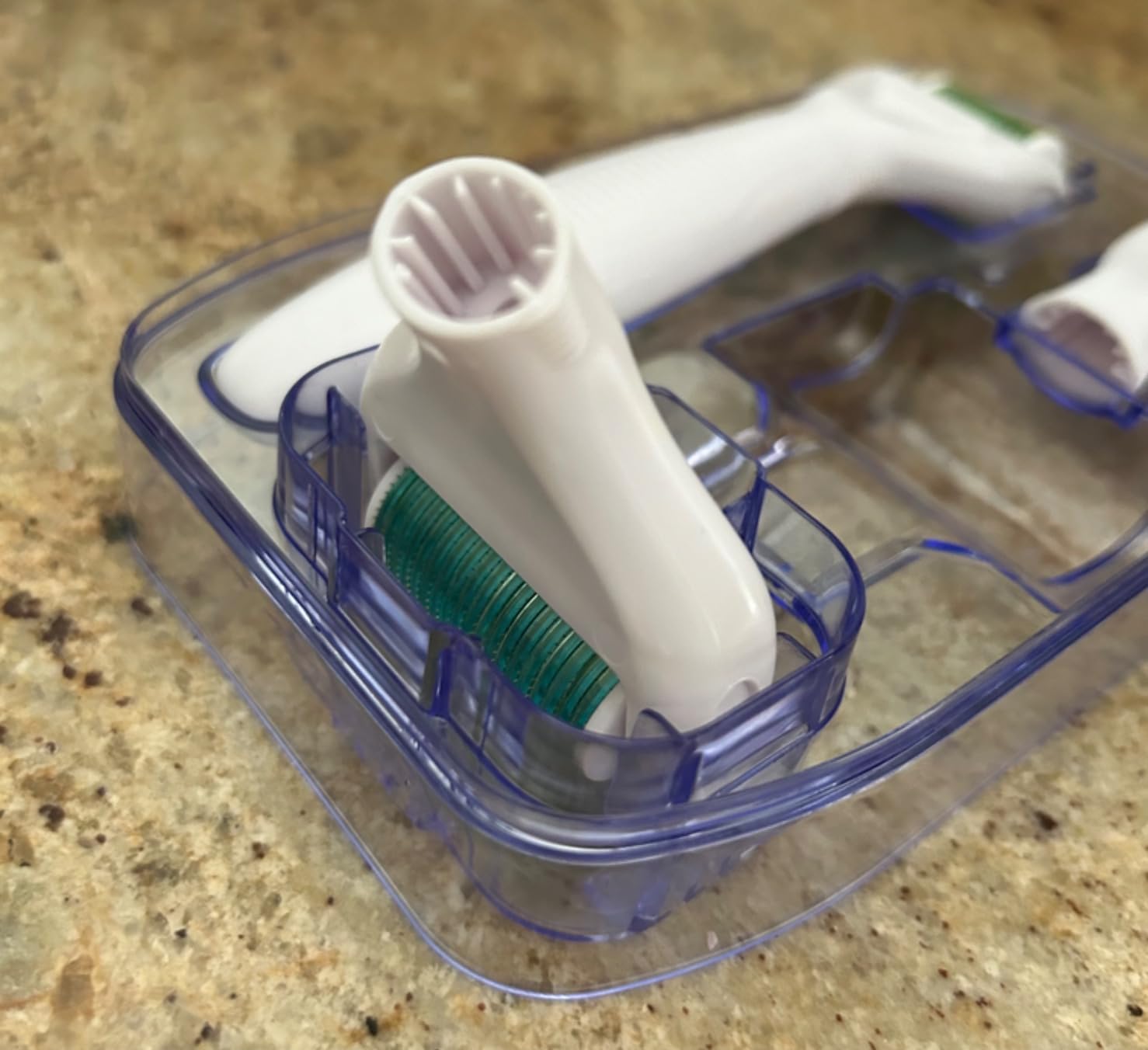
What it cannot do is reach a scar that sits deep. Every head in the box is between 0.25mm and 0.3mm, so this kit does the same job as a good single 0.25mm roller and simply lets you do it across several body areas at once. If that is what you need, it is a good value. If deep atrophic scarring is the goal, you need to look at the depth options on the Koi Beauty models instead.
It is also the second-heaviest item here at 7.37 ounces, and the box takes noticeably more drawer space than a single roller. That is a small inconvenience, but it is one you will feel every time you reach for it.
When three heads beat one
The 1200-needle body head is the differentiator. Body skin is thicker and takes a denser pass without much complaint, and reviewers working on thighs, arms and shoulders report that the larger head covers ground in a fraction of the time. If you are rolling anywhere below the neck regularly, that head alone justifies the kit.
The 300-pin head earns its place on your face. Small head diameter means you can work the nose crease and the corners of the mouth without the wheel dragging across a cheek you did not intend to treat, which is where most beginners cause unnecessary redness.
Where the depth ceiling bites
Sub-0.3mm across all three heads means this is a maintenance and texture kit, not a scar treatment kit. Buyers planning to upgrade to longer needles once the heads wear out are effectively saying the same thing — the kit is a fine starting point with an upgrade path.
It also suits shared households or anyone who wants a separate head for the face and the body rather than disinfecting one wheel between them. The disinfection case makes storing two heads apart from each other straightforward, which is the practical reason to pick this over three separate rollers.
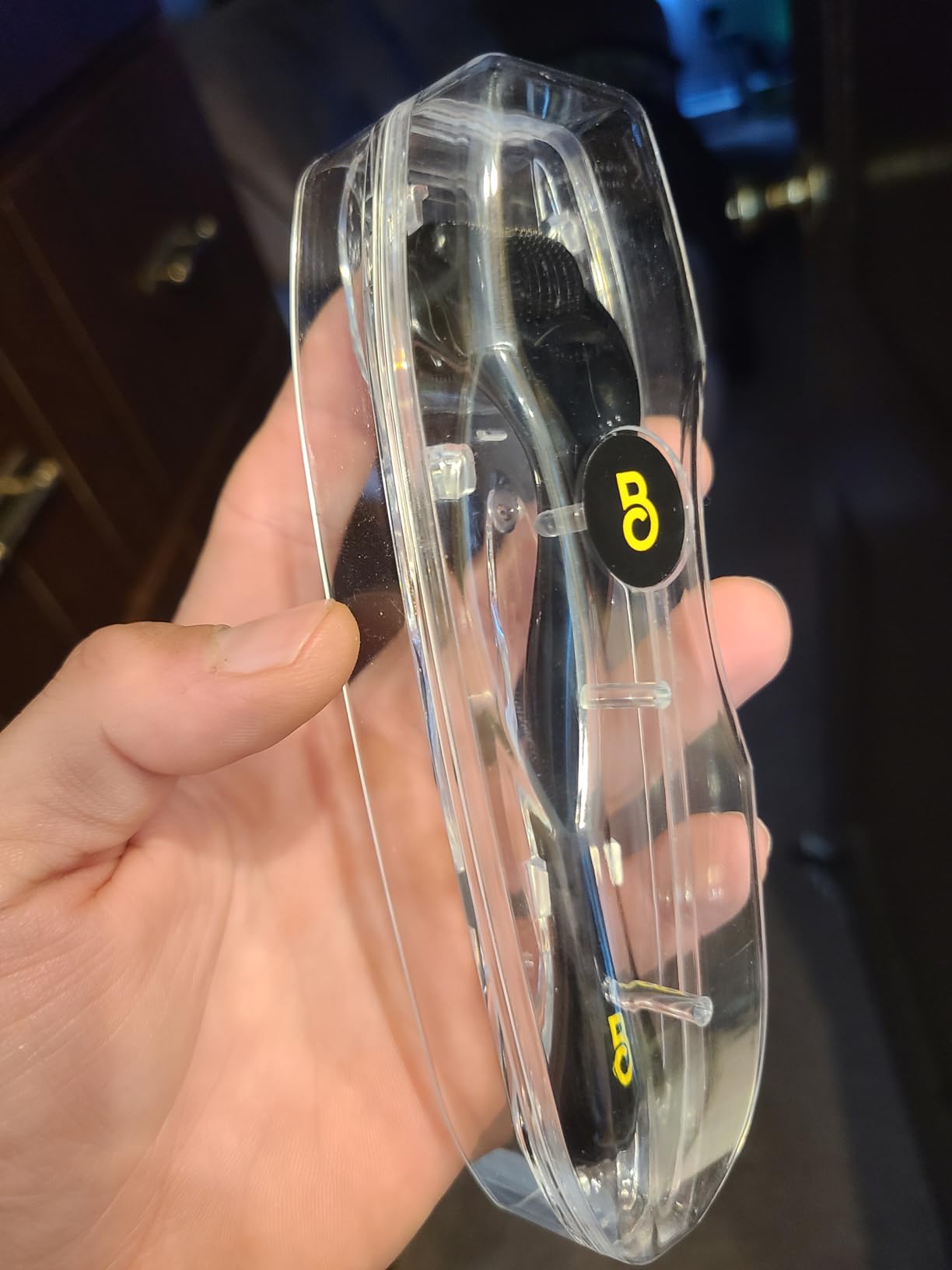
5. The Beard Club Derma Roller — Best for Beard and Scalp Work
The Beard Club Derma Roller for Face, Body and Scalp – Microneedling for Men and Women with 540 Titanium Microneedles – Beard Roller & Micro Needling Scalp Hair – Black
540 titanium-coated needles
0.25mm depth
1.85 x 1.65 x 6.5 inches
1 ounce
Pros
- Number one ranked in its category
- Sturdy body that rolls without snagging
- Protective storage case included
- Reported improvement to texture hydration and acne scars
- Very light at 1 ounce
Cons
- 0.25mm depth is too short for scalp work
- Head does not detach so trapped hair cannot be cleared
- Some buyers call the build mid-range for the price
This is marketed as a beard tool and it earns that label. At 4.5 stars with a 76% five-star share, reviewers consistently praise the smooth rolling action and a sturdy body that does not flex or snag, which is what you want when you are rolling a dense beard area repeatedly. The 540 titanium-coated needles at 0.25mm sit close to the skin surface, which suits facial hair work where you are trying to stimulate rather than remodel.
It works as a face roller too, and reviewers mention improvement to texture, hydration and acne scars. At 1 ounce it is one of the lighter options, which makes a full-face session less tiring than it would be with the heavier kits. The protective case is included and keeps the needles undamaged between uses.
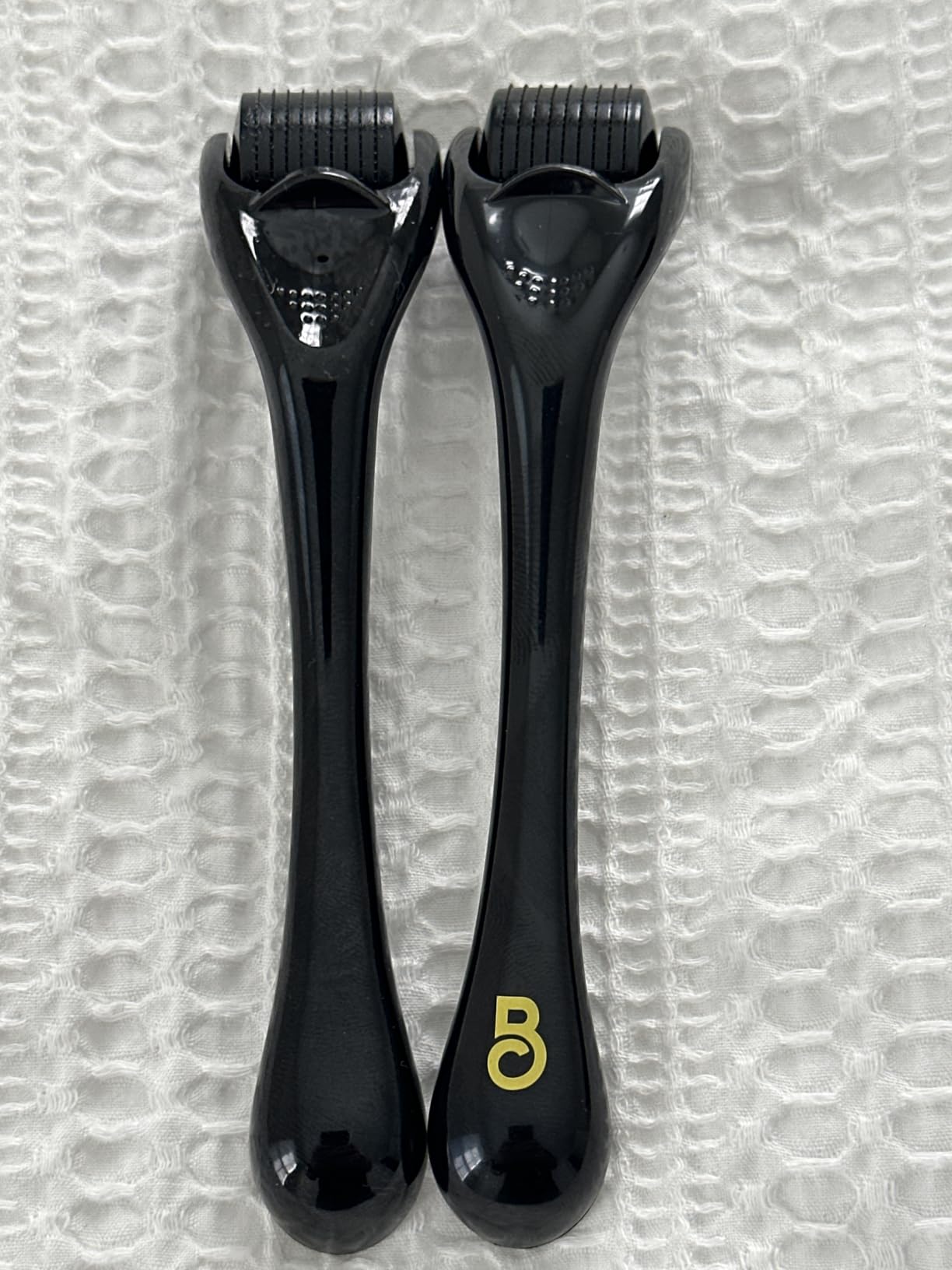
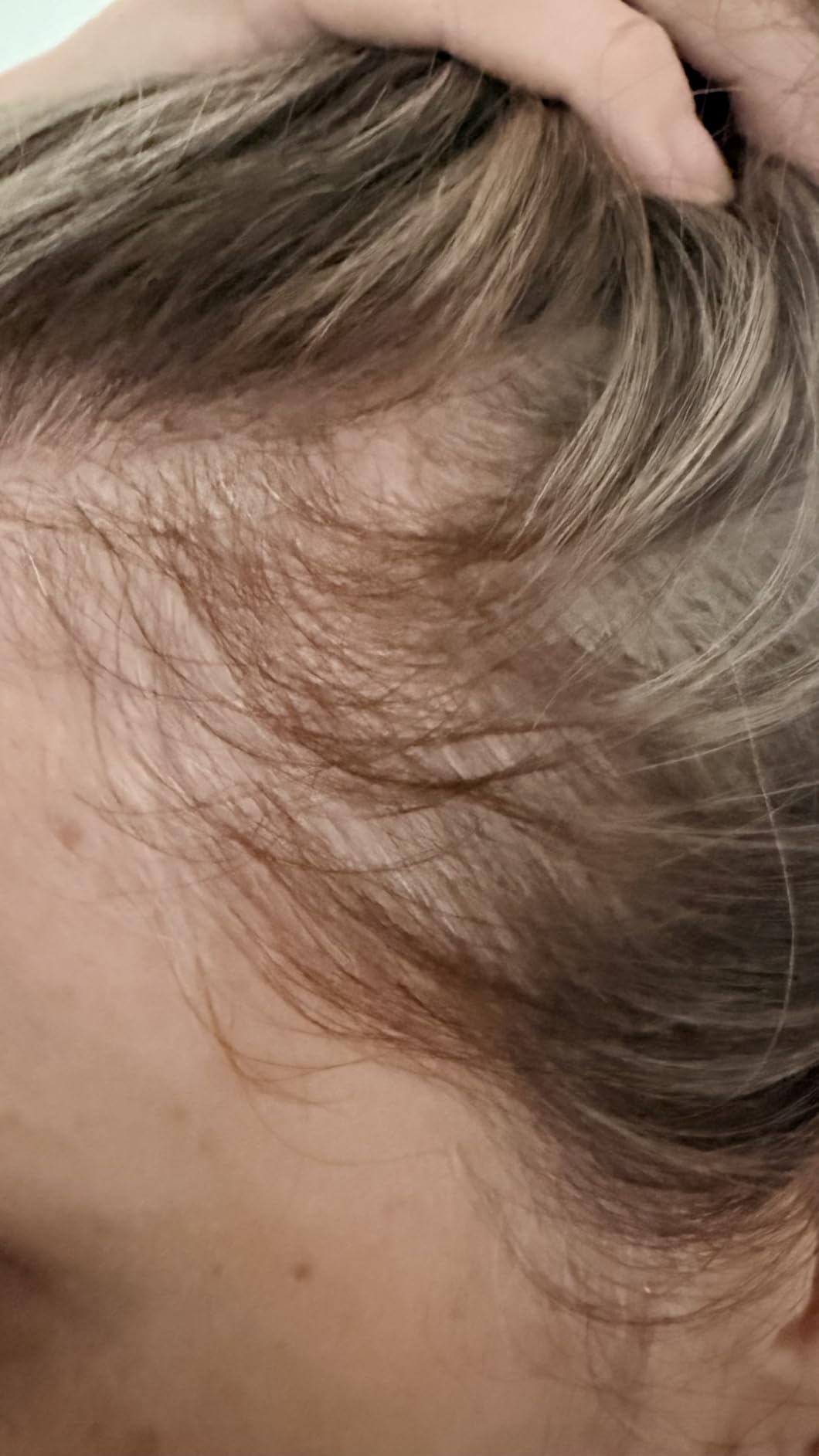
The scalp caveat comes up repeatedly and it is a fair one. 0.25mm is simply too shallow for hair work, and reviewers say so directly. The head is also not detachable, so if hair snags around the axle you cannot clear it without a tool you should not be improvising with. One buyer hit exactly that and flagged it as the main flaw.
On build quality the reviews split: some call it sturdy, others call it mid-range for what they paid. It is a plastic roller with a metal head. It will not feel like a precision instrument, and if that bothers you, spend the money on a titanium model with a replaceable head instead.
Where it earns its keep
If you are rolling a beard, a scalp-adjacent hairline or a face with mild scarring, the 540 titanium-coated head at 0.25mm is a sensible all-round choice with a large review base behind it. Smooth rolling and a light weight are the two things users mention most, and both matter when you are repeating passes over the same patch.
The storage case is more than a nice-to-have when the head does not detach. A roller that lives loose in a bathroom drawer picks up dust and product residue, and both make your next pass more likely to irritate. Keeping it cased is the cheapest hygiene step available.
Where it falls short
Skip it if scalp stimulation is a goal. 0.25mm does not go deep enough for that and reviewers are blunt about it. Skip it if you plan to roll over a heavy product buildup without cleansing first, because trapped residue plus repeated passes is how irritation starts.
It also is not the choice for anyone with pitted scarring serious enough to warrant a depth increase. You would be buying it and then buying something else six weeks later once 0.25mm stops delivering.
6. Prosper Beauty DERMAROLL 6 Piece Kit — Best Hygiene Kit
Derma Roller Microneedle 6 Piece Kit [DERMAROLL by Prosper Beauty] Face Roller with 4 Replaceable Heads Exfoliation Microdermabrasion Micro Derma Skin Care Tool Dermaplaning Microneedling
600 titanium micro needles
Four replaceable heads
0.25mm depth
1.97 x 3.74 x 6.5 inches
Pros
- Only kit here with four swappable heads
- 600 titanium needles claimed to be 3-4 times stronger than stainless steel
- Heads advised for replacement every 3-5 uses
- Refill heads available separately below the cost of a new roller
- Handle and storage case included
Cons
- Heaviest item in the group at 9.88 ounces
- 0.25mm depth only so deeper scars are out of reach
- Refill heads must be bought separately once the four supplied are used
- Replacing heads every 3-5 uses is a high ongoing frequency
This kit wins on hygiene rather than depth. Four replaceable heads mean you never have to roll with pins that have dulled from repeated use, which is the single most common avoidable cause of skin damage with home rollers. The brand recommends replacement every three to five uses, comparable to how often you would change a razor blade, and refill heads are sold separately at a fraction of the cost of a whole new roller.
The 600 titanium needle count is the highest in the group and the listing claims titanium runs three to four times stronger than stainless steel, staying sharper for longer. Buyers are drawn to the combination of high needle count and swappable heads, and report smooth, comfortable rolling. At 4.4 stars with nearly 3,000 ratings, the value proposition holds up.
![Derma Roller Microneedle 6 Piece Kit [DERMAROLL by Prosper Beauty] Face Roller with 4 Replaceable Heads Exfoliation Microdermabrasion Micro Derma Skin Care Tool Dermaplaning Microneedling customer photo 1](https://lockah.net/wp-content/uploads/2026/08/B078X2HK69_customer_1.jpg)
The costs are real though. At 9.88 ounces this is the heaviest item here by a wide margin, and it carries the most hardware of anything in the group. More importantly, replacing a head every three to five uses turns this into a consumable purchase rather than a one-time buy, and once the four supplied heads are gone you are buying refills indefinitely.
Every head is 0.25mm, so it works exactly as well as any other 0.25mm roller on shallow scarring and exactly as badly on deep scarring. Its advantage is that the needles stay sharp while you use them. On a short twelve-week plan that difference is genuinely worth something.
![Derma Roller Microneedle 6 Piece Kit [DERMAROLL by Prosper Beauty] Face Roller with 4 Replaceable Heads Exfoliation Microdermabrasion Micro Derma Skin Care Tool Dermaplaning Microneedling customer photo 2](https://lockah.net/wp-content/uploads/2026/08/B078X2HK69_customer_2.jpg)
Why replaceable heads matter more than needle count
A dull needle needs more pressure to penetrate, and more pressure means more tearing, more redness and more risk of pigmenting after inflammation. That is the mechanism behind most of the bad experiences people describe in forums, and a fresh head is the cheapest fix available. Swapping a head takes seconds.
The 600-needle head also gives denser coverage per pass than a 540 or 300-pin wheel, which shortens a full-face session. If you are someone who abandoned dermarolling because it hurt too much, a sharp head is the first thing to change before you change anything else.
When the running cost is too high
It does not suit someone who wants a buy-it-and-forget tool. If you are not going to track head changes carefully enough to honour the three-to-five-use window, you will end up rolling a dull head anyway and paying for the privilege of owning four replacements you barely used.
It also does not suit anyone targeting deep scarring, because no refill head in the range goes past 0.25mm. For that you need one of the depth-selectable Koi Beauty models.
7. ROSELYNBOUTIQUE 0.25mm Titanium Roller — Best Lightweight Starter
ROSELYNBOUTIQUE Derma Roller for Men & Women – Beauty Tool,0.25mm,Titanium
0.25mm titanium needles
1.6 x 6.5 x 1.9 inches
0.42 ounces
Multiple colour options
Pros
- Very light at 0.42 ounces for long sessions
- Holds the number one rank in its category
- Gentle depth suits complete beginners
- Large review base shows consistent satisfaction
- Choice of colour finishes
Cons
- 0.25mm depth is not enough for deeper established scars
- Some buyers report needle quality varies against the titanium spec
- Results build slowly over repeated sessions
At 0.42 ounces this is one of the lightest rollers in the group, and that matters more than it sounds. A full-face session on a small face involves a lot of repeated passes, and a heavy handle shows up as wrist and hand fatigue that quietly pushes you toward lighter pressure and fewer passes. Reviewers single out the light weight and the easy handling as the reasons this one is comfortable for longer sessions.
More than 20,000 ratings and a number one category rank make this one of the most-tested budget rollers available. Buyers like the choice of colour finishes and the gentle 0.25mm depth that makes it painless for a first attempt. The overall summary from reviews is that it is a high-volume entry-level roller that handles routine skin maintenance well.
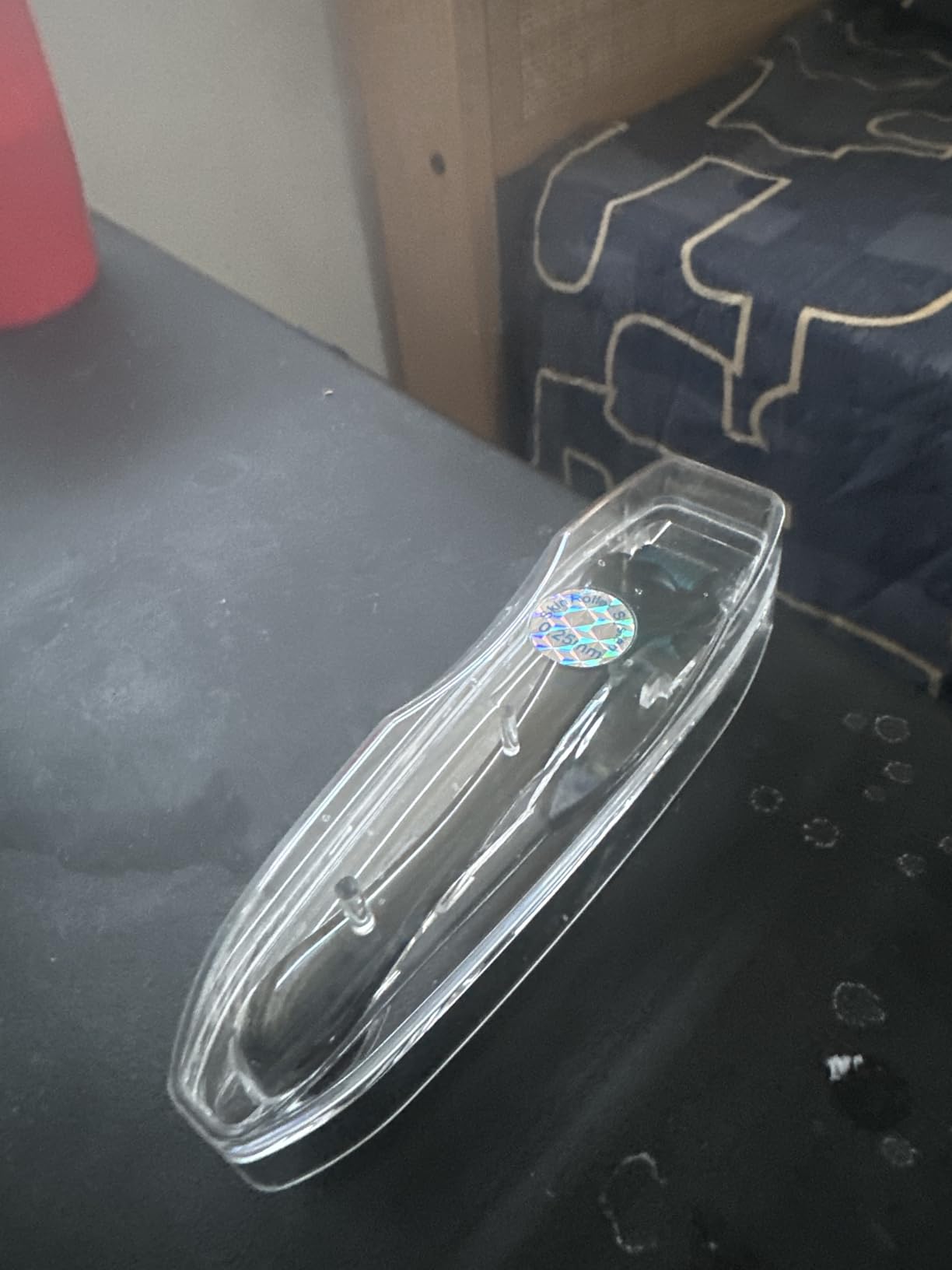
The complaints are consistent across this whole category. 0.25mm is not enough for deeper established scarring, results build slowly, and a minority of buyers say the needle quality does not always match the titanium specification. The last point is the one I would check first if you receive this — a roll across your palm tells you quickly whether the pins are sharp.
Nothing here is a defect. It is the honest profile of a low-cost 0.25mm roller, and it is exactly what you should expect from an entry-level device. Buying it expecting scar results comparable to professional treatment is where the disappointment comes from.
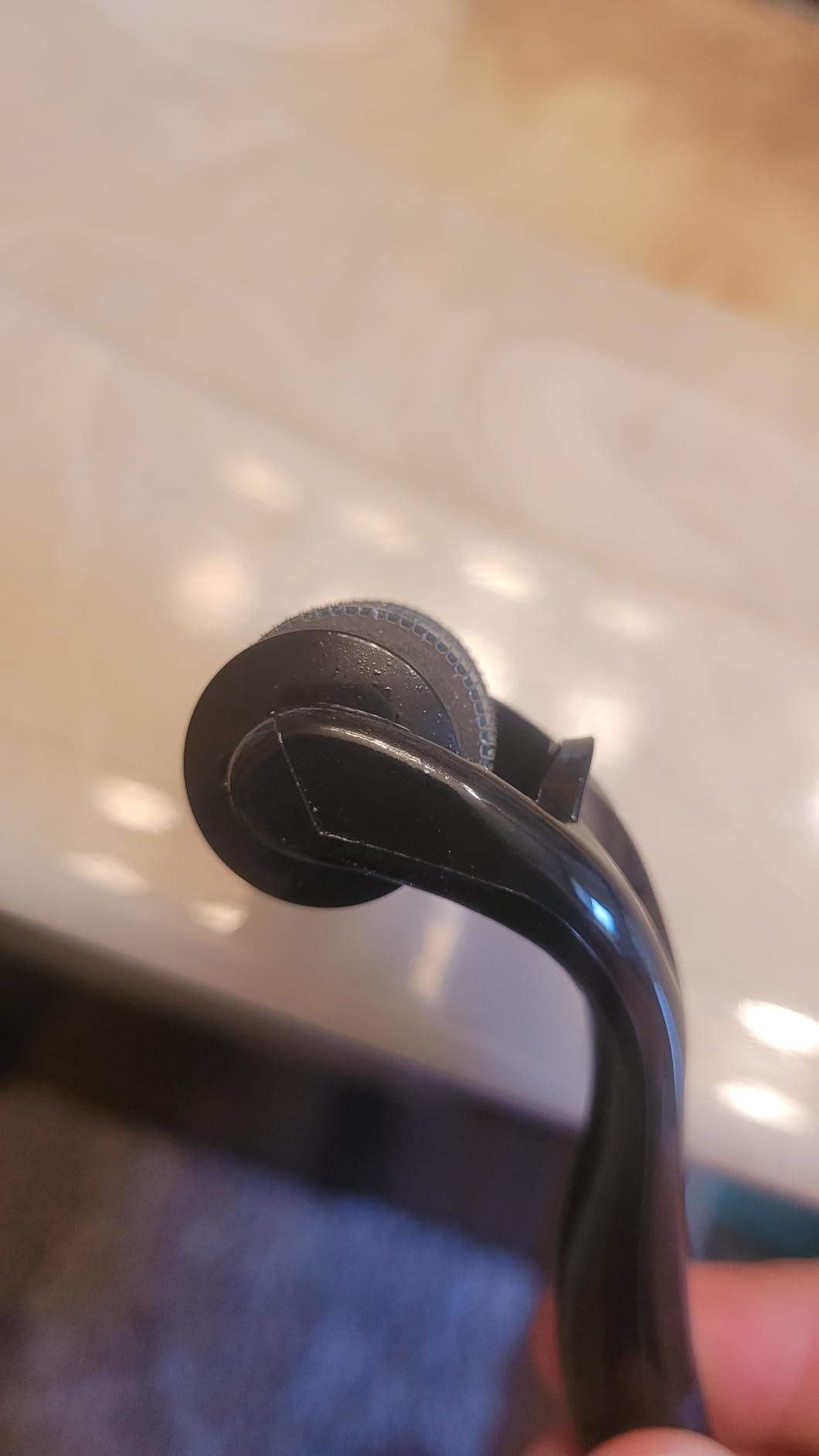
Best fit for a first purchase
If you have never dermarolled before and you want to learn the technique on something forgiving, this is a reasonable place to start. At 0.25mm with a light handle, you can practise pressure and direction across a couple of areas without much risk of overdoing it on the first night.
The colour options are a small thing that matters if you share a bathroom or a device with someone else. Lightweight handling plus a gentle depth also makes it the safer pick for sensitive skin that reddens easily.
Where expectations need resetting
The review pattern here is that results build slowly and repeated sessions are required. Nobody in the thousands of ratings describes dramatic scar change. If you are treating shallow texture marks and mild atrophic scarring, that is fine. If you are treating pronounced pitting, this depth is not going to get you there.
Given the depth ceiling, some buyers plan to move to a longer-needle device once this wears out. That is a sensible two-stage plan, but it is two purchases, so factor that into what you are actually trying to achieve.
8. CLETINA 540 Titanium Roller — Best for Grip Control
540 Titanium Derma Roller – Microneedle Micro Needle Roller for Men and Women Home Use – Microneedling Roller Microneedle Skin Care Tool A8
540 titanium needles at 0.25mm
6.54 x 1.89 x 1.65 inches
0.32 ounces
A8 gloss finish
Pros
- Lightest option in the group at 0.32 ounces
- Mirror-like A8 gloss surface gives precise finger control
- Titanium construction for durability
- Simple home use for any gender
- Highly portable
Cons
- 0.25mm suits general texture rather than deep scarring
- No storage case listed with this model
- Results depend on consistent use over weeks or months
The thing that sets this apart is the A8 gloss finish, and buyers who notice it tend to notice it for a specific reason. It gives you a smooth, low-friction surface between finger and roller, which lets you make small adjustments mid-pass without the handle slipping. On a 0.32-ounce body that is a real benefit, because you can steer with almost no grip force and still apply consistent pressure with the other hand.
At 4.5 stars with a 76% five-star share and just under 2,000 ratings, it sits alongside The Beard Club as the better-rated end of the group. Reviewers praise handling first, titanium construction second, and describe it as a straightforward home-use roller for maintenance and product absorption. The 540 needles give decent coverage for the size.
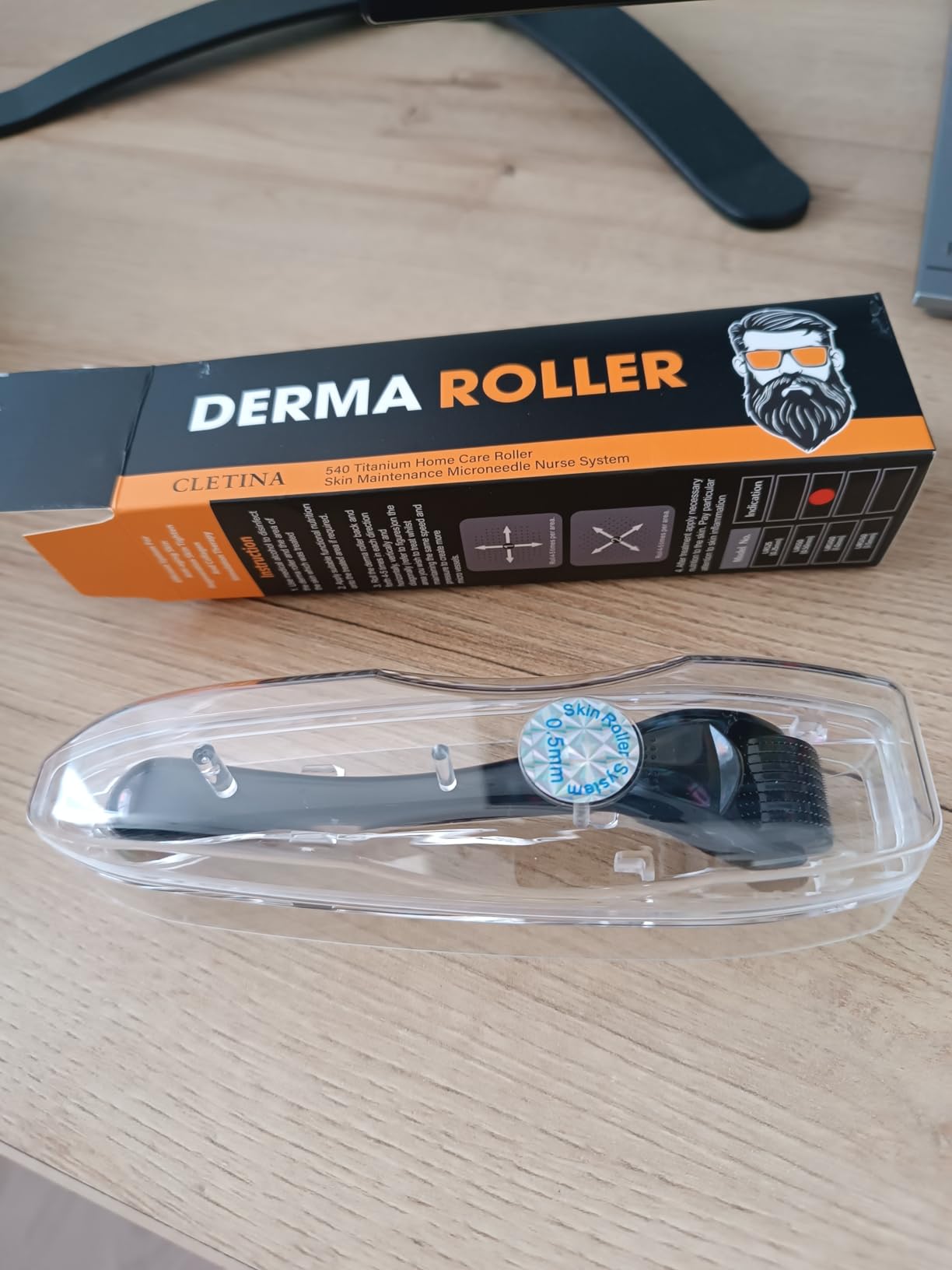
Two practical gaps. There is no storage case listed with this model, so you need to source one or keep it somewhere covered — loose in a drawer is how needles pick up product residue and cause irritation on the next pass. And at 0.25mm it is explicitly a texture and absorption tool rather than a deep scar treatment.
Reviewers also note that results depend on consistency over weeks or months. That is true of every roller here, but with no depth option and no replacement head, the ceiling on what you can achieve is fixed from day one.
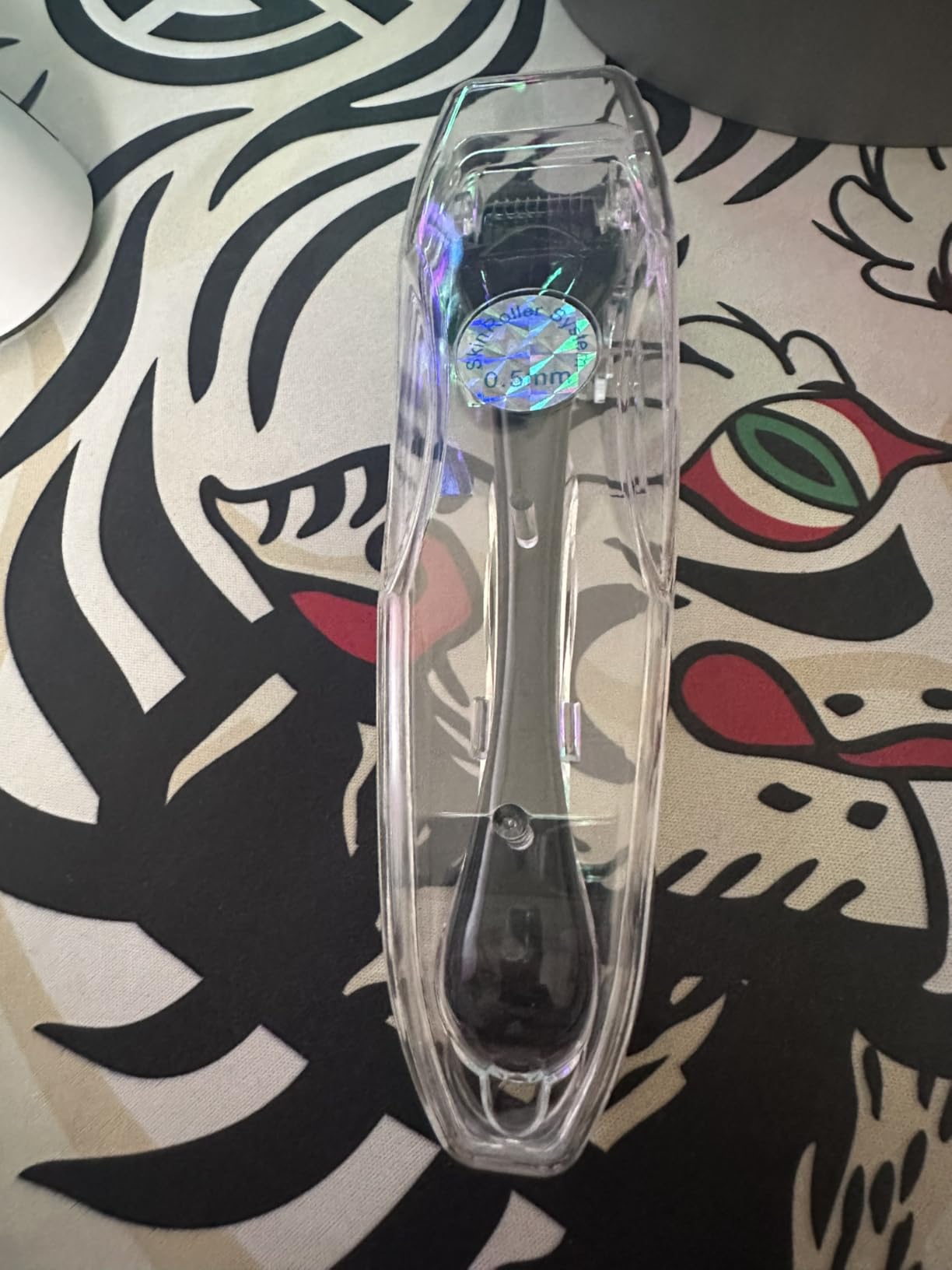
Why handling matters more than people expect
Most over-rolling happens because the roller skates or judders and you press harder to compensate. A smooth surface and a light body reduce the pressure you need to apply to get an even pass, which is why reviewers with experience tend to value finish and weight above needle count.
For long sessions across a large face, 0.32 ounces means you are not fighting your own hand. It is the quiet advantage that shows up on session ten rather than session one.
What to buy alongside it
A case. That is the one accessory this roller genuinely needs and does not come with. A small lidded container or a zip pouch keeps the head clean between uses and costs almost nothing compared to the irritation a dirty roller causes.
A bottle of alcohol or your usual disinfectant, too, so cleaning between passes is a habit rather than an extra step. And if your goal is scarred skin specifically, budget for a depth upgrade later rather than expecting this head to go further than 0.25mm.
9. RadBizz 0.25mm Derma Roller — Best for Small or Delicate Areas
RadBizz Derma Roller and Storage Case – 0.25mm
0.25mm titanium needles
6.46 x 1.77 x 1.57 inches
2.57 ounces
Storage case included
Pros
- Painless 0.25mm depth for first-time users
- Compact head reaches around the eyes and nostrils
- Hard storage case keeps the head clean
- Improves serum absorption and texture for beginners
Cons
- Users wanting deeper scar work need longer needles
- One buyer reported the needles were not titanium as described
- A few international buyers received the wrong needle length
The compact head is the reason to pick this one. Reviewers specifically mention using it around the eyes and the nostrils, where a wider wheel would run off onto skin you did not intend to treat. That ability to work a small, defined patch without dragging a 540-pin roller across the cheek is worth more than it sounds if your scarring is localised rather than spread across your whole face.
At 4.4 stars with around 3,000 ratings, it is positioned consistently as a beginner-friendly 0.25mm roller. Buyers say it does not hurt at all on first use, that it sanitises easily with alcohol, and that it boosts serum absorption noticeably. The hard storage case is included and keeps the head covered, and instructions come in the box.
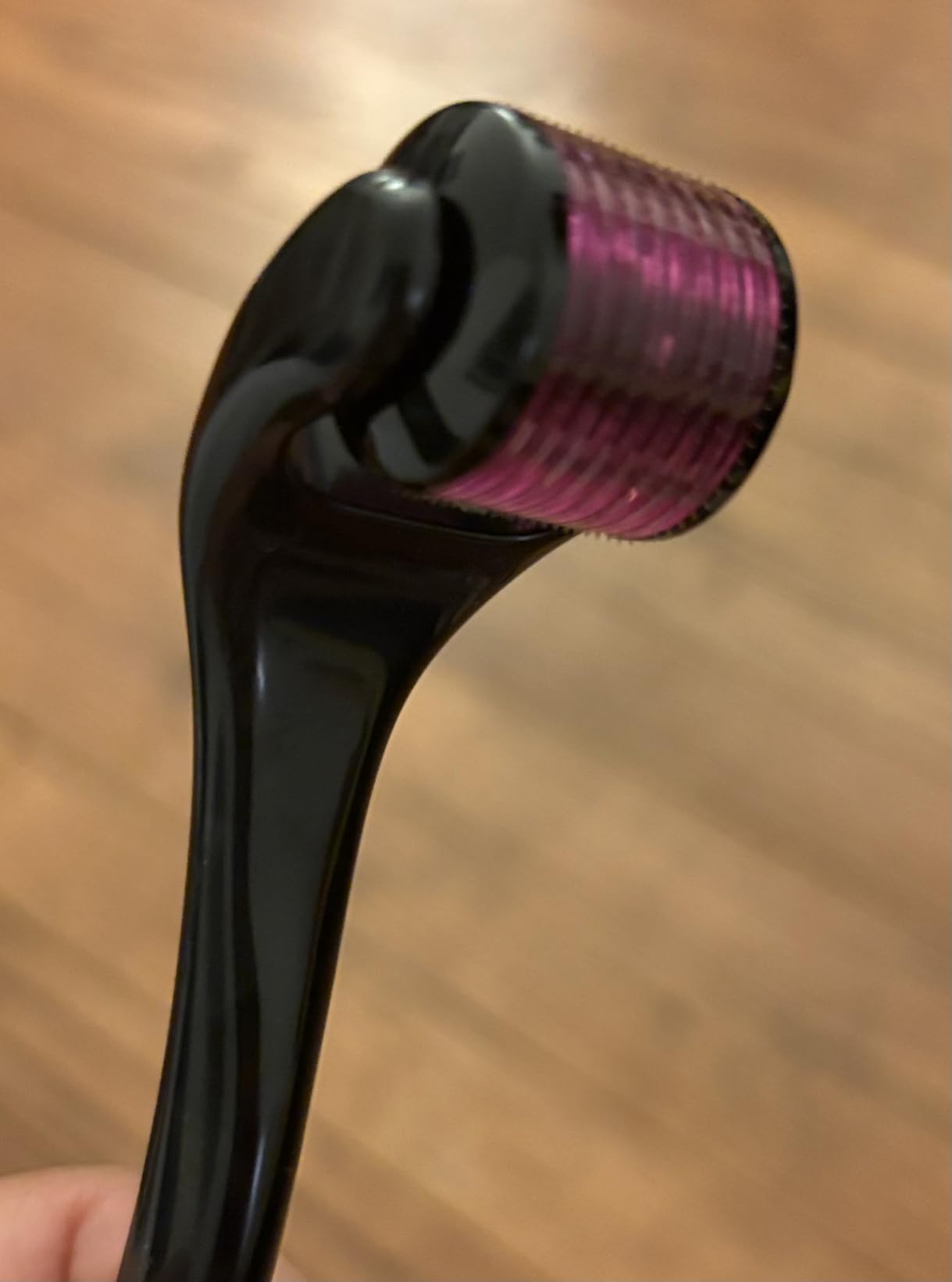
Two issues worth flagging honestly. One buyer reported the needles were not titanium as described, which is exactly the kind of claim you should verify yourself — roll it across your palm and check for sharp, clean points. And a small number of international buyers received the wrong needle length entirely, so confirm the depth on the listing matches what arrives.
And the depth ceiling applies as always. Reviewers who want deeper scar work plan to move to longer needles later. At 2.57 ounces it is mid-weight, so it will not fatigue you, but it is not as light as the CLETINA or the ROSELYNBOUTIQUE.
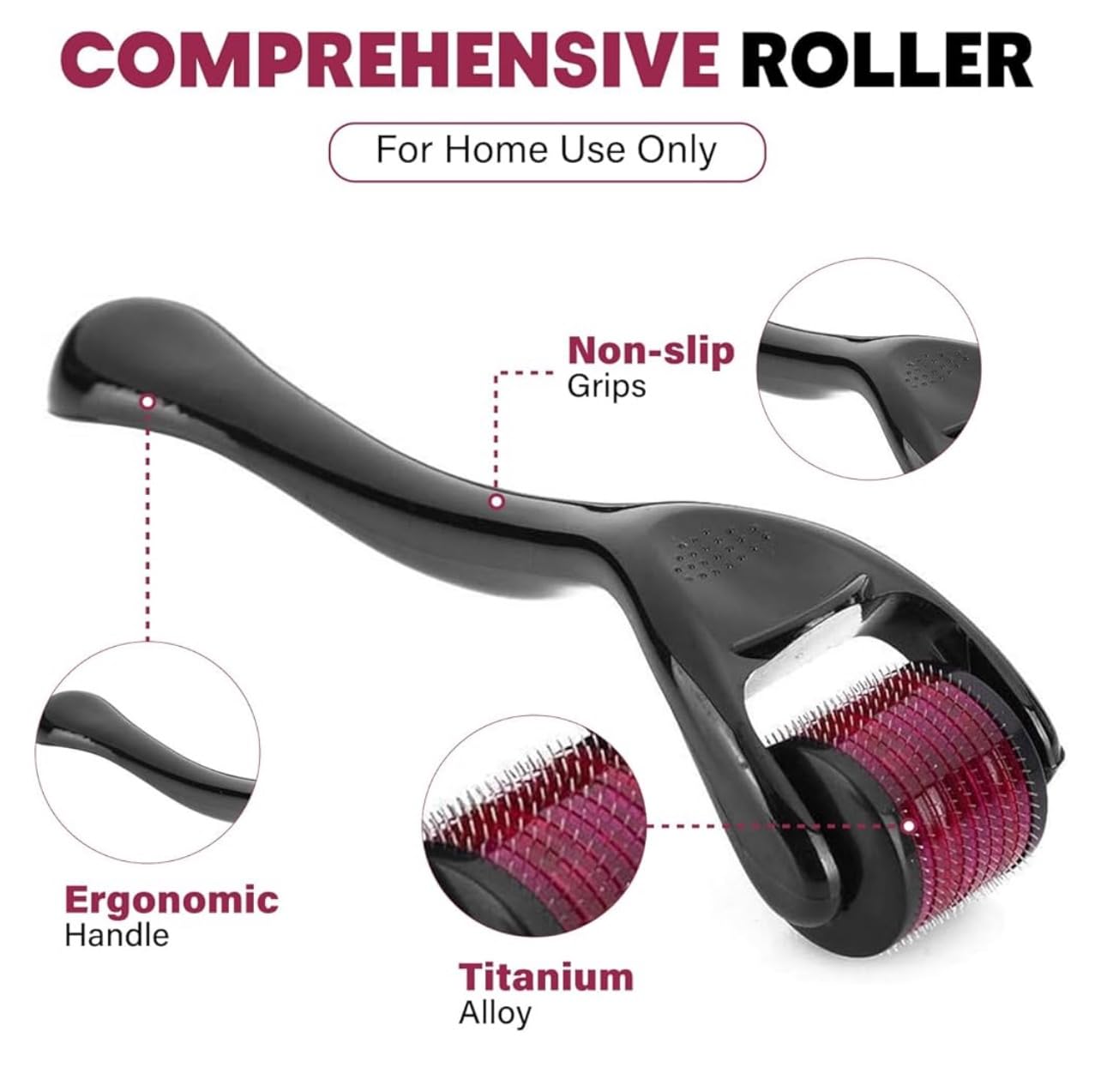
Where a small head wins
Anywhere the skin is tight and curved — the nose crease, the corners of the mouth, the undereye area — a compact head lets you keep the pass vertical and controlled. That reduces the dragging motion that causes microtears and makes over-treatment far less likely on your first few sessions.
It is also the sensible pick for treating one specific cluster of boxcar scars rather than rolling an entire face. Concentrated passes over a defined patch are more useful than scattered passes everywhere.
What to verify on arrival
Run the palm test first. Genuine pins leave clean, evenly spaced points; a stamped fake head feels blunt and drags. If the points feel flat, the titanium claim is not delivering and you should return it rather than press harder to compensate.
Then check the needle length against what you ordered, because fulfilment mistakes on this listing have been reported. Storage and disinfecting are simple — alcohol wipe, air dry, back in the case.
10. Lexi White Beauty 540 Microneedle Roller — Best for Daily Texture Work
Derma Roller for Face for Women, 0.25mm Microneedling Roller Titanium 540 Microneedle Roller
0.25mm titanium microneedles
540 needles per head
6.54 x 1.85 x 1.54 inches
2.4 ounces
Pros
- Gentle and essentially painless pass with no downtime
- Smooth handle covers the full face in under a minute
- Simple rinse and dry maintenance
- Attractive rose gold finish and packaging
Cons
- Shallow depth limits effectiveness on deeper scarring
- Some users would like the roller head to be replaceable
- Needs consistent repeat use before results appear
The rose gold finish and the packaging are what you notice first, and the ergonomic handle is what you notice every time you use it. Reviewers consistently say a full-face pass takes under a minute with this handle, and that the gentle 0.25mm pass produces no downtime — no pinpoint bleeding, no lengthy redness. It slots into an existing routine as the first step, followed by water-based serums and moisturiser as normal.
At 4.4 stars with more than 13,000 ratings, the review consensus is unambiguous: this is a maintenance and absorption tool. People like the smooth rolling action, the easy rinse-and-dry cleaning routine, and the fact that it simply does not hurt. If you want plumper skin and better product penetration with no recovery day, this delivers that.
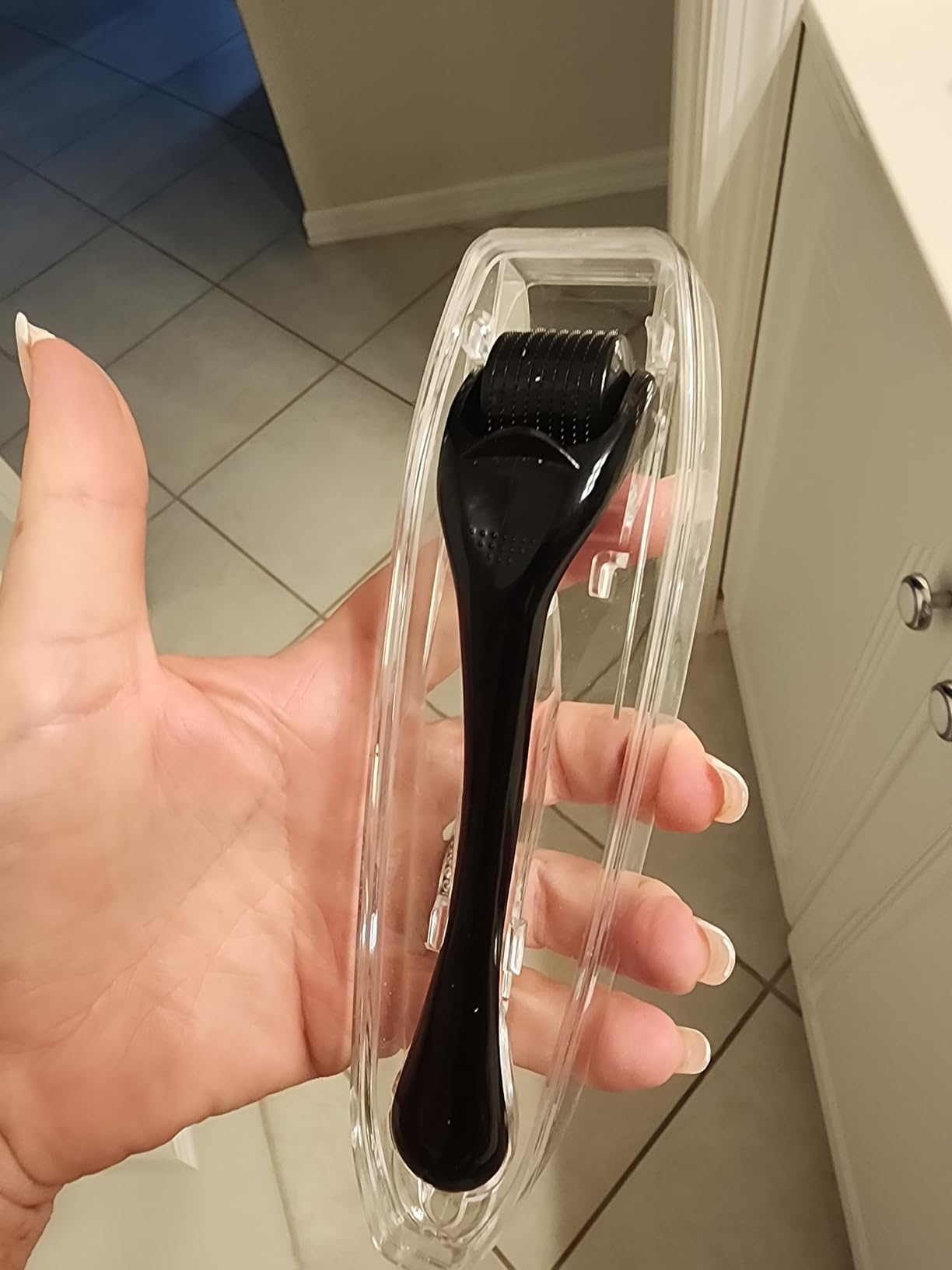
As a scar treatment it is the weakest tool in this group, and the reviews say so. At 0.25mm with 540 needles it is well suited to general texture and product absorption but not to pronounced pitting. Some users also wish the head were replaceable, and it is not — once the pins dull you buy a new roller.
That is why this one sits last in the ranking for acne scars specifically, even though it is a perfectly decent daily tool. If your goal is soft texture and better serum performance, it is a good pick. If your goal is scar change, buy a roller with depth options.
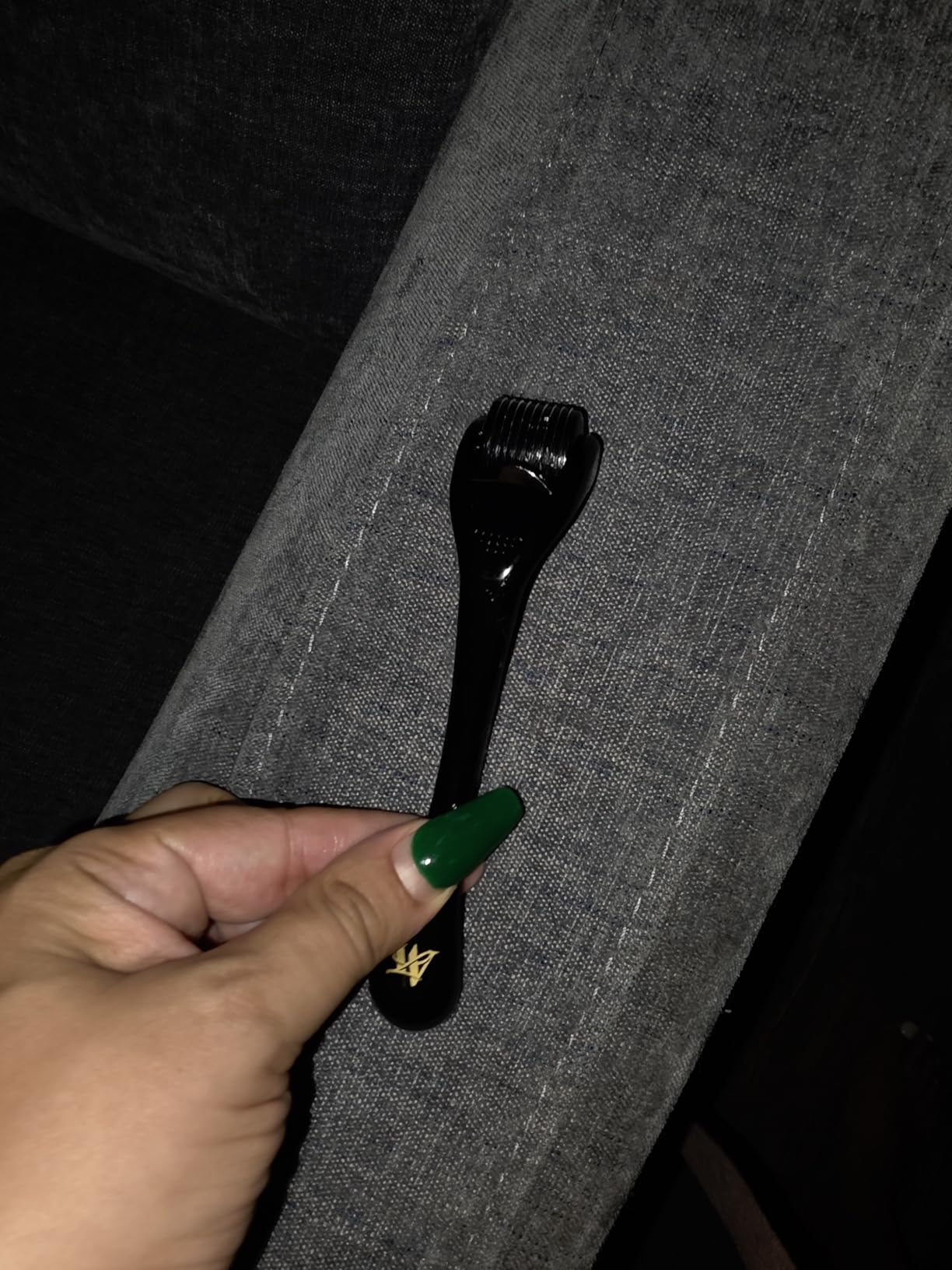
Who this is actually for
It is for people who want the absorption and plumping benefit without any downtime at all. There is no recovery window to plan around, which makes it easy to use consistently — and consistency is the variable that actually determines whether a roller works.
It also suits beginners who are nervous about needles. A pass that is essentially painless is how you find out whether you can keep to a schedule, and the rinse-and-dry maintenance means keeping it hygienic takes seconds.
Why it is last for scar purposes
Depth is the whole game for atrophic scarring, and 0.25mm is the shallowest useful entry point. Every 0.25mm roller on this list will soften mild scarring to some degree, and this one will do it as well as the others for texture — but none of them is the right tool for a scar that has not responded at shallow depth.
Buy this if your scars are minimal and your priority is ritual and absorption. Buy the Koi Beauty 540 or 200-pin roller instead if you have a twelve-week plan and real scarring in mind.
What Size Derma Roller Is Best for Acne Scars?
For mild atrophic acne scars, a 0.5mm needle depth is the best starting point for most people, because it reaches far enough into the dermis to stimulate collagen without the pain or downtime of longer needles. If you are brand new, start at 0.25mm for a few sessions and step up to 0.5mm. Anything at 1.0mm or beyond is a professional or dermatologist-guided depth, not a home starting point.
0.25mm — Surface level. Improves texture, plumping and serum absorption. Too shallow to make a real difference to established atrophic scarring. Safe for near-daily use.
0.3mm to 0.5mm — The working range for home use on mild to moderate rolling and boxcar scars. Reaches the dermis without significant pain. Every one to two weeks is a sensible cadence.
0.75mm — Between home and clinical. Useful for deeper atrophic scarring but noticeably more painful. Numbing cream and a slower schedule expected.
1.0mm to 1.5mm — Professional territory. Occasionally used at home by experienced users, but the risk of scarring and post-inflammatory hyperpigmentation makes this a dermatologist conversation.
The single most common mistake is buying 0.25mm for deep scars and then blaming the device. If your scars are years old and visibly pitted under harsh lighting, a home roller at any safe depth will soften them a little and stop there. Setting that expectation before you buy saves you a lot of wasted sessions.
Head-to-head: 0.5mm versus 0.75mm
0.5mm is the better choice for most people. It reaches deep enough to do meaningful work on atrophic scarring while staying inside what you can reasonably do at home without numbing cream, and it heals fast enough that you are not hiding from work the next day.
0.75mm is worth considering if you have read the clinical literature, you have a dermatologist’s steer, and you are prepared for a more painful session and a longer recovery. The extra 0.25mm is meaningful, but it is not worth the risk if you are working on darker skin, have a history of pigment change after skin injury, or are prone to over-treating.
How to Tell Real Titanium Needles From Fake Stamped Ones
This is the most common complaint on every forum about cheap rollers, and it is worth knowing how to check. Fake needles are stamped from a flat plate, so they are shallow cones with a blunt or rounded tip rather than a true pressed point. They cost more to press, penetrate less, and take repeated passes to get the same effect, which is exactly why people describe them as painful and useless at the same time.
Five checks, in order of reliability:
The palm test. Roll the head firmly across the pad of your palm. Real pins leave clean, evenly spaced puncture points. A fake head drags and feels blunt. This is the fastest and most reliable test you can do before you touch your face.
Count the needles. A stated count is a claim. Press your thumb gently into the head and count the pins in one quadrant, then multiply by four. Genuine 540-pin heads count up. Stamped plates often have far fewer than advertised.
Look at the pin ends under light. True pressed pins taper to a fine point. Stamped cones look like tiny pyramids with a flat base you can see.
Check for bending. After ten passes, a fake needle deflects sideways rather than penetrating. Real titanium holds its direction.
Be sceptical of unnamed materials. If the listing does not state a needle material at all, assume it is not telling you. That is exactly the complaint attached to some of the 0.25mm rollers in this roundup.
Derma Roller vs Dermastamp vs Microneedling Pen
This is the single biggest argument on the microneedling forums, and the contradiction is real: the top-ranking pages still teach you to drag a wheel, while experienced users including Dr Davin Lim’s guidance cited on acne.org argue that vertical stamping is safer. Here is how they actually differ.
A roller creates punctures by dragging needles perpendicular to the skin’s surface at speed. That motion can produce microtears, where the needle drags a small tear rather than a clean puncture, which increases inflammation and slows healing. A dermastamp presses straight down and lifts straight up, so every puncture is clean and vertical. A motorized microneedling pen stamps vertically at adjustable depth and speed but concentrates the needles on a small area, so it is a targeted tool rather than a full-face one.
For shallow, general texture work the difference barely matters. For scarred skin the stamping argument has real weight, and many experienced users frame the manual roller as a version one device with the stamp or pen as version two. If your priority is atrophic scarring rather than absorption, a stamp or a vertical-only approach is the more defensible choice.
None of the ten products here is a stamp, and that is worth being upfront about. Every one is a manual roller. If you have read enough to think stamping is right for you, use a roller like the ones above for full-face texture work and consider a separate stamping tool for the scar areas themselves — or talk to a dermatologist about professional microneedling, which uses exactly that vertical stamping motion at clinical depths.
How to Use a Derma Roller for Acne Scars at Home
Seven steps, in order:
Disinfect. Soak the head in alcohol for a few minutes and let it air dry fully before it touches your skin.
Cleanse. Wash and dry your face. Rolling over product residue or oil drives residue into the punctures.
Wait for calm skin. No active cystic acne, no eczema, no psoriasis, no rosacea on the area. Skip the session entirely if any of those are present.
Start shallow. Roll vertically, then horizontally, then diagonally — four directions per area. Light pressure is enough. If you are pressing hard, you are doing too much.
Work in sections. Cheeks, jawline, forehead, chin. Do not re-roll the same patch ten times over.
Apply serum immediately. Hyaluronic acid or another simple hydrating serum while the channels are still open.
Sunscreen the next morning. Non-negotiable. Fresh micro-channels plus UV is how you end up with post-inflammatory hyperpigmentation that lasts longer than the scarring did.
On frequency: every one to two weeks for 0.25mm to 0.5mm, every two to four weeks for anything longer. In the first 24 hours, keep it simple — hydrating serum, a bland moisturiser, no retinol, no acids, no vitamin C, no exfoliating ingredients, no gym sauna or swimming. Let the skin settle.
On timeline: at four weeks most people notice plumping and better product absorption, not scar change. At eight weeks texture and mild scar softening become visible in good light. At twelve weeks you can make a fair judgement about whether the device is working, and clinical reviews report scar-appearance improvement in the range of 51 to 60 percent at three months for professional protocols. Home devices generally land below clinic results because depth and pressure are less controlled.
When Not to Use a Derma Roller
Microneedling is not safe for everyone, and the contraindications matter more than the shopping list above. Do not roll over skin with active or cystic acne, since you will spread bacteria and make the breakout worse. Do not use one over eczema, psoriasis or rosacea, all of which react badly to controlled injury.
Do not roll if you have a tendency toward keloid or hypertrophic scarring, since the micro-injuries can trigger exactly that response. Do not use one if you are on isotretinoin or took it in the past six months, if you have a bleeding disorder, or if you are immunocompromised. Do not use one over a mole, a skin tag, a recent injection or an active cold sore.
Deeper skin tones deserve specific caution. Melanin responds to inflammation, and post-inflammatory hyperpigmentation is the most common lasting side effect reported in darker skin. Use the shallowest depth, do not overtreat, keep the interval long, and wear sunscreen every single day in the weeks after a session.
See a dermatologist instead of buying a device if you have ice pick scars, tethered scars, hypertrophic or keloid scars, or scarring that has not moved after a full twelve weeks at 0.5mm. Clinic microneedling reaches depths home rollers cannot, and treatments like subcision, TCA CROSS and fractional laser target scar types that no roller addresses.
Frequently Asked Questions
What size derma roller is best for acne scars?
A 0.5mm needle depth is the best starting point for most people treating mild atrophic acne scars at home. It reaches far enough into the dermis to stimulate collagen without the pain or downtime of longer needles. Beginners should start at 0.25mm for a few sessions, then step up to 0.5mm. Anything at 1.0mm or beyond belongs in a dermatologist’s hands.
Do derma rollers remove acne scars?
No. A derma roller softens and fades atrophic acne scars over weeks to months by stimulating collagen and elastin production, but it does not erase them. Clinical reviews report scar-appearance improvement of roughly 51 to 60 percent at three months for professional protocols, and home devices generally land lower. Ice pick, tethered and hypertrophic scars need professional treatment.
Which is better, 0.5 or 0.75 derma roller?
For most home users, 0.5mm is the better choice. It reaches deep enough for meaningful work on atrophic scarring while staying comfortable and healing quickly enough for a normal routine. 0.75mm is worth considering with a dermatologist’s steer and expectations of more pain and longer recovery.
How long does it take for a derma roller to work on acne scars?
At four weeks most people notice plumping and better serum absorption rather than scar change. At eight weeks texture and mild scar softening become visible in good lighting. At twelve weeks you can make a fair judgement about whether the device is working. Consistency matters far more than depth for the first three months.
Can you use a derma roller with active or cystic acne?
No. Rolling over active or cystic acne spreads bacteria and deepens the breakouts. Wait until the area is completely clear and calm. You should also avoid rolling over eczema, psoriasis, rosacea, moles, skin tags, recent injections or active cold sores, and skip it entirely if you are on isotretinoin or have a keloid tendency.
The Bottom Line on Derma Rollers for Acne Scars
The Sdara Skincare roller is the best derma roller for acne scars in this group for most people, because its 30,000-rating review base shows a consistent pattern of gentle, repeatable use — and consistency is what actually moves atrophic scarring. If your scars are more than mild, buy the Koi Beauty 540 so you can start at 0.5mm and step up later, and check the depth variant before you order. Give it twelve weeks, keep the interval at one to two weeks, wear sunscreen daily, and expect softening rather than erasure. Updated for 2026.
For a look at rollers used for texture, hair and beard work rather than scarring, our general derma roller guide covers that side of the category.