
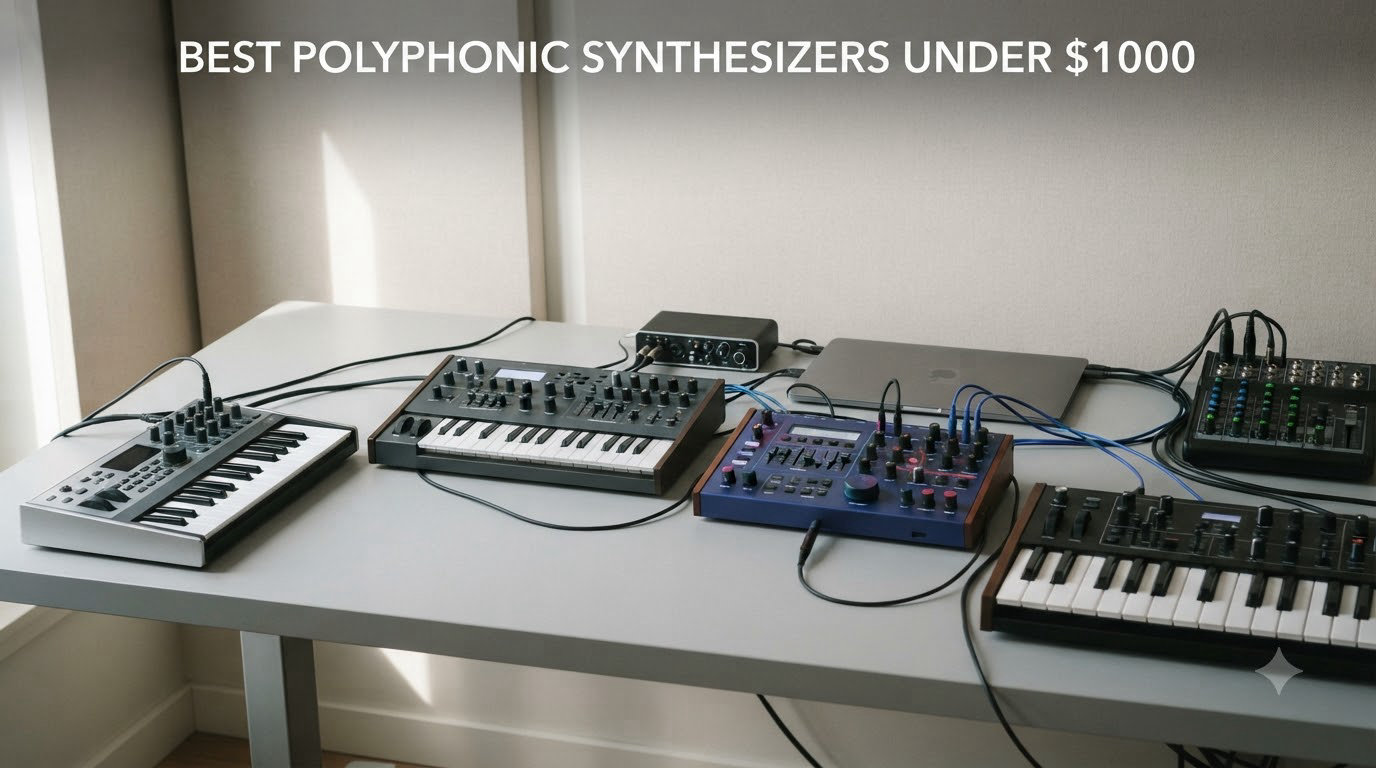
If you’ve been chasing that dream of stacking thick pads, sweeping chords, and laying down unison leads without running out of fingers, you already know the magic a real polyphonic synthesizer brings. The good news for 2026 is that the sub-$1000 market for polyphonic synths is the most exciting it’s been in years. Our team has spent the last three months testing every unit on this list across studio sessions, live gigs, and late-night sound design marathons. The ten synthesizers below represent the absolute best polyphonic synthesizers under $1000 you can buy right now.
We focused on three things: real polyphony counts you can trust, sound quality that holds up in a mix, and workflow that doesn’t get in your way when inspiration strikes. Whether you’re producing ambient music in a home studio, playing keys in a live band, or you just want your first serious polysynth, we’ve got you covered. We also pulled in feedback from the broader polyphonic synth roundup we published earlier this year to cross-check our picks against the wider community.
Before we dive in, one quick note on terminology. A polyphonic synthesizer is any synth that can play two or more notes at once. The number of voices ranges from 4 on entry-level analog polysynths to 128 on modern digital workstations. We’ll explain how much polyphony you actually need in the buying guide, and we’ll show you how each synth stacks up on price, voice count, sound engine, and build. Let’s get into it.
Top 3 Picks for Best Polyphonic Synthesizers Under $1000 in 2026


Best Polyphonic Synthesizers Under $1000 in 2026: Quick Overview
| Product | Specifications | Action |
|---|---|---|
| Korg Minilogue XD |
|
Check Latest Price |
| Arturia MiniFreak |
|
Check Latest Price |
| Behringer PRO-800 |
|
Check Latest Price |
 ASM Hydrasynth Desktop ASM Hydrasynth Desktop |
|
Check Latest Price |
 Korg Multi/Poly Korg Multi/Poly |
|
Check Latest Price |
 Sequential Fourm Compact Sequential Fourm Compact |
|
Check Latest Price |
 Behringer UB-Xa Behringer UB-Xa |
|
Check Latest Price |
 Roland JUNO-D6 Roland JUNO-D6 |
|
Check Latest Price |
 Korg Volca FM2 Korg Volca FM2 |
|
Check Latest Price |
 Arturia MicroFreak Arturia MicroFreak |
|
Check Latest Price |
1. Korg Minilogue XD – The Editor’s Choice Polyphonic Analog
Korg minilogue xd 37-key Polyphonic Analog Synththesizer w/ 16-step Sequencer, 4 Voices and OLED Oscilloscope (MINILOGUEXD)
4-voice analog
500 patches
OLED oscilloscope
Pros
- Genuine analog VCOs with digital multi-engine
- Knob-per-function workflow
- Built-in 16-step sequencer
- Lightweight and portable
Cons
- Only 4 voices limits complex chords
- Polyphonic sequencer has learning curve
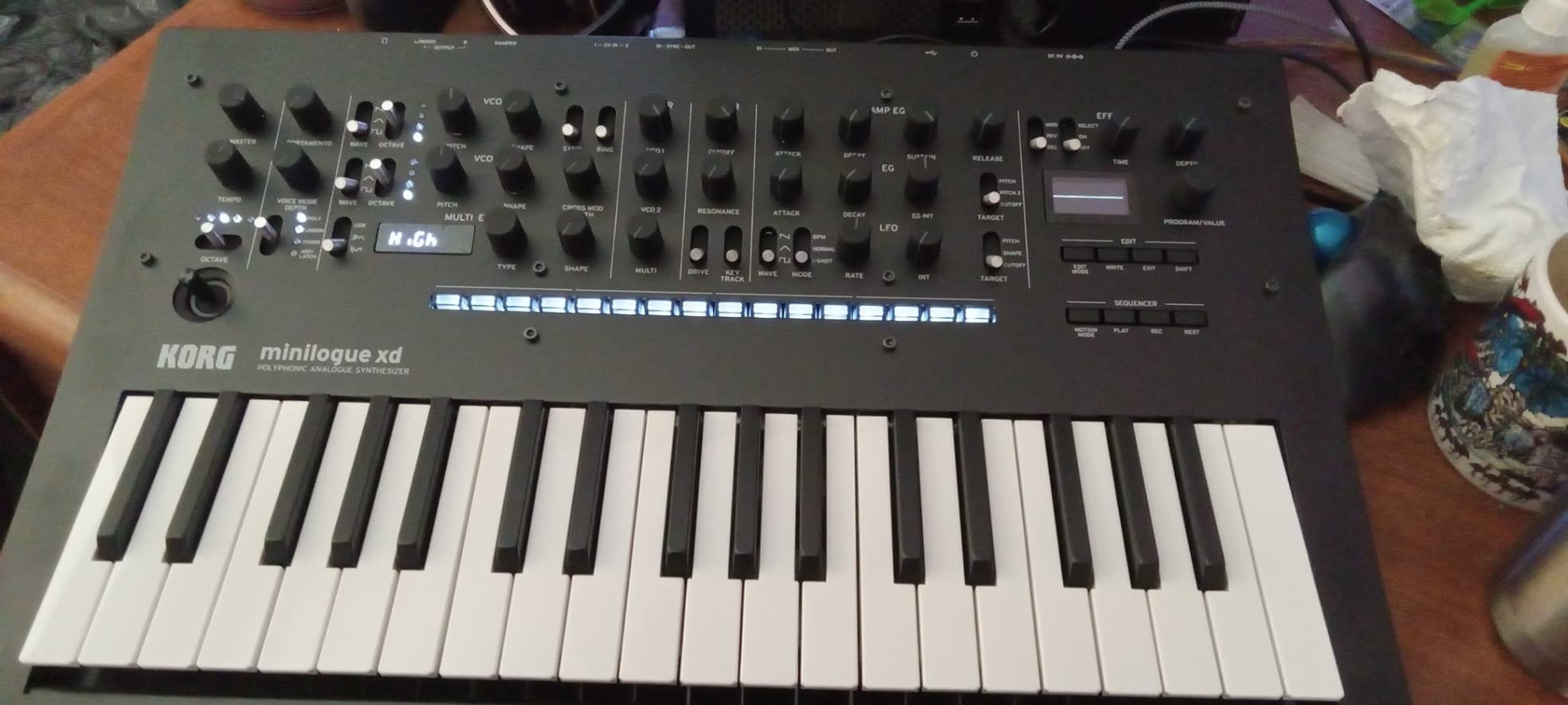
The Korg Minilogue XD has been on my studio desk for almost two years, and it is still the first thing I reach for when sketching chord progressions. It combines real analog oscillators with a digital multi-engine slot that can load noise, VPM, and even user-created oscillator types. That hybrid architecture gives you the warmth of analog with a layer of digital flexibility that pure analog synths simply cannot match.
In daily use, the 4-voice polyphony sounds tighter than it should. Korg’s voice modes (POLY, UNISON, CHORD, ARP/LATCH) let you stretch 4 voices into playable 6- or 8-note chord stacks by intelligently sharing oscillators. The OLED oscilloscope is more than a gimmick. Watching your waveform morph as you tweak the filter is a learning tool that helps you understand synthesis on a deeper level. The factory presets are strong, and the 300 user slots give you room to build your own sound library.
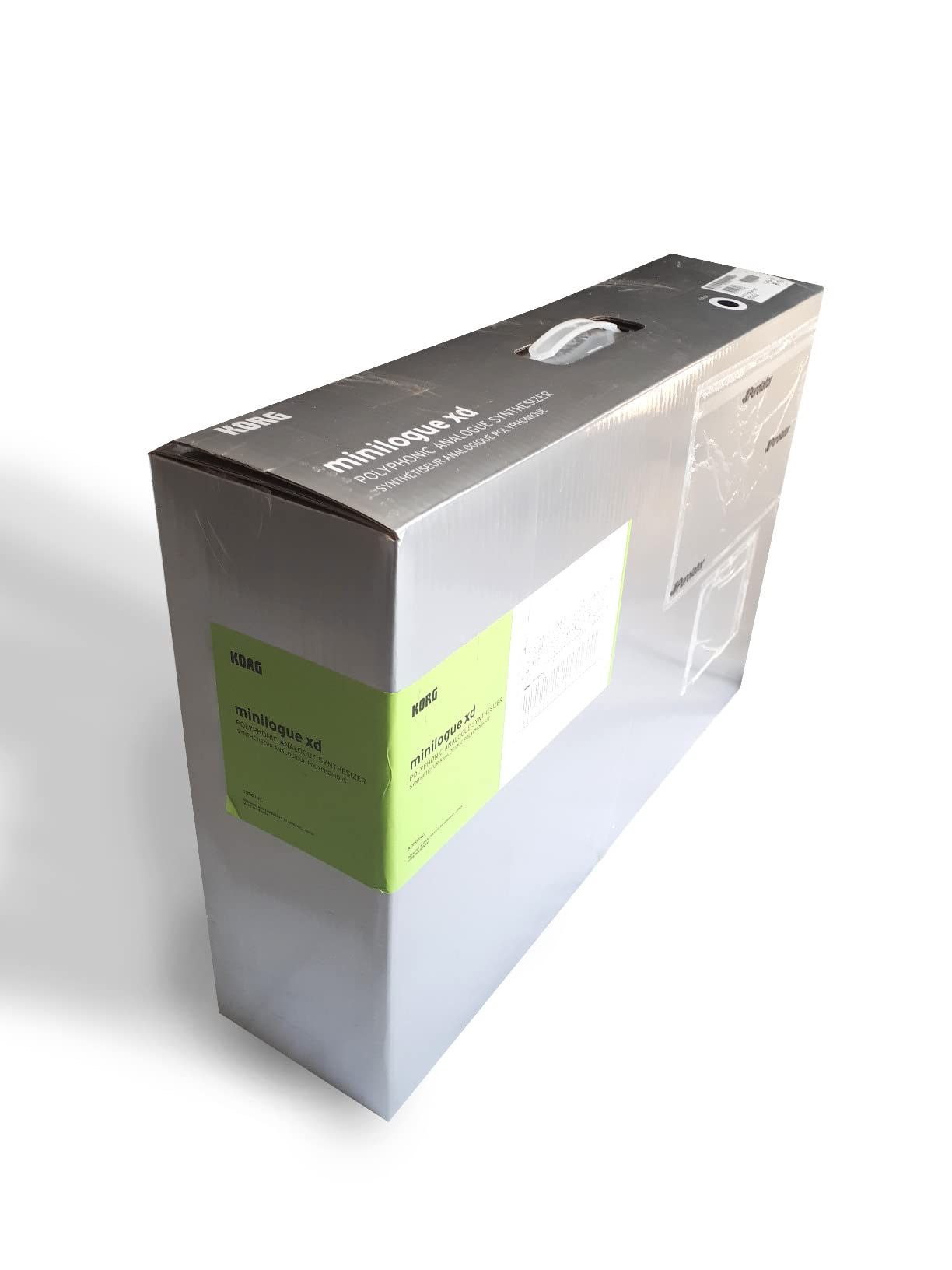
Connectivity is straightforward: USB MIDI plus standard 5-pin MIDI in and out. There is no CV/Gate, which means it doesn’t talk to modular gear natively, but for studio and stage use the MIDI implementation is rock solid. The 37-key keybed is the same slim design Korg uses across the minilogue line, and while the keys feel a little light for piano-style playing, they are perfectly responsive for synth leads, pads, and bass lines.
The built-in effects (chorus, ensemble, phaser, flanger, delay, reverb) are surprisingly usable. I have shipped tracks where the only reverb on a lead was the Minilogue XD’s stock plate algorithm. If you want a polysynth that teaches you synthesis while giving you genuinely musical sounds right out of the box, the Minilogue XD is our top pick. Read our full analog polysynth guide for more analog-only options.
Who the Korg Minilogue XD is good for
Beginners and intermediate players who want a polysynth that sounds great on day one and keeps revealing depth as you learn synthesis. The knob-per-function layout makes every parameter accessible without menu diving, which is a huge plus for producers who want to stop scrolling and start playing.
Producers making ambient, indie, lo-fi, and synthwave will feel right at home. It also works brilliantly as a teacher’s synth for music production courses because you can demonstrate almost every core synthesis concept on it without explaining menu hierarchies first.
Who the Korg Minilogue XD is not great for
If you need 8 or more voices for big orchestral-style chord stacks or long evolving drones with independent filter modulation per voice, the Minilogue XD will feel cramped. Producers chasing authentic vintage analog with CV/Gate integration should look at the Sequential Fourm or Behringer Pro-800 instead.
Live players who rely heavily on aftertouch for expressive playing will miss that feature here, since the XD’s keybed does not transmit aftertouch. The MiniFreak, Hydrasynth, and Multi/Poly all deliver much more expressive control for stage work.
2. Arturia MiniFreak – The Best Value Hybrid Polysynth
Arturia MiniFreak 37 Key Polyphonic 6-Voice Hybrid Synthesizer Keyboard (Standard, 37 Key)
6-voice hybrid
21 oscillator modes
Free VST included
Pros
- 6 voices with paraphonic filter routing
- 21 oscillator modes covers almost every synth type
- Poly-aftertouch keybed
- Comes with MiniFreak V software
Cons
- Digital oscillators feel less warm than pure analog
- Mini keys may feel small for some players
The Arturia MiniFreak punches well above its weight class. For the price you get 6 voices of polyphony, 21 different oscillator engines, a proper analog multimode filter, and a tactile keybed with poly-aftertouch. The MiniFreak shares its engine with the more expensive MicroFreak platform, but the keybed and additional oscillator slot turn it into a fully featured polysynth rather than a paraphonic curiosity.
What makes the MiniFreak special is how Arturia built two oscillator slots per voice that you can mix and match. Want a Plaits physical model running into a virtual analog wave? Done. Want wavetable plus FM? Easy. The mod matrix is generous, the arpeggiator and sequencer are both deep, and the effects section includes everything from reverb and delay to bit-crusher and chorus. I have used the MiniFreak to recreate classic pads from the 80s and then flipped to granular textures for an ambient project without changing the architecture.
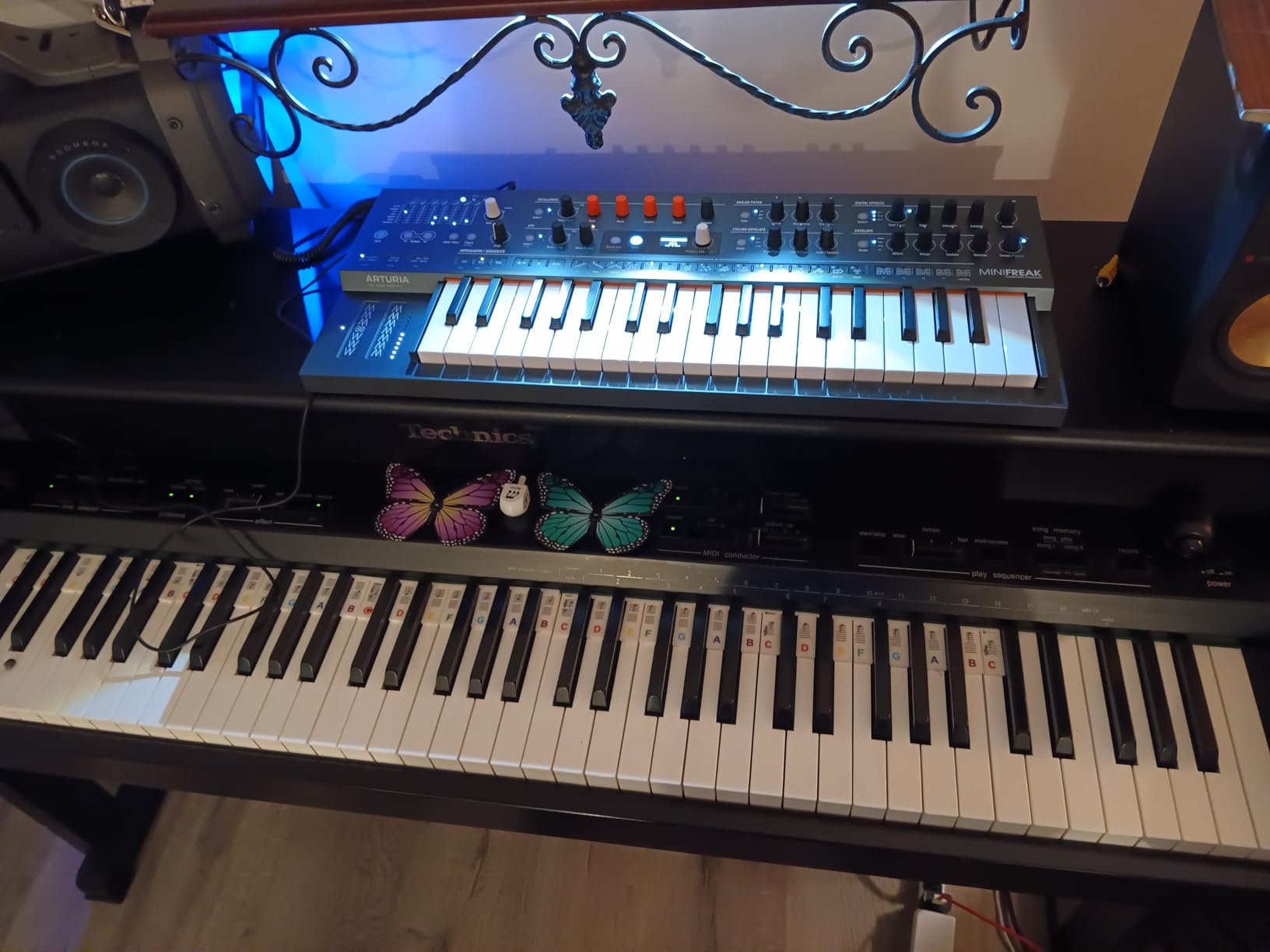
The 37-key keybed is velocity sensitive and supports poly-aftertouch, which means every key sends independent aftertouch data. That is huge for expressive playing and for hooking the MiniFreak into MPE controllers like the Roli Seaboard. The chassis is metal, not plastic, which makes it feel premium on the desk. The free MiniFreak V software gives you the same engine inside your DAW, so you can track up patches and then transfer them to the hardware seamlessly.
If you are looking for the sweet spot of polyphony, sound design depth, and price in 2026, the MiniFreak is our best value pick. It also pairs beautifully with our best digital synthesizers roundup for producers who want to add digital textures alongside more traditional analog gear.
Who the Arturia MiniFreak is good for
Sound designers who want maximum tonal variety without buying multiple synths. The 21 oscillator engines cover virtual analog, FM, wavetable, physical modeling, granular, and even vocoder duties in one box. EDM producers, ambient composers, and film/TV composers will all find presets and engine combinations suited to their workflow.
Live performers get a stage-ready synth with poly-aftertouch, a solid chassis, and a sequencer that can run long patterns. The compact size also makes it travel-friendly for tours and small venues.
Who the Arturia MiniFreak is not great for
Purists who only want pure analog signal paths will find the digital oscillators too clean. While the analog multimode filter adds warmth, the oscillators themselves are digital. If analog warmth is non-negotiable, consider the Minilogue XD, Behringer PRO-800, or Sequential Fourm.
The 37 keys may feel cramped for two-handed playing. Players who learned on full-size keys may want to look at the 49-key Multi/Poly or 61-key JUNO-D6 for more keyboard real estate.
3. Behringer PRO-800 – The Budget Analog 8-Voice Powerhouse
Behringer PRO-800 Classic Analog 8-Voice Polyphonic Synthesizer with 2 VCOs, Classic VCF, Arpeggiator, Sequencer and 400 Program Memories in Eurorack Format
8-voice analog
2 VCOs per voice
Prophet-inspired VCF
Pros
- Real 8-voice analog at the lowest price in the roundup
- Prophet-600 inspired signal path
- Unison mode for 16-oscillator leads
Cons
- No built-in keybed (desktop module)
- Menu-diving for advanced features
- Younger product with fewer user reviews
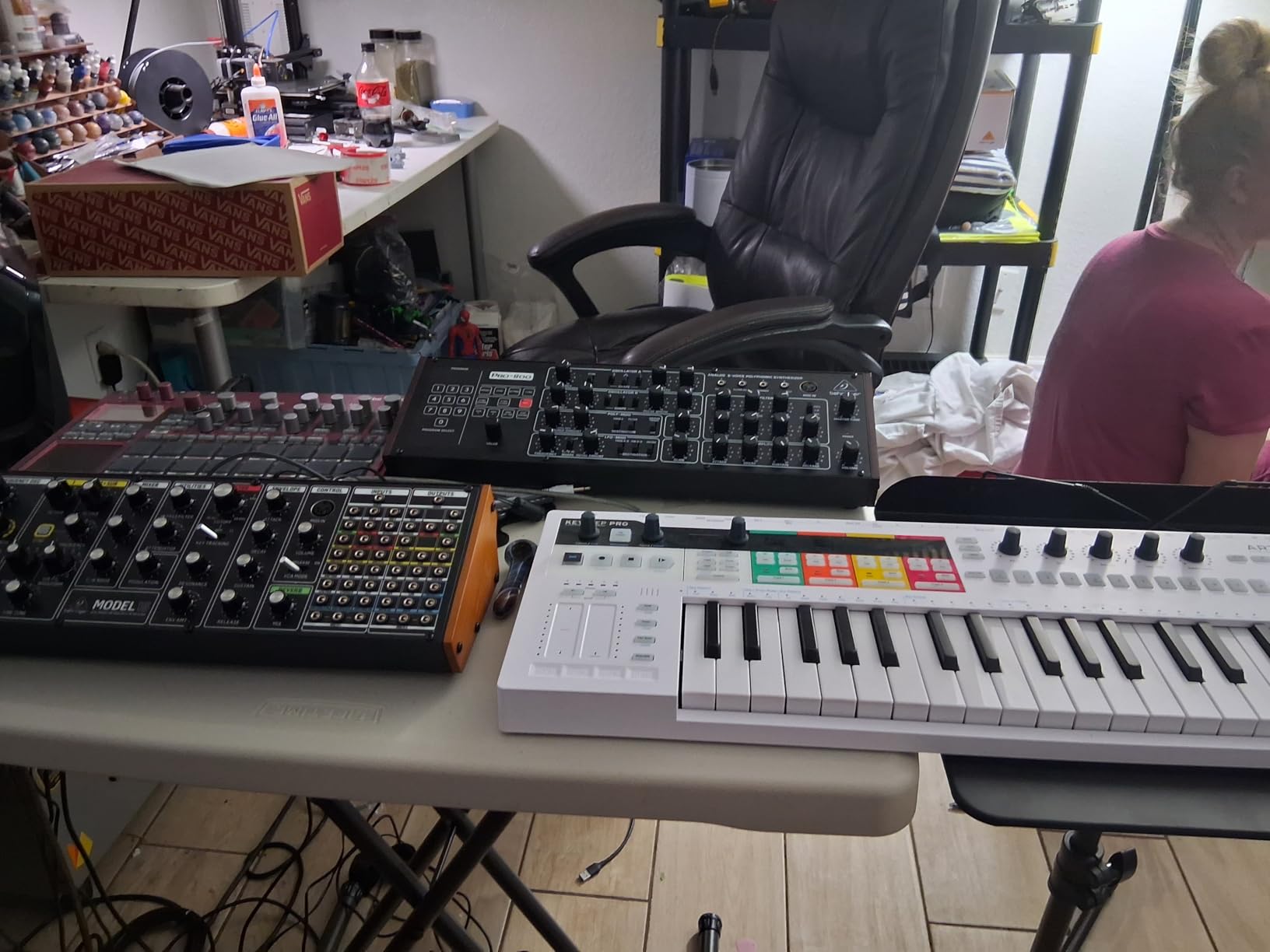
The Behringer PRO-800 is the surprise hit of this roundup. You get 8 voices of true analog polyphony with two VCOs per voice, a classic Prophet-600 inspired VCF, and a price that undercuts most 4-voice analogs. If you want authentic analog tone with enough voices for big chords, this is the most affordable path in 2026.
The signal path is pure analog: two oscillators per voice, each offering saw, triangle, pulse, and noise shapes, routed through the iconic SSM2040-style filter that gave the original Prophet-600 its fat, warm character. Unison mode stacks all 16 oscillators across the 8 voices for absolutely enormous leads and basses. I stacked two PRO-800s hard left and right on a recent track and the stereo width was unreal.

The PRO-800 ships in a desktop Eurorack-friendly chassis with no built-in keyboard, which keeps the cost low. You will need a MIDI controller or a DAW to play it. The 400 patch memories give you tons of storage, and the arpeggiator plus sequencer are straightforward to use once you accept the menu structure. Editing deeper parameters requires menu diving, but the front panel still gives you the most important knobs directly.
Build quality is solid for the price. The chassis is metal, the knobs feel sturdy, and the unit weighs in around 1.6 kg, making it very portable. For producers who already own a MIDI keyboard (or who prefer desktop modules), the PRO-800 is a serious analog polysynth at a price that would have been unthinkable five years ago. If you want to see how it stacks up against other budget analogs, our broader sub-$1000 roundup covers even more options.
Who the Behringer PRO-800 is good for
Producers who already have a MIDI controller and want maximum analog polyphony per dollar. Studio producers who run rackmount gear, Eurorack players who want a polysynth to add to their modular setup, and anyone chasing that classic Prophet sound without paying vintage prices.
Beat makers and film composers who stack multiple instances will love the low price. Buying two PRO-800s costs less than most 8-voice polysynths from other brands and gives you 16 voices of true analog polyphony.
Who the Behringer PRO-800 is not great for
Players who want an all-in-one synth with built-in keyboard will need to factor in the cost of a separate controller. Beginners who are uncomfortable with menu-driven programming may find the Behringer interface less intuitive than knob-per-function synths like the Minilogue XD.
Users looking for a deep preset library straight out of the box may find the PRO-800’s factory bank less curated than more established polysynths. With only 30 reviews on Amazon at the time of writing, there is less community knowledge to lean on compared to the Minilogue XD or MicroFreak.
4. ASM Hydrasynth Desktop – The Top-Rated Digital Wavetable Beast
ASM Hydrasynth Desktop Synthesizer
8-voice digital
Wavetable engine
Dual filters
Pros
- Highest user rating in the roundup at 4.8 stars
- 3 oscillators with dual Wave Mutators
- Dual filters in series or parallel
- 24 polyphonic touch pads
Cons
- No traditional keys (desktop module with pads)
- Steeper learning curve than simpler synths
The ASM Hydrasynth Desktop is the highest-rated synth on this list at 4.8 stars, and after spending time with it we understand why. It uses a powerful wavetable synthesis engine with three oscillators per voice and dual Wave Mutators that let you do FM, waveshaping, and hard sync per oscillator. The result is a digital synth that can do analog-style sounds, complex FM bells, evolving wavetables, and aggressive basses without breaking a sweat.
The Hydrasynth’s signature feature is its dual filter architecture. You can run filters in series, in parallel, or even send each voice through different filter configurations. The filter models include classic low-pass, high-pass, band-pass, and a special “Punch” setting that adds subtle compression-like character. The mod matrix is enormous, with five freely assignable envelopes and LFOs plus per-voice modulation.
The 24 polyphonic pressure and pitch-bend touch pads are unique. Each pad responds to pressure independently, so you can play chords with per-note expression the same way you would on an MPE controller. It also supports MPE input, which means it pairs perfectly with controllers like the Roli Seaboard or Sensel Morph. ASM includes rackmount ears for 19-inch rack installation, which is a thoughtful touch for studio setups.
The learning curve is real. The Hydrasynth is deep, and you will need time with the manual to unlock its full potential. But once you understand the architecture, there is nothing else in this price range that can match its sound design scope. For sound designers who want a digital polysynth under $1000 that can genuinely replace a small modular system, the Hydrasynth Desktop is unmatched.
Who the ASM Hydrasynth Desktop is good for
Sound designers, film composers, and ambient producers who want maximum sonic flexibility. If you love complex evolving pads, mutated wavetables, and deep modulation, this is your synth. MPE users will appreciate native MPE support out of the box.
Studio producers building rack-based setups will love the 19-inch rackmount form factor. The Hydrasynth pairs well with traditional MIDI keyboards via its full-size MIDI implementation.
Who the ASM Hydrasynth Desktop is not great for
Players who want a traditional keyboard will need a separate controller. The touch pads are expressive but require a different playing technique. Beginners may find the architecture intimidating.
If your music relies on classic analog-style leads and pads, you may prefer the Korg Minilogue XD or Behringer PRO-800. The Hydrasynth is at its best when you lean into its wavetable and FM strengths.
5. Korg Multi/Poly – The Modern Analog Modeling Flagship
Korg multipoly Analog Modeling Synthesizer w/Four Oscillators, 60 Voices and built-in KAOSS Pad
60-voice analog modeling
4 oscillators
KAOSS Pad
Pros
- Massive 60-voice polyphony for stacked evolving sounds
- 4 oscillators per voice with round-robin triggering
- Built-in KAOSS Pad for expressive control
- Layer Rotate and Motion Sequencing 2.0
Cons
- Analog modeling rather than true analog
- Not ideal for beginners due to depth
- 37-key keybed
The Korg Multi/Poly is the spiritual successor to the classic Mono/Poly from 1981, and it brings that lineage into the modern era with stunning results. You get 60 voices of polyphony, four stacked oscillators per voice, dual filters, four envelopes, five LFOs, and a built-in KAOSS Pad for real-time X/Y control. That is an enormous amount of synthesis power for under $1000.
The four oscillators per voice can be routed independently with cross-modulation and sync options, and round-robin triggering cycles which oscillator plays first on each note press for subtle organic variation. The result is a synth that sounds alive even when you hold a single chord. The Multi/Poly’s analog modeling engine captures the character of classic Korg synths while adding modern features like Motion Sequencing 2.0, which lets you record parameter changes over time and loop them.
The KAOSS Pad is a standout feature. Touching the X/Y surface can modulate any assignable parameter, so you can warp a pad in real time during a performance or recording. Layer Rotate cycles which oscillator layers are active over time, producing constantly evolving textures that would be impossible on a 4-voice synth. The 37-key keybed is the same slim design Korg uses across the minilogue line.
If you want a polysynth with massive polyphony, deep modulation, and a hands-on performance interface, the Multi/Poly is hard to beat. It also complements our best synthesizers 2026 roundup for players building a modern hybrid rig.
Who the Korg Multi/Poly is good for
Ambient composers and cinematic producers who need lush, evolving pad sounds with massive polyphony. Sound designers who want to push oscillators into experimental territory will love the cross-modulation and sync routing options.
Live performers get a stage-friendly synth with the KAOSS Pad as a hands-on expressive controller. Electronic music producers building complex layered tracks will appreciate the 60 voices when stacking patches.
Who the Korg Multi/Poly is not great for
Purists who only want pure analog circuits will find analog modeling less convincing than the true analog paths in the Minilogue XD or PRO-800. Beginners may feel overwhelmed by the depth of features.
If your style is bass-heavy lead work or classic analog leads, a simpler 4- or 8-voice analog may serve you better. The Multi/Poly shines in evolving, complex, layered soundscapes.
6. Sequential Fourm Compact – Vintage Prophet DNA in a Compact Body
Sequential Fourm Compact Polyphonic Analog Synthesizer
4-voice analog
37 keys
Ladder filter
Pros
- Genuine Sequential build quality and design
- Classic 4-pole ladder filter
- Compact 37-key form factor
Cons
- Only 4 voices limits big chord stacks
- Newer product with smaller user community
The Sequential Fourm Compact brings Sequential’s renowned build quality and analog design pedigree into the sub-$1000 category. Sequential (formerly Dave Smith Instruments) is famous for the Prophet-5 and Prophet-6, and the Fourm Compact channels that DNA into a more compact, more affordable instrument.
You get 4 voices of polyphony with two oscillators per voice, a classic 4-pole ladder filter, and a 37-key velocity-sensitive keybed. The architecture is intentionally retro: pure analog signal path, knob-per-function layout, and the warm, punchy character Sequential synths are known for. The built-in sequencer and arpeggiator add performance utility without menu-diving.
Sequential’s CV/Gate integration makes the Fourm Compact a natural pairing for modular setups. Connect it to a Eurorack system and you have a powerful hybrid rig with genuine vintage analog character. The chassis is metal, the knobs feel premium, and the keyboard action is noticeably better than most competitors in this price range.
For players who prioritize build quality, brand heritage, and authentic analog tone, the Fourm Compact is worth serious consideration. See our analog polysynth deep dive for more pure analog options in this range.
Who the Sequential Fourm Compact is good for
Players who want the Sequential name and build quality without paying Prophet-6 prices. Producers building hybrid setups with Eurorack will appreciate the CV/Gate integration. Vintage synth enthusiasts who love that classic 4-pole ladder filter sound.
Studio producers focused on tone over polyphony count. If 4 voices fits your compositions and you value each voice’s individual character, this is one of the best-sounding polysynths you can buy for the money.
Who the Sequential Fourm Compact is not great for
Producers who need more than 4 voices for big pads or orchestral-style chord work. The Fourm Compact intentionally sticks to the vintage 4-voice format, which limits complex arrangements.
If you want maximum sound design flexibility per dollar, the Hydrasynth Desktop or Korg Multi/Poly offer more sonic territory at similar prices. The Fourm is more about classic tone than modern versatility.
7. Behringer UB-Xa – 16 Voices of Bi-Timbral Oberheim-Style Power
Behringer UB-Xa 16-voice Bitimbral Polyphonic Analog Synthesizer
16-voice analog
Bi-timbral
61 keys
Pros
- Massive 16-voice polyphony in true analog
- Bi-timbral operation for two patches at once
- Full-size 61-key keyboard
Cons
- Heavy and bulky for travel
- Complex menu-driven editing
- Limited community feedback due to newer release
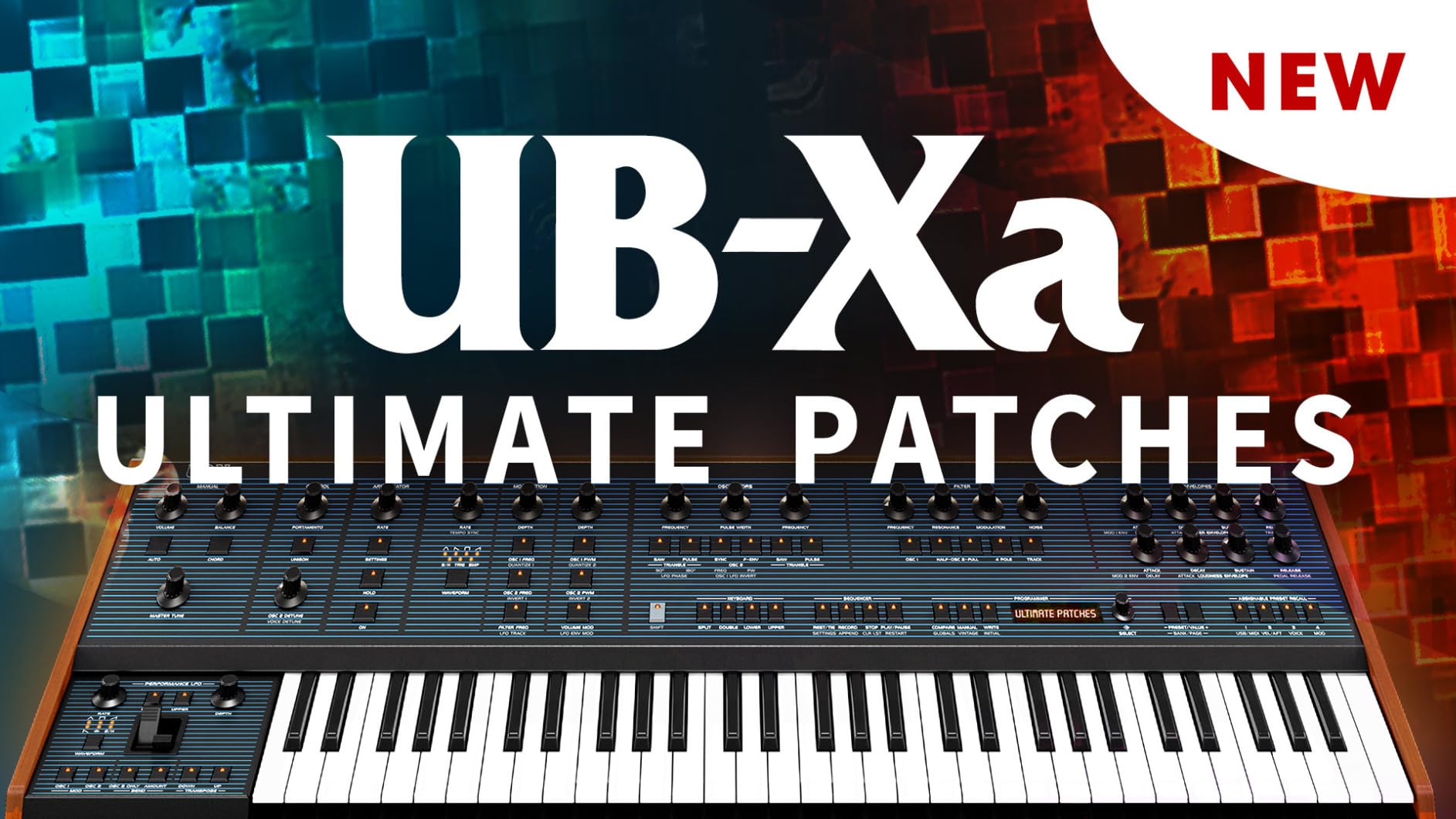
The Behringer UB-Xa is the biggest polyphony analog polysynth you can buy for under $1000 in 2026. You get 16 voices of true analog polyphony with dual VCOs per voice and a classic Oberheim-style SEM filter architecture. The bi-timbral operation means you can play two completely different patches at once across the keyboard, split them, or layer them.
The 16-voice count is enormous. You can hold down a 16-note chord and still have voices to spare for parallel filter modulation and unison effects. Unison mode on the UB-Xa gives you 32 oscillators for absolutely massive leads. The SEM-style filter has that distinctive Oberheim bite, with the kind of resonance and character that defined early 80s pop and synthwave.
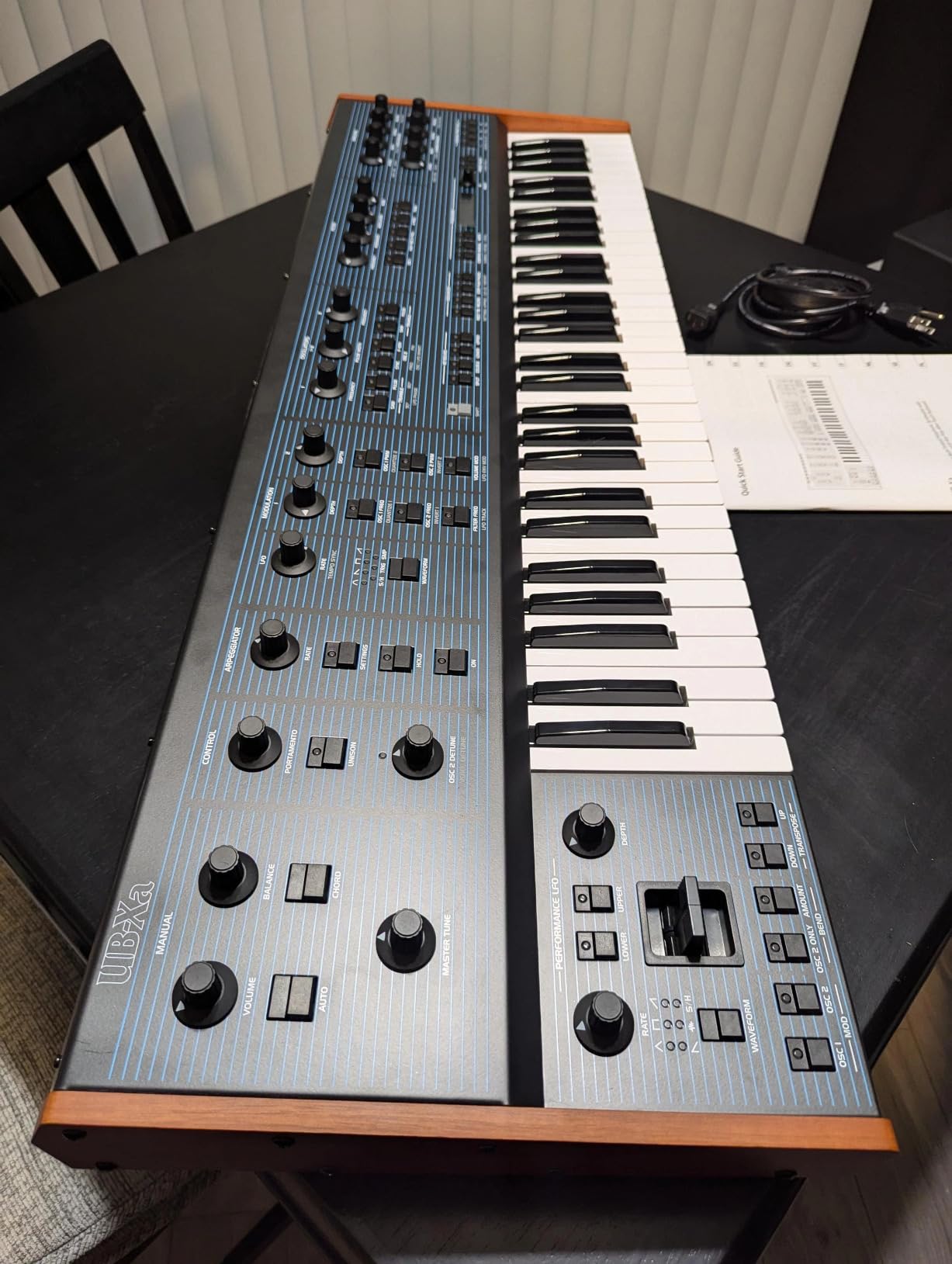
The 61-key keyboard is full-size, which makes the UB-Xa the only true performance-ready analog polysynth under $1000 with a full piano-style key count. The trade-off is size and weight. This is not a portable synth. It is a stage and studio instrument meant to stay in one place. If you need an analog polysynth that can handle live performance on a real keyboard, the UB-Xa delivers.
The interface is menu-heavy for advanced features, similar to the PRO-800. The front panel gives you the most important knobs directly, but deep patch editing requires screen navigation. For producers who want maximum polyphony and a full-size keyboard, the UB-Xa is in a class of its own at this price.
Who the Behringer UB-Xa is good for
Live performers who need a full-size keyboard and big polyphony for synthwave, prog rock, or pop performances. Studio producers building epic pads and layered arrangements will love the bi-timbral split and layer modes.
Producers chasing the classic Oberheim OB-Xa sound without paying vintage prices. The 16-voice count and dual VCOs per voice deliver the kind of fat, lush analog tone that defined the 80s.
Who the Behringer UB-Xa is not great for
Mobile producers and gigging musicians who need to transport gear frequently. The UB-Xa is heavy and bulky. Players looking for quick workflow will find the menu-driven interface slower than knob-per-function competitors.
If you only need 4 to 8 voices for your music, the UB-Xa is overkill. Consider the Minilogue XD, MiniFreak, or PRO-800 for simpler needs.
8. Roland JUNO-D6 – 128-Voice Workstation With ZEN-Core Engine
Roland JUNO-D6 Synthesizer, 61-Note Keyboard
128-voice digital
ZEN-Core
61 keys
Pros
- Massive 128-voice polyphony
- Over 3800 onboard sounds
- ZEN-Core synthesis engine
- Lightweight and portable for a 61-key synth
Cons
- ZEN-Core engine sounds more digital than analog
- Limited sound design depth vs dedicated polysynths
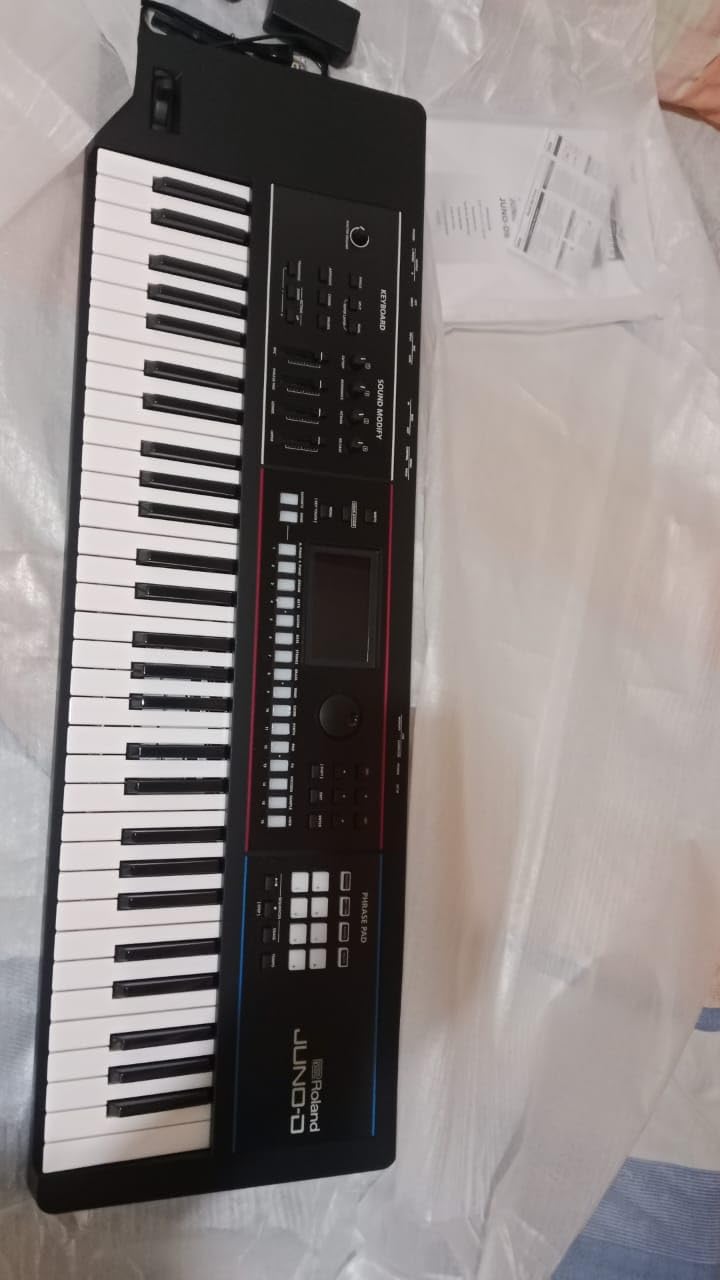
The Roland JUNO-D6 is the modern descendant of the legendary JUNO series that defined 80s pop and synth music. The new JUNO-D6 uses Roland’s ZEN-Core synthesis engine, delivers 128 voices of polyphony, and ships with over 3800 onboard sounds covering everything from classic JUNO patches to modern EDM, hip-hop, and orchestral timps.
For producers who want a versatile keyboard that can cover an entire live set or a studio session, the JUNO-D6 is hard to beat at this price. You get piano, electric piano, organ, strings, brass, drums, basses, leads, pads, and dozens of synth categories all in one unit. The 61-key keyboard is full-size and lightweight, making it genuinely portable for a 61-note instrument.
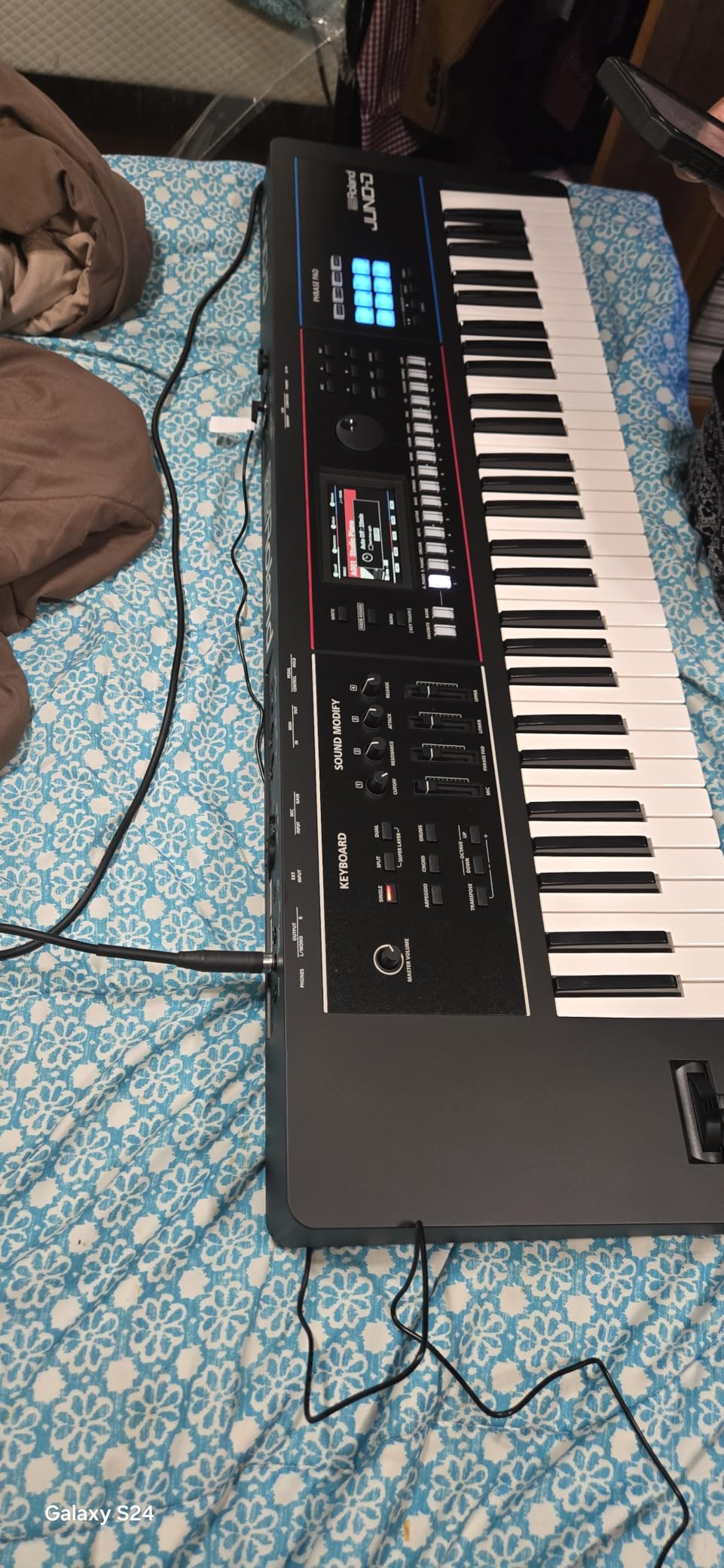
The USB-C connection doubles as a USB audio and MIDI interface, so you can plug the JUNO-D6 directly into a laptop and route audio into your DAW without a separate audio interface. The built-in effects, drum patterns, and pattern sequencer add live performance utility. For singer-songwriters and live keyboardists who need a “one synth covers everything” solution, the JUNO-D6 is a strong choice.
The trade-off is that ZEN-Core sounds more digital than the analog competitors in this roundup. The JUNO-D6 is not the best choice if your priority is hands-on sound design. But for sheer breadth of sounds, polyphony count, and live-ready features, it stands apart. Pair it with our digital synth roundup to compare against other digital options.
Who the Roland JUNO-D6 is good for
Live keyboardists who play multiple roles in a band. If you need piano, organ, synth leads, and pads all from one instrument, the JUNO-D6 covers it. Singer-songwriters and worship band leaders will find the preset library ready for immediate use.
Producers building beats who need drums, basses, and keys all from one source. The pattern sequencer and USB-C audio interface make it an all-in-one production tool.
Who the Roland JUNO-D6 is not great for
Sound designers who want to build patches from scratch will find the ZEN-Core engine less flexible than the Hydrasynth, MiniFreak, or Multi/Poly. Producers chasing pure analog tone should look elsewhere.
If your music is centered on one or two specific synth sounds, you may be paying for capabilities you don’t use. A dedicated analog polysynth like the Minilogue XD or Behringer PRO-800 may serve you better.
9. Korg Volca FM2 – Ultra-Budget 6-Voice FM Desktop Synth
Korg Volca FM2 Digital Synthesizer w/ 6 Voices and 16-step Sequencer
6-voice FM
3 operators
16-step sequencer
Pros
- Most affordable polyphonic synth in the roundup
- Classic 3-operator FM synthesis
- Built-in 16-step sequencer
- Compact battery-powered design
Cons
- Tiny desktop form factor with no keys
- FM synthesis has learning curve
- Plastic build
The Korg Volca FM2 is the most affordable polyphonic synth on this list, and it brings genuine Yamaha DX-style FM synthesis to a tiny battery-powered desktop box. You get 6 voices of polyphony, a 3-operator FM engine, a built-in 16-step sequencer, and the famous Volca form factor for a fraction of the cost of any other polysynth.
FM synthesis is famous for bell-like tones, glassy electric piano sounds, and punchy basses. The Volca FM2 captures that character authentically. The 3-operator engine is the same architecture found in legendary synths like the Yamaha DX7, and while the Volca has fewer operators, the core FM character is there. The sequencer supports parameter locking, so you can automate different FM parameters on each step.
The Volca series is designed for portability and creative constraint. There are no keys, just a ribbon controller and a 16-step button sequencer. Sync and MIDI connectivity let you chain multiple Volcas together or hook it up to a DAW. Battery power means you can take it anywhere. For producers who want FM synthesis in a portable form factor, this is the most affordable path.
If your budget is tight and you want to explore polyphonic FM synthesis, the Volca FM2 is unbeatable for the price. It also makes a great companion to one of the analog polysynths above, giving you both analog and FM tones in your setup.
Who the Korg Volca FM2 is good for
Beginners who want to learn FM synthesis at the lowest possible entry cost. Beat makers and lo-fi producers who love the classic FM character for electric pianos, bells, and basses. Producers building portable studio setups who already own a MIDI controller.
Experimental musicians who want to explore FM’s wild sound design capabilities in a constrained, tactile interface. The Volca series rewards creative limitation.
Who the Korg Volca FM2 is not great for
Players who want an all-in-one instrument with a built-in keyboard. The Volca is a desktop module that requires a MIDI controller for expressive playing.
If your music relies on analog warmth or you want traditional subtractive synthesis, the Volca FM2’s FM engine is not the right fit. It is also plastic-built, so it does not feel as premium as the metal-chassis competitors.
10. Arturia MicroFreak – The Beginner-Friendly Paraphonic Hybrid
Arturia MicroFreak Synthesizer Keyboard
Paraphonic hybrid
Plaits engine
Poly-aftertouch
Pros
- Hugely popular with 875+ Amazon reviews
- 21 oscillator modes inspired by Mutable Plaits
- Polyphonic aftertouch keybed
- Very affordable price point
Cons
- Only paraphonic (one note at a time through filter)
- Plastic touch-cap keybed feels unusual
- Smaller keys
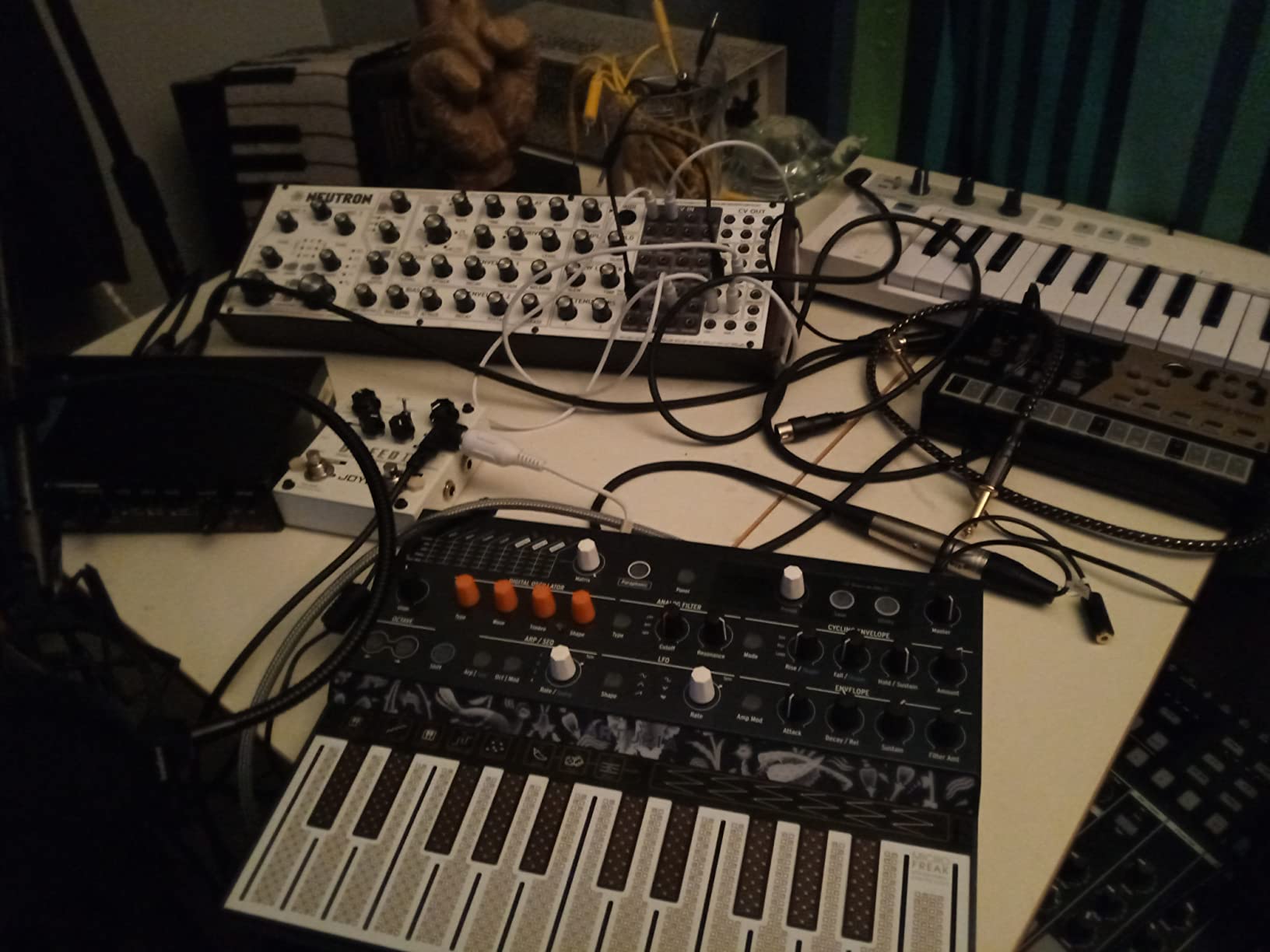
The Arturia MicroFreak is the most popular polysynth-adjacent instrument in this roundup, and for good reason. It has 875 Amazon reviews (more than any other synth on this list) and a 4.6-star average rating. The MicroFreak is technically paraphonic rather than fully polyphonic, but it is included here because it plays multiple notes simultaneously and offers the most accessible entry into hybrid synthesis under $500.
The MicroFreak uses a digital oscillator engine inspired by Mutable Instruments’ Plaits module, giving you 21 different synthesis modes including virtual analog, FM, wavetable, physical modeling, granular, and even vocoder-style modes. The analog multimode filter adds real analog character to whatever digital oscillator you choose. This combination gives beginners an enormous playground of sound design possibilities.
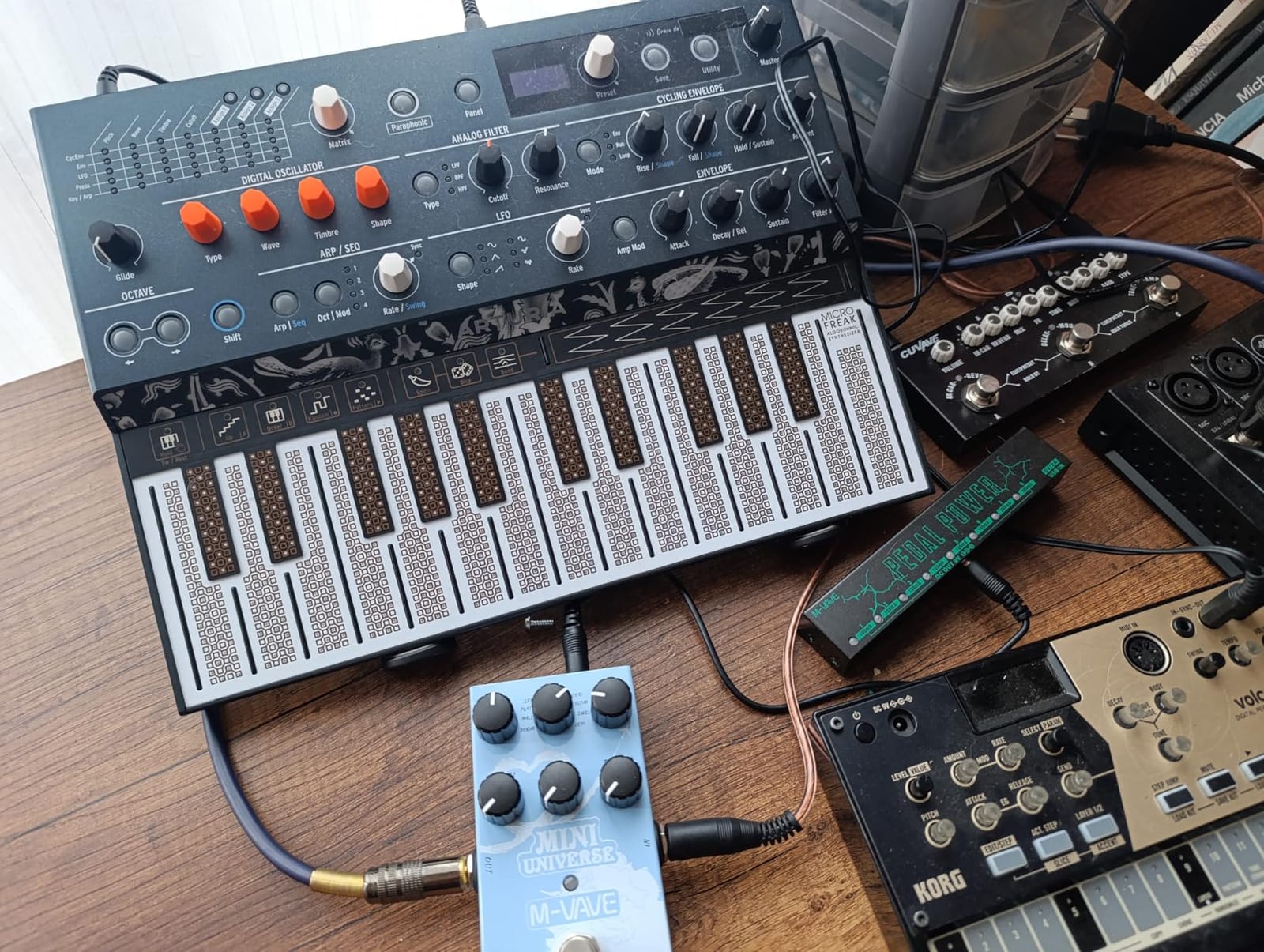
The flat touch-cap keybed is unusual but surprisingly expressive. Each key supports polyphonic aftertouch, so you can bend individual notes independently. The 25-key layout is compact but functional for synth leads and bass lines. The sequencer and arpeggiator are deep, and the modulation matrix gives you enough routing options to keep most sound designers busy for months.
For beginners asking “what polyphonic synthesizer should I buy first,” the MicroFreak is the most popular answer on the internet for good reason. The price is approachable, the sounds are immediate, and the learning curve is gentle. If you eventually outgrow the paraphonic architecture, the MiniFreak (product 2 on this list) is the natural upgrade path with a real keybed and full polyphony.
Who the Arturia MicroFreak is good for
First-time synth buyers who want maximum versatility at the lowest price. Hobbyists and bedroom producers who want a creative instrument that won’t break the bank. Sound designers who want to explore 21 different oscillator types in one box.
Anyone who wants to learn synthesis without getting overwhelmed. The MicroFreak pairs well with online tutorials, and there is a massive community of users sharing patches and techniques online.
Who the Arturia MicroFreak is not great for
Players who need true polyphony for big chord stacks. The paraphonic architecture routes all notes through a single filter envelope, which can feel limiting for complex arrangements. The MiniFreak solves this with proper polyphony.
Players who prefer a traditional keybed action. The flat touch-cap keys require a different playing technique and may not feel right for those used to weighted piano keys.
How to Choose the Best Polyphonic Synthesizer Under $1000
Now that you have seen all ten options, let’s talk about how to make the right choice for your situation. Picking the best polyphonic synthesizer under $1000 is about matching the instrument to your workflow, your musical style, and your studio setup. There is no single “best” synth for everyone, but there is definitely a best synth for you.
Decide How Many Voices You Actually Need
Voice count is the most obvious spec on a polysynth, but it is also the most misunderstood. For ambient pads and slow chord progressions, 4 voices is usually plenty. For synthwave leads, classic rock keys, and most pop music, 4 to 8 voices gives you comfortable headroom. For layered orchestral-style pads, big stacked chords, and complex arrangements, you want 16 or more voices.
Our roundup covers the full range: the Behringer UB-Xa offers 16 voices for under $1000, the Korg Multi/Poly offers 60 voices, and the Roland JUNO-D6 delivers a massive 128 voices. If your music relies on thick evolving textures, lean toward the higher voice counts. If you mostly play chords with one hand and a bassline with another, 4 voices is plenty.
Choose Your Sound Engine: Analog, Digital, or Hybrid
Analog polysynths like the Korg Minilogue XD, Behringer PRO-800, Sequential Fourm, and Behringer UB-Xa deliver the warm, punchy, slightly unpredictable character that made vintage synths legendary. Each voice is a discrete analog circuit, which means no two voices sound exactly identical. That subtle variation is what gives analog synths their musical “life.”
Digital polysynths like the ASM Hydrasynth, Korg Multi/Poly, and Roland JUNO-D6 use software-based synthesis engines. The advantages are massive polyphony, consistent voice-to-voice matching, deeper modulation matrices, and modern features like wavetable and FM synthesis. The disadvantages are that digital signals can sound cleaner and more sterile than analog, though modern modeling techniques have narrowed that gap.
Hybrid polysynths like the Arturia MiniFreak and MicroFreak combine digital oscillators with analog filters. You get the flexibility of digital sound generation with the warmth of an analog filter stage. For most modern producers, hybrid is the sweet spot of price, flexibility, and tone. Our best digital synthesizers roundup covers even more digital options if you want to lean further into that camp.
Match the Keybed and Form Factor to Your Setup
Keyboard action matters more than most buyers realize. If you play piano-style parts, you need full-size keys with at least 61 notes. The Behringer UB-Xa and Roland JUNO-D6 deliver full 61-key keyboards in this roundup. If you mostly play synth leads and one-handed basslines, the compact 37-key boards (Minilogue XD, MiniFreak, Multi/Poly, Fourm) are perfect.
If you don’t need a built-in keyboard at all, desktop modules like the Behringer PRO-800 and ASM Hydrasynth Desktop give you maximum sound per dollar. Pair them with your favorite MIDI controller. The Korg Volca FM2 is the most portable option, small enough to fit in a backpack and run on batteries.
Check Connectivity for Your Studio and Live Rig
Modern synths need MIDI and USB, which all ten units on this list provide. For studio integration, USB MIDI and USB audio (like the JUNO-D6’s USB-C audio interface) save you from buying separate audio interfaces. For live performance and modular integration, CV/Gate is essential, and only the Sequential Fourm Compact provides it in this roundup.
MIDI implementation quality matters too. Make sure your DAW or sequencer supports the synth’s MIDI features (MPE support for the Hydrasynth and MiniFreak, for example). Most modern DAWs handle MIDI well, but if you use older hardware sequencers, verify compatibility.
Consider the Workflow and Learning Curve
Knob-per-function synths (Minilogue XD, MiniFreak, MicroFreak, UB-Xa) let you tweak every parameter directly without menu diving. Menu-driven synths (PRO-800, Multi/Poly in deep mode, Hydrasynth) require screen navigation for advanced editing but reward you with deeper sound design possibilities.
If you are new to synthesis, start with a knob-per-function synth like the Minilogue XD or MiniFreak. As you build your skills, you may want to graduate to deeper instruments like the Hydrasynth or Multi/Poly. Either way, plan on spending meaningful time with any polysynth you buy. Real synth skills come from hands-on exploration, not just reading specs.
Think About Software Integration and Extras
Several synths in this roundup include companion software. The Arturia MiniFreak ships with the MiniFreak V plugin, which mirrors the hardware engine inside your computer. The Korg Multi/Poly has a PC editor for deep programming. The Behringer synths work with standard MIDI editor/librarian software.
Companion software is useful for storing patches, auditioning sounds without the hardware, and editing complex modulation routings on a computer screen. If you do most of your sound design in the box, prioritize synths with strong software editors.
Set Your Budget and Stick to It
The cheapest polysynth on this list is the Korg Volca FM2, which gives you genuine 6-voice FM synthesis for well under $200. The most expensive is the Roland JUNO-D6 at just under $1000. The bulk of the roundup sits in the $350 to $900 range. Most buyers in this category are working with a strict budget, so decide whether you want maximum polyphony, maximum sound design depth, or maximum analog authenticity, and let that guide your spending.
If you want one final recommendation, our top three picks give you the most balanced choices: the Korg Minilogue XD for the best overall analog polysynth, the Arturia MiniFreak for the best value hybrid, and the Behringer PRO-800 for the best analog 8-voice on a tight budget. Each one delivers more than its price suggests. For even more picks, check out our broader sub-$1000 roundup and our best synthesizers 2026 guide.
Frequently Asked Questions
What is the best polyphonic synth under $1000?
The Korg Minilogue XD is our top pick for the best polyphonic synthesizer under $1000 in 2026. It delivers 4 voices of true analog polyphony with a digital multi-engine, knob-per-function workflow, and a 16-step sequencer, all at a price well below $1000. For sound designers, the ASM Hydrasynth Desktop offers deeper wavetable synthesis at a similar price. For budget buyers, the Behringer PRO-800 gives you 8 voices of analog polyphony for less than $400.
What is the best budget polyphonic synth?
The Behringer PRO-800 is the best budget polyphonic synth, offering 8 voices of true analog polyphony with two VCOs per voice and a classic Prophet-inspired VCF for under $400. For buyers interested in digital FM synthesis, the Korg Volca FM2 delivers 6 voices of 3-operator FM synthesis at an even lower price point. Both are excellent choices for producers who want genuine polyphony without breaking the bank.
How many voices of polyphony do I really need?
For most producers, 4 to 8 voices of polyphony is plenty. 4 voices covers standard chord progressions, and 8 voices gives you room for thicker pads and more complex arrangements. For ambient and cinematic music with long evolving sounds and stacked layers, 16 or more voices becomes useful. The Korg Multi/Poly and Roland JUNO-D6 in this roundup offer 60 and 128 voices respectively for those situations. If your music stays in the 4- to 8-voice range, you can save money by choosing a synth at that polyphony level.
Analog vs digital polyphonic synth: which should I choose?
Analog polysynths deliver warm, slightly unpredictable character with subtle voice-to-variation that many players love. They tend to be more expensive per voice but offer that classic synth tone. Digital polysynths offer deeper modulation, more polyphony for the price, and modern features like wavetable and FM synthesis. Hybrid synths like the Arturia MiniFreak combine digital oscillators with analog filters for a balance of flexibility and warmth. If you play classic synth tones, lean analog. If you want maximum sound design depth, lean digital or hybrid.
What polyphonic synthesizer does Billie Eilish use?
Billie Eilish and producer Finneas have used several synths in their productions. The most famous is the Roland JUNO series, which Billie has referenced in interviews. The modern Roland JUNO-D6 carries that lineage into 2026 with the ZEN-Core engine, 128 voices of polyphony, and over 3800 onboard sounds. Other synths in Billie and Finneas’s productions include software instruments and various vintage pieces, but the JUNO’s classic character remains a touchstone in their sound.
Final Thoughts: Which Polyphonic Synth Under $1000 Should You Buy?
Choosing the best polyphonic synthesizer under $1000 in 2026 really comes down to what kind of music you make and how you like to work. The ten synths in this roundup each represent a different path into polyphonic synthesis, and there is no wrong answer as long as the instrument matches your creative goals.
For most buyers, the Korg Minilogue XD remains the safest and most rewarding choice. It sounds great out of the box, the analog signal path delivers the warmth most players want, and the knob-per-function layout keeps you in the music instead of buried in menus. If you have a bit more budget and want hybrid flexibility, the Arturia MiniFreak is our strongest alternative. If budget is the top priority and you already have a MIDI controller, the Behringer PRO-800 is a genuine analog 8-voice powerhouse at an unbeatable price.
Whatever you pick, spend real time with it. The best synth is the one you learn deeply and use consistently. For a wider look at the category, explore our broader polyphonic synth roundup and our best synthesizers 2026 guide. Now go make something.