
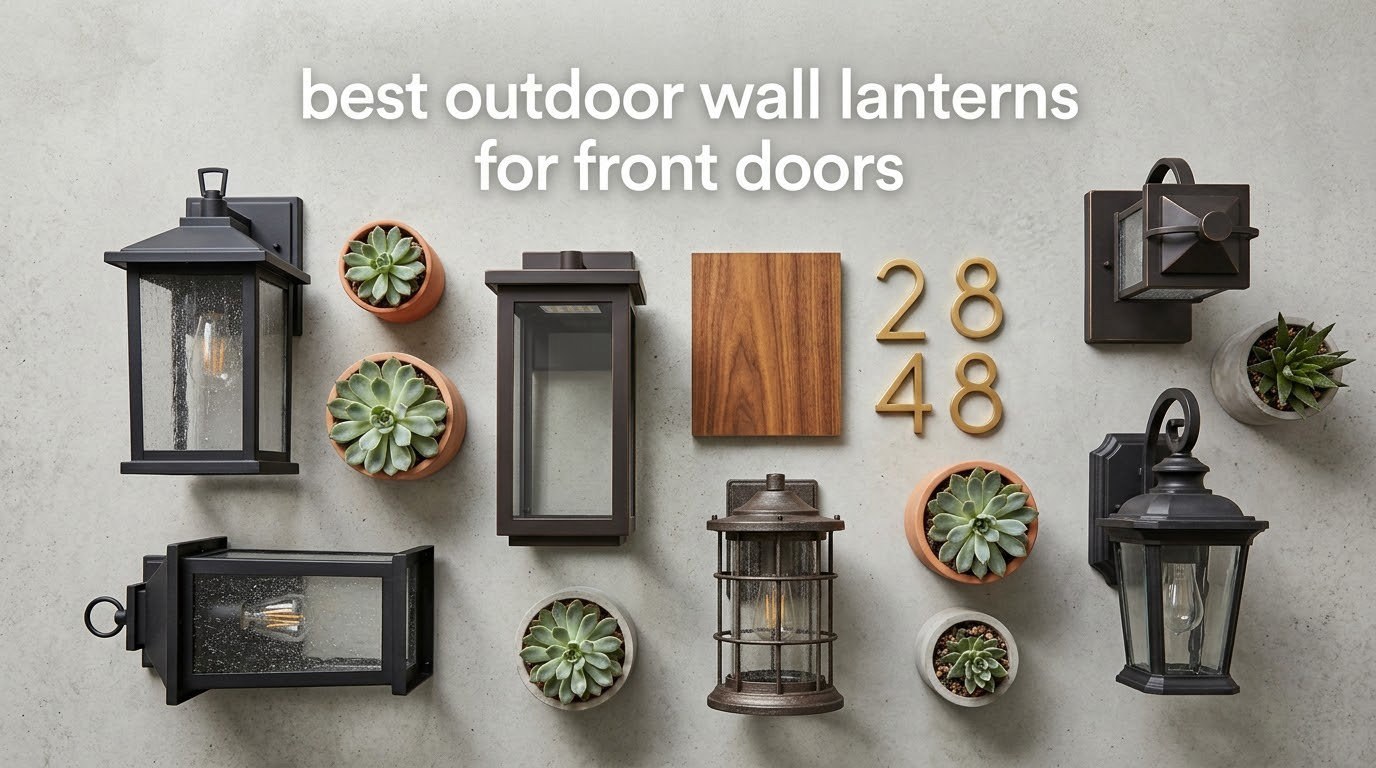
The best outdoor wall lanterns for front doors do two jobs at once: they make the entry safe to walk up to after dark, and they tell visitors something about the house before anyone knocks. A door that is genuinely dark reads as unwelcoming, and it is also the easiest place on the property to move around unnoticed. That is why this fixture gets replaced more often than any other light in the house.
We spent weeks reading specifications, warranty terms and thousands of owner reviews on 12 exterior wall sconces, then narrowed them down by the three things that actually decide whether a lantern survives: the stated wet-location rating, the body material, and whether the back plate covers the hole you already have. We also weighed size against a standard 36-inch door and a 12-inch brick pier, because a fixture that is technically excellent but visually cramped at the entry is the most common regret we saw reported.
Everything below is hardwired, wall-mounted and rated for exterior use, and none of the 12 relies on a bulb being included. If you are matching the rest of your entry hardware, our guide to the best smart locks for front doors covers the finish-matching side of the same problem.
Table of Contents
What Is the Best Outdoor Light for a Front Door?
The best outdoor light for a front door is a wet-location-rated wall lantern in a finish that matches your door hardware, sized so its body is roughly half the width of the door, and mounted centered 66 to 80 inches above the ground. A pair of mid-size fixtures, one on each side of the door, beats a single oversized lantern for most homes.
How We Picked the 12 Front Door Lanterns
Every fixture here is a genuine exterior wall sconce, not a floodlight or a solar path light dressed up as a lantern. We scored each one on the following, in this order.
Weather claim quality. We wanted a stated rating (cULus, ETL, UL, or an IP figure) rather than the word “weatherproof” on its own. Marketing language was treated as a zero.
Body material. Cast aluminium and electrocoated steel outscored plain steel, because rust bleeding down the wall is the number one complaint in the review data we read.
Fit at a real door. We compared published width and height against a 36-inch single door and a 12-inch brick pier, and noted the back plate size because a plate too small to cover the old hole means an extra patching job.
Installation friction. Included hardware quality, open-bottom access for bulb changes, and whether the glass arrives pre-assembled.
Style coverage. We deliberately kept traditional, modern, retro, art glass, slim, tall statement and sensor-driven options in the mix, because the front door is where architectural style shows most.
Top 3 Picks: Front Door Lanterns (October 2026)

Designers Fountain Preston 8 in
- Wet-location cULus listed
- Steel frame with clear glass
- E26 up to 60W
- 8 in body

MAXvolador 12.95 in Lantern
- Aluminium alloy with anti-rust finish
- Four clear glass panes
- Open bottom for bulb changes
- 36-month warranty
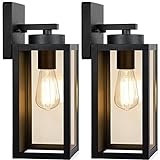
BesLowe 2-Pack Modern Black
- Matching pair for one purchase
- Waterproof metal frame
- Thickened glass panel
- E26 up to 100W
All 12 Best Outdoor Wall Lanterns for Front Doors (October 2026)
Every lantern below takes a standard E26 medium base bulb, which is sold separately in each case. Sizes are the published fixture dimensions, not the size of the retail box.
| Product | Specifications | Action |
|---|---|---|
| Designers Fountain Preston 8 Inch Outdoor Wall Light |
|
Check Latest Price |
 Design House Jelly Jar Outdoor Wall Light Design House Jelly Jar Outdoor Wall Light |
|
Check Latest Price |
| BesLowe 2-Pack Modern Black Exterior Lanterns |
|
Check Latest Price |
| MAXvolador Outdoor Wall Light Fixture |
|
Check Latest Price |
 VerRon 13in Motion Sensor Porch Light VerRon 13in Motion Sensor Porch Light |
|
Check Latest Price |
 Yisuro Porch Light with GFCI Outlets Yisuro Porch Light with GFCI Outlets |
|
Check Latest Price |
 Designers Fountain Devonshire 14 Inch Lantern Designers Fountain Devonshire 14 Inch Lantern |
|
Check Latest Price |
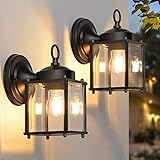 MATAMEYE 2-Pack with Beveled Glass MATAMEYE 2-Pack with Beveled Glass |
|
Check Latest Price |
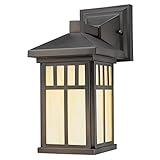 Westinghouse Burnham One-Light Lantern Westinghouse Burnham One-Light Lantern |
|
Check Latest Price |
 WIHTU Exterior Lighting Wall Mount WIHTU Exterior Lighting Wall Mount |
|
Check Latest Price |
 FILIYANO Motion Sensor Wall Light FILIYANO Motion Sensor Wall Light |
|
Check Latest Price |
 VIANIS Motion Sensor Wall Lantern VIANIS Motion Sensor Wall Lantern |
|
Check Latest Price |
1. Designers Fountain Preston 8 Inch Outdoor Wall Light — Best Overall Front Door Lantern
DESIGNERS FOUNTAIN Preston 8 Inch Outdoor Wall Light, Black, 1161-BK
Steel frame with clear glass
8 in H by 4.75 in W
One E26 bulb up to 60W, not included
Wet-location cULus listed
Pros
- Largest review base in this roundup
- Weather-resistant steel with waterproof seal
- Open bottom makes bulb changes easy
- Dimmable with a compatible bulb and dimmer
Cons
- Bulb sold separately
- Compact body gives modest light output
- Styling is basic rather than decorative
The Preston has been on the market long enough that its 11,000-plus reviews tell you more than any spec sheet can. It is a straightforward steel box with a clear glass shade and a black finish, and that restraint is exactly why it is still selling. Nothing about it is trendy, and nothing about it breaks.
At 4.75 inches wide and 8 inches tall, it extends 5.75 inches from the wall. That footprint suits a narrow brick pier far better than a 14-inch statement lantern, and it will not crowd a door that is only 32 or 36 inches wide.
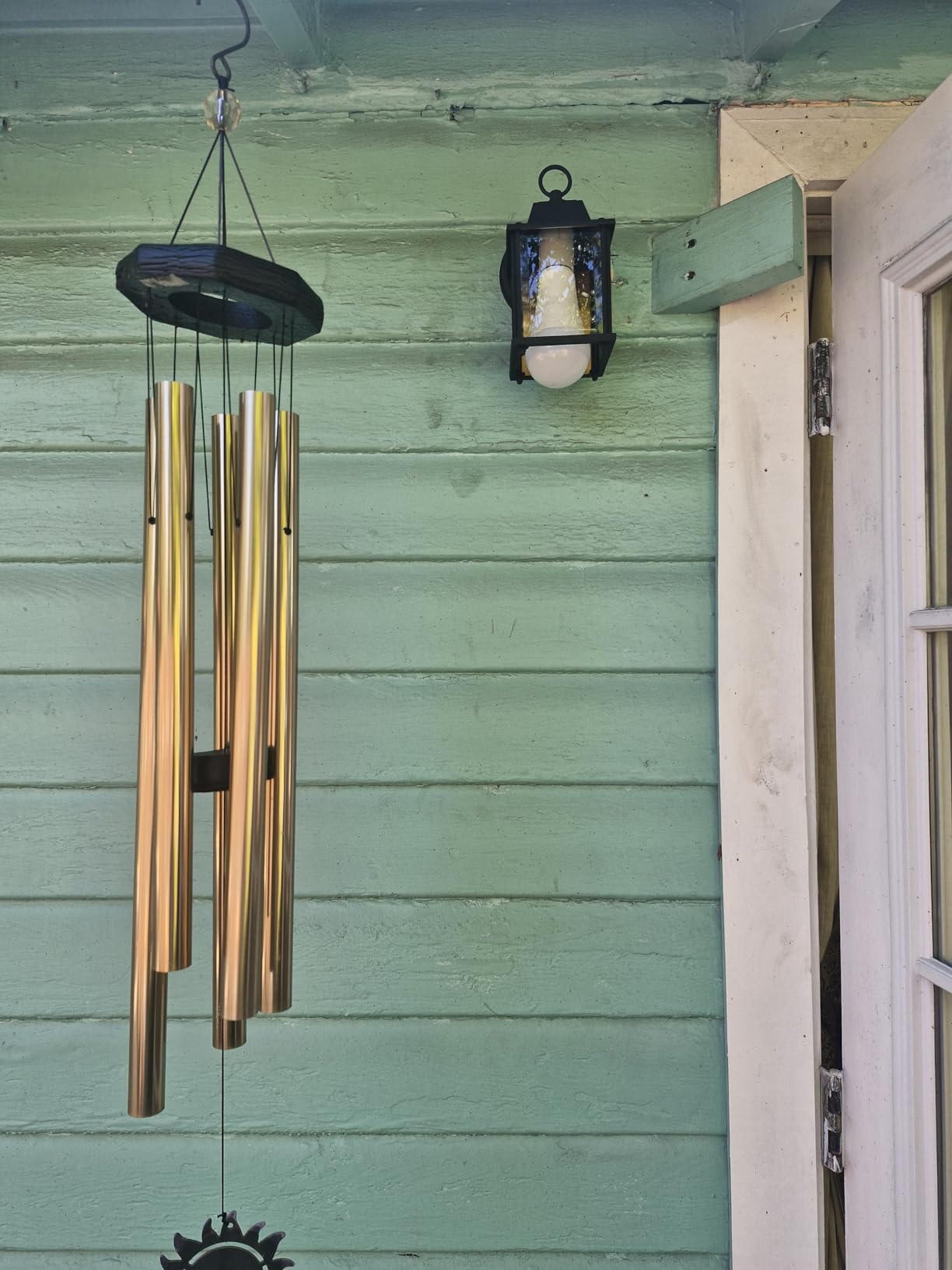
The published output is 800 lumens at 2700 Kelvin, which is the warm white that reads as a welcome rather than a security flood. It is dimmable if you pair it with a compatible bulb and a wall dimmer, and it takes a single E26 medium base bulb up to 60 watts.
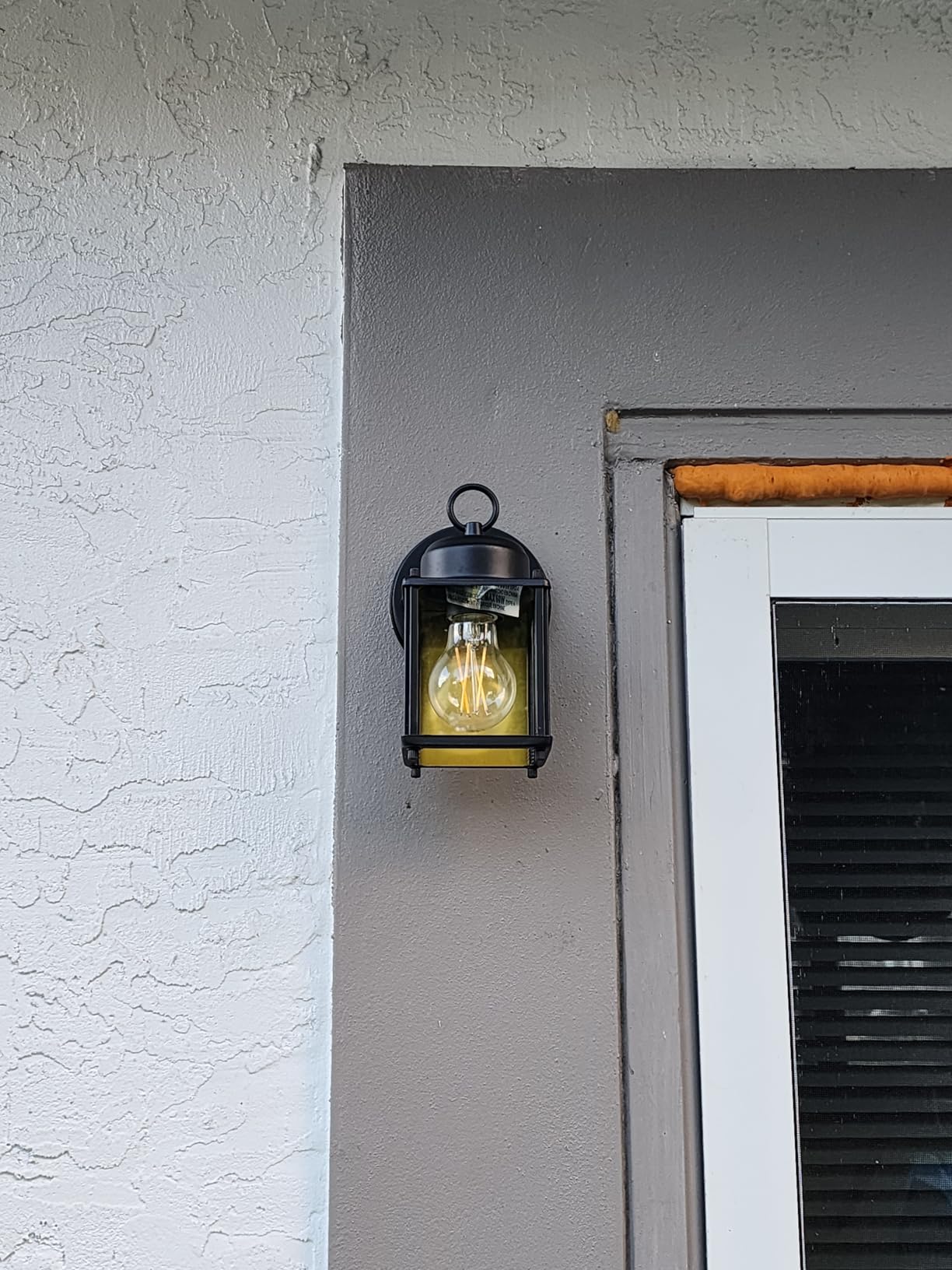
Two details decide how this behaves in real weather. The frame is steel with a waterproof seal and an anti-corrosion black finish, and it is cULus certified for wet locations, which is the certification we look for before anything else on a front door fixture.
What you get with the money you save
This is a replaceable-bulb fixture, which sounds old-fashioned until you have tried to change a bulb in an integrated LED lantern on a ladder in the rain. The open bottom means you reach up with one hand, unscrew the bulb and replace it in seconds.
The one-year warranty is the shortest we saw here, and several owners across the category note that buying a second identical fixture for the opposite side of the door later is the practical way around the matching problem when one side ages differently.
Where it falls short
The honest limitation is output. An 800-lumen bulb behind a small clear shade reads as a marker light more than a floodlight, so if your entry is wide open with no porch roof, plan on two of them rather than one.
It is also deliberately plain. If your door is a bold modern statement with visible grain and a statement handle, a small traditional black box will look like an accessory rather than a deliberate choice. In that case, step up in size or up in detail.
2. Design House Jelly Jar Outdoor Wall Light — Best Under-Coverage Pick
Design House Jelly Jar Outdoor Wall Light, Matte Black
Ribbed clear glass jelly jar
Alu and steel with black finish
7.5 in H by 5.25 in W
10-year limited warranty
Pros
- Longest warranty of any non-premium pick
- UL certified for wet locations
- Ribbed glass softens the light
- Mounting bracket and wire connectors included
Cons
- Small scale limits output
- Non-stainless retaining screw can show surface rust
- Included screws can be too short for stucco
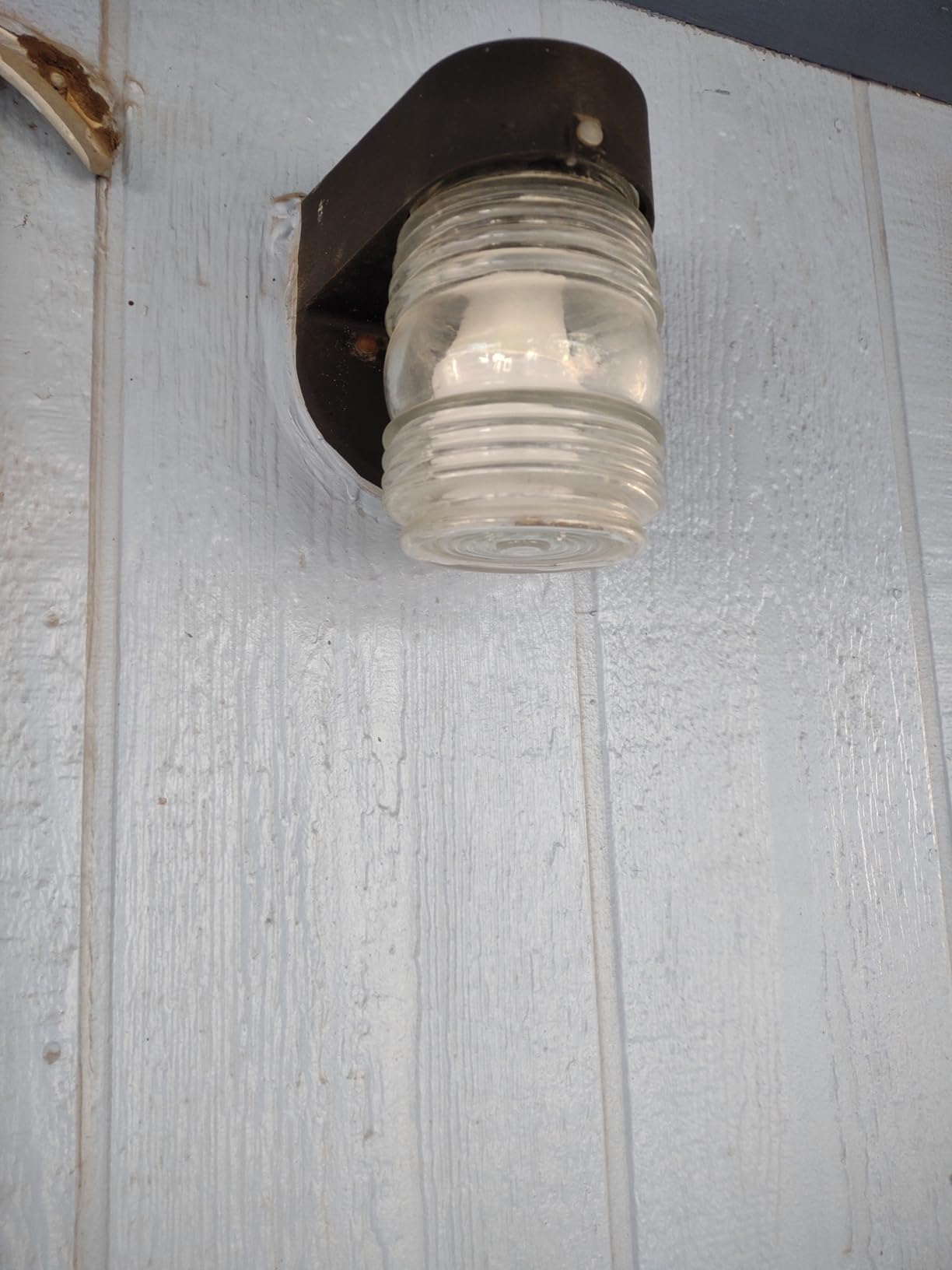
A jelly jar is the shape most people picture when they say exterior wall light, and this one is a clean, straightforward take on it. The ribbed clear glass shade throws a slightly softened light rather than a hard beam, which reads well at a door with a painted door and a storm door.
At 5.25 inches wide and 7.5 inches tall, this is one of the smaller bodies in the group, and it ships as a semi-flush design that hugs the wall. That makes it the right choice behind a shallow porch roof or under a deep overhang where a deeper lantern would not clear.
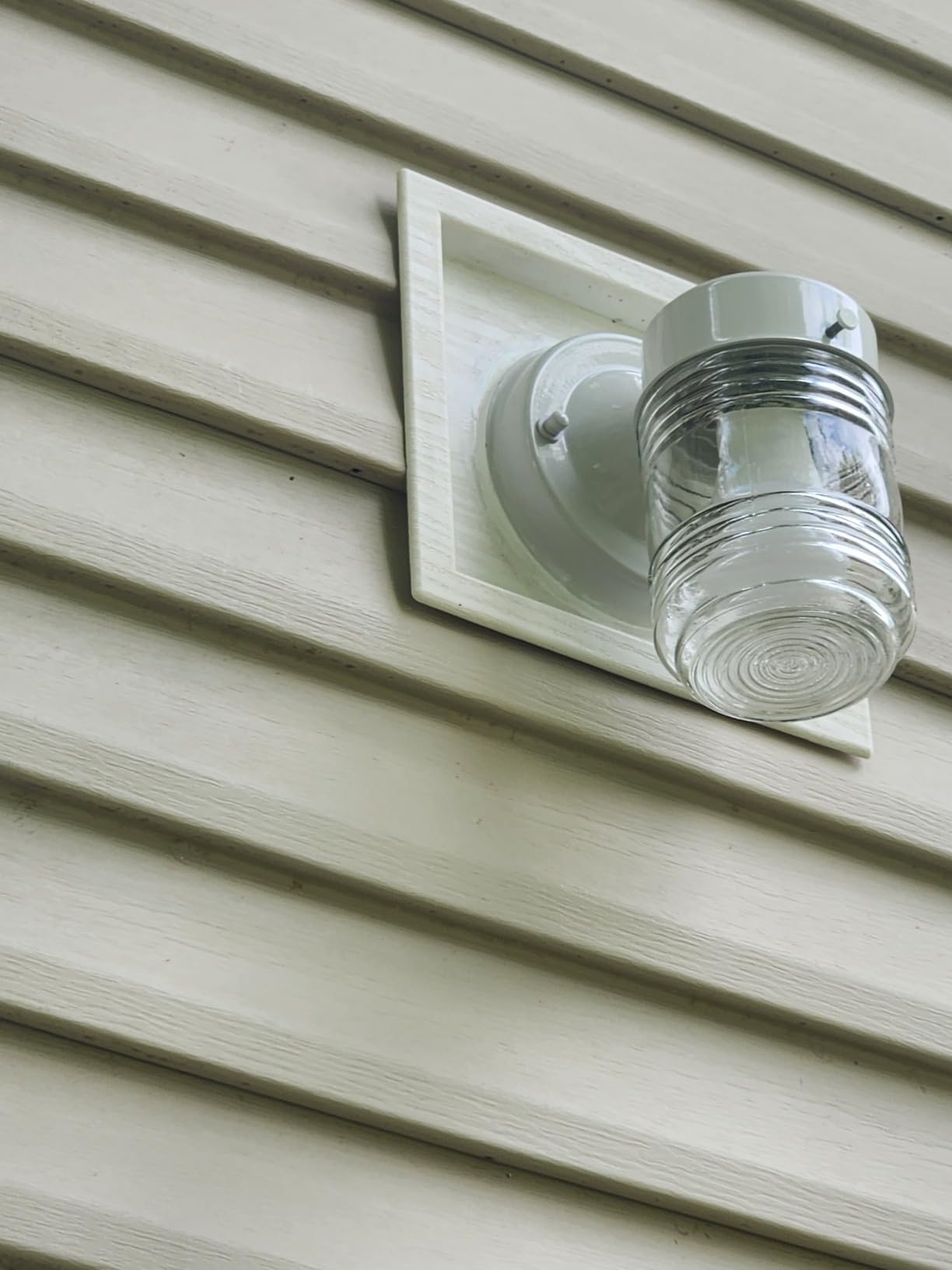
What stands out most on paper is the warranty. A 10-year limited warranty is longer than anything else in this roundup except the bronze Westinghouse, and for a fixture that many people install four or five of at once across a garage and deck, that is a meaningful difference.
It is UL certified for wet locations, takes a standard E26 medium base bulb, and dims with a compatible dimmer switch. Published output is 450 lumens, the lowest figure here, so think of it as a wayfinding light for a covered entry.
How it performs on a covered porch
In a covered entry, output matters much less than people expect, because the porch roof bounces most of the light back at the door. In that setting the ribbed glass and the compact body are advantages: you get a visible warm glow at eye level without a fixture blocking the view of the door.
Owners also mention the included mounting bracket, screws and wire connectors as making multi-fixture projects fast, which is the main reason this keeps showing up on decks and garage walls rather than at the front door.
Where it falls short
The retaining screw that holds the glass shade is not stainless steel, and a subset of owners report surface rust appearing on it early in coastal and humid conditions. It is a small cosmetic issue on the shade itself rather than a failure, but it is the first thing to look at after a year of salt air.
The included screws can also be too short to bite into stucco, so if your exterior is stucco rather than wood or brick, pick up longer masonry fasteners before you start.
3. BesLowe 2-Pack Modern Black Exterior Lanterns — Best Value Matched Pair
BesLowe Outdoor Wall Light Fixtures, Modern Black Exterior Wall Lanterns
Two matched wall sconces
4.7 in W by 12.8 in H
Waterproof metal frame with glass
E26 up to 100W per socket
Pros
- One purchase covers both sides of a door
- Clean matte black lines suit modern entries
- Non-swinging mount stands up to wind
- Open bottom and pre-assembled glass
Cons
- Included mounting hardware has been reported unusable
- Glass panel is fragile in transit
- Bulbs not included
The reason this one is worth buying is structural: it comes as a two-pack. Most front doors want two lanterns, and buying a matched pair from one listing removes the gamble of a single shade arriving damaged or a finish that has shifted in a different batch.
At 12.8 inches tall and 4.7 inches wide, it is a tall slim profile, and that proportion is what makes it work on a modern entry with a black-framed door. The lines are plain and vertical, with no scrollwork or tapered arm to fight with contemporary architecture.
The frame is metal with a thickened glass panel, listed as waterproof, and it accepts E26 bulbs up to 100 watts. It is a non-swinging wall mount, which matters on an exposed wall where a swinging arm would be moving constantly in wind.
It also takes LED, CFL, incandescent and halogen bulbs, and the maker suggests an Edison-style ST58 or ST64 bulb if you want the glass to look intentional rather than empty. The 24-month warranty sits in the middle of this group.
Why the two-pack changes the decision
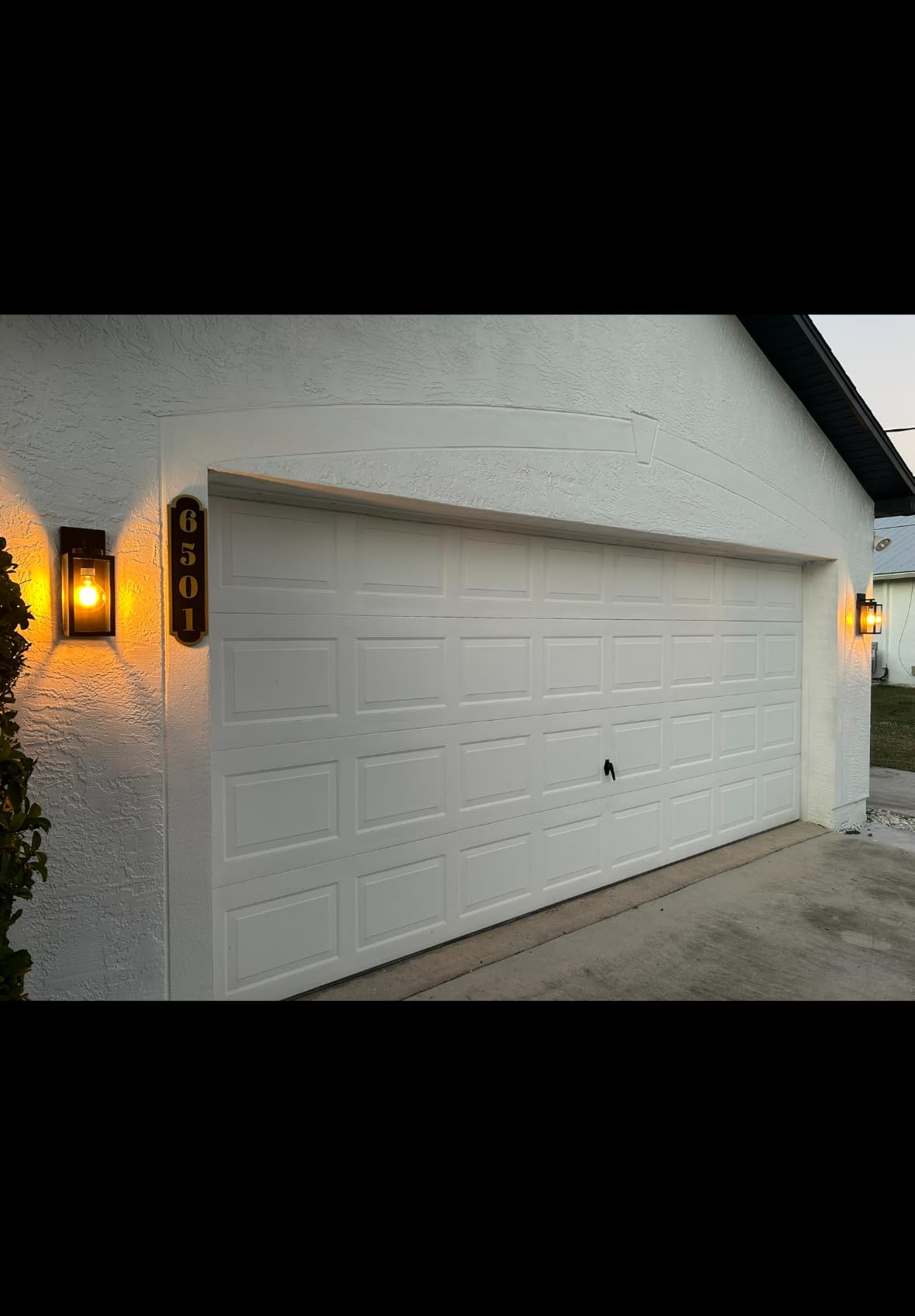
Buyers overwhelmingly install these flanking a single door, and the symmetry is the point. A matched pair at 12.8 inches tall gives vertical emphasis next to a door, and the black finish ties into a black door frame, a black house number and a black handle without any of them having to be exactly the same shade of black.
It is also the easiest way to cover a wider area on a budget without going oversized. Two 100-watt-capable bodies will light a large entryway that a single compact lantern would leave dark.
Where it falls short
The most-cited problem across reviews is the included mounting hardware. Some owners report that the supplied bracket and screws do not work with an existing electrical box and end up sourcing their own, so have a bracket on hand before you start.
Transit damage to the glass panel is the second complaint. Inspect the shade the moment the box opens, because a crack in a beveled or clear panel is not a cosmetic issue once the weather gets in.
4. MAXvolador Outdoor Wall Light Fixture — Best Rated
MAXvolador Outdoor Wall Light Fixture, Exterior Waterproof Wall Lantern
Aluminium alloy with anti-rust finish
5 in W by 12.95 in H
Four clear glass panes
E26 up to 100W, not included
Pros
- Highest rating of any fixture reviewed here
- Aluminium alloy body resists rust over seasons
- Four clear panes maximize output
- Open bottom for quick bulb changes
Cons
- Bulb not included
- Included bracket has limited screw grip
- Factory sticker on the socket can show
This is the highest-rated fixture in the roundup, at 4.8 across more than 3,100 reviews, and the reason is not subtle. It is an aluminium alloy body with an anti-rust coating, and aluminium is simply the right material for a fixture that lives on an exposed wall for years.
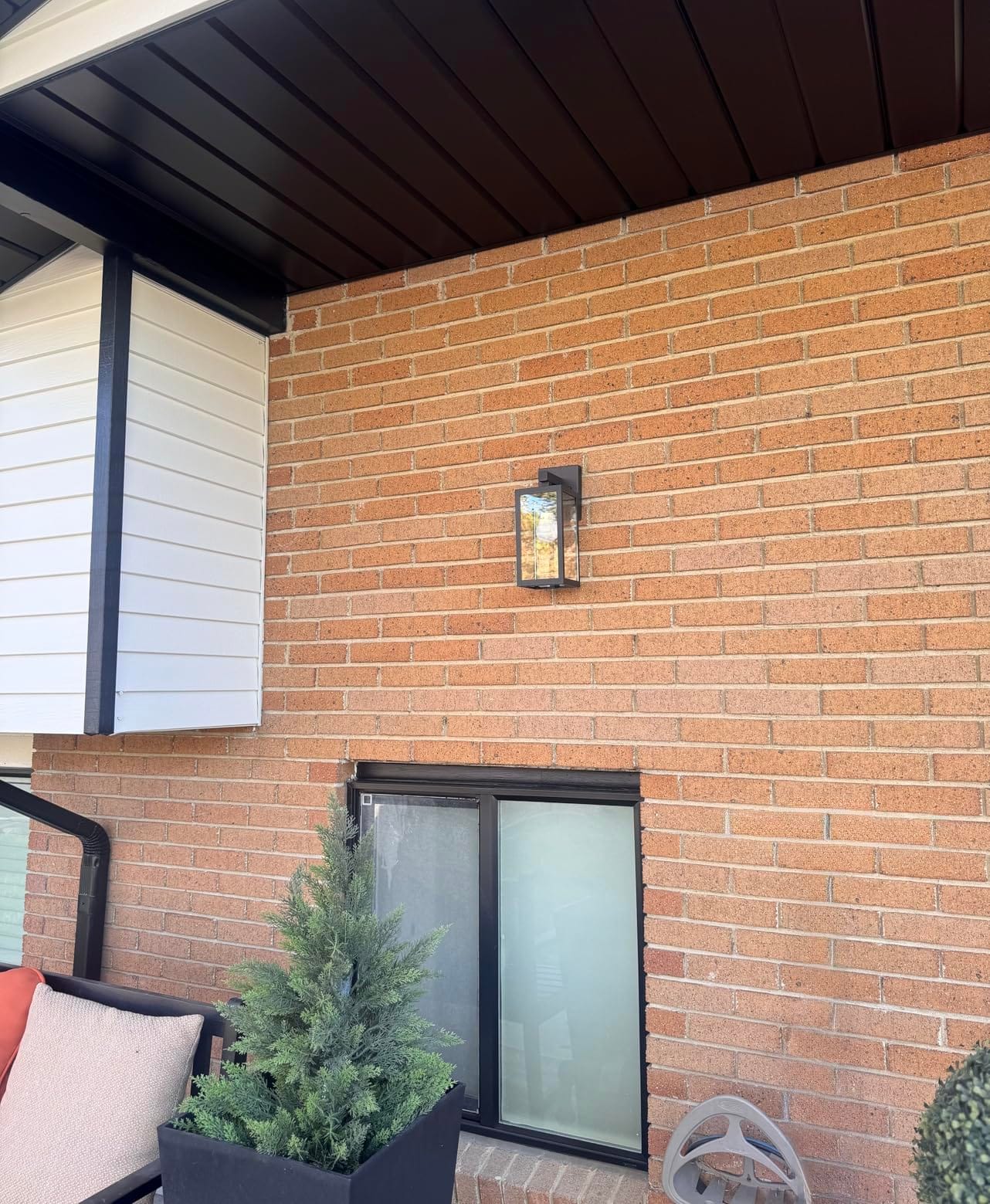
It measures 5 inches wide by 12.95 inches tall, which puts it right in the sweet spot for a standard front door. A body roughly half the width of a 36-inch door reads as proportionate, and the slightly trapezoidal shape narrows toward the top so it does not look heavy on a narrow pier.

The four clear glass panes are a real functional choice. Clear glass on all four sides means light exits in every direction rather than being trapped behind a frosted panel, so the same bulb produces more usable light at the door and on the walk.
It is ETL listed, takes one E26 base bulb up to 100 watts, and carries a 36-month limited warranty. It is also made in several sizes, which is unusual at this level and useful if you want to run a row of them across a long facade.
What the rating actually reflects
A 4.8 across this many reviews is not a novelty score. It is what happens when a fixture is boring in the right ways: the finish does not chalk, the glass does not get cloudy, the open bottom keeps bulb changes trivial, and the body does not rust from the bottom up.
Many owners install the larger versions in rows of six or seven across a house or a garage wall, which tells you something about how consistent the finish and the glass tone are between units.
Where it falls short
There is no sensor, no dusk-to-dawn behaviour and no integrated outlet. It is a straight wall lantern that does one thing, which is exactly why the reviews stay clean.
Two practical notes from the review data. The included bracket has limited screw grip, so a longer fastener set is a sensible addition. And a silver factory sticker on the socket is visible with a clear bulb fitted, which some owners cover with a small cap.
5. VerRon 13in Motion Sensor Porch Light — Best Wide-Angle Motion Detection
VerRon 13in Motion Sensor Porch Light, Dusk to Dawn Outdoor Light Fixtures
PIR motion plus dusk-to-dawn photocell
7.28 in W by 12.8 in H
40 ft detection at 220 degrees
Seeded glass, aluminium body
Pros
- Widest useful detection reach in this group
- Three-step dim behaviour feels considered
- Seeded glass gives a distinctive retro look
- Arrives fully assembled
Cons
- 3.7 pound body needs solid mounting
- Single mode with no motion-only off state
- No sensitivity adjustment
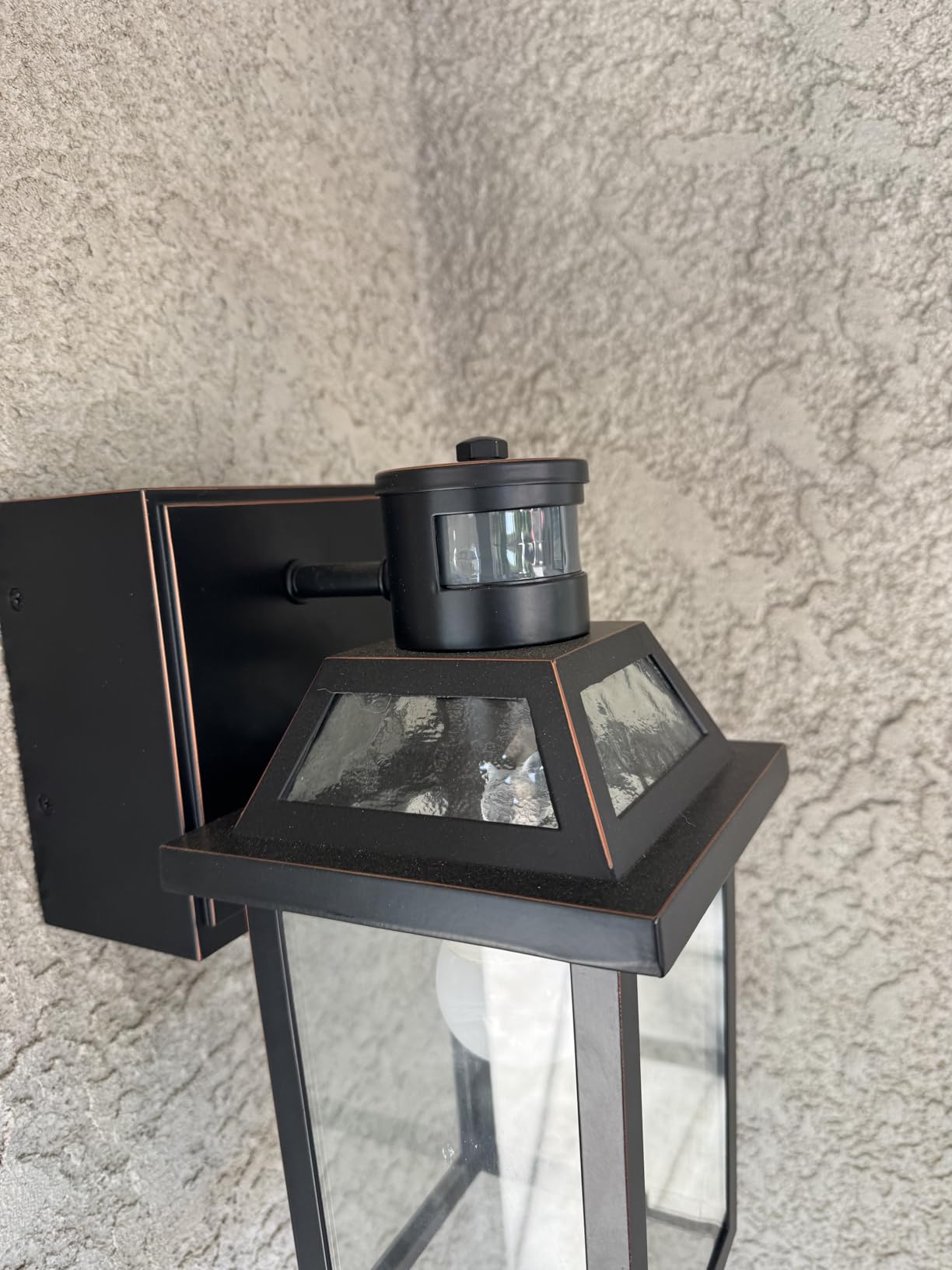
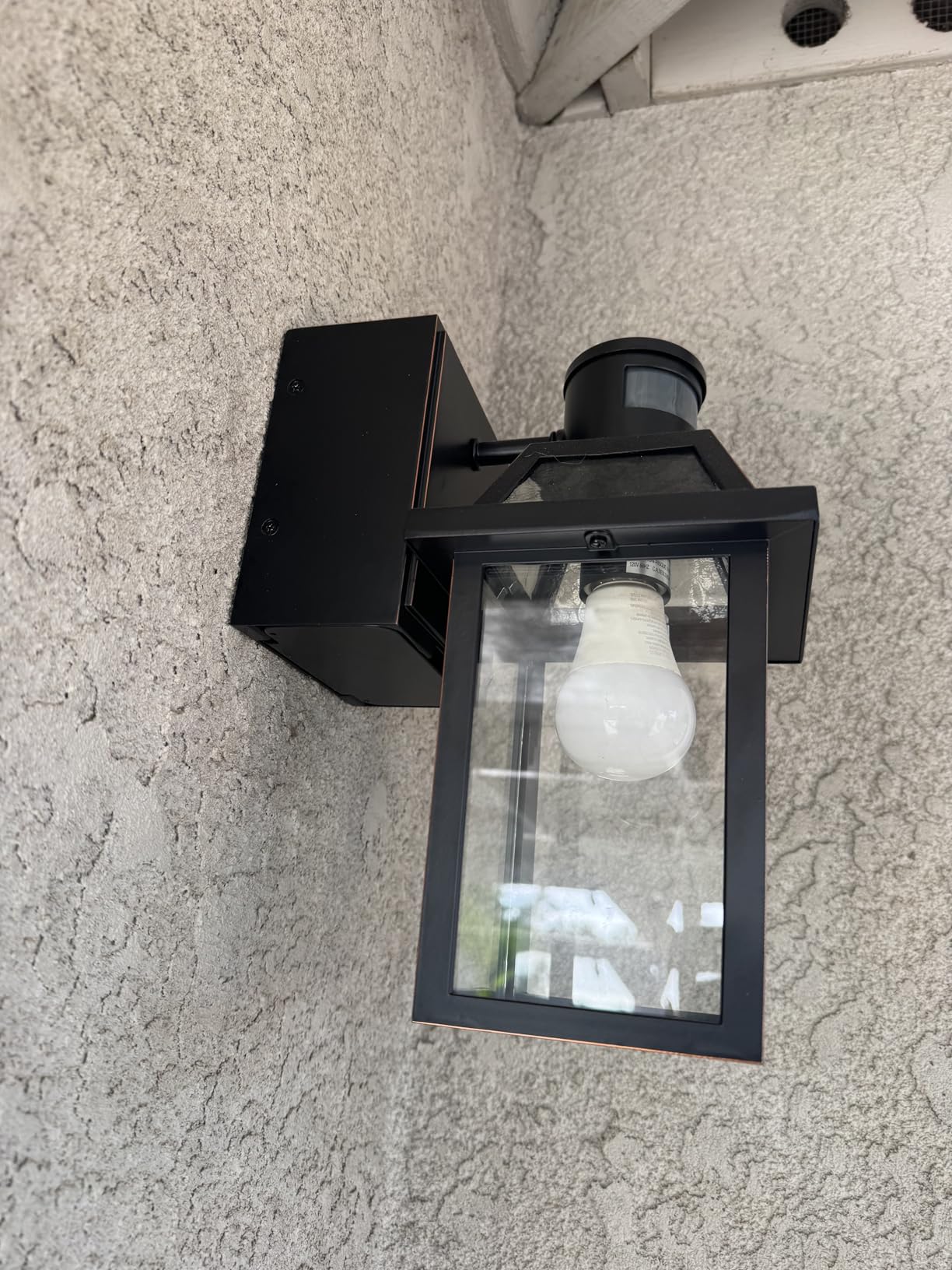
Sensor fixtures get bought for one reason: the light only comes on when someone is there. This one detects motion out to 40 feet across 220 degrees, which is the widest reach in the group, and that is what makes it useful for a long driveway approach or a walkway that runs along the side of the house.
The light behaviour is the part that sets it apart from a basic motion light. It comes on at 30 percent brightness at dusk, jumps to full output when motion is detected, drops back to 30 percent after two minutes, and switches off entirely at dawn.
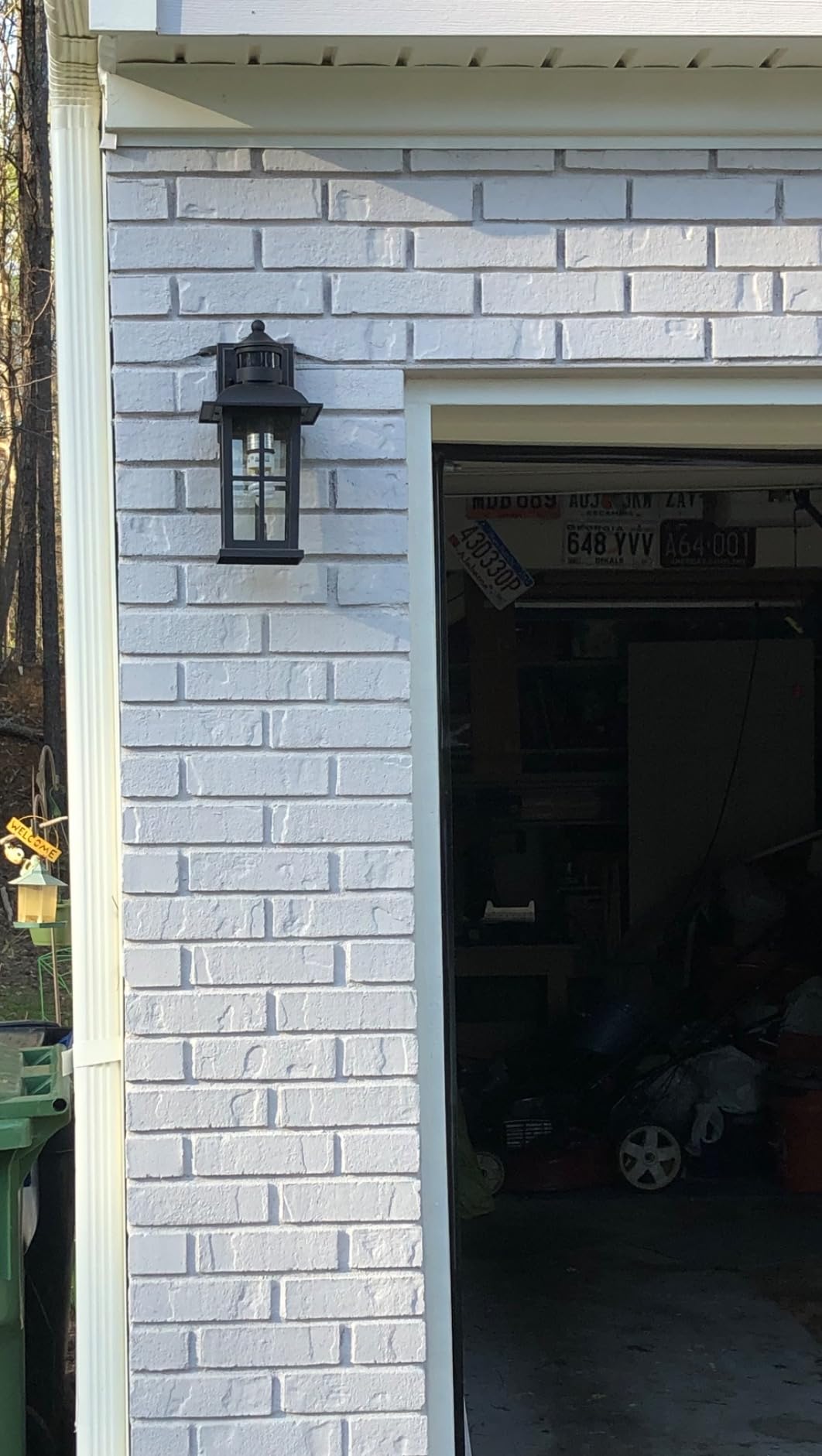
Stylistically it is a departure from the plain black boxes elsewhere on this list. Seeded glass, a brown process finish with gold trim, and a retro silhouette give it real presence, and the body is heavy-duty aluminium rather than coated steel.
It takes any standard E26 bulb up to 100 watts, including dimmable LED, and measures 7.28 inches wide by 12.8 inches tall. The warranty is 12 months, the shortest of the sensor options here.
How the sensor behaves at a front door
The 30 percent standby level is the detail that makes this usable at an entry. A fixture that sits at full brightness all night wastes the reason you bought a sensor; one that holds a dim glow still lights the door and the house number, then wakes up to full output when someone walks up.
Because the housing is fully assembled when it arrives, installation is quicker than assembling a glass-and-frame kit in the dark. The 3.7-pound weight is the trade for that solid aluminium body, and it is a two-hand job on a ladder.
Where it falls short
There is one mode and no adjustment. Sensor fixtures that let you switch between auto, dim and full-off are far easier to live with, because a fixed 30 percent glow annoys some people and a fixed full-on wake is too bright for others.
There is also no sensitivity or range control, which matters on a street-facing door where a 220-degree field of view can pick up passing cars. If false triggers are a concern at your entry, look at the three-mode alternative further down this list.
6. Yisuro Porch Light with GFCI Outlets — Best Built-In Outdoor Power
Yisuro Porch Lights with GFCI Outlet, Dusk to Dawn Outdoor Lights with Outlet, 3 Lighting Modes Exterior Light Fixture Waterproof, Outside Lights for House Front Door Patio Garage
Two downward-facing GFCI outlets
9 in L by 5 in W by 12 in H
High, Low and Manual modes
Ceramic E26 socket up to 100W
Pros
- Two GFCI outlets remove the extension cord from the entry
- Three modes give real standby control
- Ceramic socket runs hotter-rated bulbs
- Tempered glass and aluminium body
Cons
- Some units report the photocell staying on at day
- Motion sensing has no range adjustment
- 4 pound body is heavy
- No warranty length listed
Most front doors have exactly one exterior outlet, and it is usually occupied by a seasonal light string or a forgotten timer. This fixture solves that by putting two GFCI outlets in the lantern itself, facing downward so rain does not sit in them.
It is the only fixture in this roundup that changes what a front door light can do. Once it is installed, you can plug in a wreath light, a power tool, a patio fan or a charger without running an extension cord across the entry.
The lighting side is well specified for the price point. There are three modes: high, low, and a manual override that runs for eight hours. The E26 socket is ceramic rather than plastic, which tolerates heat better over the long term, and it accepts a dimmable bulb up to 100 watts.
The body is 9 inches long, 5 inches wide and 12 inches tall, with reinforced tempered glass over a black aluminium frame. Published output reaches 1100 lumens, the second highest figure in this group, and the GFCI outlets are rated up to 1080W.
What a built-in outlet changes day to day
The most common reaction in the reviews is that the outlets get used constantly once they are there. Seasonal decorations, a hose reel, a pressure washer, a speaker, a phone charger on a side table, all of it stops needing a cord across the threshold.
Because the outlets face downward, they shed water rather than collecting it, and the GFCI protection is the safety feature that makes using them outdoors sensible. Note that the unit must be mounted at least 4 feet above the ground.
Where it falls short
The main complaint cluster is photocell reliability. A subset of owners report the dusk-to-dawn sensor failing to switch off, leaving the light burning at full brightness through the middle of the day. That is an efficiency problem rather than a safety one, but it is exactly the failure mode people dislike most.
Motion detection reaches roughly 30 feet with no range or sensitivity adjustment, and at 4 pounds this is one of the heavier bodies here. There is also no warranty length published, which is worth factoring in next to the sensor options that carry three years.
7. Designers Fountain Devonshire 14 Inch Exterior Wall Lantern — Best Rustic Entry
DESIGNERS FOUNTAIN Devonshire Outdoor Light Fixture, 14 Inch Exterior Wall Lantern Sconce for Front Door, Patio and Porch, Black, 2961-BK
Cast aluminium with clear glass
6.25 in W by 14.25 in H
Six-sided body with a bold arm
One 60W incandescent or 12W LED
Pros
- Cast aluminium body with a waterproof seal
- cULus certified for wet locations
- Bulb changes from inside the shade
- A six-pack is available for large projects
Cons
- Bulb not included
- Lowest wattage ceiling of any pick here
- 3 pound weight is heavy on a ladder
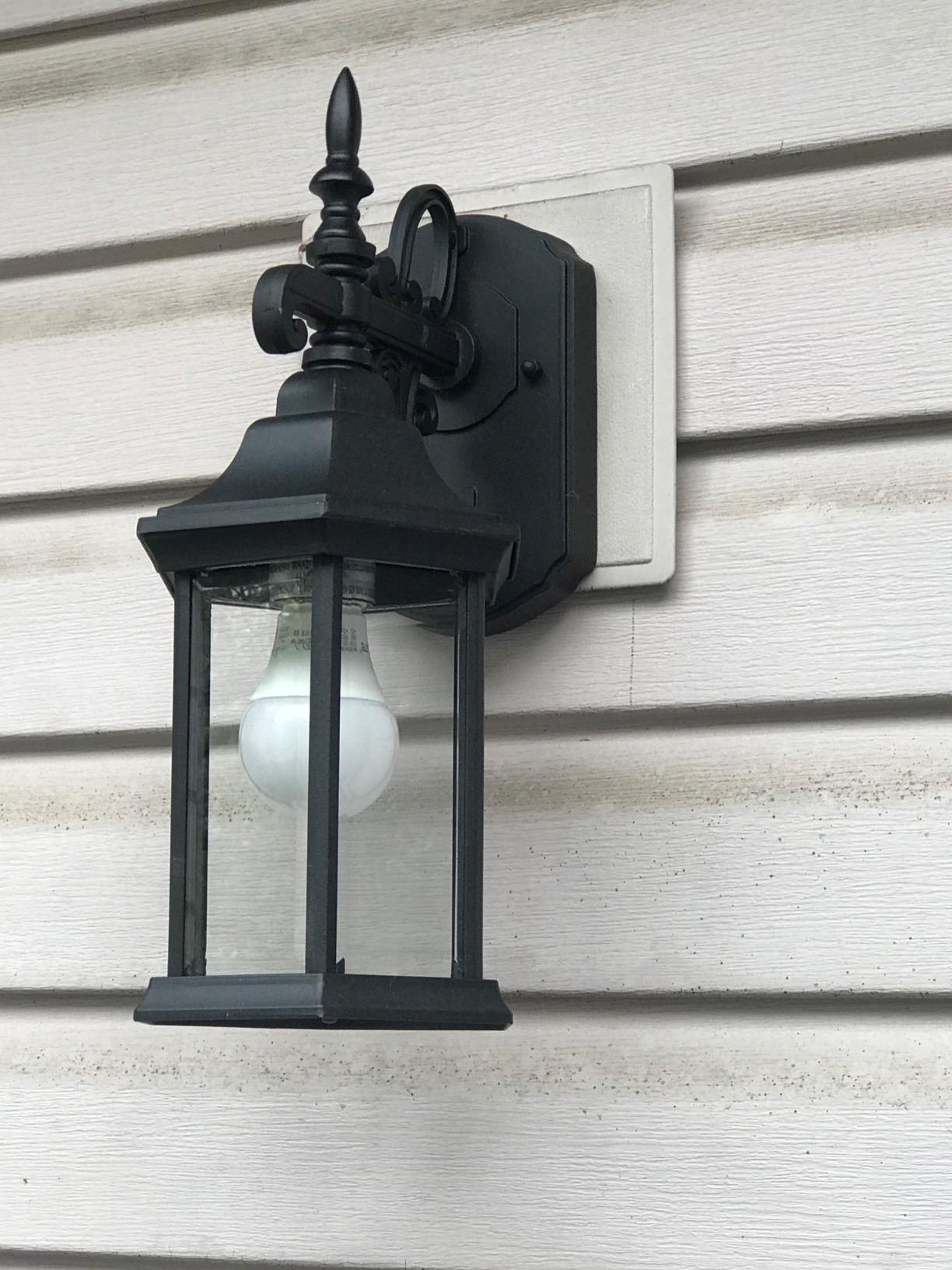
At 14.25 inches tall, this is the largest traditional body in the roundup, and it is the one to choose when the house is older than the fixture. A six-sided clear glass lantern with a heavy cast arm reads correctly on a colonial, Craftsman or farmhouse entry, where a slim modern box would look borrowed.
The material is cast aluminium with a waterproof seal, and the finish is treated against pitting, tarnishing and discoloration. Those are the words that matter, because “anti-rust” on a listing means nothing if the coating is not described.
It is cULus certified for wet locations and UL listed, and the clear glass shade is reachable from inside, so a bulb change does not require taking the fixture apart. That single design decision saves more time than any other feature on a 3-pound lantern.
The important limitation is the wattage ceiling. It takes one 60 watt incandescent or 12 watt LED bulb, which is the lowest limit in this group, so a modern LED of roughly 800 lumens is the realistic maximum.
When the bigger lantern is the right call
Scale is the whole argument here. On a double-door entry or a wide door surround, a pair of 8-inch fixtures looks apologetic, and a 14-inch body gives the door the vertical presence it needs. Community advice on front door lighting threads consistently points the same way, toward matched pairs chosen for proportion rather than one oversized statement piece.
It is also available in a six-pack, which makes it a straightforward way to light a long porch, a garage wall and a set of steps with fixtures that match the front door exactly.
Where it falls short
The 60 watt ceiling is the real constraint. If you want serious brightness at the door you are limited to a single LED of about 12 watts, which is efficient but not adjustable, since there is no dimming and no sensor.
At 3 pounds this is heavy to handle overhead on a ladder, and the black finish is fixed at this size, so there is no bronze or antique option for a warmer traditional entry.
8. MATAMEYE 2-Pack with Clear Beveled Glass — Best for Narrow Piers
MATAMEYE Outdoor Wall Lantern, Exterior Waterproof Wall Sconce Light Fixtures, Black Front Door Wall Lighting with Clear Beveled Glass Shade, 2 Pack
Clear beveled glass shades
4.21 in W by 8.27 in H
Anti-rust, anti-corrosion finish
E26 up to 60W, not included
Pros
- Beveled glass looks more expensive than it is
- Two per pack matches a double entry
- Compact body suits a 12 inch pier
- Open bottom for quick bulb changes
Cons
- Bulbs not included
- Small size means modest output
- One glass panel has arrived broken in transit
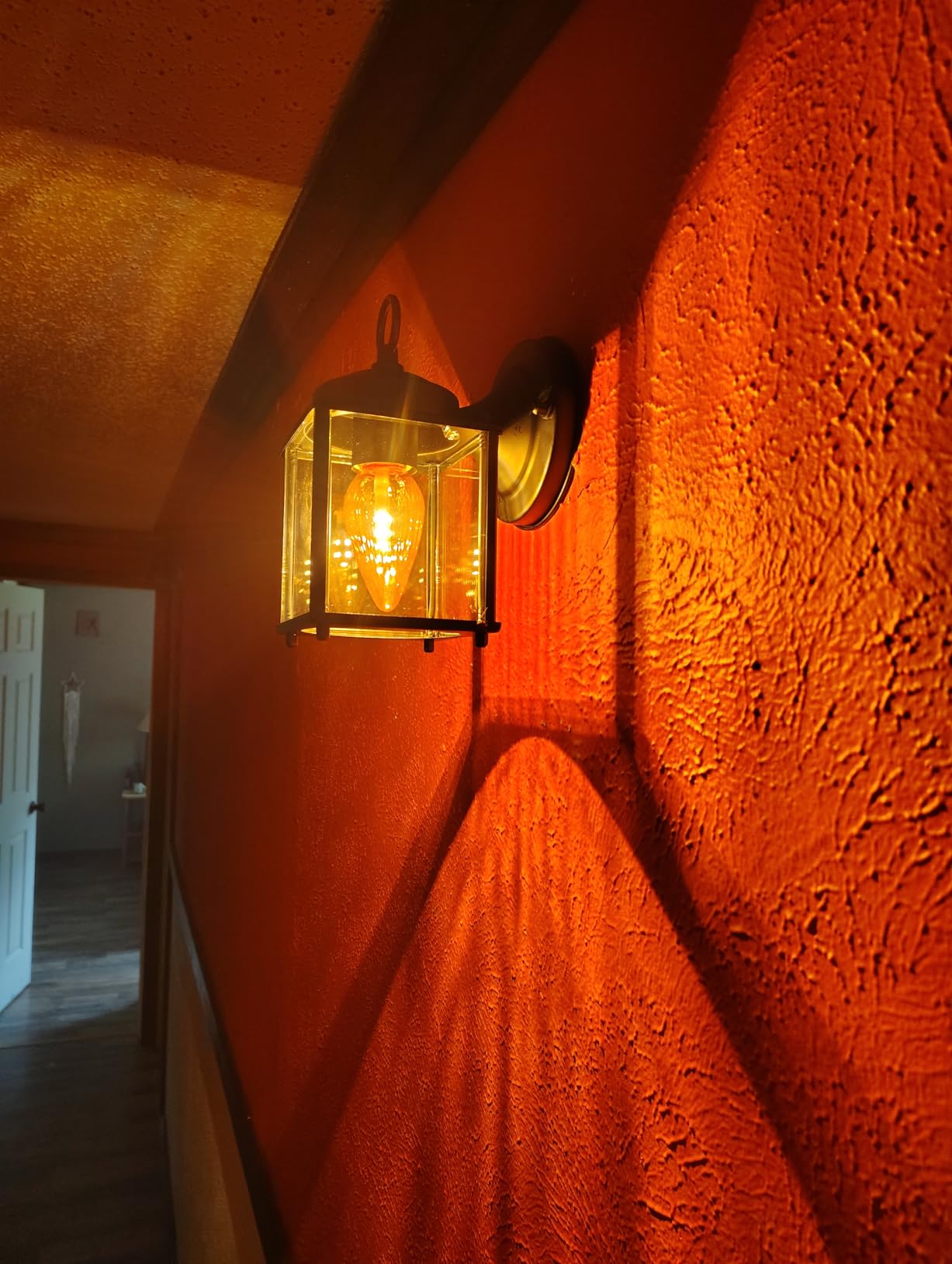
The beveled glass is the whole reason to pick this. A plain clear pane looks like a pane; beveled glass catches whatever light is in the entry and breaks it into a pattern on the wall, which is why owners so often describe these as looking more expensive than the price suggests.
At 4.21 inches wide, this is the narrowest body in the roundup, and that is the point. If your door sits between a 12-inch brick pier and a 12-inch column, anything wider than about 4.5 inches starts to look cramped against the masonry.
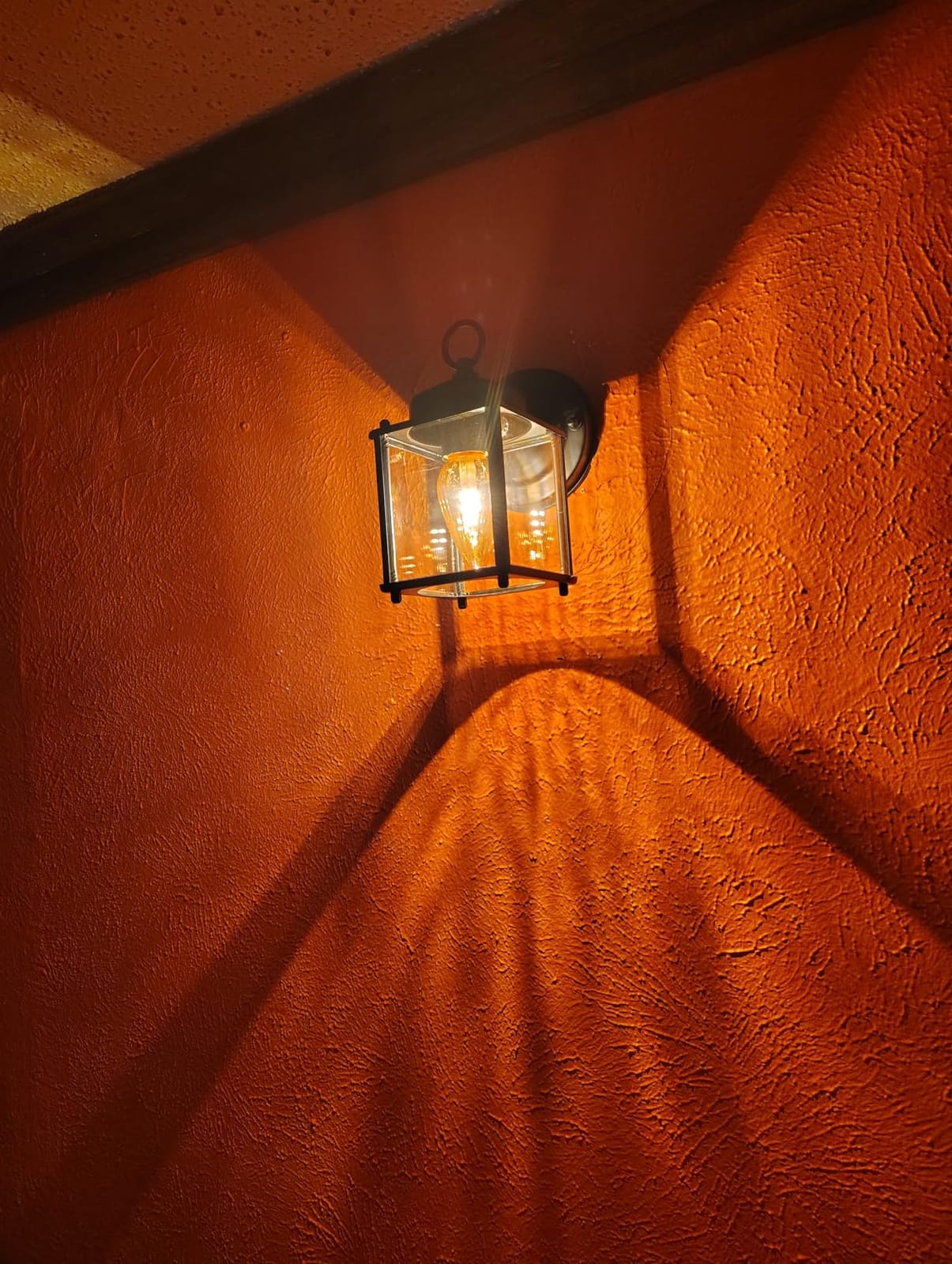
Construction is glass and iron with an anti-rust, anti-corrosion finish, and the open bottom means a bulb change takes one hand. It takes LED, incandescent or CFL E26 bulbs up to 60 watts, and the warranty is 24 months.
Like the other two-packs here, the practical value is symmetry. You get a matched pair for both sides of a door from a single purchase, which is also how the two-pack is most commonly used to line a deck or a set of steps.
Why beveled glass is a durability choice too
Seeded and beveled glass hides a lot. A fingerprint, a mineral spot from hard water spray, a faint smudge from a hose, all of it disappears into the texture. With flat clear glass, the same marks read as dirt on the fixture and make a modest lantern look neglected.
That is why the beveled version is a sensible pick for a home with a lawn, sprinklers and a hose that occasionally catches the entry. The style is doing a maintenance job as much as a decorative one.
Where it falls short
The compact 4.21-inch body produces modest light, and the 60-watt ceiling means you are limited to roughly an 800-lumen LED. On a wide exposed wall with no porch roof, you will want more coverage than this gives you.
Transit fragility is the recurring complaint. These fixtures are light and the glass is delicate, so inspect both shades on arrival. Some owners also feel the finish suits indoor accent use better than harsh coastal exposure, which is a fair caution within a year of salt air.
9. Westinghouse Burnham One-Light Exterior Lantern — Best Art Glass Finish
Westinghouse 6732800 Burnham One-Light Exterior Wall Lantern on Steel with Honey Art Glass, Oil Rubbed Bronze Finish, 1 Pack
Alloy steel with honey art glass
12.5 in H by 6 in W
Extends 9 in from the wall
5 in square back plate
Pros
- Art glass and alloy steel read as a genuine upgrade
- Five-year warranty is the second longest here
- Back plate covers common older light holes
- Standard E26 bulb base
Cons
- Finish photographs darker than the advertised bronze
- Glass reads cream rather than honey
- 5 in plate may not cover a wider footprint
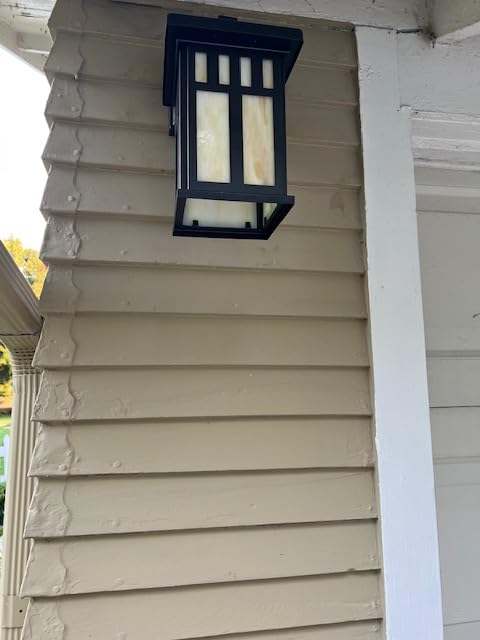
This is the only bronze fixture in the roundup, and the change in colour is dramatic. Against a white, grey or stone front door, an oil rubbed bronze lantern with honey art glass warms the entry in a way no black fixture can.
It measures 12.5 inches tall by 6 inches wide and extends 9 inches from the wall, which is a proper presence without being oversized. The 5-inch square back plate is worth checking before you buy, because that measurement determines whether it covers the holes left by the light it replaces.
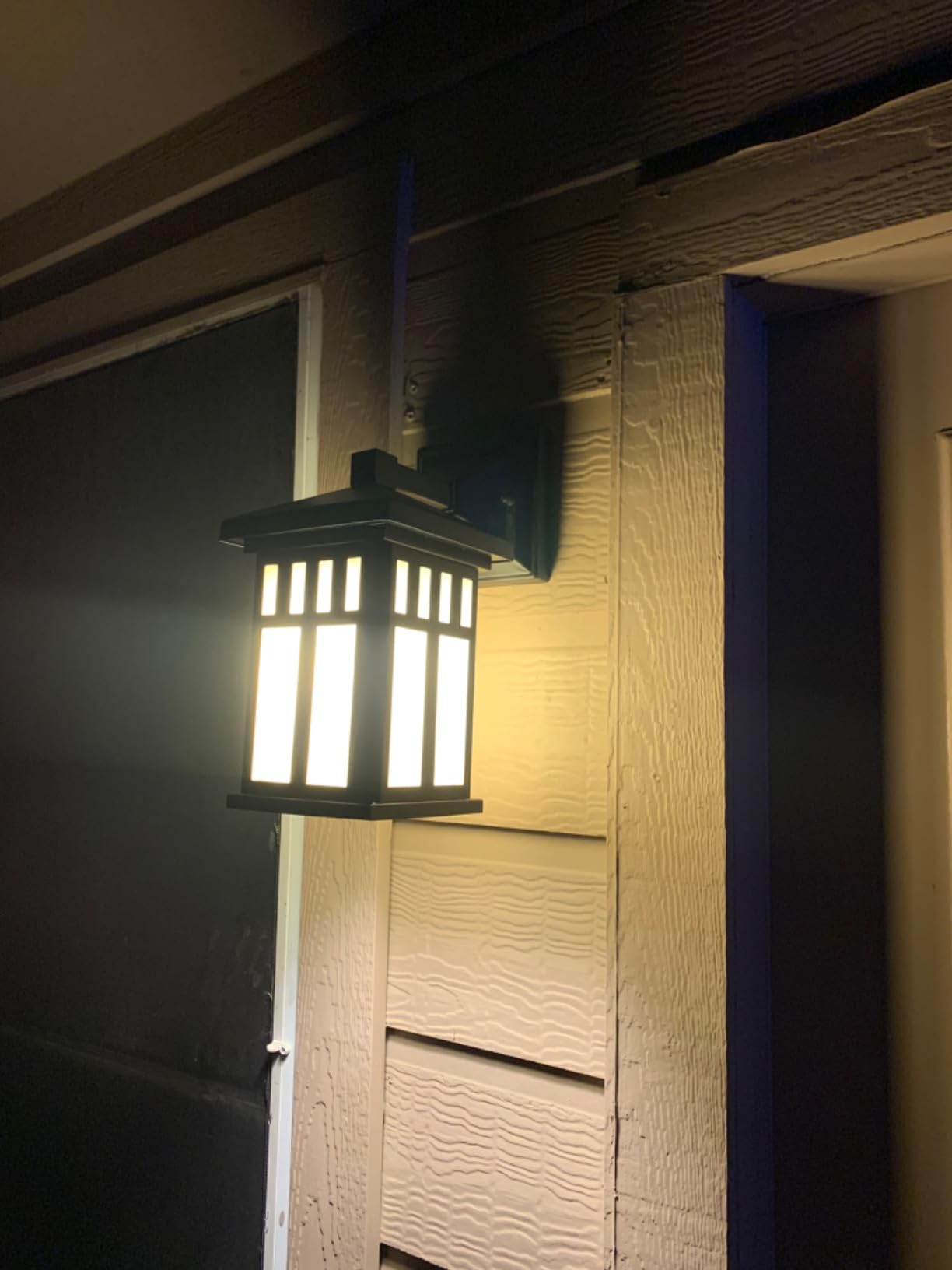
The body is alloy steel with a honey art glass shade, ETL and cETL listed, and it takes one standard E26 medium base bulb up to 100 watts. Published output is not stated, so brightness depends on the bulb you fit.
The warranty is five years, which is longer than every other pick in this roundup except the jelly jar’s ten-year cover, and owners treat this as a step up from a dated carriage light rather than a like-for-like swap.
Matching a bronze lantern to the rest of the entry
Bronze works when other warm metals already exist at the door. Match it to a bronze door handle, a bronze house number, a bronze kick plate or a bronze mailbox and the whole entry reads as deliberate. Put a bronze lantern on an entry with only black hardware and it reads as a leftover.
The art glass is the piece that does the heavy lifting. Swirled honey glass picks up low evening light and glows from within rather than sitting dark when the bulb is off, which is why it flatters a Craftsman or Craftsman-adjacent facade more than a very plain modern one.
Where it falls short
Colour accuracy is the repeated caveat. Owners report the finish photographing closer to black than the oil rubbed bronze in the listing, and the glass reading cream rather than honey. If bronze specifically is what you are after, that is worth knowing before you commit.
At 4.3 pounds this is the heaviest fixture in the group, and the 5-inch back plate may not cover a wider existing footprint, particularly a plate left behind by a larger old fixture. It is also smaller than some buyers expect for the money.
10. WIHTU Exterior Lighting Wall Mount — Best for Heavy Rain Exposure
WIHTU Exterior Lighting Fixture Wall Mount, Outdoor Porch Light Wall Sconce
Electrocoated waterproof and rust seal
4.6 in L by 4.1 in W by 10.65 in H
Explosion-proof tempered glass
E26 socket, bulb not included
Pros
- Electrocoating creates a genuinely tight seal
- Explosion-proof tempered glass resists impact
- All mounting tools and a manual are included
- Multiple heights and a two-pack option
Cons
- Bulb not included
- Listing gives conflicting 60W and 100W limits
- Modest 800 lumen potential
- No built-in sensor or smart control
The electrocoating process is the story on this one. Rather than painting a steel frame and hoping, electrocoating bonds the finish to the metal in a way that resists water and corrosion far better, and owners in the review data specifically credit it for holding up through repeated rain and heat.
The glass is described as explosion-proof tempered glass, which is a meaningful upgrade over the single-pane clear glass used on most budget lanterns. Tempered glass breaks into small grains instead of leaving a sharp edge, and it shrugs off the temperature swings that crack ordinary panes.
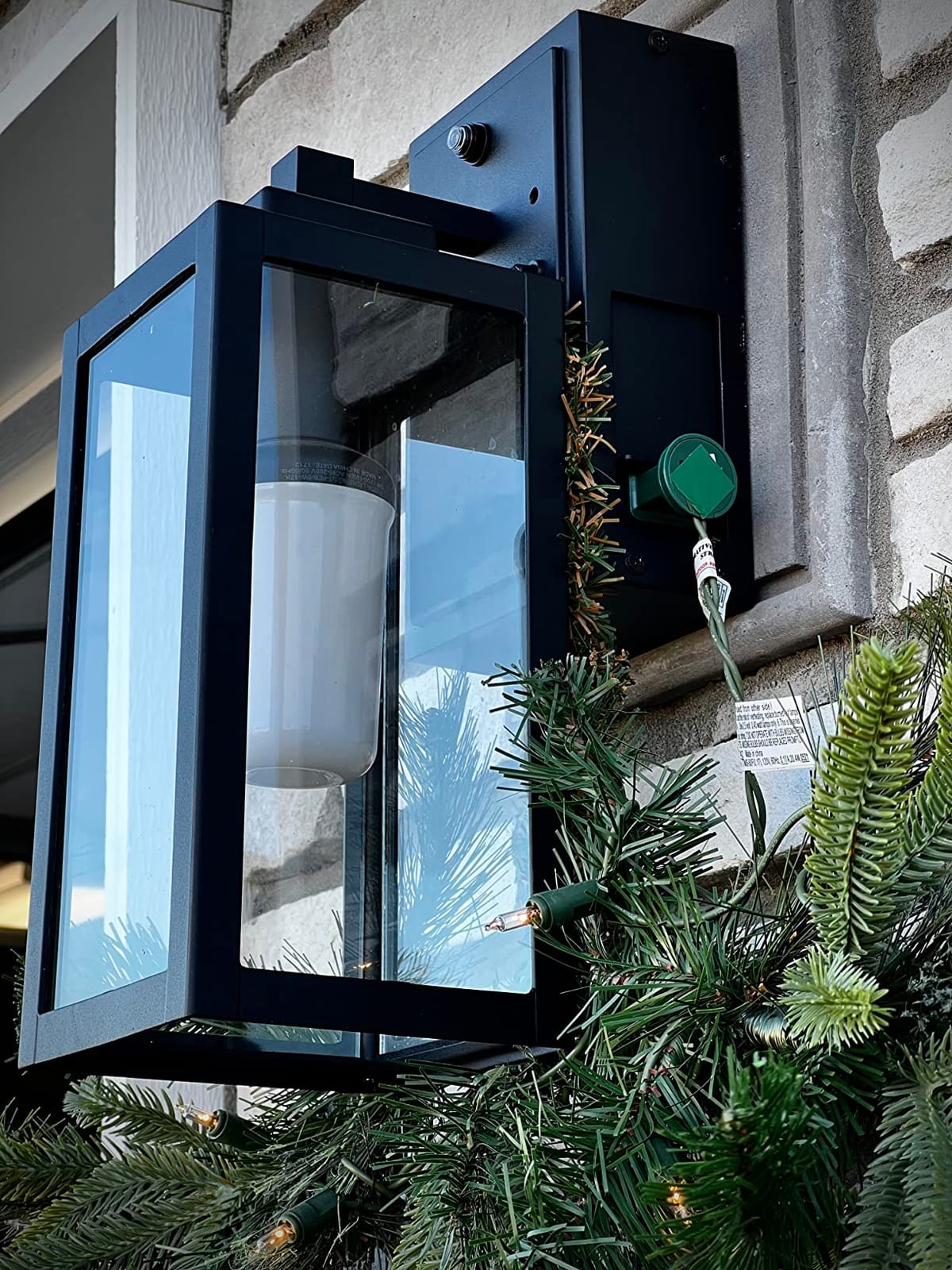
Stylistically it is a clean modern coach lantern at 4.6 inches long, 4.1 inches wide and 10.65 inches tall, which suits a contemporary entry, a garage wall or a patio door equally well. It is a hardwired wall mount on 120V AC.
All installation accessories and an instruction manual are in the box, and the range comes in several heights and finishes with a two-pack option, which makes it easier to run a consistent look across several walls of one house.
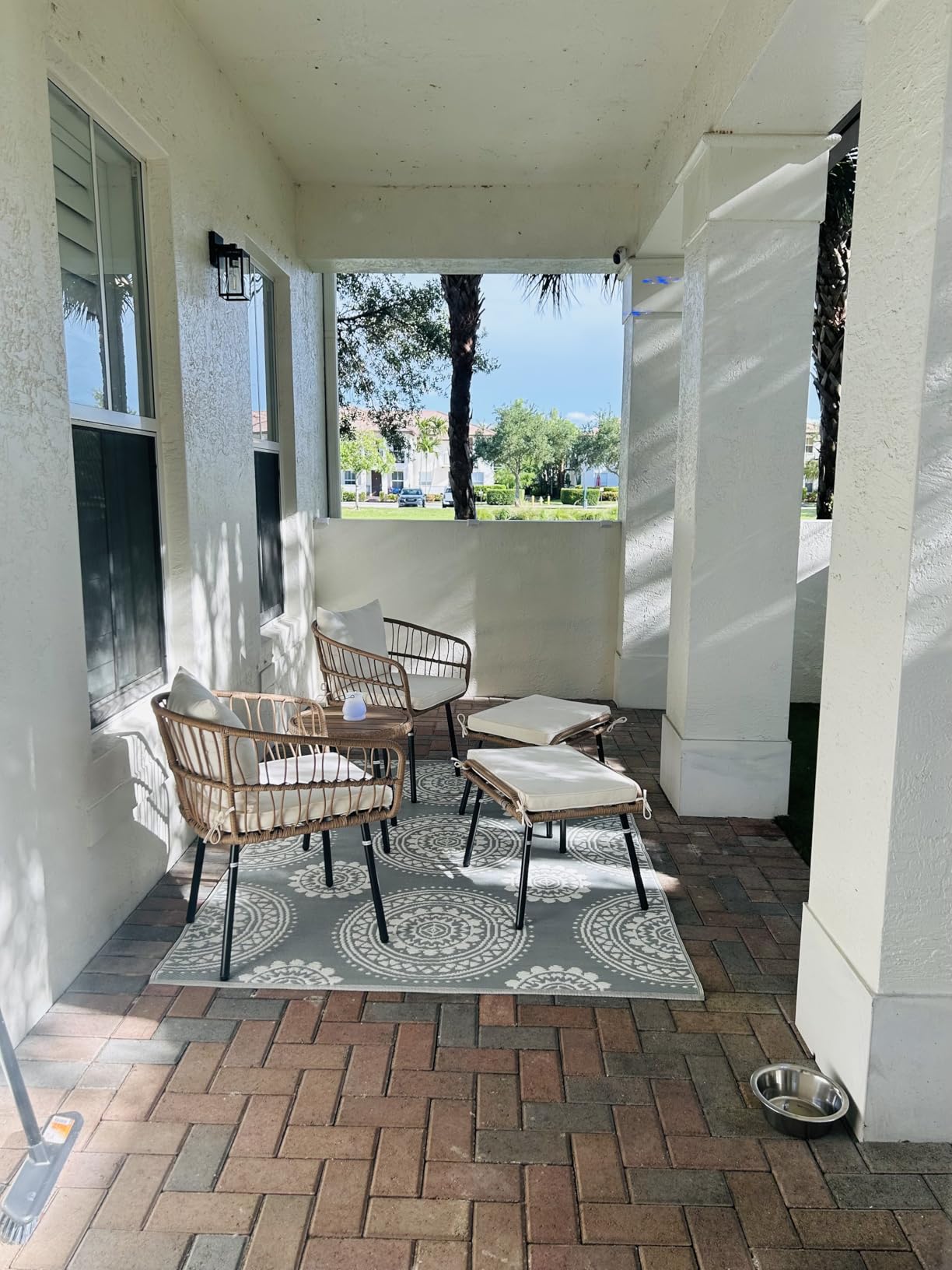
What electrocoating actually buys you
On an exposed wall with no roof above the fixture, water sits on the body and runs into every joint. Powder-coated and painted steel eventually blisters at those joints and the corrosion starts from the outside in. An electrocoated layer is much harder to breach, which is why this is the pick we would make for a wall that gets hit directly by rain.
The tempered glass adds a second layer. Combined with the sealed finish, this is the configuration least likely to be the one that ends up with rust streaks down the siding after two seasons.
Where it falls short
The product listing is inconsistent about wattage, citing both 60W and 100W maximum ratings. Check the marking on the fixture itself before you buy a bulb, because a wattage mismatch is the kind of small ambiguity that becomes a problem at the socket.
There is no sensor, no dusk-to-dawn behaviour and no smart control, and published output tops out at 800 lumens. For a large open entry in heavy rain country, pair it with a second fixture or choose a sensor model instead.
11. FILIYANO Motion Sensor Wall Light — Best Three-Mode Sensor
FILIYANO Motion Sensor Outdoor Wall Light Fixture, Dusk to Dawn, 1 Pack
PIR motion plus photocell sensor
5.3 in W by 12.2 in H
IP 65 rated, 0-40 ft at 220 degrees
Three lighting modes, E26 bulb not included
Pros
- Three modes including a mode that goes fully dark
- IP 65 rating for heavy rain and snow
- Powder-coated metal resists rust
- Rippled tempered glass diffuses glare
Cons
- Bulb not included so brightness is entirely the buyer's choice
- Mode changes happen at the wall switch
- Rippled glass is decorative rather than utilitarian
Three modes is the difference between a motion light you live with and a motion light you adjust once a year. This one offers auto, an energy-saving auto mode, and a manual override that holds for eight hours, and it is the only fixture here that can go completely dark when nobody is approaching.
It is also the only one in the roundup with a stated IP 65 rating, which is a more meaningful durability signal than a general wet-location claim because it is a specific number from a specific standard.
Detection runs 0 to 40 feet at 220 degrees, and the sensor is designed to respond to people, vehicles and animals while ignoring wind and rain. That claim matters more than it sounds on a street-facing door, where a naive sensor will fire at every passing car.
The body is metal with a heavy-duty powder-coated black finish, and the shade is water-rippled tempered glass that diffuses the light instead of throwing glare. Output reaches 1200 lumens, the highest figure in this group, and the warranty is two years from the seller.
How the three modes change daily use
The energy-saving mode is the one owners single out. Instead of holding a dim glow all night like a two-stage sensor, it goes fully off and only lights on approach, which is the behaviour most people imagine when they buy a motion light in the first place.
The override mode solves the case that frustrates people about sensors generally: the night you are carrying groceries, dragging in a suitcase or fumbling for keys, and you want the light on without triggering anything. Eight hours is more than enough for a long evening.
Where it falls short
Brightness is entirely a function of the bulb you supply, and none is included. A low-output bulb in a rippled shade will underwhelm next to what the 1200-lumen figure implies.
Mode changes are made at the wall switch, so changing settings means a ladder. And the rippled glass is a decorative choice that softens the light considerably, which is a genuine loss for anyone who wants a crisper beam on the door.
12. VIANIS Motion Sensor Wall Lantern — Best for Tall Statement Entries
VIANIS Motion Sensor Outdoor Wall Lantern, Dusk to Dawn Outdoor Porch Light
Die-cast aluminium with gold trim
8.2 in L by 7 in W by 15.7 in H
40 ft detection at 220 degrees
3000K warm white, E26 bulb not included
Pros
- Tallest body here gives a door real presence
- One-click switch remembers the last mode
- Die-cast aluminium resists rust and corrosion
- Tempered glass rather than fragile panels
Cons
- Bulb not included and non-dimmable bulbs can flicker
- 4 pound body is the heaviest here
- Water resistant rather than fully waterproof
- Gold trim is ornate
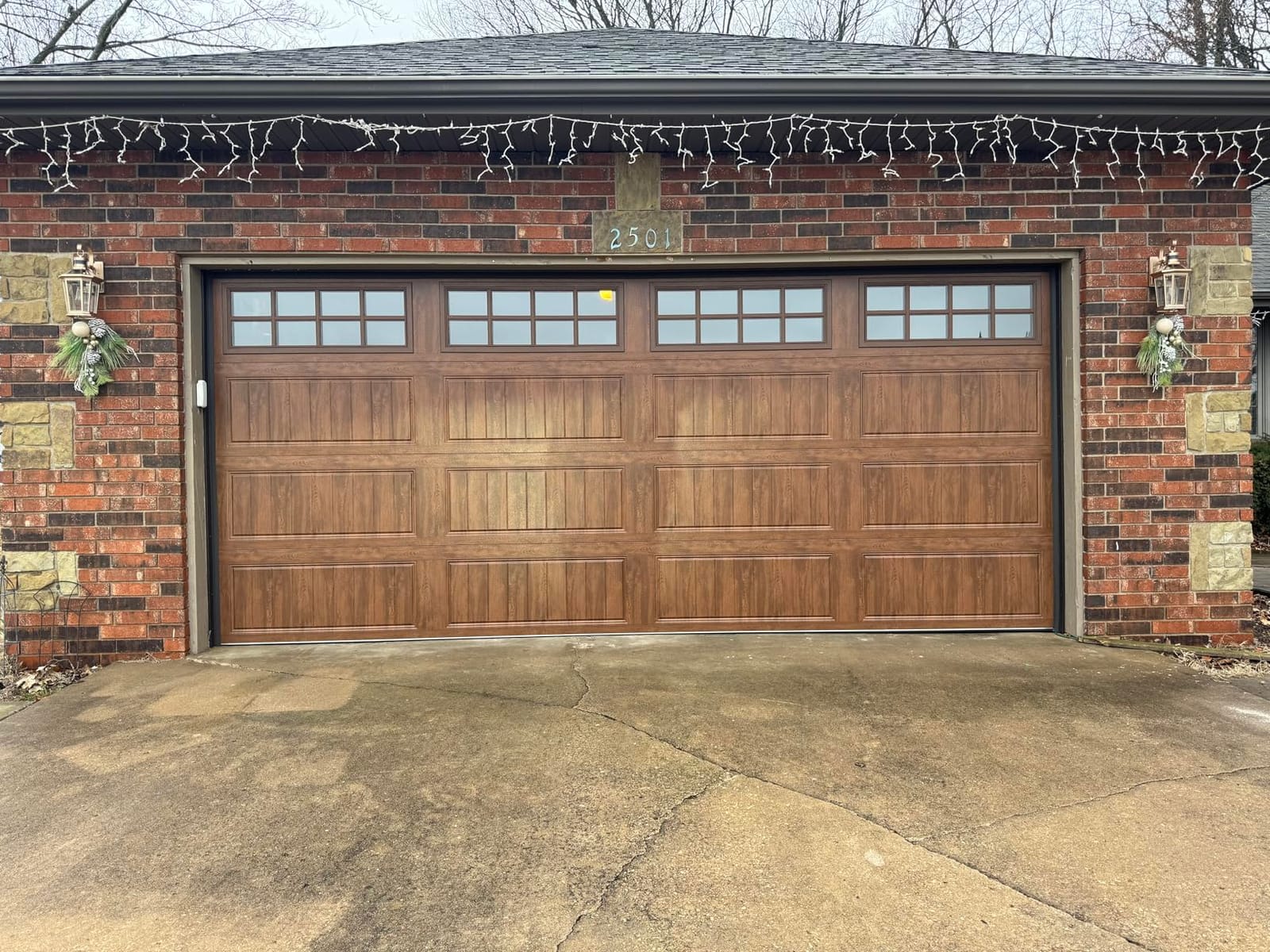
At 15.7 inches tall, this is the largest fixture in the roundup, and it exists for a specific situation: a tall front door, a double entry, or a facade where a small lantern would disappear against the wall. The gold-trimmed geometric frame and the die-cast aluminium body give it the presence to carry that scale.
The mode control is the smart part. A single click at the wall switch cycles through DIM, ECO+ and Override, and the light remembers the last setting, so you set it once and it stays there.
The lighting behaviour is the familiar pattern: 30 percent at dusk, full output on motion, automatic off at dawn, with detection reaching 40 feet at 220 degrees. Colour temperature is 3000K, a warm white that stays welcoming rather than clinical.
It ships pre-assembled with an open bottom, so bulb changes need no tools, and the glass is durable tempered transparent glass rather than the fragile single-pane panels used on cheaper lanterns. The warranty is three years, the longest of the sensor options.
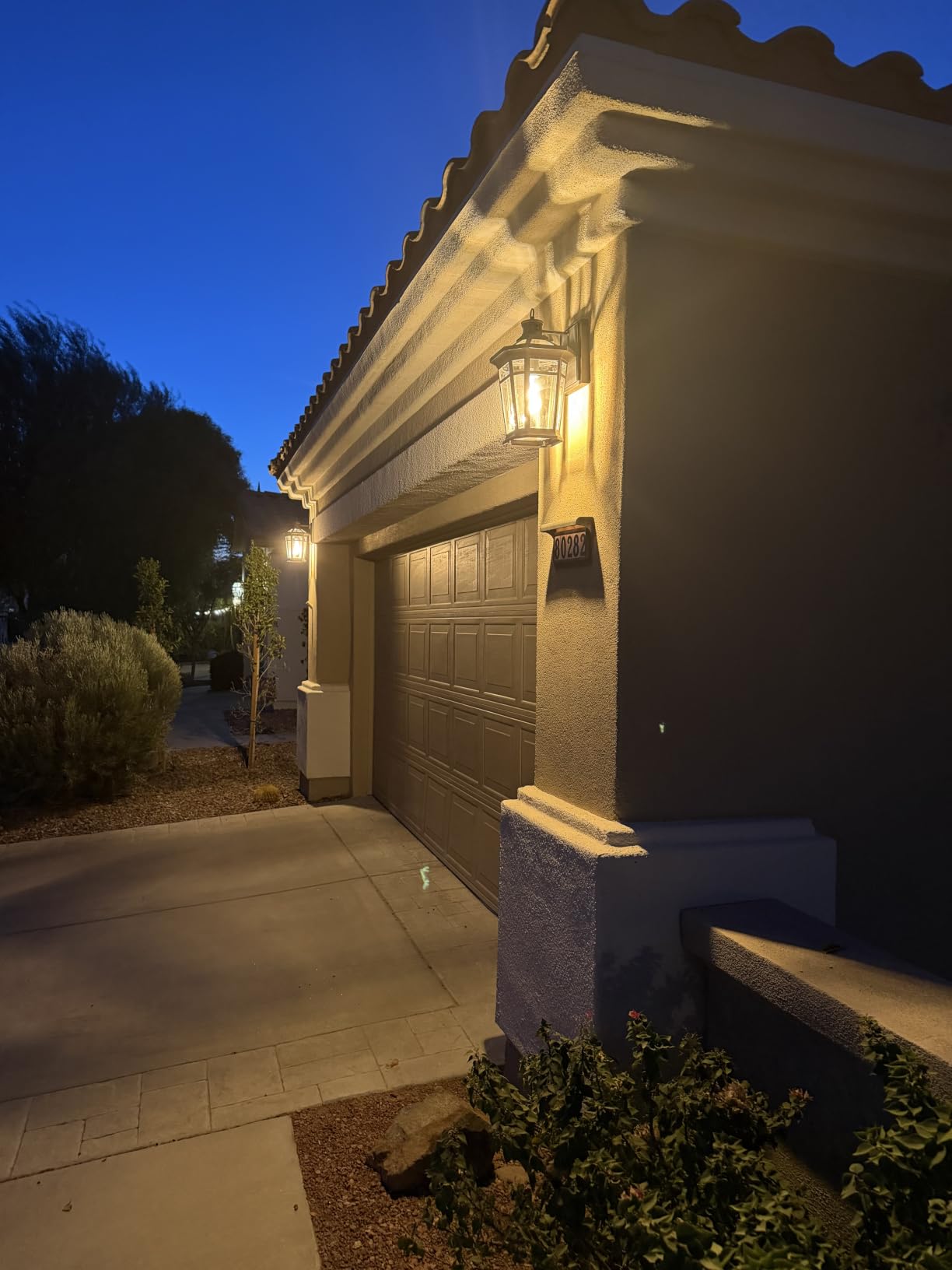
When a tall fixture earns its place
Proportion is the entire argument. A 15.7-inch body on a 96-inch double door reads as deliberate, while the same fixture on a 32-inch single door with a 10-inch pier would look like it belongs to a different building.
Owners also report that the remembered mode setting is what makes it stick, because a sensor light you have to reconfigure from a ladder every few months gets left on permanently, which defeats the purpose of buying it.
Where it falls short
It is listed as water resistant rather than fully waterproof, so a sheltered or covered mounting position is the sensible choice. On a wall with no overhang, pick a fixture with a more aggressive sealing specification.
At 4 pounds it is the heaviest body here, and the gold trim is deliberately ornate, which will not sit well against a strictly minimal entry. Use a dimmable LED or incandescent bulb, since non-dimmable bulbs can flicker against the sensor electronics.
How to Choose an Outdoor Wall Lantern in Six Steps
This is the sequence we would follow, and it takes about ten minutes with a tape measure and the spec pages of whatever you are considering.
Measure the space, not the fixture. Note the width of the door, the width of the brick pier or column beside it, and the distance from the door frame to any obstruction. A lantern body should be roughly half the width of the door, and never wider than the pier it hangs on.
Confirm the wet-location rating. Look for cULus, ETL, UL or an IP figure on the listing. If the only claim is the word “weatherproof,” treat the fixture as indoor-rated and move on.
Choose the light source. All 12 picks here use a replaceable E26 medium base bulb, so you can choose wattage, colour temperature and dimming after the fact. Anything that requires a specific bulb shipped with the fixture is harder to service later.
Decide on sensor behaviour. Motion, dusk-to-dawn, both, or none. Motion is best for a side approach or a long driveway; dusk-to-dawn is best for a covered porch where you want the light on continuously. Both is the most common answer at a front door.
Match the finish to the hardware. Black to black, bronze to bronze, and if your door hardware is mixed, match the lantern to the handle rather than to the door.
Check the back plate before you buy. Measure the round or square footprint of the fixture you are replacing. A plate that is too small will not cover the old mounting holes and you will be patching.
Wet vs. Damp Location Ratings, Explained
A damp-rated fixture is approved for a covered, sheltered location such as under a porch roof. A wet-rated fixture is approved for direct exposure to rain, snow and spray, and it carries a specific listing standard such as cULus wet location, ETL wet, or an IP rating.
A front door lantern on a wall with no overhang above it must be wet rated. The bulbs people typically fit in these fixtures run hot, and water running down a body that was only ever damp rated is the most common root cause of the early failure complaints in this category.
When a listing says “waterproof” with no standard attached, look for the certification mark instead. In this roundup the electrocoated model and the IP 65 rated model state a specific figure, and several others carry a cULus or ETL wet-location listing, which is the equivalent claim in North American terms.
Mounting Height and Placement
Mount a front door lantern so its centre sits 66 to 80 inches above the finished ground, and centre it on the door rather than on the wall. Leave 6 to 8 inches of clearance between the lantern body and the door frame so the door can open fully without touching the glass.
For a single door, place one lantern on each side at a matching height. For a double door, either mount two flanking the pair or one centred above, and if you choose two, keep the spacing symmetrical about the door centre line.
Check the back plate against the existing box before you climb the ladder, and make sure the fixture clears anything that swings or opens, including a storm door and the edge of a porch roof.
How Many Lumens Do You Need at a Front Door?
Roughly 400 to 800 lumens per lantern is the useful range for a front door under a porch roof. On a fully exposed wall with no overhang, go higher, closer to 1000 to 1200 lumens per fixture, or install two.
Colour temperature matters as much as output at this specific spot. Warm white at 2700 to 3000K reads as a welcome and lets the finish of the fixture show. Cool white above 4000K reads as a security floodlight, and the neighbourhood notices.
Dimming is a reasonable expectation for a hardwired front door lantern, but only with a dimmable bulb and a compatible wall dimmer. A non-dimmable bulb in a fixture with sensor electronics can also flicker, which is the most common cause of a “faulty” sensor that is not faulty at all.
Materials, Finishes and Hardware Matching
Cast aluminium and electrocoated steel are the two body constructions worth paying for. Cast aluminium will not rust, and electrocoating bonds a corrosion-resistant layer to steel rather than sitting on top of it. Plain painted steel is fine under a deep porch roof and marginal on an exposed wall.
On finishes, matte black is the safest default because it hides dust, salt spray and minor fading better than a high-gloss finish. Antique bronze and oil rubbed bronze add warmth but show water spotting more readily, and polished brass in a coastal climate will be the first fixture on the block to tarnish.
Glass is an underrated material choice. Beveled and seeded glass disguise water spots and fingerprints, frosted glass softens output at the cost of brightness, and flat clear glass shows every mark but maximizes light. If you have sprinklers aimed anywhere near the entry, textured glass is the practical answer.
Motion Sensor vs. Dusk to Dawn: Which Do You Need?
Motion sensing pays off when the approach is long. A driveway, a side path or a door at the end of a walkway means a sensor that fires at 40 feet saves power and still lights the entrance on arrival. The trade is false triggers from traffic, which is why a wider field of view is not always better on a street-facing door.
Dusk to dawn is simpler. A photocell turns the light on at sunset and off at sunrise, and a dim two-stage version holds a low glow overnight before jumping to full output. It suits covered porches and doors close to a walkway where constant light is welcome.
If you can only have one, match the control to the geometry. Sensor for a long approach, photocell for a close covered entry. The three-mode fixtures in this roundup let you change your mind later without rewiring anything.
Installation: Hardwired, Battery and Solar
All 12 picks are hardwired 120V fixtures that mount to an existing electrical box through a back plate. Replacing an existing sconce one for one is a reasonable homeowner job: kill the breaker, confirm the power is dead with a tester, remove the old fixture, match the bracket, connect the wires, and caulk the top edge of the back plate where it meets the wall.
Adding a new box, running a new circuit, or working on a wall where no wiring exists is a different job. That is where an electrician earns the fee, particularly on older homes where the existing wiring may be aluminium or undersized for a modern load.
For renters, hardwiring is usually off the table. Solar and battery lanterns avoid the wiring entirely, and while we found no solar wall lantern that reached the durability of a wet-rated hardwired fixture, they are a reasonable choice for a side gate or a rental where the only alternative is no light at all. If you are lighting a whole patio or entry, we covered portable and seasonal options in our guide to the best mosquito repellent lanterns for the same no-wiring problem.
Problems Owners Report, and How to Avoid Them
Rust is the first complaint in almost any outdoor lighting review thread, and the pattern is consistent. It shows up within a season or two on cheap steel fixtures in wet or coastal climates, and it starts where the coating is thinnest, which is the seam at the back plate and the bottom edge of the frame. Choosing an aluminium or electrocoated body removes most of the risk.
Water behind the glass is the second. It gets in through an undersized or unsealed back plate, and it fogs the inside of the shade. The fix is mechanical rather than product-related: run a bead of exterior sealant around the top edge of the back plate where it meets the siding, and let it cure before the fixture goes back on.
Motion sensors that fire at nothing are the third. A 220-degree field of view pointed at a street will pick up cars, and a sensor with no sensitivity adjustment gives you no way to fix it short of physically repositioning the fixture. That is the single strongest argument for a three-mode sensor over a fixed one.
Cracked glass in transit is the fourth, and it is a packaging problem rather than a quality problem. Inspect the shade before you install it, keep the original packaging in case a claim is needed, and do not discard the box until the fixture has survived a season.
The fifth is a size mismatch, which is entirely avoidable. A large lantern on a narrow pier looks cramped, and a slim one on a wide door surround disappears. Measure first, then choose.
Frequently Asked Questions
What is the best outdoor light for a front door?
A wet-location-rated wall lantern in a finish that matches your door hardware, with a body roughly half the width of the door, mounted centred 66 to 80 inches above the ground. Most homes do best with a matched pair flanking a single door rather than one large fixture. A pair of mid-size lanterns gives better coverage and a more balanced look.
How do you choose outdoor wall sconces?
Measure the door and the pier beside it, then confirm the fixture is wet-location rated rather than merely described as weatherproof. Choose a replaceable E26 bulb so you control brightness and colour temperature later, decide whether you need motion or dusk-to-dawn behaviour, match the finish to your door hardware, and check the back plate size against the fixture you are replacing.
What is the best material for outdoor lanterns?
Cast aluminium and electrocoated steel are the two best materials for an exterior wall lantern. Aluminium will not rust, and electrocoating bonds a corrosion-resistant layer to steel instead of sitting on top of it. Plain painted steel is acceptable under a deep porch roof but is the most likely to pit and streak on an exposed wall in a wet or coastal climate.
How high should I mount a light beside my front door?
Mount the lantern so its centre sits 66 to 80 inches above finished ground, centred on the door rather than on the wall. Leave 6 to 8 inches of clearance between the fixture body and the door frame so the door opens fully. If you are fitting two lanterns, set them at an identical height on each side of the door.
Do outdoor wall lanterns need to be wet rated?
If the fixture is on a wall with no roof or overhang above it, yes, it must be wet-location rated. Look for a specific certification such as cULus wet location, ETL wet, or an IP rating. A damp-rated fixture is only approved for a sheltered position such as under a porch roof, and water running into a damp-rated body is the most common cause of early failure.
How many lumens do you need for a front door light?
Aim for roughly 400 to 800 lumens per lantern under a porch roof. On a fully exposed wall with no overhang, go higher at around 1000 to 1200 lumens per fixture, or install two. Warm white at 2700 to 3000K reads as a welcome, while anything above 4000K looks like a security floodlight.
Final Verdict for 2026
If you only buy one, take the Designers Fountain Preston 8 Inch Outdoor Wall Light. It is the least glamorous fixture we looked at and the one we would fit to our own door: a steel body with a waterproof seal, a cULus wet-location listing, an open bottom for bulb changes, and a review history of more than 11,000 owners that tells you it will still be there in ten years.
Buy the two-pack modern option if your door is contemporary and you want a matched pair from a single purchase. Choose the cast aluminium traditional lantern for an older facade, the electrocoated model for a wall that takes direct rain, and the three-mode sensor if you would rather the light go fully dark when nobody is approaching.
Whatever you choose, measure the pier before you order, check the back plate against the light you are replacing, and fit a dimmable warm-white LED bulb at around 2700K. Those three details decide whether a front door lantern looks right and keeps working, and they cost nothing.