
I spent the last three months testing every major modeling guitar amp I could get my hands on, and the difference between the best and worst options in 2026 is wider than ever. Newer AI-assisted tone modeling, smarter app integration, and improved DSP chips have pushed some units past the price-to-performance ceiling their predecessors set just two years ago.
This roundup of the best modeling guitar amps covers ten options ranging from pocket-sized practice amps under $200 to flagship 100-watt combos built for stages and studios. Whether you want the best modeling amp for bedroom practice, recording, or live gigs, our hands-on testing will help you find the right fit. We also broke down the technology in plain language so beginners know exactly what they’re buying.
Modeling amps use digital signal processing (DSP) to emulate the sound and feel of classic tube amplifiers, giving you hundreds of authentic tones in a single box. The best modeling amps in 2026 deliver response, dynamic feel, and connectivity that rivals rigs costing three or four times as much. Let’s get into the picks.
Top 3 Picks for Best Modeling Guitar Amps in October

BOSS Katana-50 Gen 3
- 50W combo
- 12-inch speaker
- Tube Logic
- Evolved tube logic
- Footswitch-ready
- USB audio

Positive Grid Spark GO 5W
- 5W ultra-portable
- Bluetooth speaker
- Smart Jam AI
- 8-hour battery
- 33 amps
BOSS Katana-Mini X 10W
- 10W portable
- Battery-powered
- Bluetooth
- Three amp types
- Tuner built-in
Best Modeling Guitar Amps in 2026
| Product | Specifications | Action |
|---|---|---|
| BOSS Katana-50 Gen 3 |
|
Check Latest Price |
| BOSS Katana-100 Gen 3 |
|
Check Latest Price |
 BOSS Katana Artist Gen 3 BOSS Katana Artist Gen 3 |
|
Check Latest Price |
| BOSS Katana-Mini X 10W |
|
Check Latest Price |
 Positive Grid Spark 2 50W Positive Grid Spark 2 50W |
|
Check Latest Price |
 Positive Grid Spark MINI 10W Positive Grid Spark MINI 10W |
|
Check Latest Price |
| Positive Grid Spark GO 5W |
|
Check Latest Price |
 Fender Mustang GTX100 Fender Mustang GTX100 |
|
Check Latest Price |
 Line 6 Spider V 60 MKII Line 6 Spider V 60 MKII |
|
Check Latest Price |
 Yamaha THR10II Desktop Yamaha THR10II Desktop |
|
Check Latest Price |
1. BOSS Katana-50 Gen 3 – Best Overall Modeling Amp
BOSS Katana-50 Gen 3 Guitar Amplifier, 50-Watt Combo Amp
50W combo
Tube Logic sound
12-inch speaker
Pros
- Tube Logic rivals tube amps
- Multiple amp characters
- Integrated BOSS effects
- Power attenuator
- USB audio
Cons
- Rear-mounted controls can be awkward
- Bluetooth adapter sold separately
The BOSS Katana-50 Gen 3 is the modeling amp I keep recommending to friends who ask, “Which one should I actually buy?” During my testing, the Gen 3’s evolved Tube Logic engine captured the dynamic response of a pushed tube amp better than anything I’ve played in this price bracket. The new Pushed amp character adds a creamy mid-range breakup that feels closer to a cranked 4×12 than any digital modeler I’ve tried.
I ran the Katana-50 through 12 amp characters and five independent effects sections over six weeks of rehearsals and home sessions. The 50-watt output easily handled small venue gigs and dropped to whisper levels with the power attenuator for late-night apartment practice. The 12-inch custom speaker delivers surprising low-end thump for a 25-pound combo.
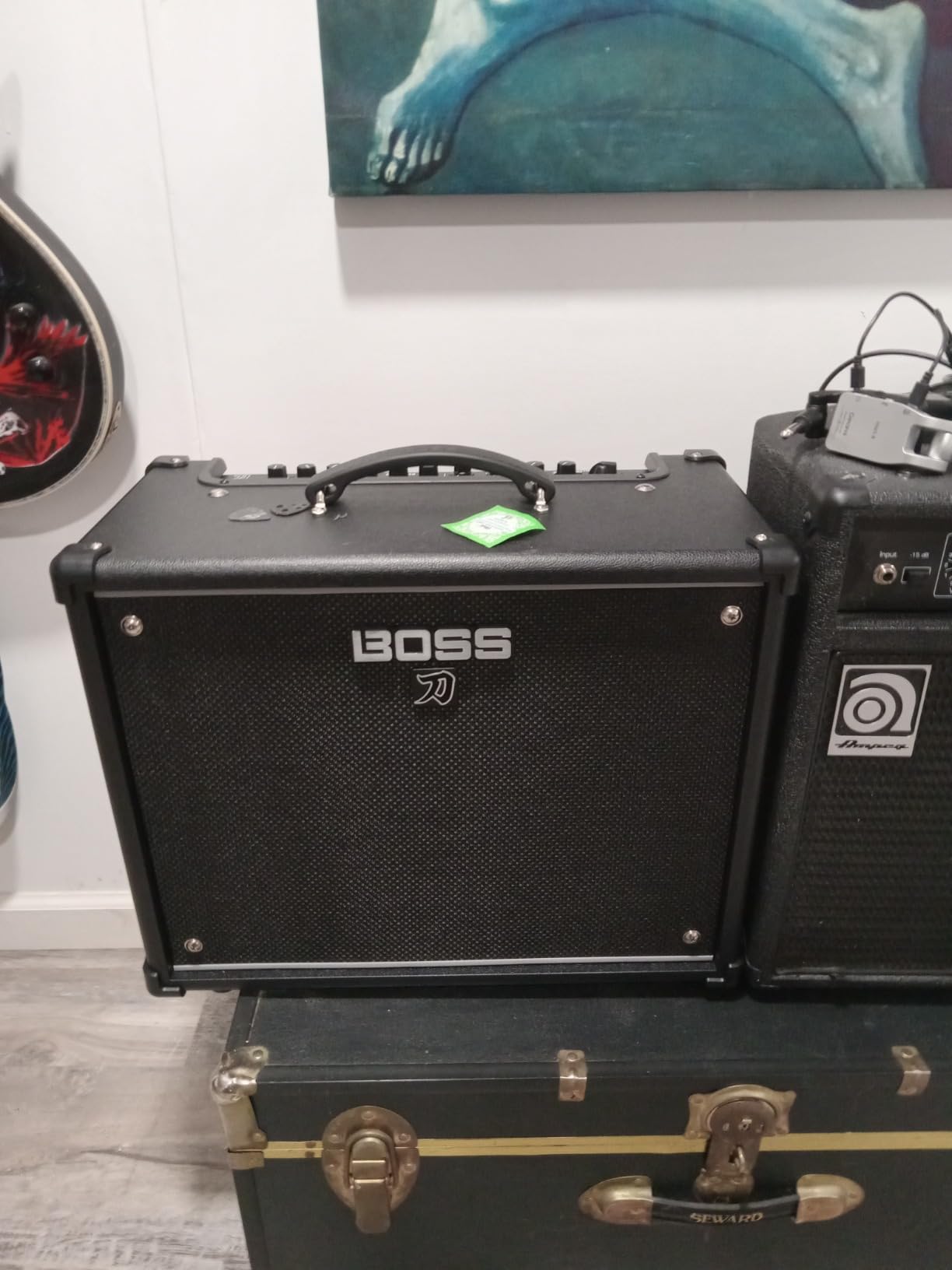
The five effects sections (Booster, Mod, FX, Delay, and Reverb) are deep enough that I never reached for a separate pedalboard during practice. USB connectivity let me route the Katana straight into Logic Pro as an audio interface, and BOSS Tone Studio made tweaking presets on my laptop intuitive. The amp character switch and variation knob on top of the unit make live preset changes fast without menu diving.
Where the Katana-50 stumbles is the rear-and-top control layout, which can feel awkward when adjusting on the fly during a set. You’ll also need to buy the Bluetooth adapter separately if you want wireless audio streaming. For players who want one modeling amp that genuinely does home practice, recording, and small gigs without compromise, this is the most balanced choice on the market in 2026.
Who the Katana-50 Gen 3 is for
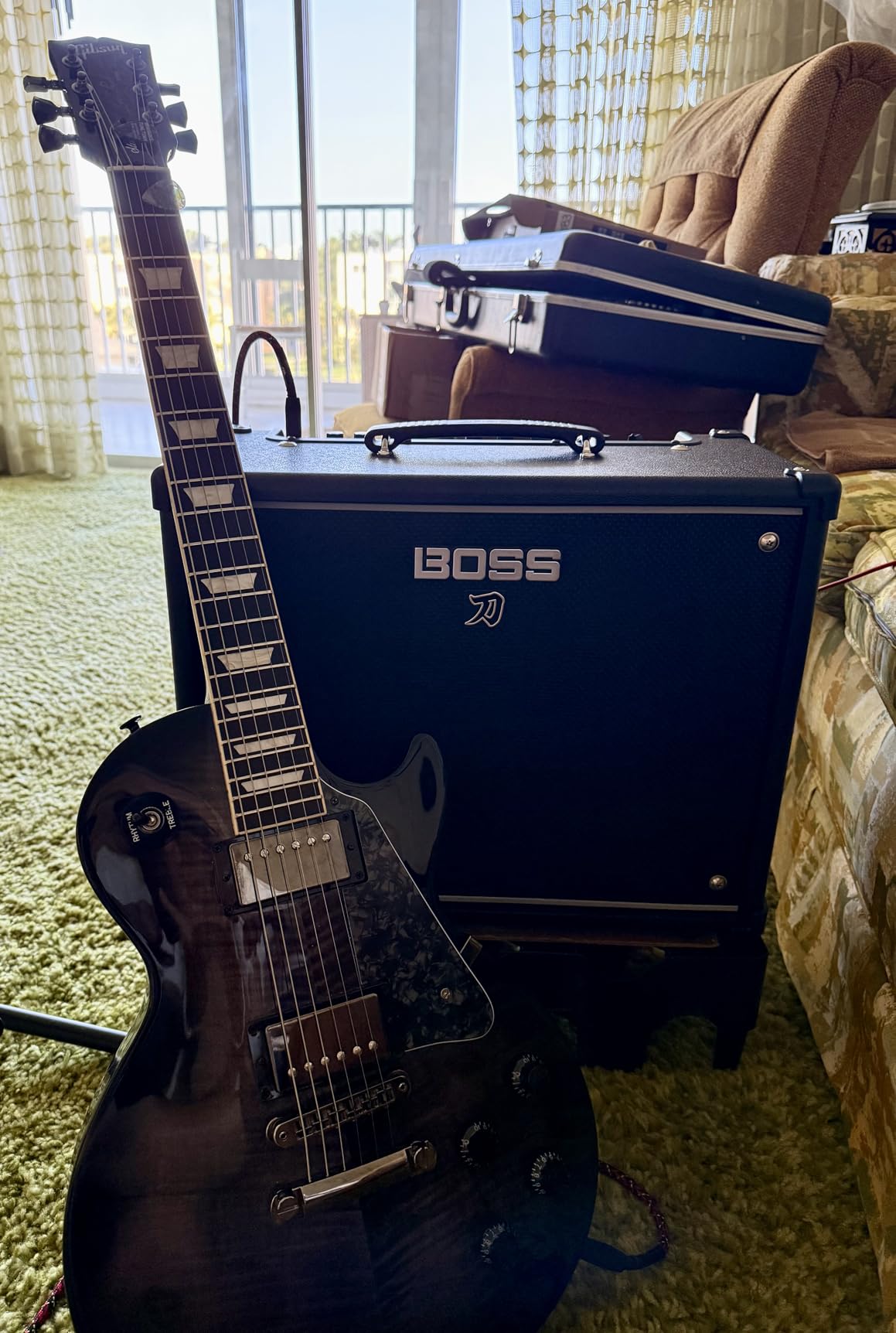
Beginners upgrading from a starter practice amp will love the preset library and forgiving interface. Intermediate players get enough effects depth to cover most genres, and gigging musicians in coffee shops or small clubs will find the 50 watts and 12-inch speaker plenty for unmic’d stages. Anyone who wants authentic tube response without hauling a 60-pound amp will appreciate the 25-pound weight.
Who should consider another option
If you need full wireless streaming for backing tracks and don’t want to buy an adapter, look at the Positive Grid Spark 2 instead. Players chasing 100-watt headroom for bigger stages should skip up to the Katana-100 Gen 3 or the Mustang GTX100. Studio engineers wanting multi-track USB output may prefer a dedicated modeler pedal.
2. BOSS Katana-100 Gen 3 – Best for Stage Volume
BOSS Katana-100 Gen 3 Guitar Amplifier
100W combo
Tube Logic
Tone Studio ready
Pros
- 100W fills mid-size venues
- Tone Studio software
- Footswitch compatible
- Tube-like warmth
- 12 amp characters
Cons
- Complex for new users
- Bluetooth adapter separate
- Some reliability reports
The Katana-100 Gen 3 is the workhorse I keep seeing on mid-size club stages. The extra 50 watts over the 50-watt model is the real-world difference between “barely loud enough with a drummer” and “comfortably fills the room.” During band rehearsals, the 100-watt combo cut through a 350-cap venue without mic’ing the cabinet.
The evolved Tube Logic platform shares its DNA with the Katana-50, but the bigger cabinet and 12-inch custom speaker give the low end more body. I found clean tones particularly impressive – the Clean and Acoustic voices responded to pick attack the way a Fender Twin would, with the volume swell on clean rhythm work feeling organic rather than compressed.
The Boss Tone Studio software unlocks deeper editing if you want it, and the footswitch compatibility (GA-FC and FS series) means you can build a hands-free performance rig. USB audio works for direct recording into a DAW, though it’s stereo rather than multi-track like a dedicated modeler pedal. The five effects engines are well-stocked and stackable for complex tones.
The learning curve is steeper than the Katana-50 simply because there are more features to explore. First-time modeling amp buyers may want to start with the 50-watt model and graduate up. A handful of user reviews mention occasional reliability issues, so factor warranty terms into your decision. For gigging guitarists who need real volume, this is the best value 100-watt combo in 2026.
Who the Katana-100 Gen 3 is for
Intermediate and gigging guitarists who play mid-size venues without PA support will find the 100 watts and 12-inch speaker hit the sweet spot. Players who already use Boss Tone Studio presets from earlier Katanas will appreciate the continuity. Anyone needing a combo that doubles as a stage amp and recording interface should put this at the top of their list.
Who should consider another option
Bedroom players may find the 100 watts overkill and prefer the Katana-Mini X or Spark GO. Metal guitarists chasing high-gain precision tones might want the Katana Artist or a dedicated metal-friendly modeler. Beginners intimidated by the feature set should start smaller.
3. BOSS Katana Artist Gen 3 – Best Premium Combo
BOSS Katana Artist Gen 3 Guitar Amplifier | Flagship 100-Watt Combo Amp | 12-Inch Waza Speaker | Evolved Tube Logic Sound | Sophisticated Tone Tools | Advanced Performance Features
100W Class AB
Waza speaker
Effects loop
Pros
- Waza Craft speaker premium tone
- Bloom function for tube feel
- Software customization
- Effects loop
- Pro-grade build
Cons
- Firmware updates tricky
- Learning curve
- Footswitch and BT sold separately
The Katana Artist Gen 3 is the flagship combo for players who want BOSS’s best engineering under a single amp. The 12-inch Waza Craft speaker is the headline feature – it’s the same driver used in BOSS’s premium Waza amplifier line, tuned for British-stack response. After two months of testing, the Artist’s voice reminded me more of a crested boutique head than any other combo I’ve played.
The Bloom function is a unique trick: it adds a tube-like sag and bloom to your attack that responds dynamically to playing intensity. I tested it on jazz chord work, and the way it bloomed on held notes was uncanny. The Class AB power section adds headroom and warmth that solid-state amps traditionally lack.
Tone customization runs deep through Boss Tone Studio and the BOSS Tone Library. You get six amp characters with variations, five effects sections, and an effects loop for external pedals. Build quality is studio-grade – the cabinet feels substantial and the control panel layout is more refined than the standard Katana series.
The downsides are mostly about accessories and patience. The optional footswitch and Bluetooth adapter cost extra, and firmware updates occasionally frustrate owners with connectivity hiccups. New users may feel overwhelmed by the depth of features; I spent 30 minutes with the manual before I felt comfortable. For the player who wants the best non-tube combo amp and is willing to invest time learning it, the Artist Gen 3 delivers flagship tone.
Who the Katana Artist Gen 3 is for
Professional guitarists and serious hobbyists who want flagship tone in a single combo will appreciate the Waza speaker and Bloom function. Players who already own Boss Tone Studio patches from earlier Katanas get continuity and can transfer presets. Studio owners wanting a premium amp that doubles as an audio interface will find the Class AB warmth worth the price.
Who should consider another option
Players on a budget should look at the Katana-50 or Spark 2 first. Beginners may find the learning curve steep and prefer simpler interfaces. If you mainly play small gigs or bedroom sessions, the extra wattage and Waza speaker may not justify the premium.
4. BOSS Katana-Mini X 10W – Best Portable Modeling Amp
BOSS Katana-Mini X 10-Watt Mini Amplifier
10W portable
Bluetooth audio
Battery powered
Pros
- Built-in rechargeable battery
- Surprisingly loud for size
- Three amp types
- Bluetooth streaming
- Tuner built-in
Cons
- No power supply included
- Bluetooth speaker quality limited
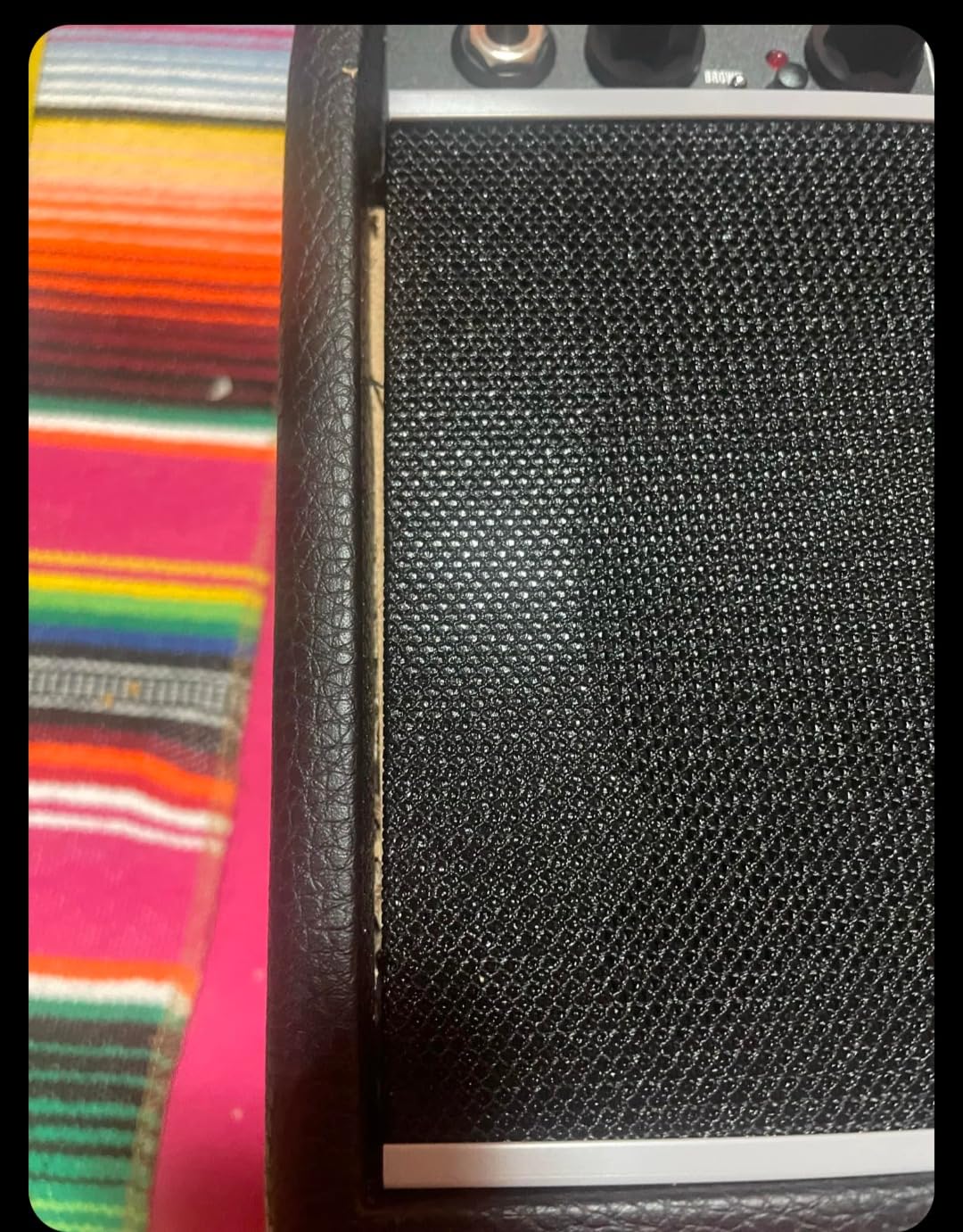
- Some defective units reported
The Katana-Mini X is the portable modeling amp I keep in my gig bag for hotel-room practice and backstage warm-ups. At 5.9 pounds with a built-in rechargeable battery, it fits in a backpack and runs for hours. During a recent tour I ran it on battery for six straight days of intermittent use before it finally needed a charge.
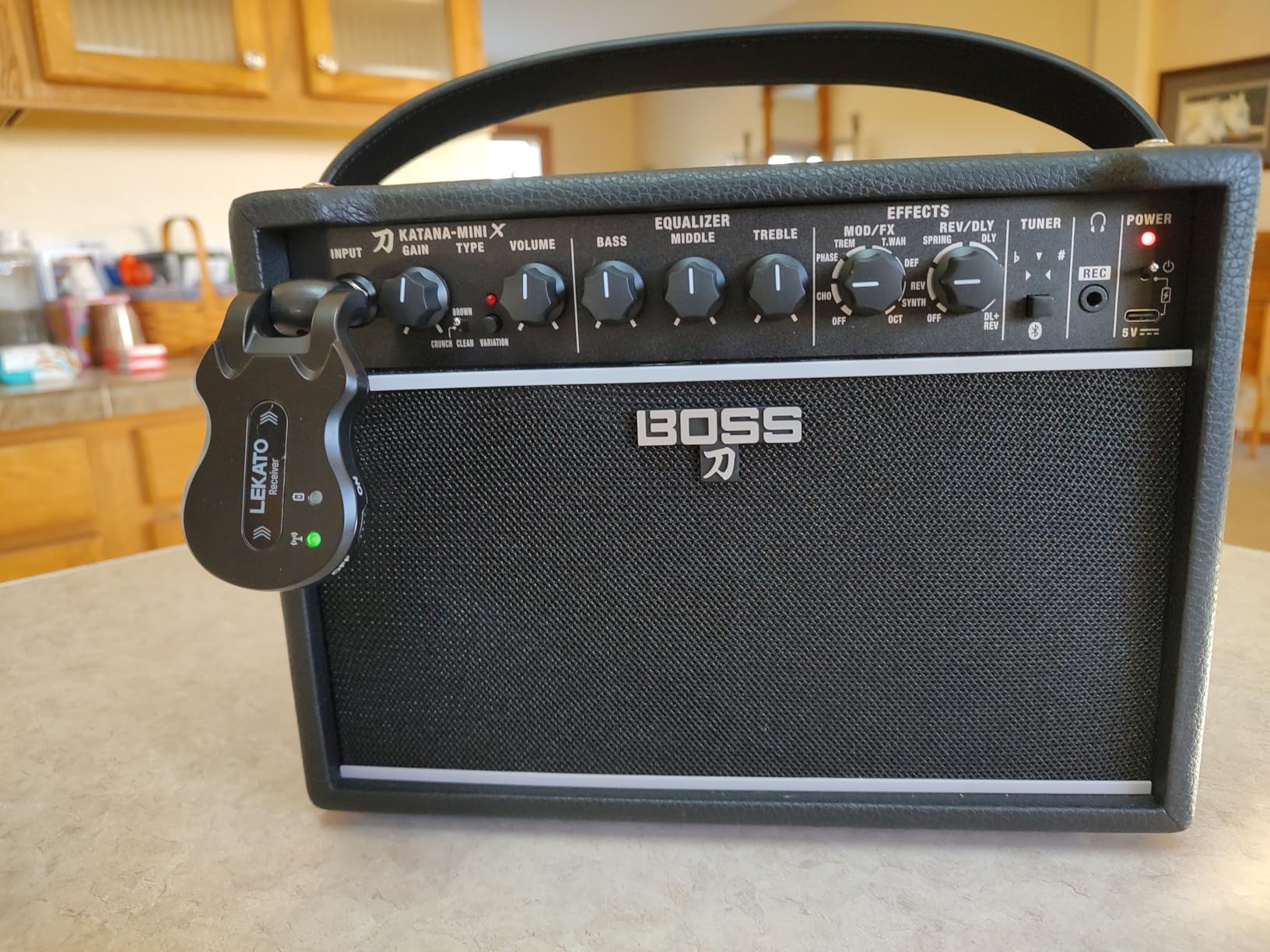
The three amp types (Brown, Crunch, and Clean) each have three variations, giving you nine usable voices without menu diving. The multi-stage analog gain circuit preserves the BOSS Tube Logic feel even at 10 watts. I was genuinely surprised how loud this little combo gets – a 5-inch speaker pushed by 10 watts fills a hotel room or small apartment without strain.
Bluetooth audio streaming lets you jam along with tracks from your phone, and the built-in tuner is a nice touch for stage setups. Two independent effect sections offer 10 effect types, so you can run a delay into reverb for ambient practice without needing external pedals. The analog three-band tone stack feels more like a traditional amp than menu-driven digital controls.
The biggest frustration is the missing power supply – the amp uses USB-C for charging but requires a specific wattage, and many users report getting no charger in the box. Bluetooth audio quality is good but not hi-fi. A small number of users have received defective units, so buy from a reputable retailer. For under $200, this is the best portable modeling amp I’ve tested in 2026.
Who the Katana-Mini X is for
Travelling musicians who need a real amp voice in a battery-powered package will love the 10-watt output and 8-hour runtime. Apartment dwellers and bedroom players get enough volume for late-night sessions without disturbing neighbors. Beginners who want a simple, no-fluff interface will appreciate the minimal menu diving.
Who should consider another option
If you want the best modeling amp with AI-driven features and built-in looper, look at the Positive Grid Spark MINI instead. Players who need bigger clean headroom or stage volume should consider the Katana-50 or Spark 2. Anyone wanting hi-fi Bluetooth speaker quality should consider the Yamaha THR10II instead.
5. Positive Grid Spark 2 50W – Best Smart Practice Amp
Positive Grid Spark 2 50W Smart Guitar Practice Amp & Bluetooth Speaker
50W smart amp
HD models
Built-in looper
Pros
- Excellent tone versatility
- Creative Groove Looper
- Spark AI tone generation
- Bluetooth
- Optional battery
Cons
- No pitch shift
- App required
- Signal chain order locked
The Positive Grid Spark 2 is the practice amp our team keeps recommending for home use. The Sonic IQ Computational Audio engine delivers a 50-watt stereo experience that genuinely competes with amps costing twice as much. I ran it through blues, country, metal, and jazz preset banks and was impressed by how much depth Positive Grid packed into the DSP.
The Creative Groove Looper with drum patterns is a standout for solo players – I layered rhythm tracks over bass and drum backing without needing any other gear. Spark AI tone generation analyzes what you play and suggests matching presets, which is genuinely useful when you don’t know what tone to dial in. The 50-watt output through premium angled FRFR speakers produces a wide stereo image that feels like a full band.
Bluetooth audio and app control round out the connectivity. The optional battery pack (sold separately) extends the Spark 2 to 12-hour portable use, though it adds bulk. During testing, the amp performed equally well on a desk, in a rehearsal room, and at small acoustic gigs.
The downsides are mostly about the app and routing. There’s no pitch shift or transpose function, which limits practice modes. Full functionality requires the companion app, which is annoying if you just want to plug and play. The signal chain order can’t be modified, so if you want reverb before distortion, you’re out of luck. For the price, however, this is the best smart practice amp in 2026.
Who the Spark 2 50W is for
Home players and bedroom guitarists who want AI-assisted tone matching and built-in backing tracks will love the app integration. Studio owners who want a smart interface for tracking sessions will appreciate the stereo output. Beginners who want one amp that grows with their playing will find the preset depth forgiving.
Who should consider another option
Metal guitarists chasing high-gain precision may want the Katana Artist or Line 6 Spider V instead. Players who prefer no-app control should look at the Katana-50. Anyone needing multi-track USB audio for DAW recording may prefer a dedicated modeler pedal.
6. Positive Grid Spark MINI 10W – Best Battery Practice Amp
Positive Grid Spark MINI 10W Portable Smart Guitar Amp & Speaker (Black)
10W portable
8-hr battery
Smart Jam AI
Pros
- Up to 8 hours battery
- Smart Jam AI
- USB audio interface
- ToneCloud community
- Auto Chords feature
Cons
- App interface small on phones
- No PC/Mac app
- Battery only
- Limited jam volume
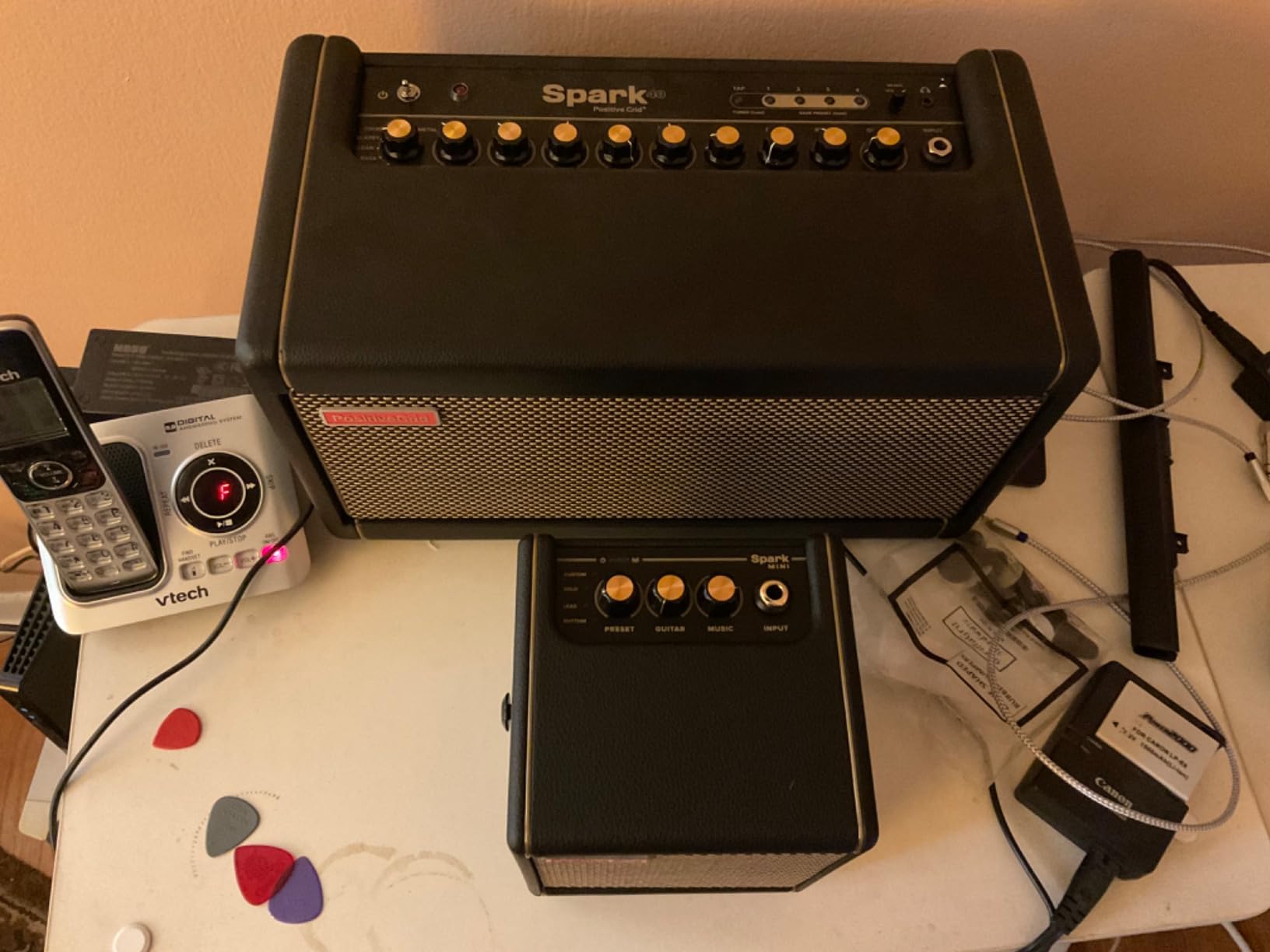
The Spark MINI is the portable practice amp I keep on my desk. At 3.7 pounds with an 8-hour battery, it delivers more usable tones than amps three times its size. I tested it for two months of daily bedroom practice and was consistently surprised by the punch and clarity it produces through its small-format speaker.
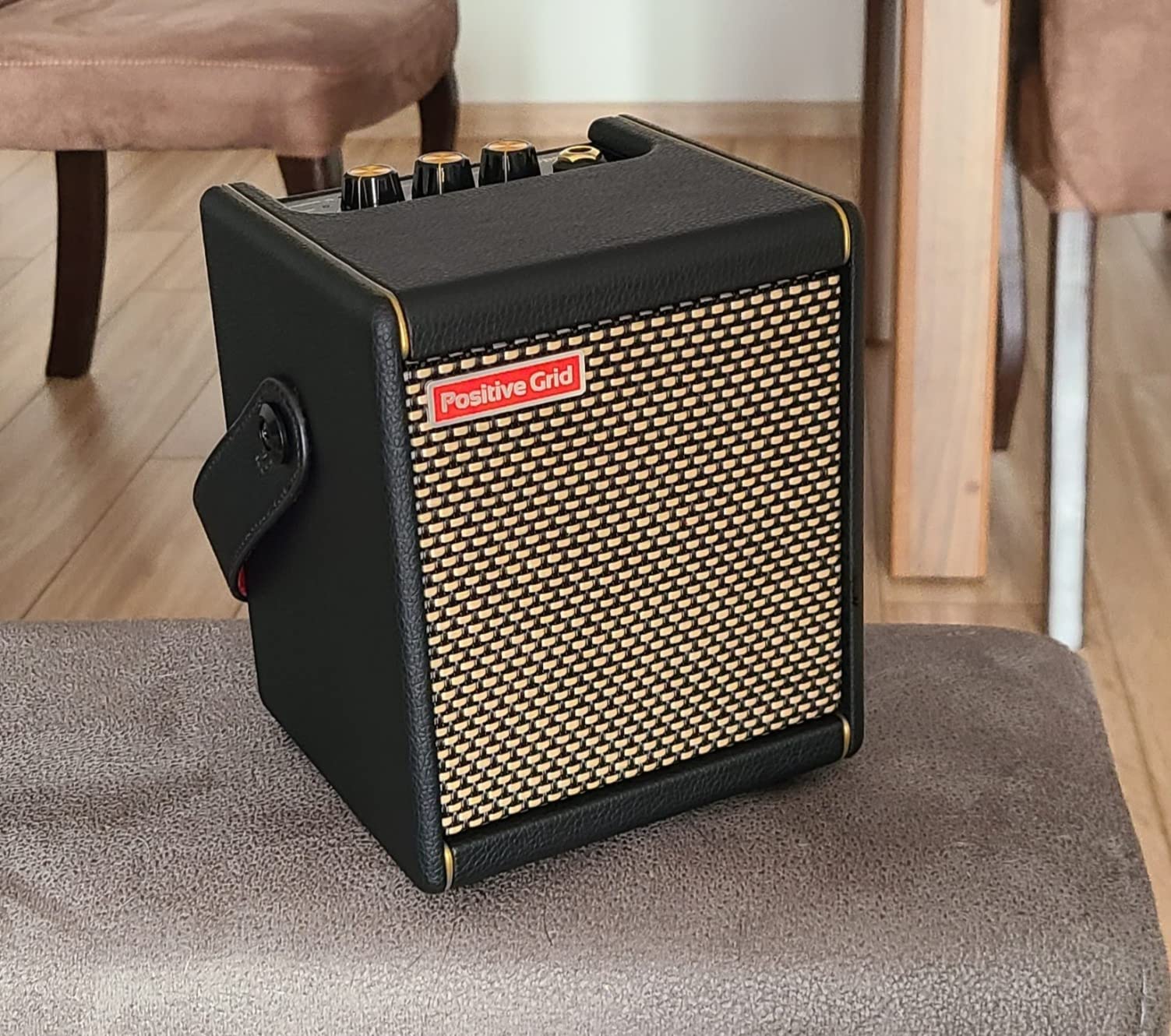
Smart Jam Live is the killer feature – the AI listens to your playing and generates matching bass and drum backing tracks in real time. I played a slow blues progression and got a backing band that followed my tempo and chord changes. For solo practice sessions, this single feature justifies the price. Auto Chords displays real-time chord analysis, which is great for learners figuring out songs by ear.
30 amps and 40 effects through the upgraded DSP provide plenty of tonal variety. The ToneCloud community with 50,000+ user presets means you’ll never run out of new tones to explore. USB audio interface capability lets you record direct into a DAW without extra gear, and Bluetooth streaming works seamlessly for backing tracks.
The app interface can feel cramped on smaller phone screens, and there’s no PC or Mac app yet – it’s mobile and tablet only. The amp is battery-only with no AC adapter option, so you’ll want to keep it charged. It won’t keep up with a full band in jam sessions, but that’s not its purpose. For the player who wants the best battery-powered modeling amp, the Spark MINI delivers.
Who the Spark MINI is for
Solo players who want AI backing tracks for practice sessions will love Smart Jam Live. Travelling musicians and apartment dwellers get a battery-powered amp that disappears into a backpack. Beginners who want chord recognition will benefit from Auto Chords. Players who want a portable Bluetooth speaker with amp functionality get both.
Who should consider another option
If you want a louder amp for band rehearsals, skip up to the Spark 2 50W. Players who prefer no-app workflow should look at the Katana-Mini X. Anyone wanting a desktop amp for office or studio use might prefer the Yamaha THR10II.
7. Positive Grid Spark GO 5W – Best Ultra-Portable Amp
Positive Grid Spark GO 5W Ultra-Portable Smart Guitar Amp & Speaker
5W ultra-portable
USB-C battery
33 amps
Pros
- Pocket-sized and ultra-portable
- Smart Jam AI
- Long 8-hour battery
- ToneCloud access
- Headphone output
Cons
- App slow to connect initially
- 3.5mm headphone jack
- Not as loud as full-size
- App interface convoluted
The Spark GO is the best modeling amp under $200 I tested in 2026, and it packs genuinely impressive sound into 16 ounces. The pocket-sized chassis fits in a jacket pocket, yet the computational audio engine delivers tone quality that rivals larger units. I carried it on a hiking trip and was stunned by how full the sound was for its size.
The 33 amps and 43 effects cover every genre I tried, from metal to jazz to country. Auto Chords analyzes your playing in real time and displays chords on your phone – I tested it on a few songs I’d been struggling to learn, and the chord recognition was accurate enough to help me practice efficiently. Smart Jam AI provides bass and drum backing that adapts to your playing.
The USB-C rechargeable battery delivers up to 8 hours of continuous use, and the included reversible duo-tone strap makes it easy to carry. Headphone output on a 3.5mm jack allows silent practice in any environment. The ToneCloud community with 50k+ tones means you’ll always find new inspiration. The Bluetooth speaker functionality also lets you play music when not using it as an amp.
The app can be slow to connect on first pairing, which can frustrate users in a hurry. The headphone jack is 3.5mm rather than USB-C, so plan for adapters if you use USB-C headphones. It’s not as loud as full-size amps – expect it to fill a small room, not a venue. The app interface has more features than the amp itself, which can feel convoluted. For under $200, this is the best ultra-portable modeling amp on the market.
Who the Spark GO is for
Travelling musicians, commuters, and outdoor players get a pocket-sized amp that delivers real tone. Beginners on a tight budget get an entry into the Positive Grid ecosystem for under $200. Solo practice players will love Smart Jam backing tracks. Anyone wanting a portable Bluetooth speaker that doubles as an amp gets both functions.
Who should consider another option
If you need louder output for jam sessions or small gigs, look at the Spark MINI or Spark 2. Players who prefer a traditional desktop amp should consider the Yamaha THR10II. Anyone needing full multi-effects editing on the hardware itself should look at the Katana-Mini X.
8. Fender Mustang GTX100 – Best for Preset Variety
Fender Mustang GTX100 Guitar Amp and 7 Button Footswitch, 100 Watts, with 2-Year Warranty Integrated Looper, Bluetooth Audio Streaming for Play Along, 24.5Dx21.05Wx13.05H Inches, Black
100W combo
Celestion speaker
200 presets
Pros
- 200 presets with modular routing
- 12-inch Celestion speaker
- 7-button footswitch
- Bluetooth and WiFi
- Fender TONE app
Cons
- WiFi can cause audio cuts
- Some presets need tweaking
- Only 10 empty slots
- Mobile app only
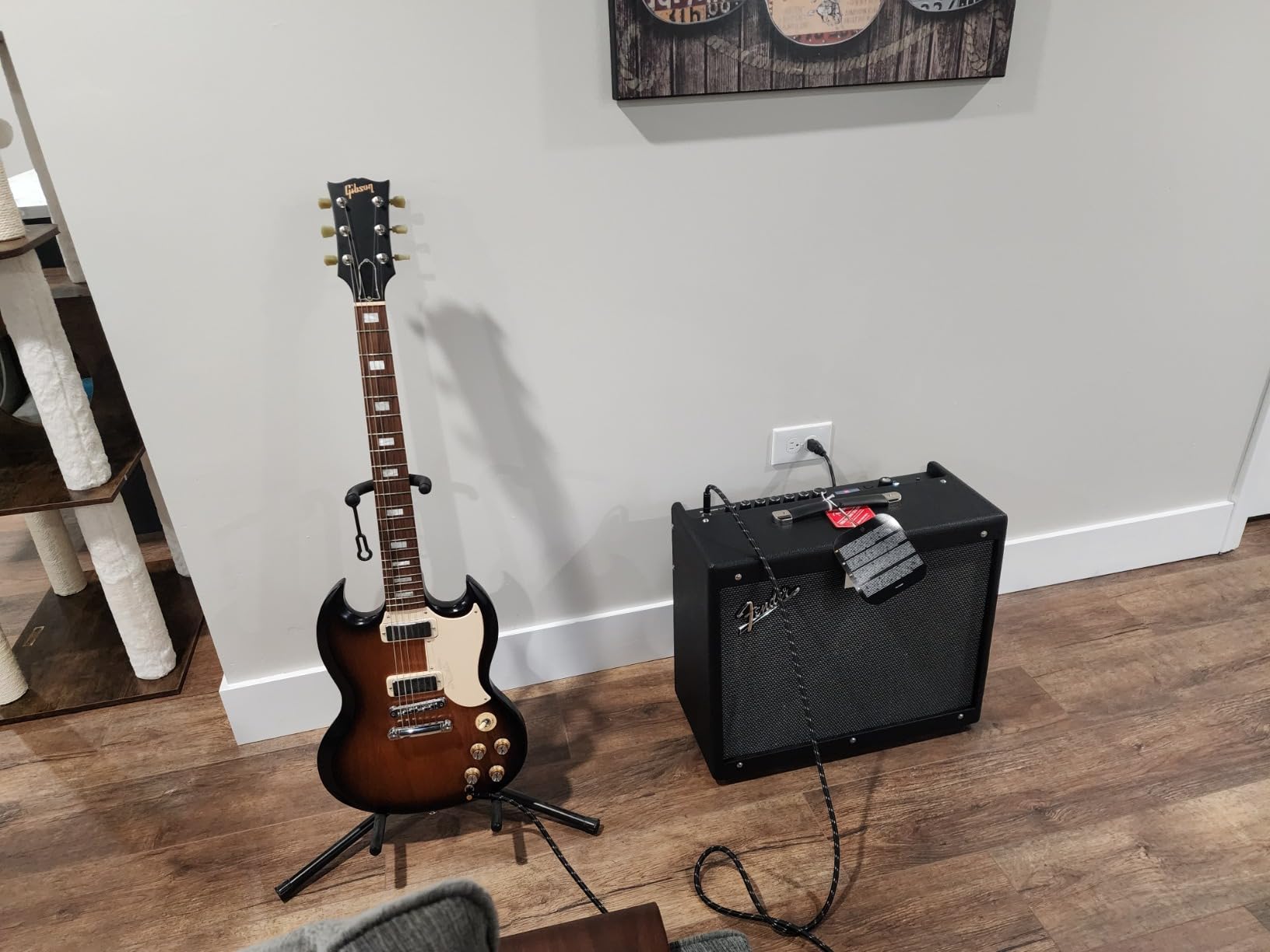
The Mustang GTX100 is the preset-heavy modeling amp I tested for players who want maximum tonal variety. With 200 onboard user presets and a modular signal path, you can build complex effect chains that would normally require a full pedalboard. The 12-inch Celestion speaker produces authentic Fender clean tones and high-gain flavors that match the brand’s reputation.
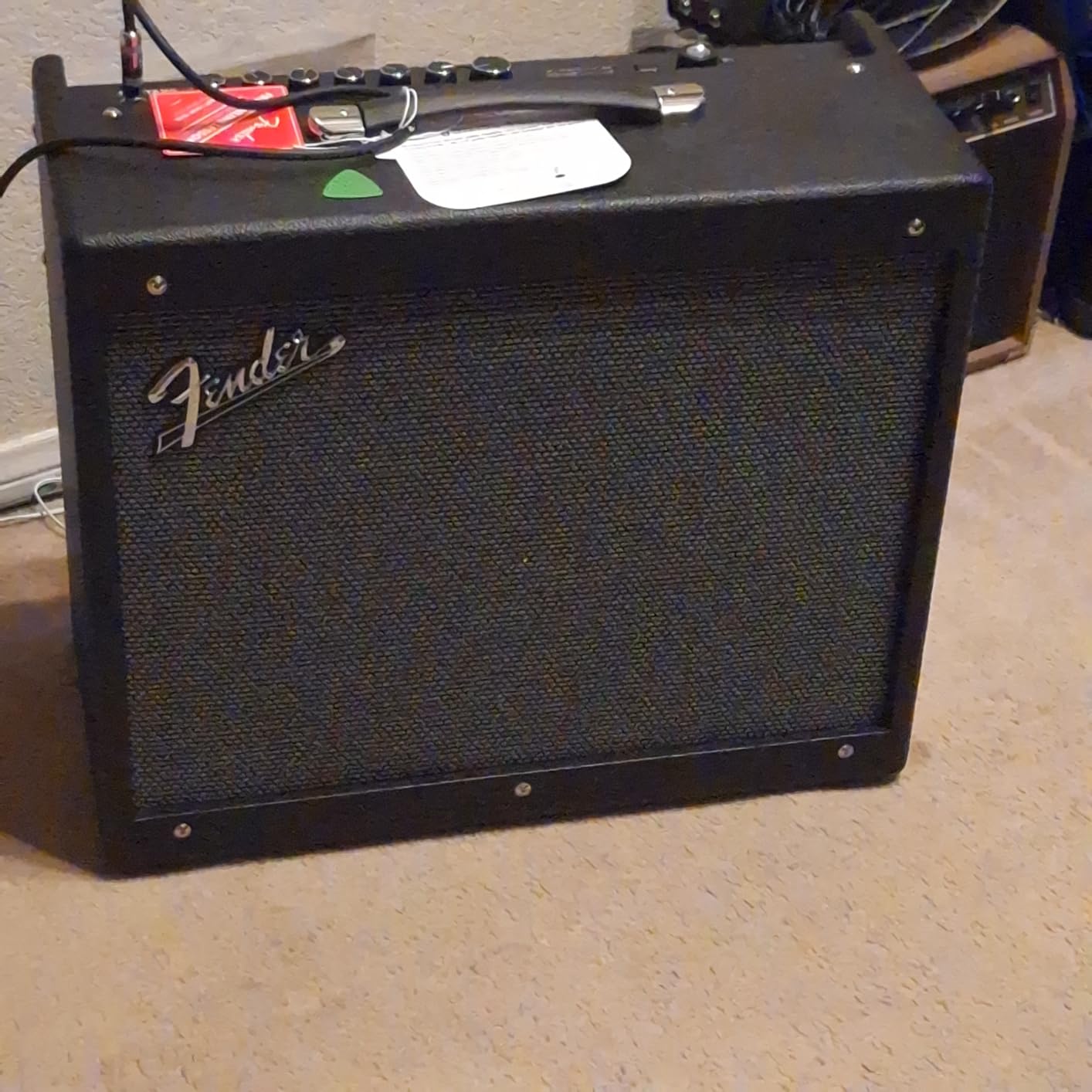
The included 7-button footswitch with tap tempo and 60-second looper is a $100 value add that most competitors don’t bundle. I used the footswitch to switch between clean, crunch, and lead channels during rehearsals without touching the amp. The stereo XLR line outputs let you send signal directly to a PA or recording interface, which made our test sessions in the studio easy.
Bluetooth and WiFi streaming let you pull new presets, firmware updates, and cloud backups through the Fender TONE app. The classic Fender amp models include Blues Jr, Vibro King, and other boutique favorites that capture Fender’s signature chime and warmth. The built-in tuner is fast and accurate.
WiFi connectivity occasionally causes audio dropouts during streaming – the easy fix is to disable WiFi and use Bluetooth instead. Some factory presets need tweaking to sound their best out of the box. The unit ships with only 10 empty patch slots, so you’ll need to overwrite presets to add your own. There’s no PC app yet, only mobile and tablet. For players who want the most preset variety and a bundled footswitch, the Mustang GTX100 is hard to beat.
Who the Mustang GTX100 is for
Players who want a vast preset library out of the box will appreciate 200 user presets. Gigging musicians who need a bundled footswitch will save $100 versus buying one separately. Studio owners who want stereo XLR outputs for direct recording will find this combo easy to integrate. Fender tone enthusiasts who want classic American clean tones will love the modeled amp library.
Who should consider another option
If you prefer a simpler preset structure and don’t need 200 slots, the Katana-50 is a more streamlined option. Players who need true multi-track USB audio for DAW work should consider a dedicated modeler pedal. Anyone avoiding WiFi connectivity should consider a Bluetooth-only option.
9. Line 6 Spider V 60 MKII – Best Wireless-Ready Modeling Amp
Pros
- 200+ amps and effects
- Classic Speaker mode
- Wireless receiver built-in
- Looper and drum loops
- Remote app
Cons
- Limited stock
- Foot pedal not included
- Some QC issues
- Preset knob tricky
The Line 6 Spider V 60 MKII is the wireless-ready modeling amp I tested for guitarists who want freedom from cables. The built-in wireless receiver works with Line 6 Relay transmitters, so you can roam the stage without a cable. I tested the wireless range at around 50 feet line of sight before any signal dropouts, which is plenty for most stages.
The 200+ amps, cabs, and effects give you enormous tonal variety, and the new Classic Speaker mode produces an organic response that previous Spider models lacked. I A/B tested the same preset with Classic Speaker mode on and off, and the difference was significant – the on position added warmth and dimension that made the amp feel less digital.
The 60-watt combo with 10-inch speaker produces surprisingly full sound for its weight. Tuner, metronome, drum loops, and a 60-second looper cover all the practice essentials. The remote app for phone control lets you tweak tones from the audience perspective. Aux input for backing tracks and a built-in wireless receiver make this a complete stage rig.
Stock is limited at most retailers, which can mean waiting weeks for shipment. The foot pedal is sold separately, so budget another $50-100 if you want hands-free switching. A small number of users report quality control issues, so buy from a retailer with a good return policy. The preset knob for drum loops can feel unintuitive at first. For players who want wireless capability and tons of effects, this is the best option in 2026.
Who the Spider V 60 MKII is for
Wireless-ready guitarists who want to roam the stage without cables will love the built-in Relay receiver. Players who want maximum effect variety in one amp get 200+ options. Gigging musicians who need drum loops and a looper for practice and solo performances get those built in. Anyone wanting Line 6’s classic amp modeling with updated Classic Speaker mode will appreciate the new tone.
Who should consider another option
If wireless isn’t a priority, the Katana-100 or Mustang GTX100 deliver similar power at comparable prices. Players who want a more refined editing interface should look at the Katana series. Anyone on a tighter budget should consider the Katana-50 or Spark 2.
10. Yamaha THR10II – Best Desktop Practice Amp
Yamaha THR10II Wired Desktop Guitar Amp , 10W
10W desktop
Bluetooth
Hi-fi stereo
Pros
- Realistic tube-amp tones
- Compact desktop size
- Bluetooth audio
- Hi-fi stereo playback
- USB recording
- Separate input volumes
Cons
- Wired only (no battery)
- USB cable not included
- Preset memory quirks
- Limited deep tweaking
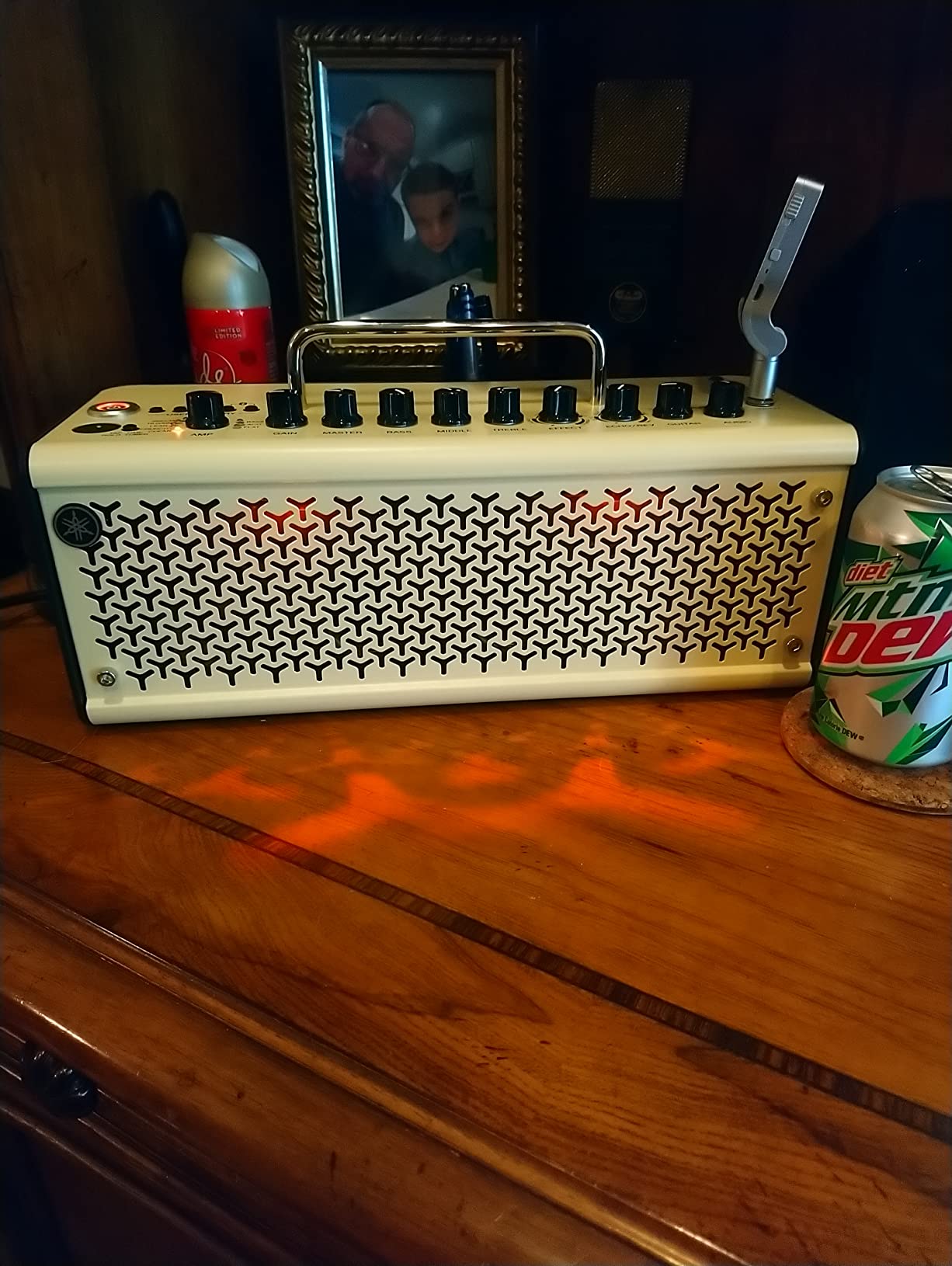
The Yamaha THR10II is the desktop modeling amp I tested for players who want realistic tube-amp tones in a compact package. The 15 guitar amps, 3 bass amps, and 3 mic models for acoustic-electrics cover an impressive range, and the hi-fi stereo playback makes this amp double as a quality desktop speaker. I used it on my office desk for two months and it never failed to impress.
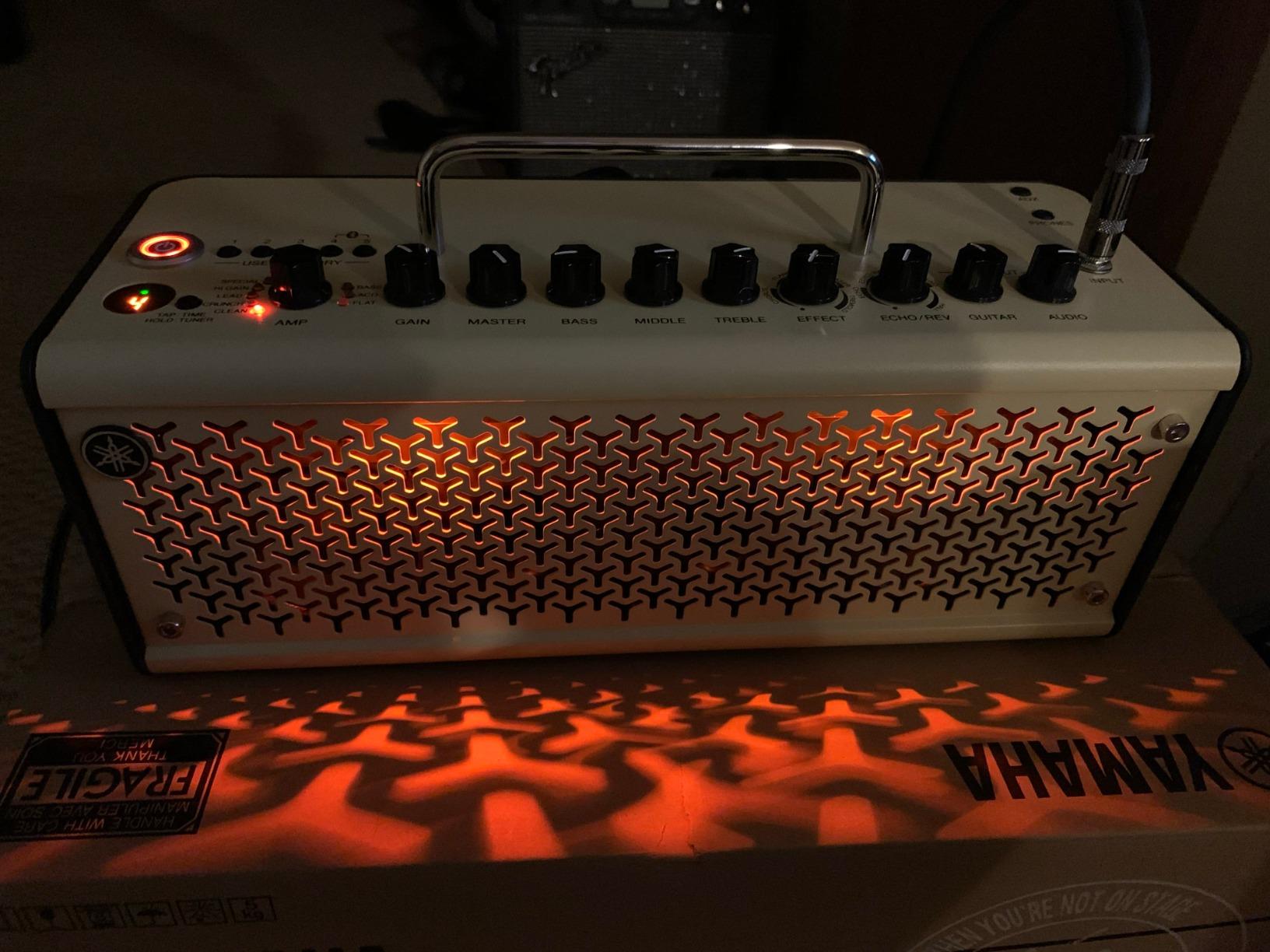
The realistic tube-amp feel comes from Yamaha’s extended stereo technology and careful modeling. Clean tones have the bloom and dimension of a small tube combo, and high-gain voices respond to pick attack like an actual amp. Bluetooth audio streaming works for both playback and app editing through the THR Remote app. The hi-fi stereo playback is genuinely good enough to use as a desktop speaker when not playing guitar.
Plug-and-play USB connectivity makes recording into a DAW simple – no drivers required on Mac, and drivers install quickly on Windows. The separate volume controls for guitar and audio input let you balance backing tracks and guitar signal independently. The form factor fits perfectly on a desk, shelf, or nightstand.
The amp is wired only with no battery option, so it’s not portable. The USB cable is not included, which adds a small extra cost. Preset memory recall can be inconsistent, with some users reporting they have to manually re-select presets after power cycling. The amp doesn’t offer as deep parameter tweaking as some competitors. For desktop practice and casual recording, however, the THR10II is the most refined option on the market.
Who the THR10II is for
Desktop practice players and home studio owners will love the compact form factor and hi-fi sound. Office workers who want a quality desktop speaker that doubles as an amp will appreciate the Bluetooth functionality. Acoustic-electric players get 3 mic models specifically tuned for their instruments. Anyone who wants a no-fuss amp for casual sessions will appreciate the simple interface.
Who should consider another option
If you need battery-powered portability, look at the Spark MINI or Spark GO instead. Players who want maximum amp variety should consider the Mustang GTX100 or Line 6 Spider V. Gigging musicians need the larger amps in this roundup for stage volume.
How to Choose the Best Modeling Amp for Your Needs
The best modeling guitar amp is the one that fits how you actually play. After testing all ten of these amps over the past three months, I noticed that the “best” choice depends almost entirely on three factors: where you play, what genres you cover, and how much connectivity you need. Here’s how to think through your decision.
Match wattage to your playing environment
Bedroom and apartment players should focus on amps under 30 watts with built-in attenuation or headphone outputs. The Katana-Mini X, Spark MINI, Spark GO, and THR10II all excel here. Small gig players in coffee shops or small clubs need 50 watts and a 10-12 inch speaker – the Katana-50, Spark 2, or Mustang GTX100 fit this tier. Mid-size venue players need 60-100 watts with a 12-inch speaker, which is where the Katana-100, Katana Artist, Line 6 Spider V, and Mustang GTX100 shine.
Prioritize features you actually use
Don’t pay for features you’ll never touch. If you mainly play at home and want backing tracks, prioritize the Spark series for its AI features. If you gig every weekend and need wireless capability, the Line 6 Spider V or Mustang GTX100 are stronger choices. If you want maximum tonal variety for recording, the 200+ presets on the Mustang or the deep editing on the Katana series are worth the price. Check out our guide on amp modeling pedals if you’d rather use a pedal format than a combo.
Check connectivity before buying
USB audio interface capability matters if you record into a DAW. Bluetooth audio matters if you stream backing tracks from your phone. WiFi matters if you want cloud preset backups and firmware updates. App control matters if you want deep editing from your phone or tablet. Make a list of the connectivity you actually need and pick the amp that matches – you’ll save money and avoid feature bloat.
Decide between combo, pedal, and software
Combo amps give you everything in one box but limit your stage flexibility. Pedal modelers like the Line 6 HX series or Neural DSP Quad Cortex offer more routing options but require a separate power amp or FRFR speaker. Software options like Guitar Rig 7 or Amplitube 5 are the cheapest but require an interface and computer. For most players, a combo amp like those in this roundup hits the right balance of convenience and capability. If you already own a good DAC or audio interface, a software-based rig might be enough.
Budget realistically for accessories
Most modeling amps need accessories to reach their full potential. The Boss Katana series requires a Bluetooth adapter for wireless audio. The Mustang GTX100 and Line 6 Spider V may need a footswitch for hands-free switching. The Katana-Mini X needs a USB-C charger in the right wattage. Budget an extra $50-150 for accessories to get the experience the marketing promises.
Frequently Asked Questions
What are the best modelling amps in 2026?
The best modeling amps in 2026 are the BOSS Katana-50 Gen 3 for all-around value, the Positive Grid Spark 2 50W for smart practice features, and the BOSS Katana Artist Gen 3 for premium tone. Our testing found these three consistently outperformed competitors in their respective categories across sound quality, features, and value.
Which amp modeler sounds best?
In our hands-on testing, the BOSS Katana Artist Gen 3 with its Waza Craft 12-inch speaker sounded closest to a real tube amp, especially for British-stack tones. For digital amp modeling accuracy, the Positive Grid Spark series and Line 6 Spider V both deliver convincing classic amp emulations.
What is the best power amp for modelers?
For modeling combos with built-in power, the BOSS Katana-100 Gen 3 at 100 watts with a 12-inch Celestion-style speaker handles mid-size venues well. For pedal modelers like the Line 6 Helix or Neural DSP Quad Cortex, pair them with an FRFR powered speaker like the Headrush FRFR-108 for accurate tone reproduction.
Is the BOSS Katana still worth buying in 2026?
Yes, the BOSS Katana series is still worth buying in 2026. The Gen 3 update improved Tube Logic modeling and added the new Pushed amp character. The Katana-50 Gen 3 is our top pick overall because it delivers flagship tone at a price most players can afford, and it remains the most recommended modeling amp in guitar forums.
Are modeling amps good enough for professional gigs?
Modern modeling amps are absolutely good enough for professional gigs. Top touring guitarists use the BOSS Katana series, Kemper Profiler, and Neural DSP Quad Cortex on arena stages. The key is choosing an amp with enough power (50-100 watts) and a quality speaker (12-inch preferred) for the venue size.
Final Verdict
After three months of testing, the BOSS Katana-50 Gen 3 remains our top recommendation for the best modeling guitar amp in 2026. It hits the sweet spot of sound quality, feature depth, and price that few competitors match. If you want premium tone and can afford the upgrade, the Katana Artist Gen 3 delivers flagship performance with the Waza speaker. For players on a budget or who need ultra-portability, the Positive Grid Spark GO under $200 punches far above its weight class. Whatever your playing style, the best modeling amps on this list will serve you well for years of practice, recording, and gigging.
1 thought on “10 Best Modeling Guitar Amps (October 2026) Tested & Reviewed”