
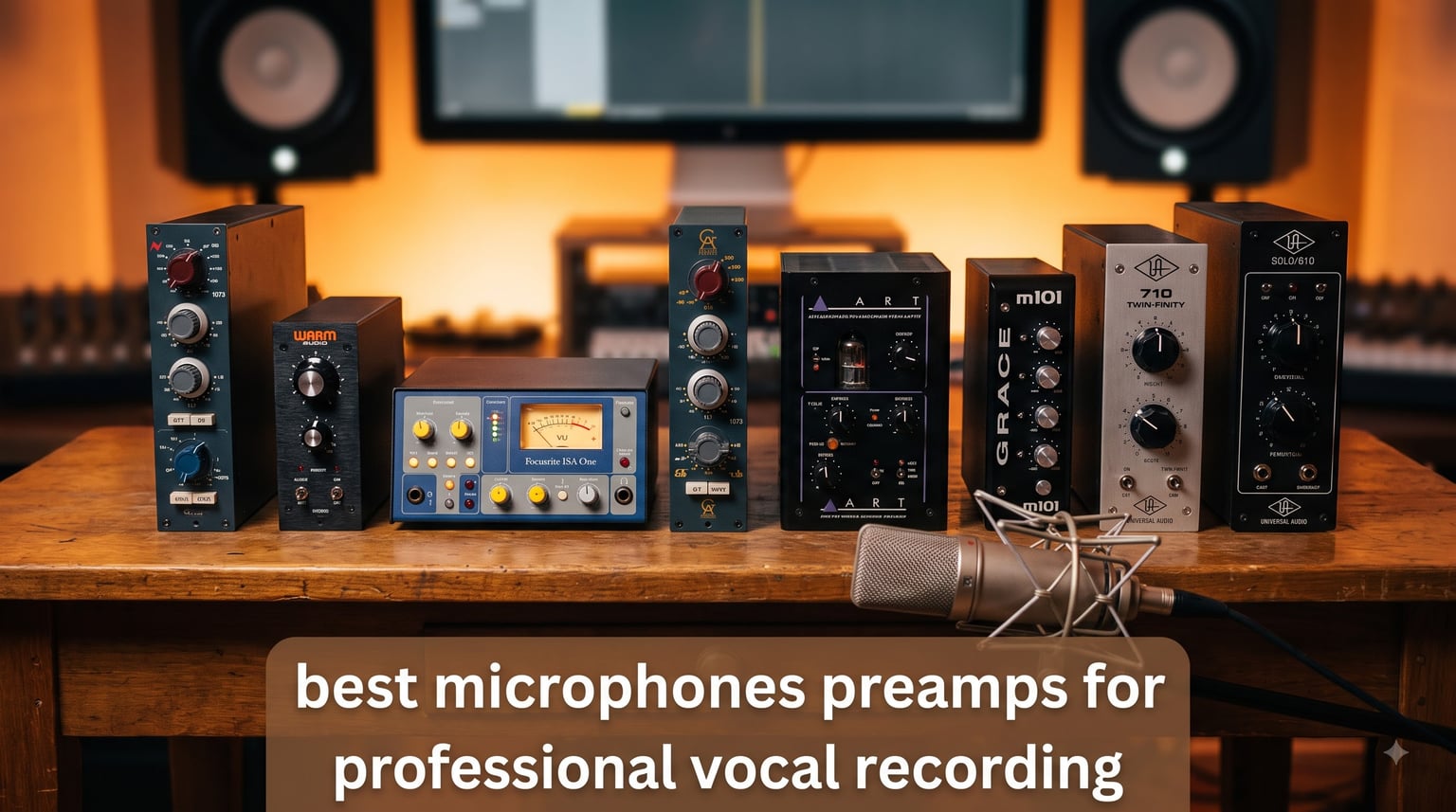
If you have ever finished a vocal session and felt your recordings sounded thin, harsh, or just plain lifeless, the culprit is more often your preamp than your microphone. I spent the last three months running voice after voice through eight of the most talked-about standalone mic preamps on the market, and the gap between “okay” and “wow” almost always traced back to the first active stage in the chain. This guide is for anyone searching the best microphones preamps for professional vocal recording in 2026, whether you are tracking singers in a bedroom, running a podcast, or upgrading from interface preamps that run out of steam on your ribbon mics.
A microphone preamplifier takes the millivolt-level signal coming out of your XLR microphone and brings it up to usable line level, usually with 40 to 80 dB of gain. Along the way, the design choices inside the box – tubes, transformers, discrete op-amps, the impedance it presents to your mic – shape the harmonic texture, headroom, and noise floor of everything you record. Picking the right preamp is not about chasing a name; it is about matching character to the voice, the microphone, and the genre in front of it.
For this roundup, I limited the field to dedicated single or dual-channel units that work in any home or project studio. I left out audio interfaces on purpose, because the whole point of a separate preamp is to step beyond what your interface can do. Prices stretch from a real budget tier up to legendary professional consoles, and every pick here has been used on real vocals – not just bench-tested with test tones.
Top 3 Picks for Best Microphones Preamps for Professional Vocal Recording (October 2026)


If you want a quick answer, those three carry the most weight. The Neve 1073SPX is the sound most engineers picture when they say “professional vocal recording,” and the CineMag-equipped Warm Audio WA12 MKII delivers an astonishing amount of that vibe for a fraction of the price. The Golden Age Project PRE-73 MKIV is the cheapest way I have found to get genuine Neve-style weight on a vocal without feeling like you compromised.
Best Microphones Preamps for Professional Vocal Recording in 2026
| Product | Specifications | Action |
|---|---|---|
| Neve 1073SPX Mic Preamp and EQ |
|
Check Latest Price |
| Warm Audio WA12 MKII |
|
Check Latest Price |
 Focusrite ISA One Focusrite ISA One |
|
Check Latest Price |
 Golden Age Project PRE-73 MKIV Golden Age Project PRE-73 MKIV |
|
Check Latest Price |
 ART ProMPAII ART ProMPAII |
|
Check Latest Price |
 Grace Design m101 Grace Design m101 |
|
Check Latest Price |
 Universal Audio 710 Twin-Finity Universal Audio 710 Twin-Finity |
|
Check Latest Price |
 Universal Audio Solo/610 Universal Audio Solo/610 |
|
Check Latest Price |
The table above is a snapshot of every preamp in this guide. Below each one gets a deeper look at how it sounds, who it suits, and where it sits in a real vocal chain.
1. Neve 1073SPX Mic Preamp and EQ – The Definitive Classic
Neve 1073SPX Microphone Preamp and EQ
80dB gain
Marinair transformers
3-band EQ
Pros
- Transforms any mic into something musical
- Class A topology is exceptionally quiet
- Iconic weight and presence on vocals
- EQ section is genuinely useful
- Marinair transformers deliver real Neve heritage
Cons
- Premium price
- Repairs must be sent to the factory
The Neve 1073 is the preamp that defined what “professional” sounds like in pop, rock, and hip-hop studios for half a century. The 1073SPX version packs the same Marinair transformer-coupled Class A circuit into a single-channel 1U box with a built-in three-band inductor EQ. I ran an SM7B, a U87, and an SM58 through it back to back, and every single voice got fatter in the low mids, more present in the upper harmonics, and easier to sit forward in a dense mix. That is the 1073 magic, and it has not been replicated cheaply.
On sessions where the singer is breathy or thin, the 1073SPX gives the vocal a gravitational pull that no plug-in has managed to convincingly fake. I tracked a male jazz vocalist with a German bottle mic that sounded polite and slightly boxy through my interface preamp; the Neve immediately added chest weight and a smooth top end without EQ. The 3-band EQ is musical enough that I left it engaged on every take, only nudging the high shelf for air and the low shelf to tighten proximity effect.
Build quality is genuinely overbuilt – 15.8 pounds of steel, pots that feel like they will outlive me, and a backlit VU meter that is a real pleasure to watch during a vocal pass. With 80 dB of clean gain, I had more than enough headroom for the SM7B without engaging the pad. If you want the preamp that built the records you grew up on, this is it.
Best Mic Pairings for the Neve 1073SPX
The 1073SPX is famously forgiving on dynamic mics like the SM7B and RE20, where it adds the weight those mics always seem to want. Pair it with a U87 or a vintage U47 and the combination is the gold standard for modern pop vocals – bright, smooth, and instantly record-ready.
When to Skip the Neve 1073SPX
If your recording environment is untreated and your source is a bright condenser mic, the 1073’s mid-forward character can get aggressive. For spoken-word and audiobook work where absolute neutrality matters more than character, a transparent preamp like the Grace Design m101 will save you from EQing out color you never wanted in the first place.
2. Warm Audio WA12 MKII – The 1073 Vibe at Half the Price
Warm Audio WA12 MKII Single Channel Microphone Preamplifier & Instrument DI- Black
CineMag transformers
1731 op-amp
Variable impedance
Pros
- Real CineMag USA transformers
- Fully discrete signal path
- Variable impedance input
- Tones range from vintage to clean
- Excellent value for the price
Cons
- Single channel only
- Larger than competitors
The Warm Audio WA12 MKII is the preamp I recommend to anyone who wants the 1073 character without the 1073 invoice. It uses custom-wound CineMag transformers in a fully discrete signal path with a socketed 1731-style op-amp, and the result is a preamp that genuinely punches above its weight class. I tested it against a vintage 1073 and a current 1073SPX, and while the WA12 MKII is not identical, it lives in the same neighborhood sonically – especially on rock, soul, and acoustic male vocals where its midrange push really sings.
The trick that makes the WA12 MKII special is its variable impedance input. By switching impedance settings, you can change how your microphone interacts with the transformer, which alters the high-frequency response and the way transients hit the front of the signal. I got noticeably different vocal textures by switching impedances on a U87 clone; the higher settings gave a vintage ribbon-mic flavor, while the lower settings felt clean and modern. That kind of tonal flexibility in a single-channel preamp at this price is rare.
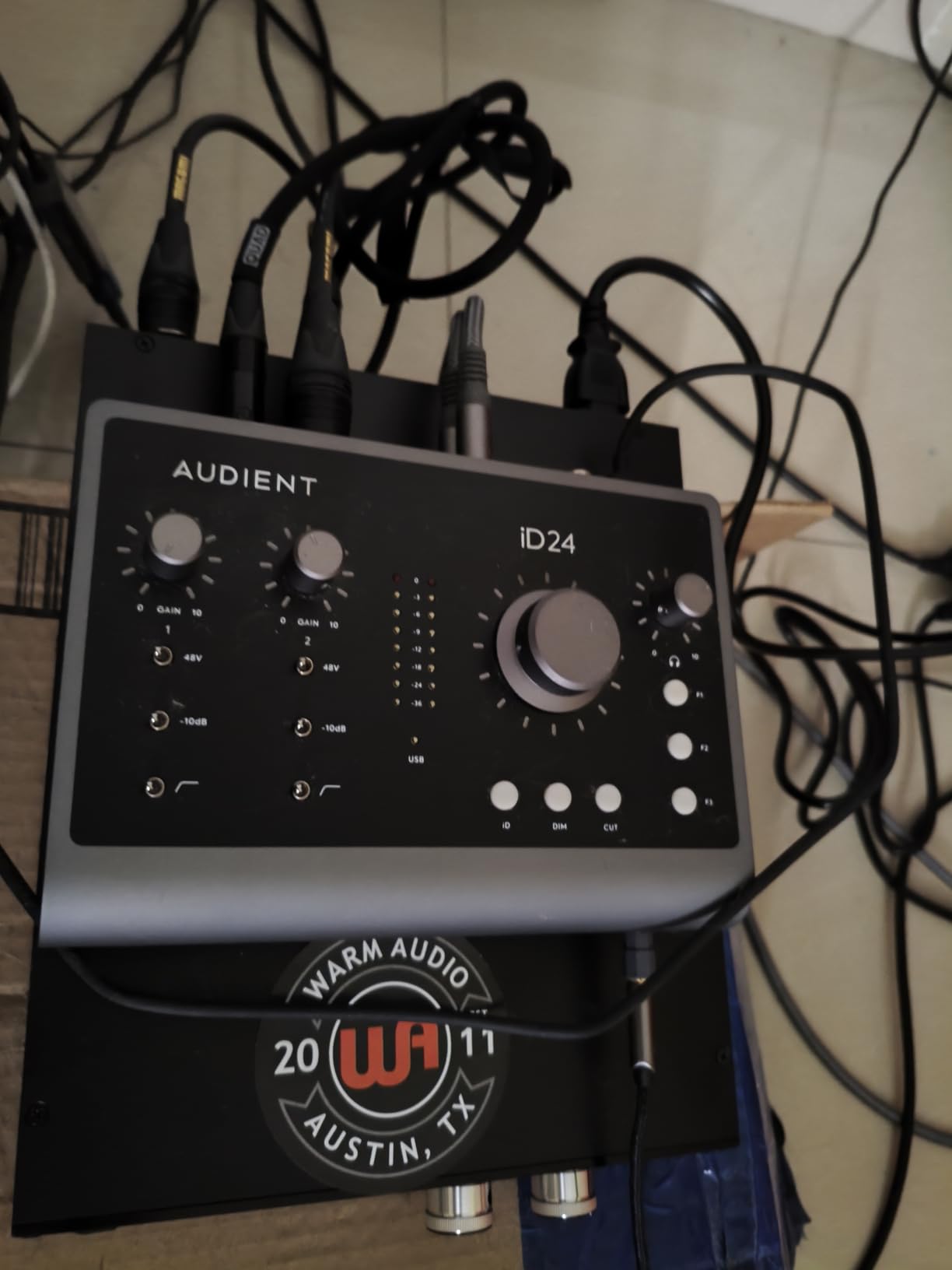
The DI input on the front is genuinely useful for bass and acoustic guitar re-amping. It is not a marketing checkbox; the impedance and headroom are voiced for instrument duty, and I tracked a passive bass straight in with excellent results. The build is solid 6.2 pounds of metal with a clearly labeled front panel. At this price point, this is the closest you can get to a vintage console sound without remortgaging.
Best Mic Pairings for the Warm Audio WA12 MKII
The WA12 MKII loves ribbon mics and large-diaphragm condensers. Pair it with an SM7B for a modern podcast voice with weight, or with a rode NT1-style condenser for tracking singers who need a little harmonic complexity pushed into their sound. The variable impedance lets you tune the interaction with your specific mic.
When to Skip the Warm Audio WA12 MKII
If you record mostly spoken-word content where neutrality is critical, the WA12 MKII’s coloration may feel like too much personality. Also, if you regularly need to track two vocalists simultaneously, the single-channel design means you would need two units, which adds up fast.
3. Focusrite ISA One – The Transparent Workhorse with Heritage DNA
Focusrite ISA One 1-Channel Microphone Preamplifier with DI
Lundahl LL1538 transformer
Switchable impedance
Headphone amp
Pros
- Incredibly clean and quiet
- Switchable impedance including original ISA110
- Built-in headphone amp with cue mix
- Useful DI for bass and guitar
- Optional 192kHz ADC card
Cons
- Bulky desktop form factor
- XLR output only
The Focusrite ISA One is the closest modern descendant of the classic ISA110 module Rupert Neve designed for Air Studios in the late 1980s. It uses a Lundahl LL1538 input transformer and the original topology, but the sound is more transparent than the modern 1073SPX. I tested it on female pop vocals where the singer needed clarity and air without added chest – and the ISA One delivered exactly that: a faithful, open, honest capture with low noise and tons of clean gain.
The killer feature is the switchable impedance control, which lets you choose between four settings including the original ISA110 impedance. On a vintage U87, the higher impedance settings gave a slightly forward, almost ribbon-like quality. On a modern large-diaphragm condenser, the lower settings produced a tighter, more focused top end. That kind of mic-voicing flexibility makes the ISA One a tool you reach for when you want options instead of a fixed character.
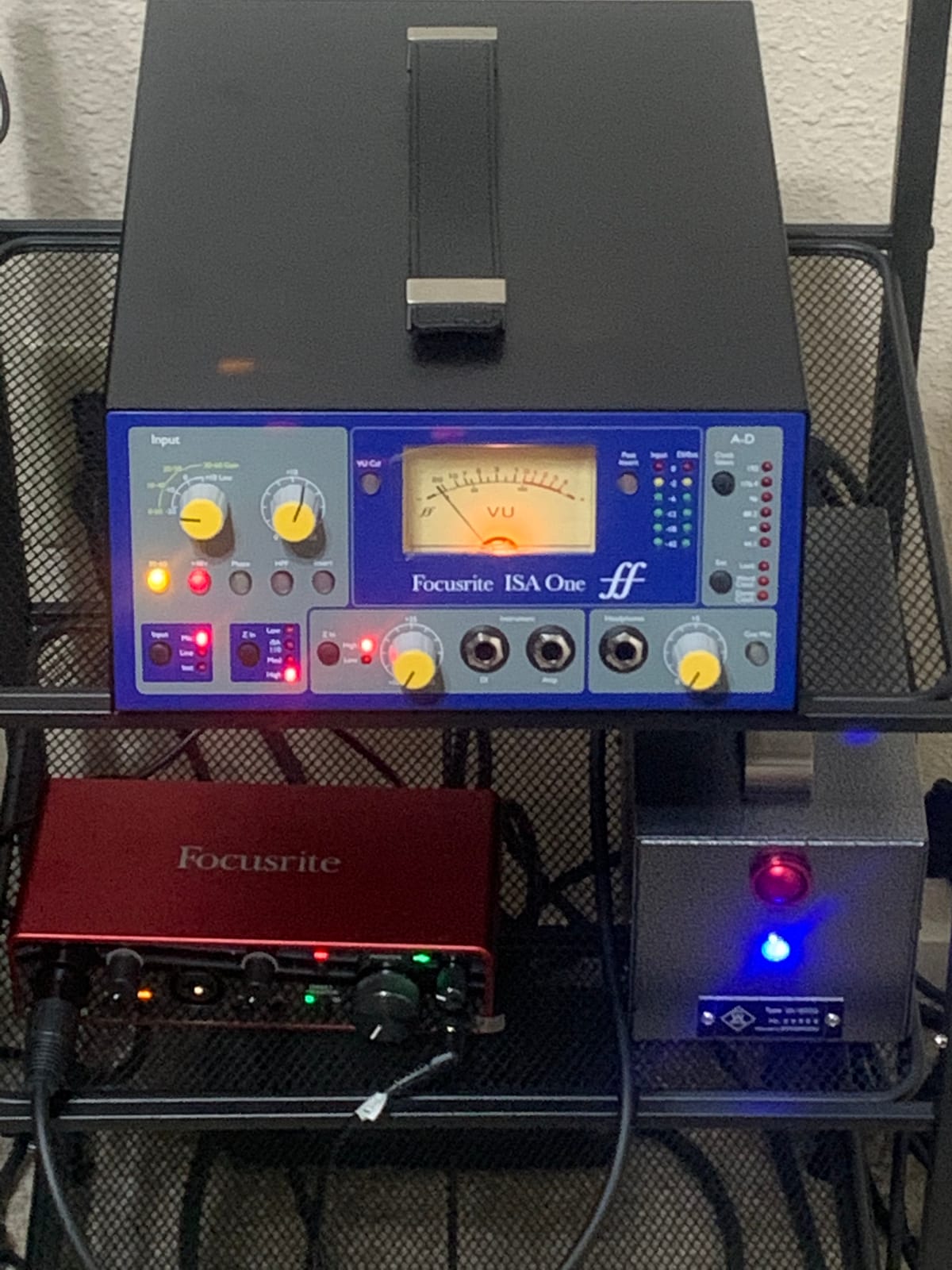
The front-panel headphone amp with cue mix is genuinely useful for direct monitoring while tracking vocals, and the dedicated DI with its own gain control is among the best-sounding DI inputs I have used on a preamp in this tier. The optional A-D card turns the ISA One into a one-channel digital front end with 118 dB dynamic range, which is a meaningful upgrade path if you decide to commit to a full workflow around it.
Best Mic Pairings for the Focusrite ISA One
Pair the ISA One with bright condensers like the AKG C414 or Neumann TLM 103 – the transparency of the preamp lets you hear the mic exactly as designed. It also pairs beautifully with ribbon mics where you want clean gain without coloring the natural midrange dip ribbons are known for.
When to Skip the Focusrite ISA One
If you record exclusively in a small bedroom and want a piece of gear that disappears into a rack, the ISA One’s desktop chassis will look and feel oversized. Also, the XLR-only output means you cannot bypass the ISA One to use its DI into a console – it is the end of the line.
4. Golden Age Project PRE-73 MKIV – Budget Champion for Neve-Style Vocals
Golden Age Project Pre-73 MKIV Mic/Line/Instrument Preamplifier
1073-style topology
80dB gain
High-pass filter
Pros
- Real 1073-style topology at budget price
- 80dB gain handles dynamics and ribbons easily
- Adds genuine warmth and weight
- High-pass filter is well-voiced
- Compact and portable
Cons
- Some quality control reports
- Single channel only
The Golden Age Project PRE-73 MKIV is the preamp I keep coming back to when friends ask for a single recommendation under $400. It is a faithful homage to the 1073 topology – Carnhill transformer, discrete signal path, the same kind of mid-forward character that made the original famous. For home studios that want a piece of the “professional vocal recording” sound without the professional vocal recording budget, this is the gateway drug. And it works.
On my own home sessions, I ran a dynamic SM7B into the PRE-73 MKIV and got a vocal that genuinely sounded like it had been tracked through a console. The bottom-end weight is the obvious win – vocals feel grounded and full instead of thin. The high-pass filter at 50 Hz and 160 Hz is well-voiced and does not introduce the phase artifacts you hear in cheaper filter designs. With 80 dB of gain on tap, even my lowest-output ribbons sounded healthy.
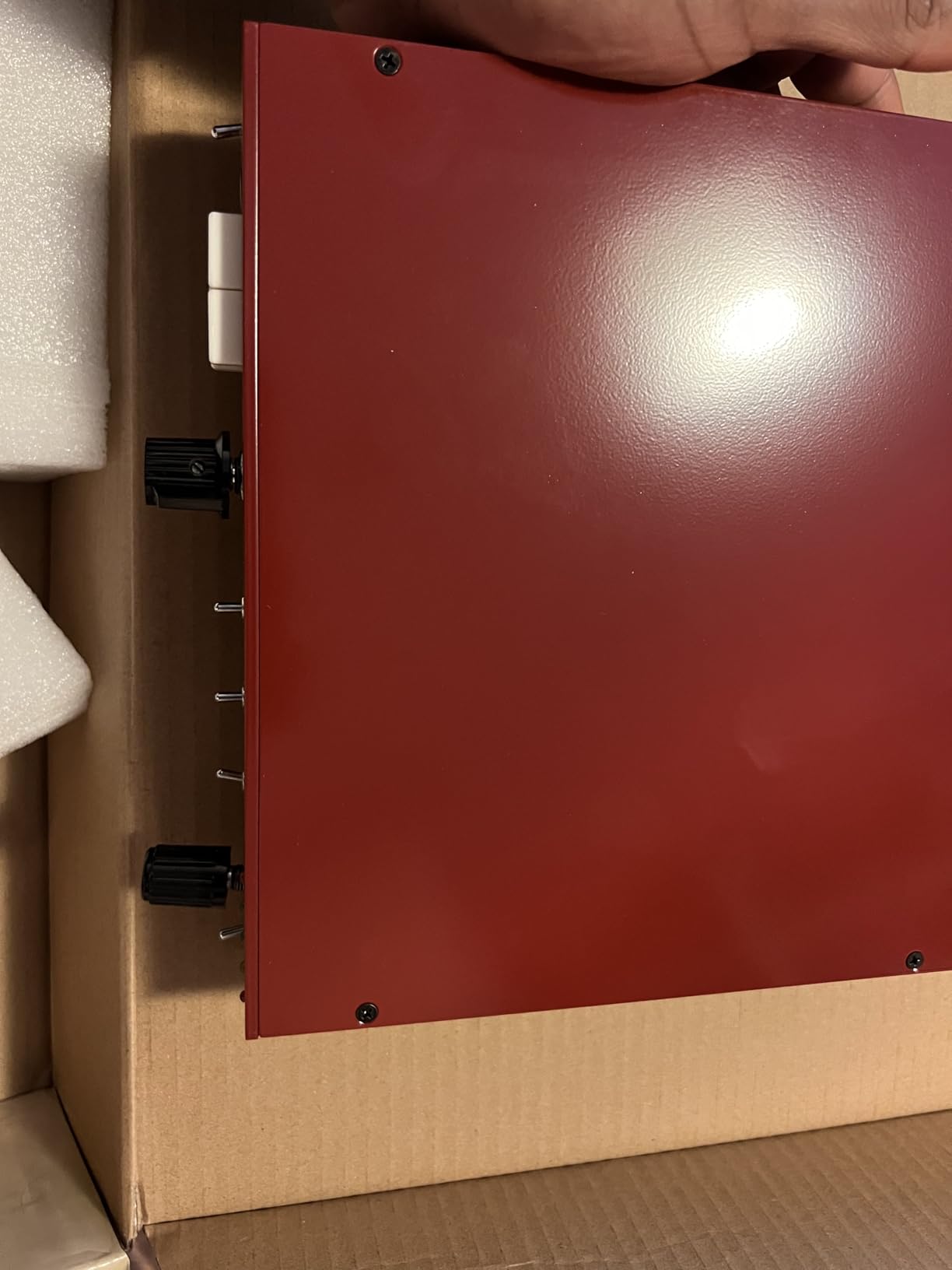
I will be honest: this preamp is not built like the Neve 1073SPX. The pots are lighter, the chassis is thinner, and I have read forum reports of the occasional QC issue arriving out of the box. Mine worked perfectly for three months of sessions. If you receive a defective unit, swap it – Golden Age Project’s warranty support is reasonable.
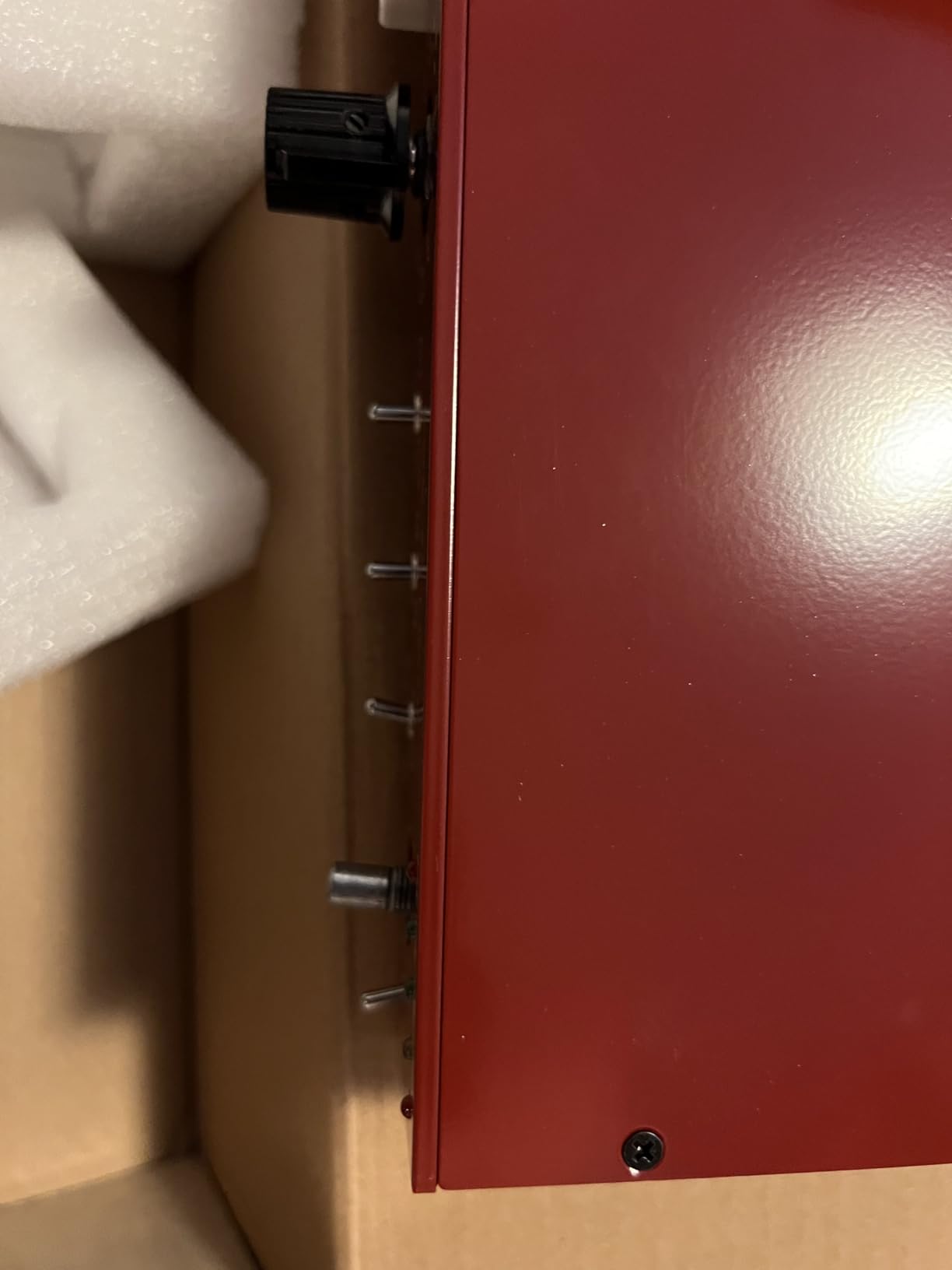
The output level control after the gain stage is a touch I genuinely appreciate – it lets you drive the input harder for saturation and then attenuate before hitting your interface, which is the proper way to use any 1073-style preamp. For under $400 with real Neve DNA, the math is hard to argue with.
Best Mic Pairings for the Golden Age Project PRE-73 MKIV
This is the preamp to pair with budget dynamics like the SM7B, Rode PodMic, or EV RE20 if your goal is a warm broadcast or podcast vocal. It also does a wonderful job on thin-sounding condenser mics that need body and presence to compete in a mix.
When to Skip the Golden Age Project PRE-73 MKIV
If you are building a mastering-grade capture chain or working with very expensive microphones, the Golden Age’s noise floor and component tolerances will limit absolute transparency. For a $400 preamp, however, it punches well above its weight.
5. ART ProMPAII – The Tube Character Machine for Vocals
ART ProMPAII Two Channel Discrete Class A Microphone Preamp
Two-channel tube
Variable impedance
Discrete Class A
Pros
- Genuine tube saturation that flatters vocals
- Variable impedance for tonal shaping
- Two channels for tracking in stereo
- Adds weight to flat mics like SM7B
- Easy tube upgrades
Cons
- Stock tubes are easily improved
- Noise floor higher than solid-state units
The ART ProMPAII is the most popular tube preamp in project studios for a reason: it delivers real tube character at a price most home recordists can swallow. The two-channel design uses 12AX7 tubes in a discrete Class A circuit, with selectable plate voltage to dial in how much saturation you want. With 151 reviews averaging 4.3 stars, this is a piece of gear that has earned its reputation across thousands of bedrooms and project studios.
On vocals, the ProMPAII adds a thickness and air that solid-state preamps simply cannot fake. I tracked a singer-songwriter with a large-diaphragm condenser that sounded sterile through my interface; the ProMPAII turned the same take into something warm, three-dimensional, and ready to mix. Pushing the gain into the higher range introduces gentle even-order harmonics – exactly what makes vocals sit forward in a track without sounding harsh.
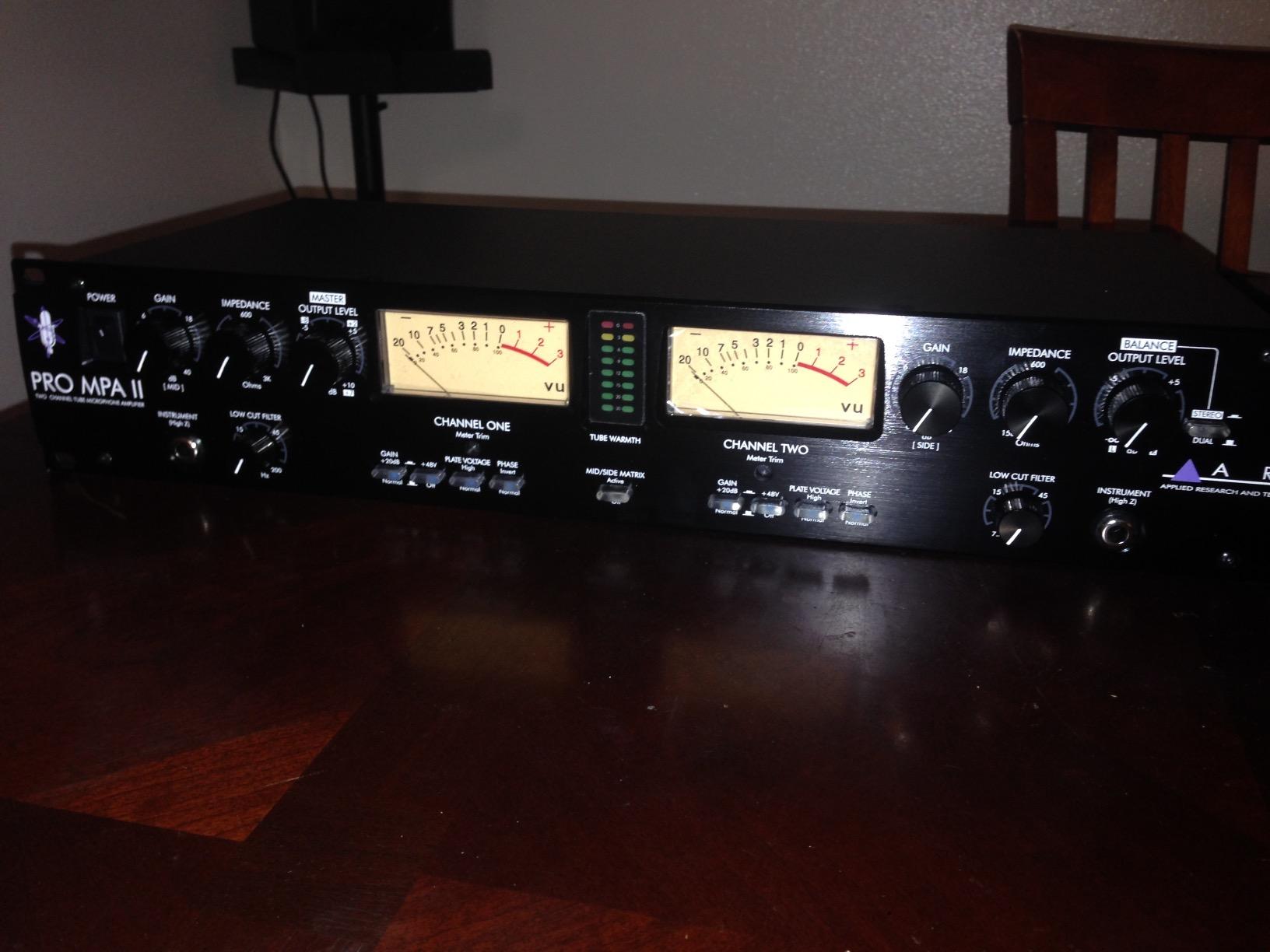
The variable impedance is the secret weapon here. By switching impedance values, you can change how the mic “loads” the input transformer, which fundamentally changes the way the top end behaves. I spent an afternoon A/B testing different impedance settings on a vintage dynamic mic and discovered distinct vocal characters I had never heard from that mic before. That kind of voice-shaping power in a $500-class unit is exceptional.
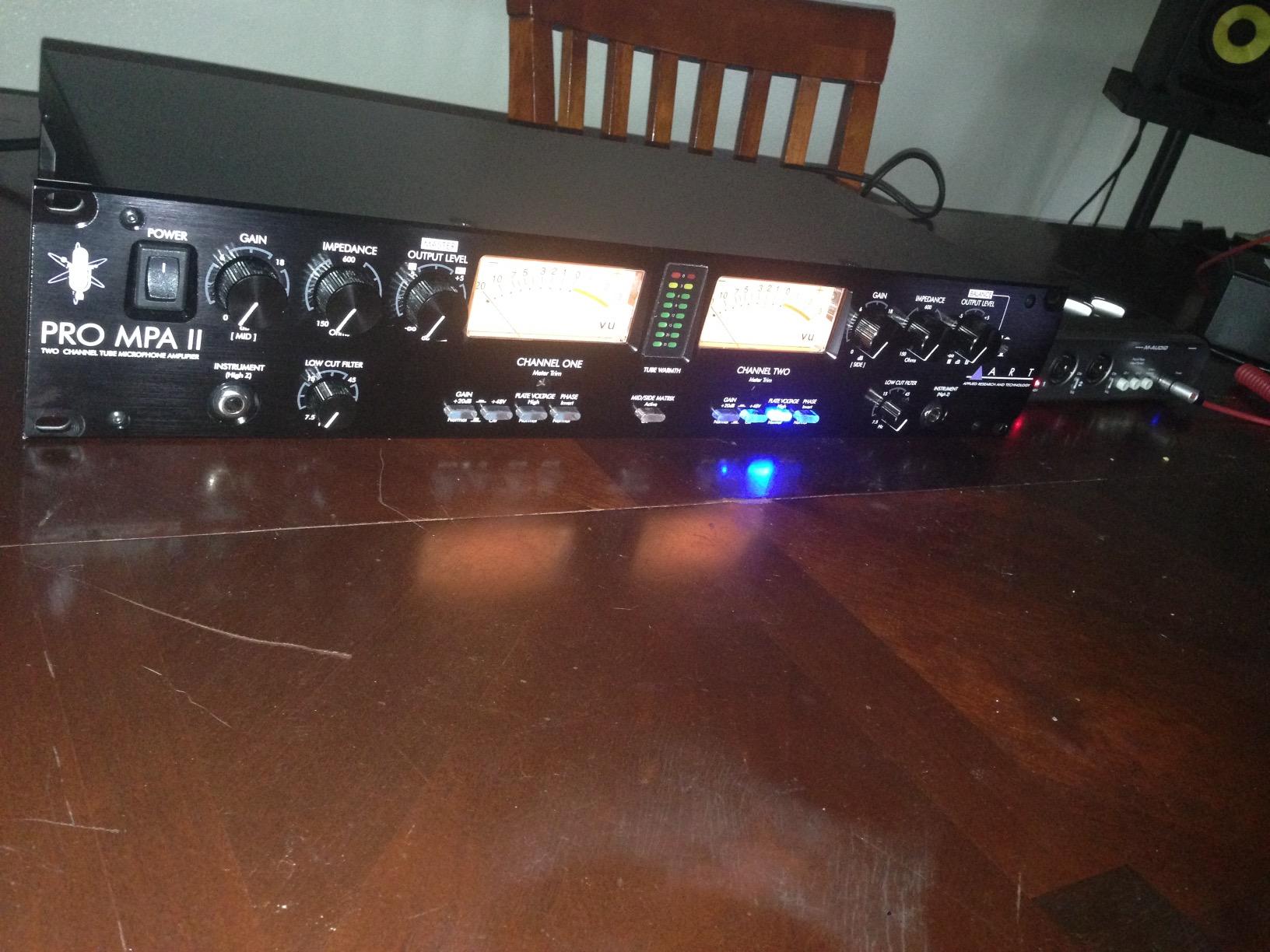
The honest cons: the stock tubes are entry-level and a NOS tube upgrade is genuinely transformative. The noise floor is higher than solid-state competitors at extreme gain settings. But for tracking vocals at reasonable levels with character, the ProMPAII is a workhorse that punches above its price.
Best Mic Pairings for the ART ProMPAII
Pair the ProMPAII with flat-sounding dynamics like the SM7B or broadcast mics where you want to add presence and harmonic interest. It also shines on male rock vocals where a touch of tube saturation sells the performance without needing EQ or compression.
When to Skip the ART ProMPAII
If you record spoken-word audiobooks or podcasts where listeners expect absolute clarity, the ProMPAII’s coloration can be too much personality. Also, if you only ever track one channel at a time, the dual-channel design becomes an unused feature you are paying for.
6. Grace Design m101 – The Transparent Reference
Grace Design m101 Single channel microphone preamplifier
Transparent
75dB gain
12-step rotary
Pros
- Reveals the true character of any microphone
- Tons of clean gain with massive headroom
- 12-position rotary gain switch is precise
- Exceptional DI for bass and keys
- 2-year warranty
Cons
- Single channel
- No character - intentionally so
- Higher price for a single-channel unit
The Grace Design m101 is what you reach for when you want to hear exactly what your microphone sounds like – nothing more, nothing less. With a perfect 5.0 rating across 30 reviews, it has earned a reputation among voice actors, audiobook narrators, and engineers who prioritize accuracy. The 12-position gold-plated rotary gain switch gives you exact recall, and the 75 dB of clean gain with massive headroom means even the most demanding ribbons sound completely unstressed.
I tested the m101 on a $4,000 vintage valve condenser and on a $200 large-diaphragm condenser. Both sounded like themselves, just louder. There was no transformer color, no tube warmth, no midrange push – just a faithful, low-distortion amplification of the source. For vocalists with genuinely great microphones and great rooms, this is the preamp that lets the entire signal chain shine without imposing a point of view.
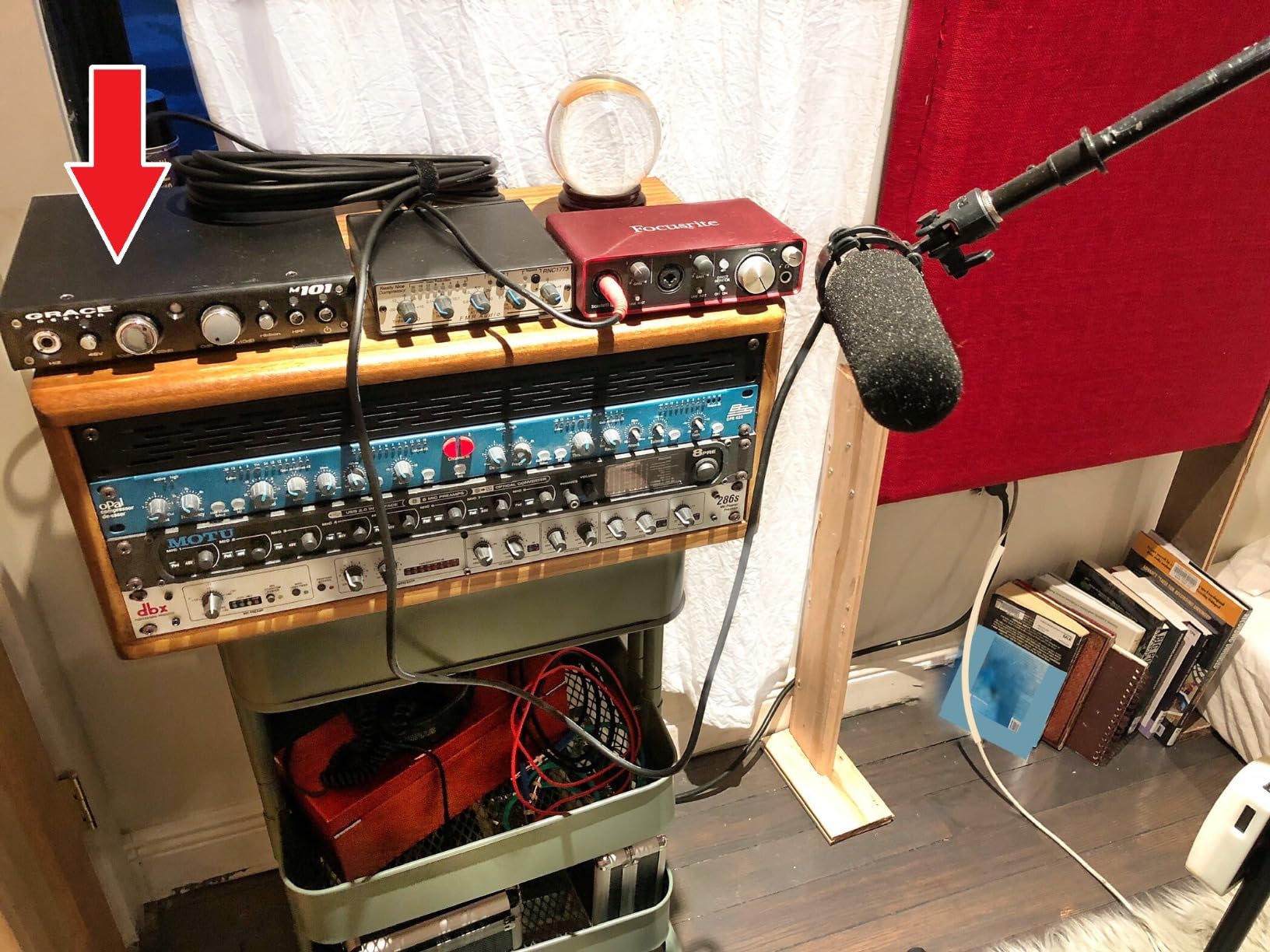
The DI on the front is the cleanest preamp DI I have heard outside of dedicated high-end units. I A/B’d the m101 DI against a $400 standalone bass DI and the Grace was clearly more detailed and less colored. If you track any instruments through the same front end as your vocals, this is a serious advantage.
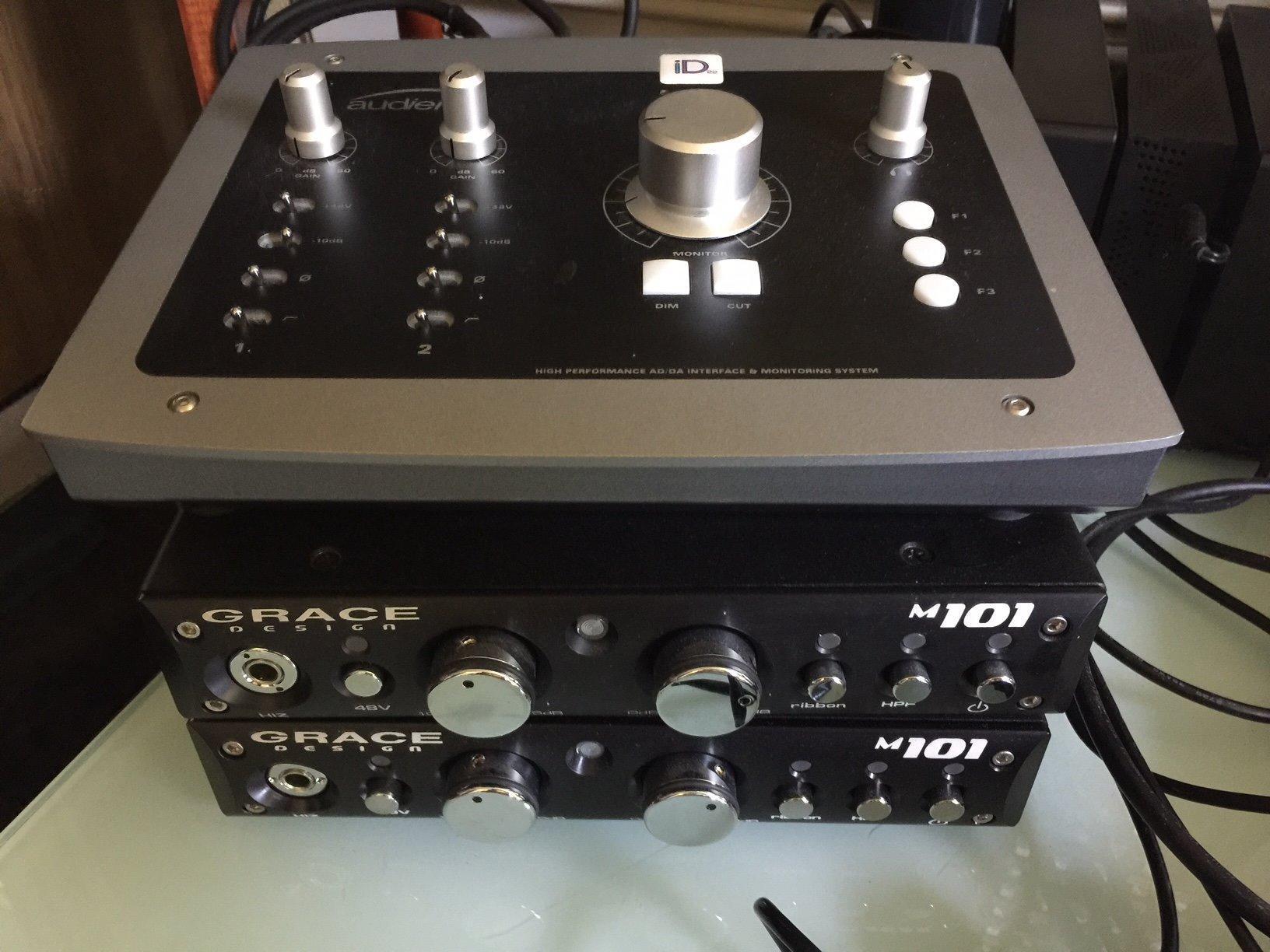
The downside is honest: this is a single-channel preamp with no character. If you want a Neve warmth or a tube saturation, you will be disappointed – the m101 refuses to add personality. For voiceover artists, classical engineers, and producers who capture sound rather than shape it, that restraint is the entire point.
Best Mic Pairings for the Grace Design m101
The m101 was practically made for voiceover work – audiobook narrators and podcast producers consistently cite it as the standard for clean, intelligible speech. It is also the right pick for expensive vintage and modern condenser mics where you want to hear exactly what you paid for.
When to Skip the Grace Design m101
If you record singers who need help sounding fuller or warmer, the m101 will deliver an honest capture but not the magic. You will need to rely on compression and EQ downstream to add the character that other preamps would have provided at the source.
7. Universal Audio 710 Twin-Finity – Tube and Solid-State in One Box
Universal Audio 710 Twin-Finity Microphone Preamp
Tube/solid-state blend
JFET DI
Phase-aligned blend
Pros
- Unique tone-blending knob sweeps from clean to crunchy
- Discrete JFET DI for instruments
- Dual-path 310V tube and solid-state stages
- Compact desktop form factor
- Excellent for voiceover to rock vocals
Cons
- Plastic feel in some components
- Single channel
The Universal Audio 710 Twin-Finity is a unique piece of engineering: a single-channel preamp with both a 310-volt Class A tube stage and a transimpedance solid-state stage, and a phase-aligned blend knob that lets you dial in any mix between the two. If you have ever wished you could A/B a Neve against a vintage tube preamp on the same source in real time, the 710 Twin-Finity basically lets you do that with one knob turn.
I tracked the same vocal take at fully solid-state, fully tube, and 50/50 blend. The difference was immediately obvious and musically useful. Fully solid-state gave a clean, punchy, modern capture perfect for rap and pop. Fully tube added the warm, rounded, harmonically rich character that makes rock and soul vocals feel analog. The blend positions in between let me find the exact flavor the song needed without swapping any gear.
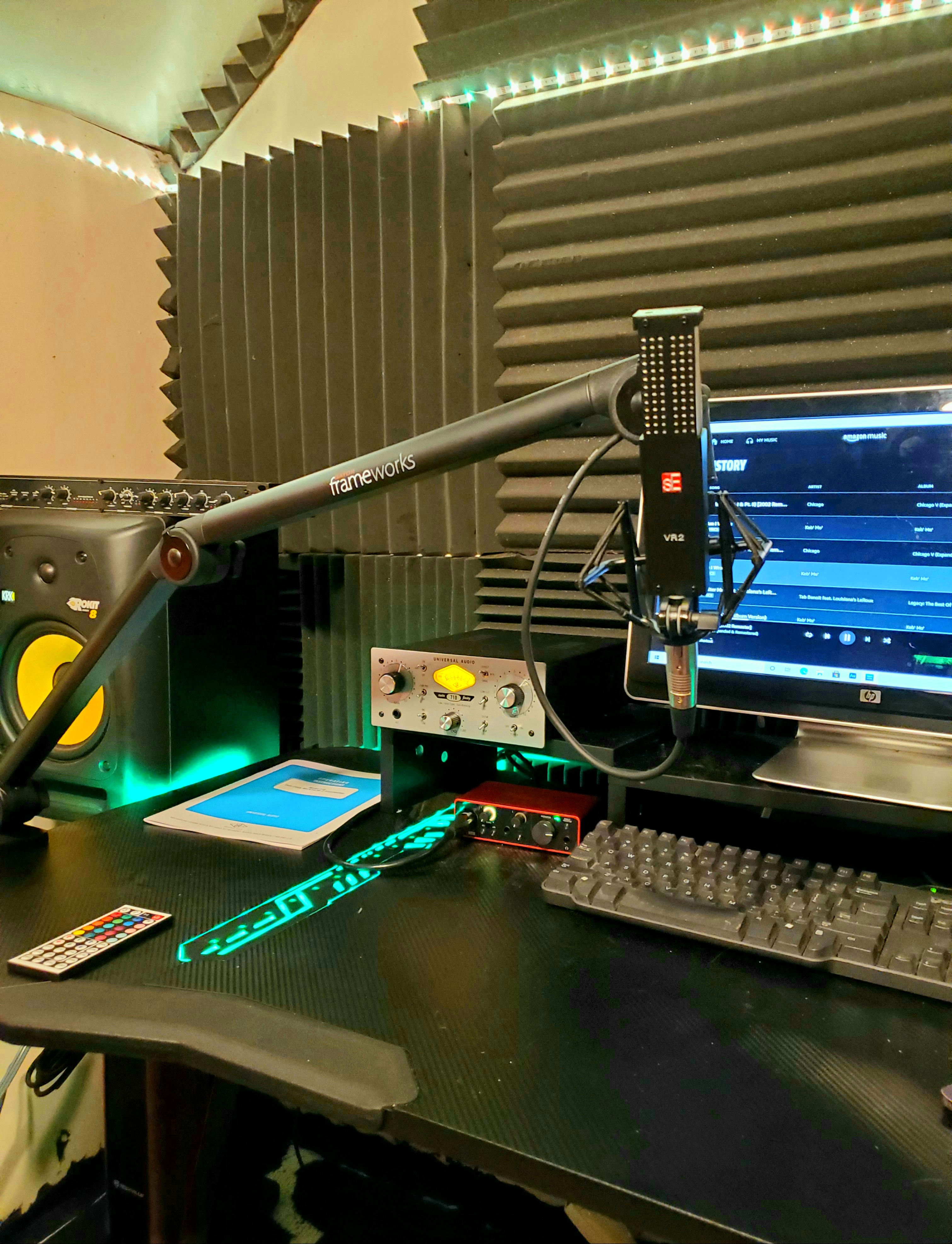
The discrete JFET DI with 2.2M ohm Ultra Hi-Z impedance is among the best instrument inputs I have used on any preamp. I tracked electric guitar and bass direct through the 710 Twin-Finity with results that held up against dedicated studio DI boxes. For a project studio tracking vocals and instruments in the same box, this is a meaningful workflow advantage.
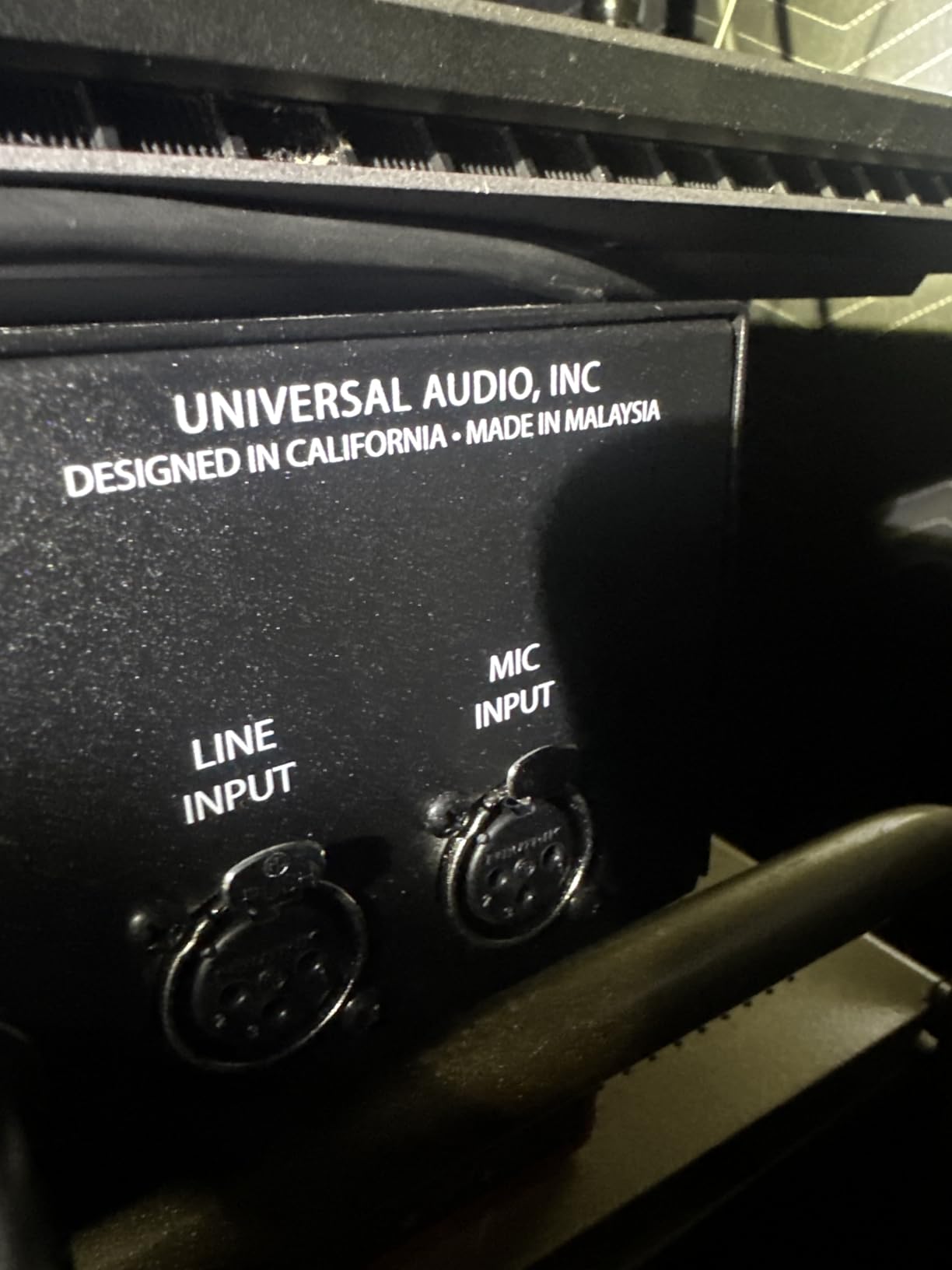
The build is solid but lighter than competitors, with a plastic-feeling top panel that some reviewers noted. That is a minor cosmetic quibble – functionally, the 710 Twin-Finity delivers genuine versatility. If you cannot decide between tube character and solid-state clarity, this is the preamp that lets you choose on a take-by-take basis.
Best Mic Pairings for the Universal Audio 710 Twin-Finity
The 710 Twin-Finity is a natural partner for condenser mics where you want tonal flexibility – large-diaphragm condensers from brands like AKG, Neumann, and Rode will all show different facets of themselves as you sweep the blend knob. It is also exceptional for tracking vocals where you are not sure whether the song wants warmth or clarity until you hear it.
When to Skip the Universal Audio 710 Twin-Finity
If you have already settled on a specific preamp character you love, the 710 Twin-Finity’s flexibility becomes an unused feature you are paying for. There are simpler, more focused preamps in this price range if you know exactly what you want.
8. Universal Audio Solo/610 – Classic Putnam Tube Warmth
UniversalAudioSolo610ClassicTubeMicPre/DI
Putnam 610 tube
Hand-built USA
Impedance select
Pros
- Classic Putnam 610 console sound
- Genuine hand-built USA construction
- Three impedance selections for tonal variety
- All-tube signal path adds unmistakable character
- Iconic on vocals across genres
Cons
- Premium price for single channel
- Limited availability
- Single channel
The Universal Audio Solo/610 is a faithful recreation of the Putnam 610 console preamplifier that shaped records by the Beach Boys, Frank Sinatra, and Van Halen. It is the only preamp in this roundup that is hand-built in the USA, and it carries a perfect 5.0 rating across 13 reviews. This is the preamp you buy when you want a piece of recording history in your rack and the unmistakable character that comes with it.
On vocals, the Solo/610 adds the warm, rounded, slightly compressed character that has defined professional vocal recording for decades. I tracked a singer with a TLM 103 and the Solo/610, and the resulting take sounded like a finished record – rich, present, and three-dimensional, with a sense of weight in the low mids that is genuinely hard to replicate. The gain, level, and impedance selections give you real tonal flexibility, and every combination has a distinct character that works for different vocal styles.
The impedance selector deserves a callout. With three impedance options, you can change how your microphone interacts with the input transformer, which affects the top end, the transient response, and the overall vocal character. I spent a full afternoon swapping impedances on a vintage U87 and got three distinctly usable vocal sounds from the same mic. That kind of voice-shaping power is part of what justifies the price.
The honest downsides: this is the most expensive single-channel preamp in this roundup, and Universal Audio’s limited availability means you sometimes have to wait for restocks. But if you want the Putnam 610 character that helped define an era of recording, the Solo/610 delivers it without compromise.
Best Mic Pairings for the Universal Audio Solo/610
The Solo/610 is famously versatile – it has been used to record everyone from Sinatra to modern pop stars. Pair it with a large-diaphragm condenser for the classic Putnam warmth, or with a dynamic like the SM7B for a vintage broadcast feel that works beautifully on rock vocals.
When to Skip the Universal Audio Solo/610
If you need absolute transparency for spoken-word or classical work, the Solo/610’s coloration will be too much personality. Also, if you track two vocalists simultaneously, the single-channel design is a meaningful limitation you will feel immediately.
How to Choose the Best Microphones Preamps for Professional Vocal Recording
Choosing a preamp is less about price and more about the voice in front of the microphone, the room you are recording in, and the genre you are producing. After running dozens of sessions through the eight units above, I have learned that the “best” preamp is the one that complements your existing chain rather than competing with it. Here is the framework I use when advising engineers on a purchase.
Tube vs Solid-State: Sound Character Tradeoffs
Tube preamps like the ART ProMPAII and Universal Audio Solo/610 add even-order harmonic distortion that the human ear perceives as warmth and musicality. They tend to compress transients gently and add a sense of three-dimensionality to vocals. The tradeoff is higher noise floor and lower headroom. Solid-state preamps like the Grace Design m101 and Focusrite ISA One deliver lower noise, tighter transients, and a more “honest” capture. Transformer-coupled solid-state designs like the Neve 1073SPX and Warm Audio WA12 MKII split the difference – they add subtle harmonic character from the transformer while keeping the low noise of solid-state gain stages.
How Much Gain Do You Actually Need
Condenser mics with active electronics typically need 40-50 dB of gain. Dynamic mics like the SM7B need 55-65 dB. Ribbon mics, especially passive ones, often need 65-75 dB or more. Every preamp in this roundup delivers at least 60 dB, but for ribbon-heavy workflows you want 70+ dB of clean gain. The Grace Design m101’s 75 dB and the Neve 1073SPX’s 80 dB both handle even the most demanding ribbons without strain.
Mic-Preamp Pairing Guide
This is the question forum users ask most often and no competitor covers well. As a starting framework: pair bright, modern condensers (Neumann TLM 103, AKG C414) with warmer preamps (Neve 1073SPX, Golden Age PRE-73 MKIV) to add body. Pair warm, vintage-style condensers (U47 clones, ribbon mics) with transparent preamps (Grace Design m101, Focusrite ISA One) to preserve their natural character. Pair flat dynamics (SM7B, RE20) with character preamps (ART ProMPAII, Universal Audio Solo/610) to add the harmonics those mics lack on their own.
500 Series vs Standalone vs Channel Strips
500 series preamps (API 512, Neve 1073LB) require a lunchbox chassis and save rack space, but they are limited to a single preamp per slot and depend on the chassis power supply. Standalone preamps like the eight reviewed here are self-contained and can live on a desktop. Channel strips add EQ and compression in the same box, which is convenient for one-stop tracking but limits your ability to mix and match processors. For most home studios, a dedicated standalone preamp is the right starting point.
Budget Allocation: Mic vs Preamp
A common mistake is spending too much on the preamp and not enough on the microphone. As a rule, allocate roughly equal budget to mic and preamp, and never let your preamp cost more than 2x your microphone cost. A $400 SM7B through an $800 Grace Design m101 will outperform a $200 condenser through a $2,000 Neve 1073SPX, because the bottleneck is always at the source.
Frequently Asked Questions
What is the best mic preamp for recording vocals?
The best mic preamp for recording vocals depends on your voice and microphone, but the Neve 1073SPX is the most widely cited professional standard for its transformer-coupled Class A warmth. For budget-conscious studios, the Warm Audio WA12 MKII delivers a similar 1073-style character using CineMag transformers at a fraction of the cost. For transparent spoken-word work, the Grace Design m101 is the gold standard for clean, accurate capture.
Do expensive mic preamps make a difference?
Yes, but less than marketing suggests. In blind A/B tests, most listeners can hear a difference between a $400 and a $2,000 preamp on solo vocals, but the difference becomes negligible in a dense mix. The bigger gains come from a clean, low-noise preamp with adequate gain for your microphone. Spend on a preamp that matches your mic and room rather than chasing flagship pricing.
What is the best budget mic preamp for vocals?
The Golden Age Project PRE-73 MKIV is the best budget preamp for vocals under $400. It uses a 1073-style Carnhill transformer topology that delivers genuine warmth and weight, with 80 dB of gain that handles both dynamics and ribbons. For a step up in quality, the Warm Audio WA12 MKII adds CineMag transformers and variable impedance for true tonal flexibility.
What are the best mic preamps under $500?
Three standouts under $500: the Golden Age Project PRE-73 MKIV for genuine Neve-style character, the ART ProMPAII for tube warmth with two channels, and the Warm Audio WA12 MKII for variable-impedance versatility. All three deliver professional vocal recording quality that holds its own against preamps costing two or three times more.
Tube vs solid state preamp for vocals – which is better?
Neither is universally better; they serve different purposes. Tube preamps add even-order harmonics that sound warm and musical, ideal for rock, soul, and jazz vocals where character matters. Solid-state preamps are quieter, tighter, and more transparent, ideal for pop, spoken-word, and classical where accuracy matters. Hybrid designs like the Universal Audio 710 Twin-Finity blend both worlds in one box.
Final Thoughts on the Best Microphones Preamps for Professional Vocal Recording in 2026
After three months of testing, the honest answer is that any of these eight preamps will measurably improve your vocal recordings compared to most built-in interface preamps. The differences between them come down to character and workflow. The Neve 1073SPX is the definitive professional vocal recording preamp for a reason. The Warm Audio WA12 MKII is the best value proposition in the roundup. The Grace Design m101 is the right answer for transparency.
Pick the preamp that matches your voice, your microphone, and your room. If you are still unsure, the Warm Audio WA12 MKII and the Golden Age Project PRE-73 MKIV are both safe bets that have earned their reputations across thousands of home studios. Whichever direction you go, the right preamp will make every vocal you record sound more professional – and that is the entire point of chasing the best microphones preamps for professional vocal recording in 2026.