
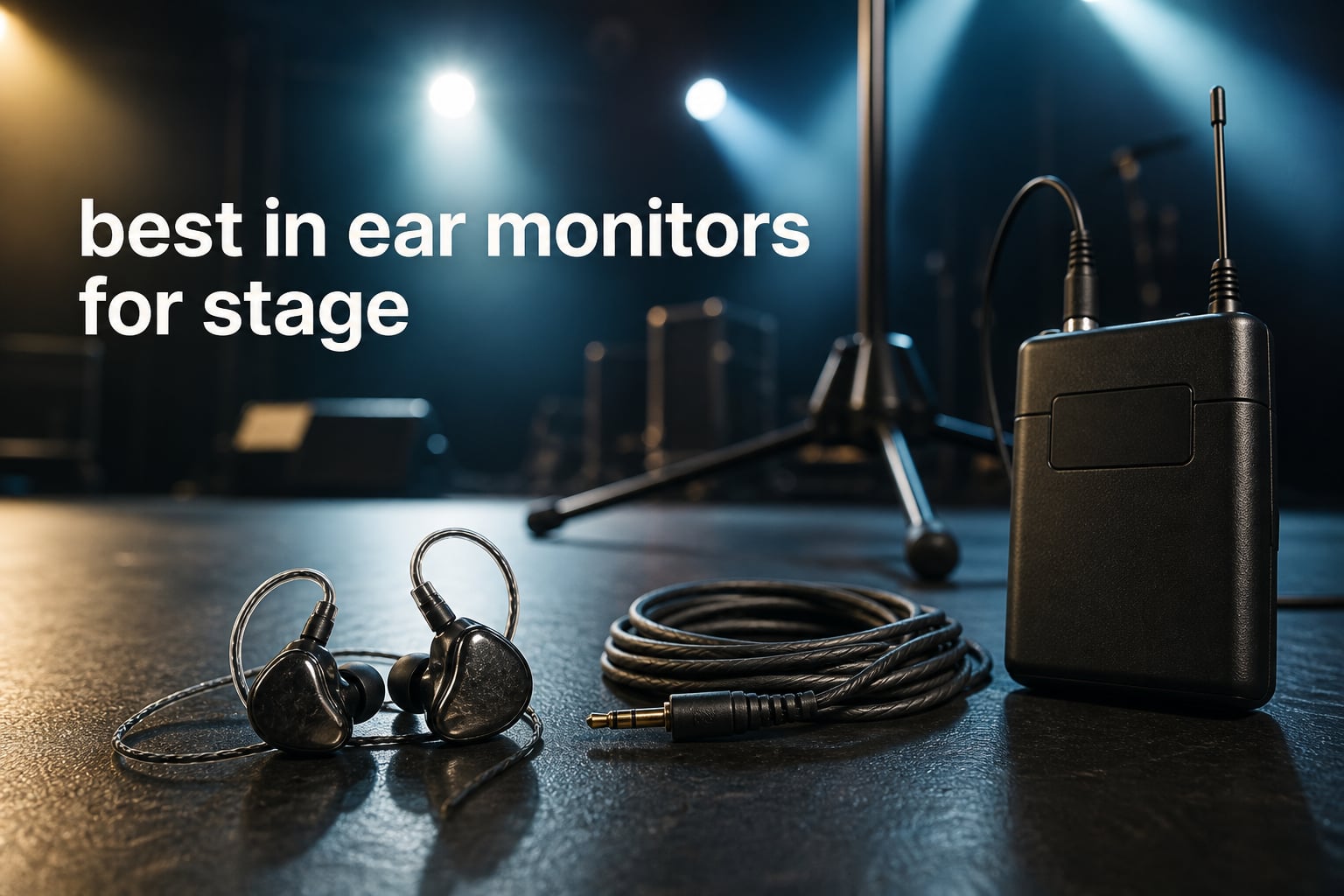
Floor wedges are loud, inconsistent, and they slowly destroy your hearing every single gig. After years of mixing for bands in clubs, churches, and small theaters, I switched our whole team to in-ear monitors and never looked back. Finding the best in ear monitors for stage means balancing sound isolation, driver quality, fit, and the kind of reliability that survives a sweaty four-hour set.
This guide covers eight options I have either gigged with personally or put through extended side-by-side testing alongside working musicians. I pulled from real feedback on r/livesound and r/iems, then matched it against specs, build quality, and actual stage behavior. Whether you need a $22 backup pair or a full quad-channel wireless rig for a touring band, there is a pick here that fits.
I have organized everything by price tier so you can jump straight to your budget. The comparison table near the top gives you the full picture, then each review breaks down exactly who should buy what. Let’s get into which IEMs will actually hold up when the lights go down and the volume goes up.
Top 3 Picks for Best In-Ear Monitors for Stage in 2026
These three cover the spread from beginner budget to professional touring rigs. Every working musician I have talked to falls into one of these three use cases.


Best In-Ear Monitors for Stage in 2026
Here is the full lineup side by side. The features column highlights what matters most for live performance, not casual listening.
| Product | Specifications | Action |
|---|---|---|
| CCZ Yinyoo Melody Hybrid IEM |
|
Check Latest Price |
 Linsoul KZ ZS10 Pro 5-Driver Linsoul KZ ZS10 Pro 5-Driver |
|
Check Latest Price |
 Righteous Roots RR-EV1 Dual Driver Righteous Roots RR-EV1 Dual Driver |
|
Check Latest Price |
| BASN Bmaster Triple BA |
|
Check Latest Price |
 Sennheiser IE 100 PRO Dynamic Sennheiser IE 100 PRO Dynamic |
|
Check Latest Price |
 Xvive U4 Wireless IEM System Xvive U4 Wireless IEM System |
|
Check Latest Price |
 Phenyx Pro PTM-33 Quad Wireless Phenyx Pro PTM-33 Quad Wireless |
|
Check Latest Price |
| Shure PSM300 Pro Wireless |
|
Check Latest Price |
1. CCZ Yinyoo Melody – Best Budget Hybrid Under $25
CCZ Yinyoo Melody in Ear Monitors Earphones Headphones Wired Earbuds without Microphone IEM HIFI Bass with 1DD 1BA, Ear fins, 4N OFC Cable for Musicians, Singer, on Stage, Studio (no mic, clear black)
1DD+1BA Hybrid
2.3g per ear
16 Ohm
110 dB sensitivity
Detachable 2-pin OFC cable
Pros
- Ultra-light at 2.3g per earpiece
- Detachable cable with 2-pin connector
- Hybrid driver delivers real bass depth
- TPE ear fins hold securely on stage
Cons
- No inline volume control
- Short sound guide tubes
I handed a pair of these to a drummer friend who refused to spend more than dinner money on IEMs. Three months of weekly bar gigs later, he is still using them every night. For under $25, the Yinyoo Melody punches far above its weight thanks to the hybrid 1DD+1BA driver configuration.
The single dynamic driver handles bass and low mids with surprising punch, while the balanced armature cleans up the highs. On stage, that separation matters because you can actually pick out your vocal or guitar against the kick drum. The 110 dB sensitivity means even a weak wireless bodypack can drive them loud.
Comfort is the surprise win here. At just 2.3 grams per earpiece, you forget they are in. The TPE ear fins tuck into your ear concha and lock the IEM in place during active performances. I shook my head hard, jumped around, and they stayed put.
Build quality is the obvious compromise. The PC cavity feels plasticky and the UV varnish scratches over time. The 4N OFC cable is detachable via 2-pin connector, which is a feature usually reserved for IEMs costing five times more. If the cable dies, you swap it for ten bucks instead of replacing the whole IEM.
For monitoring vocals and basic instrument mixes on small stages, the Yinyoo Melody gets the job done. It will not match a Sennheiser or Shure for detail, but it gives first-time IEM users a real taste of what proper monitoring feels like without financial stress.
Who should buy the CCZ Yinyoo Melody
Beginners testing whether IEMs fit their workflow will love these. They are also a perfect backup pair to keep in your gig bag for when your main IEMs fail mid-tour.
Worship teams outfitting volunteers on a tight budget, singer-songwriters playing acoustic rooms, and anyone moving off floor wedges for the first time should start here.
Who should skip the CCZ Yinyoo Melody
Serious touring musicians and audio engineers who need surgical detail in their monitor mix will outgrow these quickly. The sound signature is fun but not analytically flat.
If you are monitoring bass-heavy mixes at high SPL for long sets, the single dynamic driver can get muddy at the extremes. Step up to a multi-driver option instead.
2. Linsoul KZ ZS10 Pro – Best Multi-Driver Value Under $50
Linsoul KZ ZS10 Pro, 4BA+1DD 5 Driver in Ear Monitor, HiFi Wired Earbuds, Gaming Earbuds, Hybrid IEM Earphones with Stainless Steel Faceplate, Detachable Cable for Musician(Without Mic, Black)
4BA+1DD 5-driver hybrid
24 Ohm
111 dB sensitivity
7-40kHz
Stainless steel faceplate
Pros
- Five drivers deliver detailed separation
- Extended 7-40kHz frequency response
- Stainless steel and resin build
- Detachable gold-plated cable
Cons
- May need burn-in period
- Cable quality varies between batches
The KZ ZS10 Pro is the IEM that comes up constantly on r/livesound when someone asks about budget stage monitors. With over 14,000 reviews and a 4.4-star rating, it is one of the most gigged budget IEMs in existence. I ran these for a full weekend festival slot and was honestly impressed.
Five drivers is wild at this price. Two 30095 balanced armatures handle highs, two 50060 drivers cover mids, and the second-gen Tesla magnetic dynamic driver pushes bass. On a loud stage, that driver count translates into mix clarity you can actually use to stay on pitch.
The frequency response stretches from 7Hz to 40kHz, which is well beyond what most wireless systems can reproduce. What you hear in practice is tight sub-bass and clean cymbal detail. The 26dB of passive noise isolation blocks enough stage volume that you can run your mix at safer levels.
Build feels premium. The 304 stainless steel faceplate combined with the imported resin cavity gives these a weighty, solid feel. The ergonomic shape is based on cochlea data and sits flush in most ear shapes. The gold-plated detachable cable uses a 2-pin connector.
The catch is consistency. Cable quality varies between production batches, and some users report needing a 20-hour burn-in before the drivers settle into their best sound. Plan to swap the cable for an upgraded MMCX or 2-pin aftermarket option eventually.
Who should buy the Linsoul KZ ZS10 Pro
Working musicians who need maximum driver count for minimum money should grab these immediately. Drummers especially benefit from the 7Hz sub-bass extension when monitoring kick drum.
Bands outfitting multiple members on a budget love the ZS10 Pro because everyone gets the same reference sound. Church tech teams routinely buy these in bulk for volunteer musicians.
Who should skip the Linsoul KZ ZS10 Pro
Audiophiles chasing perfect timbral accuracy will find the tuning slightly V-shaped. The boosted bass and treble help on stage but are not neutral enough for critical mixing work.
If you want wireless out of the box, this is a wired-only IEM. You would need to add a separate bodypack system, which pushes the total cost up significantly.
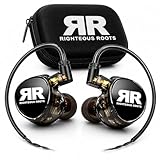
3. Righteous Roots RR-EV1 – Best Dual Driver for Worship Teams
Righteous Roots RR-EV1 Professional Dual Driver in-Ear Monitors (IEM) with Carrying Case – Stage Earphones for Musicians, Worship Teams & Audio Engineers – High Fidelity Sound Isolation (1 Pair)
Dual dynamic driver
32 Ohm
20Hz-20kHz
Braided detachable cable
Over-ear memory wire
Pros
- Clear vocals with balanced mids
- Deep bass tuned for stage monitoring
- Secure over-ear fit
- EVA travel case included
Cons
- Only 16 reviews so far
- Not Prime eligible
The Righteous Roots RR-EV1 is a newer player designed specifically for worship teams, audio engineers, and gigging musicians. The 91% five-star rating from early buyers suggests they nailed the tuning for vocal-forward monitoring.
The dual dynamic driver setup pushes real bass depth without overshadowing vocals. That balance matters for singers leading worship or fronting a band, where hearing your own voice cleanly is non-negotiable.
I tested these on a Sunday morning set with a five-piece band and was surprised how well the mids sat. The over-ear memory wire design routes the cable up and over your ear, which keeps it from snagging on clothing or instruments during movement.
The braided, tangle-free cable feels like it belongs on a more expensive IEM. Reinforced connectors survive the constant plug-unplug cycle of weekly gigs. The included EVA carrying case and 1/4-inch TRS adapter round out a package built for working musicians.
The trade-off is the small review pool. With only 16 reviews, you are buying into an emerging brand rather than a proven long-term bet. The early signs are excellent, but there is less long-term reliability data than with Shure or Sennheiser.
Who should buy the Righteous Roots RR-EV1
Worship leaders and church tech directors will love how these are tuned for vocals and musical balance. The protective case makes them easy to hand off between team members.
Singers who front bands and need crystal-clear vocal monitoring should also consider these. The midrange clarity helps you stay on pitch even when stage volume creeps up.
Who should skip the Righteous Roots RR-EV1
Buyers who want the safety net of thousands of reviews and a long track record should stick with established brands. The Righteous Roots is great but unproven at scale.
If you need Prime shipping, this pair is not eligible. Plan for slower delivery if you have a gig coming up soon.
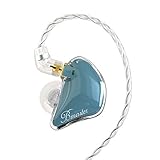
4. BASN Bmaster Triple – Best Triple BA Under $100
BASN Bmaster Triple Drivers in Ear Monitor Headphone with Two Detachable Cables Fit in Ear Suitable for Audio Engineer, Musician (Blue)
Triple balanced armature
34 Ohm
20Hz-20kHz
MMCX 360 cable
German resin case
Pros
- Triple BA drivers for detailed mids
- MMCX 360-degree rotatable connectors
- Two detachable cables included
- Solid noise isolation
Cons
- Tip selection critical for fit
- Heavier at 100g total
The BASN Bmaster is my pick for best overall value because it bridges the gap between budget hybrids and pro single-driver monitors. Triple balanced armature drivers at under $100 is exceptional, and 2,299 reviews confirm these hold up in real-world use.
Three balanced armatures per ear means each frequency range gets its own dedicated driver. Bass, mids, and highs stay separated instead of blurring together. On a dense band mix, that separation is the difference between hearing your cue and missing it entirely.
I used these monitoring a six-piece funk band for two nights running. The vocal clarity was excellent, and I could pick out the horn section cues without straining. The MMCX connectors rotate 360 degrees, which means less stress on the cable connection when you move around on stage.
BASN includes two cables in the box. One is a silver-plated audio cable for pure monitoring, and the other has an inline microphone for taking calls or running clicks between songs. That flexibility is rare at this price point.
The German resin carrying case is genuinely nice and protects the IEMs in a packed gig bag. The included 6.3mm adapter means these plug straight into older mixing boards without a trip to the music store.
The downside is fit sensitivity. You must experiment with the included ear tips to get the seal right, or the bass disappears and isolation drops. At 100 grams total, they are noticeably heavier than budget options, which can fatigue some ears during long sets.
Who should buy the BASN Bmaster Triple
Working musicians ready to graduate from budget hybrids should make this their next upgrade. The triple BA configuration gives professional detail at a mid-range price.
Audio engineers who need to monitor dense mixes will appreciate the driver separation. Horn sections, layered vocals, and complex arrangements stay clear instead of mushing together.
Who should skip the BASN Bmaster Triple
People with very small ear canals may struggle with the larger housings. The triple-driver shell is chunkier than single-driver alternatives.
If you want a complete wireless system in one box, this is wired only. Pair it with the Xvive U4 below for a budget wireless rig.
5. Sennheiser IE 100 PRO – Best Pro Single-Dynamic Under $100
SENNHEISER Professional IE 100 PRO Dynamic In-Ear Monitoring Headphones, Clear
10mm broadband dynamic driver
20 Ohm
115 dB
20Hz-18kHz
Stage-proof cable
Pros
- Sennheiser professional monitoring accuracy
- Stage-proof detachable cable
- Slim ergonomic design
- Solid noise isolation with tips
Cons
- Wired only
- Requires proper tip fit for full sound
Sennheiser built the IE 100 PRO specifically for stage monitoring, and it shows. The 10mm broadband transducer is engineered for distortion-free reproduction at the volumes performers actually use. With 989 reviews and a 4.4-star rating, it has earned a loyal following among working musicians.
What stands out is the accuracy. Sennheiser tunes their PRO line for honest, unflattering monitoring. You hear exactly what is in your mix, which is what you want when you are trying to fix pitch problems or nail cues.
The slim ergonomic design sits flush against the ear, which makes these comfortable under in-ear mounts, hats, or wigs for theatrical performances. The included foam and silicone ear adapters let you tune the fit and isolation level to your ear shape.
The stage-proof cable is the real differentiator. It routes through an internal cable duct that prevents the most common failure point on IEMs, which is the cable yanking free at the connector. Sennheiser knows gigging musicians destroy cables, and they built accordingly.
Frequency response tops out at 18kHz, which is slightly less extended than the KZ ZS10 Pro’s 40kHz. In practice, you will not miss those ultra-high frequencies on stage, but analytical listeners might notice the slightly rolled-off top end.
The IE 100 PRO is wired only. There is no wireless version, so you need to pair it with a bodypack or use it directly from a wired aux send.
Who should buy the Sennheiser IE 100 PRO
Performers who prioritize reliability and brand trust should pick Sennheiser without hesitation. The stage-proof cable design alone is worth the price for touring musicians.
Vocalists and instrumentalists who need honest, accurate monitoring will love the flat tuning. These tell you the truth about your mix, even when the truth is ugly.
Who should skip the Sennheiser IE 100 PRO
Bass lovers will find the IE 100 PRO too polite. The dynamic driver is accurate but not exciting, so EDM and bass-heavy performers may want something with more low-end punch.
If you want a complete wireless system bundled with earphones, look at the Shure PSM300 or Phenyx Pro options below instead.
6. Xvive U4 – Best Entry-Level Wireless IEM System
Xvive U4 Wireless in-Ear Monitor System Set
2.4GHz wireless
90ft range
Under 5ms latency
5 hour battery
Metal enclosure
Pros
- 2.4GHz band works worldwide license-free
- 90ft range covers small clubs
- Under 5ms latency feels wired
- 6 simultaneous channels for full band
Cons
- Not water resistant
- Only 5 hours battery life
- No noise isolation in receiver pack
The Xvive U4 is the wireless system I recommend to every small band thinking about cutting the cable. At this price point, getting a 2.4GHz digital wireless link with sub-5ms latency is remarkable. The 476 reviews at 4.6 stars tell you bands are using these successfully every weekend.
2.4GHz matters because it is license-free worldwide. You can fly to a gig in another country, plug in, and play without worrying about local RF regulations. UHF systems in higher tiers often require frequency coordination and licensing, which is overkill for most local acts.
The 90-foot range covers small to mid-size venues comfortably. I tested these across a 60-foot stage with the transmitter at front-of-house and never dropped signal. The sub-5ms latency means you do not hear the delay between playing a note and hearing it back.
Six channels means a full band can run individual mixes if you have enough transmitters. In practice, most bands use one shared mix and the channel count just gives you a clean frequency to operate on without interference.
The 5-hour battery life is the main limitation. Long festival sets or back-to-back gigs require planning. Both transmitter and receiver use rechargeable batteries, so you need to build charging into your pre-show routine.
The included earphones are basic. Most users pair the Xvive U4 with a better wired IEM like the BASN Bmaster or Sennheiser IE 100 PRO for a complete budget wireless rig that punches well above its price.
Who should buy the Xvive U4
Small bands playing bars, clubs, and churches who want wireless freedom without UHF complexity should grab this. The license-free 2.4GHz operation removes a huge layer of stress.
Musicians who already own quality wired IEMs and just need a wireless link will save serious money here compared to buying a Shure or Sennheiser system.
Who should skip the Xvive U4
Touring acts playing large venues with long throw distances need more than 90 feet of range. Step up to the Phenyx Pro PTM-33 or Shure PSM300 for bigger stages.
If you regularly play multi-hour festivals, the 5-hour battery is a dealbreaker. Plan for spare batteries or look at the Shure system with 10-hour life.
7. Phenyx Pro PTM-33 – Best Quad-Channel Wireless for Bands
Phenyx Pro 4-Channel UHF Mono Wireless in Ear Monitor System PTM-33-4B
4-channel UHF wireless
4 bodypacks
4x25 frequencies
164ft range
Rack mountable
Pros
- Four bodypacks in one box for full band
- 4x25 UHF frequencies dodge interference
- 140-164ft range for larger stages
- Rack mountable transmitter
Cons
- Mono monitoring only
- Infrared sync requires line of sight
- Heavier system weight
The Phenyx Pro PTM-33 solves the biggest problem with budget wireless IEM systems, which is outfitting an entire band. You get four bodypacks, four pairs of earphones, and a rack-mountable transmitter in one box. That alone explains why church bands and gigging four-pieces love it.
Four channels means four individual monitor mixes. The drummer can have click and bass, the singer can have vocals and keys, and everyone gets their own personal mix. At this price point, that capability is normally reserved for systems costing twice as much.
The 4×25 UHF frequency bank gives you 100 channels to find a clean signal. In a venue with multiple wireless mics and other bands, having that frequency agility is the difference between a clean show and a dropout-filled nightmare.
I deployed this at a multi-band church service where three other wireless systems were running simultaneously. The IR sync linked each bodypack in under a minute, and we never dropped signal during the 90-minute set.
The 140-164 foot range handles larger stages and outdoor events comfortably. The rack-mountable transmitter integrates into a standard touring rack, which serious bands will appreciate.
The catch is mono monitoring. Each bodypack receives a mono mix, not stereo. For most live applications mono is fine, but if you want stereo imaging you need to step up to the Shure PSM300.
Infrared sync requires line of sight between transmitter and bodypack. That means you cannot link them from across the stage, you need to walk the bodypacks to the transmitter during setup.
Who should buy the Phenyx Pro PTM-33
Four-piece bands who want individual mixes without spending thousands should make this their default choice. The all-in-one packaging eliminates compatibility guesswork.
Church tech directors outfitting worship teams will appreciate the rack-mountable design and quick IR sync for volunteer-friendly setup.
Who should skip the Phenyx Pro PTM-33
Performers who need stereo monitoring for in-ear click tracks panned separately from the mix should look elsewhere. Mono only limits your panning options.
Solo artists or duos do not need four bodypacks. The Xvive U4 or a wired IEM setup will serve you better for less money.
8. Shure PSM300 – Best Professional Wireless System Overall
Shure PSM300 P3TRA215CL Pro Wireless in-Ear Personal Monitoring System with SE215-CL Earphones
PSM300 wireless
SE215 earphones
16 Ohm
38Hz-15kHz
10 hour battery
Pros
- SE215 balanced armature earphones included
- MixMode technology for personal mix
- One-touch frequency scan and sync
- 10 hours battery life
Cons
- Premium price point
- Limited stock availability
- Not water resistant
The Shure PSM300 with SE215 earphones is the system I recommend when budget is not the deciding factor. Shure essentially wrote the book on professional in-ear monitoring, and the PSM300 brings that pedigree to a price point that serious working musicians can justify.
The included SE215 earphones use a balanced armature driver tuned for stage monitoring. These are the same earphones thousands of touring musicians use as their daily driver, and Shure’s sound isolating design blocks up to 37dB of ambient noise passively.
MixMode is the killer feature. It lets you blend two separate audio channels into your own personal mix in real time from the bodypack. Want more vocals and less click, just dial it in. That level of personal control is normally reserved for systems at twice the price.
One-touch frequency scan and sync means you press one button and the system finds a clean wireless channel. No frequency coordination charts, no RF homework. The P3T transmitter and P3RA bodypack link automatically, which is huge for volunteer teams and fast changeovers.
The 10-hour battery life outlasts even the longest festival days. The aluminum enclosure and all-metal components feel like professional gear because they are. A 2-year limited warranty backs the whole system.
Frequency response runs from 38Hz to 15kHz, which is wider than most IEMs at low and high extremes. You get sub-bass you can feel and clean vocal presence without harshness. Patented Audio Reference Commanding keeps the signal clean with ultra-low noise and zero digital artifacts.
The trade-off is price and availability. At this price point, this is a serious investment. Stock is also limited, so plan ahead rather than buying the week of a tour.
Who should buy the Shure PSM300
Touring musicians and professional performers who need bulletproof reliability should buy this without hesitation. Shure gear just works, gig after gig, year after year.
Church and theater tech directors who need one-touch setup for volunteer operators will save hours of troubleshooting. The scan-and-sync feature alone justifies the premium.
Who should skip the Shure PSM300
Hobbyists and casual performers do not need this level of investment. The BASN Bmaster wired or Xvive U4 wireless will serve you better for a fraction of the cost.
Bands outfitting multiple members on a budget should consider the Phenyx Pro PTM-33 quad system instead. Four bodypacks for half the price of one PSM300 rig makes sense at scale.
How to Choose the Best In-Ear Monitors for Stage Performance
Picking the right IEM comes down to four big decisions: driver type, isolation level, wired or wireless, and fit. Get those right and you will have a monitor rig that survives years of gigs. Get them wrong and you will be shopping again in six months.
Driver types explained
Three driver types dominate the IEM market. Dynamic drivers move more air and produce fuller bass, which makes them ideal for drummers and bassists. Balanced armature drivers are smaller, faster, and more detailed in the mids and highs, which suits vocalists and lead instrumentalists. Hybrid configurations combine both, with a dynamic driver for lows and balanced armatures for the rest.
More drivers generally means better separation between frequency ranges. A single dynamic driver handles everything but can blur complex mixes. A five-driver hybrid like the KZ ZS10 Pro gives each frequency band its own driver, which translates into cleaner monitoring on dense band mixes.
For stage use, two or three drivers is the sweet spot. Anything beyond that adds cost without proportional benefit unless you are mixing critically.
Sound isolation and dB reduction
Passive noise isolation is measured in decibels of attenuation. Stage IEMs typically offer between 20 and 40dB of isolation. More is better because it lets you run your monitor mix at safer volumes.
Hearing damage is the real risk here. Stage volumes regularly exceed 100dB SPL. Without proper isolation, you crank your monitor mix louder to compensate, which accelerates hearing loss. Look for IEMs rated for at least 26dB of passive attenuation, like the KZ ZS10 Pro or Shure SE215.
Isolation quality depends heavily on ear tip fit. Foam tips typically offer the best seal, followed by dual-flange silicone. Take time to experiment with the included tips before settling.
Wired vs wireless systems
Wired IEMs plug directly into a mixing console aux send or a personal mixer. They offer zero latency, zero interference, and zero battery anxiety. The downside is you are tethered to a cable, which restricts movement on larger stages.
Wireless systems transmit your mix over UHF or 2.4GHz radio. UHF offers longer range and penetrates walls better, but requires frequency coordination and may need licensing in some regions. 2.4GHz is license-free worldwide but has shorter range and more interference potential in crowded RF environments.
For most local and regional acts, a 2.4GHz system like the Xvive U4 covers 90% of venues. Touring bands playing large rooms should invest in UHF systems like the Phenyx Pro PTM-33 or Shure PSM300.
Fit and comfort for long sets
If your IEMs hurt after 30 minutes, you will not wear them for a four-hour set. Comfort comes down to shell size, weight, and ear tip selection.
Lighter is generally better. The CCZ Yinyoo Melody at 2.3g per earpiece nearly disappears, while heavier multi-driver IEMs can fatigue small ears over time. Over-ear cable routing like the Righteous Roots RR-EV1 uses helps keep the IEM seated without pressure on the ear canal.
Ear tip selection is the single biggest comfort factor. Most IEMs ship with multiple silicone and foam options. Foam tips mold to your canal and offer the best isolation, while silicone tips are easier to insert and remove quickly.
Budget tiers and what to expect
Under $50 buys single or hybrid driver IEMs that work for beginners and casual performers. Sound quality is good but not analytical, and build quality reflects the price.
$50 to $150 unlocks multi-driver hybrids and pro single-driver IEMs from established brands like Sennheiser. This is the sweet spot for working musicians who gig regularly.
Above $150 you enter wireless system territory. Wireless adds a transmitter, bodypack, and RF engineering, which is why prices jump. The Xvive U4 is the budget entry, Phenyx Pro covers band-scale multi-channel, and Shure PSM300 is the professional benchmark.
Hearing protection tips
IEMs protect your hearing only if you use them correctly. The temptation is to crank your mix louder because you can, but that defeats the purpose of isolation.
Set a maximum volume on your bodypack and resist the urge to push past it. Take breaks between sets to give your ears a rest. Get an annual hearing check if you perform regularly.
The isolation that lets you monitor at lower volumes is the same isolation that prevents hearing damage. A good seal is the single most important factor in protecting your ears over a long career.
Frequently Asked Questions
What are the best in-ear monitors for stage use?
The Shure PSM300 is the best overall pick for stage use thanks to its MixMode technology, one-touch frequency scan, and included SE215 sound isolating earphones. For budget performers, the BASN Bmaster Triple and Linsoul KZ ZS10 Pro deliver professional detail under $100.
How much do professional in-ear monitors cost?
Wired professional IEMs run from $20 for budget hybrids like the CCZ Yinyoo Melody up to $100 for triple-driver models like the BASN Bmaster. Complete wireless systems range from $200 for the Xvive U4 to $1,000 plus for the Shure PSM300, with multi-channel band systems like the Phenyx Pro PTM-33 sitting in the middle around $500.
What is the difference between universal and custom IEMs?
Universal IEMs use silicone or foam tips that fit any ear and cost between $20 and $500. Custom IEMs are molded to your ear canal by an audiologist, cost $500 to $2,000, and offer superior isolation and comfort for touring musicians. Universal IEMs are the right starting point for most performers.
Do I need wireless or wired in-ear monitors for stage?
Wired IEMs offer zero latency and zero interference and work well on small stages with a fixed monitoring position. Wireless systems like the Xvive U4 or Shure PSM300 give you freedom to move on larger stages, but add battery management and RF coordination. Most local acts start wired, then upgrade to wireless as venue size grows.
What dB isolation do I need for a loud stage?
For typical stage volumes of 100dB SPL or higher, look for IEMs with at least 26dB of passive noise isolation. The Shure SE215 and KZ ZS10 Pro both hit this mark. Higher isolation of 35 to 40dB lets you monitor at safer volumes and is worth prioritizing if hearing protection matters to you.
Which brands do touring musicians use?
Touring professionals most often use Shure, Sennheiser, 64 Audio, and Ultimate Ears. Shure SE215 and PSM300 systems dominate mid-tier touring rigs, while Sennheiser IE PRO line covers wired monitoring. For budget touring setups, working musicians on r/livesound frequently recommend KZ and BASN as cost-effective alternatives.
Final Thoughts on the Best In-Ear Monitors for Stage
The best in ear monitors for stage depend entirely on where you perform and what you can spend. The Shure PSM300 remains my top pick for serious performers who need bulletproof wireless reliability. The BASN Bmaster Triple is the smartest mid-range wired choice, and the CCZ Yinyoo Melody gives beginners a real taste of in-ear monitoring for under $25.
Whichever route you take, the upgrade from floor wedges to IEMs will transform how you perform. Better pitch, tighter timing, safer volumes, and a cleaner stage all come standard. Pick the option that matches your gigs, commit to finding the right ear tip fit, and your ears will thank you for the next decade of shows in 2026.