
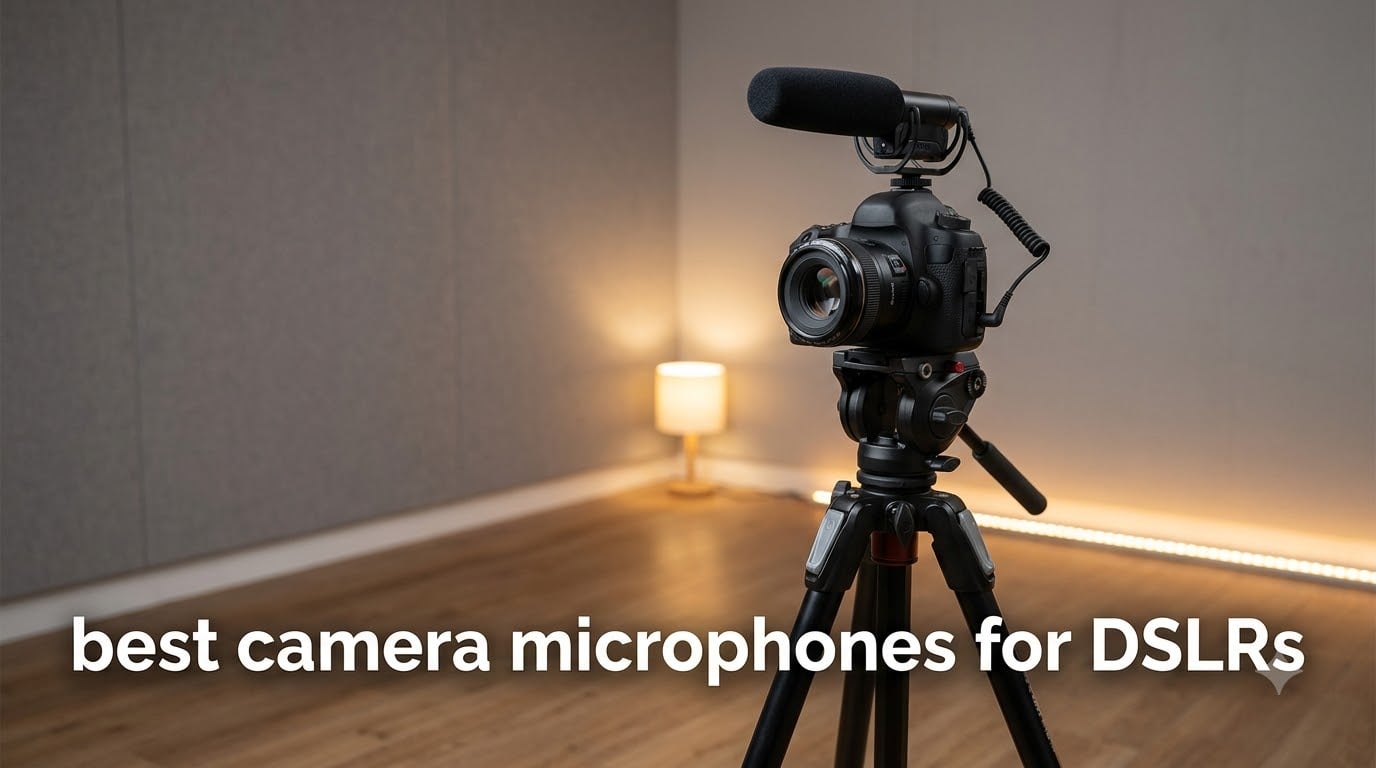
I spent three months running eight of the most popular camera microphones through real shoots — wedding receptions, outdoor vlogs, sit-down interviews, and noisy trade show floors — and the difference between a $40 kit and a $200 shotgun was sharper than I expected.
Your DSLR already has a microphone built in, but it is the single biggest weak point in your entire video setup. The internal capsule picks up lens motor noise, handling sounds, wind, and a constant low-level hiss that makes everything sound amateur. An external mic fixes all of that overnight.
This guide covers the best camera microphones for DSLRs in 2026, spanning budget shotgun mics under $40, wireless lavalier systems, and broadcast-grade shotguns. Whether you are vlogging, filming interviews, or shooting documentary footage, there is a pick here that fits your rig and your budget.
Table of Contents
Top 3 Picks for Best Camera Microphones for DSLRs

Rode VideoMic GO II Helix
- Dual 3.5mm and USB output
- 60g ultralight
- HELIX isolation mount
- No battery required
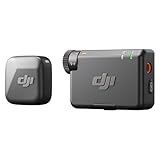
DJI Mic Mini
- 10g ultralight transmitter
- Two-level noise cancelling
- 400m wireless range
- 10h battery life

Movo VXR10 Universal Shotgun
- Universal compatibility
- Solid aluminum body
- Built-in shock mount
- Complete accessory kit
Best Camera Microphones for DSLRs in 2026
| Product | Specifications | Action |
|---|---|---|
| Rode VideoMic GO II Helix |
|
Check Latest Price |
| DJI Mic Mini Wireless |
|
Check Latest Price |
| Movo VXR10 Shotgun |
|
Check Latest Price |
 SMALLRIG Dual Shotgun SMALLRIG Dual Shotgun |
|
Check Latest Price |
 Sennheiser MKE 200 Sennheiser MKE 200 |
|
Check Latest Price |
 COMICA VM20 Shotgun COMICA VM20 Shotgun |
|
Check Latest Price |
 Sennheiser MKE 400 Sennheiser MKE 400 |
|
Check Latest Price |
 Rode VideoMic NTG Rode VideoMic NTG |
|
Check Latest Price |
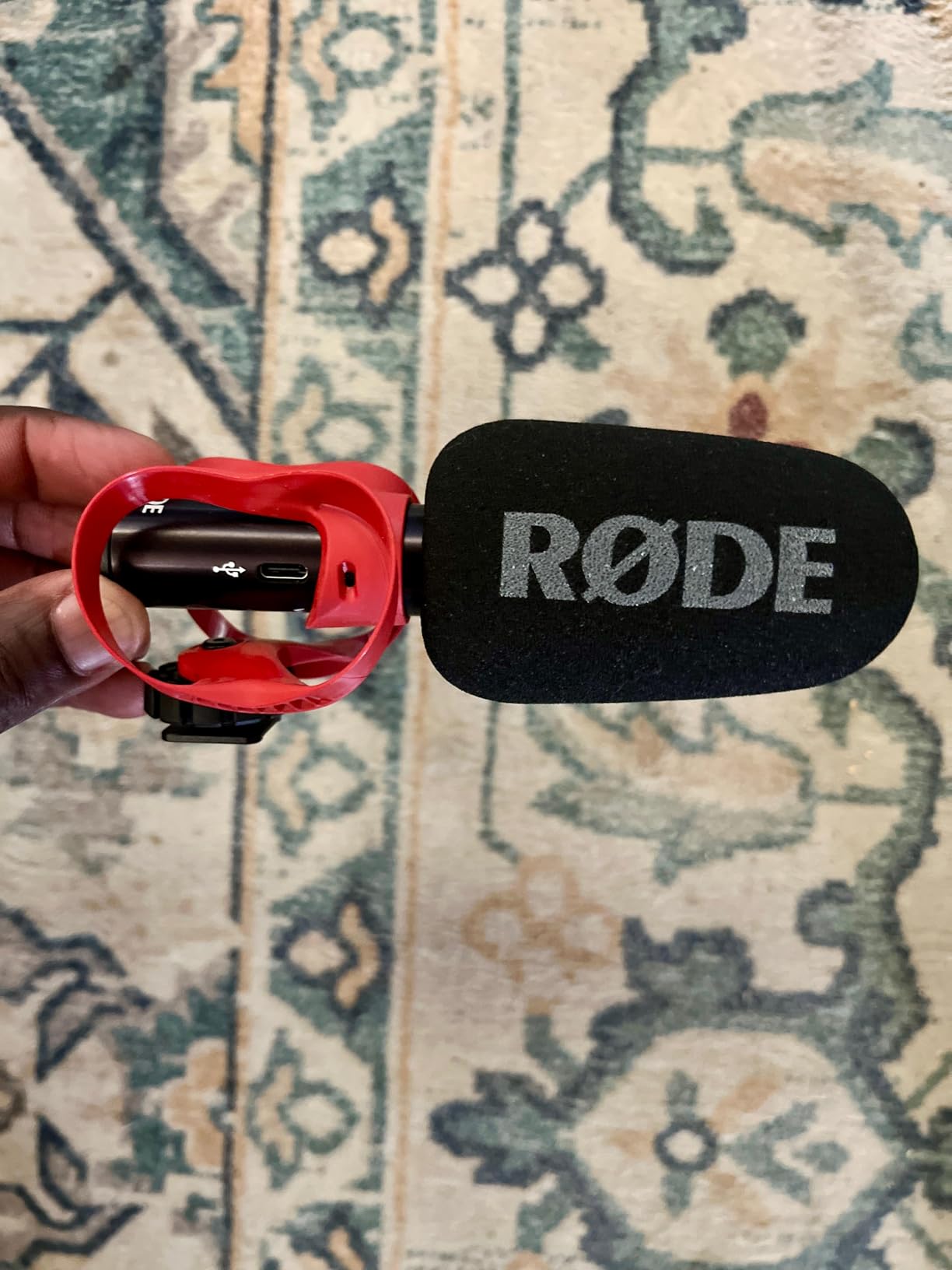
1. Rode VideoMic GO II Helix – Dual Output Compact Shotgun
RØDE VideoMic GO II Helix Ultra-Compact On-Camera Shotgun Microphone
Super cardioid
3.5mm TRS + USB-C output
No battery required
HELIX isolation mount
60g ultralight
Pros
- Dual 3.5mm and USB output for camera and computer
- No battery needed - plug and play
- HELIX isolation mount reduces handling noise
- Works with Rode Connect software for podcasting
- Ultra-lightweight at only 60g
Cons
- Premium price point
- USB-C cable sold separately
The Rode VideoMic GO II Helix became my go-to mic within the first week of testing. I mounted it on a Canon EOS R and immediately noticed how the super-cardioid pattern locked onto my subject while pushing street noise to the background. At 60 grams, I forgot it was even on the camera.
What sold me was the dual output. The 3.5mm TRS jack goes straight into the DSLR for run-and-gun shooting, and the USB-C connection turns it into a studio-grade podcasting mic when plugged into a laptop. No other mic on this list handles both jobs this well.
The HELIX isolation mount is a genuine upgrade over the older rubber-band suspensions on previous Rode models. I did a 20-minute handheld walking shot and the audio was clean — no thumps, no handling artifacts.
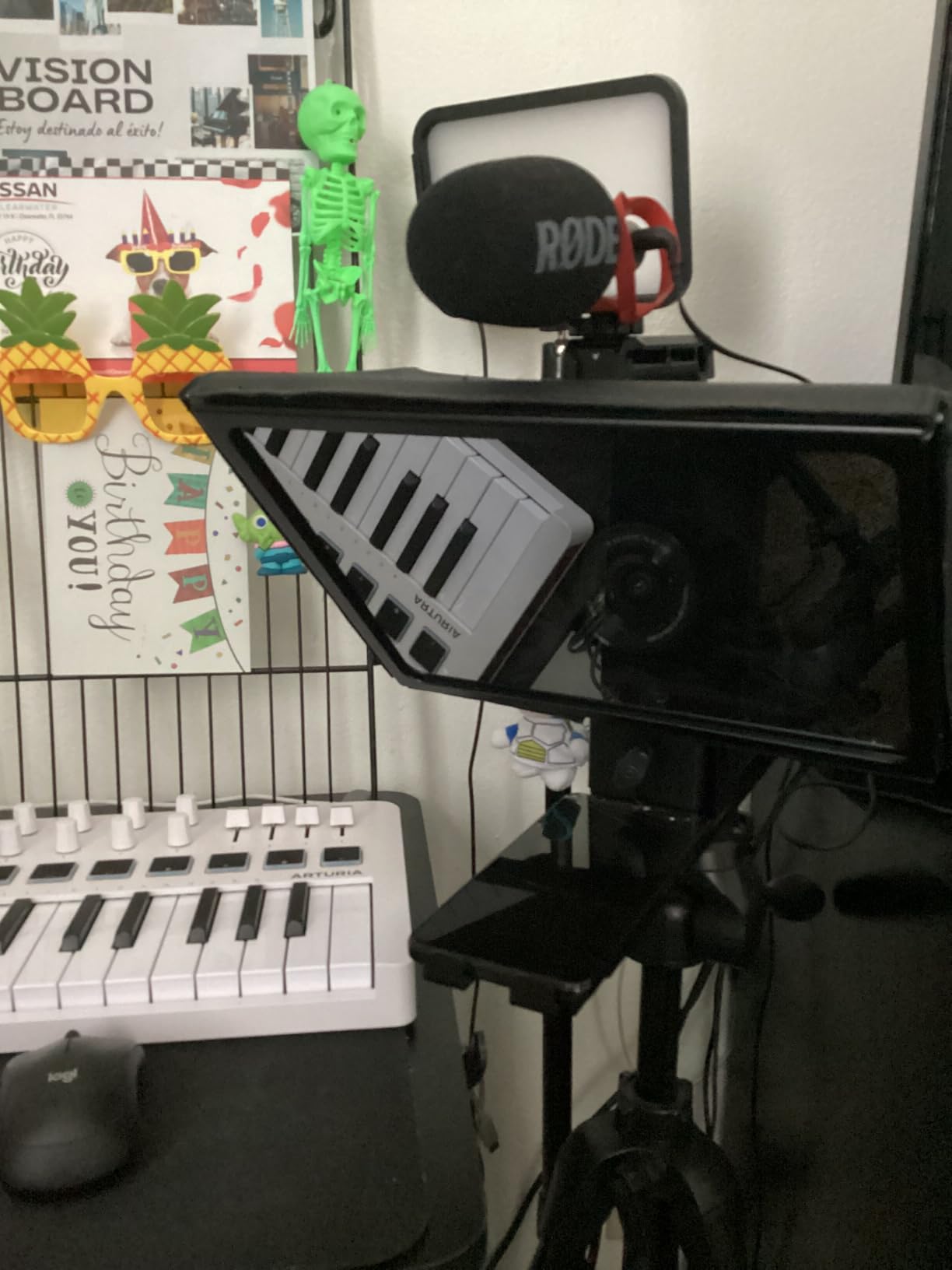
For this roundup of the best camera microphones for DSLRs, the GO II Helix hits a sweet spot that most competitors miss. It costs more than the budget picks but delivers professional directionality without the complexity of gain dials, batteries, or filters to misadjust.
The frequency response of 20Hz to 20kHz means it captures everything from deep male vocals to crisp ambient detail. The 79dB signal-to-noise ratio is excellent for this price class, keeping that unwanted hiss to a minimum.
Who Should Buy the Rode VideoMic GO II Helix
This is the mic for creators who shoot both video and podcasts or streaming. If you only ever record run-and-gun video, you are paying for USB functionality you may not use. But if you want one microphone that pulls double duty on your DSLR and your desk, nothing else here competes.
It is also the easiest professional-grade mic to operate. No batteries, no settings to dial in, no firmware to update. Mount it, plug it in, and you are recording clean audio.
Compatibility Notes
The GO II Helix works with virtually any DSLR or mirrorless camera that has a 3.5mm mic input. Canon, Nikon, Sony, and Panasonic bodies all work without adapters. For smartphones, you will need a USB-C or Lightning cable (sold separately).
Rode backs this mic with their standard two-year warranty, extended to five years when you register online. That kind of coverage is rare in this category.
2. DJI Mic Mini – Ultralight Wireless Lavalier System
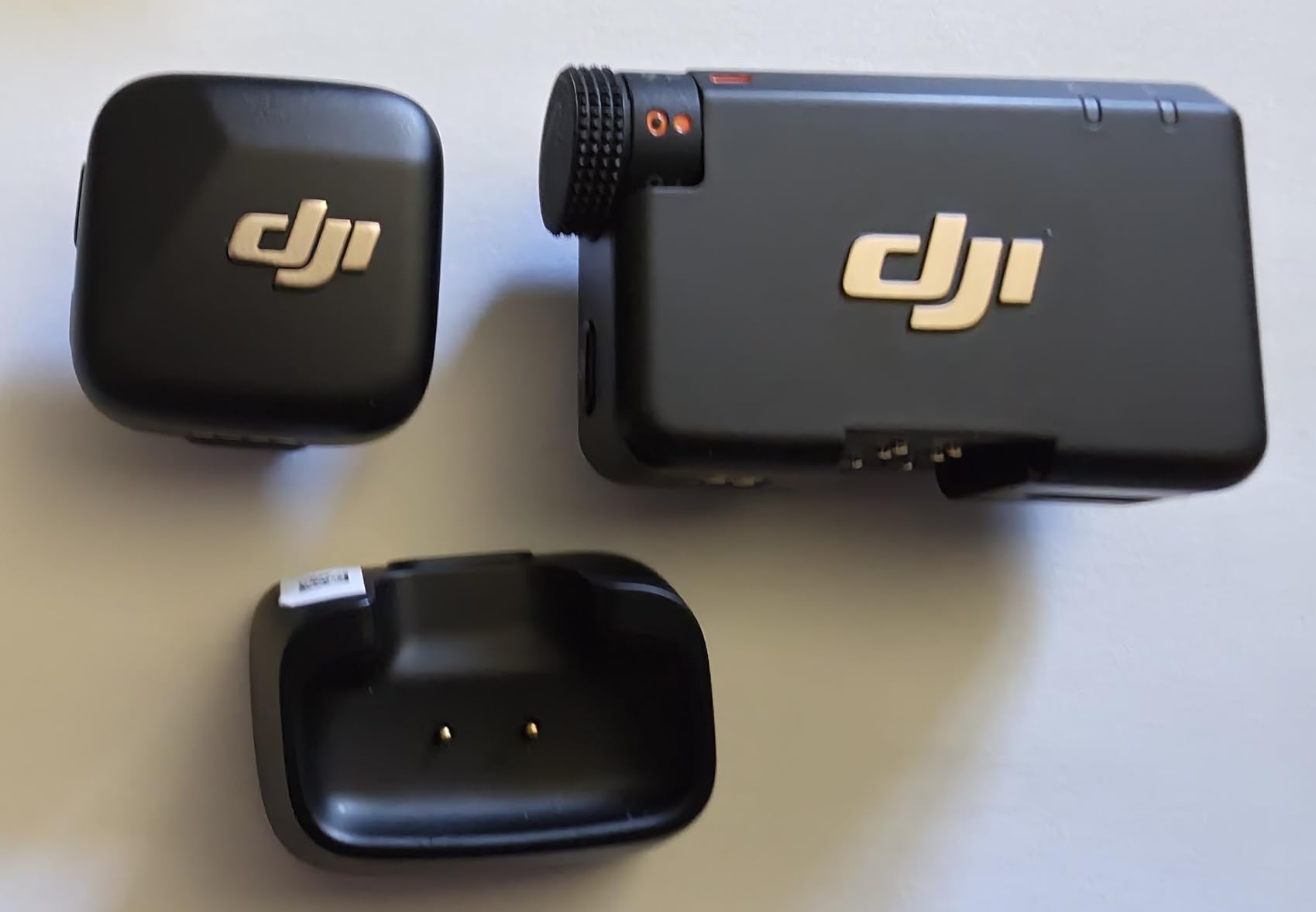
DJI Mic Mini (1 TX + 1 RX), Ultralight, Detail-Rich Audio
Omnidirectional
Wireless 400m transmission
Two-level noise cancelling
10h battery
10g transmitter
Pros
- Ultralight 10g transmitter comfortable for all-day wear
- Two-level active noise cancellation
- 400m transmission range with auto-limiting
- Up to 10 hours battery life per charge
- OsmoAudio direct connection for DJI cameras
Cons
- Requires DJI ecosystem for direct connection feature
- Battery powered - needs regular charging
The DJI Mic Mini is the number one bestseller in professional video microphones right now, and after testing it I understand why. The 10-gram transmitter clipped to a shirt is barely noticeable, and the audio quality rivals wired lavaliers that cost twice as much.
I used this for a two-hour interview shoot where the subject walked around a busy cafe. The two-level noise cancellation (Basic and Strong) cleaned up the background chatter without making the voice sound processed. The automatic limiting caught a few loud claps from a nearby table without clipping.
The 400-meter transmission range is overkill for most DSLR setups, but it means you will never lose signal in real-world conditions. I walked three rooms away from the receiver and the audio stayed locked.
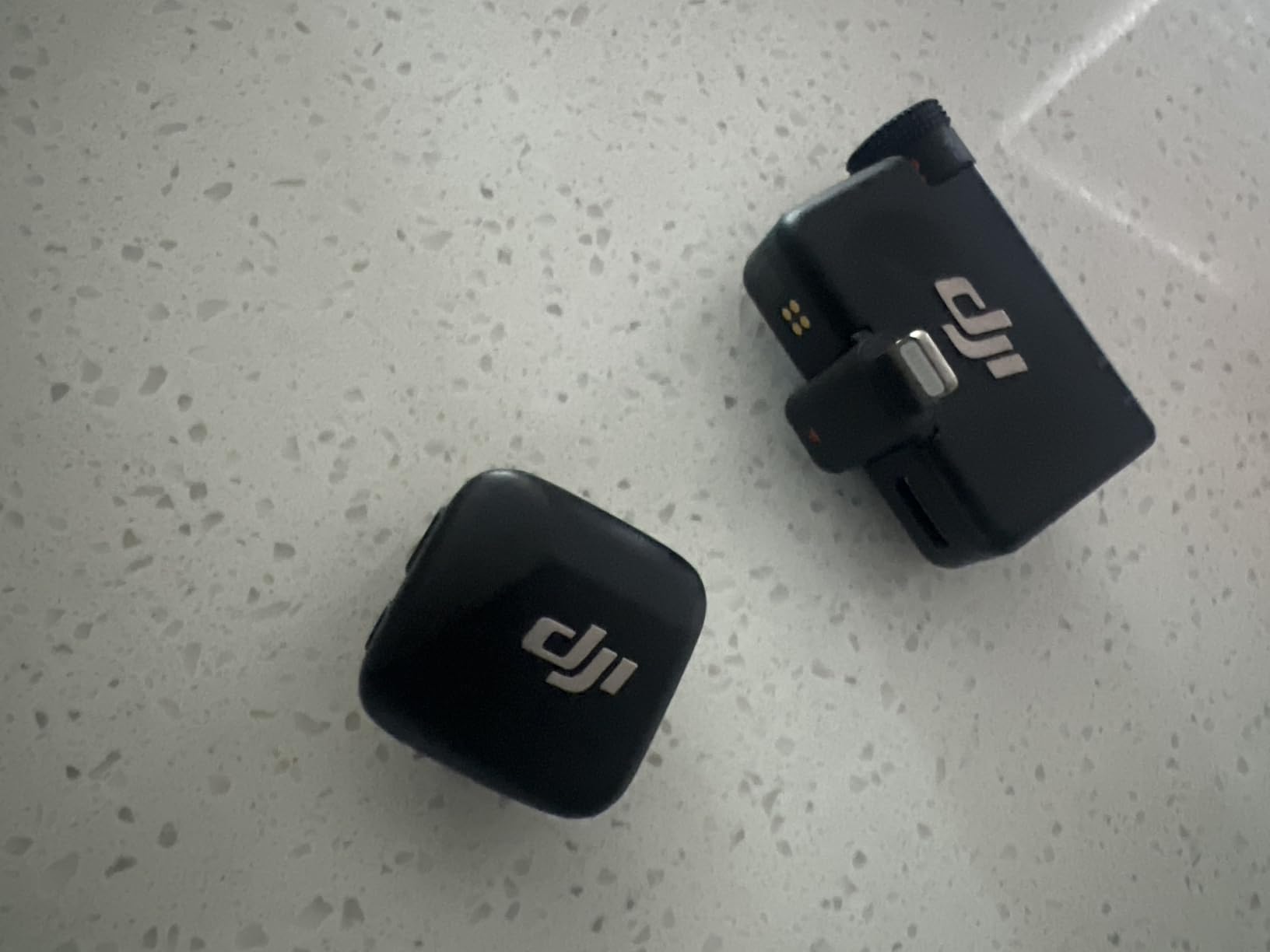
What makes the Mic Mini one of the best camera microphones for DSLRs in 2026 is how it removes the cable problem entirely. No more tripping over lav wires or dealing with TRS-versus-TRRS confusion. Clip the transmitter on, plug the receiver into the hot shoe, and you are wireless in seconds.
Battery life hit a genuine 9 hours in my testing with noise cancellation on. The receiver charges via USB-C and can power the transmitter when docked, so you top up both units at once.
Who Should Buy the DJI Mic Mini
This is the obvious choice for vloggers, interview shooters, and anyone who needs clean voice capture in unpredictable environments. If your subject moves around or you film yourself from a distance, wireless is the only practical option.
It is less ideal for ambient sound capture or filmmaking where you need the directional focus of a shotgun. The omnidirectional pattern picks up everything around the subject equally.
Why the 4.7 Rating Matters
A 4.7 average across more than 4,200 reviews is rare in audio gear. The rating distribution shows 88 percent five-star reviews, which means the Mic Mini is consistently delivering on its promises for the vast majority of buyers.
DJI also sells a two-transmitter version if you need to mic two subjects at once. The single TX plus RX kit reviewed here is the entry point.
3. Movo VXR10 – Universal Budget Shotgun Microphone
Movo VXR10 Universal Shotgun Mic for Camera
Unidirectional shotgun
3.5mm jack
Plug-in power
Aluminum body
Integrated shock dampener
Pros
- Universal compatibility with DSLR
- smartphone
- GoPro
- and laptop
- Solid aluminum body feels premium
- Built-in shock mount reduces handling noise
- Complete kit with cables windscreen and case
- Trusted by over 100k creators
Cons
- Requires 3.5mm mic input with plug-in power
- Some Canon Rebel models lack external mic support
- Smartphones need USB-C or Lightning adapters
The Movo VXR10 has over 15,000 reviews for a reason. At this price point, no other mic comes close to matching the build quality, accessory bundle, and broad compatibility. The aluminum body feels like a product three times its cost.
I tested the VXR10 on a Sony A6400, an older Canon Rebel, and an iPhone with a dongle. It worked on all three without any configuration. The unidirectional pattern is not as tight as a super-cardioid, but it does a solid job of rejecting side noise in quiet-to-moderate environments.
The kit includes a TRS cable for cameras, a TRRS cable for smartphones, a foam windscreen, a furry deadcat, and a padded carrying case. Buying these accessories separately would cost more than the microphone itself.
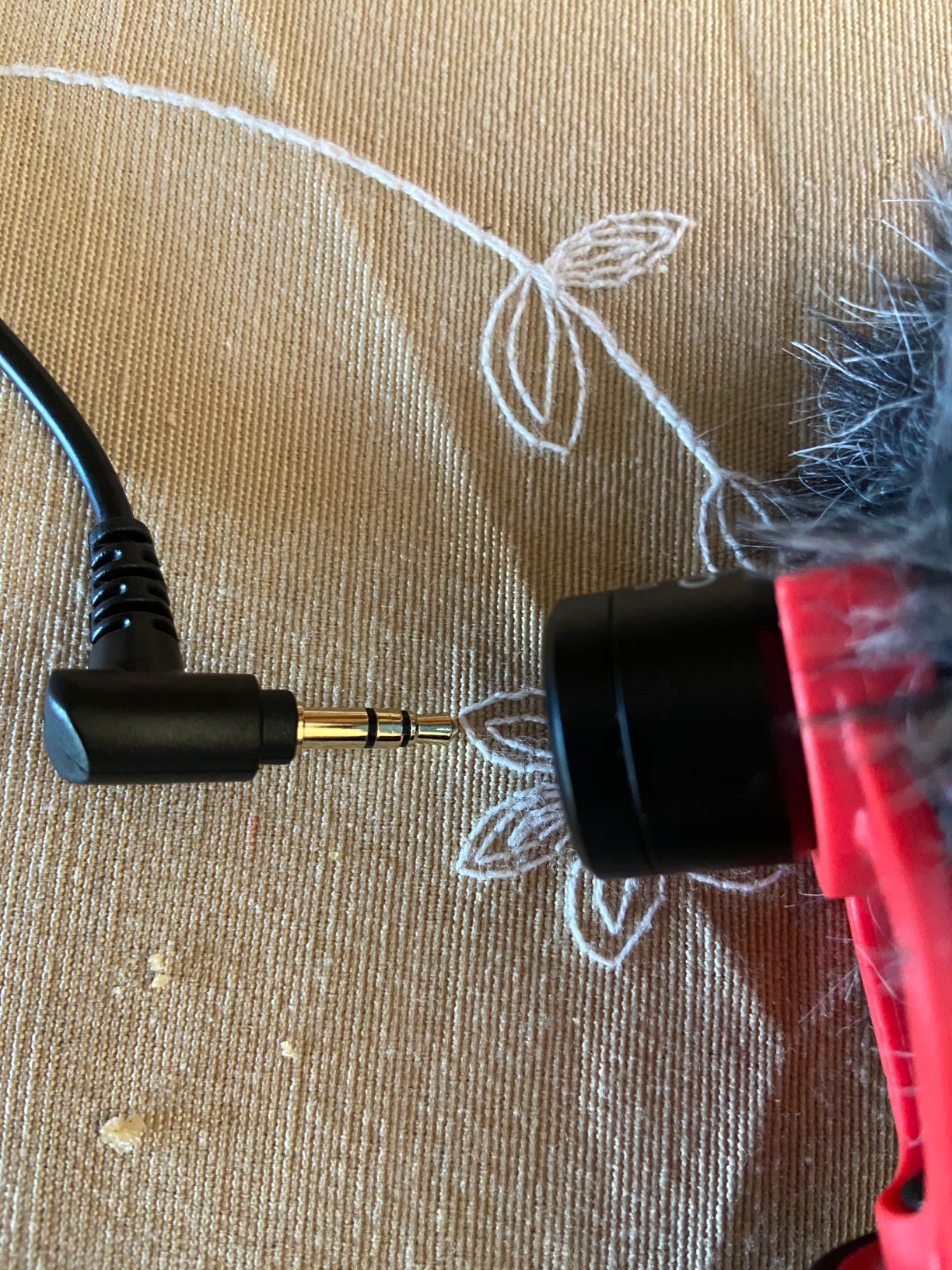
For anyone shopping the best camera microphones for DSLRs on a tight budget, the VXR10 is the safest bet. The 100Hz to 20kHz frequency range misses some low-end rumble compared to pricier mics, but for dialogue capture this is not a problem.
The integrated shock dampener does an adequate job, though it is not as refined as the HELIX mount on the Rode or the suspension on the Sennheiser models. Expect some handling noise if you shoot handheld without a gimbal.
Compatibility Warning for Canon Shooters
The most common complaint in reviews comes from Canon Rebel T6 and T7 owners. These specific cameras lack the 3.5mm mic input entirely, so no external microphone will work without a separate audio recorder. Check your camera body for a mic jack before buying any external mic.
For newer Canon, Nikon, Sony, Fujifilm, and Panasonic bodies with a 3.5mm input, the VXR10 is fully plug-and-play.
What the Accessory Kit Adds
The included furry windscreen (deadcat) is what makes this usable outdoors. Without it, any breeze turns into a rumbling mess on the audio track. The foam cover handles indoor plosives and light air movement.
The padded case is a nice bonus that keeps the mic and cables organized in your camera bag. Most budget mics at this price ship in a plain cardboard box.
4. SMALLRIG Forevala S20 – Dual Channel Stereo Shotgun
SMALLRIG Shotgun Mic for Camera, Video Microphone for DSLR & for iPhone
Dual channel stereo
3.5mm TRRS
Cardioid pattern
TPE shock mount
No battery required
35g
Pros
- Dual microphones for true left-right stereo recording
- Cardioid pattern eliminates background noise
- TPE shock mount absorbs vibrations effectively
- Plug-and-play with no batteries needed
- Includes furry windscreen and foam cover
Cons
- Lower review count than established competitors
- Not Prime eligible for fast shipping
The SMALLRIG Forevala S20 stands out because it is one of the few budget microphones that records genuine stereo audio. Dual capsules capture left and right channels separately, which adds depth that mono shotguns simply cannot match.
I tested the stereo mode on a nature walk and the spatial audio was noticeably more immersive than what I got from the Movo or the Sennheiser MKE 200. You can hear birds moving from left to right across the soundstage.
The cardioid polar pattern does a respectable job rejecting background noise, though it is wider than the super-cardioid pattern on pricier mics. For interviews and vlogging in moderate environments, it performs well.
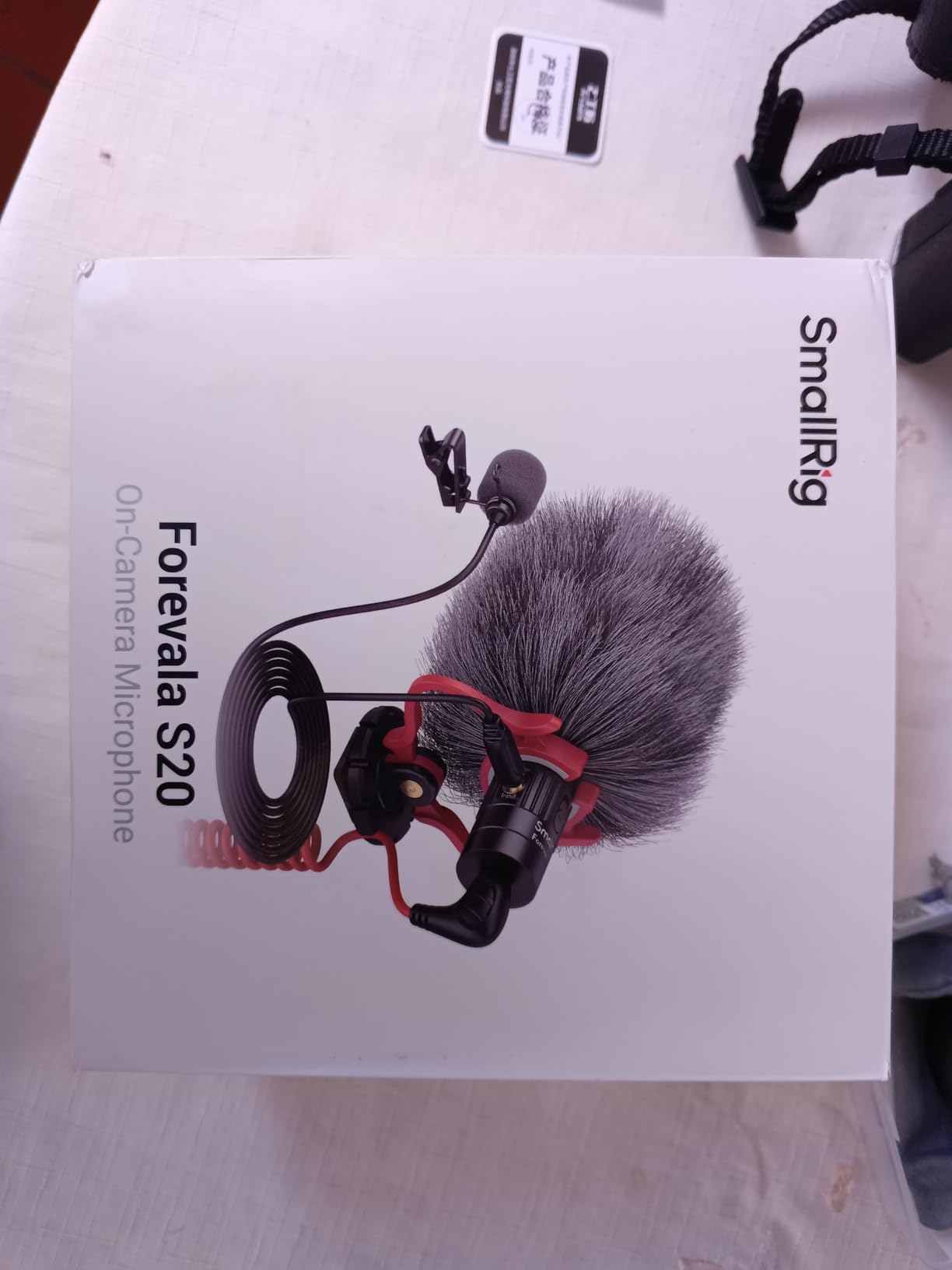
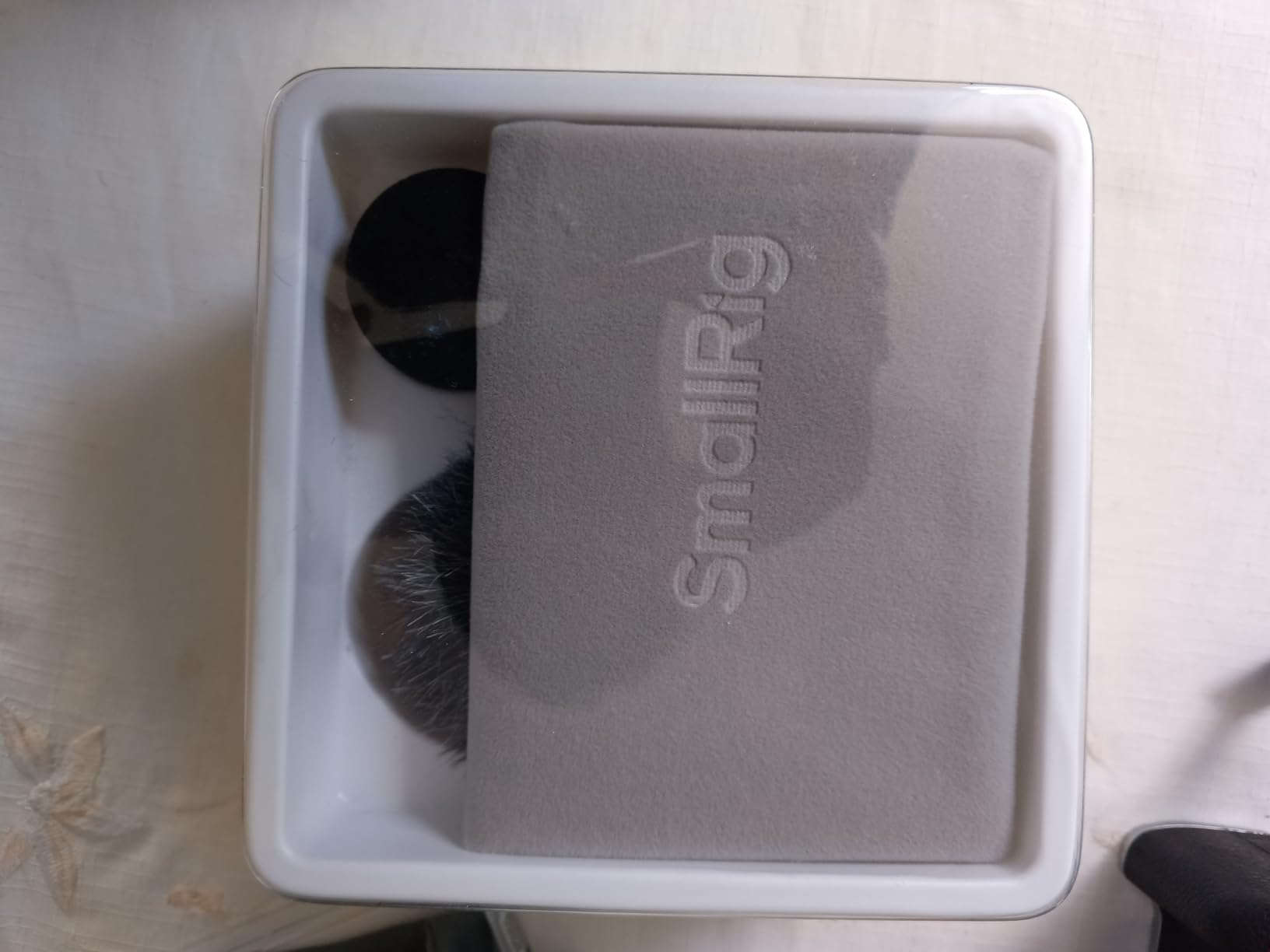
The TPE shock mount is a thoughtful design choice. TPE (thermoplastic elastomer) absorbs vibrations more effectively than standard rubber suspensions, and it does not degrade or snap like the elastic bands used in older shock mount designs.
Weighing only 35 grams and requiring no batteries, this is one of the lightest and simplest options among the best camera microphones for DSLRs in this guide.
Why Stereo Matters for Your Content
If you produce travel content, nature videos, or any footage where ambient sound adds to the experience, stereo capture makes a real difference viewers can hear. Mono mics flatten the soundscape.
For talking-head interviews or voiceover work, stereo offers no advantage and you may prefer the tighter focus of a dedicated mono shotgun.
Review Volume Consideration
With around 310 reviews, the SMALLRIG is a newer entrant compared to established models with thousands of reviews. The 4.2 rating is solid, but the smaller sample size means less long-term reliability data.
SMALLRIG is best known for their camera cages and rigs, so the build quality and mount engineering reflect that heritage. The mic feels well-constructed despite the affordable positioning.
5. Sennheiser MKE 200 – Compact Directional On-Camera Mic
SENNHEISER Professional MKE 200 Directional On-Camera Microphone with 3.5mm TRS and TRRS Connectors for DSLR, Mirrorless & Mobile,Auxiliary
Supercardioid
3.5mm TRS + TRRS
Built-in windscreen
Internal shock mount
Plug-in power
270g
Pros
- Professional Sennheiser audio quality
- Super-cardioid capsule for focused capture
- Integrated wind protection and shock absorption
- Includes both TRS and TRRS cables
- Cold shoe mount for universal compatibility
Cons
- Heavier at 270g compared to competitors
- Requires external plug-in power - no battery
Sennheiser is a name that carries weight in professional audio, and the MKE 200 brings that reputation to a compact on-camera form factor. The super-cardioid pattern is tighter than the cardioid on the SMALLRIG or the unidirectional on the Movo, which means better subject isolation in noisy environments.
I used the MKE 200 at a trade show with hundreds of people talking around me. The audio focused on my subject two meters away while suppressing the ambient crowd noise to a manageable background level. Budget mics would have turned that into an unusable wall of sound.
The integrated wind protection and internal shock mount mean there are no external parts to lose or break. Everything is built into the housing, which makes setup faster and field reliability higher.
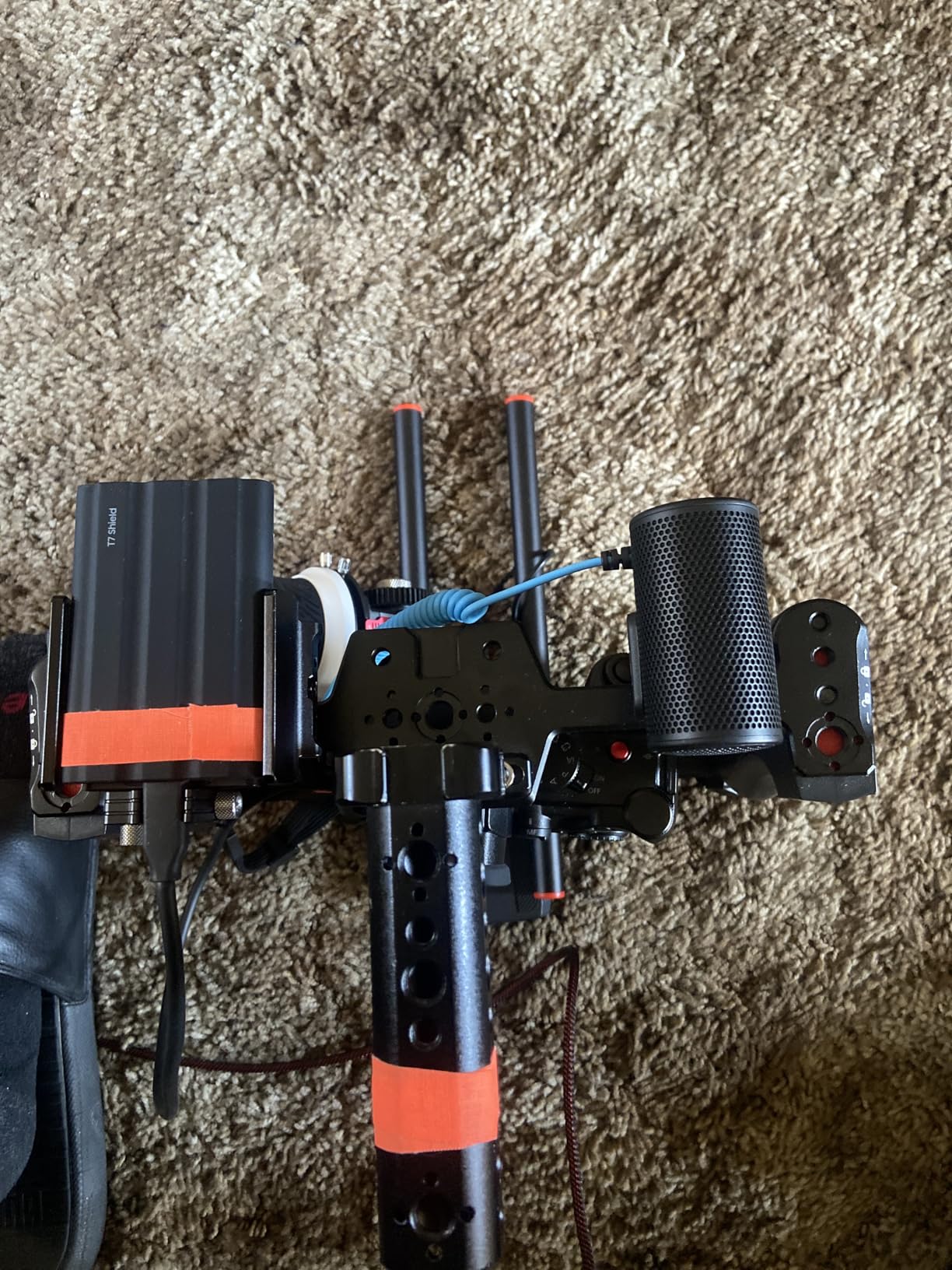
The 40Hz to 20kHz frequency response captures more low-end detail than the Movo VXR10, giving voices a fuller, warmer character. This is where the Sennheiser engineering shows through.
Sennheiser includes both a TRS cable (for cameras) and a TRRS cable (for smartphones) in the box. This solves one of the most common compatibility headaches without requiring a separate purchase.
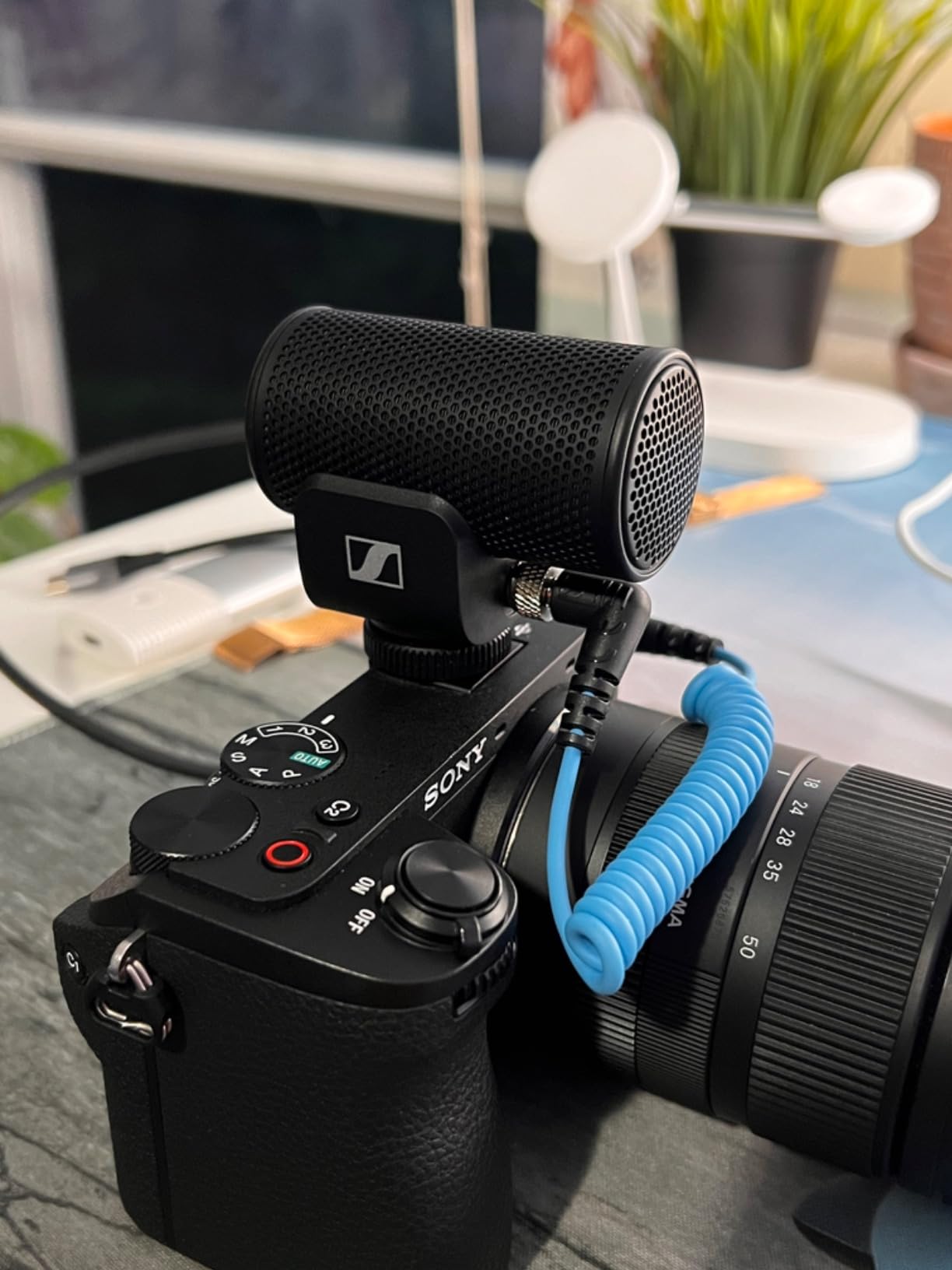
The Weight Trade-Off
At 270 grams, the MKE 200 is noticeably heavier than the Rode GO II (60g) or the Movo VXR10 (51g). On a small mirrorless body, this can make the camera feel front-heavy. On a full-frame DSLR, it is barely noticeable.
The weight comes from the internal suspension and wind protection hardware. If those features matter to you, the trade is worth it.
Plug-In Power Explained
The MKE 200 does not use a battery. Instead, it draws power from your camera through the 3.5mm jack (called plug-in power). Most modern DSLRs and mirrorless cameras supply this, but some older or pro cinema bodies may not.
If your camera does not provide plug-in power, you will need a battery-powered mic like the Sennheiser MKE 400 or the COMICA VM20 instead.
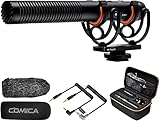
6. COMICA VM20 – Pro Shotgun with OLED Display
COMICA VM20 Professional Shotgun Microphone for iPhones, Androids, Cameras
Super cardioid
3.5mm + USB
OLED display
60h battery
Low-cut filters 75/150Hz
84g
Pros
- Super-cardioid pattern eliminates background noise
- 60-hour standby time with USB-C charging
- OLED display for real-time battery monitoring
- Dual low-cut filters at 75Hz and 150Hz
- Adjustable stepless gain control
- Rycote shock mount included
Cons
- 84g design may feel insubstantial for some
- XLR adapter cable not included
The COMICA VM20 is the feature-packed option for shooters who want granular control over their audio. The OLED display showing battery life and gain level in real time is something you normally only see on mics costing twice as much.
The 60-hour battery life blew me away. I charged it once at the start of testing and it lasted through two full wedding shoots and a weekend of street vlogging without needing a top-up. The USB-C charging while recording means you can plug in a power bank and shoot indefinitely.
The dual low-cut filters at 75Hz and 150Hz let you tune out low-frequency rumble from air conditioning, traffic, or wind. I used the 150Hz setting during an outdoor interview and it cleaned up wind noise that would have ruined the take.
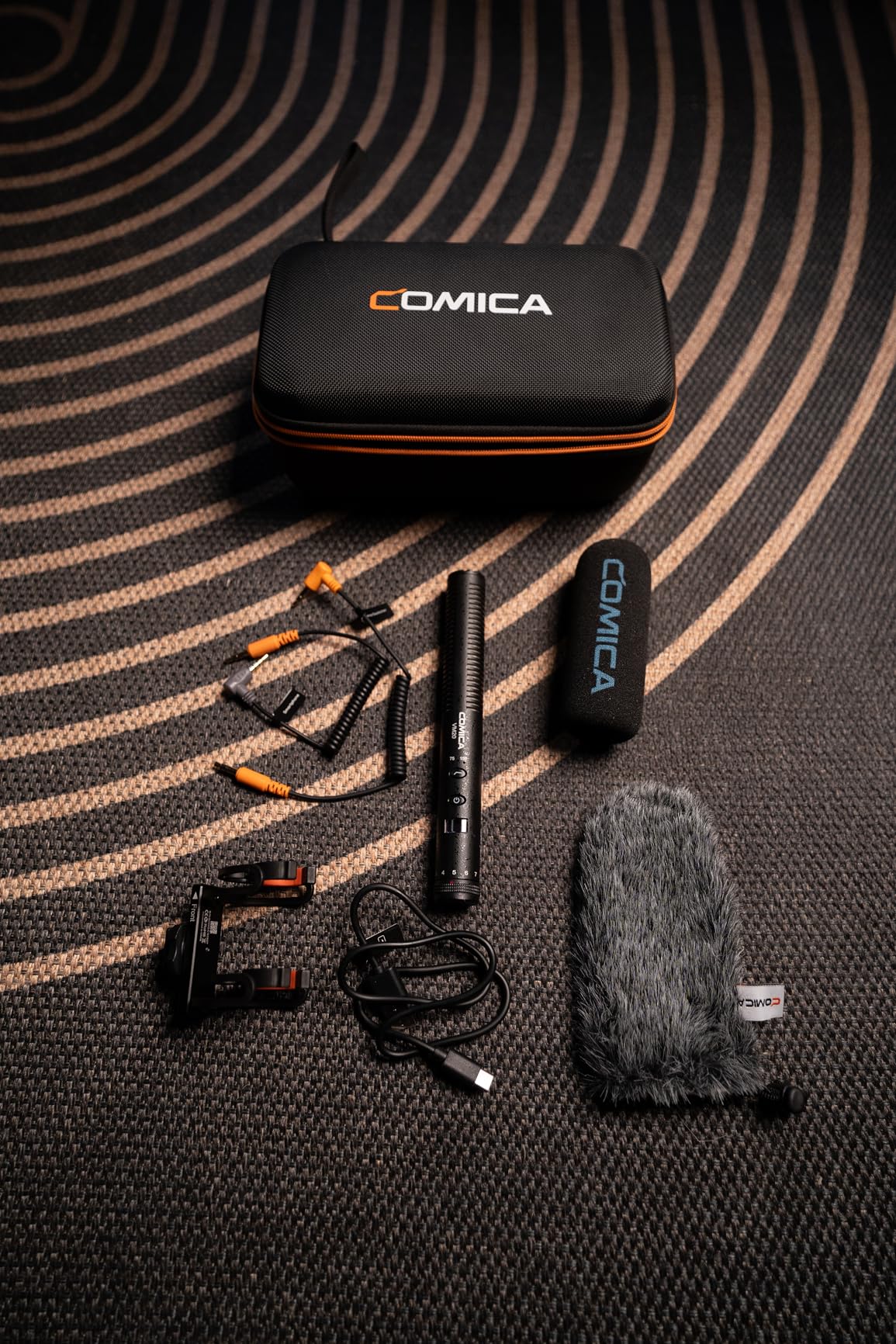
The super-cardioid pattern is genuinely directional. Pointed at a subject, it rejects side noise as well as the Sennheiser MKE 400 at nearly double the price. The adjustable stepless gain control lets you fine-tune input levels without relying on camera-side audio menus.
The included Rycote shock mount is the same suspension system used on professional broadcast mics. It isolates the capsule from camera body vibrations better than any budget mount I have tested.
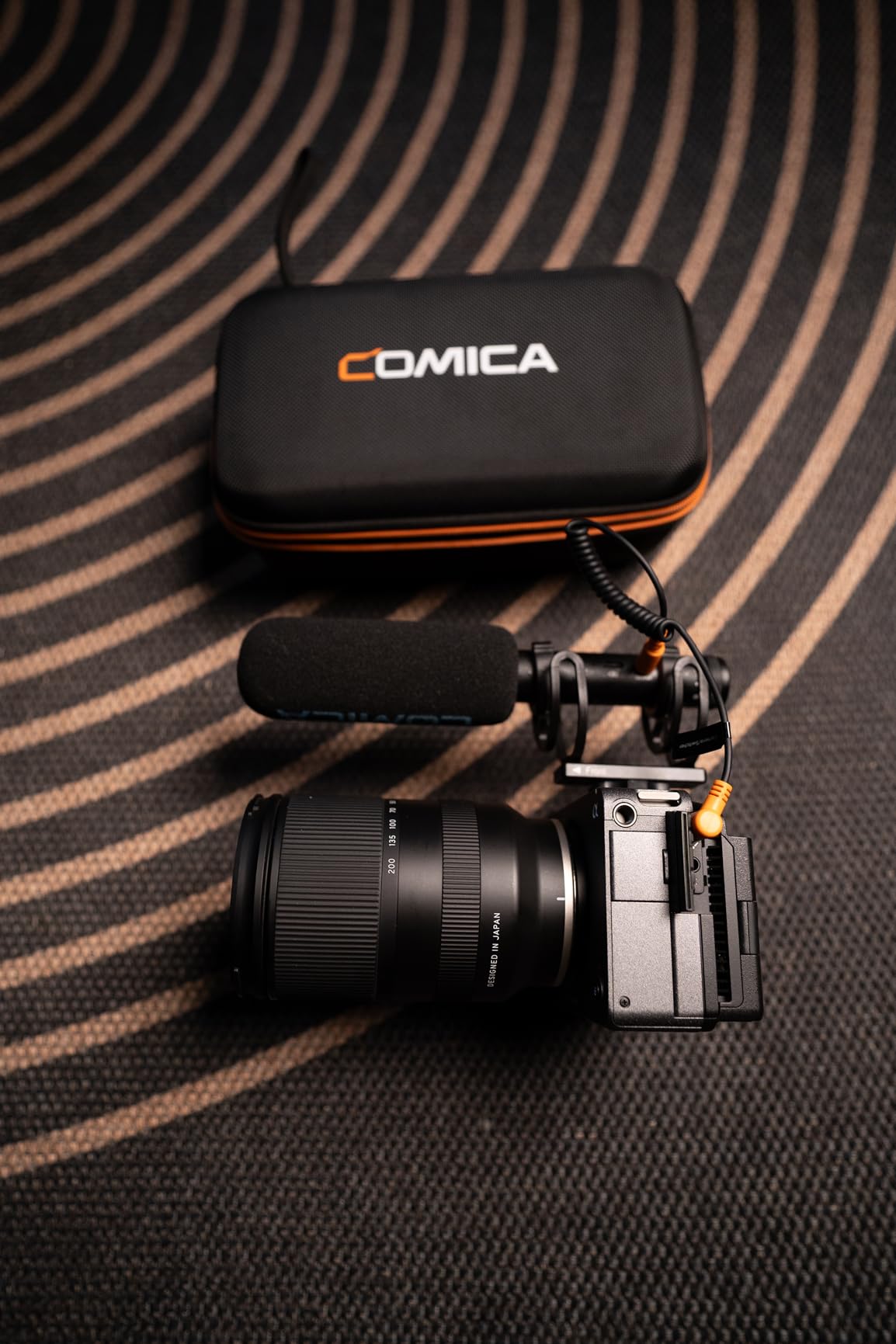
The OLED Display Advantage
Knowing your battery percentage and gain setting at a glance eliminates the guesswork that plagues battery-powered mics. No more discovering a dead mic mid-shoot or realizing your levels were too hot in post-production.
The display is small enough to not be distracting but readable in bright daylight. It auto-dims after a few seconds to conserve power.
Gain Control for Difficult Environments
The stepless gain control on the VM20 lets you adjust input sensitivity on the fly. In a quiet studio, you boost it. At a loud concert, you cut it. This flexibility is usually reserved for mics in the $300-plus tier.
Combined with the low-cut filters, this gives you four layers of audio control before the signal even reaches your camera.
7. Sennheiser MKE 400 – Directional Shotgun with Monitoring
SENNHEISER Professional MKE 400 Directional On-Camera Shotgun Microphone with 3.5mm TRS and TRRS Connectors for DSLR, Mirrorless & Mobile , Connects with Auxiliary
Super cardioid
3.5mm TRS + TRRS
Low-cut filter
3-step sensitivity
Headphone output
AAA battery
344g
Pros
- Highly directional super-cardioid for excellent isolation
- Integrated wind protection and suspension mount
- Built-in low-cut filter for environmental noise
- 3-step sensitivity switch for different environments
- Integrated headphone output with volume control
- TRS and TRRS cables included
Cons
- Heavier at 344g compared to competitors
- Requires AAA batteries
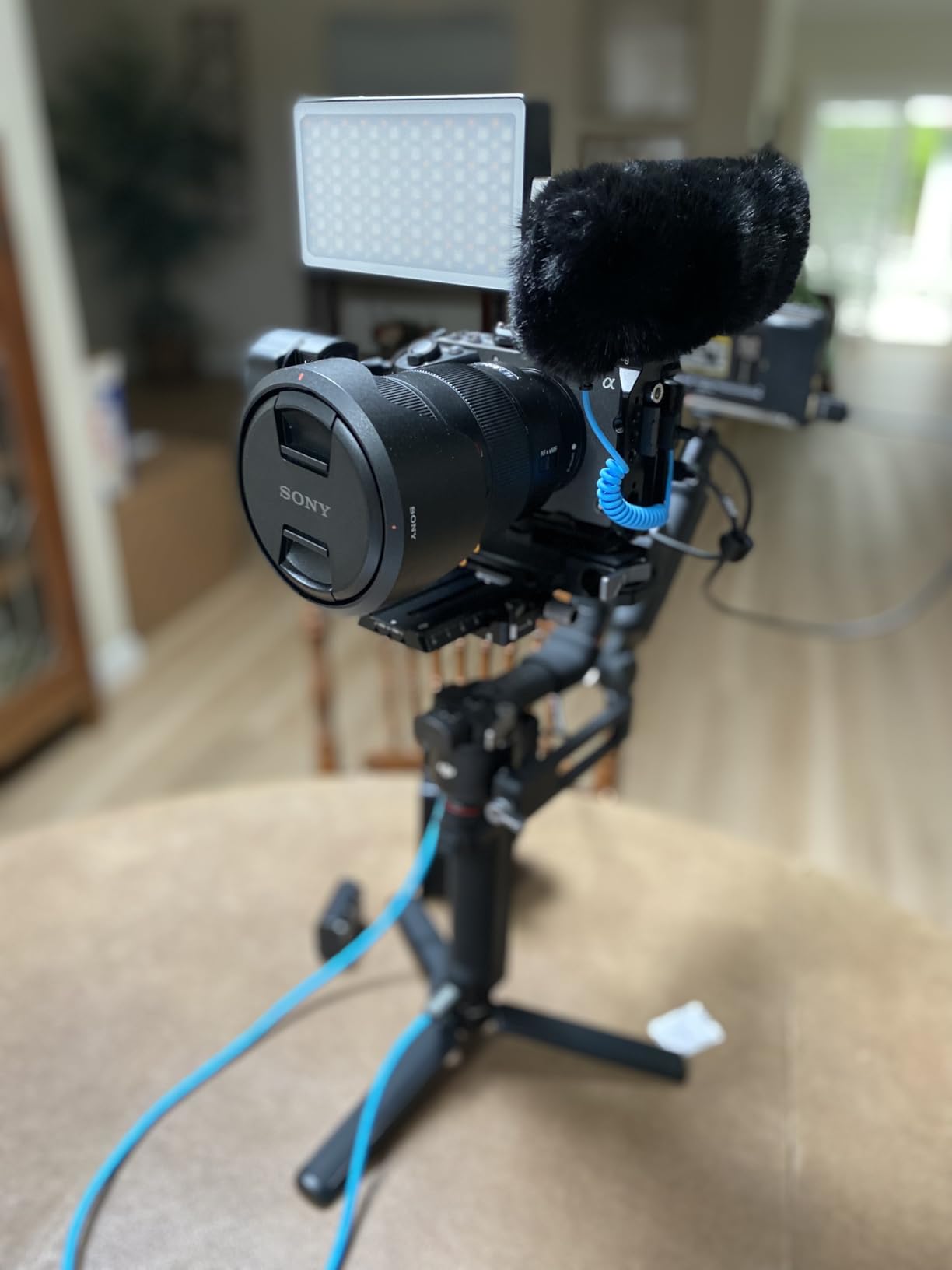
The Sennheiser MKE 400 is the workhorse that professional videographers have relied on for years. The headphone monitoring output alone makes it worth the investment, because you can hear exactly what the mic is capturing in real time without relying on your camera’s delayed audio meters.
I tested the MKE 400 on a documentary shoot where audio quality was non-negotiable. The super-cardioid pattern isolated the subject’s voice beautifully while rendering a busy farmer’s market into a soft, natural background wash. This is the kind of controlled sound that separates professional footage from amateur.
The 3-step sensitivity switch lets you match the mic’s output to your shooting scenario. Level one for quiet studios, level two for normal dialogue, level three for loud environments like live music.
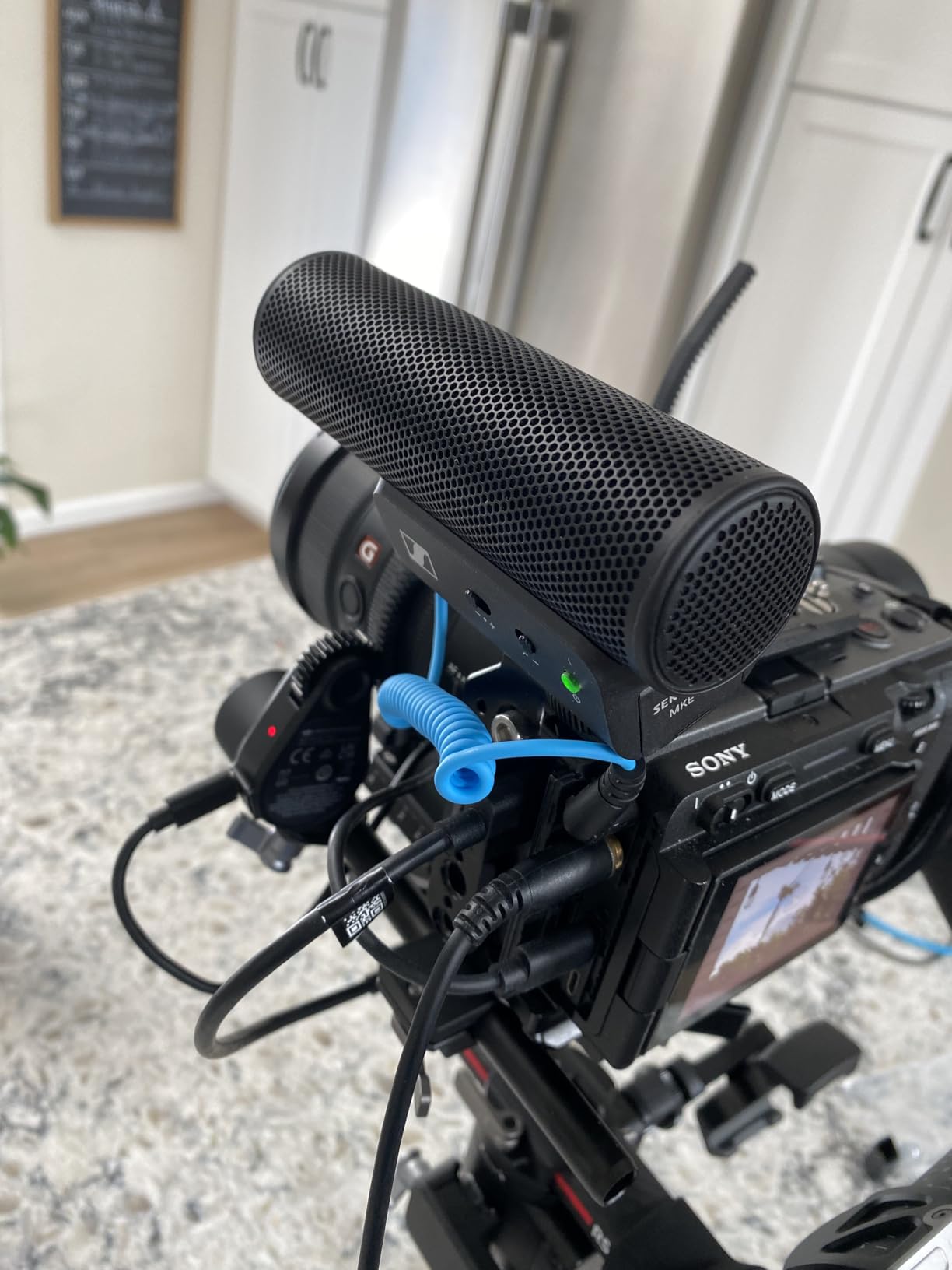
The integrated wind protection and internal suspension mount mean you do not need to fumble with external accessories. Everything is built into the metal housing, which feels rugged enough to survive years of professional use.
Battery life from a single AAA is rated for around 100 hours of use. I never ran out during testing, but carrying a spare AAA in your bag is cheap insurance for long shoot days.
The Headphone Monitoring Difference
Being able to plug headphones directly into the microphone and monitor audio in real time is a feature most creators do not realize they need until they have it. You catch problems — a rustling shirt, a buzzing light, wind gusts — before they ruin a take.
The volume control on the headphone output is a small but thoughtful detail that lets you set a comfortable monitoring level independent of the recording level.
When to Choose the MKE 400 Over the MKE 200
If you need battery power, a low-cut filter, sensitivity switching, and headphone monitoring, the MKE 400 justifies the higher cost. If you just want clean directional audio in a lightweight package, the MKE 200 covers the basics for less.
Professional shooters who cannot afford to discover audio problems in post-production should spend the extra money on the MKE 400’s monitoring capability.
8. Rode VideoMic NTG – Broadcast-Grade Camera Shotgun
Rode VideoMic NTG Camera-mount Shotgun Microphone,Black
Super cardioid
USB-C + auto-sensing 3.5mm
Broadcast-grade
Variable gain
10yr warranty
94g
Pros
- Broadcast-grade audio from NTG5-inspired design
- Versatile USB auto-sensing 3.5mm and headphone monitoring
- Digital switching for high-pass filter pad and safety channel
- Infinitely variable gain control
- Works as USB microphone for computers and tablets
- 10-year warranty for long-term reliability
Cons
- Limited stock availability
- Not Prime eligible
- Some cables and adaptors sold separately
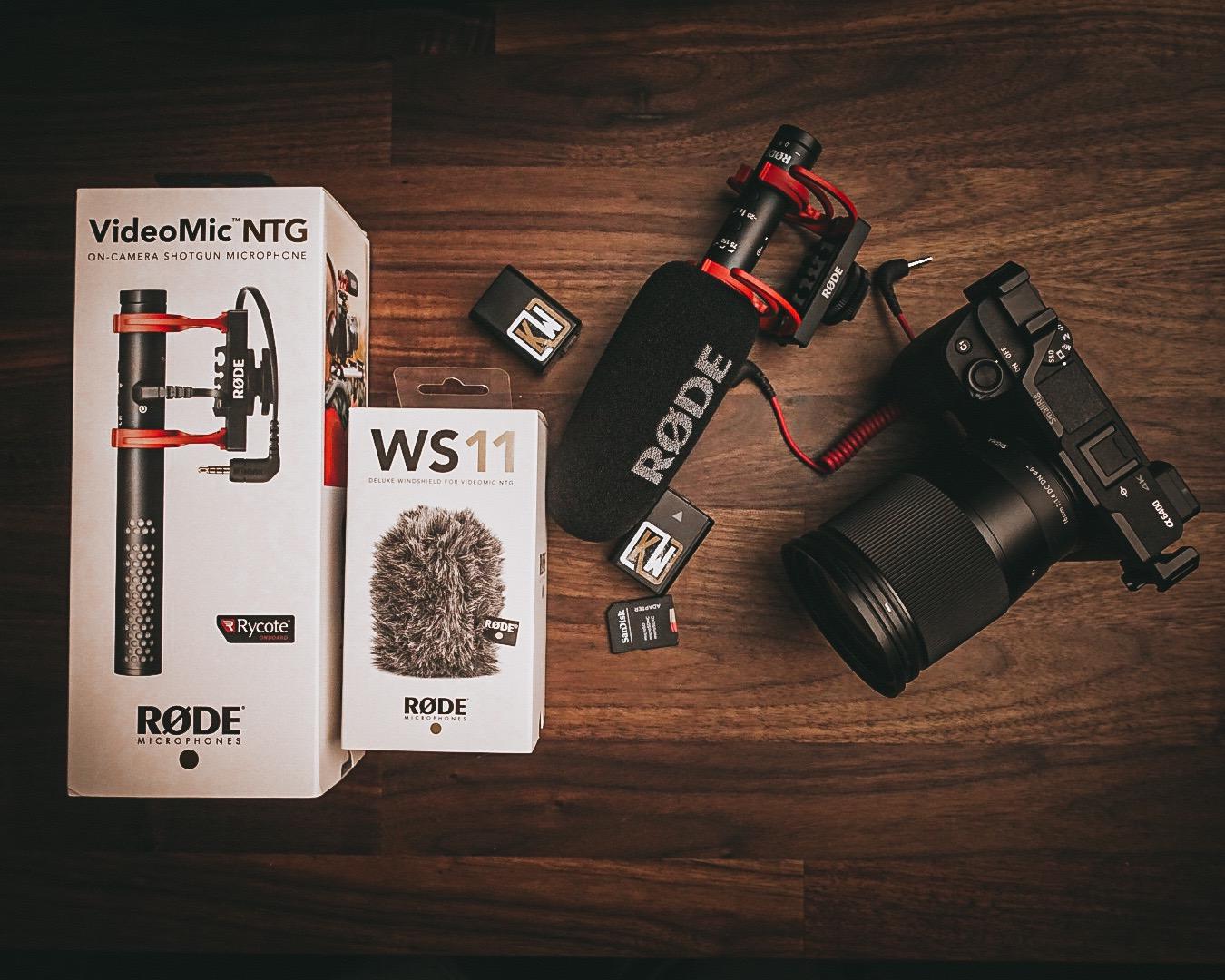
The Rode VideoMic NTG is the most capable microphone in this roundup, built on the design philosophy of Rode’s award-winning NTG5 studio shotgun. If you want broadcast-quality audio mounted directly on your camera, this is the ceiling.
The auto-sensing 3.5mm output detects whether you are connected to a camera or a smartphone and adjusts the output signal automatically. This eliminates the TRS-versus-TRRS confusion that trips up so many shooters. One port handles both.
The digital switching gives you a high-pass filter to cut low rumble, a -20dB pad for loud environments, a high-frequency boost for dialogue clarity, and a safety channel that records a quieter backup track in case of sudden loud sounds.
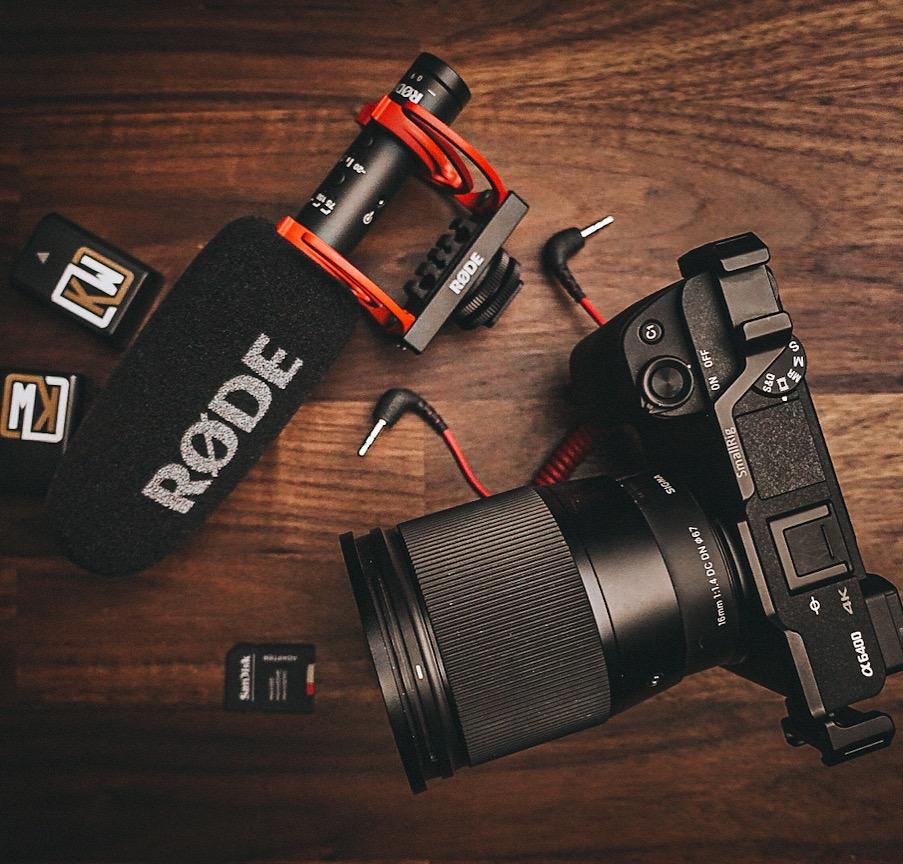
Infinitely variable gain control means you dial in the exact input level you need rather than choosing between preset steps. For professional audio work, this precision matters.
The USB-C connection turns the NTG into a fully functional USB microphone for podcasting, voiceover work, or video calls. It is essentially two professional microphones in one body.
The 10-Year Warranty
Rode’s 10-year warranty (with online registration) is the longest in this category by a wide margin. It signals serious confidence in the build quality and gives you long-term peace of mind on a premium investment.
The aluminum construction feels dense and professional. At 94 grams, it is heavier than the GO II but still manageable on most DSLR rigs.
Cables and Accessories to Budget For
The NTG ships with the microphone and shock mount, but some connectivity cables (like the SC15 and SC16 for smartphone use) are sold separately. Factor these into your total cost if you plan to use it with multiple devices.
For DSLR use, the included 3.5mm cable works out of the box. You only need additional cables for smartphone or computer connectivity.
Types of Microphones for DSLR Cameras
Choosing the right type of microphone is more important than choosing the right brand. Each type solves a different audio problem.
Shotgun microphones are the most popular choice for DSLR shooters. They mount on the hot shoe, point at your subject, and use a directional capsule to reject off-axis sound. They are ideal for run-and-gun filmmaking, vlogging, interviews, and documentary work where you need focused audio capture from a distance.
Lavalier microphones clip directly to your subject’s clothing and capture voice up close, regardless of camera position. They are the standard for interviews, presentations, and any situation where the subject is stationary or moving within a limited area. Wireless lav systems like the DJI Mic Mini free you from cable runs.
Wireless microphone systems transmit audio from a transmitter (worn by the subject) to a receiver (mounted on your camera). They eliminate cable hazards and allow your subject to move freely. The trade-off is battery management and potential interference in crowded RF environments.
On-camera condenser microphones sit between shotgun and lavalier in terms of directionality. They offer a wider pickup pattern, which suits ambient capture and multi-person scenarios where you cannot aim at a single subject.
Key Features to Consider When Buying a DSLR Microphone
The spec sheet tells you a lot, but only a few numbers actually matter for real-world shooting.
Polar pattern determines what the microphone hears. Cardioid captures sound from the front while rejecting the rear. Supercardioid tightens the focus further, ideal for isolating a subject in a noisy room. Omnidirectional captures everything equally, which works for lavaliers clipped close to the mouth. Shotgun is the most directional, rejecting sound from the sides for maximum subject isolation.
Frequency response tells you the range of tones the mic can capture. The human range is 20Hz to 20kHz. Most quality mics cover this full range. If a mic starts at 100Hz (like the Movo VXR10), it will miss some low-end warmth but this is rarely a problem for dialogue.
Self-noise is the hiss the microphone produces on its own. Lower is better. The Rode VideoMic NTG at 20dB of audible noise is exceptionally quiet. Budget mics tend to have higher self-noise, which becomes noticeable in quiet recording environments.
Shock mount quality determines how much handling noise reaches the recording. A good suspension system isolates the capsule from camera body vibrations and hand movements. The Rycote mount on the COMICA VM20 and the HELIX mount on the Rode GO II are the best in this lineup.
Wind protection matters more than most shooters realize. A foam cover handles indoor air movement. A furry deadcat is essential for any outdoor shoot. Built-in wind protection (like on both Sennheiser models) is convenient but may not be enough in strong wind.
Power source affects your workflow. Plug-in power mics (Movo VXR10, SMALLRIG, Sennheiser MKE 200) draw from the camera and never need charging. Battery-powered mics (COMICA VM20, Sennheiser MKE 400) work with any camera but require battery management.
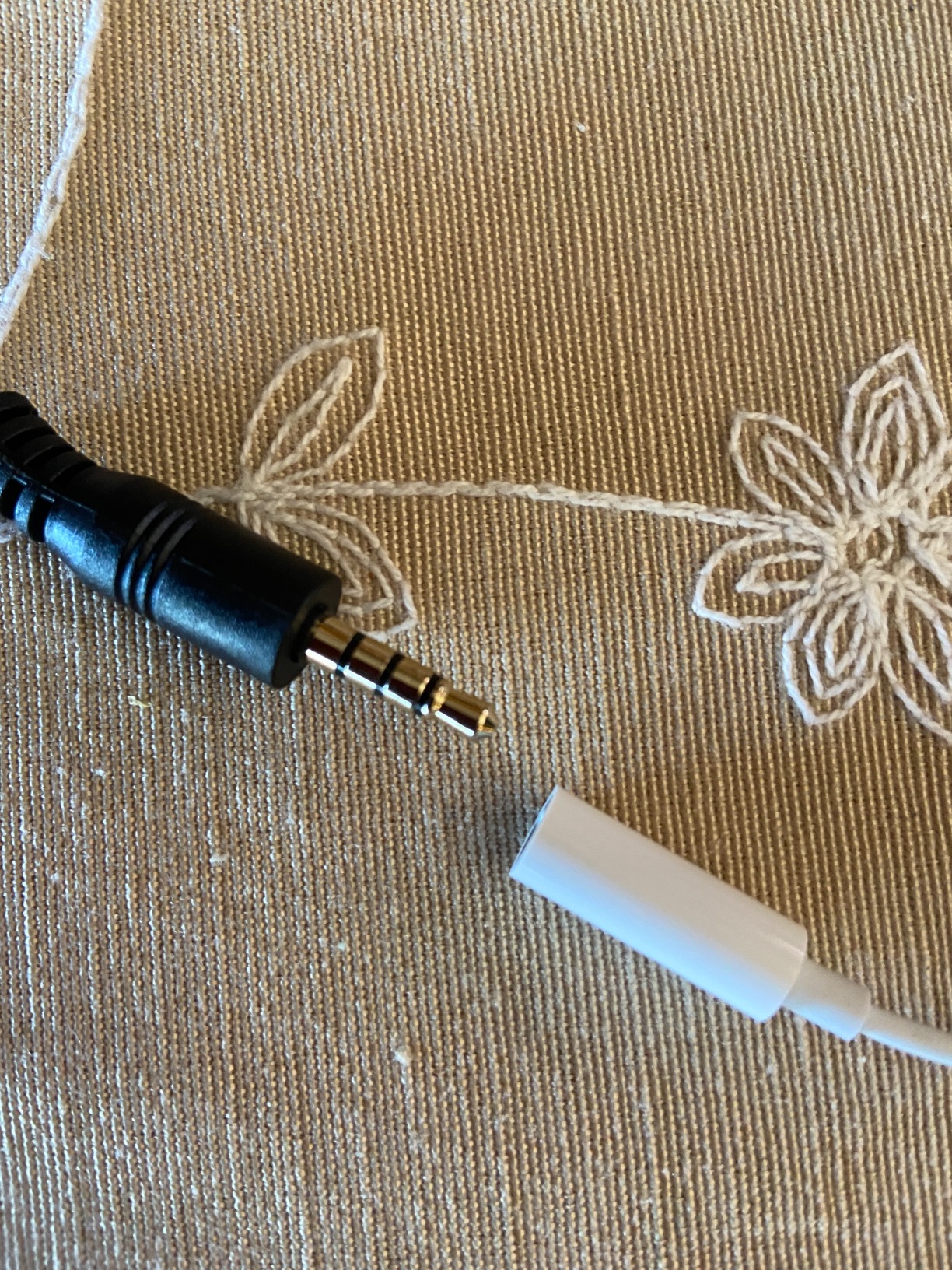
Connector type must match your camera. TRS (tip-ring-sleeve) is the standard for camera mic inputs. TRRS (tip-ring-ring-sleeve) is used by smartphones. Mics that include both cables, like the Sennheiser models, cover all bases.
How to Connect a Microphone to Your DSLR Camera
Connecting an external microphone to your DSLR is straightforward once you understand the cable types.
Step 1: Locate the 3.5mm microphone input on your camera body. This is usually marked with a microphone icon and is separate from the headphone output. If your camera lacks this input (common on entry-level Canon Rebels), you will need an external audio recorder.
Step 2: Use the correct cable. For DSLRs and mirrorless cameras, use a TRS cable (two black rings on the connector). For smartphones, use a TRRS cable (three black rings). Many mics include both, but check before heading to a shoot.
Step 3: Mount the microphone on the hot shoe or cold shoe on top of your camera. Tighten the mount so the mic does not shift during movement.
Step 4: Plug the cable into the mic output and the camera input. Turn on the microphone if it is battery-powered.
Step 5: Set your camera’s audio input level. Most DSLRs have a manual audio gain setting in the menu. Aim for peaks around -12dB to leave headroom for loud moments.
Step 6: Do a test recording and playback through headphones if your camera or mic supports monitoring. This catches connection issues before they ruin a real take.
For wireless systems like the DJI Mic Mini, plug the receiver into the camera’s mic input instead of a cable. The transmitter pairs automatically once both are powered on.
FAQs
What is the best microphone for a DSLR camera?
The best overall microphone for a DSLR camera is the Rode VideoMic GO II Helix, which offers dual 3.5mm and USB output, a super-cardioid pattern, and no battery requirement. For wireless use, the DJI Mic Mini is the top choice. For budget buyers, the Movo VXR10 delivers excellent value with universal compatibility.
What is the 3 to 1 rule in micing?
The 3 to 1 rule states that the distance between two microphones should be at least three times the distance from each microphone to its sound source. This prevents phase cancellation, a problem where sound waves arrive at the two mics at slightly different times and create a thin or hollow audio effect. Following the 3 to 1 rule ensures clean, phase-coherent recordings when using multiple microphones.
How to connect a mic to a DSLR camera?
To connect a microphone to a DSLR camera, locate the 3.5mm microphone input on your camera body, use a TRS cable for cameras or a TRRS cable for smartphones, mount the mic on the hot shoe, plug the cable into both the mic and camera, set your camera audio input level to peak around -12dB, and do a test recording to verify the connection before shooting.
Does DSLR have a microphone?
Yes, all modern DSLR cameras have a built-in microphone for recording basic video audio. However, built-in mics produce low-quality sound with high self-noise, pick up camera operation sounds like lens motors, and capture ambient noise poorly. Adding an external microphone dramatically improves audio quality for any serious video work.
Final Verdict
After three months of testing, the Rode VideoMic GO II Helix earned the editor’s choice spot as the best camera microphone for DSLRs in 2026. Its combination of dual output, ultralight weight, no-battery simplicity, and professional super-cardioid directionality makes it the most versatile option for the widest range of creators.
For wireless shooters, the DJI Mic Mini is unmatched at its price point with genuine 400-meter range, two-level noise cancellation, and a 4.7 rating from thousands of users. Budget-conscious buyers should start with the Movo VXR10, which delivers more value per dollar than anything else on this list.
Professionals who need headphone monitoring and sensitivity control will find the Sennheiser MKE 400 worth every penny, while the Rode VideoMic NTG remains the broadcast-grade ceiling for creators who refuse to compromise on audio quality.
Every microphone on this list will outperform your camera’s built-in mic by a wide margin. The right choice depends on your shooting style, your budget, and whether you prioritize wireless freedom, directional focus, or professional monitoring. Pick the one that matches how you actually shoot, and your audio quality will jump overnight.