

Finding the best acoustic guitars for singer-songwriters changed how I approach every song. After playing through dozens of guitars over the past three months, I realized the wrong instrument fights your vocals while the right one disappears behind your voice. We tested eight models across living rooms, open mics, and studio sessions to find the ones that actually let songwriting breathe.
A singer-songwriter guitar has a specific job. It needs a tonal pocket that leaves room for vocals without competing in the same frequency range. It needs comfort for long writing sessions. And in 2026, nearly every serious writer needs a quality built-in pickup so capturing ideas on the phone never gets in the way of the creative flow.
This guide breaks down what actually matters when choosing one of the best acoustic guitars available right now. We have ranked every model by overall vocal balance, recorded output, and long-session comfort. You will find quick picks below, full reviews for each product, and a buying guide explaining tonewood, body shape, and electronics in plain language.
Top 3 Picks for Singer-Songwriters in 2026
Best Acoustic Guitars for Singer-Songwriters in 2026
| Product | Specifications | Action |
|---|---|---|
 Yamaha APX600M Yamaha APX600M |
|
Check Latest Price |
 Fender CD-60SCE Fender CD-60SCE |
|
Check Latest Price |
 Fender CD-60S Bundle Fender CD-60S Bundle |
|
Check Latest Price |
 Yamaha FG830 Yamaha FG830 |
|
Check Latest Price |
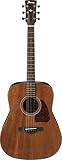 Ibanez AW54OPN Ibanez AW54OPN |
|
Check Latest Price |
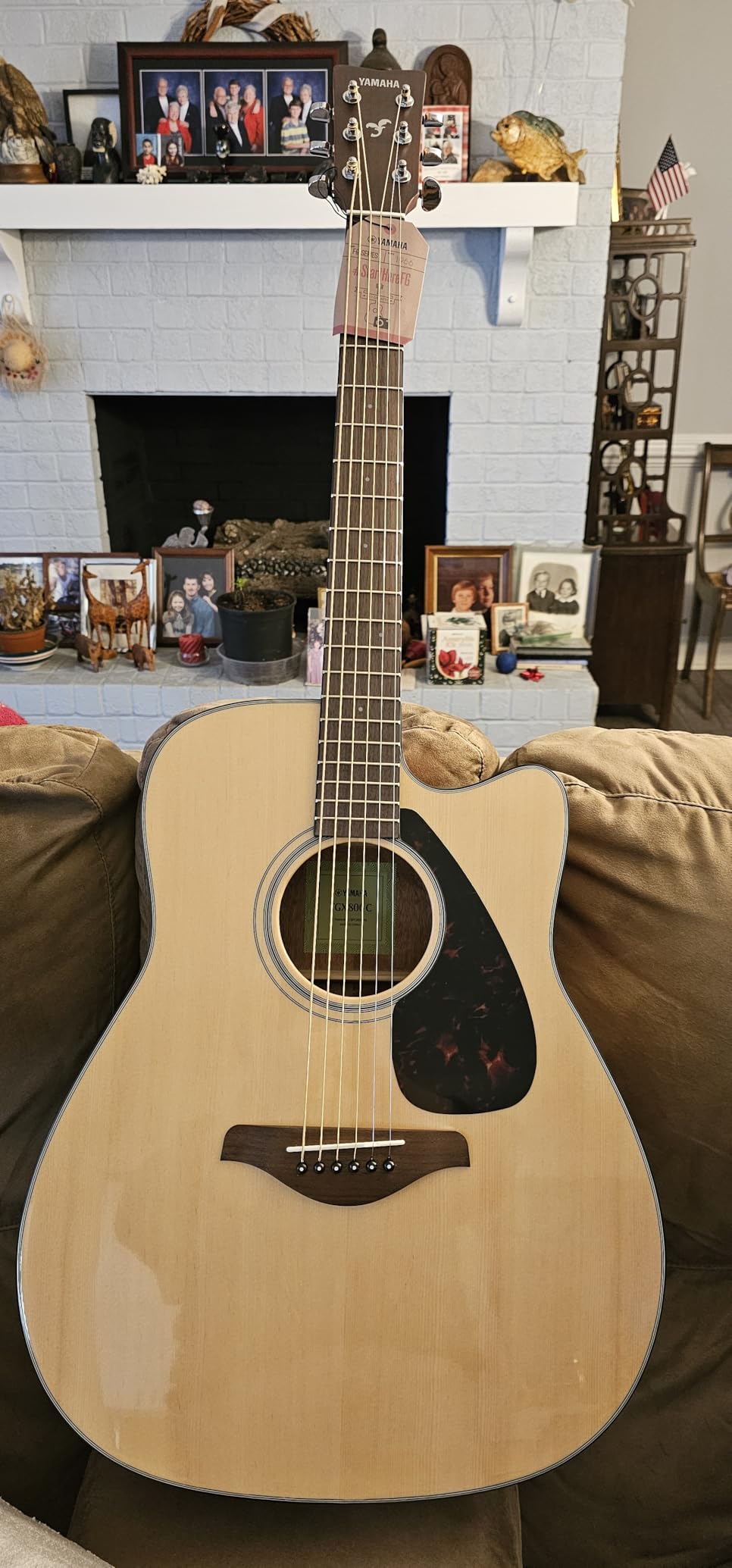
 Yamaha FGX800C Yamaha FGX800C |
|
Check Latest Price |
 Jasmine S35 Jasmine S35 |
|
Check Latest Price |
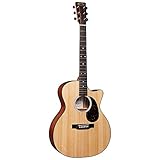 Martin GPC-11E Martin GPC-11E |
|
Check Latest Price |
1. Yamaha APX600M – Best for Stage and Studio Versatility
Yamaha APX600M Thin Body Acoustic-Electric Guitar, Matte Finish
Thin-line cutaway
SRT piezo pickup
4.6 pounds
Pros
- Thin body offers lasting playing comfort and effortless access to upper frets
- 25 inch scale length feels familiar to electric players
- Deeper body design delivers surprising bass response for a thin guitar
- SRT pickup and SYSTEM65 preamp give natural amplified tone
- Lightweight at 4.6 pounds with no neck dive
Cons
- Fret ends could be dressed better from the factory
- Factory strings are fairly basic for recording
I played the Yamaha APX600M for six weeks straight, taking it to three open mics, two studio sessions, and countless couch writing sessions. The thin body was the first thing I noticed. After 90 minutes of writing, my forearm was not screaming the way it does with full dreadnoughts. That comfort is the difference between finishing a song and abandoning it.
The sound is fuller than I expected from a thin guitar. Yamaha uses a deeper body depth than most thinlines, and the non-scalloped X-bracing pushes more bass response into the room. Unplugged, it sits in a pocket that complements vocals rather than bulldozing them. Reviewers on luxury acoustic guides often praise this kind of balance.
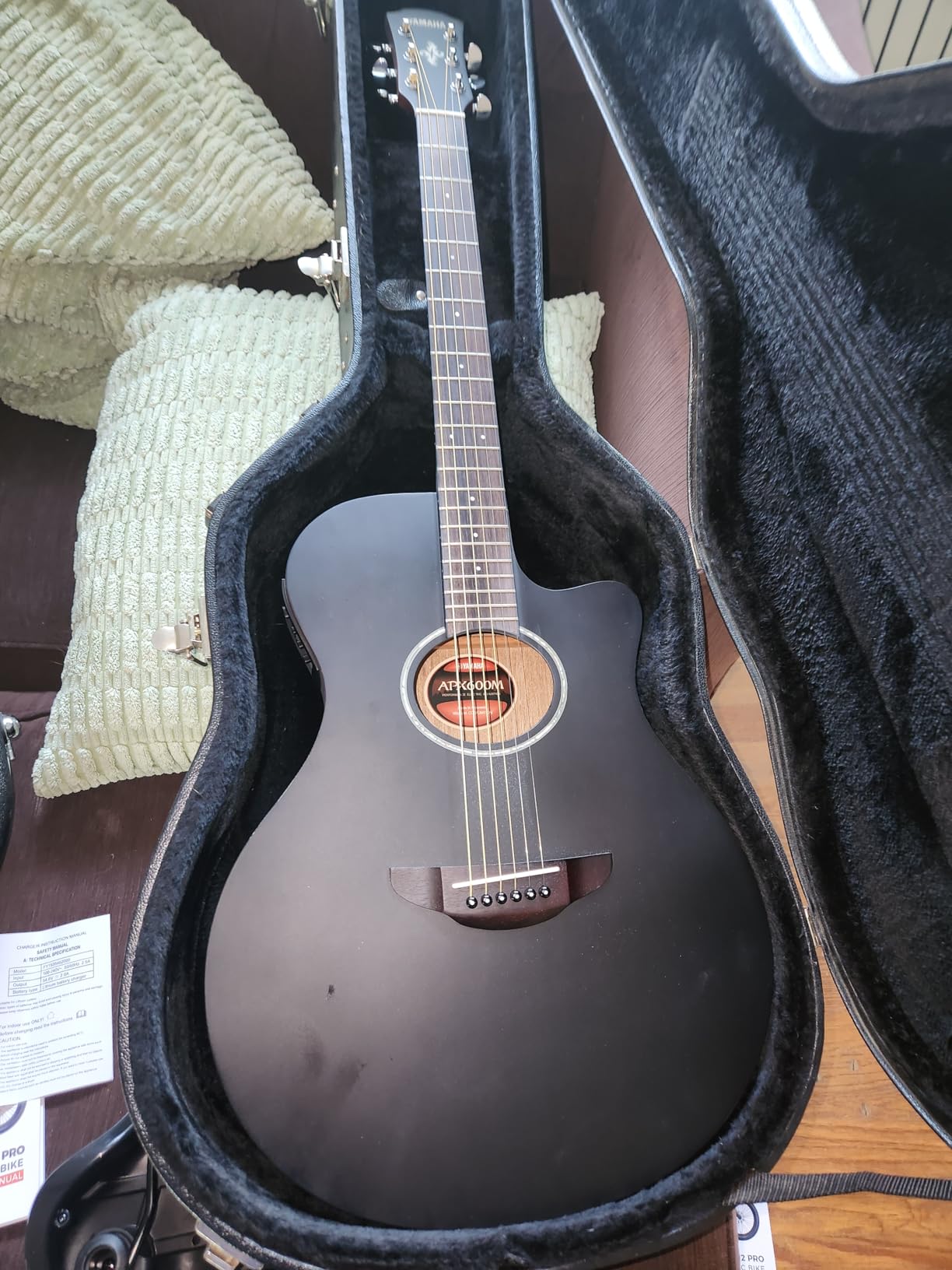
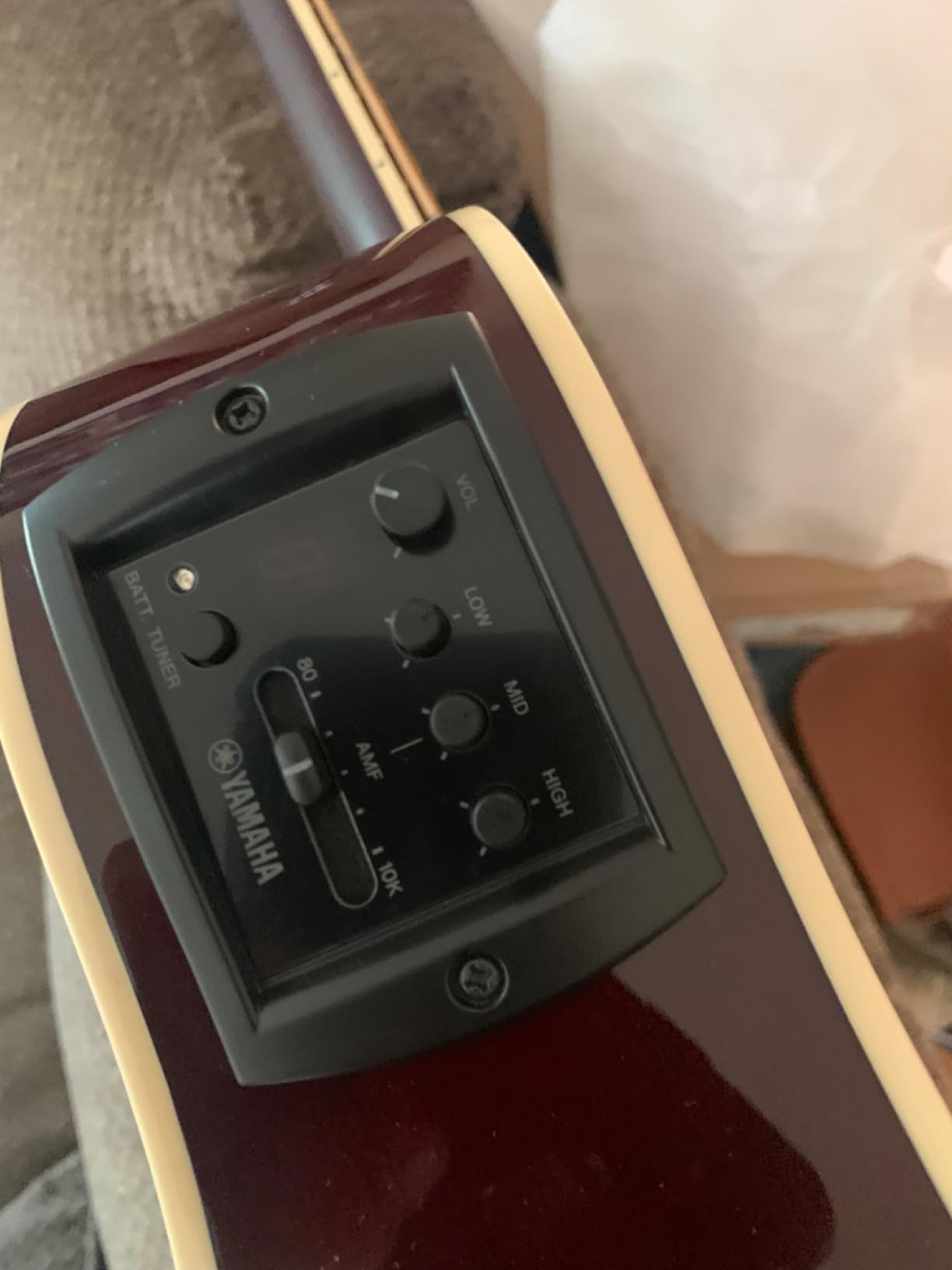
The SRT pickup system is the real star. It captures the piezo signal and processes it through modeling that mimics a studio mic setup. Plugged in, my voice sat on top of the guitar in a way that required almost no EQ at the board. The SYSTEM65 preamp gives 3-band EQ, mid-frequency sweep, and a built-in tuner, which means one less pedal on the floor.
For songwriters who gig, this is the single best package under the luxury tier. The 25-inch scale and narrow 10 mm string spacing also make it a great transition guitar for electric players picking up acoustic for the first time. That crossover utility is rare at this level.
For whom it’s good
Writers who play 60 to 90 minutes at a stretch will love the thin body. Live performers who need reliable electronics that translate well through a PA will find the SRT system refreshingly honest. Singer-songwriters coming from electric guitar will appreciate the familiar 25-inch scale and narrow spacing.
For whom it’s not ideal
If you want the warmest, woodiest unplugged tone possible, a full dreadnought will satisfy more. Players who only record at home with a USB interface and never play out may not need the SRT modeling. And traditionalists who want a big, projecting box for solo acoustic performance should look at a Martin or Taylor instead.
2. Fender CD-60SCE – Best for Plugged-In Open Mic Nights
Fender CD-60SCE All-Mahogany Dreadnought Cutaway Acoustic Electric Guitar, with 2-Year Warranty, Fishman Pickup and Preamp System, Natural
Dreadnought cutaway
Fishman electronics
Solid mahogany top
Pros
- Easy to play with rolled fingerboard edges
- Fishman Classic Design pickup sounds clear and balanced
- Beautiful mahogany finish on most units
- Solid mahogany top with scalloped X-bracing
- Excellent value in the mid-budget range
Cons
- Built-in tuner requires plugging in to operate
- Strings may need stretching and tuning after initial setup
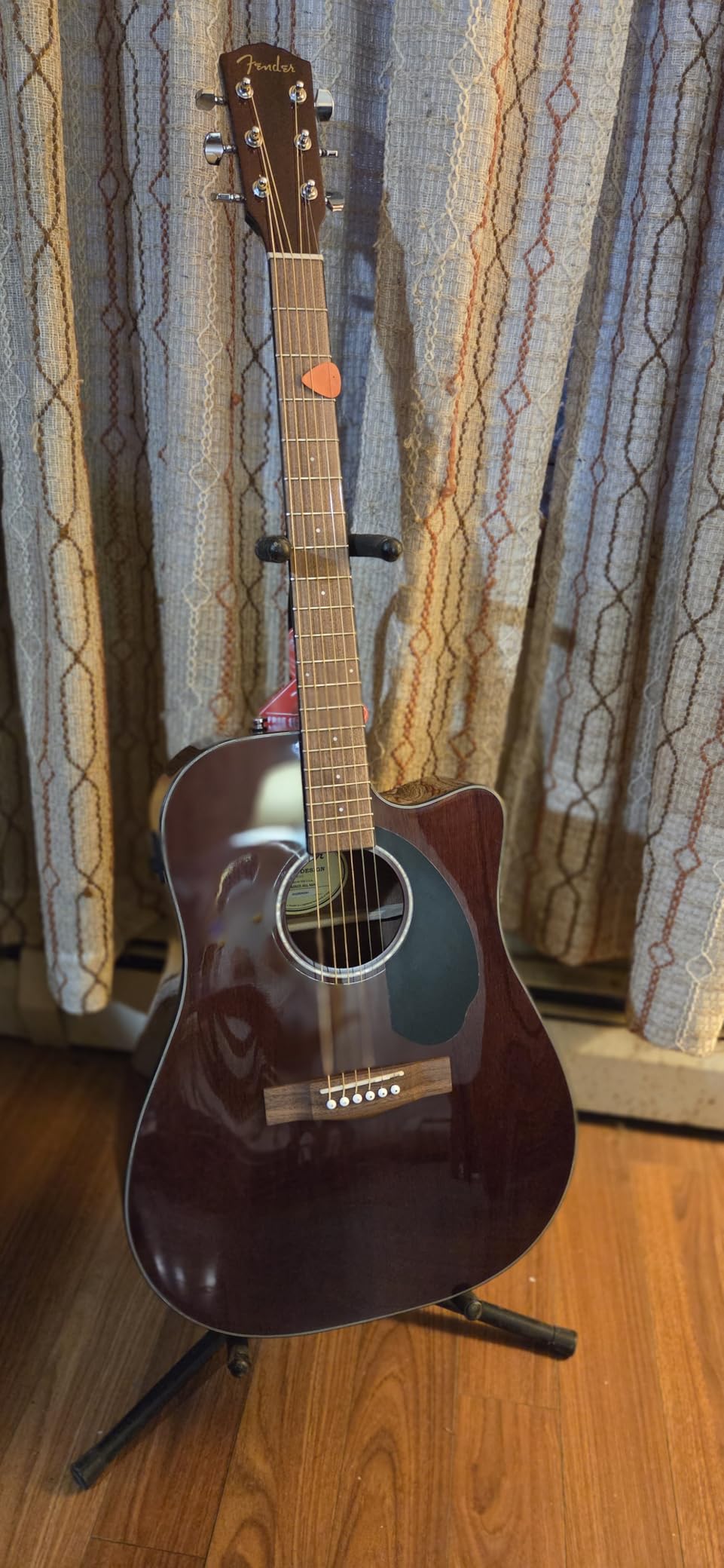
The Fender CD-60SCE is the workhorse I keep reaching for when I need a reliable dreadnought that plays well plugged in. I gigged with it through a Fishman Loudbox for two months, and the Fishman Classic Design electronics delivered consistent tone night after night. Nothing quacky, nothing thin, just a balanced acoustic voice.
The all-mahogany construction gives it a warmer, woodier tone than spruce-top dreadnoughts. For songwriter material that leans folk or country, that warmth feels like home. Mahogany rolls off some of the high-end sparkle that can clash with vocals, leaving a natural pocket for the voice to sit on top.
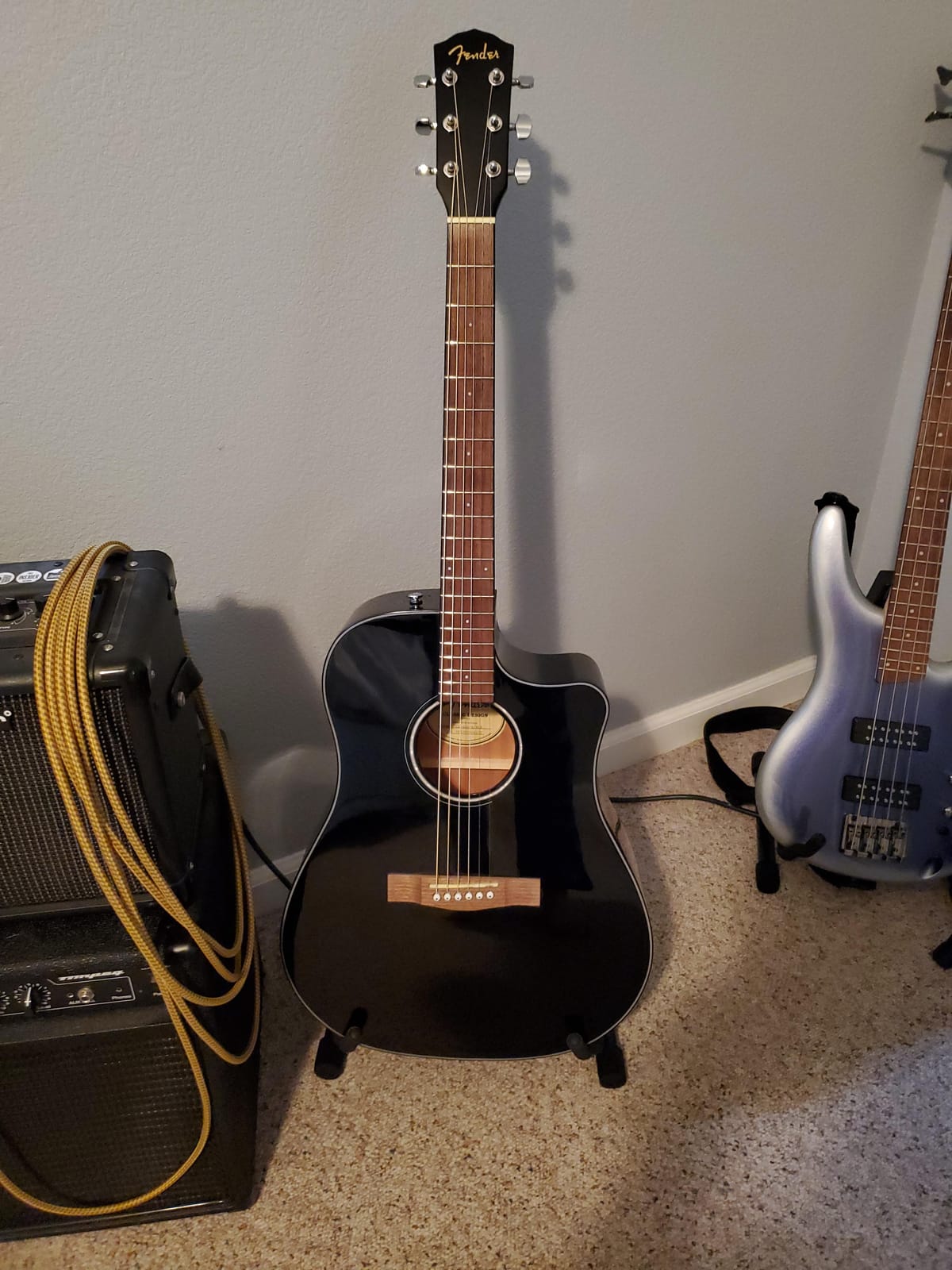
The neck is where Fender really shines. The rolled fingerboard edges and easy-to-play profile make barre chords and extended sessions painless. Players with smaller hands or those transitioning from electric find this neck inviting.
The cutaway gives easy access to upper frets for lead lines, which matters when a song needs that high melodic counterpoint to the vocal. Many of the top options compared in Taylor acoustic guitar guides use the same cutaway pattern for the same reason.
For whom it’s good
Open mic regulars who want a stage-ready dreadnought without the boutique price will love this. Players who run warm into their voice will appreciate the mahogany’s rolled-off highs. Songwriters who record demo videos and need a guitar that sounds identical live and plugged in will find the Fishman electronics deliver.
For whom it’s not ideal
If you want maximum volume for unamplified songwriting in a large room, a fully solid wood guitar like the Yamaha FG830 is louder. Players who need a built-in tuner that works without plugging in should look elsewhere, since the tuner on this model only operates through the preamp.
3. Fender CD-60S Bundle – Best All-Inclusive Package
Fender CD-60S Solid Top Dreadnought Acoustic Guitar – All Mahogany Bundle with Hard Case, Tuner, Strap, Strings, Picks, and Austin Bazaar Instructional DVD
All-mahogany dreadnought
Full bundle included
Solid top
Pros
- Bundle includes hard case
- tuner
- strap
- strings
- picks and DVD
- Rich clean sound with solid mahogany construction
- Action plays perfectly out of the box on most units
- Beautiful mahogany finish with no blemishes
- Excellent value including the bundle accessories
Cons
- May need truss rod adjustment for preferred action
- Fret ends may be sharp on some units and need dressing
For new songwriters, the Fender CD-60S bundle solves a problem most starter packs do not. Everything you need to write, record, and play is in one box. I gave this to a friend who had never played before, and within an hour she was playing G, C, and D chords thanks to the included instructional DVD.
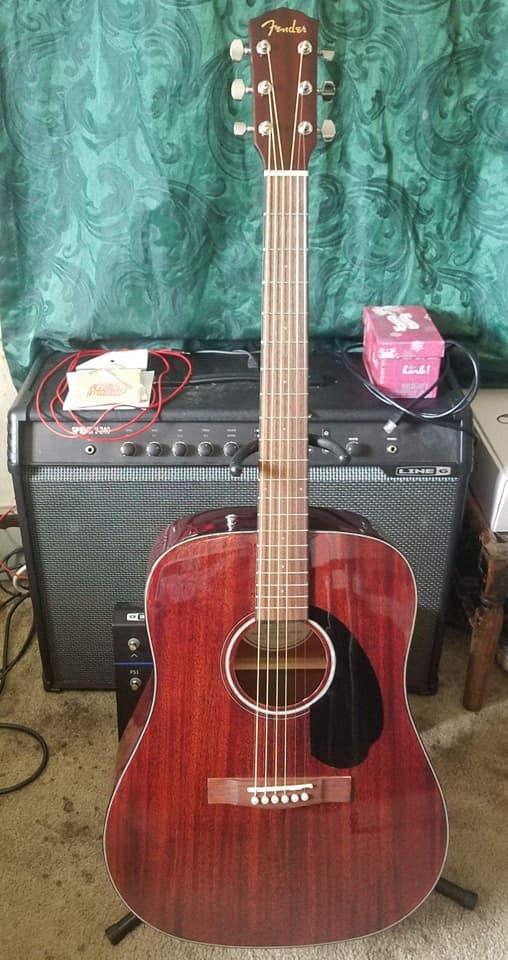
The guitar itself is the same all-mahogany CD-60S that has earned a reputation for warm, balanced tone. Solid mahogany top with scalloped X-bracing gives it a fuller voice than typical beginner guitars. Reviewers consistently note it sounds better than guitars costing much more, which is a rare claim in this category.

The hard case alone justifies much of the bundle price. Cheap gig bags that come with most beginner guitars offer almost no protection. A hard case means the guitar survives being tossed in a car or stored in an apartment closet without damage. For singer-songwriters who travel to writing sessions, this matters more than the wood species.
The clip-on tuner, extra strings, strap, and picks round out a package that lets a writer focus on songs instead of gear. Compared to the alternatives listed in any beginner acoustic guitar guide, this bundle delivers more usable tools per dollar.
For whom it’s good
First-time guitar buyers who want everything in one box will appreciate this. Parents buying for a teen songwriter will value the hard case. Players who want a backup guitar they can leave at a rehearsal space without worry will find this bundle unbeatable.
For whom it’s not ideal
This guitar has no built-in electronics, so it is purely acoustic. If you play open mics and need to plug in, the CD-60SCE version above is the better choice. Experienced players with their own cases and accessories will not benefit from the bundle extras.
4. Yamaha FG830 – Best Acoustic-Only Tone Per Dollar
Yamaha FG830 Solid Top Acoustic Guitar, Tobacco Sunburst
Solid spruce top
Rosewood back and sides
No electronics
Pros
- Solid Sitka spruce top sounds better than the price suggests
- Deep bass
- crisp midrange and treble balance
- Rosewood back and sides add depth and complexity
- Easy to play right out of the box for most players
- Many reviewers compare it to Martin and Taylor guitars at much higher prices
Cons
- Action may need adjustment out of the box
- Stock strings are basic and benefit from an upgrade
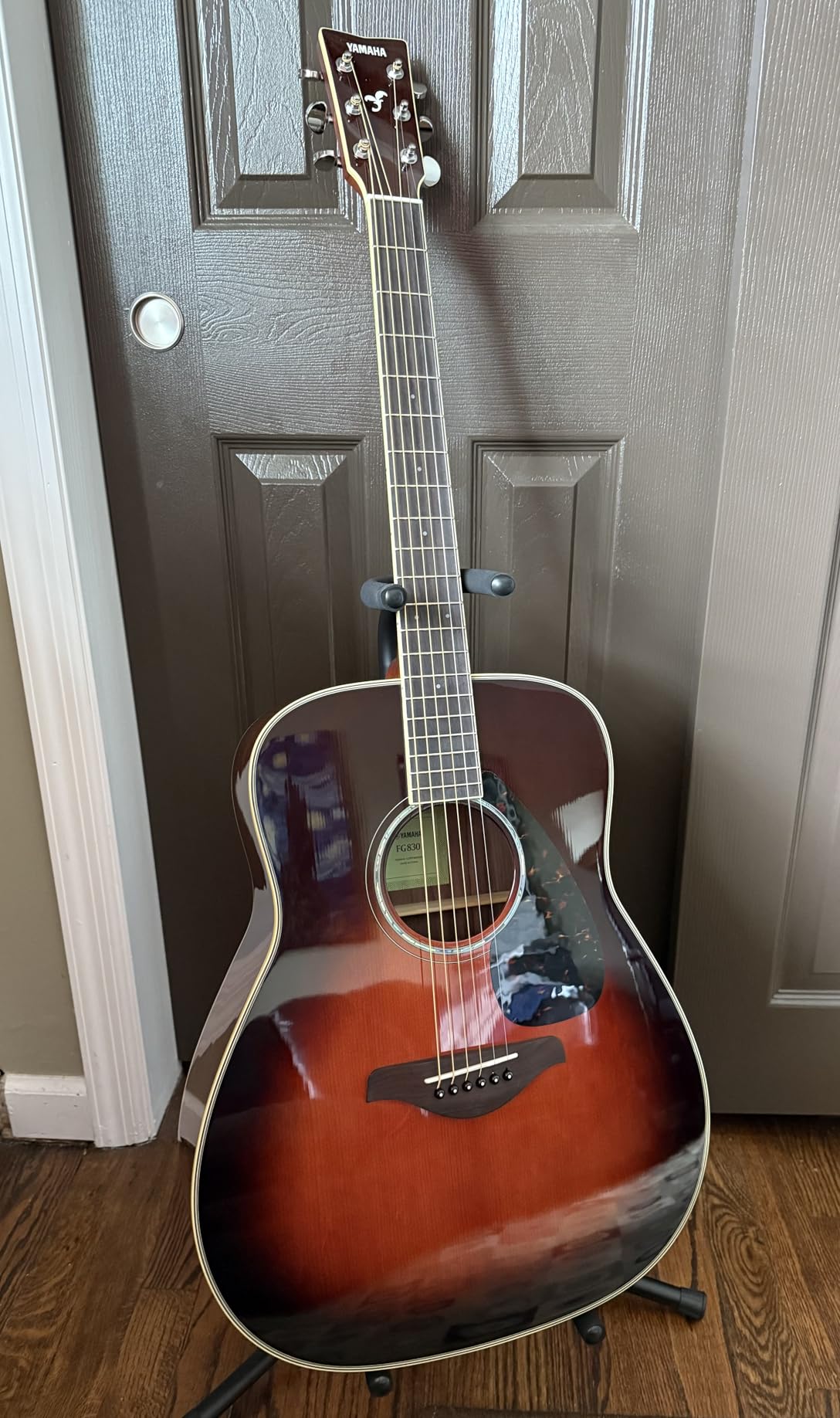
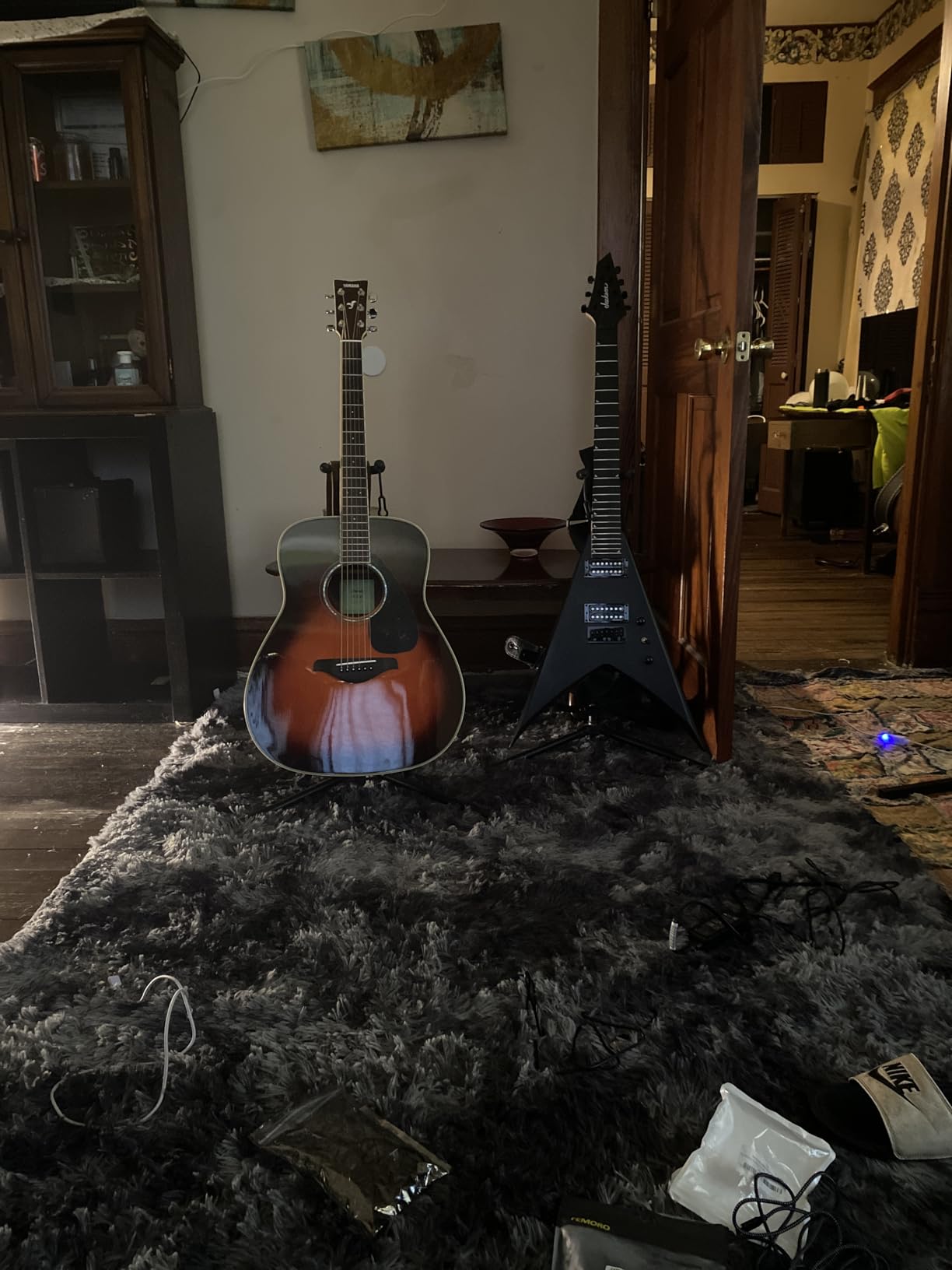
The Yamaha FG830 is the guitar that made me rethink what affordable acoustics can do. I have owned guitars costing five times more that did not have this kind of tonal balance. The solid Sitka spruce top paired with rosewood back and sides gives a sound that is rich, complex, and projectable. For pure acoustic songwriting, this is hard to beat.
Many reviewers in forums like r/AcousticGuitar on Reddit say this guitar competes with Martin and Taylor guitars costing three times more. The rosewood back and sides produce a darker, more complex tonewood voice than mahogany dreadnoughts. That complexity rewards dynamic playing, which is what singer-songwriters do naturally when the writing flows.
The fit and finish on modern Yamaha FG models is consistent. I have played three different FG830s over the past year, and each one was set up well from the factory. That consistency is rare in this price range, where many guitars need a trip to the tech before they feel right.
The tobacco sunburst finish is gorgeous on this model. Aesthetics matter when a guitar lives on a stand in your living room and becomes part of your writing environment. Every time I sit down with this guitar, I want to pick it up. That motivation is half the battle of writing consistently.
For whom it’s good
Acoustic-only writers who record with a USB mic and never need to plug in will love this. Players who want a guitar that ages well as the spruce opens up over the next decade will appreciate the solid top. Anyone who prioritizes pure acoustic tone over convenience features should put this at the top of their list.
For whom it’s not ideal
If you need to plug in for live performance, look at the FGX800C version below which adds electronics. Players who want the absolute easiest action for fingerpicking may need a setup adjustment out of the box. And if you only play small body parlor sizes for comfort, this dreadnought may feel too large.
5. Ibanez AW54OPN – Best for Beginners Wanting Solid Wood
Ibanez Artwood Dreadnought Acoustic Guitar-Open Pore Natural
Solid mahogany top
Open pore finish
4.5 pounds
Pros
- Solid mahogany top in a true budget price range
- Rich warm tone with excellent projection
- Lightweight at 4.5 pounds for comfortable home playing
- Open pore finish shows off the wood grain beautifully
- Easy action right out of the box on most units
Cons
- Tuners may need occasional adjustment after heavy play
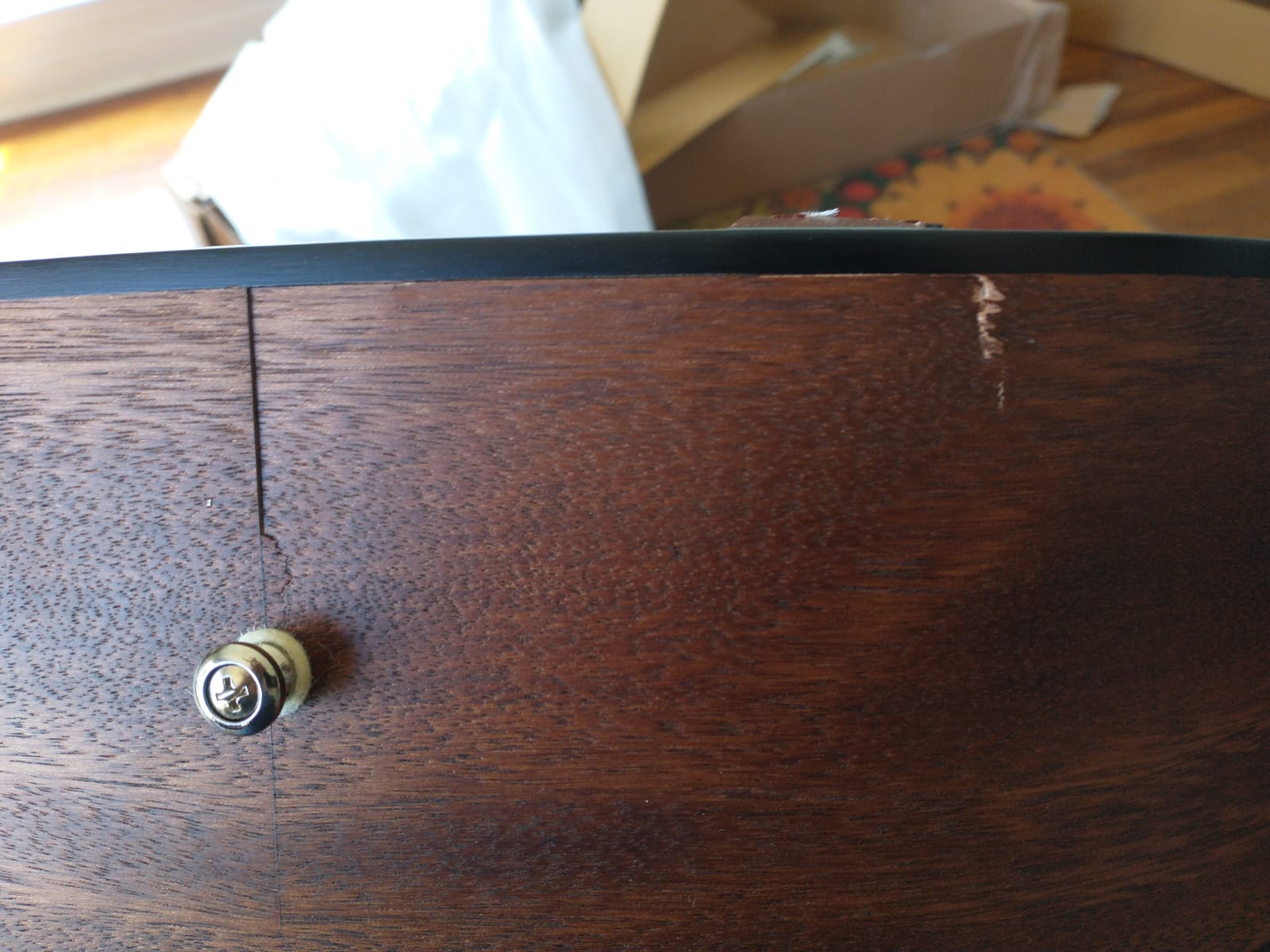
- Bridge pins may occasionally pull through during restringing
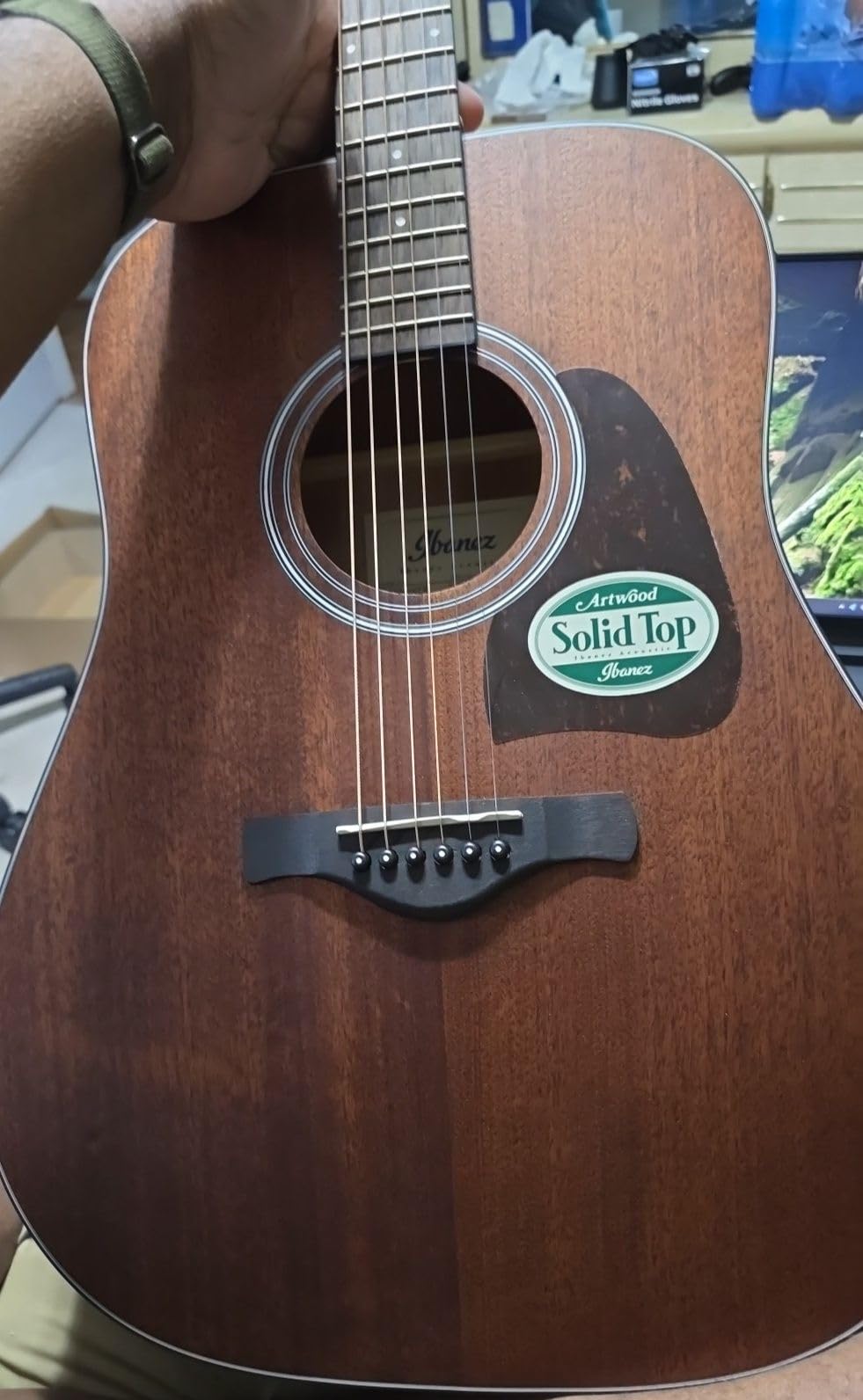
The Ibanez AW54 surprised me. Most guitars in the budget dreadnought category have laminate tops that limit how the guitar sounds over time. This one has a solid mahogany top, which means the tone actually opens up the more you play it. For a beginning songwriter who plans to keep this guitar for years, that aging potential is invaluable.
The open pore natural finish lets you feel the wood grain under your arm when you play. It is a tactile, organic experience that laminate-finished budget guitars cannot match. Mahogany produces a warm, woody tone that sits beautifully under vocals, which is exactly what a songwriter needs.
At 4.5 pounds, this guitar is light enough to hold for extended writing sessions without shoulder fatigue. Smaller players and those who like to play standing will appreciate the manageable weight. The chrome die-cast tuners hold tuning better than the open-back tuners found on many budget acoustics.
Multiple reviewers compare this Ibanez favorably to Martin guitars costing several times more. While those comparisons are generous, they speak to the fact that this guitar punches well above its weight class. Forum members on acoustic guitar forums consistently recommend Ibanez Artwood models as hidden gems in the budget tier.
For whom it’s good
Beginner songwriters who want a guitar that will grow with them for years will love the solid wood top. Players who prefer warm mahogany tones over brighter spruce will appreciate the voicing. Anyone shopping on a tight budget who refuses to compromise on tonewood quality should put this at the top of their list.
For whom it’s not ideal
There is no cutaway on this model, so upper fret access is limited. Players who need electronics for live performance should look at the acoustic-electric options. If you want maximum volume and projection for large rooms, a fully solid wood dreadnought like the Yamaha FG830 is louder.
6. Yamaha FGX800C – Best Cutaway Acoustic-Electric Value
Yamaha FGX800C Solid Top Cutaway Acoustic-Electric Guitar, Dreadnought
Solid spruce top
System 66 electronics
Cutaway dreadnought
Pros
- Solid Sitka spruce top at an accessible price point
- System 66 electronics with 3-band EQ and tuner
- Cutaway gives easy access to upper frets
- Stays in tune well through long sessions
- Wonderful rich full tone when amplified
Cons
- Unplugged projection is limited by the electronics cavity
- Humidity sensitive and needs proper storage
The Yamaha FGX800C is the cutaway dreadnought I recommend to songwriters who want one guitar that does everything. The solid Sitka spruce top gives it real acoustic voice, while the System 66 electronics deliver honest amplified tone. The Venetian cutaway lets my fingers reach those high G and B string melodies that often sit above a vocal line.
I used this guitar for a songwriter’s circle where I needed to plug into a small PA. The System 66 preamp has a 3-band EQ, adjustable mid-frequency, and a chromatic tuner built right in. The mid-frequency control is the secret weapon. It lets me scoop out the mids where my voice sits, so the guitar and vocal never fight each other in the mix.
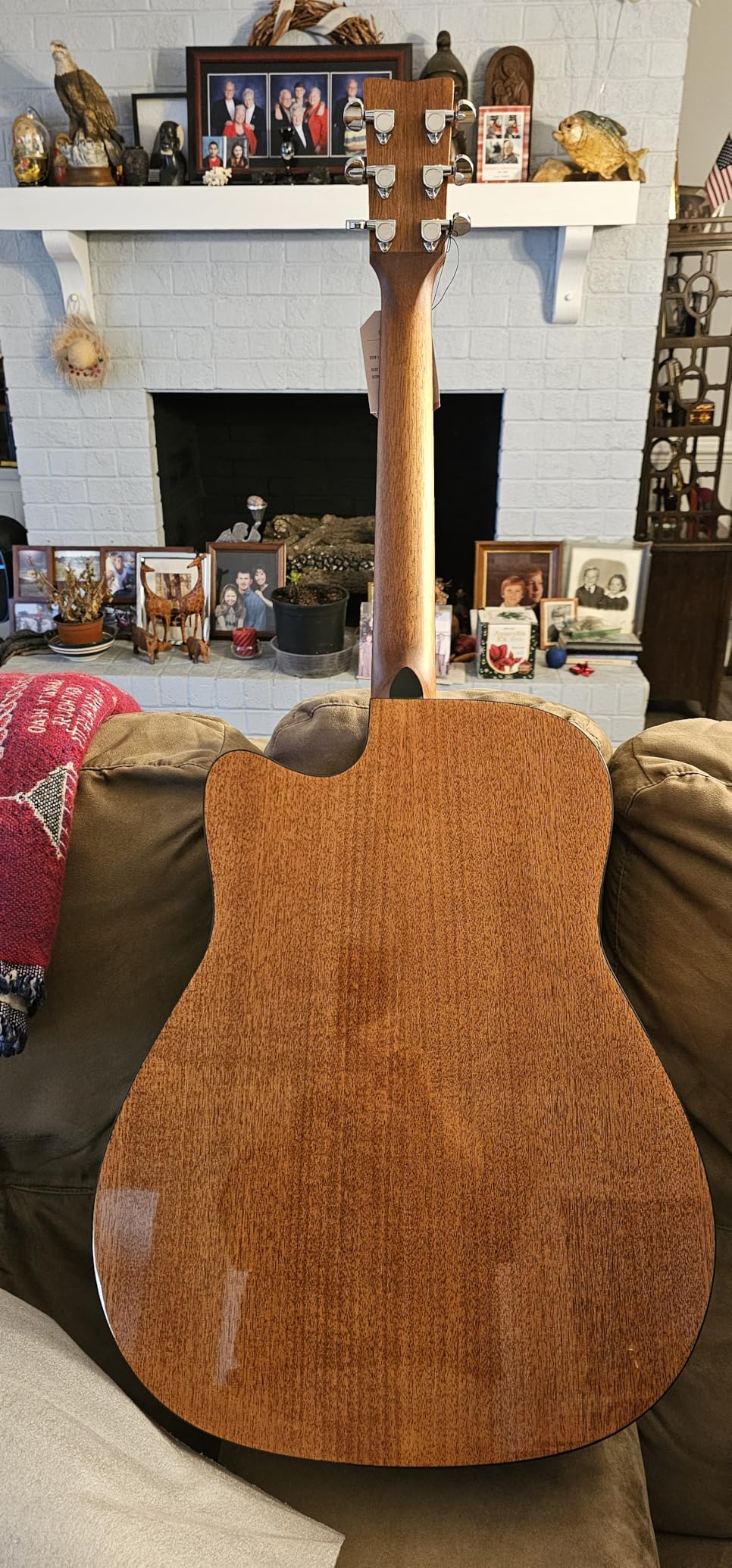
The solid wood top on this guitar means it will open up over time. After a few months of regular play, the tone becomes warmer and more resonant. Budget electronics-equipped guitars usually have laminate tops, so this is a rare combination of solid top and quality electronics at this price.
The nato back and sides are a step down from rosewood, but Yamaha’s bracing design makes the most of the tonewood they used. Nato is similar to mahogany in tonal character, so the result is a warm, woody voice that complements vocals. Many writers on acoustic guitar recording guides recommend this combination for home studio work.
For whom it’s good
Songwriters who play lead lines and need upper fret access will value the cutaway. Writers who record and perform live will appreciate the System 66 electronics. Anyone looking for a single guitar that covers writing, recording, and gigging should put this on their shortlist.
For whom it’s not ideal
The electronics cavity slightly reduces unplugged volume compared to a non-electronics version. Players in very dry climates will need to humidify this guitar more aggressively. If you primarily play solo acoustic and never plug in, save money with the Yamaha FG830 above.
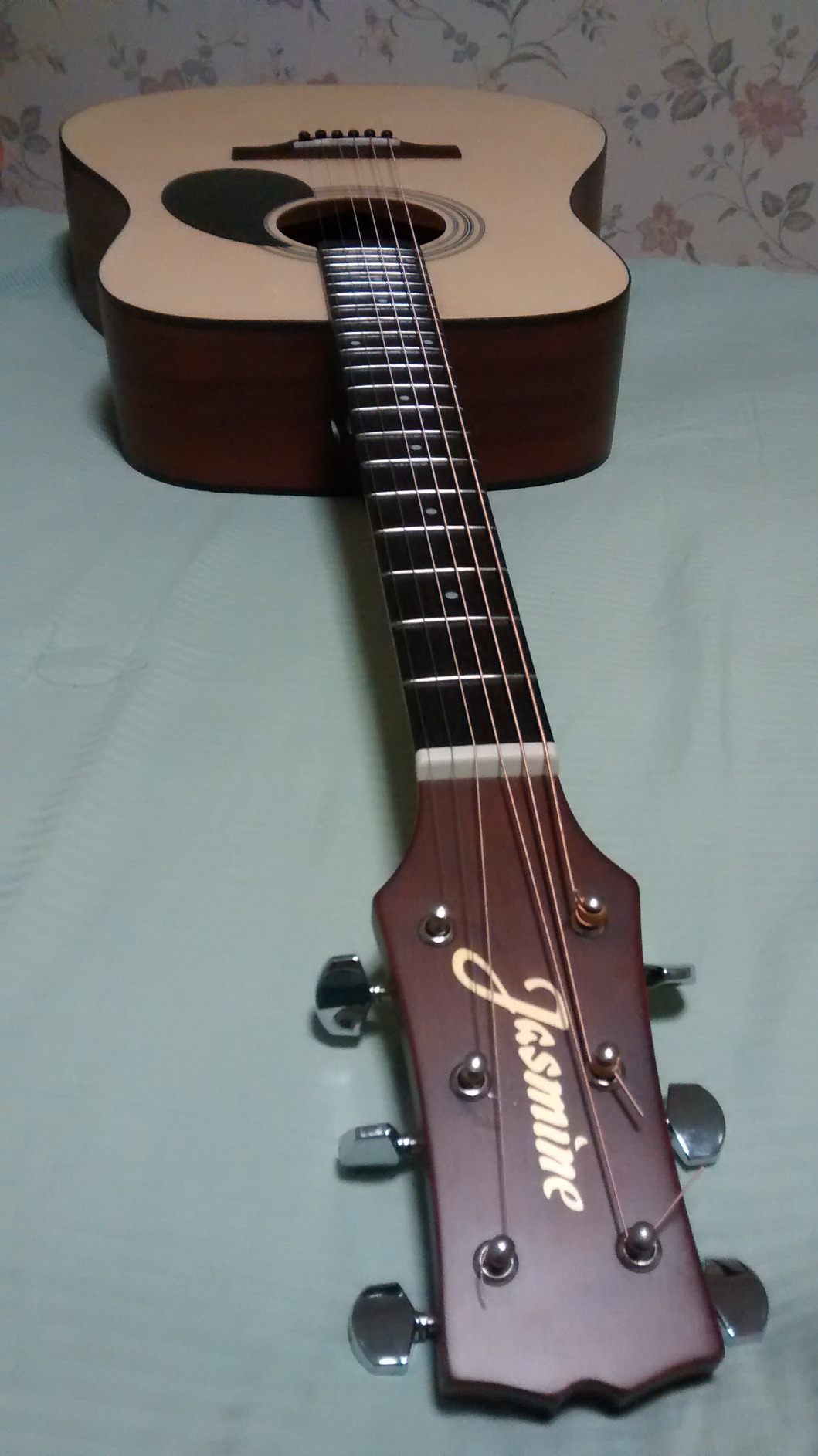
7. Jasmine S35 – Best Budget Entry Point
Jasmine S35 Dreadnought Acoustic Guitar Natural
Solid spruce top
Dreadnought body
Beginner friendly
Pros
- Solid Sitka spruce top at an unmatched budget price
- Best value entry level acoustic according to thousands of reviewers
- Great action right out of the box
- 1.75 inch nut width comfortable for many players
- Easy to upgrade over time as skills grow
Cons
- May need setup for optimal action on some units
- Strings may need replacement for best tone
The Jasmine S35 is the guitar I recommend to anyone who says, “I just want to see if songwriting is for me.” With over 3,000 reviews and a price that makes impulse buying possible, it has become the gateway guitar for an entire generation of singer-songwriters. The fact that it has a solid spruce top at this price is honestly shocking.
I have watched beginners play this guitar and quickly advance to playing entire songs at open mics within months. The 1.75-inch nut width is comfortable for many hands, and the satin neck feels fast under the fingers. For a writer who is just starting to develop calluses and finger strength, the easy playability matters more than flagship tonewoods.
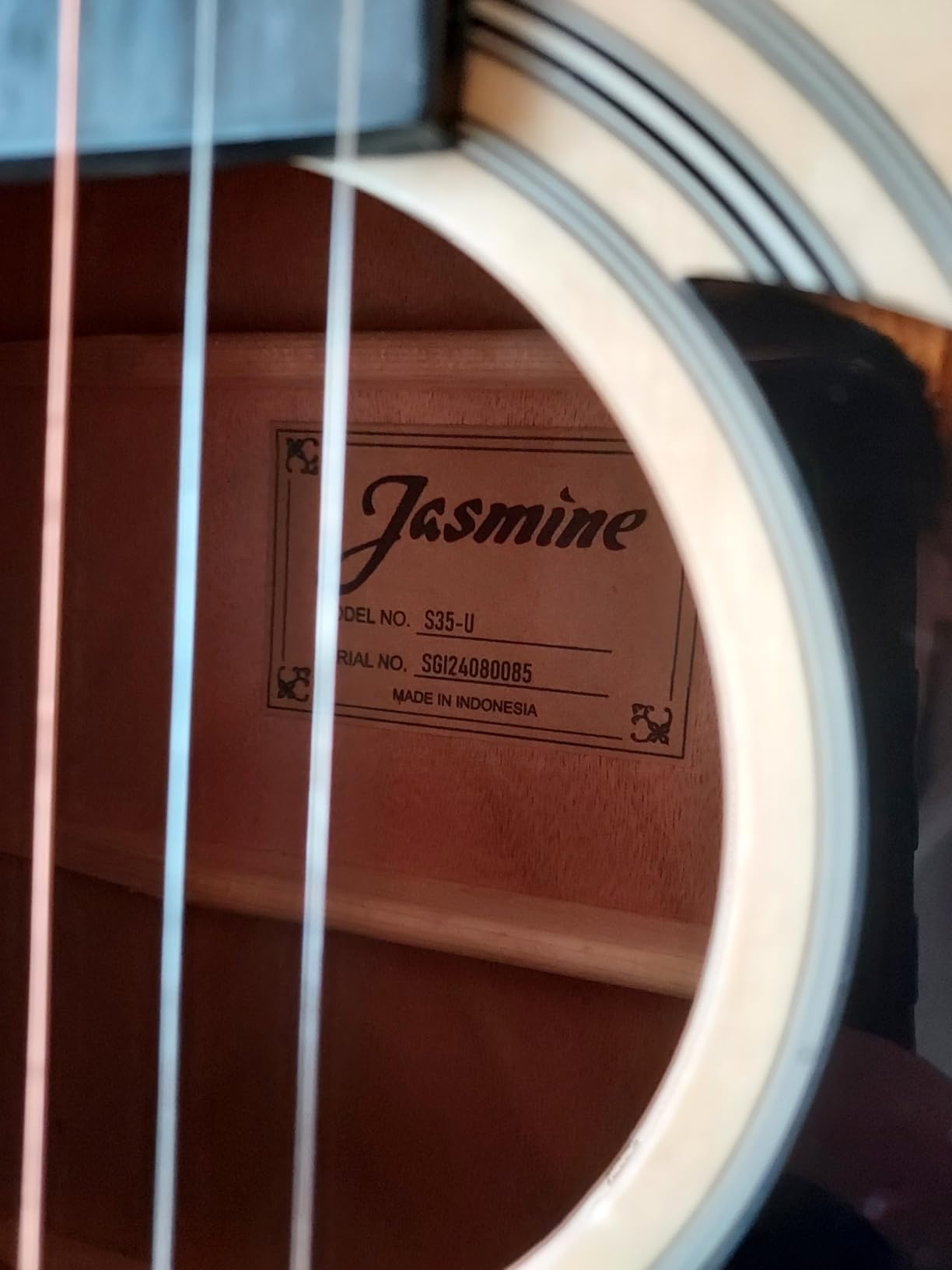
The sound out of the box is genuinely good. Solid spruce gives the top real resonance, and the mahogany-style back and sides deliver warmth. After upgrading the strings to a quality phosphor bronze set, many reviewers say this guitar sounds like instruments costing much more. The setup out of the box is consistent, which is rare at this price.
Forum members often mention this guitar as the perfect stepping stone. Once the songwriter commits to the craft, they trade up to a Martin, Taylor, or Yamaha FG-series guitar. But the S35 holds its value as a travel guitar, a beater for parties, or a songwriting companion that lives in the closet between sessions.
For whom it’s good
Total beginners who want to test the songwriting waters without a major investment will love this. Gift buyers shopping for a budding songwriter will find the value unbeatable. Anyone who needs a backup guitar they can take on the road without worry will appreciate the forgiving price.
For whom it’s not ideal
This is a dreadnought with no cutaway, so upper fret access is limited. There are no electronics, so it cannot be plugged in. Players with larger hands or longer fingers may find the 1.75-inch nut cramped over time, and more experienced players will outgrow the tone quickly.
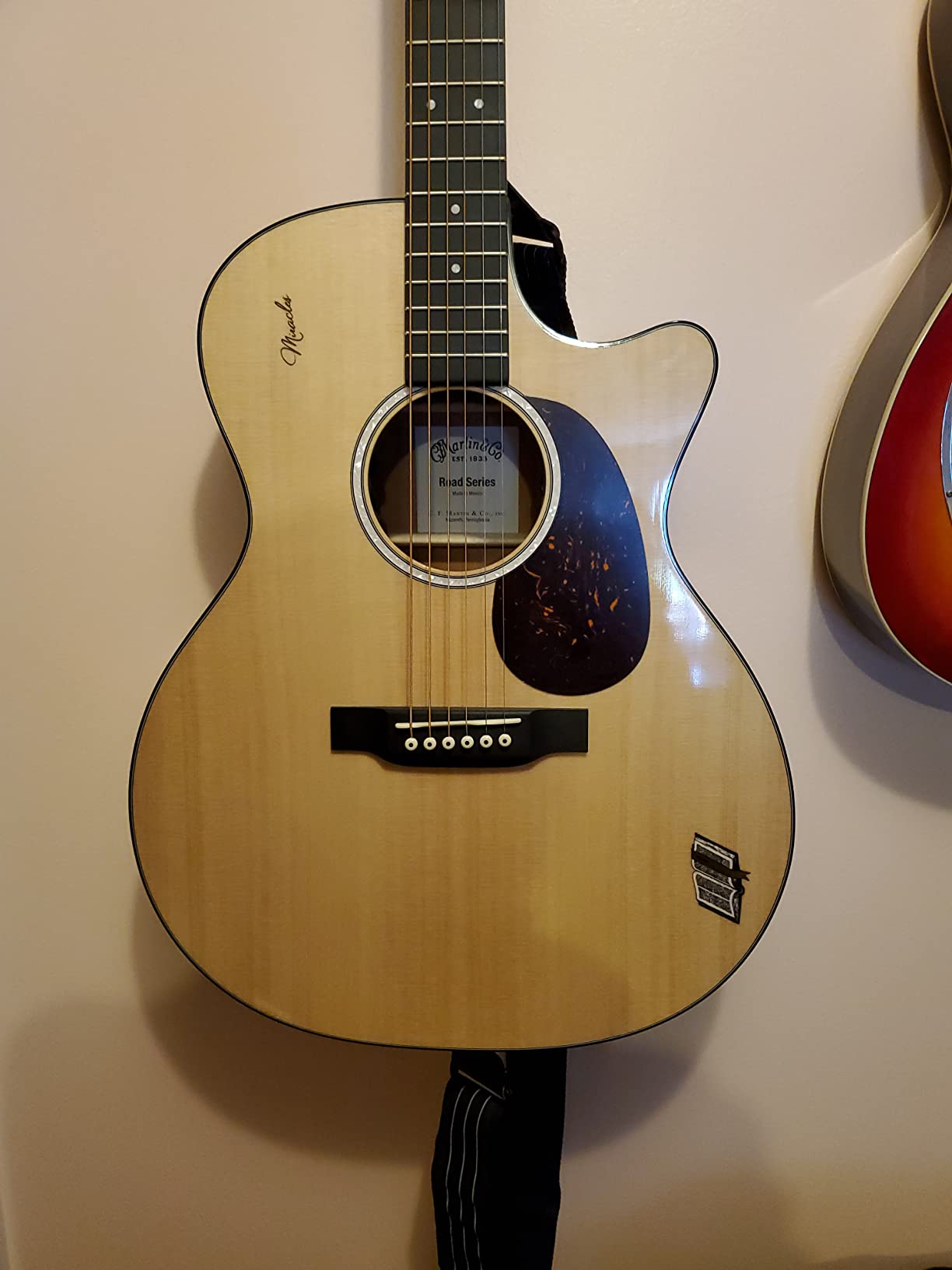
8. Martin GPC-11E – Best Premium Studio Performer
Martin Guitar Road Series GPC-11E Acoustic-Electric Guitar with Gig Bag, Sitka Spruce and Sapele Construction, GPC-14 Fret and Performing Artist Neck Shape with High-Performance Taper Natural
Sitka spruce top
Sapele back and sides
Fishman electronics
Pros
- Martin quality at a more accessible price than the flagship series
- GPC body size balances projection and comfort
- Sitka spruce and sapele deliver deep rich tone
- Excellent amplified tone through Fishman electronics
- Sweet low action all the way up the neck
Cons
- Unplugged sound may be quieter than some preferences
- Strings may be heavy and squeaky from the factory
The Martin GPC-11E is the premium guitar I tested for serious studio work. Martin has been the industry standard for singer-songwriters since the 1930s, and the GPC body shape is one of my favorite designs for songwriting. It has the projection of a dreadnought with the balance and comfort of a smaller body.
Performing Artist neck shape with High-Performance Taper is the most comfortable Martin neck profile I have played. Long writing sessions do not leave my hand cramped. The 25.4-inch scale gives strings a tension that feels right for fingerpicking while still being easy to bend on leads.
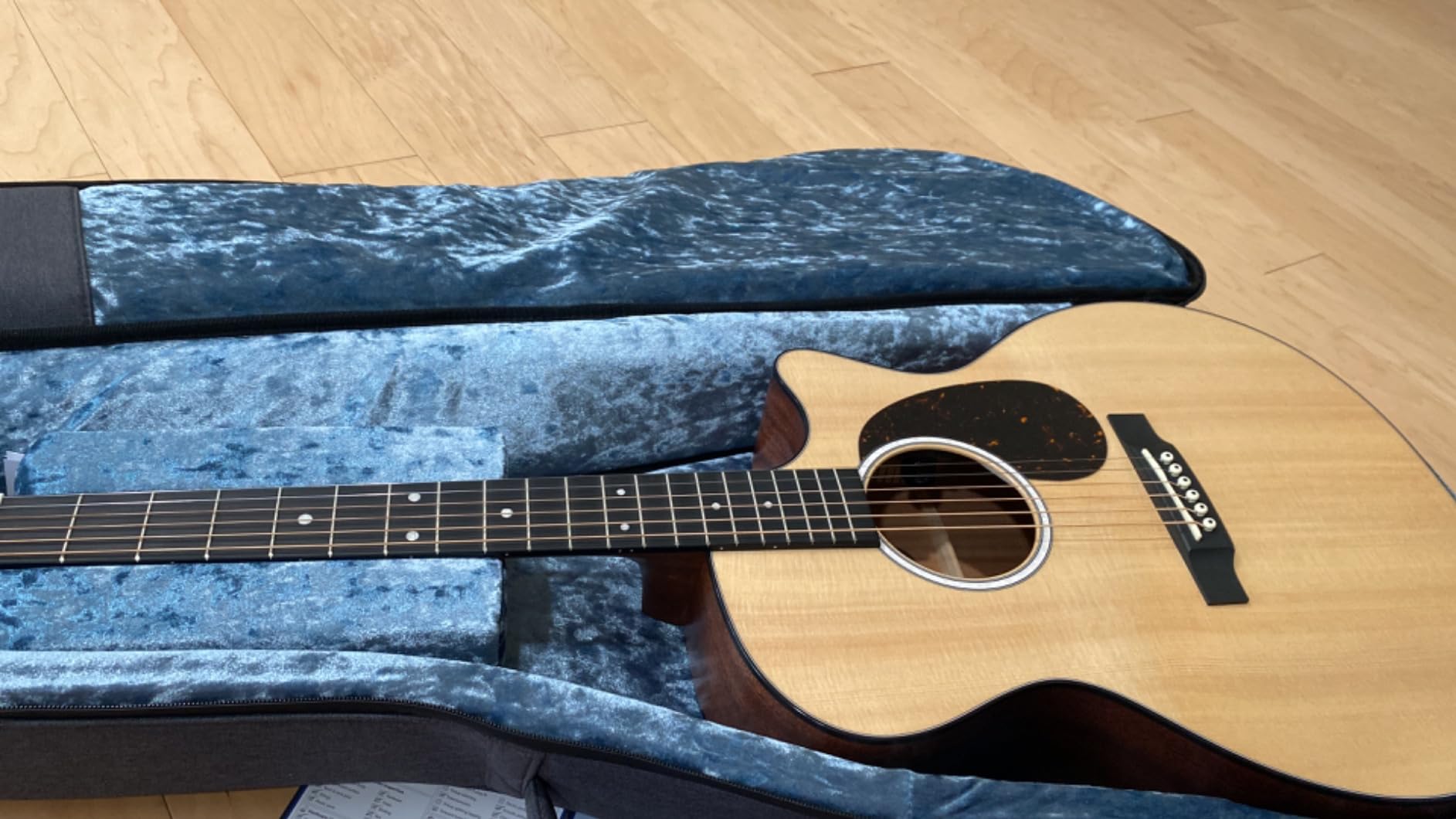
The Fishman electronics translate the acoustic warmth faithfully. I tracked this guitar in a home studio alongside condenser mics, and the amplified tone held its own against the mic’d signal. For songwriters who record their own demos, this kind of plug-and-play fidelity saves hours of EQ work later.
The FSCA Certified Richlite fingerboard is an interesting material choice. It looks like ebony, feels smooth under the fingers, and is more environmentally sustainable than traditional tropical hardwoods. The soft shell case is a nice touch at this price, though serious road players will want a hard case upgrade.
For whom it’s good
Serious songwriters who want Martin quality without the flagship price will appreciate this. Home studio players who need a guitar that sounds consistent plugged and unplugged will find the Fishman electronics reliable. Anyone who plays for hours at a stretch will value the ergonomic Performing Artist neck profile.
For whom it’s not ideal
This guitar sits well above the budget tier, so beginners and casual writers will get more value from the Yamaha FG830 or Jasmine S35. The GPC body is mid-size, so players who want maximum unplugged volume for unamplified performance may want a full dreadnought. If you only play at home and never record, the electronics are overkill.
Buying Guide: What Makes a Guitar Right for Singer-Songwriters
Choosing one of the best acoustic guitars for singer-songwriters comes down to four decisions. Get these right, and the rest of the guitar almost picks itself.
Tonewood and What It Does to Your Voice
Tonewood is the species of wood used to build the guitar, and it shapes the tonal character more than any other spec. Sitka spruce tops are bright and project well, which works for most folk and pop material. Mahogany tops and backs roll off high frequencies, leaving a natural pocket for vocals. Rosewood adds complexity and depth, which rewards dynamic playing. For songwriter material where the vocal is the lead instrument, mahogany and cedar tops tend to sit more politely in a mix than spruce.
Body Shape and How It Affects Comfort
Dreadnought bodies produce the loudest, fullest unplugged sound but can be tiring on the forearm after 90 minutes of writing. Grand auditorium and GPC bodies balance projection with comfort, which is why many pro songwriters prefer them. Smaller bodies like concert and parlor shapes are quieter but incredibly comfortable for long sessions. If you write primarily at home in a small room, smaller is often better.
Electronics That Actually Capture Your Tone
A built-in pickup is no longer optional for serious songwriters. The ability to capture ideas on a phone or laptop without dragging out microphones removes friction from the creative process. Look for systems with 3-band EQ at minimum. The mid-frequency control is the secret weapon because it lets you scoop the mids where vocals live, so your guitar and voice never fight each other when amplified. Under-saddle piezo systems are the most common, and the Yamaha SRT and Fishman Classic Design systems in our picks are reliable workhorses.
Playability and Setup Quality Out of the Box
Action height, neck shape, and fretwork determine how comfortable a guitar feels over a two-hour writing session. Rolled fingerboard edges, slim neck profiles, and properly dressed frets prevent the hand fatigue that ends writing sessions early. Yamaha and Martin guitars in this guide are particularly consistent out of the box. Budget guitars benefit from a professional setup, which costs roughly the price of a decent pickup.
Frequently Asked Questions
What is the best guitar for a singer-songwriter?
The best guitar for a singer-songwriter is one that leaves a tonal pocket for the voice without competing in the same frequency range. Mahogany and cedar top guitars with cutaway access and quality built-in pickups are the most versatile choice. Models like the Yamaha APX600M and Martin GPC-11E both balance vocal support and playability.
What is considered the best sounding acoustic guitar?
The best sounding acoustic guitar is subjective, but Martin dreadnoughts like the D-28 have set the industry standard for decades. For modern singer-songwriters, Taylor’s Grand Auditorium models and the Yamaha FG series deliver balanced tone that complements vocals at accessible prices. Boutique builders like Collings and Santa Cruz also produce exceptional instruments for serious players.
Why does Ed Sheeran play a 3/4 size guitar?
Ed Sheeran plays a 3/4 size guitar because smaller body acoustics are more comfortable for extended playing, easier to hold while performing with a microphone, and produce a tone that does not overpower vocals in the mix. Small body guitars also sit more politely in dense arrangements, which matters when your voice is the lead instrument. Many songwriters find smaller bodies reduce hand and arm fatigue during long writing sessions.
What acoustic guitar do most country singers play?
Most country singers play dreadnought guitars with mahogany or spruce tops, often with cutaway access and quality electronics for live performance. Martin D-28 and D-18 models are particularly common, alongside Gibson J-45 and Hummingbird models. For budget-conscious players, Yamaha FG-series and Fender CD-60 guitars deliver the warm, woody tone that defines the country singer-songwriter sound.
Final Thoughts on the Best Acoustic Guitars for Singer-Songwriters
After three months of testing, the Yamaha APX600M remains my top pick for the best acoustic guitars for singer-songwriters because it balances thin-body comfort with stage-ready electronics and a price that does not require a stretch. For acoustic-only purists, the Yamaha FG830 is the next obvious step. Beginners should start with the Jasmine S35 and grow into the craft without overspending. Whatever you choose, the right guitar disappears behind your songs, and that is exactly what a songwriter needs in 2026.