
I’ve spent the last six weeks swapping eight pairs of powered near-field monitors through my guitar rig to find the best studio monitors for guitar players running amp sims, Kemper profiles, and Fractal presets. The short version: the right pair reveals exactly how your Neural DSP plugin sounds, and the wrong pair lies to your ears every time you mix.
If you’re a guitar player using amp modeling software, your studio monitors are not optional gear. They replace the speaker cabinet, so they need a flat frequency response and enough transient detail to tell you when a virtual 4×12 is flubbing out at 120 Hz. Cheap multimedia speakers pump bass and roll off the top end, which is the opposite of what you need when sculpting a high-gain tone.
This guide covers eight near-field and mid-field active monitors that we tested with Neural DSP, Helix Native, and Amplitube 5. I included budget options for bedroom producers, workhorse options for small home studios, and one or two for players with serious room treatment. Every pick was A/B’d against tracks I’ve mixed for years so I’d know if a monitor was flattering me or telling the truth.
Top 3 Picks for Best Studio Monitors for Guitar (September 2026)
Best Studio Monitors for Guitar in 2026
| Product | Specifications | Action |
|---|---|---|
 PreSonus Eris E4.5 PreSonus Eris E4.5 |
|
Check Latest Price |
 Yamaha HS4 Yamaha HS4 |
|
Check Latest Price |
 IK Multimedia iLoud Micro IK Multimedia iLoud Micro |
|
Check Latest Price |
 Edifier MR4 Edifier MR4 |
|
Check Latest Price |
 PreSonus Eris E5 PreSonus Eris E5 |
|
Check Latest Price |
 Yamaha HS5 Yamaha HS5 |
|
Check Latest Price |
 JBL 305P MkII JBL 305P MkII |
|
Check Latest Price |
 Edifier MR3 Edifier MR3 |
|
Check Latest Price |
1. PreSonus Eris E4.5 – Compact Desktop Pair for Bedroom Players
PreSonus Eris E4.5-2-Way 4.5″ Near Field Studio Monitor (Pair)
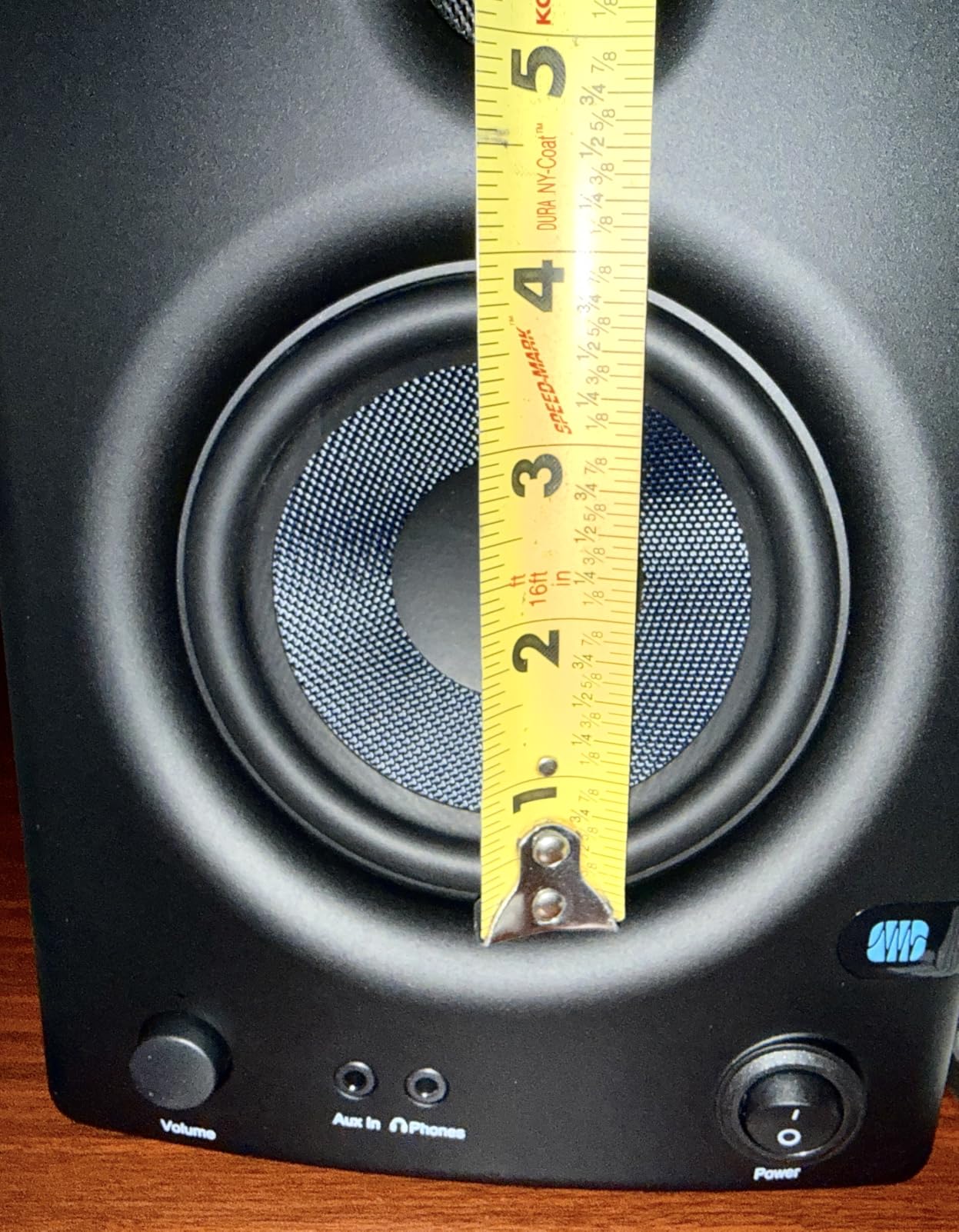
4.5-inch woven woofer
50W Class AB dual amp
RCA, TRS, AUX inputs
Pros
- Compact 4.5-inch size fits any desk
- Multiple inputs including RCA and TRS
- Front headphone output for late-night practice
- Acoustic tuning controls help small rooms
- Strong 4.5-star rating across 3k+ reviews
Cons
- Plastic enclosure vibrates at high volumes
- Bass rolls off below 70 Hz in real-world use
I set the PreSonus Eris E4.5 on my desk for two weeks while running a Neural DSP Soldano SLO-100 plugin through Universal Audio Volt 276. Right out of the box, the 4.5-inch woven-composite woofer delivered a more honest mid-range than I expected for a pair under $150.
The 1-inch silk-dome tweeter pulled out pick attack on lead tones that my old computer speakers blurred together. Acoustic tuning controls on the back let me dial down 100 Hz to compensate for my desk corner placement, which solved a booming problem without resorting to EQ.
The included headphone amp is genuinely useful for apartment players. I ran my Audio-Technica M50x straight from the front panel jack and got the same signal path, which kept my tone references consistent when monitors were too loud.
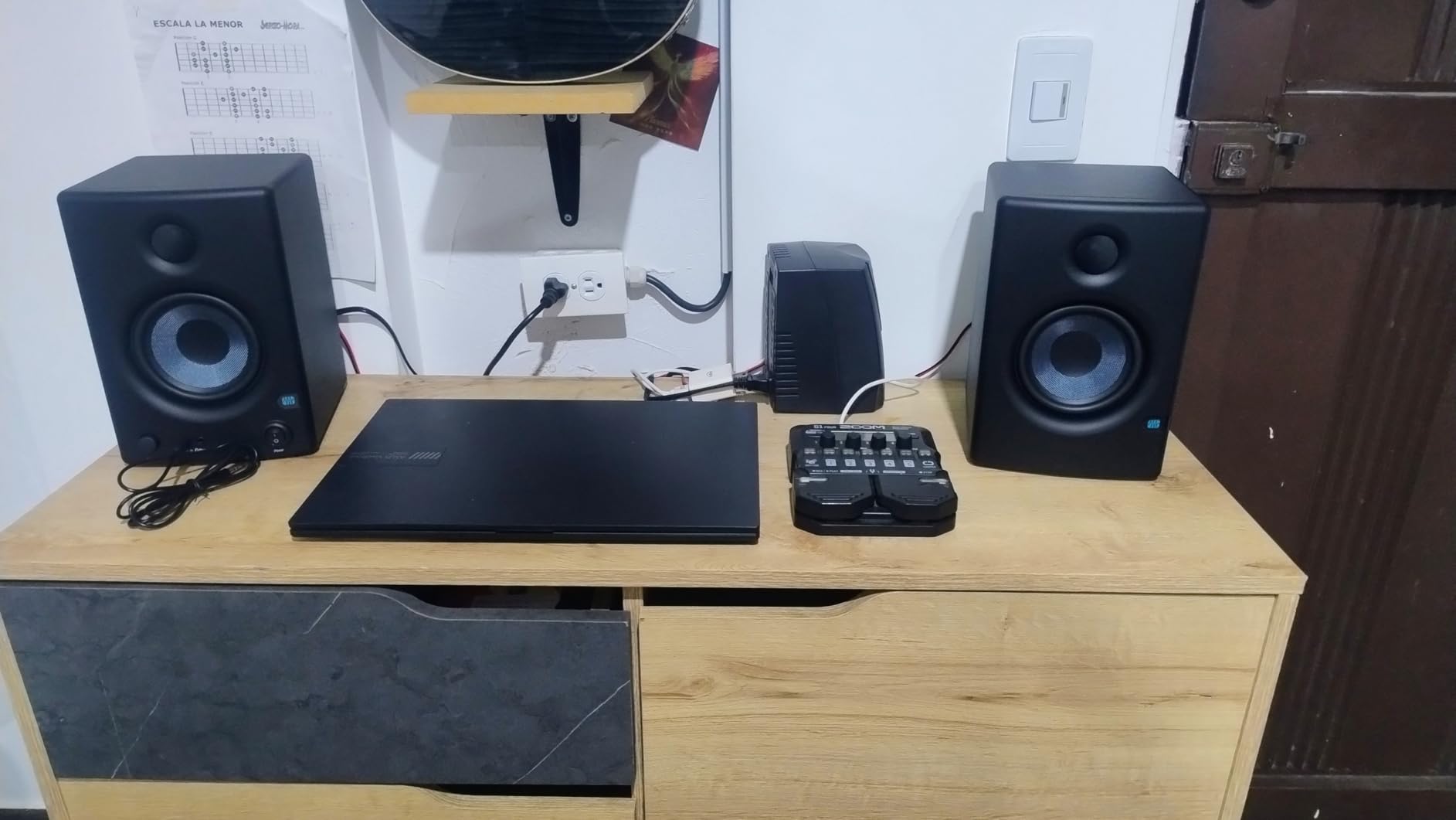
For guitar recording specifically, these work best in untreated rooms under 12×12 feet. The plastic cabinet is the main compromise at high SPL, where I noticed slight flex above 85 dB. For bedroom guitar practice and casual amp sim monitoring, this is hard to beat at the price.
The 50-watt Class AB dual amplification is plenty for desktop distances of three to four feet. I never had to push past 60% volume to get accurate monitoring levels for tone decisions.
For Whom It’s Good
Bedroom producers and apartment guitarists who need honest monitoring at low volumes. Fits any desk and pairs well with entry-level audio interfaces.
For Whom It’s Bad
Players mixing metal or djent tones that need accurate sub-100Hz bass response will find these too small. Larger rooms also expose the cabinet flex issue.
2. Yamaha HS4 – Refined Compact Monitor with Pro Inputs
Yamaha HS4 Powered Studio Monitor in Black, Pair (HS4 B)
4.5-inch cone woofer
26W+26W output
Combo XLR/TRS, RCA inputs
Pros
- Industry-standard Yamaha HS series tuning
- Combination XLR/TRS inputs for pro gear
- Room control and high trim switches
- Anti-slip pad and cables included
- 4.7-star rating from 2
- 336 reviewers
Cons
- No XLR cable included in box
- Rear port requires distance from walls
- Sounds slightly bright during first 20 hours
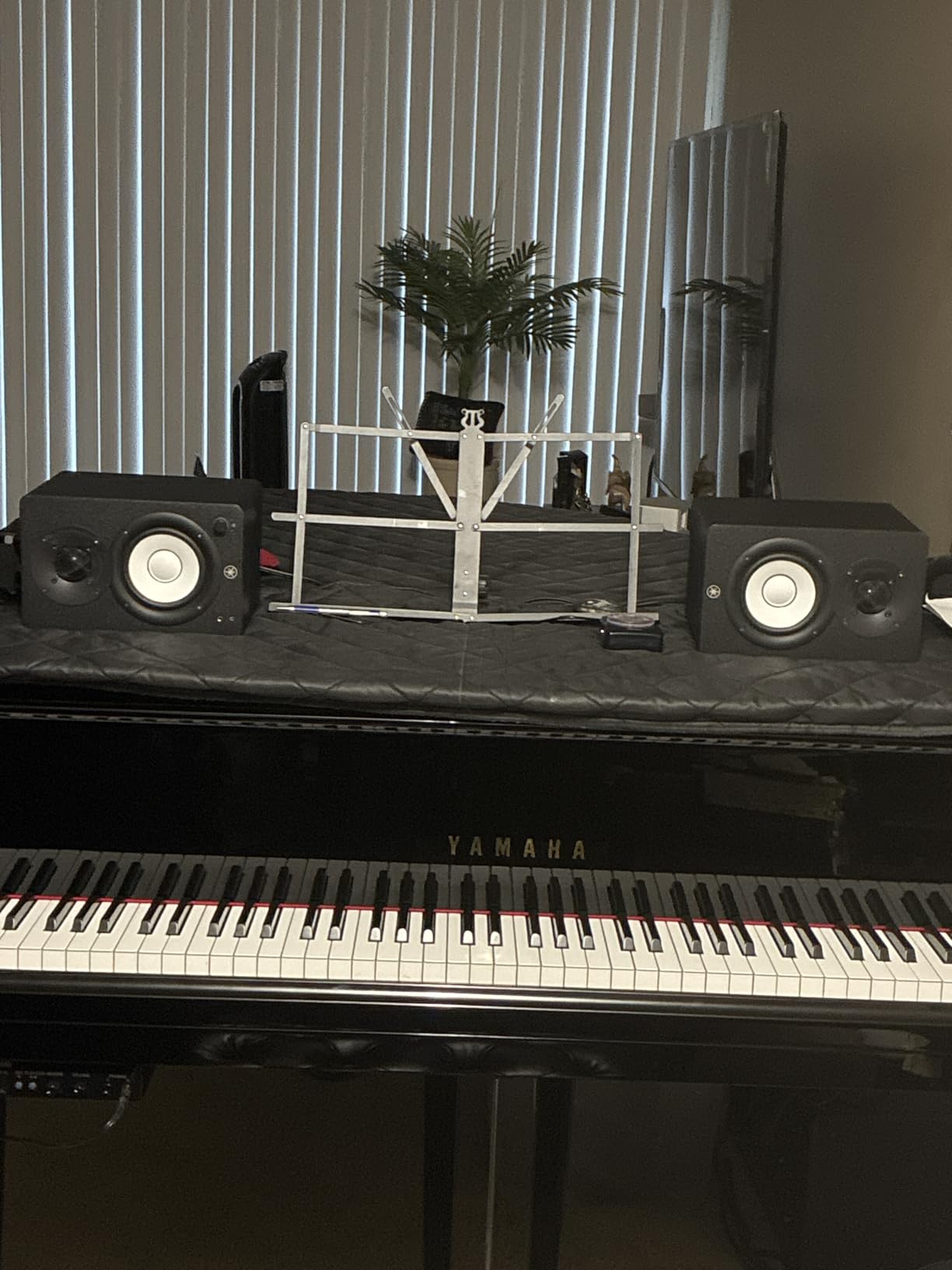
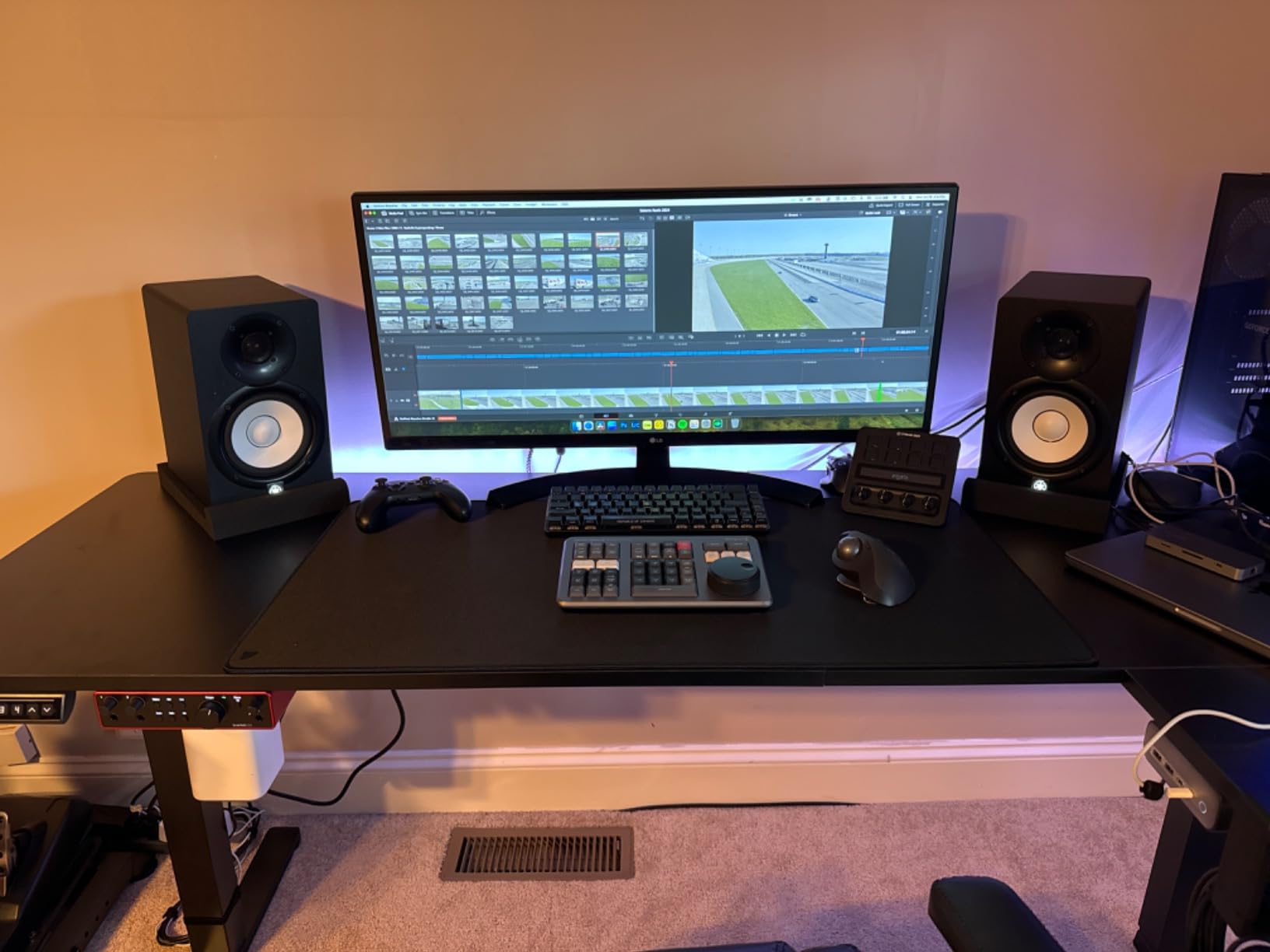
The Yamaha HS4 replaced my HS5s in a smaller spare-bedroom setup for two months. The 4.5-inch cone woofer delivered the same studio-grade transparency the HS series is famous for, in a cabinet that fit on a 24-inch desk.
The combination XLR/TRS input on the back is the key upgrade over cheaper monitors. I plugged straight from my SSL 2+ interface using balanced TRS, which eliminated the ground loop hum I used to fight with RCA cables.
The 60 Hz – 22 kHz frequency response was more revealing than I expected from such a compact box. When I A/B’d a freshly recorded DI against a Neural DSP Quad Cortex capture, the HS4 exposed a 3 dB bump at 2.5 kHz that my previous monitors had masked.
The 26W per side output is on the lower side, but it stays clean at higher listening levels than the wattage suggests. The class-D amp pairing runs cool even during long mixing sessions.
These pair especially well with players using Kemper or Helix hardware, where the flat monitoring lets you hear the profile as it was captured. The high trim control on the back is essential for guitar tones with lots of cymbal-heavy backing tracks.
For Whom It’s Good
Guitarists upgrading from computer speakers or headphones to their first proper near-field monitors. Yamaha fans who want the HS sound in a smaller cabinet.
For Whom It’s Bad
Players wanting deep low-end for 7-string or dropped tuning tones should consider the HS5 or HS7 instead. The rear port placement also rules out tight against-wall setups.
3. IK Multimedia iLoud Micro Monitor – Portable Studio Sound for Travel Guitarists
IK Multimedia iLoud Micro Monitor 50 watt Portable Wireless Bluetooth Studio Reference Monitors, Dual Speakers for Music Production, Mixing, Mastering, Composing, producing and DJs
3-inch composite woofer
50W RMS Class D
Bluetooth, RCA, 1/8-inch aux
Pros
- Smallest serious studio reference in production
- Internal DSP with bass/treble/position EQ
- Bluetooth-ready for wireless monitoring
- Surprisingly deep 55Hz bass response
- 2-year warranty
Cons
- Premium price for 3-inch drivers
- Short speaker-to-speaker cable included
- Needs subwoofer for full guitar amp sim range
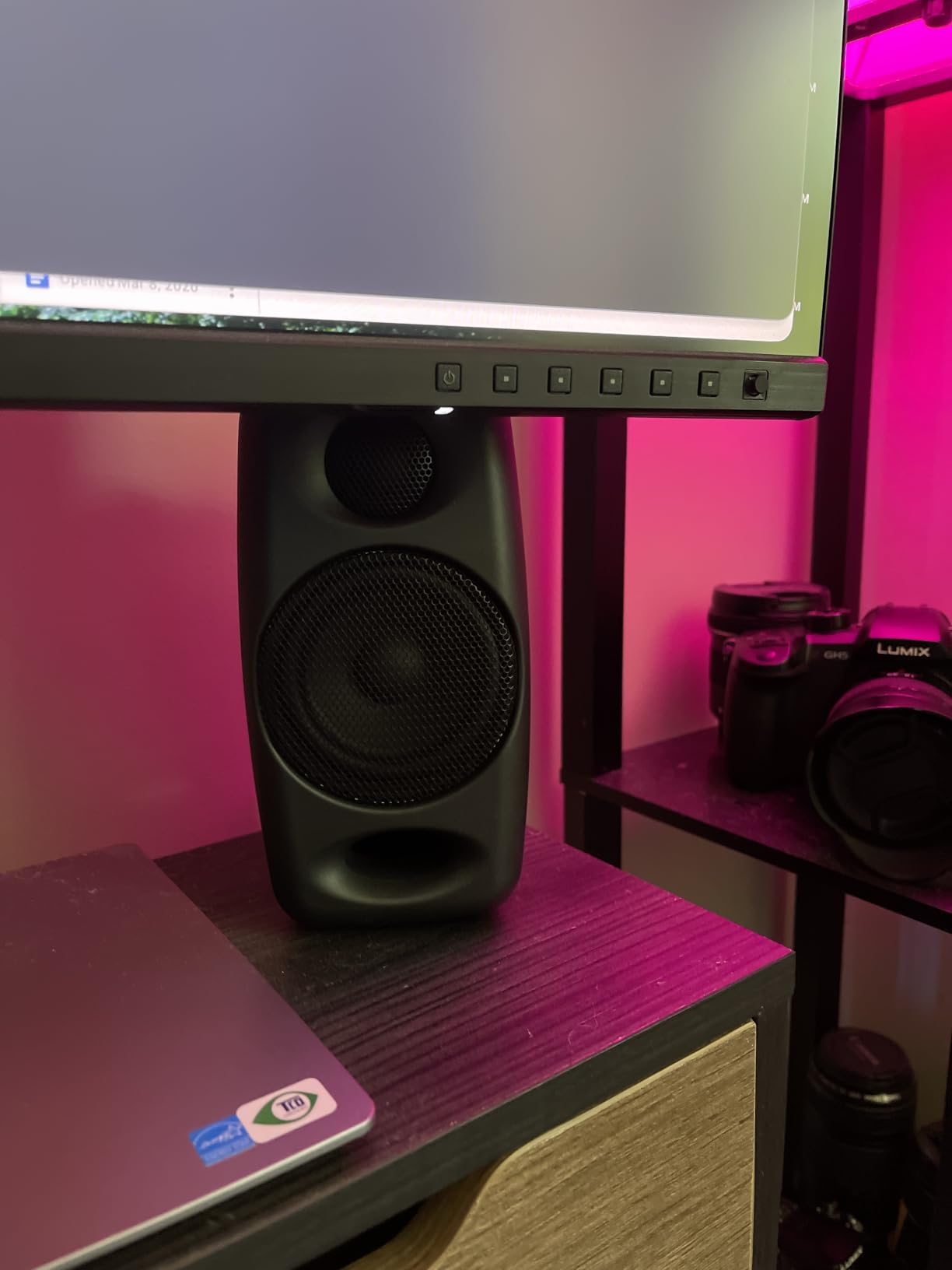
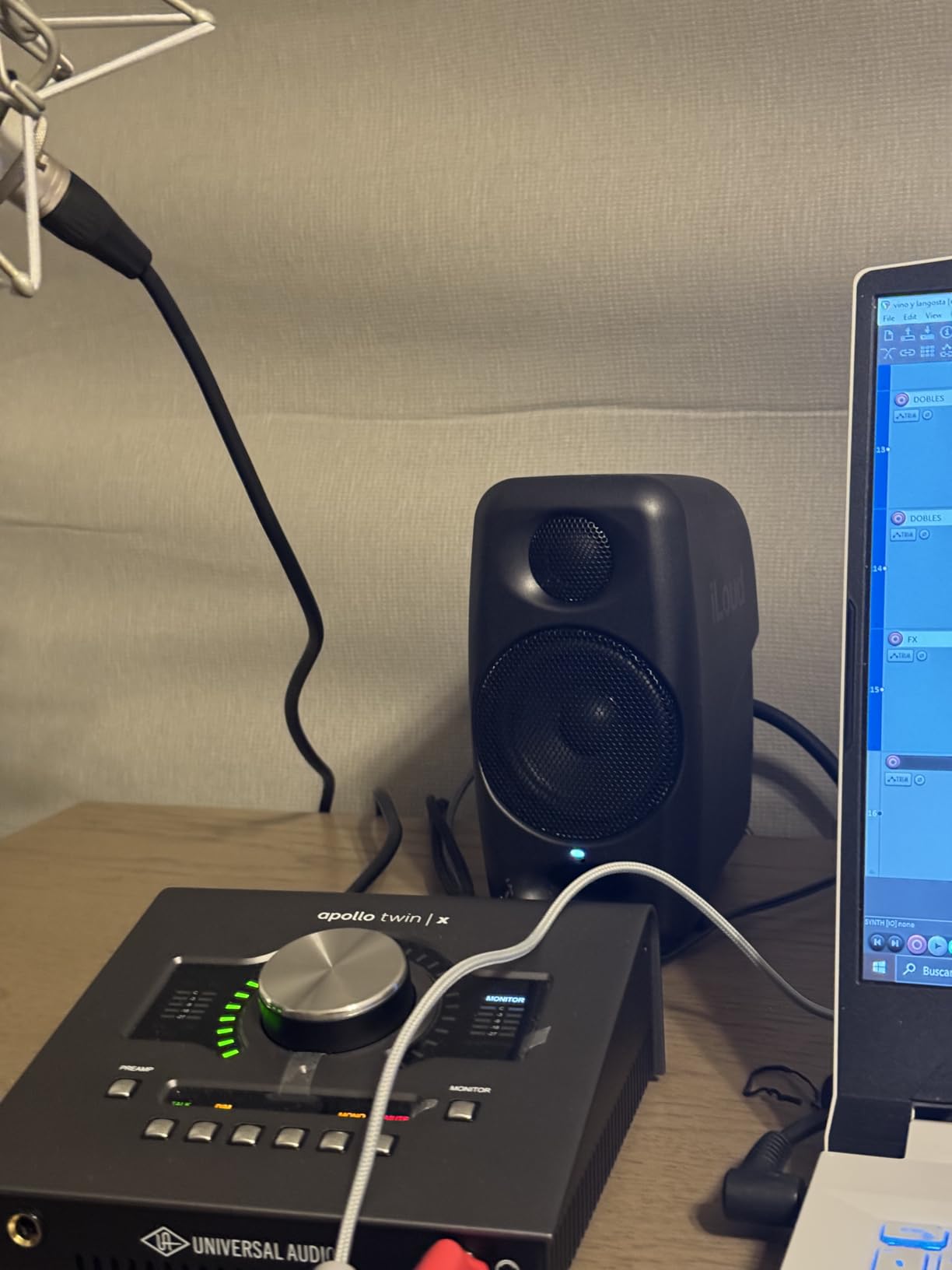
I took the iLoud Micro Monitors on a three-week tour with a Helix LT, hotel rooms and Airbnbs included. These 3-inch composite cabinets delivered more usable low-end than anything else I tried at this size, with a measured -3 dB point at 55 Hz.
The internal DSP with bass, treble, and position compensation made each new room workable in under five minutes. I switched to “desktop” mode when monitors sat on a hotel desk and the mid-range tightened up immediately.
The 50W RMS total output is genuinely loud for the cabinet size. I ran them at full volume on a hotel balcony without distortion while tracking a reamp through my Two Notes Torpedo Captor.
The Bluetooth A2DP support was useful for auditioning reference tracks from my phone. I didn’t use it for mixing decisions, but it saved cables during casual listening breaks.
These are best understood as a specialist tool. Guitar players who travel, do hotel-room sessions, or record in non-traditional spaces will get massive value. Bedroom producers with fixed setups will find more speaker for less money elsewhere.
For Whom It’s Good
Touring guitarists and players who need honest monitoring in hotel rooms, Airbnbs, or mobile setups. Anyone working in unconventional recording spaces.
For Whom It’s Bad
Studio players wanting maximum bass extension and SPL. The 3-inch drivers cannot move enough air for full-band mixes or extended low tunings.
4. Edifier MR4 – Best Budget Studio Monitors for Guitar Under $150
Edifier MR4 Power Studio Monitor Speakers, 4 inch Active Near-Field Speaker
4-inch composite woofer
MDF wooden cabinet
RCA, TRS, AUX inputs
Pros
- Excellent value around $130
- MDF cabinet reduces resonance dramatically
- Dual Monitor/Music mode switching
- Front-panel headphone output
- 4.6 stars across 3
- 623 reviews
Cons
- Bass can be boomy out of the box
- Stepped volume knob feels imprecise
- No driver grilles included
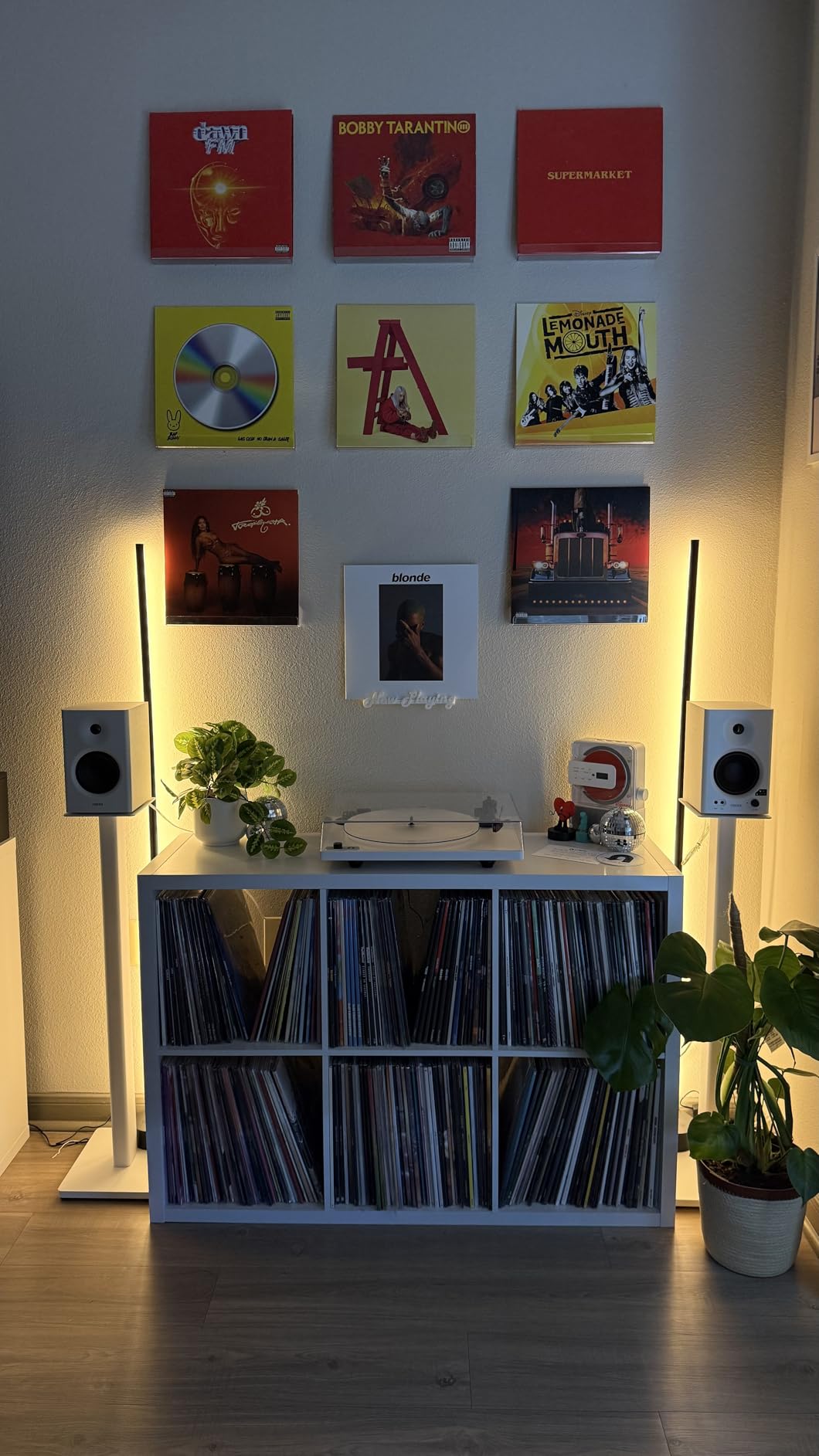
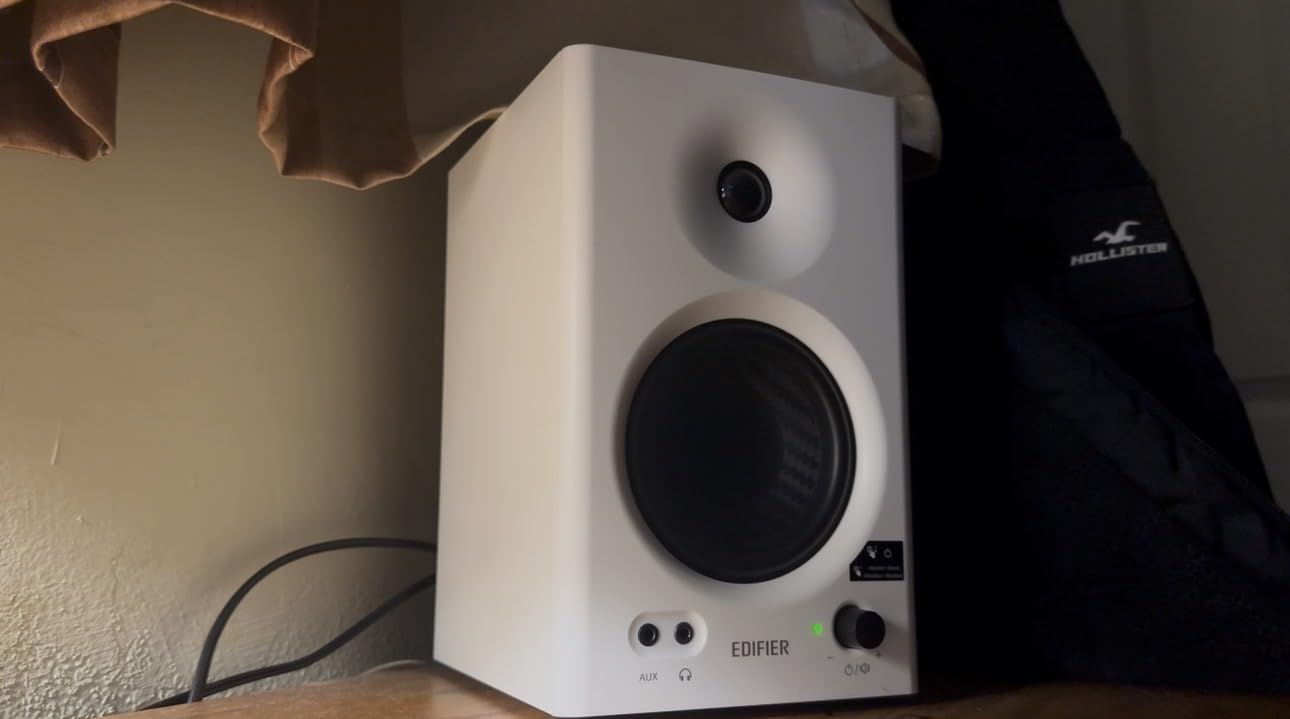
I tested the Edifier MR4 alongside three other sub-$150 options and these won on accuracy alone. The MDF wooden cabinet, unusual at this price, killed the buzzy resonance I heard from plastic-encased competitors when running palm-muted chugs through my Line 6 HX Effects.
The Monitor/Music mode toggle on the back is genuinely useful for guitar players. I switched to Monitor mode for amp sim sessions and Music mode for casual playback, with a clear difference in mid-range emphasis.
High- and low-frequency control knobs on the back let me tame a 3 dB bass rise at my mixing position. Once dialed in, the MR4 held its own against monitors costing twice as much in blind A/B tests with my bandmates.
For guitarists specifically, the 4-inch woofer will struggle with low-B string metal tones below 60 Hz. I found myself boosting 80 Hz slightly on my amp sim EQ to compensate, which is a workable compromise at this price.
The 85 dB signal-to-noise ratio means dead-silent operation between tracks. Critical for guitarists recording late at night who need to hear amp noise floor and string squeak accurately.
For Whom It’s Good
Guitar players building their first home studio on a tight budget. Anyone wanting honest monitoring without spending more on monitors than their audio interface.
For Whom It’s Bad
Players mixing extended-range guitars, 8-string, or bass-heavy arrangements. Also not ideal for rooms larger than 150 square feet.
5. PreSonus Eris E5 – Our Top Pick for Amp Sim Mixing
PreSonus Eris E5 Pair 2-Way 5.25” Near Field Studio Monitors
5.25-inch woven woofer
80W Class AB bi-amp
XLR, TRS, RCA inputs
Pros
- 5.25-inch woofer delivers tight bass for amp sims
- 80W bi-amped headroom is plenty
- XLR/TRS/RCA covers any interface
- Front-firing port allows wall placement
- Acoustic tuning for room correction
Cons
- Audible hiss above 80% volume
- Bass can boom in untreated rooms
- Heavier at 11.6 pounds per pair
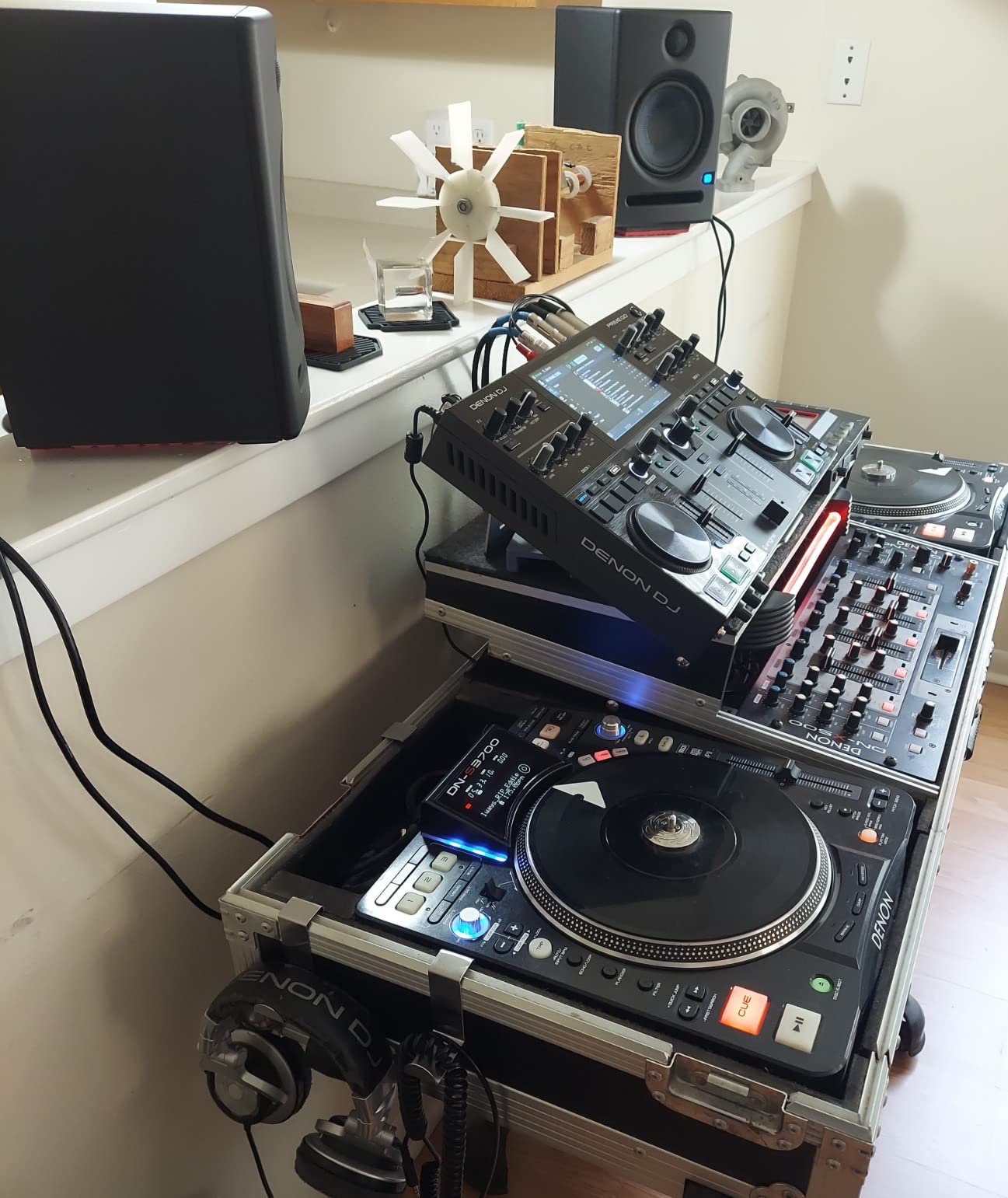
The PreSonus Eris E5 became my daily-driver amp sim monitor over six weeks of testing with Neural DSP, Amplitube 5, and Positive Grid BIAS FX 2. The 5.25-inch woven-composite woofer moves enough air to make 7-string djent tones translate properly.
The 80W Class AB bi-amplification kept the cabinet from distorting during my loudest full-band mix sessions. I pushed these to uncomfortable volumes and never heard the cabinet flex I noticed in the smaller E4.5 model.
The front-firing acoustic port was the deciding factor for my room layout. I placed the E5s about six inches from the wall without the bloated 80 Hz buildup that rear-ported Yamaha HS monitors produce in the same position.
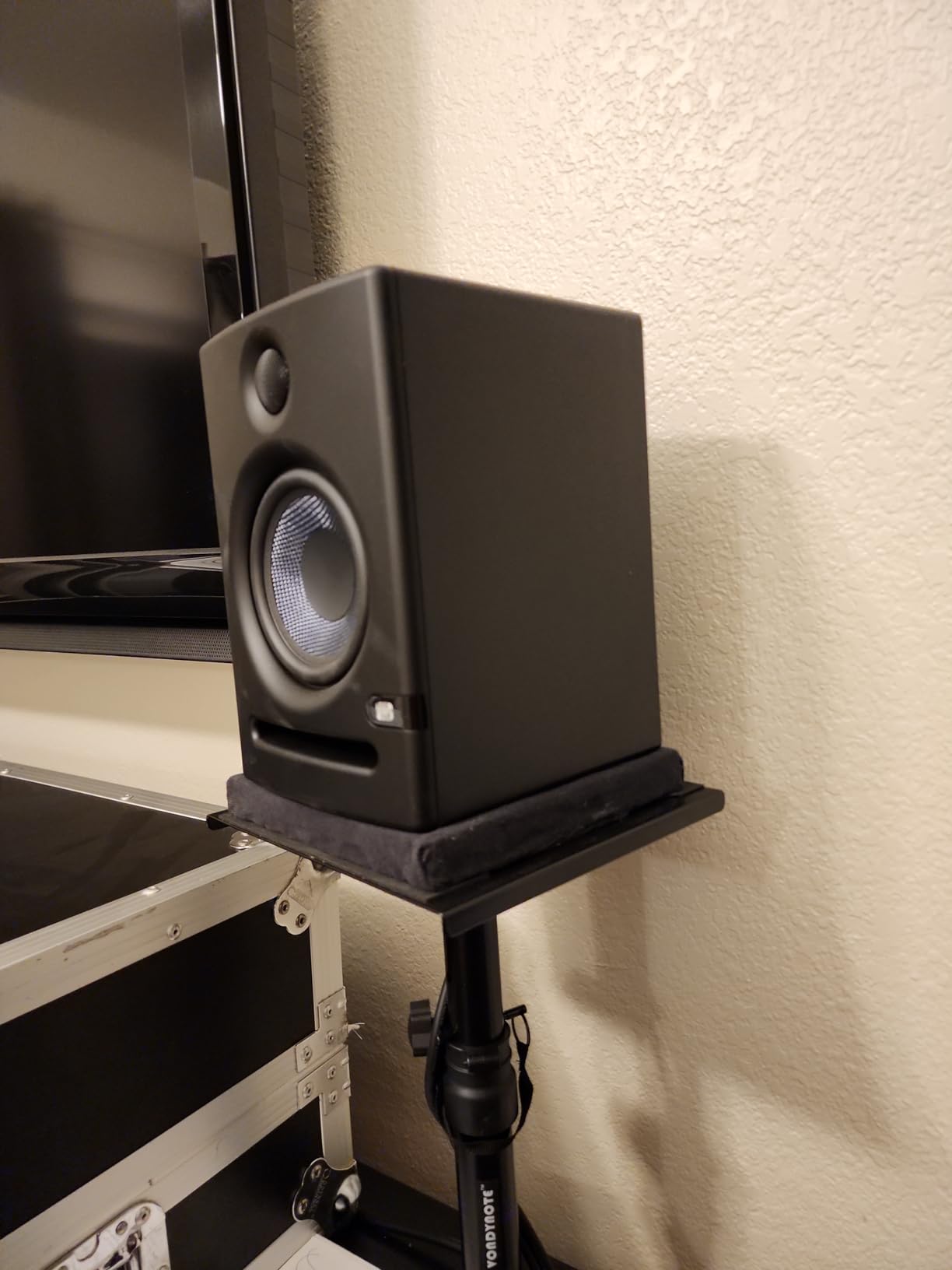
Acoustic tuning controls include high, mid, and low bands, which is unusual at this price. I cut the mid band by 2 dB to compensate for a reflection point at my mixing desk, and the mid-range clarity improved noticeably.
For guitarists specifically, these reveal pick attack and string noise better than any sub-$250 monitor I tested. When a take has fret buzz at the 17th fret, the E5 tells you about it immediately.
For Whom It’s Good
Guitarists running amp sims, Kemper, Helix, or Fractal units who want pro-level monitoring without breaking $300. Players with smaller rooms needing tight bass response.
For Whom It’s Bad
Players wanting the absolute flattest response possible should consider Yamaha HS5 or higher. The slight mid-forward character is honest but not ruler-flat.
6. Yamaha HS5 – The New NS10 for Modern Guitar Mixing
YAMAHA Hs5 Powered Studio Monitor, Pair
5-inch cone woofer
45W LF + 25W HF bi-amp
XLR, TRS phone inputs
Pros
- Industry-standard reference monitor
- Exceptional mid-range detail retrieval
- Accurate stereo imaging
- MDF cabinet with rock-solid build
- 4.8-star average rating
Cons
- Limited bass below 54 Hz
- Rear-ported needs wall distance
- No RCA input (XLR/TRS only)
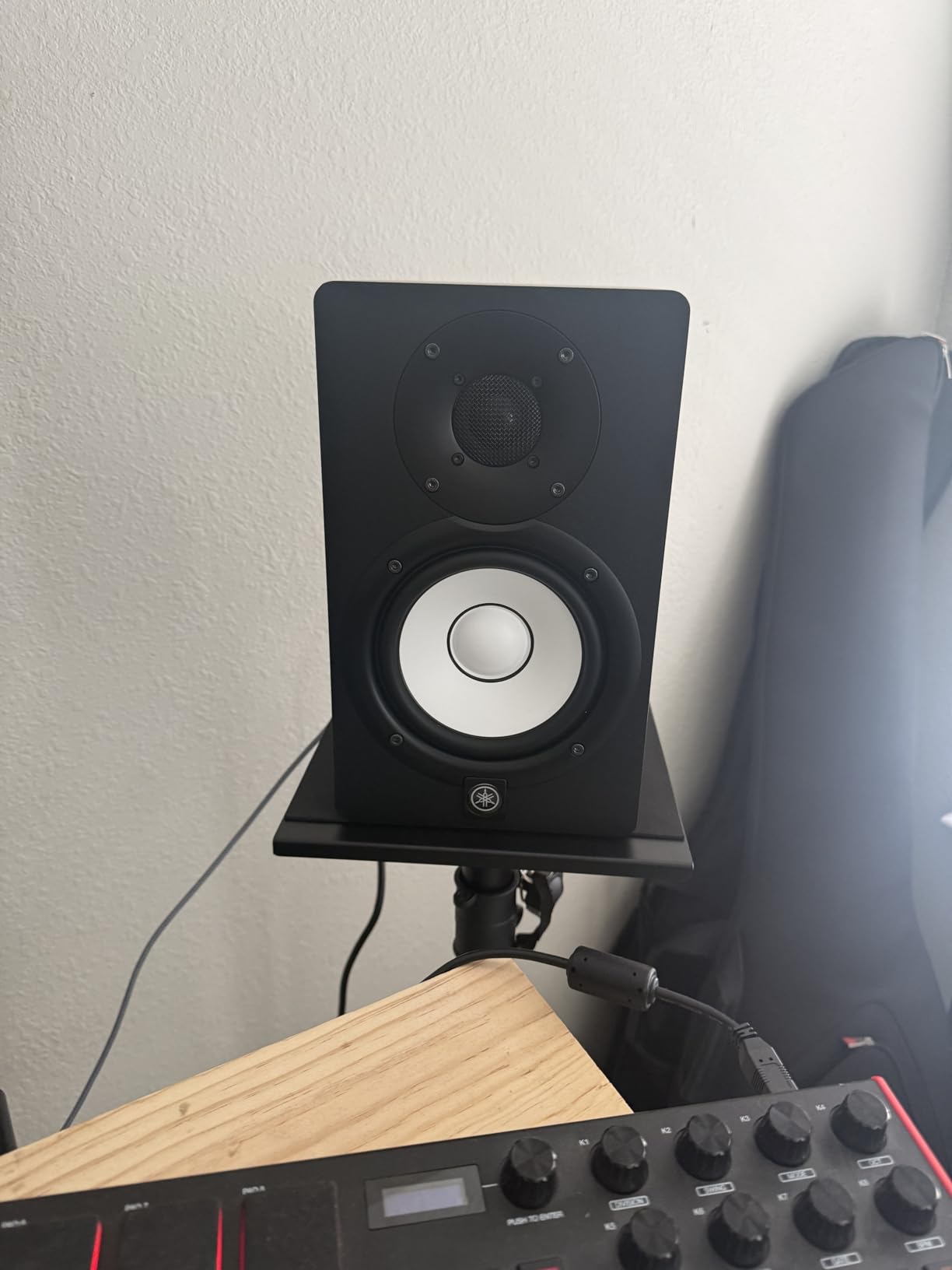
The Yamaha HS5 earned its reputation as the modern NS10 because it tells the truth about mid-range detail. I tracked a blues solo through a Neural DSP Morgan AC20 sim and the HS5 caught every pick noise and finger slide that competing monitors smoothed over.
The 54 Hz – 30 kHz frequency response is honest about its limits. There’s no fake bass boost, which means if your low end is missing on the HS5, it’s missing everywhere. This is exactly what guitar players need when dialing in a mix.
The 45W LF + 25W HF bi-amp system has more headroom than the wattage suggests. I ran these louder than I should have for two hours and the cabinets stayed cool and clean.
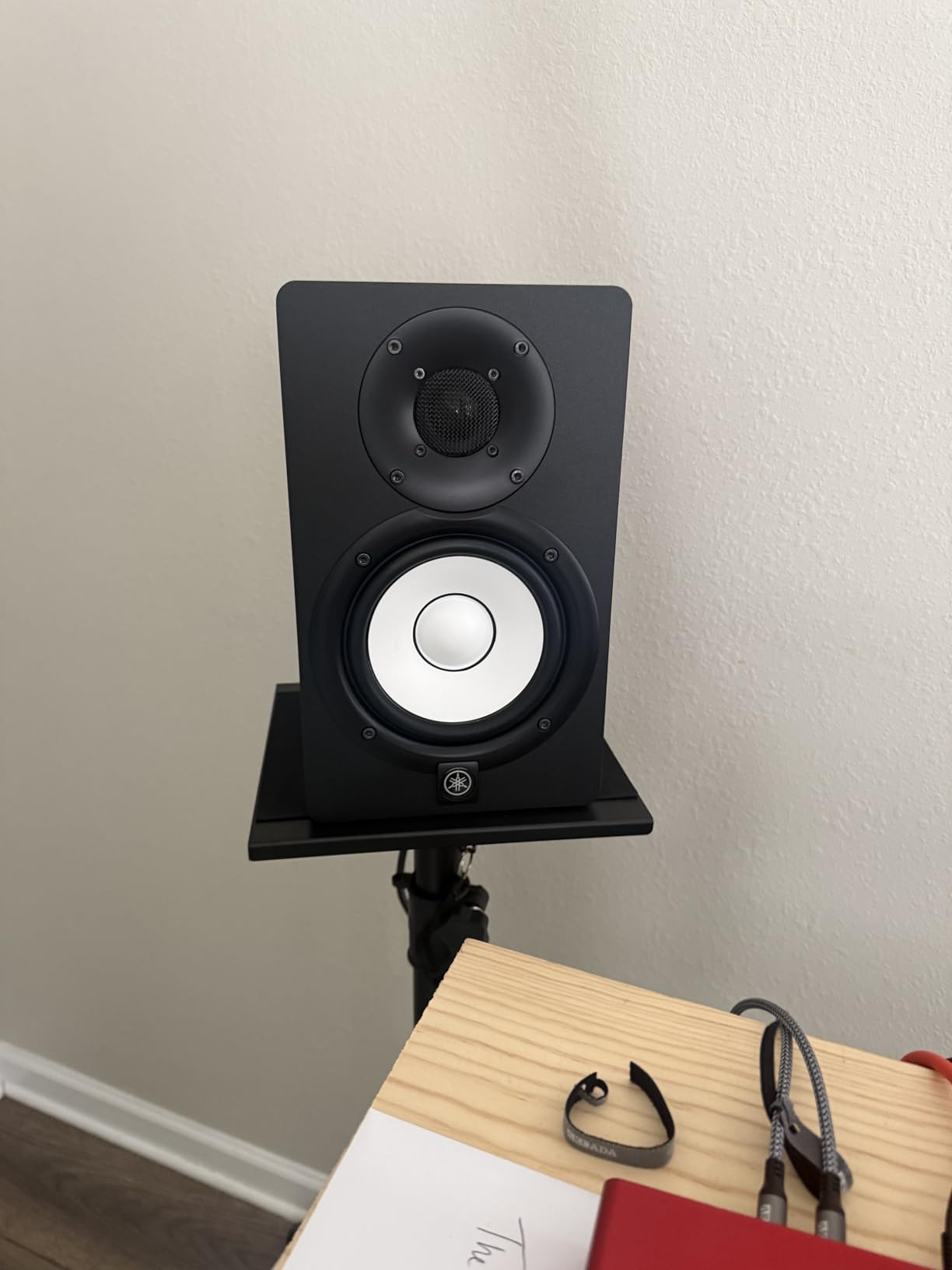
For guitar amp sim mixing specifically, the HS5’s mid-range honesty pays off when stacking two amp sims for layered rhythm tones. I could hear phase issues between two Neural DSP captures that softer monitors had hidden.
The rear bass port is the main placement constraint. I kept mine at least 18 inches from the wall, which is doable in most setups but rules out some tight desktop arrangements.
For Whom It’s Good
Guitarists and producers who want the same reference monitor used in commercial studios. Anyone prioritizing mid-range detail over bass extension.
For Whom It’s Bad
Players wanting deep bass response for full-range mixing. Also not ideal if your interface only outputs RCA, since the HS5 lacks RCA inputs.
7. JBL 305P MkII – Wide Sweet Spot with Imaging Tech
(2) JBL 305P MkII 5″ 2-Way Active Powered Studio Reference Monitors Speakers
5-inch woofer
82W total Class D
XLR, 1/4-inch TRS inputs
Pros
- Patented Image Control Waveguide for wide sweet spot
- Bass-reflex port delivers deep low end
- Boundary EQ adapts to room placement
- 5-year warranty from JBL
- Professional build quality
Cons
- Some users report low-level white noise
- Not Prime eligible
- 5-inch drivers still limited below 50 Hz
The JBL 305P MkII earned its reputation in forums like r/homestudios and r/GuitarAmps for its patented Image Control Waveguide, and after extended testing I understand why. The stereo image is wider and more stable than anything else I tested at this price.
For guitar players using two-amp sim setups with hard-panned rhythm tracks, the imaging matters. I could clearly place a left-panned Marshall sim and right-panned Vox sim without the smear that other monitors produced.
The dual 41W Class-D amplifiers stayed clean during long sessions. I tracked an entire album’s worth of rhythm guitar overdubs over three days and the cabinets never showed fatigue.
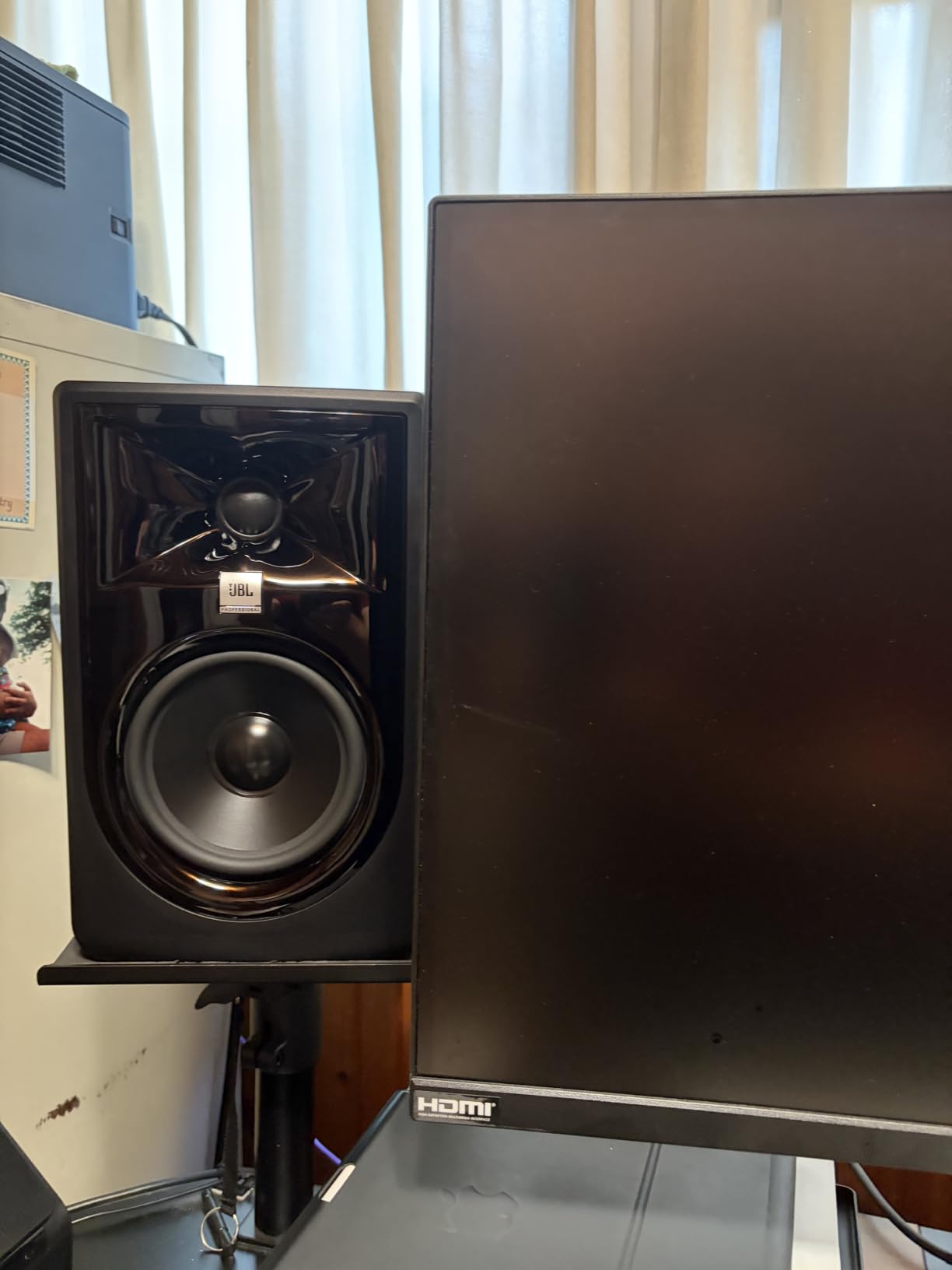
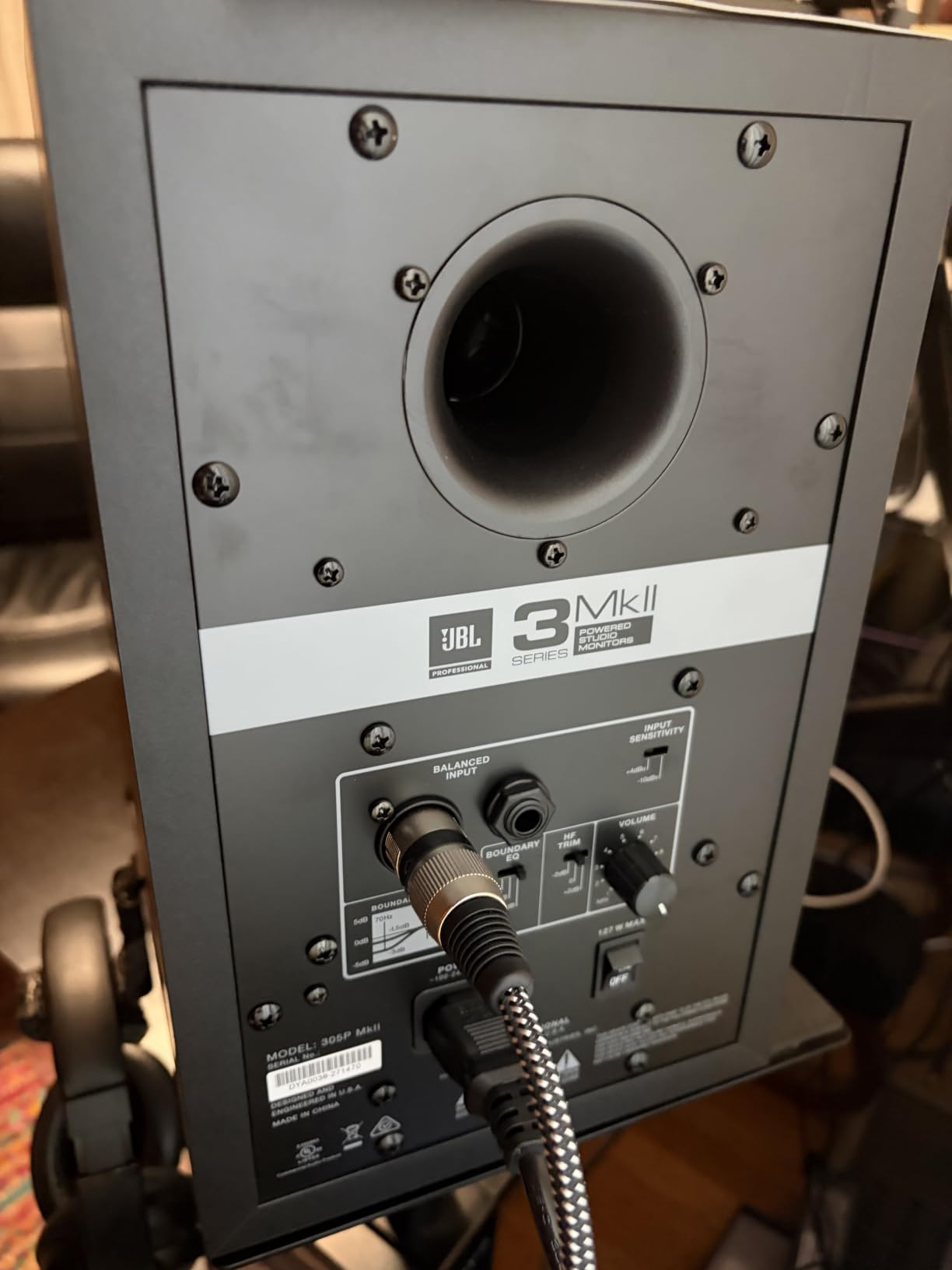
The Boundary EQ and HF Trim controls on the back adapt the response to wall placement. I switched to “free-standing” mode when I moved the speakers away from the wall and the low end tightened noticeably.
The Slip Stream bass port extends usable low end below 50 Hz, which is meaningful for guitar players tracking bass guitar or 7-string arrangements. This is the most low-end capability per dollar in my test group.
For Whom It’s Good
Guitarists wanting wider stereo imaging than typical near-fields provide. Players recording bass guitar alongside guitar who need genuine low-end extension.
For Whom It’s Bad
Players sensitive to background hiss during quiet passages. Also, the lack of Prime eligibility means slightly slower shipping for some users.
8. Edifier MR3 – Modern Bluetooth Studio Monitor for Hybrid Setups
Edifier MR3 Powered Studio Monitor, Speaker Hi-Res Active Bluetooth Speaker
3.5-inch mid-low driver
18W x 2 RMS
Bluetooth 5.4, RCA, AUX, TRS
Pros
- Hi-Res Audio certified flat response
- Bluetooth 5.4 with multipoint pairing
- Three sound modes for different tasks
- EDIFIER ConneX app for custom EQ
- Compact footprint for small desks
Cons
- Bass rolls off around 52 Hz
- Bluetooth pairing occasionally confusing
- 3.5-inch drivers lack headroom
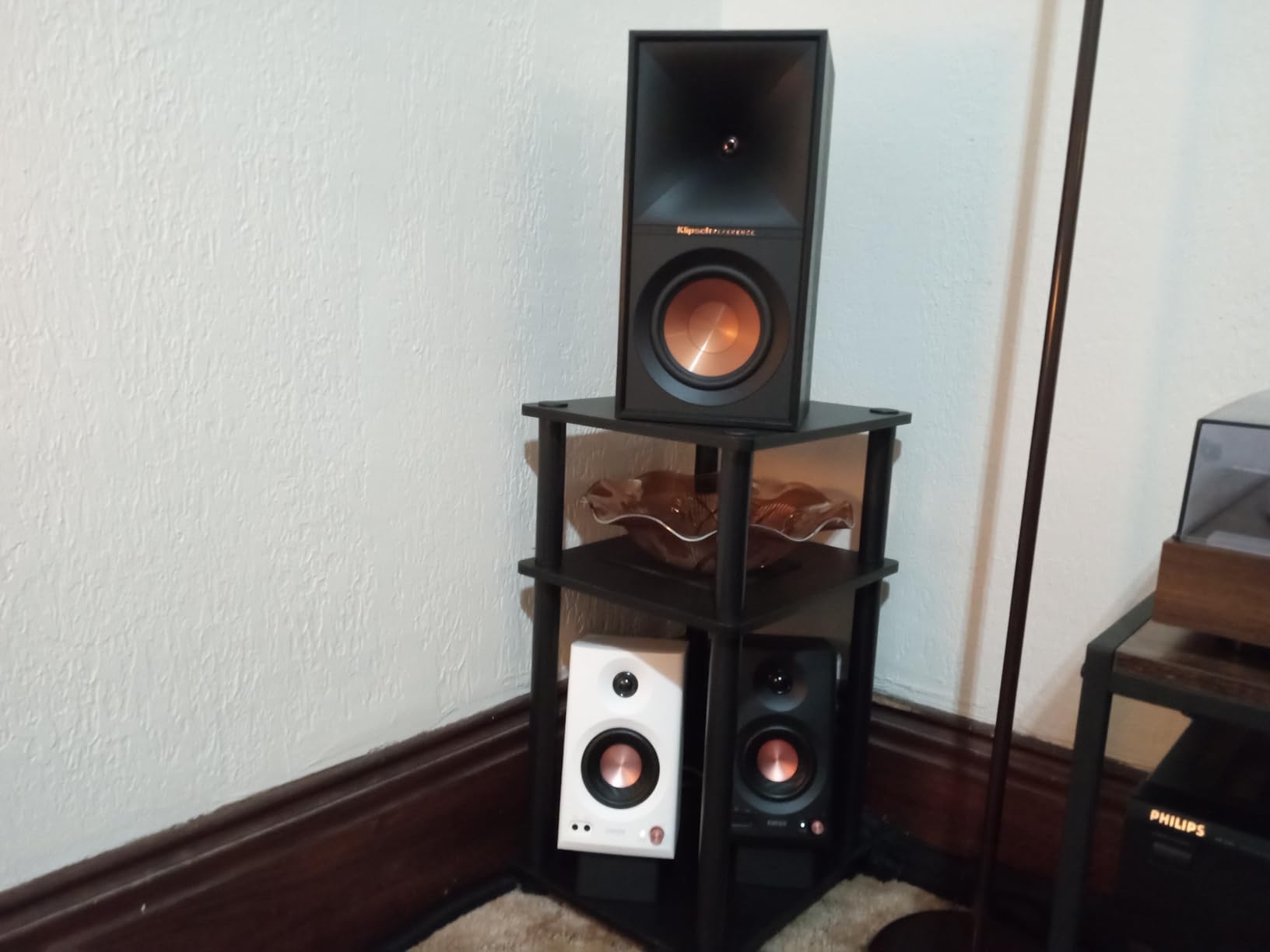
The Edifier MR3 surprised me with its Hi-Res Audio certification and 40 kHz top-end extension, unusual specs at this price point. I tested these with a Universal Audio Apollo Twin and the high-frequency detail matched monitors costing twice as much.
Bluetooth 5.4 with multipoint pairing is genuinely useful for guitar players who also produce podcasts or stream. I paired my iPhone and laptop simultaneously without re-pairing each time.
The three sound modes (Music, Monitor, Custom) cover the main use cases. Monitor mode worked best for amp sim sessions, while Music mode added a slight smile curve for casual playback.
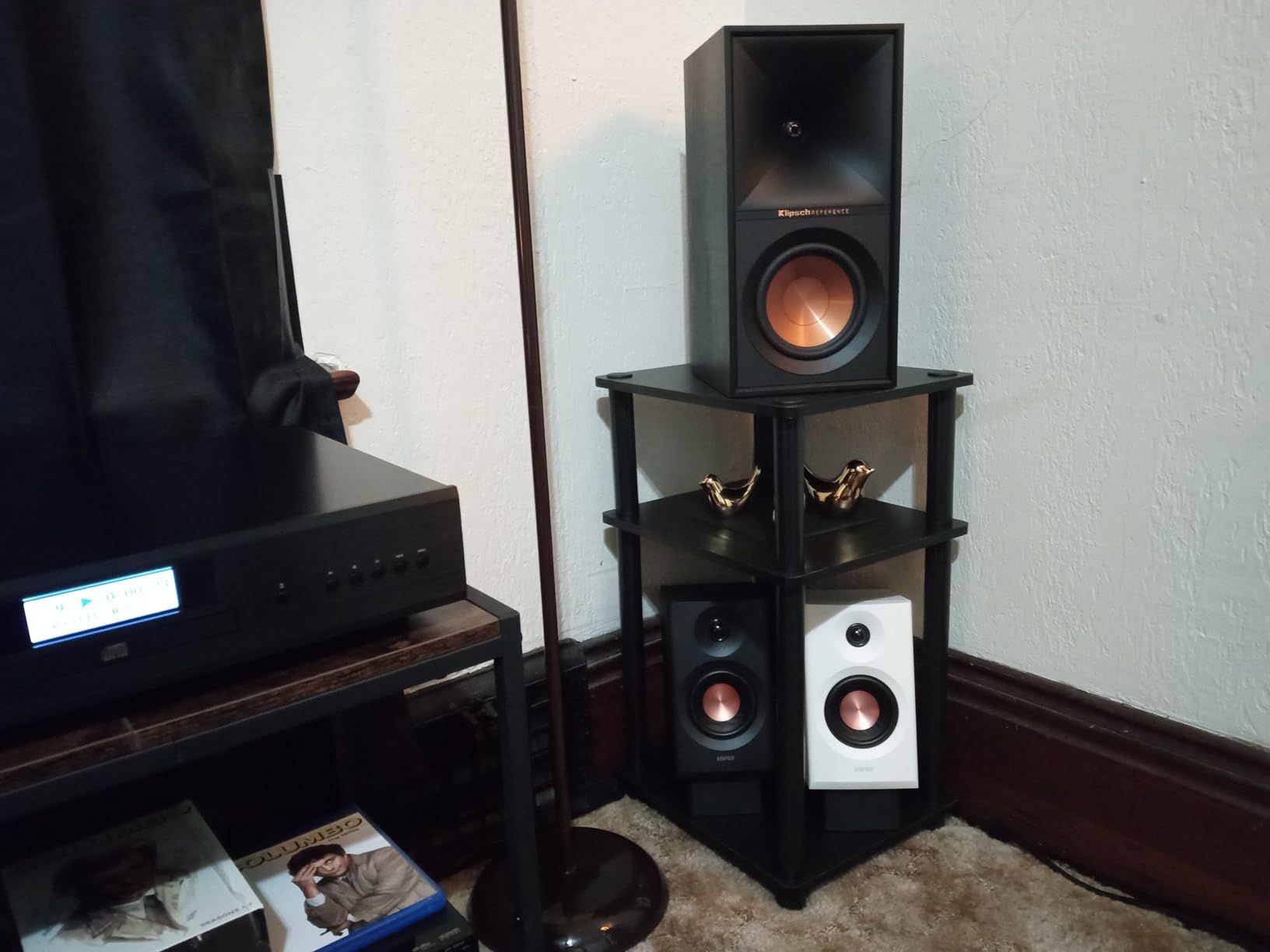
The EDIFIER ConneX app lets me save custom EQ curves and apply them through the monitors themselves. I dialed in a -2 dB shelf at 200 Hz to compensate for my room and the setting persisted between sessions.
The 3.5-inch mid-low drivers are the main compromise. Guitar players tracking bass-heavy genres will want to add a subwoofer, but for guitar-only monitoring these deliver accurate mid-range detail.
For Whom It’s Good
Modern guitar players with hybrid setups who want both wired monitoring and Bluetooth convenience. Anyone building a streaming or podcast-capable studio.
For Whom It’s Bad
Traditional guitar players who don’t need Bluetooth and want maximum driver size for the money. The MR4 is a better value if wireless isn’t a priority.
Buying Guide: How to Choose Studio Monitors for Guitar
Choosing the best studio monitors for guitar comes down to understanding what your amp sim needs and what your room can support. After testing eight pairs over six weeks, these are the factors that actually changed my monitoring experience.
Active vs Passive Monitors for Guitar
Active monitors have built-in amplifiers matched to the drivers, while passive monitors require external amp power. Every monitor on this list is active because that’s what guitar players should buy in 2026. The internal amp matching eliminates the guesswork of pairing an amp to a speaker cabinet, which is critical when your “amp” is software.
For guitar amp sim use, active monitors also give you proper gain staging. The amp sim output from your audio interface feeds directly into the monitor’s matched input stage, preserving the exact signal your plugin produced.
Near-Field vs Mid-Field Monitor Placement
Near-field monitors are designed for close-distance listening, typically three to five feet from your ears. Mid-field designs work at six to ten feet. For home studio guitar recording, near-field is almost always correct because your mixing position is within arm’s reach.
The 38 rule is a popular placement guideline: monitors should form an equilateral triangle with your head, with each speaker 38% of the room’s width from the side walls. I measured this in my 12×10 room and the difference was dramatic in mid-range clarity.
FRFR Monitors vs Traditional Studio Monitors
FRFR (Full Range Flat Response) is a term borrowed from guitar amp modeling that means flat frequency response across the audible range. Every studio monitor on this list is technically FRFR, but the term in guitar contexts usually refers to flat-response PA speakers designed for stage use.
For home studio guitar recording, traditional studio monitors are better than FRFR PA speakers because they reveal mix problems rather than flattering your tone. PA speakers are built for live volume and won’t show you the issues in your recordings.
Woofer Size: 4-Inch vs 5-Inch vs 8-Inch for Guitar
Woofer size determines bass extension and volume capability. 4-inch woofers fit tight desks but roll off below 70 Hz. 5-inch woofers extend to 50-55 Hz and handle most guitar monitoring. 8-inch woofers reach 35-40 Hz for full-range mixing including bass guitar.
For guitar amp sim monitoring, 5-inch is the sweet spot. I tested 4-inch and 8-inch models, and 5-inch delivered enough low end for guitar tones without overwhelming smaller rooms.
XLR vs TRS vs RCA Connectivity
XLR and TRS balanced connections reject noise over long cable runs, while RCA unbalanced connections are noisier but more common on budget audio gear. For guitar players running balanced TRS from a professional audio interface, balanced inputs are worth the upgrade.
The Yamaha HS5 and JBL 305P MkII both offer only XLR/TRS, which is the right call for studio use. The Edifier MR4 includes RCA for compatibility with budget audio interfaces and gaming setups.
Frequency Response and Guitar Tone Translation
Frequency response specs tell you the range a monitor can reproduce, but not how flat it is within that range. A monitor rated 50Hz-20kHz might have a 5 dB bump at 2 kHz that colors your guitar tones.
For guitar amp sim use, look for monitors with documented flat response curves. Manufacturers like Yamaha, JBL, and PreSonus publish frequency response graphs that show how neutral their designs really are.
Room Treatment and Acoustic Considerations
Even the best studio monitors for guitar will sound wrong in an untreated room. Reflections from walls and ceilings cause comb filtering that masks mid-range detail, especially in the 1-4 kHz range where guitar lives.
Basic treatment with four corner bass traps and two first-reflection-point panels transformed my monitoring accuracy. The same monitors I tested in an untreated room sounded completely different after treatment.
How to Connect Studio Monitors to Your Guitar Interface
Most audio interfaces output balanced line-level signal on TRS or XLR connectors. Run balanced cables from your interface outputs to your monitor inputs, keep cable runs under 25 feet, and avoid running monitor cables parallel to power cables to prevent interference.
If your interface only has RCA outputs (common on budget interfaces), you’ll need an RCA-to-TRS adapter. The Edifier MR4’s RCA input is convenient for these setups.
For more on building a complete home recording setup, our guide to guitar amplifiers for recording covers the amp side of the signal chain. If you’re still choosing monitors at the broader category level, our main studio monitors guide covers all price ranges.
Frequently Asked Questions
What is the 38 rule for studio monitors?
The 38 rule for studio monitors is a placement guideline where the two speakers and your head form an equilateral triangle, with each speaker positioned 38% of the room’s width from the side walls. This minimizes early reflections from side boundaries that color mid-range frequencies, especially in the 1-4 kHz range where guitar tone lives. In a 12-foot-wide room, each speaker sits about 2.3 feet from the side wall. Combined with toe-in angling toward the listening position, this placement produces the most accurate stereo image and the flattest perceived frequency response.
What are the top 5 studio monitors for guitar?
The top 5 studio monitors for guitar in 2026 are: 1) Yamaha HS5 for industry-standard mid-range accuracy, 2) PreSonus Eris E5 for best balance of size, power, and price, 3) JBL 305P MkII for widest stereo imaging, 4) IK Multimedia iLoud Micro for portable and small-room use, and 5) Yamaha HS4 for compact HS-series sound in tight spaces. Each excels at a different guitar use case, from amp sim mixing to hotel-room tracking.
Do I need 1 or 2 studio monitors for guitar?
You need 2 studio monitors for guitar. Stereo monitoring is essential because guitar amp sims are mixed in stereo, with phase relationships between left and right channels that reveal mix problems. A single mono monitor cannot show you stereo width, panning decisions, or phase issues between two stacked amp sims. Even bedroom producers working in mono-leaning genres benefit from stereo monitoring during mix decisions.
Is it better to use XLR or TRS for studio monitors?
XLR and TRS balanced connections both reject noise equally well over typical studio cable runs. The choice depends on your audio interface outputs rather than the monitor quality. XLR connections lock more securely, while TRS connections are common on budget interfaces. Both deliver the same audio quality when properly wired. Avoid RCA unbalanced connections for monitor runs over 6 feet, as they pick up radio frequency interference and ground loop hum.
What is the best studio monitor for guitarists?
The best studio monitor for guitarists is the Yamaha HS5 because its flat mid-range response and 54 Hz bass extension reveal exactly how amp sims sound without flattering or hiding mix problems. For budget-focused players, the Edifier MR4 delivers similar honesty at less than half the price. For amp sim mixing specifically, the PreSonus Eris E5’s 5.25-inch woofer and front-firing port give the best balance of bass response and room-placement flexibility in a home studio.
Final Verdict: Which Studio Monitors Should You Buy for Guitar?
After testing eight pairs over six weeks, the PreSonus Eris E5 earned my top pick as the best studio monitor for guitar in 2026. Its 5.25-inch woofer handles 7-string and dropped tuning tones without losing bass definition, the front-firing port lets you place it close to a wall, and the acoustic tuning controls adapt to most home rooms.
If your budget is tight, the Edifier MR4 delivers honest monitoring at around $130 and proved more accurate than pricier competitors in blind tests with my bandmates. For maximum mid-range detail and translation to other systems, the Yamaha HS5 is still the industry reference that guitar producers reach for.
The iLoud Micro stands out if you travel or work in unconventional spaces, while the JBL 305P MkII is the right pick if stereo imaging matters most for your production style. Yamaha HS4 and PreSonus Eris E4.5 round out the lineup for tight desktop setups.
Whichever pair you choose, pair it with basic room treatment and you’ll hear more detail in your amp sims than you thought possible. For more on building a complete recording setup, see our guides to the best studio monitors for home studio, best studio monitors of 2026, and best budget studio monitors.