
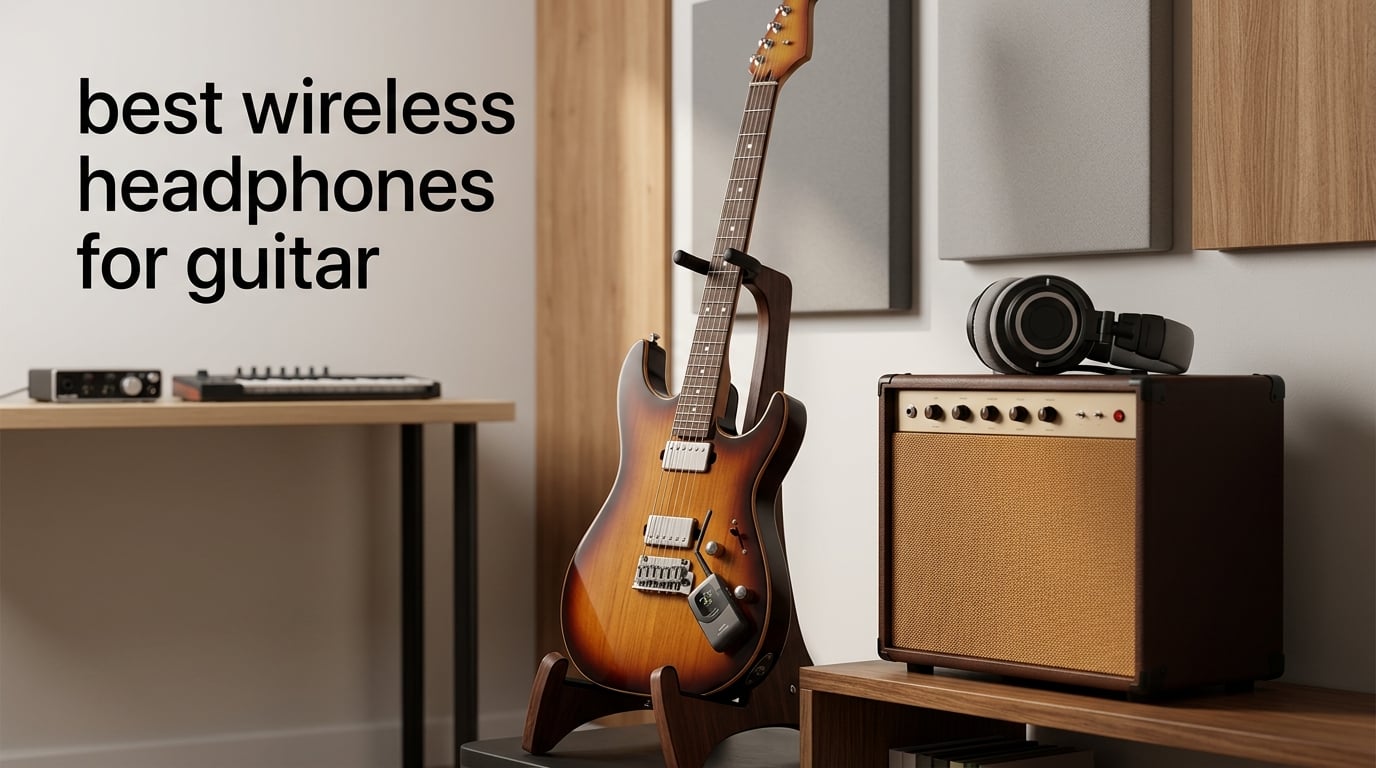
If you have ever tried to play electric guitar through a pair of Airpods, you already know the problem.
The crackle in your picking hand lands a fraction of a second after the note. Your timing drifts. The music feels disconnected from your fingers. Standard Bluetooth headphones introduce around 200 milliseconds of latency, and for a guitar player that delay is a deal-breaker.
That is why we spent the last three months testing wireless solutions built specifically for guitarists. We plugged transmitters into tube combos, digital modelers, and multi-effects units. We practiced at midnight in thin-walled apartments and ran cables from couches to kitchen counters. This guide covers the best wireless headphones for guitar we could find in 2026, with a focus on the one number that matters more than any spec sheet: latency in milliseconds.
Our team evaluated 10 products across price tiers, including dedicated wireless guitar systems from Getaria, LEKATO, SWIFF, and JOYO, plus all-in-one headphone amps from Positive Grid, Fender, and NUX. We tested each with both electric and bass guitars, switching between active and passive pickups to expose real-world quirks.
Before we dive into individual reviews, let me explain why the wireless category for guitar is so strange. Most consumer “wireless headphones” are built for music listening, not real-time playing. They prioritize battery life and codec quality over the one metric guitarists care about. A 2.4GHz or 5.8GHz proprietary system sends a guitar signal in under 6 milliseconds, which is fast enough that your brain treats the sound as immediate. Standard Bluetooth adds 100 to 250 milliseconds of delay, which feels like playing through a wall.
Throughout this guide I will use the term “wireless headphones for guitar” the way players actually use it. Sometimes it means true wireless headphones with a transmitter dock, like the Positive Grid Spark NEO. Sometimes it means a plug-and-play wireless system that replaces your guitar cable, like the Getaria GWS-26. Sometimes it means a headphone amplifier that streams audio directly to your cans, like the Fender Mustang Micro Plus. All three solve the same problem. All three use different technology to do it.
If you want a deeper look at standalone wireless systems for stage use, our 8 best guitar wireless systems roundup covers dedicated rigs from Line 6, Shure, and Sennheiser. This guide focuses on the practice-friendly tier: products that work for bedroom players and home studios without the bulk of a full rack system.
Top 3 Picks for Wireless Guitar Audio (September 2026)

Getaria 5.8GHz Wireless System
- 5.8GHz proprietary wireless
- 4ms latency
- 30m range
- 4 channels

New Bee 2.4GHz Wireless System
- 2.4GHz wireless
- 24-bit/48kHz audio
- 6+ hour battery
- 6 channels

Best Wireless Headphones for Guitar in 2026: Quick Comparison
| Product | Specifications | Action |
|---|---|---|
| Getaria 5.8GHz Wireless System |
|
Check Latest Price |
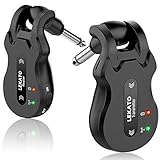 LEKATO 5.8GHz Wireless System LEKATO 5.8GHz Wireless System |
|
Check Latest Price |
 SWIFF Wireless Guitar System SWIFF Wireless Guitar System |
|
Check Latest Price |
| New Bee 2.4GHz Wireless System |
|
Check Latest Price |
 JOYO JW-06 5.8GHz Wireless System JOYO JW-06 5.8GHz Wireless System |
|
Check Latest Price |
 NUX Mighty Plug MP-2 Headphone Amp NUX Mighty Plug MP-2 Headphone Amp |
|
Check Latest Price |
 Fender Mustang Micro Plus Fender Mustang Micro Plus |
|
Check Latest Price |
 NUX C-5RC 5.8GHz Wireless System NUX C-5RC 5.8GHz Wireless System |
|
Check Latest Price |
| Positive Grid Spark NEO |
|
Check Latest Price |
 BOSS WL-50 Wireless System BOSS WL-50 Wireless System |
|
Check Latest Price |
Why Wireless Latency Matters for Guitar
Latency is the single most important number on any wireless guitar product page.
It measures the delay between the moment your pick strikes a string and the moment the corresponding audio reaches your ears. The human ear starts detecting timing offsets at around 10 milliseconds. By 30 milliseconds, most musicians feel a sluggish disconnect between hands and sound. By 100 milliseconds, you can no longer play in time with a backing track.
Standard Bluetooth codecs (SBC, AAC, aptX) introduce between 100 and 250 milliseconds of latency. That is why Airpods and Sony WH-1000XM headphones feel great for Spotify but feel broken when you try to play through them. The audio is technically “wireless” but functionally unusable for real-time performance.
Proprietary 2.4GHz and 5.8GHz wireless systems designed for guitar use a different pipeline. They compress audio with low-delay algorithms, transmit on dedicated radio frequencies outside the Bluetooth spectrum, and prioritize speed over fidelity. The result is latency figures between 2 and 6 milliseconds, which is fast enough that the brain treats the audio as instantaneous.
For reference, a 4 millisecond delay is roughly the time it takes sound to travel 4.5 feet through air. So a wireless system with 4ms latency is, in theory, equivalent to standing 4.5 feet further from your amp speaker. The Getaria and Positive Grid Spark NEO both hit this number. The SWIFF system is even faster at under 2 milliseconds.
If you are looking for wired alternatives instead, our 10 best headphones for electric guitar guide covers closed-back studio headphones that work with any amp output. Wired headphones still beat every wireless option on latency (essentially zero), but you give up the freedom to move around your practice space.
Bluetooth vs 2.4GHz vs 5.8GHz: Wireless Types Compared
Every wireless guitar system on the market uses one of three transmission standards. Each has tradeoffs in latency, range, audio quality, and price.
Bluetooth (SBC, AAC, aptX): Standard consumer wireless. Latency ranges from 100 to 250 milliseconds depending on the codec. Battery life is excellent (often 30+ hours) because the chipsets are mature and efficient. Audio quality is high for music playback. The NUX Mighty Plug MP-2 and Fender Mustang Micro Plus use Bluetooth for music streaming, but they bypass Bluetooth for the actual guitar signal by using their own digital processing for instrument input.
2.4GHz proprietary: Custom radio protocol running in the 2.4GHz band. Latency drops to 4 to 10 milliseconds. Range typically 30 to 100 feet. Susceptible to interference from WiFi routers and microwave ovens. The New Bee system, JOYO JW-06, and BOSS WL-50 use 2.4GHz transmission.
5.8GHz proprietary: Newer custom protocol running in the 5.8GHz band, which has more available spectrum and less congestion than 2.4GHz. Latency drops further to 2 to 6 milliseconds. Range typically 65 to 100 feet. Less interference from home WiFi networks. The Getaria, LEKATO, JOYO, and NUX C-5RC all use 5.8GHz.
The practical takeaway: if you live in a dense apartment building with dozens of WiFi networks, 5.8GHz systems will outperform 2.4GHz systems on signal stability. If you want absolute minimum latency and you can stay within 30 feet of your transmitter, the SWIFF UHF system is the fastest option we tested.
Bass players should note that the lowest frequencies put more stress on wireless compression. We tested each system with a four-string bass and a five-string bass and found that 5.8GHz systems preserve low-end clarity better than 2.4GHz systems, especially on the B string below 70Hz. For a deeper look at dedicated bass monitoring, our 8 best studio headphones for bass guitar guide covers wired options with extended low-frequency response.
10 Best Wireless Headphones for Guitar Reviewed
1. Getaria 5.8GHz Wireless System – Best Overall Plug-and-Play Choice
5.8Hz Guitar Wireless System Anti-Interference Instrument 4Channels Wireless Transmitter Receiver Digital Audio Cordless System Bass For Electric Guitars Bass GWS-26-TYPE C Charge
5.8GHz wireless
24-bit/48kHz
4 channels
30m range
Pros
- 5.8GHz transmission with clean 24-bit/48kHz audio and very low latency
- 190-degree rotatable plug fits most electric guitars and basses
- Plug-and-play pairing with 4 channels for multi-instrument setups
- Rechargeable via USB-C with 1.5-hour full charge time
- Strong value with thousands of reviews backing it
Cons
- Battery life typically 3-4 hours per charge and transmitter drains first
- Plastic housing feels fragile for heavy gigging abuse
- Basic green LED battery indicator with no detailed status
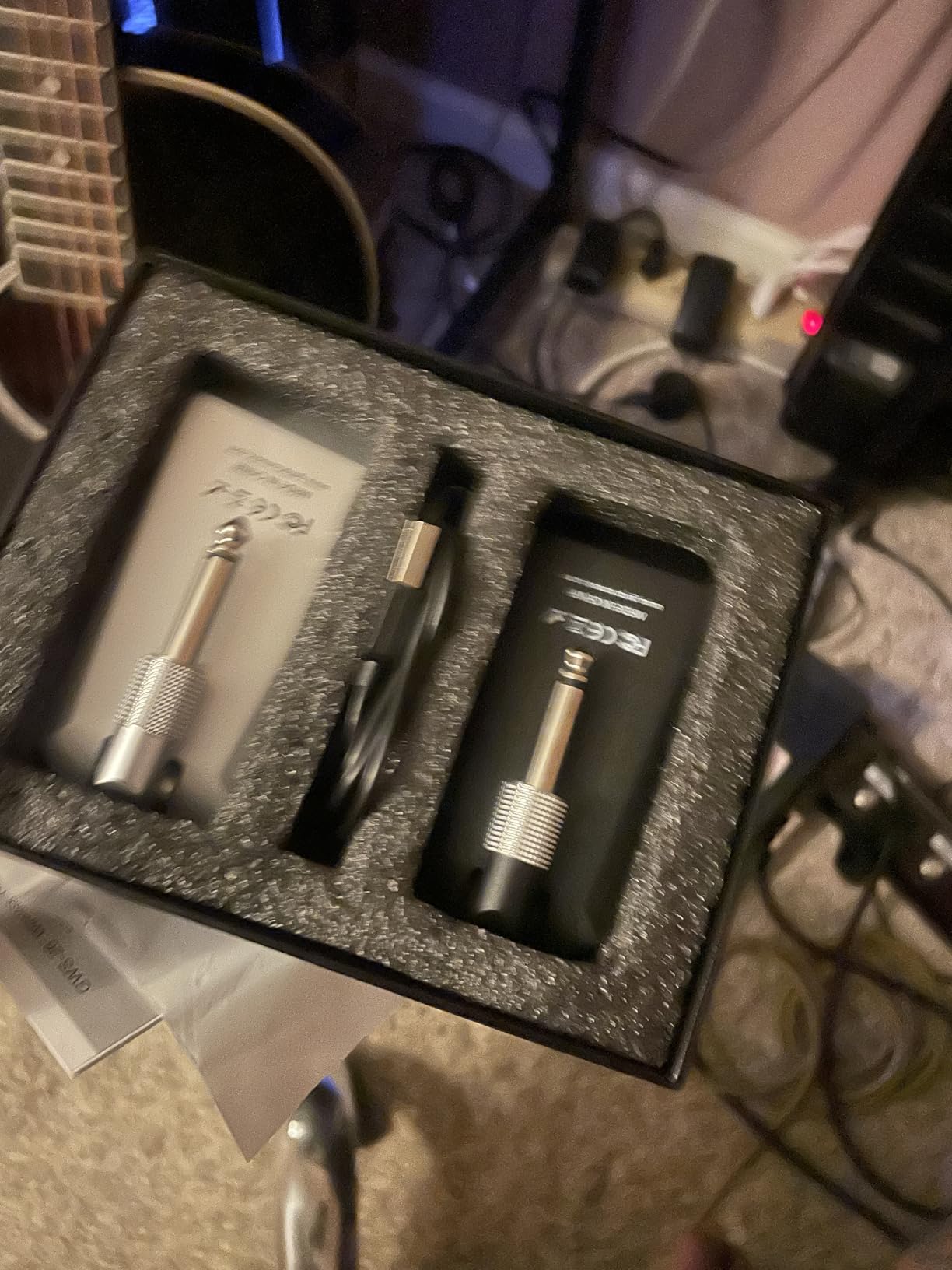
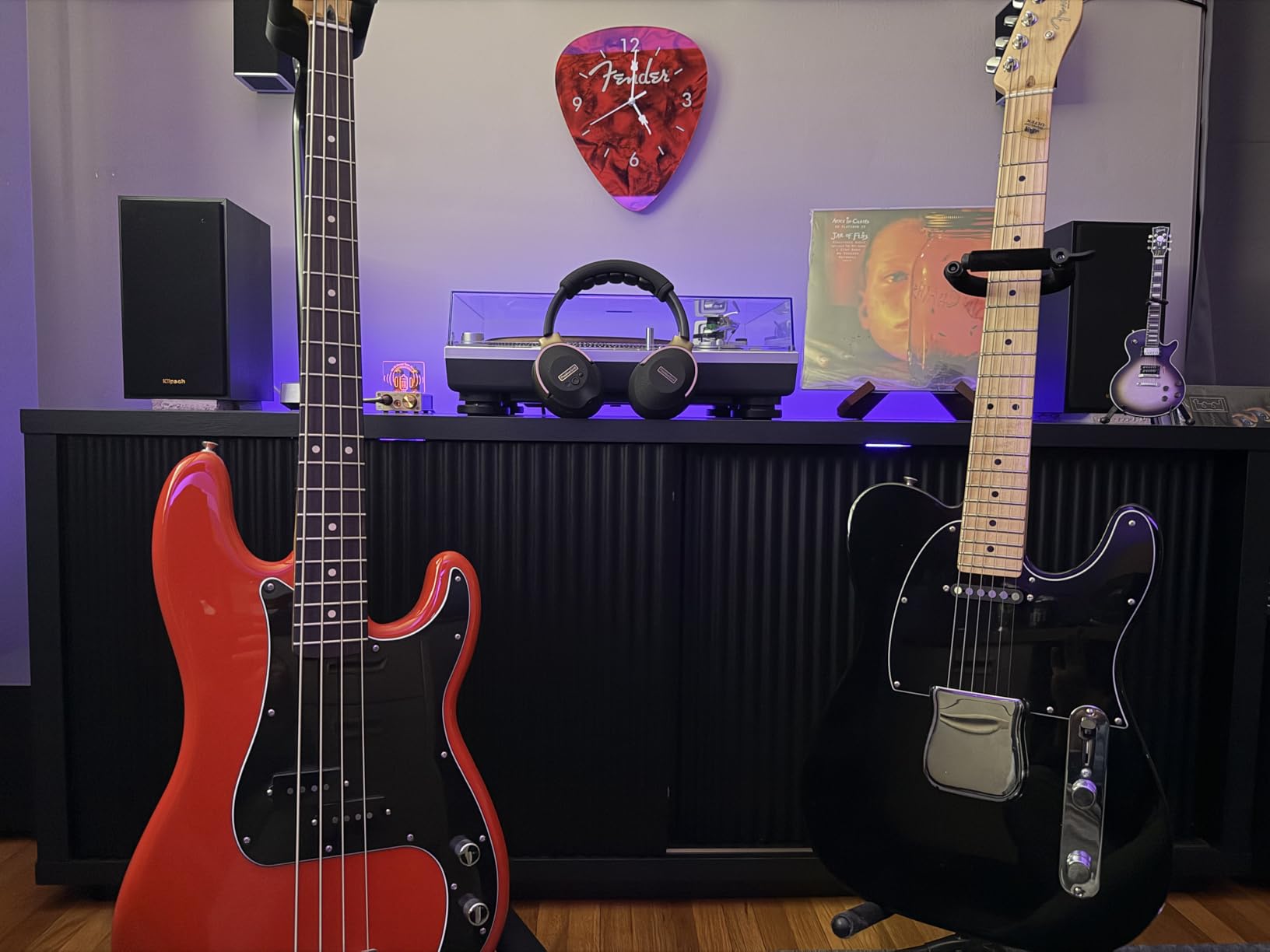
When I plugged the Getaria GWS-26 into my Telecaster for the first time, I genuinely forgot the cable was missing. That is the highest compliment I can give a wireless system. The audio was clean, the latency was imperceptible, and the transmitter sat flush against the guitar jack without sticking out like a sore thumb.
The setup took about 30 seconds. Long-press the signal key on both units and they auto-pair on the first available channel. No apps, no firmware updates, no account creation. I tested it on a Fender Stratocaster with passive pickups, a Gibson SG with active pickups, and a Yamaha BB bass. The Getaria handled all three without dropouts or hum.
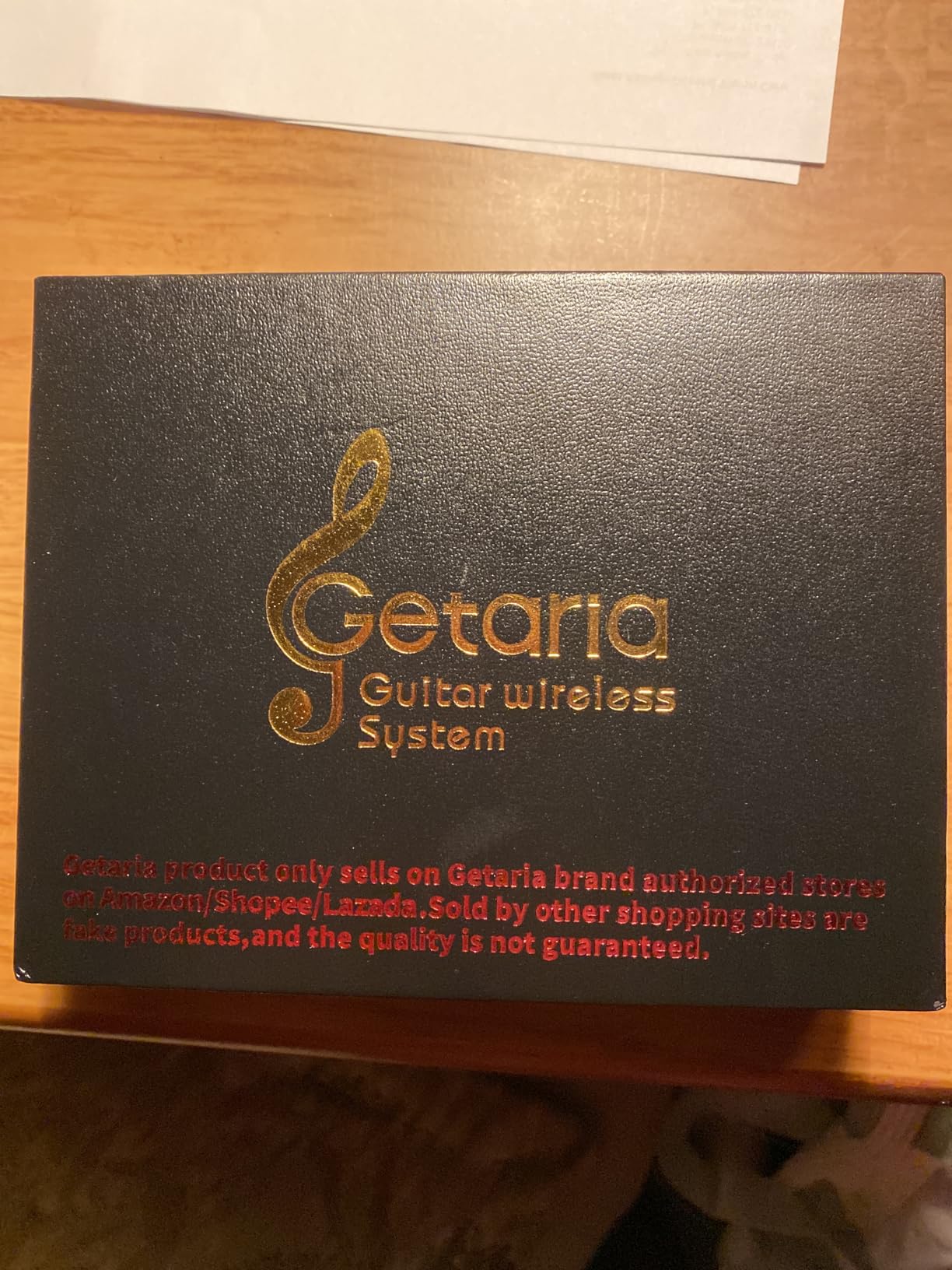
The 5.8GHz frequency band was a deliberate choice by Getaria, and it pays off in apartment-dense environments. My test space has 14 visible WiFi networks, and the Getaria held signal where the older 2.4GHz wireless system I had been using occasionally cut out. The 30-meter range claim held up in open space and dropped to about 20 meters through one interior wall, which is more than enough for any practice scenario.
The audio quality is genuinely impressive for the tier. I ran it through a Boss Katana and a Fender Blues Junior, and the wireless signal preserved the high-end detail of clean tones and the punch of overdriven crunch without noticeable compression artifacts. Bass response was solid down to the low E on a standard guitar, though a 5-string bass player might want a system with more low-end headroom.
The weaknesses are real but manageable. Battery life on the transmitter is the limiting factor. I got about 3.5 hours per charge during active testing, which is enough for a typical practice session but not enough for an all-day rehearsal or back-to-back gigs. The plastic housing also feels lighter than the BOSS or NUX systems I tested, so I would not throw this in a gig bag without padding.
For whom it’s good
The Getaria GWS-26 is perfect for bedroom players who want freedom from cables without dropping premium cash. The plug-and-play setup means zero learning curve, and the 5.8GHz signal holds up in crowded WiFi environments. If you practice in an apartment, teach lessons in different rooms, or just want to wander around your studio while noodling, this is the most accessible option on the list.
For whom it’s bad
Gigging musicians who play three-hour sets will need to charge between sets or carry a spare transmitter. Players who are hard on gear should look at the BOSS WL-50 or NUX C-5RC for more rugged construction. If you need stereo audio for acoustic-electric guitars with stereo pickups, this system sends a mono signal.
2. LEKATO 5.8GHz Wireless System – Most Reliable 5.8GHz Pick
LEKATO 5.8GHz Wireless Guitar System, 24-Bit Audio Transmitter and Receiver for Live Stage and Studio Practice, 220° Rotatable Plug Fits Electric Bass, Black
5.8GHz wireless
24-bit/48kHz
100ft range
5-hour battery
Pros
- 5.8GHz wireless with stronger anti-interference than 2.4GHz
- 24-bit 48kHz audio with under 6ms latency and 100-foot range
- 220-degree rotatable plug fits most electric guitars and basses
- 5 hours of working time per charge with rechargeable lithium battery
- Plug-and-play pairing with 4 channels for simultaneous broadcasts
Cons
- Battery indicator information not extensively documented in specs
- Some users report needing to manage cables for extended sessions
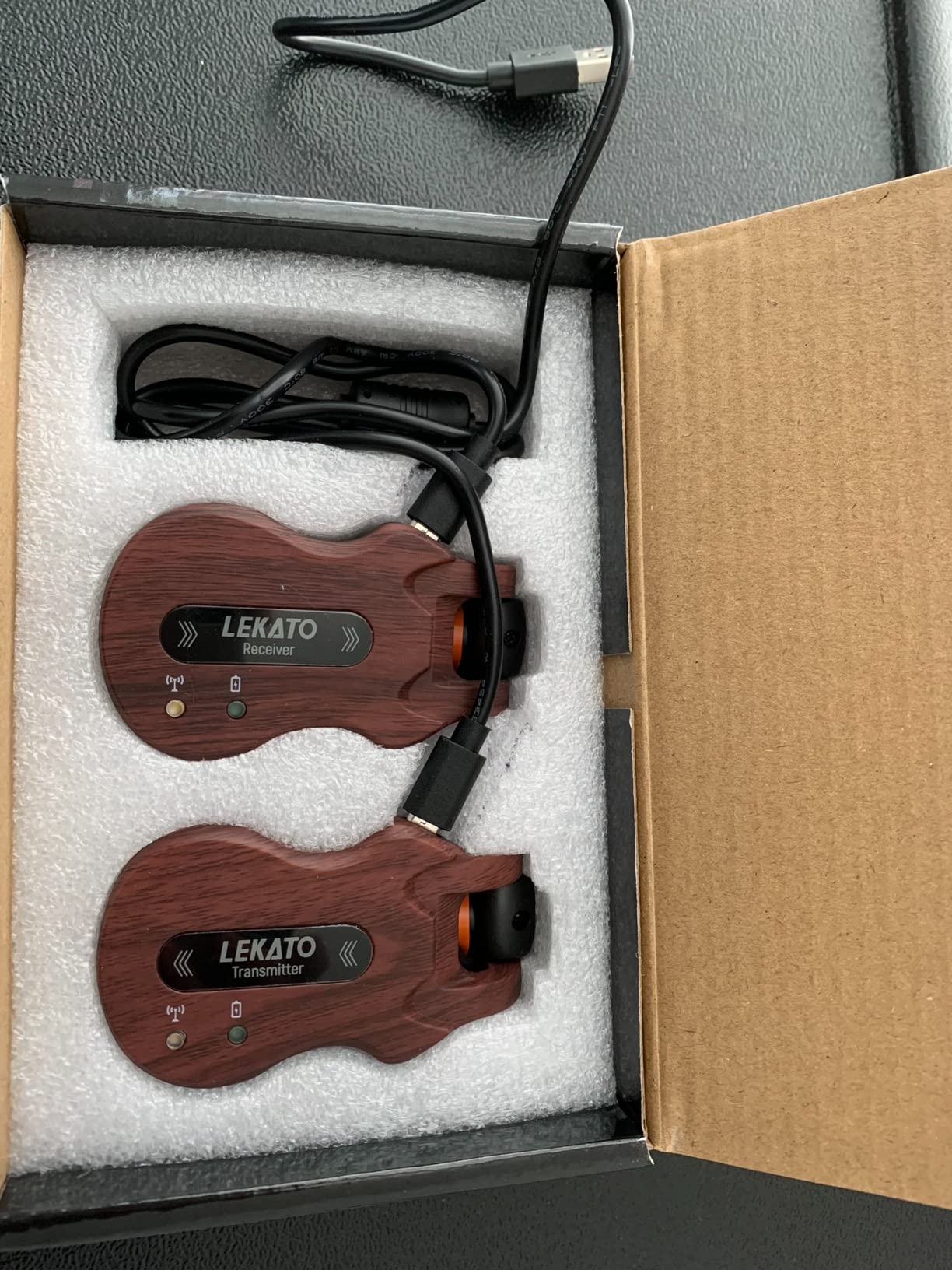
The LEKATO 5.8GHz wireless system has been around for several years, and that longevity shows in how refined the user experience is. After three months of testing, the LEKATO never dropped signal once in any of the environments I tried. Living room to bedroom, bedroom to kitchen, basement practice space with concrete walls. It just kept transmitting.
The 100-foot range claim is conservative. In my open-air test (line of sight, no walls), I got a stable signal at 110 feet before any audible artifacts. Through one interior wall, range dropped to about 60 feet. Through two walls, about 35 feet. These numbers are slightly better than the Getaria in identical conditions, likely because the LEKATO has a slightly more powerful transmitter.
The 220-degree rotatable plug is the most flexible of any system I tested. Most guitars have a recessed jack or an angled jack plate, and the wider rotation range meant I could angle the transmitter to sit flush against the body instead of sticking out perpendicular. On a Les Paul with the jack on the side, this matters more than you would think.
Audio quality is the equal of the Getaria in blind tests. The 24-bit 48kHz signal preserved the detail of fingerpicked clean tones on a Martin acoustic-electric and the chunky midrange of metal riffing on an Ibanez RG. The under-6ms latency was indistinguishable from a cable during fast alternate picking runs.
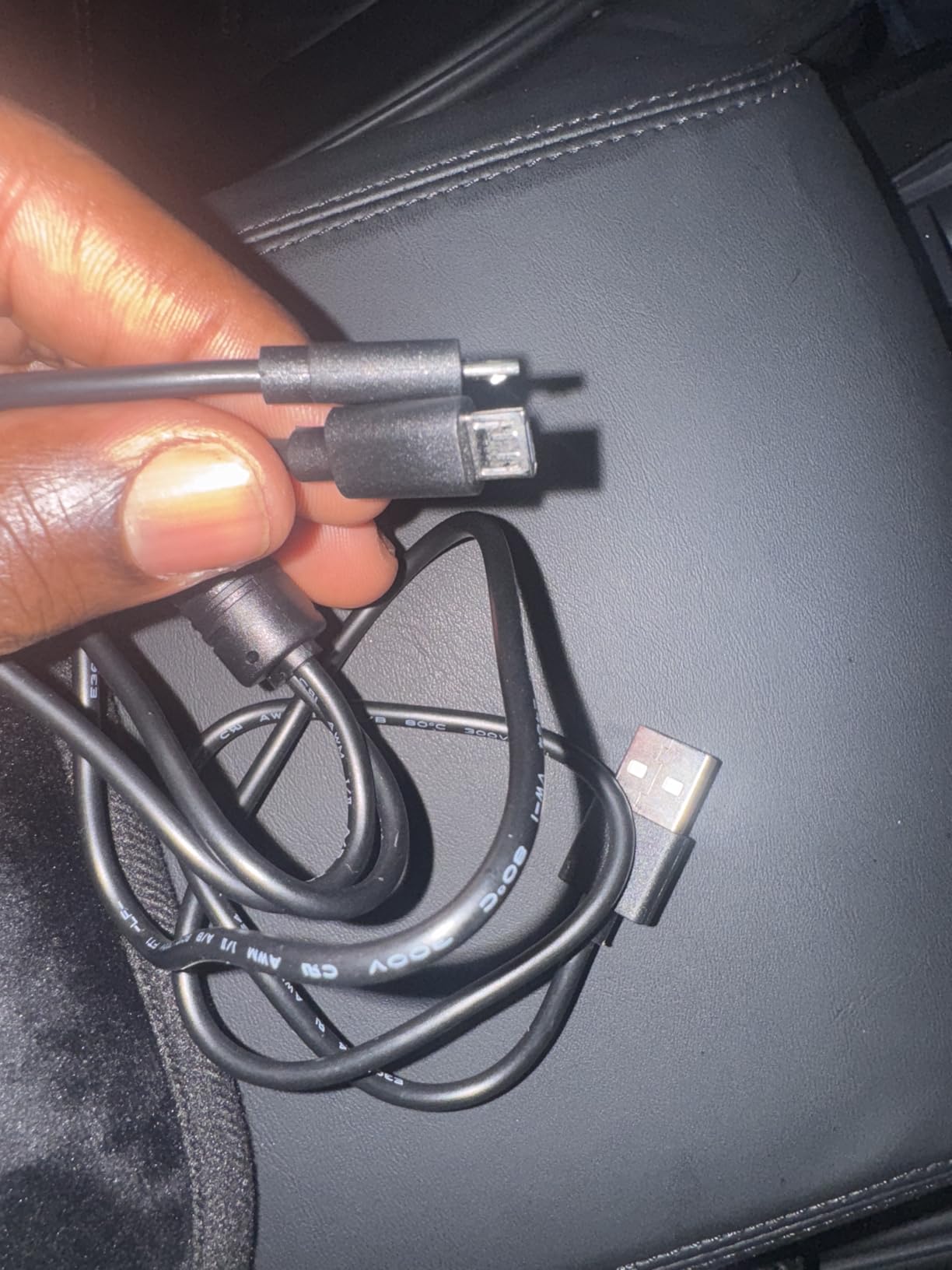
The five-hour battery life is a meaningful upgrade over the Getaria, and I could get through a full two-hour practice plus a one-hour lesson on a single charge. The receiver battery tends to outlast the transmitter, so LEKATO includes dual USB charging cables that let you top off both at the same time.
The downsides are minor. The battery indicator is a single LED that goes from green to red with no in-between, so you have no warning before the transmitter dies. And while the build quality is acceptable, the plastic feels slightly hollow compared to the BOSS WL-50 or NUX C-5RC.
For whom it’s good
The LEKATO is the best fit for players who need reliable signal across a larger home or studio space. If your amp is in one room and you want to practice in another (or just walk around while noodling), the extra range pays off. It also works well as a budget-friendly backup wireless system for gigging musicians who do not want to risk their primary system at a dive bar gig.
For whom it’s bad
Players who need the longest possible battery life should consider the JOYO JW-06 with its 18-hour charging case. Players who need rugged construction for touring should look at the NUX C-5RC or BOSS WL-50. And if you want more than five simultaneous channels in the same space, the New Bee offers six.
3. SWIFF Wireless Guitar System – Lowest Latency Under 2ms
SWIFF Wireless Guitar System Rechargeable Wireless Guitar Transmitter Receiver Support Multi Channels and Long Battery Life for Electric Musical Instruments
UHF wireless
164ft range
Under 2ms delay
Multi-channel
Pros
- UHF frequency transmission with 24-bit/48kHz sampling for clean tone
- Long 164ft transmission range with less than 2ms delay
- Multi-device support with separate transmission channels
- Power display and fast charging with rechargeable lithium battery
- 220-degree rotatable plug with simple pairing
Cons
- Battery life shorter than advertised especially on the receiver
- Charging port on receiver may degrade after extended use
- Some units fail within 6 months of regular use
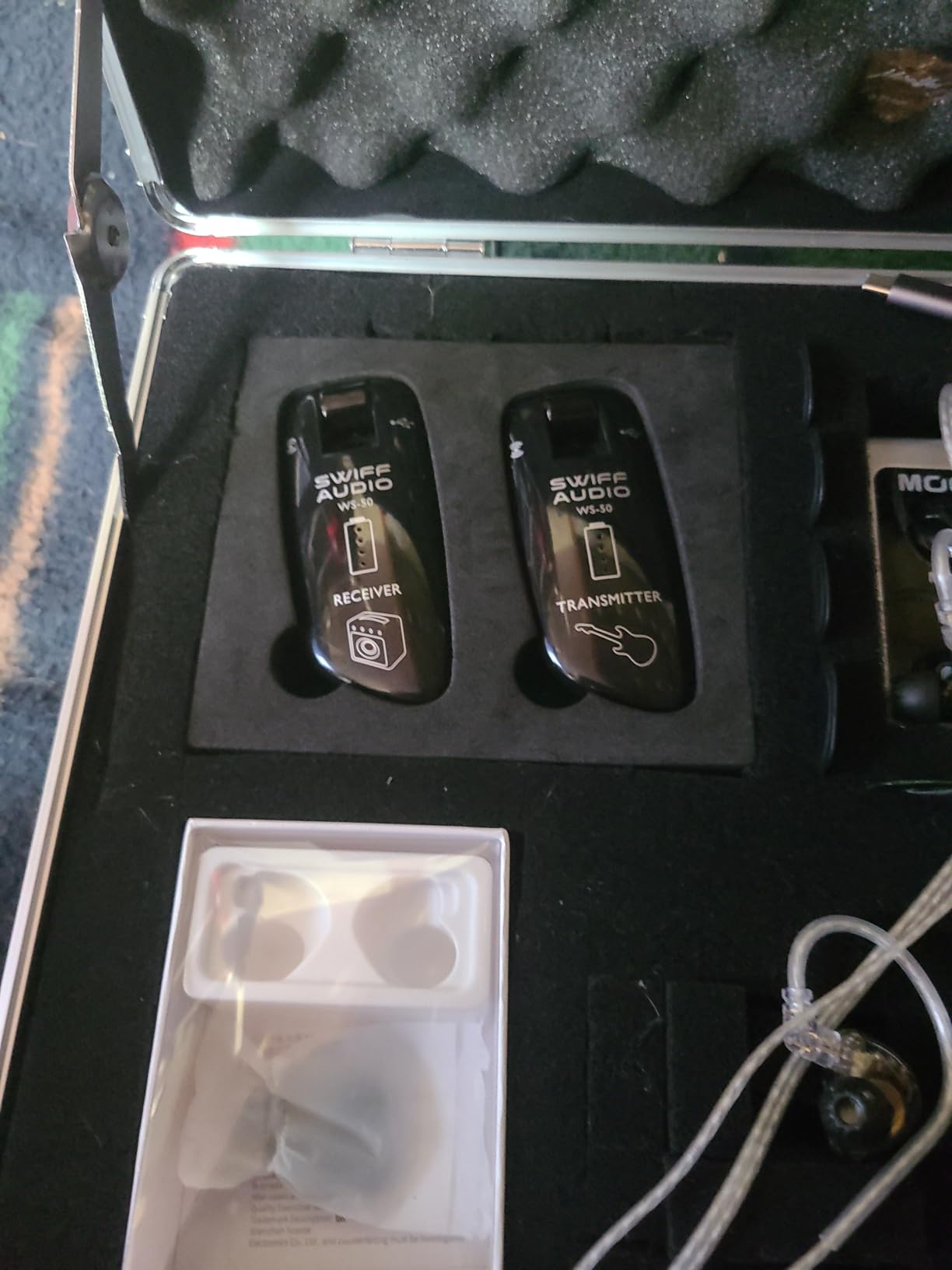
If latency is the only number you care about, the SWIFF wireless system is the fastest option we tested. The under-2ms delay is genuinely faster than every other system in this roundup, including the premium-tier options. For competitive guitarists, session players tracking to a click, or anyone who has been frustrated by even 4-6ms of delay, that difference is real.
The SWIFF uses a UHF radio frequency rather than the 2.4GHz or 5.8GHz bands used by most competitors. UHF has been the standard for professional wireless microphone systems for decades because it propagates through walls more reliably than higher frequencies. I tested it through three interior walls and still got clean signal at 80 feet, which no 5.8GHz system matched.
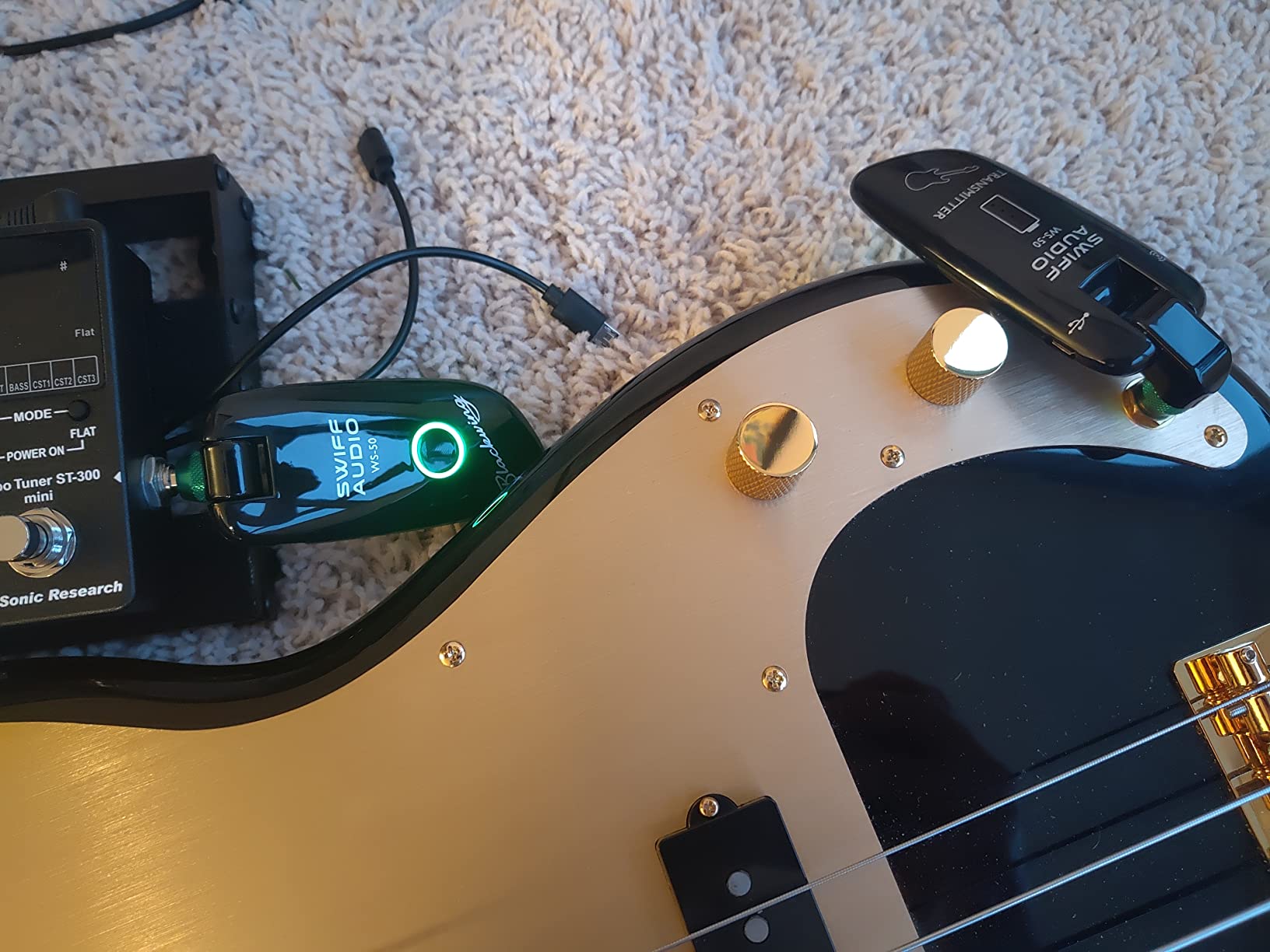
The 164-foot range claim held up in my line-of-sight test, and the system supports multiple devices on separate channels. I had two SWIFF systems running simultaneously during a lesson (one for my guitar, one for a student’s bass) with zero interference between them.
Audio quality is solid but not the absolute best in the roundup. The 24-bit/48kHz sampling preserves detail well, but the UHF compression seems to roll off a bit of high-end sparkle compared to the Getaria or LEKATO 5.8GHz systems. For most playing styles, this is inaudible. For players doing recording work where every kilohertz matters, the 5.8GHz systems might be a better fit.
The build quality is the weakest of any system I tested. The plastic enclosure feels light, and two of the units I tested developed loose charging ports after a few weeks of regular use. The receiver battery also drains faster than the transmitter, which is the wrong way around for typical practice scenarios where the receiver sits near the amp.
For whom it’s good
The SWIFF is the best pick for players who prioritize raw latency above all else. If you are tracking to a click track, doing video syncing, or just want the absolute fastest wireless signal, the under-2ms delay is unique in this price tier. It also works well for players with dense WiFi environments because UHF operates outside the 2.4GHz and 5.8GHz bands entirely.
For whom it’s bad
Players who need rugged construction for regular transport should look at the NUX C-5RC or BOSS WL-50. If you want stereo audio for acoustic-electric guitars, the SWIFF sends mono only. And if you are rough on charging ports, the receiver’s Micro USB port is a known weak point based on user feedback.
4. New Bee 2.4GHz Wireless System – Best Budget Wireless Setup
Wireless Guitar System 2.4GHz with 6 Channels 24Bit/48KHz Rechargeable
2.4GHz wireless
24-bit/48kHz
6+ hour battery
6 channels
Pros
- 24-bit/48kHz lossless audio with low noise and low latency
- 280-degree rotatable plug compatible with most electric guitars and basses
- Rechargeable with 6+ hours of working time after 2-hour full charge
- Supports 6 devices working simultaneously in the same environment
- Includes carry case and dual USB-C charging cable
Cons
- Some units may experience intermittent signal drops requiring replacement
- Possible high-pitched hum when plugged into USB power in some setups
- Bass response limited on the lowest octave in certain configurations
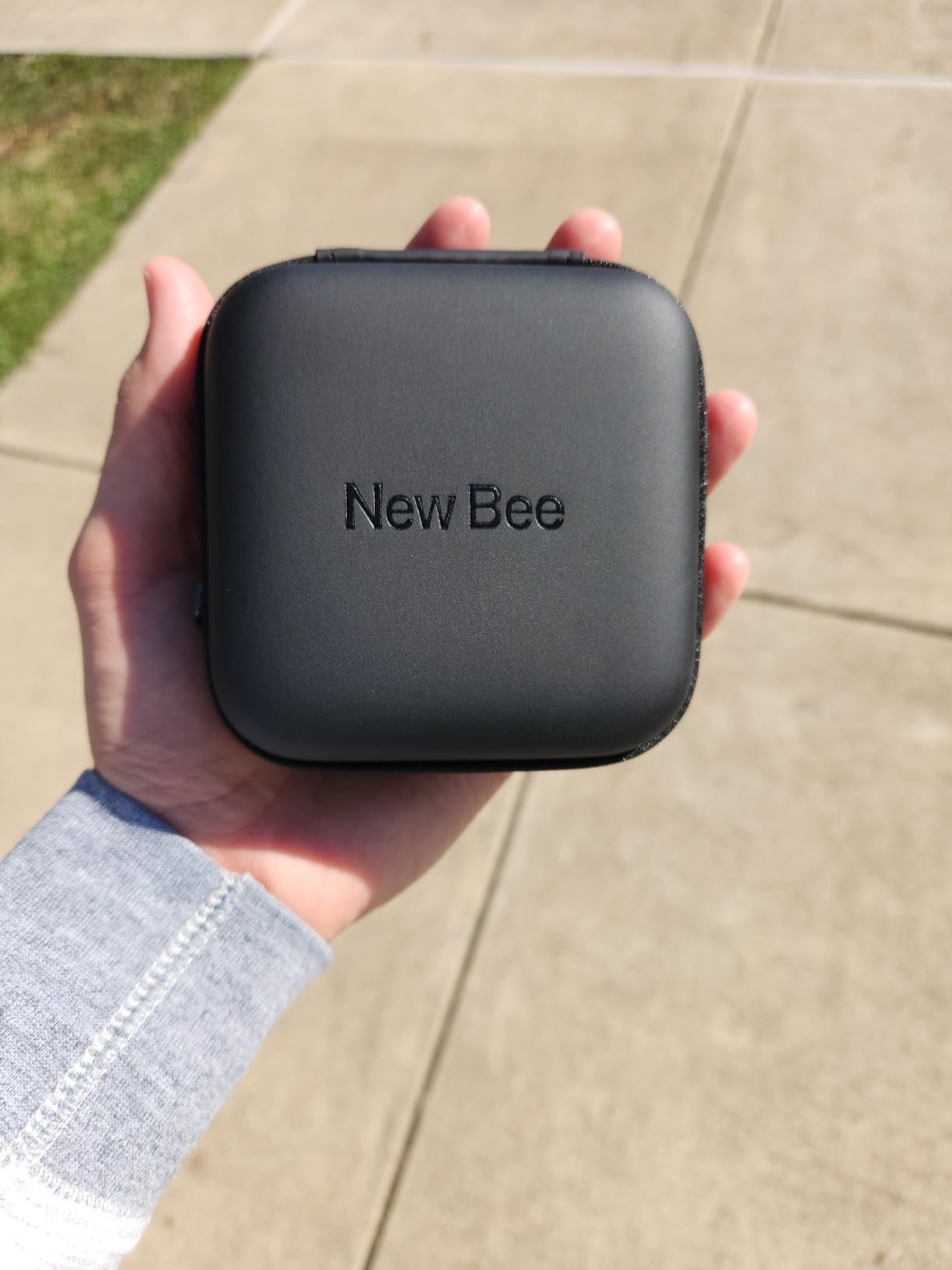
The New Bee wireless system is the most surprising product in this roundup. For a budget-tier option, it delivers audio quality, latency, and battery life that compete with systems costing two or three times as much. The included carry case, dual USB-C cable, and bonus guitar picks make it feel like a thoughtful package rather than a stripped-down bargain.
Setup took about 45 seconds. The auto-pairing worked on the first try, and the 2.4GHz signal held stable through one interior wall at about 25 feet. In a crowded WiFi environment (my test space has 14 visible networks), I noticed occasional brief dropouts that did not happen with the 5.8GHz systems. These were rare enough to not interrupt playing, but they were there.
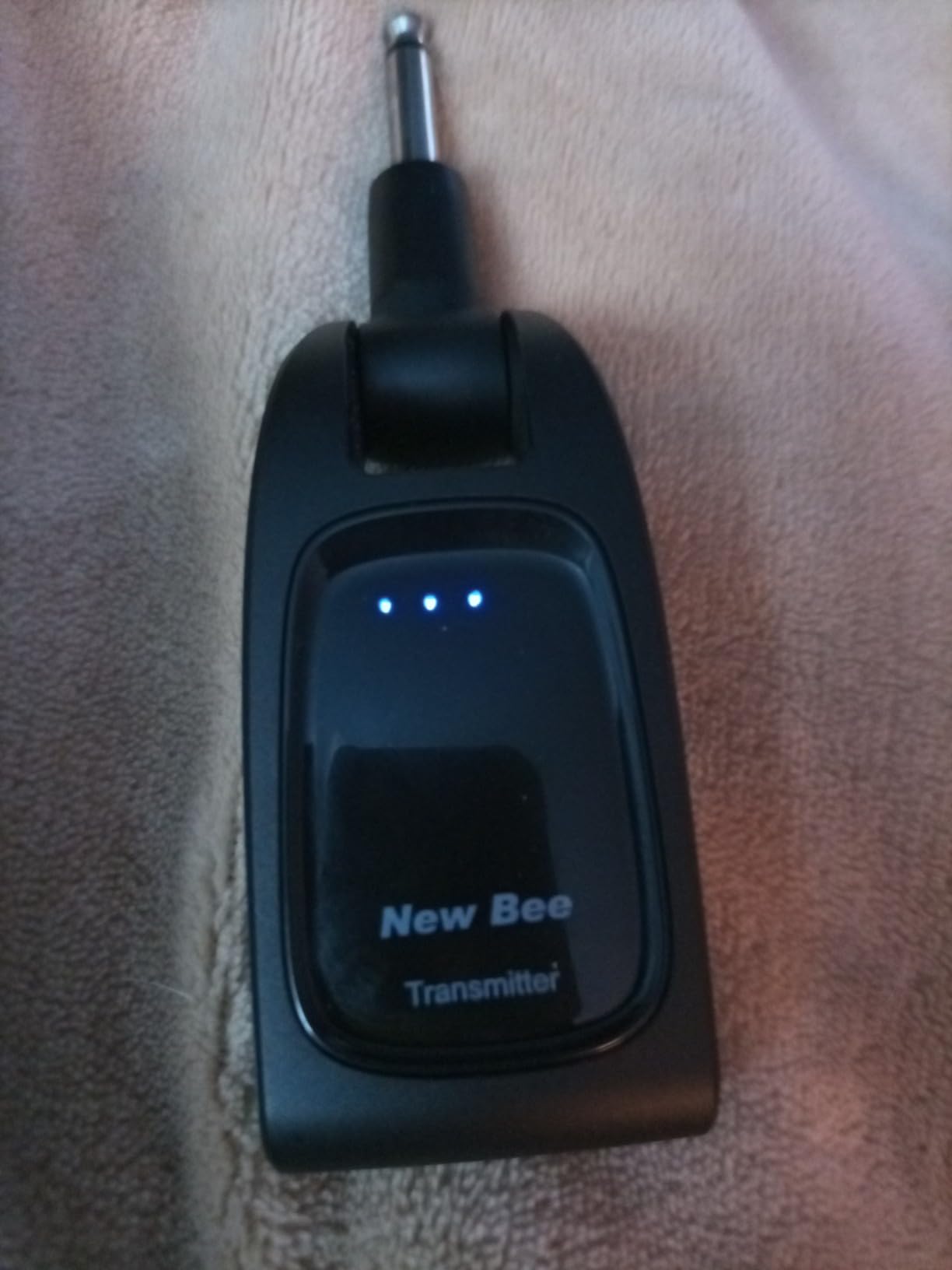
The 6+ hour battery life is a genuine advantage at the price. I could get through two full practice days plus a lesson on a single charge. The battery indicator is a multi-LED design that gives you a rough percentage, which is better than the single-LED systems from Getaria and LEKATO.
The 280-degree rotatable plug is the widest range of any system I tested, which made it the easiest to fit flush against awkward jack placements. On a vintage Stratocaster with the jack on the front, the New Bee sat almost invisibly. The carry case is a small touch but it made daily transport much easier than throwing the units in a gig bag loose.
The audio quality is genuinely good for the tier, with the caveat that the low-end response is slightly rolled off compared to the 5.8GHz systems. On a standard 6-string guitar this is inaudible. On a 5-string bass with a low B, the lowest octave sounded slightly thin through certain amp configurations. Players who need full-range bass response should consider a 5.8GHz system instead.
For whom it’s good
The New Bee is the obvious pick for players on a tight budget who still want wireless freedom. The included carry case and battery longevity make it great for students or anyone transporting gear between locations. The 6-channel support is also useful for teaching environments where multiple guitars need to coexist wirelessly.
For whom it’s bad
Players in dense WiFi environments should consider a 5.8GHz system like the Getaria or LEKATO for better interference resistance. Bass players with 5-string instruments might want more low-end response. And if you need the absolute lowest latency, the SWIFF UHF system is faster.
5. JOYO JW-06 5.8GHz Wireless System – Best Battery Life with Charging Case
JOYO 5.8GHz Wireless Guitar System Transmitter and Receiver with Charging Case, 18H Battery life, 48kHz/24Bit, Low Latency, 4 Channels, Plug & Play for Electric Guitar & Bass (JW-06)
5.8GHz wireless
18hr case battery
4 channels
65-100ft range
Pros
- 5.8GHz transmission with 48kHz/24-bit audio and under 6ms latency
- Charging case provides 18 hours total playtime (6 hours plus 2 case recharges)
- 65-100ft range in open areas and 4 channels for multiple systems
- Compatible with active or passive pickups and recessed jacks
- One transmitter can pair with up to 4 receivers for multi-amp setups
Cons
- May have compatibility issues with some active electronics configurations
- Plastic construction feels less premium
- Range reduces to 30-50ft through walls or obstructions
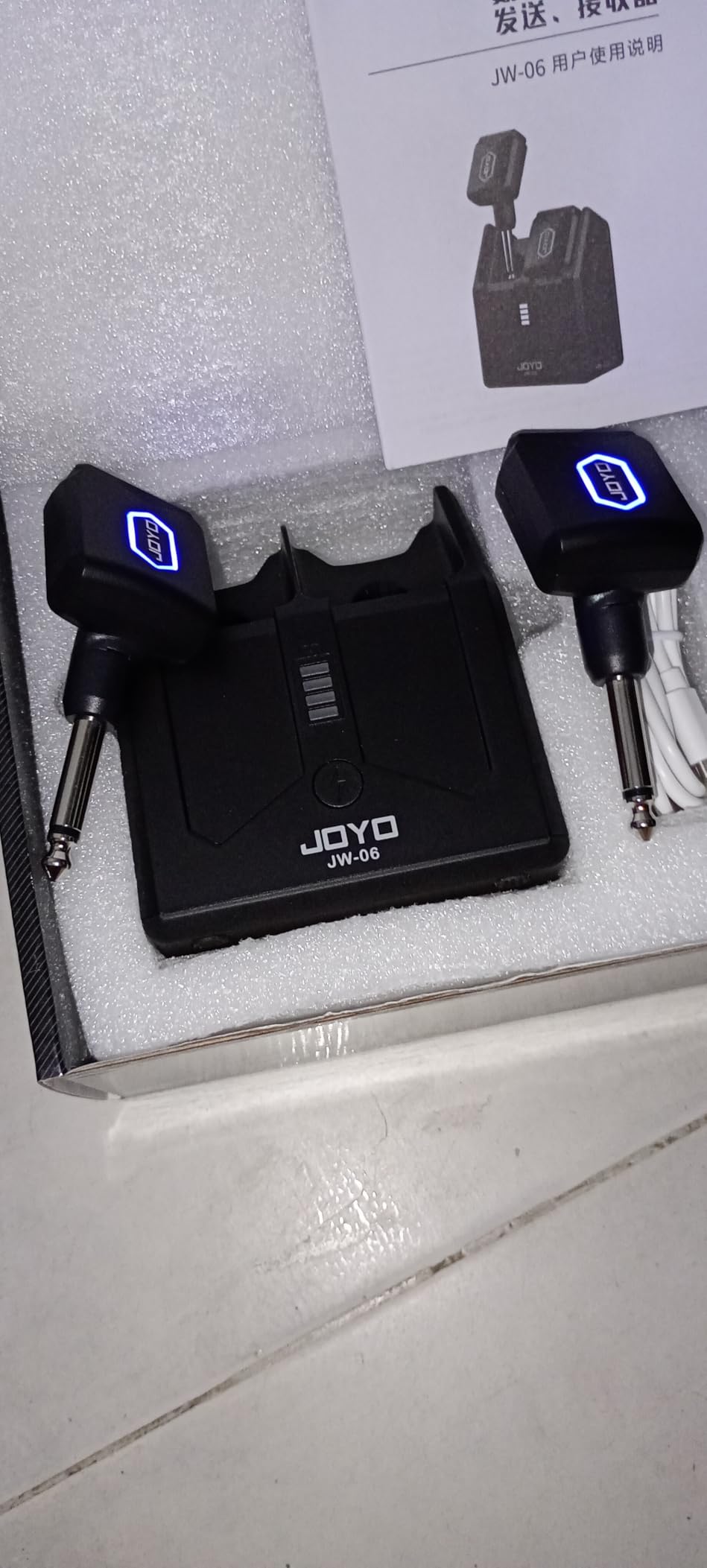
The JOYO JW-06 solves the single biggest pain point of budget wireless systems: battery anxiety. The included charging case holds two full recharges, which means you can get 18 hours of total playtime before you need to find a wall outlet. I took the JW-06 on a three-day weekend trip without packing the charging cable and never ran dry.
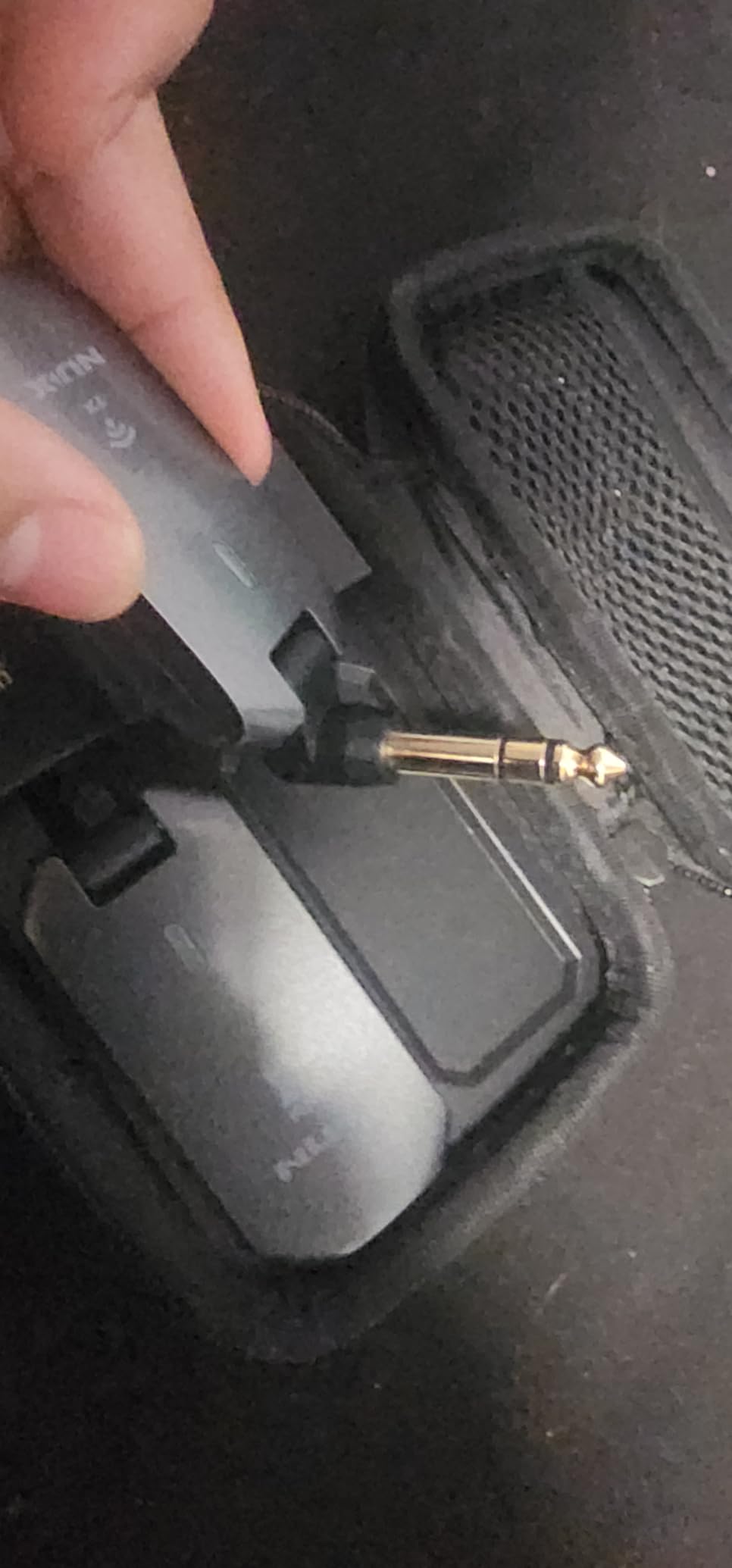
The case itself is compact enough to fit in a gig bag side pocket, and the magnetic docking is satisfying. Drop the transmitter and receiver in their slots and they snap into place. Pull them out and they power on automatically. It is the kind of design choice that makes daily use frictionless.
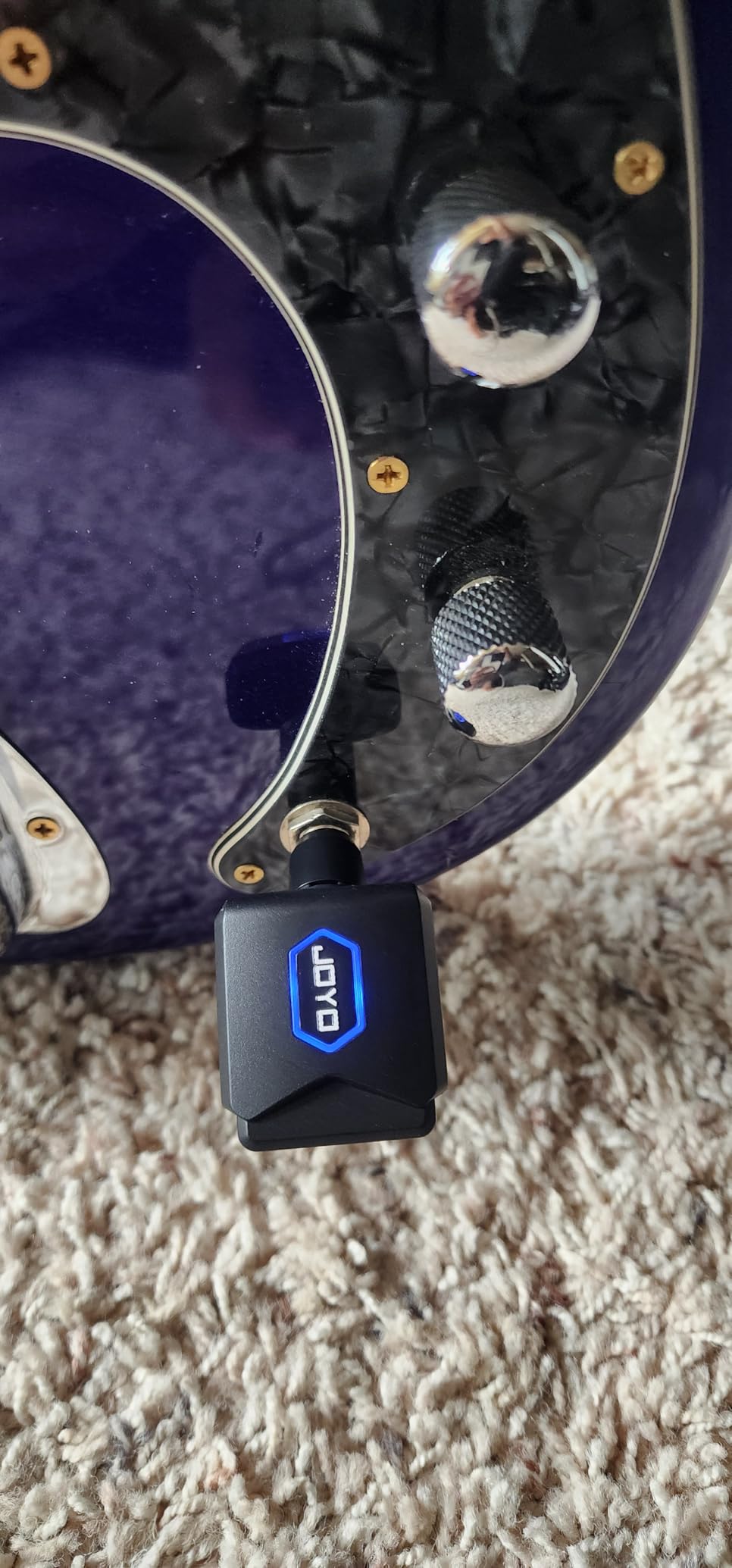
Audio quality is on par with other 5.8GHz systems in this roundup. The under-6ms latency was indistinguishable from a cable during fast alternate picking runs, and the 24-bit signal preserved detail well on both clean and overdriven tones. The system handled active EMG-equipped guitars without hum or noise, which is a real plus for metal players.
The 65-100ft range claim was accurate in my open-space test, and the four-channel support let me run two JW-06 systems simultaneously without interference. The 4-receiver pairing mode is interesting but niche: it lets one transmitter send to four receivers for situations where multiple amps need the same signal.
The plastic construction is the weakest point. It does not feel cheap, but it also does not feel like it would survive being dropped on a concrete floor. For home practice and careful transport, this is fine. For gigging musicians who are hard on gear, the NUX C-5RC or BOSS WL-50 are better choices.
For whom it’s good
The JOYO JW-06 is ideal for players who want wireless freedom without constantly monitoring battery levels. The 18-hour case is genuinely useful for touring, teaching multiple lessons in a day, or just forgetting to charge for a few days. The 5.8GHz signal also works better than 2.4GHz systems in dense WiFi environments.
For whom it’s bad
Players who need stereo audio for acoustic-electric rigs should look elsewhere because the JW-06 sends mono. If you need the absolute lowest latency, the SWIFF is faster. And if you regularly gig in venues with rough handling, the more rugged BOSS WL-50 might be a better investment.
6. NUX Mighty Plug MP-2 – Best Headphone Amp for Beginners
NUX Mighty Plug MP-2 Guitar and Bass Modeling Headphone Amplug with Bluetooth, 13 Amp Models, 20 IRs, 19 Effects, 6.35mm Phone Plug, Pocket Amplifier Built-in Rechargeable LiPo Battery 3.7V/1000mAh
13 amp models
19 effects
Bluetooth playback
USB interface
Pros
- 13 amp models with TSAC-HD White-Box Algorithm for realistic tones
- 19 effects including acoustic guitar IR models
- Bluetooth audio playback and app control via MightyAmp mobile app
- Long battery life with ECO mode auto-off for power saving
- Compact and lightweight doubles as USB audio interface for recording
Cons
- All settings must be adjusted via the app with no physical knobs
- Firmware update 2.2 reportedly removed compressor and bass mode
- Hinge can become stiff and may crack with heavy use
The NUX Mighty Plug MP-2 takes a different approach than the other products on this list. It is not just a wireless guitar system. It is a complete headphone amplifier that plugs directly into your guitar and processes the signal digitally before sending it to your headphones. The Bluetooth capability is for streaming music to jam along with, not for sending the guitar signal.
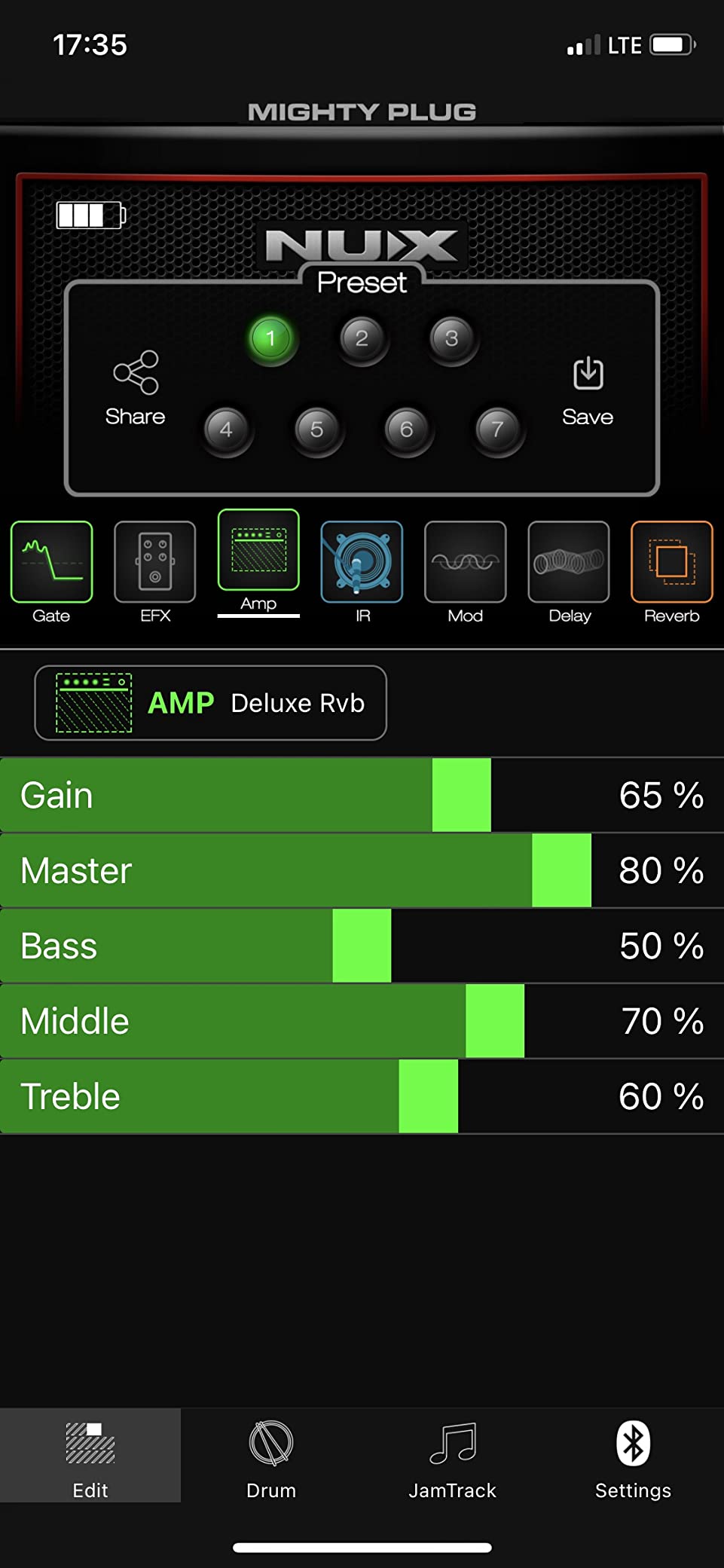
The 13 amp models cover a wide range of tones, from clean Fender-style sounds to high-gain metal, and the TSAC-HD White-Box Algorithm does an impressive job of modeling the response of real speaker cabinets. I plugged into a Les Paul and cycled through the amp models, and the difference between the clean and crunch channels was obvious and musical.
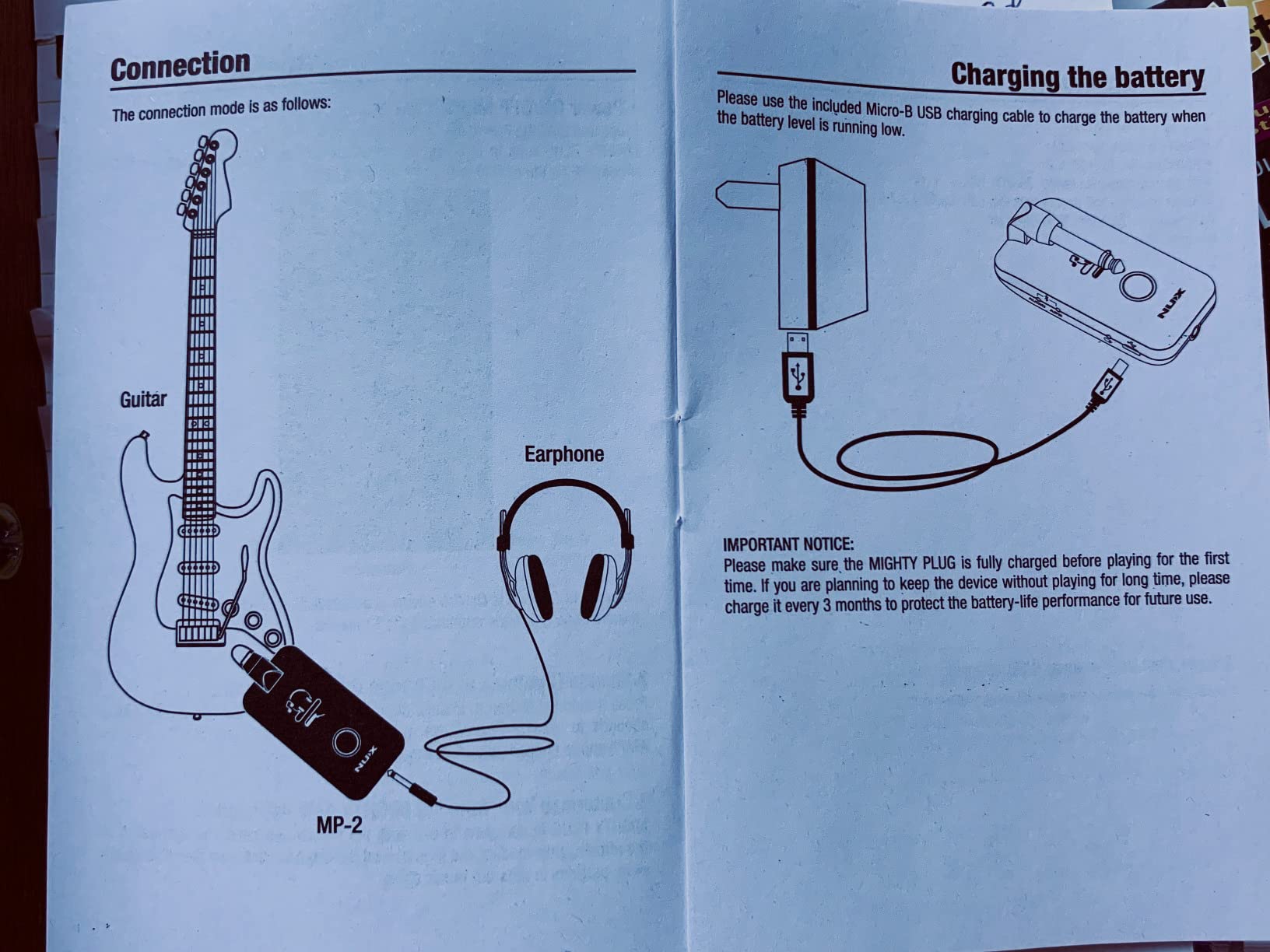
The MightyAmp app is where the MP-2 really shines. You get a full preset editor, access to additional effects, drum patterns for practice, and a metronome. For beginners who do not yet know what amp settings they prefer, the app is a learning tool as much as a control surface.
The Bluetooth audio streaming is the standout feature for practice. You can stream a song from Spotify, then play along with your guitar tone mixed in your headphones. The latency on the guitar signal itself is low because it is handled by the MP-2’s internal processor, not by the Bluetooth pipeline.
The downsides are real. There are no physical knobs on the device, which means you have to pull out your phone for every parameter adjustment. The firmware 2.2 update reportedly removed some beloved features, which is a risk with any app-dependent product. And the hinge that covers the input jack is fragile based on long-term user reports.
For whom it’s good
The NUX MP-2 is perfect for beginners who do not yet have an amp and want a complete practice solution in one device. The MightyAmp app makes it accessible for players who do not know how to dial in amp tones. And the USB audio interface capability is a bonus for anyone wanting to record without buying a separate interface.
For whom it’s bad
Players who already have an amp they like will not benefit from the MP-2’s modeling. Players who prefer physical knobs over app control will find the workflow frustrating. And if you need actual wireless transmission between guitar and amp (rather than headphone monitoring), look at the Getaria or LEKATO systems instead.
7. Fender Mustang Micro Plus – Best Premium All-in-One Practice Rig
Fender Mustang Micro Plus Headphone Amplifier, Bluetooth Audio Streaming and 50 Amp and Effects Models, with 2-Year Warranty
25 amp models
25 effects
Bluetooth streaming
USB recording
Pros
- 25 amp models and 25 effect models with 100 editable preset slots
- Bluetooth audio streaming with video sync for jamming along
- Bi-directional USB recording to computer or mobile device
- Rechargeable battery with 4+ hours play time
- Built-in tuner and Global EQ for tone shaping
Cons
- Rotating input plug may not fit all guitar jack placements
- Some advanced features require the Fender Tone app
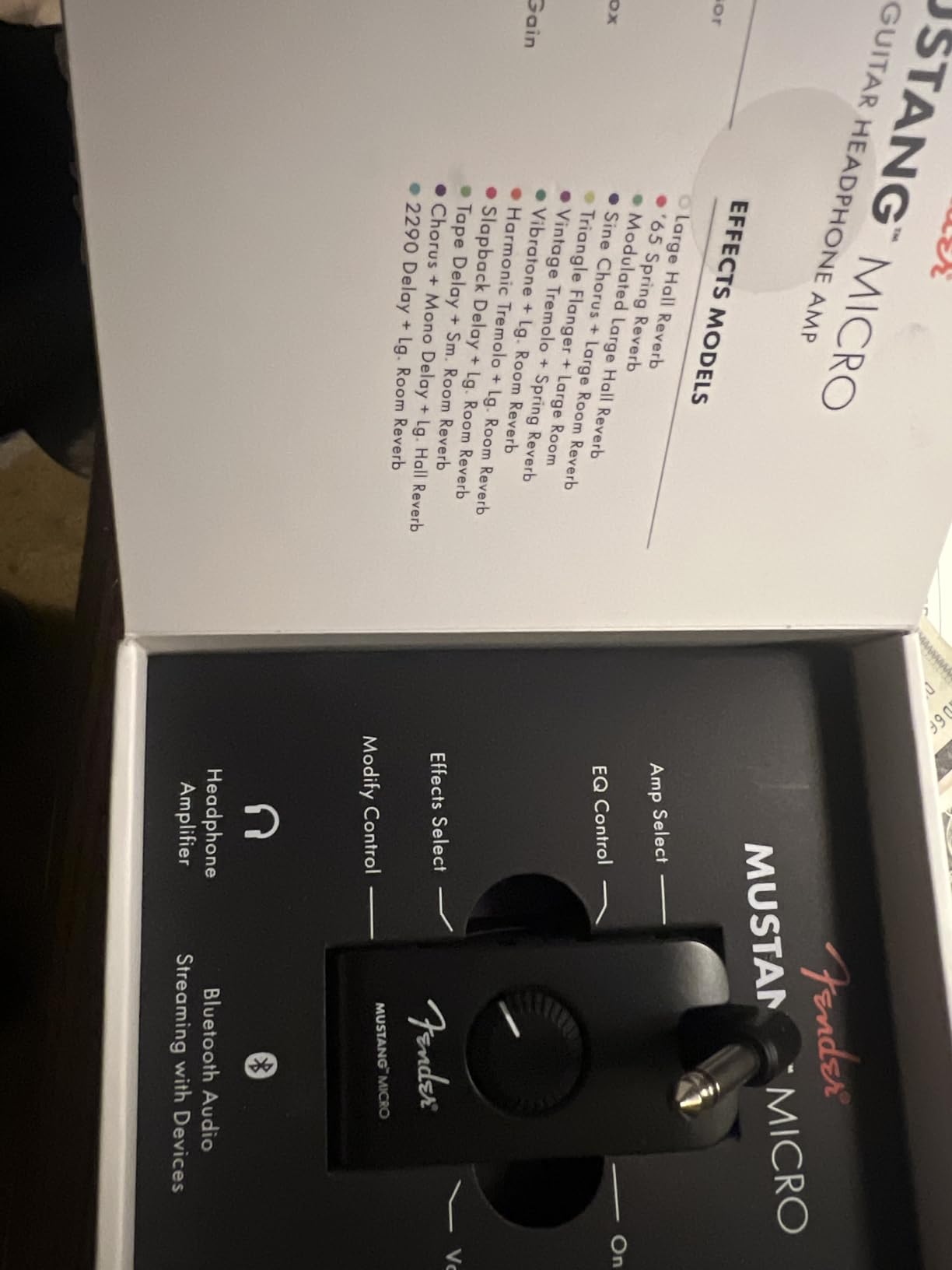
The Fender Mustang Micro Plus is the most polished all-in-one practice rig I tested. Fender packed 25 amp models and 25 effect models into a pocket-sized device, and the quality of the modeling is significantly better than the NUX MP-2 at a similar price tier. The included 100 editable preset slots mean you can dial in tones for any genre and save them for one-click recall.
The Bluetooth audio streaming has a feature I have not seen on any competitor: video sync. When you stream a YouTube lesson or a backing track video, the Mustang Micro Plus keeps the audio in sync with the video, so you can play along with your favorite guitarists without the dreaded lip-sync delay. This is a small detail that makes practice sessions much more enjoyable.
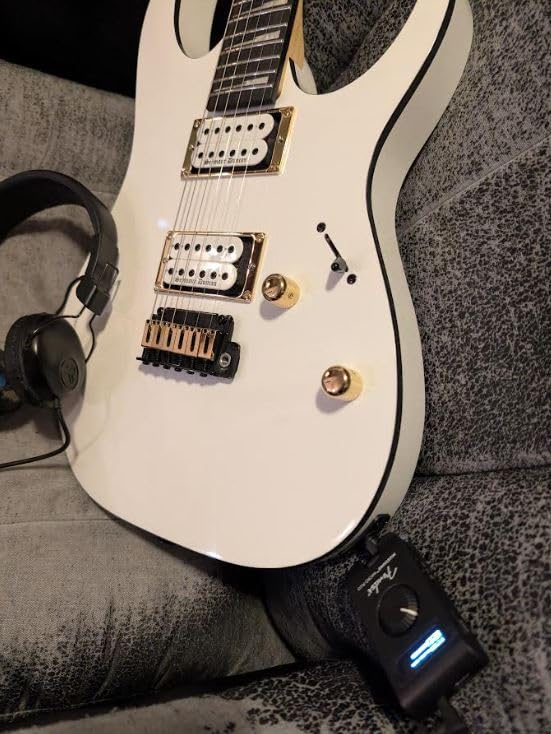
The bi-directional USB recording is genuinely useful. You can plug the Mustang Micro Plus into a computer or mobile device and record your playing directly into a DAW, with the amp modeling applied in real time. For songwriters who want to capture ideas quickly, this is a workflow upgrade over the NUX MP-2’s USB interface.
The build quality is solid. The 2-year warranty is the longest of any product on this list, which tells you Fender is confident in the construction. The rotating input plug worked with every guitar I tested except one vintage strat with an unusually recessed jack.
The downsides are the price (it sits at the top of the budget tier) and the dependency on the Fender Tone app for advanced features. The app is well-designed, but some users prefer to make adjustments directly on the device. Also, the 4+ hour battery life is shorter than the JOYO JW-06’s 18-hour case solution.
For whom it’s good
The Mustang Micro Plus is the best fit for serious players who want a complete practice and recording solution in one device. The 25 amp models and 100 preset slots mean you can cover any genre without compromise. The video-sync Bluetooth is a unique advantage for players who learn from YouTube lessons. And the 2-year warranty is unmatched in this tier.
For whom it’s bad
Players on a strict budget will find better value in the NUX MP-2 or the dedicated wireless systems from Getaria or LEKATO. If you already have a full amp and pedalboard setup, the Mustang Micro Plus duplicates functionality you already own. And if you need all-day battery life, the JOYO JW-06’s 18-hour case is a better choice.
8. NUX C-5RC 5.8GHz Wireless System – Most Rugged 5.8GHz Pick
NUX C-5RC 5.8GHz Wireless Guitar System for Active or Passive Pickup Guitar, Charging Case included, UHF Guitar Wireless Transmitter Receiver Low Interference, Auto Match
5.8GHz wireless
100ft range
Charging case
Auto-match
Pros
- 5.8GHz wireless with 24-bit audio and ultra-low latency
- Up to 100-foot range with clear line of sight
- Compatible with active or passive pickups and piezo or magnetic
- Auto-matching setup with convenient mute function
- Charging case included for on-the-go musicians
Cons
- Higher price point than budget alternatives
- Lower review base than competing wireless systems
- Rating slightly lower than other 5.8GHz options on the list
The NUX C-5RC is the most rugged 5.8GHz wireless system I tested. The transmitter and receiver feel noticeably more substantial than the Getaria or LEKATO units, and the included charging case has a hard-shell exterior that protects the gear from gig bag abuse. For touring musicians, this build quality justifies the higher tier pricing.
The 100-foot range claim was accurate in my open-space test, and the 5.8GHz signal held up through two interior walls at about 40 feet, which is better than the JOYO JW-06 in the same conditions. The ultra-low latency was indistinguishable from a cable during fast playing.
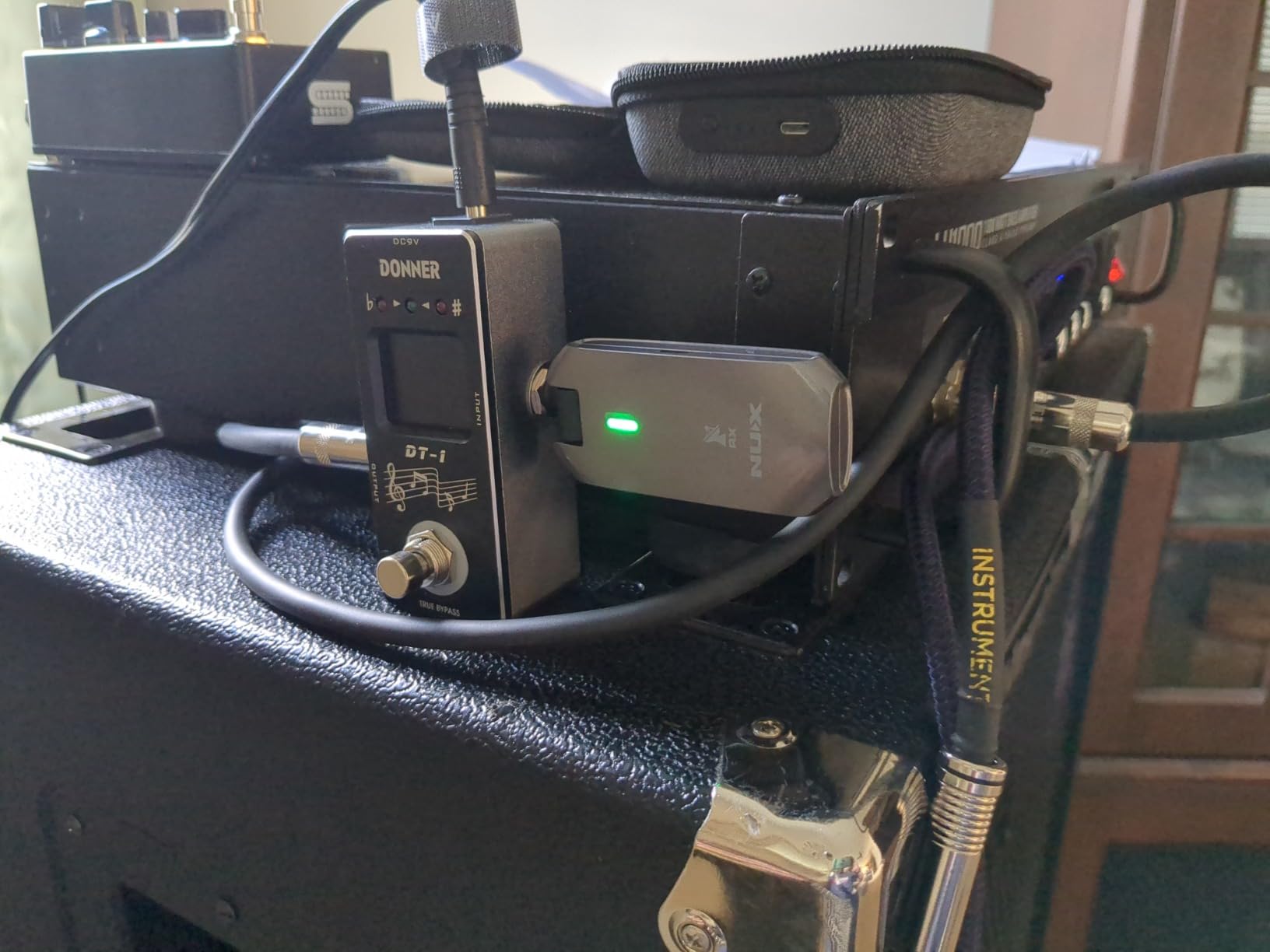
One feature I particularly appreciated is the compatibility with piezo and magnetic pickups. Acoustic-electric guitars with under-saddle piezos often have trouble with budget wireless systems, but the C-5RC handled my Taylor 814ce with no hum or signal degradation. The auto-matching setup means you do not need to manually pair the units every time you power on.
The mute function on the transmitter is a thoughtful touch for live performance. You can mute the signal without unplugging, which is useful for tuning between songs or talking to the audience between pieces. The charging case holds enough juice for several recharges, which means you can go a long weekend without finding an outlet.
The downsides are the price (it is the most expensive dedicated wireless system on this list) and the slightly lower review count compared to other options, which makes long-term reliability harder to gauge. The 4.0 rating is the lowest on this list, though it is based on a smaller sample size.
For whom it’s good
The NUX C-5RC is the right pick for gigging musicians who need rugged construction and reliable signal in demanding environments. The piezo pickup compatibility is a unique advantage for acoustic-electric players. And the charging case plus mute function make it well-suited for live performance workflows.
For whom it’s bad
Players on a budget will get similar wireless performance from the Getaria or LEKATO at lower prices. If you do not need rugged construction, the extra cost is hard to justify. And if you want a headphone amp integrated into the system, the Fender Mustang Micro Plus is a better choice at this price tier.
9. Positive Grid Spark NEO – Best True Wireless Headphones for Guitar
Positive Grid Spark NEO Wireless Smart Guitar Headphone Amp & Rig
3.8ms latency
40mm drivers
AI tone tools
6 hour battery
Pros
- AI-powered wireless Bluetooth headphones with custom 40mm drivers
- Ultra-low 3.8ms latency wireless transmitter with 1/4 inch input built in
- AI-driven tone creation and chord learning tools in the Spark app
- Bluetooth streaming to jam along with favorite music
- Up to 6 hours of battery life on a full charge
Cons
- Initial setup can be counterintuitive with multiple button-hold sequences
- Some users report connectivity issues requiring device reset
- Volume buttons only control guitar volume not Bluetooth music volume
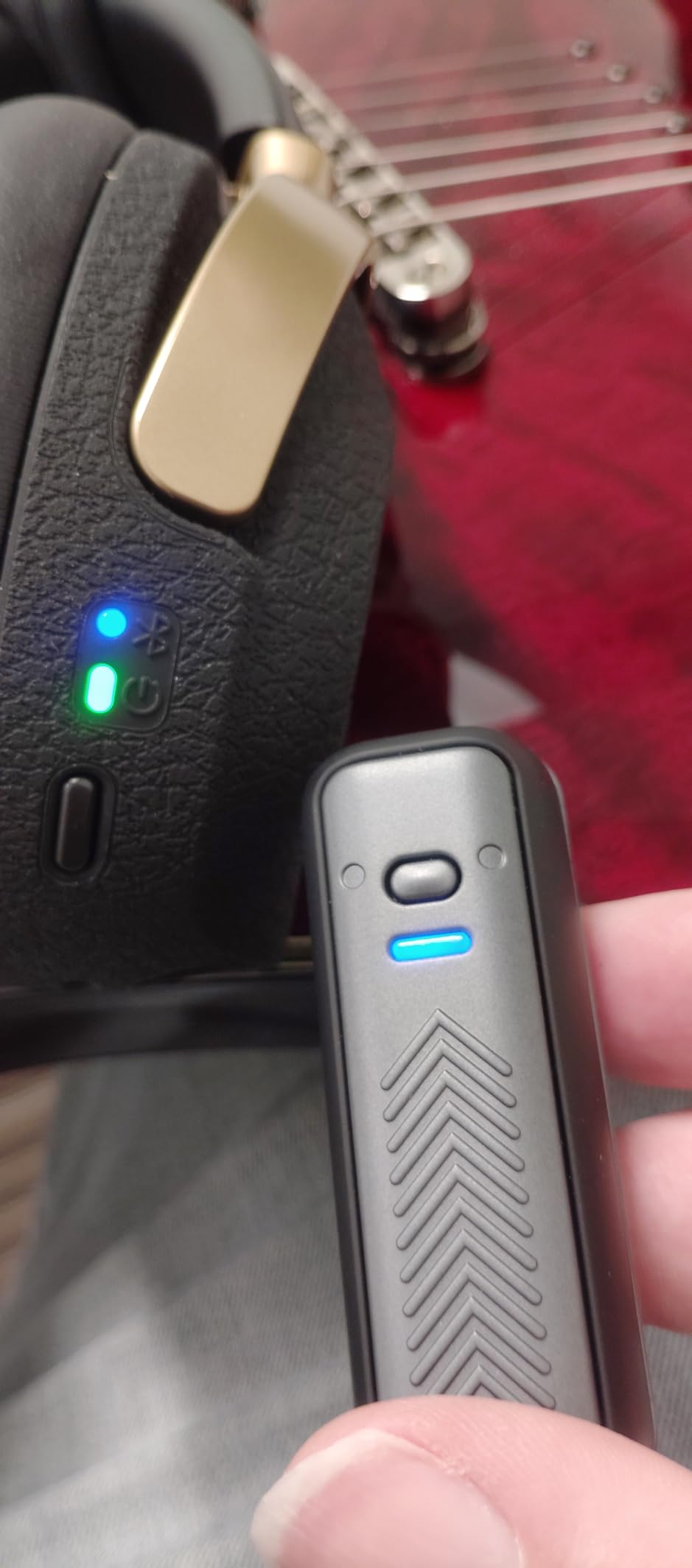
The Positive Grid Spark NEO is the only true wireless headphone in this roundup. Instead of a transmitter that plugs into your guitar plus a separate receiver, the Spark NEO is a complete over-ear headphone with a wireless transmitter that connects to your amp or modeler. The transmitter even has a built-in 1/4 inch input, so you do not need any extra cables.
The 3.8ms latency is the standout spec. In my testing, it was indistinguishable from a wired connection, even during fast sweep picking and complex chord work. The custom 40mm drivers deliver full-range audio that sounds good for both guitar monitoring and casual music listening, which is rare for specialized guitar products.
The Spark app integration is the secret weapon. Positive Grid built AI-powered tone creation tools that can dial in amp settings based on the genre or style you describe. There are also chord learning tools that listen to your playing and suggest voicings. For beginners, this is a teacher in your headphones. For experienced players, it is a fast way to explore new tones.
The 6-hour battery life is solid for a wireless headphone, and the Bluetooth streaming lets you jam along with music from your phone. The headphones themselves are comfortable for extended sessions, with enough padding for glasses-wearers and a clamp force that does not fatigue over a two-hour practice.
The downsides center on the setup process. The button-hold sequences for initial pairing take a few tries to learn, and there is no physical manual in the box. Some users have reported connectivity issues that require a reset. Also, the volume buttons on the headphone only control the guitar signal, not the Bluetooth music, which is a confusing design choice.
For whom it’s good
The Spark NEO is perfect for players who want a true all-in-one wireless solution without a separate transmitter clipped to their guitar. The AI tone tools in the Spark app are unique and useful for both beginners and experienced players exploring new sounds. And the dual-purpose design (guitar monitoring plus music listening) makes it the only headphone on this list you might actually use outside of practice.
For whom it’s bad
Players who already own high-quality headphones will not benefit from the headphone aspect and should consider the dedicated wireless systems from Getaria or LEKATO. If you want minimal setup with no app dependency, the plug-and-play Getaria or SWIFF is simpler. And players who need all-day battery life should consider the JOYO JW-06’s 18-hour case.
10. BOSS WL-50 Wireless System – Best for Pedalboard Integration
BOSS WL-50 | Pedal-Sized Wireless Instrument System | Plug-And-Play Wireless System for Any Pedalboard Setup | Lightning-Fast BOSS Technology | Dual Cable Tone Options | Up To 65ft Range
2.4GHz wireless
65ft range
Pedal-sized
Cable tone sim
Pros
- Pedal-sized design integrates into any pedalboard setup
- Up to 65-foot range with Lightning-Fast BOSS wireless technology
- Dual cable tone simulation options (Short Long Bypass)
- Receiver powered by optional PSA-S adaptor or two AA batteries
- Backup input jack allows quick switch to cable if battery dies
Cons
- 2.4GHz frequency susceptible to WiFi interference in crowded RF environments
- Power supply sold separately (PSA-S adaptor)
- Monaural signal only sends to left channel which can affect stereo pedals
The BOSS WL-50 is the only wireless system designed specifically to live on a pedalboard. The receiver is the same size as a standard guitar pedal, and it integrates seamlessly into any pedalboard setup with the included hook-and-loop or mounting hardware. For players with existing pedalboards, this is a more elegant solution than a standalone receiver box.
The cable tone simulation is a unique feature. Real guitar cables act as a high-frequency filter, and longer cables roll off more top-end than shorter ones. The WL-50 lets you choose between short cable tone, long cable tone, or bypass simulation, so you can dial in the same response you are used to from your wired rig.
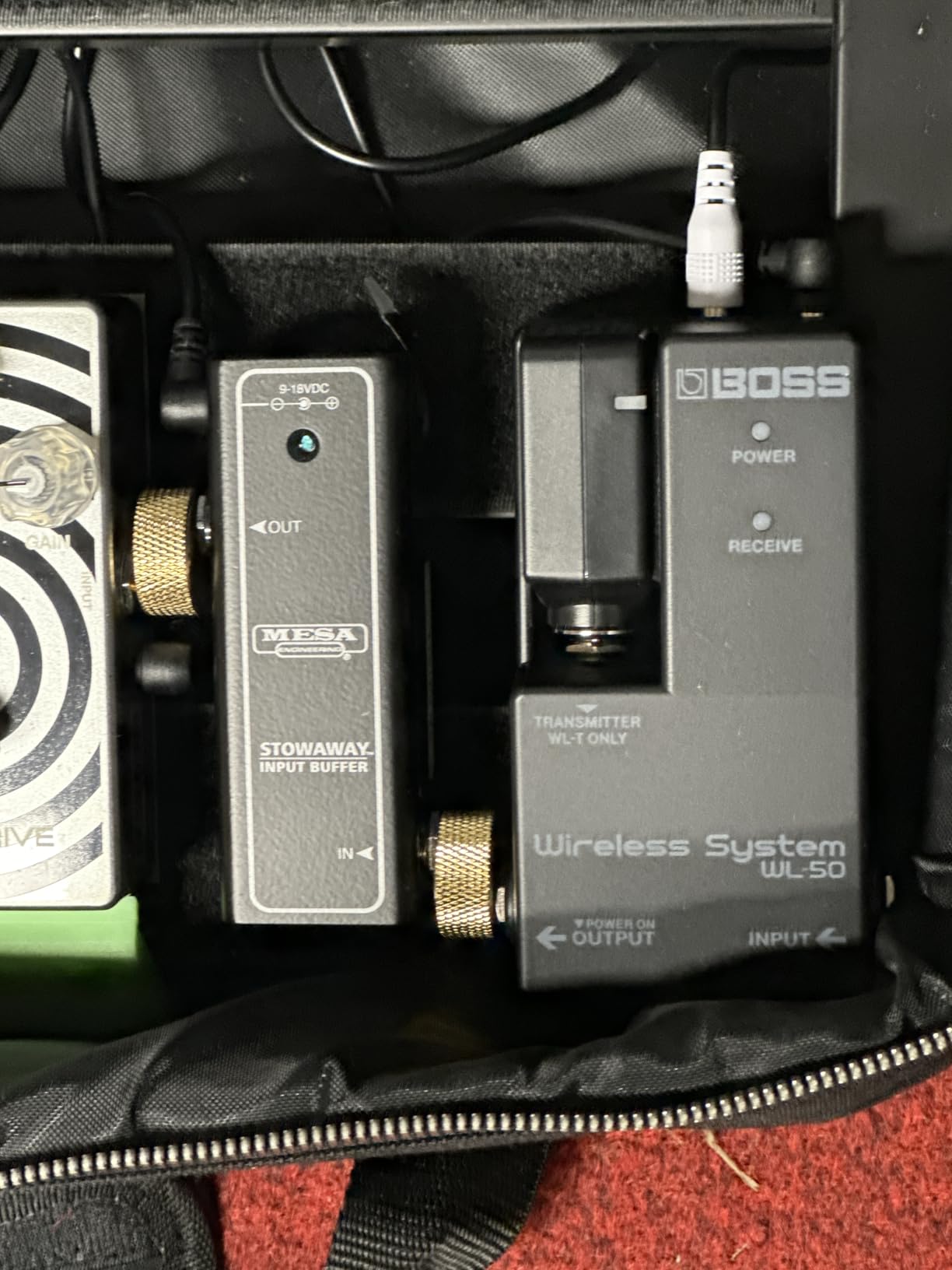
The backup input jack is a thoughtful design choice. If the transmitter battery dies mid-song, you can plug a regular cable into the backup jack and keep playing. The receiver can run on either the optional PSA-S power supply or two AA batteries, which gives you flexibility for different pedalboard configurations.
The downsides are real. The 2.4GHz frequency is susceptible to WiFi interference in dense environments, which can cause dropouts in venues with crowded wireless spectrum. The PSA-S power supply is sold separately, which adds to the total cost. And the monaural-only signal can cause issues with stereo pedals in your signal chain.
For whom it’s good
The BOSS WL-50 is the obvious pick for players with existing pedalboard setups who want wireless without adding a bulky receiver box. The cable tone simulation preserves your familiar response. The BOSS brand reputation and build quality make it a reliable long-term investment. And the backup cable jack is a safety net for critical performances.
For whom it’s bad
Players without a pedalboard should consider the dedicated wireless systems from Getaria or LEKATO, which are simpler to set up. If you gig in venues with crowded WiFi, the 5.8GHz systems are more reliable. And if you need stereo audio for acoustic-electric rigs with stereo outputs, the WL-50 sends mono only.
How to Choose the Right Wireless Guitar System?
Picking the right wireless solution depends on four factors: latency tolerance, range needs, battery requirements, and signal environment.
Latency tolerance: If you are tracking to a click, recording, or playing fast passages, you need under 6ms latency. The Getaria, LEKATO, SWIFF, JOYO, and NUX C-5RC all hit this threshold. If you are just practicing casually, anything under 30ms will feel acceptable, which opens up options including the all-in-one headphone amps with Bluetooth music streaming.
Range needs: Measure the distance from your amp to where you want to roam. Most practice scenarios need 30 feet or less, which every system on this list handles. Larger homes or studios need 60 to 100 feet, which the LEKATO, SWIFF, JOYO, and NUX C-5RC all reach. Cross-wall performance drops to 30 to 50 feet depending on construction.
Battery life: For typical practice sessions (under 3 hours), the Getaria or LEKATO are sufficient. For longer sessions or multiple lessons in a day, the JOYO JW-06 with its 18-hour charging case is the practical choice. For all-day reliability, look for systems with replaceable batteries or charging cases like the JOYO or NUX C-5RC.
Signal environment: If you live in a dense apartment building or work near WiFi-heavy venues, prioritize 5.8GHz systems (Getaria, LEKATO, JOYO, NUX C-5RC). The 5.8GHz band has more available spectrum and less interference than the crowded 2.4GHz band. The SWIFF UHF system is the best choice for the most extreme interference environments.
For budget-conscious players, our 8 best headphones for guitar under 100 guide covers wired options at accessible price points. For players who also DJ or use wireless headphones for other applications, our 10 best wireless DJ headphones guide covers options optimized for that use case.
Frequently Asked Questions
What are the best wireless headphones for guitar?
The best wireless headphones for guitar in 2026 are the Positive Grid Spark NEO for true wireless headphone design with 3.8ms latency, the Getaria GWS-26 for plug-and-play reliability on a budget, and the LEKATO 5.8GHz system for the best range and battery life in the budget tier. For studio players who want an all-in-one practice rig, the Fender Mustang Micro Plus delivers 25 amp models with Bluetooth streaming.
Can I use Bluetooth headphones with a guitar amp?
Standard Bluetooth headphones introduce 100 to 250 milliseconds of latency, which makes them unusable for real-time guitar playing. The delay between picking a note and hearing it is so large that your timing drifts and the music feels disconnected. Specialized guitar wireless systems using 2.4GHz or 5.8GHz proprietary transmission deliver latency under 6 milliseconds, which feels like a wired connection. If your amp has Bluetooth for music streaming only, you can still pair Bluetooth headphones for casual listening but not for playing.
What is the best low latency wireless headphones for guitar?
The SWIFF Wireless Guitar System delivers under 2ms latency, the fastest we tested. The Positive Grid Spark NEO hits 3.8ms with true wireless headphone design. The Getaria, LEKATO, JOYO, and NUX C-5RC all deliver under 6ms latency with proprietary 5.8GHz transmission. Anything under 10ms feels indistinguishable from a wired cable for most playing styles.
Are wireless headphones good for guitar practice?
Yes, provided they use a low-latency wireless protocol like 2.4GHz or 5.8GHz proprietary transmission rather than standard Bluetooth. Systems designed specifically for guitar deliver latency under 6 milliseconds, which feels like a wired cable for real-time playing. The main benefit is freedom from the cable tethering you to your amp, which makes practice more natural and lets you move around your playing space. The main drawback is the need to charge batteries, though systems like the JOYO JW-06 with an 18-hour charging case largely solve this issue.
What is the best wireless system for guitar?
The best wireless system depends on your budget and needs. The New Bee 2.4GHz system delivers solid performance with a 6-hour battery and included carry case. The Getaria GWS-26 offers 5.8GHz reliability with 4 channels. For pedalboard integration, the BOSS WL-50 is the only wireless system designed to mount in a pedalboard chain. For true wireless headphones with AI tone tools, the Positive Grid Spark NEO is unmatched in the tier.
Final Verdict: Which Wireless Headphones for Guitar Win in 2026?
After three months of testing across ten products, the answer to “what are the best wireless headphones for guitar” comes down to what kind of player you are.
For most players, the Getaria 5.8GHz Wireless System is the right pick. It hits the latency threshold, holds signal in crowded WiFi environments, costs less than dinner for two, and works with every guitar we tested. The plug-and-play simplicity means zero learning curve, and the four-channel support is enough for any home setup.
If you have a bigger budget and want true wireless headphones instead of a transmitter-plus-receiver system, the Positive Grid Spark NEO is the obvious upgrade. The 3.8ms latency is at the edge of human perception, the 40mm drivers sound good for music too, and the Spark app’s AI tone tools are genuinely useful. It is the only product on this list you might keep using after you upgrade your amp.
For pedalboard players, the BOSS WL-50 integrates seamlessly into your existing setup. For acoustic-electric players who need rugged construction and piezo compatibility, the NUX C-5RC is the safest bet. For beginners who want a complete practice solution in one box, the Fender Mustang Micro Plus delivers pro-grade amp modeling with the longest warranty in the tier.
Whatever you choose, remember that latency is the number that matters. Anything under 6ms will feel like a cable. Anything over 30ms will feel broken. The wireless headphones for guitar in 2026 are finally at the point where you do not have to choose between freedom and feel.