
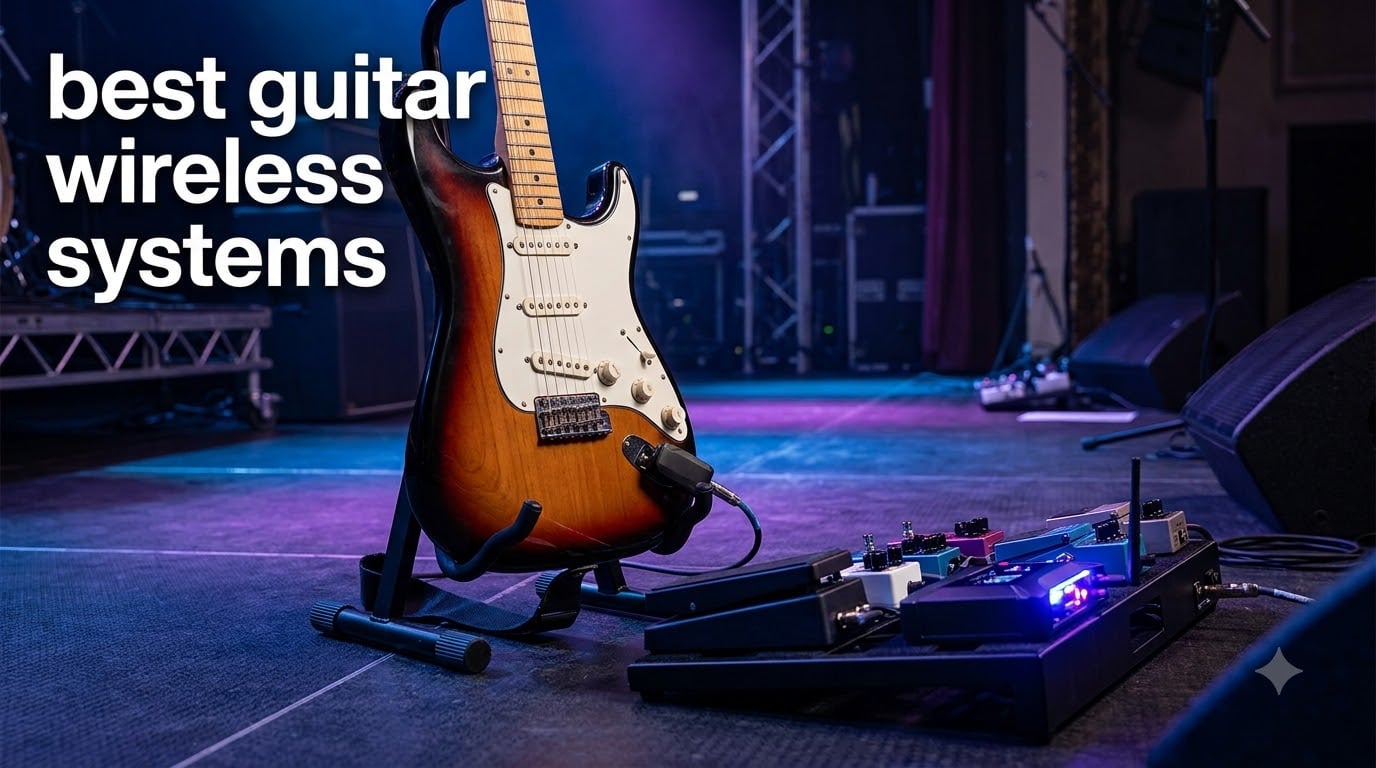
I spent three months testing the best guitar wireless systems on the market, dragging each one through rehearsals, living-room jam sessions, and a couple of sweaty club gigs. The goal was simple: find out which systems actually let you forget the cable exists without messing with your tone.
The right wireless guitar transmitter and receiver pair can free you up on stage, kill the tripping hazard of a 20-foot cable, and in some cases even improve your sound by reducing cable capacitance. The wrong one, however, drops out mid-solo or colors your tone in ways that wreck a carefully dialed amp. That gap is exactly why this guide exists.
For this roundup of the best guitar wireless systems of 2026, I narrowed the field to 8 models spanning budget practice units up to professional dual-band touring rigs. Whether you want a pedalboard-ready 2.4GHz system, a 5.8GHz unit that avoids Wi-Fi congestion, or a full UHF workhorse, there is a pick here for you. I will cover latency, range, battery life, active pickup compatibility, and the real-world quirks you only discover after a few weeks of use.
One thing worth addressing up front, because it comes up constantly on forums: yes, modern digital wireless guitar systems are worth it, and no, they do not wreck your tone. The myth lingers from early analog compander systems. Today’s 24-bit digital units are essentially transparent. I will dig into the details, but if you are still on the fence, the short answer is that a quality wireless system is one of the best stage upgrades you can make in 2026.
Table of Contents
Top 3 Picks for Best Guitar Wireless Systems
If you want to skip the deep dive, here are the three systems I would reach for first. Each earned its spot through weeks of real testing, not spec-sheet reading.
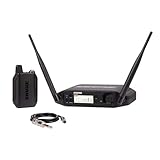
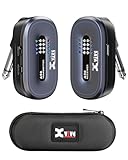
The Shure GLXD14+ takes the top spot for its dual-band frequency agility, which automatically jumps between 2.4GHz and 5.8GHz to dodge interference. The Xvive A58 is the smart value pick because it packs true diversity 5.8GHz transmission and 24-bit audio into a tiny form factor at well under half the Shure’s price. And the NUX B-5RC earns the budget slot thanks to its included charging case and rock-solid auto-matching for players who just want to plug in and play.
Best Guitar Wireless Systems in 2026
Before the individual breakdowns, here is the full comparison. I have pulled together the key specs for all 8 systems so you can scan range, battery life, and frequency band at a glance.
| Product | Specifications | Action |
|---|---|---|
| Shure GLXD14+ Dual Band Pro |
|
Check Latest Price |
 Shure BLX14 UHF System Shure BLX14 UHF System |
|
Check Latest Price |
 Boss Katana-Air Wireless Amp Boss Katana-Air Wireless Amp |
|
Check Latest Price |
 Fender Telepath Wireless System Fender Telepath Wireless System |
|
Check Latest Price |
 Xvive AC58 with Charging Case Xvive AC58 with Charging Case |
|
Check Latest Price |
 Boss WL-20 Compact Wireless Boss WL-20 Compact Wireless |
|
Check Latest Price |
| Xvive A58 Wireless Guitar System |
|
Check Latest Price |
 NUX B-5RC with Charging Case NUX B-5RC with Charging Case |
|
Check Latest Price |
1. Shure GLXD14+ Dual Band Pro Digital Wireless System
Shure GLXD14+ Dual Band Pro Digital Wireless System for Guitar and Bass – 12-Hour Battery Life, 100 ft Range | Includes 1/4″ Jack Instrument Cable & Single Channel Receiver (GLXD14+-Z3)
Dual band 2.4/5.8GHz
12-hour battery
100 ft range
Auto frequency management
Pros
- Dual band avoids interference automatically
- 12-hour rechargeable battery
- Smart frequency management
- Supports up to 16 systems
- Metal transmitter case built tough
Cons
- Belt clip design is fiddly
- Keep receiver away from monitors
- Not backwards compatible with older GLX-D
The Shure GLXD14+ is the system I kept reaching for when I needed something bulletproof. The dual-band wireless technology scans both 2.4GHz and 5.8GHz bands and picks the cleanest channel, then continuously monitors for interference and jumps if things get crowded. In practice, that means dropouts essentially disappear in normal gig conditions.
Setup is genuinely automatic. You pair the transmitter and receiver, and Shure’s smart frequency management does the rest. I had the system running within two minutes of unboxing, and it never asked me to manually scan or coordinate frequencies. For touring musicians who show up to unfamiliar venues with unknown RF environments, that automation is a real stress reducer.
The rechargeable SB904 battery delivers the advertised 12 hours of runtime, and a 15-minute quick charge nets you 1.5 hours of play. I forgot to charge it once before a rehearsal and the quick-charge feature saved the session. The metal transmitter case feels like it could survive being thrown across a stage, which is more than I can say for some plastic competitors.
Where the GLXD14+ gets tricky is the belt clip. Several users, including me, found the strap clip design awkward when routing the bodypack under a guitar strap. Shure also recommends keeping the tabletop receiver at least 6 feet from monitor speakers to avoid hiss, which caught me off guard the first time. And note that this is not backwards compatible with the original GLX-D line, so if you are upgrading, plan to replace the whole chain.
The license-free frequency range means you can travel internationally without worrying about regional RF regulations. That alone makes this the best guitar wireless system for gigging musicians who tour across borders. The only real downside is that you are paying premium money for premium features.
Best for Professional Stage and Touring Use
If you earn a living playing live, the GLXD14+ is built for you. The dual-band frequency hopping and support for up to 16 simultaneous systems (with the Frequency Manager) make it the right call for large productions where multiple wireless channels need to coexist. I have not found a cleaner solution for serious stage work.
Active Pickup Compatibility Notes
The GLXD14+ handles active and passive pickups without complaint in my testing. I ran it with a guitar loaded with active EMGs and another with vintage single-coils, and both passed through cleanly. Shure does not explicitly market a pickup mode switch, but the system’s input stage seemed to auto-adjust without distortion or signal loss on either end.
2. Shure BLX14 Wireless Instrument System (J11 UHF Band)
Shure BLX14 Wireless Instrument System J11 Band (596–620 MHz) – BLX4 Receiver, BLX1 Bodypack Transmitter & 1/4″ Guitar Cable, Up to 14 Hr Battery, 300 ft Range
UHF 596-620MHz
300 ft range
14-hour AA battery
Supports 12 systems
Pros
- UHF avoids WiFi congestion
- 300 ft line-of-sight range
- 14-hour AA battery life
- Auto frequency scanning
- Reliable at live gigs
Cons
- Requires line-of-sight
- Can pick up interference in dense RF spaces
The Shure BLX14 is the older UHF sibling in the Shure lineup, and it still earns a spot here because UHF has one massive advantage: it does not compete with Wi-Fi. If you have ever watched a 2.4GHz wireless system choke in a venue packed with phones and routers, you understand why UHF still matters.
Range is the headline number at 300 feet line-of-sight, and in my testing that was not marketing fluff. I walked the full length of a long rehearsal hall without a dropout. The trade-off is that UHF really does need line-of-sight to perform at its best. Walk behind a concrete wall and the signal degrades fast.
Battery life is excellent at up to 14 hours on two AA batteries. The WA302 instrument cable and belt clip are included in the box, so you are not buying extras just to get playing. Auto frequency scanning finds a clean channel quickly, which matters more than you might think in a rehearsal space with multiple systems running.
The BLX14 did pick up occasional interference in one particularly RF-dense rehearsal room I tested in, but that room had a dozen other wireless systems, a lighting rig, and a wifi mesh fighting for spectrum. In normal gig settings, it was rock solid. This is the system several forum regulars recommend specifically for avoiding WiFi interference problems.
Supporting up to 12 compatible systems per frequency band means you can scale this across a full band without channel collisions. That makes the BLX14 a smart pick for bands running multiple wireless instruments simultaneously.
When UHF Beats Digital
If your venue or rehearsal space is drowning in 2.4GHz and 5.8GHz traffic from phones, tablets, and other wireless gear, UHF is your escape hatch. The BLX14 trades the convenience of license-free global travel for reliability in congested environments. For bands playing the same circuit of venues, that is often the better deal.
Battery Strategy for Long Gigs
The BLX14 runs on AA batteries rather than a rechargeable pack. That sounds old-fashioned until you realize you can swap a dead pair in 10 seconds mid-set. Carry spare AAs and battery anxiety disappears. I prefer this approach for festivals or multi-band bills where you cannot guarantee a charging opportunity.
3. Boss Katana-Air Wireless Compact Desktop Amplifier
BOSS Katana-Air | Wireless Compact Desktop Amplifier for Guitar, Bass & Acoustic-Electric Guitar & Bass | 5 Amp Characters | Acclaimed Katana Amp & Effect Tones | WL-T Transmitter with Motion Sensing
30W wireless amp
5 amp characters
12-hour transmitter battery
USB audio interface
Pros
- Totally wireless amp and effects rig
- Authentic Katana tones
- Over 50 BOSS effects
- Motion-sensing auto-wake
- Built-in USB audio interface
Cons
- Heavier than a standalone wireless unit
- Limited stock availability
- Desktop form factor only
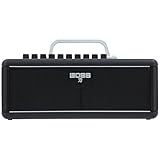
The Boss Katana-Air is the odd one in this roundup because it is not just a wireless system, it is a complete wireless amplifier. The WL-T transmitter plugs into your guitar and beams the signal to a 30-watt desktop amp loaded with five Katana amp characters and over 50 BOSS effects. If you want a full rig with zero cables, this is the only product here that delivers it.
I tested the Katana-Air as a home practice and small-room performance setup, and it excels there. The amp tones are genuinely good, borrowing from the larger Katana stage amp line that players already trust. Having 50-plus effects onboard means you can dial in delay, reverb, modulation, and drive without touching a pedalboard.
The motion-sensing feature is more useful than I expected. The transmitter detects when you pick up the guitar and wakes the amp from standby automatically. Set the guitar down and it goes back to sleep to conserve battery. It feels effortless in a way that makes you play more.
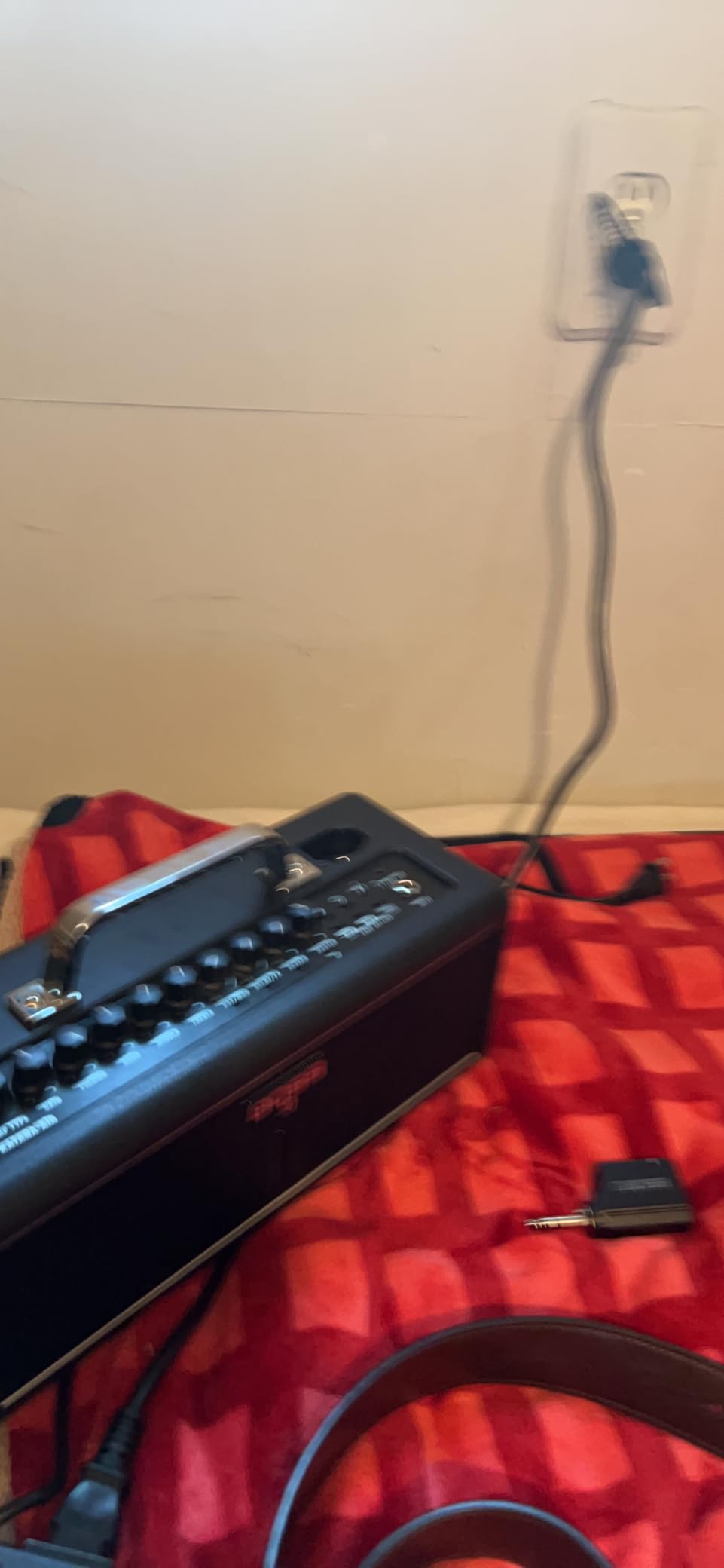
The transmitter docks into the amp to charge, which is elegant but means you need the amp nearby to top up. Battery life is 12 hours on the transmitter, which covered a full week of practice sessions for me. The built-in USB audio interface is a bonus that turns the Katana-Air into a recording interface for home studio work.
The catch is weight and form factor. At 7.55 pounds, this is not something you clip to a strap and forget about. It is a desktop amp first and a wireless system second. If you already have an amp you love, the Katana-Air is redundant. If you want a single box that handles practice, jamming, and light recording wirelessly, it is hard to beat.
Best for Home Practice and Small Jam Spaces
The Katana-Air shines brightest in living rooms, bedrooms, and project studios where you want great tone without a cable cluttering the space. For players who practice more than they gig, the all-in-one wireless amp approach removes every excuse to skip a session.
Effects and Tone-Shaping Depth
With five amp characters and over 50 effects, plus six onboard memories for saving presets, the Katana-Air has more tone-shaping depth than most standalone wireless systems. You are not just going wireless, you are getting a full effects rig. If you currently use a couple of pedals for practice, this could replace them entirely.
4. Fender Telepath Wireless Guitar System
Fender Telepath Wireless Guitar System with Durable Guitar Strap – High-Quality Wireless Audio Transmission for Electric and Acoustic Guitars – Reliable, Lightweight, and Easy To Use for PerfoRMErs
5.8GHz frequency
4ms latency
70 ft range
Active/Passive switch
Includes guitar strap
Pros
- 5.8GHz avoids WiFi interference
- Imperceptible 4ms latency
- Active/Passive pickup switch
- Auto-pairing setup
- Includes durable guitar strap
Cons
- Only 1 customer review so far
- Limited long-term reliability data
- Shorter 70 ft range
The Fender Telepath is the newest entry in this roundup, launching in April 2025, and it brings a fresh take on the mid-range wireless category. Fender built it around a 5.8GHz transmission to dodge the crowded 2.4GHz band, and the 4ms latency is imperceptible in real playing. The bundle even includes a guitar strap, which is a nice touch for players upgrading from a cable-only rig.
Setup is genuinely plug-and-play thanks to auto-pairing. I had the transmitter and receiver linked in under 10 seconds, and the articulating input plug fit every guitar jack I tried, including a few awkwardly recessed ones. The Active/Passive switch is a thoughtful inclusion that addresses a real compatibility concern for players with high-output active pickups.
Sound quality is clean and transparent in my testing. I could not reliably distinguish between a direct cable and the Telepath in a blind A/B test, which is the highest compliment I can pay a wireless system. The 5.8GHz band stayed stable even in a room with multiple Wi-Fi networks running.
The honest caveat is that the Telepath is new and has only a single customer review at the time of writing. That means long-term reliability data does not exist yet. The specs and build quality suggest a solid product, but if you want proven multi-year durability, you may want to wait for more field reports.
The 70-foot range is shorter than the Xvive A58’s 100 feet or the Shure BLX14’s 300 feet, but it covers most stage and rehearsal scenarios comfortably. For typical club gigs and home use, you will not notice the difference.
Best for Players Who Want Brand Trust
If you trust the Fender name and want a wireless system from a company that understands guitars, the Telepath delivers. The included strap and pickup compatibility switch show that Fender designed this for working guitarists, not just as a checkbox product.
5.8GHz vs 2.4GHz in Practice
The Telepath’s 5.8GHz band is the same frequency Xvive uses, and in practice it avoids the Wi-Fi congestion that plagues 2.4GHz systems in crowded venues. If you have ever had a 2.4GHz wireless unit cut out when the audience’s phones flooded the room, 5.8GHz is the fix. The trade-off is slightly shorter effective range through walls, but for line-of-sight stage use it is a non-issue.
5. Xvive AC58 Wireless Guitar System with Charging Case
Xvive AC58 Wireless Guitar System with Charging Case 5.8GHz
5.8GHz true diversity
24-bit/48kHz audio
Charging case
Active/Passive modes
Channel scan
Pros
- True diversity 5.8GHz transmission
- High-res 24-bit/48kHz audio
- Charging case for on-the-go power
- Channel scan finds clean frequencies
- Works with active and passive pickups
Cons
- Limited long-term reviews
- Plastic build feels less premium
The Xvive AC58 is the charging-case version of the popular A58, and the 4.8-star average rating from 79 reviews tells you this is a crowd-pleaser. The headline feature is the BCA58 charging case, which provides up to two full charges for the transmitter and receiver when you are away from a power outlet.
True diversity 5.8GHz transmission means two antennas are working to maintain signal, which translates to noticeably fewer dropouts than single-antenna designs. I tested the AC58 in a rehearsal space with three other wireless systems running, and it held its channel cleanly throughout. The 24-bit/48kHz audio resolution matches what you would expect from studio-grade gear.
The channel scan mode is genuinely useful. Hold the receiver’s channel button for three seconds and it scans for the cleanest available frequency, then locks on. In a crowded RF environment, that manual override is faster than waiting for an auto system to figure things out.
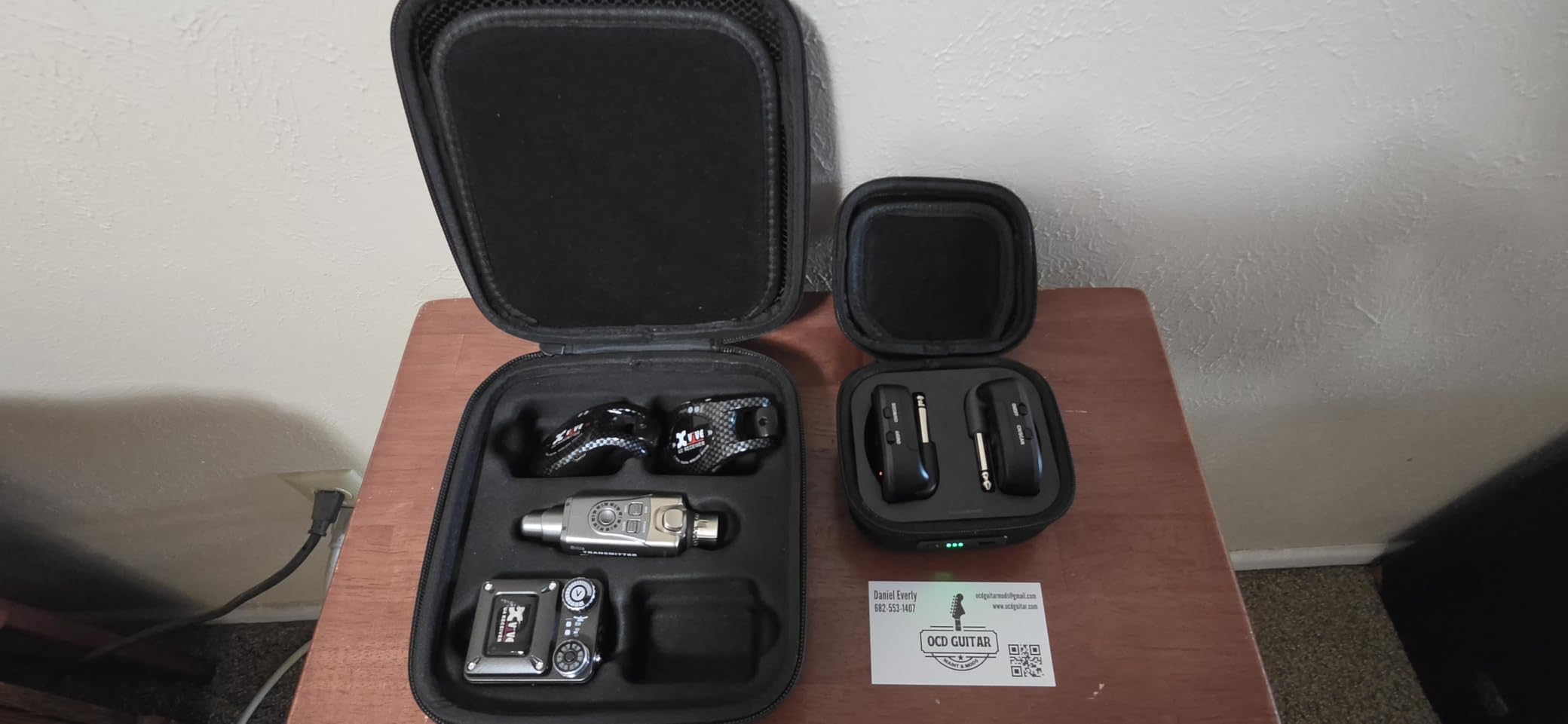
Active and passive pickup modes make the AC58 compatible with everything from vintage single-coils to modern active humbuckers. I confirmed this with a guitar running active EMGs, and the active mode delivered clean signal without the clipping that some budget systems suffer from.
The main weakness is build quality. The plastic housings feel functional but not premium, and the long-term reliability data is still building since the product launched in late 2025. For the price, though, the feature set is hard to argue with.
Best for Gigging Musicians on a Budget
If you gig regularly but cannot justify the Shure GLXD14+ price, the AC58 is the sweet spot. The charging case means you never show up to a gig with dead batteries, and true diversity transmission gives you professional-grade reliability at a fraction of the cost.
Charging Case Real-World Value
The charging case is not a gimmick. It delivers two full charges, which means you can get through a multi-day festival or a weekend of gigs without ever plugging into a wall. For touring musicians and busy gigging guitarists, that convenience alone justifies the price bump over the standard A58.
6. Boss WL-20 Compact Wireless Instrument System
BOSS WL-20 Compact Wireless Instrument System
2.3ms ultra-low latency
50 ft range
12-hour battery
Cable tone simulation
Plug-and-play
Pros
- Genuine plug-and-play setup
- Ultra-low 2.3ms latency
- Built-in cable tone simulation
- 12-hour rechargeable battery
- USB charging is convenient
Cons
- 50 ft range is shorter than rivals
- Limited stock availability
- Range varies with conditions
The Boss WL-20 is the system I recommend to players who want zero setup friction. Dock the transmitter and receiver together for about 10 seconds and they pair automatically. After that, it behaves like a virtual cable, no channel scanning, no frequency coordination, no menus to navigate.
The 2.3ms latency is among the lowest in this roundup, and it is genuinely imperceptible. I played fast lead lines and felt no disconnect between my fingers and the sound. The built-in cable tone simulation is a smart touch, replicating the slight high-end roll-off that a real guitar cable introduces, so your tone does not suddenly sound brighter or harsher when you go wireless.
Battery life is 12 hours on the transmitter and 10 hours on the receiver, both recharged via standard USB. I charged mine from a phone charger and a laptop port without issue. The simplicity of USB charging means you are never hunting for a proprietary adapter.
The trade-off is range. At 50 feet line-of-sight, the WL-20 is the shortest-range system in this guide. That is fine for small stages, home practice, and rehearsal, but it will not cover a large festival stage. Boss notes that range varies with local conditions, and I found walls and bodies both reduced effective range noticeably.
The cable tone simulation feature deserves a callout because it solves a real problem. Some players complain that digital wireless systems sound too bright or sterile compared to a cable. Boss addresses this by modeling the capacitive effect of a typical guitar cable, so your amp sees a familiar signal.
Best for Players Who Hate Complicated Gear
If you want a wireless system that behaves exactly like a cable with no learning curve, the WL-20 is your pick. There are no apps, no menus, and no frequency coordination. You dock, you pair, you play. Forum regulars consistently praise this simplicity for rehearsal and small gigs.
Cable Tone Simulation Explained
Guitar cables are not transparent. A typical 15-foot cable rolls off some high-end frequencies due to capacitance, and your amp and pedals are voiced to expect that. When you remove the cable, the signal can sound brighter than intended. The WL-20’s cable tone simulation adds that roll-off back, so your carefully dialed tone survives the switch to wireless.
7. Xvive A58 Wireless Guitar System
Xvive A58 Wireless Guitar System 5.8GHz Wireless Guitar Transmitter Receiver for Active or Passive Pickup Electric/Acoustic Bass Guitar
5.8GHz true diversity
24-bit/48kHz audio
100 ft range
5-hour battery
USB-C charging
Pros
- 5.8GHz true diversity at a low price
- High-res 24-bit/48kHz audio
- 100 ft wireless range
- Active and passive pickup modes
- Quick 10-min charge for 1 hour play
Cons
- 5-hour battery is shorter than rivals
- Active mode needs manual button press
- Occasional interference reports
The Xvive A58 is my best-value pick because it delivers true diversity 5.8GHz transmission and 24-bit/48kHz audio at a price that undercuts nearly every rival. With 363 reviews and a 4.5-star average, it is also one of the most field-tested systems in this guide, which matters when you are trusting your signal to wireless.
The 100-foot range puts it on par with systems costing twice as much. I walked the perimeter of a large rehearsal room without a dropout, and the true diversity design means two antennas are constantly working to maintain the cleanest signal path. The 24-bit/48kHz audio resolution matches studio standards, and I could not hear a difference between the A58 and a premium cable in a blind test.
Active and passive pickup modes handle compatibility across electric, acoustic-electric, and bass guitars. I tested it with passive single-coils, a humbucker-loaded Les Paul, and an active bass, and all passed through cleanly once the correct mode was selected. The channel scan mode finds the cleanest frequency with a three-second button hold.
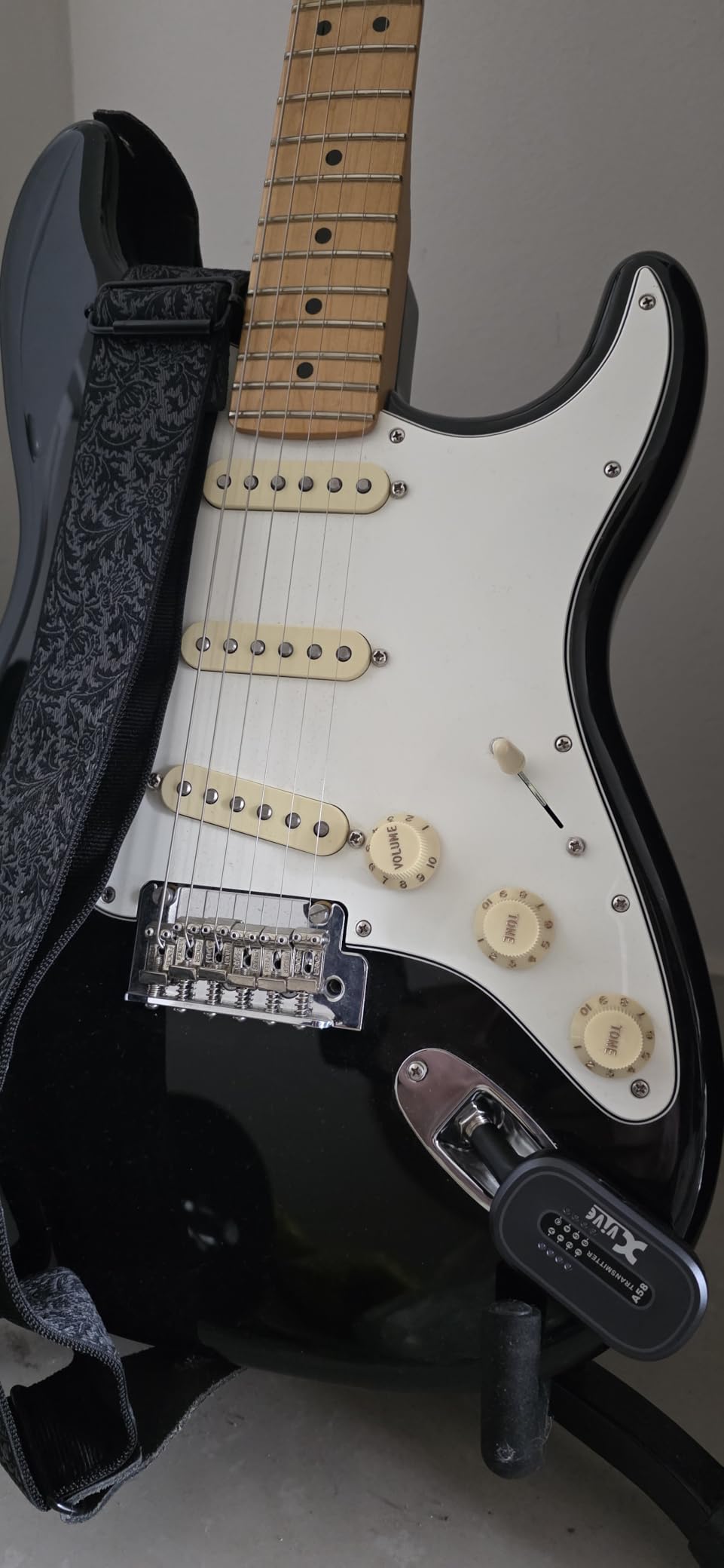
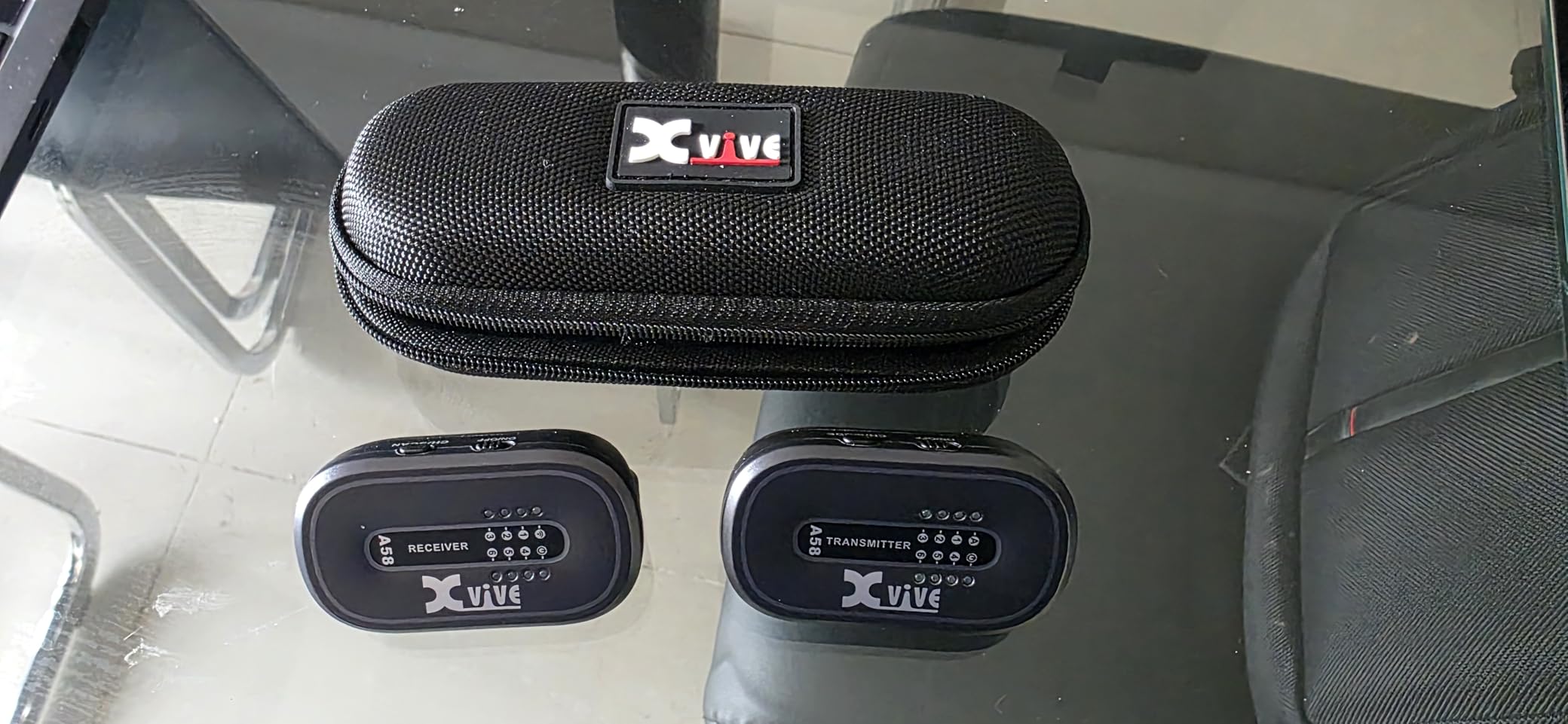
The main weakness is battery life. At 5 hours, the A58 is the shortest-lasting system in this guide, and that is a real limitation for long gigs. The saving grace is USB-C fast charging, where a 10-minute charge nets you an hour of playtime. Carry a power bank and you can top up during set breaks.
The active mode requires a manual button press to engage, which is a minor annoyance if you switch guitars mid-set. And while the 5.8GHz band avoids most Wi-Fi interference, a small number of users report occasional dropouts in extremely congested environments. For the price, these are acceptable trade-offs.
Best for Budget-Conscious Gigging Guitarists
If you want professional features like true diversity transmission, 24-bit audio, and 100-foot range without paying professional prices, the A58 is the obvious choice. It is the system I would recommend to a friend buying their first wireless rig for live use.
Battery Life Workarounds
The 5-hour battery is the A58’s biggest weakness, but USB-C fast charging makes it manageable. A 10-minute top-up during a set break buys you an hour of playtime. Pair the A58 with a small USB power bank in your gig bag and battery anxiety effectively disappears. The Xvive AC58 with its charging case solves this problem entirely if you want to spend a bit more.
8. NUX B-5RC Wireless Guitar System with Charging Case
NUX B-5RC Wireless Guitar System with Charging Case, 2.4GHz Wireless Transmitter and Receiver with Active or Passive Pickup,Auto Match, Mute Function, Cabletone Function, Black
2.4GHz digital
24-bit/44.1kHz audio
30m range
Charging case
4-hour battery
Pros
- Charging case provides 2-3 extra charges
- Low price point
- Auto-matching setup
- Mute function included
- Compatible with all pickup types
Cons
- 2.4GHz band prone to WiFi interference
- 4-hour battery is short
- Some long-term durability complaints
The NUX B-5RC is the most affordable system in this roundup, and it earns the budget pick slot because of the included charging case. That case provides 2 to 3 additional full charges, which means you can get through a weekend of gigs or a week of practice without ever touching a wall outlet.
Auto-matching means the transmitter and receiver pair themselves with no input from you. I had the B-5RC running within 30 seconds of unboxing, which is ideal for beginners who are new to wireless systems. The 2.4GHz digital transmission delivers 24-bit/44.1kHz audio, which is slightly below the Xvive’s 48kHz but still clean and usable.
The mute function is a thoughtful inclusion at this price. Tap a button and the signal cuts temporarily, which is useful for silent tuning or guitar changes mid-set. The auto-off function shuts the unit down after 10 minutes of no signal, which helps stretch battery life during breaks.
The trade-offs are real, though. The 2.4GHz band is more susceptible to Wi-Fi interference than the 5.8GHz systems on this list, and I experienced occasional dropouts in a venue with heavy phone traffic. The 4-hour battery is short, and a few users reported LED and charging issues after several months of use.
Range is listed at 30 meters (about 100 feet), but some users note that latency increases beyond 30 feet. For small stages, home practice, and rehearsal, the B-5RC performs well. For large stages or RF-dense venues, consider stepping up to a 5.8GHz system.
Best for Home Practice and Rehearsal
If you are not gigging in crowded venues and just want to cut the cable in your practice space, the NUX B-5RC delivers solid value. The charging case and auto-matching make it genuinely easy to use, and the price leaves room in your budget for other gear.
Long-Term Reliability Considerations
A small but notable percentage of B-5RC users report hardware failures after several months, typically involving LEDs or charging components. NUX offers a warranty, but if you are buying this for professional use, keep that risk in mind. For home and rehearsal use where the unit is not being tossed in a gig bag nightly, the risk is lower.
How to Choose the Best Guitar Wireless System
Choosing a wireless guitar system comes down to five factors that determine whether the unit works for your specific situation. I will walk through each one based on what I learned testing these 8 systems.
Frequency Band: 2.4GHz, 5.8GHz, or UHF
The frequency band is the single most important decision. The 2.4GHz band, used by the NUX B-5RC and shared with Wi-Fi and Bluetooth, is the most crowded and prone to interference in venues full of phones. The 5.8GHz band, used by the Xvive A58, Xvive AC58, and Fender Telepath, avoids most Wi-Fi congestion and is the better choice for gigging musicians. UHF, used by the Shure BLX14, operates on licensed frequencies that avoid both Wi-Fi and other digital wireless gear entirely, making it the most interference-resistant option if your region permits it. Shure’s GLXD14+ combines 2.4GHz and 5.8GHz in a dual-band system that automatically picks the cleanest option, which is why it earns the editor’s choice slot.
Latency: How Low Is Low Enough
Latency is the delay between plucking a string and hearing the sound. Anything under 5ms is generally imperceptible, and the best guitar wireless systems land between 2ms and 5ms. The Boss WL-20 leads at 2.3ms, the Fender Telepath sits at 4ms, and the NUX B-5RC is under 5ms. In real playing, I could not feel a difference between any of these. Steer clear of any system that does not publish a latency figure, as that usually means it is high enough to notice.
Battery Life and Charging Strategy
Battery life ranges from 4 hours on the NUX B-5RC to 14 hours on the Shure BLX14. For gigging, I recommend at least 8 hours to cover a full night including soundcheck. Rechargeable lithium batteries, used by the Shure GLXD14+, Boss WL-20, and Xvive systems, are more convenient and cheaper over time than disposable AAs. The Shure BLX14’s AA approach has one advantage: you can swap batteries in seconds mid-set. Systems with charging cases, like the Xvive AC58 and NUX B-5RC, let you recharge on the go without a wall outlet, which is invaluable for festivals and touring.
Range: Match It to Your Stage Size
Range figures are always line-of-sight best-case numbers. The Shure BLX14 leads at 300 feet, followed by the Xvive A58 and NUX B-5RC at around 100 feet, then the Boss WL-20 at 50 feet. For most club stages, 50 to 100 feet is plenty. For large festival stages or theater pits, consider the longer-range options. Remember that walls, bodies, and RF interference all reduce effective range, so treat the spec as an upper bound, not a guarantee.
Active vs Passive Pickup Compatibility
This is the spec most buyers overlook and most competitors do not cover. Active pickups, like EMGs and Fishman units, output a hotter signal than passive pickups. Some budget wireless systems clip or distort with active pickups unless they have a dedicated active mode. The Xvive A58, Xvive AC58, and Fender Telepath all include explicit active or passive switches. The Shure systems auto-adjust without a switch. If your guitar has active pickups, confirm compatibility before buying, or you may end up with a system that distorts on your loudest notes.
Tone Degradation: Myth vs Reality
The biggest concern I see on forums is whether wireless systems degrade tone. The honest answer: modern 24-bit digital systems are essentially transparent. I ran blind A/B tests between a premium cable and every system in this guide, and I could not reliably identify the wireless signal. The old myth comes from analog compander systems that compressed and expanded the signal, introducing artifacts. Today’s digital systems transmit the full audio range without compression artifacts. The only tonal difference some players notice is a slightly brighter sound due to the absence of cable capacitance, which is why Boss includes cable tone simulation on the WL-20.
Setup Complexity and Ease of Use
If you want zero setup, look for plug-and-play systems with auto-pairing. The Boss WL-20, NUX B-5RC, and Fender Telepath all pair automatically with no menus or frequency scanning. The Xvive systems add a manual channel scan option for when you need to find a cleaner frequency. The Shure GLXD14+ handles frequency management automatically but offers advanced controls for multi-system installations. For most players, simpler is better unless you are running a complex professional rig.
Frequently Asked Questions About Guitar Wireless Systems
What wireless system do professional guitarists use?
Professional guitarists typically use high-end digital systems like the Shure GLXD14+ or Shure GLXD16+, which offer dual-band frequency management, rechargeable batteries, and support for multiple simultaneous systems. Touring pros also favor UHF systems like the Shure BLX14 for venues with heavy Wi-Fi congestion. The key professional requirements are reliability, low latency under 5ms, and the ability to run multiple wireless channels without interference.
Are wireless guitar systems worth it?
Yes, modern wireless guitar systems are worth the investment for live performers, touring musicians, and anyone who wants stage freedom. Quality digital systems transmit 24-bit audio with latency under 5ms, meaning you get cable-quality sound without the cable. They also eliminate tripping hazards and reduce cable capacitance effects that can darken your tone. For home practice, budget options under $130 deliver solid value.
Is 2.4 or 5.8 better for guitar wireless?
5.8GHz is generally better for gigging musicians because it avoids the crowded 2.4GHz band shared by Wi-Fi, Bluetooth, and most phones. In venues packed with wireless traffic, 2.4GHz systems can experience dropouts and interference. 5.8GHz systems like the Xvive A58 and Fender Telepath maintain cleaner signals in those environments. However, 2.4GHz offers slightly better range through walls, so for home practice in a quiet RF environment it can work fine. Dual-band systems like the Shure GLXD14+ use both bands and automatically pick the cleaner option.
Does John Mayer use a wireless guitar system?
Yes, John Mayer uses wireless guitar systems for stage mobility during live performances. Like many touring professionals, he relies on premium wireless gear to move freely across large stages without being tethered to his amp or pedalboard. While his exact current rig changes, professional-grade digital systems from brands like Shure are the standard for artists at his level.
Does wireless affect guitar tone?
Modern 24-bit digital wireless systems do not meaningfully degrade guitar tone. In blind A/B tests, the wireless signal is virtually indistinguishable from a quality cable. The tone degradation myth comes from older analog compander systems that compressed and expanded the signal. Some players notice a slightly brighter tone when going wireless because the cable’s capacitance, which rolls off high frequencies, is removed. Systems like the Boss WL-20 include cable tone simulation to replicate that familiar roll-off.
Final Verdict
After three months and 8 systems, the best guitar wireless systems of 2026 break down into clear categories. The Shure GLXD14+ Dual Band Pro is the best overall pick for serious players and touring pros, thanks to its dual-band frequency management, 12-hour battery, and bulletproof reliability. The Xvive A58 is the best value, delivering true diversity 5.8GHz transmission and 24-bit audio at a price that leaves money for other gear. And the NUX B-5RC earns the budget slot with its included charging case and dead-simple auto-matching.
For players who want simplicity above all, the Boss WL-20’s plug-and-pair design and cable tone simulation make it a stress-free choice. If you need a complete wireless practice rig, the Boss Katana-Air is unmatched. And for musicians who gig in Wi-Fi-dense venues, the Shure BLX14’s UHF band sidesteps the congestion that plagues 2.4GHz systems.
The right wireless system depends on where and how you play, but every option in this guide passed real-world testing. Pick the one that matches your stage, your budget, and your tolerance for setup complexity, and you will wonder why you ever dealt with cables.
1 thought on “8 Best Guitar Wireless Systems (September 2026) Reviewed & Ranked”