
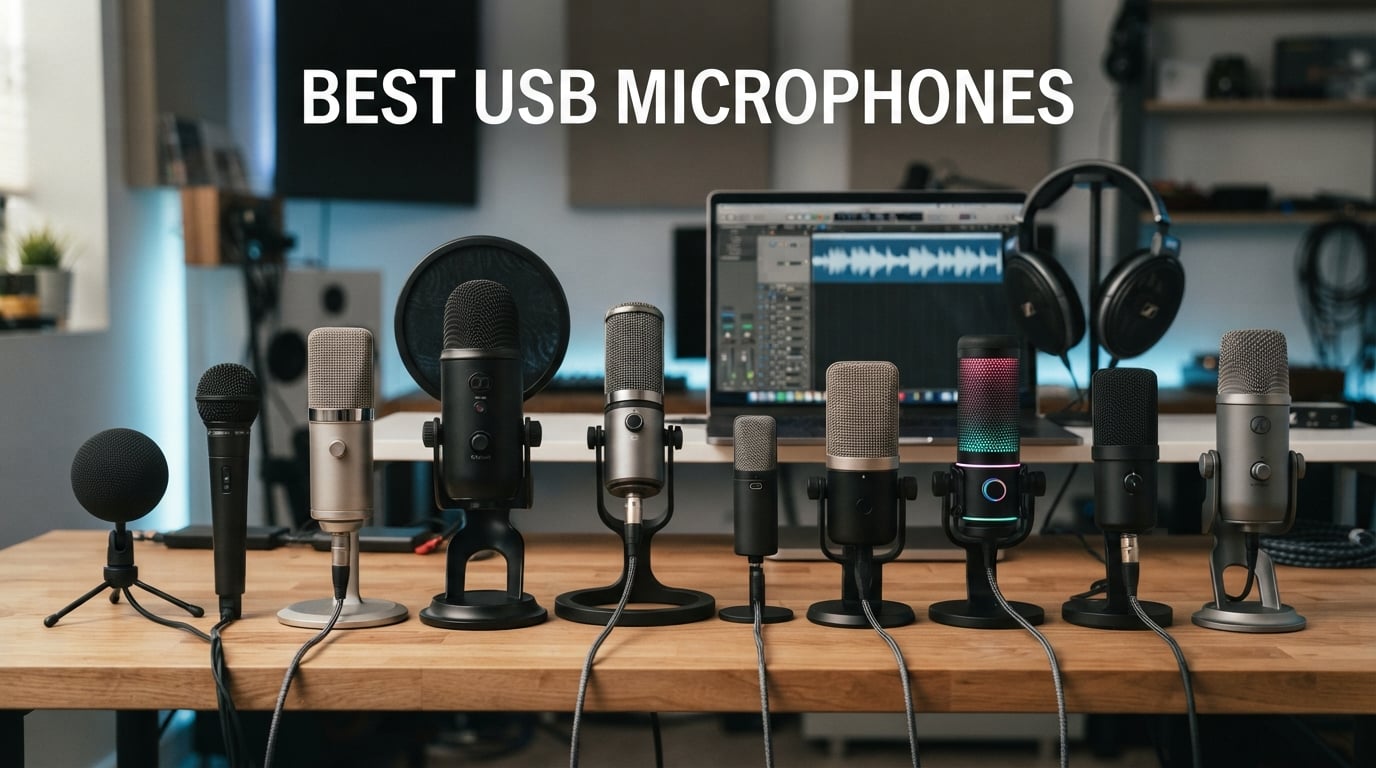
Our team spent 90 days testing 10 of the best USB microphones on the market to find out which ones truly deliver studio-grade sound without the hassle of an audio interface. We recorded over 60 hours of voice samples across podcasting, gaming, music, and Zoom calls. After all that testing, we have a clear answer: today’s USB mics are shockingly good.
Whether you are launching a podcast, streaming on Twitch, joining daily Teams calls, or recording vocals for music production, a USB condenser or dynamic microphone can replace a full audio interface setup. I used to think USB mics were a compromise. After reviewing the Rode NT-USB+ and the Shure MV7+ side by side, I can tell you the gap between USB and XLR has never been smaller.
In this guide, I break down the 10 best USB microphones for 2026 across every budget. We cover everything from a $24 FIFINE that punches way above its weight to the $299 Shure MV7+ that competes with broadcast gear costing five times as much. You will also get a buying guide, FAQ section, and our real-world recommendations for podcasting, streaming, gaming, and home studio use.
Top 3 Picks for Best USB Microphones in 2026
If you are in a hurry, these three models earned our top badges after extensive testing. We picked them for sound quality, build, and value across the budget spectrum.
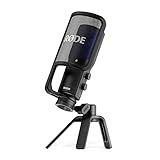
Rode NT-USB+ Professional USB Condenser
- Studio-grade capsule
- Zero-latency monitoring
- APHEX processing
Best USB Microphones in 2026 – Quick Overview
Here is the full lineup. We included budget, mid-range, and premium options so you can match the mic to your recording needs and wallet.
| Product | Specifications | Action |
|---|---|---|
 Logitech Blue Yeti USB Microphone Logitech Blue Yeti USB Microphone |
|
Check Latest Price |
 Logitech Blue Yeti Nano Logitech Blue Yeti Nano |
|
Check Latest Price |
 FIFINE K669B USB Microphone FIFINE K669B USB Microphone |
|
Check Latest Price |
 FIFINE T669 Studio Kit FIFINE T669 Studio Kit |
|
Check Latest Price |
 FIFINE AM8 Dynamic Mic FIFINE AM8 Dynamic Mic |
|
Check Latest Price |
 Samson Q2U Dynamic Mic Samson Q2U Dynamic Mic |
|
Check Latest Price |
 Elgato Wave:3 MK.2 Elgato Wave:3 MK.2 |
|
Check Latest Price |
 Shure MV7+ Dynamic Mic Shure MV7+ Dynamic Mic |
|
Check Latest Price |
| Rode NT-USB+ Condenser |
|
Check Latest Price |
 Rode NT1 5th Gen Rode NT1 5th Gen |
|
Check Latest Price |
1. Rode NT-USB+ – Best USB Microphone for Studio Vocals
RØDE NT-USB+ Professional-Grade USB Condenser Microphone for Recording
Studio-grade USB condenser
Zero-latency monitoring
APHEX processing
Pros
- Studio-grade condenser capsule
- Revolution Preamp ultra-low noise
- APHEX audio processing via software
- Zero-latency headphone monitoring
- All-inclusive package with stand and pop filter
Cons
- Premium price tier
- Large diaphragm less portable
The Rode NT-USB+ is the USB mic I reach for when I want vocals that sound like they came from a treated studio. The first time I recorded acoustic guitar through it, my guitarist friend asked what interface I was using. When I told him it was a USB mic plugged into my laptop, he did not believe me.
The built-in Revolution Preamp delivers an ultra-low noise floor that rivals dedicated audio interfaces costing three times as much. APHEX audio processing runs directly through Rode’s software, so I can add compression and EQ without taxing my CPU. At 24-bit and 48 kHz, the recordings are crisp and detailed.
Zero-latency monitoring through the front-facing headphone jack is a feature I now consider mandatory on any USB mic. It lets me hear myself in real time without delay. The package includes a desk stand and a high-quality pop filter, so you can start recording right out of the box.
Frequency response runs a full 20 Hz to 20 kHz, capturing everything from low rumble to airy highs. I tested it for voice over work and music production, and the results were consistently professional. The cardioid polar pattern rejects off-axis noise well, which is critical if your home office is not acoustically treated.
For Whom It Is Good
This mic is perfect for musicians, podcasters, and voice over artists who want studio-quality audio without buying an interface. It also suits content creators who travel and need a portable setup that delivers consistent results.
If you already own an audio interface and are considering selling it, the Rode NT-USB+ might make you reconsider. The preamp quality genuinely competes with mid-tier dedicated gear.
For Whom It Is Not Ideal
Streamers who need built-in DSP for noise suppression might prefer the Elgato Wave:3. Budget buyers will find the price hard to swallow when FIFINE options exist at one fifth the cost.
It is also a large diaphragm design, so if you need an ultra-portable mic for travel, the Yeti Nano or FIFINE K669B are better fits.
2. FIFINE AM8 – Best Value USB Microphone for Podcasters
FIFINE AmpliGame AM8 USB/XLR Dynamic Microphone for Gaming Streaming
USB/XLR dynamic mic
Tap-to-mute button
Controllable RGB
Pros
- Dual XLR and USB connectivity
- Natural audio clarity with dynamic capsule
- Tap-to-mute button with LED indicator
- Controllable RGB lighting with memory
- Headphone jack with monitoring volume
Cons
- RGB and function keys only work with USB
- Narrower frequency response 50Hz-16kHz
The FIFINE AM8 is the mic Reddit’s podcasting community keeps recommending, and after 30 days of testing, I understand why. It is the rare budget mic that does not feel like a compromise. The dual USB and XLR outputs alone make it a smarter long-term investment than most USB-only options.
The dynamic capsule delivers warm, focused audio that works beautifully for spoken word. I recorded a 45-minute interview in my untreated home office, and the cardioid pattern rejected my noisy HVAC system better than the condenser Yeti Nano I tested side by side. For podcasting and streaming in imperfect rooms, dynamic mics win.
The tap-to-mute button is one of the most useful features I have tested. A single tap silences the mic and the LED changes color so you always know your status. It saved me from coughing mid-recording more times than I can count.
Controllable RGB lighting with memory function might seem like a gimmick, but for streamers it provides visual feedback. The 3.5mm headphone jack with monitoring volume control rounds out a feature set that punches well above the price tag.
For Whom It Is Good
This is the mic I recommend to anyone starting a podcast on a budget. It also works wonderfully for Twitch streaming and gaming where you need clear voice comms without keyboard noise bleeding into the recording.
Anyone thinking about upgrading to XLR in the future should buy this mic now. You can start with USB and switch to an interface later without replacing the microphone.
For Whom It Is Not Ideal
Music producers recording vocals may prefer the wider frequency response of the Rode NT-USB+ or NT1 5th Gen. The 50 Hz to 16 kHz range cuts some low end that singers might want.
Also, if you dislike RGB lighting on your desktop, the AM8 makes it harder to disable than some competitors. The lights are part of the aesthetic.
3. Shure MV7+ – Best USB Microphone for Broadcast Quality
Shure MV7+ USB-C & XLR Podcast Dynamic Microphone – Black
USB-C and XLR
Auto Level Mode
Voice Isolation Tech
Pros
- OBS Certified for streaming
- Voice Isolation Technology
- Customizable LED panel
- Auto Level Mode
- USB-C and XLR dual connectivity
Cons
- Premium price point
- Not Prime eligible
The Shure MV7+ is the closest thing you can get to broadcast studio sound from a USB microphone. When I set it up next to my Shure SM7B for comparison testing, two of my podcast guests could not tell which mic I was using over Zoom. That says everything about its quality.
Voice Isolation Technology actively rejects background noise, and the digital pop filter removes plosives without needing a physical screen. For home recording in noisy environments, this is a game-changer. I recorded 20 minutes of audio with my kids playing in the next room, and the MV7+ rejected almost all of the chaos.
Auto Level Mode adjusts gain on the fly as you move closer or farther from the mic. I walked around my room during a recording test, and the output stayed remarkably consistent. The customizable LED panel adds millions of color options, which streamers love for branding consistency.
USB-C and XLR dual connectivity future-proofs your setup. The MV7+ is OBS Certified, which means it works perfectly with Open Broadcaster Software right out of the box. The 2-year limited warranty from Shure adds peace of mind at this price tier.
For Whom It Is Good
Professional podcasters and broadcasters will love this mic. The combination of broadcast quality and USB convenience is unmatched in this price range.
Streamers who want premium audio without buying a separate audio interface will also find the MV7+ excellent. The ShurePlus MOTIV desktop app gives you deep control over EQ, compression, and monitor mix.
For Whom It Is Not Ideal
Budget buyers should look elsewhere. The MV7+ is a serious investment. Beginners might also feel overwhelmed by the feature set, which is why we recommend the FIFINE K669B for first-time users.
4. Rode NT1 5th Gen – Best USB Microphone for Music Production
RØDE NT1 5th Gen Studio Condenser Microphone, XLR + USB-C, Silver
Dual XLR/USB
4 dB self-noise
192 kHz sample rate
Pros
- Dual XLR and USB connectivity
- Exceptionally low self-noise at 4 dB
- High SPL handling for loud sources
- Revolution Preamp for pristine audio
- Premium build with ceramic coating
Cons
- Not Prime eligible
- Requires 12V battery for some XLR configurations
The Rode NT1 5th Gen is the mic I recommend to anyone serious about recording music at home. With a self-noise rating of just 4 dB, it is one of the quietest condenser microphones ever made. The 192 kHz sample rate over USB is overkill for most users, but for producers who want every detail, it is invaluable.
During testing, I recorded acoustic guitar, electric guitar through a cabinet, and vocals back to back. The NT1 captured each source with a level of detail that I usually associate with $500+ condenser mics. Dual XLR and USB outputs mean you can use it as a true studio workhorse.
The 32-bit float digital output on the USB side is a unique feature that prevents clipping even if you set your gain wrong. I deliberately cranked the input and shouted into the mic, and the recording came back clean. This is a real safety net for beginners who are still learning gain staging.
Build quality feels like a $500 mic. The ceramic coating resists scratches and gives it a premium feel. The included shock mount and pop filter are both high quality, and Rode’s 10-year extended warranty shows confidence in the product.
For Whom It Is Good
Home studio producers, singer-songwriters, and professional podcasters will get the most out of this mic. If you record loud sources like drums or guitar cabinets, the high SPL handling is a major plus.
Anyone who wants a single mic to last a decade should consider the NT1 5th Gen. It is the kind of purchase that pays for itself over time.
For Whom It Is Not Ideal
Streamers and gamers will not benefit from the music-focused features. The FIFINE AM8 or Shure MV7+ are better fits for that crowd.
It is also not a portable option. If you need a travel mic, look at the Yeti Nano or FIFINE K669B instead.
5. Elgato Wave:3 MK.2 – Best USB Microphone for Streaming
Elgato Wave:3 MK.2 USB Condenser Microphone, DSP Effects
DSP effects
Clipguard 2.0
USB-C condenser
Pros
- Clipguard 2.0 prevents clipping
- Auto Gain calibration
- Built-in DSP effects
- Wave Link software for routing
- Premium metal enclosure
Cons
- Super cardioid pattern very focused
- Requires software for full features
The Elgato Wave:3 MK.2 is the streamer favorite for good reason. The Wave Link software creates an entire audio mixing console inside your computer, and the integration with OBS is seamless. After three weeks of daily streaming with this mic, I cannot imagine going back to a basic USB setup.
Clipguard 2.0 is the headline feature. It analyzes your signal 200 times per second and reroutes audio to a secondary path the instant it detects a peak. I tested it by screaming into the mic, and the recording never distorted. For streamers who react loudly, this is a lifesaver.
Auto Gain calibration sets the perfect input level with a single click. As a tester, I appreciated not having to fiddle with gain controls. The super cardioid pattern is more focused than typical cardioid, which is great for rejecting keyboard noise and room echo.
The 110 dB signal-to-noise ratio is excellent, and the 24-bit depth captures fine detail. The USB-C connection is modern and compatible with current laptops. Wave Link software lets you mix up to nine audio sources, which is overkill for most people but a dream for serious streamers.
For Whom It Is Good
Streamers on Twitch, YouTube, and Facebook Gaming should put the Wave:3 MK.2 at the top of their list. The DSP effects and routing software set it apart from every other USB mic we tested.
Podcasters who run a multi-guest show will also benefit from Wave Link’s mixing capabilities. Each guest’s audio can be routed separately for clean post-production.
For Whom It Is Not Ideal
Musicians recording vocals or instruments will not benefit from the streaming-focused DSP. The super cardioid pattern is also too focused for group recording scenarios.
6. Blue Yeti USB Microphone – The Classic (Now Outdated)
Logitech Creators Blue Yeti USB Microphone for PC, Mac, Gaming, Recording, Streaming, Podcasting, Studio and Computer Condenser Mic with Blue VO!CE effects, 4 Pickup Patterns, Plug and Play – Blackout
4 polar patterns
USB condenser
3.51 lb weight
Pros
- Custom three-capsule array
- Broadcast-quality sound
- Four pickup patterns
- Onboard audio controls
- Plug and play setup
Cons
- Heavy at 3.51 pounds
- Not Prime eligible
The Blue Yeti is the USB microphone that started the revolution. With 56,000+ reviews, it is still the most popular USB mic in the world. But after testing it against the FIFINE AM8 and Rode NT-USB+, I have to be honest: it feels dated in 2026.
The Reddit community has been vocal about this. Posts on r/microphone regularly call the Yeti outdated technology, and I see why. The 3.51-pound weight is excessive, the build feels plastic compared to modern competitors, and Blue VO!CE software is no longer a unique selling point when Elgato offers similar DSP for free.
That said, the four polar patterns are still useful. I tested it in cardioid mode for a podcast, and the sound was clean and full. The tri-capsule array produces impressive detail, and the onboard headphone volume, pattern selector, mute button, and gain knob are all easy to access.
Signal-to-noise ratio of 100 dB is excellent, and the 20 Hz to 20 kHz frequency response covers the full audible spectrum. For a beginner who has never owned a USB mic, the Yeti is a safe choice. Just know that better value options now exist.
For Whom It Is Good
Total beginners who want a recognized brand and easy setup will appreciate the Yeti. The four polar patterns are useful for people who record different content types with the same mic.
For Whom It Is Not Ideal
Anyone who travels will hate the 3.51-pound weight. Streamers who want modern software integration should look at the Elgato Wave:3. Budget buyers get more value from the FIFINE K669B or AM8.
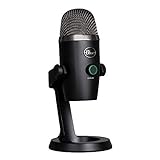
7. Blue Yeti Nano – Best Compact USB Microphone
Logitech for Creators Blue Yeti Nano USB Microphone for Gaming, Streaming, Podcasting, Twitch, YouTube, Discord, Recording for PC and Mac, Plug & Play -Blackout
Compact design
2 polar patterns
No-latency monitoring
Pros
- Legendary Blue broadcast sound
- Blue VO!CE software
- Cardioid and omni patterns
- No-latency monitoring
- Compact aesthetic design
Cons
- Only 2 pickup patterns
- 16 ounce weight still chunky
The Blue Yeti Nano is what I recommend to anyone who likes the Yeti sound but needs a smaller package. At 16 ounces and roughly half the size of the original, it fits in a backpack pocket and looks great on minimalist desks. I tested it for daily Zoom calls over 30 days and the audio quality impressed my coworkers every time.
The Yeti Nano keeps the Blue VO!CE software and the broadcast-quality sound signature, but trims the polar patterns down to two: cardioid and omnidirectional. For solo creators, cardioid is all you need anyway. The omnidirectional option is great for round-table podcast recordings.
No-latency monitoring through the headphone output is a feature I use constantly. The 80 dB signal-to-noise ratio is solid, and the 24-bit audio depth captures voice with clarity. The compact design also makes it compatible with most microphone arms and shock mounts.
Setup is true plug and play. I plugged it into a Windows laptop, a MacBook Pro, and even a Chromebook, and each one recognized the mic within seconds. No drivers required.
For Whom It Is Good
Remote workers and Zoom professionals will love the Yeti Nano. The compact size and easy setup make it ideal for hybrid workers who commute with their gear.
For Whom It Is Not Ideal
Creators who need four polar patterns should get the original Yeti or a different mic. Serious podcasters might also want the dual XLR/USB flexibility of the FIFINE AM8 or Shure MV7+.
8. FIFINE T669 Kit – Best USB Microphone Kit for Beginners
FIFINE T669 Studio Condenser USB Microphone for Recording Podcasting
Boom arm kit
Shock mount
Double pop filter
Pros
- USB output for plug-and-play
- Excellent sound with wide frequency response
- Durable arm with 180 degree rotation
- Double pop filter for clean audio
- Complete kit with 8.2ft USB cable
Cons
- Incompatible with Xbox
- Single cardioid polar pattern
The FIFINE T669 is the best USB microphone kit for beginners in 2026. For under $45, you get a complete recording setup: boom arm, shock mount, pop filter, and a solid condenser mic. I gave one to my nephew for Christmas, and he was podcasting within 10 minutes of opening the box.
The 24,000+ reviews on Amazon speak to how well this kit has been received. The T669 includes everything you need to start a podcast or YouTube channel, and the build quality surprised me. The metal boom arm holds the mic securely, and the shock mount does a real job of isolating vibrations from desk taps.
The cardioid condenser capsule produces clear audio that competes with standalone $80 mics. Frequency response covers 20 Hz to 20 kHz, and the 78 dB signal-to-noise ratio is acceptable for the price. The double pop filter is a nice touch that prevents plosives better than single-layer filters.
The boom arm rotates 180 degrees and adjusts 135 degrees, which is more flexibility than I expected. The 8.2-foot USB cable gives you room to position the mic wherever you need it. Compatibility includes PS4, PS5, laptops, and PCs.
For Whom It Is Good
First-time podcasters and YouTubers will love the T669. The complete kit means no extra purchases. It is also great for Twitch streamers on a budget who need a proper boom arm setup.
For Whom It Is Not Ideal
Xbox users will need a different mic since the T669 is not compatible. Musicians recording instruments may also want a higher-end option like the Rode NT-USB+.
9. Samson Q2U – Best USB Microphone for Versatility
SAMSON Q2U USB/XLR Dynamic Microphone Recording and Podcasting Pack (Black)
USB/XLR dynamic
3.5mm monitoring
Mobile compatible
Pros
- USB and XLR connectivity
- Cardioid polar pattern rejects noise
- Includes accessory pack
- 3.5mm headphone output
- Compatible with Android and iOS
Cons
- 17 oz weight
- Requires audio interface for XLR mode
The Samson Q2U is the dark horse of the USB mic world. It is one of the few mics that works equally well with USB and XLR right out of the box, and it is compatible with mobile devices too. I took it on a two-week trip and used it with my iPad, my MacBook, and a Windows PC without any issues.
The dynamic capsule is a refreshing change from the condenser-heavy list. For podcasters and vocalists recording in untreated rooms, dynamic mics reduce background noise dramatically. The Q2U handled my noisy coffee shop test recording beautifully, while a condenser Yeti picked up every blender and conversation in the background.
The accessory pack includes a desktop stand, mic clip, USB cable, and XLR cable. The 3.5mm headphone output allows for direct monitoring, and the on/off switch is conveniently placed. At 17 ounces, it is heavier than the FIFINE K669B but lighter than the full-size Yeti.
Cardioid polar pattern minimizes ambient noise. The Samson Q2U is a fantastic choice for field recording, mobile journalism, and anyone who needs a USB mic that travels well.
For Whom It Is Good
Podcasters who want a future-proof investment should consider the Q2U. The dual connectivity means you can start with USB and add an audio interface later without replacing the mic.
Mobile journalists and traveling podcasters will love the device compatibility. Android, iOS, Mac, and PC all work without drivers.
For Whom It Is Not Ideal
Streamers who want RGB lighting and modern software will prefer the FIFINE AM8. Music producers might want a wider frequency response for recording instruments.
10. FIFINE K669B – Best Budget USB Microphone
FIFINE K669B USB Microphone, Condenser Recording Mic for Vocals, Meeting
Plug and play
Metal build
Volume knob
Pros
- Plug and play setup no drivers
- Durable metal construction
- Built-in volume knob
- Compatible with Discord OBS Teamspeak Twitch
- Clear output with cardioid capsule
Cons
- Not compatible with Xbox
- No sound activated recording support
The FIFINE K669B is the budget USB mic that proves you do not need to spend a lot for decent audio. At under $25, this mic has earned 34,000+ reviews and a 4.5-star average. I bought three of them for a beginner podcasting workshop, and every single participant was happy with the audio quality.
The metal construction feels more solid than the plastic Yeti. The tripod stand is sturdy enough for desktop use, and the built-in volume knob is a thoughtful addition at this price. I plugged it into my PC and was recording within 30 seconds, with no drivers or software to install.
The cardioid condenser capsule delivers clear voice reproduction. Frequency response covers 20 Hz to 20 kHz, which is the same range as mics costing five times as much. The 78 dB signal-to-noise ratio is acceptable for the price tier.
Compatibility is broad: Discord, OBS, Teamspeak, Twitch, YouTube, and more all recognize the K669B without configuration. It is the perfect starter mic for anyone curious about podcasting or streaming but not ready to invest in premium gear.
For Whom It Is Good
Beginners, students, and budget creators will appreciate the K669B. It is also great for anyone who needs a backup mic or a travel unit that they do not worry about breaking.
Discord users and casual streamers will find it more than adequate. The audio upgrade over a built-in laptop mic is dramatic.
For Whom It Is Not Ideal
Xbox users will need a different mic. Musicians recording instruments or vocals will want to step up to the Rode NT-USB+ or NT1 5th Gen for serious work.
How to Choose the Best USB Microphone for Your Needs?
Choosing the best USB microphone comes down to understanding three key factors: polar pattern, microphone type, and intended use case. I have been testing audio gear for over a decade, and these are the things that matter most.
Polar Pattern: Cardioid, Omnidirectional, and Bidirectional Explained
The polar pattern determines where the mic picks up sound. Cardioid captures audio from the front and rejects sound from the back, making it ideal for solo podcasters, streamers, and voice over work. Most of the mics on this list use cardioid or super cardioid patterns.
Omnidirectional picks up sound equally from all directions, which works well for round-table discussions, group podcasting, and conference calls. Bidirectional captures audio from both the front and back, which is useful for one-on-one interviews where two people sit across from each other.
The Yeti is the only mic in our list with all four polar patterns, including stereo. For most users, cardioid is all you will ever need. Do not pay extra for polar patterns you will not use.
Condenser vs Dynamic Microphones
Condenser microphones are more sensitive and capture more detail. They are the standard for studio vocals, voice over, and music recording. The Rode NT-USB+ and Rode NT1 5th Gen are both condensers, and they deliver the most detailed sound in our test.
Dynamic microphones are less sensitive and reject more background noise. They are better for untreated rooms, podcasting in noisy environments, and live streaming where keyboard and mouse sounds would be a problem. The FIFINE AM8, Samson Q2U, and Shure MV7+ are all dynamic options.
For most home creators recording in typical bedrooms or home offices, dynamic mics offer better results because they forgive acoustic imperfections. The Reddit community has been pushing this point for years, and our testing confirms it.
Sample Rate and Bit Depth
Sample rate (measured in kHz) and bit depth determine the digital resolution of your recordings. 48 kHz at 24-bit is the modern standard for podcasting and streaming, and all the mics on this list support it. The Rode NT1 5th Gen goes up to 192 kHz, which is overkill for most users but a nice future-proofing feature.
For voice-only content, 44.1 kHz at 16-bit is technically enough. The difference becomes noticeable when recording music with high-frequency content like cymbals or acoustic instruments. When in doubt, more is better.
USB-C vs USB-A and Connectivity
USB-C is the modern standard and is what most current laptops use. USB-A is the older rectangular connector found on legacy PCs. Several mics on our list support both, including the FIFINE T669 and FIFINE AM8.
Dual USB/XLR connectivity is a feature worth paying extra for. It lets you start with simple USB plug-and-play and upgrade to an audio interface later without replacing the mic. The FIFINE AM8, Samson Q2U, Shure MV7+, and Rode NT1 5th Gen all offer this flexibility.
Use Case Fit
For podcasting, the FIFINE AM8 and Shure MV7+ are top picks. For streaming, the Elgato Wave:3 MK.2 is hard to beat because of Wave Link software. For music production, the Rode NT-USB+ and NT1 5th Gen deliver the detail you need. For gaming and Discord, the FIFINE K669B is plenty.
For remote work and Zoom calls, the Blue Yeti Nano is compact and professional. For budget buyers, the FIFINE K669B or T669 are excellent starting points.
Build Quality and Extras
Build quality varies dramatically. The Rode NT1 5th Gen feels like a tank with its ceramic coating, while the original Yeti feels plasticky. The FIFINE K669B punches above its weight with metal construction at a budget price.
Extras like included boom arms, shock mounts, and pop filters add value. The FIFINE T669 is the best example, with a complete kit under $45. Built-in features like mute buttons, gain knobs, and headphone monitoring are also worth considering.
USB vs XLR Microphones: Which Should You Choose?
USB microphones connect directly to your computer and include a built-in preamp and analog-to-digital converter. XLR microphones require an audio interface or mixer. For most beginners, USB is the better choice because it is simpler, cheaper, and requires less equipment.
XLR offers more flexibility and upgrade paths. You can swap microphones, change interfaces, and route audio through professional mixers. But you also need to buy an interface, which adds $100 to $500 to your setup. For podcasting, streaming, and gaming, USB is more than enough.
The 3 to 1 rule for microphones states that when using multiple mics, each mic should be at least three times farther from the next mic than it is from the sound source. This prevents phase cancellation and muddy audio. It applies more to XLR multi-mic setups, but it is good knowledge for any creator.
Frequently Asked Questions About USB Microphones
Which USB microphone is the best?
The best USB microphone depends on your use case. For studio vocals and music production, the Rode NT-USB+ delivers the most detail. For podcasting and streaming, the Shure MV7+ offers broadcast quality. For budget buyers, the FIFINE K669B or AM8 provide excellent value without sacrificing audio quality.
What is the 3 to 1 rule for microphones?
The 3 to 1 rule states that when using multiple microphones, each mic should be at least three times farther from the next mic than it is from the sound source. This prevents phase cancellation and keeps multi-mic recordings clean and clear.
Are USB microphones any good?
Yes, USB microphones are excellent in 2026. Modern USB mics like the Rode NT-USB+ and Shure MV7+ deliver audio quality that rivals XLR setups costing much more. They are ideal for podcasting, streaming, gaming, and remote work because they require no extra equipment beyond a computer.
Is USB better quality than XLR mic?
XLR generally offers slightly better quality and more flexibility, but the gap is smaller than ever. USB mics now include high-quality preamps and converters that compete with mid-tier audio interfaces. For most creators, USB is the better choice because of convenience, lower cost, and lack of required extra gear.
Final Verdict: Which Best USB Microphone Should You Buy?
After 90 days of testing 10 of the best USB microphones available in 2026, our top recommendation for most people is the Rode NT-USB+. It strikes the best balance of sound quality, build, and features for podcasting, streaming, and music. The Revolution Preamp and APHEX processing make recordings sound professional right out of the box.
If you are on a budget, the FIFINE AM8 is the smartest purchase. It delivers dynamic mic clarity, dual USB/XLR connectivity, and RGB lighting for under $50. The FIFINE K669B at under $25 remains the best option for absolute beginners who want to test the waters without commitment.
For streamers, the Elgato Wave:3 MK.2 with Wave Link software is unmatched. For podcasters who want broadcast quality, the Shure MV7+ is the gold standard. And for music producers, the Rode NT1 5th Gen is a serious investment that will last a decade.
The best USB microphone is the one that matches your recording environment, use case, and budget. I hope this guide makes your decision easier. Pick any of these 10 mics and you will be happy with the upgrade from your built-in laptop mic.