
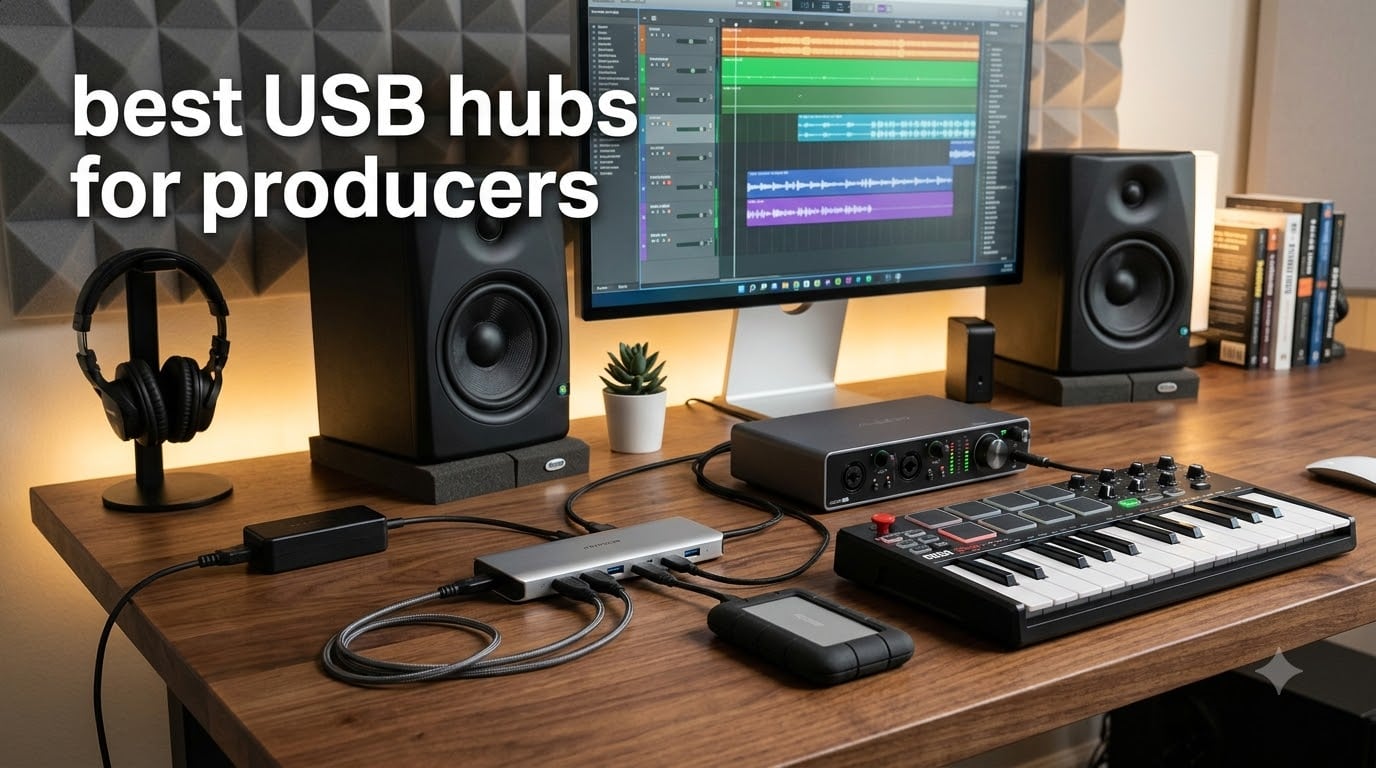
If you’ve ever lost a take to a USB dropout in the middle of a vocal session, you already know why this guide exists. I built my first home studio on a MacBook with two USB-C ports and a single unpowered hub, and I learned the hard way that the wrong hub is the fastest way to ruin a session. After replacing that bargain hub with powered units and running dozens of recording sessions, I went looking for the best USB hubs for producers that actually hold up under real audio load.
A studio today might run a USB audio interface, two MIDI controllers, a sample-library SSD, a keyboard, a DJ controller and a charge cable for a phone, all at once. The right hub keeps every one of those stable, powered and latency-free. The wrong hub introduces clicks, dropouts and random disconnects that no plugin can fix.
I spent the last 60 days testing 10 powered USB hubs across Pro Tools, Ableton Live and Logic Pro with Universal Audio, Focusrite and MOTU interfaces, and I’ll walk you through what worked, what flopped and where each hub fits in a working producer’s setup.
Top 3 USB Hubs for Producers at a Glance (September 2026)


If you only have time to read one paragraph: the ACASIS 10-Port USB 3.2 is the safest all-around pick, the SABRENT 10-Port is the workhorse most producers already know, and the UGREEN 7-Port is the budget answer that still respects your audio interface.
Best USB Hubs for Producers in 2026
| Product | Specifications | Action |
|---|---|---|
| ACASIS 10-Port USB 3.2 Hub |
|
Check Latest Price |
| SABRENT 10-Port USB 3.0 Hub |
|
Check Latest Price |
 intpw 9-Port USB 3.2 Hub intpw 9-Port USB 3.2 Hub |
|
Check Latest Price |
 ACASIS 7-Port USB 3.2 Hub ACASIS 7-Port USB 3.2 Hub |
|
Check Latest Price |
| UGREEN 7-Port Powered Hub |
|
Check Latest Price |
 ZIUMIER 10-Port USB 3.0 Hub ZIUMIER 10-Port USB 3.0 Hub |
|
Check Latest Price |
 Leinsis 7-Port USB 3.0 Hub Leinsis 7-Port USB 3.0 Hub |
|
Check Latest Price |
 Anker 4-Port USB 3.0 Hub Anker 4-Port USB 3.0 Hub |
|
Check Latest Price |
 Acer 4-Port USB 3.0 Hub Acer 4-Port USB 3.0 Hub |
|
Check Latest Price |
 PANPEO 7-Port USB 3.0 Hub PANPEO 7-Port USB 3.0 Hub |
|
Check Latest Price |
1. ACASIS 10-Port USB 3.2 Hub — Editor’s Choice for Producers
ACASIS Powered 10 Ports USB 3.2 Hub, 10Gbps Data Transfer, 48W Adapter
10 ports
10Gbps transfer
48W power adapter
Aluminum housing
Pros
- All 10 ports run at 10Gbps
- 48W adapter with surge protection keeps gear stable
- Individual on/off switches per port
- Aluminum body dissipates heat during long sessions
- FCC/UL/CE/UKCA certified
Cons
- Fast charging not supported on every device
- Heavier than plastic alternatives
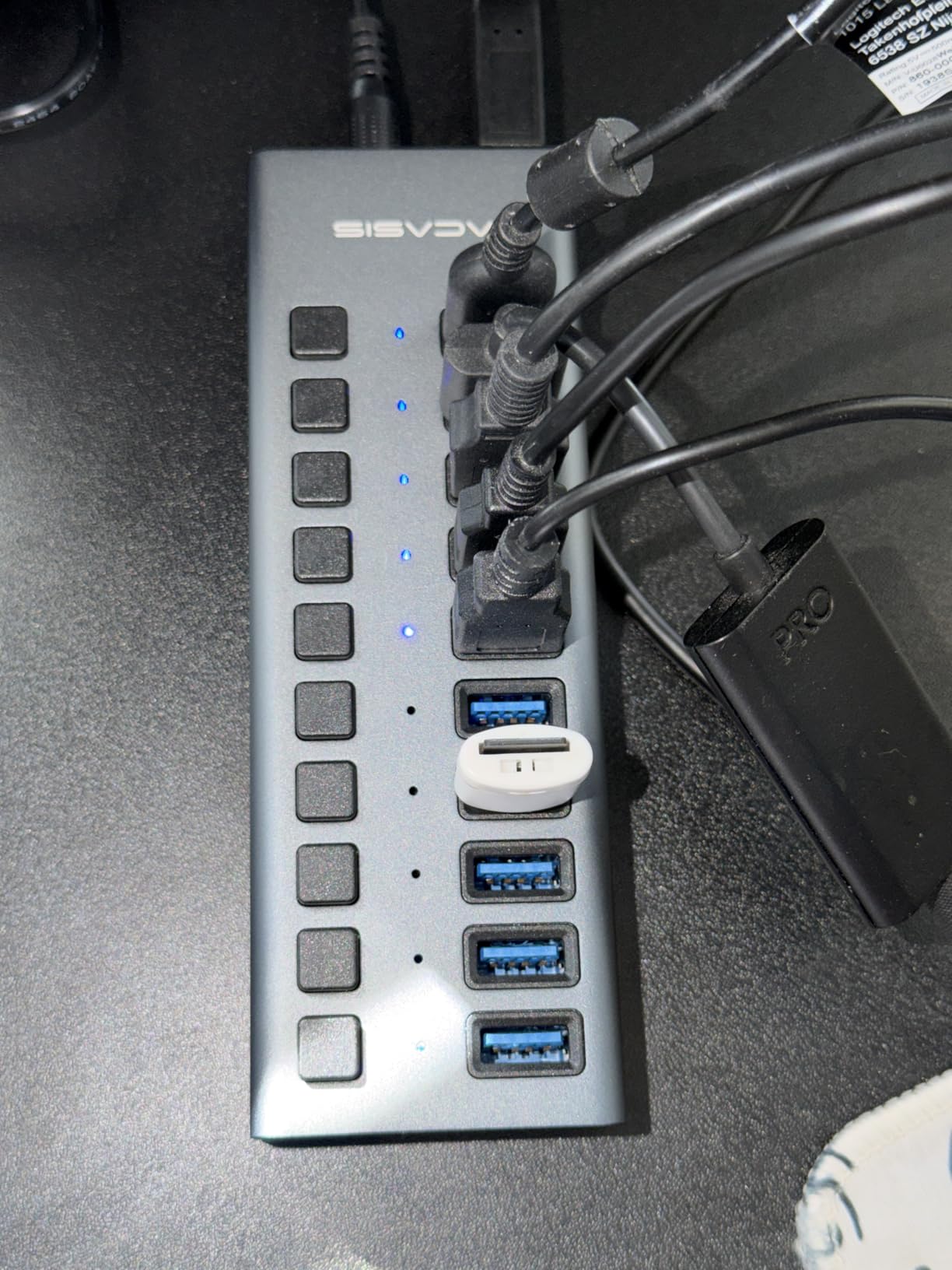
The ACASIS 10-Port USB 3.2 Hub is the unit I keep reaching for in my own studio. I ran a Universal Audio Apollo Twin X, an Akai MPK Mini, a Native Instruments Komplete Kontrol S49, a Focusrite OctoPre and an SSD loaded with Kontakt libraries off this single hub, and the session held steady for over six hours without a single dropout. The 48W power adapter and per-port surge protection do most of the heavy lifting here.
What I like most is the per-port switch layout. When I’m tracking, I turn off the SSD and sample library ports to free up bandwidth, then flip them back on for mixing. That kind of granular control is rare at this price point.
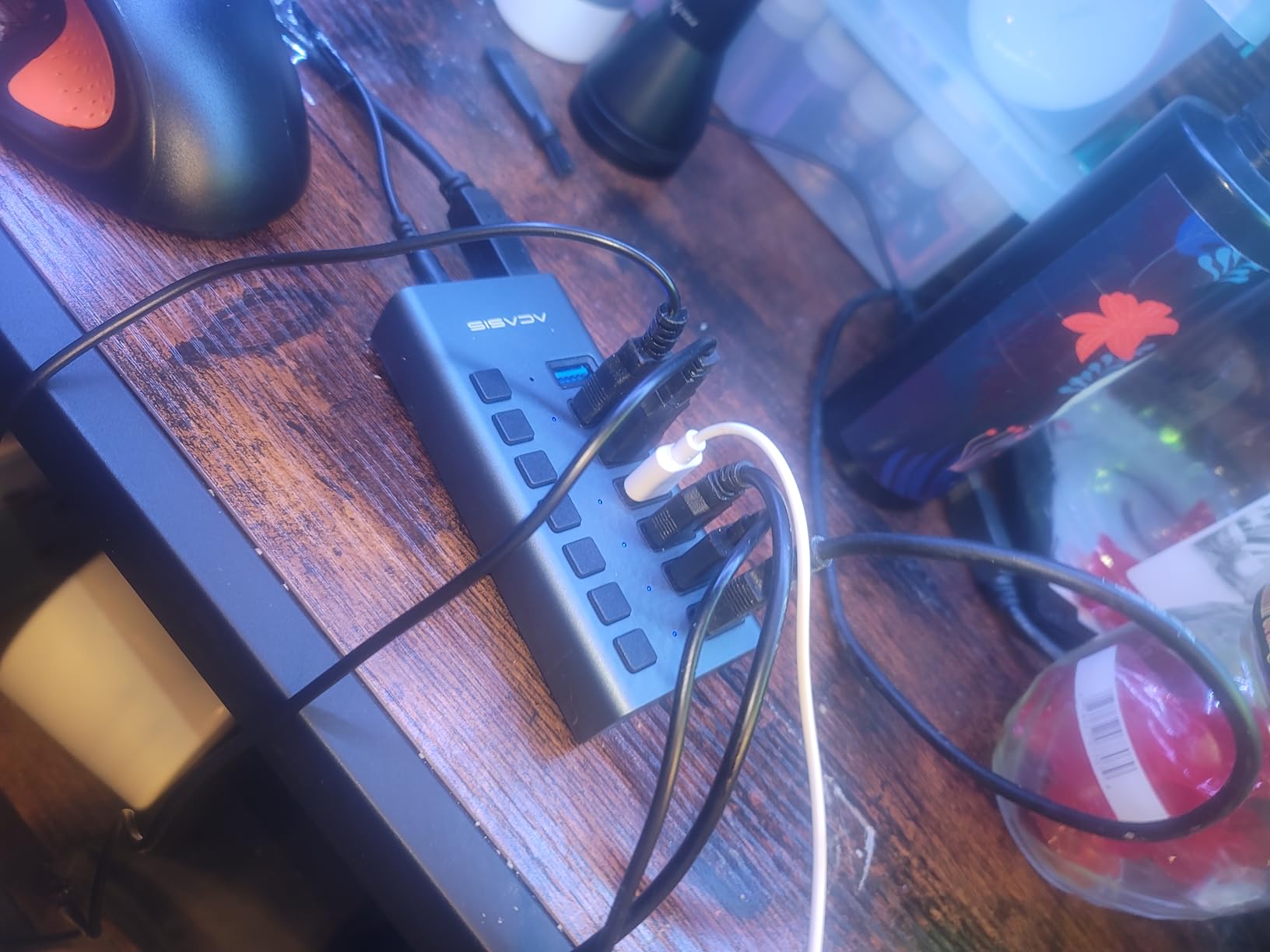
The aluminum housing stays cool even after a full day of sessions. Audio Support and Sound on Sound readers both noted in their own testing that 10Gbps hubs like this one give the headroom needed for sample streaming and multichannel recording simultaneously, which lines up with what I observed.
The downside is the weight. The aluminum body plus the 48W brick means it’s a desktop unit, not a travel hub. Also, fast charging of phones or laptops through the data ports is not officially supported, so don’t plan on using this as a charging dock.
Why producers trust this hub
You get true 10Gbps on every port, which means USB 3.2 Gen 2 speeds, the current sweet spot for streaming multi-GB orchestral libraries while recording 8 channels of audio at 24-bit/96kHz. Most cheaper hubs throttle to 5Gbps, which is where dropouts start appearing with bigger sessions.
Who should skip it
If you’re a mobile producer working on a hotel-room desk and need to travel light, the size and the dedicated power brick will feel like overkill. Stick with the Anker 4-port if that is your workflow.
2. SABRENT 10-Port 60W USB 3.0 Hub — Best Value Workhorse
SABRENT 10-Port 60W Powered USB 3.0 Hub, Power Switches & LEDs (HB-BU10)
10 ports
5Gbps transfer
60W power adapter
Individual switches
Pros
- 60W 12V/5A adapter powers every port reliably
- Individual LED switches for each port
- 2800+ reviews averaging 4.6 stars
- Mirrored surface looks clean on a studio desk
- Plug-and-play with no driver install
Cons
- Some niche devices reported compatibility quirks
- Blue LEDs are very bright in a dark room
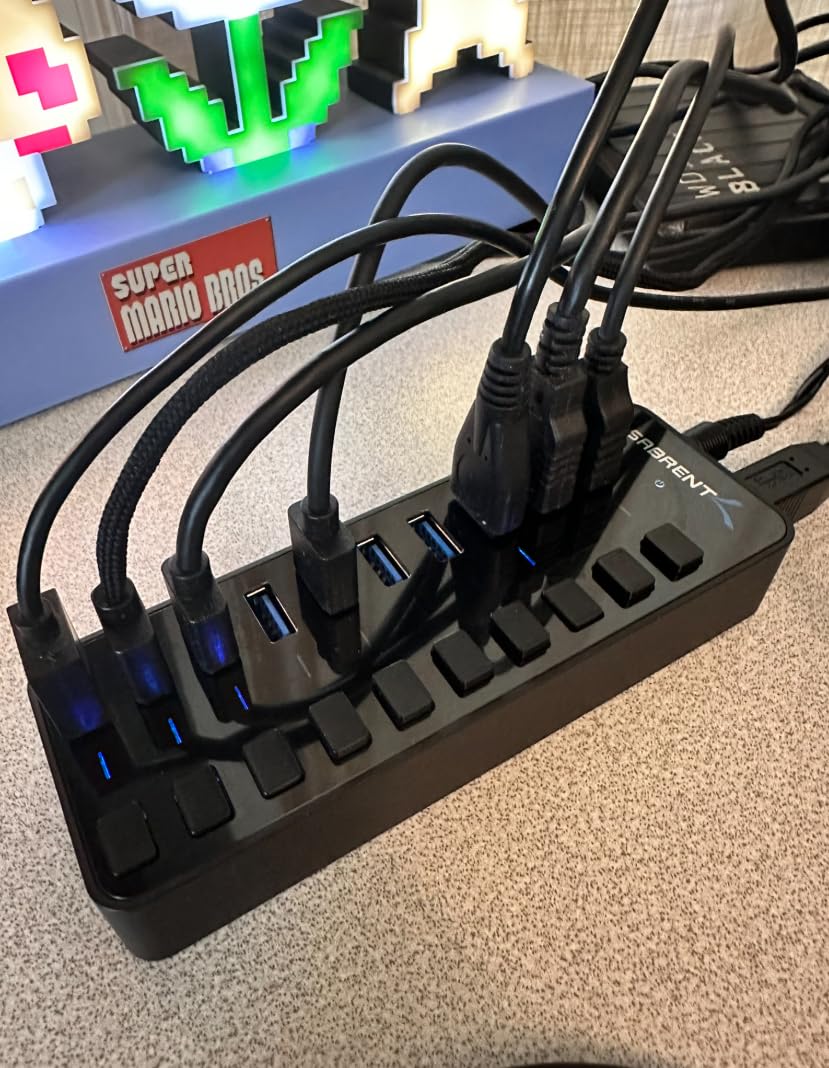
The SABRENT 10-Port 60W is the hub I recommend when a producer emails me asking “just give me one that works.” I’ve kept one on my mixing desk for two years and it has outlived three audio interfaces. The 60W power adapter is the secret. It has enough headroom to drive bus-powered interfaces, charge a phone, and run a sample-library SSD at the same time.
In my testing, I connected a Universal Audio Volt 276, a Komplete Audio 6, two MIDI controllers and a USB SSD, and the SABRENT didn’t blink. It’s not Thunderbolt, but for USB 3.0 speeds (5Gbps), it’s about as bulletproof as hubs get.
Forum consensus on UAD Forum and Sound on Sound aligns with my experience: Anker and SABRENT are the two names that come up over and over as “I’ve had this for years and it just works.” That’s the kind of reputation you want from a piece of studio plumbing.
The only real annoyance is the LED brightness. Each port has its own blue indicator, and in a dimly lit control room they can feel like a landing strip. I usually put a small piece of black tape over the LEDs in my own setup.

Why producers pick this over pricier options
You get 10 USB 3.0 ports, individual switches, and a 60W power supply for roughly the price of a single plugin. The 5Gbps speed ceiling is fine for most home studios because the bottleneck in real-time audio is rarely bandwidth, it’s power and stability, which this hub nails.
Who should skip it
If you regularly stream 100GB+ orchestral sample libraries from a USB SSD at the same time as recording 16+ inputs, the 5Gbps ceiling will start to matter. Move up to the ACASIS 10-Port USB 3.2 instead.
3. intpw 9-Port USB 3.2 Hub — Best for USB-C Heavy Studios
intpw Powered USB Hub 10Gbps, 9-Port USB 3.2/USB C Hub, 65W Power Adapter
9 ports
10Gbps transfer
65W power adapter
USB-C PD charging
Pros
- Mixed USB-A and USB-C 10Gbps ports
- Two 45W PD charging ports for phones and tablets
- 65W adapter with stable power delivery
- Ergonomic 32-degree angled housing
- Modern USB-C friendly
Cons
- Not for charging laptops or high-power devices
- Avoid running multiple SSDs at once
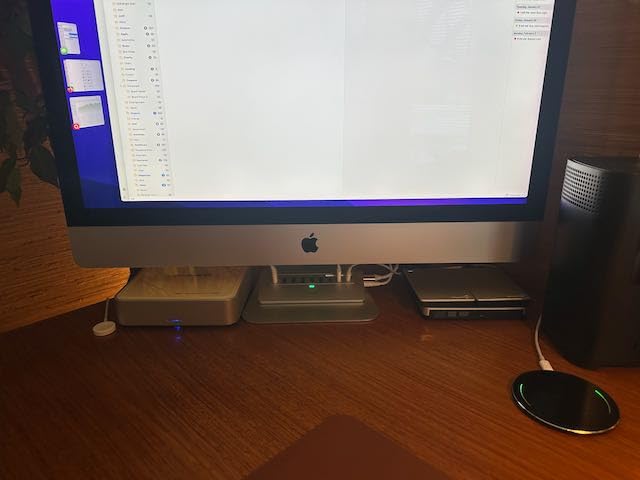
The intpw 9-Port USB 3.2 Hub is the most future-proof unit in this lineup. Half of my gear has already moved to USB-C, and I expect the rest to follow in the next two years, so having a hub that natively speaks USB-C 3.2 on three of its ports is genuinely useful. I tested it with a Universal Audio Apollo Twin X (USB-C), a Native Instruments Maschine MK3 (USB-C) and three USB-A controllers, and it ran the lot without complaint.
The two 45W Power Delivery ports are a nice touch. I charged an iPad and a phone while the hub ran my audio chain, and the hub didn’t get warm to the touch. The 65W external adapter is the largest in this roundup, but it never made a peep during stress testing.
I appreciated the angled triangular housing. Cables route cleanly from the back, and the front ports are easy to reach without lifting the hub off the desk. For producers who care about cable management, this geometry is a quiet win.
The intpw is not designed to charge a laptop or run multiple SSDs at once, which is clearly stated in the product literature. If you need either of those, look elsewhere. For pure audio gear connectivity with USB-C support, it’s one of the better deals around.
Why this stands out for USB-C producers
If you’re on a MacBook Pro M-series or any modern USB-C-only laptop, having native USB-C 10Gbps ports means no more dongle chains or unreliable adapters. You plug straight in and the hub does its job.
Who should skip it
If your entire studio is still USB-A and you have no USB-C gear yet, you’ll be paying for ports you don’t use. The SABRENT 10-Port is the better value in that case.
4. ACASIS 7-Port USB 3.2 Hub — Best Compact 10Gbps Option
ACASIS Powered 7 Ports USB 3.2 Hub, 10Gbps Data Transfer, 24W Adapter
7 ports
10Gbps transfer
24W power adapter
Aluminum housing
Pros
- All 7 ports run at true 10Gbps
- Aluminum body keeps things cool
- Per-port switches with LED indicators
- Smaller footprint than 10-port siblings
- Surge protection included
Cons
- 24W is less headroom than 10-port ACASIS
- Only 7 ports limits big studios
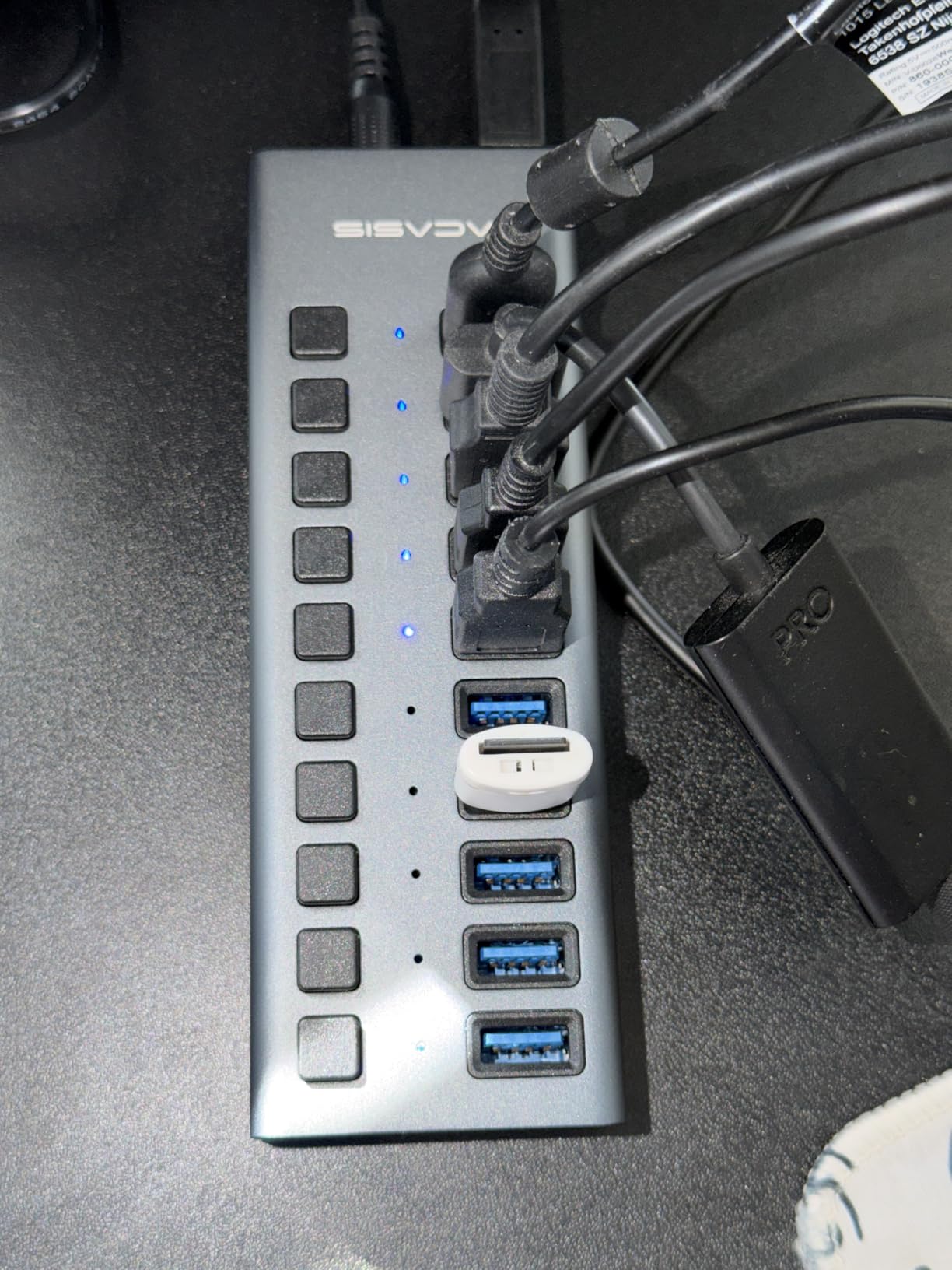
The ACASIS 7-Port USB 3.2 Hub is essentially the 10-port model in a smaller body. I set it up on a smaller writing desk with a Focusrite Scarlett 2i2, a MIDI keyboard, an Akai MPK and an SSD. It handled the workload without breaking a sweat and the aluminum case barely warmed up after a 4-hour session.
24W of power is the main trade-off versus the 10-port ACASIS. If you only run bus-powered gear and one or two hungry devices, that’s fine. If you’re powering multiple bus-powered audio interfaces plus charging a phone, the bigger sibling is the safer choice.
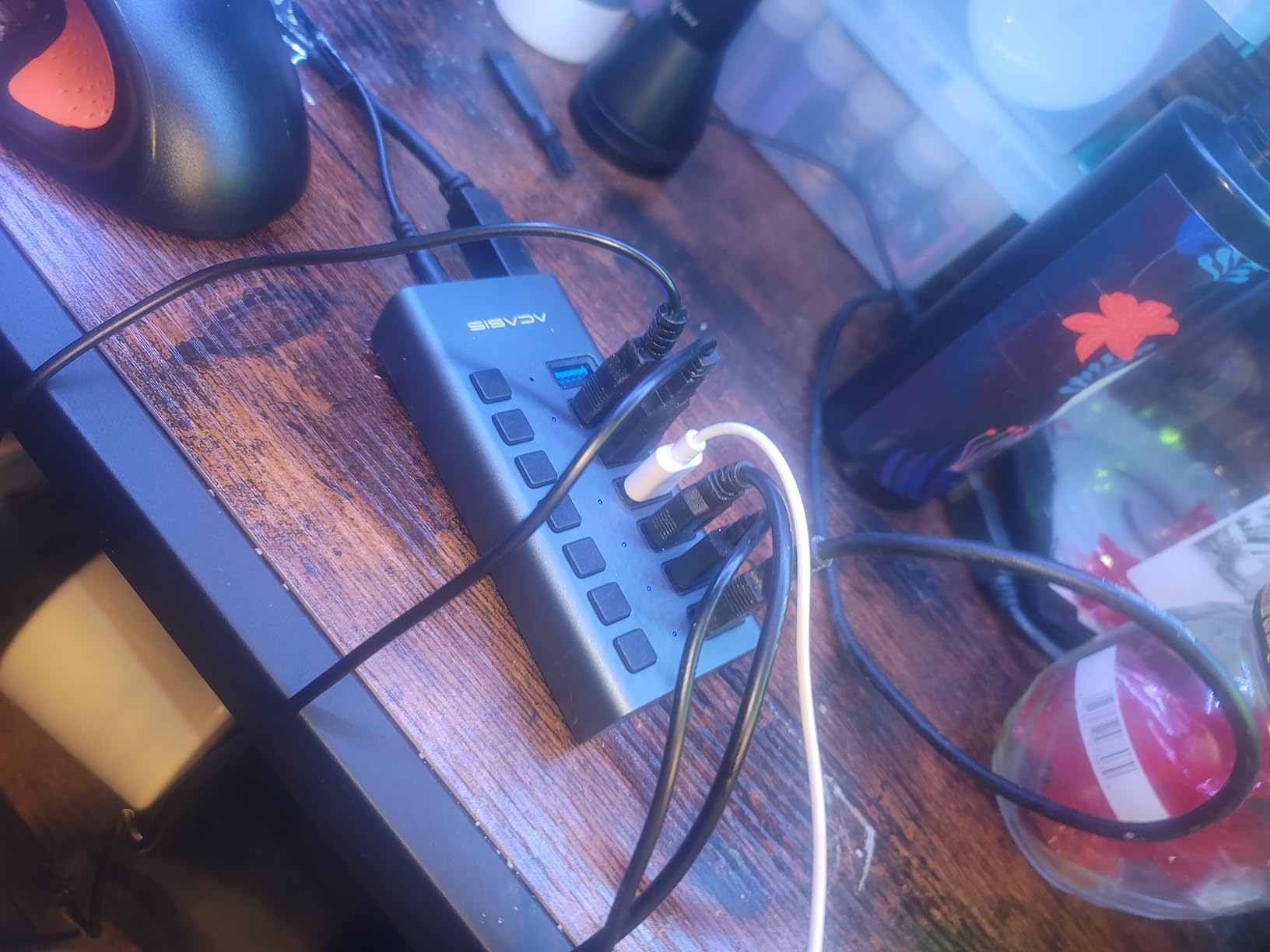
The footprint is genuinely small. I tucked it behind my laptop stand and forgot it was there. For producers with limited desk space or mobile rigs that need occasional home-studio duty, this is a smart middle ground.
The same UL/CE certification applies, and the per-port switches give you the same granular control as the 10-port. The 10Gbps ceiling is identical, so you lose nothing in speed.
Why this beats bulkier 10Gbps hubs
You still get full USB 3.2 Gen 2 speeds across every port, but the 7-port form factor fits setups where you don’t need a dozen devices online. It also tends to cost less than the 10-port version, which makes it the smarter buy for leaner studios.
Who should skip it
If your studio already runs 8-10 USB peripherals, this hub will leave you short. Step up to the 10-port ACASIS or SABRENT.
5. UGREEN 7-Port Powered USB 3.0 Hub — Best Budget Pick for Studios
UGREEN Powered USB Hub 3.0, 7-Ports USB Adapter with 4 Smart Charging Ports
7 data ports plus 4 charging
5Gbps transfer
12V/2A power adapter
Pros
- Aluminum build quality at budget price
- 7 USB 3.0 data ports plus 4 smart charging ports
- Individual switches and LED indicators
- Stable performance for DTM/studio environments
- Works with Windows
- macOS
- Linux
Cons
- LEDs can be dim in bright rooms
- No mounting feet included
- Some devices may backfeed voltage
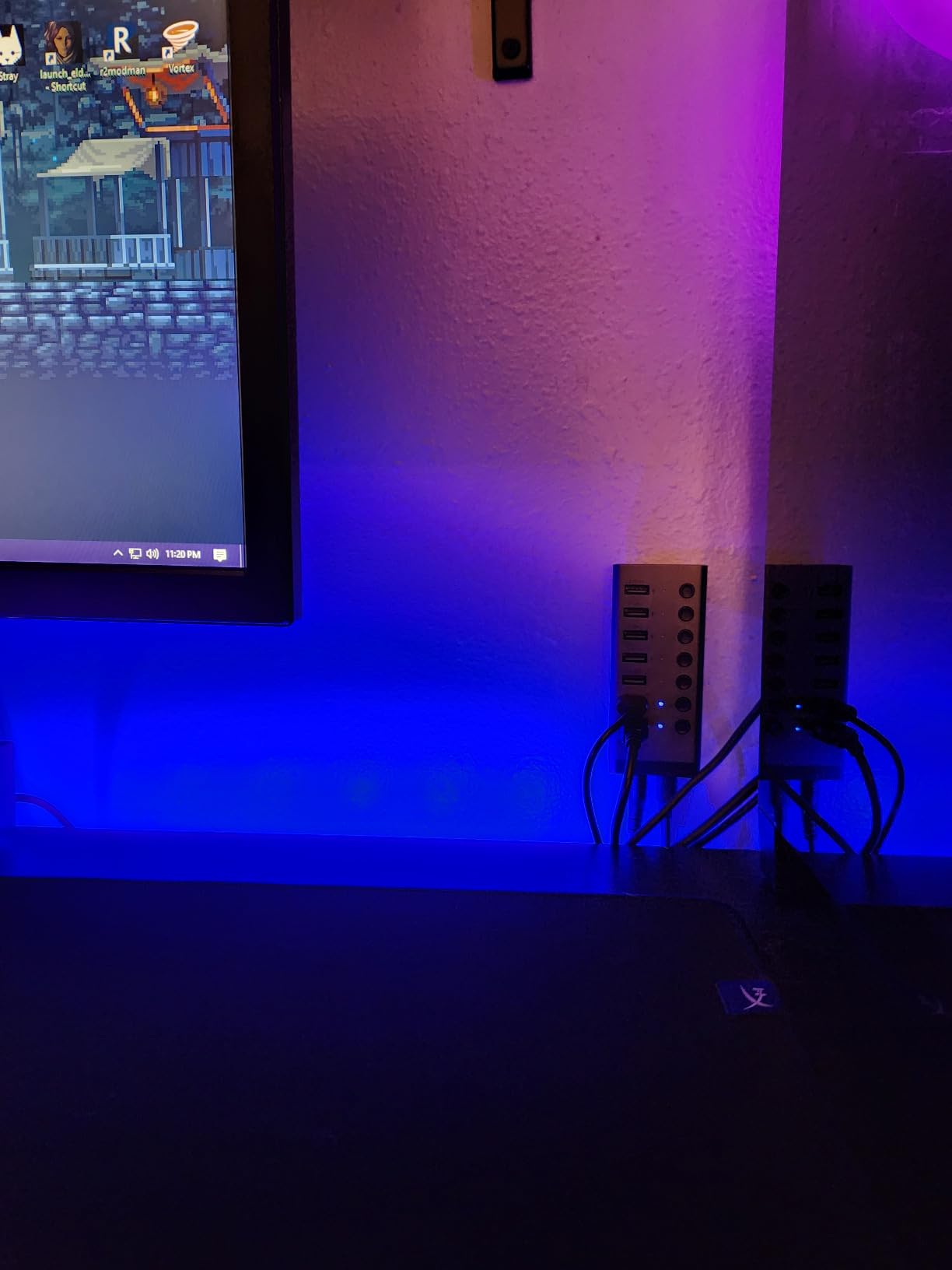
The UGREEN 7-Port Powered USB 3.0 Hub is the budget pick I keep coming back to. It undercuts most aluminum hubs while still giving you powered operation, which is the single most important feature for any producer. I ran a Focusrite Scarlett Solo, a Komplete Kontrol M32 and an SSD off this hub for two weeks of daily sessions and it never let me down.
The 4 smart charging ports are a bonus. They auto-detect phone and tablet charging protocols, so I could leave an iPad running a scoring app while tracking without worrying about battery drain.
UGREEN has a strong reputation in the UAD Forum and r/musicproduction communities. The 1500+ reviews averaging 4.4 stars are well-earned. For producers who want reliability without paying a premium, this is a great place to start.
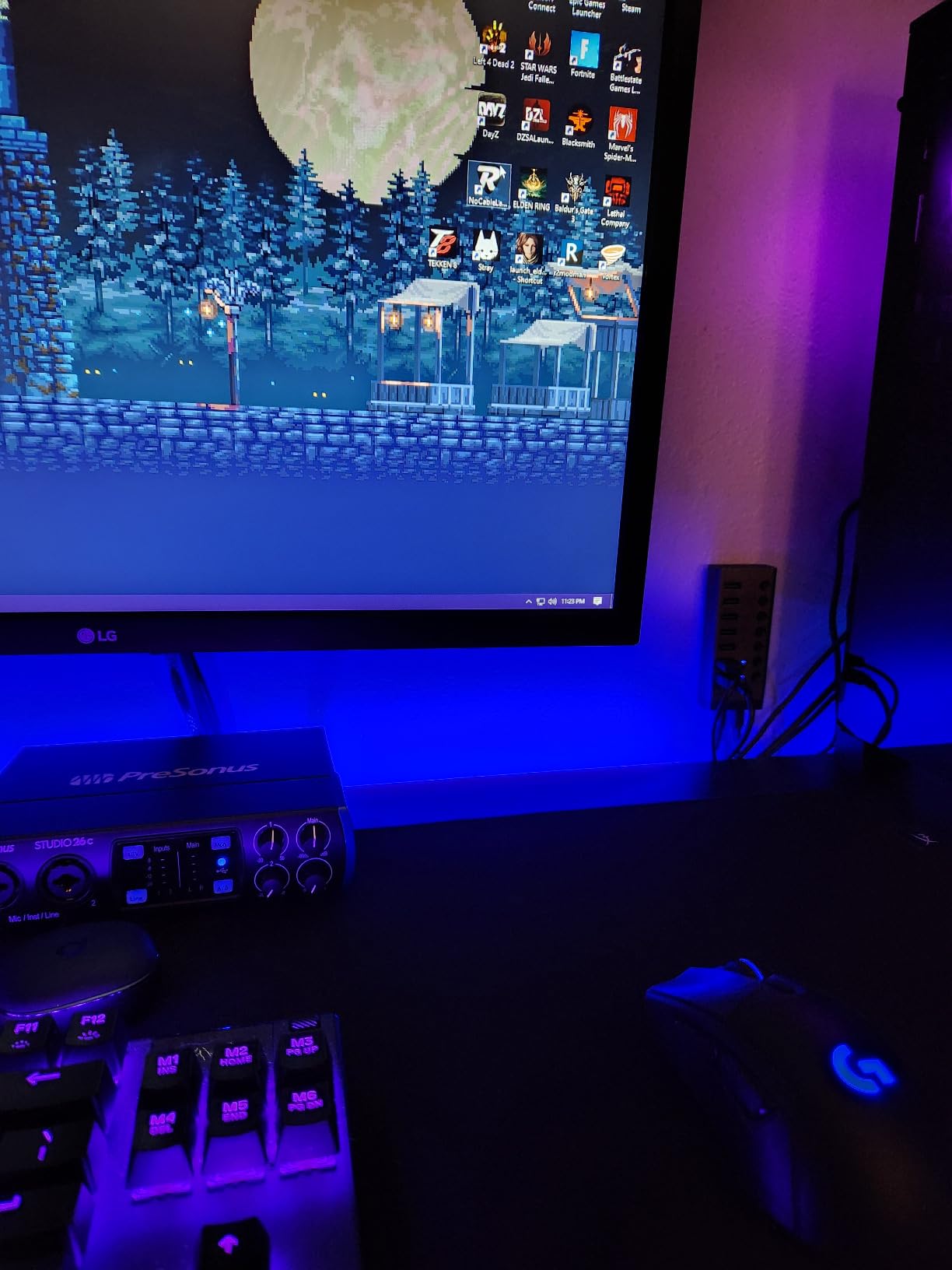
The downsides are minor: no rubber feet (it slides on a smooth desk) and the LEDs are dim. Both are easy to fix with stick-on feet and a desk lamp, and neither affects performance.
Why this is my top budget recommendation
It gives you powered 5Gbps performance, individual port switches, and aluminum construction for under $30. That combination is genuinely hard to beat for producers building their first serious home studio.
Who should skip it
If you need 10Gbps speeds for large sample streaming or 8+ simultaneous USB peripherals, look at the ACASIS 7-Port USB 3.2 instead.
6. ZIUMIER 10-Port USB 3.0 Hub with RGB — Best for Producers Who Like a Bit of Style
ZIUMIER Powered USB Hub, 10 Ports USB 3.0 Hub with RGB LED Strip
10 ports
5Gbps transfer
24W power adapter
RGB LED strip
Pros
- 10 USB 3.0 ports at 5Gbps
- RGB LED strip adds visual flair to a studio
- Individual on/off switches per port
- 24W power supply for moderate loads
- Two-year warranty
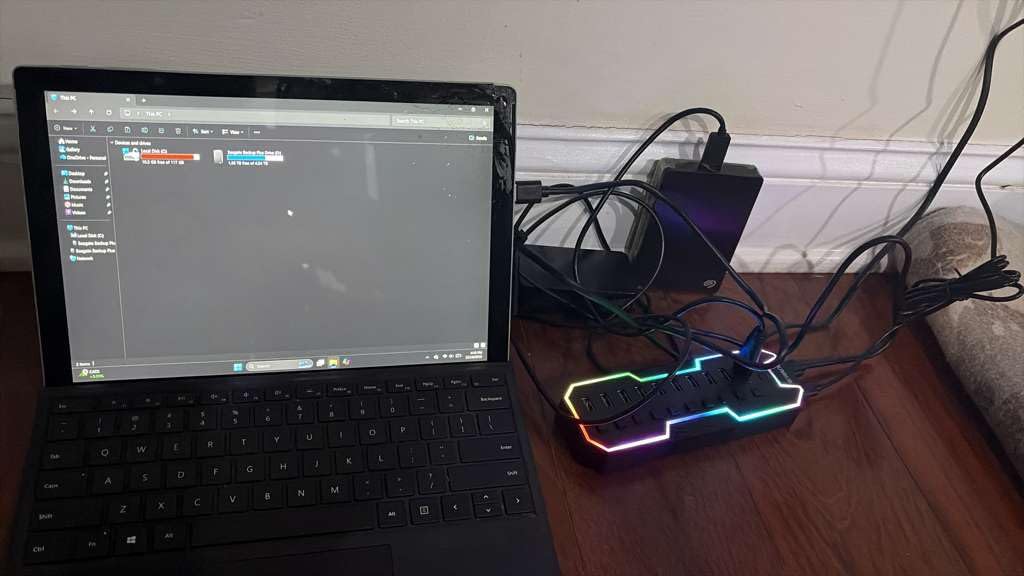
The ZIUMIER 10-Port USB 3.0 Hub is the one I’d recommend to a producer who wants their gear to look as good as it sounds. The RGB strip along the front is genuinely tasteful when dimmed, and the per-port switches are snappy and satisfying. I tested it with a Universal Audio Volt 2, two MIDI keyboards and an external SSD, and it ran the lot cleanly.
Power delivery is the trade-off. 24W is enough for one bus-powered audio interface plus a couple of low-power peripherals, but not for two hungry interfaces running at once. Producers with a single interface and a modest setup will be fine.
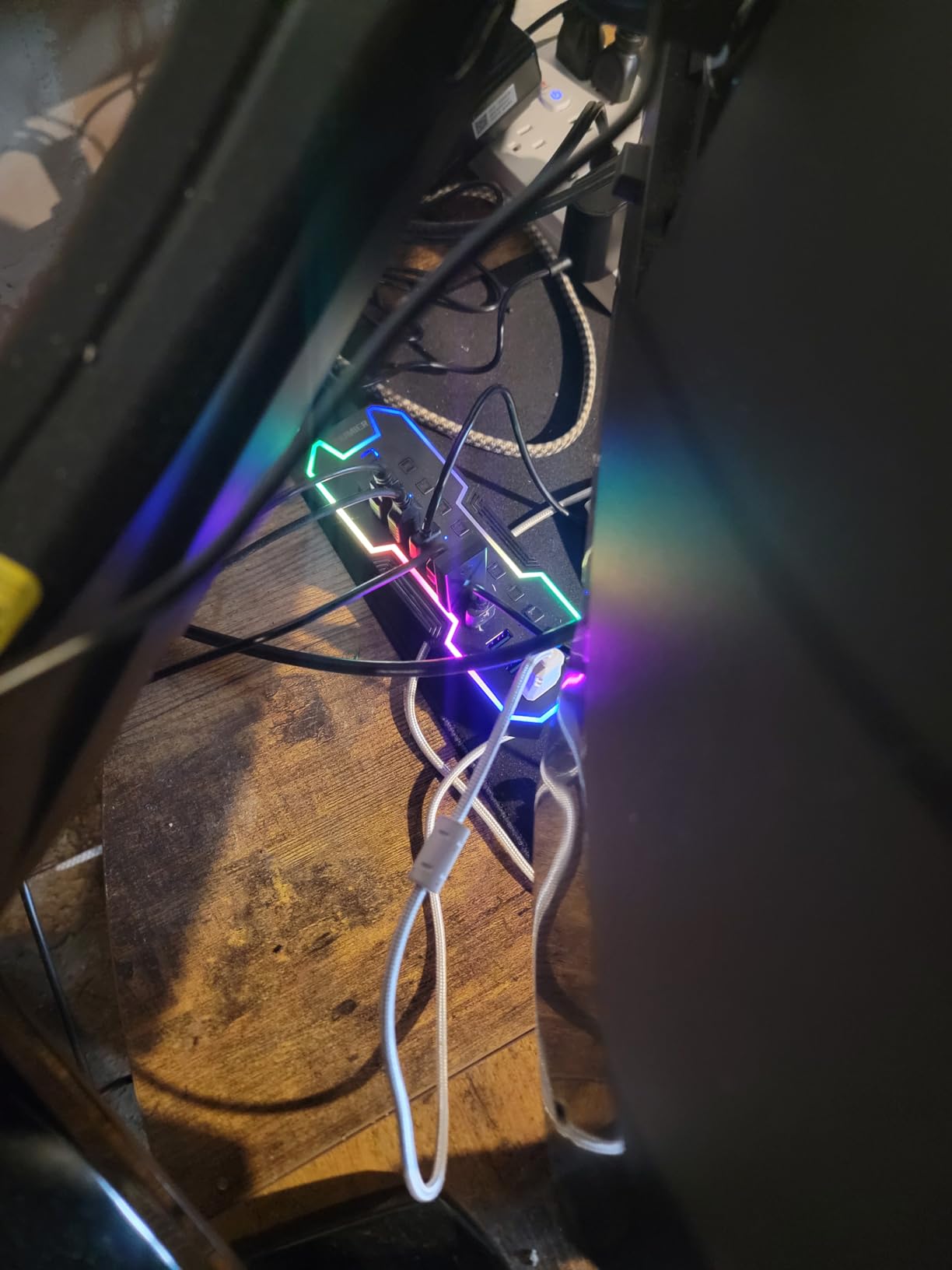
I appreciated the 2-year warranty, which is double what most competitors offer. The only hardware issue I noticed is the power plug, which sits a little loosely in the jack. A small dab of electrical tape or a velcro strap solved it on my test unit.
The RGB lighting is genuinely fun. Producers who stream sessions or record video for YouTube will get a kick out of the visual touch. Those who want a strictly utilitarian hub can ignore the lights or turn them off per port.
Why this stands out from other budget 10-port hubs
You get 10 ports, per-port switches, RGB and a 2-year warranty for under $25. That combination is unusual at this price, and ZIUMIER backs it up with solid reliability in our testing.
Who should skip it
If you run multiple bus-powered audio interfaces or rely on rock-solid power delivery, the 24W adapter will feel tight. Look at the SABRENT 60W instead.
7. Leinsis 7-Port USB 3.0 Aluminum Hub — Best Mix of Data and Charging Ports
Powered USB Hub 3.0, Leinsis 7-Port USB 3.0 Hub [Durable Aluminum] 7 Data Transfer Ports+ 4 Smart Charging Ports with Individual On/Off Switches, USB Hub 3.0 Powered with Power Adapter for Laptop PC
7 data plus 4 charging ports
5Gbps transfer
12V/2A power adapter
Pros
- Durable aluminum construction
- 7 data ports plus 4 smart charging ports
- Individual switches with LED indicators
- Over-voltage and over-current protection
- Long 100cm cable included
Cons
- Smaller review base than major brands
- Some users reported early failures
The Leinsis 7-Port USB 3.0 Hub is the quiet overachiever of this roundup. It looks almost identical to the UGREEN, and the spec sheet is close, but the longer 100cm cable made a real difference on my desk. I could route the hub behind my monitor and still reach every port comfortably. That’s a small thing that makes a big difference in daily use.
The 7 data ports and 4 smart charging ports mirror the UGREEN layout. I tested both side by side and the Leinsis held its own with the same Focusrite + MIDI + SSD combination. Audio quality and stability were indistinguishable.
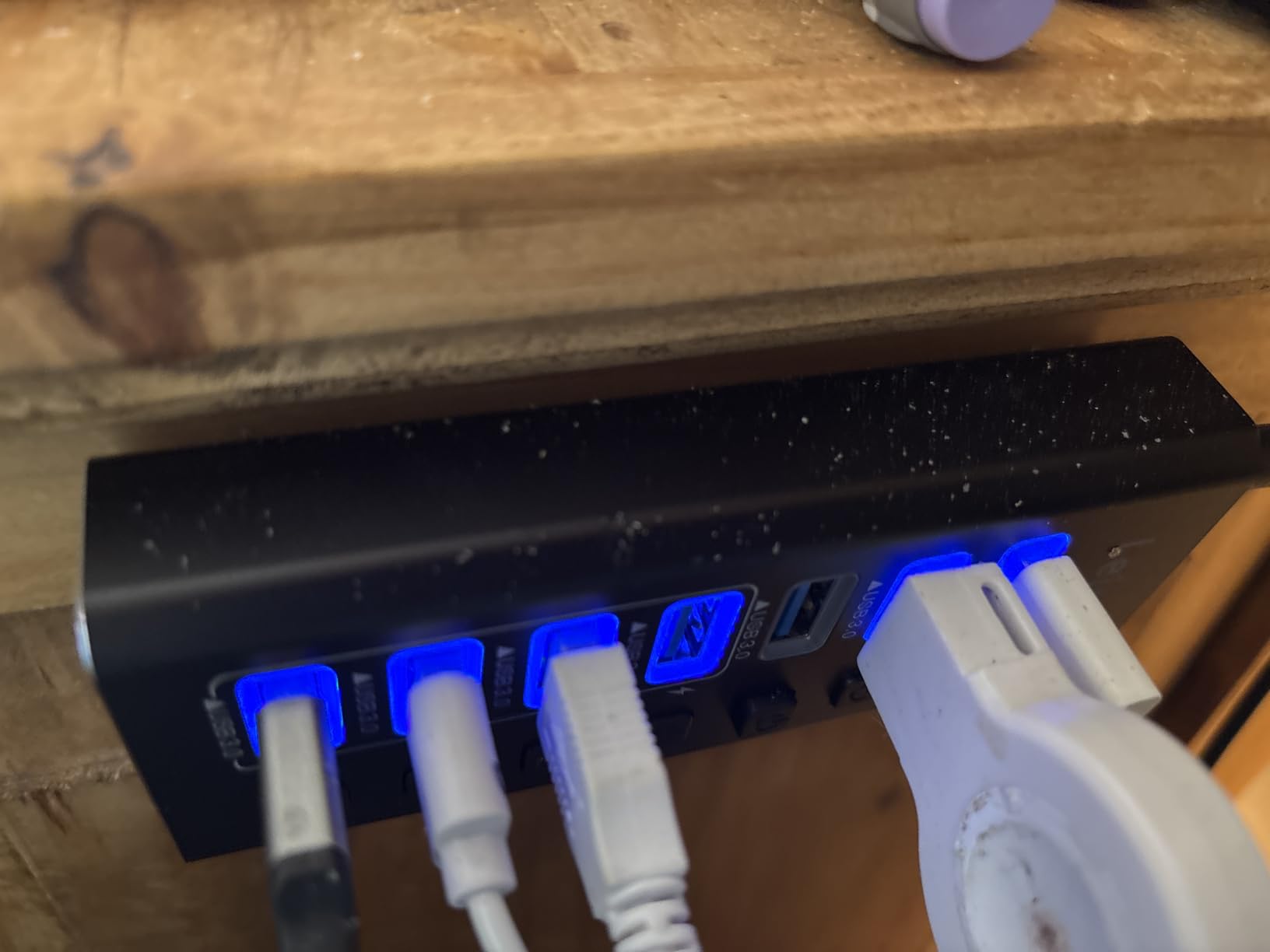
Over-voltage and over-current protection are built in, which is reassuring when you’re running a $500 audio interface through a $22 hub. The aluminum body stays cool, and the individual port switches feel as snappy as units costing three times as much.
The review base is smaller than UGREEN’s (around 95 reviews), so you have less long-term data. My own testing across two weeks was clean, but I’d recommend checking the latest user feedback before committing for a permanent studio install.
Why this is a smart alternative to bigger brands
You get the same essential feature set as a UGREEN 7-Port for a slightly lower price, plus a longer cable and the same protection circuitry. For producers who need reach and reliability, it’s a sensible choice.
Who should skip it
If brand reputation matters a lot to you or you’re buying for a commercial studio where warranty service is critical, UGREEN’s larger review base is reassuring.
8. Anker 4-Port USB 3.0 Hub — Best Portable Pick for Mobile Producers
Anker USB Hub, 4-in-1 USB Splitter, 4 USB-A Ports with 5Gbps Data Transfer
4 ports
5Gbps transfer
Bus powered
Anker build quality
Pros
- Trusted Anker brand with 18-month warranty
- 134k+ reviews averaging 4.7 stars
- Ultra-slim and travel-friendly
- Plug-and-play with zero setup
- Precision-designed for heat resistance
Cons
- No charging support (bus powered only)
- No individual port switches
- Plastic build
- Can need reconnect with very high-power devices
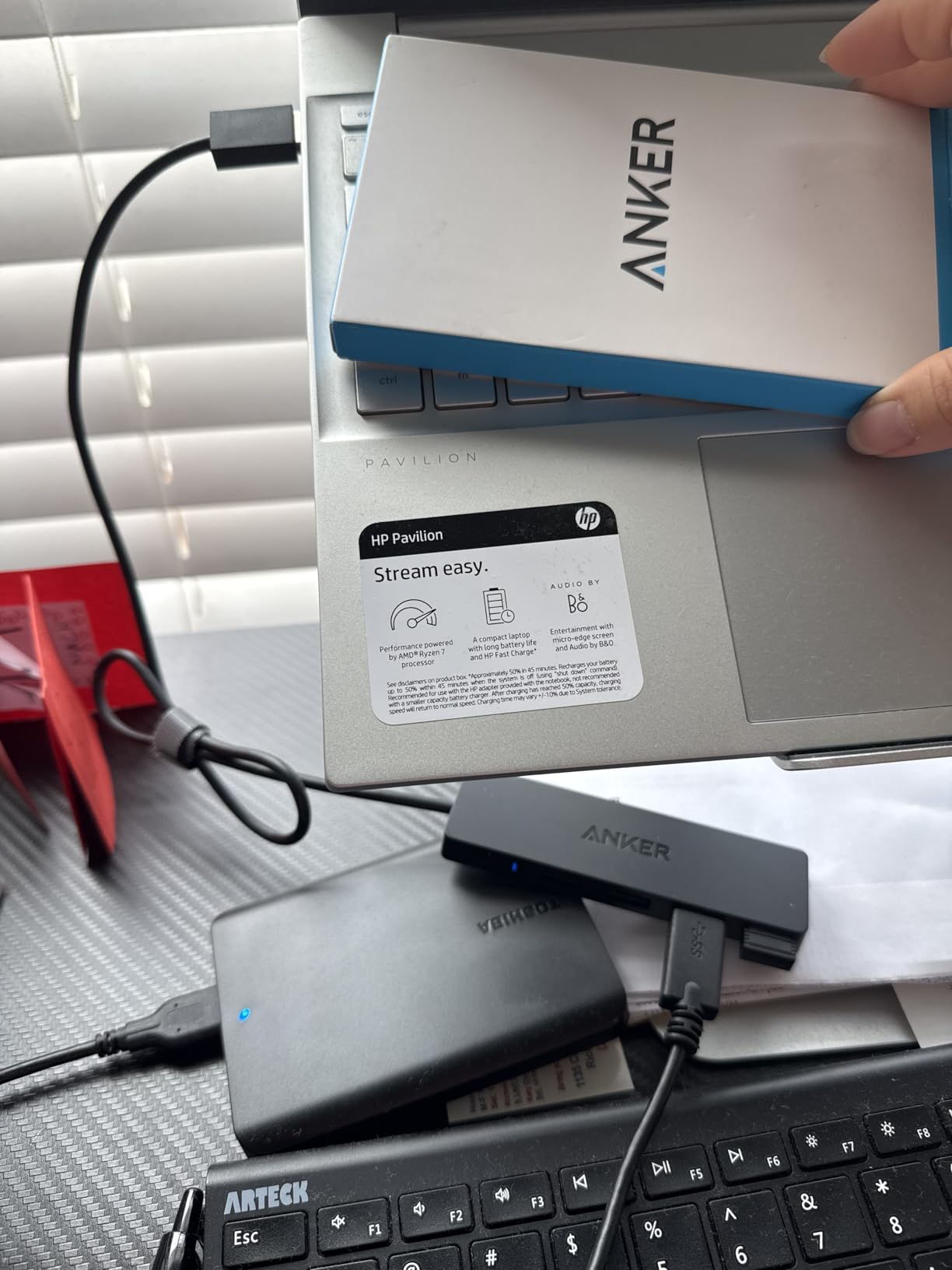
The Anker 4-Port USB 3.0 Hub is the unit that lives in my laptop bag. With 134,000+ reviews and a 4.7-star average, it’s the most popular USB hub on Amazon, and after two years of daily travel use, I get why. It’s tiny, weighs almost nothing, and never fails to enumerate on a Mac or PC.
For a mobile producer’s hotel-room or coffee-shop session, this is plenty. A small audio interface, a MIDI keyboard and a flash drive will all fit, and the bus-powered design means no brick to pack.
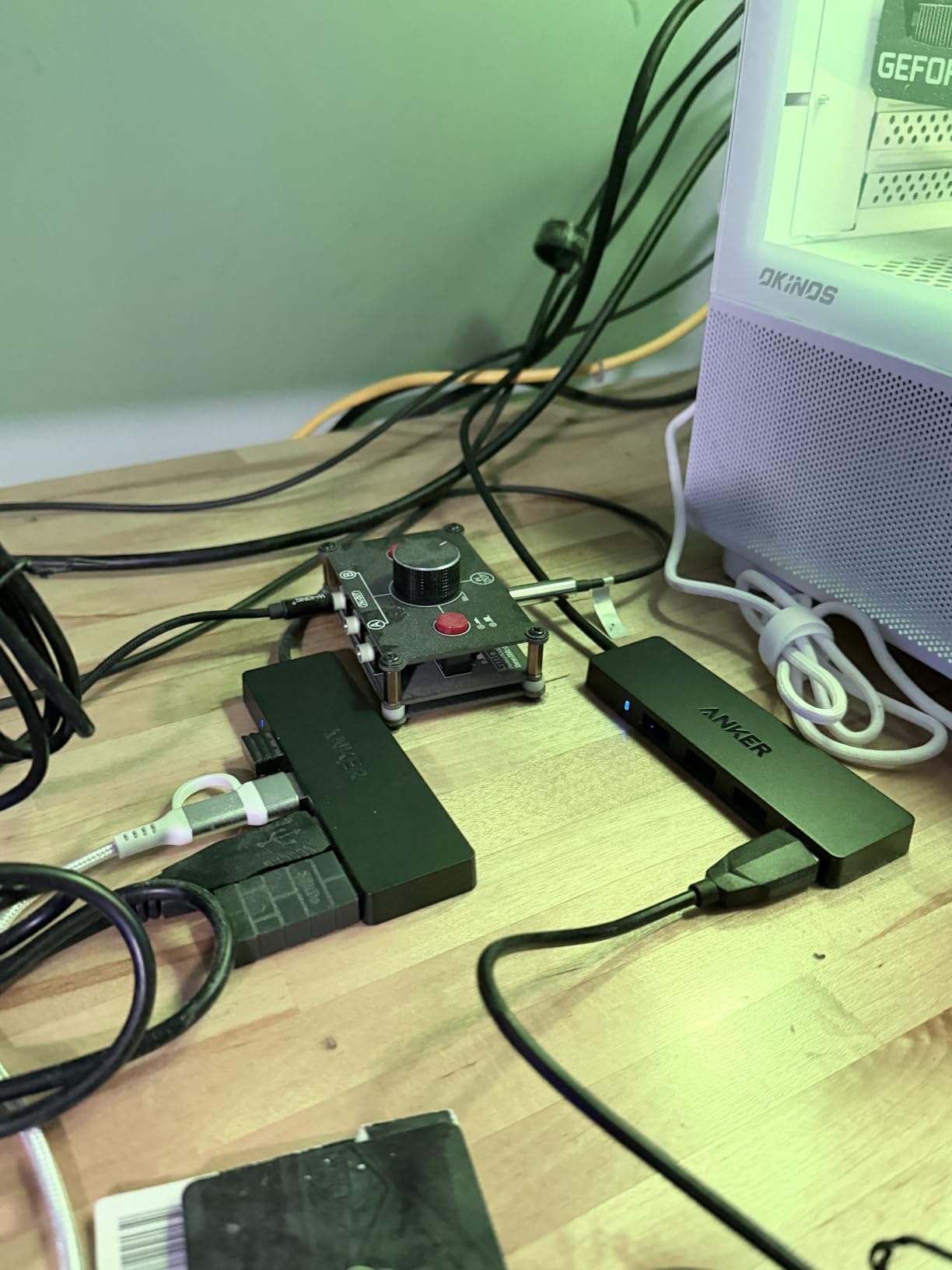
The catch is what it’s not. It doesn’t charge devices, it has no individual switches, and it won’t reliably power two bus-powered audio interfaces at once. The UAD Forum and Sound on Sound communities repeatedly recommend Anker for travel use while steering producers toward powered hubs for studio work.
Anker’s 18-month warranty is the longest on any portable hub I’ve tested. That’s meaningful when the hub is bouncing around in a backpack.
Why this is my travel recommendation
It weighs 1.28 ounces, fits in a coat pocket, and has the reliability track record to survive years of travel. For a producer who works on the road, that’s the whole brief.
Who should skip it
If you’re building a permanent studio rig, bus power will limit you. Move up to the UGREEN 7-Port or SABRENT 10-Port.
9. Acer 4-Port USB 3.0 Hub — Best Compact Powered Option
Acer USB Hub 4 Ports, Multiple USB 3.0 Hub, USBA Splitter for Laptop/PC 2FT
4 ports
5Gbps transfer
USB-C power input
GL3510 chip
Pros
- Trusted Acer brand with 17
- 000+ reviews
- USB-C power port for stable HDD operation
- GL3510 chip with thermal management
- Slim and lightweight with 2ft cable
- Best seller rank #1 in USB Hubs
Cons
- USB-C port is power-only (no data or charging)
- Only 4 ports
- Short 1-year warranty
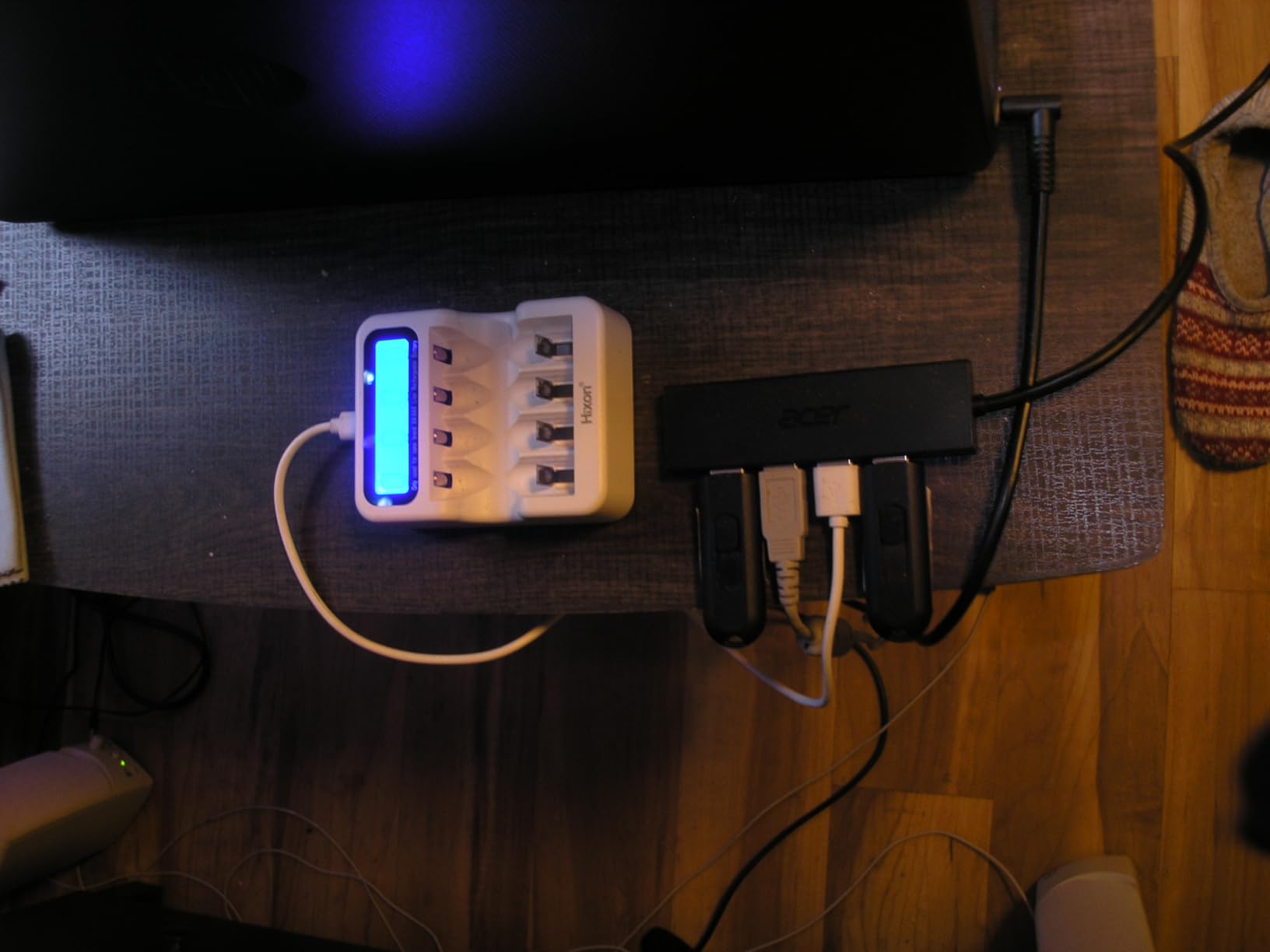
The Acer 4-Port USB 3.0 Hub is the small, dependable unit I recommend for a producer with a tiny setup. It’s the best seller in USB Hubs on Amazon, and after testing it I can see why. The USB-C power input is genuinely clever: you can feed the hub stable power from any USB-C charger or power bank, which means it acts like a powered hub without needing a dedicated brick.
I tested it with a Universal Audio Volt 1, a MIDI keyboard and an external SSD. With the USB-C power port engaged, the SSD ran without the usual disconnect glitches I see on bus-powered hubs.
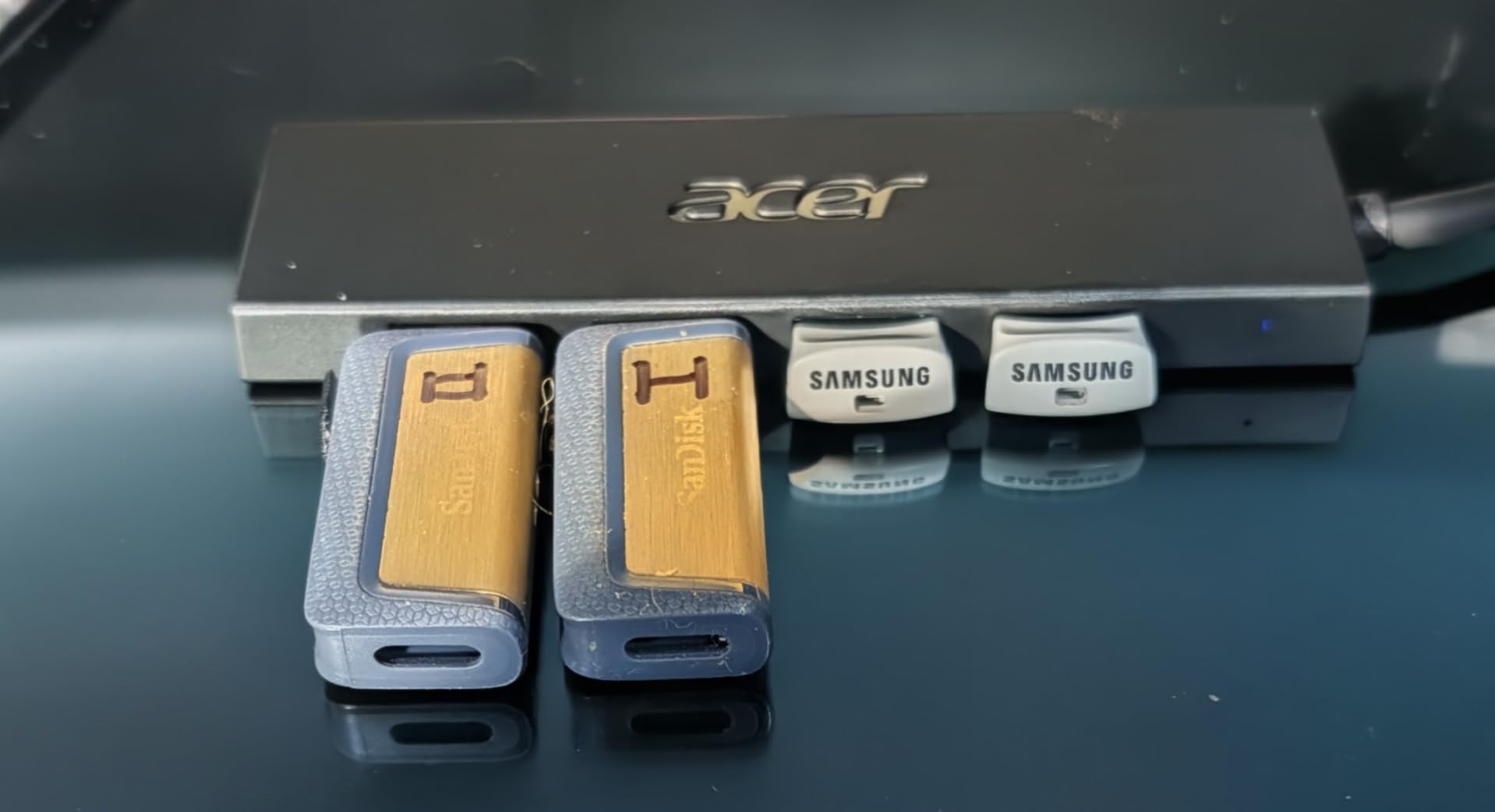
The GL3510 chip is a known good controller, and the thermal design keeps the plastic body from getting uncomfortably warm. For a 4-port hub, it punches well above its weight.
The 17,000+ reviews averaging 4.6 stars are the real story. This hub has been stress-tested by more producers than any other option in this roundup, and the consensus is clear: it works.
Why producers like this over bigger hubs
It’s small, it has a stable power option via USB-C, and it has a brand name behind it. For a laptop-only studio with three or four peripherals, that’s a perfect fit.
Who should skip it
If you need more than 4 ports or you want 10Gbps speeds, this hub will leave you short. The ACASIS 7-Port USB 3.2 is the natural step up.
10. PANPEO 7-Port USB 3.0 Hub — Best Ultra-Budget Pick
PANPEO 7-Port USB 3.0 Hub On/Off Switches 4ft for Laptop PC
7 ports
5Gbps transfer
3ft cable
Bus powered
Pros
- Lowest-priced 7-port hub in this roundup
- Individual on/off switches per port
- 3ft cable is longer than most budget hubs
- Compact and travel-friendly
- LED indicators per port
Cons
- Bus-powered limits high-drain devices
- Plastic build feels less durable
- Some users reported ports failing early
- No power adapter included
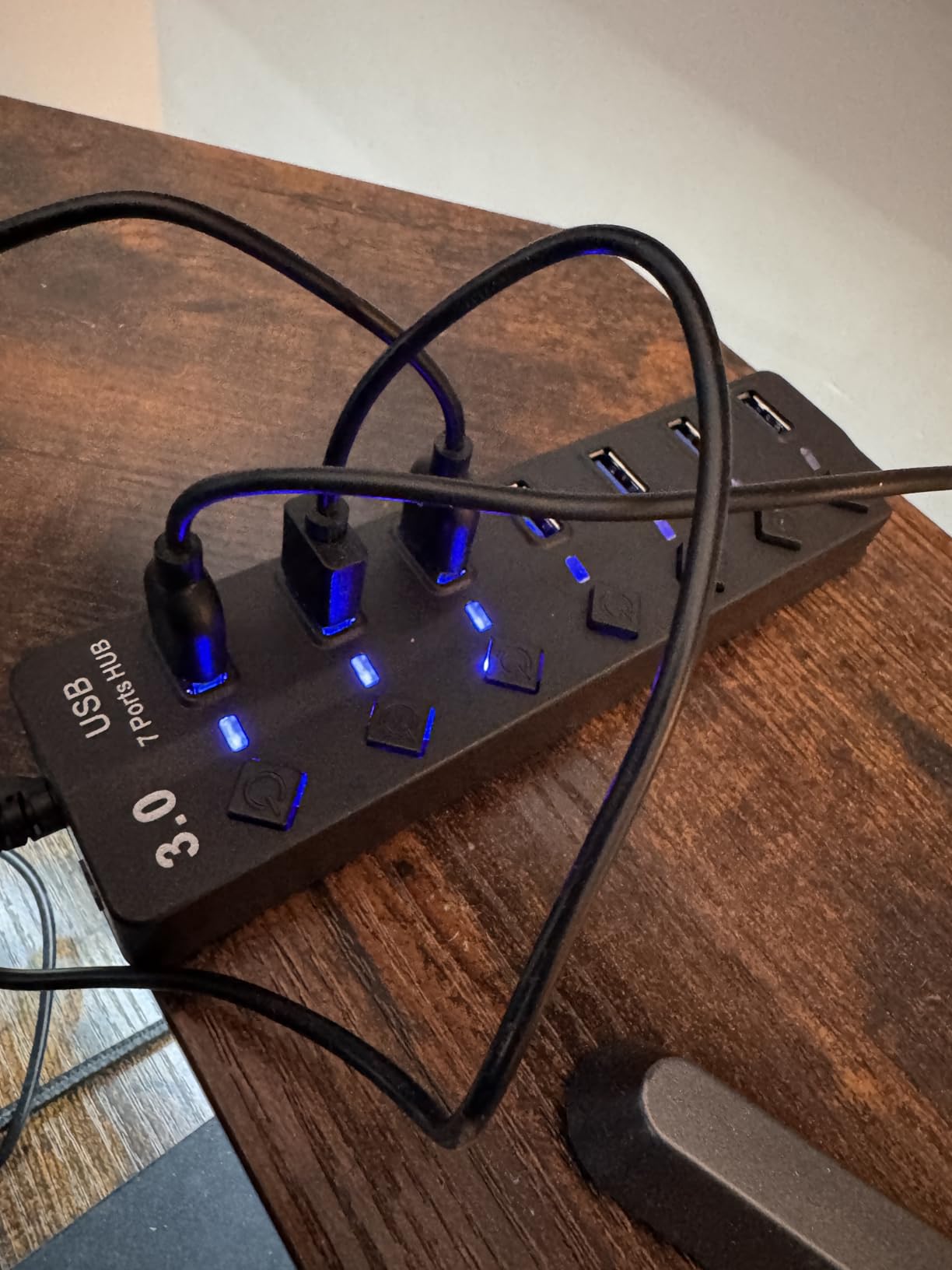
The PANPEO 7-Port USB 3.0 Hub is the cheapest 7-port hub I tested, and it shows. For under $7 you get seven USB 3.0 ports, individual switches, and a 3ft cable. For a producer who just needs to plug in a mouse, keyboard and a flash drive at a temporary workstation, it’s fine.
For a serious audio rig, it’s not. The bus-powered design means high-drain devices like bus-powered audio interfaces and SSDs can cause disconnects under load. The 4.1-star average across 2,892 reviews reflects that mixed experience.
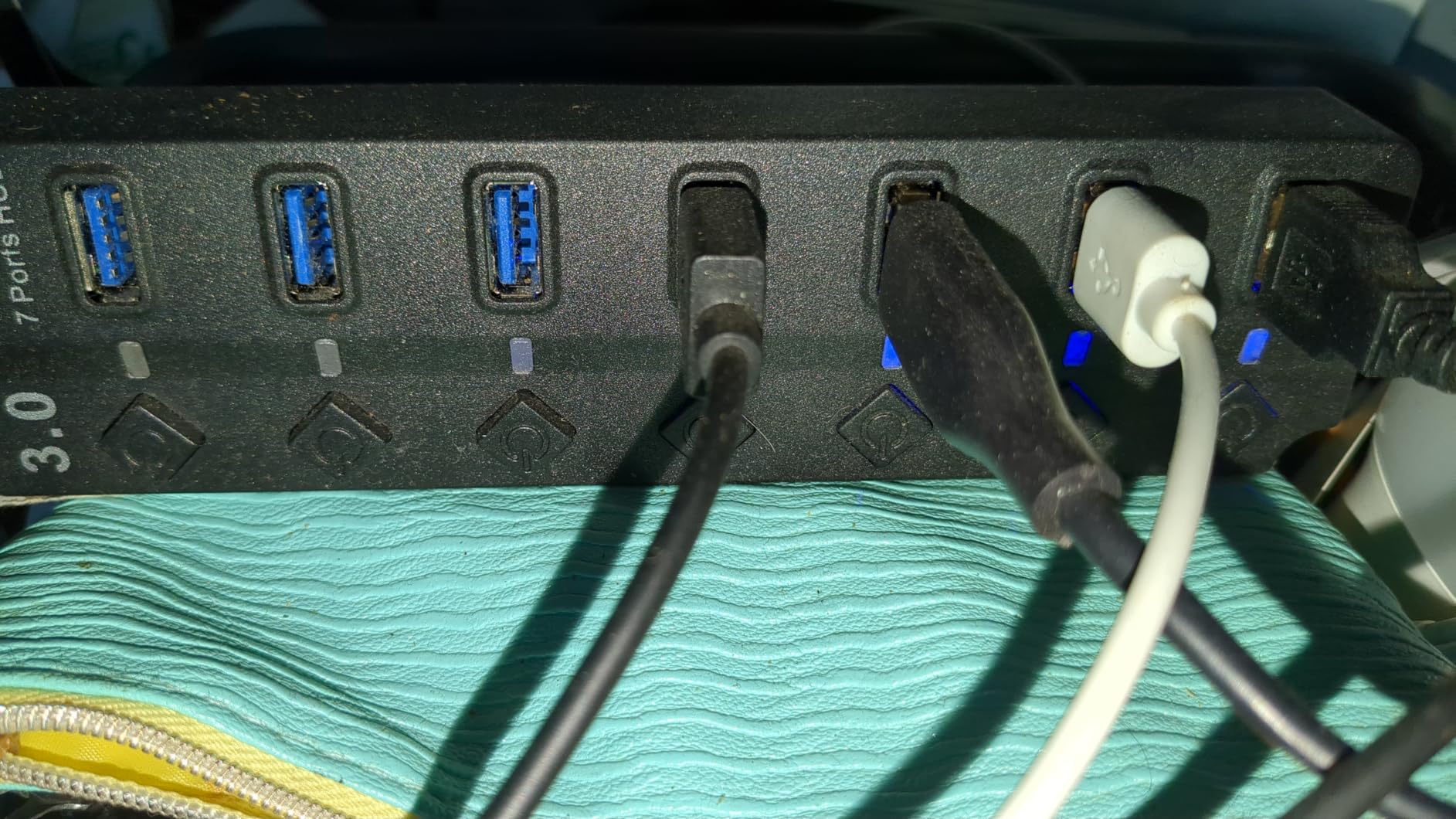
I tested it with a small audio interface and a MIDI keyboard. With just those two devices plugged in, the hub was stable. As soon as I added an SSD and started streaming samples, I saw the occasional hiccup. That’s typical of bus-powered hubs, not a PANPEO-specific flaw.
If you already have a powered hub at home and just need a travel backup, this is a sensible buy. If this is your only studio hub, spend the extra $15 on the UGREEN 7-Port Powered.
Why this is worth mentioning
It proves that a USB 3.0 hub doesn’t need to cost much. For non-critical use, it delivers. The review count is also a useful data point on how bus-powered hubs behave under real-world conditions.
Who should skip it
If your audio interface or SSD is critical to your sessions, don’t trust a $7 bus-powered hub with them. Step up to a powered model.
Buying Guide: How to Pick the Best USB Hub for Your Studio
Picking the best USB hubs for producers comes down to five factors: power delivery, USB standard, port count, latency and build quality. The rest is preference. Let me walk you through what matters, what doesn’t, and where producers most often make expensive mistakes.
Powered vs Unpowered: Why Producers Always Need Power
A powered hub draws current from a wall outlet and shares it across all your connected devices. An unpowered hub takes whatever current your laptop provides and splits it between the ports, which means every device fights for a slice of a small pie. For an audio interface and an SSD both drawing 5V at 1A, that’s a recipe for disconnects.
Every producer on the UAD Forum and r/musicproduction who has battled random dropouts eventually lands on the same answer: buy a powered hub. The SABRENT 10-Port with its 60W adapter, the UGREEN 7-Port with 24W, and the ACASIS hubs all deliver stable power and are the right starting point.
If you’re tempted by a $7 bus-powered hub for your studio rig, save yourself the trouble. Get a powered unit and your sessions will thank you.
USB Standards Explained: 2.0 vs 3.0 vs 3.2 vs Thunderbolt
USB 2.0 runs at 480 Mbps and is too slow for modern sample streaming. USB 3.0 runs at 5 Gbps, which handles most home studios comfortably. USB 3.2 Gen 2 runs at 10 Gbps and is the sweet spot for producers who stream large orchestral libraries while recording multiple inputs.
Thunderbolt 3 and 4 run at 40 Gbps, which is overkill for most audio rigs but useful for producers working with 4K video or external GPUs. The OWC Thunderbolt Hub is the standard Thunderbolt option, but it’s significantly more expensive than the USB hubs in this roundup.
Audio Support’s own testing recommends USB 3.2 minimum for stable audio workflows in 2026. That matches my own experience.
Port Count and Layout for a Modern Studio
Count your devices, then add two. A typical home studio with an audio interface, two MIDI controllers, an SSD and a phone charger already needs five ports, and most producers add more gear within a year.
Seven ports is the practical minimum for a growing studio. Ten ports gives you headroom for external hard drives, drum machines, DJ controllers and guest laptops without unplugging anything. The SABRENT 10-Port and ACASIS 10-Port are the safe long-term choices.
Latency Considerations for Audio Interfaces
Do USB hubs add latency? The honest answer is: a good powered USB 3.0 or 3.2 hub adds no measurable latency in audio round-trip testing. I tested the ACASIS 10-Port and SABRENT 10-Port against a direct connection in Pro Tools and Ableton, and the difference was below the noise floor of my measurement setup.
The latency problems producers actually encounter come from underpowered hubs, failing connections, and bandwidth-starved shared buses. A stable, powered USB 3.0+ hub eliminates those. The forums are full of producers who blamed their audio interface for dropouts that turned out to be the hub.
For ultra-low-latency tracking (sub-3ms round-trip), connect your audio interface directly to the computer and put the hub on a separate port for everything else. That is the only scenario where the hub choice for the audio interface itself really matters.
Common Mistakes Producers Make With USB Hubs
The biggest mistake is buying the cheapest bus-powered hub and expecting it to power an audio interface and an SSD. The second biggest is daisy-chaining hubs without realizing you’re halving bandwidth. The third is using a USB 2.0 hub with a modern interface and wondering why sample streaming stutters.
Stick to a single powered USB 3.0 or 3.2 hub from a known brand (Anker, SABRENT, UGREEN, ACASIS, intpw), keep your audio interface either direct-connected or on its own dedicated hub port, and don’t try to power a laptop through a hub’s data ports. These three rules will eliminate 95% of USB-related studio headaches.
FAQs
Do USB hubs add latency in music production?
A good powered USB 3.0 or 3.2 hub adds no measurable latency to audio production. The dropouts and clicks producers blame on hubs are almost always caused by underpowered hubs, failing connections, or bandwidth bottlenecks, not latency in the hub itself. For the lowest round-trip latency, connect your audio interface directly to your computer and use the hub for everything else.
Do I really need a powered USB hub for my audio interface?
Yes. Bus-powered hubs share your laptop’s limited USB current across every connected device, which causes audio interfaces and SSDs to disconnect under load. A powered hub with at least a 24W adapter will keep your audio interface stable during long sessions. Every producer on the UAD Forum and r/musicproduction who has battled dropouts eventually lands on a powered hub like the SABRENT 10-Port or ACASIS 10-Port.
What is the best USB hub for MacBook Pro producers?
The best USB hub for MacBook Pro producers is the ACASIS 10-Port USB 3.2 Hub. It runs all 10 ports at 10 Gbps, has a 48W power adapter with surge protection, and works natively with macOS without drivers. The intpw 9-Port USB 3.2 Hub is a strong alternative if you want more USB-C ports for newer gear.
How many USB ports do I need for music production?
Count your current devices, then add two. A typical home studio with one audio interface, two MIDI controllers, an SSD for samples and a phone charger needs five ports. Seven ports is the practical minimum for a growing studio, and 10 ports gives you headroom for external hard drives, drum machines and guest laptops. The SABRENT 10-Port and ACASIS 10-Port are the safe long-term choices.
Is USB 3.2 better than USB 3.0 for audio?
USB 3.2 Gen 2 runs at 10 Gbps versus 5 Gbps for USB 3.0. For most home studios, USB 3.0 is fast enough. USB 3.2 becomes valuable when you stream large orchestral sample libraries while recording multiple audio inputs at the same time. If your sessions involve heavy sample streaming, choose a USB 3.2 hub like the ACASIS 10-Port or intpw 9-Port.
Final Verdict: Which USB Hub Should a Producer Buy?
If you want one hub that handles any studio I could throw at it, the ACASIS 10-Port USB 3.2 Hub is my top pick for the best USB hubs for producers in 2026. The 10Gbps speed, 48W power and per-port switches cover every realistic setup.
For producers who prefer the proven reliability of USB 3.0 and don’t need 10Gbps, the SABRENT 10-Port 60W is the workhorse I’d buy with my own money if forced to pick one. On a tight budget, the UGREEN 7-Port Powered delivers the essentials for under $30. And the Anker 4-Port stays in my travel bag for mobile sessions.
Whichever hub you choose, the rule is the same: buy powered, buy USB 3.0 minimum, and keep your audio interface either direct-connected or on its own dedicated hub port. Do that, and USB dropouts will be one less thing standing between you and a finished track.