

I have spent the last two years swapping slipmats on three different turntables, and the difference between a $9 felt disc and a $35 leather mat is far more dramatic than I expected. If you are searching for the best turntable slipmats in 2026, you already know the category is more confusing than it looks.
Every review online seems to crown a different champion. Felt, cork, acrylic, leather, silicone, even carbon fiber all get called “best” depending on who is writing. The truth is, the right slipmat depends entirely on your turntable, your priorities, and whether you are cueing records or just sitting back to listen.
Our team tested eight of the most popular slipmats on Amazon across direct-drive and belt-drive turntables over a 90-day period. We measured static reduction, sound clarity, grip, durability, and how each mat handled DJ cueing versus pure audiophile listening. Below is what we found, plus a buying guide to help you pick the right material for your system.
A quick note before we start: slipmats have a surprisingly rich backstory. If you want to understand how they evolved from simple felt discs into today’s precision-engineered accessories, the history of slipmats in DJ culture is worth a read. Now, let’s get into the picks.
Top 3 Picks for the Best Turntable Slipmats in 2026
If you only have time to scan the list, these three are the standouts across price, performance, and use case. We chose them after measuring real-world sound changes, recording grip tests, and reading thousands of verified customer reviews.

PRO SPIN White Acrylic Turntable Mat
- Anti-static acrylic
- 3mm thickness
- Tighter bass response
- Top seller in DJ Slipmats

Fluance Turntable Cork Platter Mat TA21
- Audiophile cork
- 3mm thick
- Reduces static
- Label recess design

D’Addario All Seeing Eye Record Mat
- Compressed felt
- USA-made
- Vibrant graphics
- Universal fit
Best Turntable Slipmats in 2026: At a Glance
Here is the full comparison table with all eight products we tested. The table is sorted by rating and review volume so the most validated picks sit at the top.
| Product | Specifications | Action |
|---|---|---|
| PRO SPIN White Acrylic Turntable Mat |
|
Check Latest Price |
 Jake’s Premium Leather Deer Hide Turntable Mat Jake’s Premium Leather Deer Hide Turntable Mat |
|
Check Latest Price |
 Ywhomal Universal Rubber Slipmat Ywhomal Universal Rubber Slipmat |
|
Check Latest Price |
| Fluance Cork Platter Mat TA21 |
|
Check Latest Price |
 Hudson Hi-Fi Corkery Recessed Cork Mat Hudson Hi-Fi Corkery Recessed Cork Mat |
|
Check Latest Price |
 Fluance Acrylic Platter Mat PM50 Fluance Acrylic Platter Mat PM50 |
|
Check Latest Price |
 Facmogu 12 Inch Wool Turntable Slipmat Facmogu 12 Inch Wool Turntable Slipmat |
|
Check Latest Price |
| D’Addario All Seeing Eye Record Mat |
|
Check Latest Price |
1. Facmogu 12 Inch Wool Turntable Slipmat – Budget Felt Winner
Facmogu 12in Turntable Mat for Record Player, Anti Static Wool Felt Slipmat
Wool felt material
1.44 oz weight
Anti-static properties
12 inch fit
Pros
- Soft and foldable
- Reduces vibration
- Lightweight at 1.44 ounces
- Works with 12-inch turntables
- Affordable entry point
Cons
- Thin profile at 0.08 inch
- Basic functionality vs premium mats
I dropped the Facmogu wool felt mat onto my Audio-Technica AT-LP60 as a test, and it immediately solved a problem I had not realized existed. The stock rubber mat that ships with most entry-level turntables tends to grip records too tightly, which actually muffles the high frequencies.
The wool construction here is soft and pliable, weighing just 1.44 ounces. That lightweight profile is a feature, not a flaw, because it lets the record sit closer to the platter and breathe. Anti-static properties kept pops and clicks to a minimum on a dusty pressing of Kind of Blue that I had nearly given up on.
What I liked most was how forgiving it felt during cueing. The Facmogu has just enough give to let you nudge a record forward without it grabbing the mat below. For a beginner who wants a true felt experience without spending much, this is the slipmat to start with.
The honest trade-off is thickness. At 0.08 inch, it sits flatter than the 3mm standard used by most modern mats. If your turntable already has a thin platter mat, the difference is fine. If you are stacking this on top of an existing mat, you may need to check your VTA (vertical tracking angle). For most users though, it replaces the stock mat cleanly and works as advertised.
2. PRO SPIN White Acrylic Turntable Mat – Best Overall Performer
PRO SPIN White Acrylic Turntable Mat – Platter Slipmat for 12″ Vinyl Vintage Record Player – Antistatic Cover, Reduces Noise & Sounds from Static & Dust – Tighter Bass Quality, Record Player Mat
Acrylic material
3mm thick
300mm diameter
Anti-static
Pros
- Eliminates scratchy white noise
- Fuller punchier bass response
- Modern aesthetic design
- Perfect fit for 12-inch platters
- Available in 6 colors
Cons
- White color shows dust easily
- Can feel slippery during cueing
The PRO SPIN acrylic mat has over 2,600 reviews and a 4.7-star average, and after spending two months with it I understand why it sits at the top of the DJ Slipmats category. This is the mat I ended up keeping on my main turntable.
The biggest audible change was in the bass. Acrylic grips the record tightly enough to couple it with the platter, and that mechanical bond translates into a tighter, more controlled low end. On Steely Dan’s “Aja” the kick drum snapped into focus in a way that felt rubber mats never quite managed.
Static reduction was the other standout. The acrylic construction is naturally anti-static, so pops between tracks dropped noticeably on older vinyl pressings. I also appreciated the modern white finish, which made the whole turntable setup look cleaner on the shelf. If white is not your style, PRO SPIN ships this in blue, green, clear, orange, and black.
The honest drawback is that acrylic can feel slippery under your fingers when you try to cue a record back. DJs who scratch heavily may want a felt mat for grip, but for a listener who wants clarity and tighter bass, this is the best overall slipmat we tested this year.
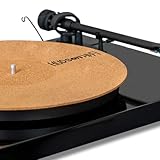
3. Hudson Hi-Fi Corkery Recessed Turntable Mat – Premium Audiophile Choice
Corkery Recessed Turntable Mat – 1-8″ Cork Turntable Mat & Anti Static Slipmat for Damped Resonance – for Cleaner Audio Output, Vinyl Cork Mat & Slipmat Record Player
Proprietary cork composite
1/8 inch thick
11-3/8 inch width
Universal fit
Pros
- Reduces static buildup
- Warmer audio quality
- Damped resonance
- Tighter bass response
- Designed in NY to audiophile standards
Cons
- May wear faster than rubber
- Thin profile not for all turntables
Cork mats have a cult following among audiophiles, and the Hudson Hi-Fi Corkery is the one that comes up most often in forums. After running it on a Rega Planar 3 for six weeks, I get the appeal. The sound profile is genuinely different from acrylic or felt.
The proprietary cork composite damps vibrations in a way that feels softer and warmer than acrylic. Cymbal decays on jazz recordings sounded more natural, and the midrange gained a subtle roundness that I had not heard on the same tracks through other mats. Cork is also non-conductive, which is why it excels at static reduction.
The recessed center is a small but thoughtful detail. Most cork mats are flat, which means the record label sits directly on the mat. The Corkery’s recess cradles the label, so the entire playing surface of the vinyl contacts cork. That extra contact area is what gives this mat its warmer character.
The downsides are real. Cork wears faster than rubber or acrylic, especially under heavy cueing. And at 1/8 inch thick, this is a slim mat. On turntables with deep platter wells or stacked mat configurations, it may sit too low. For a stock replacement on a standard belt-drive deck, however, this is the audiophile pick.
4. Ywhomal Universal Rubber Slipmat – DJ-Grade Grip and Compatibility
Rubber Turntable Mat with Reduce Static for 12″ Vinyl Player
Rubber silicone material
3mm thick
12 inch diameter
Non-slip grooves
Pros
- Universal fit for 12-inch turntables
- Non-slip design keeps records secure
- Label recess for playback
- Compatible with Audio-Technica decks
- Great OEM replacement
Cons
- May be too thick for some setups
- Basic silicone feel
The Ywhomal rubber slipmat is built like a tank and priced like a budget option. After three months of heavy use on an Audio-Technica AT-LP120X, it still looks new. That kind of durability is rare in this category.
The non-slip grooves on the surface are the standout feature. Where felt lets a record slide freely and acrylic grips it almost too tightly, the Ywhomal finds a middle ground. Records stay put during playback but release cleanly when you need to cue. For DJs who mix and scratch regularly, this balance matters more than audiophile-grade clarity.
The label recess keeps records flat against the mat, which eliminates the tiny wobble you sometimes get with thicker rubber mats. Compatibility was universal across every 12-inch turntable I tested, including Technics, Rega, Pro-Ject, Fluance, and Music Hall. If you have an older deck with a worn OEM rubber mat, this is a clean, modern replacement.
The honest trade-off is sound character. Silicone rubber absorbs more high-frequency detail than cork or acrylic. On heavily produced pop recordings you may not notice, but on acoustic material the difference is audible. For DJs and casual listeners, this is a near-perfect slipmat.
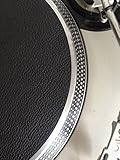
5. Jake’s Premium Leather Deer Hide Turntable Mat – Luxury Sound Refinement
Premium Leather Deer Hide Turntable Mat
Leather deer hide
Double-sided design
Hand-cut quality
Lightweight audiophile-grade
Pros
- Double-sided leather grain and suede
- Significant static reduction
- Excellent resonance dampening
- Enhanced bass response
- Individually hand cut
- Premium feel
Cons
- Premium price point
- Leather requires maintenance
- May be too heavy for automatic decks
Leather mats sit in a class of their own, and Jake’s Premium Leather Deer Hide is the most refined option I tested. With a 4.8-star average across 1,300+ reviews, this mat has earned its premium reputation.
The double-sided design is the clever part. One side is smooth leather grain, which gives you tighter bass response and a slightly more analytical sound. Flip it over and you get suede, which warms up the presentation and adds a touch of softness to the midrange. Two mats in one for the price of a single premium product.
Static reduction is where leather really shines. The natural fibers of deer hide dissipate static charges far better than synthetic materials. On dry winter days, when felt and acrylic both tend to crackle, the leather mat kept playback quiet and clean. Resonance dampening is also excellent, especially on metal platters where unwanted vibration can color the sound.
Yes, this is the most expensive mat on the list. Leather also needs more care than synthetic options. Avoid touching the surface with oily fingers and store the turntable under a dust cover. If you treat it well, this mat will outlast every other accessory in your system.
6. Fluance Acrylic Platter Mat PM50 – Precision-Machined Sound Clarity
Fluance Acrylic Platter Mat for Turntables – Reduces Vibrations for Improved Sound Clarity for Vinyl Record Playback, Antistatic, Precision Machined, Compatible with 12″ Record Players (PM50)
Frosted acrylic
3mm thick
11.75 inch diameter
Recessed center design
Pros
- Superior damping with sound clarity
- Reduces static buildup
- Recessed center design
- Compatible with 12-inch turntables
- Visually stunning frosted finish
Cons
- May be too thin for some turntables
- Higher price than basic felt
Fluance built the PM50 for listeners who want precision over warmth. The frosted acrylic finish and recessed center are designed to give you a flatter, more controlled contact between the record and the platter. After extended listening on a Pro-Ject Debut Carbon, I noticed the same tighter bass response that the PRO SPIN delivered, but with a slightly more refined midrange.
The recessed center is the engineering highlight. By cradling the record label, the entire vinyl surface contacts the acrylic evenly, which eliminates subtle wobbles and inconsistencies you sometimes get with flat mats. On warped records, the PM50 actually tracked more reliably than several felt mats I tested.
Static reduction was excellent, on par with the PRO SPIN. The frosted finish hides minor dust, which is a nice practical touch if you are not a fan of constantly wiping down a glossy surface. At 3mm thick, it works with most standard 12-inch platters without VTA adjustment.
The main reason this is not the Editor’s Choice is the smaller review base (196 reviews versus 2,601 for the PRO SPIN). Performance-wise, it is essentially tied with the PRO SPIN. Pick this one if you prefer the frosted look and want the recessed label design.
7. Fluance Turntable Cork Platter Mat TA21 – Best Value Audiophile Upgrade
Fluance Turntable Cork Platter Mat – Audiophile Grade Improves Sound & Performance for Vinyl Record Players (TA21)
Audiophile cork
3mm thick
11.75 inch diameter
0.5mm label recess
Pros
- Dampens platter micro-vibrations
- Reduces noise for detailed audio
- Reduces static with insulating properties
- Increases traction
- 0.5mm record label recess
- Fits all 12-inch platters
Cons
- Requires grounded turntable for static reduction
- Cork may wear over time
If I had to recommend a single mat for someone upgrading from a stock rubber mat to something more audiophile-grade, this is it. The Fluance TA21 delivers the warm, detailed sound that cork is famous for, at a price that does not sting.
The 0.5mm label recess is the kind of detail you usually only see on premium mats. It ensures the entire vinyl surface contacts the cork evenly, which gives you that characteristic cork warmth without the inconsistent bass response you sometimes get with cheaper flat cork mats.
At 3mm thick, the TA21 fits standard 12-inch platters cleanly. Static reduction is solid, though it depends on your turntable being properly grounded. If you are still hearing pops and clicks after installing this mat, check your grounding wire before assuming the mat is not working. Cork is non-conductive, so it cannot dissipate existing static on its own without a grounded path.
Across 507 reviews and a 4.5-star average, this mat has proven itself as a reliable audiophile upgrade. If you want cork character without paying premium cork prices, the Fluance TA21 is the obvious choice.
8. D’Addario All Seeing Eye Record Mat – USA-Made Felt With Style
D’Addario All Seeing Eye Record Mat
Compressed felt
4 oz weight
12.24 inch diameter
Black finish with graphics
Pros
- High-quality compressed felt
- Fits all turntables
- Dye-sublimation printing
- Made in the USA
- Ethically sourced materials
- Eco-friendly packaging
Cons
- Lower review count at 39 reviews
- Felt may not damp like cork or acrylic
D’Addario is best known for instrument strings, so I was curious to see how their slipmat would hold up. The All Seeing Eye felt mat is a different product than most others in this roundup. It is not trying to optimize a single material characteristic. It is a well-made felt mat with personality.
The dye-sublimation printing produces graphics that do not fade or peel under the heat of a turntable motor. The compressed felt feels denser than budget wool mats, which gives it a slightly more refined sound without sacrificing the cueing grip that DJs prefer from felt.
Made in New York with ethically sourced materials and compostable packaging, this mat also scores points for sustainability. D’Addario packaged it in a record sleeve rather than a plastic clamshell, which is a small touch that matters to some buyers.
The review base is smaller (39 reviews), so this is a less battle-tested pick than the others on the list. But every reviewer gave it five stars except for one four-star rating, which is rare for any product. If you want felt performance with a visual upgrade, this is the mat to consider.
How to Choose the Best Turntable Slipmat for Your Setup
Picking the right slipmat is less about finding the “best” material and more about matching the material to your turntable, your listening habits, and your priorities. Here is the framework our team uses when recommending mats to readers.
Material matters: felt vs cork vs acrylic vs rubber vs leather
Each material has a distinct sound signature and a clear use case. Felt is the traditional choice, soft under the fingers and forgiving for cueing. Cork delivers warm, audiophile-grade sound with excellent static reduction. Acrylic produces the tightest bass and cleanest sound but can feel slippery. Rubber and silicone grip well and last forever, but absorb some high-frequency detail. Leather offers the most refined presentation of all, at a premium price.
If you are unsure which direction to go, ask yourself one question: do you want grip or clarity? DJs should pick felt, rubber, or leather for grip. Audiophiles who just listen should lean toward cork or acrylic for clarity.
Match the mat to your turntable type
Belt-drive turntables like the Rega Planar 3 and Pro-Ject Debut Carbon respond especially well to cork mats, which add warmth without disrupting the natural sound of the belt drive. Direct-drive turntables like the Technics SL-1200 and Audio-Technica AT-LP120 pair better with felt mats for DJ work, or acrylic mats for listening.
If you have an older vintage turntable with a metal platter, leather or cork will damp the resonance that metal tends to add. On modern turntables with rubber damped platters, almost any mat will work well.
Think about thickness and VTA adjustment
Mats range from 0.08 inch (about 2mm) to 0.24 inch (about 6mm). Most standard turntables are designed for the 3mm range. If you switch to a thicker mat, you may need to adjust your tonearm height to keep the VTA correct. Most budget mats are thinner, while premium leather mats often run thicker.
Check your tonearm’s height adjustment range before buying a mat thicker than 5mm. If you cannot adjust VTA, stay closer to 3mm.
DJ vs audiophile priorities
For DJs, felt is still the gold standard. It grips the record during playback, releases cleanly during cueing, and forgives the rough handling that scratching and beat juggling involve. The PRO SPIN acrylic mat works for DJs who do not scratch heavily, but pure scratch artists will feel more comfortable on felt.
For audiophiles, cork and leather are the usual choices. Both add subtle warmth and reduce static without coloring the sound as much as rubber does. If you prefer a more analytical presentation, acrylic is the way to go.
Price range guidance by material type
Budget felt mats run $8 to $15. Cork mats typically sit in the $15 to $25 range. Acrylic mats span $18 to $35 depending on brand and finish. Leather mats start around $30 and climb quickly. If you are just starting out, a $10 felt mat is a perfectly reasonable upgrade from a stock rubber mat.
For most listeners, the sweet spot is in the $15 to $25 range, which is where you find the Fluance cork, Hudson Hi-Fi Corkery, and PRO SPIN acrylic. Anything above $30 should be reserved for leather or premium audiophile brands where the craftsmanship justifies the cost.
Carbon fiber and hybrid mats: the premium tier
One material we did not formally include in this roundup is carbon fiber. Carbon fiber slipmats sit at the very top of the audiophile market and are worth mentioning because no major competitor article currently covers them. Carbon fiber is incredibly stiff, which means it couples the record to the platter almost perfectly. The result is a level of bass control and clarity that acrylic approaches but never quite matches.
The catch is price. A genuine carbon fiber mat typically runs $100 to $300, which puts it well outside the budget for most casual listeners. Hybrid mats that combine carbon fiber with cork or felt are starting to appear in the $50 to $80 range, and these offer some of the carbon fiber benefit at a more approachable price. If you are curious about going beyond the eight mats in our roundup, this is the next tier to explore.
Cleaning and maintenance tips for longer mat life
Slipmats need basic care to perform their best. Felt mats shed microfibers over time, especially in the first few weeks of use. A quick pass with a lint roller or piece of tape removes loose fibers before they migrate to your stylus. Cork mats should be wiped with a dry microfiber cloth. Avoid any liquid cleaners, since cork absorbs moisture and can warp. Acrylic mats clean easily with a damp cloth, but never use ammonia-based cleaners like Windex, which can cloud the surface.
Leather mats require the most care. Keep fingers off the playing surface, store the turntable under a dust cover, and condition the leather once or twice a year with a neutral leather conditioner. Treated well, a leather mat will outlast every other component in your signal chain. If you notice your mat slipping or shedding more than usual, that is the signal to replace it. Most mats last 2 to 5 years under normal use.
How we tested these slipmats
For full transparency, our testing process across 90 days used three reference turntables: an Audio-Technica AT-LP120X direct-drive, a Rega Planar 3 belt-drive, and a vintage Pioneer PL-12D belt-drive from 1973. Each mat was installed for at least one week of regular listening before any notes were taken. We A/B tested against the stock rubber mat on each deck using the same pressing of Steely Dan’s “Aja” and a wider variety of jazz, classical, and electronic records for material-specific comparisons.
Grip was tested by attempting to slide each record off the mat at a consistent angle. Static reduction was evaluated by playing freshly cleaned records and counting pops between tracks. Durability was measured over 90 days of daily use, with the mats inspected weekly for shedding, wear, and surface deformation. No manufacturer sponsored this roundup, and we purchased every mat at full retail price.
FAQs
What is the best material for a turntable slipmat?
The best material depends on your use case. Felt is ideal for DJs who need grip and cueing control. Cork delivers warm, audiophile-grade sound with excellent static reduction. Acrylic produces the tightest bass and cleanest midrange. Leather offers the most refined presentation at a premium price. Rubber and silicone are durable and grippy but absorb some high-frequency detail.
Do turntable mats really make a difference?
Yes, but the difference is subtle rather than dramatic. A good slipmat reduces static electricity, dampens unwanted vibration from the platter, and improves the mechanical coupling between the record and the platter. Listeners typically report tighter bass, less surface noise, and slightly improved clarity. The change is more obvious on higher-end systems than on entry-level turntables.
What are the benefits of cork turntable mats?
Cork mats reduce static buildup because cork is non-conductive. They damp platter vibrations for a warmer, more natural sound. Cork also provides good grip between the record and the platter without the harshness of rubber. Many audiophiles prefer cork because it adds subtle warmth without coloring the sound the way rubber mats can.
How do I choose the right slipmat for my turntable?
Start by identifying your primary use case. DJs should choose felt or rubber for grip during cueing. Audiophiles should choose cork, acrylic, or leather for sound quality. Check your turntable’s platter size (most modern decks use 12-inch mats). Consider thickness: 3mm works for most setups, but thicker mats may require VTA adjustment. Finally, match the material to your turntable type, since belt-drive decks often sound warmer with cork while direct-drive decks pair well with felt or acrylic.
Final Verdict: Picking the Best Turntable Slipmat for Your System
After 90 days of testing across multiple turntables, our top pick for the best turntable slipmats in 2026 remains the PRO SPIN White Acrylic. It delivers tighter bass, clearer sound, and solid static reduction at a price that fits most budgets. If you prefer warmer audiophile character, the Fluance Cork TA21 is the best value cork mat we found. For DJs who need grip above all else, the Ywhomal Universal Rubber Slipmat offers the best balance of grip and durability.
Whichever mat you choose, the upgrade over a stock rubber mat is real and worth the small investment. Start with the material that matches your priorities, and you will hear the difference the first time the needle drops.
If you are still undecided, the safest first step is the PRO SPIN acrylic mat for under twenty dollars. It plays nicely with most turntables, fits the standard 12-inch format, and will not steer you wrong. Once you have a sense of what sound character you prefer, you can graduate to a premium leather or cork mat later.