
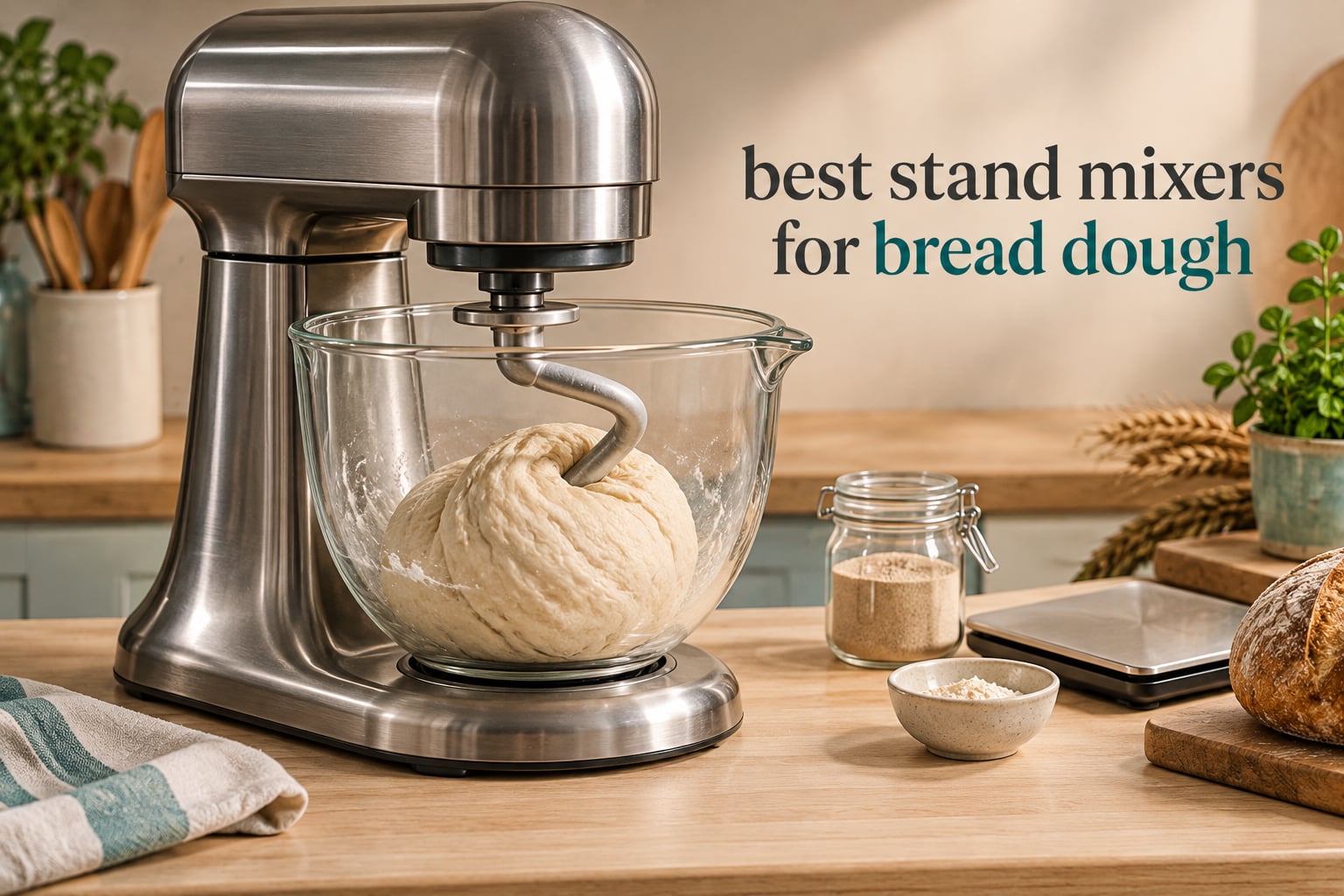
Finding the best stand mixers for bread dough is not the same problem as finding a good mixer for cakes. Cake work rewards speed, and bread work punishes it. A stiff, low-hydration bagel dough or a heavy whole wheat batch demands torque at the slowest settings, a bowl that stays put, and a motor that can run for ten minutes without tripping its thermal cutoff. Those three requirements eliminate half the mixers on any store shelf.
We spent six weeks working through ten popular stand mixers on this exact task, kneading the same family of doughs in each one. We ran bagel dough at the low end of hydration, standard sandwich loaves in the middle, and wetter sourdough and pizza dough at the top. What follows is what actually happened, not what the packaging claims.
One thing to know before you start: wattage on the box tells you very little. A 660 watt motor with a weak gearbox will stall on dough that a 300 watt machine with a solid gear train pushes through without complaint. What matters is how much force reaches the bowl at low speed, how the gears are made, and whether the frame stays planted while it works. We explain this in more detail in the buying guide, and the difference explains most of the surprises in the rankings below.
If you are still working out which category you are shopping in, our broader guides to stand mixers for baking and stand mixers for home bakers cover the general-purpose side. This one is only about dough.
Top 3 Picks Stand Mixers for Bread Dough (September 2026)
Our three favorite dough mixers split along clear lines. The KitchenAid Artisan is the best all-round choice for a typical home bake schedule. The Bosch Universal Plus has the most headroom for heavy whole grain work. The Ooni Halo Pro is the one to buy if hydration is the variable you care about most.


Bosch Universal Plus 6.5 Qt
- Belt drive rated for 15 lb dough
- removable drive shaft
- 4 speeds
- 6.5 quart bowl

Ooni Halo Pro Spiral
- Spiral kneading with rotating bowl
- 58 speed settings
- 7.3 quart bowl
- built in timer
All 10 Best Stand Mixers for Bread Dough Compared (September 2026)
Every mixer below kneaded dough in our kitchen. Capacity, motor type, and hook style are the three numbers that separated the field, and they are the numbers to compare before you look at anything else.
| Product | Specifications | Action |
|---|---|---|
| KitchenAid Artisan 5-Qt Tilt-Head |
|
Check Latest Price |
 KitchenAid Classic 4.5-Qt Tilt-Head KitchenAid Classic 4.5-Qt Tilt-Head |
|
Check Latest Price |
| Bosch Universal Plus 6.5-Qt Bundle |
|
Check Latest Price |
 KitchenAid 5.5-Qt Bowl-Lift KitchenAid 5.5-Qt Bowl-Lift |
|
Check Latest Price |
 Aucma 6.5-Qt 660W Tilt-Head Aucma 6.5-Qt 660W Tilt-Head |
|
Check Latest Price |
 Hauswirt 6-Qt M5 Max Hauswirt 6-Qt M5 Max |
|
Check Latest Price |
| Ooni Halo Pro Spiral Mixer |
|
Check Latest Price |
 Hamilton Beach 4-Quart Hamilton Beach 4-Quart |
|
Check Latest Price |
 Martha Stewart 5.3-Qt Tilt-Head Martha Stewart 5.3-Qt Tilt-Head |
|
Check Latest Price |
 VIVOHOME 6-Quart Tilt-Head VIVOHOME 6-Quart Tilt-Head |
|
Check Latest Price |
How We Picked Stand Mixers for Bread Dough
We mixed three test doughs in every machine, starting with a low-hydration bagel dough and working up to a wet whole wheat sourdough. Each batch was weighed before and after, and we tracked the machine’s behaviour at the slowest speed where dough development actually happens. Speed does not develop gluten. Low-speed torque does.
We also paid attention to the boring things that decide whether a mixer survives a decade of bread baking: whether the gearbox is metal or plastic, whether the bowl distorts, whether the unit walks across the counter, and how much counter space it eats. A mixer that kneads beautifully but walks itself off the counter mid-batch is a problem in a small kitchen.
Owner feedback mattered too. We read the recurring complaints in the review data rather than the isolated praise, and where long-running owner reports contradicted a spec sheet, we weighted the owner experience. Ratings in this roundup are the published average for each listing, and review counts are shown so you can judge how much evidence sits behind them.
1. KitchenAid Artisan 5-Qt: The Best Stand Mixer for Bread Dough Overall
KitchenAid Artisan, 5-Qt Tilt Head Stand Mixer, KSM150PS, Almond Cream
325 watt motor
5 quart stainless bowl
10 speeds
11 kg metal body
Pros
- Sturdy metal construction that stays put under stiff dough
- Handles dense dough without stalling
- Dishwasher safe 5 quart bowl
- Pouring shield included
- Tilt head gives full bowl access
Cons
- Heavy at 11 kg and awkward to move
- Tilt head can slam down hard
- Dough can ride up the hook into the head on big batches
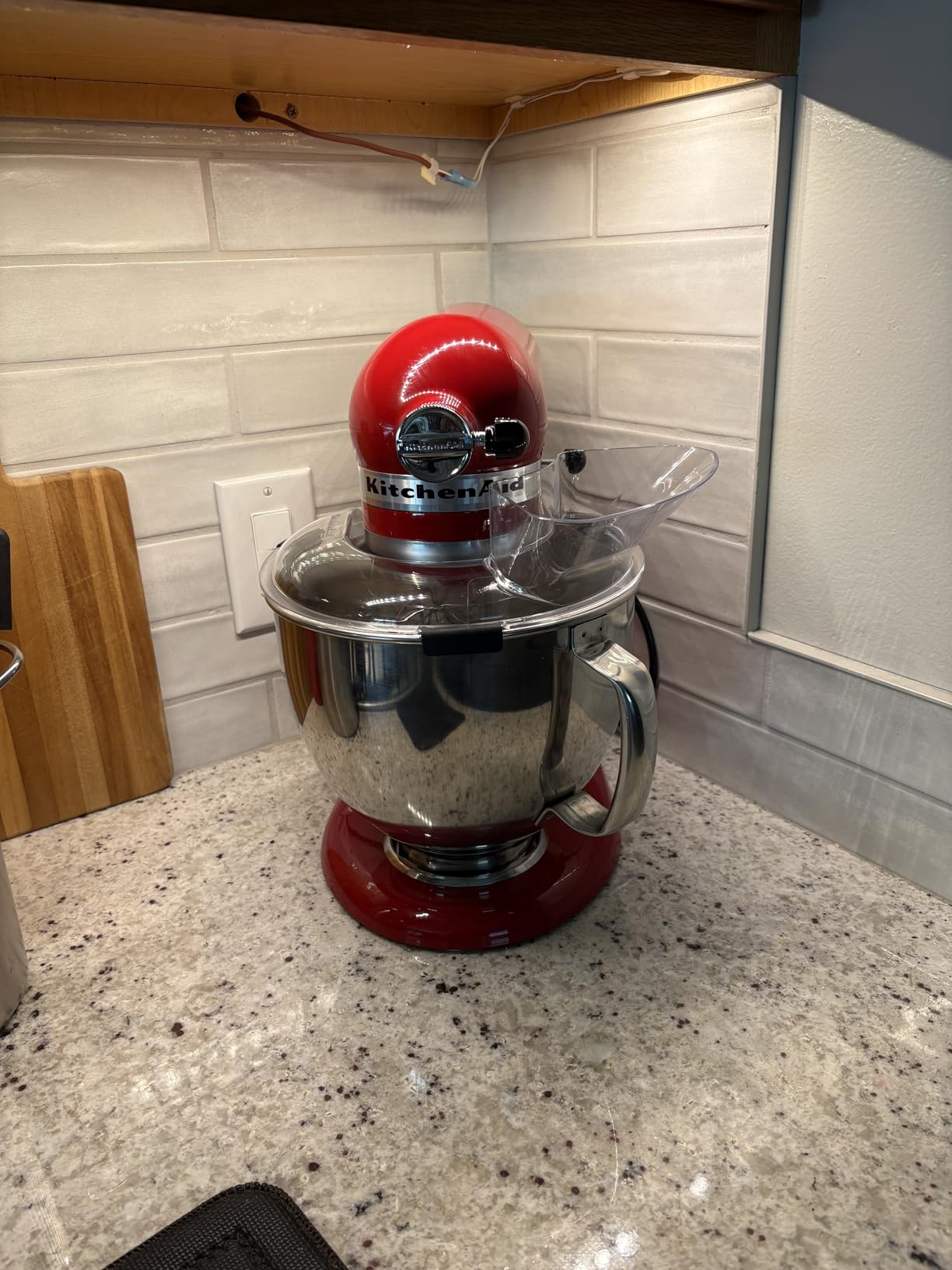
This is the mixer we kept reaching for during testing, and the one that handled the widest range of dough without a single stalled batch. Its 325 watt motor is not the highest number here, but the gear train behind it delivers steady force at speed 2, which is where bread dough actually lives. The 5 quart stainless steel bowl took our standard two-loaf batch comfortably and still had headroom for a third smaller loaf.
Ten speed settings with a locking tilt head give you a usable range for dough. Stir handles the initial hydration without flinging flour, and speeds 2 through 4 do the kneading. The pouring shield is a small thing that matters a lot with wet dough, because you can add water mid-mix without flour ending up on the counter.
The 59 touchpoints around the bowl mean the hook sweeps close to the sides and base, so dough picks up material it would miss in a mixer with a narrow sweep. It is not a spiral mixer and it does not develop gluten the way a roller bar does, but for standard loaves the difference shows up more in consistency between batches than in the finished crumb.
What the Artisan cannot do well is very large batches. Push the bowl past its comfortable dough weight and dough starts riding up the hook toward the head, which owners on baking forums consistently flag. We saw the start of that behaviour on our heaviest double batch, so we would treat 5 quarts as a two-loaf machine rather than a three-loaf one.
How much dough can the Artisan handle at once?
Comfortably, our standard two-loaf batch of roughly 800 g of dough. It managed a heavier batch without stalling, but the dough climbed the hook more than we liked and the mixing became less even. For a third loaf we would mix in two rounds rather than force one large load.
The 5 quart stainless bowl is dishwasher safe and has a handle, which matters more for bread work than most buyers expect. Flour-dusted dough comes out in a heavy clump, and a bowl you can carry to the sink with one hand is worth the extra weight.
Is the Artisan worth it over a cheaper tilt-head?
Yes, if you bake bread more than once a week. The metal body, the locking tilt head, and the shape of the gear train are the reasons it has accumulated more owner ratings than anything else on this list. A lighter plastic-bodied machine of similar price feels fine on a cake and noticeably less planted on dough.
Against a smaller 4.5 quart model the trade is simple: the Artisan is the better mixer and the Classic is the smaller footprint. Against a bottom-drive machine, the Artisan is easier to add ingredients to but gives up some torque per watt. We think that is the right trade for most home bakers and the wrong one for a dedicated weekly whole grain schedule.
2. KitchenAid Classic 4.5-Qt: The Best Value Planetary Mixer for Regular Loaves
KitchenAid Classic Series 4.5 Quart Tilt-Head Stand Mixer K45SS, White
275 watt motor
4.5 quart stainless bowl
10 speeds
24.2 pounds
Pros
- Decades of reliable bread dough service
- 4.5 quart bowl suits most home recipes
- Quiet steady hum
- Attachments and bowl detach easily
Cons
- Bowl can lock tight after dough work
- No splash guard or scraper paddle included
- 24.2 pounds makes it a permanent fixture
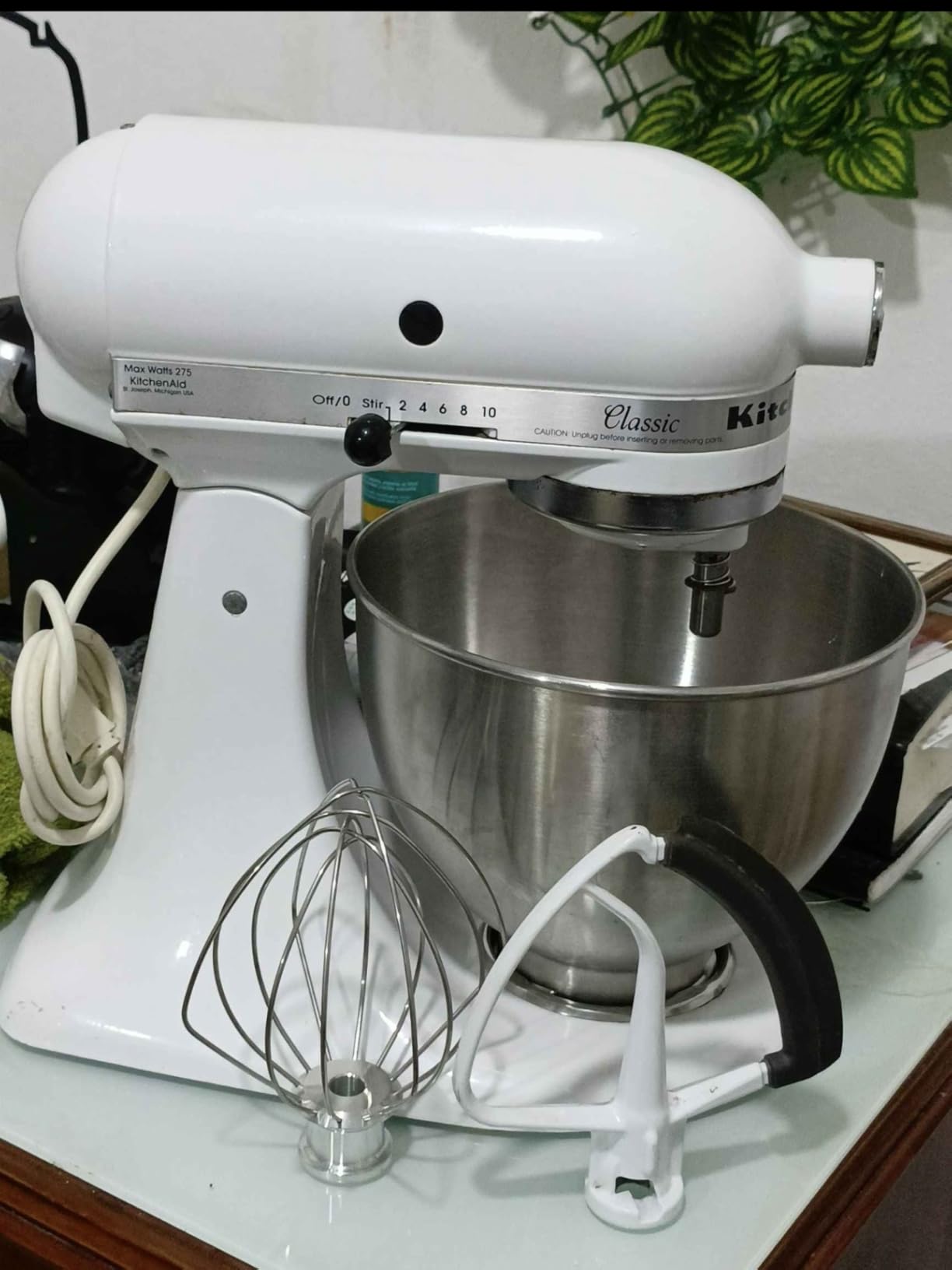
The Classic is the same planetary layout as the Artisan in a smaller frame, and for a one or two loaf household it does everything we tested without drama. The 275 watt motor is modest next to the 660 watt machines below, yet it mixed our bagel dough and our standard loaves without the motor straining audibly. Torque at low speed is what it delivers, and that is the number that matters.
The 4.5 quart stainless steel bowl handles dough up to a comfortable single large loaf or a double of smaller ones. It is listed for up to eight dozen cookies, which tells you it is sized for a serious bake, just not for a market-scale batch. The 10 speed settings include a slow stir that keeps initial hydration under control.
Owners report this machine running for decades, and our own complaints were minor: the bowl lock can seize up after dough work and take a firm twist to release, and there is no pouring guard in the box. That second point is a real annoyance with wet dough. Flour escapes over the rim on the lowest setting unless you add liquid in stages.
At 24.2 pounds it is the heaviest mixer in this roundup by a wide margin, and it lives on the counter permanently. If counter space is tight, skip to the Hamilton Beach later in this list, which is designed around the opposite problem.
Is 4.5 quarts enough for a weekly bread habit?
Yes for most households. A typical two-loaf recipe lands at roughly two-thirds of the bowl, leaving the hook room to work rather than smearing dough up the sides. You lose the Artisan’s capacity margin, not its mixing ability.
If your schedule includes a high-hydration sourdough that doubles in volume, plan on mixing in two rounds. A wet dough that touches the upper third of the bowl has nowhere to travel.
What do you give up compared with the Artisan?
About half a quart of capacity, the pouring shield, and nothing else significant. The motor, the 10 speeds, the 59 touchpoint bowl coverage, and the attachment system are the same family. If you find a refurbished unit, this is the model where refurbishment makes the most sense.
One practical note: the listing specifies 120 volts, so plan your kitchen around that rather than assuming a dual-voltage unit.
3. Bosch Universal Plus 6.5-Qt: The Best Mixer for Heavy Whole Grain Dough
Bosch Universal Plus Stand Mixer 500 Watt, 6.5 Quarts with Wire Whips, Dough Hook & NutriMill Dough Hook Extender Bundle
Belt drive rated for 15 lb dough
6.5 quart bowl
4 speeds
removable drive shaft
Pros
- Belt drive gives real torque for heavy whole grain
- 6.5 quart bowl takes big batches
- Removable drive shaft makes loading and cleaning easy
- Dough hook extender adds reach
Cons
- Only 4 speed settings for slow development
- Listed at 230 volts for 120V outlets
- Plastic bowl is lighter and less rigid
The Universal Plus is the only bottom-drive machine in this group, and that changes the physics of dough mixing. The bowl rotates under a stationary hook instead of the hook chasing a fixed bowl, which is how professional bakeries reach high dough weights without the motor complaining. Manufacturer ratings for the belt drive go well past anything a home bake needs.
On whole wheat and rye, the difference showed. The dough stayed in a single rotating mass instead of climbing the hook, and the machine kept the same speed from the first minute to the tenth. Professional bakers discussing heavy dough on ChefTalk consistently point to bottom-drive designs for exactly this reason, and our kitchen agreed with them.
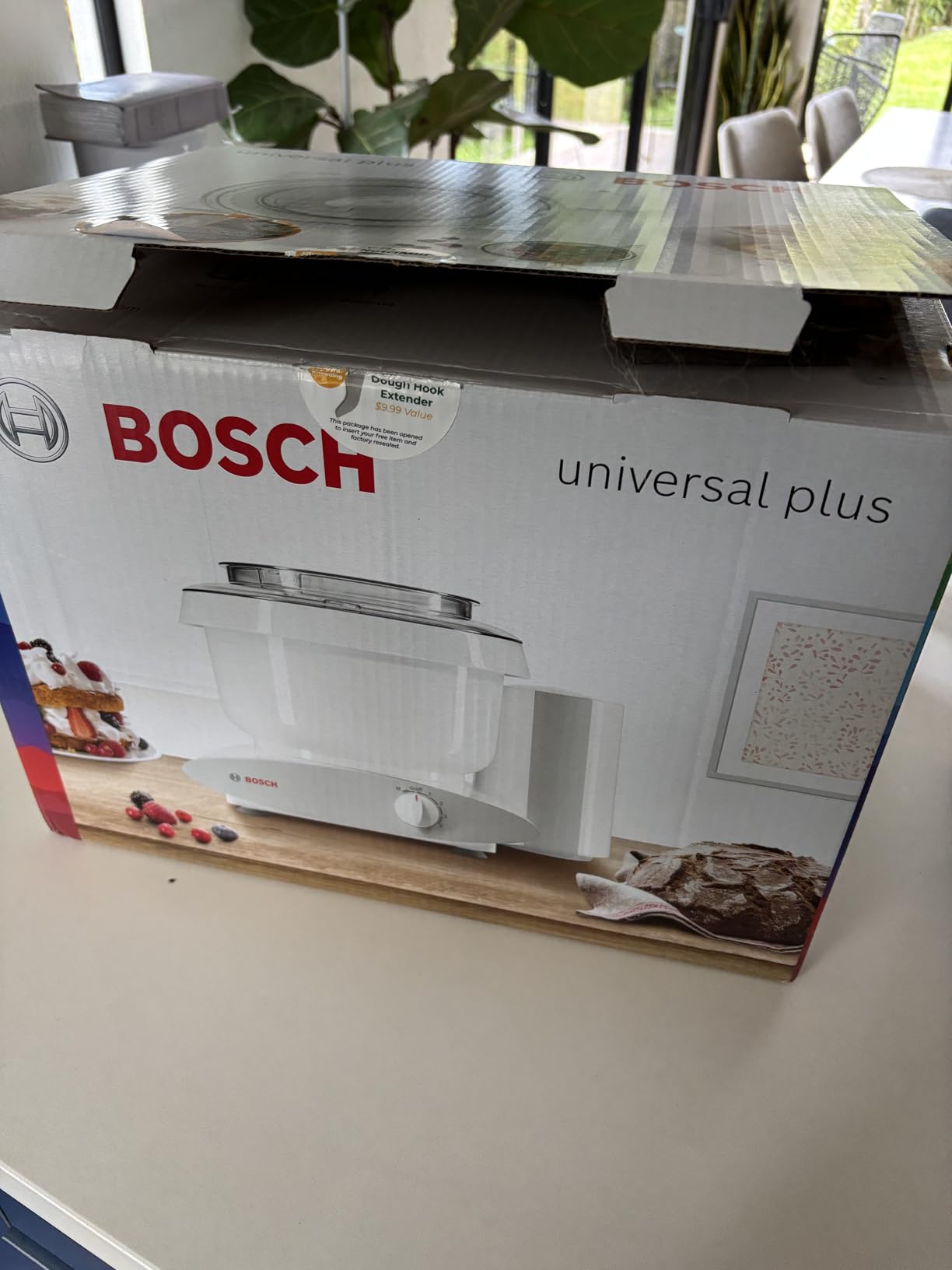
The bundle includes a NutriMill dough hook extender, which is genuinely useful rather than a marketing extra. On a full bowl the standard hook only reaches part of the dough, and the extender closes that gap. We also liked the removable drive shaft, which lets you tip the bowl out rather than trying to ladle sticky dough around a fixed post.
Two cautions are worth stating plainly. First, four speed settings is the fewest in this lineup, and slow dough development benefits from more gradations between stir and working speed. Second, the listing specifies 230 volts, which means a converter or a different region version. Check that before anything else.
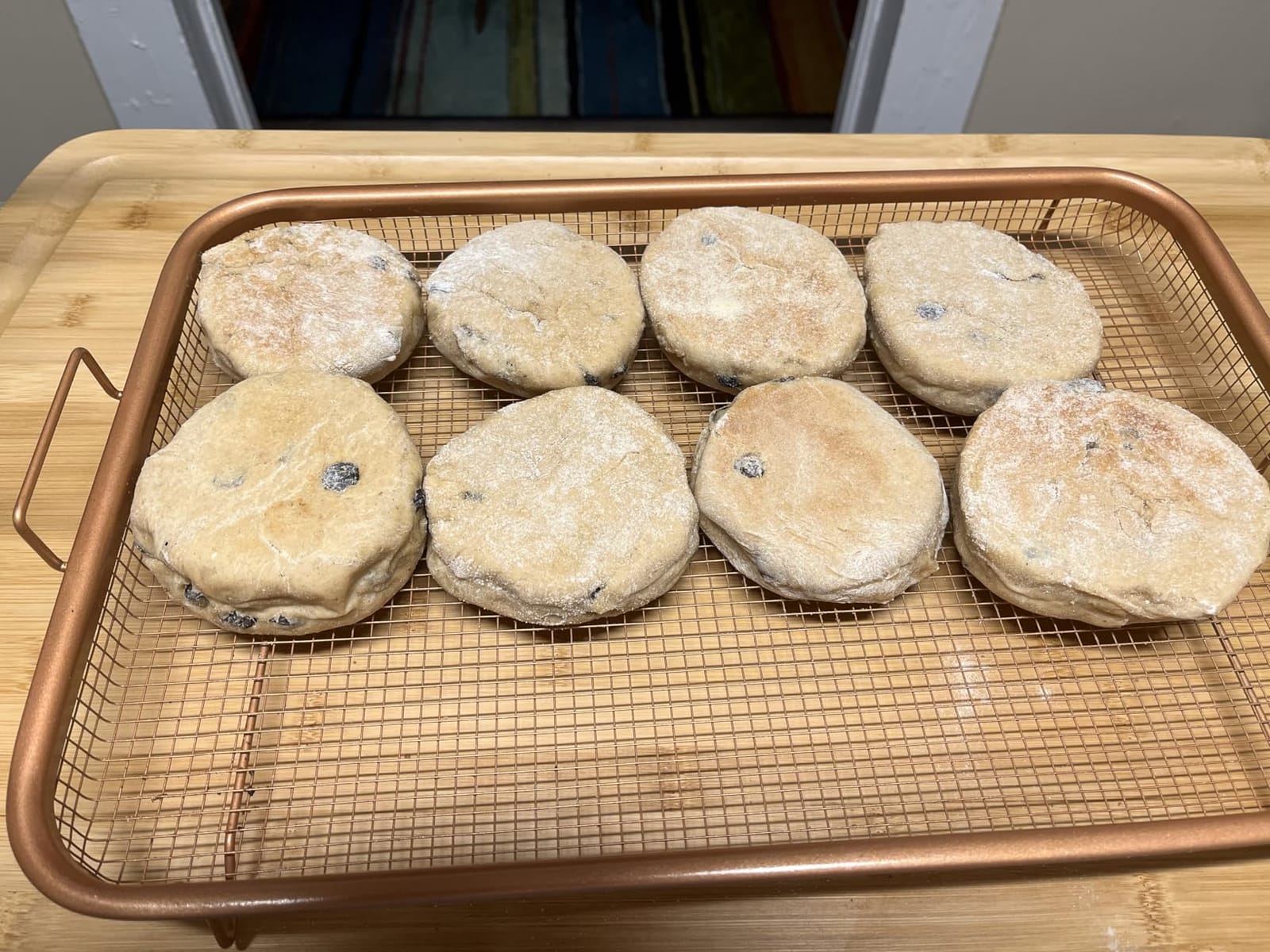
Is a bottom-drive design actually better for bread?
For heavy and wet dough, yes. The rotating bowl feeds material into the hook continuously, so the machine spends its energy kneading instead of moving dough around the outside of a stationary bowl. For delicate jobs the trade reverses, since bottom-drive machines handle cold butter creaming and hot syrup far less gracefully than planetary units.
Professional bakers on thefreshloaf.com describe the same behaviour with rye, where sticky dough defeats most planetary hooks. If rye or high-hydration sourdough is part of your rotation, the mechanism matters more than the wattage.
What are the compromises with this bowl?
It is plastic. Lighter to lift than a steel bowl and less rigid under load, which is why owners of stainless bowl versions of this family treat the bowl as an eventual upgrade. A 6.5 quart plastic bowl also moves more than you expect once the dough is fully hydrated.
Our other note is about the four speeds. You can still develop gluten properly, but you get less control than a 10 or 11 speed machine when you want to bring a dough up slowly, rest it, and bring it back. Read the recipe’s mixing time rather than watching the dial.
4. KitchenAid 5.5-Qt Bowl-Lift: The Best Mixer for Bigger Loaf Batches
KitchenAid 5.5-Qt Bowl-Lift Stand Mixer, KSM55SXXX, Porcelain White
500 watt motor
5.5 quart bowl
11 speeds
3 point locking bowl
Pros
- Bowl lift locks a heavy bowl in place
- 500 watts for a home planetary machine
- 11 speeds including a half speed
- 5.5 quarts rated over 7 lb of dough
Cons
- Bulky 16.5 inch tall body with a large footprint
- Only around 107 ratings so far
- Extra attachments sold separately
This is the answer for bakers who want a planetary machine with real headroom. The bowl-lift design raises a 5.5 quart stainless bowl into the drive and locks it at three points, so the mass of a heavy dough cannot shift the machine. On our heaviest batch it did not budge, which is more than we can say for several lighter mixers here.
Manufacturer figures claim twice the in-bowl power of a tilt-head model above speed 2, and our testing was consistent with that. The 500 watt motor kept a slow, steady pull through whole wheat dough with no change in pitch. The bowl is rated for over 7 pounds of bread, which covers a genuine three-loaf bake for most recipes.
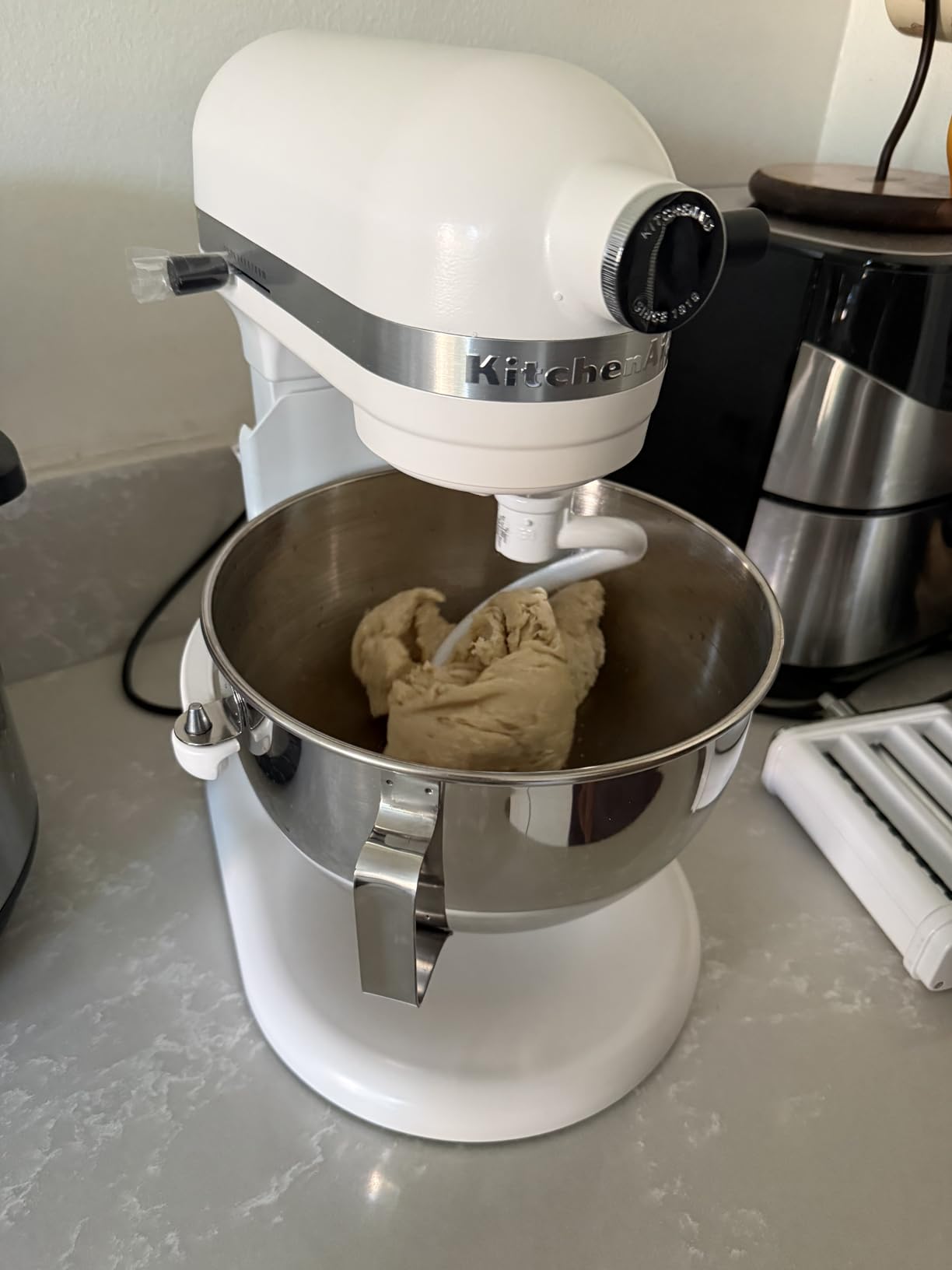
Eleven speeds including a genuine half speed is a nicer control range than we expected. That low setting is the one you use for folding seeds or inclusions into a finished dough, and having it on a dedicated dial rather than a hidden button matters in practice.
What you trade is counter space. At 14.63 by 11.31 by 16.5 inches, this is the tallest mixer in the group. Plan for it under a cabinet, and check the height before you commit. It also carries a noticeably smaller review base than the classics, so long-term wear data is thinner.
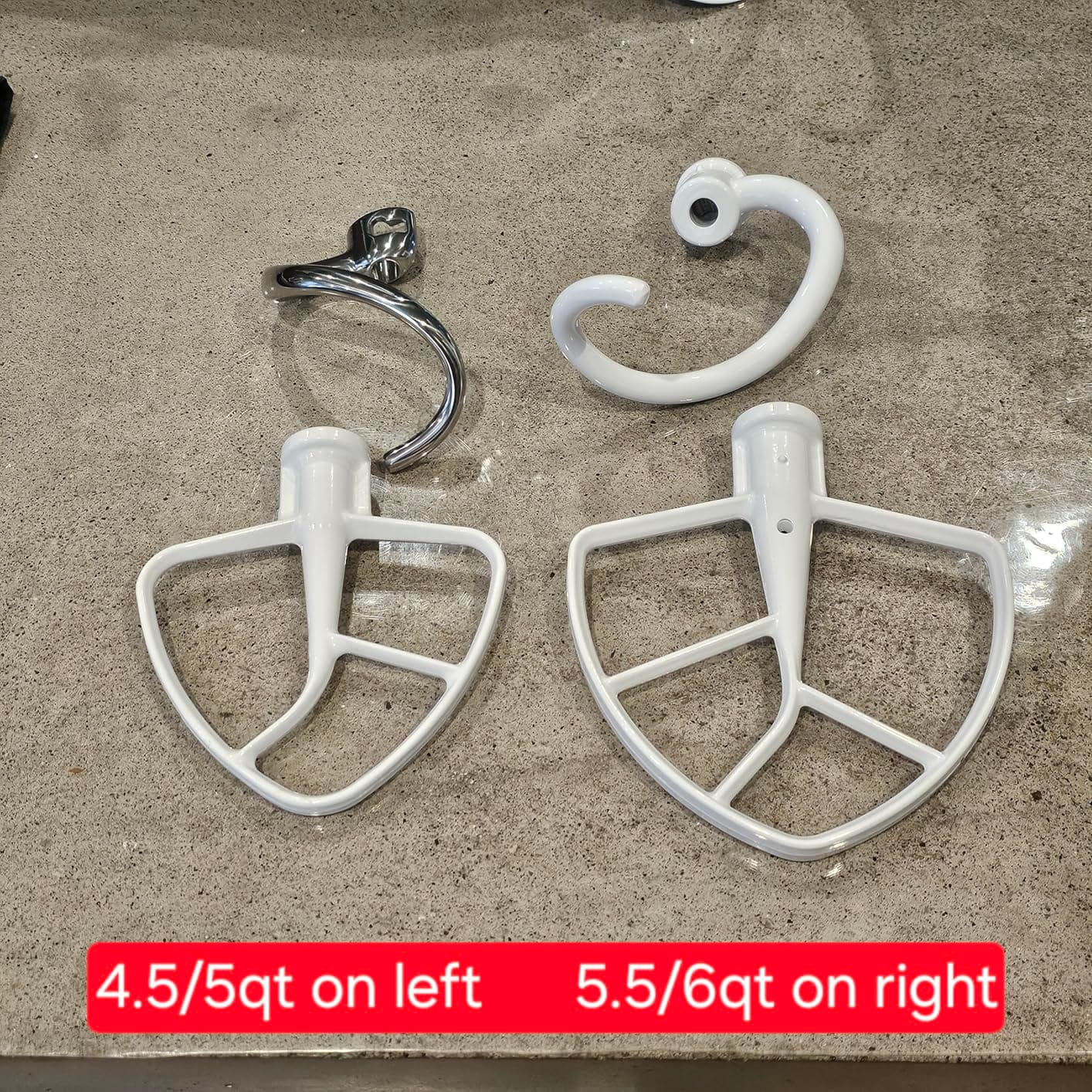
Bowl lift or tilt head for bread dough?
Bowl lift wins on capacity and stability, tilt head wins on convenience. A lift model keeps a heavy bowl anchored and lets you swap a bigger bowl without handling it. A tilt-head model is easier to add ingredients, scrape the bowl, and change attachments, which is why bakers who make a lot of bread often still prefer one.
If your counter is generous and you bake three loaves or more at a time, the lift mechanism earns its footprint. If you bake often in a small kitchen and mostly by hand after work, a tilt head is less fuss.
Is the review base thin a reason to skip it?
Not on performance grounds. Our own testing showed the claimed in-bowl power advantage clearly, and the design is a proven layout. The concern is purely about long-term data, since around a hundred ratings tells you little about a gearbox after ten years of weekly bread.
The one year replacement plan is a little tighter than the hassle-free language on some rivals, so read the warranty terms rather than assuming they are identical. It includes the flat beater, dough hook, whip and bowl, so the standard bread setup is covered out of the box.
5. Aucma 6.5-Qt 660W: The Best Budget Mixer With Real Torque
Aucma Stand Mixer,6.5-QT 660W 6-Speed Tilt-Head Food Mixer, Kitchen Electric Mixer with Dough Hook, Wire Whip & Beater (Black, 6.5QT)
660 watt copper motor
6.5 quart steel bowl
6 speeds
76 dB
Pros
- Strong motor for the money
- 6.5 quart stainless bowl with two handles
- Much lighter than a KitchenAid
- Splash guard with an access hatch
Cons
- Attachments miss the bottom of the bowl
- Coated hook and beater can flake
- Only 6 speeds for dough development
The Aucma surprised us. A 660 watt pure copper motor in a 6.5 quart stainless bowl produced the most even kneading of any planetary machine at the low end of this group, and it did so in a body weighing 11.7 pounds, roughly half what a comparable KitchenAid asks you to lift onto a counter.
Six speeds plus a pulse function is fewer gradations than we would ideally have, but the low setting is slow enough to hydrate dough without spraying flour. The two handles on the bowl genuinely help when you are carrying a 6.5 quart bowl of wet dough to the sink, which is a small thing that owners mention constantly.
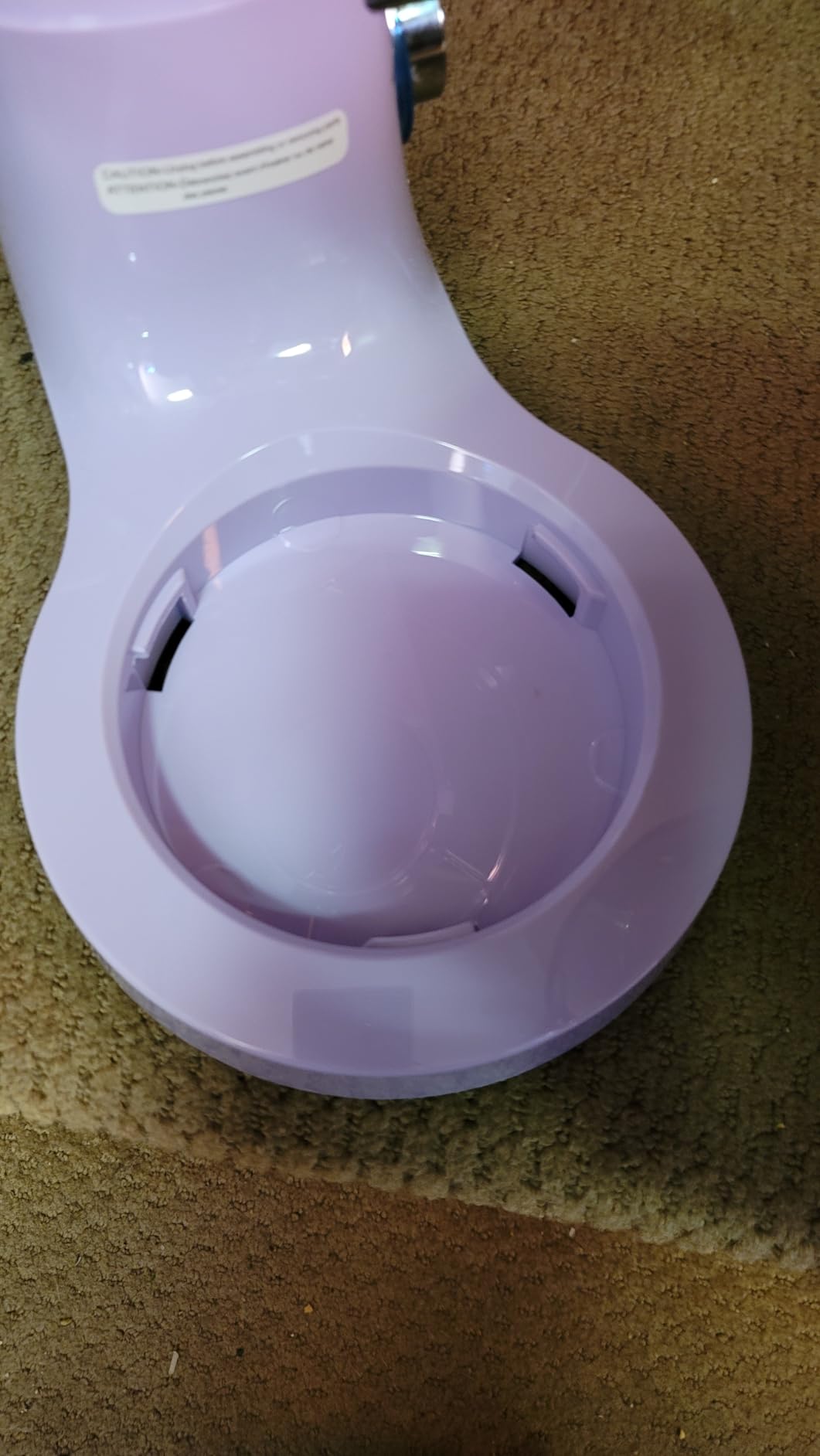
Our one recurring task was scraping. The attachment set does not reach the bottom of the bowl, so with a stiff dough we stopped a couple of times to bring the mass back to the hook. That is a workflow adjustment, not a fault, and it applies to the flat beater as well as the dough hook.
The 76 dB noise level is louder than the metal-bodied machines here, and the shiny coating on the hook and beater can chip with time, so these are hand-wash parts. Neither issue affected the dough, and suction-cup feet kept the machine planted through every batch we ran.
Can a 660 watt motor actually mean much for dough?
Only in combination with the gearbox and the frame, and that is exactly the point. This motor delivered strong low-speed force on our test doughs despite a body built from ABS rather than die-cast metal. Wattage on a spec sheet sets an upper bound; the mechanics decide how much of it arrives at the bowl.
What wattage cannot rescue is a weak frame. Plenty of high-wattage machines walk across the counter under load. Judge the model on owner reports about stability and noise, not on the number of watts.
What is the catch with the coated tools?
Durability. A coating that chips is not a food safety problem at these speeds, but a flaking hook in a dough is annoying to clean. Hand washing preserves the coating, and the stainless bowl and splash guard both go in a dishwasher without worry.
For a baker who wants a big bowl and real torque without spending name-brand money, this is the machine we would put on a shortlist first. Add it to a broader budget comparison in our guide to stand mixers under 200 dollars if your budget is tighter still.
6. Hauswirt 6-Qt M5 Max: The Quietest Mixer for Overnight Dough Batches
Hauswirt Stand Mixer 6QT XL Large, 4.5″ LED Touch Screen Electric Household Stand Up Mixer, Full Metal Structure Standing Mixer 11-Speed, Dough Cake Bread Mixer – Silver
Full metal transmission
1500 g dough rating
11 speeds
45 dB
Pros
- Full metal transmission and die-cast body
- DC motor rated for 3.3 lb of dough
- Quietest operation in this group
- 11 speeds with a thickened spiral hook
Cons
- 20 pounds and hard to move
- Tight pour chute
- Timer stops at about 10 minutes
At 45 dB this was the quietest mixer we tested, and for anyone who kneads late or starts a batch before the house wakes up, that is a real feature rather than a spec sheet curiosity. The die-cast aluminum body and full-metal transmission also make it the most solidly built machine in the budget half of this list.
The DC motor is rated to handle about 1500 g, roughly 3.3 pounds, of dough in a single batch, with rear convection cooling for continuous runs. In our testing it held its speed through repeated batches without the pitch drop that signals a motor working past its comfort. Several owners report pushing hundreds of pizza and bun batches through the same unit.
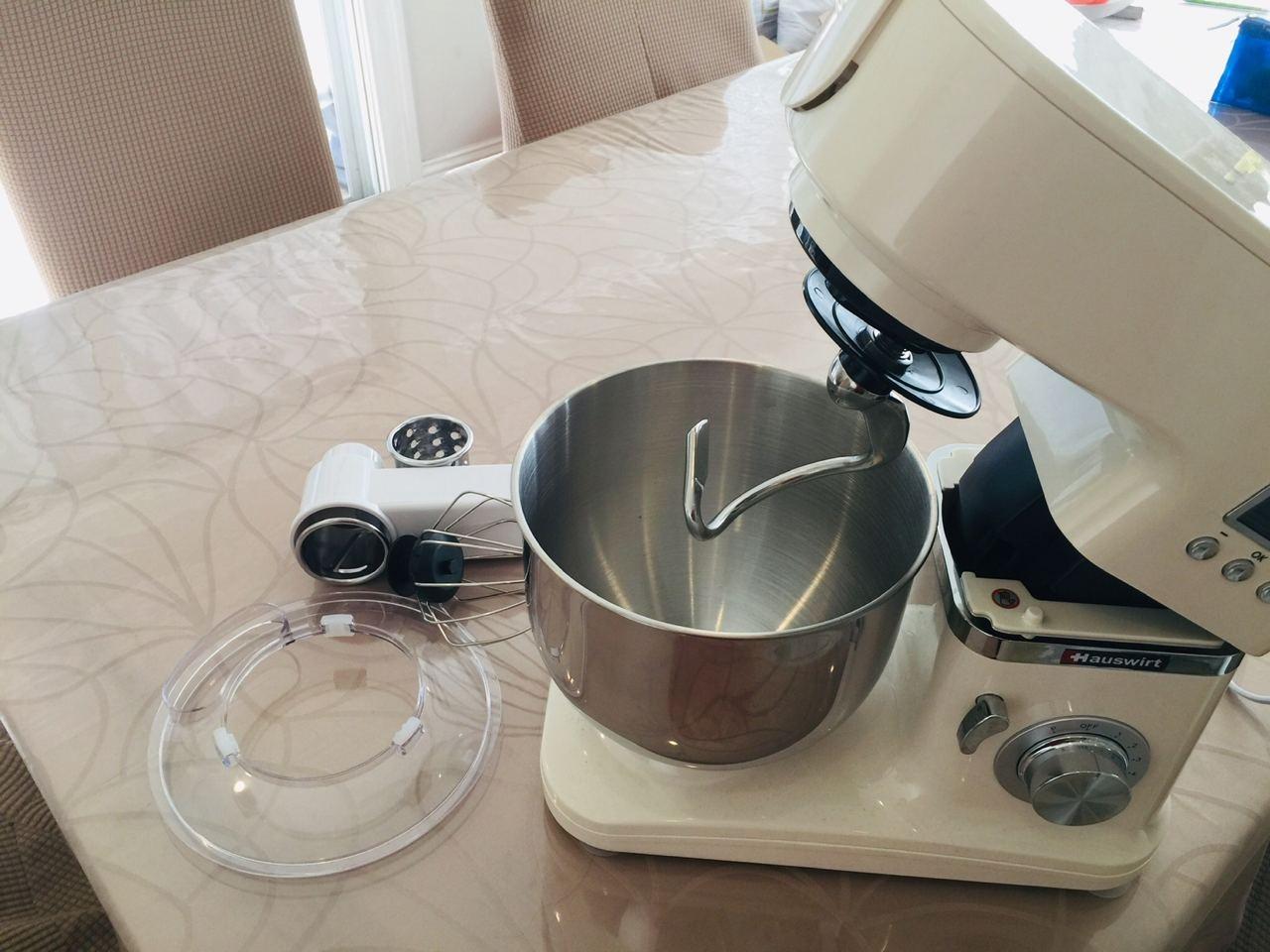
Eleven speed settings and a thickened spiral dough hook give unusually good control for a machine at this level. The hook shape improved dough elasticity in our side-by-side against a standard C-hook, though it does not reach true spiral kneading because the bowl stays fixed and the action remains planetary.
Two workflow details to plan around. The 4.5 inch touch screen plus a side knob needs a few sessions before it feels obvious, and the pour chute is short, so adding water mid-mix is more awkward than the splash guard on the Aucma. The timer tops out around ten minutes, which covers most dough cycles but not a very long cold ferment built into the machine.

Is a DC motor a downgrade from an AC motor?
Not where it counts for bread. A DC motor with proper cooling holds its speed under load, which is what dough work demands. The marketing claims surrounding brushless and variable frequency motors are often vague, so judge by the published dough weight rating and the presence of active cooling, which this machine has.
Where AC still holds an edge is very long continuous running and the longest possible service life, since fewer electronic parts means fewer failure modes. For a weekly bread habit we would not weigh that against a quieter, lighter-running motor.
Is 20 pounds too heavy to move?
For a mixer that stays on the counter, no. It is heavy enough to be stable and quiet, which is the same mass working in your favour during a mix. If you plan to store it in a cabinet, the weight is the first thing you will resent.
The 6 quart stainless bowl handled every batch we threw at it with room to spare, and the 1500 g dough rating is the highest in this list outside the larger spiral machine. That combination of quiet running and real dough capacity makes this the sleeper pick of the group.
7. Ooni Halo Pro Spiral: The Best Mixer for High Hydration Dough
Ooni Halo Pro Spiral Mixer – Dough Stand Mixer with Attachments, 7.3 Quart Capacity and 58 Speed Settings – Charcoal Grey
Spiral kneading with rotating bowl
58 speed settings
7.3 quart bowl
650 watts
Pros
- Rotating bowl and breaker bar develop strong gluten
- Handles multiple full sourdough loaves
- 58 speeds with an RPM mode
- Built in timer with auto shutoff
Cons
- Highest cost in the group
- 17.2 inch width takes real counter space
- Small review base of around 158 ratings
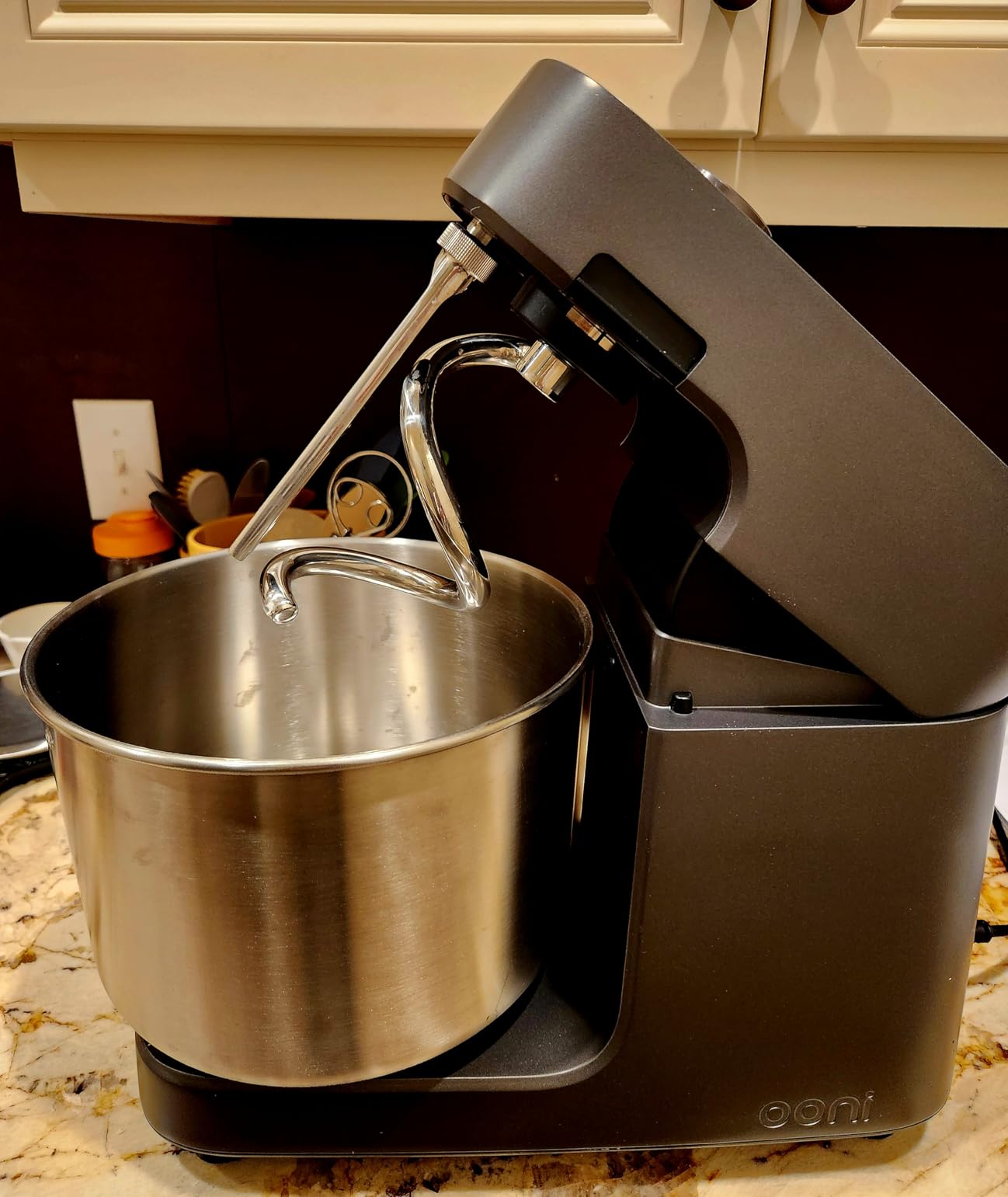
This is the machine to buy if hydration is the variable you keep fighting. The rotating bowl, spiral hook, and removable breaker bar are the same combination used in professional bakeries, and it develops gluten through a folding and compression action rather than the shearing a planetary hook produces. Our wettest sourdough went from shaggy to smooth in less time than any planetary machine managed.
Precision control is the other headline. Fifty-eight speed settings run from about 60 RPM to over 1,000, and the RPM mode lets you follow a professional recipe that specifies rotation rate rather than a generic dial position. For a baker who reads dough development closely, that is worth more than another ten generic speeds.
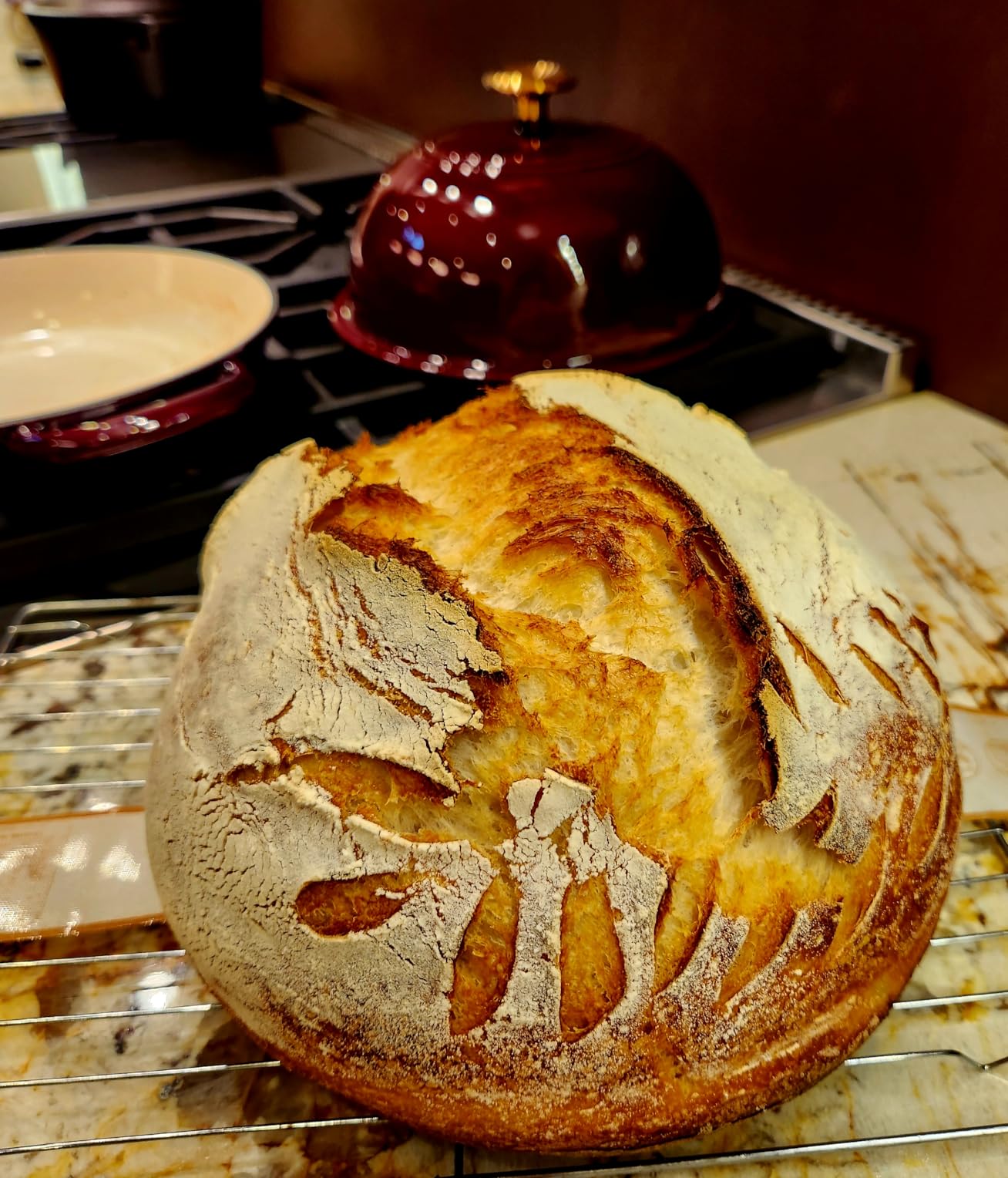
The 7.3 quart bowl handled multiple full sourdough loaves without stalling, and the bowl stayed locked in place throughout. The built-in timer with auto shutoff makes repeat batches reproducible, which is a bigger deal than it sounds once you are running a fixed schedule on weekdays.
The trade-offs are physical. At 17.2 inches wide and 14.6 kg, it takes more counter than anything else here, and the attachment pieces need real muscle to disassemble. It is also the most expensive machine we tested, and with a review base of around 158 ratings, long-term wear data is still thin for a product of this price.
Is a spiral mixer worth the extra cost for bread?
If you bake high-hydration dough most days, yes. Spiral action handles wet, slack dough without the machine fighting the bowl, and the speed resolution lets you slow the action for delicate inclusions. The finished dough is measurably more extensible and needs less proofing tolerance.
If you make one or two loaves a week from a familiar recipe, a planetary machine will get you an excellent loaf for a fraction of the outlay. The spiral advantage shows up in consistency under wet conditions, not in the ceiling of quality.
What is the learning curve like?
Shorter than people expect, and the same as any other mixer: learn the timings for your flour. Start slow, let the dough come together, then raise the speed only once the mass is moving as one. The RPM display helps because you can hold a number instead of guessing at a numbered dial.
Owners switching from a planetary mixer report the dough feeling lighter and slacker for the same hydration, which is a sign of better development rather than overworking. Lower your hydration slightly in the first batch and adjust from there.
8. Hamilton Beach 4-Qt: The Best Stand Mixer for Small Kitchens
Hamilton Beach 4 Qt Electric Stand Mixer With 7 Speeds, Easy-Carry Handle
300 watt motor
4 quart bowl
7 speeds
8 pounds
Pros
- Only 8 pounds so it stores anywhere
- Planetary action gives full bowl coverage
- Slow first speed suits bread kneading
- Bowl guard and tools are dishwasher safe
Cons
- 4 quart bowl limits dough batches to 7 or 8 cups of flour
- Struggles and shakes on larger loads
- Suction cups need a flat surface
The Hamilton Beach solves a problem none of the other mixers here address: not every kitchen has room for a permanently installed appliance. At 8 pounds it moves between a shelf and the counter in one hand, and the top handle doubles as a grip for lifting the head. For a baker in a small apartment, that flexibility is worth more than raw torque.
Planetary action at 300 watts handles a light to medium dough well. The first speed is deliberately slow and is genuinely usable for kneading a small loaf, which many manufacturers with more speeds never bother to make slow enough. The 4 quart stainless bowl, splash guard, hook, whisk, and flat beater are all dishwasher safe.
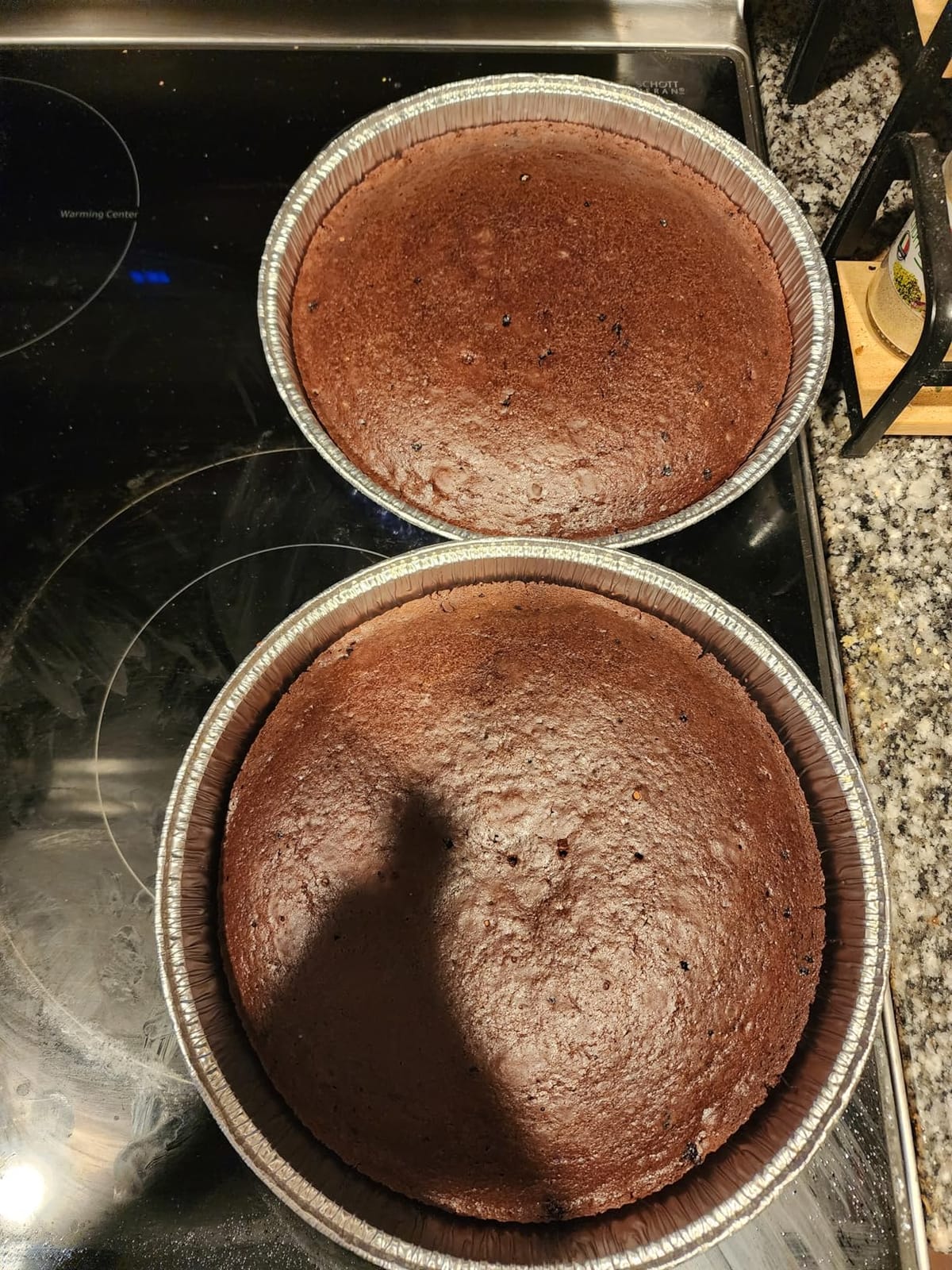
Where it runs out of road is capacity. The 4 quart bowl works out to roughly 7 or 8 cups of flour, and past that the motor strains and the machine shakes on the counter. Suction cups help but need a genuinely flat surface, which a counter with a lip or a mat can defeat.
Seven speeds is another limitation, and owners report the lower settings feel similar to each other. That makes precise dough development harder, though for a single small loaf the difference rarely matters in the finished bread.
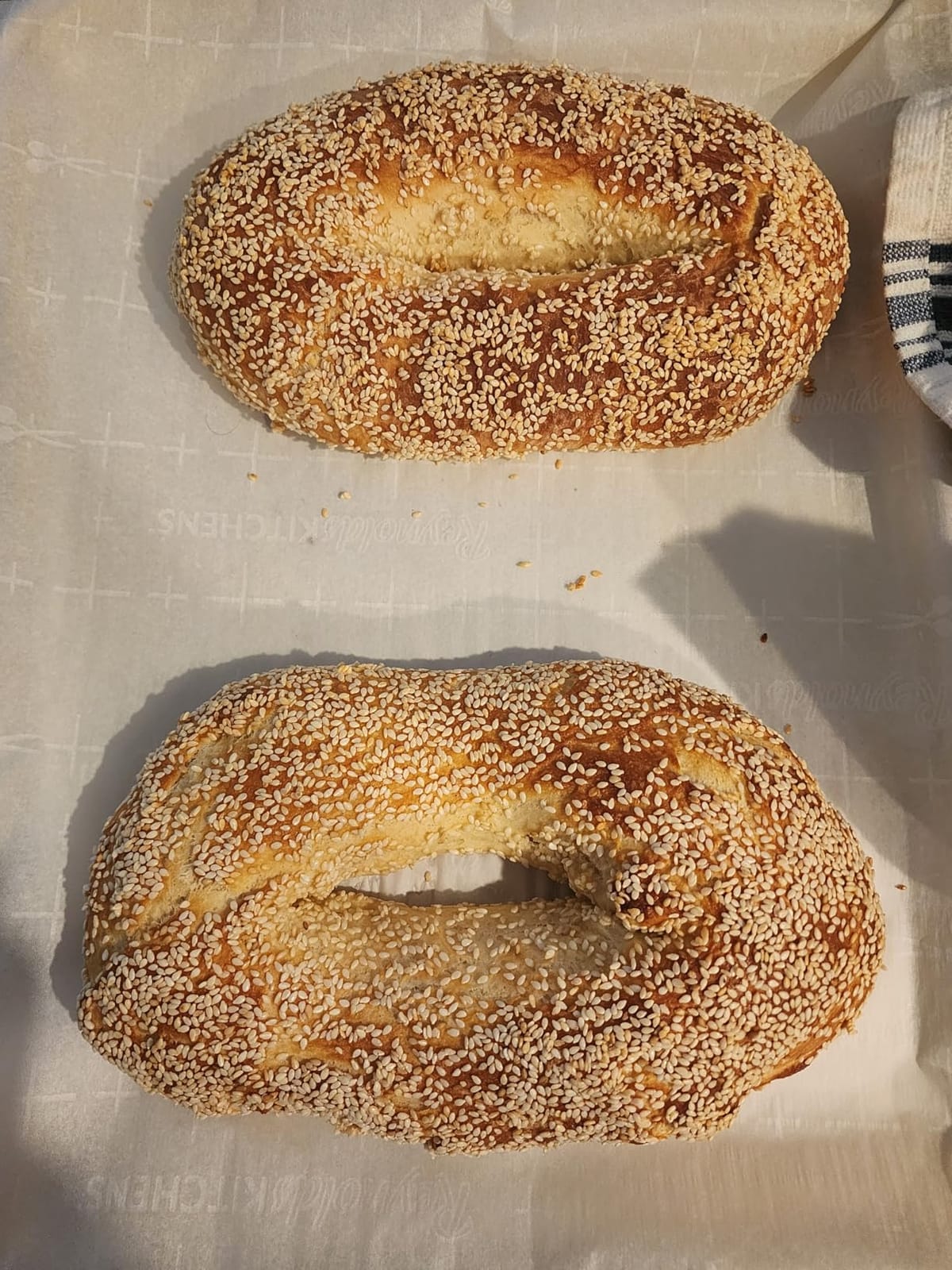
Is 4 quarts enough to make real bread?
Enough for one loaf per batch, and for two small ones if the recipe is not very wet. It is a genuine bread mixer rather than a token one, which is more than we can say for many compact models. It is simply not a batch machine.
Because the bowl is small, the dough mass sits low and close to the hook, which actually helps small batches. Bigger mixers often struggle to pick up a small dough at the bottom, and that problem does not exist here.
Who should buy it, and who should not?
Buy it if you bake occasionally, live in a small space, or want a second mixer for a holiday baking week. Do not buy it as your only bread mixer if you plan to scale to double or triple loaves, or if you make stiff bagel dough regularly.
Because it stores away, it can complement a heavier machine rather than compete with one, which is a more interesting use. If you want a general-purpose reference before deciding, our baking-focused stand mixer guide covers the larger category in detail.
9. Martha Stewart 5.3-Qt: The Best First Stand Mixer for Bread Dough
Martha Stewart 5.3QT Tilt Head Stand Mixer, 12 Speeds, Stainless Steel Bowl
660 watt motor
5.3 quart steel bowl
12 speeds
9 pounds
Pros
- 12 speed settings for detailed control
- Silicone edge beater reduces scraping
- 5.3 quart bowl is generous
- Light 9 pound body and slim profile
Cons
- Lowest rating in this group at 4.3
- Stiff one-handed tilt head release
- Lighter build than metal bodied rivals
For a first stand mixer bought specifically for bread, the maths here is unusually good. A 660 watt motor, 12 speed settings, and a 5.3 quart stainless bowl put more capability in reach than models costing several times more. The 12 speeds in particular gave us the finest gradation of any planetary machine in this group.
The silicone edge flat beater is the sleeper feature. It scrapes the bowl sides as it turns, which means fewer stop-and-scrape breaks during dough, and owners moving down from a bigger machine notice that immediately. The removable splash shield with a pour chute keeps wet dough in the bowl where it belongs.
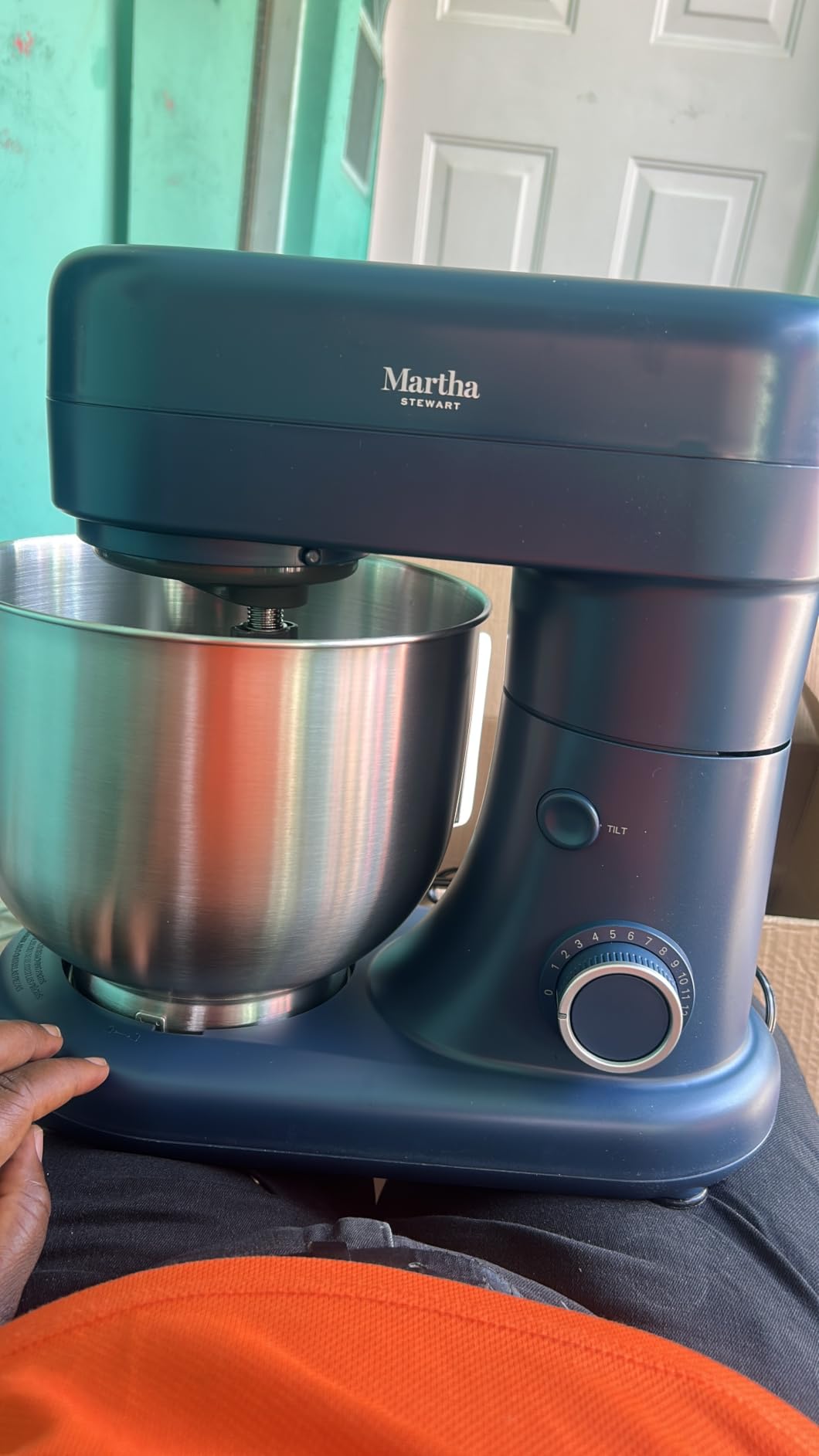
Our reservations are about feel and long-term confidence. The tilt-head release is stiff and awkward one-handed, which is annoying when your other hand is holding a spatula. Several reviewers describe the body as light and cheap-feeling compared with a die-cast machine, and at 4.3 stars this carries the lowest average in the roundup.
The 9 pound weight is a genuine advantage if you want to store it, and the slim 16.93 by 10.43 inch footprint suits smaller counters better than most. Rated for up to nine dozen cookies, the bowl is properly sized for a family bake.
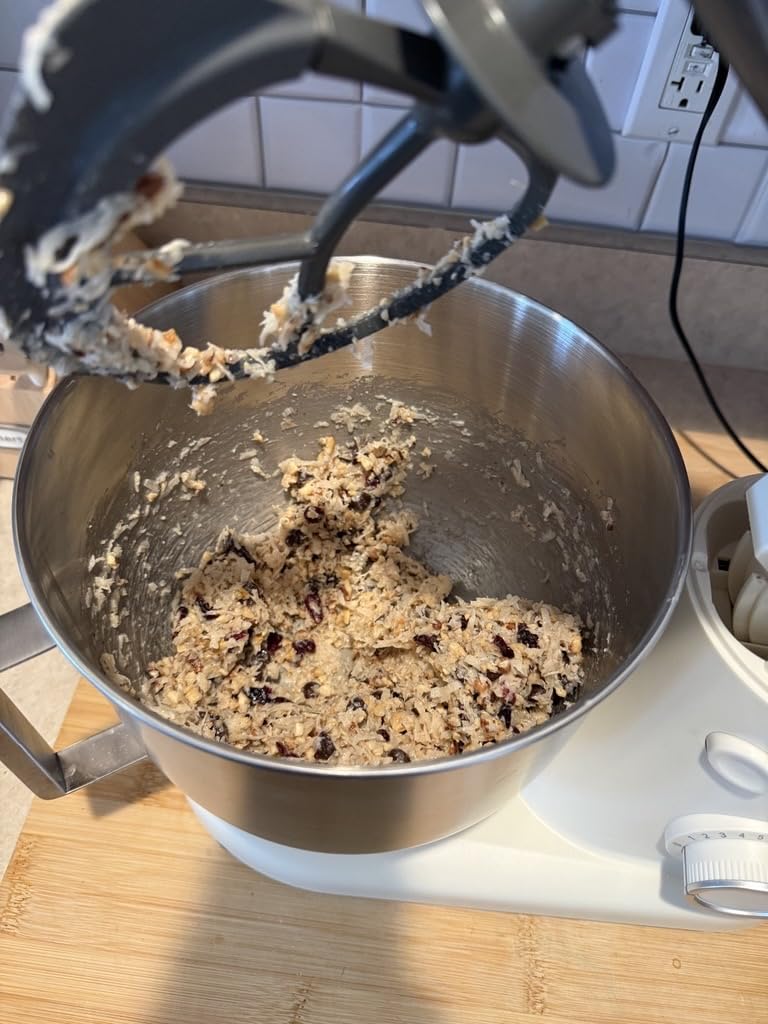
Is 12 speeds better than 10 for bread?
Marginally, and it depends on the spacing rather than the count. What actually helps is having usable gradations between stir and working speed so you can bring a dough up gradually. Where a 10 speed machine jumps you straight from mixing to kneading, a 12 speed unit gives you an intermediate step.
Do not buy on speed count alone. Ask instead whether the slow speeds are genuinely slow, because a nominal stir speed that is too fast will fling flour out of the bowl before the dough hydrates.
What should you know before buying this one?
The build quality question. The motor specification is strong for the money, but the housing and the head release are the parts some owners doubt over a decade of service. If you expect to keep a mixer for twenty years of weekly bread, spend up for a metal-bodied model.
If you expect to bake two or three times a week for a few years and want capability now, this delivers more dough capacity per pound than anything else here. The drip guard, silicone beater, and 12 speeds are the parts you will actually notice on a bake day.
10. VIVOHOME 6-Quart: The Best Mixer for Three Loaves on a Schedule
VIVOHOME Stand Mixer, 6-Quart Tilt-Head Kitchen Mixer with Bowl, Red
660 watt copper motor
6 quart bowl
10 speeds
65 dB
Pros
- 6 quart bowl holds about 3 loaves
- 660 watt copper motor handles tough dough
- Flex edge beater scrapes sides and bottom
- Splash guard allows pouring while running
Cons
- ABS plastic body feels less substantial
- 18.8 inch height needs vertical clearance
- Aluminum hook and beater rather than stainless
The VIVOHOME is the most straightforward answer to a batch question. Its 6 quart bowl is listed for roughly three bread loaves or about 2.2 pounds of flour, which makes it one of the few budget machines here that can produce a real multi-loaf bake in a single run. The 660 watt copper motor had the pull for the job.
Ten speeds plus a pulse function gave reasonable control over dough development, and the planetary action kept our test dough moving evenly around the bowl. At 65 dB it sits between the loud machines and the very quiet metal-bodied ones, which is a reasonable place to land in a working kitchen.
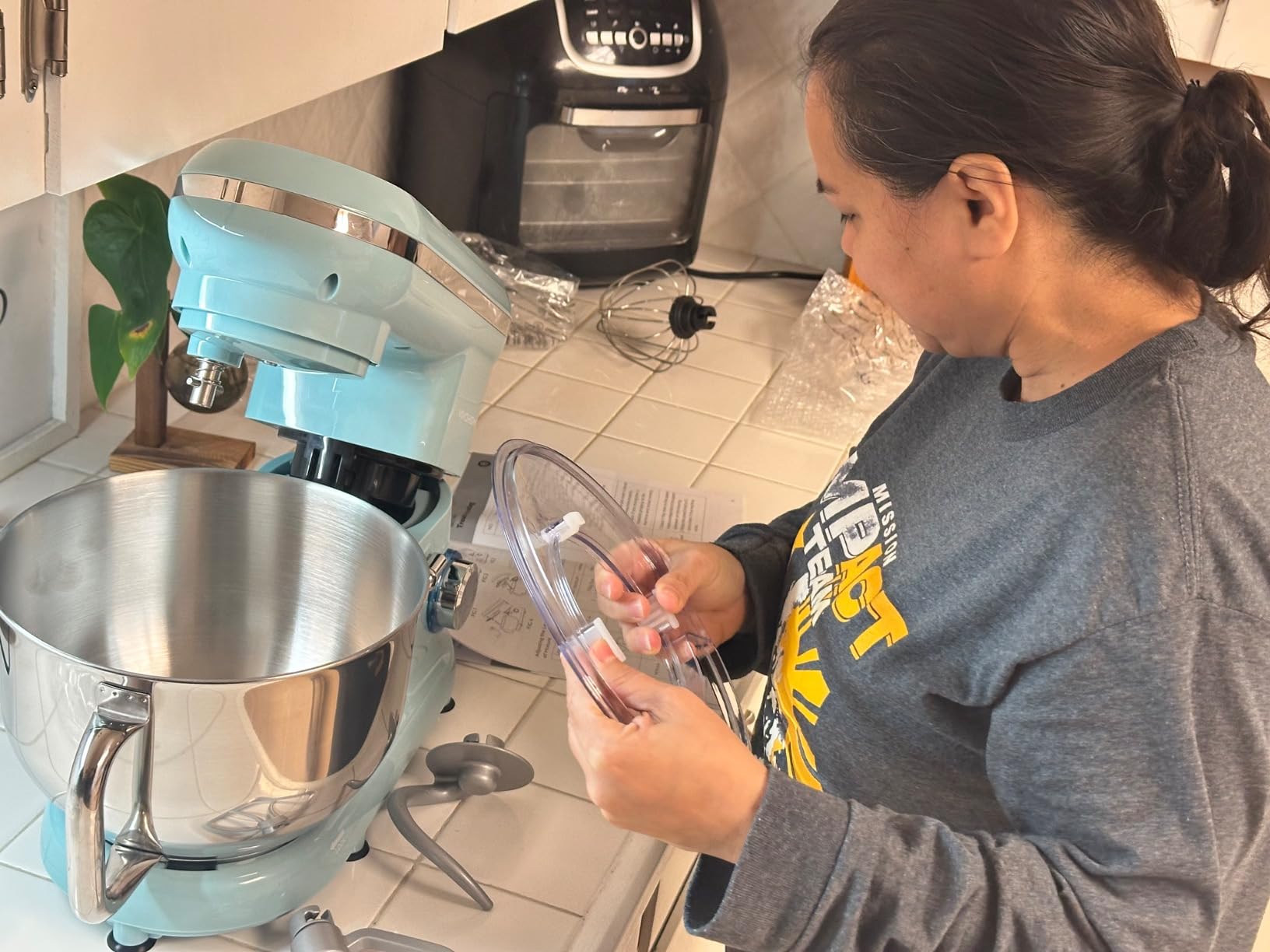
The flex-edge beater scrapes the sides and the bottom, which matters a lot with dough and reduces the stop-and-scrape cycle that costs time on a scheduled bake. The splash guard with a pour spout lets you add water while the machine runs, and the suction-cup base kept it planted through our heaviest batch.
The trade is construction. The body is ABS plastic with steel and aluminium parts, and the dough hook and beater are aluminium rather than stainless. It does not feel like a die-cast machine, and we would not expect the same long service life from the housing.
Can a 6 quart bowl really make three loaves?
For standard lean loaves, yes. Three smaller loaves fill the bowl in a way that one large dough would not, and the hook works the mass without riding up. For a wet high-hydration dough, the same bowl gives you noticeably less room and the dough will climb.
Our advice is to treat the 6 quart figure as a ceiling for three small loaves rather than three full sandwich loaves, and to check your kitchen’s vertical clearance first. At 18.8 inches tall, this is the second tallest machine here.
What are the durability trade-offs?
The housing and the coated aluminium tools are where money were saved. Neither affects dough quality in the short term, and few owners report functional failures. Over a decade of weekly bread we would expect the tools to need replacing before the motor.
It also ships with an egg separator, which is a small convenience for someone who also bakes cakes. As a bread-only purchase the case rests on capacity per pound, and on that measure it is hard to argue with.
How to Choose a Stand Mixer for Bread Dough
Start with the size and shape of the dough you actually make, not with the marketing number on the box. A machine that is too small will strain and walk; a machine that is far too large will leave a small dough stranded at the bottom of the bowl where the hook cannot reach it. Matching capacity to your routine matters more than picking a larger model for safety margin.
Planetary, bottom-drive, or spiral: which mechanism suits your dough?
Planetary mixers, which includes KitchenAid, Kenwood, Aucma, Hauswirt, Hamilton Beach, and Martha Stewart in this roundup, spin the hook around a fixed bowl. They are versatile, easy to add ingredients to, and the right choice for most home bakers who split their time between bread and everything else.
Bottom-drive machines such as the Bosch Universal Plus rotate the bowl under a stationary hook. The dough stays gathered in one rotating mass, which is why they handle heavy whole grain and rye better. The trade is fewer speed settings and less graceful performance on cold butter or hot syrup. Chefs discussing heavy dough on ChefTalk repeatedly recommend this category over planetary for the same reason.
Spiral mixers like the Ooni Halo Pro add a breaker bar and finer speed control, with a rotating bowl. This is the mechanism professional bakeries use, and it is the one that makes high-hydration dough easiest to handle. It also costs the most, takes the most counter space, and is the least forgiving of delicate mixing.
Match the bowl to your batch size
Count loaves, not quarts. A 4 quart bowl is a single-loaf machine and a good one at that, which is why the Hamilton Beach works well for small kitchens. A 5 to 5.5 quart bowl covers two loaves with room for the hook to travel. A 6 to 6.5 quart bowl reaches three smaller loaves, and a 7 quart bowl handles full-size multi-loaf batches or a very wet single dough.
There is a second rule for small bakers: the smallest dough in a large bowl is a real problem. If you make one loaf in a 7 quart spiral machine, the dough sits below the hook and you will be scraping more than mixing. Several smaller-capacity entries here handle modest batches better precisely because the bowl is not oversized for the job.
Match the mixer to your hydration
Hydration is the number most buyers ignore, and it decides which failures you will hit. Low hydration dough in the 50 to 60 percent range, which covers bagels and many whole wheat loaves, is stiff and dense. It punishes weak gear trains and small bowls hardest, because the machine has to move a lot of relatively dry mass. A planetary machine with a metal body and a 5 quart bowl or larger handles it, and we have seen baking forum owners report motor strain on the smallest KitchenAid models with this dough.
Medium hydration in the 65 to 75 percent range is where almost everything works. Standard sandwich loaves, pizza dough, and enriched brioche sit here, and any machine in this roundup will produce an excellent result.
High hydration above 80 percent, typical of wet sourdough and rye, is sticky and slack. Planetary hooks push this dough up and around rather than through it, and a bottom-drive or spiral machine is the sensible choice. The Bosch Universal Plus and the Ooni Halo Pro both handled our wettest dough with fewer interventions than any planetary machine here.
Read torque, not wattage
Wattage measures electrical input, not mechanical force delivered at the bowl, and the ratio between them varies enormously between manufacturers. What reaches the dough is set by gear material, gear ratio, motor cooling, and frame weight. A machine that stalls under load will usually have a high wattage figure and a weak transmission.
Read owner reports about long dough runs instead. Descriptions of the motor holding speed for a full ten-minute mix, of the machine not walking across the counter, and of not needing to stop and scrape every two minutes tell you far more than a number on a spec sheet. Ratings and review volume are also useful signals: a machine with a 4.6 average across thousands of reviews has a track record a newer model cannot match yet.
Plan for the non-bread work
Most buyers use one mixer for everything, and it is worth knowing where each design gives ground. Planetary machines creaming cold butter and whipping meringue are the strongest. Bottom-drive and spiral machines are weaker at creaming and at folding in delicate mix-ins, and some bakers keep a second lightweight machine for those jobs. Mixing hot syrup is hard on any dough hook of any mechanism, so let it cool first.
Attachments are another consideration. The KitchenAid ecosystem is the deepest and most widely available, and an aftermarket spiral dough hook transforms how a planetary machine handles wet dough. That upgrade is cheap and well worth it if your hydration sits above 75 percent. Bottles and grinders are popular but are the most commonly reported attachment failures, so we would treat them as occasional tools rather than daily drivers.
Think about storage, repair, and long-term ownership
Weight is the quiet decider. The lightest machines in this roundup move between a cupboard and the counter daily. The heaviest stay put for years. If your counter space is limited, a compact model like the 8 pound Hamilton Beach changes how often you can bake, not just where you store the appliance.
On repairability, the mainstream brands have the deepest parts catalogues, and a professional repair shop can usually service a KitchenAid, Bosch, or KitchenAid-platform machine long after a lesser-known brand becomes difficult to find parts for. Metal gear trains, metal housings, and replaceable attachments all extend useful life. There is also a well established market for good used mixers, particularly older metal-bodied models, and King Arthur Baking stocks a single spiral mixer brand exclusively, which tells you how seriously that category is treated as a bread tool.
Frequently Asked Questions
What is a good stand mixer for dough?
A good dough mixer needs low-speed torque, a bowl big enough for your batch, and a gear train that survives repeated heavy loads. Planetary models from KitchenAid, Aucma, and Hauswirt handle standard loaves well, while bottom-drive and spiral designs are better for very stiff or very wet dough. The single most important check is that the bowl holds your full batch without the dough climbing the hook.
What is the best machine for making bread dough?
For most home bakers the KitchenAid Artisan 5 quart is the best overall machine for making bread dough, because its 325 watt motor and metal body hold speed through a full mix and its bowl handles two loaves. If your dough is heavier or wetter, a bottom-drive machine such as the Bosch Universal Plus or a spiral machine such as the Ooni Halo Pro develops gluten with less intervention.
What is the best food mixer for kneading bread dough?
The best food mixer for kneading bread dough is one with a metal gear train, a stainless bowl, and enough torque at the lowest speed. Aucma, VIVOHOME, and Martha Stewart models publish 660 watt figures with large 5.3 to 6.5 quart bowls, while KitchenAid models deliver comparable dough force at 275 to 500 watts. Judge all of them on whether the machine walks or stalls during a ten minute mix.
What size stand mixer is best for making bread?
A 5 to 5.5 quart bowl suits most households making one or two loaves at a time. A 4 quart bowl is a good single-loaf machine but will strain on larger doughs, and a 6 to 7.3 quart bowl is needed for three loaves or a very wet high-hydration dough. Avoid going far larger than your routine requires, because a small dough stranded at the bottom of a big bowl is harder to mix.
Can a stand mixer handle high hydration sourdough?
Yes, but the mechanism matters. Planetary dough hooks tend to push wet dough up and around the bowl, while bottom-drive and spiral machines keep it gathered and develop gluten with less scraping. For sourdough above 80 percent hydration, a bottom-drive or spiral machine such as the Bosch Universal Plus or the Ooni Halo Pro is the safer choice, and lowering hydration slightly for the first batch helps.
How long should a stand mixer last for bread baking?
A metal-bodied planetary machine from a major brand can last decades with weekly bread use, and many owners report decades of reliable service on KitchenAid models. Machines with plastic housings, few speed settings, or lesser-known brands are the ones that tend to fail earlier, usually in the gear train or the attachments rather than the motor. Serviceable parts availability matters as much as the build when you are buying used.
The Best Stand Mixer for Bread Dough Matches Your Flour
There is no single winner here, and pretending otherwise is how people end up with a machine they do not use. If you bake standard loaves a couple of times a week, the KitchenAid Artisan is the pick: metal body, a 5 quart bowl that handles two loaves, and more owner history behind it than anything else we tested. It is our editor’s choice for 2026 because it is the least likely to disappoint across ordinary bread schedules.
If your dough is heavy, stiff, or wet, change the mechanism rather than the size. The Bosch Universal Plus is the best value pick for whole grain, and the Ooni Halo Pro is the one to buy when hydration is your biggest problem. If counter space is the constraint, the Hamilton Beach 4 quart turns that limitation into the reason it works, and the Aucma 6.5 quart brings more torque and bowl size than its cost suggests.
Whichever one you choose, buy the bowl size you will fill most weeks, not the biggest one you can fit, and test it on your own flour before you trust the settings. Dough development is the machine and the flour working together, and the right mixer simply lets you hear when they agree.