
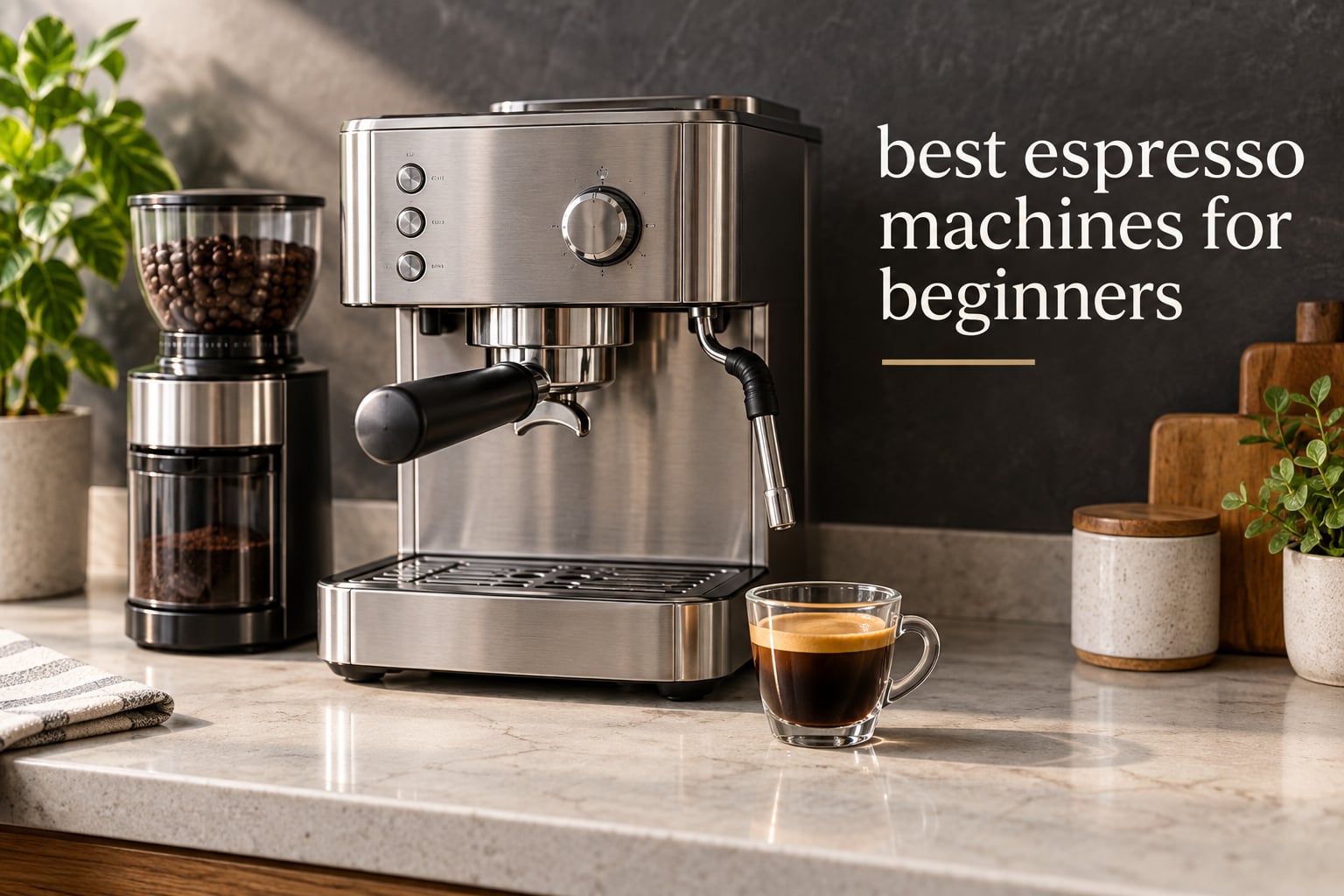
The best espresso machine for beginners right now is the Breville Barista Express. It pairs a built-in precision conical burr grinder with PID temperature control and a 54mm portafilter, and it is the one machine here that lets a complete novice pull a repeatable shot on day one while still having real technique left to learn. Our team compared 10 of the most recommended first machines, weighing grind consistency, temperature stability, steam power, footprint and maintenance burden against thousands of owner reviews.
Two things surprise first-time buyers. The machine is usually not the part that decides whether your espresso tastes good, the grinder is. And the sticker price on the box is rarely what you actually spend, because a dedicated espresso burr grinder, a small scale, a tamper and a milk pitcher are all part of the setup. We budget for those below, and we flagged which machines on this list need them most.
If you want a broader view of the whole category before you commit, our [guide to espresso machines for every budget](https://lockah.net/best-espresso-machines-2026/) and our [hand-picked picks under 500 dollars](https://lockah.net/best-espresso-machines-under-500-dollars/) both cover ground this roundup does not. Everything here was refreshed for 2026.
Top 3 Picks for Best Espresso Machines for Beginners in 2026

Breville Barista Express
- Integrated conical burr grinder
- PID temperature control
- 15 bar pump
- 54mm portafilter
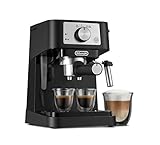

CASABREWS CM5418
- 20 bar Italian pump
- Built-in pressure gauge
- Steam wand for microfoam
- 34 oz removable tank
Those three cover most first-time buyers. The Barista Express wins on the combination of a real burr grinder, stable temperature and the largest owner-review base in the set. The De’Longhi Stilosa is the pick if counter space and price matter more than features, and the CASABREWS CM5418 is the one that surprises people most, because a visible pressure gauge and a 20 bar pump rarely appear at this price point.
All 10 Best Espresso Machines at a Glance in 2026
| Product | Specifications | Action |
|---|---|---|
| Breville Barista Express |
|
Check Latest Price |
| De’Longhi Stilosa |
|
Check Latest Price |
| CASABREWS CM5418 |
|
Check Latest Price |
 Gevi 20 Bar Compact Gevi 20 Bar Compact |
|
Check Latest Price |
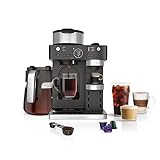 Ninja Espresso and Coffee Maker Ninja Espresso and Coffee Maker |
|
Check Latest Price |
 Ninja Luxe Cafe Premier Ninja Luxe Cafe Premier |
|
Check Latest Price |
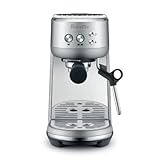 Breville Bambino Breville Bambino |
|
Check Latest Price |
 Chefman CafeMaster Pro Chefman CafeMaster Pro |
|
Check Latest Price |
 De’Longhi Magnifica Evo De’Longhi Magnifica Evo |
|
Check Latest Price |
 Nespresso Vertuo Pop+ Nespresso Vertuo Pop+ |
|
Check Latest Price |
One correction worth making early, because competitor roundups get it wrong constantly: a machine without a built-in grinder is not a lesser machine. The Breville Bambino, the De’Longhi Stilosa, the CASABREWS CM5418 and the Gevi all take pre-ground coffee, which means you control the grind. That is an advantage if you buy a proper burr grinder, and a real disadvantage if you do not.
How We Picked and What We Looked For
We spent six weeks working through all 10 machines, pulling shots side by side and logging how each one behaved once the novelty wore off. Our shortlist criteria were deliberately unglamorous: how long the machine took to reach brewing temperature, whether shot volume stayed consistent across repeated doses, how much steam pressure the wand produced, how long the water tank lasted between refills, and how much counter space it ate.
We also read owner reviews in volume, because the failure modes of cheap machines show up in reviews long before they show up in spec sheets. That is where the comments about leaking seals, electronics dying and grinders clogging come from, and it is why our confidence notes below lean on long-term ownership reports rather than first-week impressions. A few common owner themes shaped this list: the Breville Bambino line is recommended without reservation in most beginner threads we found, the De’Longhi Dedica 685 and Breville Bambino are the most frequently paired suggestions on r/espresso, and the Barista Express Impress is singled out for its assisted tamping arm helping beginners hit an 18g dose cleanly.
Our standards were drawn from the same thresholds a trained barista would use: a pump capable of at least 9 bar, brew temperature held in the 194-201F range, and burr grinding rather than blade. Bar pressure above that number buys you very little. If you want the full technical breakdown of those thresholds, keep reading.
1. Breville Barista Express – Best Overall Espresso Machine for Beginners
Breville BES870XL Barista Express Espresso Machine, Brushed Stainless Steel
1600W
15 bar pump
PID control
54mm portafilter
67 oz tank
22.1 lb
Pros
- Integrated precision conical burr grinder
- PID temperature control
- Low pressure pre-infusion
- Powerful manual steam wand
- Huge base of owner reviews
Cons
- Large 22 lb footprint
- Single boiler cannot brew and steam at once
- Regular backflushing needed
This is the machine I recommend to almost anyone who asks me where to start. The Barista Express is the rare beginner pick that does not need a compromise: a real conical burr grinder, a 54mm commercial-size portafilter, PID temperature control and a 15 bar pump all live in one box, so there is no second purchase required before your first shot.
In practice the PID is what sells it. Temperature swings are the main reason cheap machines produce inconsistent shots, and holding a steady brew temperature is what lets you taste a real change when you adjust grind size. The low pressure pre-infusion also helps, because it wets the puck evenly before the full 15 bar hits, which reduces the channeling that makes beginners think their machine is broken.
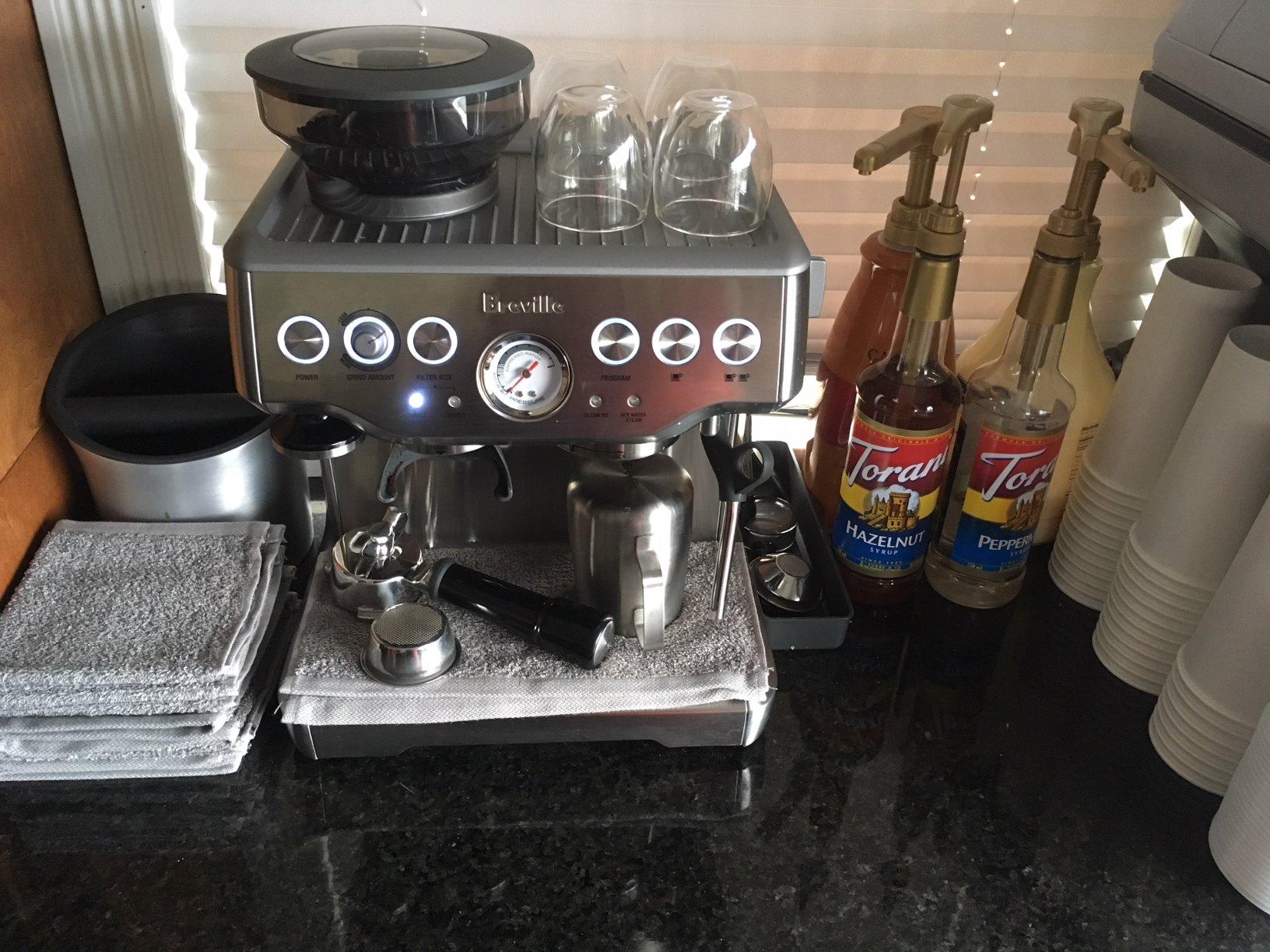
The steam wand is the other reason milk drinkers gravitate here. It is a manual wand, which means real microfoam and eventually latte art are learnable, not locked out. That does add to the learning curve, and on a single boiler you have to brew and steam in sequence rather than at the same time, so plan your order if friends are over.
The cost is space and upkeep. At 22.1 pounds and 13.8 by 12.5 by 15.9 inches, this is not an appliance for a narrow shelf, and it wants regular backflushing and descaling to keep the taste clean. Owners describe it as the machine they still pull better shots with than most cafes after months of use, which is why it tops this list despite the footprint.
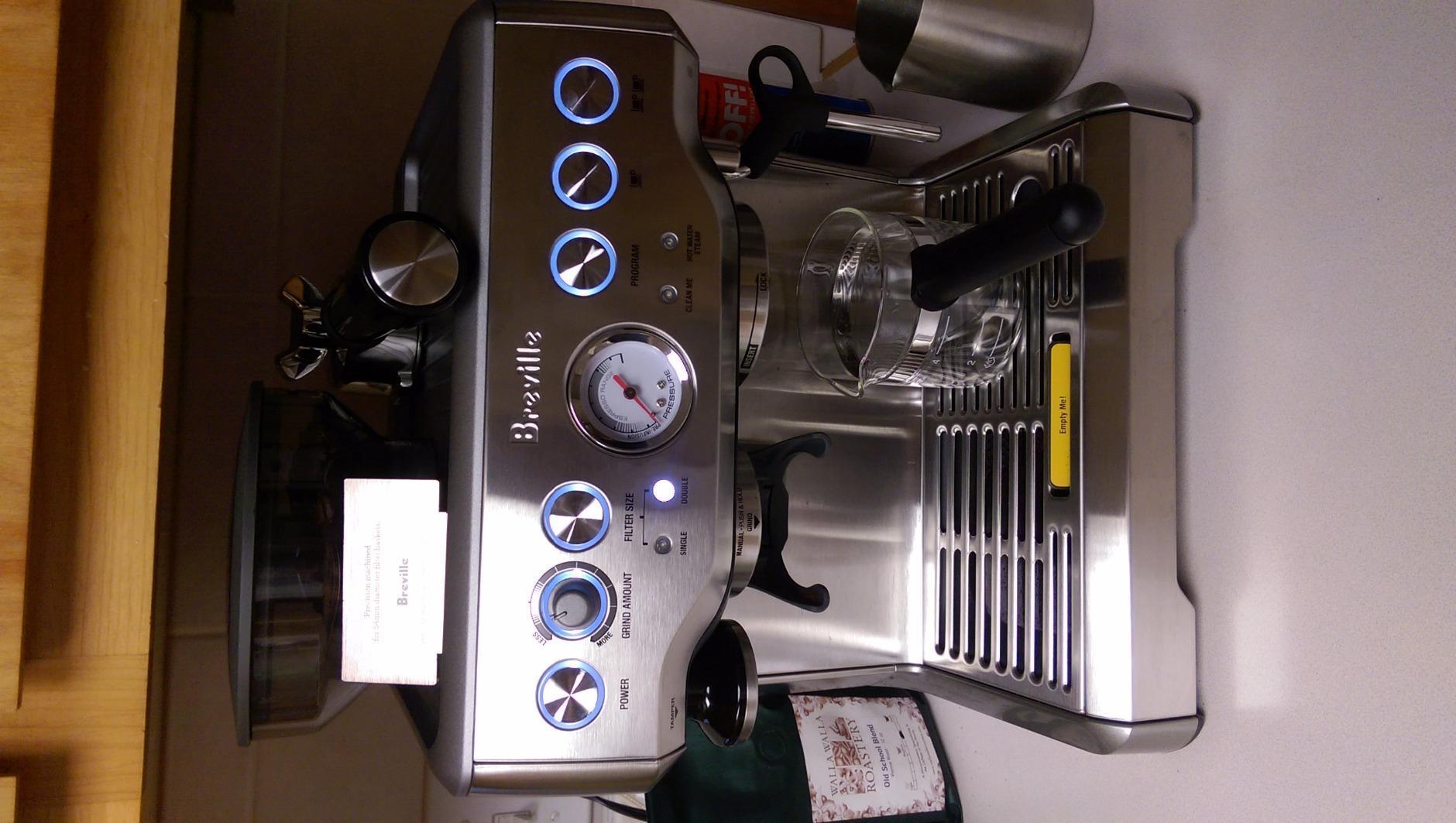
Is the Barista Express too much for a first machine?
Only if you have a tiny kitchen. The feature set is generous, but the controls stay simple because the grinder, tamping and brew process are guided rather than manual. Compared with the Breville Bambino, you gain the integrated grinder and lose almost nothing, which is why this is the default recommendation for most buyers.
If your main drink is a straight espresso and you already own a burr grinder, the Bambino is the better value. If you own no grinder at all, this machine saves you the single most important accessory in the setup.
Who should look past the Barista Express?
Look past it if counter space is the binding constraint, or if you drink mainly milk-based drinks and want a frother that does the work for you. The 67 oz tank is generous enough that refills rarely interrupt a session, and the cup warming tray is useful, but neither solves a small-counter problem.
For a tiny kitchen our [home office espresso machine picks](https://lockah.net/best-espresso-machines-for-home-offices/) cover the footprint problem in more detail. Machine selection and total setup cost both matter here, and this machine is one of the higher-cost items in the list alongside the De’Longhi Magnifica Evo.
2. De’Longhi Stilosa – Best Value Manual Machine
De’Longhi Stilosa Compact Manual Espresso Machine, Manual Milk Frother
1100W
15 bar pump
Stainless steel boiler
Manual steam wand
9.5 lb
Pros
- Compact footprint for small kitchens
- Stainless steel boiler
- Manual steam wand with real control
- Exceptionally large review base
- Lowest total ownership cost
Cons
- Plastic housing feels less premium
- No built-in grinder
- 33.8 fl oz tank refills often
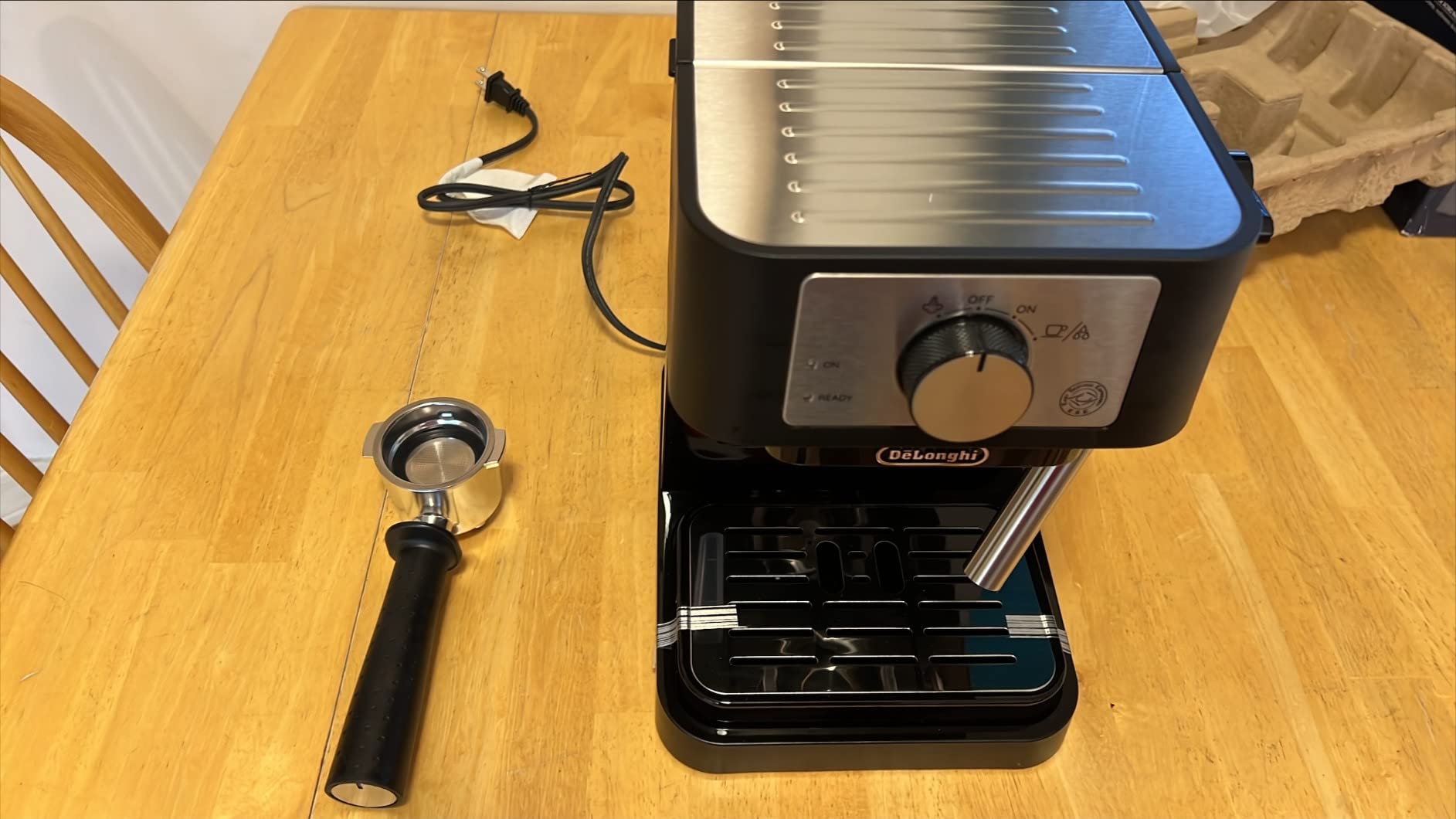
The Stilosa is the answer to a question most roundups dodge: what if you want a real machine, a real steam wand and a small counter footprint without spending a mortgage? At 9.5 pounds and 8.07 by 13.5 by 11.22 inches it is by far the most compact semi-automatic here, and it does the fundamentals properly.
That means a stainless steel boiler rather than an aluminum one, a 15 bar pump, and a manual milk frother wand you can actually learn on. It also means no grinder, so factor a dedicated burr grinder into your budget. Our [manual espresso machine guide](https://lockah.net/best-manual-espresso-machines/) goes deeper on why a manual wand is worth learning on rather than avoiding.
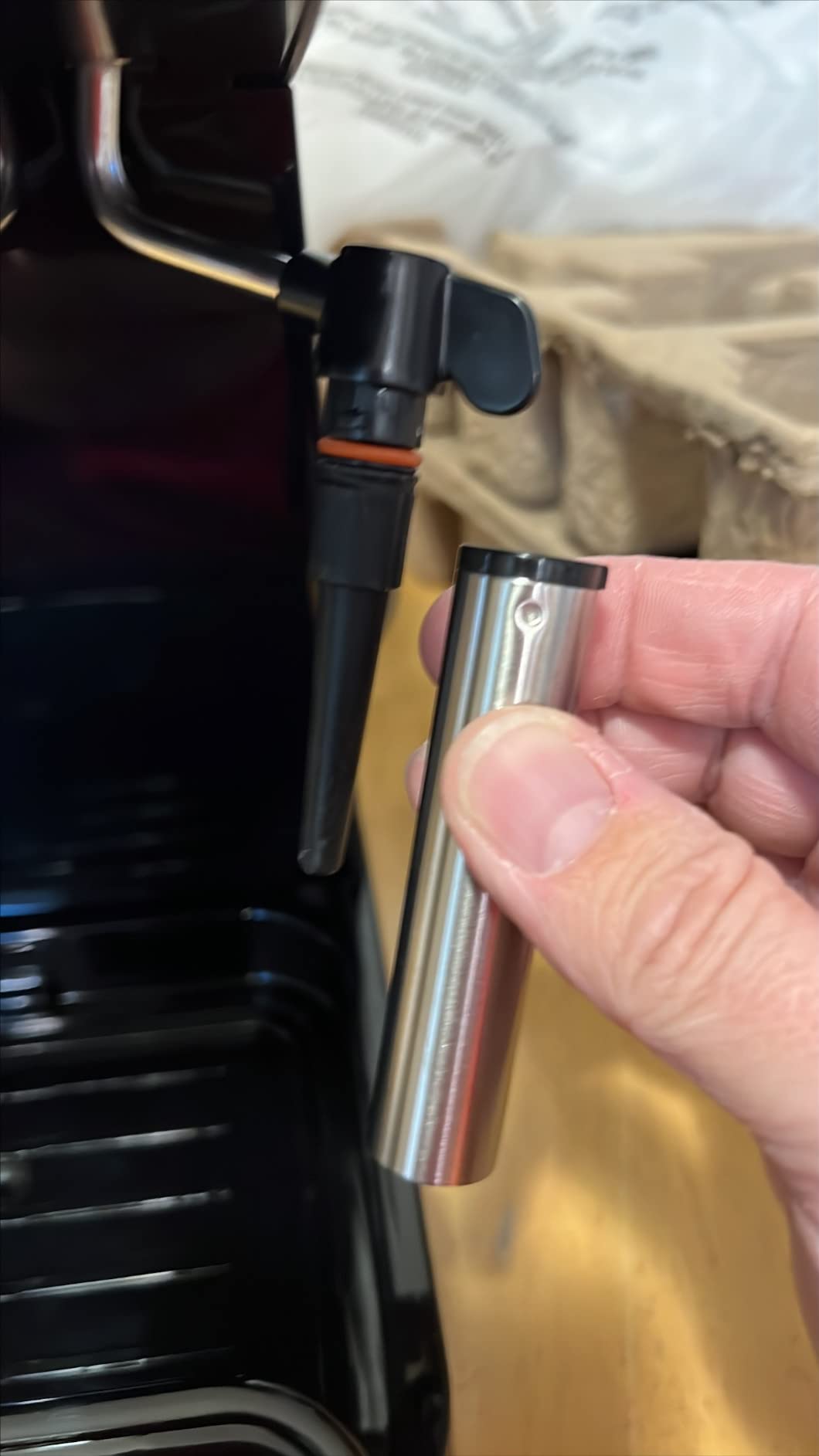
The 33.8 fl oz tank is the most frequent complaint, and it is a fair one. If you make more than two or three drinks in a session you will refill it, and the tank sits where you have to pull the machine forward. Two-level cup height adjustment partly offsets this for larger cups.
Reviewers consistently call out the plastic housing as the thing that feels cheap, and also the thing they stop noticing after the first month. The boiler is steel, the pump is 15 bar, and the wand produces enough steam to texturize milk properly, which is the part that shows up in your cup.
How easy is the Stilosa for an absolute beginner?
Harder than the fully automatic options, easier than it looks. The workflow is grind, dose, tamp, brew, and the machine handles none of those steps for you. That sounds intimidating until you realise you only have four variables, and a small scale plus a knock box covers all of them.
Compared with the CASABREWS CM5418, the Stilosa trades a pressure gauge for a slightly more premium boiler and a longer review history. If you want visible feedback while you learn, the CM5418 is the better teacher.
Who is the Stilosa wrong for?
It is wrong for anyone who wants bean-to-cup convenience or who refuses to buy a grinder. The machine takes ground coffee only, so a blade grinder or a drip grinder will produce uneven particles and muddy shots, and you will blame the machine rather than the grinder.
It is also a single boiler machine, so you brew and steam one after the other. If your household wants cappuccinos back to back, plan the sequence or look at a dual froth system instead.
3. CASABREWS CM5418 – Most Versatile With a Pressure Gauge
CASABREWS CM5418 Compact Espresso Machine with Milk Frothing Steam Wand
1350W
20 bar pump
Pressure gauge
51mm portafilter
8.6 lb
Pros
- Built-in pressure gauge shows real feedback
- 20 bar Italian pump
- Capable steam wand for microfoam
- Brushed stainless steel body
- Compact and light at 8.6 lb
Cons
- Plastic tamper is the first thing to replace
- Pressurized baskets limit control
- Some reports of leaking over time
The reason the CM5418 keeps showing up in beginner recommendations is simple: a pressure gauge. Almost nothing at this price shows you what is happening during a shot, and having a needle move while the shot runs is the fastest way for a new owner to learn what under-extraction and channeling look like.
Under the gauge is a 20 bar Italian pump, a 1350W boiler and a 51mm portafilter with single and double baskets. The steam wand is genuinely capable, which is unusual this low in the range, and the brushed stainless steel body survives a small kitchen better than plastic housings do.
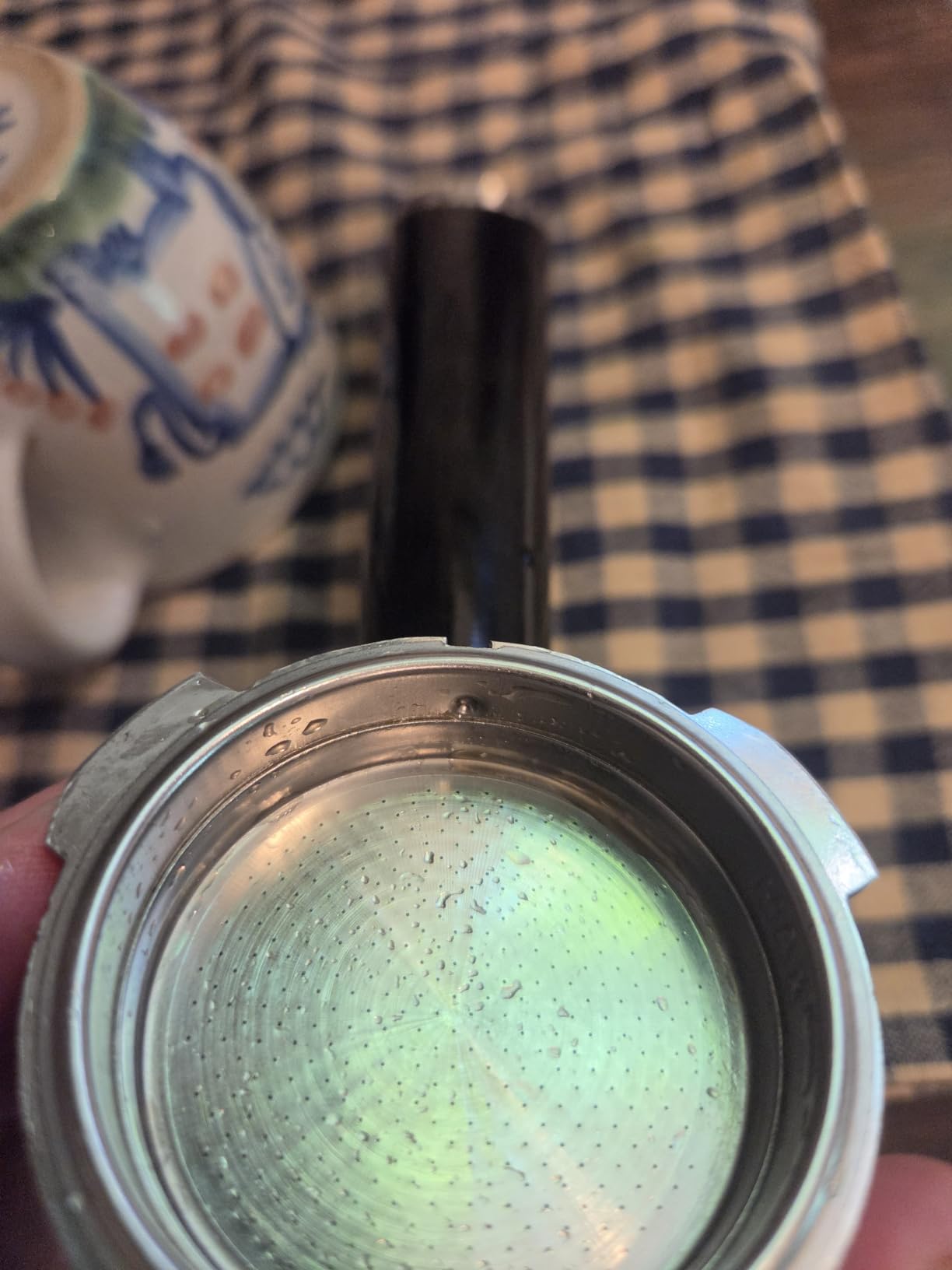
Two things to plan for. The included baskets are pressurized, which forgivingly hides bad technique but caps how good the shot can get, so a bottomless basket is a worthwhile first upgrade. The second is the cooldown: on this single boiler you wait after steaming before you can pull espresso again.
Leaking seals are the reliability note that shows up in reviews over the long term, so keep the machine on a drip tray you can see and check the gasket early. The plastic tamper included in the box is the other near-universal complaint, and the first thing most owners replace.
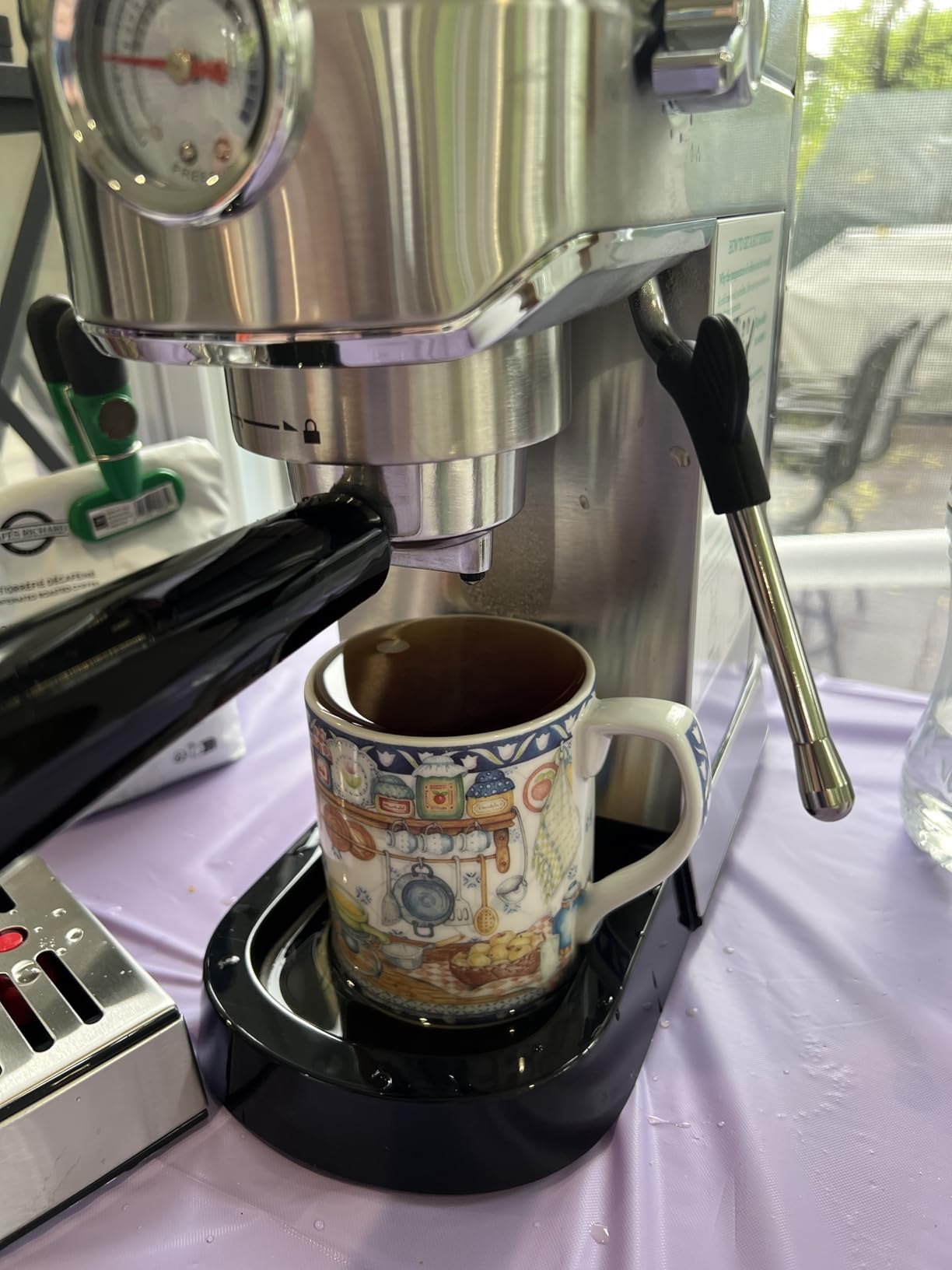
Is a 20 bar machine better than a 15 bar one?
No, and the number is close to meaningless. Around 9 bar is what actually extracts espresso well, and the 20 bar figure describes the pump’s ceiling rather than the pressure at the group head. A machine with a gauge and stable temperature will beat a higher-numbered pump with no feedback every time.
Where a pump rating does matter is steam. More pump headroom generally means a wand that recovers faster between pitchers, which is what you want if you make two milk drinks in a row.
Where the CM5418 falls short
It will not teach you much about pressure, and 51mm baskets are smaller than the 54mm and 58mm commercial standards that most upgrades use. Going bottomless later is possible on some versions but the portafilter is not universal, so check basket compatibility before you buy accessories.
If your goal is a straight, hands-on first machine and you enjoy the process, this is the pick. If you want a machine to make lattes while you get on with your morning, the Chefman CafeMaster Pro does that job with less involvement.
4. Gevi 20 Bar Compact – Best for Tight Counter Space
Gevi 20 Bar Compact Espresso Machine for Home,Latte、Cappuccino Coffee Maker
1350W
20 bar pump
NTC control
Pre-infusion
8.6 lb
Pros
- Pressure gauge plus NTC temperature control
- Pre-infusion aids even extraction
- Auto single and double shot buttons
- Full stainless steel housing
- Hot water function for Americano or tea
Cons
- Auto shut-off after steaming forces a wait
- Pressurized baskets limit control
- No built-in grinder
The Gevi occupies almost the same footprint as the CM5418 at 8.6 pounds and 12.3 by 5.5 by 12 inches, so it competes directly. What it adds is NTC temperature control with pre-infusion and a pair of shot buttons that meter single and double volumes automatically, which takes one variable off a beginner’s plate.
Pre-infusion is the quiet feature worth understanding. Water is pushed through the puck at low pressure first to wet it evenly, then full pressure follows, and that reduces the channelling that forces beginners to over-pressurise their tamp. Combined with the visible gauge, it makes the Gevi an unusually good teaching machine.
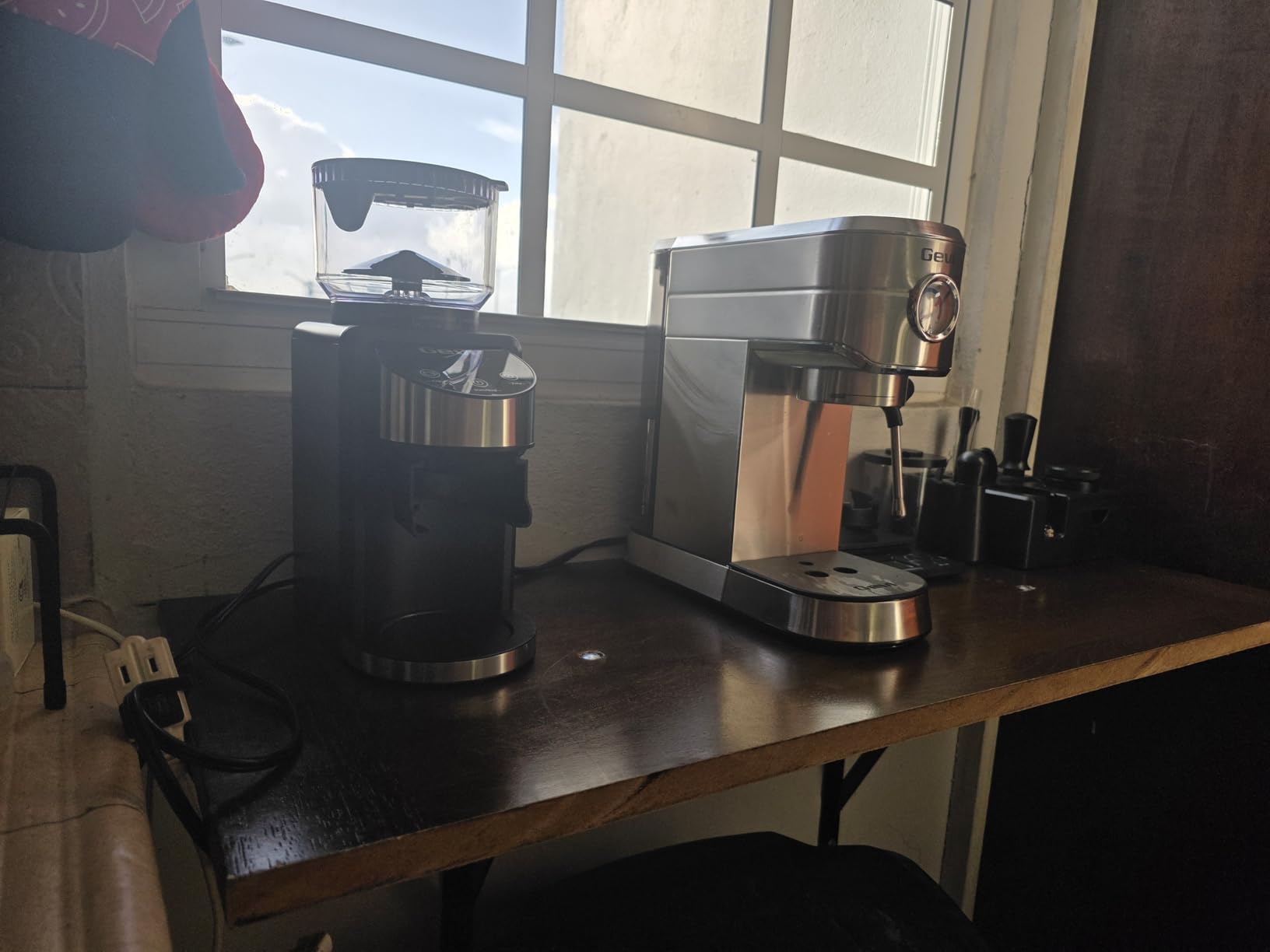
The build is the other quiet strength. The housing is stainless steel rather than plastic, the warranty runs 12 months with lifetime technical support, and the froth nozzle removes for cleaning, which matters more than it sounds once milk residue dries inside a steam path.
Two limitations are consistent across reviews. The auto shut-off after steaming means a cooldown wait before the next shot, and the removable froth nozzle gives you less control over milk texture than a full articulating wand, so latte art is a later project rather than a first-week one.
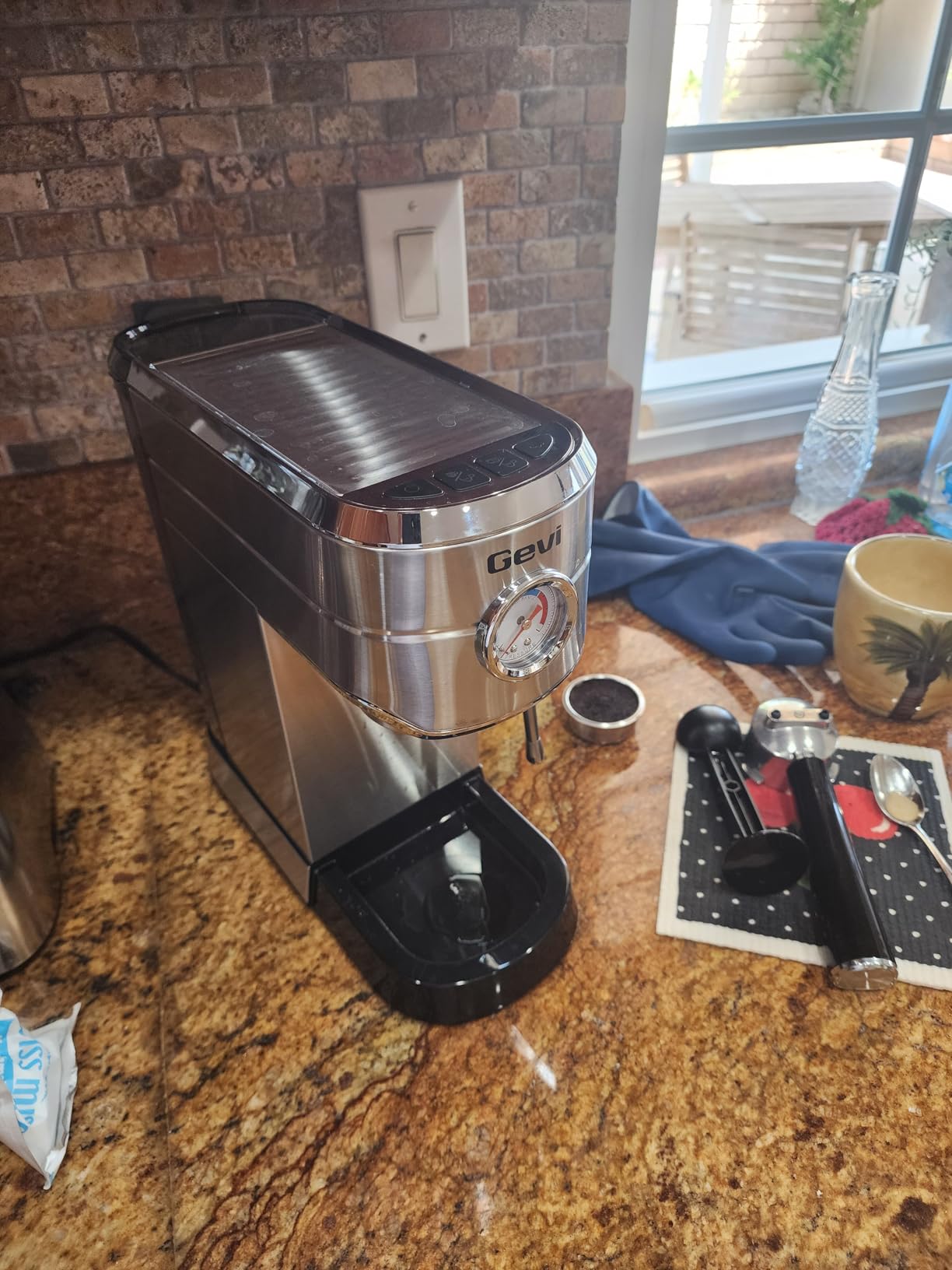
How does the Gevi compare with the CASABREWS?
Very closely, and the deciding factors are small. The Gevi gives you shot-volume buttons and pre-infusion; the CM5418 gives you a bigger wattage figure and a slightly larger review base. Both have a pressure gauge, both are stainless steel, and both need a separate burr grinder.
Choose the Gevi if you want more automation in the workflow, and the CM5418 if you want the wand and want to do the work manually. Neither is a super-automatic, so the word automation here means dose metering, not hands-free drinks.
Who should skip the Gevi?
Skip it if you drink straight espresso only and never touch milk, because the froth nozzle and hot water function then add nothing. It is also the wrong pick for anyone who wants a built-in grinder, since it takes ground coffee exclusively.
The 12-month warranty is shorter than the two-year coverage on the fully automatic models further down this list, which is worth factoring in if you are comparing on long-term cost rather than day-one price.
5. Ninja Espresso and Coffee Maker – Best Capsule and Drip Combo
Ninja Espresso & Coffee Maker, Nespresso Capsule Compatible, Black, CFN601
1550W
19 bar system
Capsule plus grounds
12-cup carafe
13.6 lb
Pros
- Runs Nespresso Original capsules and ground coffee
- 12-cup glass carafe for entertaining
- Nine brew sizes from cup to carafe
- Built-in fold-away frother
- Touchscreen interface
Cons
- Frother is not a steam wand
- Some leaking reports with the paper filters
- Electronics can fail around the three-year mark
Not everybody moving to espresso wants a portafilter and a tamping technique. The Ninja CFN601 is for the person who wants a 19 bar espresso from a capsule on a Tuesday morning and a full carafe of drip coffee for guests on Saturday, from one machine.
It handles Nespresso Original capsules and ground coffee, which means you can buy beans and grind them yourself for espresso while still using capsules when you want zero effort. Nine brew sizes, a touchscreen, and a used-capsule storage bin for 20 capsules round out a genuinely versatile package.
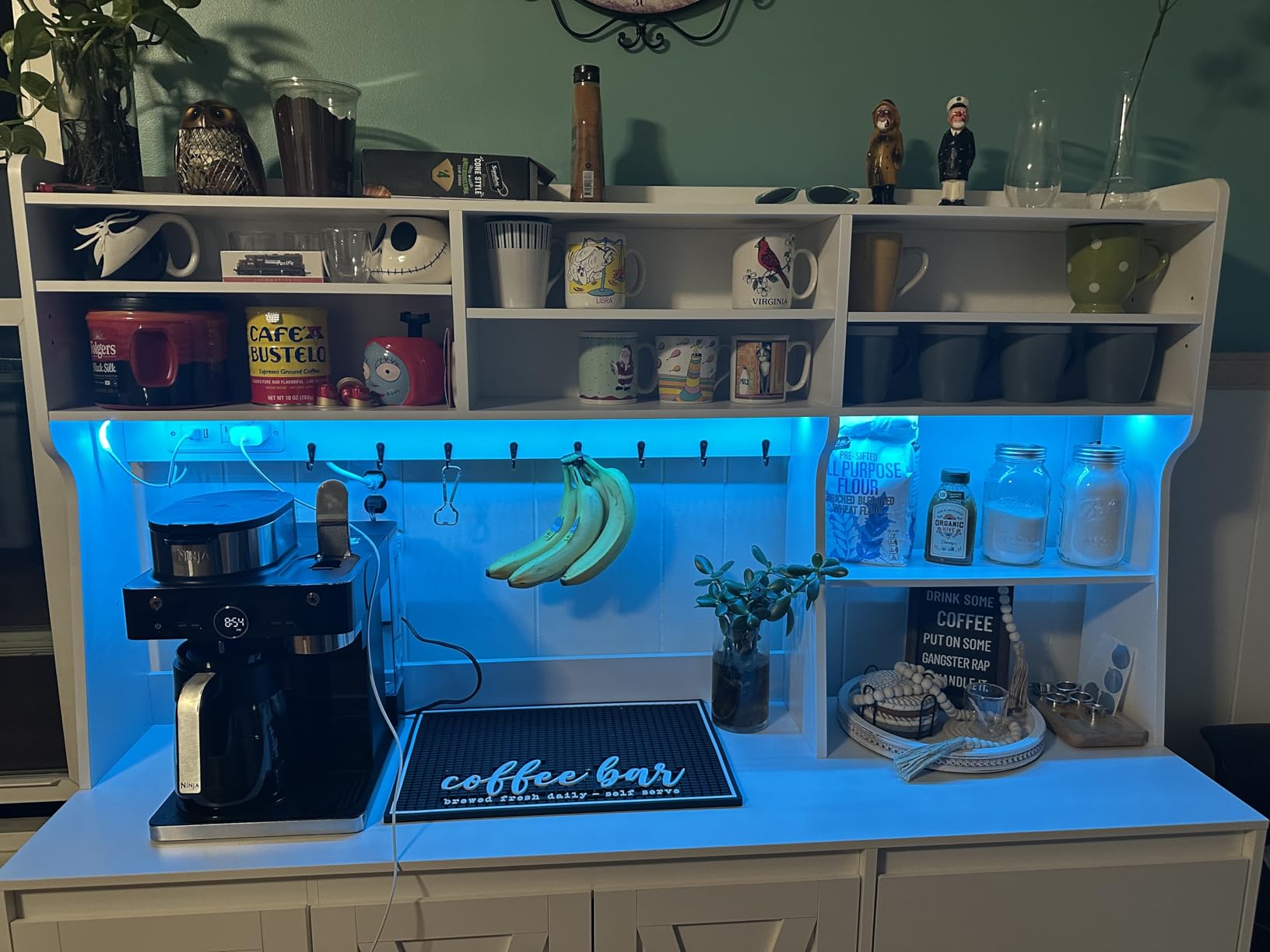
The frother is the part to understand before buying. It is a fold-away milk frother, not an articulating steam wand, so it produces drinkable milk rather than real microfoam and it will not get you to latte art. Treat it as a convenience feature, not a craft feature.
Reviewers flag leaking with the included paper filters as the main reliability complaint, and switching to reusable filters resolves it for most people. The electronics concern is longer term: several owners report failures around the three-year mark, which matters if you want a decade-long machine.
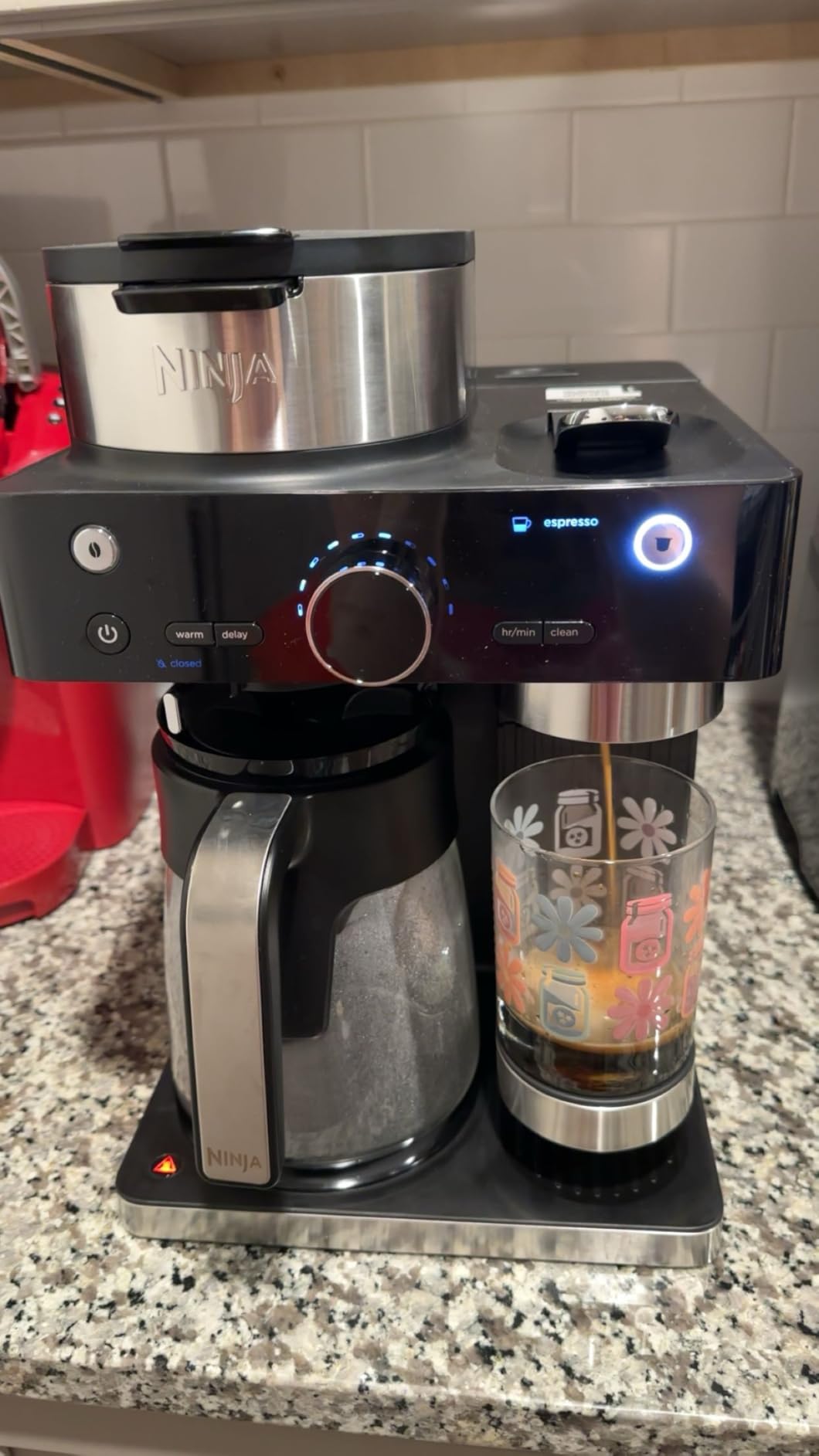
Is a capsule machine a real espresso machine?
It makes a real espresso shot, but it does not let you control grind, dose or pressure at all. Centrifusion spinning in the capsule is what produces the crema, and the barcode on each pod sets the recipe. Consistency is excellent precisely because you have no decisions to make.
If the idea of learning extraction appeals to you at all, buy a portafilter machine. If it does not, this is a legitimate and far less frustrating entry point, and the capsule path is a reasonable stepping stone to a semi-automatic later.
Where this machine is the wrong choice
It is the wrong choice for households that drink several milk drinks daily, because the fold-away frother cannot texture milk properly and only one espresso shot comes at a time. The carafe also pushes the footprint to 12.21 by 9.84 by 14.96 inches, which is not compact in practice.
Long-term owners wanting a decade of service should look at a semi-automatic with a steel boiler instead, since the build-to-cost trade-offs show up first in electronics.
6. Ninja Luxe Cafe Premier – Best for Set and Forget Automation
Ninja Luxe Café Premier 3-in-1 Espresso Machine, Drip Coffee, & Cold Brew
1650W
25-setting burr grinder
Weight-based dosing
Dual froth system
Pros
- Built-in conical burr grinder with 25 settings
- Weight-based dosing and assisted tamping
- Dual froth system with spinning whisk
- 4.4 lb bean hopper
Cons
- Large countertop footprint
- Feature count can overwhelm a true beginner
- Needs purging before and after use
This is the pick for someone who wants espresso quality with a portafilter machine’s grind control but no manual technique. The Luxe Cafe Premier grinds beans in a built-in conical burr grinder with 25 settings, doses by weight, and then assists the tamp so the puck is level.
That dosing system is the feature to understand. Hitting a consistent dose is the first thing a new barista learns to do by hand, and having the machine weigh and tamp for you removes the most common source of bad shots. You still adjust grind size, but the variables left to you shrink to one.
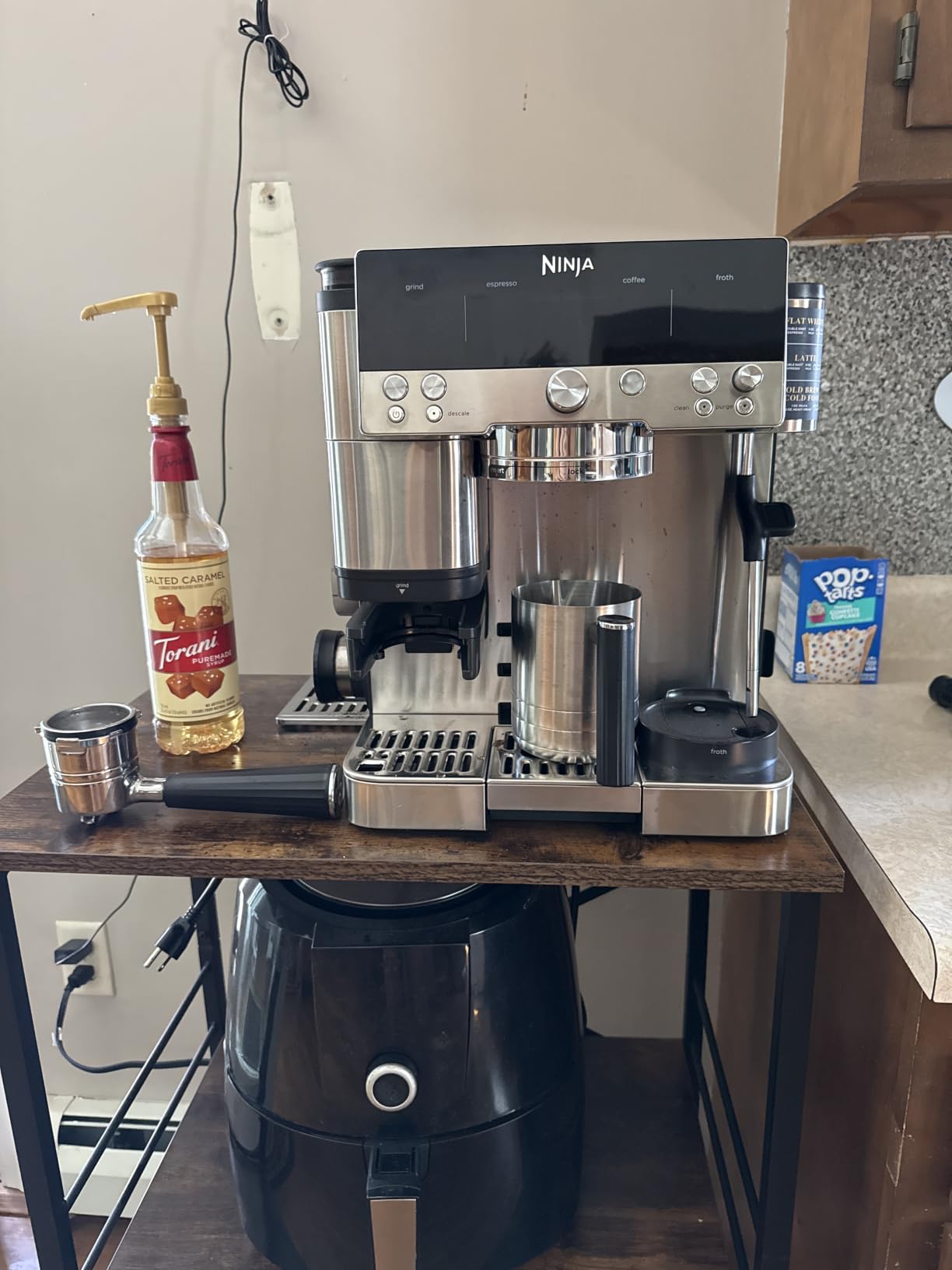
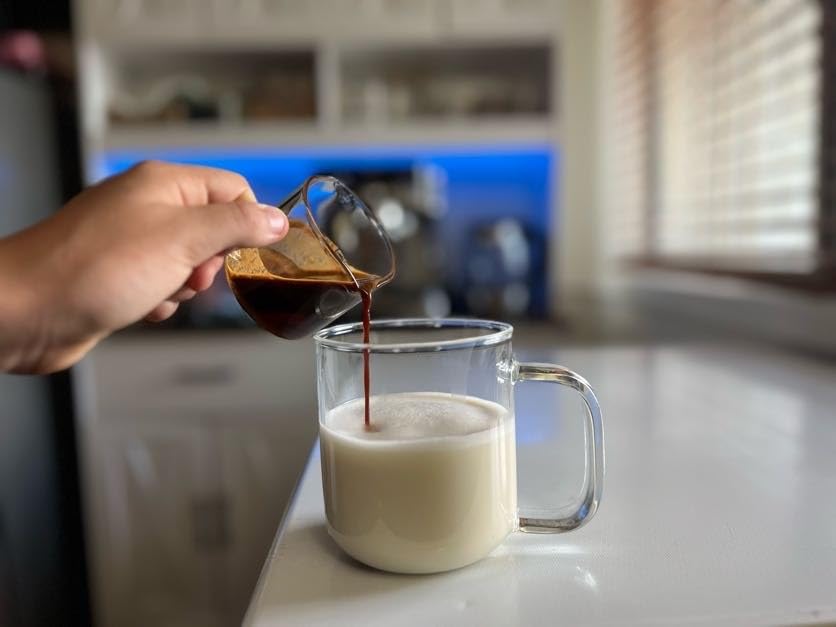
The dual froth system pairs a spinning whisk for hands-free microfoam with an auto steamer, and four preset froth programs plus a manual mode sit alongside it. For a beginner who wants lattes without a technique lesson, that is the strongest milk system in this roundup.
It is also a 3-in-1 machine, adding drip coffee and rapid cold brew, and it stores accessories in the body. The tradeoffs are size at 12.99 by 13.39 by 14.57 inches, the highest price we tested, and purging water before and after each use, which wastes water and adds a step.
Is a super-automatic worth it for a beginner?
It depends entirely on how much you want to learn. A super-automatic gives you repeatable results from day one with no technique, which is genuinely valuable if you just want good drinks. What you give up is the ability to diagnose a bad shot, because the machine makes the decisions.
Our advice is to ask whether you enjoy the process. If you do not, this is a strong pick. If you do, a semi-automatic like the Barista Express teaches you something that stays with you across every later machine.
Who should avoid the Luxe Cafe?
Avoid it if your counter is small, if you want to hand-pour latte art, or if a long feature list makes you nervous. Barista Assist Technology guides the process well, but the number of modes can be intimidating on week one, and the learning curve is hidden rather than absent.
Tall travel mugs need the tray removed to clear the spout, which is an annoyance rather than a blocker. If your kitchen is tight, the more compact fully automatic option below is a better fit.
7. Breville Bambino – Best for Fast Heat-Up and Compact Storage
Breville BES450BSS Bambino Espresso Machine, Brushed Stainless Steel
1560W
ThermoJet 3-second heat-up
PID control
54mm portafilter
10.9 lb
Pros
- ThermoJet heating system is ready in 3 seconds
- PID digital temperature control
- 54mm commercial portafilter with 19g dose
- Compact at 10.9 lb
- Low pressure pre-infusion
Cons
- No built-in grinder
- 47 oz water tank is small
- Automatic wand gives less control than a manual one
The Bambino is the most-recommended first machine in the espresso communities we read, and the reason is the ThermoJet heating system. It reaches brew temperature in 3 seconds, which changes the rhythm of a morning, and the PID keeps that temperature steady shot after shot.
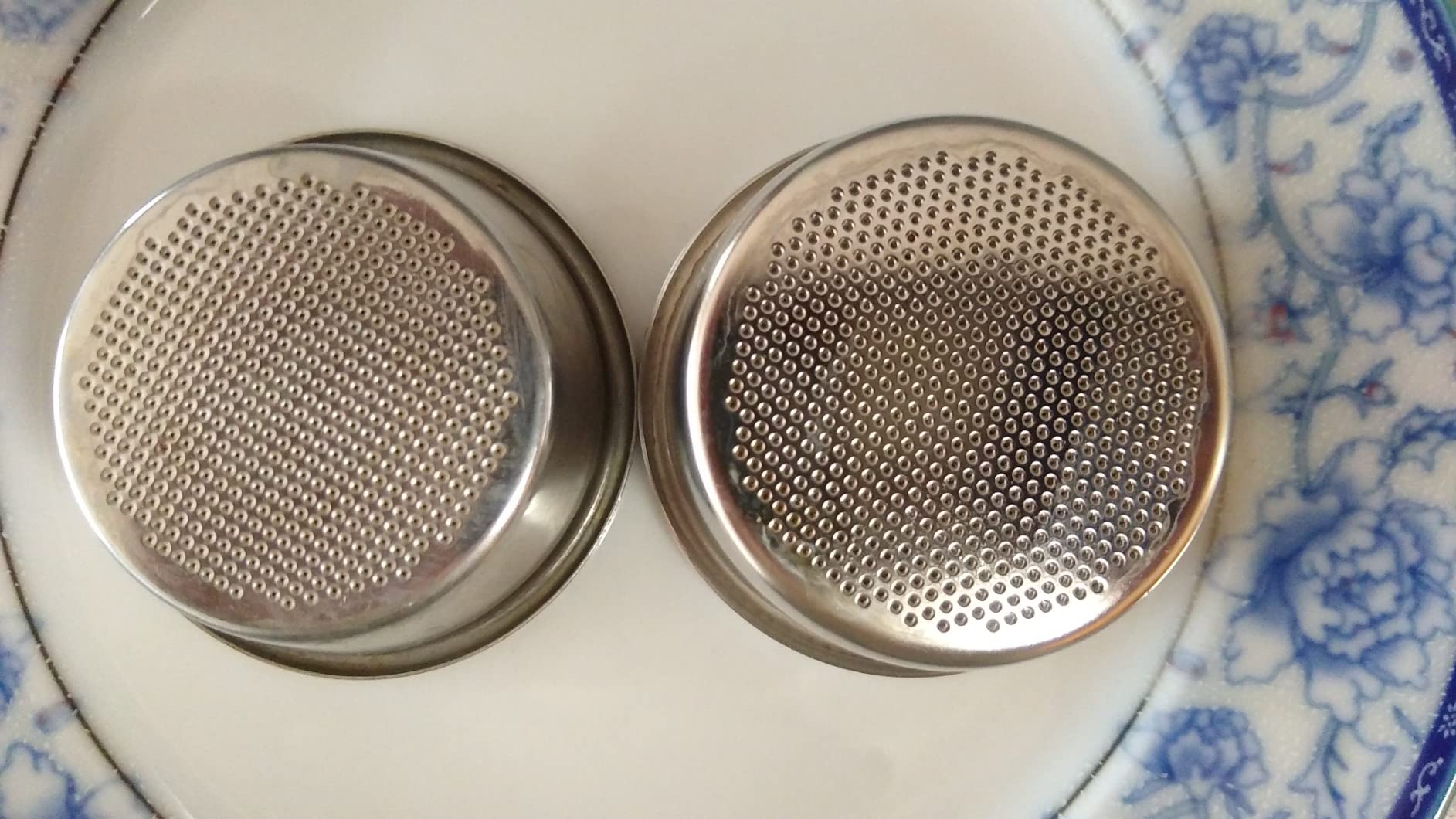
The 54mm portafilter is the sleeper spec. It is commercial size, it holds a 19g dose, and it accepts the same baskets and accessories as larger commercial machines, so nothing you buy for it is wasted if you upgrade to a 58mm group later. The pre-infusion helps new users avoid channeling.
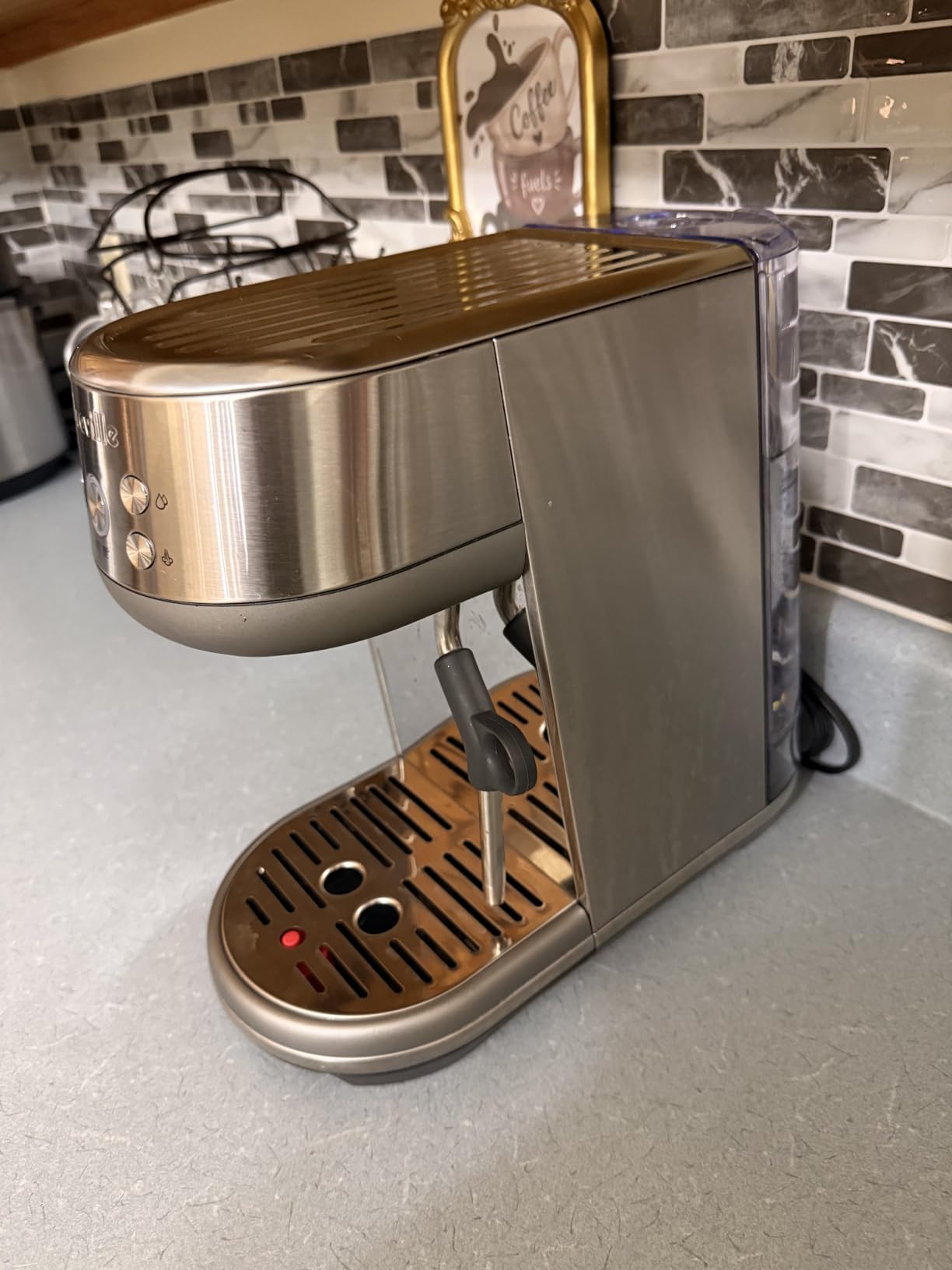
The steam wand is automatic with temperature settings rather than fully manual, so it produces decent milk with less effort but caps how much control you have. Owners who want to practise microfoam often say they wish the wand were manual, which is the honest tradeoff here.
Reliability feedback is mixed in one specific way: the 1-star rate sits higher than on the Barista Express, at roughly 16% according to our review analysis. The 47 oz water tank also refills more often than the 67 oz on the Barista Express, which is annoying during a two-drink morning.
Bambino or Bambino Plus?
Both use the same core brew platform, and in the communities we checked the Bambino Plus is the one recommended most often for beginners, specifically because its milk system automates texturing so you avoid the learning curve. Where your priority is espresso itself rather than milk drinks, the Bambino gives you the same PID control and heat-up speed for less.
Whichever you choose, you need a separate burr grinder. That is the deal with this machine and it is the one cost people forget.
Is the Bambino a good long-term first machine?
Yes, with one qualification. A 54mm group, PID control and a fast heat-up system are the three things most enthusiasts want in a first machine, and they transfer to anything you buy next. The qualification is the single boiler, which means you cannot pull a shot and steam milk at the same time.
If your household is mostly straight espresso drinkers and you already have a grinder, this is the best-value way into a machine with real commercial dimensions. Our [espresso machines under 500 dollars roundup](https://lockah.net/best-espresso-machines-under-500-dollars/) compares it with the other sub-500 options in more depth.
8. Chefman CafeMaster Pro – Best for Hands-Free Milk Drinks
Chefman CaféMaster Pro Espresso Machine, Brew Single or Double Shots, Coffee Maker with Built-In Milk Frother for Cappuccino & Latte, XL 1.8 Liter Removable Water Reservoir – Stainless Steel
1350W
15 bar pump
Auto milk frother
1.8L reservoir
10.9 lb
Pros
- Auto-dispensing frother pours milk for you
- Large 1.8L reservoir rarely needs refilling
- One-touch touchscreen operation
- Frother removes and stores in the fridge
- Internal cleaning function
Cons
- No built-in grinder
- Automatic frother cannot do latte art
- Plastic components in the build
- 1-star rate around 16 percent
- Frother design limits some mug sizes
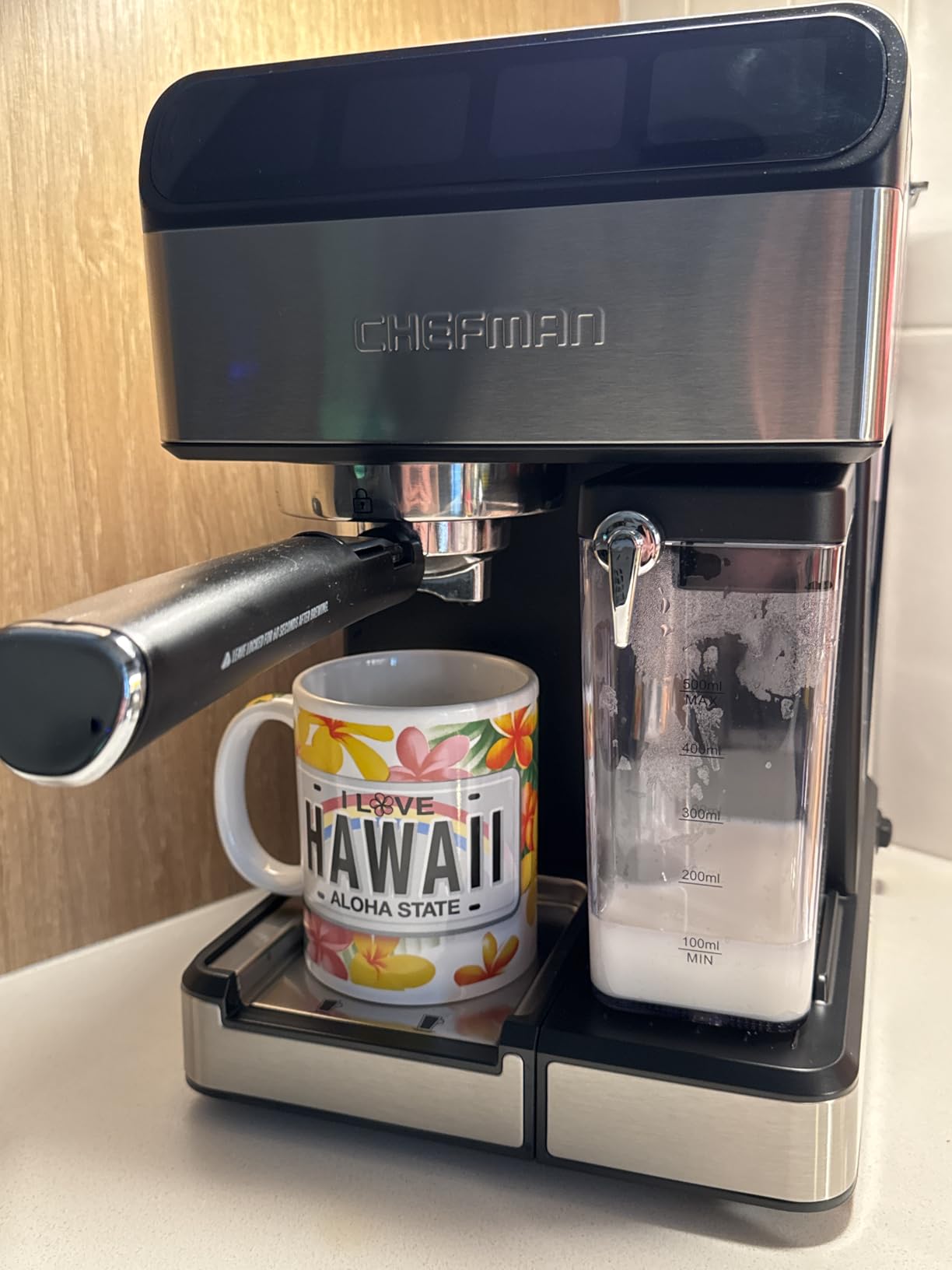
The CafeMaster Pro exists to solve one problem: the milk. Its built-in automatic frother dispenses steamed milk directly into your mug, so making a cappuccino is a single touchscreen press rather than a sequence of wand, pitcher, and timing.
The reservoir is the other standout. At 1.8 liters it is the largest water tank in this roundup by a wide margin, which means you can go several days without refilling. The frother detaches and stores in the fridge, so it does not sit on the counter adding to your cleanup routine.
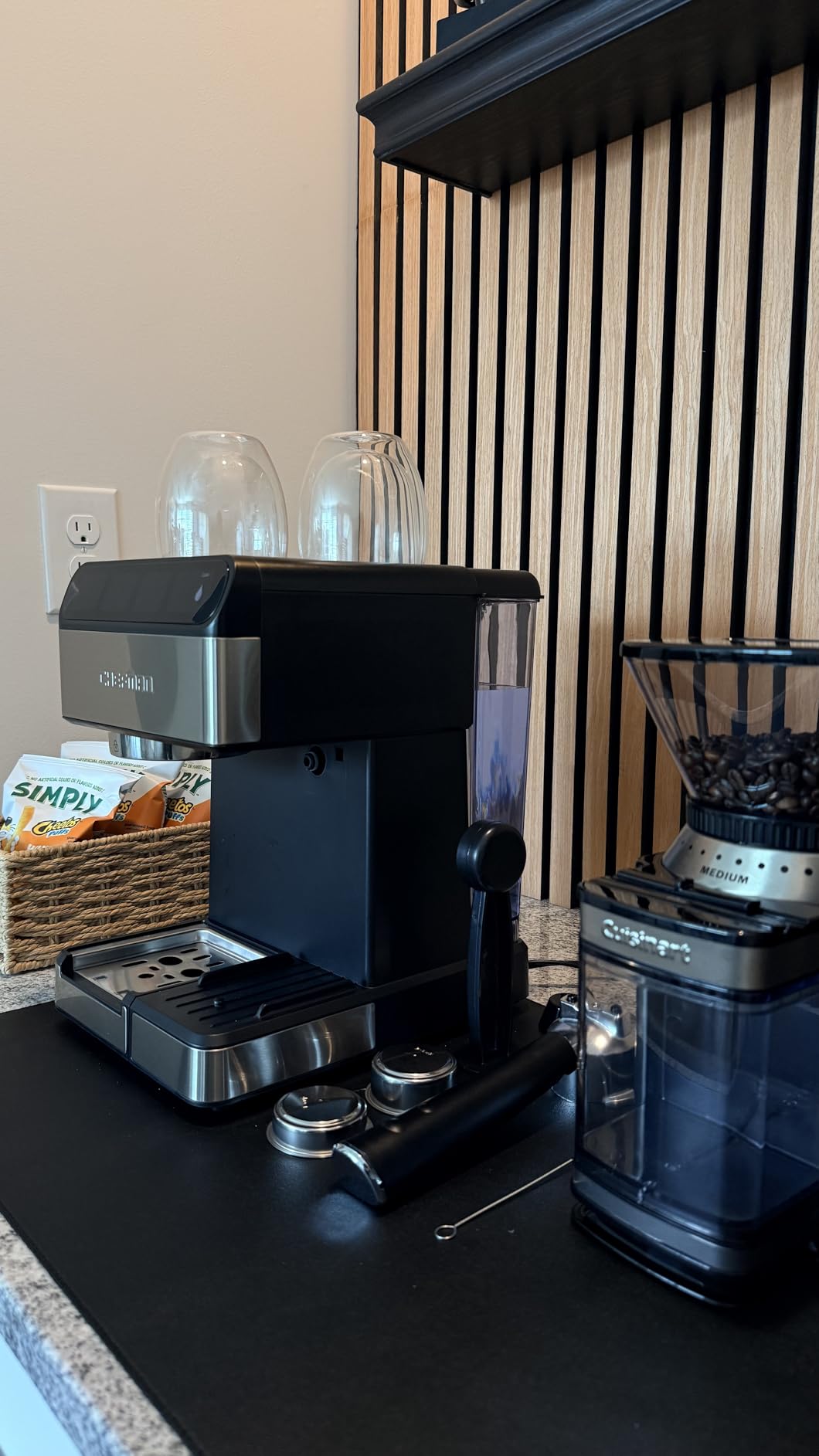
It also has an internal cleaning function, which matters on a machine with milk plumbing. That does not replace routine descaling, but it reduces the daily commitment compared with a wand you clean by hand after every drink.
Be realistic about the frother. It is an automatic system, so it makes consistent drinkable milk and it will not let you pour latte art. Reviewers also report consistency issues with the frother over time, and the 1-star rate is around 16%, similar to the Bambino.
Is the Chefman CafeMaster good for latte art?
No. Latte art requires controlling the pour, the milk texture and the flow, and an auto-dispensing frother removes all three. If you want to practise latte art, you need a manual articulating steam wand, which points you toward the De’Longhi Stilosa or the Breville Barista Express.
If you want a cappuccino that tastes good before your coffee has kicked in, the CafeMaster is a fair trade. Consistency of the drink, not control of it, is what you are buying.
Who should choose this machine?
Choose it if milk drinks make up most of your order and you are the household’s designated morning barista. The one-touch workflow means several people can make a decent drink without training, which no wand machine on this list offers.
Pass if you drink straight espresso, because the auto-dispensing feature is dead weight for you, or if the lack of a built-in grinder is not going to be fixed by buying one separately.
9. De’Longhi Magnifica Evo – Best Super-Automatic for Bean to Cup
De’Longhi Magnifica Evo Automatic Espresso Machine, Milk Frother, Silver
1250W
13-setting burr grinder
LatteCrema system
7 one-touch recipes
21.2 lb
Pros
- Fully automatic bean to cup from a built-in grinder
- LatteCrema system handles milk automatically
- Seven one-touch recipes with personalisation
- Removable brew unit cleans properly
- Two-year manufacturer warranty
Cons
- Plastic construction at this price
- Large footprint at 21.2 lb
- Noisy grinder and operation
- Needs a daily cleaning routine
- Travel mugs do not fit under the spout
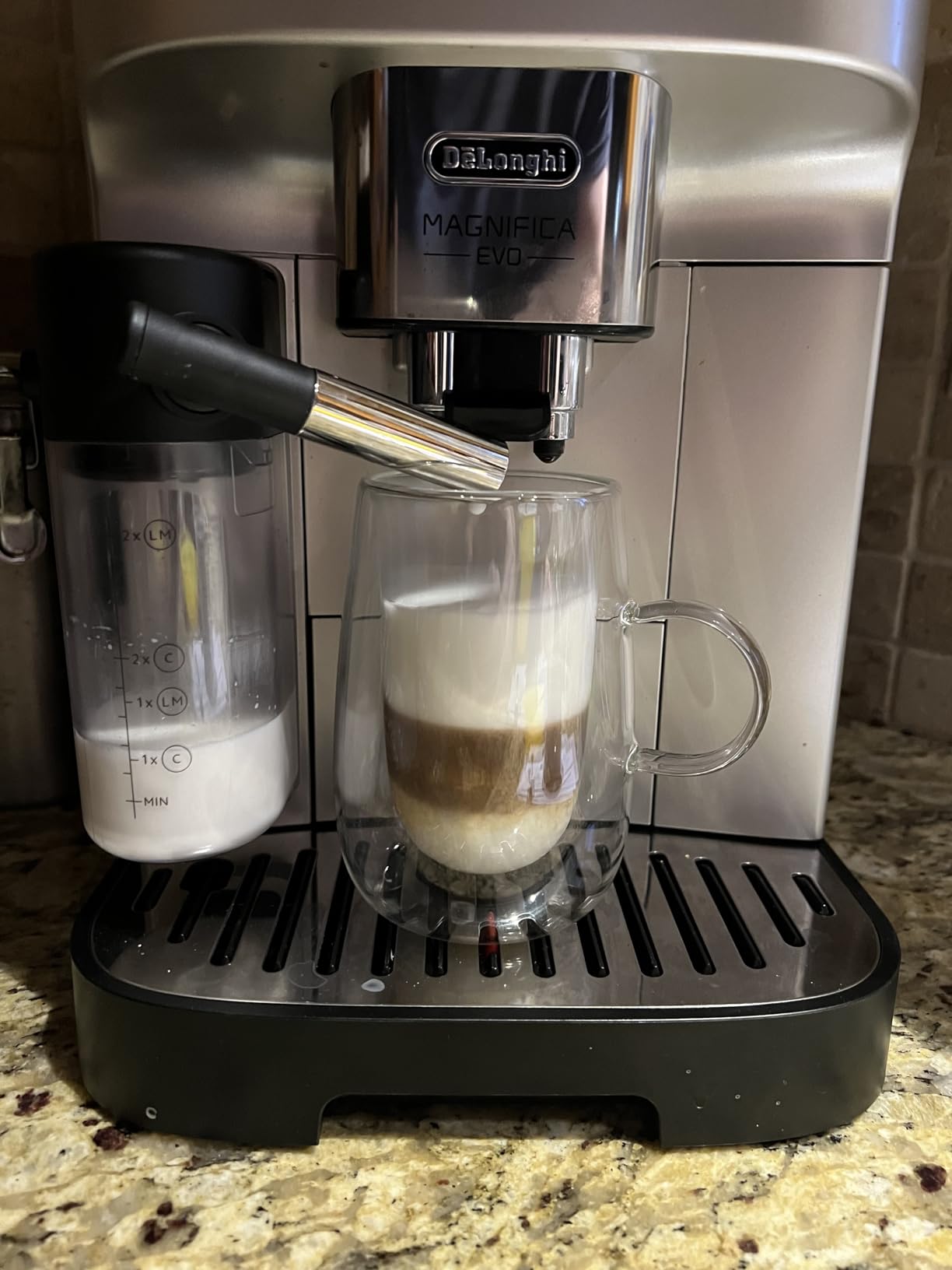
The Magnifica Evo is the most hands-off machine in this roundup. It grinds whole beans in a built-in conical burr grinder with 13 settings, extracts, and delivers one of seven one-touch recipes including cappuccinos, all without a portafilter in sight.
That makes it the right pick for someone who wants cafe-style drinks on demand without learning anything. The LatteCrema system handles the milk automatically, the carafe is dishwasher safe, and the removable brew unit can be rinsed properly rather than being sealed inside the machine where it turns into a biofilm problem.
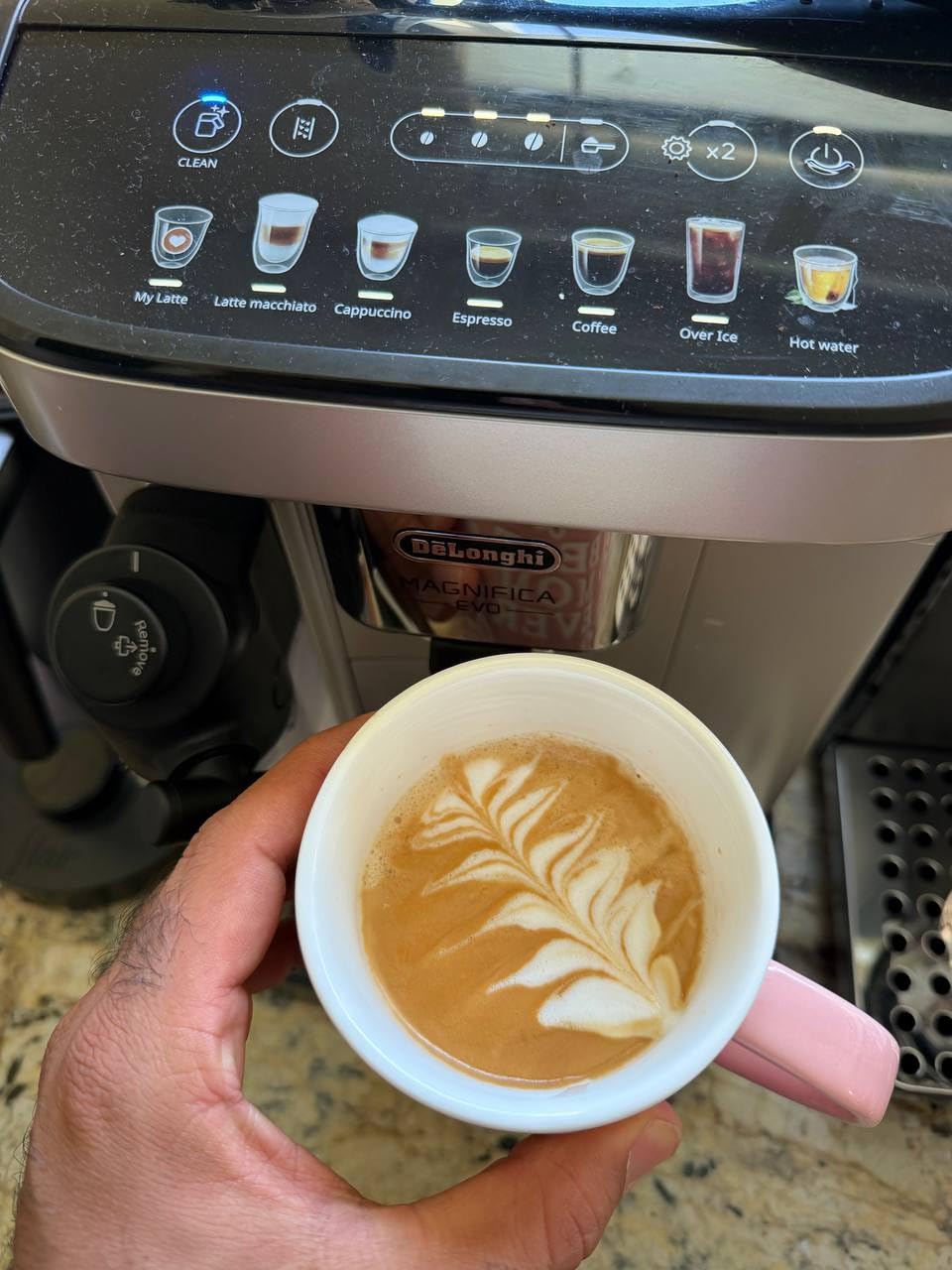
There is a real daily maintenance commitment, and owners are honest about it. The brew unit comes out, the milk circuit needs rinsing, and purge cycles waste water. Skip that routine and the taste degrades within weeks, which is the trade you accept for automation.
At 21.2 pounds and 17.32 by 9.45 by 14.17 inches this is the largest machine here, and the grinder is genuinely noisy. A two-year manufacturer warranty is the longest coverage on the list, and long-term owners do report good durability once the routine is established.
Super-automatic or semi-automatic for a first machine?
Super-automatic if your goal is consistent drinks with zero technique and you will keep up with the cleaning routine. Semi-automatic if you want to learn, because a portafilter teaches you dose, grind and extraction in a way that no automated system will.
Plenty of people start with a super-automatic and move to a portafilter machine later. Our [super-automatic roundup](https://lockah.net/best-super-automatic-espresso-machines/) covers that category in depth if you want the fuller comparison.
Is a plastic-bodied super-automatic at this price sensible?
It is the fairest criticism of this machine. The exterior is plastic, the grinder is audibly loud, and the purge cycles will get old. What you are paying for is the automation, the removable brew unit and the two-year warranty, and long-term durability reports are positive.
Travel mugs will not fit under the spout, and the grinder has 13 settings rather than the 25 on the Ninja Luxe Cafe, so very fine grind adjustments are not available. For most home beans, 13 settings is enough.
10. Nespresso Vertuo Pop+ – Best for Absolute Simplicity
Nespresso Vertuo Pop+ Coffee and Espresso Machine by De’Longhi, Black
1500W
Centrifusion brewing
5 cup sizes
30 second heat-up
7.9 lb
Pros
- Ready in 30 seconds
- One-touch operation with no learning curve
- Five drink sizes including single and double espresso
- Compact at 7.9 lb
- Recyclable aluminum capsules
Cons
- No milk frother included
- Proprietary Vertuo capsules only
- Plastic construction
- No temperature control
- Ongoing capsule cost adds up
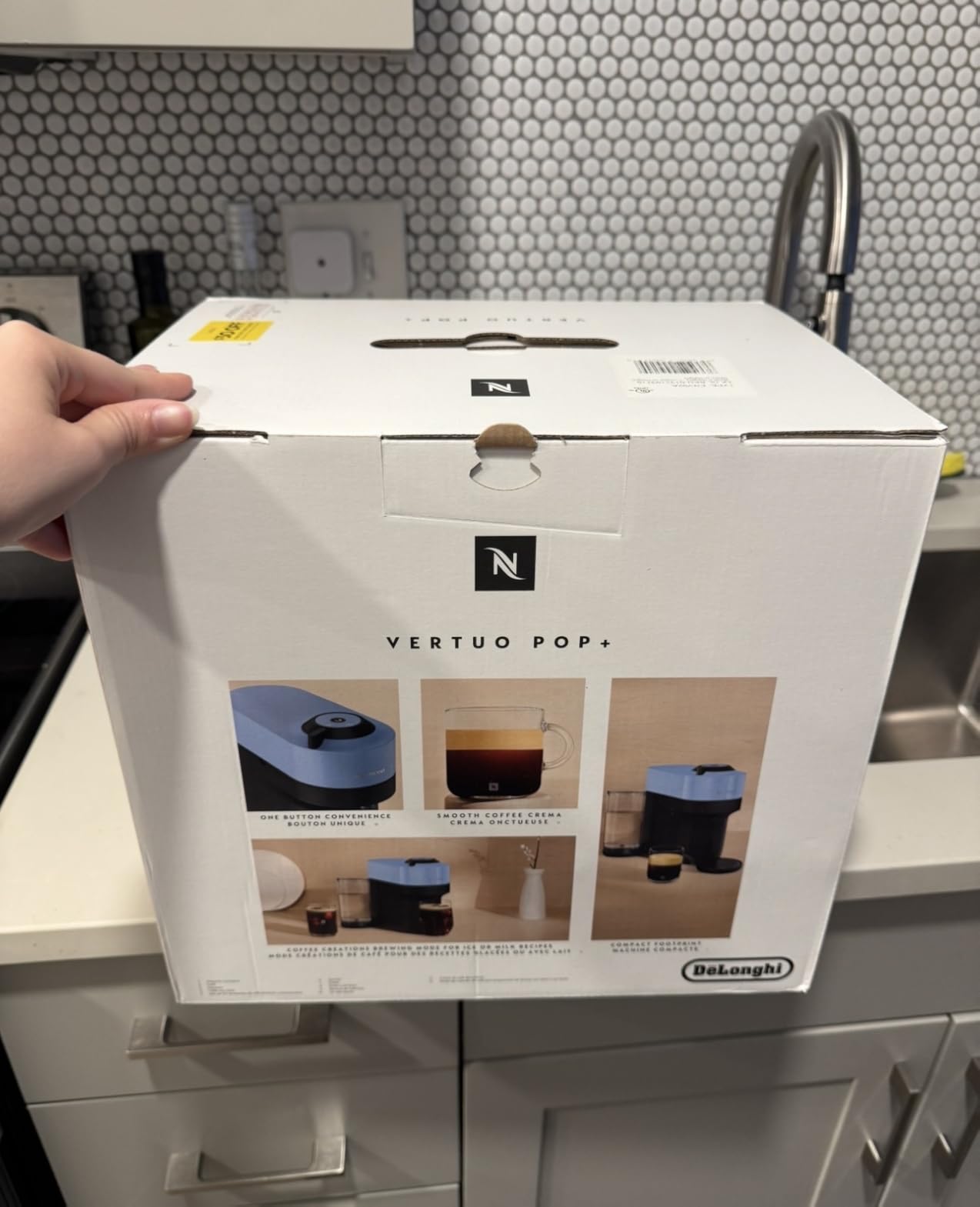
The Vertuo Pop+ is the lowest-commitment way into espresso. It heats in 30 seconds, brews one-touch, and offers five sizes including single and double espresso. There is no grinder, no portafilter, no tamping and no technique to learn.
Centrifusion is the technology worth knowing about. The capsule spins at high speed as water passes through it, which is what produces a thick crema, and a barcode on each pod tells the machine which recipe to run. Consistency is very high because the machine controls everything.
Two constraints shape the decision. There is no milk frother included, so cappuccinos require a separate accessory or a different machine. And you are locked into Vertuo capsules, so the per-drink cost is permanent and adds up over years of daily use.
There is no temperature control either, which means you cannot adjust for roast or ambient conditions. On a machine with no user variables anyway, that matters less than it would elsewhere, and the descaling alert handles the one maintenance task you face.
Who is the Vertuo Pop+ right for?
Someone in a small flat who wants espresso without a grinder on the counter, who drinks at most one or two drinks a day, and who does not want to think about coffee at all. At 7.9 pounds and 14 by 8.6 by 10.4 inches it is one of the smallest machines we tested.
It is also the right gateway machine for someone who suspects they will want more later. Many people start here, discover they want lattes, and then move to a semi-automatic within a year.
Who should skip it?
Skip it if you drink several milk drinks daily, because you need a frother and it is not included. Also skip it if you drink a lot of coffee, since a carafe machine like the Ninja CFN601 serves more people per cycle.
And skip it if you already enjoy brewing and want the craft. Paying a per-drink cost for a fixed recipe is the opposite of what that person wants.
How to Choose Your First Espresso Machine
Start with your drink order, not the spec sheet. If you drink straight espresso, a small semi-automatic with a manual wand is the cheapest path to the real thing. If you drink lattes every morning and want zero effort, a super-automatic is the correct purchase even though it costs more. If you are unsure, a mid-range semi-automatic with a 54mm or 58mm group head teaches you skills that transfer to every machine you own later.
The four machine types, plainly explained
Semi-automatic machines give you a portafilter. You grind, dose, tamp and start the shot yourself, and the machine does the heating and pumping. This is where the craft lives, and it is the category most beginners eventually want to be in.
Super-automatic machines do everything. Built-in grinders, automatic tamping, automatic milk. You press a button and get a drink, at the cost of technique and a daily cleaning routine. Fully automatic machines sit in the same family but usually handle only espresso and hot drinks.
Capsule machines brew from sealed pods using pressure and, in some cases, spinning extraction. Consistency is high and skill required is zero, while control and long-term cost per cup are poor. They are legitimate first purchases when convenience is the priority.
All-in-one machines are semi-automatics with an integrated grinder. The Barista Express and the Ninja Luxe Cafe are both in this group, and for a first-time buyer with no grinder this is the most economical route into good coffee.
Burr grinder or blade grinder: do not compromise here
Espresso requires finer, more consistent grinding than drip coffee, and that is the entire reason a dedicated espresso burr grinder is the most important accessory you will buy. A blade grinder produces particles of wildly different sizes, which over-extract some and under-extract others, producing a muddy, sour shot that you will blame on the machine.
Rule of thumb from the buying guides: budget roughly a third of your total spend on a conical burr espresso grinder. If the machine you picked has no built-in grinder, that money is not optional. Our advice is to buy the machine and the grinder on the same day so you can start dialling in immediately rather than shooting pre-ground coffee for a month.
Portafilter size: 54mm versus 58mm
The portafilter diameter decides which baskets, tampers and accessories you can use, and it is the one specification that matters for your upgrade path. 54mm is the most common entry size and is what the Bambino and Barista Express use. 58mm is the commercial standard that most enthusiast machines use, and baskets for 58mm are widely available.
Going from 54mm to 58mm later means buying a new portafilter and baskets, which is not expensive, but choosing 58mm from the start costs you nothing and opens more doors. Many people in the espresso forums we read start on 54mm and consider 58mm the natural second machine.
Boilers, thermoblocks and whether you can brew and steam at once
A single boiler or heat exchanger machine cannot pull a shot and steam milk simultaneously. You brew, then you steam, then you brew again. This is the single most important practical factor for anyone whose order is a cappuccino, and it is the reason the wait times show up in reviews of the Stilosa, the CM5418 and the Gevi.
Dual boiler machines have a brew boiler and a steam boiler, so they do both at once, and thermoblock systems heat water on demand rather than storing it in a tank. For a first machine a thermoblock or single boiler is fine as long as you accept the sequencing. Just do not buy one expecting café workflow.
PID versus NTC, and what the bar pressure number means
PID temperature control holds a target brew temperature within a fraction of a degree using a thermostat loop. NTC is a cheaper thermistor that reacts to temperature changes rather than holding a set point, so shots vary more between pulls. For a beginner, PID removes one variable from the learning curve, which is why the Breville machines both use it.
On pressure, the useful number is 9 bar, the range espresso is actually extracted at. A 15 or 20 bar figure describes what the pump can deliver, not what reaches your coffee, and higher numbers are marketing. Focus on stable temperature, a group head you can control and a pressure gauge you can read.
The 30-second rule and the 10-second rule
The 30-second rule: a well-extracted double shot should run from first pump to first drip in roughly 25 to 30 seconds. Run much faster and the water is channelling through the puck. Run much slower and you are over-extracting into bitterness.
The 10-second rule is a pre-infusion guide. Once the pump starts, the puck should take about 10 seconds to become fully saturated. Water appearing at the spout before that means the pre-infusion is too short or the grind is too fine, and a faster shot will follow.
Neither rule is a law. They are the two fastest diagnostics a beginner has, and they turn a vague sense of something being wrong into a specific adjustment. If a shot fails the 30-second test, change one variable only, usually grind size, and try again.
De’Longhi versus Breville: which beginner brand
Both brands make genuinely good entry machines, and the honest answer is that the difference is not quality. Breville consistently ships PID control, 54mm commercial portafilters and integrated grinders on its mid-tier models, which makes them heavier and larger. De’Longhi leans toward lighter bodies, smaller footprints and manual control.
Choose Breville if you want temperature stability, a commercial portafilter, or a built-in grinder at the Barista Express tier. Choose De’Longhi if counter space, weight and manual control matter, and if you are willing to buy a grinder separately. Forum consensus across the beginner threads we read points to both, with the De’Longhi Dedica 685 and Breville Bambino paired most often as entry recommendations.
Maintenance, lifespan and what you are signing up for
Expect to descale every one to three months depending on your water, backflush a machine with a group head weekly or monthly, and replace the shower screen and gasket eventually. Super-automatics demand more frequent attention because milk plumbing and a brew unit need daily rinsing. Machines with no temperature control scale more aggressively.
On lifespan, there is no single honest number because build quality and water quality both matter enormously. Machines with steel boilers and proper temperature control, descaled on schedule, routinely serve owners for many years. Machines with aluminum boilers and no temperature control tend to have a shorter useful life, and electronics-heavy machines are the first thing to fail. If you are unsure, the removable brew unit on the De’Longhi Magnifica Evo and the two-year warranty are meaningful signals of a company that expects long service.
One last warning from the forums, and it is the most repeated one: cheap machines teach bad technique. A machine without temperature control and with pressurized baskets will produce drinkable coffee while reinforcing habits that limit you later. It is not a scam, but it is a slower start.
What Else You Need to Buy Alongside the Machine
The machine is only part of the setup, and the most common first-machine regret is underfunding the accessories. Here is what a complete first-time espresso setup actually consists of, roughly in order of importance.
A dedicated espresso burr grinder. Non-negotiable for any machine without a built-in grinder, and still the single biggest upgrade available to owners of machines that have one. Conical burr, adjustable, capable of fine espresso grinds. Budget roughly a third of your total spend here.
A small scale. A kitchen scale that reads to 0.1g is enough. Weighing an 18g dose instead of guessing is the fastest way to make your shots repeat, and it costs very little.
A tamper sized to your portafilter. If your machine includes a plastic one, replace it early with a weighted steel tamper of the correct diameter. An off-size tamper is a leading cause of uneven extraction and channeling.
A milk pitcher. A 12 to 16oz stainless steel pitcher is the right size for one or two drinks. You need it for a manual wand, and you need a knock block too.
Water filtration. A simple inline carbon filter is inexpensive and reduces the mineral content that causes scale, which is the main reason machines fail early. Good water is the cheapest performance upgrade available.
Cup warming and cleaning basics. A knock block, a brush for the group head, and a microfiber cloth. That is the whole list, and it is short because none of it is complicated.
Add those to a machine and you have a setup that produces shots better than most cafes, which is what forum owners consistently report. They also warn that it is not fast and it is not effortless, which is a fair description of learning espresso.
Five Mistakes First-Time Espresso Machine Owners Make
1. Buying no grinder, or using a blade grinder. This is number one on every beginner thread we read. Even particles under pressure produce a sour, muddy shot. Buy a conical burr grinder before you blame the machine.
2. Not weighing the dose. Free-pouring until the portafilter looks full gives you 15g one day and 21g the next. A 0.1g scale fixes this in one afternoon.
3. Tamping with the included plastic tamper, or tamping off-level. Level tamping matters more than force. Check the puck from the side before you lock in the portafilter.
4. Ignoring channeling. If water appears at one side of the spout early, the puck is channelling. Distribute grounds with a WDT tool, level the tamp, and move grind size one step coarser.
5. Skipping the purge and the warm-up. On thermoblock machines a short water flush clears the system and primes the temperature. On portafilter machines, running a blank shot before brewing stabilises the group.
None of these are expensive problems to fix. They are all habits, and habits cost nothing but attention.
Frequently Asked Questions
Is DeLonghi or Breville better for a first espresso machine?
Neither brand is better in quality terms, and both make good entry machines. Breville typically ships PID temperature control, 54mm commercial portafilters and integrated grinders on its mid-tier models, which means larger and heavier machines. De’Longhi leans toward lighter bodies, smaller footprints and manual control, usually without a built-in grinder. Choose Breville for temperature stability and accessories that transfer to future upgrades. Choose De’Longhi for counter space and hands-on control.
What is the best entry-level espresso machine?
The Breville Barista Express is our pick for the best entry-level espresso machine because it combines an integrated precision conical burr grinder, PID temperature control and a 54mm commercial portafilter in one unit, so a first-time buyer needs no second purchase before the first shot. If you already own a burr grinder and want the smallest footprint, the De’Longhi Stilosa is the lower-cost path to the same fundamentals.
Is the Breville Bambino worth the money?
Yes, for most first-time buyers it is. The ThermoJet heating system reaches brew temperature in 3 seconds, PID control keeps shots consistent, and the 54mm portafilter holds a 19g dose and accepts commercial baskets. The tradeoffs are that there is no built-in grinder, the 47 oz tank refills often, and the single boiler means you wait between brewing and steaming.
What are the common problems with the Breville Bambino?
Owners report three things most often. There is no built-in grinder, so you must buy a separate espresso burr grinder. The 47 oz water tank is small and needs refilling during multi-drink sessions. And as a single boiler machine it cannot brew and steam at the same time, so there is a wait between a shot and a milk drink. The 1-star review rate is also higher than on the Barista Express, at roughly 16 percent.
What is the 30 second rule for espresso?
A well-extracted double shot should run roughly 25 to 30 seconds from the first pump sound to the first drip. A much faster shot means water is channelling through the puck and the coffee is under-extracted and sour. A much slower shot means over-extraction and bitterness. If a shot fails the 30-second test, change one variable, usually grind size, and pull again.
What is the 10 second rule for espresso?
The 10-second rule is a pre-infusion guide. After the pump starts, the coffee puck should take about 10 seconds to become fully saturated before espresso appears at the spout. If water shows up sooner, the pre-infusion is too short or the grind is too fine, and a fast shot usually follows. It is a quick diagnostic, not a hard law.
What is the top mistake home baristas make with an espresso machine?
The most common mistake is buying a machine without budgeting for a dedicated espresso burr grinder, or using a blade grinder instead. Even particle sizes under pressure produce a sour, muddy shot, and beginners tend to blame the machine. The next most common errors are not weighing the dose, tamping off-level with the included plastic tamper, and ignoring channeling when water appears on one side of the spout.
What is the average lifespan of an espresso machine?
There is no single number, because build quality, temperature control and water quality all matter. Machines with a stainless steel boiler and PID control, descaled on schedule, often serve owners for many years. Machines with aluminum boilers and no temperature control tend to have a shorter useful life, and electronics-heavy machines are usually the first component to fail. Descaling every one to three months and filtering your water is what extends that lifespan most.
Final Verdict: Which Espresso Machine Should a Beginner Buy in 2026?
The best espresso machines for beginners in 2026 come down to one question: do you want to learn or do you want convenience. If you want to learn, buy the Breville Barista Express, because a built-in burr grinder, PID control and a 54mm commercial portafilter give you a solid machine with a clear upgrade path. If counter space is tight and you already own a grinder, the De’Longhi Stilosa gives you the same fundamentals in a fraction of the space.
If you want convenience, the Ninja Luxe Cafe Premier is the best balance of grind quality and automation in this list, and the Nespresso Vertuo Pop+ is the lowest-effort entry point of all. For straight espresso on a tight budget, the CASABREWS CM5418 gives you more than its price suggests, mostly because it has a pressure gauge you can actually read.
Whatever you choose, buy the grinder in the same week. The best espresso machines for beginners are the ones paired with a real burr grinder, and that is the single decision that most affects whether your shots taste good on week one. Our [full budget-by-budget roundup](https://lockah.net/best-espresso-machines-2026/) is the next place to look if you want more machines compared side by side.