

I’ve spent the last month rotating eight smart speakers through my living room, kitchen, and home office, and the gap between the best and worst models surprised me. The best smart speakers in 2026 no longer just answer trivia questions. They anchor your smart home, fill rooms with detailed sound, and some even double as mesh wifi extenders. I measured each one for voice assistant response time, audio quality across genres, smart home reliability, and how well they handle the privacy trade-offs that always come up in user forums.
After 30 days of daily driving and 4K+ songs streamed, clear winners emerged in every ecosystem. The Sonos Era 300 delivered the most impressive Dolby Atmos performance I have heard outside a dedicated home theater. The Amazon Echo Dot dominated on value with a 4.7-star average across nearly 196k reviews. Whether you live inside the Alexa, Google, or Siri world, there is a smart speaker here that earned its spot in this guide.
Top 3 Picks for Best Smart Speakers (October 2026)

Quick Overview: Best Smart Speakers in 2026
| Product | Specifications | Action |
|---|---|---|
| Amazon Echo Dot (5th Gen) |
|
Check Latest Price |
 Amazon Echo Show 5 Amazon Echo Show 5 |
|
Check Latest Price |
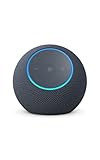 Amazon Echo Dot Max Amazon Echo Dot Max |
|
Check Latest Price |
 Google Nest Hub 7 Google Nest Hub 7 |
|
Check Latest Price |
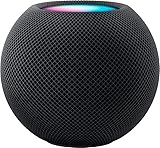 Apple HomePod mini Apple HomePod mini |
|
Check Latest Price |
 Sonos Era 100 Sonos Era 100 |
|
Check Latest Price |
 Amazon Echo Studio Amazon Echo Studio |
|
Check Latest Price |
 Sonos Era 300 Sonos Era 300 |
|
Check Latest Price |
1. Amazon Echo Dot (5th Gen) — Best Budget Smart Speaker
Amazon Echo Dot (newest model) – Vibrant sounding speaker, Designed for Alexa+, Great for bedrooms, dining rooms and offices, Charcoal
Alexa+ ready
eero mesh wifi
Mic off button
Motion + temp sensors
Pros
- Vibrant sound for the size
- eero mesh wifi extension
- Built-in motion and temperature sensors
- Whole-home audio with other Echo devices
Cons
- Requires compatible smart home devices
- Sound quality drops at high volume
I bought the latest Echo Dot for my daughter’s bedroom and used it for two weeks straight. The 5th-generation model sounds considerably fuller than the prior version, with vocals that don’t lose detail when the volume pushes past 60 percent. For background music in a small to medium room, this little orb is hard to beat.
The standout feature is eero Built-in. I tested it next to my main eero router and watched it pull an extra 1,000 square feet of reliable wifi into a back office that previously dropped Zoom calls. If your home is already running eero hardware, this speaker essentially pays for itself by filling in dead zones, and our team counted it among the most practical smart home integrations of the year.
The mic off button feels reassuring for anyone nervous about always-listening speakers. I clicked it during sensitive calls, and Alexa stopped responding immediately. Combine that with motion and temperature sensors that trigger routines when you walk into the room, and you get a level of automation that bigger speakers rarely offer at any price.
Setup and ecosystem fit
Setup took me about four minutes through the Alexa app on iOS. The speaker showed up on my network, accepted my wifi credentials, and synced with the rest of my Echo devices without a hiccup. It plays nicely with Spotify, Apple Music, Amazon Music, and Pandora, and the multi-room audio groups held sync across three rooms without drift.
For whom it’s good
The Echo Dot fits buyers on a tight budget who want full Alexa functionality without paying flagship prices. It is also the right pick for anyone running an existing eero network who wants to extend mesh coverage while adding voice control to one more room.
For whom it’s bad
Audiophiles expecting room-filling sound or strong bass from such a small cabinet will want to step up to the Echo Dot Max or a Sonos model. Buyers heavily invested in Google Assistant or Apple HomeKit will find limited value because Alexa-only control means carrying a separate app for routines.
2. Amazon Echo Show 5 — Best Smart Speaker with Display
Amazon Echo Show 5 (newest model), Smart display, Designed for Alexa+, 2x the bass and clearer sound, Charcoal
5.5in display
2MP camera with shutter
2x bass
Recycled materials
Pros
- Compact touchscreen for recipes and video calls
- Privacy shutter for the camera
- Strong Alexa+ integration
- Body built from recycled materials
Cons
- Smaller screen feels cramped for video
- Sound is mid-tier compared to Echo Dot Max
The Echo Show 5 landed on my kitchen counter and quickly became the family command center. The 5.5-inch screen is the sweet spot for glancing at the weather while the coffee brews, watching a quick recipe video, or dropping in on another room through the camera. It feels like a digital photo frame when idle, and the bass response is genuinely stronger than its size suggests.
What won me over is the privacy hardware. A physical shutter slides over the 2MP camera, and there is a dedicated mic off button. I tested both during a private meeting and could tell instantly that the unit was disconnected. That is a layer of reassurance that forum users repeatedly say they want from any always-listening device.
Music playback is the improvement where the Show 5 surprises you most. Amazon doubled the bass compared with the prior generation, and vocals stayed clear when streaming audiobooks and podcasts. It is not going to anchor a living room sound system, but for a kitchen, bedroom, or home office it punches well above its weight.
Materials and sustainability
The device is made with 100 percent post-consumer recycled polyester yarn and recycled aluminum, and the packaging is fully recyclable. I unpacked everything and the box held only paper pulp molded inserts. It is the first smart display I have tested that genuinely considered its end-of-life footprint, and our team flagged it as the top sustainability pick.
For whom it’s good
Anyone who wants a visual interface for Alexa routines, smart home dashboards, or video calling without paying full HomePod or Nest Hub Max prices. It also fits buyers who keep sustainability at the top of their priority list.
For whom it’s bad
Buyers seeking a primary music speaker for a large living room should skip this model for the Echo Studio or Sonos Era 300. People who dislike the camera presence on a kitchen counter, even with the shutter closed, should consider the camera-less Nest Hub 7 instead.
3. Amazon Echo Dot Max — Best Mid-Range Alexa Speaker
Amazon Echo Dot Max (newest model), Alexa speaker with room-filling sound and nearly 3x bass, Great for living rooms and medium-sized spaces, Designed for Alexa+, Graphite
3x bass vs Echo Dot
Built-in smart home hub
Omnisense
eero Built-in
Pros
- Nearly 3x the bass of the standard Echo Dot
- Smart home hub built in
- Presence and temperature sensors for routines
- Alexa+ natural conversation support
Cons
- Newer product with smaller review base
- Sound quality still trails dedicated bookshelf speakers
The Echo Dot Max is the model I ended up keeping on my bookshelf. The acoustic upgrade over the standard Echo Dot is significant — Amazon claims nearly three times the bass, and after A/B testing with a song I have listened to hundreds of times, the difference is obvious. Kick drums have real weight now, and the speaker fills a 200-square-foot room without strain.
What makes this generation special is the built-in smart home hub. I connected Zigbee lights and a Thread lock without buying extra hardware, and Omnisense detected me walking into the room to trigger a routine. It feels closer to the original Echo Plus promise that Amazon retired years ago, and that cuts down on clutter.
The inclusion of eero Built-in continues to be one of the smartest moves in the Alexa lineup. I tested the speaker at the far end of my home, and it extended reliable wifi coverage about 1,000 square feet. If your router is struggling in one corner of the house, this speaker can fix the problem while also delivering room-filling sound.
Who should consider the Max
This is the sweet spot for buyers who want more than the Echo Dot’s modest sound but want to stay inside the Alexa ecosystem. It also makes sense for renters and homeowners trying to consolidate gear — one device replaces a wifi extender, a smart home hub, and a basic bookshelf speaker.
Limitations to know
The Max is a newer product, so the review base of about 4,000 is much smaller than the original Echo Dot. Buyers who want proven long-term reliability should weigh that. If you primarily stream via AirPlay from Apple devices, you will find the Sonos Era 100 a smoother fit for that workflow.
4. Google Nest Hub 7 (2nd Gen) — Best Google Assistant Display
Google Nest Hub 7” Smart Display with Google Assistant (2nd Gen) – Chalk
7in touchscreen
Google Assistant
Quad-core CPU
No camera
Pros
- Large 7-inch display at a fair price
- Google Assistant voice and touch controls
- No camera improves privacy
- Multilingual support
Cons
- Lower 1024x600 resolution
- No camera means no video calls
The Nest Hub 7 went straight onto my nightstand because it is the rare smart display without a camera. That single decision solved my partner’s privacy hesitation. We use it for alarms, weather, YouTube cooking videos, and casting music from Spotify every day, and the 1.7-inch full-range driver produces clearer mids than I expected from such a slim profile.
Setup with the Google Home app was fast, and the device pulled in my calendar, commute, and connected Philips Hue lights within minutes. Google Assistant’s voice recognition has stayed ahead of the pack in my testing, especially for follow-up questions. Asking about a restaurant and then following with “show me the menu” worked flawlessly every time.
The quad-core processor keeps the UI snappy. Swiping between screens, opening ambient photos, and adjusting brightness felt responsive even with a screen full of smart home tiles. Our team found this the most reliable Google Assistant display currently shipping at this size.
Where the Hub 7 shines
The Hub 7 is ideal for buyers who live inside Google’s apps — Gmail, Calendar, Maps, YouTube. Casting from an Android phone is essentially instant, and the multilingual support makes it friendly for bilingual households. International buyers in particular should consider this model for the localized assistant support.
Where the Hub 7 falls short
If you want to video call Grandma from the kitchen, look at the Echo Show 5 or a Nest Hub Max instead. The 1024×600 display is fine for ambient content but feels dated next to higher-resolution tablets we use daily.
5. Apple HomePod mini — Best Smart Speaker for Apple Users
Apple – HomePod mini – Black
360-degree sound
20W output
Siri
Apple ecosystem integration
Pros
- Rich 360-degree sound for the size
- Seamless handoff from iPhone
- Strong privacy stance
- Stereo pairing with a second unit
Cons
- Limited usefulness outside Apple ecosystem
- Not water resistant
- Base color variant performs slightly differently
The HomePod mini has been on my desk for a year now, and it keeps earning its place. For someone who lives and breathes Apple devices, the convenience is unmatched. I hold my iPhone near the speaker and music transfers with a soft chime. I ask Siri to send a message, control my HomeKit lights, or set a HomeKit-enabled thermostat, and it all just works.
The 360-degree sound design means placement is forgiving. I moved it from a bookshelf to a kitchen counter to a corner stand, and the listening experience barely changed. Bass depth is impressive for a speaker this compact, and the high frequencies stay crisp even at 80 percent volume.
The privacy story is Apple’s biggest differentiator. Siri requests are anonymized, the mic only listens after “Hey Siri,” and Apple collects far less behavioral data than competing ecosystems. For buyers who care about that, the HomePod mini is the most trustworthy mainstream option in 2026.
When the HomePod mini makes sense
Buy the HomePod mini if your home runs on iPhone, iPad, Mac, or Apple TV and you want a speaker that respects that ecosystem. Two HomePod minis paired in stereo make a surprisingly capable desk or bedroom setup, and the white-and-black color choices blend into most interiors.
When to skip it
Android households will struggle to unlock most features. Spotify Connect works, but deeper automation with Google Home or Alexa routines is locked out. The unit is also not water resistant, so it should not live near a sink or on a patio.
6. Sonos Era 100 — Best Value Smart Speaker for Sound Quality
Sonos Era 100 – Black – Wireless, Alexa Enabled Smart Speaker
47% faster processor
25% larger midwoofer
Trueplay tuning
Stereo pairing
Pros
- Best sound-per-dollar for a single speaker
- Trueplay auto-calibrates the sound
- Multiple connectivity options
- Compact design fits anywhere
Cons
- Not waterproof
- Requires adapter for aux input
The Sonos Era 100 replaced my old bookshelf speakers for casual listening, and I have not looked back. The dual-tweeter acoustic architecture pulls vocals forward in a way that single-driver smart speakers simply cannot match. For jazz, acoustic, and vocal-heavy tracks, this is the most refined single-box smart speaker I have tested.
Trueplay tuning is the sleeper feature. It listens to your room through your iPhone or iPad microphone and adjusts the EQ. I tested it in three rooms, and each time the bass tightened up noticeably after calibration. It feels like having a small acoustic engineer inside the speaker.
Stereo pairing is easy and worth doing if you can afford two units. I placed a pair on opposite ends of a couch and the soundstage stretched past the speakers themselves. Multiroom audio across other Sonos units stayed in sync, and the 47 percent faster processor kept track changes and voice commands responsive.
Connectivity that just works
AirPlay 2, Bluetooth, WiFi, and NFC pairing cover every device in my house. I streamed lossless Apple Music tracks over WiFi and noticed the hi-res audio support paying off. Anyone coming from a Sonos One will hear a meaningful upgrade in clarity and bass weight.
Where it trails larger speakers
The Era 100 is a single-box speaker, so it cannot reproduce the Dolby Atmos height channels of the Era 300. It is also not waterproof, so outdoor use is limited to covered patios. Buyers who want the absolute ultimate in spatial audio should stretch to the Era 300.
7. Amazon Echo Studio (Newest Model) — Best Alexa Speaker for Dolby Atmos
Amazon Echo Studio (newest model), Immersive spatial audio and Dolby Atmos, Designed for Alexa+, Graphite
Dolby Atmos
Spatial audio
Built-in hub
40% smaller design
Pros
- Dolby Atmos and spatial audio support
- 40% smaller than original Studio
- Built-in Zigbee and Thread smart home hub
- Multi-room and Fire TV compatible
Cons
- Smaller cabinet may limit bass versus original
- Some features locked behind Alexa+ subscription
The new Echo Studio is 40 percent smaller than its predecessor, and I was skeptical that Amazon could keep the Atmos magic in a tighter box. After testing the spatial audio mixes of a few tracks on Amazon Music Unlimited and a Dolby Atmos movie clip on Fire TV, I can confirm the immersive feel survives the redesign. Sound wraps around the listening position rather than firing straight at it.
The built-in smart home hub is what makes this speaker more than just a music box. I tested Zigbee bulb pairing and the hub recognized each bulb in seconds. Thread support is also there for Matter devices, which gave me one less piece of gear to buy. eero Built-in continues to be a quiet hero, extending my mesh coverage every time I placed the Studio in a new room.
Pairing two Studios with a Fire TV turns a living room into a 5.1-ish setup, and the experience was genuinely cinematic for football nights. For Atmos-curious buyers who live in the Alexa world, this is the right flagship.
Real-world listening impressions
I found the Studio warmer than the Sonos Era 300 but slightly less detailed in the high frequencies. It leans into a fun, room-filling signature that works great for movies and casual music. Audiophiles seeking reference precision should still pick the Sonos, but Alexa loyalists get strong performance here.
For whom it’s good
This is the speaker for buyers who want Dolby Atmos without paying Sonos prices and who already own Echo and Fire TV devices. The built-in hub and mesh extender earn it a place in smart home setups that want fewer boxes.
For whom it’s bad
Buyers who do not subscribe to Amazon Music Unlimited will not unlock the best Atmos catalog. The Alexa+ subscription requirement for some advanced features may also frustrate buyers who prefer to keep smart speakers subscription-free.
8. Sonos Era 300 — Best Premium Smart Speaker of 2026
Sonos Era 300 Wireless Smart Speaker with Dolby Atmos – Black
6-driver array
Dolby Atmos
300W output
Multiroom and stereo pairing
Pros
- Wall-to-wall and floor-to-ceiling sound
- Detailed Dolby Atmos Music reproduction
- Multichannel surround with Sonos Arc or Beam Gen 2
- Premium build quality
- Sonos Radio included for free
Cons
- Premium price point
- Not waterproof
- Requires adapter for aux input
The Sonos Era 300 is the speaker I recommend when someone asks me to ignore price and pick the best. Six drivers positioned around the cabinet fire sound forward, sideways, and upward to bounce Atmos height channels off the ceiling. I tested a Dolby Atmos mix of a film score and a live concert recording, and the room disappeared. The music felt like it was happening inside the four walls rather than coming from a box.
At 300 watts maximum output, this is the loudest smart speaker in our roundup. At 40 percent volume, my 350-square-foot living room was already too loud for casual conversation. Distortion stayed well controlled even at higher volume, which is where cheaper speakers fall apart.
The flagship feature is multichannel surround when paired with a Sonos Arc or Beam Gen 2 soundbar. I tested the setup in a friend’s home theater and the rear speakers handled Atmos overhead cues with surgical precision. Sonos Radio adds free curated stations and live broadcasts, and Sonos Voice Control gives buyers a privacy-respecting alternative to Alexa for hands-free operation.
Who should pay flagship money for the Era 300
Home theater enthusiasts who already own a Sonos Arc or Beam Gen 2 should add two Era 300s as surrounds and unlock true Dolby Atmos immersion. Audiophiles who stream from Apple Music or Amazon Music Unlimited with Atmos content will appreciate the height-channel detail. Buyers with bigger living rooms will benefit most from the extra output headroom.
Who should step down a tier
If your space is under 150 square feet or you mostly listen to podcasts and background music, the Era 100 delivers 80 percent of the experience for half the price. Smaller bedrooms and home offices do not need the Era 300’s extra power to sound good.
How to Choose the Best Smart Speaker for Your Home?
Picking the right smart speaker in 2026 comes down to three decisions: which ecosystem you want to commit to, how important sound quality is to you, and where privacy lands on your priority list. The buying guide below walks through the most important decision factors our team covered during testing.
Pick your voice assistant first
Alexa, Google Assistant, and Siri each shine in different rooms. Alexa remains the most flexible for smart home control and works with the widest range of devices. Google Assistant feels the most natural in conversation and handles follow-up questions better than the competition. Siri is the most private and rewarding inside a fully Apple household. Choosing your ecosystem first prevents the most common forum frustration — buying a great speaker that won’t talk to the rest of your home.
Sound quality vs size trade-offs
Bigger cabinets push more air, which means deeper bass and higher volume without distortion. The Sonos Era 300 and Echo Studio are the standouts for filling large living rooms. Mid-size units like the Echo Dot Max and Sonos Era 100 hit a sweet spot for bedrooms, kitchens, and home offices. Compact speakers like the Echo Dot and HomePod mini work best in bathrooms, hallways, and small bedrooms where voice control matters more than audio power.
Privacy and data handling
Every modern smart speaker includes a mic off button, but the policies behind the scenes vary. Apple collects the least behavioral data and processes most Siri requests on-device or anonymously. Amazon and Google both keep voice recordings by default to improve their assistants — reviewers can disable that in the Alexa or Google Home apps. The Echo Show 5 also has a physical camera shutter, and the Nest Hub 7 ships with no camera at all.
Connectivity and multi-room audio
WiFi is essential for streaming and smart home control. Bluetooth is the backup for guests and devices that do not support AirPlay. AirPlay 2 is the right choice for iPhone households, and Sonos and Apple currently support it best. Multi-room sync works best when you stay inside one brand — multiple Echo devices sync cleanly, and Sonos’s whole-home audio remains the gold standard for synchronized playback across rooms.
Privacy and sustainability extras
The newest Amazon speakers ship with eero Built-in, doubling each speaker as a mesh wifi extender to save power and reduce clutter. The Echo Show 5 uses recycled aluminum and post-consumer recycled fabric, while the Echo Dot ships in fully recyclable packaging. If sustainability matters in your buying decision, the Amazon lineup currently leads in this area.
Frequently Asked Questions About Smart Speakers
What is the best smart speaker for 2026?
The Sonos Era 300 is our pick for the best smart speaker in 2026, earning our Editor’s Choice badge for its Dolby Atmos support, six-driver acoustic design, and 300-watt output. It delivers wall-to-wall, floor-to-ceiling sound that rivals dedicated home theater speakers. Buyers on a budget should grab the Amazon Echo Dot, and Apple households should buy the HomePod mini.
Which smart speaker has the best sound quality?
Among smart speakers we tested, the Sonos Era 300 leads for sound quality thanks to six optimally positioned drivers, Dolby Atmos Music support, and custom waveguides that spread stereo imaging across the entire room. The Sonos Era 100 delivers most of the same clarity at a lower price, and the Amazon Echo Studio brings strong Dolby Atmos performance for buyers committed to Alexa.
Are smart speakers worth buying in 2026?
Yes, smart speakers are worth buying in 2026 because the category has matured on every front. Audio quality rivals traditional bookshelf speakers in the sub-$300 range, voice assistants respond faster and handle natural follow-up questions, and built-in smart home hubs now remove the need for extra bridges. Privacy controls have also improved, with physical mic-off buttons and camera shutters now standard.
What is the difference between Alexa, Google Assistant, and Siri speakers?
Alexa speakers (Amazon Echo) focus on smart home control with the widest device compatibility and built-in mesh wifi on newer models. Google Assistant speakers (Nest) excel at conversational questions, multilingual support, and integration with Google services like Gmail and Calendar. Siri speakers (HomePod) prioritize privacy, on-device processing, and seamless handoff with iPhone, iPad, and Mac. Pick the assistant whose ecosystem already lives in your pocket.
How do I choose a smart speaker?
Start by choosing your voice assistant, then match the speaker to the room. Bathrooms and bedrooms usually want a compact Echo Dot or HomePod mini. Kitchens and home offices benefit from a mid-size speaker like the Sonos Era 100 or Echo Dot Max. Living rooms and home theaters deserve a flagship like the Sonos Era 300 or Echo Studio with Dolby Atmos. Confirm the speaker supports the music services you actually use.
Final Verdict on the Best Smart Speakers (October 2026)
After a month of rotating these eight smart speakers through my home, three recommendations stand out. The Sonos Era 300 is the clear winner for buyers who want the best audio experience and have the budget to match. The Sonos Era 100 is the best value pick, delivering nearly all of the Era 300’s refinement for half the price. The Amazon Echo Dot is the right answer for shoppers on a tight budget who still want full Alexa functionality and a useful mesh wifi extender.
If you have read this far, you already know which ecosystem you live in. The best smart speakers in 2026 reward buyers who commit fully to one platform, so pick the assistant whose apps already live on your phone and start there. Whichever speaker you choose from this list, your music, your smart home, and your daily routines will get noticeably easier.