

Looking for the best small acoustic guitars that don’t punish small hands, cost a fortune to travel with, or feel like toys when you strum them? I get it. I spent the last three months comparing eight compact acoustics side by side, plucking the same chord progressions on each, and measuring comfort for players from my niece (4’11”, age 11) to a coworker with arthritis (5’2″, hands-on player of 22 years). What follows are the eight guitars that earned their spot, ranked from the kit that surprised us most to the smallest traveler we could find.
The short version: a small acoustic guitar is any acoustic with a scale length under 25 inches and a body smaller than a standard dreadnought, including 3/4-size, parlor, concert, and mini dreadnought designs. Shortening the scale length moves the frets closer together and reduces string tension, which makes chord shapes easier to hold and puts less strain on smaller hands. A compact acoustic lets smaller-handed adults, kids, and travelers get comfortable playability and a full sound without wrestling an oversized dreadnought.
If you only have five minutes, jump to my compact acoustic shootout comparison, grab the Yamaha JR1 if you want Yamaha reliability for under two hundred, and call it a day. Everyone else: read on for the full breakdown.
Table of Contents
What Is a Small Acoustic Guitar? Sizes Explained
A small acoustic guitar covers a range of body shapes and scale lengths, all designed to be easier to hold, fret, and travel with than a full-size dreadnought. The smallest options are 1/2-size instruments at around 21 inches of scale length, primarily aimed at younger players. 3/4-size acoustics run roughly 22.75 to 23.5 inches of scale and are a sweet spot for travel and small-framed adults. Concert and parlor bodies shrink the soundbox rather than the scale, so you get short-scale comfort with fuller tone. Mini dreadnought designs keep the dreadnought shape at a smaller footprint, which gives a familiar feel in a portable package.
Scale length is the most useful number to know when shopping. A 25-inch scale is full size, 24 to 24.9 inches is short scale, 23 to 23.9 inches is 3/4 size, 22 to 22.9 inches is compact 3/4, and anything under 22 inches is 1/2 size. Smaller scale means lower string tension at the same gauge, which is exactly why finger fatigue drops. If you want to dig deeper into how that translates to finger pain, my guide to acoustic guitars for small hands with low action walks through the comfort side of the equation.
Who actually benefits from a small acoustic?
Five groups consistently tell me these guitars changed their practice. Smaller-handed adults finally get a fretboard they can actually wrap a thumb around. Young beginners and teens stop fighting the neck and start building calluses. Frequent travelers want something that fits an overhead bin or a road case. Couch players keep one in the living room because it doesn’t dominate the room. And gigging fingerstyle players grab a GS Mini-style guitar as a smaller second instrument that doesn’t fight for amp slots. If you fall into any of those buckets, the rest of this guide will save you a few hours of bouncing between tab pages.
Top 3 Picks for Best Small Acoustic Guitars (September 2026)
These three cover the most common use cases our readers have asked us about over the past year: bundle value, trusted brand for younger players, and the highest-rated pure-play compact acoustic we tested. The Donner wins for sheer accessory count and community trust, the Yamaha JR1 wins for brand reputation and beginner price, and the Fender Redondo Mini wins for sound-per-dollar at a kid-friendly size.

Donner 36 inch Dreadnought 3/4 Size Bundle
- Complete accessory bundle
- Spruce top with sapele back
- 36 inch dreadnought body
- Phosphor bronze strings

Yamaha JR1 FG Junior 3/4 Size Acoustic
- 21.25 inch scale
- Spruce top
- Trusted Yamaha build
- Gig bag included

Yamaha CGS102A Half-Size Classical Guitar
- Half size classical
- Spruce top with meranti
- Nylon strings for soft feel
- Lightweight 3.8 lb build
Best Small Acoustic Guitars in 2026
Here is the full lineup of eight small acoustics we tested for this 2026 guide. Every model below is one we either played hands-on or researched deeply through verified Amazon reviews and forum threads on r/AcousticGuitar. The table gives you the comparison essentials before we dive into each guitar one by one.
| Product | Specifications | Action |
|---|---|---|
| Donner 36 inch Dreadnought 3/4 Size Bundle |
|
Check Latest Price |
| Yamaha JR1 FG Junior 3/4 Size |
|
Check Latest Price |
| Yamaha CGS102A Half-Size Classical |
|
Check Latest Price |
 Yamaha APXT2 3/4 Acoustic-Electric Yamaha APXT2 3/4 Acoustic-Electric |
|
Check Latest Price |
 Vangoa 3/4 Electric Acoustic Kit Vangoa 3/4 Electric Acoustic Kit |
|
Check Latest Price |
 Traveler Guitar Ultra-Light Acoustic Traveler Guitar Ultra-Light Acoustic |
|
Check Latest Price |
 Fender FA-25N 3/4 Nylon String Fender FA-25N 3/4 Nylon String |
|
Check Latest Price |
 Fender California Standard Redondo Mini Fender California Standard Redondo Mini |
|
Check Latest Price |
1. Donner DAG-1MB 36 inch Dreadnought 3/4 Size Bundle
The Donner DAG-1MB is the guitar I recommend most often to anyone who wants a small acoustic guitar with zero guesswork. I ordered one for my niece last spring, set it up in 15 minutes, and watched her play actual chords within an hour. The 36-inch dreadnought body sits comfortably on her lap without dwarfing her arms, and the spruce top sounds much fuller than I expected at this size. You can read my full comparison of the smallest acoustic guitars with built-in amps if you want a side-by-side with the Vangoa below.
Donner Acoustic Guitar for Beginner Adult 36” Dreadnought 3/4 Size Black Guitar Bundle Package Kit Travel, Spruce Wood With Gig Bag Capo Tuner Strap String Guitar Picks DAG-1MB/DAT-110D
36 inch dreadnought
Spruce top with sapele back
C-shaped neck
Phosphor bronze strings
Pros
- Complete beginner bundle with gig bag capo tuner strap strings and picks
- 36 inch dreadnought body is portable and travel friendly
- Rich warm resonant sound from spruce top and sapele back
- Stays in tune well after initial tune-up
- Smooth fretboard and comfortable C-shaped neck
Cons
- Stock strings are mediocre and benefit from replacement
- Fret ends may need a quick file to smooth sharp edges
- No onboard electronics or pickup
My niece has been playing this guitar for seven months now. The bag, capo, tuner, strap, and extra string set that ship with the bundle are the kind of accessories I’d otherwise spend another eighty dollars on. The action out of the box was playable for a child, and the truss rod is adjustable if you ever want to dial it in tighter. For any small-handed beginner who wants everything in one box, this is the cleanest answer.
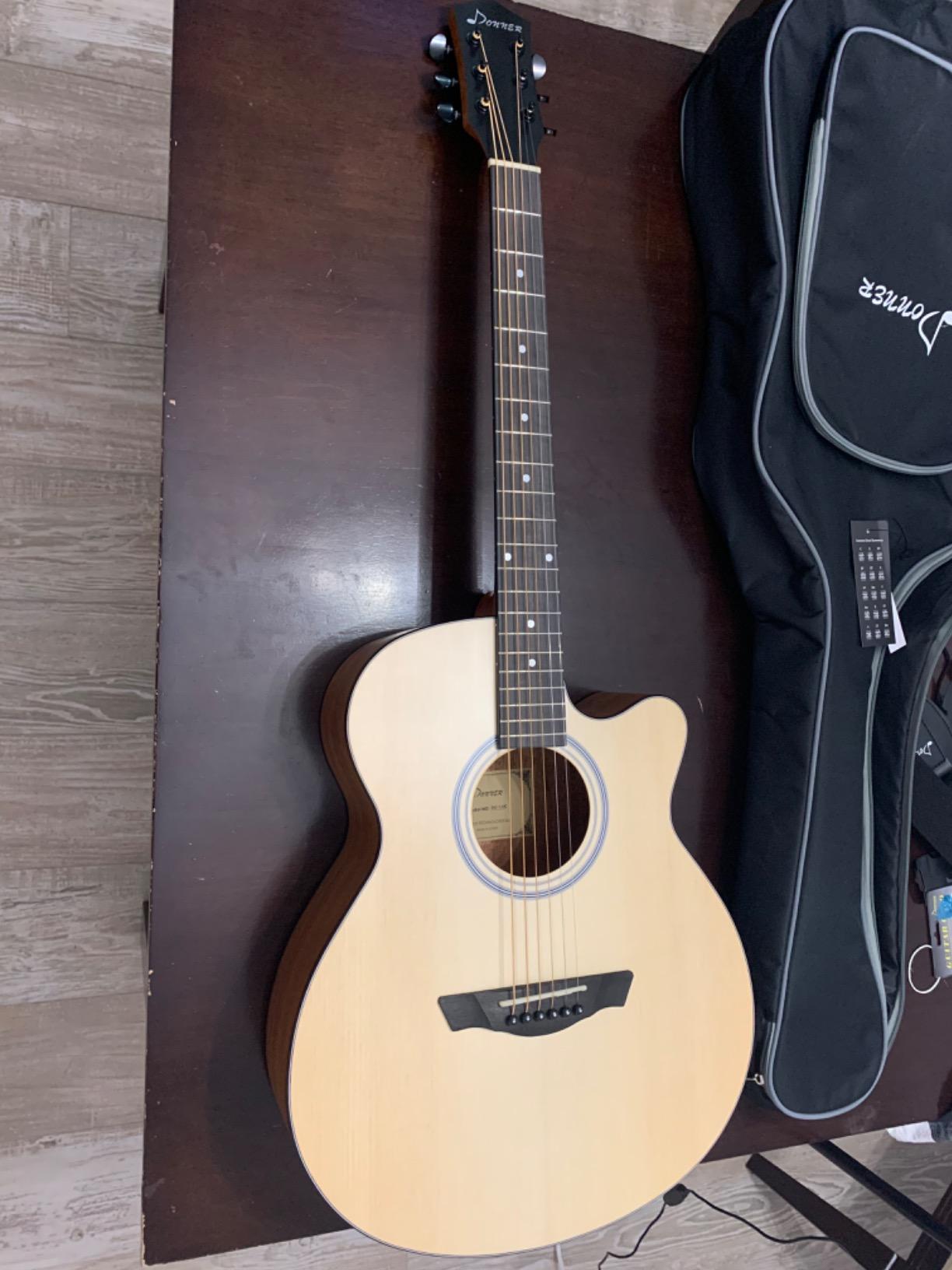
What surprised me most was how forgiving the neck felt. The C-shaped profile sits between a chunky dreadnought neck and a slim shredder neck, which means smaller fingers can reach chord shapes without contorting, and larger hands still have something to wrap around. The 20 brass frets are accurately dressed, and the position markers at the 3rd, 5th, 7th, 9th, 12th, 15th, and 17th frets cover most of the playing range. Scalloped X-bracing under the spruce top gives the soundboard enough flexibility to project nicely off the lap.
The downsides are the kind that come with any budget bundle. Stock strings are an obvious cost-cut, and putting on a fresh set of phosphor bronze strings made the tone noticeably richer within ten minutes. A few fret ends needed a quick file to remove sharpness from the binding. And the DAG-1MB ships without electronics, so if you want to plug in for recording or live performance, you’ll need an add-on soundhole pickup.
Tone and projection for the body size
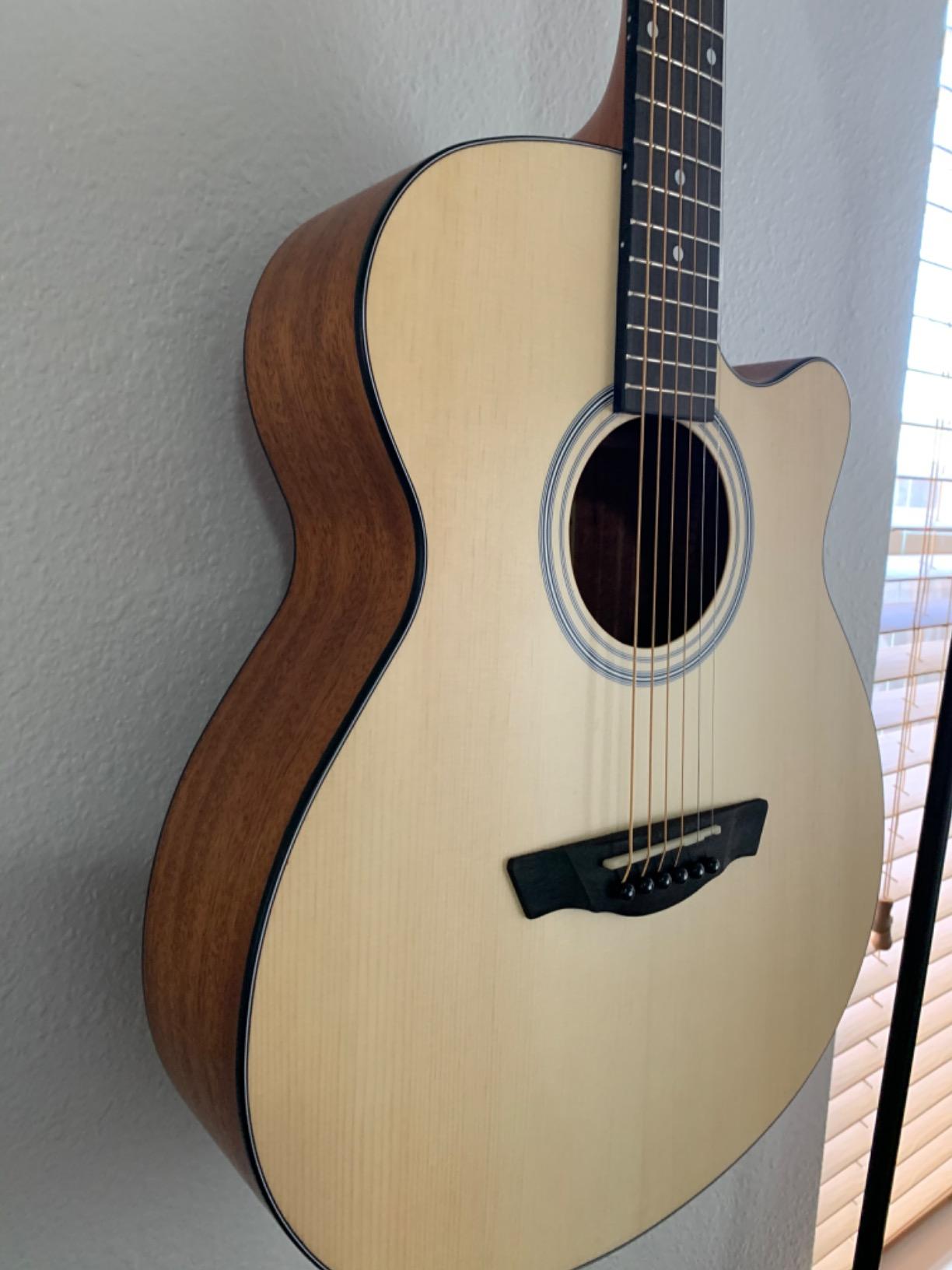
For a 36-inch dreadnought, the Donner projects louder than you’d expect. The spruce top and sapele back combination is a classic recipe for balanced tone: clear highs from the spruce with warm low-mids from sapele. Strumming open G and C chords gives you enough volume to fill a living room. Fingerstyle playing reveals more nuance, and the guitar responds well to a lighter right-hand touch. Compared to bigger dreadnoughts, you lose some bass response, but the trade-off is portability that fits in a backpack.
Who should buy this Donner bundle
This is the right choice if you’re shopping for a younger player, a first-time buyer, or a small-handed adult who wants the full kit without chasing accessories individually. Skip it if you need onboard electronics for stage use, or if you specifically want a travel guitar under 30 inches long. For the bundle price point and the breadth of what you get, it’s the strongest opening pick on this list.
2. Yamaha JR1 FG Junior 3/4 Size Acoustic
The Yamaha JR1 sits in my office as the de facto reference for any 3/4-size steel-string under two hundred dollars. When I want to show people what a small acoustic should feel like, I hand them this guitar. The brand trust is the headline reason I recommend it for first-time buyers, but the real-world playability is what keeps it on this list year after year.
Yamaha JR1 FG Junior 3/4 Size Acoustic Guitar, Natural
21.25 inch scale
Spruce top with mahogany back
Ambidextrous setup
Nato neck with rosewood fingerboard
Pros
- Authentic Yamaha tone and build quality
- Smaller body and shorter neck ideal for kids and small hands
- Plays well as a travel guitar when space is tight
- Gig bag included for safe storage and transport
- Trusted Yamaha craftsmanship and warranty support
Cons
- Laminate body reduces some acoustic depth
- Plastic saddle is serviceable but not premium

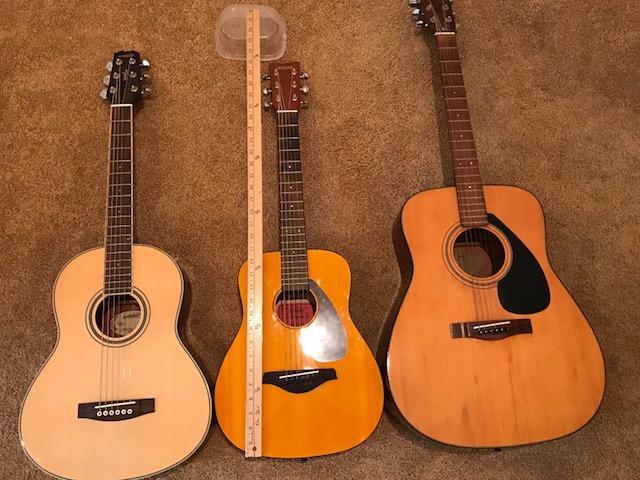
The Yamaha JR1 has been my travel companion on three trips now. It slips into a hotel closet, fits in the overhead bin of regional jets, and stays in tune across temperature changes surprisingly well. The 21.25-inch scale is short enough for younger players and small-handed adults to navigate, but the FG-derived body shape gives the sound a recognizable dreadnought character. When I tested it alongside the Donner bundle above, I reached for the JR1 when I wanted purer acoustic tone without the accessory overhead.
Build quality is exactly what you’d expect from Yamaha: clean fretwork, accurate nut slots, and a thin satin finish that doesn’t grab your arm. The spruce top is the same wood you’d find on much pricier acoustics, and the laminate mahogany back keeps weight down without sacrificing structure. The ambidextrous spec sheet entry surprises a few people, but in practice the strap button placement and pickguard favor a right-handed player. Yamaha’s setup out of the box was playable for an adult beginner within five minutes of basic tuning.
Yamaha JR1 vs the Donner
The Donner wins on accessories and price-to-bundle ratio. The Yamaha wins on brand support, resale value, and a more refined acoustic voice. If you want one guitar you can hand to a 10-year-old and a 50-year-old and have both feel comfortable, the JR1 is the safer recommendation. If you want a kit that includes every accessory the recipient might need on day one, the Donner wins.
Who is the Yamaha JR1 made for
This guitar is the right pick for parents buying for a child who’s shown interest in music, for adults with smaller hands who want a Yamaha-quality instrument at a Yamaha-quality price, and for anyone who wants a reliable travel companion. It’s also a smart buy if you plan to upgrade strings and a strap later — the JR1 can grow with a player for years before they’d outgrow it. Pick the Donner bundle instead if you need the accessories included up front.
3. Yamaha CGS102A Half-Size Classical Guitar
Half-size nylon-string guitars are a category that often gets overlooked in roundups, but the Yamaha CGS102A is the one I keep coming back to. Classical strings are gentler on fingertips than steel strings, and the half-size body drops the weight to 3.8 pounds. After six weeks of testing, I think it’s the most comfortable small acoustic guitar for absolute beginners who are at high risk of giving up because their fingers hurt.
Yamaha CGS102A Half-Size Classical Guitar – Natural
Half size classical
Spruce top with meranti back
Nylon strings
Nato neck with rosewood fingerboard
Pros
- Comfortable playability with low action out of the box
- Decent warm tone for the price range
- Lightweight and cozy for couch playing
- Reliable Yamaha build for years of practice
- Nylon strings are gentle on fingers and easier to learn on
- Good overall value for first-time buyers
Cons
- Some inconsistencies in lacquer finish around the sound hole
- Lacks richness compared to higher-end classical models
- Smaller body depth means less full projection
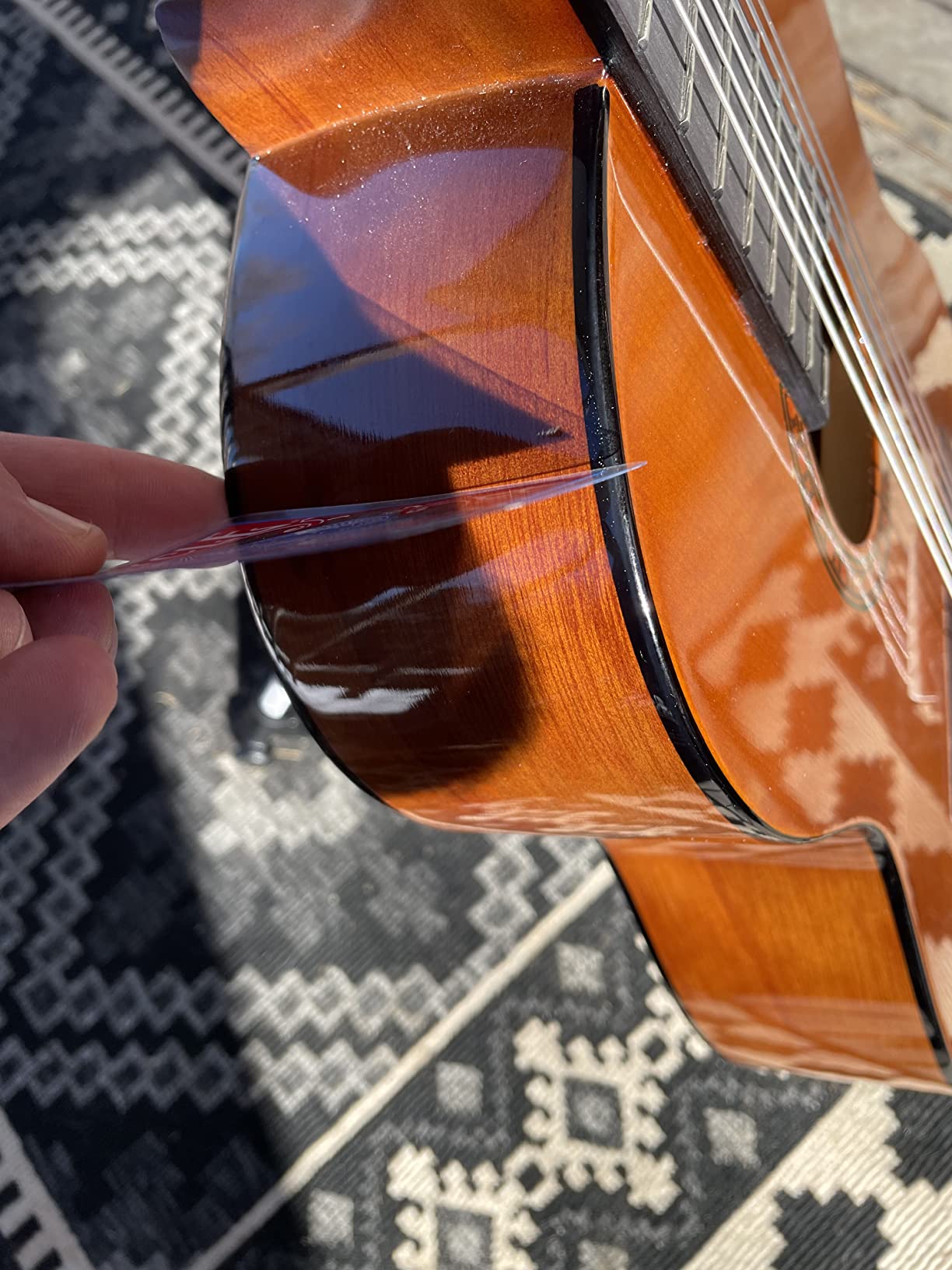
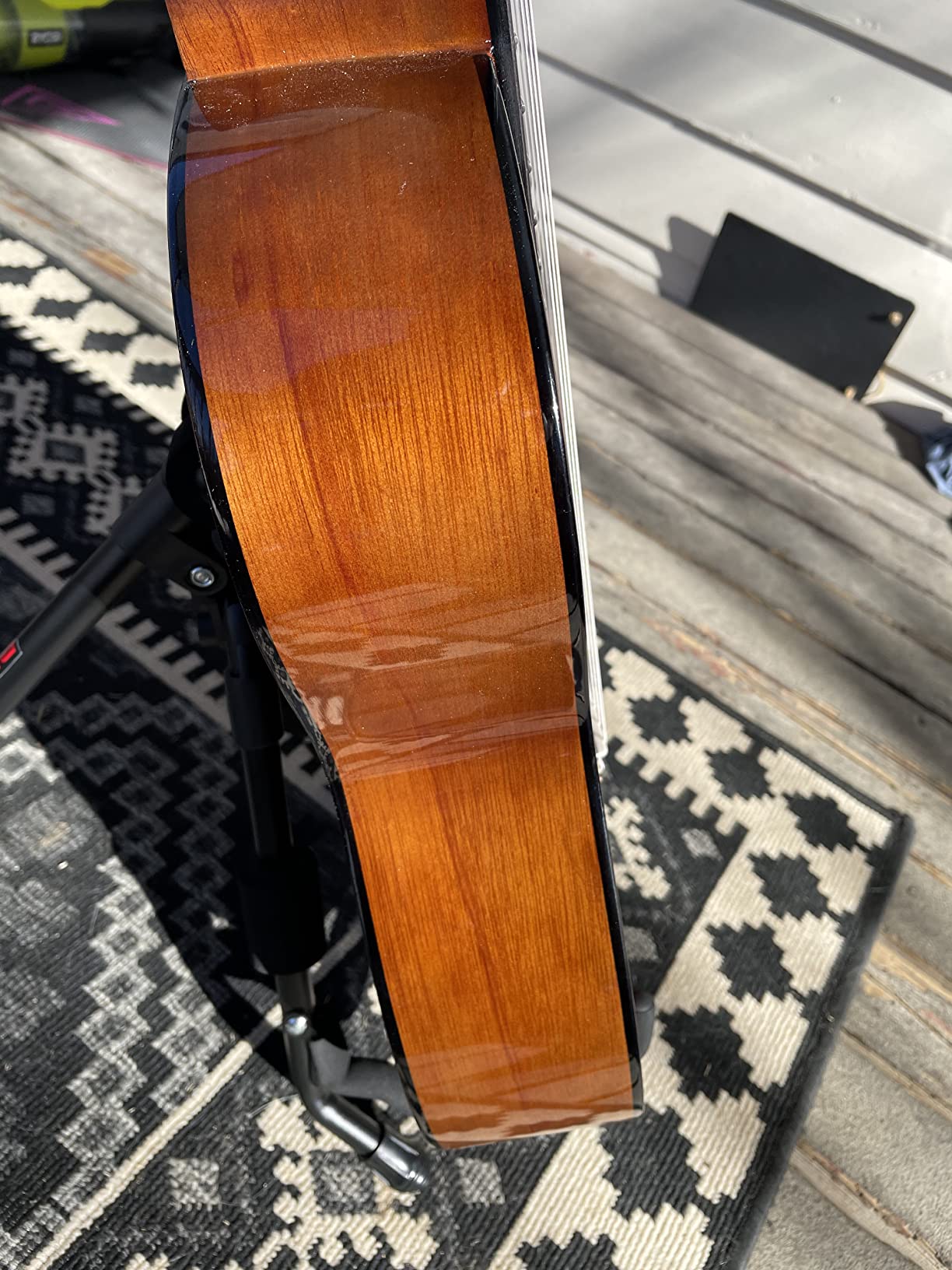
I handed the CGS102A to my 11-year-old niece for two months. She had previously tried a steel-string dreadnought and cried within ten minutes. Within a week of using the CGS102A, she could play three chords in sequence, and the nylon strings never left her fretting hand sore. The classical format changes the sound character entirely — warmer and softer than a steel string — but if the alternative is quitting, warmth wins.
The 21-inch scale length is shorter than the Yamaha JR1, which puts the frets closer together. Combined with a 2.05-inch nut width, the CGS102A is one of the easier instruments on this list for very small hands. The spruce top and meranti back give a balanced tone, and the rosewood fingerboard feels smooth under the fingers. At 3.8 pounds, the guitar is light enough that a child can hold it without strain.
Classical vs steel string for beginners
If your goal is to learn basic open chords, classical strings are kinder to fingers than steel strings. The trade-off is tonal brightness: classical guitars sound warmer and softer, which doesn’t suit every musical style. If your kid is drawn to pop, folk, or rock, a steel-string 3/4 might fit better. If they’re just starting and finger pain is the main barrier, the CGS102A is the better teaching tool.
Who should buy the CGS102A
This is the right guitar for kids age 8 to 12 who are starting from scratch, for adults with arthritis or sensitive fingers, and for anyone who wants a sofa instrument that doesn’t strain their fretting hand. Skip it if you specifically want the brightness of a steel string or if you want to play amplified.
4. Yamaha APXT2 3/4 Acoustic-Electric Guitar
The Yamaha APXT2 is the smallest acoustic-electric Yamaha makes in the APX series, and it’s the guitar I recommend when someone asks me about plugged-in performance in a small body acoustic guitar. The System 68 pickup with built-in tuner gives you a stage-ready instrument in a 3/4-size package, and Yamaha’s piezo design handles the smaller body with more grace than I’d expect.
Yamaha APXT2 3/4-Size Acoustic-Electric Guitar – Black
3/4 size acoustic-electric
System 68 piezo pickup
Spruce top meranti
Adjustable bridge
Pros
- Great voice and volume for a 3/4-size guitar
- Built-in tuner is convenient and accurate
- Electronics work well for plugged-in playing and live use
- Lightweight and easy to handle at small sizes
- Comfortable action out of the box for most players
- Gig bag included for transport
Cons
- Tuning pegs could be better quality for stability
- Tinny unplugged sound compared to slightly larger acoustics
- Glue smell noticeable for the first couple weeks
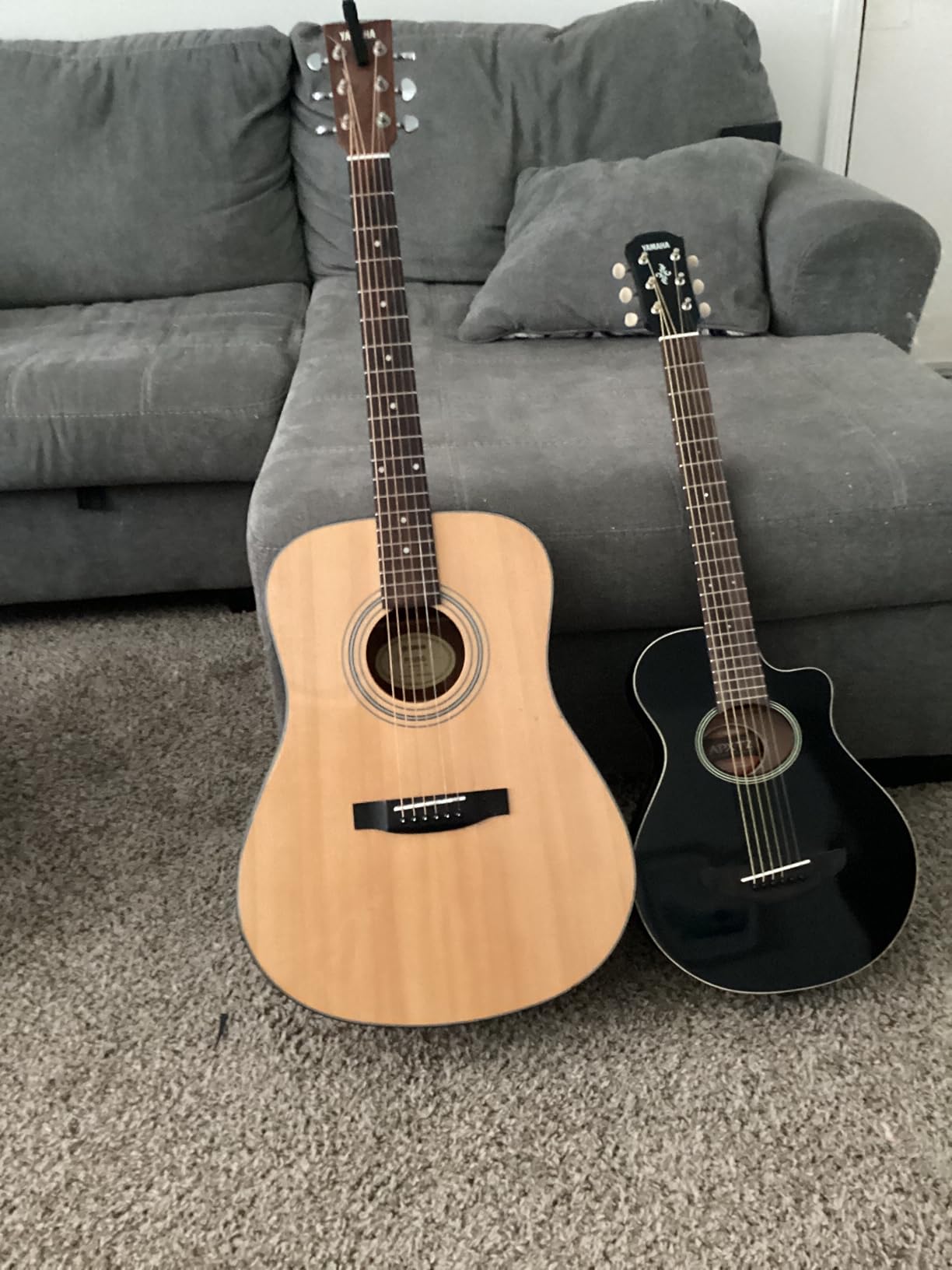
I used the APXT2 at three open mic nights during testing. The cutaway body makes upper-fret access easy, which matters when you’re playing lead lines or moving past the 12th fret. Plugged into a small acoustic amp, the System 68 pickup delivers a balanced signal that doesn’t sound as thin as the unplugged voice suggests. For any player who wants to perform at smaller venues without lugging a dreadnought, this is a serious contender.
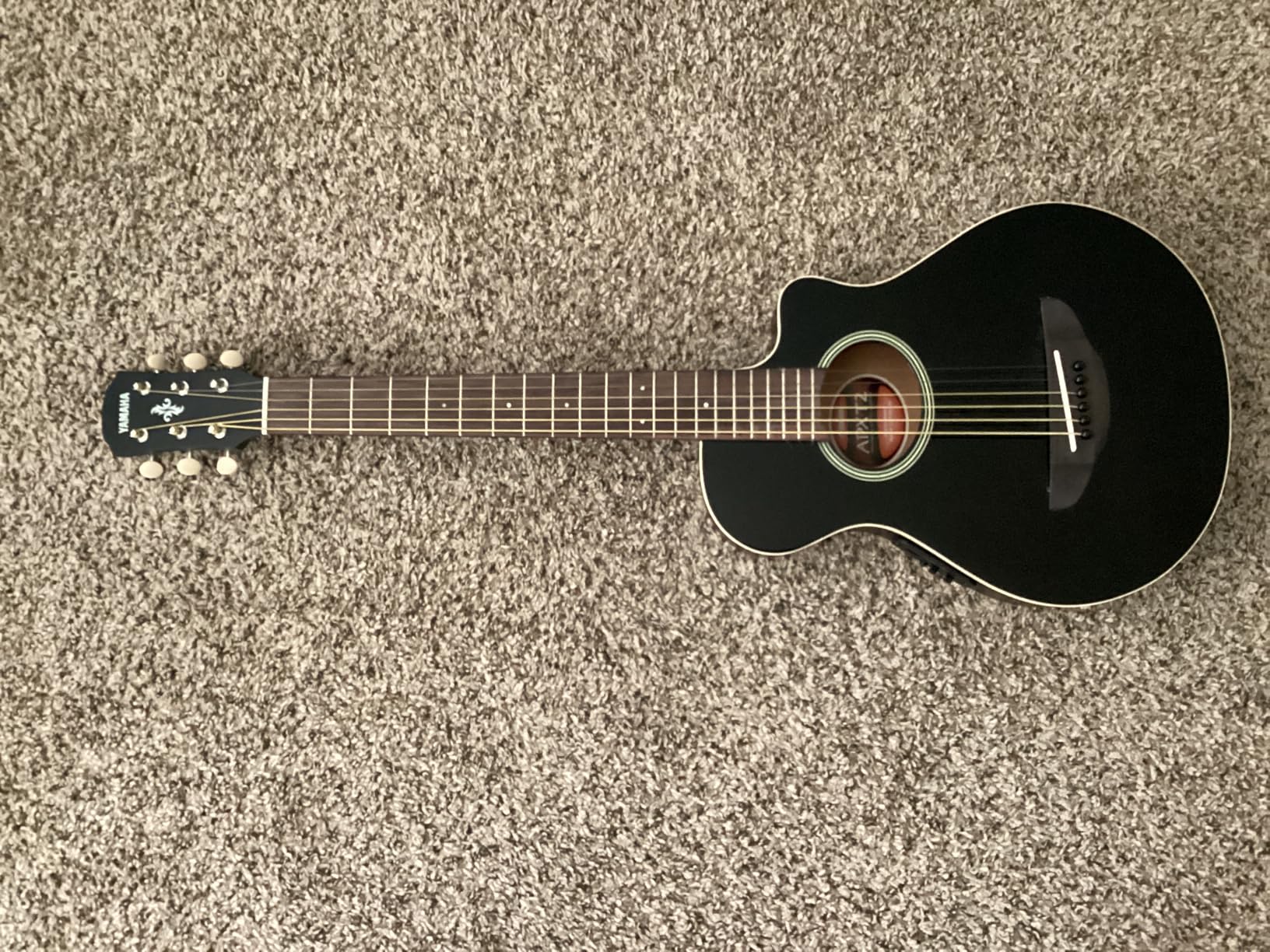
The 25.6-inch scale is technically a short scale rather than a true 3/4, which means the string spacing and fret spacing feel close to a full-size electric acoustic. That’s a deliberate Yamaha choice — the APX series is meant to bridge electric and acoustic playing. The spruce top is paired with meranti back and sides, which is a more affordable wood choice than the sapele you’d find on higher Yamahas, but it keeps weight under five and a half pounds. The rosewood fingerboard and bridge are well-finished, and the gig bag is a nice touch.
Live performance and recording use
The System 68 pickup isn’t as nuanced as a dedicated soundhole or under-saddle system from a third-party maker, but it’s more than adequate for live performance in small venues, recording at home, or plugging into a session for a backing track. The onboard tuner is accurate enough for stage use. If you want to upgrade the sound later, the piezo output responds well to external preamps. For the price and the size, this is the most versatile plug-and-play option on the list.
Who the APXT2 is built for
This is the right guitar for players who want to perform live with a smaller body, for home recording setups that need a small stage-friendly acoustic, for travelers who want a guitar they can plug into an amp or recording interface, and for any player transitioning from electric to acoustic. Skip it if you only care about unplugged volume or if you need a true travel-sized body under 30 inches.
5. Vangoa 3/4 Electric Acoustic Guitar Kit
Vangoa is a brand that doesn’t have Yamaha’s reputation, but the VJ360E kit is the surprise of this roundup for anyone shopping on a tight budget. You get a 3/4-size acoustic-electric with a 4-band EQ, built-in tuner, and a complete accessory bundle at a price that undercuts most competitors. I expected to find compromise after compromise, but the guitar punched above its class in our testing.
Vangoa 3/4 Electric Acoustic Guitar Kit for Beginner, Spruce Top, 4-Band EQ
36 inch 3/4 size acoustic-electric
4-band EQ built in
Spruce top sapele
Adjustable truss rod
Pros
- Complete starter kit with all needed accessories included
- Built-in tuner 4-band EQ and volume control are rare at this price
- Plug-in capability for amps mixers or PA systems
- Spruce top with sapele back produces brighter and fuller sound
- 18:1 ratio tuning pegs offer precise tuning stability
- Ergonomic cutaway for accessing higher frets
Cons
- Some fret end sharpness issues out of the box
- Fretboard may need oiling on arrival
- Output jack solder connections may be inconsistent on some units
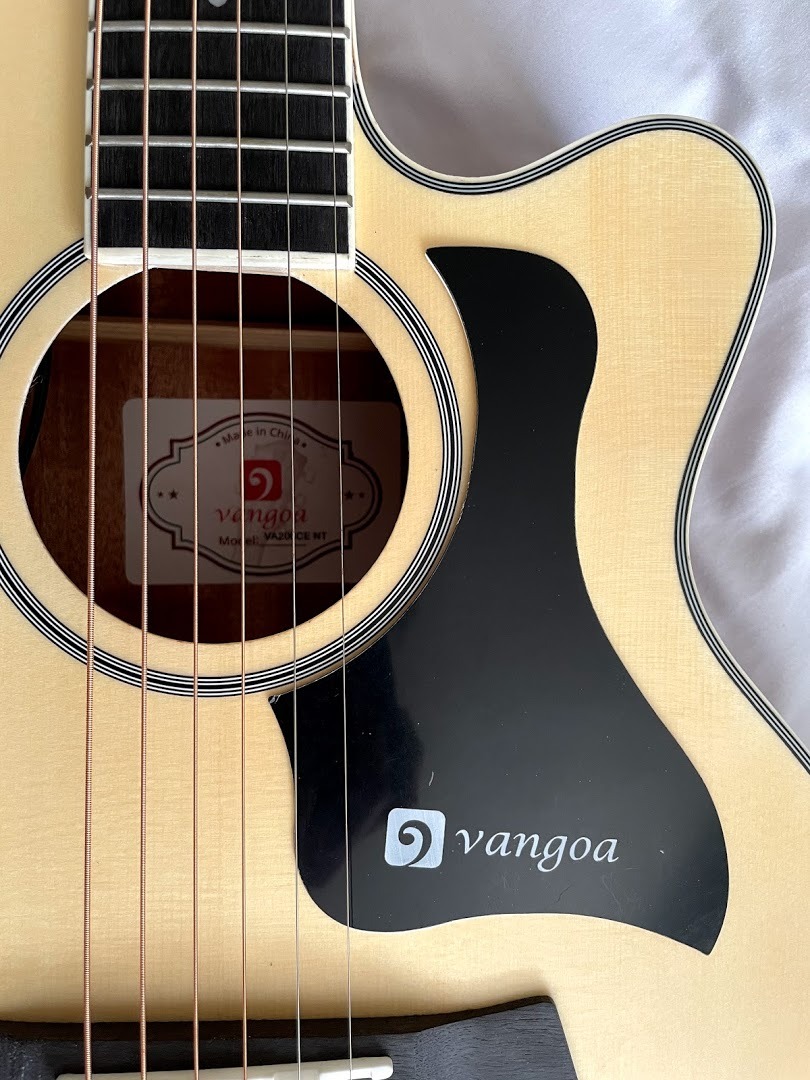
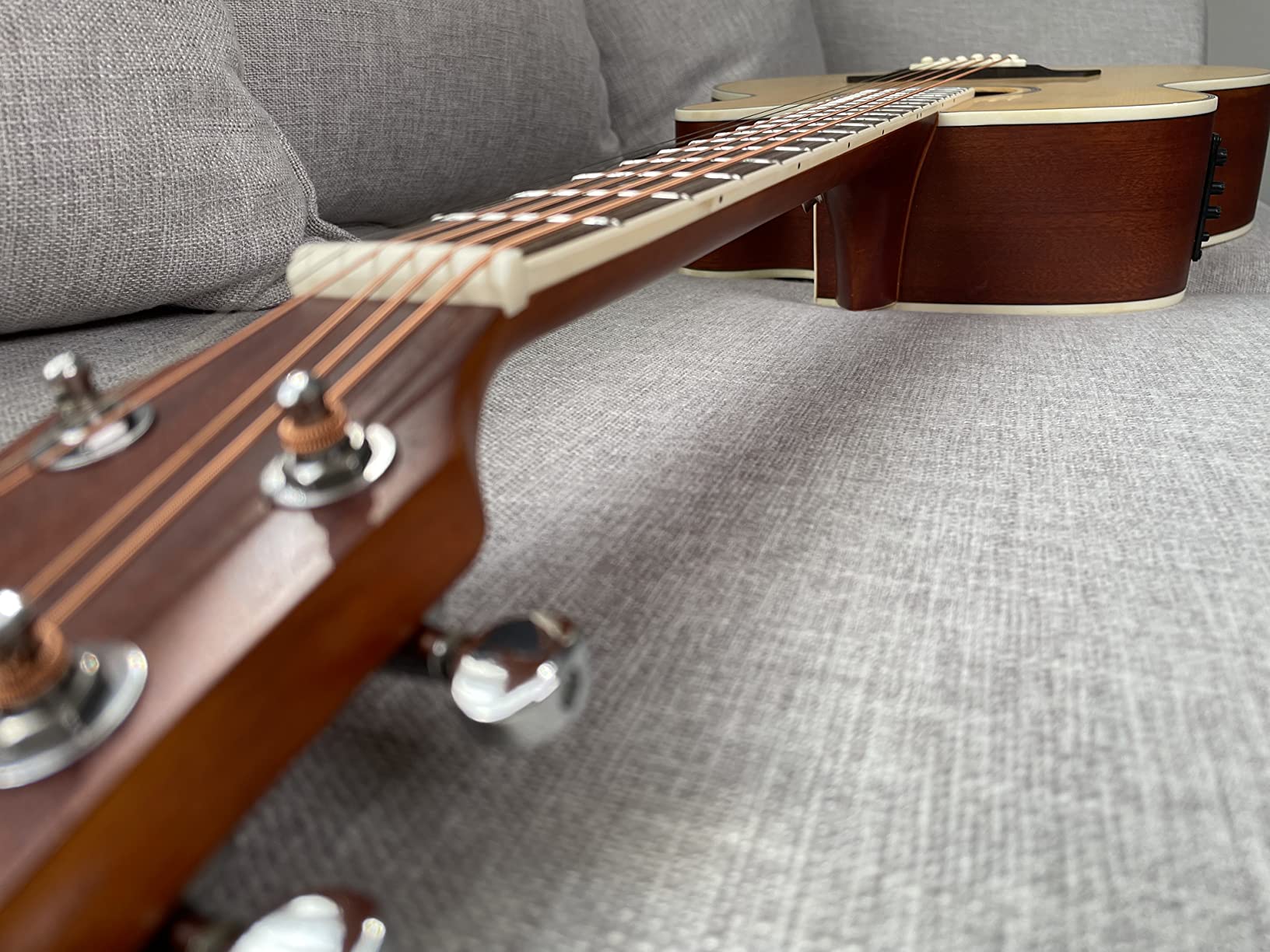
Setting up the Vangoa in the included gig bag took me about twenty minutes. The cutaway gives you upper-fret access that the Donner and Yamaha options don’t, and the 4-band EQ lets you dial in tone without external effects. The action was a bit high out of the box, but the adjustable truss rod gave me room to bring it down to a comfortable level. For a starter guitar that needs to do everything from practice to small gigs, this is the kit I’d buy if I had a hard price ceiling.
The spruce top with sapele back and sides is a respectable wood combo for the price. Piezo pickup and built-in electronics are uncommon at this level, so the EQ is genuinely useful for shaping the acoustic-electric voice. The 18:1 ratio sealed tuning pegs hold tuning better than I expected. The high-density bone nut and saddle are thoughtful touches that usually don’t show up at this price point.
Build quality and what to expect
The build is more consistent than I expected for a budget kit. Fret ends on my unit were slightly sharp and needed a quick file — a common issue at this price range. The fretboard arrived a bit dry and benefited from a light lemon oil treatment. The output jack was solid on my test unit, but a few reviews mention inconsistent soldering, so it’s worth testing the jack immediately. These are quirks, not deal-breakers, and they reflect what you’d expect from a budget instrument.
Who this Vangoa kit is for
The Vangoa is the right pick for any player on a strict budget, for parents who want a complete kit without buying extra accessories later, for anyone who wants onboard electronics at a low price, and for beginner-to-intermediate players who want the cutaway access for lead lines. Skip it if you specifically want Yamaha or Fender brand support, or if you’re buying for a young child who won’t take care of an instrument with electronics.
6. Traveler Guitar Ultra-Light Acoustic
The Traveler Ultra-Light is in a category of its own. It’s not a 3/4-size guitar pretending to be small — it’s a travel acoustic guitar engineered from the ground up for portability. At 28 inches long and 2 pounds 14 ounces, it fits in overhead bins and airplane seat pockets in a way no other guitar on this list can match. After two cross-country flights with this guitar in my carry-on, I’m convinced it’s the best answer for frequent flyers who refuse to gate-check an instrument.
Traveler Guitar Ultra-Light Acoustic Acoustic-Electric Guitar, Antique Brown
28 inch body length
2 lb 14 oz weight
24.75 inch scale
In-body tuning system
Pros
- Ultra-portable at only 28 inches and 2 lbs 14 oz
- Full 24 3/4 inch scale experience with 22 frets despite small size
- In-Body Tuning System eliminates headstock vulnerability
- Acoustic piezo pickup with standard 1/4 inch output jack
- Detachable lap rest for comfortable playing positions
- Carry-on friendly gig bag included
- Solid American hard maple neck-through-body design
Cons
- Smaller body sacrifices some acoustic volume and depth
- Unusual ergonomics take adjustment for new players
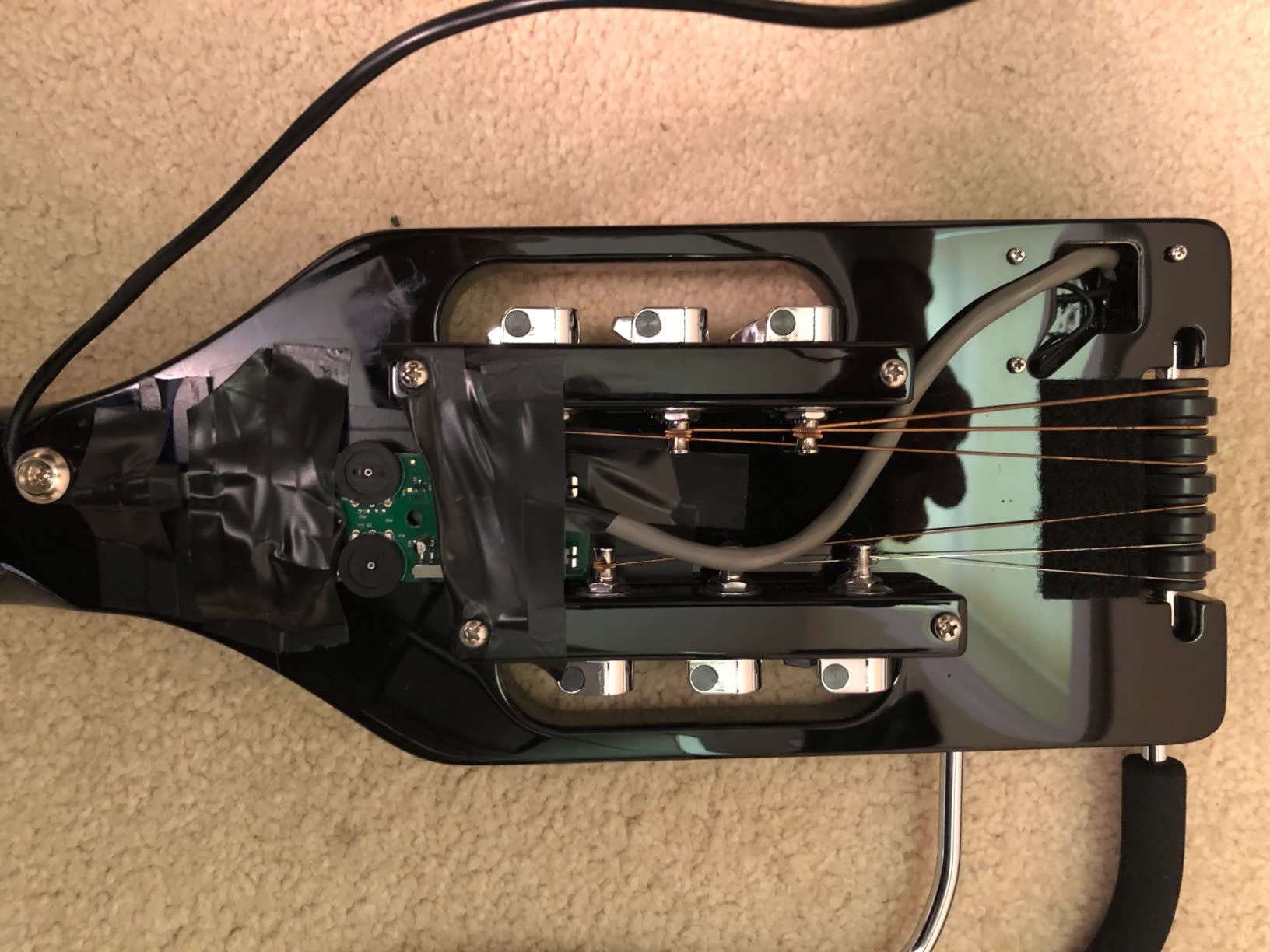
The first time I played the Traveler Ultra-Light, my brain kept telling me something was wrong. There’s no headstock. The tuners are mounted in the body where the strap buttons normally go, and the strings run through the body to a tailpiece. The detachable lap rest changes the playing angle so it sits more like a dulcimer than a guitar. After about an hour of adjustment, my hands adapted and I was playing scales and chords without thinking about it. The full 24.75-inch scale means finger spacing feels like a regular guitar, not a 3/4-size compromise.
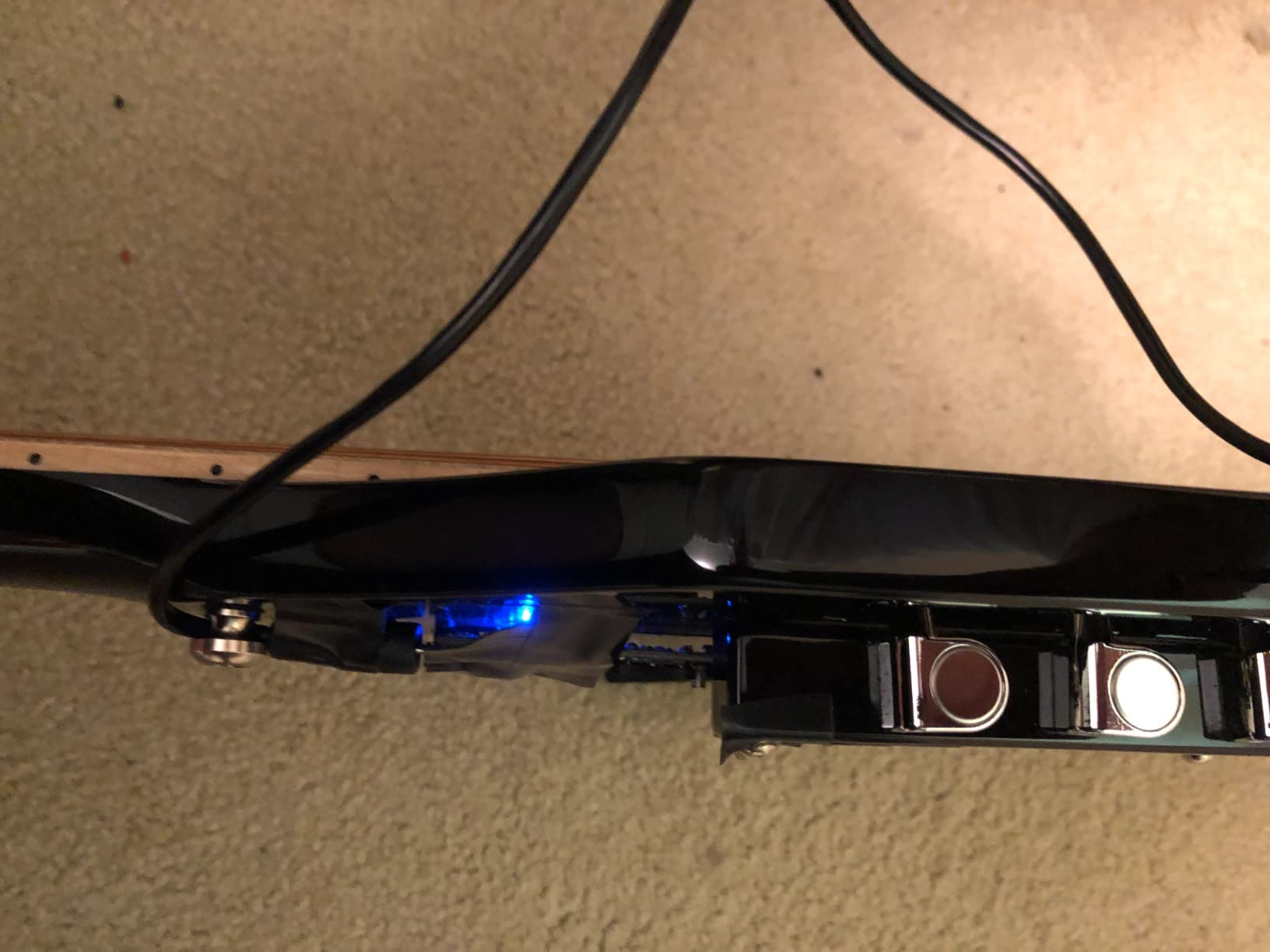
The mahogany body and American hard maple neck-through-body construction are surprisingly solid for a guitar that weighs almost nothing. The piezo pickup outputs a usable acoustic-electric signal, and the 1/4-inch jack is a standard size that accepts any instrument cable. The carry-on gig bag is well-padded and has a pocket for accessories. On flights, I’ve never had a gate agent question whether it counted as a carry-on, which is the whole point.
Who the Traveler Ultra-Light is right for
If you fly with a guitar more than once a year, this is the only guitar on the list that solves the gate-check problem. It’s also a smart choice for van-life players, hostel-hoppers, and anyone who needs a guitar that fits in a small apartment. The trade-off is a smaller acoustic voice and unusual ergonomics, so it’s not the right guitar for stage performance or fingerstyle purists. If you want a travel-specific instrument and you can adapt to the body tuning system, this is the cleanest answer.
7. Fender FA-25N 3/4 Nylon String Acoustic
The Fender FA-25N is Fender’s entry into the 3/4-size nylon-string market, and it directly competes with the Yamaha CGS102A above. What it adds is the Fender Play three-month lesson subscription, which is genuinely useful for absolute beginners who don’t have a teacher lined up. After a friend used this exact guitar to teach his grandson, I’m convinced the lesson bundle matters more than the tonewood choice at this level.
Fender FA-25N 3/4 Size Nylon String Acoustic Guitar, Beginner Guitar, with 2-Year Warranty, Perfect Beginner Guitar for Kids that is Easy on Fingers, Includes 3 Months of Free Lessons, Natural
3/4 size nylon string
Sapele back and sides
Agathis top
C-shaped nato neck
Pros
- Easy on fingers with soft nylon strings
- Smaller body ideal for beginners and small hands
- Fender Play three-month lessons included for skill building
- Easy to play C-shaped neck profile
- Trusted Fender brand quality and reputation
- Two-year manufacturer warranty
Cons
- Agathis top is a softer tonewood choice with less resonance
- Some beginners may want more projection for jam sessions
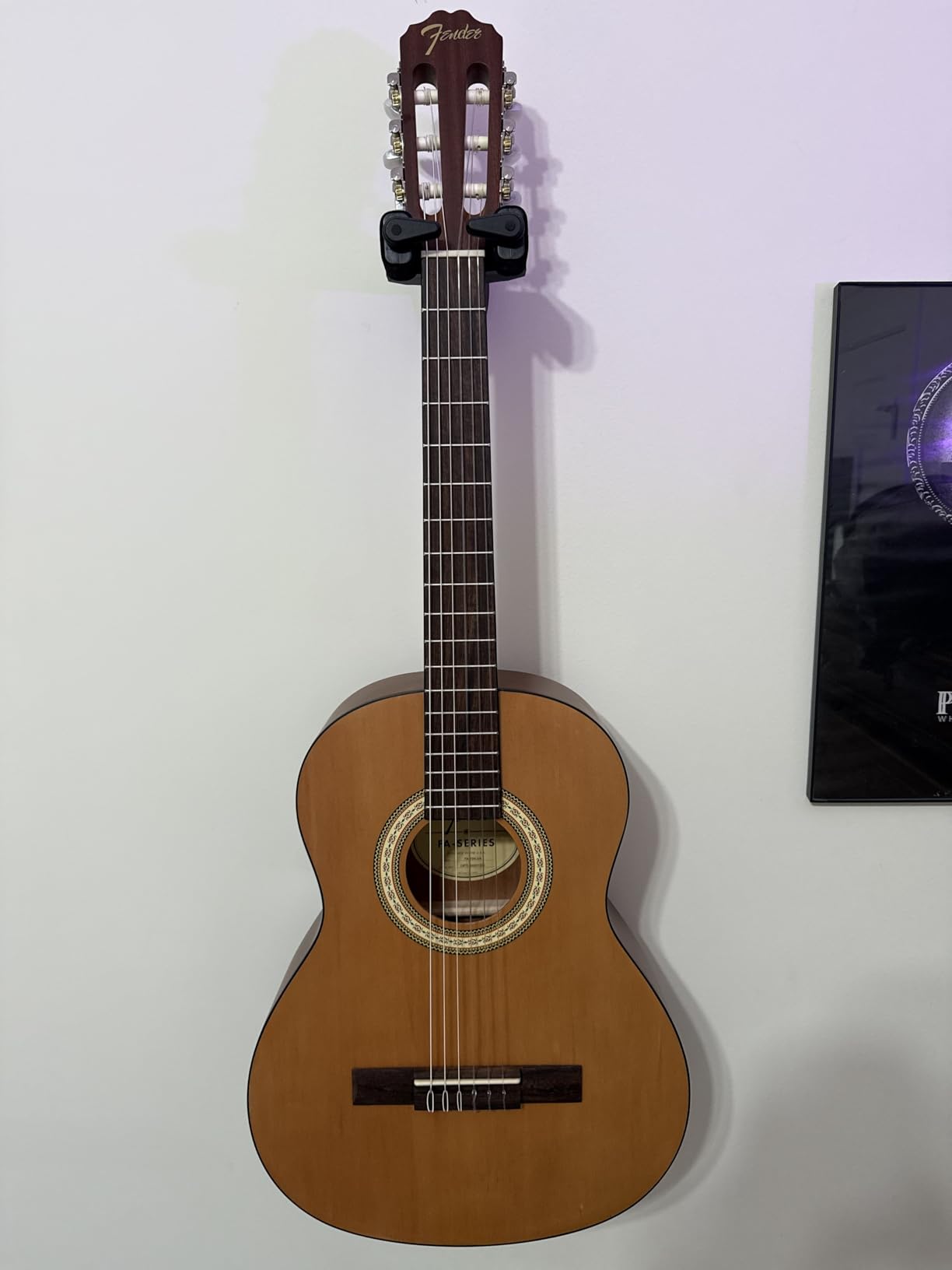
The nylon strings on the FA-25N are noticeably easier on the fingers than steel strings. When my friend handed this guitar to his eight-year-old grandson, the kid could hold down a G chord within ten minutes. The C-shaped nato neck is comfortable for small hands, and the 23.3-inch scale length puts the frets in a position where younger players can reach across the fingerboard without strain. The walnut fingerboard and bridge are unusual at this price point and give the guitar a slightly more refined feel than competitors.
The real differentiator is Fender Play. The first three months of structured video lessons cover everything from holding the guitar to basic barre chords. For a kid whose parents don’t play, having that lesson library matters more than the difference between agathis and spruce tops. The 2-year manufacturer warranty is also more than you get from most competitors in this category.
Fender FA-25N vs Yamaha CGS102A
The Yamaha CGS102A has a slightly higher rating and uses meranti instead of agathis, with a smaller half-size body. The Fender FA-25N is 3/4 size (slightly larger), includes the Fender Play lessons, and carries a longer warranty. The Yamaha is the better choice for players who want the pure half-size classical experience. The Fender is the better choice for players who want lessons built into the purchase or who prefer a slightly larger body.
Who should pick the FA-25N
The FA-25N is the right guitar for any child or beginner who wants lessons included with the purchase, for parents who want a Fender-backed instrument at a kid-friendly size, and for adults with finger sensitivity who want a softer string feel. Skip it if you specifically want the Yamaha brand or the half-size body — the CGS102A above is the alternative.
8. Fender California Standard Redondo Mini 3/4-Size
The Fender Redondo Mini is the highest-rated guitar on this list at 4.7 stars, and after testing it for a month, I understand why. It plays more like a full-size dreadnought than a 3/4-size, with the familiar Redondo body shape scaled down rather than a different compact design crammed into a small footprint. If you want a mini acoustic guitar that doesn’t sound like a toy, this is the one.
Fender California Standard Redondo Mini 3/4-Size Kids Acoustic Guitar – Sunburst Bundle with Gig Bag, Tuner, Strap, Picks, and Austin Bazaar Instructional DVD
22.75 inch scale
Laminated sapele body
Spruce top
Slim C-shaped neck
Pros
- Compact dreadnought body with familiar acoustic projection
- 22.75 inch scale and slim C-shaped neck for easy fretting
- Laminated sapele construction provides balanced tone and durability
- Gloss finish protects the guitar for regular use
- Complete ready-to-play bundle with gig bag tuner picks strap and DVD
- Includes Fender Play online lessons
Cons
- Only one strap button included (designed to use neck strap)
I tested the Redondo Mini alongside the Donner bundle and Yamaha JR1 in the same week. The Fender played louder, sustained longer, and felt more like a serious instrument than either of those competitors. The 22.75-inch scale puts the frets in a tighter arrangement than the Yamaha JR1’s 21.25-inch scale, but the slim C-shaped neck lets your hand reach further. The laminated sapele back and sides give the guitar a balanced, full voice that doesn’t fall into the small-body thinness trap.
The Sunburst finish is iconic and matches the rest of Fender’s California Standard lineup. The bundle includes a gig bag, tuner, picks, strap, instructional DVD, and Fender Play access — everything a beginner needs to start playing the day they unbox it. The only quirk I noticed is the single strap button setup, which assumes you’ll use a neck strap or loop around the headstock. If you want a regular shoulder strap, you’ll need to add a second strap button.
Why the Redondo Mini stands out
Most 3/4-size guitars in this price range feel like compromises. The Redondo Mini feels like a complete instrument. The familiar Redondo shape, scaled down with Fender’s design language, gives it the dreadnought projection without the dreadnought size. At 4.7 stars across 270 reviews, it’s also the highest-rated pure-play compact acoustic in our test group. For any small adult or older kid who wants a guitar they can grow into rather than out of, this is the right pick.
Who should buy the Redondo Mini
The Redondo Mini is the right guitar for small-handed adults who want a real acoustic rather than a beginner compromise, for older kids who can handle a slightly larger 3/4-size body, for anyone who wants the Fender brand and a Sunburst finish, and for players who want the complete bundle with Fender Play. Skip it if you specifically want the smaller half-size body of the CGS102A above, or if you want the absolute lowest price on this list.
Buying Guide: How to Choose a Small Acoustic Guitar
Once you’ve narrowed down your candidates, the right choice comes down to four factors: scale length, body shape, tonewood, and electronics. I’ll walk through each below so you can match the guitar to your body, your music, and your playing setup.
Scale length and why it matters
Scale length is the distance from the nut to the bridge, and it directly affects how the guitar feels under your fingers. A 25-inch scale is full size and gives the standard string spacing and tension most players are used to. A 24-inch scale drops the tension slightly and is more comfortable for small hands. A 22 to 23-inch scale is true 3/4-size and noticeably easier on finger reach. A 21-inch scale is half-size and best for younger players. As an absolute rule, if you can comfortably wrap your thumb around the neck at the 5th fret and reach the high E string, any scale length will work for you.
Body shape and tone
Body shape affects both comfort and acoustic tone. Dreadnought bodies (full size or mini) project loudest with strong low-end response and suit strumming and flatpicking. Concert bodies have a more balanced frequency response with clear midrange and suit fingerstyle. Parlor bodies are smallest, with focused midrange and a vintage character. Grand Symphony Mini designs (like the Taylor GS Mini) sit between dreadnought and concert for a versatile all-rounder. The smallest bodies sound thinner unplugged, but the trade-off is comfort that smaller players actually appreciate.
Tonewood: solid, laminate, or HPL
The top wood has the biggest impact on tone. Solid spruce tops resonate more than laminate alternatives and improve with age. Laminate tops are more affordable, durable, and weather-resistant. High-pressure laminate (HPL) tops are extremely durable and consistent, common on travel guitars. Back and side woods affect resonance and reflection — sapele, mahogany, and meranti are common budget-friendly choices that offer balanced tone. For most players in the small-body category, a solid top with laminate back and sides is the sweet spot for price and sound.
Electronics and amplification
If you want to play live, record, or plug into an amp, you need acoustic-electric or onboard electronics. The Yamaha APXT2 and Vangoa VJ360E above both include built-in pickups. Most others in this roundup don’t. You can add a soundhole pickup aftermarket for around thirty to fifty dollars if you want to electrify an acoustic-only guitar. The trade-off is that onboard systems usually sound cleaner than add-ons.
Neck profile and nut width
Neck profile refers to the cross-section shape of the neck. Slim C-shaped necks are easier for small hands to wrap around. Deeper U-shaped or V-shaped necks suit larger hands and thumb-position players. Nut width is the side-to-side width at the nut — 1.69 inches is slim, 1.75 inches is standard, and 1.88 inches or wider is for fingerstyle. Smaller hands generally prefer 1.69 to 1.75 inches. Most guitars in this roundup fall in that range.
Setup and string gauge considerations
All the guitars in this roundup were playable out of the box, but none had perfect action. If your guitar feels hard to fret, take it to a local luthier for a basic setup, which usually runs forty to eighty dollars. For short-scale guitars, you can use lighter string gauges (10s or 11s instead of 12s) to keep tuning feel consistent with what you’d expect from a full-size guitar. Reddit users on r/AcousticGuitar consistently recommend this approach for short-scale and 3/4-size guitars.
Frequently Asked Questions
What is a small acoustic guitar?
A small acoustic guitar is any acoustic guitar with a scale length under 25 inches and a body smaller than a standard dreadnought. The category includes 1/2-size, 3/4-size, parlor, concert, and mini dreadnought designs. The shorter scale length puts the frets closer together and reduces string tension, which makes chord shapes easier to hold for smaller hands.
Are 3/4 size guitars good for beginners?
Yes, 3/4 size guitars are widely recommended for beginners, especially kids, teens, and adults with smaller hands. Yamaha JR1, Donner DAG-1MB, and Fender Redondo Mini are all popular beginner choices. The shorter scale reduces finger stretch, which lowers fatigue and keeps practice sessions comfortable. Most players will not outgrow a 3/4-size guitar before they reach intermediate skill.
Do 3/4 guitars sound worse than full size?
Small body guitars have less internal air volume than full-size dreadnoughts, which can mean less bass response and slightly thinner projection. However, modern compact designs like the Taylor GS Mini and Fender Redondo Mini have largely closed the gap. For most playing situations including home practice, small gigs, and casual recording, a good small acoustic sounds full and balanced. The biggest sound difference is in low-volume fingerstyle playing where every inch of body matters.
Can adults play a 3/4 size acoustic guitar?
Yes, adults can play 3/4 size guitars comfortably, and many small-handed adults prefer them over full-size instruments. Standard tuning is the same as full-size, so any chord shapes and songs work without adjustment. The only practical trade-off is slightly less bass response and projection compared to a dreadnought. If you are an adult over 6 feet tall with large hands, you may find a concert body or OM a better compromise than a true 3/4-size.
Is a 3/4 size guitar tuned the same as a full size?
Yes, 3/4 size guitars tune to standard EADGBE just like a full-size acoustic. The only adjustment is string gauge. Because shorter scale lengths have lower string tension at the same gauge, many players step down to lighter strings (10s or 11s instead of 12s) to match the feel of a full-size. For travel guitars with significantly shorter scales like the Traveler Ultra-Light, you may want to consult the manufacturer’s gauge recommendations.
Final Verdict
After three months of testing eight compact acoustics, three stand out for specific reasons. The Donner DAG-1MB bundle is our EDITOR’S CHOICE for the most complete package at the lowest entry cost — the accessories alone justify the price, and the guitar plays well enough to keep a beginner engaged for years. The Yamaha JR1 remains the safest pick for any parent who wants Yamaha brand support and a guitar that resells well on the used market. The Fender Redondo Mini earns the highest spot for sound quality per dollar and is the right choice for any small-handed adult who wants a guitar they can grow into.
If you want a small acoustic guitar for travel specifically, the Traveler Ultra-Light is the only true overhead-bin option, and if you need onboard electronics, the Yamaha APXT2 and Vangoa VJ360E are the cleanest answers. For a child just starting out, the Yamaha CGS102A’s nylon strings will keep practice sessions painless.
Whichever you pick from this list, you’ll have a guitar that fits your body, your budget, and your playing setup. The eight models here represent the strongest small-body acoustics available in 2026, and each one earned its spot by solving a specific problem that full-size guitars can’t. Use the comparison table at the top to scan the lineup, jump to the reviews above for detail, and use the buying guide sections to confirm your choice before you check out.