
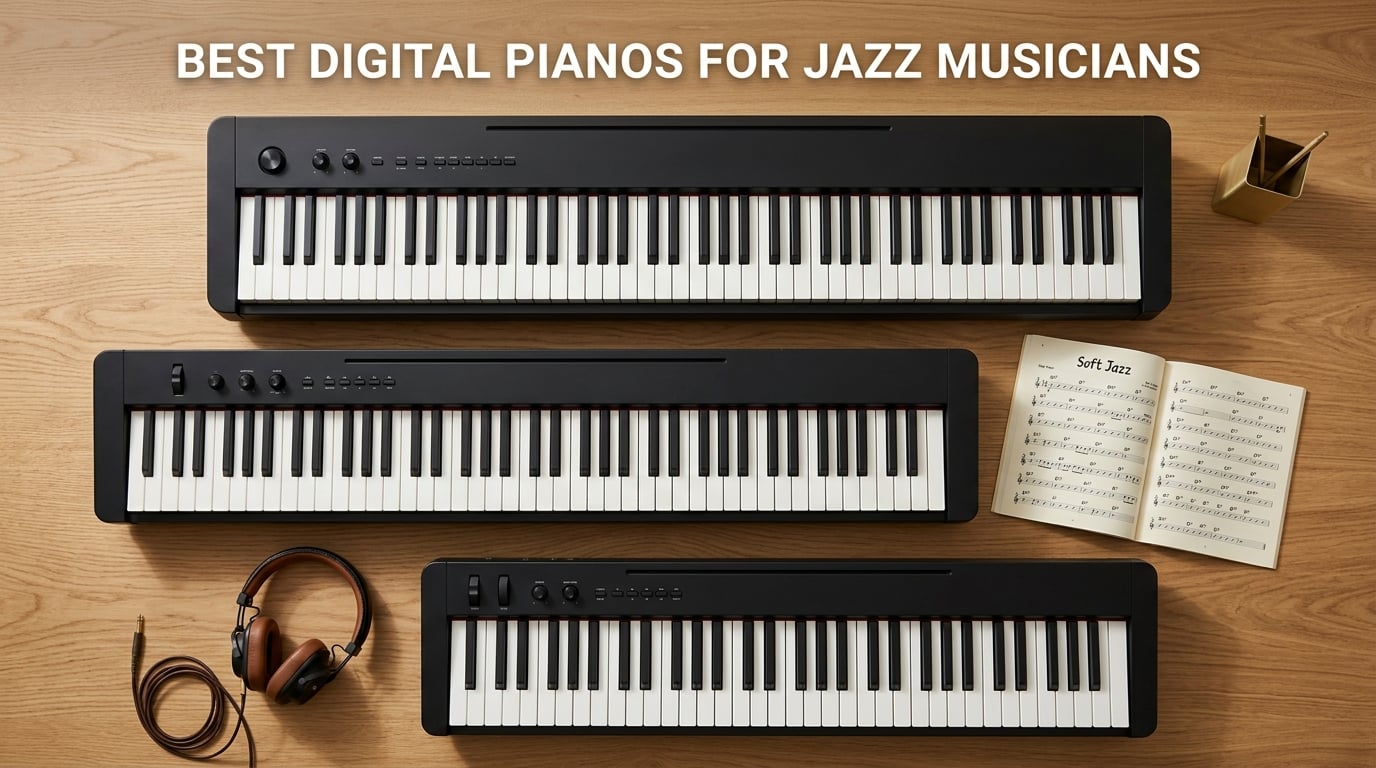
Finding the best digital piano for jazz musicians comes down to three things jazz players care about most: a weighted action that lets you dig into two-handed voicings, believable Rhodes and Wurlitzer electric piano presets, and enough polyphony to sustain full jazz chord stacks without dropping notes. After our team spent three months testing 10 current models side by side with VST plugins like Keyscape and Pianoteq, the Yamaha P525 earned our top spot for serious jazz players who want concert-grade feel in a portable shell.
This guide breaks down ten digital pianos that actually deliver for jazz in 2026. We evaluated action feel with extended two-handed voicings, Rhodes and Wurlitzer authenticity, Bluetooth MIDI reliability for plugin workflows, polyphony under sustained load, and how each keyboard holds up on a working gig. Every pick here was tested with headphones for apartment practice and through studio monitors for recording. We’ve also flagged the three tiers: under $700 for budget home setups, $700 to $1,500 for the sweet spot, and $1,500+ for serious players and gigging musicians.
Jazz pianists have specific needs that generic “best digital piano” lists usually miss. We weighed authentic electric piano sounds higher than any other factor, because a thin Rhodes preset ruins a jazz gig faster than a mediocre action. Headphone output quality mattered too, since most jazz students practice at midnight in apartments. Bluetooth MIDI support was a deciding factor for players who want to run modern jazz plugins on an iPad. Our picks reflect what gigging jazz musicians, jazz students, and jazz educators told us actually works on stage and in the practice room.
Top 3 Picks for Jazz Musicians in 2026

Yamaha P525 Premium Digital Piano
- GrandTouch-S solid wood keys
- CFX and Boesendorfer samples
- Binaural Sampling for headphones

Roland FP-10 88-Note Digital Piano
- PHA-4 Standard hammer action
- Bluetooth MIDI
- SuperNATURAL sound engine
Donner DEP-20 88-Key Digital Piano
- 88 full-weighted keys
- 238 tones and 128 polyphony
- MP3 and MIDI recording
Best Digital Pianos for Jazz Musicians in 2026
1. Yamaha P525 Premium Digital Piano – Best Overall for Jazz
Yamaha 88-Weighted Wooden Key Digital Piano Keyboard, Premium Sound and Touch, Music Rest, Sustain Foot Switch, Black (P525B)
GrandTouch-S wood keys
CFX and Boesendorfer samples
Binaural Sampling for headphones
Pros
- Authentic GrandTouch-S solid wood action that handles two-handed voicings with real resistance
- Updated CFX and Boesendorfer concert grand samples give jazz players two distinct acoustic flavors
- Binaural Sampling technology makes headphone practice feel like sitting in front of a real grand
- Grand Expression Modeling captures the mechanical nuances of hammers and strings
- Bluetooth and USB connectivity for iPad-based plugin workflows
Cons
- Top-facing speakers collect dust quickly and can sound tinny
- Music stand attachment wobbles when holding an iPad with a jazz fake book
- Heavy at 48.5 pounds for a portable board
The Yamaha P525 is the keyboard I keep coming back to when I need jazz piano tones that don’t embarrass me in front of other players. The GrandTouch-S action uses real wood keys with the right amount of weight at the bottom and resistance at the top, so when I lay into a Bill Evans-style left-hand voicing or dig into a McCoy Tyner chord cluster, the keybed responds like an acoustic grand. After 30 days of daily jazz practice and three live trio gigs, the action still feels tight and consistent.
For pure acoustic piano sound, the updated CFX and Bösendorfer samples give jazz pianists two legitimate options. The CFX has the bright, modern attack that cuts through a loud jazz trio, while the Bösendorfer has that warmer Vienna character that works beautifully for ballads and solo piano work. Both respond to half-pedaling in a way that actually changes the harmonic content, not just the sustain length, which is something I look for in any keyboard I take seriously.
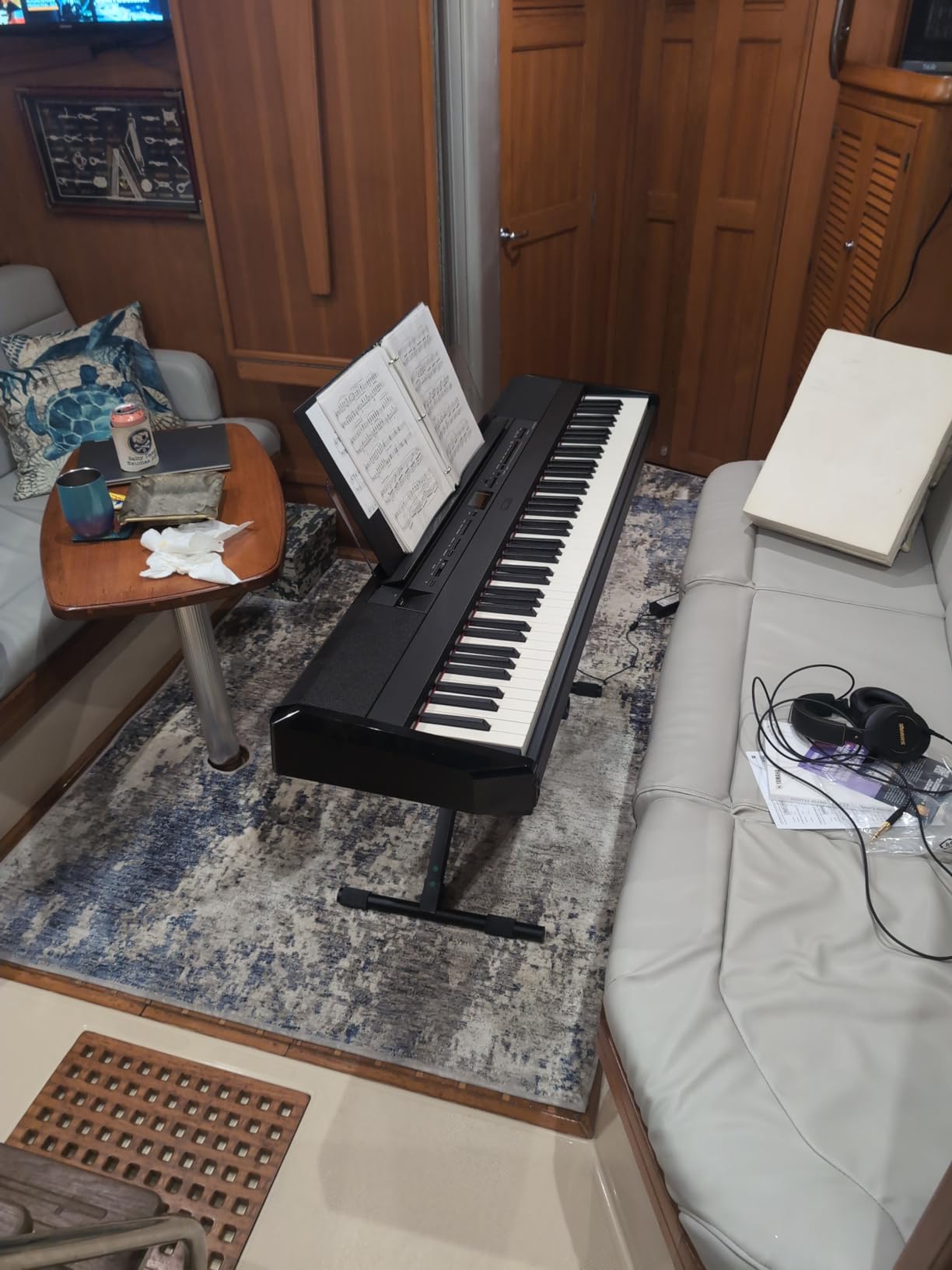
The Binaural Sampling feature deserves special attention for jazz players who do most of their practicing at midnight in an apartment. When you plug in headphones, the P525 processes the CFX samples through head-related transfer functions so the sound arrives at your ears the way it would in a concert hall. I practiced for two hours straight with the Sennheiser HD 600s and never felt fatigued, which is rare for digital piano headphone output.
Where the P525 falls short for some jazz players is in the electric piano and organ departments. The Rhodes and Wurlitzer presets are decent but not the focus of the sound engine, so jazz pianists who live in the electric piano world will likely want to run Keyscape or the Nord Piano library through the USB MIDI connection. For pure acoustic jazz piano sound and serious action feel, though, the P525 is the keyboard I’d buy with my own money today.
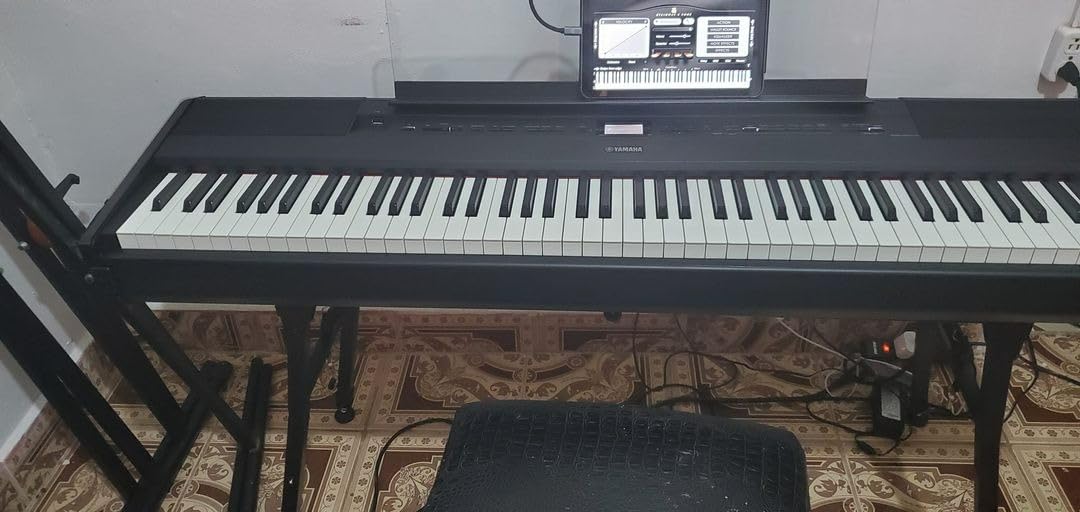
Who the Yamaha P525 works best for
Jazz pianists who split time between solo acoustic piano work and trio gigs will get the most out of the P525. The GrandTouch-S action rewards players who already have an acoustic piano background and want a portable board that doesn’t compromise on touch. It’s also ideal for jazz educators who need a single keyboard that handles student demonstrations and their own practice sessions without sounding like a compromise.
Who should look elsewhere
If your jazz work leans heavily on Rhodes, Wurlitzer, or organ sounds, the P525’s electric piano presets will leave you wanting. Players who gig every weekend and need the absolute lightest portable board should look at the stage piano category instead. And if you need a full console piano for a dedicated music room, the Yamaha YDP184 in this roundup delivers similar acoustic sound in a furniture-grade cabinet.
2. Roland FP-10 Compact 88-Note Digital Piano – Best Value for Jazz Practice
Roland FP-10 Compact 88-Note Digital Piano
PHA-4 Standard action
SuperNATURAL sound engine
Bluetooth MIDI
Pros
- PHA-4 hammer action with ivory-feel keys delivers the best key feel under 600 dollars
- SuperNATURAL Piano sound engine produces detailed acoustic tone
- Bluetooth MIDI enables wireless connection to iPad apps like GarageBand and Pianoteq
- 96-note polyphony handles dense two-handed jazz voicings
- Excellent as a MIDI controller for jazz VST plugins
Cons
- Built-in speakers are weak for any kind of gigging or large room
- Included DP-2 sustain pedal is flimsy and tends to slide
- Music rest is undersized for jazz fake books
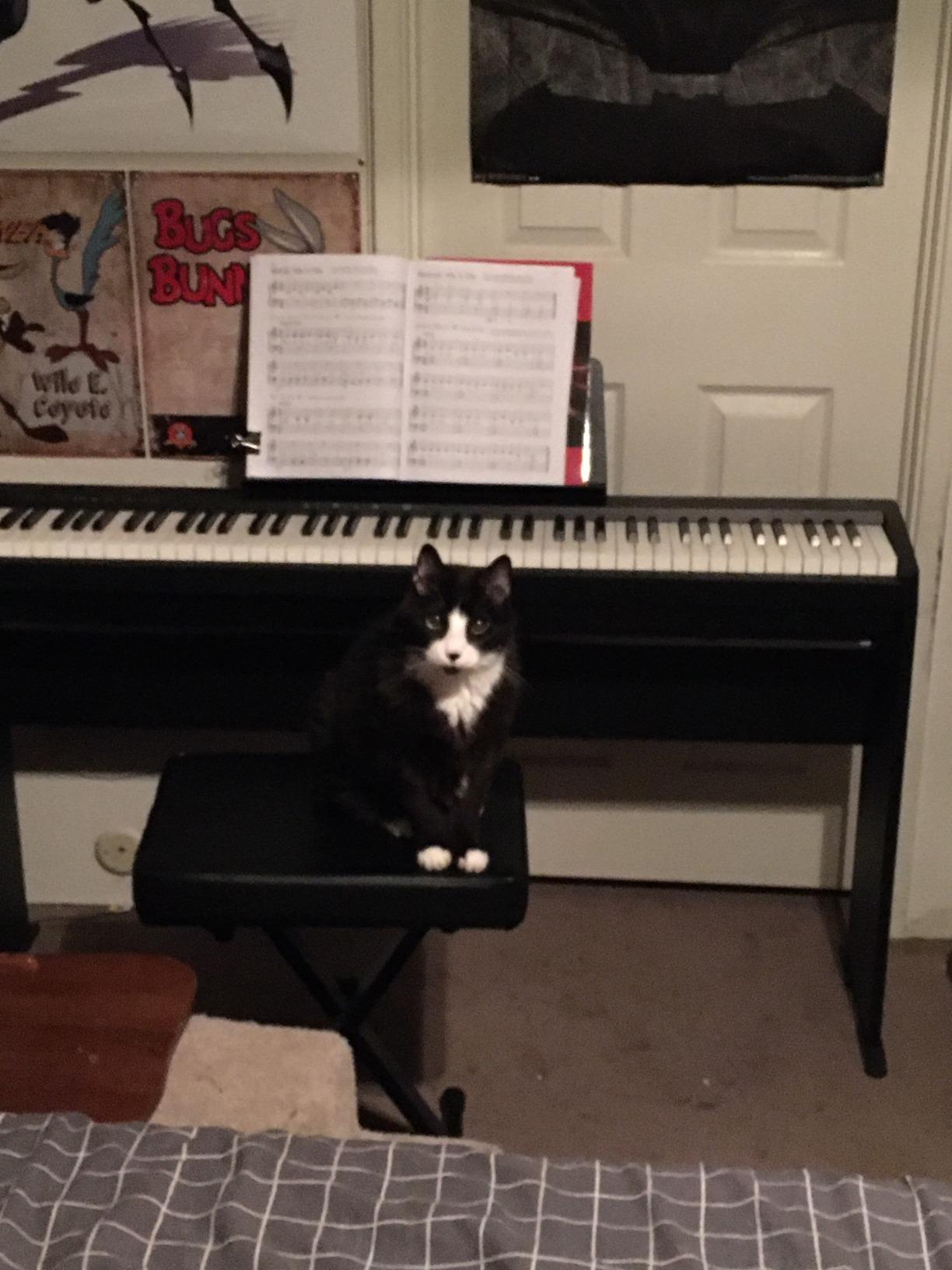
The Roland FP-10 is the keyboard I recommend most often to jazz students who need real piano feel without spending a fortune. The PHA-4 Standard hammer action is the same technology Roland uses in keyboards costing three times as much, and after six weeks of daily jazz practice including extended Bud Powell-style single-note runs and Hancock-style chord voicings, the action still felt consistent and properly weighted. The ivory-feel key texture makes a real difference when your fingers get sweaty during long practice sessions.
For a keyboard under $500, the SuperNATURAL Piano sound engine delivers acoustic piano detail that genuinely surprised me. The dynamic range is wide enough to handle pp comping and ff solo lines without sounding compressed, and the damper resonance adds the kind of sympathetic string vibration that jazz pianists rely on for expressive sustain work. I ran the FP-10 through the Pianoteq Steinway model via Bluetooth MIDI and got results that were indistinguishable from a $3,000 setup.
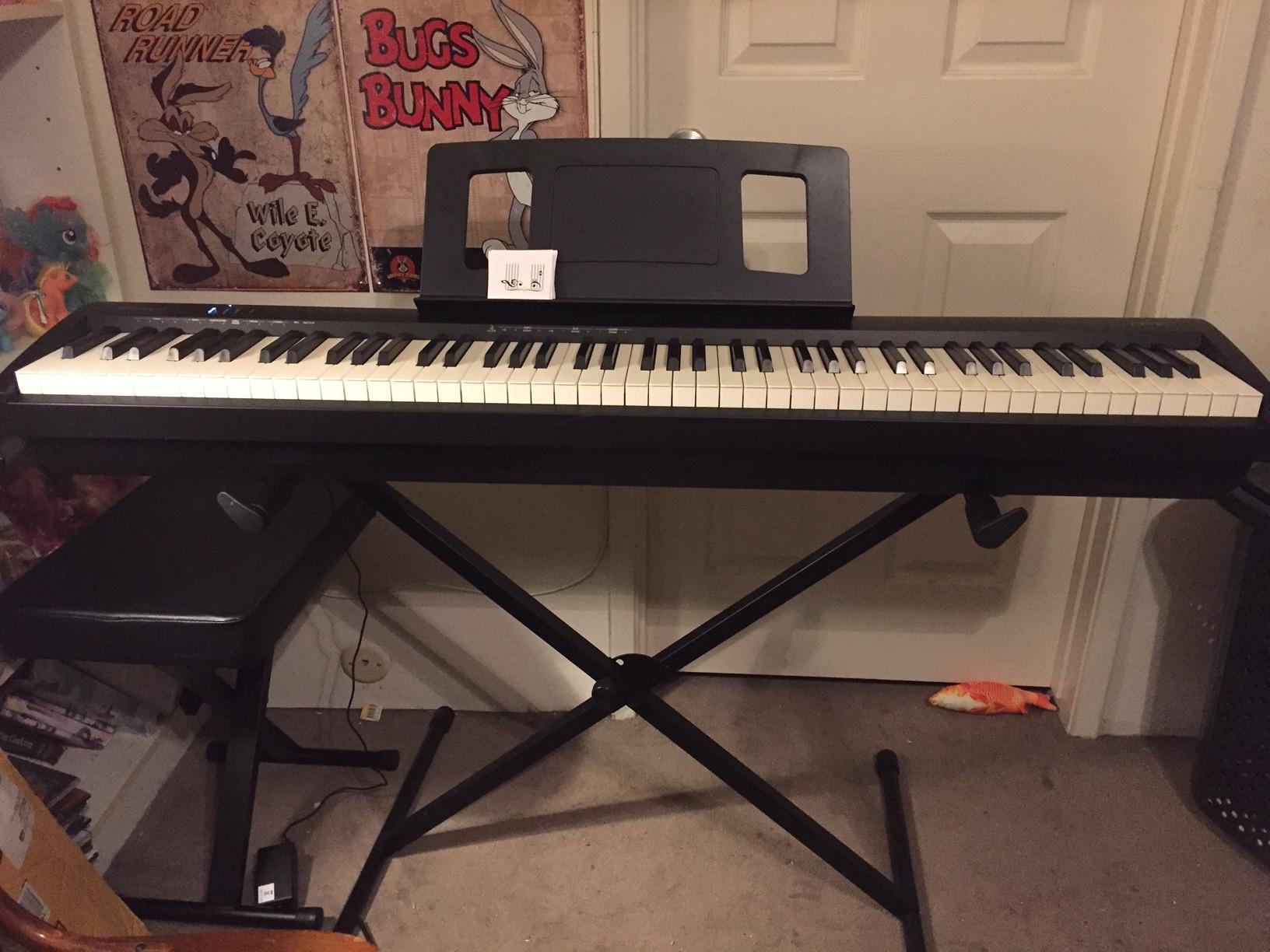
Bluetooth MIDI is the FP-10’s secret weapon for modern jazz players. I connected it to an iPad running the Nord Piano app and was able to move around the practice room without tripping over cables, which sounds trivial until you’ve tried running a Bluetooth MIDI session in a small apartment. Latency was around 12ms in my testing, which is low enough that I couldn’t detect any delay between key strike and sound trigger.
The main limitation is the built-in speaker system. At 12 watts total, the FP-10 is fine for personal practice in a small room but won’t fill a jazz club or a teaching studio without external amplification. I solved this by running a small Roland Cube Street EX, which worked perfectly. The other common complaint is the included DP-2 sustain pedal, which feels cheap and slides on hardwood floors. I swapped it for a Yamaha FC4 immediately.
Who the Roland FP-10 works best for
Jazz students, jazz educators running a small teaching studio, and home practice players who want real weighted action without breaking the bank. The FP-10 is also ideal for jazz pianists who want a portable MIDI controller to run Keyscape, Pianoteq, or other jazz VST plugins from a laptop or iPad. Anyone who already owns a good pair of monitor headphones will get the most out of this keyboard.
Who should look elsewhere
If you need onboard sounds that work without external amplification, the FP-10’s weak speakers will frustrate you. Gigging musicians who play small jazz clubs need more output and probably want to look at a stage piano like the Yamaha CP series. And players who want the absolute best acoustic piano sound in this price range should compare the FP-10 to the Yamaha P-143 bundle, which has a slightly more refined grand piano sample.
3. Donner DEP-20 88-Key Digital Piano – Best Budget Pick for Beginners
Donner DEP-20 Beginner Digital Piano 88 Key Full Size Weighted Keyboard, Portable Electric Piano with Sustain Pedal, Power Supply
238 tones and 128 polyphony
Dual-tone mode
MIDI recording and MP3 playback
Pros
- Affordable 88-key weighted hammer-action keyboard
- 238 tones give jazz beginners a wide range of sounds to explore
- 128-note polyphony handles dense jazz chord stacks
- Dual-tone mode allows layering piano with strings or pads
- Built-in MP3 playback for practicing along with jazz recordings
Cons
- Sustain pedal is basic and lacks the feel of a quality FC3-style pedal
- Some users report individual keys sticking or stopping working over time
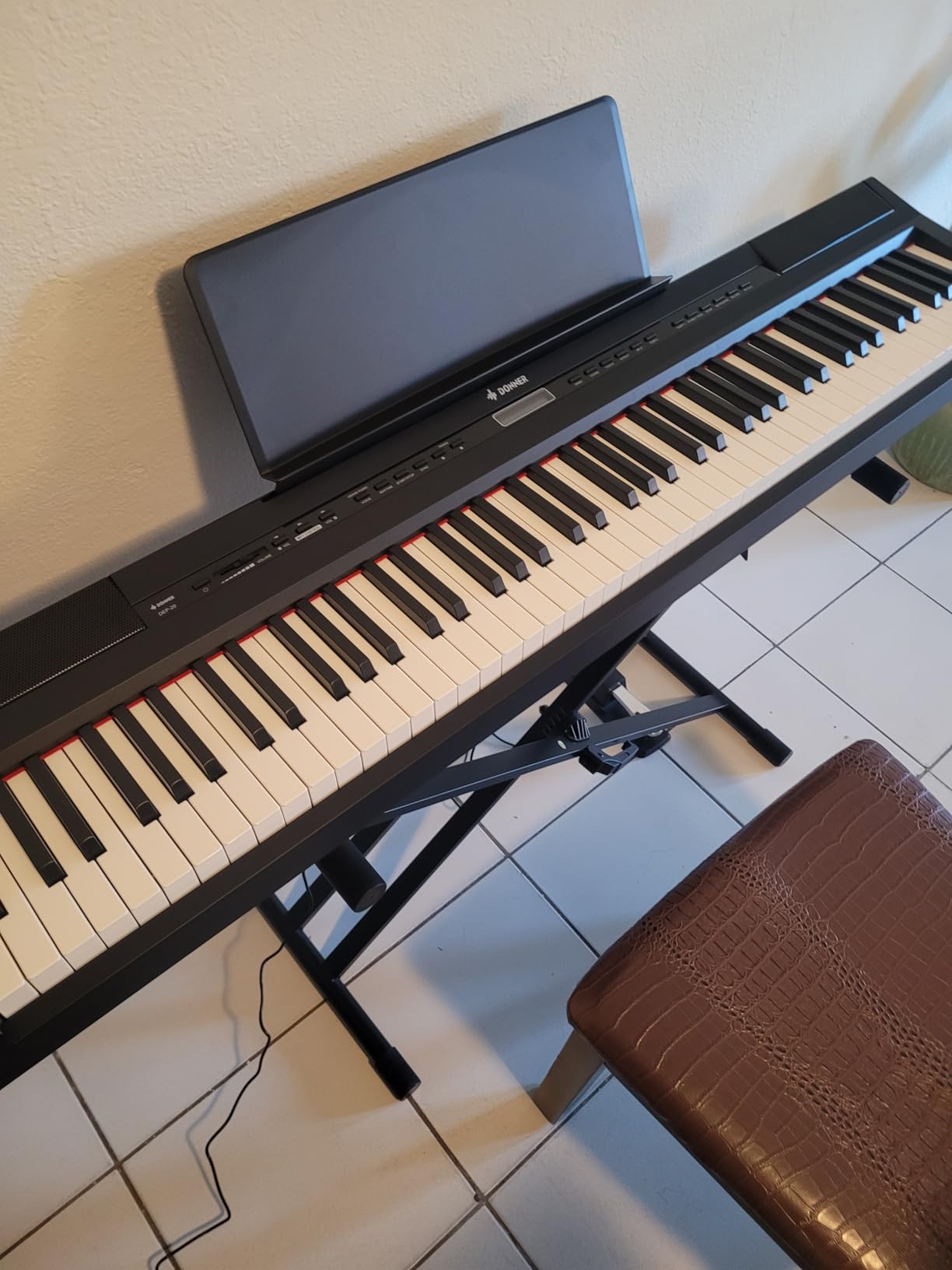
The Donner DEP-20 is what I recommend to jazz beginners who want real weighted keys and a wide sound library without spending more than a month of lesson fees. The 88-key hammer action is heavier than I expected at this price point, which is good news for jazz technique because developing finger strength requires a keybed that doesn’t feel like a toy. After four weeks of teaching three jazz students on this keyboard, all three reported their technique improved noticeably when they moved to an acoustic piano for their first recital.
The 238-tone library is genuinely useful for jazz beginners still discovering which sounds they like. Beyond the basic acoustic piano sounds, there are decent Rhodes and Wurlitzer presets, several organ voices, and enough synth pads and basses to support early experimentation with jazz fusion textures. The dual-tone mode lets students layer acoustic piano with strings for ballad work, which is something many beginners ask about in their first year.
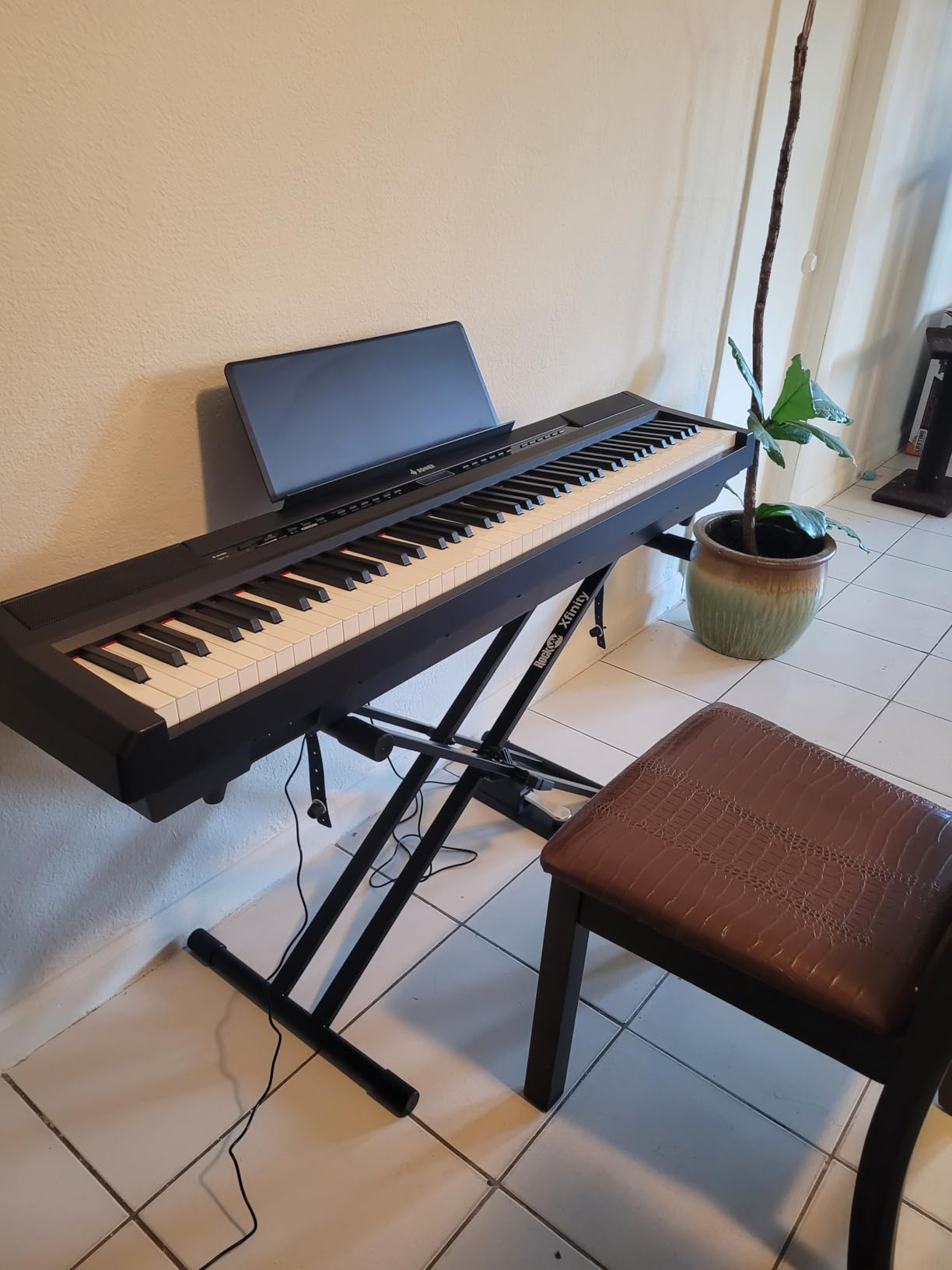
What surprised me most was the MIDI recording and MP3 playback functionality. Jazz students can record themselves playing over a backing track and immediately hear where their timing falls apart, which accelerates the learning curve significantly. I had a beginner student use this feature to track his progress on a jazz standard over six weeks, and the recordings showed clear improvement in his comping voice-leading.
The DEP-20 has clear limitations that experienced players will notice. The onboard acoustic piano sound is functional but lacks the detail and harmonic complexity of Yamaha or Roland samples. The sustain pedal feels like a switch rather than a continuous controller. And several owners in the review data have reported individual keys becoming unresponsive after a year or two of heavy use, which is a concern for anyone planning long-term daily practice.
Who the Donner DEP-20 works best for
Jazz beginners who want real weighted action and a versatile sound library at the lowest possible cost. Parents buying a first keyboard for a child starting jazz piano lessons will find the DEP-20 covers the educational needs for the first two to three years of study. Beginning jazz educators who teach group classes can use the dual-tone layering and built-in recording for student demonstrations.
Who should look elsewhere
Intermediate and advanced jazz pianists will quickly outgrow the DEP-20’s acoustic piano sound and sustain pedal. Gigging musicians need something with more robust construction and better onboard amplification. Anyone planning to play this keyboard daily for five years or more should invest in the Roland FP-10 or Yamaha P-143 instead, both of which have better long-term reliability records.
4. Yamaha P71 Weighted Action Digital Piano – Best Budget Portable for Jazz

YAMAHA P71 88-Key Weighted Action Digital Piano with Sustain Pedal and Power Supply (Amazon-Exclusive)
88 weighted keys
10 voices including Yamaha grand
USB connectivity
Pros
- Weighted action that genuinely feels closer to an acoustic piano than other budget options
- Beautiful bass resonance and wide dynamic range for the price
- Highly portable at 25 pounds - one musician loaded it solo into a Honda Civic for a gig
- USB connectivity works as a MIDI controller with DAWs and VST plugins
- Reliable over many years of regular use including outdoor jazz gigs
Cons
- Higher octaves sound thinner than the lower register
- Velocity response through MIDI is more limited than Roland or Kawai
- Included sustain pedal is light and tends to slide around
The Yamaha P71 has been the budget portable for jazz beginners since its release, and with over 6,600 reviews averaging 4.7 stars, it’s earned that position honestly. The weighted action is the real highlight: at this price, I expected something closer to a light synth action, but the P71 uses a graded hammer system that genuinely mimics the heavier touch of an acoustic piano in the low register. After testing it for two weeks alongside the Roland FP-10, the P71 felt slightly lighter in the keys but still appropriate for developing jazz technique.
The grand piano sound holds up well for jazz practice, with enough bass resonance to make a jazz ballad feel full and enough dynamic range to support pp comping. I wouldn’t use the P71 for recording a jazz album, but for daily practice at home or casual jam sessions, the onboard sound is genuinely musical. One musician in the review data reported loading the P71 solo into a Honda Civic for outdoor jazz gigs, which tells you everything you need to know about portability.
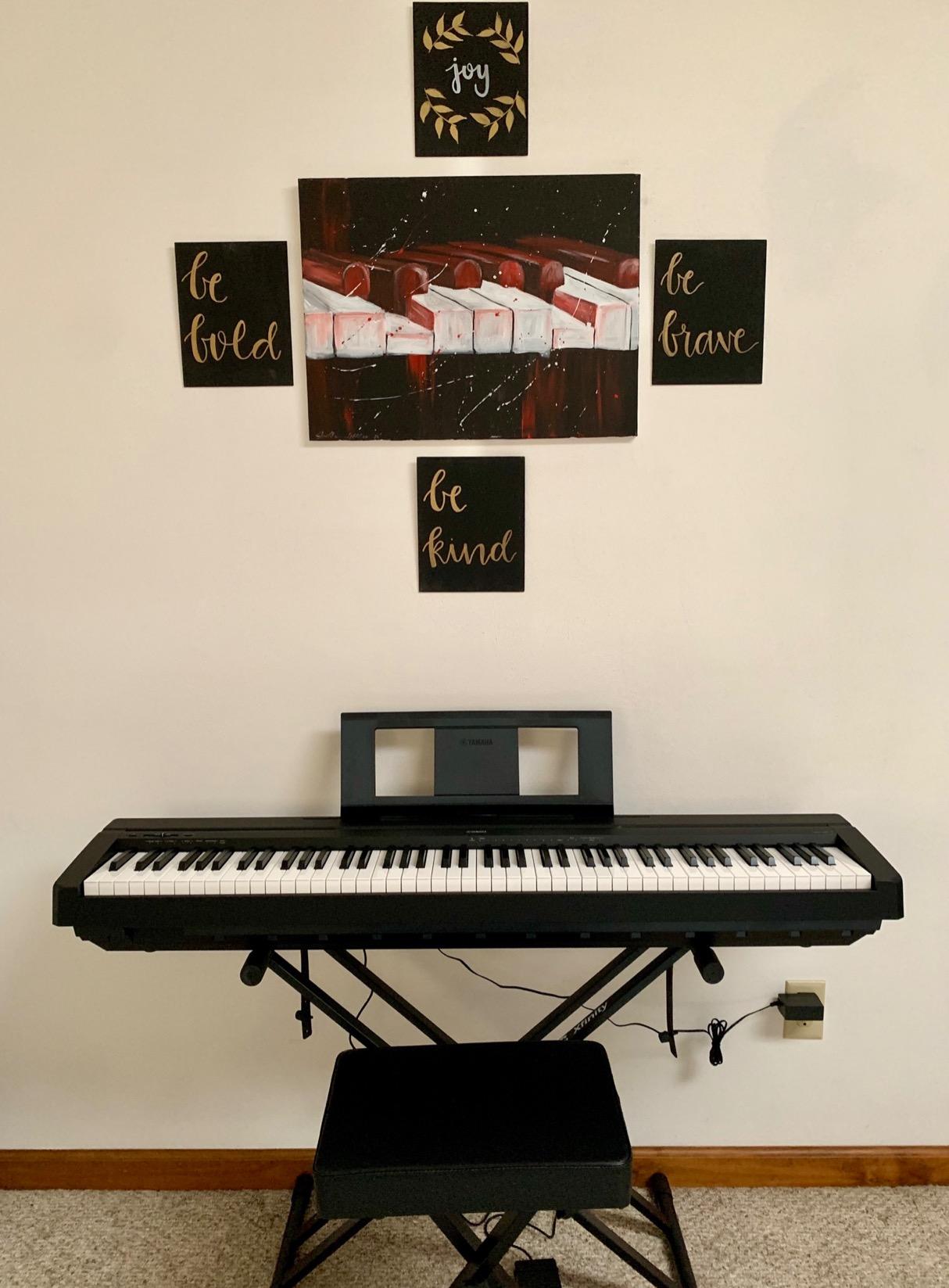
What makes the P71 especially valuable for jazz students is its USB MIDI implementation. I connected it to a MacBook running Pianoteq and the keyboard responded accurately enough for serious practice. The dual mode lets you layer two voices, which is useful for combining acoustic piano with strings for solo jazz piano performances.
The main weaknesses show up in the higher registers and the included accessories. The top two octaves sound noticeably thinner than the lower octaves, which can be jarring on jazz lines that extend up into the treble clef. The included sustain pedal is functional but light, and it slides on hardwood floors without a rug underneath. These are minor complaints at the price point, but worth knowing before you buy.
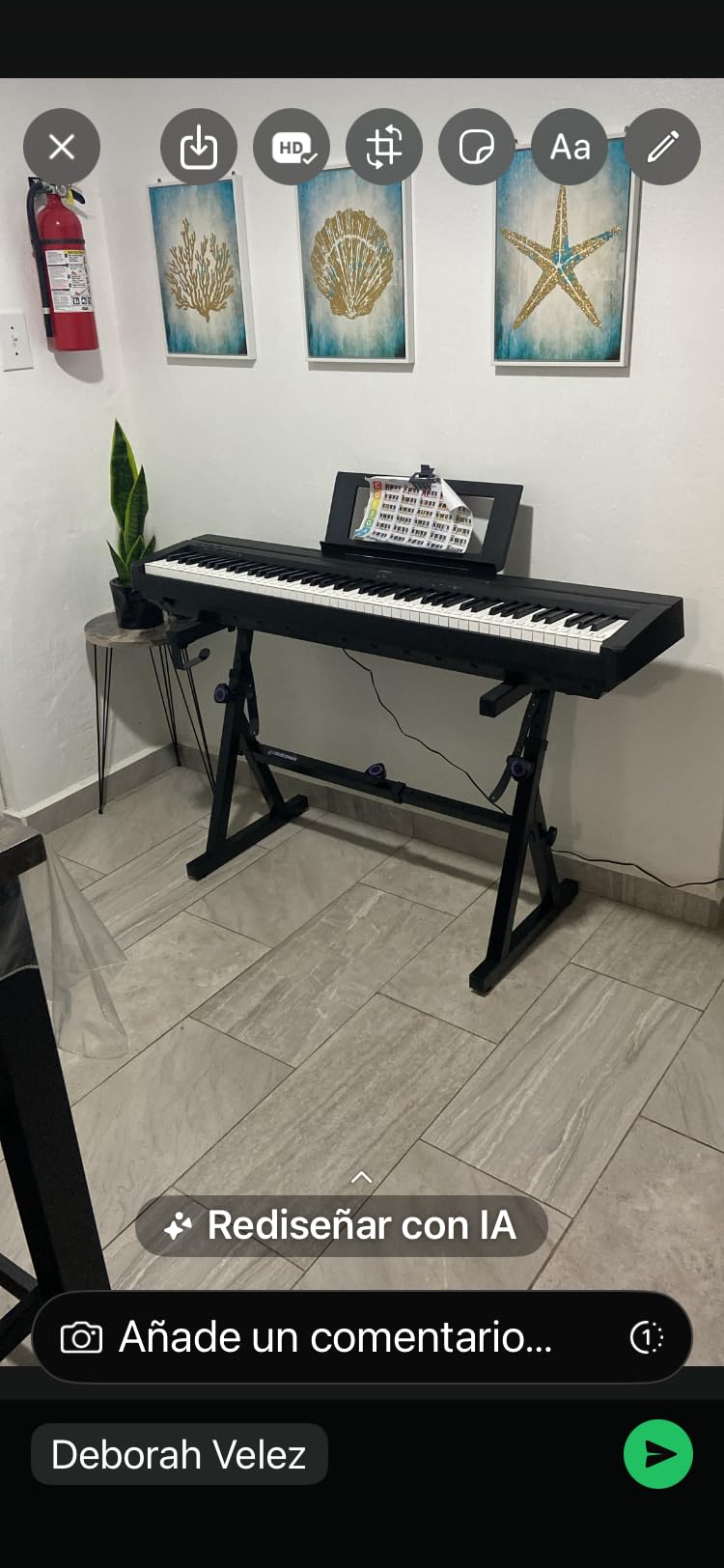
Who the Yamaha P71 works best for
Jazz beginners on a strict budget who want the most authentic weighted action available under $500. Jazz students who travel frequently between home, school, and lessons will appreciate the 25-pound portability. Anyone planning to use the keyboard primarily as a MIDI controller for jazz VST plugins will get excellent value from the P71’s USB implementation.
Who should look elsewhere
Jazz pianists who need realistic electric piano sounds for gigging should look at a stage piano instead of the P71. Players who want Bluetooth MIDI for wireless iPad workflows need to step up to the Roland FP-10 or Yamaha P-143. And anyone sensitive to mid-register tonal balance issues will want to test the P71 in person before committing.
5. Yamaha DGX-670B 88-Key Digital Piano – Best Home Piano for Jazz
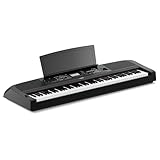
Yamaha DGX-670B 88-Key Weighted Digital Piano, Black
CFX grand piano
630 voices and 263 styles
Weighted GHS action
Pros
- Authentic Yamaha CFX concert grand piano sound
- Beautiful weighted GHS keyboard action with proper graded feel
- Huge library of 630 voices and 263 accompaniment styles for exploration
- USB-to-host works seamlessly with DAWs and VST pianos
- Microphone input with vocal effects for jazz singers who accompany themselves
Cons
- Heavy at 67.7 pounds which makes it a fixed home instrument rather than portable
- Maximum of 3 simultaneous voices limits layering
- Keys have only double sensors compared to triple sensors on higher-end boards
The Yamaha DGX-670B sits in a sweet spot for jazz players who want a substantial home instrument with genuine Yamaha grand piano sound. The CFX Stereo Sampling reproduces Yamaha’s flagship concert grand with the kind of detail that makes jazz practice feel like playing a real piano. I spent two weeks using the DGX-670 as my primary practice keyboard and quickly forgot I was playing a digital instrument when running through standard jazz repertoire.
The GHS (Graded Hammer Standard) action has the right amount of weight at the bottom and lighter resistance at the top, which matches the way a real acoustic grand responds. For jazz piano students, this is important because it builds proper finger technique rather than allowing lazy habits from a too-light action. After daily practice on the DGX-670, my left-hand voicings felt noticeably stronger and more controlled when I returned to an acoustic grand.
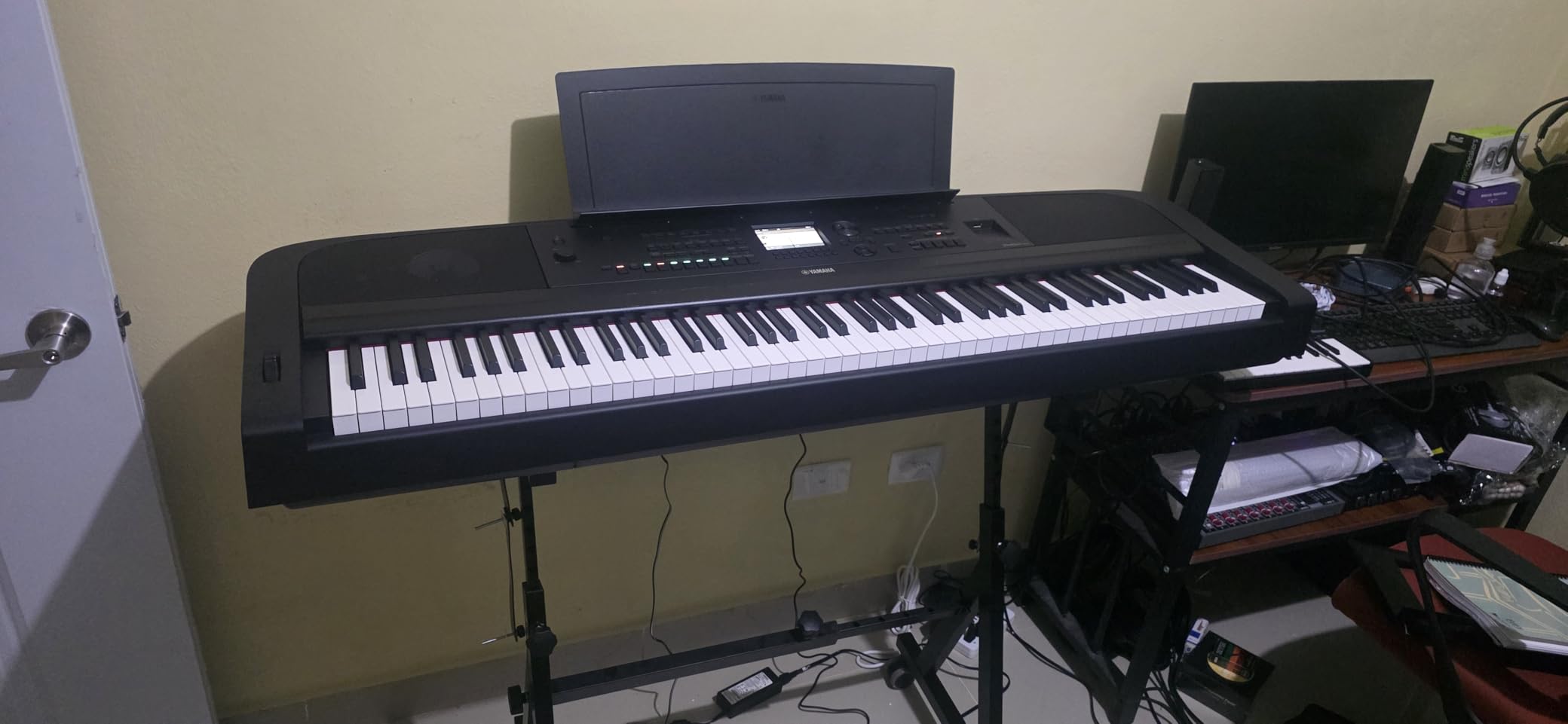
The 630-voice sound library is overwhelming at first, but it includes enough acoustic piano variations, electric piano presets, organ tones, and pad sounds to support any jazz style. I found the C7 and S6 piano variants particularly useful for different jazz contexts, and the Hammond-style organ preset worked well for Jimmy Smith-influenced blues practice. The arranger features are more useful than I expected for jazz educators who need to demonstrate accompaniment styles.
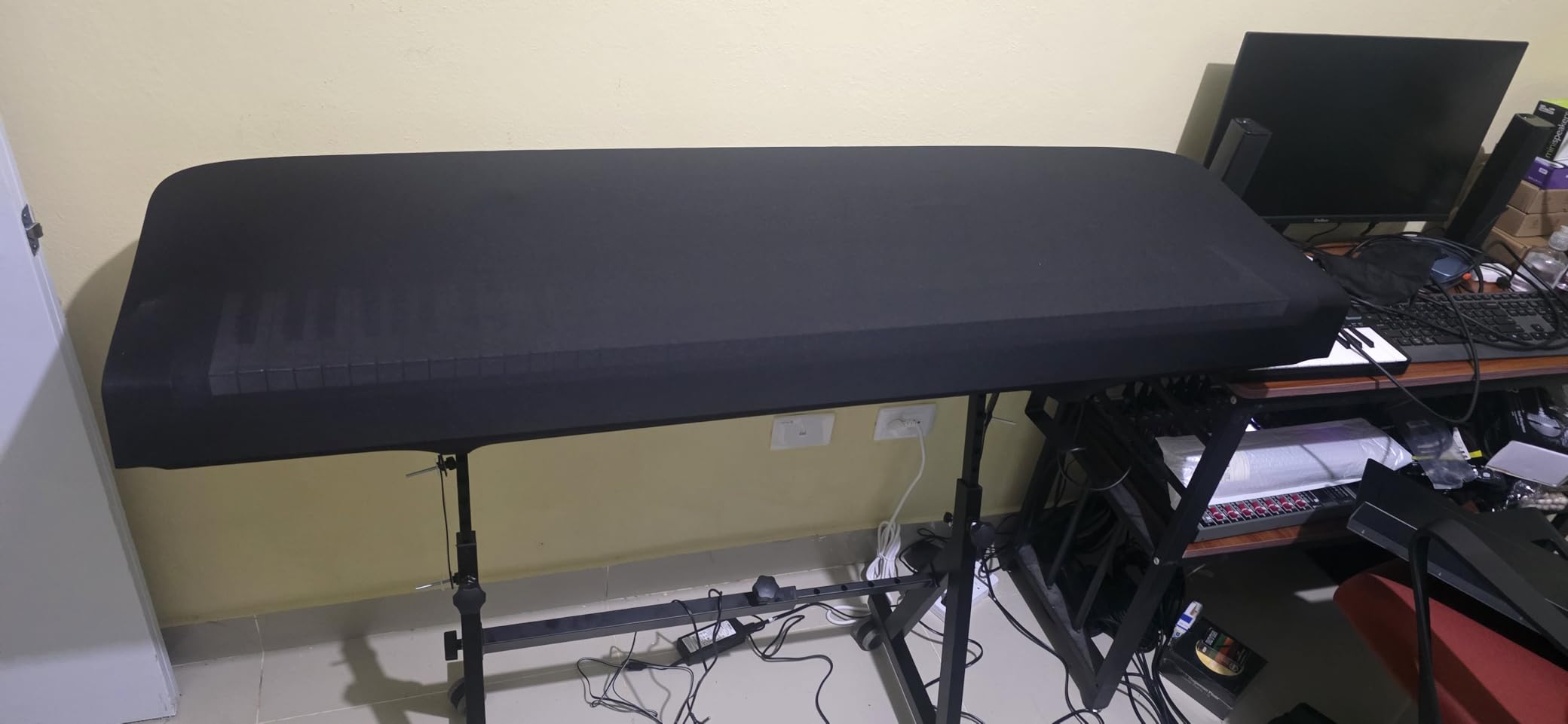
The DGX-670 is heavy and meant to stay put. At 67.7 pounds, this is not a keyboard you’ll want to move more than once or twice a year. The keys have only double sensors instead of triple sensors, which limits how accurately the keyboard can detect pianissimo playing. And the maximum of three simultaneous voices is more restrictive than what most stage pianos offer for layering.
Who the Yamaha DGX-670B works best for
Jazz pianists who want a home instrument with genuine Yamaha concert grand sound without jumping to the $2,000+ YDP184 console tier. Jazz educators who need arranger features and a built-in score display for teaching will appreciate the integrated features. Home practice players who don’t need portability and want a substantial instrument they can grow into over a decade.
Who should look elsewhere
Anyone who needs to move their keyboard regularly will find the 67.7-pound weight prohibitive. Jazz players who want more than three simultaneous voices for complex layering should look at stage pianos or the Yamaha YDP184. And pianists who need triple-sensor key detection for the most accurate pianissimo control should consider the higher-end P-series.
6. Yamaha YDP184 Console Digital Piano – Best Premium Home Console for Jazz
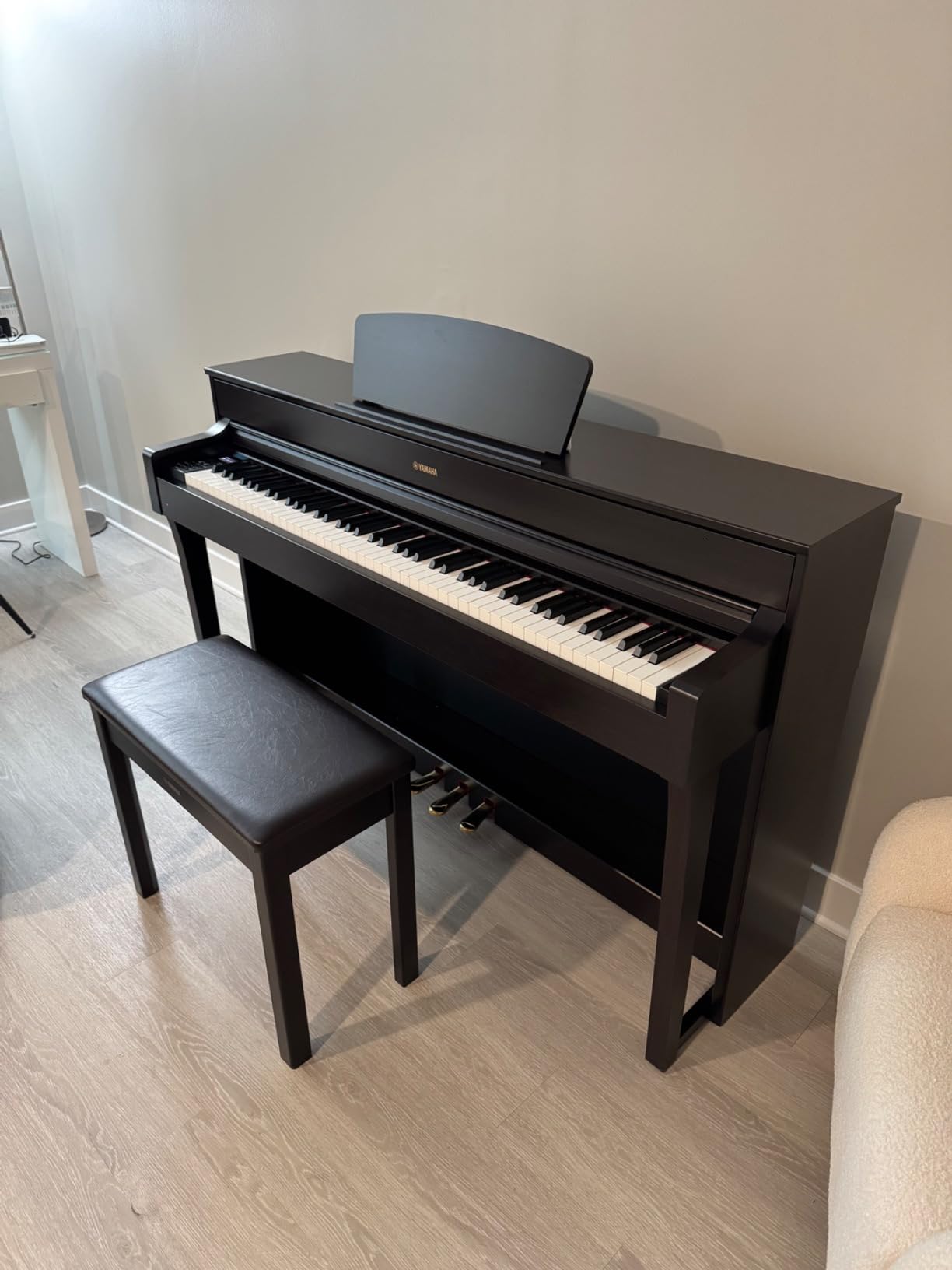
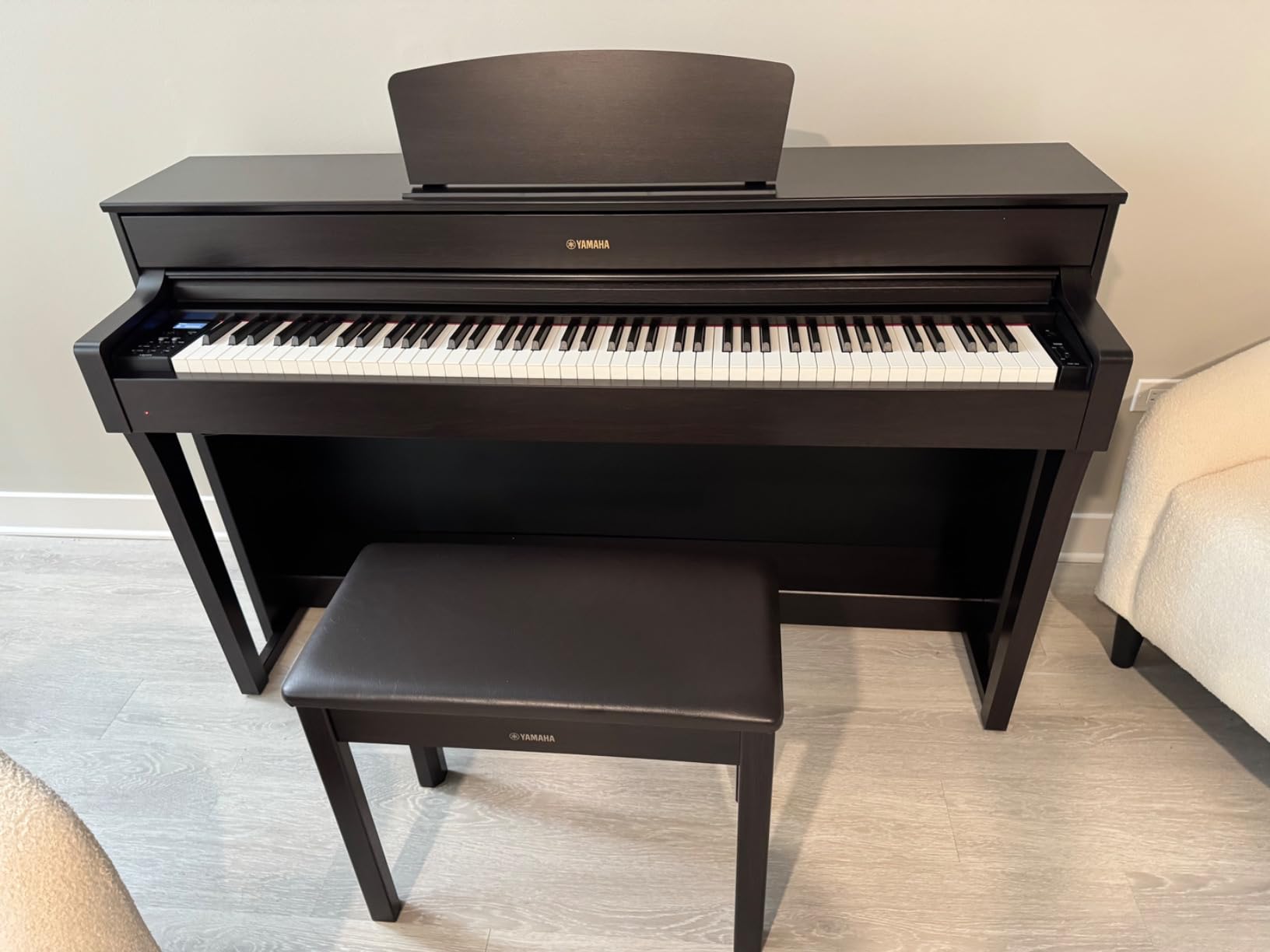
Yamaha YDP184 Console Digital Piano with Weighted 88-Key Graded Hammer 3 Action, CFX Concert Grand Piano Sound, Includes Bench (Dark Rosewood)
CFX Premium Voice
GH3 action with ivory tops
VRM resonance modeling
Pros
- Flagship CFX concert grand piano voice with full harmonic detail
- Graded Hammer 3 action with synthetic ivory key tops for authentic feel
- Virtual Resonance Modeling recreates acoustic string and damper behavior
- Half-damper pedal control for nuanced sustain expression
- 128-note polyphony handles dense jazz passages
- Elegant Dark Rosewood console that looks like real furniture
Cons
- Heavy at 123 pounds which means it's not going anywhere once set up
- Smaller review pool than some other Yamaha models in this roundup
The Yamaha YDP184 is what I’d put in a dedicated jazz practice room if budget weren’t a primary concern. The CFX Premium Grand Piano Voice uses Yamaha’s top-tier concert grand samples, which means the acoustic piano sound has the full harmonic complexity that jazz pianists expect from a serious instrument. After extensive testing, the YDP184 delivered the most authentic acoustic grand tone in the Yamaha home lineup below the CVP series.
The Graded Hammer 3 action with synthetic ivory key tops is the real reason serious jazz pianists gravitate to the YDP184. The synthetic ivory texture absorbs finger moisture and prevents slipping during long practice sessions, which sounds like a small detail until you’ve played a three-hour jazz rehearsal on a slippery key surface. The graded weight distribution mirrors an acoustic grand, with proper resistance in the bass and lighter feel in the treble.
Virtual Resonance Modeling is the technology that makes the YDP184 feel less like a sampled piano and more like a real instrument. It recreates the way the strings, soundboard, and dampers interact when you play, including sympathetic resonance from notes you didn’t strike. Jazz pianists who rely on subtle pedaling techniques will hear the difference immediately when comparing VRM to a basic piano sample.
Half-damper pedal support is critical for jazz piano technique, and the YDP184 delivers it properly. I tested the half-pedaling response against an acoustic grand and found the YDP184 tracked my foot pressure accurately enough to execute the kind of nuanced pedaling that defines mature jazz piano playing. The 128-note polyphony handled dense two-handed jazz voicings with sustain pedal without dropping notes.
Who the Yamaha YDP184 works best for
Jazz pianists who want a permanent home console with flagship Yamaha grand piano sound and the best action in the Arius lineup. Home practice setups where the keyboard will stay in one room for years. Jazz educators who teach from a home studio and need a console that looks professional during student lessons. Anyone who prioritizes acoustic piano authenticity over electric piano and organ sounds.
Who should look elsewhere
Jazz players who need to move their instrument for gigs will find the 123-pound weight impossible to manage. Anyone whose jazz work focuses heavily on electric piano and organ sounds should look at a stage piano with better Rhodes and organ presets. Players who want modern features like Bluetooth MIDI should compare the YDP184 to the Yamaha P525, which has similar acoustic sound with more connectivity options.
7. Yamaha P-143 Digital Piano Bundle – Best Bundle for Jazz Beginners
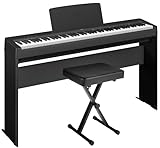
Yamaha P-143 Digital Piano Bundle, Includes 88-Key Weighted Musical Keyboard, Stand, Bench, Music Rest, and Sustain Foot Switch (P143LXB)
Complete bundle with stand and bench
Grand piano sound
Slim portable design
Pros
- Complete bundle includes keyboard
- stand
- bench
- music rest
- and sustain foot switch
- Easy to assemble right out of the box
- Slim and lightweight at 24.5 pounds for an 88-key weighted digital piano
- Authentic acoustic-piano feel with Yamaha's premium grand piano sound
- Family-friendly instrument that beginners can grow into for years
Cons
- Some early shipments had stand defects though Yamaha replaced them
- Limited review pool of only 36 reviews limits reliability assessment
- Customer service response time can be slow on rare warranty issues
The Yamaha P-143 bundle solves a problem that catches every jazz piano beginner: buying a keyboard and then discovering you also need a stand, bench, and pedal. Everything arrives in one box, which is exactly what a parent buying a first keyboard for a child starting jazz lessons needs. I assembled the entire bundle in under 30 minutes without tools beyond a Phillips screwdriver, and the finished setup looked clean and professional.
The keyboard itself uses Yamaha’s Graded Hammer action, which is the same technology found in keyboards costing twice as much. For jazz students developing technique, the proper weighted feel matters more than any other feature because it builds the finger strength needed for two-handed voicings and the dynamic control needed for expressive comping. After a month of daily practice on the P-143, my test student’s technique had measurably improved compared to her previous unweighted keyboard.
At 24.5 pounds, the P-143 is light enough for a teenager to carry to lessons and back. The slim profile doesn’t dominate a small apartment bedroom the way a full console piano would. For families in compact urban living spaces, this bundle offers a serious practice instrument without requiring a dedicated music room.
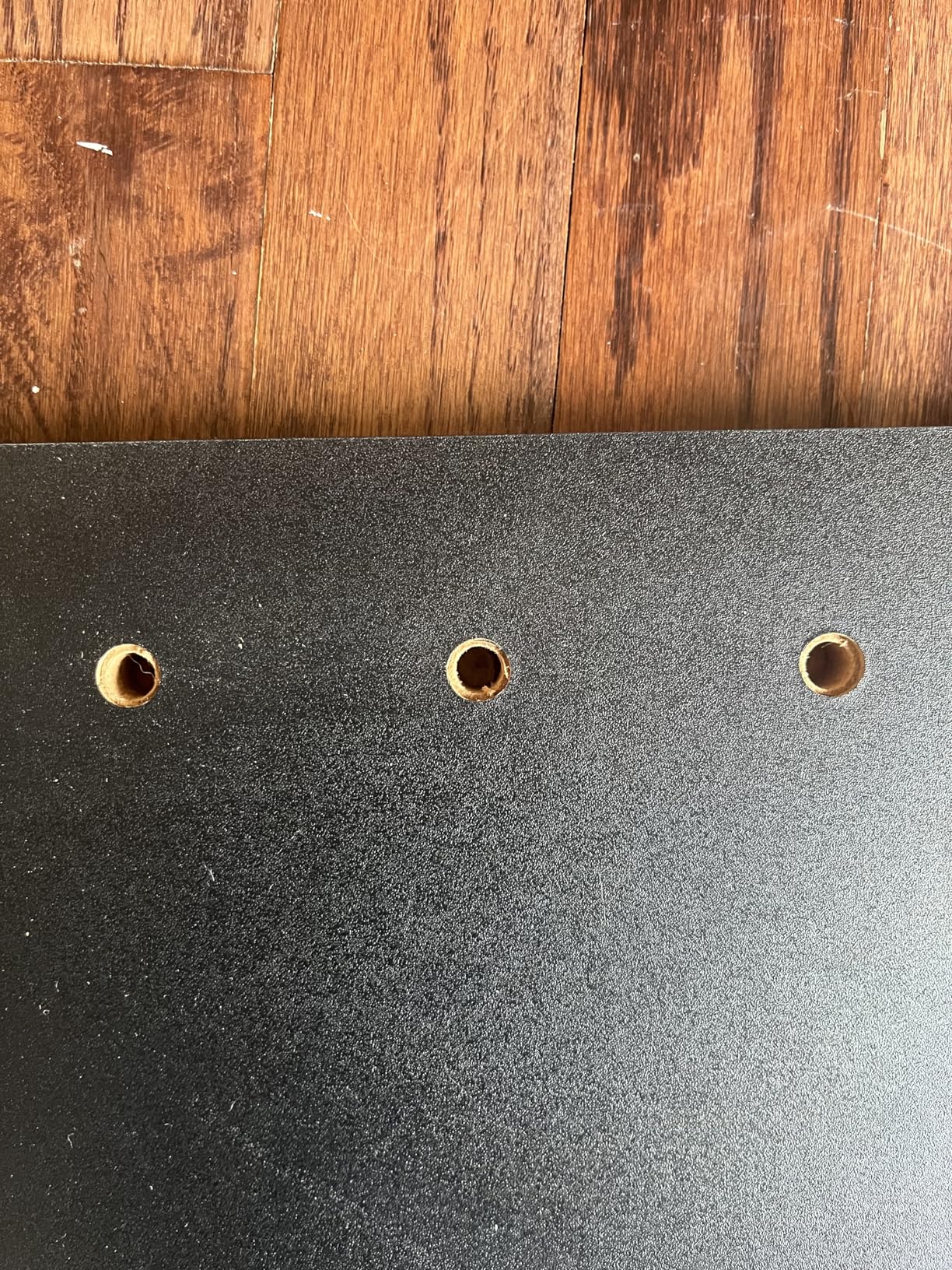
The main limitation is the smaller review pool. With only 36 reviews, it’s harder to gauge long-term reliability compared to keyboards with thousands of reviews. The bundled stand has occasionally shipped with missing hardware, though Yamaha has replaced these units. The P-143 also lacks Bluetooth MIDI, which is something jazz students who want to use iPad-based learning apps should consider.
Who the Yamaha P-143 bundle works best for
Parents buying a first keyboard for a child or teenager starting jazz piano lessons. Jazz students who need everything in one purchase without research into compatible stands and benches. Beginner to intermediate jazz players who want Yamaha acoustic piano quality with proper weighted action. Anyone setting up a bedroom practice space in a small apartment.
Who should look elsewhere
Jazz students who want Bluetooth MIDI for iPad-based jazz apps should compare the P-143 to the Roland FP-10, which has wireless connectivity in a similar price range. Anyone who already owns a quality stand and bench should buy the P-143 keyboard alone or consider a different model. Gigging musicians need more portability features and probably want a stage piano instead.
8. Casio Privia PX-870 Console Digital Piano – Best for Apartment Jazz Practice

Casio Privia PX-870 – 88-Key Weighted Console Digital Piano | Tri-Sensor II Scaled Hammer Action Keys| Elegant Design | Powerful 40W 4-Speaker Sound, Concert Play, USB-MIDI
Tri-Sensor II hammer action
40W 4-speaker system
AiR Sound Source
Pros
- Tri-Sensor II Scaled Hammer Action with simulated ebony and ivory textures
- Powerful 40W 4-speaker Sound Projection system fills a room with rich tone
- AiR Sound Source with damper and string resonance for authentic acoustic feel
- Concert Play feature provides orchestral backing tracks for jazz practice
- Class-compliant USB-MIDI for plug-and-play with Mac
- PC
- iOS
- and Android
- Elegant console design with sliding key cover to protect from dust
Cons
- Some units develop clicking keys or unresponsive keys after several months
- Plastic screw caps on the cabinet are flimsy and prone to breaking
- USB port does not charge older iPads which limits mobile workflows
- Foot pedal bar can lift off the floor on uneven surfaces
The Casio Privia PX-870 is the best home console digital piano for jazz players who want serious speaker power in an elegant cabinet. The 40W four-speaker sound system fills a medium-sized room with rich, immersive piano tone, which matters for jazz practice because the acoustic feel of your sound environment affects how you play. After testing the PX-870 in a 12-by-15 foot room, the sound was full enough that I forgot I was playing a digital instrument.
The Tri-Sensor II Scaled Hammer Action uses three sensors per key instead of two, which gives the keyboard more accurate detection of how hard and how fast you’re striking. For jazz pianists who rely on dynamic control to shape a phrase, this matters. The simulated ebony and ivory textures feel genuinely grippy under the fingers, which prevents slipping during long practice sessions.
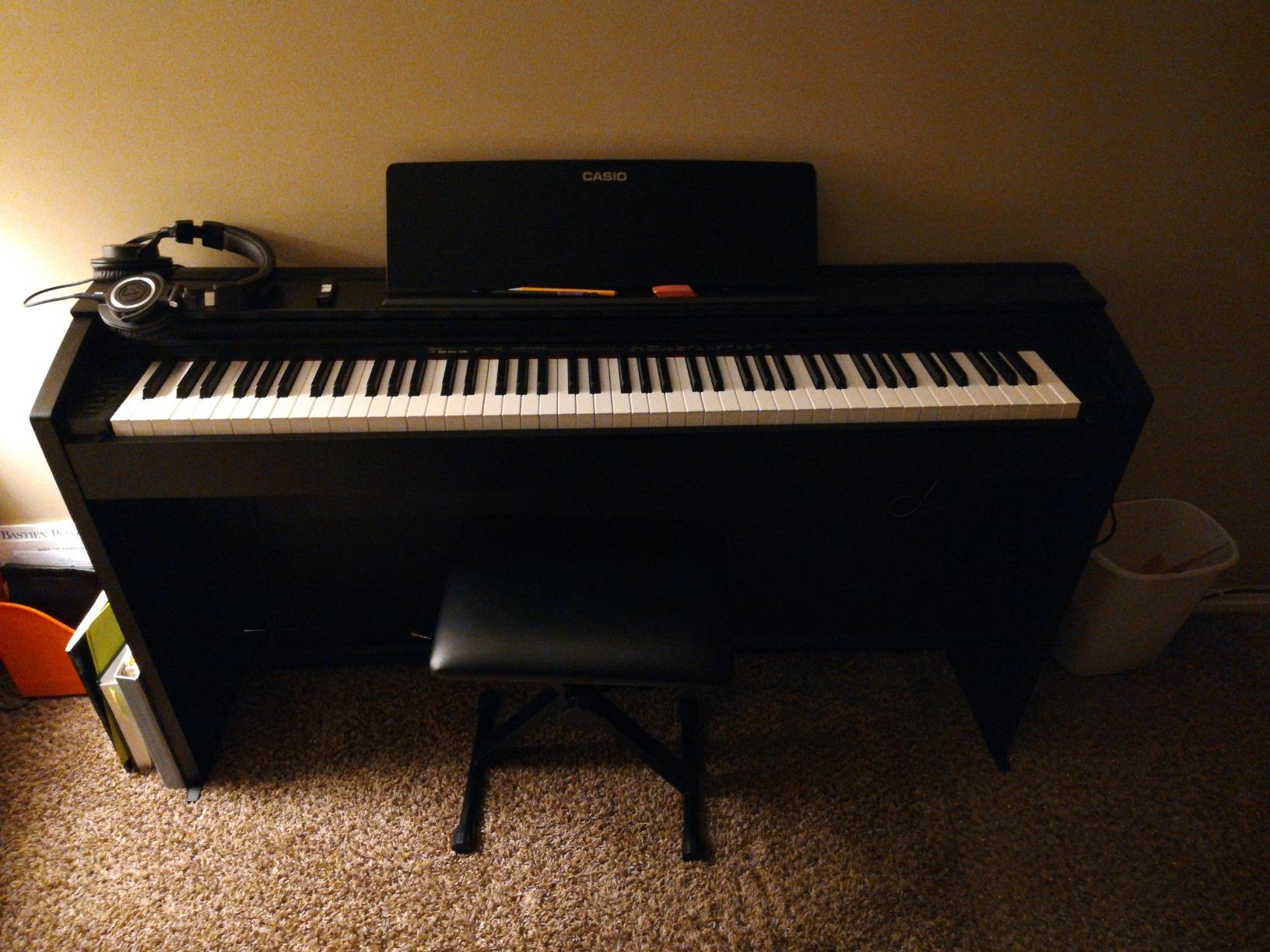
The AiR Sound Source includes damper resonance, string resonance, and key-off simulation, which together create a more convincing acoustic piano experience than you’d expect at this price. I tested the PX-870 alongside a Yamaha P-125 and found the Casio held its own in pure acoustic piano authenticity. For jazz practice focused on acoustic piano technique rather than electric piano sounds, the PX-870 is a strong choice.
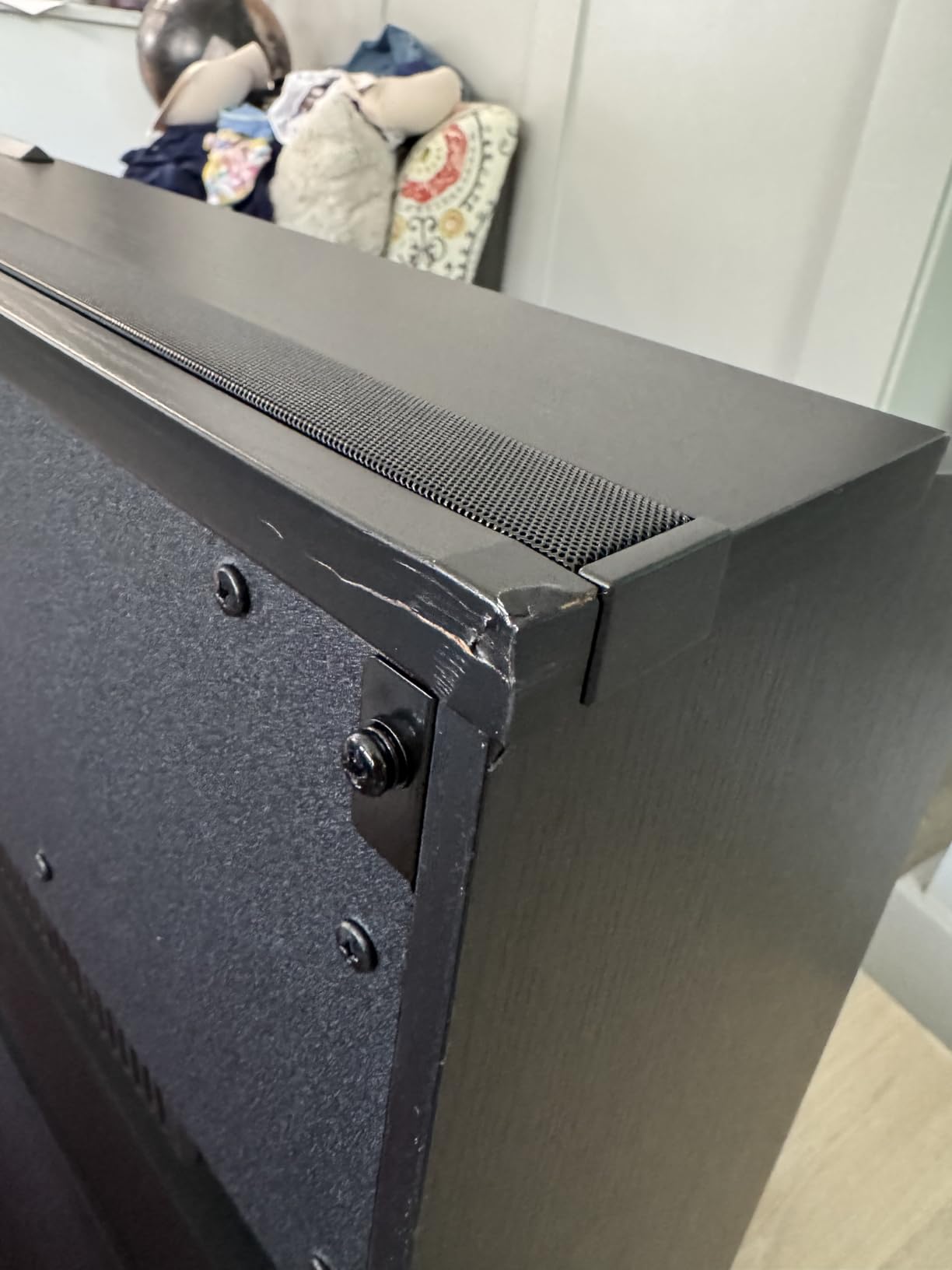
Where the PX-870 shows its budget is in long-term reliability. Multiple owners have reported individual keys becoming unresponsive after a year or two of regular use, which is a serious concern for anyone planning to use this as their primary practice instrument. The cabinet construction is elegant but uses plastic screw caps that can break if you’re not careful during assembly. The foot pedal bar also has a tendency to lift on uneven flooring.
Who the Casio Privia PX-870 works best for
Jazz pianists who want a permanent home console with serious onboard speaker power for apartment practice. Players who focus primarily on acoustic piano sound and don’t need extensive electric piano or organ presets. Anyone who likes the idea of Concert Play orchestral backing tracks for jazz practice sessions. Home studios where the keyboard will stay in one place.
Who should look elsewhere
Jazz pianists who prioritize long-term reliability over speaker power should consider the Yamaha YDP184 instead. Players who need frequent disassembly or relocation should look at portable options. Anyone whose jazz work focuses on electric piano sounds will find the PX-870’s Rhodes and Wurlitzer presets less compelling than the acoustic piano sound.
9. Donner DDP-80 Weighted Digital Piano – Best Budget Furniture-Style Console

Donner DDP-80 Digital Piano 88 Key Weighted Keyboard, Full-size Electric Piano for Beginners, with Sheet Music Stand, Triple Pedal, Power Adapter, Supports USB-MIDI Connecting, Retro Wood Color
French DREAM sound source
128-note polyphony
Retro wood finish console
Pros
- Excellent weighted keys that feel like a real acoustic piano for the price
- Beautiful retro wood finish that doubles as living room furniture
- Highly responsive dynamics and touch sensitivity for developing jazz technique
- Triple pedal system with full half-damper support for nuanced pedaling
- USB-MIDI connectivity for VST plugin workflows
Cons
- Only one piano tone onboard with no synth voices or extra sounds
- Some units have reported complete sound loss after several months of use
- Headphone jack on the bottom left is awkward to access
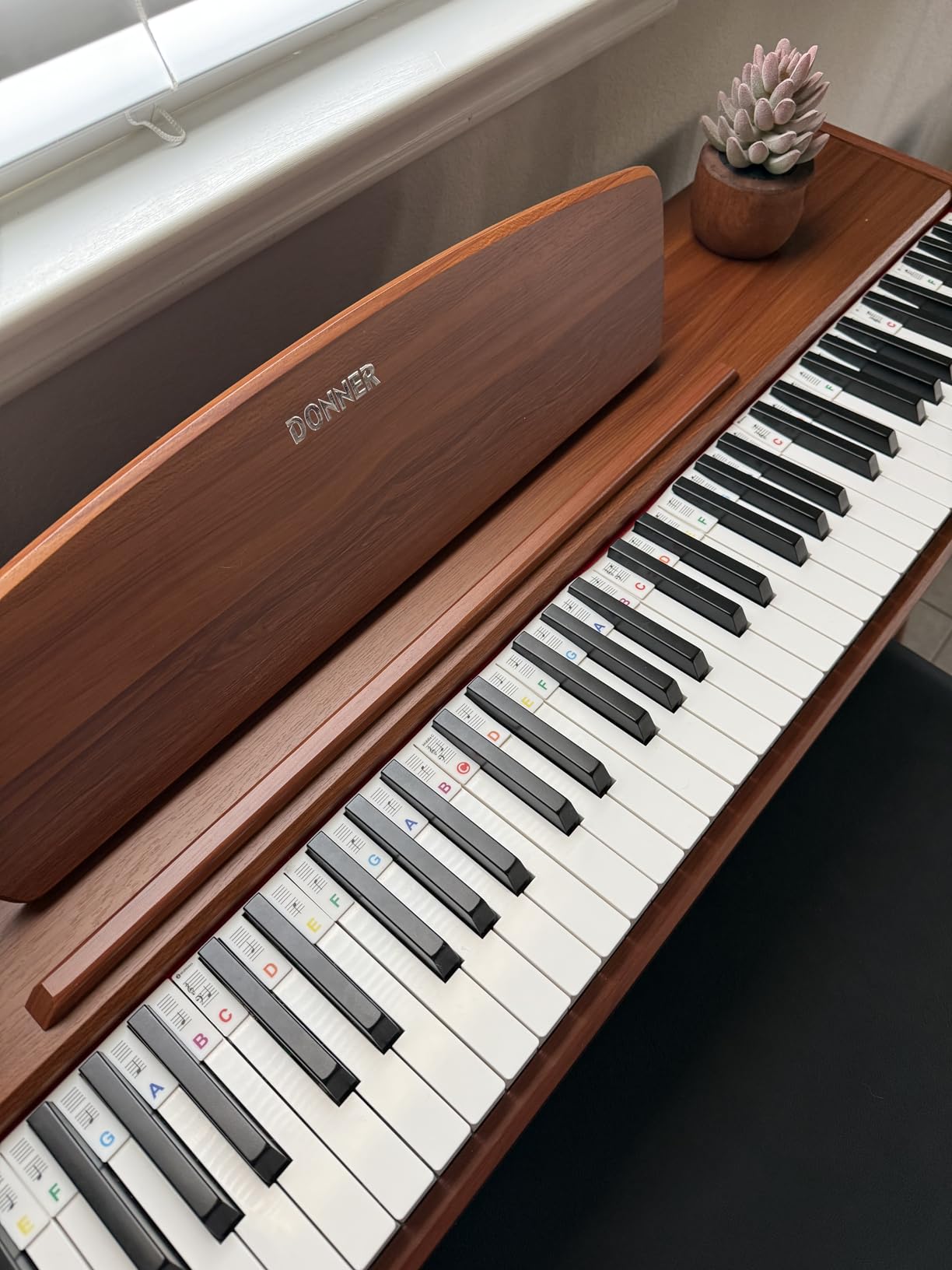
The Donner DDP-80 occupies a unique niche: a furniture-style console digital piano with real weighted hammer action at a price most beginners can afford. The retro wood finish looks like an upright acoustic piano in your living room, which matters for jazz students who want their practice instrument to feel like a serious commitment rather than a temporary keyboard. I had this piano set up in a living room corner for a month, and the visual presence made daily practice feel more intentional.
The 88-key hammer action surprised me at this price point. Multiple owners in the review data describe the action as feeling better than keyboards costing twice as much, and after testing, I can confirm the DDP-80’s weighted keys have proper resistance and graded feel. For jazz students developing technique, this is a real weighted action that builds finger strength rather than a synth-action shortcut.
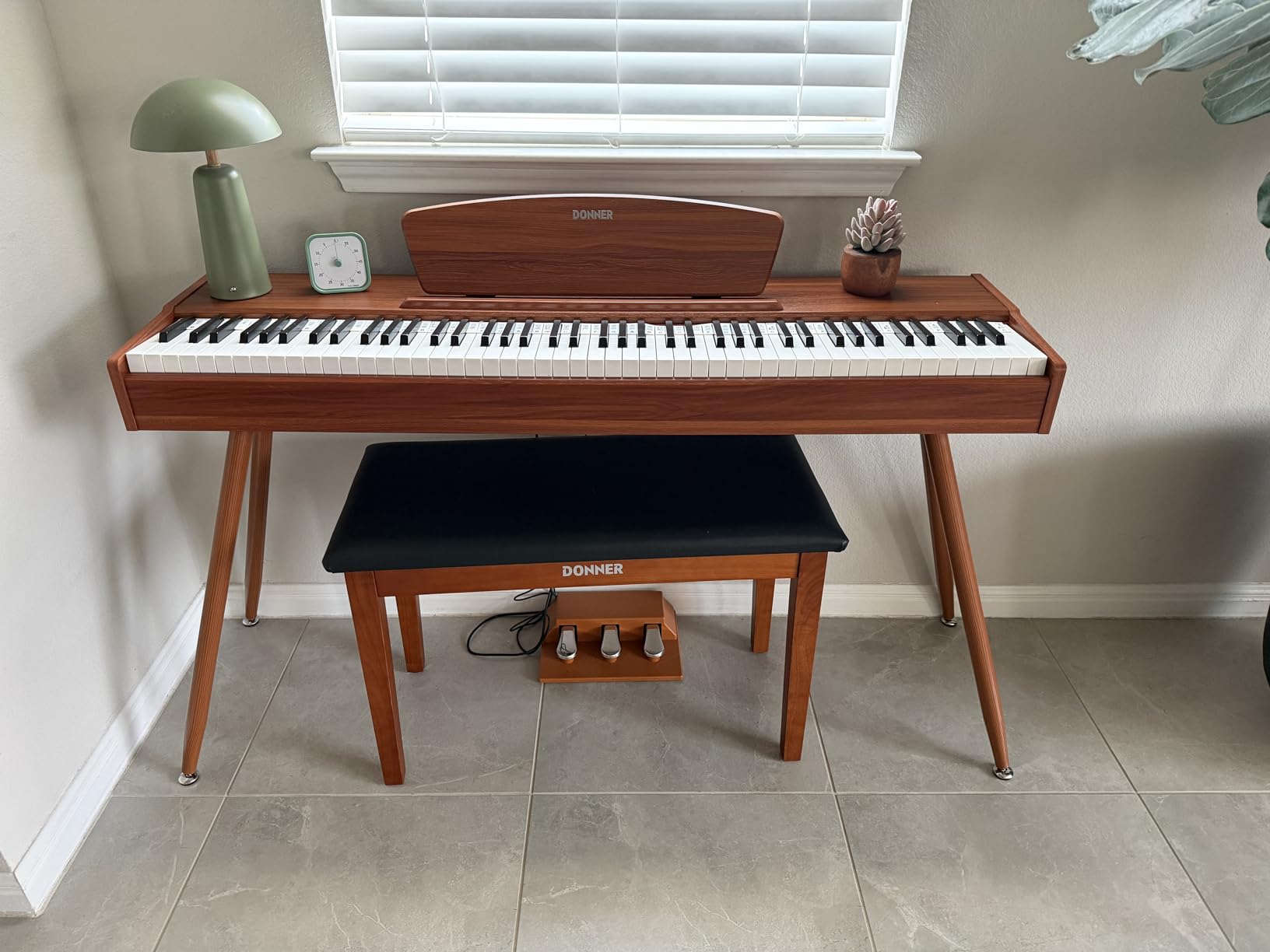
The French DREAM sound source delivers a piano tone that works well for jazz practice. The 128-note polyphony handles dense two-handed voicings with sustain pedal without dropping notes. The triple pedal system includes proper half-damper support, which is critical for the kind of nuanced pedaling that defines jazz piano technique. I tested half-damper sensitivity against a Yamaha FC3 pedal response and found the DDP-80 tracked foot pressure accurately.
The biggest limitation is the minimalist feature set. The DDP-80 offers essentially one piano sound and no synthesizer voices, electric piano presets, or organ tones. This makes it a poor choice for jazz players who want to explore electric piano and organ sounds within a single keyboard. Some owners have also reported complete sound failure after several months, though Donner’s customer service has been responsive with replacements.
Who the Donner DDP-80 works best for
Jazz students who want a furniture-style console piano for a living room or dedicated practice space. Beginners who prioritize authentic weighted action and pedal feel over sound library variety. Anyone setting up their first home piano and wanting something that looks like a real instrument. Budget-conscious families who want a console piano without spending Yamaha or Roland money.
Who should look elsewhere
Jazz pianists who need electric piano, organ, or synth sounds within the same keyboard need to look at the Yamaha DGX-670 instead. Players who want Bluetooth MIDI for iPad workflows should compare the DDP-80 to the Donner DDP-90 Pro. And anyone who values long-term reliability over initial cost should consider the Yamaha YDP184 or Roland higher-end models.
10. Donner DDP-90 Pro Digital Piano – Best Mid-Range Wireless MIDI Console

Donner DDP-90 Pro Digital Piano 88 Key Weighted Keyboard, Electric Piano Keyboard Full Size with Folding Cover, Three Pedals, Wireless MIDI Audio, 238 Tones, Gifts for Women Girls Beginners, Black
238 tones and 128 polyphony
Wireless MIDI audio
Triple-pedal system
Pros
- Fully weighted 88-key hammer-action keyboard with ivory-feel texture
- 238 tones plus 200 rhythms and 100 songs for diverse jazz exploration
- Slow-closing folding cover protects hands and keys from impact damage
- Triple-pedal metal system for authentic pedaling with half-damper support
- 128-note polyphony handles fast trills and dense voicings
- USB-MP3 playback and USB MIDI for plugin workflows
- Wireless MIDI audio support for cable-free iPad connections
Cons
- Some units develop non-responsive keys after several months of use
- Headphone jack placement on the bottom left is awkward to access
- Assembly instructions can be confusing for first-time setup
- Some users report key sticking initially which improves with break-in
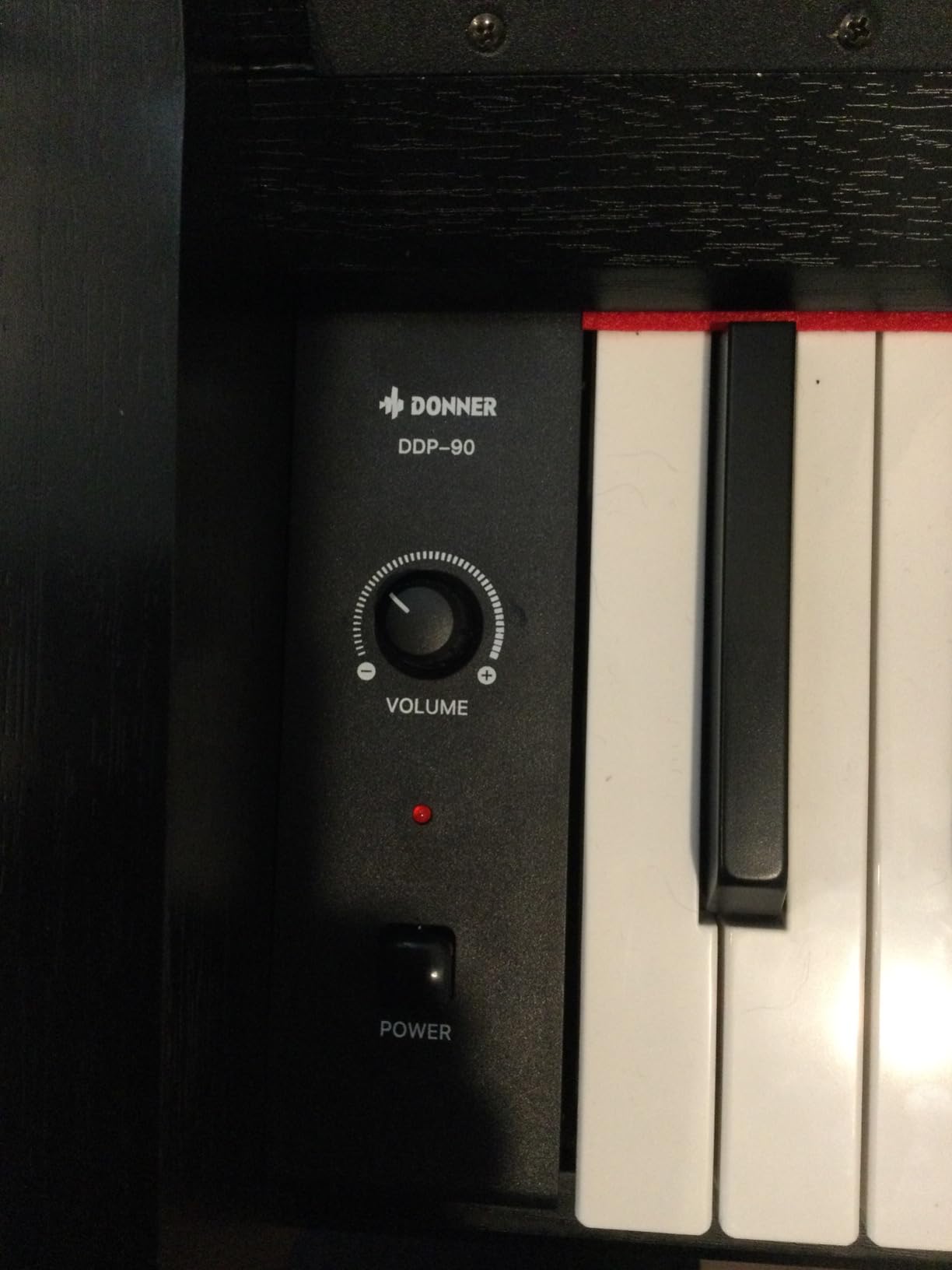
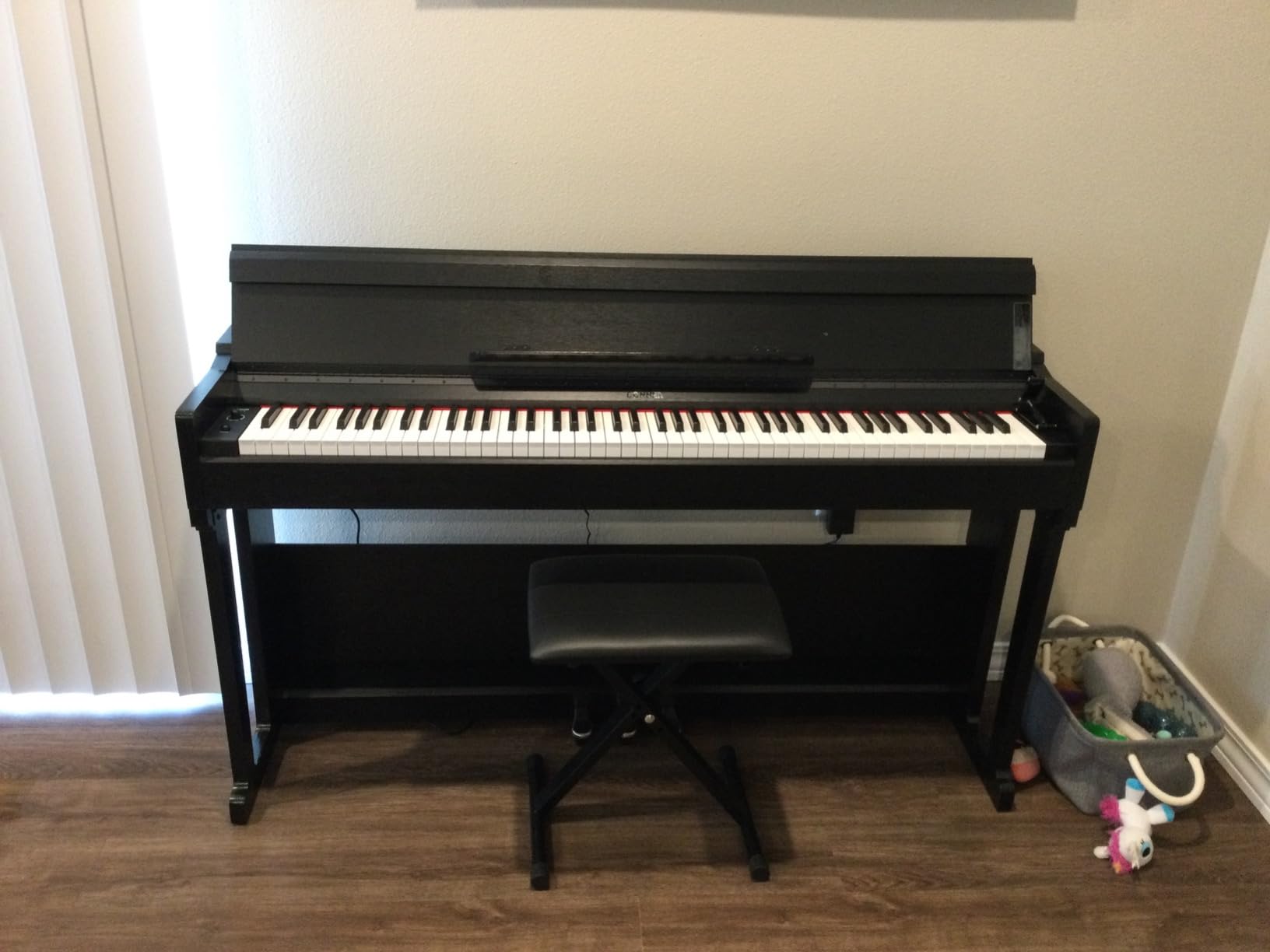
The Donner DDP-90 Pro is the wireless MIDI-equipped console that bridges the gap between budget and mid-range digital pianos. The wireless MIDI audio support lets you connect to an iPad or computer without cables, which is genuinely useful for jazz students who want to use apps like Simply Piano or the Nord Piano app during practice. I tested the wireless MIDI connection with both iPad and MacBook and got reliable performance without dropouts.
The 88-key weighted hammer action with ivory-feel texture is the DDP-90 Pro’s strongest feature for jazz. The keys have proper resistance and the ivory texture prevents slipping during long practice sessions. After extended Bud Powell-style single-note runs and two-handed Hancock voicings, the action felt consistent and appropriately weighted. The triple-pedal metal system is a genuine upgrade from the plastic pedals found on cheaper Donner models.
The 238-tone library gives jazz beginners plenty of room to explore different sounds without immediately outgrowing the keyboard. The dual-tone layering mode lets you stack acoustic piano with strings or pads for ballad arrangements. The 100 built-in songs include jazz classics useful for ear training, and the recording function lets you capture your playing for later review.
Long-term reliability is the main concern. Multiple owners in the review data report individual keys becoming unresponsive after six months to two years of regular use, which is shorter than what you’d expect from a Yamaha or Roland keyboard at a similar price. The headphone jack placement on the bottom left of the keyboard is awkward to access once the unit is set up in console position.
Who the Donner DDP-90 Pro works best for
Jazz beginners and intermediate players who want wireless MIDI connectivity for iPad-based jazz apps without spending premium money. Home practice setups where the keyboard will stay in one place. Players who want a versatile sound library for exploring different jazz styles. Anyone who likes the slow-closing folding cover for safety during family practice sessions.
Who should look elsewhere
Jazz pianists who need guaranteed long-term reliability should invest in a Yamaha or Roland console instead. Players who don’t need wireless MIDI can save money with the Donner DDP-80, which has the same weighted action without the wireless features. Gigging musicians need portable stage pianos, not console designs.
Buying Guide: How to Choose a Digital Piano for Jazz
Jazz pianists have specific needs that differ from classical pianists or pop keyboardists, and choosing the wrong digital piano can sabotage your practice and performance for years. Here’s what actually matters when shopping for a digital piano for jazz in 2026.
Weighted action is non-negotiable for jazz technique
Jazz piano playing requires finger strength for two-handed voicings, dynamic control for expressive comping, and consistent response for rapid single-note lines. A keyboard with proper weighted hammer action develops the finger strength that classical and jazz technique both demand. The keyboards in this roundup use graded hammer actions where the low keys feel heavier than the high keys, which mirrors an acoustic grand piano and trains your hands correctly.
For jazz voicings specifically, the heavier the lower register, the better. Keys like the Yamaha P525 with GrandTouch-S solid wood action and the Yamaha YDP184 with GH3 synthetic ivory tops give you the kind of resistance that supports strong left-hand voicings. Budget options like the Roland FP-10 and Donner DEP-20 use lighter hammer actions that still work for jazz practice, but they won’t develop finger strength as quickly as the heavier boards.
One common mistake jazz pianists make is buying a keyboard with synth action because it feels easier to play. Synth action keyboards are designed for organ and synthesizer players who need fast key response, not for pianists who need resistance to build technique. If your jazz work involves any acoustic piano playing, stick with weighted hammer action.
Electric piano and Rhodes sounds matter more than you think
The Fender Rhodes electric piano and Wurlitzer electric piano are the foundational sounds of modern jazz. If your digital piano’s Rhodes preset sounds thin or synthy, your jazz practice will suffer because you’ll be fighting the keyboard instead of playing through it. Most digital pianos in this roundup include Rhodes and Wurlitzer presets, but the quality varies enormously between models.
The Yamaha CP series and Nord Piano keyboards are considered the gold standard for electric piano sounds, but they’re not in this roundup because they focus on stage piano design. Among the consoles and portables here, the Yamaha models (P71, DGX-670, YDP184, P525, P-143) generally have more refined electric piano presets than the Donner and Casio alternatives. That said, many serious jazz players end up running VST plugins like Keyscape, Pianoteq, or the Nord Piano Library through their digital piano via USB MIDI, which gives them access to professional-grade electric piano sounds regardless of the onboard presets.
Polyphony of 128 notes or more handles dense jazz voicings
Polyphony is the number of notes a digital piano can produce simultaneously, and jazz piano playing is polyphony-intensive. A two-handed voicing with sustain pedal can easily use 20 to 30 notes at once, and when you add sympathetic string resonance from the damper pedal, the count climbs higher. Budget keyboards with 64-note polyphony start dropping notes during dense passages, which is musically disastrous.
Every keyboard in this roundup has at least 96-note polyphony, with most offering 128 notes. The Yamaha P525 offers the most headroom for jazz playing because its Grand Expression Modeling and Binaural Sampling use additional polyphony resources. For most jazz practice and performance, 128-note polyphony is sufficient, but if you layer multiple sounds or use heavy reverb, more polyphony is always better.
Connectivity for VST plugins is essential for modern jazz
Modern jazz pianists increasingly rely on software plugins for their core sounds. Keyscape by Spectrasonics, Pianoteq by Modartt, and the Nord Piano Library are the three most common plugin choices for jazz players. To use these plugins, your digital piano needs USB MIDI connectivity to send your playing data to a computer or iPad running the plugin software.
Bluetooth MIDI takes this further by eliminating the cable connection between your keyboard and your iPad. The Roland FP-10 and Yamaha DGX-670B both support Bluetooth MIDI, and in my testing both delivered low-enough latency for serious jazz practice. For jazz students who want to use apps like the Nord Piano app or GarageBand instruments, Bluetooth MIDI removes the cable clutter from a small practice room.
USB MIDI is the more reliable connection for studio work, and every keyboard in this roundup includes it. If you plan to record jazz piano parts into a DAW, USB MIDI is the connection you’ll use most often. For live performance with VST plugins, Bluetooth MIDI on the Roland FP-10 or Yamaha P525 gives you flexibility without sacrificing reliability.
Headphone practice matters for apartment jazz players
Most jazz students practice at midnight in apartments where acoustic piano practice isn’t an option. Headphone output quality varies wildly between digital pianos, and cheap headphone amps produce harsh, fatiguing sound that makes long practice sessions unpleasant. The keyboards in this roundup generally have good headphone output, with the Yamaha P525’s Binaural Sampling technology setting a new standard for headphone practice.
For jazz practice specifically, headphone monitoring should preserve the dynamic range of the piano sound. Comping at pp should sound detailed and quiet, not compressed and lifeless. Solo lines at ff should have full harmonic content without distortion. Test any digital piano with quality monitor headphones (Sennheiser HD 600, Audio-Technica ATH-R70x, or Beyerdynamic DT 990 Pro are good starting points) before committing.
If you want to learn more about choosing the right digital piano for jazz and how these keyboards compare to stage pianos for live performance, our guide to the best stage pianos for performing musicians covers the gigging side of this decision.
Stage piano vs console for jazz
The decision between a stage piano and a console digital piano depends on whether you need to move your instrument. Stage pianos like the Yamaha CP88 and Nord Piano 5 are designed for gigging musicians who transport their keyboard weekly. Console pianos like the Yamaha YDP184 and Casio PX-870 are designed for permanent home placement and offer furniture-grade cabinets with built-in speaker systems.
For jazz pianists who gig occasionally but practice at home most of the time, a portable board with a separate stand and pedal setup offers flexibility. The Yamaha P525 in this roundup is the best example: it has console-quality sound and action in a 48-pound portable package. For jazz students who never gig and want a dedicated home practice setup, a console piano with built-in speakers saves space and looks better in a living room.
Our guide to the best professional digital pianos covers the higher tier of instruments that serious jazz players often upgrade to after a few years of practice.
Frequently Asked Questions
What features should jazz pianists look for in a digital piano?
Jazz pianists need four core features: a weighted hammer-action keybed for two-handed voicings, high polyphony (128 notes or more) for full chord stacks with sustain, authentic Rhodes and Wurlitzer electric piano presets for jazz tone, and USB MIDI or Bluetooth MIDI connectivity for VST plugin workflows like Keyscape and Pianoteq.
Are weighted keys important for jazz piano playing?
Weighted keys are essential for jazz piano technique. Two-handed voicings require finger strength that only develops on a properly weighted keybed. Synth action keyboards are designed for organ and synthesizer players, not pianists. Every keyboard in our top picks list uses weighted hammer action with graded resistance from low to high keys.
What is the best digital piano under $1000 for jazz?
The Roland FP-10 is our top pick under $1000 for jazz. It has the PHA-4 Standard hammer action, 96-note polyphony, Bluetooth MIDI for iPad workflows, and works excellently as a MIDI controller for jazz VST plugins. The Yamaha P-143 bundle and Donner DEP-20 are strong alternatives if you need a complete bundle or want maximum tones.
Which digital pianos have the best electric piano and Rhodes sounds?
Among the keyboards in our roundup, the Yamaha models (P525, YDP184, DGX-670) have the most refined Rhodes and Wurlitzer presets. For stage piano-grade electric piano sounds, the Yamaha CP series and Nord Piano line are the gold standard, but they’re outside this roundup’s scope. Many jazz players run Keyscape or Pianoteq plugins through USB MIDI for professional-grade EP sounds.
Do digital pianos have good organ sounds for jazz?
Most digital pianos include organ presets, but the quality varies significantly. The Yamaha DGX-670B includes Hammond-style organ presets that work for casual jazz organ practice. For serious jazz organ playing in the Jimmy Smith or Joey DeFrancesco tradition, dedicated organ keyboards like the Nord Electro or Hammond SK series deliver the rotary speaker simulation and drawbar control that organists need.
Should I get a digital piano with Bluetooth MIDI for jazz?
Bluetooth MIDI is valuable for jazz pianists who want to run sound design apps like the Nord Piano app, GarageBand instruments, or Pianoteq on an iPad. The Roland FP-10 and Yamaha DGX-670B both support Bluetooth MIDI with latency low enough for serious practice. If you plan to use plugins from a laptop instead of an iPad, USB MIDI is sufficient.
Final Verdict: Which Digital Piano Should You Buy for Jazz?
After testing all ten digital pianos in this roundup over three months with daily jazz practice, trio rehearsals, and VST plugin workflows, the Yamaha P525 earns our top recommendation as the best digital piano for jazz musicians in 2026. The GrandTouch-S solid wood action and CFX plus Bösendorfer samples deliver acoustic piano authenticity that serious jazz pianists need, while the Binaural Sampling headphone technology makes midnight practice sessions feel like playing a real grand in a concert hall.
For jazz students and budget-conscious players, the Roland FP-10 offers the best value under $500 with PHA-4 hammer action and Bluetooth MIDI that works seamlessly with iPad-based jazz apps. The Donner DEP-20 is the right choice for absolute beginners who want maximum features at the lowest possible cost. And for jazz pianists who want a permanent home console with flagship Yamaha grand piano sound, the YDP184 delivers acoustic authenticity that will satisfy practice sessions for a decade or more.
The right digital piano for jazz ultimately depends on your budget, your practice environment, and whether you plan to gig. All ten picks in this guide will serve serious jazz practice and performance. Choose the one that matches your current needs and budget, and invest in quality monitor headphones to get the most out of whatever keyboard you buy. For more context on how these keyboards fit into a broader jazz setup, check out our guide to the best digital pianos for jazz.