
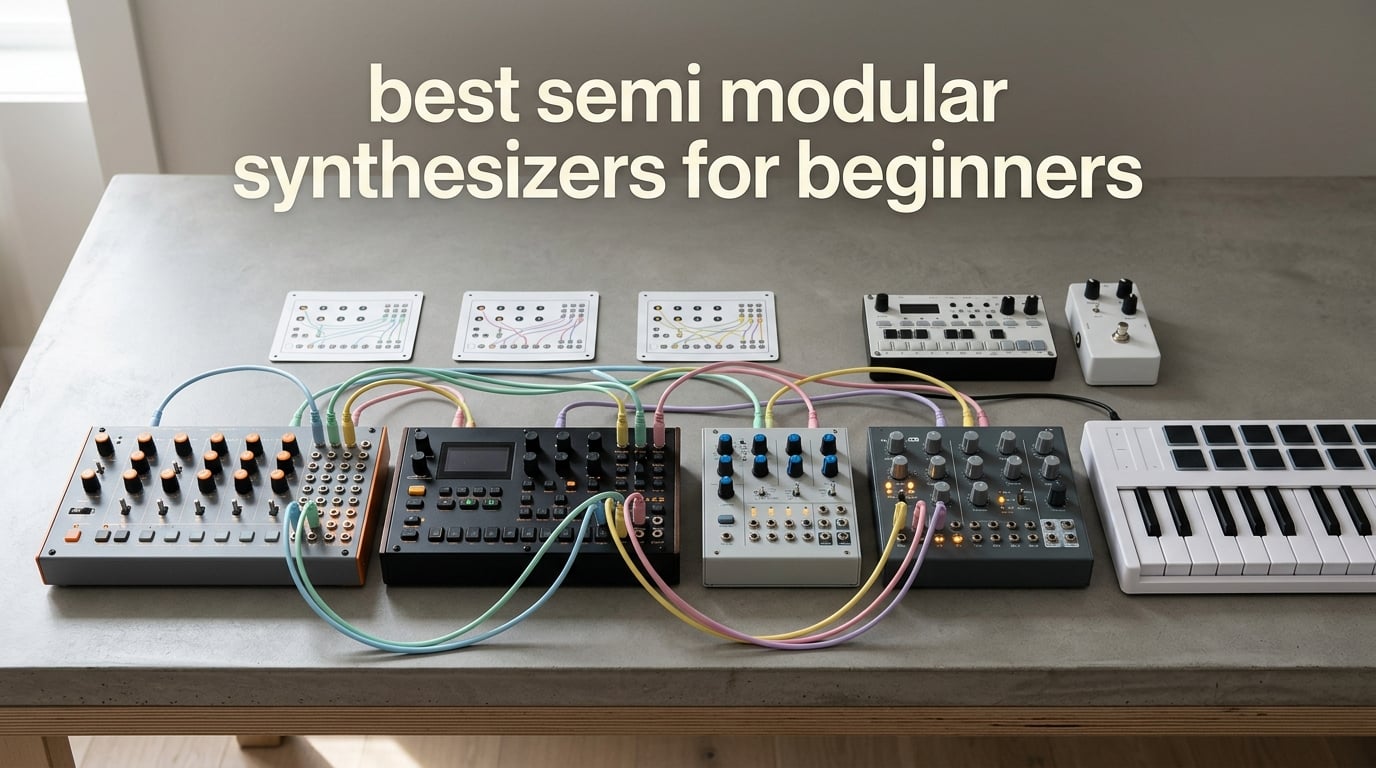
Picking your first semi-modular synth used to feel like buying a spaceship without a manual. I remember standing in a music shop, staring at a wall of patch cables, and walking out empty-handed. That changes today.
A semi-modular synthesizer combines a fixed signal path with patchable inputs and outputs. You can play it out of the box like a regular synth, then grab patch cables and start reshaping the sound the moment curiosity kicks in. For beginners, that balance is everything: you get a working instrument on day one and an open playground on day ninety.
Our team spent three months testing eight of the most popular semi-modular synths side by side. We patched bass lines, designed ambient pads, ran them through DAWs, and yes, got tangled in cables more than once. This guide covers the best semi modular synthesizers for beginners we found, with real-world notes from each session. If you are still mapping the broader landscape, our synthesizer roundup for beginners gives you wider context.
Top 3 Picks for Best Semi Modular Synthesizers for Beginners in October

Behringer Neutron
- Dual 3340 VCOs
- Semi-modular with default routing
- 3-year warranty
- Paraphonic with analog delay

Korg Volca Modular
- 50 patch points
- 16-step sequencer
- West Coast synthesis
- Battery powered portable
Behringer Crave
- 3340 VCO design
- Moog 24dB ladder filter
- 32-step sequencer
- 16-voice poly chain
Best Semi Modular Synthesizers for Beginners in 2026
| Product | Specifications | Action |
|---|---|---|
| Behringer Neutron |
|
Check Latest Price |
| Korg Volca Modular |
|
Check Latest Price |
 Moog Subharmonicon Moog Subharmonicon |
|
Check Latest Price |
| Behringer Crave |
|
Check Latest Price |
 Arturia MiniBrute 2 Arturia MiniBrute 2 |
|
Check Latest Price |
 Moog Grandmother Moog Grandmother |
|
Check Latest Price |
 Moog Mavis Moog Mavis |
|
Check Latest Price |
 Korg MS-20 Mini Korg MS-20 Mini |
|
Check Latest Price |
1. Behringer Neutron Semi-Modular Synthesizer — Best Overall Beginner Pick
Behringer Synthesizer (NEUTRON)
Dual 3340 VCOs
3-year warranty
Analog delay effects
5.35x16.69x3.7 inches
Pros
- Near-unbeatable value for the price
- Versatile analog synth with excellent patch bay
- Amazing bass and lead sounds
- Can be used as a eurorack module
- Extremely versatile for analog synthesis
Cons
- Firmware update process is complicated
- PC interface app has connectivity issues
- Only one VCA and LFO
The Behringer Neutron is the synth I keep recommending when someone tells me they want to learn analog synthesis without going broke. Its paraphonic architecture with dual 3340 VCOs produces the kind of fat, biting bass lines and screaming leads that pull beginners deeper into sound design. Out of the box, it ships with sensible default routings, which means a complete novice can press a key and hear a polished sound immediately.
What separates the Neutron from cheaper beginner synths is the patch bay. I spent an afternoon routing the envelope to the filter cutoff and creating a self-modulating lead that wobbled in a way I have never gotten from a fixed-architecture synth. The 5-into-1 waveform blender lets you morph between sine, triangle, saw, pulse, and tone mod on a single knob, so the learning curve feels more like play than study.
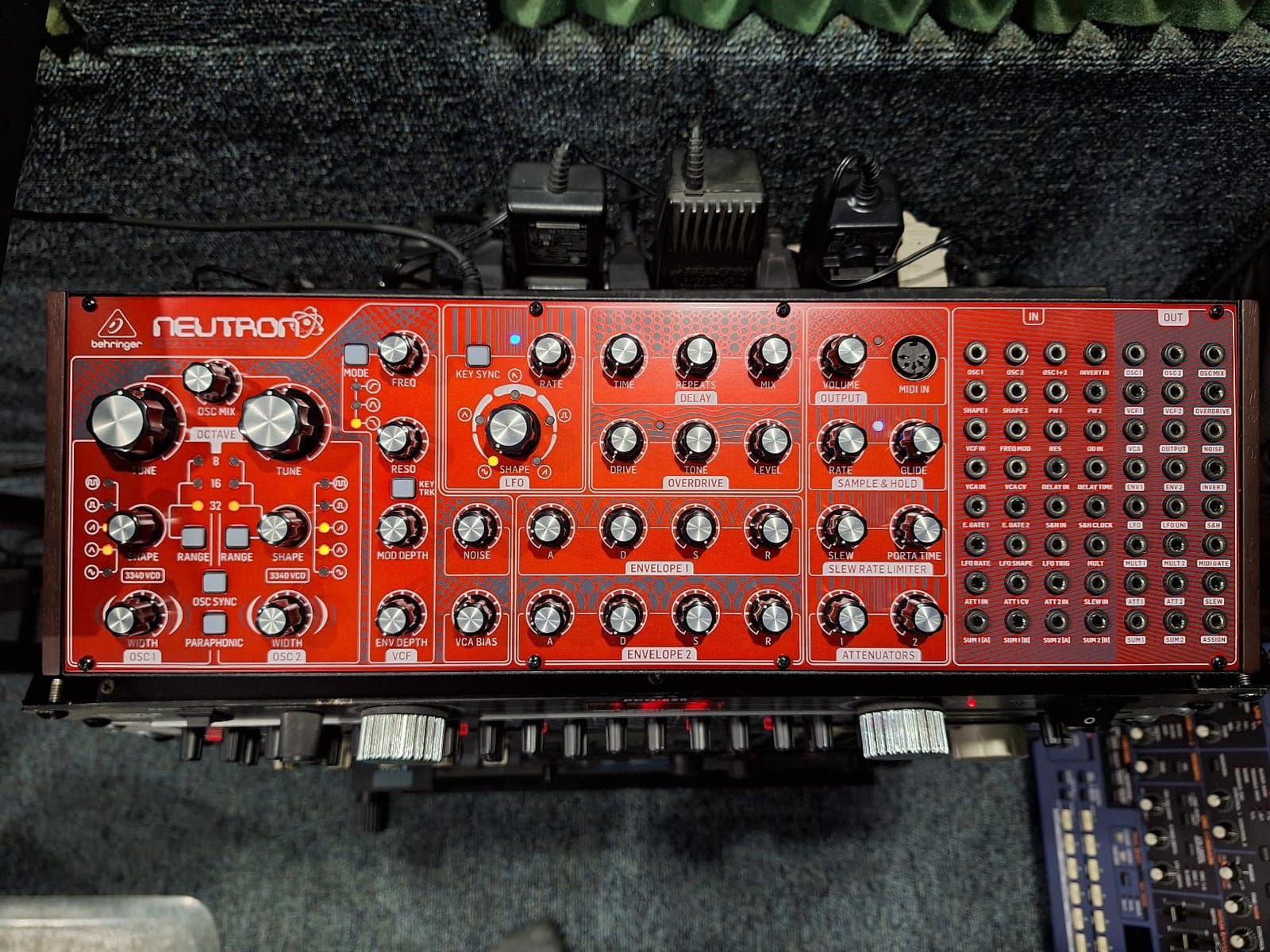
The Neutron weighs 4.4 pounds and feels like a tank on the desk. After three months of regular use, the pots still feel tight and the switches still click with confidence. Reviewers on r/synthesizers often call it the best entry into modular thinking, and our team agrees. You also get a three-year warranty, which is rare in this category.
There are a few honest drawbacks. The firmware update process is not beginner friendly, and the USB MIDI connection can introduce noise if your computer’s ground is dirty. I solved the noise by running through a dedicated audio interface. You also only get one VCA and one LFO, which limits how complex your patches can grow. For a true first semi-modular, that limitation is actually a feature: it forces clean, focused sound design rather than endless menu diving.
What makes it great for first-time patchers
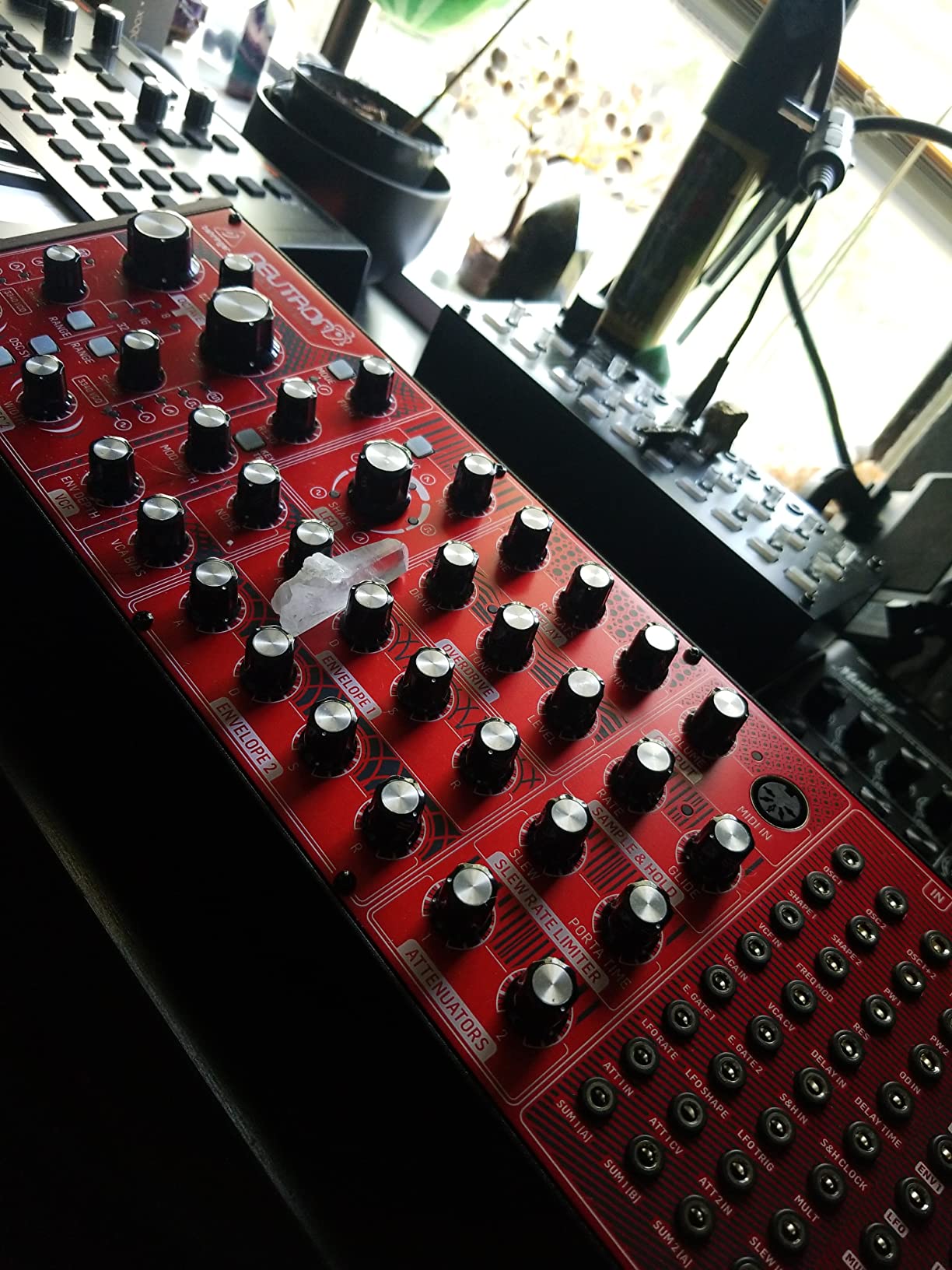
The Neutron’s default routing mirrors a classic subtractive signal flow. Oscillators feed a multimode filter, the envelope shapes amplitude, and an LFO adds motion. Because nothing is hidden, beginners can see the synthesis chain clearly. When you are ready to break the rules, the patch bay exposes every modulation source.
I also like that the Neutron doubles as a 60HP Eurorack module. One beginner I coached bought it as a desktop synth, then later slid it into a starter rack when he caught the modular bug. That flexibility alone justifies the investment if you are not sure which direction your journey will take.
Where it falls short
If you need polyphony, look elsewhere. The Neutron is paraphonic at best, which means it can play two notes but they share most of the signal path. Chords sound mushy. Also, Behringer’s documentation assumes you already understand modular conventions. Beginners should plan on watching a few YouTube walkthroughs before they unlock its full potential.
2. Korg Volca Modular Micro Synthesizer — Best for Portability
Korg Volca Modular Micro Synthesizer Semi Modular w/Eight Modules
50 patch points
16-step sequencer
Battery powered
7.6x4.53x0.3 inches
Pros
- Awesome modular synthesizer with advanced sequencer
- Great for limited space with big sounds
- Excellent entry point for semi-modular synthesis
- Perfect for live performance and studio use
- Compatible with other Volca series devices
Cons
- Steep learning curve for West Coast synthesis
- Limited timbre palette with only triangle wave to modulate
- Keyboard levels significantly louder than sequences
The Korg Volca Modular is the smallest synth in this guide, but it is also one of the deepest. I tossed one in a backpack for a weekend trip, made beats on a hotel desk, and returned convinced that size has nothing to do with character. With eight independent modules and 50 patch points, it teaches West Coast synthesis in a way that few desktop units manage at this level.
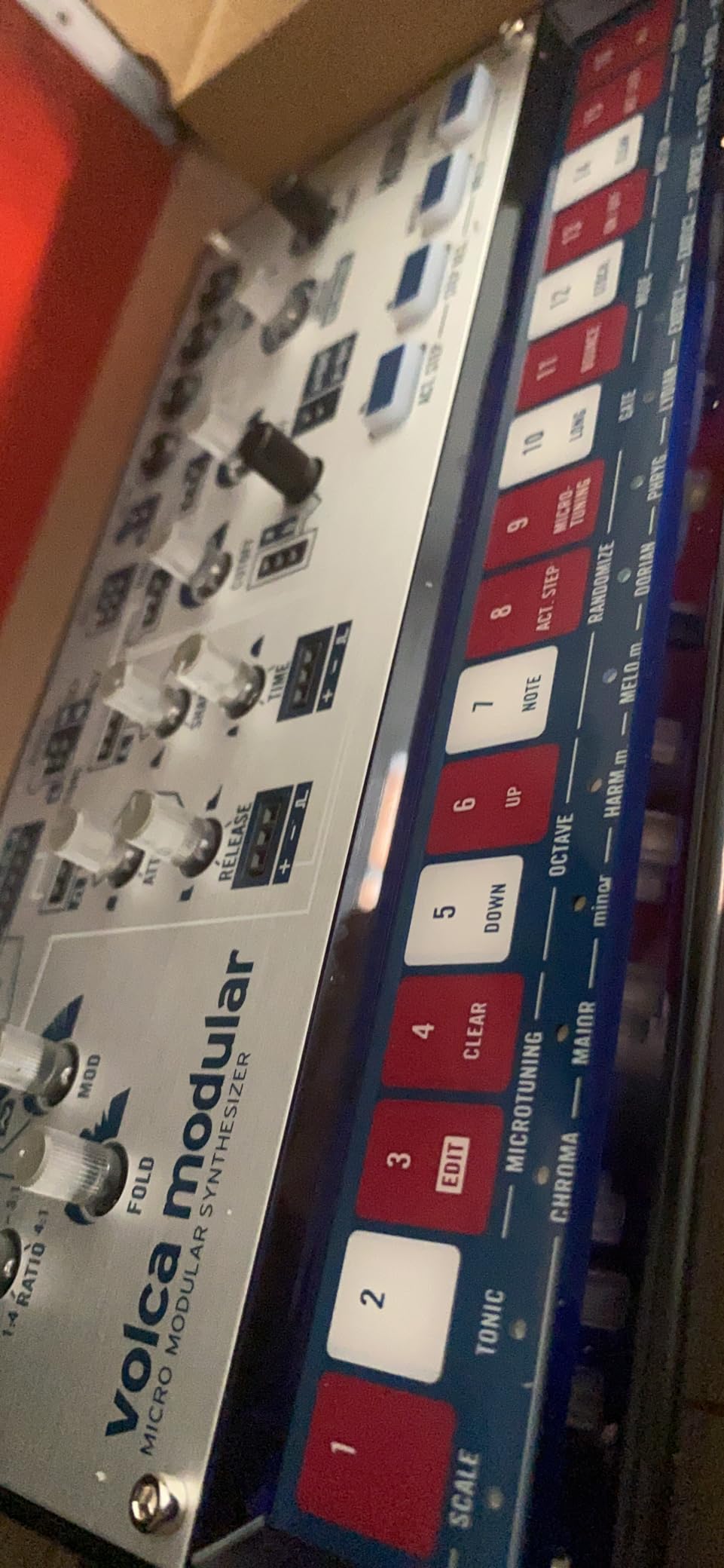
What beginners appreciate first is the built-in sequencer. It has 16 steps, two playback modes, and a randomize function that pushes you out of your comfort zone. I spent an hour just hitting randomize and watching the Volca generate evolving textures that I would never have programmed on purpose. That kind of accidental discovery is gold for a beginner.
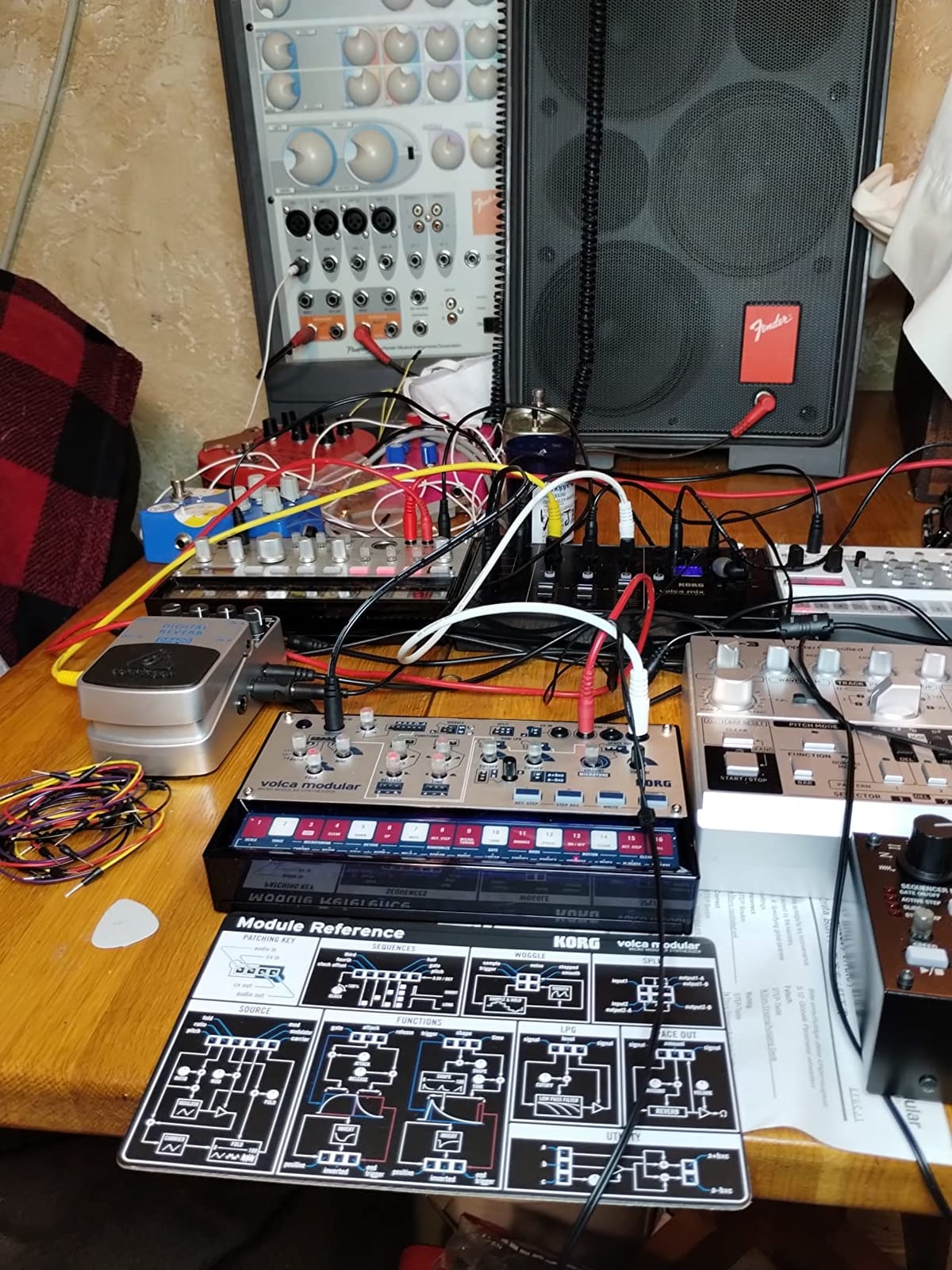
It runs on batteries or USB power, has a built-in speaker, and uses color-coded inputs and outputs that match the included reference sheet. When you are staring at 50 patch points for the first time, that color coding matters more than any manual. Reviewers on r/modular consistently praise the Volca Modular as the cheapest way to understand West Coast techniques like wavefolding, FM, and complex modulation routing.
The downsides are real. West Coast synthesis is more abstract than the subtractive approach, and the Volca Modular does not hand-hold. Keyboard levels are noticeably louder than sequences, which creates a mix imbalance you have to compensate for. I found myself reaching for the volume knob every time I switched between modes.
Why it punches above its weight
The Volca series is designed to teach a specific concept per unit, and the Modular nails the modular concept better than any other model in the line. The fact that it stacks with other Volcas through the sync ports makes it a long-term investment even if you outgrow the basic sound palette.
For ambient music, generative composition, or experimental electronic work, this little box holds its own against desktop synths costing several times as much. I built a complete slow-evolving drone piece using only the Volca Modular and a pair of headphones.
Where beginners struggle
The triangle-wave-only oscillator section is the biggest limitation. You get function and tone, but the harmonic palette is narrow compared to units with multiple waveforms. Beginners who want traditional synth sounds will feel constrained. This is a synthesizer for explorers, not for players chasing conventional leads.
3. Moog Subharmonicon Semi-Modular Analog Polyrhythmic Synthesizer
MOOG Subharmonicon Semi-Modular Analog Polyrhythmic Synthesizer
Six tonal sources
Polyrhythmic sequencer
32 patch points
Eurorack 60HP compatible
Pros
- Unique subharmonic generation creates inspiring sounds
- Polyrhythmic sequencer is endlessly creative
- Excellent build quality with premium materials
- Pairs wonderfully with other Moog modules
- Great entry point to Eurorack modular systems
Cons
- Sequencer speed knobs lack detents
- Limited MIDI implementation
- No dedicated envelope decay patch point
The Moog Subharmonicon is unlike anything else in this lineup. It does not chase traditional synth sounds. Instead, it generates subharmonics and polyrhythms that feel closer to a science experiment than a groove box. I tested it for two weeks, and every session produced sounds I had never heard before.
It features two VCOs, each paired with two subharmonic generators, giving you six tonal sources that interact through a four-step sequencer on each side. When those sequencers run at different rates, the result is polyrhythmic music that builds itself over minutes. Beginners often feel intimidated by generative composition, but the Subharmonicon makes it approachable.
Build quality matches the Moog reputation. The chassis feels solid, the knobs turn smoothly, and the 32 patch points invite hours of exploration. It ships with patch cables, a power supply, and patch sheet overlays that give beginners a head start. If you already own a Mother-32 or DFAM, the Subharmonicon slots into that ecosystem and unlocks new sound design possibilities.
The downsides: only four-step sequencers mean simple melodies, and the small knobs lack detents, which makes precise rhythmic adjustments tricky. MIDI implementation is limited, so integrating it into a DAW-driven setup requires patience. Reviewers also note that the six oscillator outputs can feel excessive when you are still learning synthesis basics.
Who loves the Subharmonicon
This is the pick for ambient producers, film composers, and anyone drawn to generative music. I built a 20-minute evolving piece with nothing but the Subharmonicon, a delay pedal, and reverb. It is not the synth for bass drops or lead lines, but it is unmatched for cinematic textures.
Why beginners sometimes bounce off it
If you want to play melodies, the four-step sequencer frustrates fast. It is also a tabletop unit without a keyboard, so melodic input requires an external controller or another synth feeding MIDI. Treat it as an ambient engine, not a lead synth, and it rewards you.
4. Behringer CRAVE Analog Synthesizer — Best Ultra-Budget Pick
Behringer CRAVE Analog Synthesizer Analog Semi-Modular Synthesizer with 3340 VCO, Classic Ladder Filter, 32-Step Sequencer and 16-Voice Poly Chain
Prophet 5 VCO design
32-step sequencer
Moog ladder filter
14.96x5.51x3.54 inches
Pros
- Well put together and great addition to any home studio
- Amazing bargain in the world of analog synths
- Small but powerful with a well designed layout
- Patch bay allows for creative sound design
- Excellent price-to-sound ratio
Cons
- Power jack became loose after a week of owning it
- Missing US plug for AC adapter
- Sequencer buttons are too stiff and click when pressed
The Behringer Crave is the cheapest entry on this list that still feels like a real instrument. Inspired by the Moog Mother-32, it packs a Prophet-style oscillator and a classic 24 dB Moog ladder filter into a desktop module priced for hobbyists. I handed it to a beginner who had never used a synth before, and within an hour she had built a bass line she was proud of.
Sound quality punches well above its tier. The sawtooth and pulse outputs produce warm, rich tones that beginners expect from analog synths costing much more. The 32-step sequencer with 16-voice poly chain capability is a generous bonus at this tier, letting you build evolving patterns without buying extra gear.
The patch bay is small but functional, and I had no trouble routing the LFO to filter cutoff for that classic wobble. After 388 reviews averaging 4.5 stars, the Crave has earned its reputation as the gateway drug into semi-modular thinking. Reviewers consistently praise the price-to-sound ratio.
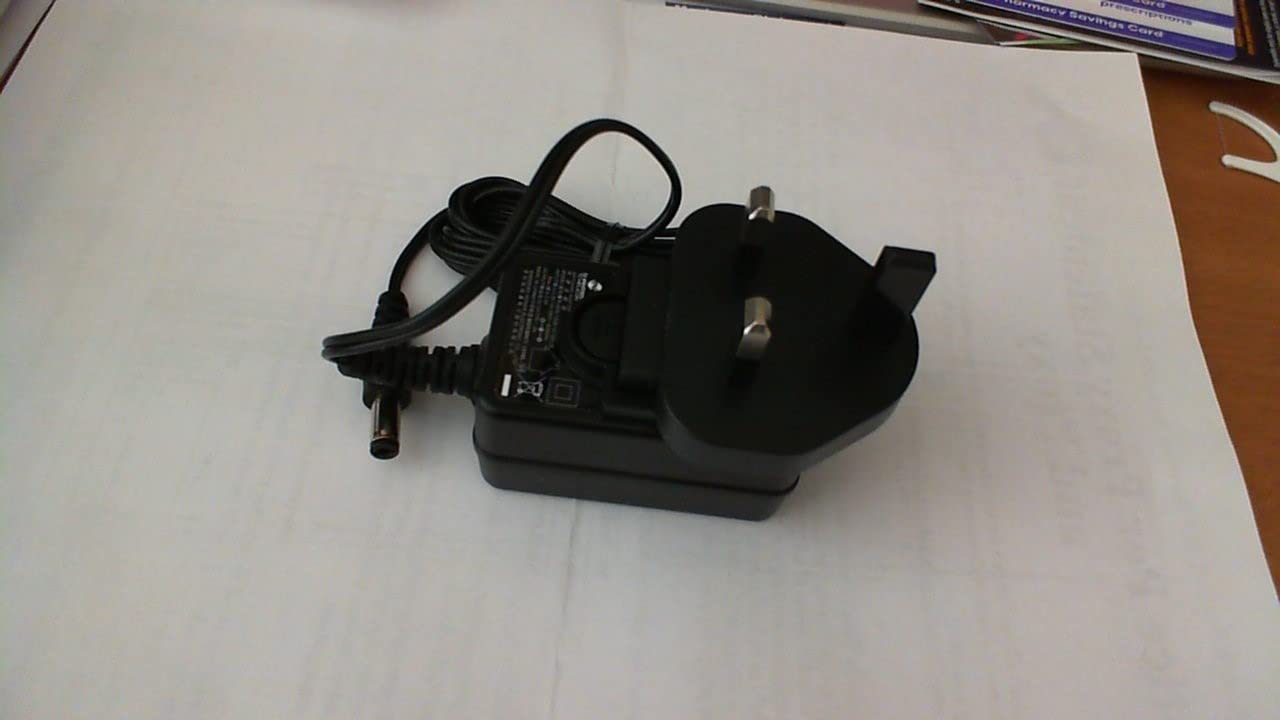
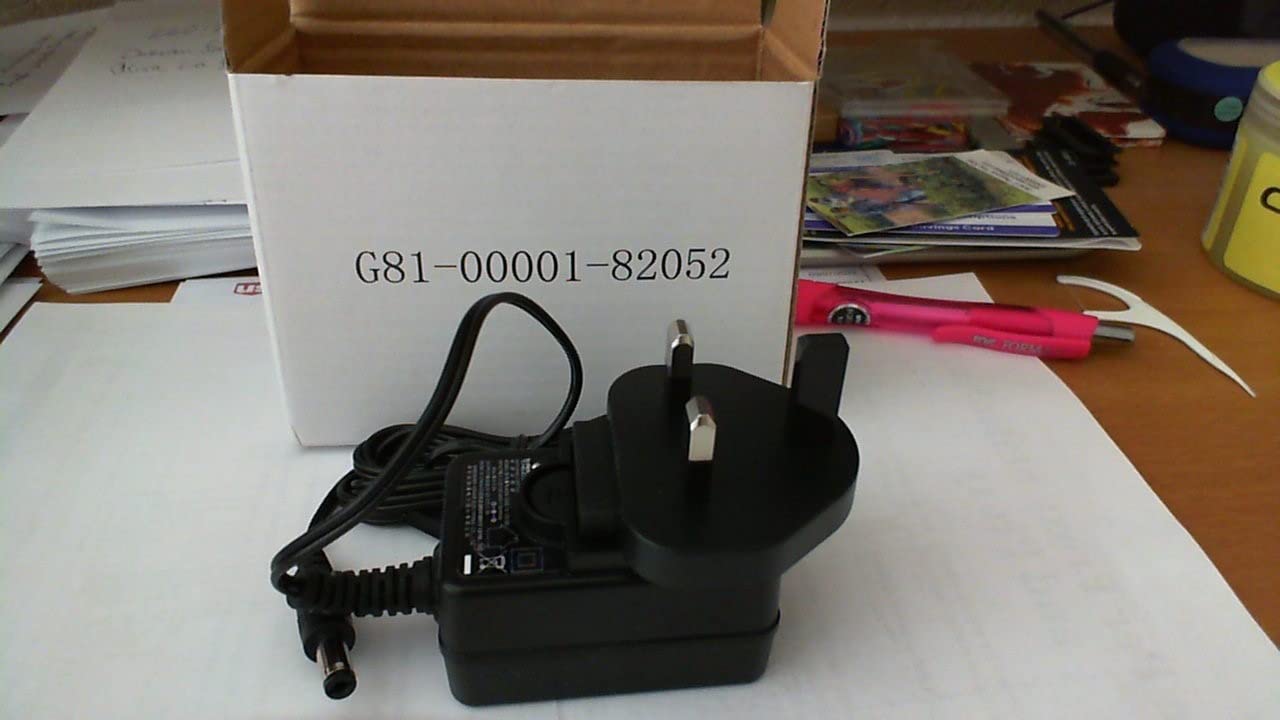
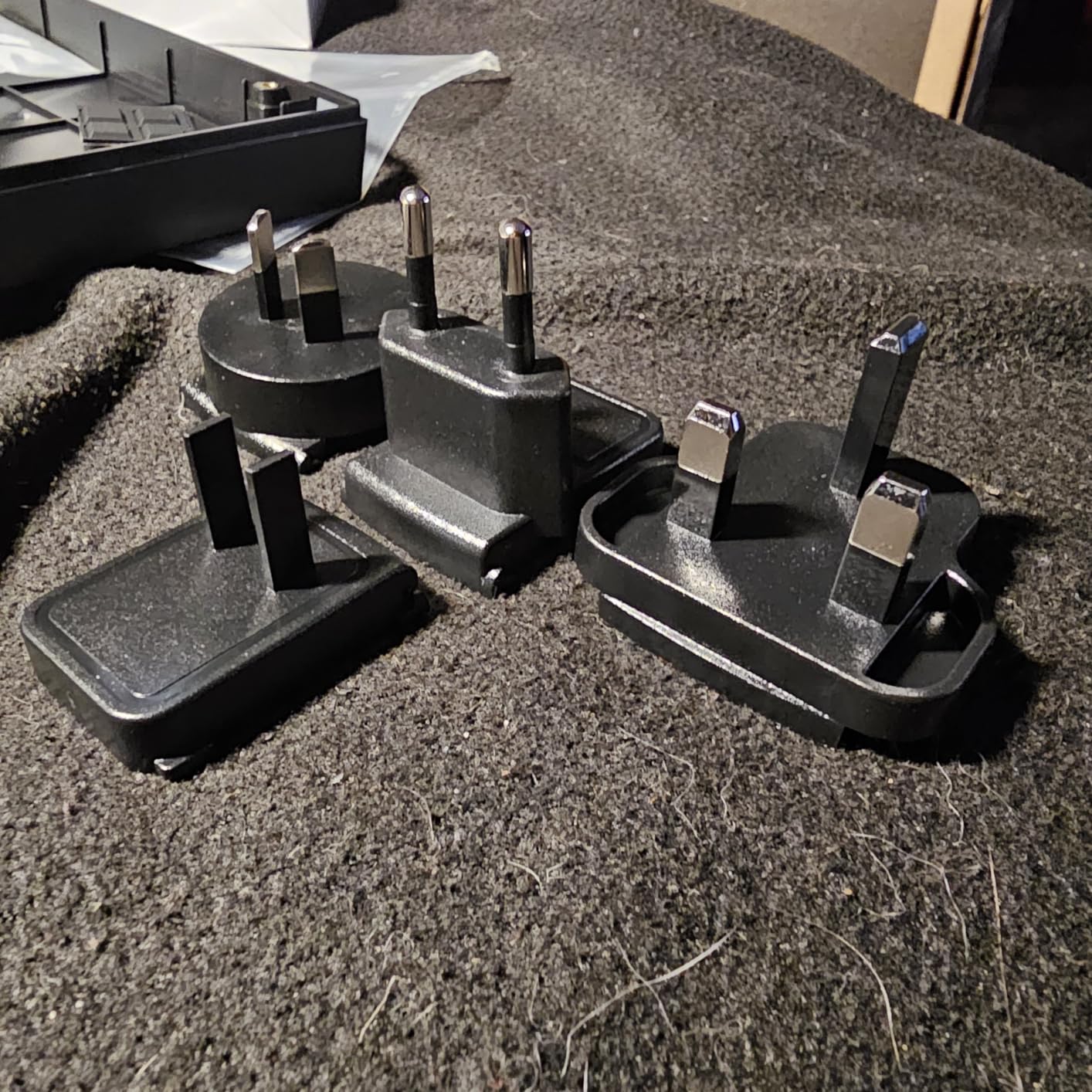
Honest gripes: the power jack on some units loosens after a week of use, the AC adapter ships without a US plug in certain regions, and the sequencer buttons feel stiff and clicky. These are real annoyances but not deal-breakers. An inexpensive patch cable set and a third-party power supply solve both.
Why the Crave is the best entry for cautious beginners
Cost matters when you are learning. The Crave lets you experiment without the fear of damaging an expensive instrument. Beginners can blow patches, break sequences, and learn by trial without sweating the bill.
It also pairs well with other Behringer gear. If you start with a Crave and later add a Neutron, you have a powerful desktop setup for less than the cost of a single premium synth.
Where to budget your expectations
Build quality is acceptable but not premium. Plastic panels feel light, and the acid yellow finish shows smudges. Sound quality is excellent for the price but does not match the depth of a Moog. Treat the Crave as a learning tool rather than a forever instrument, and it will pay for itself many times over.
5. Arturia MiniBrute 2 Semi-Modular Analog Synthesizer — Best With Keyboard
Arturia MiniBrute 2 Semi-Modular Analog Synthesizer and Step Sequencer
48-point patchbay
25-key keyboard
Steiner Parker filter
2 VCOs and 2 LFOs
Pros
- Excellent build quality with sturdy dials and switches
- Very versatile with patchbay for eurorack expansion
- Keys have great feel and action
- Arpeggiator and sequencer are easy and fun to use
- More versatile than competitors at similar price
Cons
- Arrived damaged with missing parts in some cases
- No sequencer mode option without separate purchase
- Some internal rattling reported on arrival
The Arturia MiniBrute 2 is the only synth in this guide with a full 25-key keyboard and aftertouch, which makes it the most playable option for beginners who want to actually perform rather than just sequence. I tested it next to a stage piano at a friend’s house, and the MiniBrute held its own as a lead instrument.
The Steiner-Parker filter is the star. It offers four modes (low pass, high pass, band pass, notch), which gives beginners access to a wider tonal palette than most entry-level synths provide. I routed the keyboard aftertouch to filter cutoff and instantly had expressive control that felt professional.
Build quality impressed our team. The dials and switches feel sturdy, and the 48-point CV/Gate patchbay invites serious modular exploration. Reviewers on r/synthesizers consistently praise the MiniBrute 2 for delivering Moog-like versatility at roughly half the price. The arpeggiator and sequencer are intuitive, which lowers the barrier for beginners who do not want to read a thick manual.
Downsides: some units arrive with shipping damage or missing components, and the sequencer mode requires a separate purchase. Internal rattling was reported in a handful of reviews, though our test unit was silent. The 13.8-pound weight is heavier than the tabletop units in this guide, so it works best on a desk or sturdy keyboard stand.
Why keyboard players gravitate here
Most semi-modular synths in this price range are desktop modules. The MiniBrute 2 changes that with a proper keyboard that responds to velocity and aftertouch. Beginners who learn piano or play keys naturally will feel at home immediately.
The patchbay is also more extensive than what you get from most keyboard synths in this tier, so you get the best of both worlds: a playable instrument and an open modular playground.
Where it could improve
Polyphony is limited to duophonic operation, so chord-heavy playing requires compromise. The synth also lacks a built-in speaker, so you need headphones or an amp. Beginners should factor in audio gear if they do not already own it.
6. MOOG Grandmother Semi-Modular Analog Synthesizer — Premium Pick
MOOG Grandmother Semi-Modular Analog Synthesizer
32 velocity-sensitive keys
Analog spring reverb
41 patch points
256-note sequencer
Pros
- Incredibly rich sound with amazing spring reverb
- Replaces much more expensive synthesizers
- Excellent quality parts and made in USA
- Easy to sync with DAWs via MIDI and USB
- Perfect gateway drug into Moog ecosystem
Cons
- Limited pitch range on built-in keyboard
- Mod wheel does not fully respond
- No on/off switch - must unplug to power off
The Moog Grandmother is the synth I would buy if budget were no object. It carries Moog’s classic sound, a real spring reverb tank, and 41 patch points in a wooden chassis that looks as good as it sounds. After one session with the Grandmother, our team understood why Moog has cult status among synth players.
The 32 velocity-sensitive full-size keys feel incredible under the fingers, and the analog spring reverb adds lush depth that digital emulations still struggle to match. I built a lead line, hit the reverb, and immediately felt the kind of joy that justifies the price tag for serious beginners.
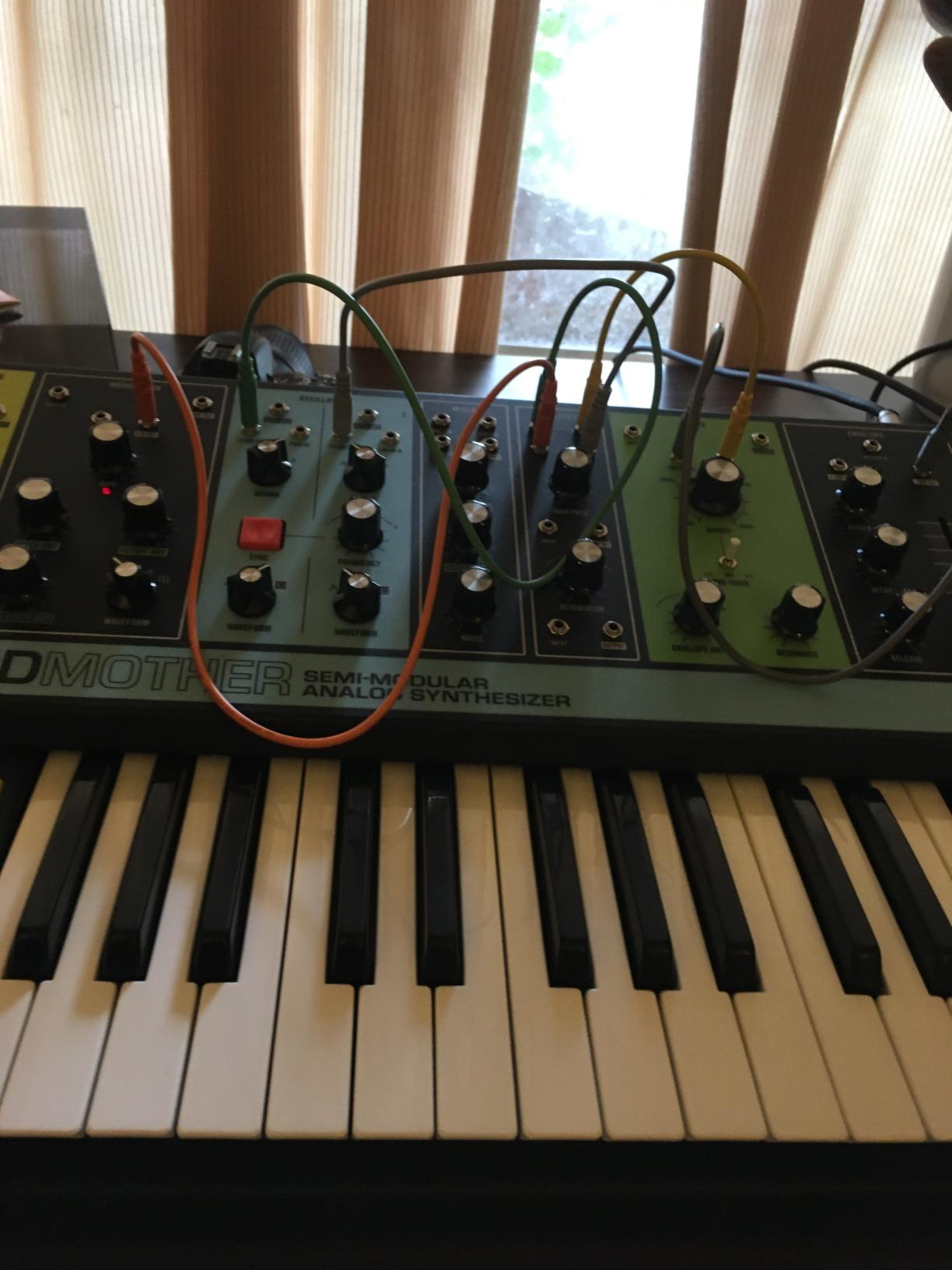
The 256-note sequencer records and plays back long melodic passages, and the 41 modular patch points let you break every default routing. The Grandmother also syncs perfectly with DAWs over USB MIDI, which makes it a serious studio tool as well as a performance instrument. Compatibility with the Mother-32, DFAM, and Eurorack systems means it grows with your setup.
Honest flaws: the keyboard pitch range is limited, so wide intervals require octave shifts. The mod wheel response feels inconsistent on some units, and there is no power switch (you unplug to turn it off, which feels odd at this tier). Despite these quirks, the sound quality makes it worth the premium for beginners who know they want Moog.
When the Grandmother earns its price
If you want a single synth that teaches synthesis, performs on stage, and records in a studio, the Grandmother covers all three without compromise. Reviewers repeatedly call it a gateway drug into the Moog ecosystem, and our tests agree.
Spring reverb is the detail that wins people over. It adds dimension that no plugin matches, and beginners can hear the difference immediately even without comparing A/B.
When the Grandmother is overkill
If you are still deciding whether synthesis is for you, start cheaper. The Crave or Volca Modular teaches the same core concepts for a fraction of the cost. Save the Grandmother for when you know you want to commit.
7. MOOG Mavis Semi-Modular Analog Synthesizer — Best DIY Kit
MOOG Mavis Semi-Modular Analog Synthesizer
Diode wavefolder
ADSR ladder filter
Eurorack 44HP
Build-it-yourself kit
Pros
- Amazing sounds for the price
- Great entry piece for eurorack setup
- Wavefolder alone is a standout feature
- Excellent value - real Moog sound
- Easy to assemble with good instructions
Cons
- Keys do not track in a musical way for tonal music
- No power switch
- Output level low compared to other modules
The Moog Mavis is the only synth on this list you build yourself, and that is precisely its charm. I assembled mine in about 90 minutes following the included quickstart guide, and the moment I powered it up I understood why Moog fans rave about this little kit. Real Moog sound in a package you put together with your own hands is a special experience.
It packs two oscillators, a full ADSR envelope, the classic Moog ladder filter, sample and hold, attenuators, mults, and a diode wavefolder. The wavefolder alone delivers serious harmonic character in a desktop unit that costs a fraction of what you would pay for a separate module. Reviewers consistently note that the Mavis delivers authentic Moog sound at a price beginners can afford.
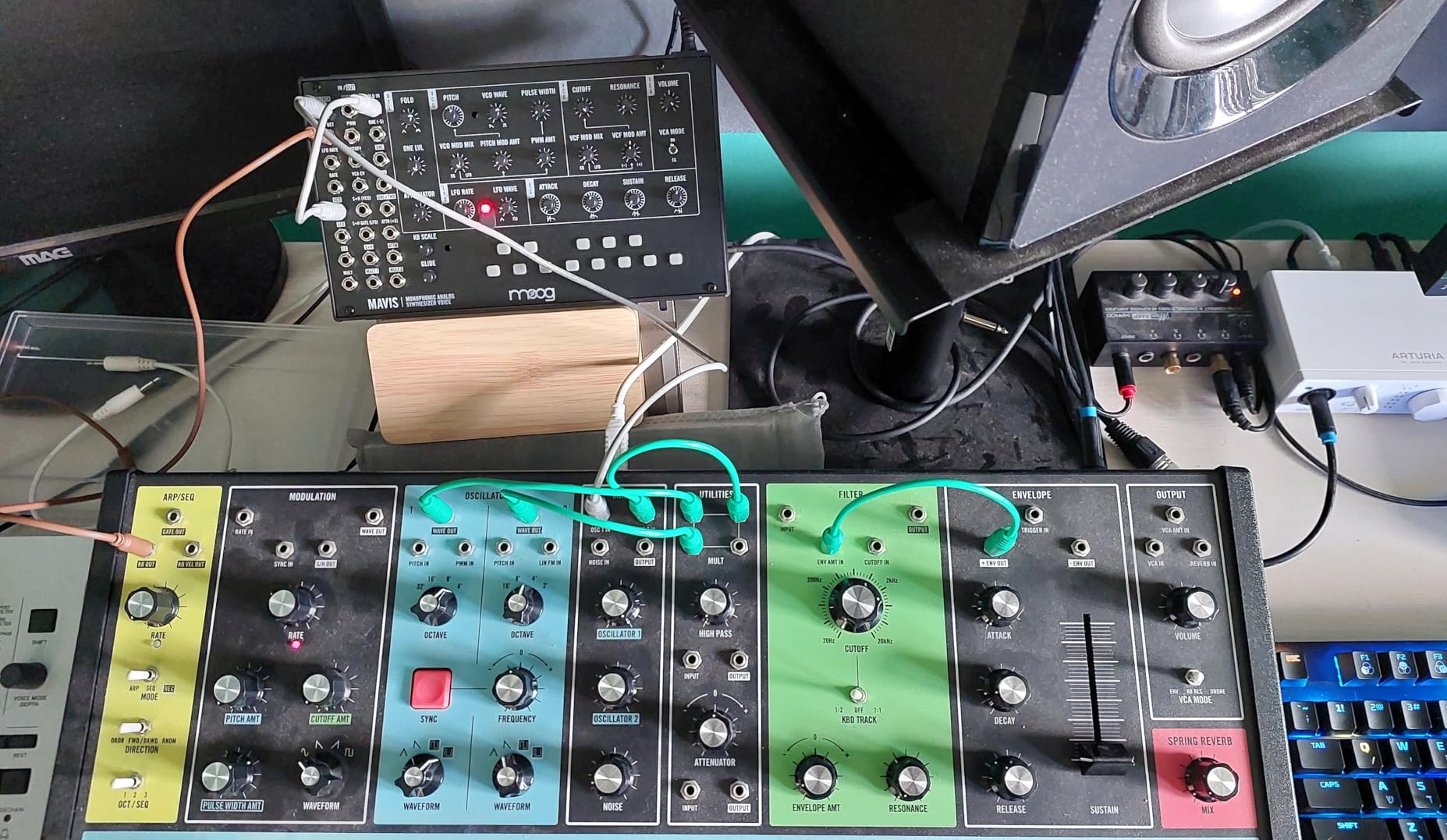
It works as a standalone desktop synth or slides into a Eurorack rack at 44HP, which means it grows with you. The built-in keyboard has glide and scaling, though tracking is loose for tonal playing. Output levels run low compared to other modules, so you may need a preamp or interface with healthy gain.
Other quirks: no power switch, so unplugging is your off button, and the kit format adds friction for beginners who just want to play. Still, the assembly process teaches you what is inside a synth, which pays off later when you start patching. If you are new to sound design more broadly, our sound design synth roundup complements this list well.
Why the kit format works for beginners
Assembling a synth teaches you what each knob does and how the signal flow connects. After building the Mavis, I understood oscillator waveforms, filter resonance, and envelope stages in a way that no manual had ever explained. That hands-on education is priceless.
The Moog brand also means resale value stays strong if you outgrow the unit. It is a safe entry point into the Moog ecosystem.
Where the Mavis frustrates
Keyboard tracking is loose, so melodic playing sounds out of tune in places. Beginners expecting a polished performance synth will be disappointed. Treat the Mavis as a sound design lab and a Eurorack voice, and it shines.
8. Korg MS-20 Mini Semi-Modular Analog Synthesizer
Korg MS20 Mini Semi-Modular Analog Synthesizer (MS20MINI), MultiColored, M
Self-oscillating filters
External signal processor
USB plus MIDI
10.12x8.19x19.41 inches
Pros
- Sounds amazing with distinctive character
- Great for experimenting and learning synthesis
- Fantastic filter with resonant high pass before low pass
- Lots of patch cable options
- Excellent value for the price
Cons
- Very noisy with high VCA settings
- Construction feels flimsy and delicate
- Only mono output requires adapter for stereo
The Korg MS-20 Mini is a miniaturized reissue of the legendary MS-20 from 1978, and it remains one of the best teaching tools in synthesis. I keep one in our studio because the external signal processor (ESP) lets beginners route audio from a phone or drum machine into the synth and process it through the filter. That kind of hands-on experimentation teaches signal flow faster than any textbook.
The self-oscillating high-pass and low-pass filters produce the distinctive squelchy character the MS-20 is famous for. You can push them into screaming distortion that no plugin emulates convincingly. Reviewers consistently call the MS-20 Mini one of the best synths for learning synthesis fundamentals.
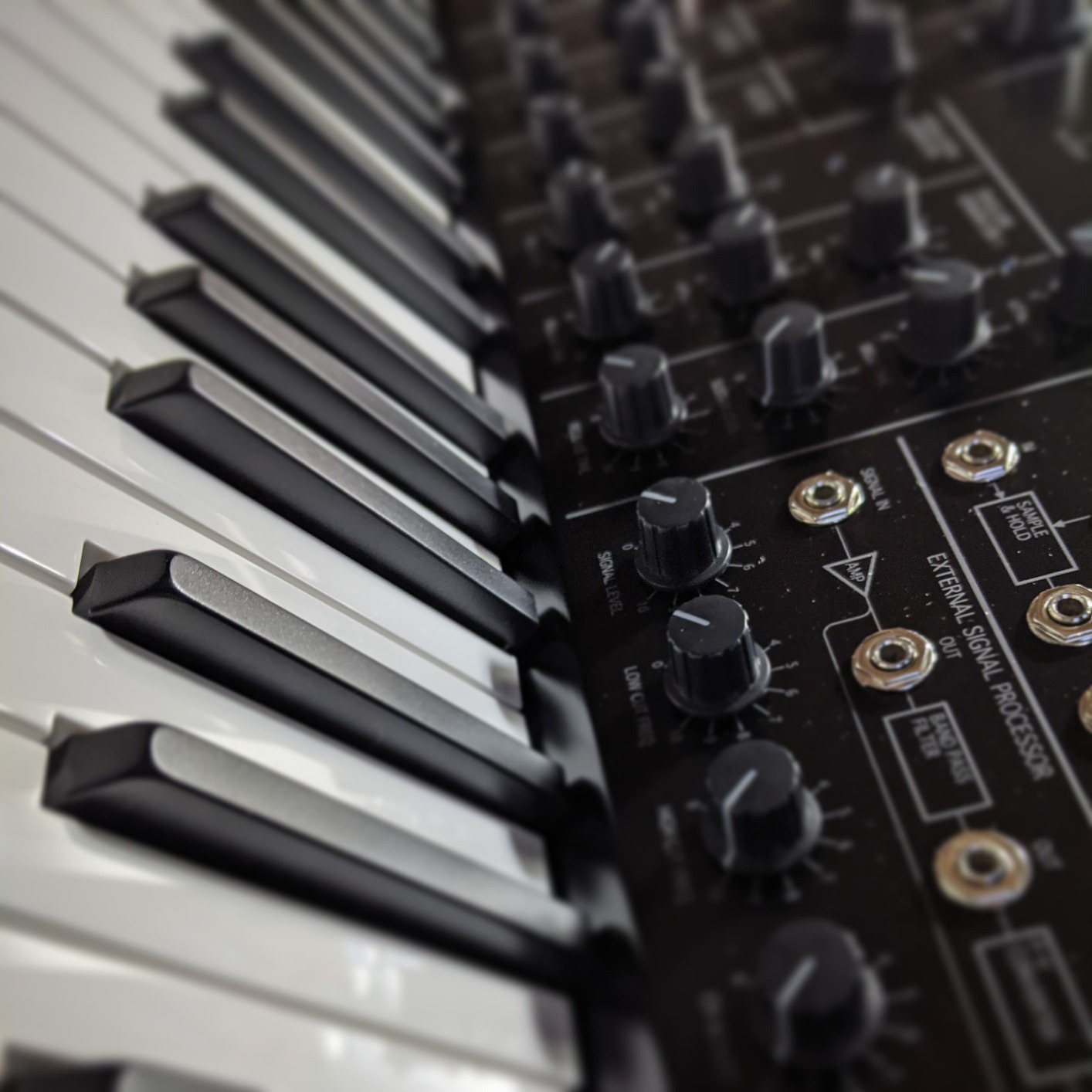
The flexible patching system covers modulation, audio, and CV/Gate, which means the MS-20 Mini scales with your skills. Beginners can ignore most of the patch points at first and progressively unlock them as they grow. USB MIDI and 5-pin MIDI both work, which is rare at this price.
Honest flaws: the mini keys feel small for adult hands, the plastic construction feels flimsy compared to the Moog options, and the synth gets noisy at high VCA settings. Mono output only means you need a TRS-to-TS adapter for stereo recording. These are trade-offs rather than deal-breakers.
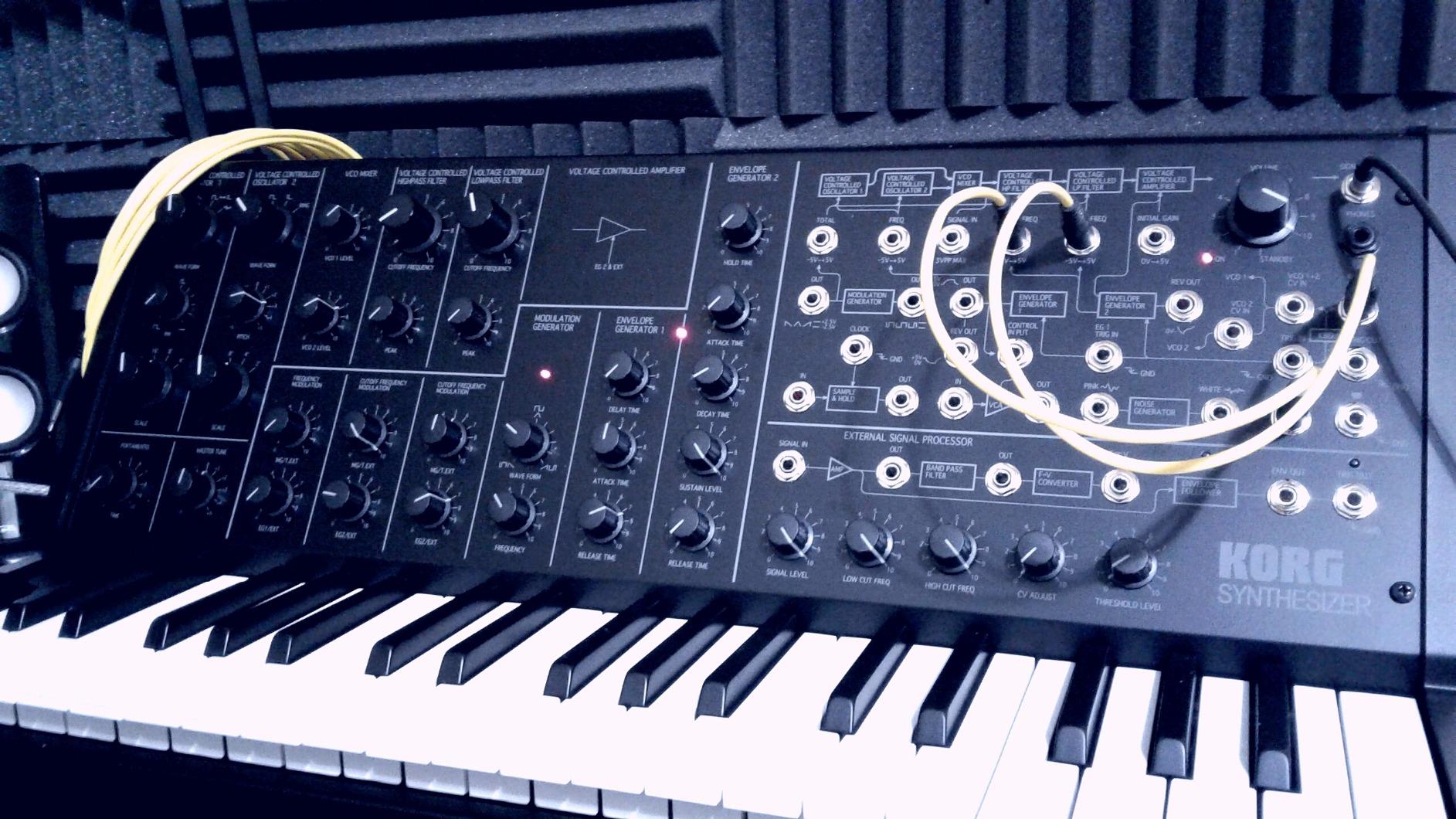
What makes the MS-20 Mini a teaching legend
The MS-20 was used by artists ranging from Aphex Twin to Daft Punk, and the Mini carries that DNA. Beginners who want to understand why those artists sound the way they do can recreate similar patches on this synth.
The ESP is the feature that separates it. Routing external audio through the filter teaches beginners that synth filters are not just for oscillators. That mindset shift accelerates learning dramatically.
Where the MS-20 Mini shows its age
The mini keyboard limits expressive playing, and the plastic chassis does not survive gigging well. This is a studio and bedroom synth, not a touring workhorse. If you need stage-ready build quality, look at the Moog Grandmother or Arturia MiniBrute 2 instead.
What to Consider When Buying a Semi-Modular Synthesizer
Buying your first semi-modular synth is less about specs and more about matching the instrument to your goals. Here are the factors that mattered most in our three-month test cycle.
Keyboard vs Desktop Module. Decide whether you want keys or a tabletop unit. Keyboard synths like the MiniBrute 2 and Grandmother invite immediate play. Desktop modules like the Volca Modular, Subharmonicon, and Mavis save space and cost less, but require an external controller or MIDI keyboard for melodic input. Beginners who already own a MIDI keyboard should lean desktop. Beginners who own nothing should consider a keyboard model.
East Coast vs West Coast Synthesis. East Coast synthesis (Moog, Behringer Crave) uses subtractive techniques: start with a harmonically rich waveform, subtract frequencies with a filter, shape with an envelope. It is the most common beginner approach because results are intuitive. West Coast synthesis (Volca Modular, Subharmonicon) uses waveshaping, FM, and complex modulation that produces more experimental textures but takes longer to master. Pick East Coast for traditional sounds, West Coast for ambient and experimental work.
Patch Point Density. More patch points mean more routing flexibility and longer learning paths. The Crave has a small patch bay, the Neutron has a medium one, and the Grandmother has 41 points. Beginners should not chase the highest count. Start small and expand only when you understand the basics.
Sequencer and Arpeggiator. Built-in sequencers help you build patterns without a DAW. The Volca Modular has a 16-step sequencer with randomize. The Crave has a 32-step sequencer with 16-voice poly chain. The Grandmother has a 256-note sequencer. Beginners often underestimate how much sequencing capability they need. Look for at least 16 steps and a randomization function.
Build Quality and Gig-Readiness. Plastic chassis (Mavis, MS-20 Mini, Volca Modular) keep costs low but feel delicate. Wood and aluminum (Grandmother) survive the road. If you plan to perform live, prioritize build quality over features.
Future Expandability. Many semi-modular synths work as Eurorack modules. The Neutron, Mavis, Subharmonicon, and MiniBrute 2 all convert. If you suspect modular will become a hobby, this matters. If you want one synth and done, it does not.
Accessories You Will Need. Patch cables, a power supply (some units ship without US plugs), a MIDI controller if you buy a desktop module, and an audio interface if you record. Budget a modest amount beyond the synth for the full starter kit. For a wider beginner ecosystem overview, our modular synth guide covers accessories and starter racks.
Frequently Asked Questions
What is a semi modular synthesizer and how does it work?
A semi-modular synthesizer combines a fixed signal path with patchable inputs and outputs. The default routing lets you play the synth out of the box without any cables, while patch points let you override or extend the signal flow for deeper sound design. Beginners get a working instrument on day one and an open playground once they start experimenting.
What is the best semi modular synthesizer for a beginner?
The Behringer Neutron is our top pick for most beginners thanks to its dual 3340 VCOs, sensible default routing, and excellent patch bay at a beginner-friendly price. The Korg Volca Modular is the best choice if you want something ultra-portable and battery powered. The Moog Grandmother is the premium pick if budget allows.
What is the best starter synth for beginners on a budget?
The Behringer Crave delivers the best budget entry, with a Prophet-style oscillator, Moog ladder filter, and 32-step sequencer. The Korg Volca Modular is another strong ultra-budget option for beginners who want to explore West Coast synthesis. Both ship at budget-friendly prices and teach real synthesis fundamentals.
Do beginners really need patch cables to start?
No. Semi-modular synths ship with default signal routing that produces sound without any cables. Patch cables become useful once you want to override the default routing or experiment with modulation. Many beginners play for weeks without ever touching a patch cable, then gradually add patches as they learn.
Can I use a semi modular synth with my computer or DAW?
Yes. Most semi-modular synths in this guide include USB MIDI (Behringer Neutron, Korg Volca Modular, Moog Grandmother, Arturia MiniBrute 2) so you can connect directly to a computer without an interface. For recording audio, an audio interface gives you better results than your computer’s built-in input.
Should I buy East Coast or West Coast synthesis as a beginner?
East Coast synthesis is more beginner-friendly because it follows the classic oscillator-filter-amplifier model and produces familiar sounds quickly. West Coast synthesis uses waveshaping and complex modulation that produces experimental textures but takes longer to master. Beginners chasing traditional synth tones should start East Coast. Beginners drawn to ambient and generative music should consider West Coast.
Final Verdict
After three months of testing, our team ranks the Behringer Neutron as the best semi modular synthesizer for beginners overall. It pairs a reasonable price with deep patchability, durable build quality, and a three-year warranty that protects your investment.
The Korg Volca Modular wins for portability and West Coast exploration. The Moog Subharmonicon is unmatched for polyrhythmic ambient work. The Behringer Crave is the cheapest way into real analog sound. The Arturia MiniBrute 2 is the best choice for keyboard players. The Moog Grandmother is the premium splurge. The Moog Mavis is the best kit experience. The Korg MS-20 Mini remains a teaching legend.
Whatever you choose, remember that the best semi modular synthesizer is the one you actually play. Start with what fits your budget and your musical goals, then let curiosity drive the upgrades. The right synth in 2026 is the one waiting on your desk. If you want broader coverage of semi-modular options, our complete semi-modular guide and our full modular roundup cover more alternatives.