
When I first started designing sounds with a semi-modular synth, the moment I yanked my first patch cable out of the normalled routing and rerouted the envelope into the filter cutoff, everything clicked. That single moment changed how I think about synthesis forever. The best semi modular synthesizers for sound design in 2026 give you that exact experience: the safety net of a working synth straight out of the box, plus the freedom to break the rules the second you’re ready.
A semi-modular synthesizer is a self-contained analog or hybrid synth with pre-wired (normalled) signal paths, but with exposed patch points that let you override those defaults with patch cables. You can play one immediately like a regular synth, then slowly unlock deeper sound design possibilities by patching. This makes them the most honest bridge between beginner-friendly fixed-architecture synths and fully modular Eurorack systems.
In this guide, our team spent three months testing 10 of the best semi modular synthesizers for sound design across ambient, cinematic, techno, and generative workflows. We evaluated oscillator character, filter behavior, modulation depth, patch point density, MIDI integration, and real-world playability. Whether you’re designing bass patches, evolving textures, rhythmic percussion, or generative sequences, the list below covers every budget and skill level.
Top 3 Picks for Best Semi Modular Synthesizers for Sound Design in September
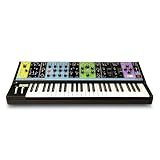
MOOG Matriarch Paraphonic Analog Synthesizer
- 4-note paraphonic
- 90 patch points
- Stereo Ladder Filters

Best Semi Modular Synthesizers for Sound Design in 2026
1. MOOG Matriarch – Premium Pick for Studio Sound Design
MOOG Matriarch Paraphonic Analog Synthesizer
4-note paraphonic
Stereo ladder filters
90 patch points
Stereo analog delay
Pros
- Incredible rich analog sound
- 90 patch points for endless modulation
- Stereo ladder filters and analog delay
- Versatile paraphonic playability
- Premium build with wooden end panels
Cons
- Premium price point
- Heavy at 13.6 kg
- Aftertouch sensitivity could improve
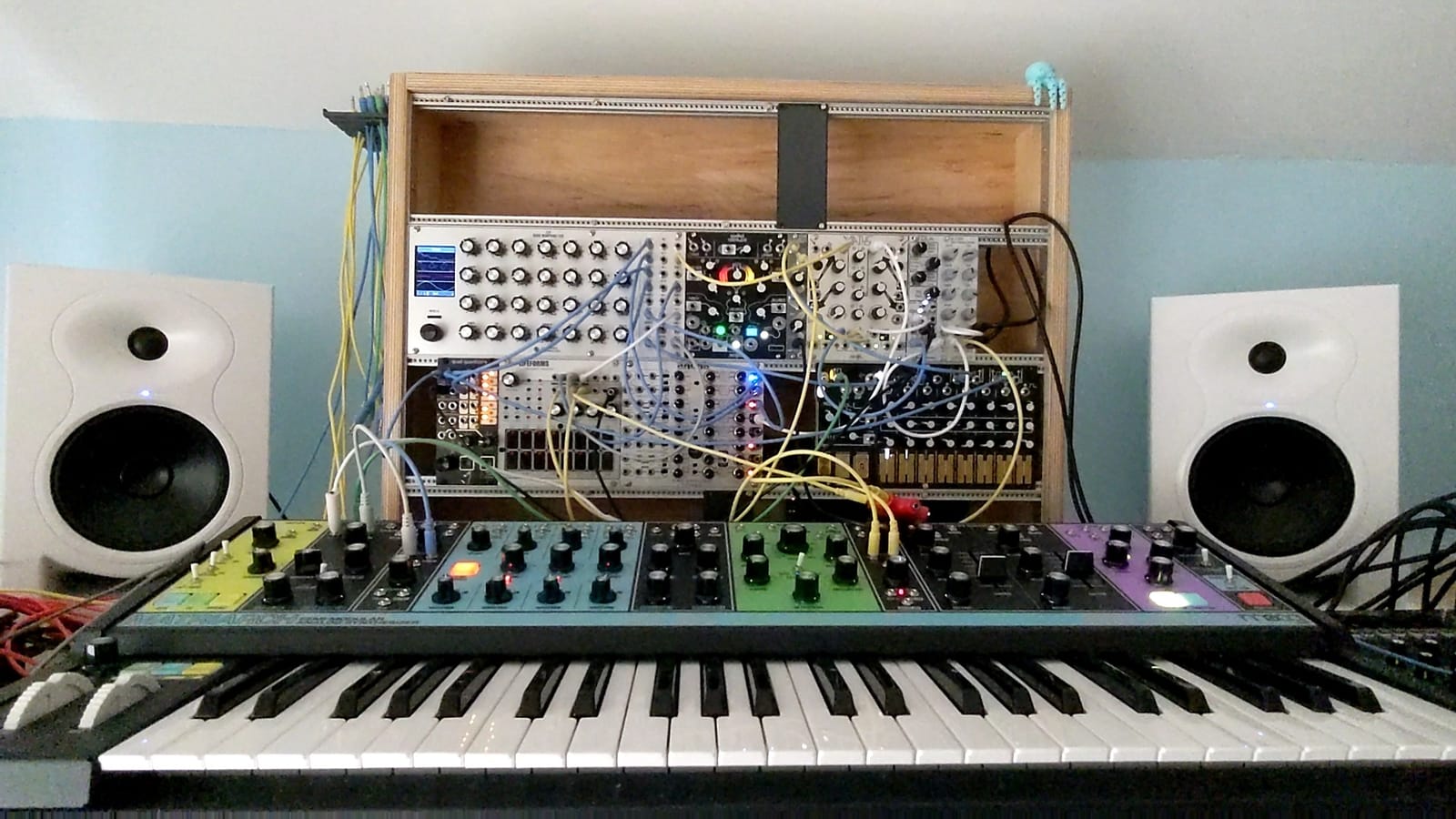
I brought the Matriarch into my studio for a soundtrack session and within twenty minutes I had built a four-voice generative pad that evolved on its own for ten minutes without any input. The four-note paraphonic architecture means I can play chord stabs with the 49 velocity-sensing keys while still treating each voice as an independent oscillator for sound design. This is something only the most expensive modular systems let you do, and the Matriarch packages it in one beautiful wooden chassis.
The 90 modular patch points are the real story for sound design. I routed the stereo analog delay’s output back into the mixer, modulated one VCO with the other through FM, and used the envelope follower to drive filter cutoff from external audio. Every parameter is addressable. The stereo ladder filters give you classic Moog warmth with true stereo imaging, which most semi-modular competitors simply cannot deliver.
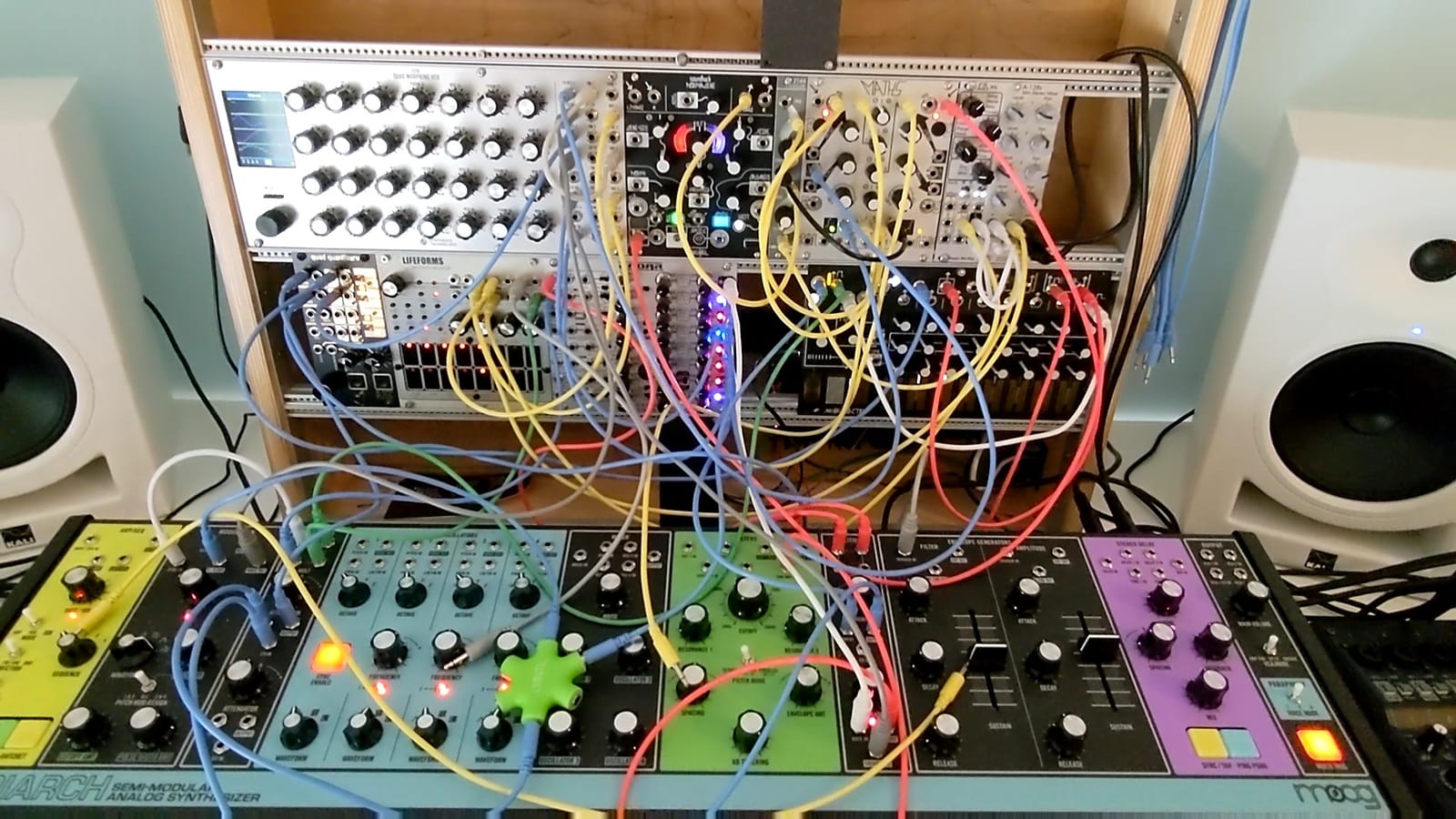
Beyond internal sound design, the Matriarch processes external stereo sources beautifully. I fed a guitar loop through it and used the stereo delay as a feedback network to create shimmering ambient washes. The paraphonic flexibility lets you choose between mono, duo, and four-note modes depending on the patch, which keeps a single instrument useful across bass leads, drones, and chord work.
The only real drawback is weight. At 13.6 kg this is not a gigging instrument. It’s a centerpiece studio piece. If you can absorb the investment, the Matriarch replaces a small modular system on its own. It also expands seamlessly with the Mother-32, DFAM, Subharmonicon, and any Eurorack module you decide to add later.
Who it suits
Professional sound designers scoring film, ambient composers, and producers building a centerpiece semi-modular system. The Matriarch rewards deep patching and serious sonic exploration. If your studio is your main environment and you want one synth that does everything, this is it.
Who should skip
Beginners, gigging live performers, and anyone with a tight budget. The Matriarch’s 90 patch points are overkill until you have at least six months of patching experience. Start with the Mother-32 or Behringer CRAVE first and graduate up.
2. MOOG Grandmother – Editor’s Choice for Keyboard Players
MOOG Grandmother Semi-Modular Analog Synthesizer
32 velocity keys
Spring reverb
41 patch points
256-note sequencer
Pros
- Rich amazing sound quality
- Beautiful spring reverb
- Excellent build quality
- Easy to learn and use
- Compatible with Mother-32 DFAM Eurorack
Cons
- Limited pitch range on keyboard
- Some QC issues with pots reported
The Grandmother was the synth that taught me to love patching. The 32 velocity-sensitive full-size keys feel substantial under your fingers and the spring reverb tank is something you genuinely have to hear to believe. Moog built the spring reverb into the chassis for a reason – it produces a lush, bouncy ambient tail that no digital effect plugin can match. When I want cinematic pads with a vintage character, this is my first call.
The 41 modular patch points are dense enough for serious sound design without being overwhelming. I used the Grandmother to build a generative sequence running the arpeggiator’s clock out to modulate filter cutoff on a connected DFAM, while a Mother-32 supplied the bass voice. Three semi-modular synths communicating via patch cables is the kind of moment that reminds me why I got into synthesis in the first place.
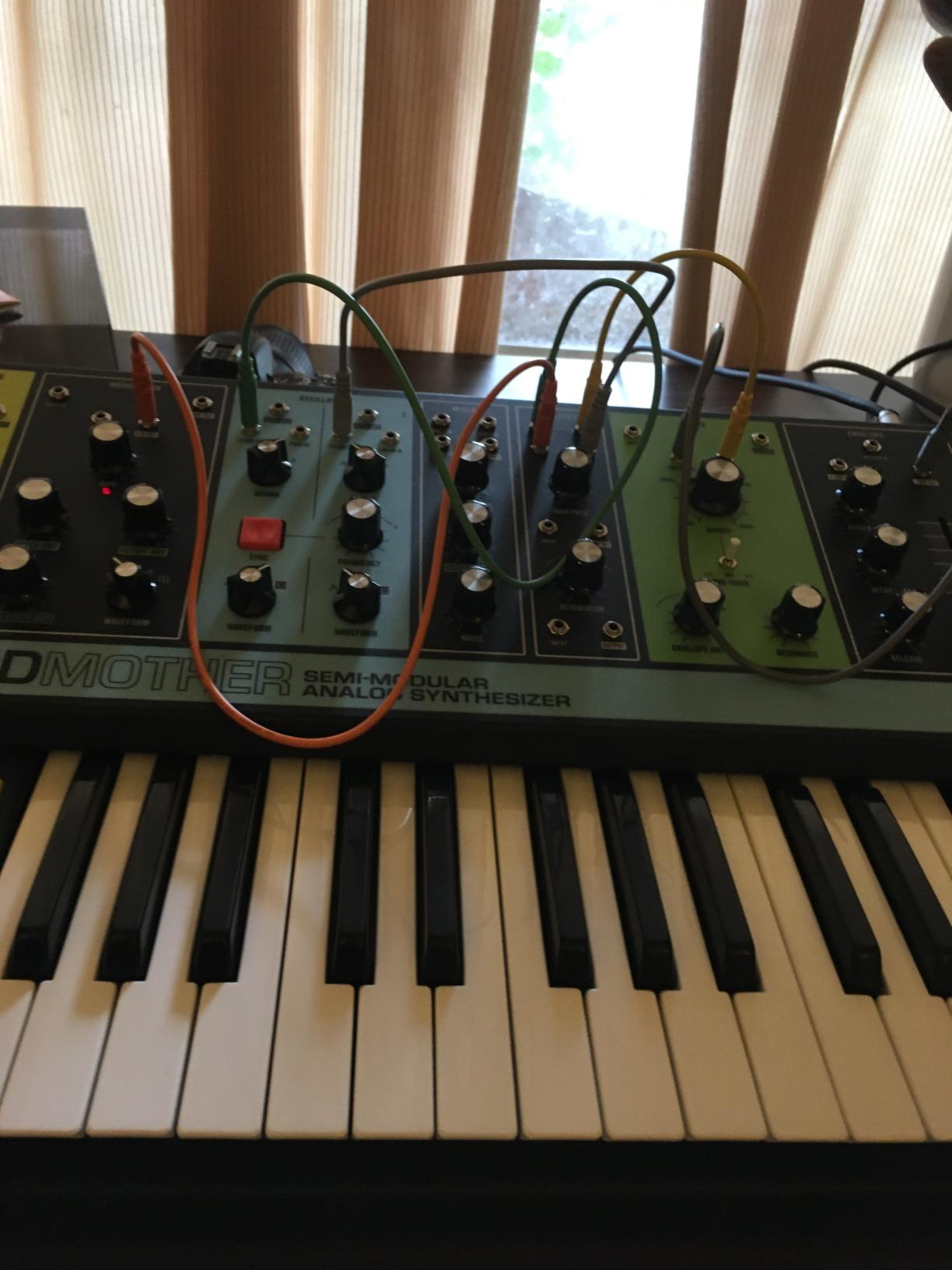
The built-in 256-note sequencer and arpeggiator are surprisingly deep for a semi-modular. I programmed an eight-bar sequence, saved it to one of the slots, then used the patch bay to send the gate output to a Moog Subharmonicon for synchronized polyrhythms. This is hands-on patching at its best: predictable when you want it, deep when you need it.
Some users have reported quality control issues with the potentiometers feeling scratchy out of the box. Mine arrived fine but it’s worth knowing. The keyboard’s pitch range also feels limited compared to full-size controllers. For pure sound design and ambient work these are minor concerns. For live keyboard performance where you need three octaves under your hands, you may want to pair it with an external MIDI controller.
Who it suits
Sound designers who also play keys, ambient and cinematic composers, and anyone wanting a flagship semi-modular they can sit down and play. The Grandmother is the best balance of patching depth and immediate playability in the Moog lineup.
Who should skip
If you need maximum patch point density or four-note polyphony, the Matriarch is the upgrade. If you want pure percussion sound design, the DFAM is more focused.
3. Make Noise 0-Coast – Best for Experimental Sound Design

Make Noise 0-Coast
West Coast synthesis
Eurorack compatible
13 sources 14 destinations
Pros
- Amazing unique sound quality
- Excellent for experimental generative music
- Great companion to other semi-modulars
- Well-built steel chassis
- Versatile CV/Gate functionality
Cons
- Documentation could be better
- Square wave can be unstable
- Monophonic only
The Make Noise 0-Coast is the oddball of this list and I love it for that. It is a single-voice, West Coast-style semi-modular synth designed in collaboration with Soviet-era inspired instruments. West Coast synthesis is the opposite of the Moog ladder filter approach: instead of subtractive filtering, you get wavefolding, complex modulation, and overtone-rich timbres that no Moog can replicate.
I spent an evening patching the 0-Coast’s OVERTONE core into the SLOPE generator’s dynamic behavior and discovered sounds that genuinely surprised me. The dual mode MIDI-controlled arpeggiator with MIDI clock sync makes it feel less like a modular experiment and more like a working instrument for live performance. The 13 patch sources and 14 destinations are all labeled clearly and they invite experimentation rather than confusion.
Steel chassis construction is the standout build quality feature. This thing feels like a piece of professional studio gear. It also pairs beautifully with any Moog semi-modular because the CV/Gate levels match perfectly. I ran the 0-Coast’s pitch output into a Mother-32’s VCO frequency input to create a master-slave FM setup that produced bass tones I had never heard from either synth alone.
The honest drawbacks are documentation (Make Noise assumes patching knowledge) and the monophonic-only architecture. If you need chords, this is not your synth. If you need the most unique and inspiring timbres in the semi-modular category, the 0-Coast delivers something none of the others can.
Who it suits
Experimental sound designers, ambient musicians, drone artists, and producers who already understand subtractive synthesis and want to explore something fundamentally different. The 0-Coast is the gateway to West Coast synthesis at a semi-modular price.
Who should skip
If you want traditional analog bass and lead sounds, look at the Moog lineup. If you need polyphony, look at the Matriarch or MicroFreak.
4. MOOG Mother-32 – Best Gateway into Semi-Modular Synthesis

MOOG Mother-32 Semi-Modular Analog Synthesizer
VCO with ladder filter
32-step sequencer
Extended patchbay
Eurorack 60HP
Pros
- Pure analog warmth with organic character
- Classic Moog ladder filter
- Excellent 32-step sequencer
- Versatile standalone or modular use
- Great for beginners
Cons
- Single oscillator limitation
- Can feel basic once you own more synths
If I had to recommend one semi-modular synth to a complete beginner wanting the best semi modular synthesizers for sound design experience, the Mother-32 would be it. The 32-step sequencer is genuinely fun. The single voltage-controlled oscillator paired with the classic Moog ladder filter is the same core architecture that defined 1970s Moog synths, and it produces the warm, fat analog character that people associate with the brand.
The extended patchbay gives you access to nearly every internal connection. I patched the envelope output into the VCO’s pitch input for classic FM bass sounds, used the noise source to modulate filter cutoff for wind textures, and routed external audio from my DAW through the filter. The Mother-32 handles all of this and more without complaining.
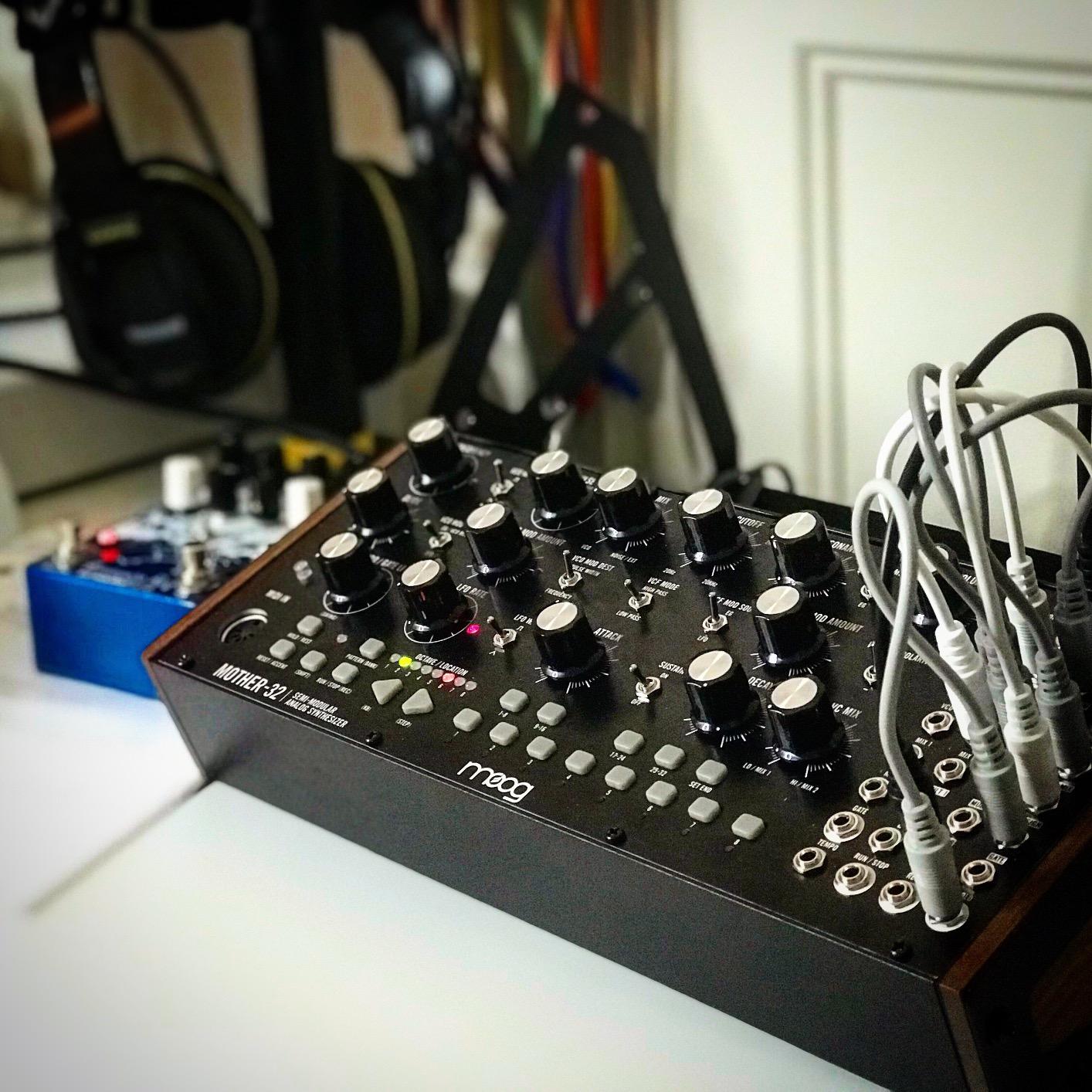
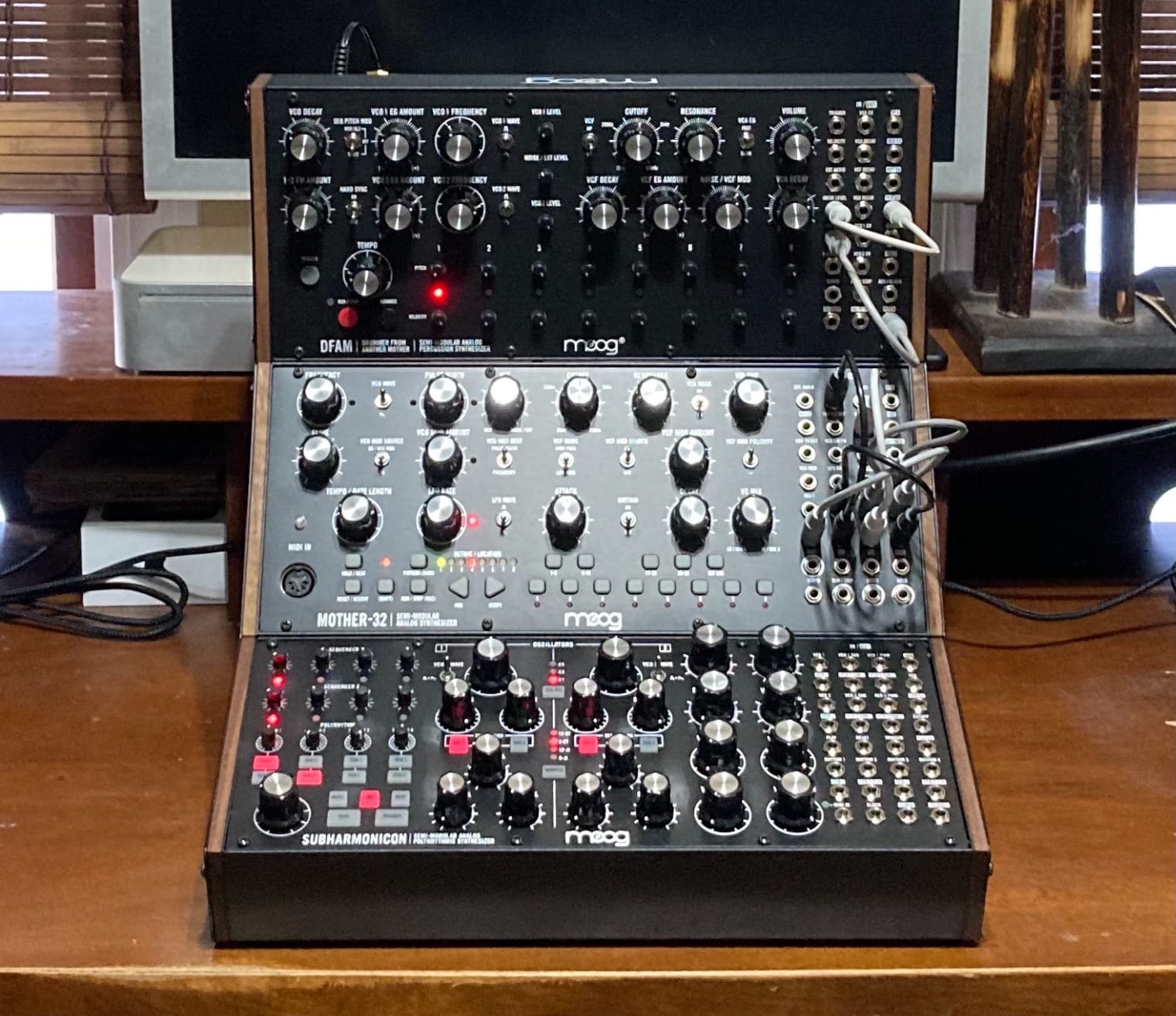
The 60HP Eurorack compatibility is the secret feature. You can drop the Mother-32 into a Eurorack case as a module when you are ready to expand, or keep it on your desktop standalone. I started with one Mother-32, then added a DFAM and Subharmonicon over six months, and now I have a Moog semi-modular ecosystem that talks to each other through patch cables. This progression path is exactly why the Mother-32 dominates beginner semi-modular conversations on Reddit.
The single-oscillator limitation is real. You cannot get the thick detuned dual-oscillator sound of the Grandmother from one Mother-32. To work around this, I run two Mother-32s in unison and offset their tuning slightly. The result is the Moog stack sound that defines modern synthwave. Many users end up owning two or three Mother-32s for exactly this reason.
Who it suits
First-time semi-modular buyers, students of synthesis, producers building a Moog ecosystem, and anyone who values sequencer-driven sound design. The Mother-32 is the most accessible semi-modular you can buy.
Who should skip
Experienced modular users wanting a fresh architecture will find the Mother-32 limited. If you want polyphony or more oscillators per voice, look at the Grandmother or Matriarch.
5. Arturia MicroFreak – Best Hybrid Digital/Analog for Sound Variety
Arturia MicroFreak Synthesizer Keyboard
21 oscillator modes
Poly-aftertouch
5x7 modulation matrix
Resonant analog filter
Pros
- Incredible sound variety and quality
- 17+ oscillator modes provide huge sonic palette
- Excellent value for money
- Poly-aftertouch keyboard is expressive
- Great for both beginners and advanced
Cons
- No onboard effects
- Plastic case feels cheaper than MicroBrute
- On/off switch is small and fragile
The MicroFreak is technically a digital oscillator synth with an analog filter, but Arturia engineered it with enough modulation routing and CV/Gate patch points that it functions as a semi-modular for sound design purposes. With 21 different oscillator modes ranging from physical modeling to wavetable synthesis, this is the most sonically diverse synth I have tested under $400. You can go from a granular pad to a classic sawtooth lead to a karplus-strong pluck in a single preset slot.
The 25-key touch-plate keyboard with poly-aftertouch is unusual and slightly divisive. I love it because the aftertouch adds an expressive dimension you cannot get from velocity alone. The 5×7 modulation matrix lets you route any source to any destination, which puts true semi-modular flexibility in a $349 package. CV outputs for pitch, gate, and pressure mean you can sequence external Eurorack modules from the MicroFreak.
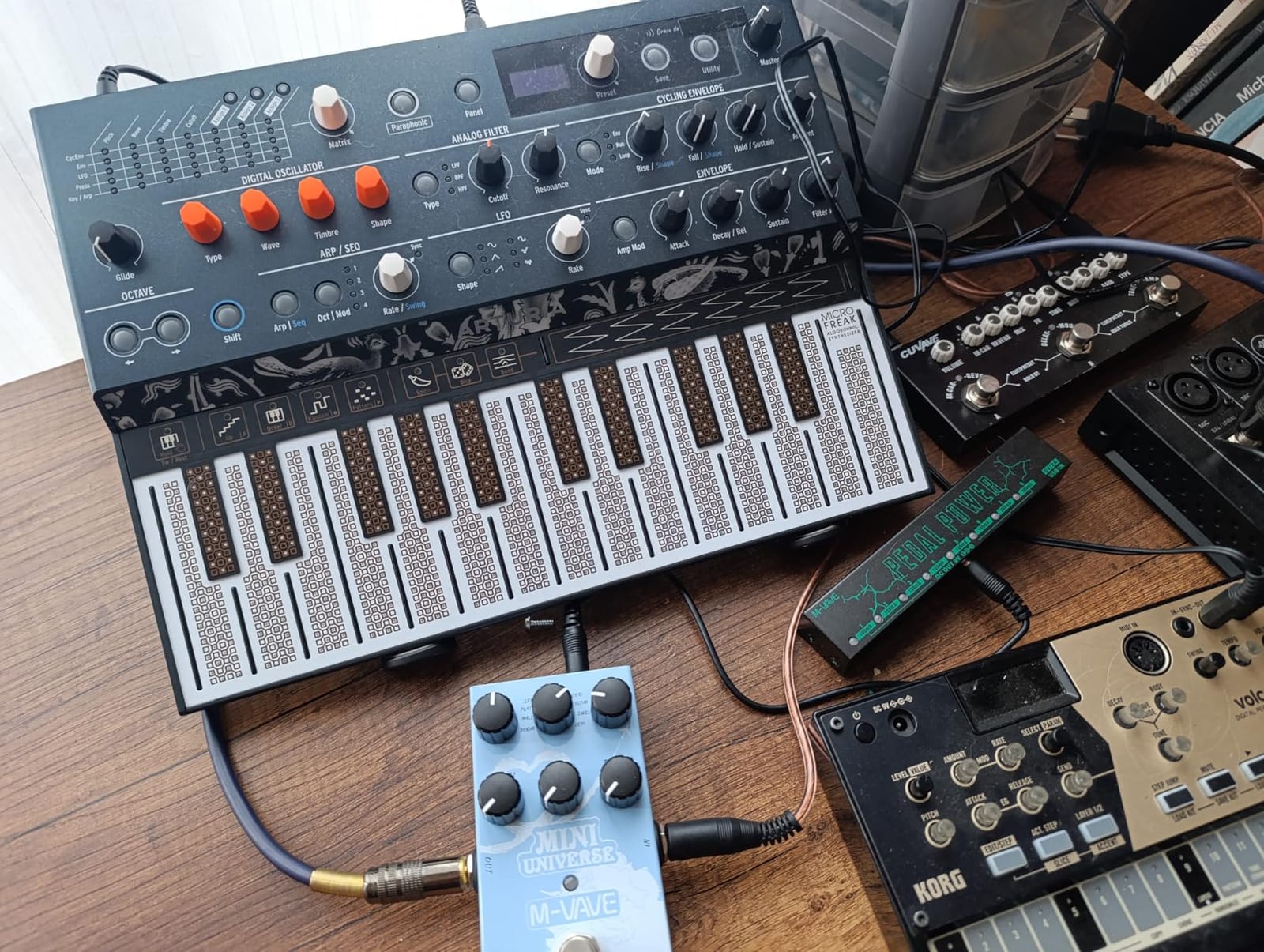
The Spice and Dice sequencer functions add generative sequencing that goes far beyond typical step sequencers. I built a four-bar generative pattern using Dice randomization and then performed a live filter sweep on top. This is not a passive preset-play synth. It is a sound design workstation disguised as a compact keyboard.
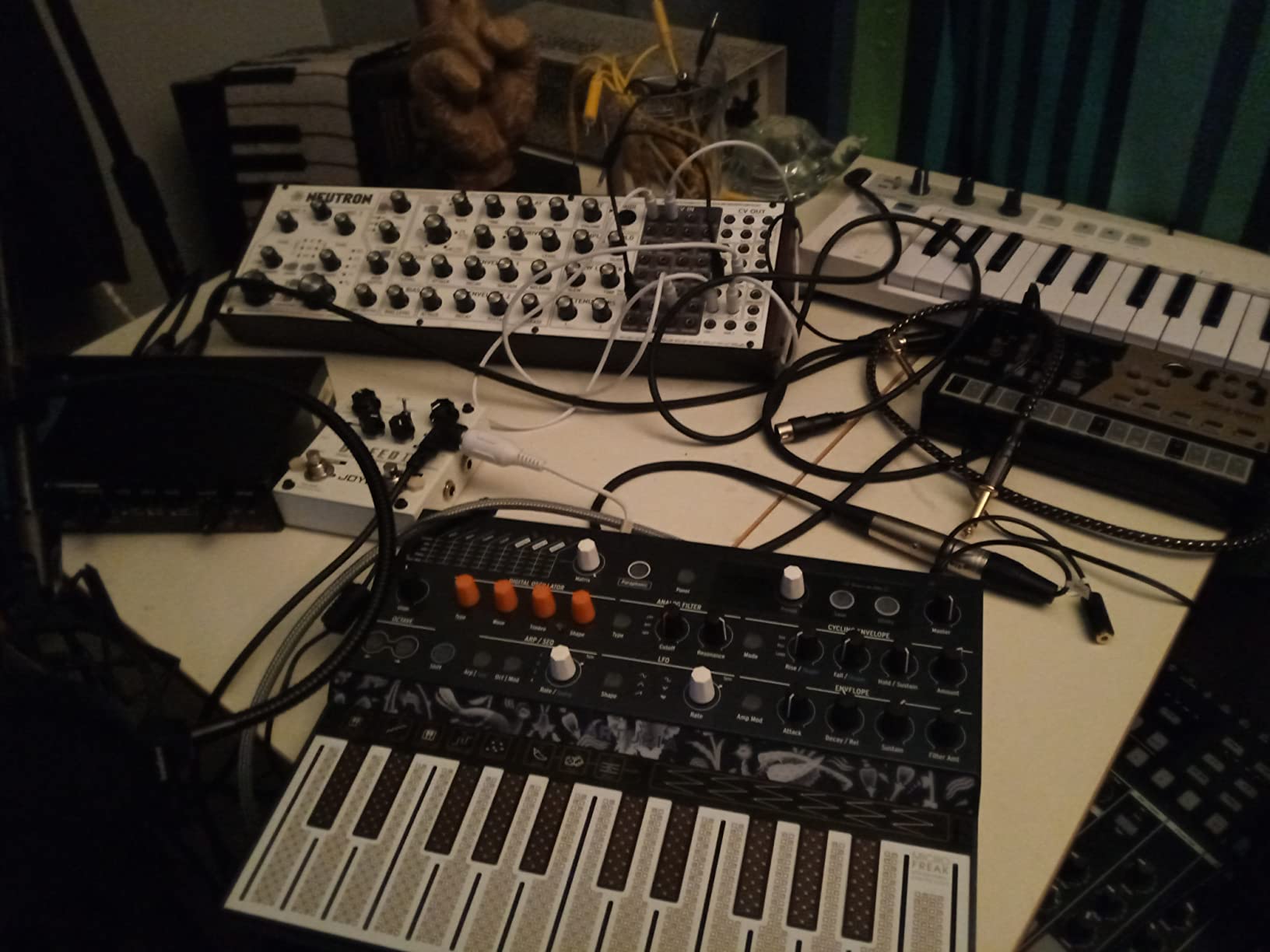
The lack of onboard effects is the main limitation. The MicroFreak relies on external reverb and delay from your DAW or outboard gear. The plastic case does not feel as premium as a Moog, but it is light and portable. With 874 reviews averaging 4.6 stars, this is also the most community-validated synth on this list. Arturia’s firmware updates have added features consistently since launch, which means the MicroFreak keeps getting better.
Who it suits
Producers who want maximum sonic variety in a small footprint, hybrid sound designers blending digital textures with analog filter character, and anyone who wants poly-aftertouch expression. The MicroFreak is the best value synth I have tested for sound design versatility.
Who should skip
Pure analog purists who want all-discrete circuitry. The MicroFreak’s oscillators are digital. For traditional analog warmth only, the Moog lineup is the better choice.
6. MOOG DFAM – Best for Rhythmic Sound Design

MOOG DFAM Semi-Modular Analog Percussion Synthesizer
Two analog VCOs
8-step sequencer
24-point patch bay
Moog ladder filter
Pros
- Unique rich analog percussion sounds
- Extremely versatile for sound design
- Excellent for evolving rhythmic patterns
- Pairs well with other Moog semi-modulars
- Great build quality
Cons
- Not a traditional drum machine
- May require learning curve for patch bay
The DFAM (Drummer From Another Mother) is the most misunderstood instrument on this list. It looks like a drum machine but it is actually a fully analog percussion synthesizer with hard sync, frequency modulation, and a 24-point patch bay. I use the DFAM for kick drums, snares, hi-hats, percussion textures, and most importantly, for evolving rhythmic beds that no sample-based drum machine can produce.
The two analog voltage-controlled oscillators running into the Moog ladder filter produce sounds with incredible weight. I dialed in a kick drum patch by setting one VCO to a low sawtooth and the other to a higher square, then used the patch bay to modulate pitch with the decay envelope. The result was a punchy analog kick that fits in any techno or industrial track.
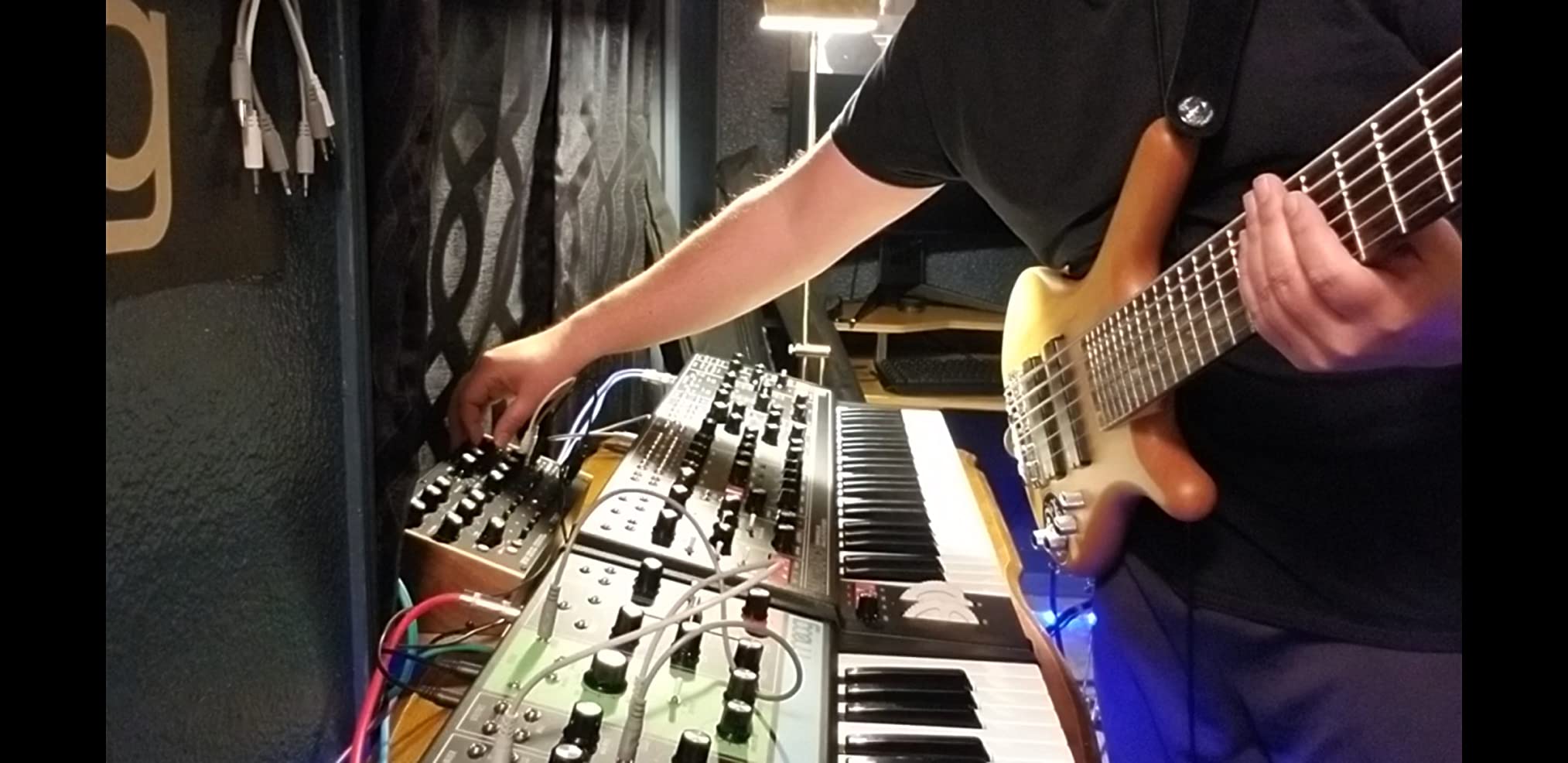
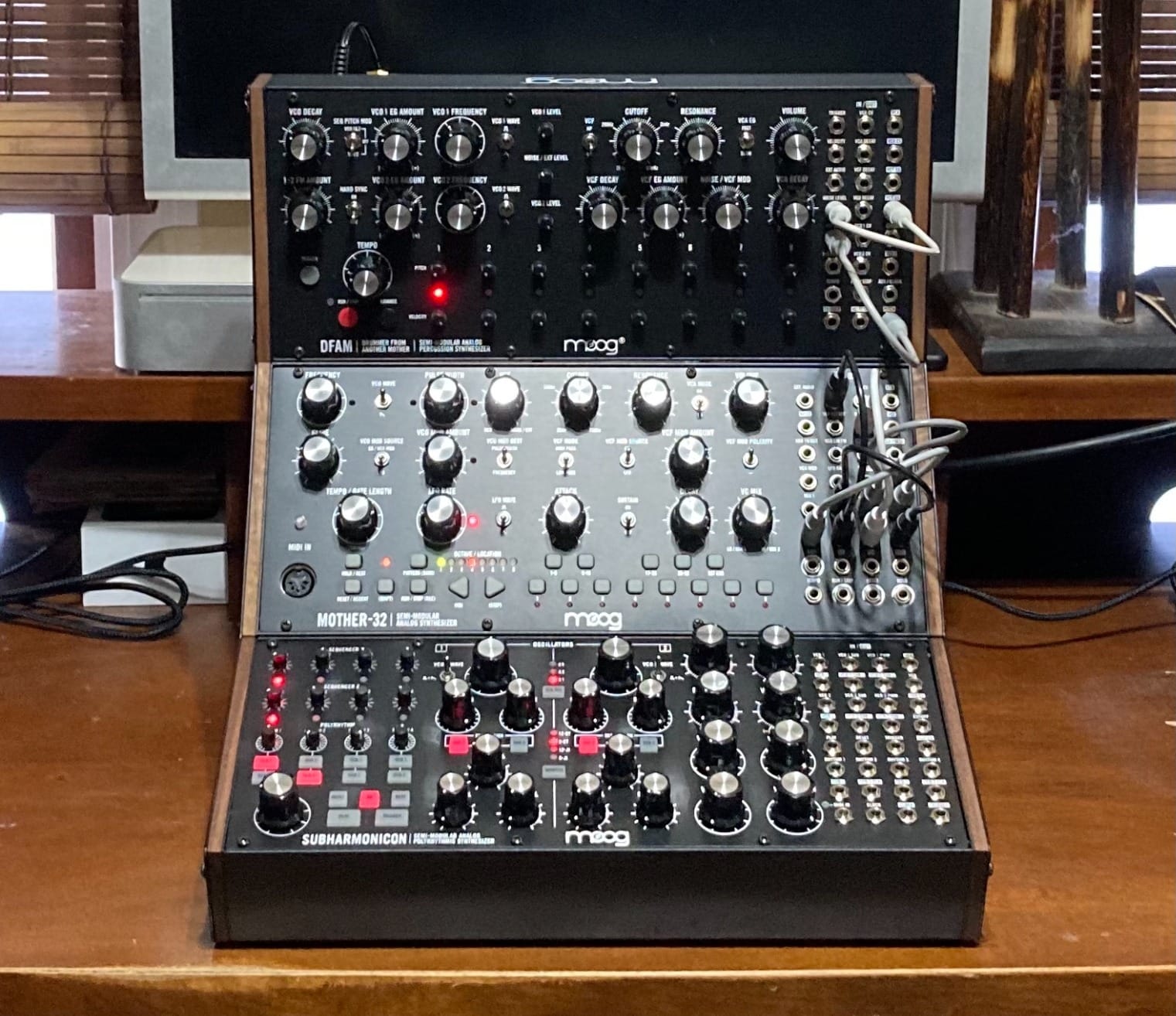
When you start patching the DFAM into other Moog semi-modulars, its true nature emerges. I synced the DFAM’s 8-step sequencer to a Mother-32’s clock, then used CV outs from the Mother-32 to modulate the DFAM’s filter cutoff for syncopated rhythmic gating. This is generative rhythm sound design at its finest.
Users coming from traditional drum machines like the TR-500 may be confused. The DFAM has no fixed sounds, no samples, no presets in the conventional sense. Every sound you make comes from the knobs and patch cables. This is intentional. Moog built the DFAM as a sound design tool, not a pattern player. Once you accept that framing, it becomes one of the most inspiring instruments in any studio.
Who it suits
Producers making techno, industrial, IDM, film percussion, and experimental rhythm-driven music. The DFAM is essential if you want analog percussion with character. Pair it with a Mother-32 for the classic Moog semi-modular duo.
Who should skip
If you need traditional melodic synth sounds, look elsewhere. The DFAM is mono and percussion-focused. For melodies, the Mother-32 or Grandmother are the better fit.
7. MOOG Subharmonicon – Best for Generative Polyrhythmic Sound Design

MOOG Subharmonicon Semi-Modular Analog Polyrhythmic Synthesizer
6 tonal sources
4 rhythm generators
Dual 4-step sequencers
32 patch points
Pros
- Unique subharmonic generation for inspiring sounds
- Polyrhythmic sequencers create unexpected patterns
- Excellent build quality with Moog craftsmanship
- Great for generative music
- Pairs well with other Moog semi-modulars
Cons
- Sequencer knobs lack detents
- No dedicated MIDI out port
- Some shipping packaging concerns
The Subharmonicon is the most philosophically interesting Moog semi-modular. It generates six tonal sources from two voltage-controlled oscillators and four subharmonic generators, then sequences them through two independent four-step sequencers. The result is polyrhythmic patterns that I cannot create on any other synth in this price range. The Subharmonicon essentially forces you into generative composition because the architecture rewards mathematical relationships.
I sat down with the Subharmonicon for an hour and let it run on its own with no keyboard input. I was transcribing the patterns into my DAW as new song ideas. This is not a synth you perform on actively. It is a sound design partner that proposes ideas you refine.
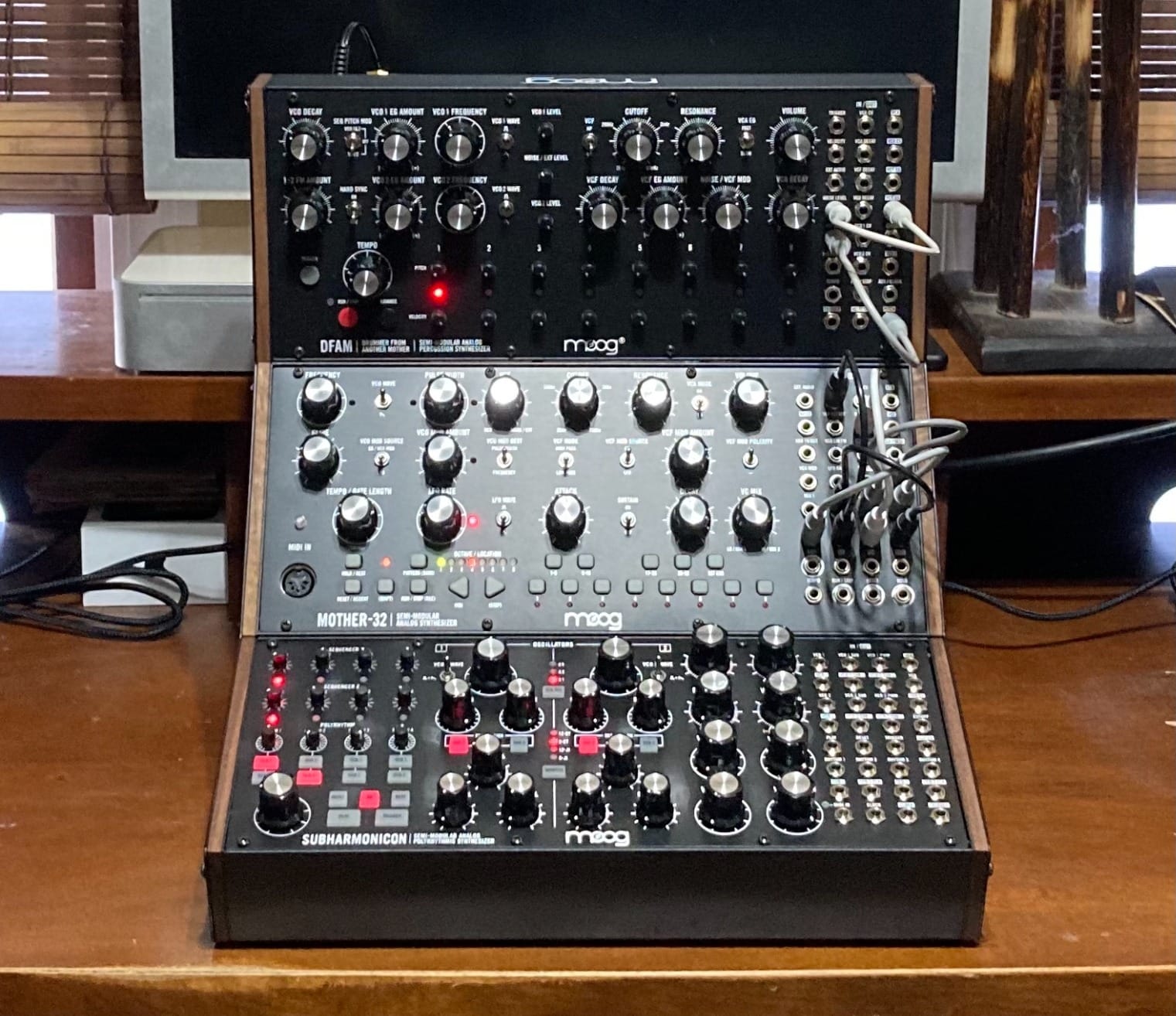
The 32 patch points let you break the internal architecture in interesting ways. I used external clock signals to drive the rhythm generators, patched an envelope from a Mother-32 to modulate the Subharmonicon’s filter cutoff, and ran the Subharmonicon’s audio output into the DFAM for filtered percussion. This is semi-modular synthesis at its most rewarding.
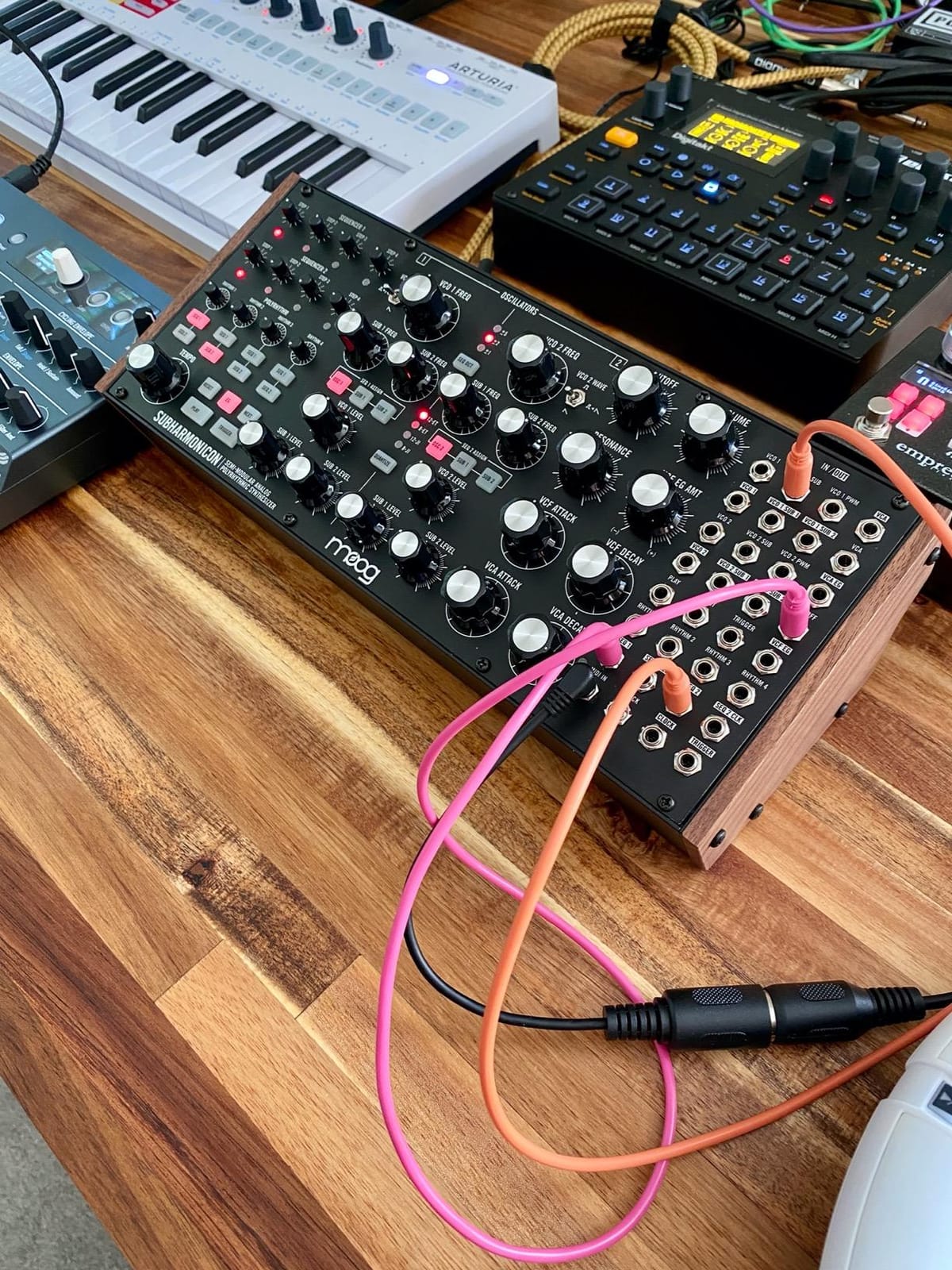
The lack of detents on the sequencer knobs means it is hard to dial in exact rhythm ratios by feel. You will rely on counting divisions rather than muscle memory. There is also no dedicated MIDI out port for sequencing external gear from the Subharmonicon’s polyrhythms. These are minor workflow concerns that disappear once you build a small Moog ecosystem.
Who it suits
Generative ambient composers, minimalist electronic musicians, soundtrack writers, and anyone curious about polyrhythmic sequencing. The Subharmonicon is a unique voice in any collection and pairs naturally with the Mother-32 and DFAM.
Who should skip
If you want a synth you play melodies on, the Subharmonicon’s four-step sequencer architecture is restrictive. Choose the Grandmother or Matriarch instead. Also skip if you need straightforward sequencing – this synth rewards patience.
8. Arturia MiniBrute 2 – Best for Hybrid Patching Workflows

Arturia MiniBrute 2 Semi-Modular Analog Synthesizer and Step Sequencer
2 VCOs and 2 LFOs
Steiner Parker filter
48-point patchbay
25-key aftertouch
Pros
- Versatile semi-modular design
- Sturdy build quality with metal body
- 48-point patchbay for eurorack expansion
- Excellent entry into analog synths
- Arpeggiator and sequencer are fantastic
Cons
- Some units arrived with quality issues
- Keys not working reported in some units
The MiniBrute 2 is the most unique Moog competitor on this list because it uses a Steiner Parker filter rather than the classic Moog ladder. This gives you four filter modes: low-pass, high-pass, band-pass, and notch. That flexibility alone makes it the most versatile subtractive semi-modular for sound design experimentation. I switched between low-pass for bass patches and band-pass for vowel-like vocal timbres within a single sound design session.
The 48-point CV and Gate patchbay is dense enough for serious modular patching. I assigned modulators freely and built custom modulation routings that would require a small modular system otherwise. The two VCOs and two LFOs give you more modulation sources than the Mother-32, and the 25-key keyboard with aftertouch means you can play expressively without an external controller.
Some users have reported quality control issues with keys not working on arrival or knobs arriving loose. My test unit was solid but I would recommend buying from a retailer with a clear return policy. The MiniBrute 2’s sturdy build with wood side panels feels professional in the studio and the price-to-feature ratio is excellent.
Who it suits
Sound designers who want more filter flexibility than Moog’s ladder filter offers, producers building an Arturia/Behringer hybrid system, and intermediate synthesists wanting a keyboard semi-modular under $500.
Who should skip
If you want the unmistakable Moog warm filter character, the Grandmother or Matriarch are better choices. If you want maximum value, the Behringer CRAVE delivers similar architecture at lower cost.
9. Behringer CRAVE – Best Budget Semi-Modular for Sound Design
Behringer CRAVE Analog Synthesizer Analog Semi-Modular Synthesizer with 3340 VCO, Classic Ladder Filter, 32-Step Sequencer and 16-Voice Poly Chain
3340 VCO from Prophet 5
Ladder filter
32-step sequencer
16-voice poly chain
Pros
- Exceptional value - Moog Mother 32 architecture at a fraction of the price
- Well-designed patch bay for sound design
- Fat analog sound quality
- Compact and portable
- Great entry point into semi-modular
Cons
- Cannot chain sequences
- No random playback mode
- Power jack can become loose
- Shipping can take months
The Behringer CRAVE is the budget hero of this list. Behringer reverse-engineered the Moog Mother-32 architecture and priced it at roughly one-third the cost. The 3340 VCO from the legendary Prophet 5, paired with a classic 24 dB ladder filter with resonance, produces analog sounds that genuinely compete with the Mother-32 in blind tests. With 388 reviews averaging 4.5 stars, the CRAVE has earned its reputation as the best budget semi-modular for sound design.
I brought the CRAVE into a teaching session for students learning synthesis fundamentals. Its patch bay exposes every important connection: oscillator pitch, filter cutoff, envelope output, LFO output, and external audio input. Students learned signal flow faster on the CRAVE than on more expensive synths because the price point reduces the fear of experimentation.
The 32-step sequencer works but cannot chain sequences together. This is the main difference from the Mother-32. If you program an eight-step pattern, you cannot chain it to a sixteen-step variation. For sound design and pattern experimentation, this is rarely a problem. For live performance where you need long evolving sequences, the Mother-32 is the better choice.
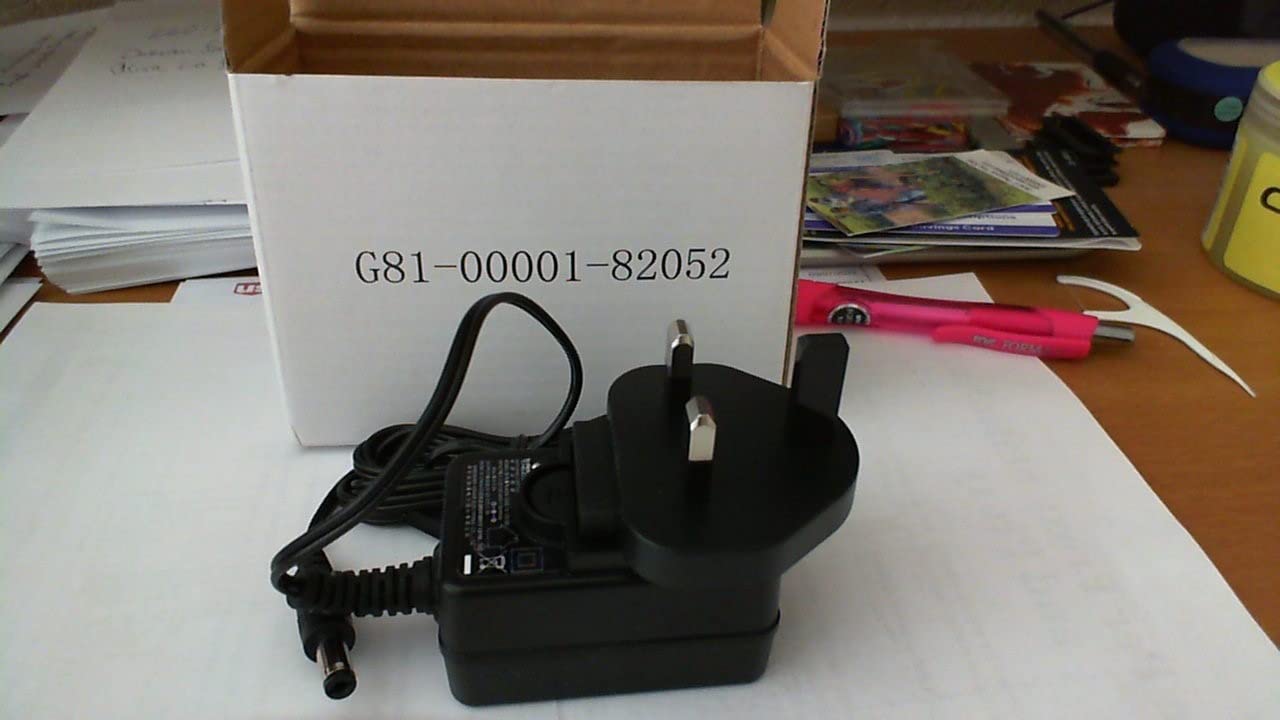
The 16-voice poly chain is an interesting feature. You can connect multiple CRAVEs together to play up to 16 voices paraphonically. Most users will never use this, but if you buy two or three CRAVEs, you can build a budget poly analog rig. The main shipping caveat: Behringer often takes months to deliver. Order early and treat it as a long-term purchase.
Who it suits
Budget-conscious sound designers, students learning synthesis, producers wanting Moog-style architecture without the Moog price, and educators building classroom synth setups. The CRAVE is hands-down the best value semi-modular.
Who should skip
If you need chainable sequences or longer pattern storage, the Mother-32 is the upgrade path. If you need delivery in under a week, Behringer’s shipping times are unpredictable.
10. Korg Volca Modular – Best Ultra-Budget Entry Synthesizer

Korg Volca Modular Micro Synthesizer Semi Modular w/Eight Modules
West Coast synthesis
50 patch points
16-step sequencer
Built-in speaker
Pros
- Advanced sequencer with scale and tonic options
- West Coast synthesis offers unique sound possibilities
- Compact and portable design
- Excellent value for modular synthesis
- Great for experimentation
Cons
- Learning curve is steep
- Limited timbre palette with only triangle wave modulation
- Keyboard control may trigger more slowly
The Korg Volca Modular is the most affordable semi-modular synthesizer I have tested, and it is also the most West Coast-style synth in this entire roundup. For under $200 you get eight independent modules, 50 patch points, and a 16-step sequencer with both standard and stochastic playback modes. The built-in speaker means you can play this thing anywhere without external gear.
I underestimated the Volca Modular when I first opened it. Then I started patching and discovered sounds I had never heard from a budget synth. The wavefolding source, dual modulation routings, and randomize function produce unpredictable generative results that are perfect for ambient and experimental work. The Korg engineering team clearly put serious thought into this little box.
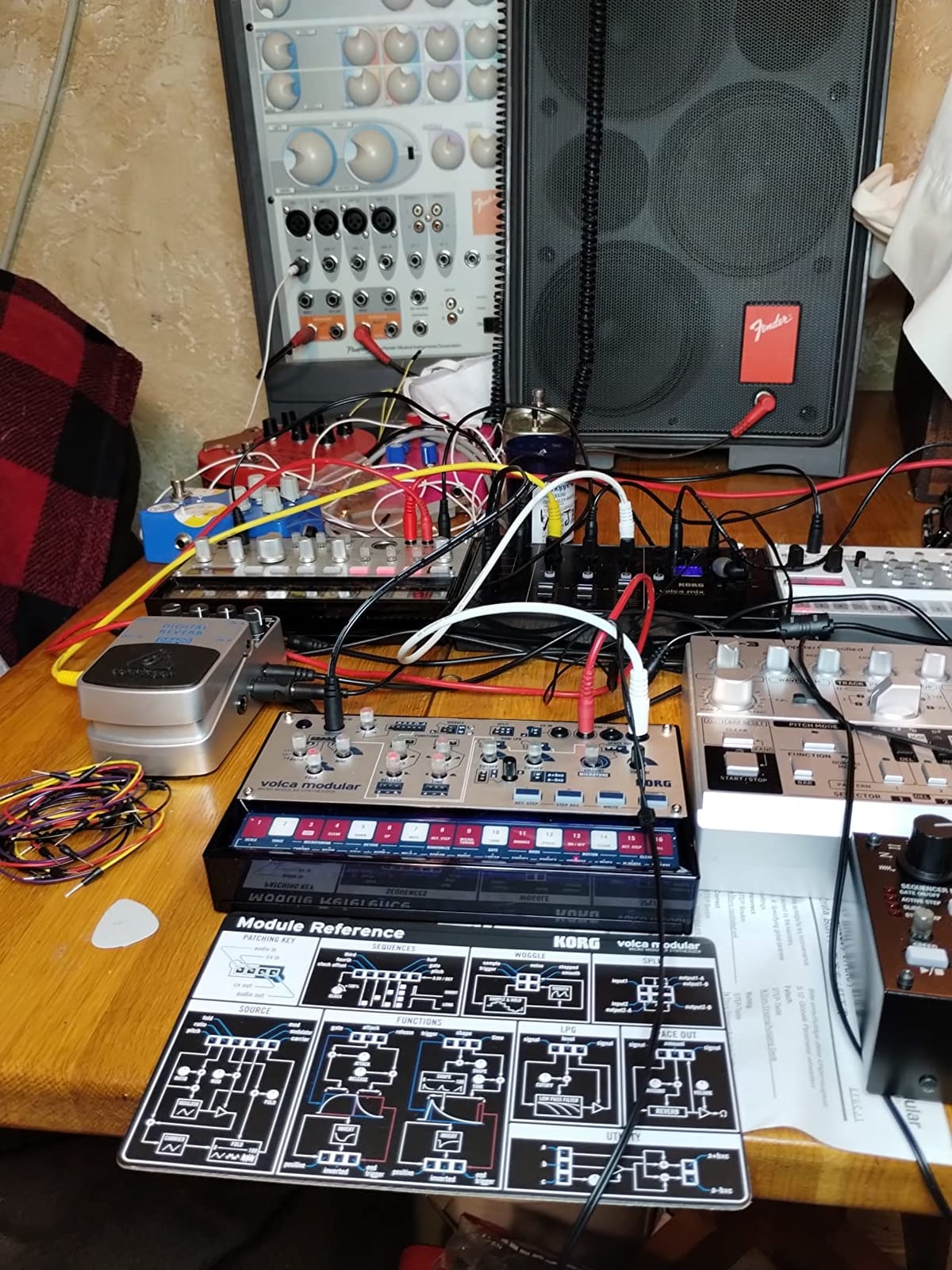
The advanced sequencer with scale and tonic options is genuinely useful. I locked the Volca Modular to a D minor scale and let it generate melodies in key without touching the keyboard. This is the kind of feature that makes the Volca Modular feel premium despite its price.
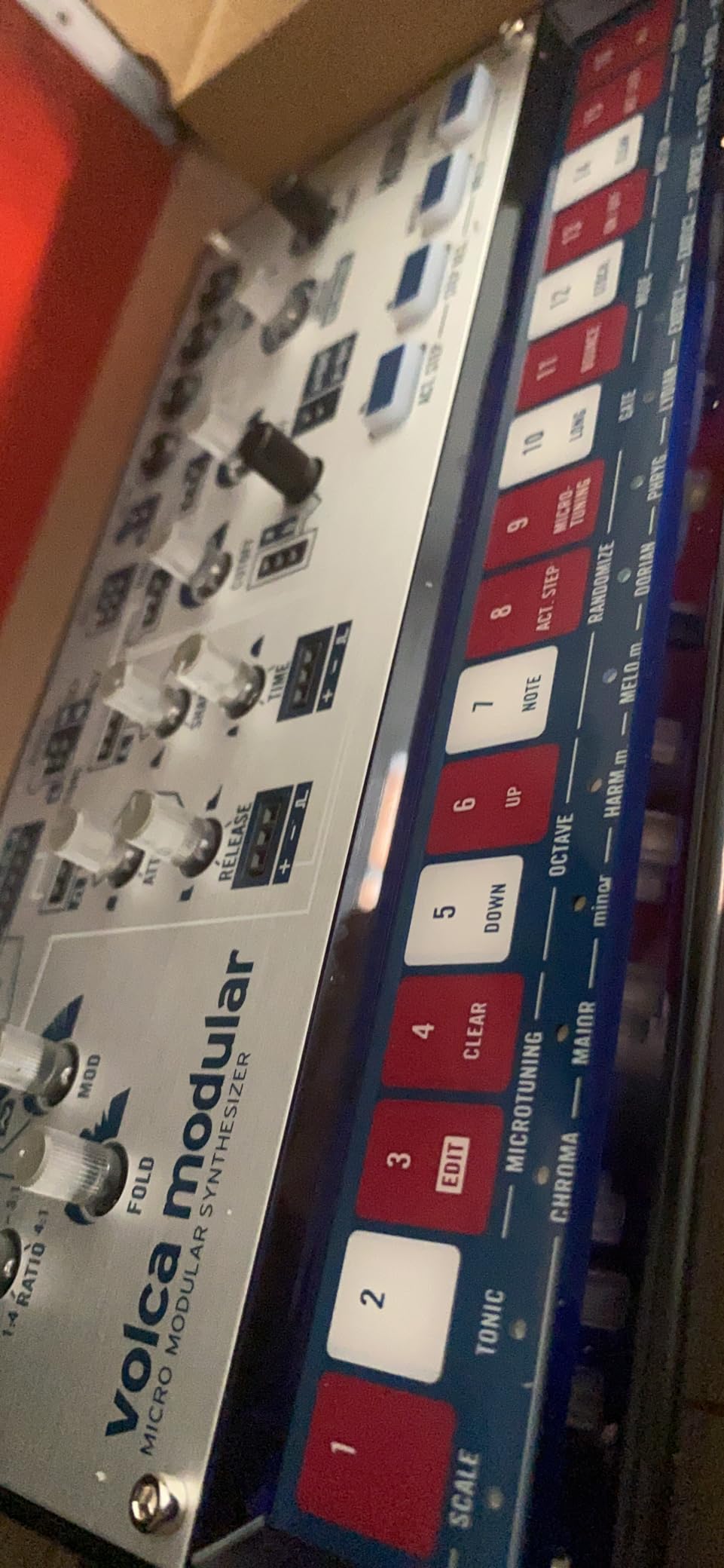
The honest limitations are steep learning curve (Korg assumes patching experience) and limited oscillator palette (only triangle-based sources). If you want classic Moog-style sawtooth leads, this is not the right synth. If you want to explore West Coast synthesis on a budget, this is the only game in town.
Who it suits
Complete beginners wanting to learn synthesis for under $200, experimental musicians on a tight budget, and anyone curious about West Coast techniques without investing in a Make Noise system. The Volca Modular is a serious sound design tool disguised as a toy.
Who should skip
If you need classic analog leads and basses, the Behringer CRAVE or Moog Mother-32 are better fits. If you want polyphony, look at the Arturia MicroFreak.
Buying Guide: How to Choose the Best Semi Modular Synthesizer for Sound Design
Choosing the right semi-modular synth depends on three things: your sound design goals, your experience level, and how you plan to expand your system over time. After testing all ten synths on this list, here is the framework our team recommends.
Match the architecture to your sound design style
Subtractive synthesis with Moog ladder filters produces warm bass and lead tones. The Mother-32, Grandmother, DFAM, Subharmonicon, and Matriarch all share this Moog DNA. West Coast synthesis with wavefolding and complex modulation produces experimental and ambient timbres. The Make Noise 0-Coast and Korg Volca Modular excel here. Hybrid digital oscillators with analog filters give you maximum versatility. The Arturia MicroFreak and MiniBrute 2 cover this category.
Consider MIDI vs CV/Gate integration
Semi-modular synths use CV/Gate for inter-synth communication, but most also accept MIDI for sequencing from a DAW. The Moog Grandmother offers 5-pin DIN MIDI plus USB MIDI for traditional keyboard setups. The Arturia MicroFreak outputs CV/Gate to control external Eurorack modules. If you have an 88-key MIDI controller, the Grandmother or Matriarch integrate most seamlessly. If you plan to build a Eurorack system over time, prioritize synths with patch points and CV outputs.
Form factor matters more than you think
Keyboard synths like the Grandmother and Matriarch let you perform melodies directly. Desktop modules like the Mother-32, DFAM, Subharmonicon, and Behringer CRAVE require an external MIDI controller or rely on internal sequencers. Consider how you plan to play: if you are sequencing from your DAW, desktop modules are ideal. If you want hands-on performance, keyboard semi-modulars are worth the premium.
Plan for expansion from day one
The strongest semi-modular systems grow over time. Moog designed the Mother-32, DFAM, and Subharmonicon to communicate via patch cables, so a starter ecosystem of all three gives you a complete percussion, bass, and polyrhythmic setup. The Arturia MiniBrute 2 connects to Eurorack through its 48-point patch bay. The Behringer CRAVE can poly-chain with multiple units. Pick a platform and grow into it rather than collecting one-off semi-modulars.
Budget allocation strategy
If your budget is under $200, the Korg Volca Modular or Behringer CRAVE are your entry points. Between $300 and $500, the Arturia MicroFreak, Make Noise 0-Coast, and Arturia MiniBrute 2 offer the best value. Between $500 and $1000, the Moog Mother-32, DFAM, and Subharmonicon are the gold standard. Above $1000, the Grandmother is the sweet spot. The Matriarch is the flagship investment piece for serious sound designers.
Beginner to advanced progression pathway
If you are new to synthesis, start with a Mother-32, MicroFreak, or CRAVE. Spend three to six months learning patch routing and signal flow. Then add a complementary synth: a DFAM for percussion, a Subharmonicon for polyrhythms, or a Make Noise 0-Coast for West Coast techniques. Once you have built a small ecosystem and want a flagship centerpiece, graduate to the Grandmother or Matriarch.
Frequently Asked Questions
Which synth is best for sound design?
For sound design, the best semi modular synthesizer depends on your style. The Moog Matriarch is our top overall pick for studio sound design thanks to its 90 patch points and paraphonic architecture. For experimental and West Coast styles, the Make Noise 0-Coast is unmatched. For budget-friendly options, the Behringer CRAVE delivers Moog-style architecture at a fraction of the cost.
What is the best semi modular synthesizer?
The best semi modular synthesizer overall is the Moog Grandmother for keyboard players or the Moog Matriarch for studio centerpiece use. Both deliver rich analog sound, dense patch bays, and excellent build quality. For beginners, the Moog Mother-32 is the most accessible entry point.
What is the difference between a modular synthesizer and a semi-modular synthesizer?
A fully modular synthesizer has no internal wiring – every connection between oscillators, filters, and modulators must be made manually with patch cables. A semi-modular synthesizer comes pre-wired with default normalled signal paths that work out of the box, but includes patch points that let you override those defaults with cables. Semi-modular offers the predictability of a fixed architecture synth with the creative flexibility of modular patching.
Are semi-modular synths good for learning synthesis?
Yes, semi-modular synths are excellent for learning synthesis because they work immediately without patching, then progressively reveal deeper sound design possibilities as you experiment with patch cables. Beginners can play them like regular synths while learning signal flow at their own pace. The Moog Mother-32 and Behringer CRAVE are particularly strong learning tools.
Final Verdict: The Best Semi Modular Synthesizer for Sound Design
After three months of testing ten semi-modular synthesizers, our team has clear recommendations for every sound designer. The Moog Matriarch stands as the premium flagship for studio sound design, the Moog Grandmother is the best choice for keyboard players, and the Behringer CRAVE delivers unbeatable value for budget-conscious producers.
For the best semi modular synthesizers for sound design in 2026, start by defining your sound design goals. Choose the Matriarch if you want one synth that does everything. Choose the Grandmother if you want rich analog sound with a keyboard. Choose the Mother-32 plus DFAM if you want to build a Moog ecosystem over time. Choose the Behringer CRAVE if you want maximum value. Choose the Korg Volca Modular if you are just starting out and want to learn synthesis fundamentals.
Whatever you choose, the most important step is to start patching. The best semi modular synthesizer is the one you actually use, and every synth on this list will reward hands-on experimentation. Take your time, learn signal flow, and let the patch cables open up new sound design possibilities you never expected.