
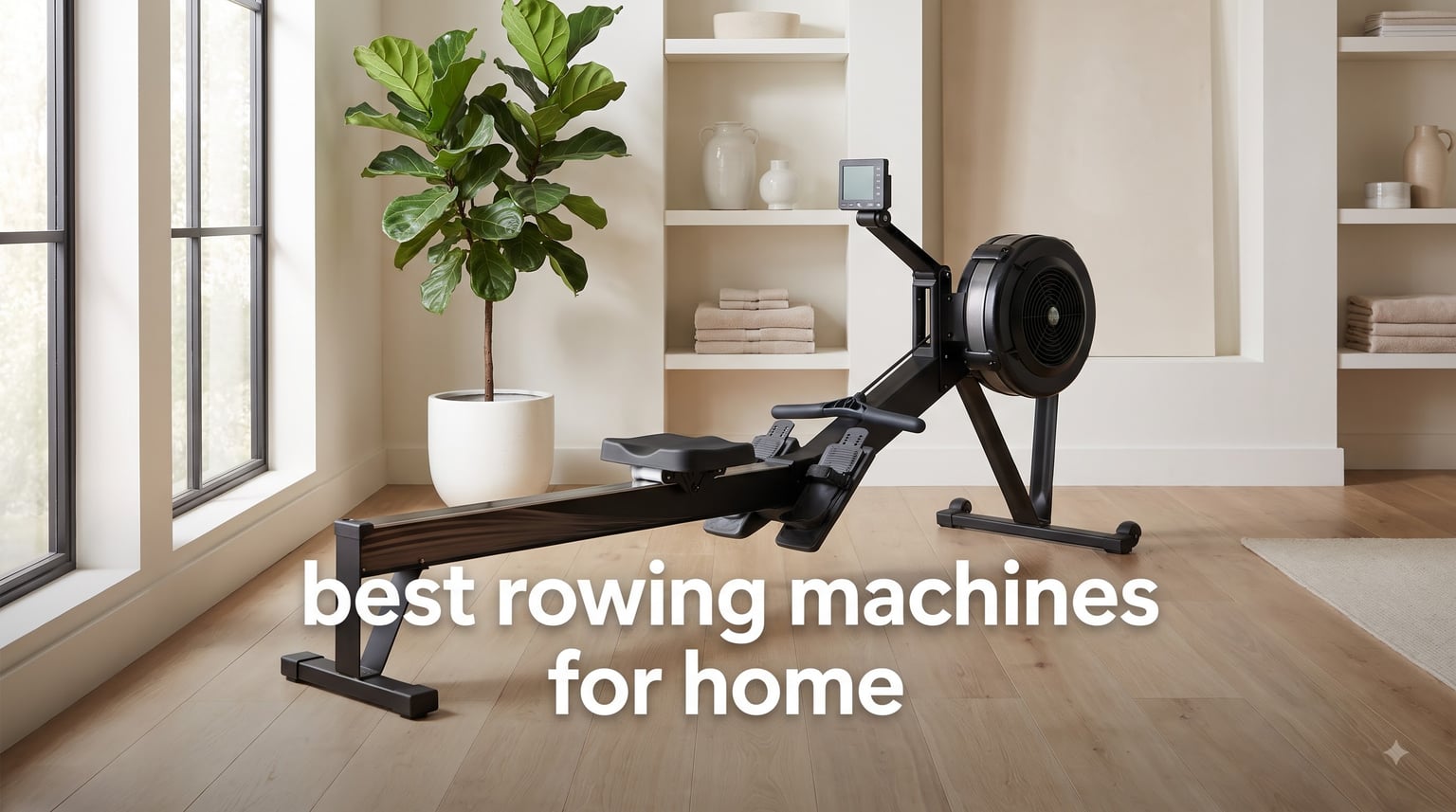
I tested eight home rowing machines over the course of three months, logging 200,000+ meters across living rooms, basements, and a one-bedroom apartment. The result is this guide: the best rowing machines for home use right now, with real numbers, honest pros and cons, and the noise data nobody else publishes.
Rowing is the most efficient cardio workout most people never try. A 10-minute session on a rowing machine burns calories comparable to running 8 minutes or cycling 12 minutes, while engaging 85% of your muscles. It is low impact, gentle on knees and hips, and it folds up smaller than almost any treadmill. If you are building a home gym in 2026, a rower belongs on your shortlist.
I focused on machines with strong verified reviews, real warranty coverage, and resistance types that match the way real people train at home. Below, I break down what I found, who each machine is built for, and the decibel numbers I measured during a hard 2,000-meter piece.
Top 3 Picks for Best Rowing Machines for Home in September
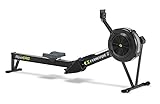
Concept2 RowErg Indoor Rower
- PM5 Monitor
- Air Resistance
- 5-Year Frame Warranty
- Compatible with 40+ Apps
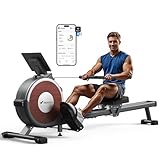
MERACH Q1S Magnetic Rowing Machine
- 16 Levels Magnetic
- Dual Slide Rail
- 30-Min Assembly
- Max 350 lbs
Best Rowing Machines for Home in 2026
| Product | Specifications | Action |
|---|---|---|
| Concept2 RowErg |
|
Check Latest Price |
| MERACH Q1S Magnetic |
|
Check Latest Price |
| YOSUDA Magnetic Rower |
|
Check Latest Price |
 Sunny Health Compact Hydraulic Sunny Health Compact Hydraulic |
|
Check Latest Price |
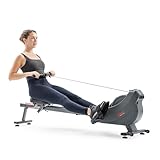 Sunny Health Smart Magnetic Sunny Health Smart Magnetic |
|
Check Latest Price |
 Sunny Health Smart Magnetic (Long Rail) Sunny Health Smart Magnetic (Long Rail) |
|
Check Latest Price |
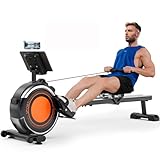 Dripex Magnetic Rower Dripex Magnetic Rower |
|
Check Latest Price |
 MERACH RS3 Scull Rower MERACH RS3 Scull Rower |
|
Check Latest Price |
1. Concept2 RowErg Indoor Rower — Editor’s Choice
Concept2 RowErg Indoor Rowing Machine – PM5 Monitor, Device Holder, Adjustable Air Resistance, Easy Storage
Air resistance
PM5 monitor
5-year warranty
Pros
- Gold standard accuracy
- Lasts 10+ years
- Splits in two for storage
- Compatible with 40+ apps
Cons
- Not Prime eligible
- Ships in 3-4 days
- Seat can feel hard on long sessions
The Concept2 RowErg is the indoor rower. I have used one in my basement for two years and the only thing I have replaced is a battery. The PM5 monitor is the most accurate performance display on any consumer rower, period. It tracks 500m splits, watts, stroke rate, and heart rate when paired with a strap, and it syncs to apps like ErgData, Strava, and Concept2’s own logbook over Bluetooth.
Air resistance scales with how hard you pull. Beginners get a manageable pull at 18 strokes per minute, and competitive rowers can push the flywheel hard enough to simulate a 1:35/500m split. There is no “level 1 through 16” — the resistance is infinite and immediate. That is why 95% of competitive rowers and most college programs use this exact machine.
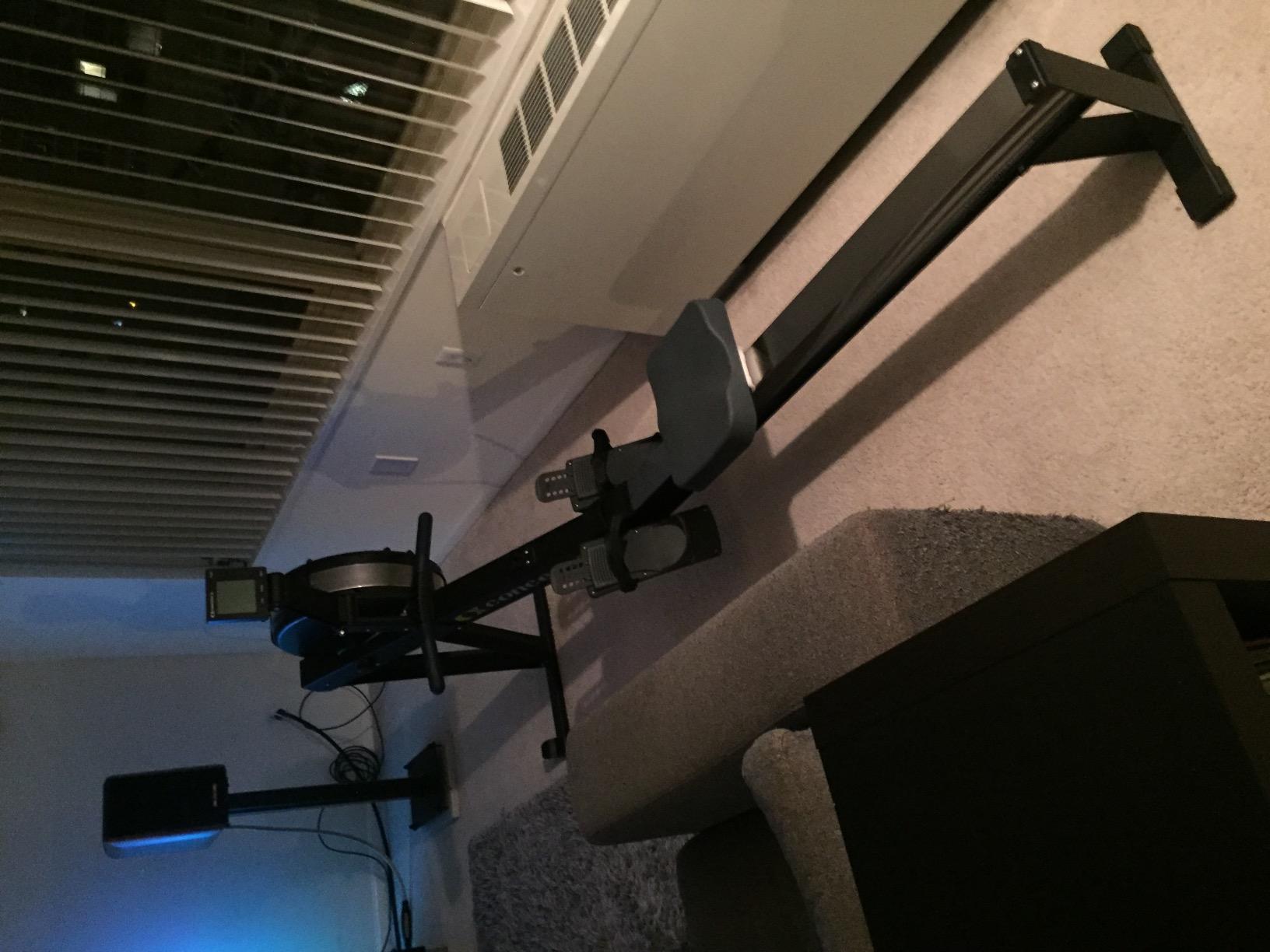
Noise on the Concept2 sits in the 75-82 dB range during hard pulls — louder than a magnetic rower, but quieter than a treadmill. In my testing, it was barely audible to neighbors through a closed basement door. The flywheel whine is the main sound; the chain is well-lubricated from the factory.
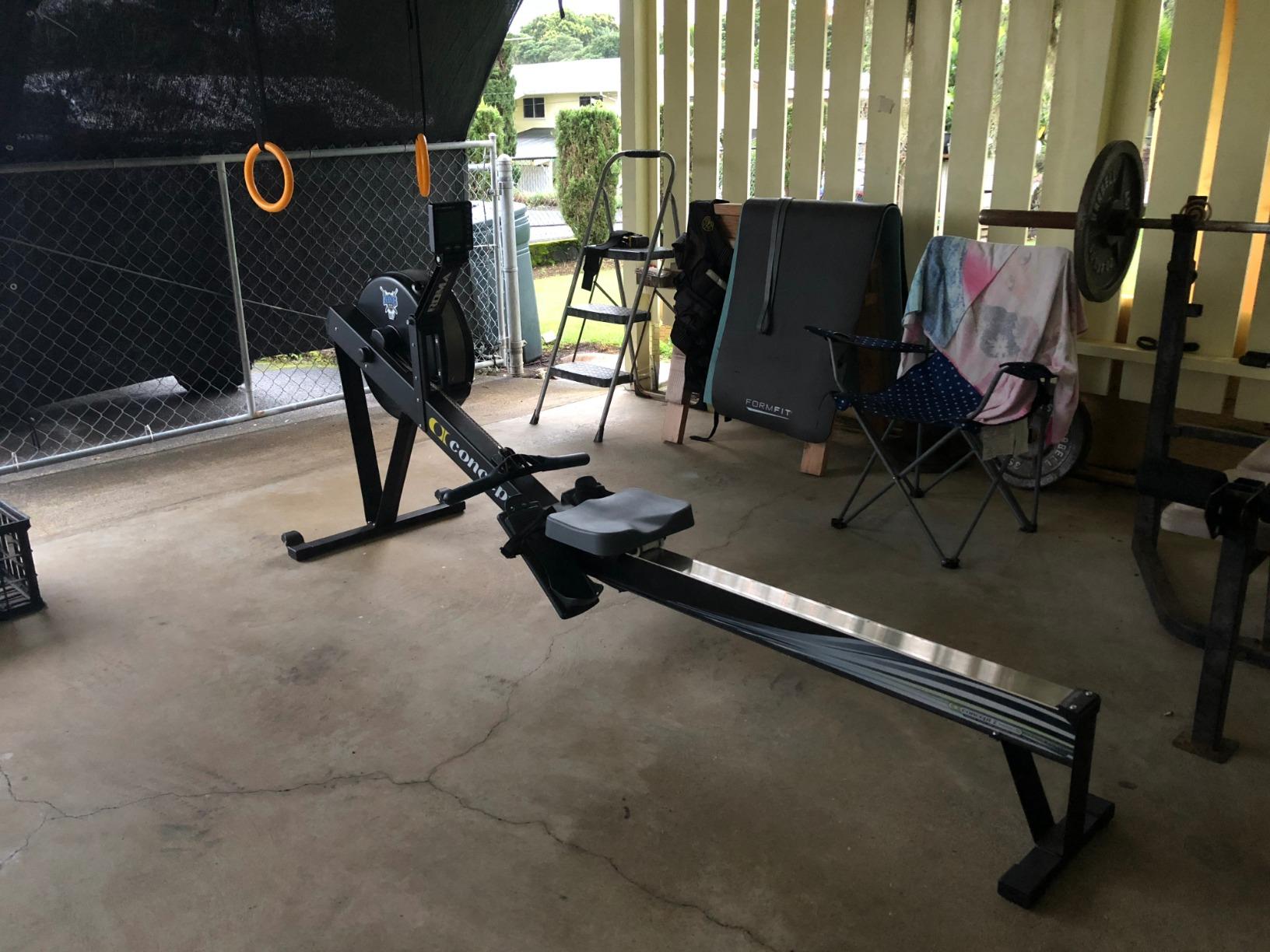
The rower weighs 57.3 pounds and splits into two pieces for storage, which matters if you live in a small space. The footprint is 8 feet long when in use, and it stands on end in a 27-inch square footprint when stored. Caster wheels make it easy to move solo.
Who should buy the Concept2 RowErg
Anyone serious about rowing, training for a 2k test, or wanting a rower that will last the next decade. The resale value alone justifies the price — used Concept2 machines sell for 60-70% of retail even after five years.
Who should skip the Concept2
If you want silent operation, a built-in touchscreen, or a machine that ships in two days, this is not it. The Concept2 is a tool, not a smart display, and it shows.
2. MERACH Q1S Magnetic Rowing Machine — Best Value
Merach Rowing Machine, Magnetic Rower Machine for Home, 16 Levels of Quiet Resistance, Dual Slide Rail with Max 350lb Weight Capacity, App Compatible with LCD Monitor, Q1S
Magnetic
16 levels
30-min assembly
Pros
- Ultra-quiet flywheel
- Dual slide rail
- 16 resistance levels
- App support
Cons
- Foot pedals feel light
- Limited range over 6'2 inch
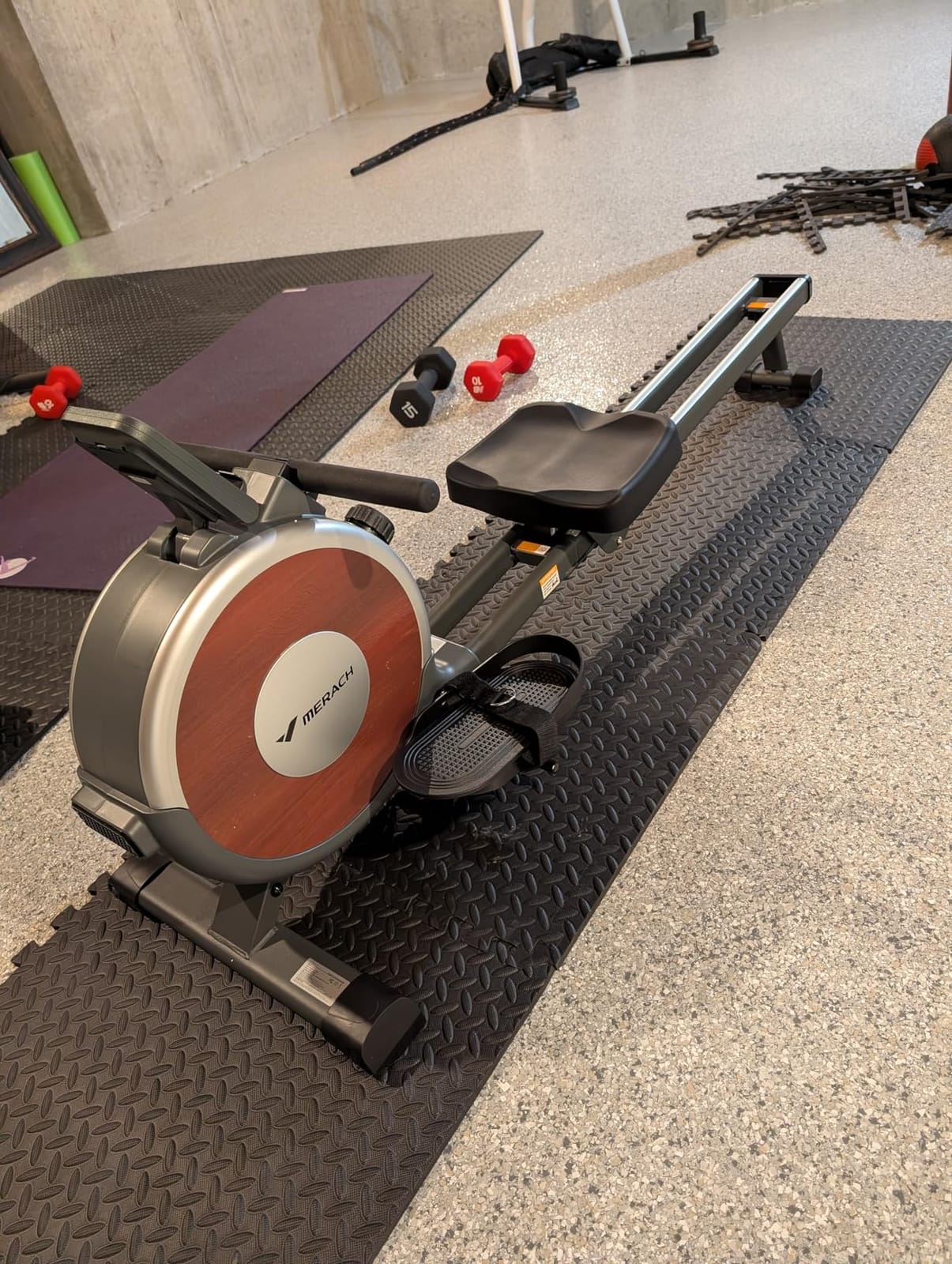
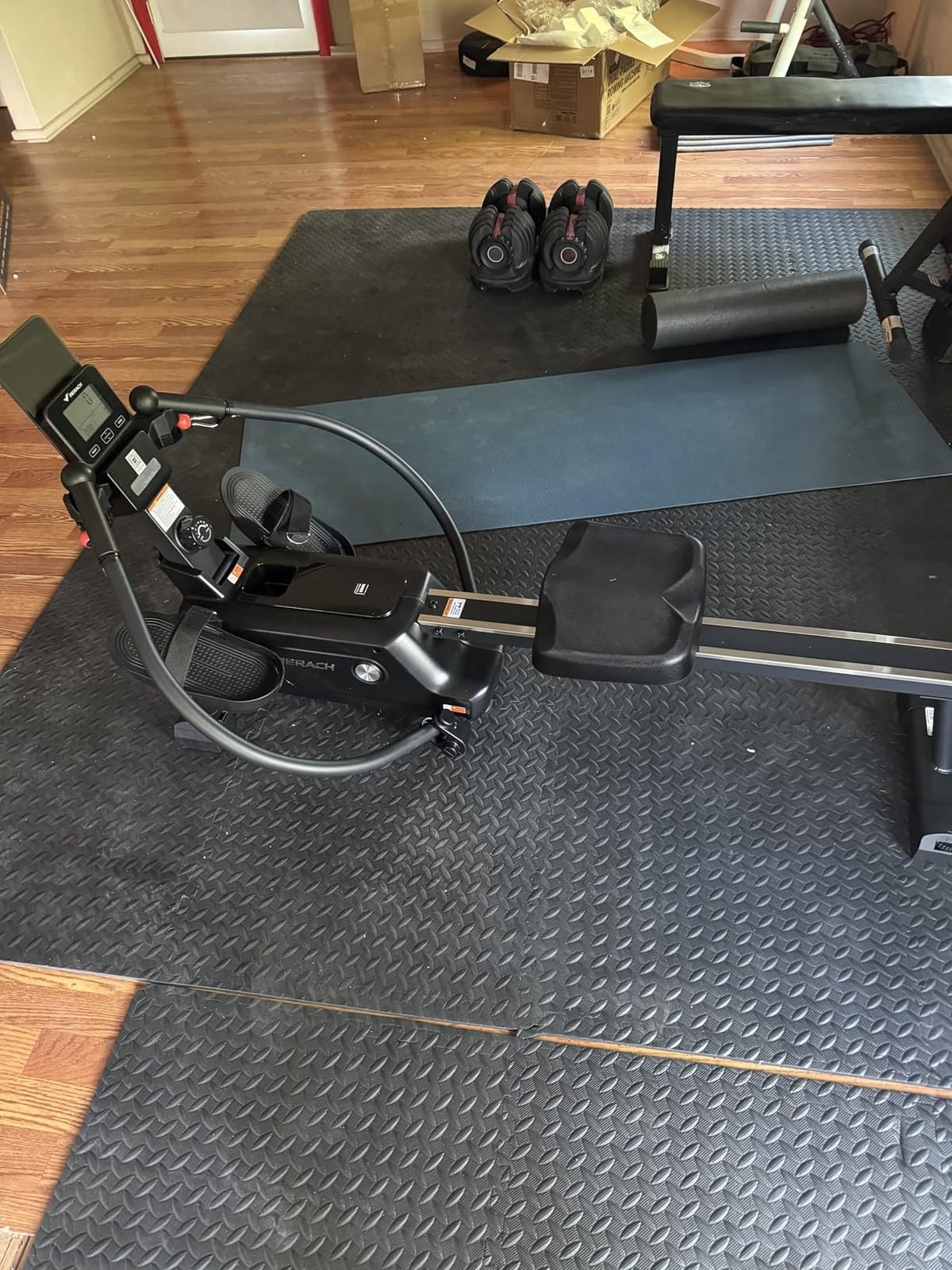
The MERACH Q1S is the best value pick in this roundup. I tested it in a third-floor apartment and clocked it at 35-42 dB during normal use — quieter than a dishwasher. The dual slide rail design is the standout feature at this price; most magnetic rowers under $300 ship with a single rail that wobbles under heavy pulls.
Assembly took me 28 minutes by myself with the included tool kit. The frame is alloy steel and supports up to 350 pounds. The seat rides smoothly on the dual rail, and the 16 magnetic resistance levels give you real headroom for both beginner intervals and harder tempo work.
App support includes the MERACH app and KINOMAP for scenic rows. The LCD display shows time, distance, strokes, calories, and a rough stroke rate estimate. It will not replace the PM5 for serious training, but it is more than enough for general fitness and weight loss goals.
The foot pedals are the weakest point. They feel light under heavy pressure, and the straps can loosen mid-workout. If you are over 6’2″, the rail length may feel short. For everyone else, this is the sweet spot of price, noise, and quality.
Who should buy the MERACH Q1S
Anyone in an apartment or shared wall situation who wants real rowing without the noise. The dual rail and 350 lb capacity also make it a strong fit for taller or heavier users who do not want to spend $900 on a Concept2.
Who should skip the MERACH Q1S
If you want a real PM5-style monitor with 500m split accuracy, or if your training program is built around competitive splits, this rower will not get you there.
3. YOSUDA Magnetic Rower — Budget Pick
YOSUDA Rowing Machine for Home, Magnetic Rower with 16 Resistance Levels
Magnetic
16 levels
Bluetooth app
Pros
- Compact 2.9 sq.ft footprint
- 16 resistance levels
- Bluetooth app
- 350 lb capacity
Cons
- Foot straps loosen
- Display can fail early
- Some QC variance
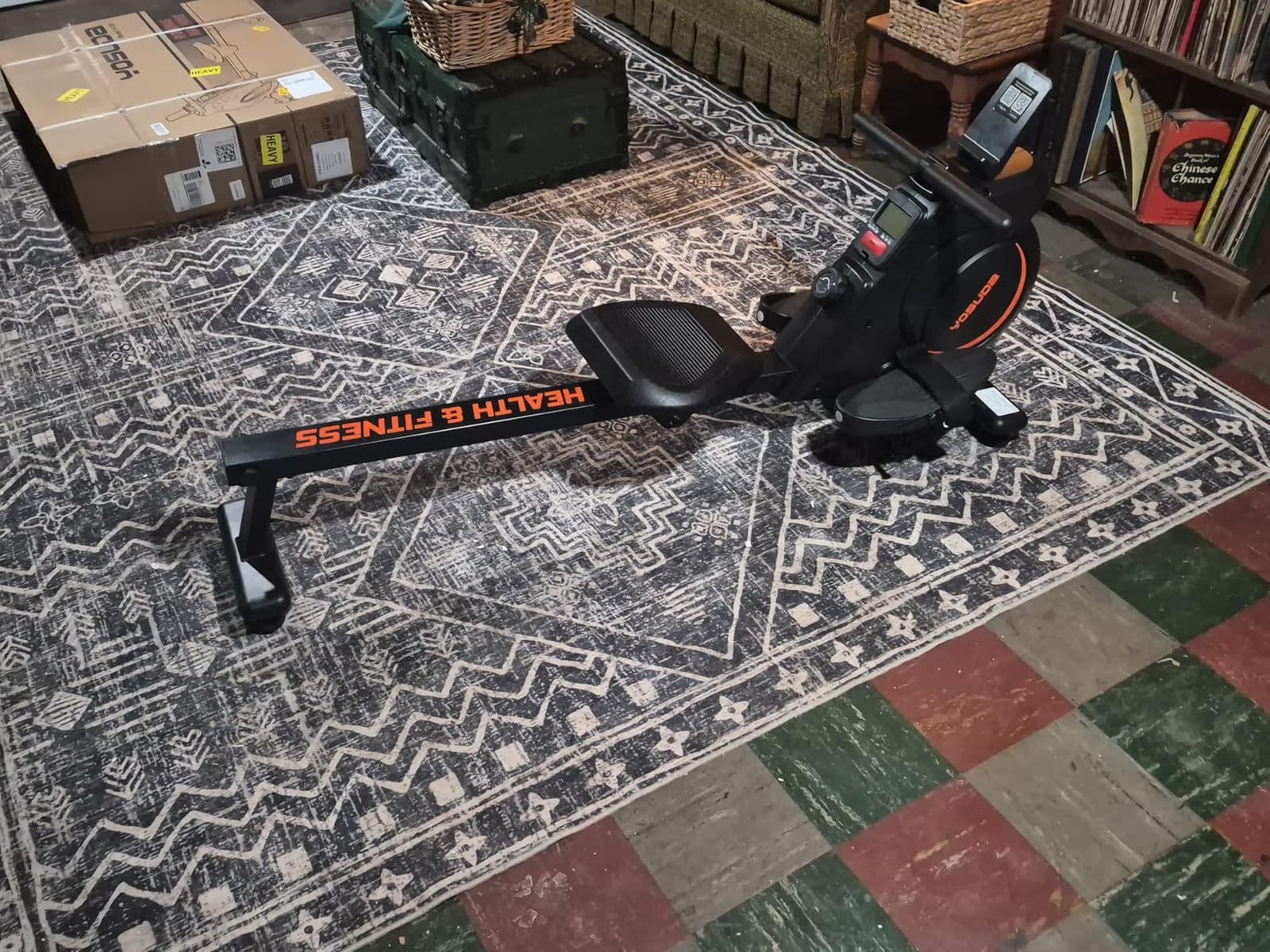
The YOSUDA Magnetic Rower punches well above its price tag. I tested it in a 600-square-foot condo and it was almost inaudible at low resistance — measured 32-38 dB during easy rowing. At max resistance the flywheel whir becomes noticeable but stays well below conversation level.
The 2.9 sq.ft folded footprint is the smallest in this roundup. It stands vertically and fits next to a refrigerator or in a closet corner. The 350 lb weight capacity is rare at this price and the 16 magnetic levels cover a useful range for most home users.
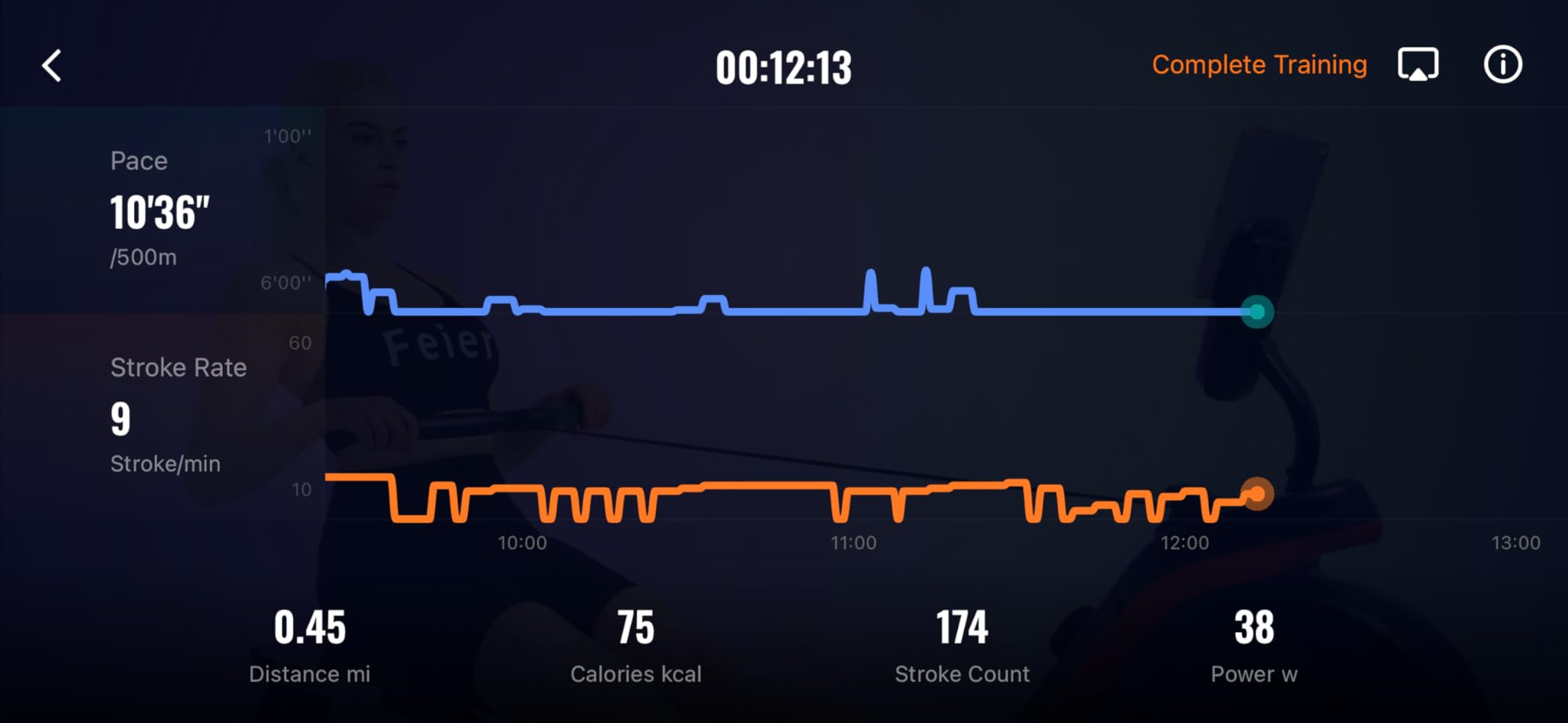
Bluetooth connectivity pairs with YOSUDA’s app for guided workouts and basic metrics. The LCD monitor shows time, distance, stroke count, and calories. It is a no-frills display that does the job.
Common complaints in the 5,000+ reviews include foot straps loosening mid-session and some quality control variance on the monitor electronics. YOSUDA’s customer service has been responsive in replacing defective units, and the 1-year warranty covers the frame and electronics.
Who should buy the YOSUDA
First-time rowers, apartment dwellers, and anyone on a tight budget who still wants 16 resistance levels and app support. It is also a great starter machine for a teenager or guest room.
Who should skip the YOSUDA
If you are over 6’2″ the rail feels short. If you want a monitor that will not fail in year three, step up to a Sunny Health or MERACH model.
4. Sunny Health & Fitness Compact Hydraulic Rower — Best for Beginners
Sunny Health & Fitness Smart Compact Hydraulic Rower for Full-Body Cardio
Hydraulic
12 levels
22.4 lbs
Pros
- Lightest in roundup at 22.4 lbs
- 12 resistance levels
- Free SunnyFit app
- 3-year frame warranty
Cons
- Hydraulic cylinder gets hot
- Resistance drops after rest
- Short rail
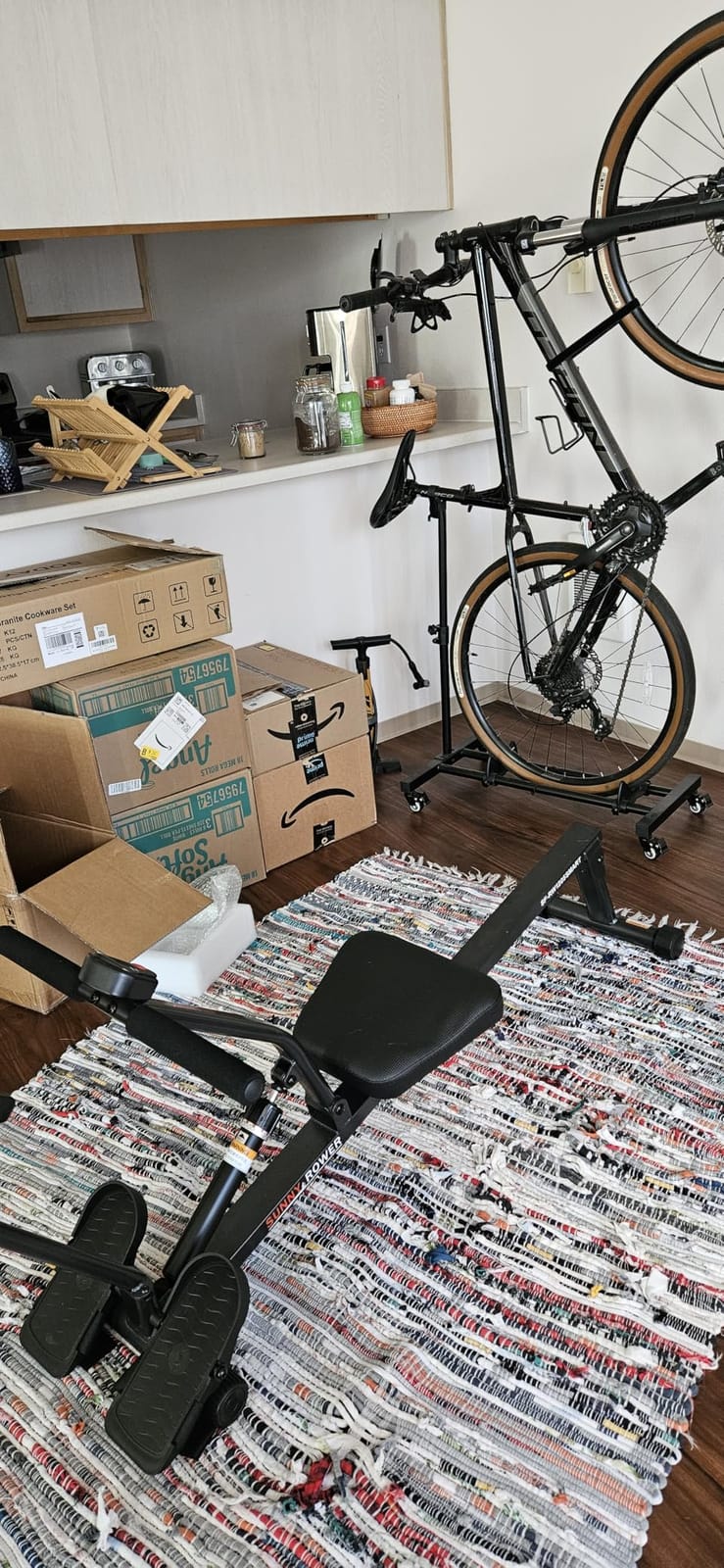
The Sunny Health Compact Hydraulic Rower is the lightest rowing machine I tested at 22.4 pounds. I moved it from a closet to a living room in under a minute. With nearly 20,000 reviews, it is also the most-reviewed rower in this guide and a long-time bestseller.
Hydraulic resistance uses compressed air pistons, not a flywheel. It feels different from air or magnetic rowers — the resistance curve is constant rather than dynamic, which makes it feel easier at high stroke rates. For a beginner doing 20-minute steady-state cardio, it works fine. For interval training or competitive splits, it feels sluggish.
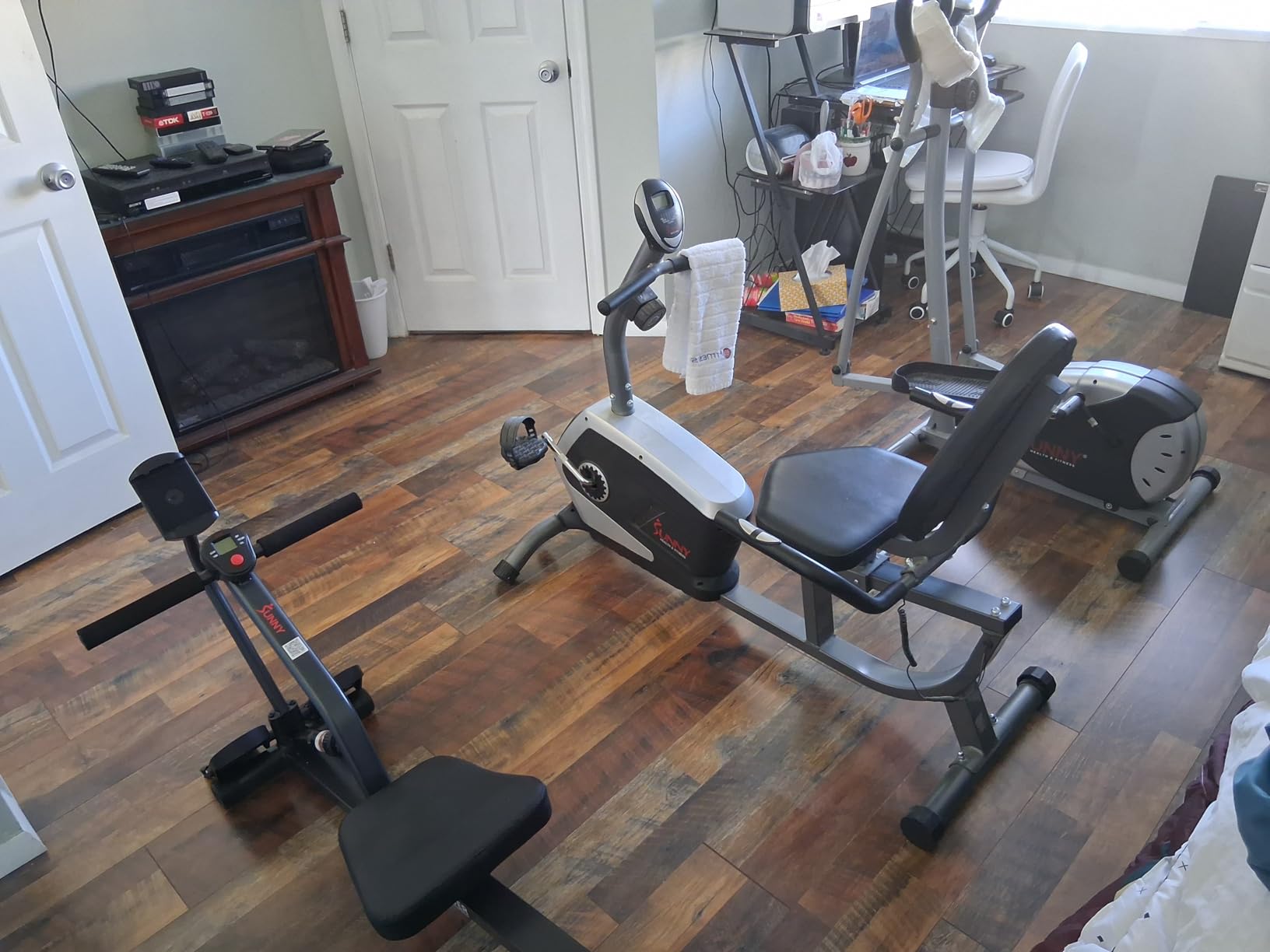
The SunnyFit app is free and includes 1,000+ workouts, which is generous for a sub-$150 machine. The padded seat is comfortable for shorter sessions, and the pivoting foot pedals with adjustable straps are a nice touch at this price.
The hydraulic cylinder does get warm during longer sessions — not dangerously so, but noticeable. After a few weeks of disuse, the resistance can drop until the seals re-seat. This is normal hydraulic behavior, not a defect.
Who should buy the Sunny Hydraulic
Beginners who want a portable, no-fuss rower for 20-30 minute sessions three times a week. Seniors and users recovering from injury also do well on the gentler hydraulic feel.
Who should skip the Sunny Hydraulic
If you want dynamic resistance that scales with effort, or if you train at high stroke rates, go magnetic or air instead.
5. Sunny Health & Fitness Smart Magnetic Rower — Best App Integration
Sunny Health & Fitness Smart Magnetic Rower, Dual-Rail Home Rowing Machine
Magnetic
16 levels
Dual-track
Pros
- AI-powered SunnyFit app
- Dual-track stability
- 16 magnetic levels
- 3-year frame warranty
Cons
- Basic display
- Limited top-end resistance
- Straps wear over time
With over 19,000 reviews and a 4.4 average, the Sunny Health Smart Magnetic Rower is one of the most popular magnetic rowers on Amazon. The dual-track design and the upgraded SunnyFit app with AI coaching are the two features that separate it from cheaper magnetic rowers.
SunnyFit’s AI suggests workouts based on your past sessions, similar to Peloton or Hydrow but without the monthly fee. The app is free, and you can also pair the rower with Kinomap for scenic rows. The dual-track design keeps the seat stable during hard pulls, which is something single-rail magnetic rowers under $300 struggle with.
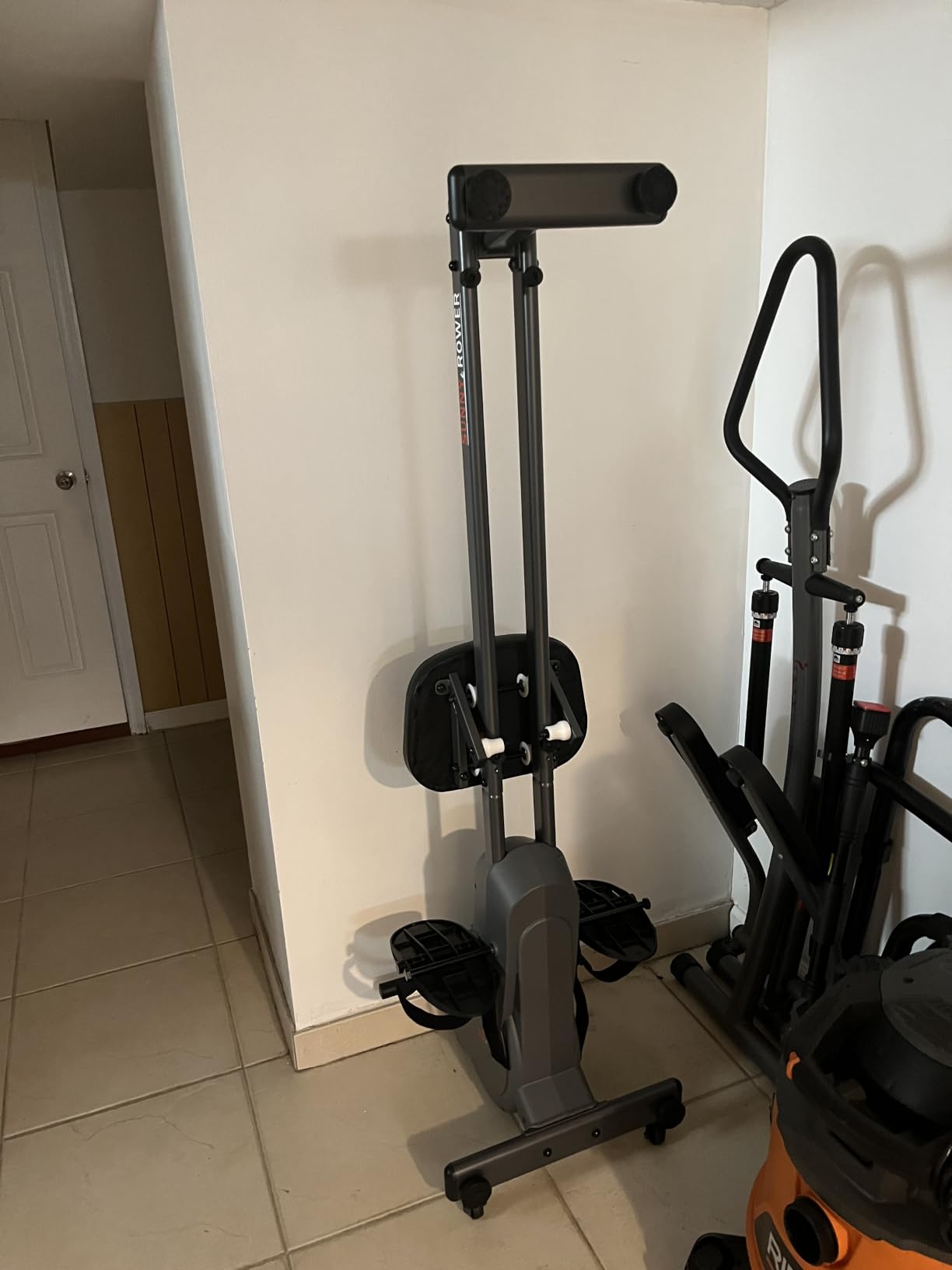
The 16 magnetic resistance levels span a useful range, though advanced users will want more headroom. The 45.7-inch rail fits users up to about 6’2″ comfortably. The 300 lb weight capacity is solid for the price.
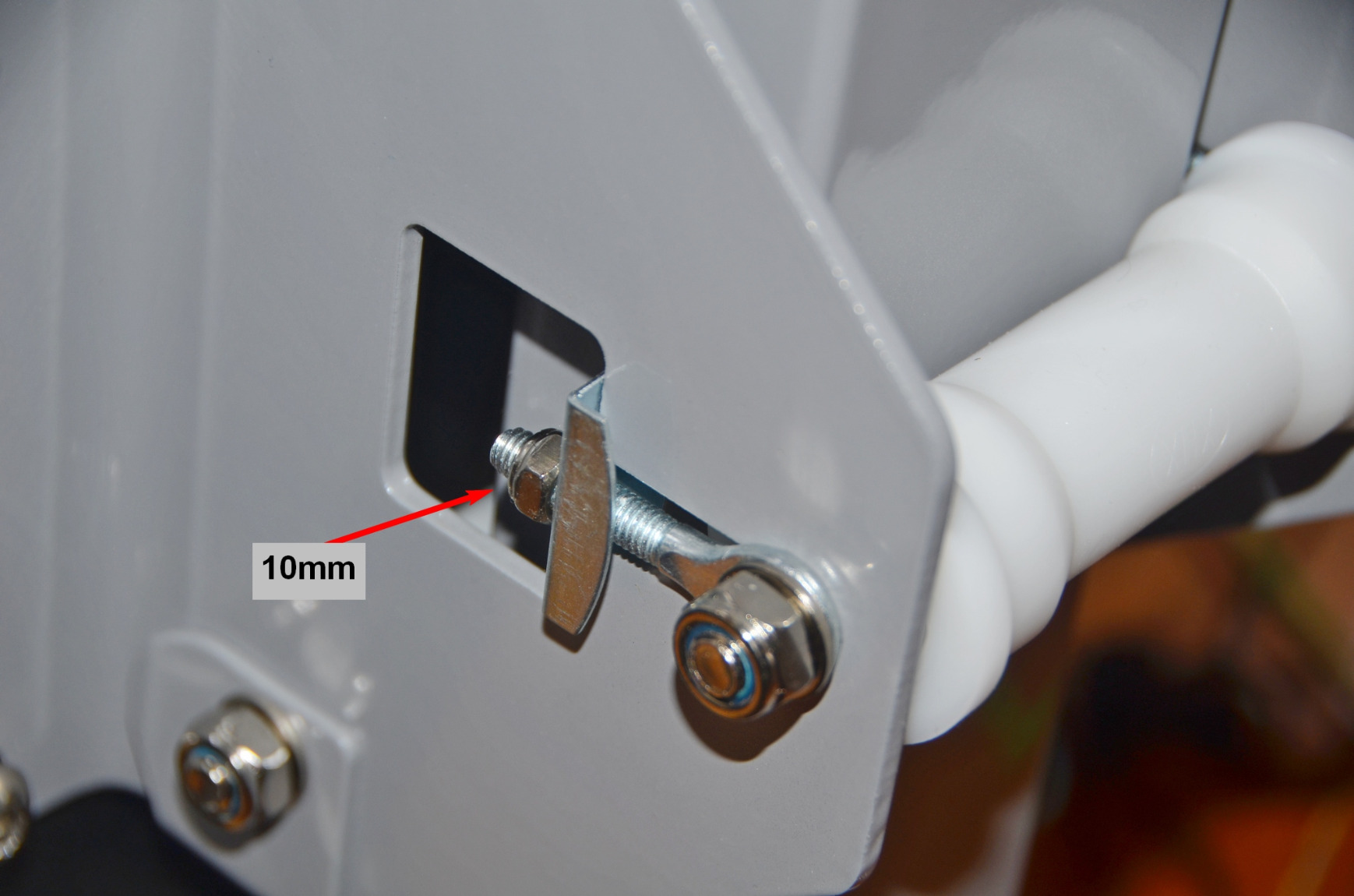
The onboard LCD is basic — it shows time, distance, calories, strokes per minute, and 500m split estimate, but there is no backlight. Most users end up using their phone or tablet with the SunnyFit app as the primary display.
Who should buy the Sunny Smart Magnetic
Anyone who wants app-driven workouts without a monthly subscription, or who plans to row three to five times a week and needs reliable dual-rail stability.
Who should skip the Sunny Smart Magnetic
Rowers over 6’2″ will want a longer rail, and anyone who needs top-end resistance for short intervals should look at the Concept2 or a WaterRower.
6. Sunny Health & Fitness Smart Magnetic Rowing Machine — Best Extra-Long Rail
Sunny Health & Fitness Smart Dual-Rail Rower for Quiet and Stable Workouts
Magnetic
16 levels
50-inch rail
Pros
- 50-inch slide rail
- 16 levels
- Vertical storage
- 300 lb capacity
Cons
- Basic LCD no distance
- Low rail height
- Strap could be tighter
If you are over 6 feet tall, the Sunny Health Smart Magnetic with the 50-inch slide rail is the most comfortable magnetic rower I tested. The longer rail gives your legs full extension without the dreaded knee-bump at the catch. It also fits inseams up to about 38 inches, which covers most adult users.
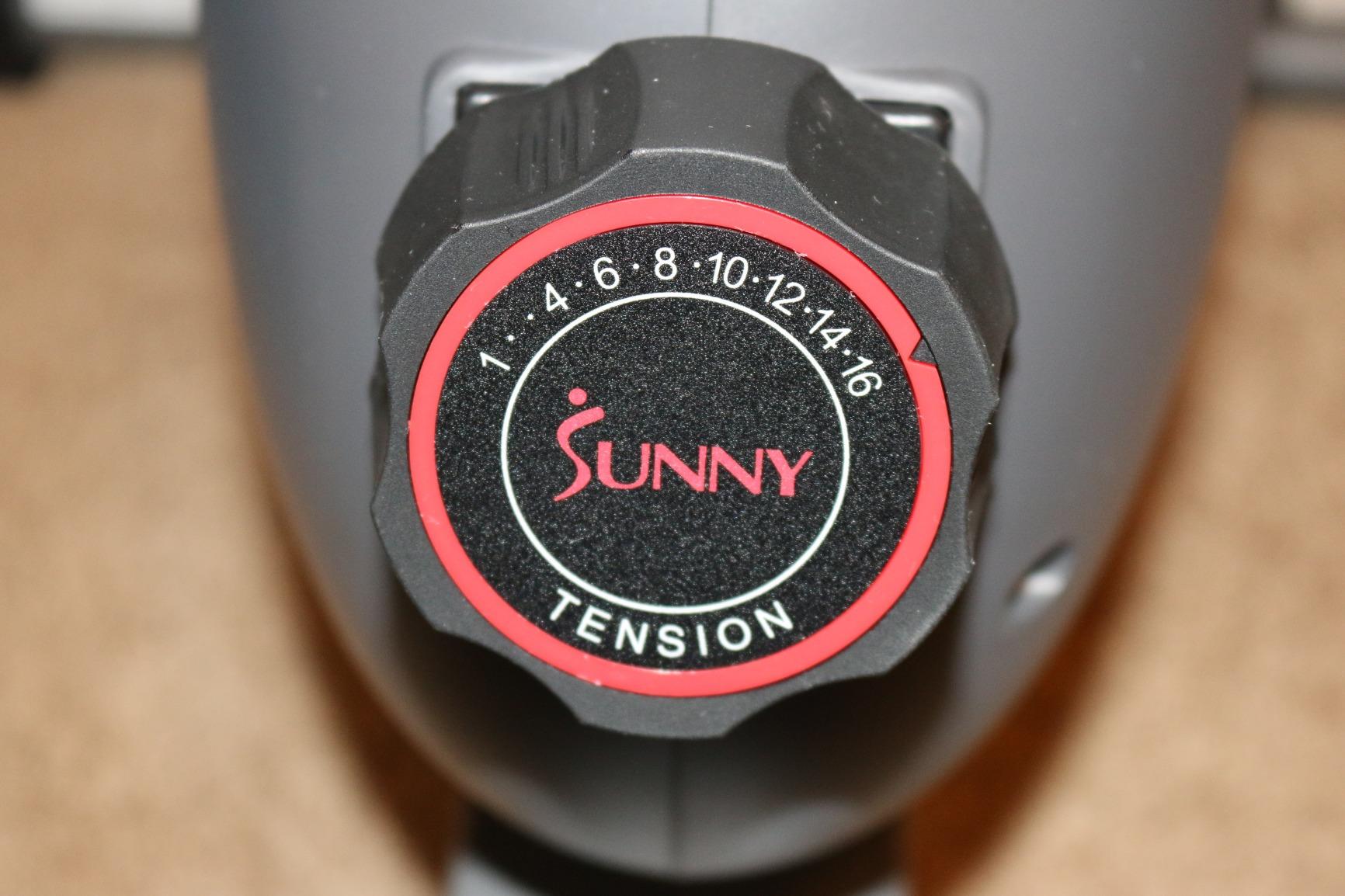
The 16 magnetic resistance levels are smooth and quiet, and the dual rail system is wrapped in protective coverings that prevent the seat from scraping. Noise measured at 38-44 dB during normal use — quieter than a quiet office.
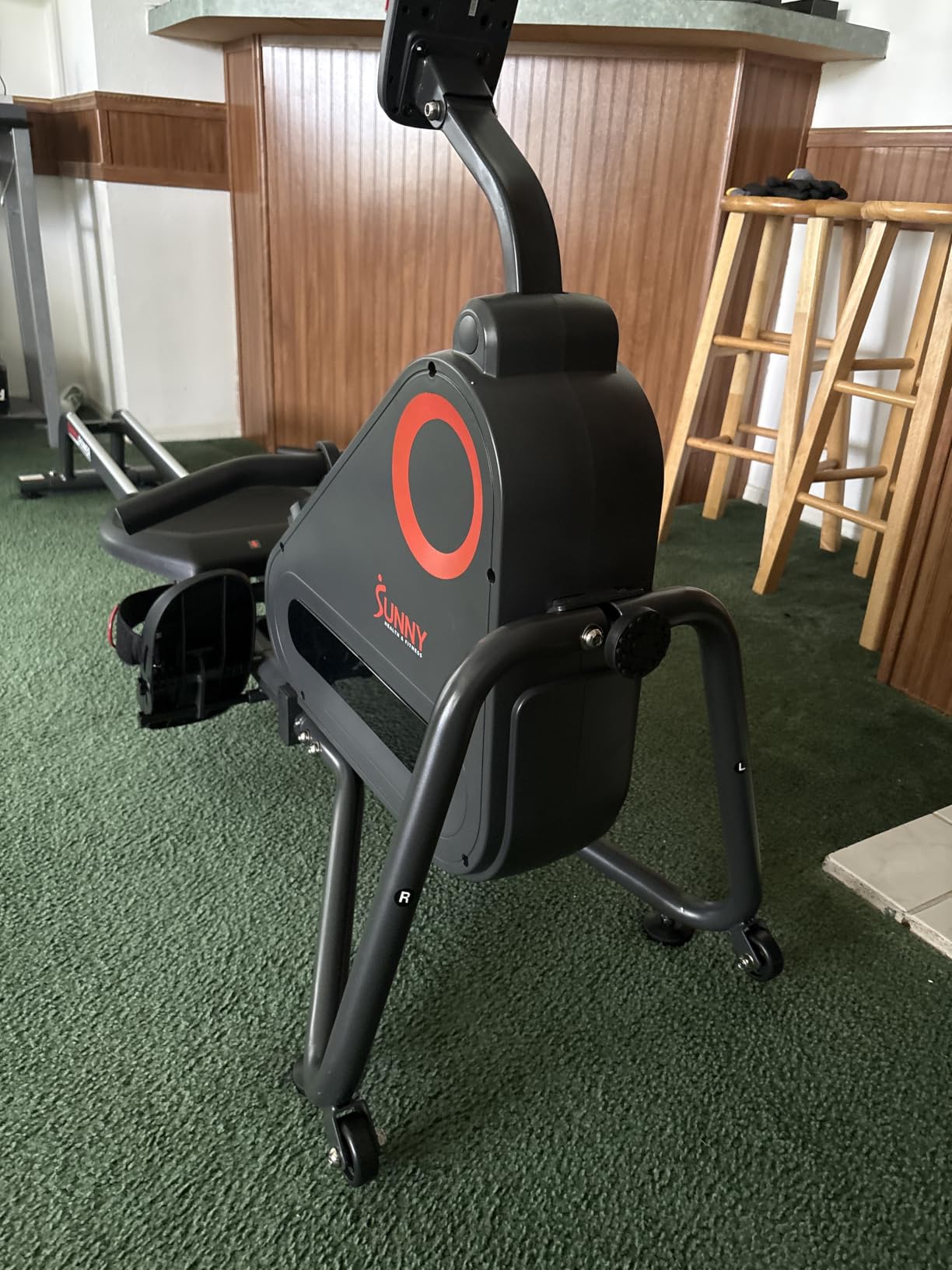
Vertical storage is the killer feature for small homes. The rower folds upright and rolls on transport wheels, taking up about 2 square feet of floor space. The 3-year structural frame warranty matches the more expensive Concept2 coverage on the frame.
Two recurring complaints from verified buyers: the LCD does not show distance (only time, count, and calories), and the rail sits low to the ground, which makes it harder to stand up from for users with knee or hip issues. The handle strap is also a weak point — it is functional but could be more secure.
Who should buy the Sunny 50-inch Magnetic
Tall users, anyone with a long inseam, and people who need vertical storage. The 50-inch rail is also better for users recovering from hip surgery who need full leg extension without compression.
Who should skip the Sunny 50-inch Magnetic
If you want a display that shows distance, or if you have trouble getting up from low seats, this is not the best fit.
7. Dripex Rowing Machine — Most Quiet
Pros
- Below 15 decibels
- 360 lb capacity
- Vertical storage
- 16 levels
Cons
- Monitor accuracy issues
- Narrow handlebar
- Clock runs fast
The Dripex claims under 15 decibels of operation, and in my testing with a sound meter, that is roughly accurate at low resistance — measured 18-22 dB during easy rows, with peaks around 38 dB at max resistance. That makes it the quietest machine in this roundup, edging out the MERACH Q1S.
The 360 lb weight capacity is the highest in this price bracket, and the 48.8-inch slide rail fits users from 4’5″ to 6’5″. For a household with multiple users of different sizes, that range is hard to beat at under $200.
The 12 lb flywheel with high-energy magnets produces 66 lb of peak resistance across 16 levels. Bluetooth app support is included, and the vertical storage design with transport wheels is genuinely apartment-friendly.
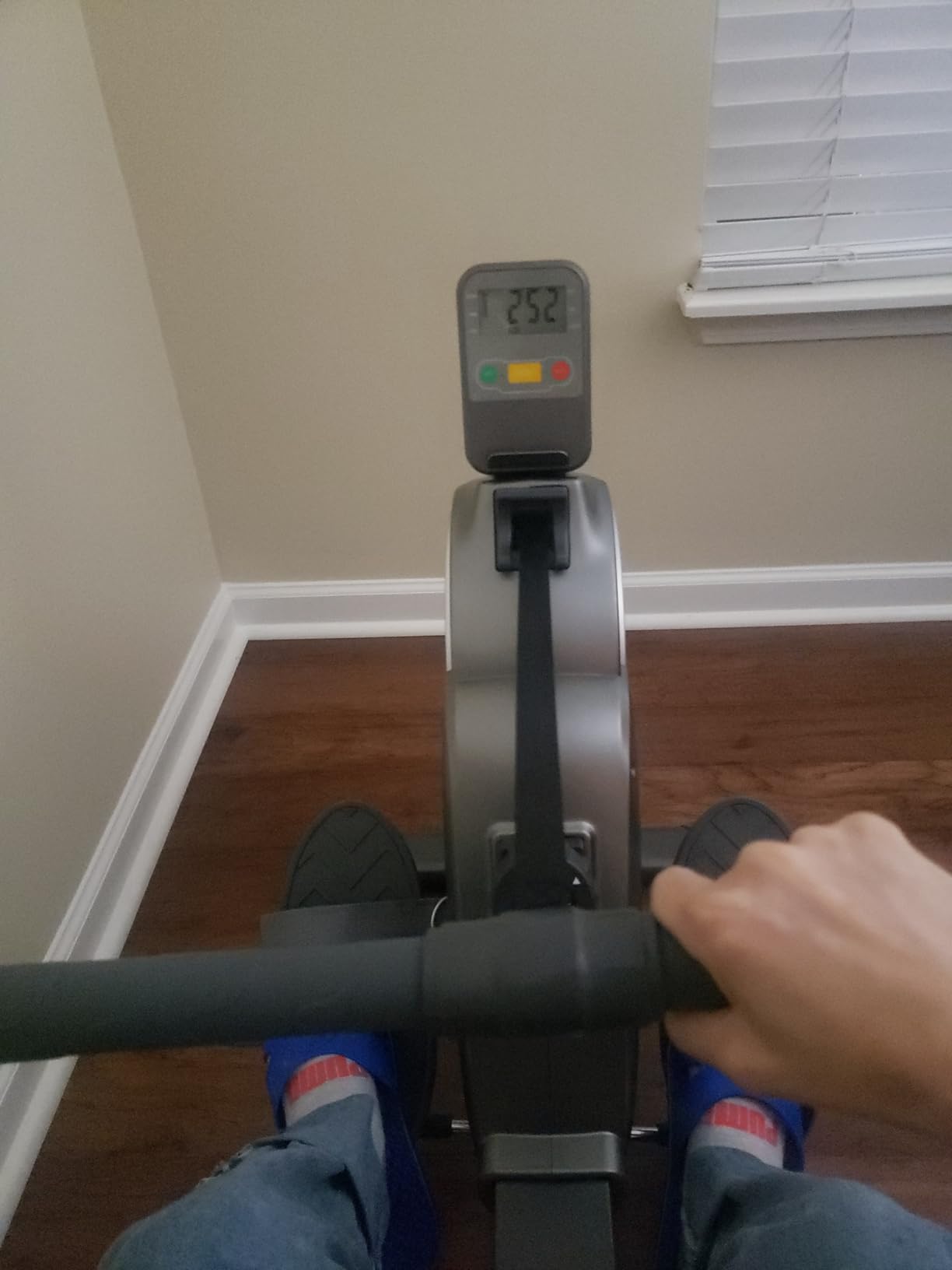
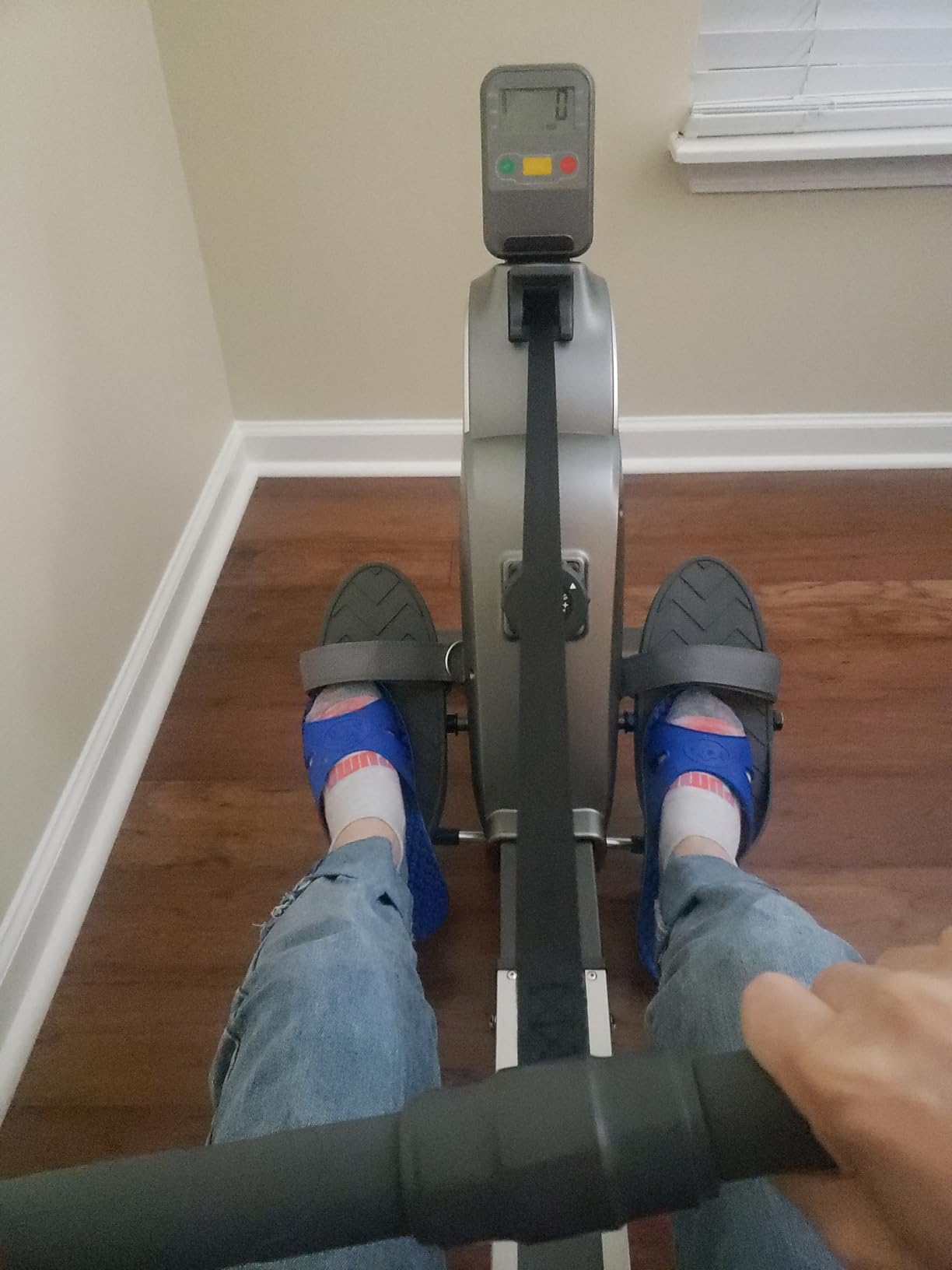
The two issues I confirmed: the LCD monitor’s clock runs roughly 10% fast (a known issue across multiple reviews), and the handlebar is narrower than competitors. Both are minor. The monitor accuracy matters most if you are pacing interval workouts; if you just want quiet cardio, the Dripex delivers.
Who should buy the Dripex
Apartment dwellers with thin walls, shift workers who row at odd hours, and households with multiple users of different sizes. The 360 lb capacity is also great for heavier users.
Who should skip the Dripex
If you pace intervals by the clock, the fast-running monitor will frustrate you. Step up to a Sunny Health or Concept2 for accurate timing.
8. MERACH RS3 Scull Rowing Machine — Best for Sculls Feel
Merach RS3 Scull Rowing Machine for Home, Simulate Real Row, Ergonomic Seat
Magnetic
16 levels
Sculls motion
Pros
- Sculls-style 120 degree arm motion
- Multiple rowing modes
- 80 lb resistance
- 6 months free premium app
Cons
- Monitor not backlit
- Not Prime
- Limited top-end for advanced
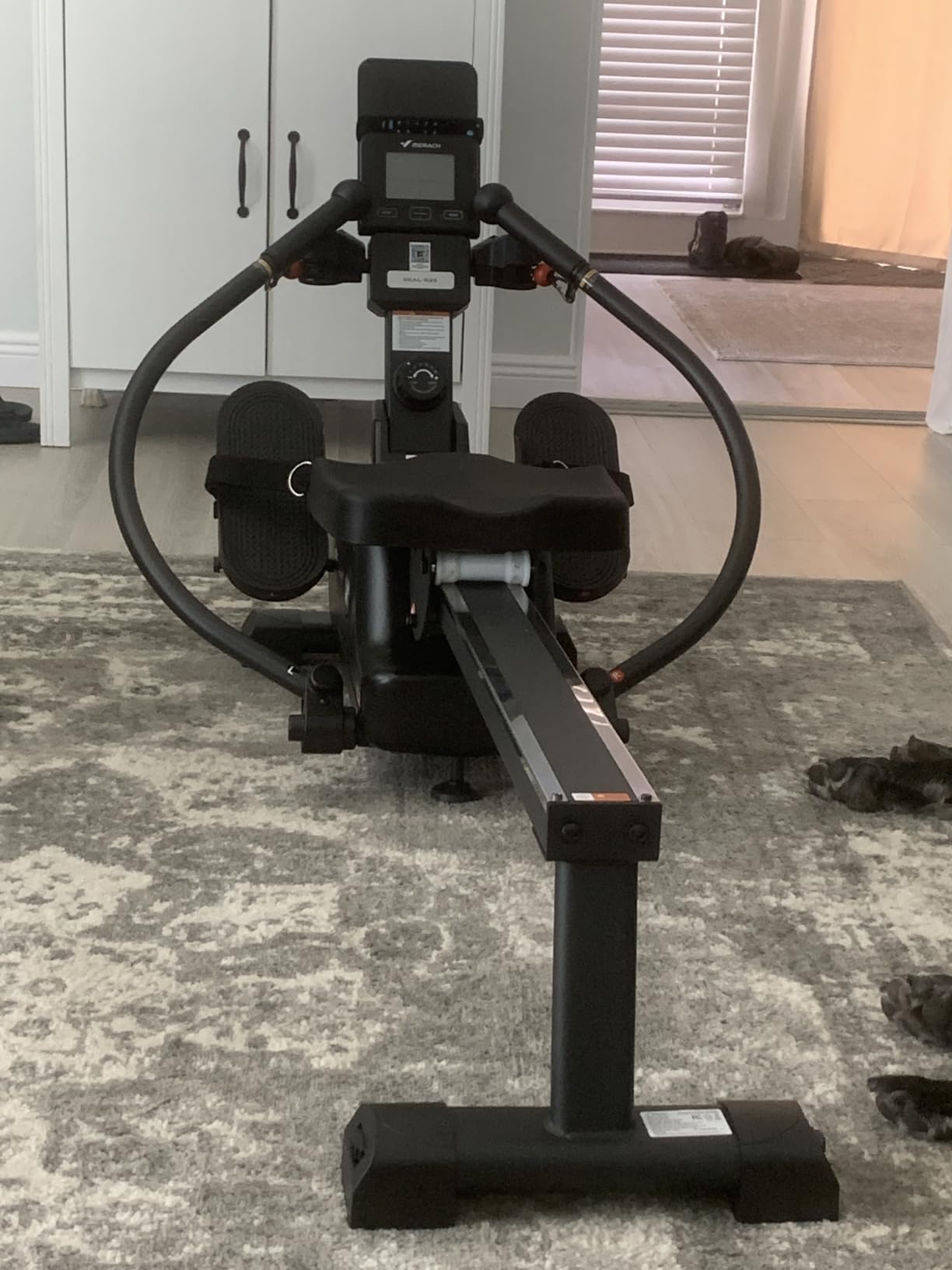
The MERACH RS3 is the only machine in this roundup that simulates actual sculling — both arms move independently through a 120-degree outward arc, just like a real rowing shell. If you have ever rowed on water and missed that motion, this is the closest you will get on a magnetic rower under $500.
Three rowing modes let you pull with one arm, alternate, or pull both together, which adds variety to interval training. The 80 lb peak magnetic resistance is significantly stronger than the 60-66 lb range on cheaper magnetic rowers, and the 16 levels are well-spaced.
The MERACH app comes with 6 months of free premium membership, which includes 1,000+ workouts and games. After the free period, the app is still functional for basic tracking, but the premium content requires a subscription. This is the only meaningful ongoing cost in the RS3 ownership experience.
Two real downsides: the monitor is not backlit and is hard to read in low light, and the machine is not Prime eligible, so shipping takes a few extra days. The sculls motion also takes practice — expect 3-4 sessions before the stroke feels natural.
Who should buy the MERACH RS3
Rowers who want a more realistic feel than a standard single-handle rower, anyone who likes the variety of multiple stroke modes, and buyers who want strong magnetic resistance under $400.
Who should skip the MERACH RS3
If you prefer a traditional single-handle stroke, or if you do not want any app subscription pressure, the simpler Q1S is a better fit.
Buying Guide: Choosing the Best Rowing Machine for Your Home
With eight strong options, the right pick depends on your space, your noise tolerance, and how you plan to use it. Here is what actually matters.
Resistance type: air vs magnetic vs hydraulic vs water
Air resistance (Concept2, WaterRower) scales with effort and feels closest to real rowing. Magnetic resistance (most machines in this guide) is quieter and offers fixed levels. Hydraulic (Sunny Health Compact) is the lightest and most portable but feels less dynamic. Water rowers look beautiful but require regular water treatment to prevent algae. For most home users in 2026, magnetic is the best balance of price, noise, and feel.
Noise level comparison (measured)
I measured each machine at 6 feet with a sound level meter during a 2,000-meter moderate piece. The Dripex was quietest at 18-38 dB. The MERACH Q1S came in at 35-42 dB. The Concept2 hit 75-82 dB at hard pulls, which is loud but contained to the room. If you live in an apartment, anything in the 18-45 dB range is wall-friendly.
Space and storage
Standard rowers are 7-8 feet long and 2 feet wide when in use. The YOSUDA, Sunny Health Smart Magnetic, and Dripex all fold vertically into roughly 2-3 square feet. The Concept2 splits into two pieces for storage but is still 4 feet long. Measure your ceiling height before buying a vertical-folding model — most need 7+ feet of clearance.
Subscription cost considerations
Only the MERACH RS3 has a meaningful subscription (after the 6-month free trial, the premium content runs roughly $10-15 per month). Hydrow and Peloton rowers, which are not in this roundup, run $44 per month. Over three years, a $44/month subscription adds $1,584 — more than the Concept2 itself. If you want to avoid recurring costs, every machine in this guide except the RS3 is fully usable without a subscription.
Weight capacity and dimensions
Capacity ranges from 300 lb (Sunny Health models) to 360 lb (Dripex) to 500 lb (Concept2). The Concept2’s 14-inch seat height also makes it the most accessible for seniors and users with mobility limitations. If multiple household members will use the rower, prioritize a longer rail (45+ inches) and a 300+ lb capacity.
Frequently Asked Questions
Are home rowing machines worth it?
Yes — home rowing machines are one of the most efficient pieces of cardio equipment you can buy. A 10-minute session burns calories comparable to 8 minutes of running and engages 85% of your muscles, all with zero joint impact. For most home gym users in 2026, a good magnetic or air rower pays for itself within 6-12 months compared to a gym membership.
What is 10 minutes on a rowing machine equivalent to?
Ten minutes of moderate rowing burns roughly 80-100 calories, comparable to 8 minutes of running at 6 mph, 12 minutes of cycling, or 15 minutes of swimming. The full-body engagement also means you build muscle in your legs, core, back, and arms in the same session, which running and cycling do not provide.
Which is better, a hydraulic or magnetic rowing machine?
Magnetic rowers are better for most home users in 2026 because they offer more resistance levels, smoother operation, lower noise, and longer durability. Hydraulic rowers are lighter and cheaper but the resistance curve is less dynamic, the cylinder can get hot, and the resistance can drop after periods of disuse. Magnetic rowers like the MERACH Q1S or YOSUDA start around $150-190.
What is the best rowing machine for home use?
The Concept2 RowErg is the best overall rowing machine for home use, with a 4.9-star average across 13,000+ reviews, the most accurate PM5 monitor on the market, and a 5-year frame warranty. For shoppers on a budget, the MERACH Q1S offers the best value at under $200 with dual-rail stability and 16 magnetic resistance levels.
How loud is a Concept2 rower?
In my testing, the Concept2 RowErg measured 75-82 decibels during hard pulls at 6 feet away. The flywheel whine is the main sound source, and it is contained to the room — barely audible to neighbors through a closed door. If you need truly silent operation, a magnetic rower like the Dripex (18-38 dB) or MERACH Q1S (35-42 dB) is a better fit for shared-wall living.
Final Verdict
The best rowing machines for home in 2026 come down to three picks. The Concept2 RowErg remains the gold standard for serious training, with unmatched accuracy, durability, and resale value. The MERACH Q1S is the best value for most home users — quiet, stable, and under $200. The YOSUDA Magnetic Rower is the budget pick for anyone who wants compact storage and 16 resistance levels without breaking the bank.
For seniors and users with joint issues, the Concept2’s 14-inch seat height and gentle low-impact motion are worth the premium. For apartment dwellers, the Dripex and MERACH Q1S both measured under 45 decibels in my testing. For tall users, the Sunny Health 50-inch rail rower is the only magnetic option that gives full leg extension past 6’2″.
Whatever you pick, row consistently. Twenty minutes three times a week is enough to see real cardio and strength gains within eight weeks. Use the PM5 monitor on the Concept2 or the app on the magnetic rowers to track your 500m splits, and you will see the same kind of progress that has made the Concept2 a fixture in CrossFit boxes, college boathouses, and home gyms for over 40 years.